Do You Know What You Own?

Image by Austin Distel
This article and video were originally published here.
Check out Eventide Investments for other quality content!
Why is it so hard to see that investing is company ownership? Here’s Finny Kuruvilla, MD, PhD, discussing his perspective on why it can be hard to feel ownership in investing today.
Now, why is it hard to see this ownership today? Why has this question been … has it been so fundamentally obscured? Well, I think most of us, if we think about it, would agree that investing has long been divorced from this original and most basic purpose of simply supplying capital to support businesses. Instead, we see that most investors are trying to profit from the market rather than from any productive and intrinsic value of the underlying company. People even forget sometimes that the market consists of these underlying companies, and in fact, this has partly been driven by things like ETFs, or index funds where you buy the entire market. The mantra has become all about low cost, low fee products. The various rating agencies that are out there push this. This is all throughout the financial newspapers, and journals, which reduce investing to buy the whole market, but simply find it at these very low cost, low fee products.
This, very naturally, has made investing commoditized, and depersonalized. People aren’t even thinking about what it is that they’re owning, since they’re buying everything. Thus, we can say that most people don’t know what they own. In fact, if you ask most individual investors, “Do you know what you own?” They’ll say, “I have no idea.” If you ask many financial advisors what do they own, they’ll say, “I have no idea.”
I think it’s a very empirically verifiable statement to see how far we’ve fallen from understanding this original purpose of what investing was intended to be. This is nicely captured by William Cavanaugh, who’s a professor at DePaul University, who says, “Retirement accounts tend to just go into mutual funds. Well, not only do I have any idea how the companies that I have stock in are being operated, I don’t even know what companies I have stock in, [and they’re run] by an elite of managers whose one preoccupation is with increasing the bottom line.”
A very extreme example of this comes from Cliff Asness. Cliff Asness is a very widely respected quant fund manager who was one of the founders of AQR Capital Management, and he is often lauded as a pioneer in quantitative investment management. Notice this statement that he made at a Morningstar conference where he said, “I pride myself on not knowing what’s in our portfolios.”
This is a very powerful exemplar of this phenomenon taken to the final stages where we are seeing that in the end people are almost celebrating this ignorance of not even knowing what they own.
This communication is provided for informational purposes only and expresses views of Eventide Asset Management, LLC (“Eventide”), an investment adviser. There is no guarantee that any investment strategy will achieve its objectives, generate profits, or avoid losses. Eventide’s values-based approach to investing may not produce desired results and could result in underperformance compared with other investments. Any reference to Eventide’s Business 360 approach is provided for illustrative purposes only and indicates a general framework of guiding principles that inform Eventide’s overall research process. Investing involves risk including the possible loss of principal. Past performance does not guarantee future results.
Before investing or sending money, an investor should carefully review investment objectives, risks, charges and expenses as provided in prospectuses and other information available at www.eventidefunds.com or by calling 1-877-771-EVEN (3836). Eventide Asset Management, LLC serves as investment adviser to the Eventide mutual funds distributed through Northern Lights Distributors, LLC (“NLD”), member FINRA/SIPC. NLD and Eventide are not affiliated entities.
8077-NLD-8/31/2018
Five Capitals

Image by Ryan Johns
This video was originally published here.
Check out Faith & Co. for other quality content!
by Faith & Co.
Scott Weiss, chairman and CEO of OCEAN Accelerator, explains the five capitals that God has endowed everyone with, and how to apply them. This interview is part of a series exploring how faith shapes the way companies treat their employees.
Watch the full video below!
Is Economic Thinking Relevant for the Church?
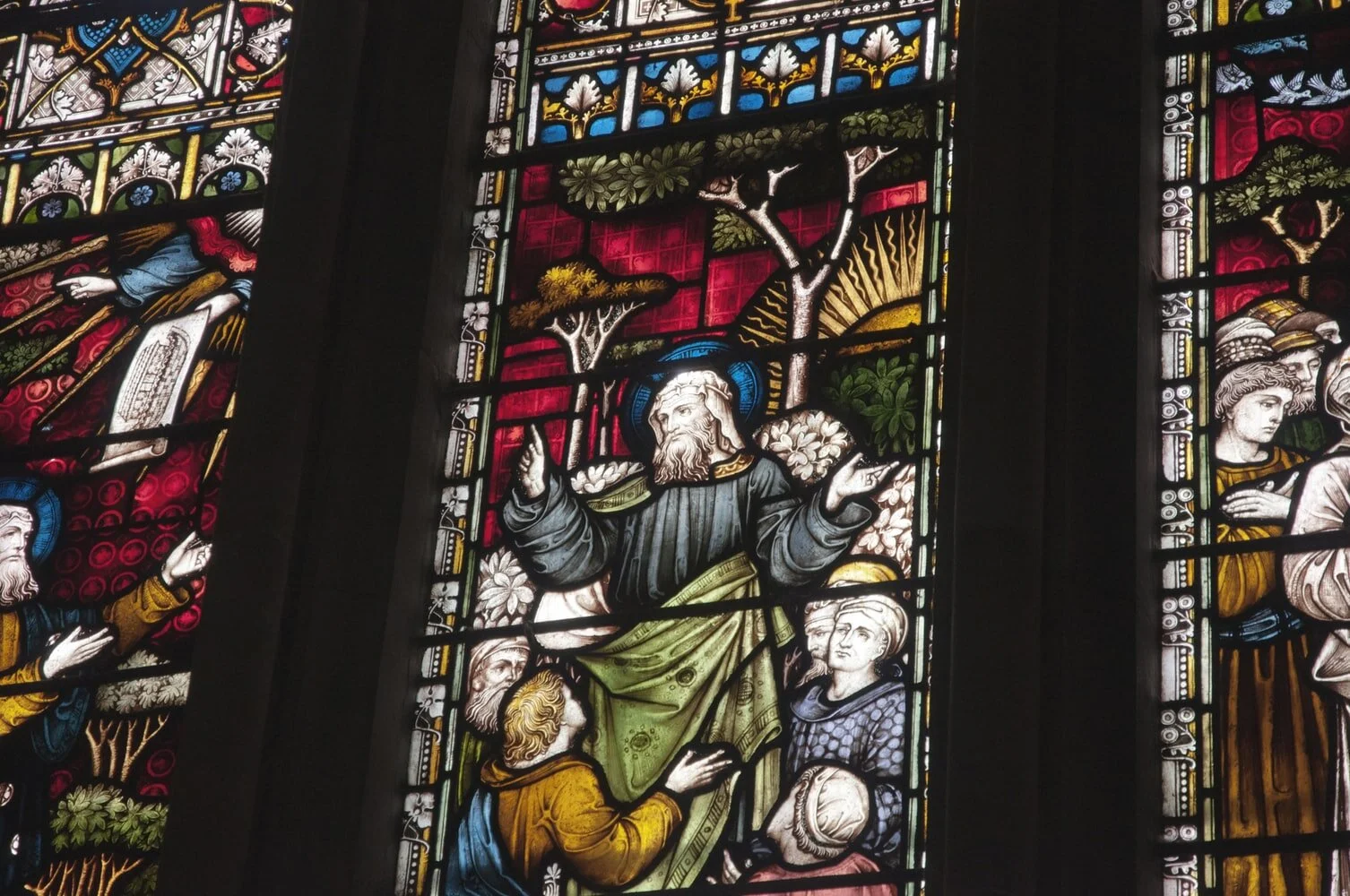
Image by James Newcombe
This article was originally published here.
Check out The Institute for Faith, Work & Economics for other quality content!
by Kathryn Feliciano
When you have a master’s degree in economics, you get excited when you find economic concepts in unexpected places.
Not everyone shares your enthusiasm.
Case in point: the other day, I heard a sermon about leadership in the church, focusing on Acts 6. Hearing it I thought, “Look at that! The early church leaders were using comparative advantage!”
When I shared this insight with my husband, he half-laughed. Then he paused to see if I was being serious.
I was.
Here’s Acts 6:1-4:
Now in these days when the disciples were increasing in number, a complaint by the Hellenists arose against the Hebrews because their widows were being neglected in the daily distribution. And the twelve summoned the full number of the disciples and said, “It is not right that we should give up preaching the word of God to serve tables. Therefore, brothers, pick out from among you seven men of good repute, full of the Spirit and of wisdom, whom we will appoint to this duty. But we will devote ourselves to prayer and to the ministry of the word.”
Acts 6:2 seems odd at first: “It is not right that we should give up preaching the word of God to serve tables.”
It seems as if the apostles believe preaching God’s word is a higher calling and serving tables is beneath them. Yet they follow Jesus, the foremost example of humility (Phil. 2:6-8).
What we find is not that the apostles have a higher calling, but rather that the early church was facing a problem—the apostles could not do everything by themselves.
Continue reading this article at The Institute for Faith, Work & Economics
What Does Jesus Teach About Investing?

This article was originally published here.
Check out Townhall Finance for other quality content!
by Jerry Bowyer
Jesus talks about investment in his parables.
The first thing Jesus says about investing is something which He doesn’t explicitly say, but implies: that is, that investment is permitted, and even good. This is implied by the fact that Jesus tells parables in which the investor is ‘the good guy’.
The way that parables work in Rabbinical teaching methods (and Jesus was, in fact, a Rabbi) is that they reason ‘from light to heavy.’ This is also referred to as ‘the simple and the complex,’ which in Hebrew is called kal vahomer.
This teaching method is based on the principle that just as something is true on one lower level, ‘how much more’ is it true on a heavier, higher, more complex level. Just as it is true that mustard seeds grow into expansive trees, how much more is it true that the kingdom also grows expansively? If the lower, lighter level of meaning were false, then the method wouldn’t work. For example, if mustard seeds grew into a single, tiny Bonsai shrub, then the parable would fail.
In the parables of the Unforgiving Servant, the Laborers in the Vineyard, the two Parables of the Talents, and probably in the parable of the Unfaithful Steward, the owner/investor in the stories represents God. So, if the role of investor is unjust and unrighteous, then the ‘from heavy to light’ reasoning of the parable doesn’t work.
For example, the Parable of the Laborers in the Vineyard is about how God, the owner of the world, including the Holy Land, entrusted it to His stewards, the leaders of Israel. It is based on a similar parable/story in Isaiah Chapter 5. God invested in Israel. He put resources under their management to receive a return. The return was to be a spiritual return, that Israel would be a light to the Gentiles.
Instead, they turned inwards, and used the resources for their own selfish purposes. They were unfaithful stewards. But if ownership were a bad thing, then God could not be an owner. If the idea of stewardship, in which one person was an owner and another person or persons were the managers, were an inherently bad thing, then God would not have set up such an arrangement.
This latter point is a very important one, because it is the basis on which the vast majority of investments are made. When we buy stocks or bonds in a company, we become stewards of that wealth. We are owners, but we are not managers. Critics of capitalism point to the separation between ownership and management as inherently bad, causing an inevitable lack of accountability. But this could not be true, otherwise God would not use it.
Another good example of how Jesus endorsed investment, and one which is historically very important, is the reference to bankers in the parables of the Talents. When the lazy servant claims, falsely, to have been afraid, the master tells him:
“‘Then you ought to have put my money in the bank, and on my arrival I would have received my money back with interest.”
(Matt. 25:27 NASB)
This verse helped end the medieval ban on lending at interest. If Jesus told a parable in which the character who represents God recommends getting interest from the banking system, then that implies that it is a legitimate practice. Otherwise the parable fails at the literal, ‘light’ level.
Jesus does tell two parables which stand out as having negative views on wealthy figures, the Parable of the Rich Fool and the (possible Parable) of Lazarus and the Rich Man. But, in neither of these parables does it appear that the wealthy owner is a stand-in for God. Also, I think the evidence clearly shows that neither parable is actually aimed at the merchant classes, despite the common belief that these are owners of commercial enterprises. (For more detail, click here and here).
Jesus clearly had a lot to say not just about wealth but about investment, and his teachings establish investment as a legitimate tool and calling.
What Is the Purpose of Faith-Based Investment?
We know that Jesus talked about money, and that this included investment matters and that he speaks in a way which shows the legitimate, even honorable nature of the investment calling. We know that he points out some of the pitfalls and problems with investments, for example the problems that come from entrusting assets to unfaithful stewards. Jesus’ references to Mammon, though a small proportion money mentions, show that wealth can become an idol.
But the question remains: what is investment for? What is its purpose? Of course, Christians know that all human callings, and human life itself is for the purpose of glorifying God. But not all human relationships serve and glorify God in exactly the same way. Marriage serves God’s purpose by providing companionship (‘it is not good for the man to be alone’) and children (‘be fruitful and multiply’) and to mirror the relationship between Christ and the Church (‘husbands, love your wives as Christ loved the church). Is marriage there to make a profit? To till the ground? To serve communion? To wage war? No, there are other institutions formed to do those things. Marriages can provide companionship to the people performing these tasks. It can bring new children into the world to fulfill them. But marriage per se is not there to do these things.
So, what is the purpose of finance?
Its purpose, according to Jesus, is to provide a return.
In both versions of the Parable of the Talents, the steward who is condemned failed to provide a return. The two stewards who gave the owner a high (100%) return were both praised and rewarded. Not even trying to get a return is forcefully rebuked. Regarding the magnitude of return, the master suggests that a lower rate of return would have been appropriate if the master were highly risk-averse.
“‘…I was afraid, and went away and hid your talent in the ground. See, you have what is yours.’
But his master answered and said to him, ‘You wicked, lazy slave, you knew that I reap where I did not sow and gather where I scattered no seed. Then you ought to have put my money in the bank, and on my arrival I would have received my money back with interest.”
(Matt. 25:25-27 NASB)
So, the goal of investment is not just to provide a financial return, but also to provide a high return relative to the level of risk.
The Parable of the Laborers in the Vineyard illustrates the same point:
“Listen to another parable. There was a landowner who planted a vineyard and put a wall around it and dug a wine press in it, and built a tower, and rented it out to vine-growers, and went on a journey.
And when the harvest time approached, he sent his slaves to the vine-growers to receive his produce.”
(Matt. 21:33-34 NASB)
The landowner bought land (or inherited it from someone who bought it), invested capital into developing that land, and then rented it for what purpose? To receive ‘produce’, literally ‘fruit’, which can refer to actual fruit or simply to any form of gain.
Jesus used analogies from agriculture which emphasize the order of magnitude of the return.
“And other seeds fell into the good soil and as they grew up and increased, they yielded a crop and produced thirty, sixty, and a hundredfold.”
(Mark 4:8 NASB)
Of course, the parable is intended to explain the progress of the kingdom, but parables reason from light to heavy, in this case from agricultural enterprises to the spread of the Gospel. The argument is that just as it is a good thing for a farm owner to get a very high yield on his investment of seed, how much more is it good to have a very high yield on the preaching of the Gospel. The analogy only makes sense if the purpose of farming enterprises is a high rate of return.
At the most basic level, Biblically Responsible Investing, A.K.A Christian Investing, means investing to get a return, a high return based on hard work, excellence and levels of risk. That is the basic responsibility which the Bible places on the investment process. When the asset manager is different from the asset owner, there is a further responsibility to act as a faithful steward, that is to act in the best interest of the investor as opposed to the best interest of the manager.
Truly Biblical investment strategies will start with that positive purpose of investment, as opposed to find a Christian investment fund whose purpose focuses mainly on imposing a set of restrictions on which sin industries to block.
Many questions arise which are beyond the bounds of this article: What principles help investors to increase the probability of a good return? Should we use screens against ‘sinful’ companies? Should we allocate assets for the purpose of social goals? How do we deal with the issue of Mammon, i.e. the worship of money? These are all questions well worth dealing with.
But we must always keep in mind that this not of the essence of investing. Investing was not created by God for the purpose of not sinning. It is for the purpose of a good rate of return for the glory of God. Getting that first principle right will help us get all of those other questions right too.
Religion & Finance: A Look at the Minneapolis’ Somali-American Community

Photo: Daniel McCullough on Unsplash
At FDI, we are always looking for innovative and inspiring ways to approach finance and capital. In this story below, we get both from a different faith group. In the article, you’ll read about neighbors investing in their neighbors’ houses, avoiding interest, sharing the profits. There’s always something to learn from communities everywhere and we hope it encourages you think about your own sphere of influence!
— — — — — —
The original, full article on Next City can be found here.
Minneapolis’ Somali-American Community Can Soon Bypass the Bank to Buy Homes
by Emily Nonko
Said Sheik-Abdi describes himself as “one of the Somali-Americans residing in Minneapolis, Minnesota.” The state has 52,333 people who report Somali ancestry — the largest concentration of Somalis in America — and many live in the Twin Cities.
But since his arrival to Minneapolis 20 years ago, Sheik-Abdi has distinguished himself as a community activist skilled in mobilizing fellow community members. Almost a decade ago, he began collaborating with the American Refugee Committee on ways Minnesota’s Somali-American residents could support their home country. The result was the Neighbors for Nations initiative, which engaged the community in fundraisers including a sambusa cook-off, charity walks and a “1,000 giving $1,000” campaign to raise $1 million.
That work introduced Sheik-Abdi to the power of community funding, and he looked for other ways to apply it within Minneapolis. Since the first immigration wave of Somali-Americans in the 1990s, many had moved into the middle class. But Sheik-Abdi kept hearing about a roadblock: they couldn’t afford to buy a house in the city that had become their second home…
Click here to continue reading the insightful article!
[Special thanks to Daniel McCullough on Unsplash for cover photo]
Faith Driven Investor Reading Plans Launched in the Bible App

Image by Ben White
One of the big things we’re passionate about at Faith Driven Investor is going back to “The Book”. We believe that God speaks to us through His Word and that all of Scripture is useful for instruction on how to formulate and execute an investment strategy. This includes our motive for investing well, the importance of saving, and how we might invest (Gleaning, Parable of the Talents, Investments for Eternal Consequence). Scripture, when taken in aggregate, provides us with a great handbook on every question about investing—why, how, where, what, and when. We also believe that God speaks to His people with shared, yet unique, callings. As such, we don’t think that there is one specific formula for Faith Driven Investing, even while there are many unifying principles.
To kick off the New Year, we’ve launched three new reading plans for Faith Driven Investors. Check them out here on the FDI site and in the Bible app from YouVersion.
If you have ideas on additional reading plans or might be interested in guest contributing a plan for the Faith Driven Investor Channel, send us a note!