Rethinking Risk/Reward To Succeed As A Steward Investor

  Image by   Cristofer Jeschke

This article was originally published here.
Check out
Impact Foundation for other quality content!

by Steve Doerr

In my 20s, I faced a decision: accept a job at a large, multinational corporation or pursue vocational ministry. With a freshly minted degree from an international MBA program in the Arabic language track, I was certainly more strategically positioned for the corporate job. And, yet, I could not help but feel that a vocation as a businessman would mean missing God’s best for my life, i.e., full time ministry as a pastor or missionary.

In spite of these misgivings, I decided to take the corporate job.

Over the course of the next three decades, I lived in several Middle Eastern and Asian nations, traveling to over 75 countries and interacting with people of all sorts of religious and non-religious backgrounds.

I am grateful I accepted the offer, as it has given me and my family countless opportunities to serve, adventures and invaluable life lessons. But I still lived with a sense of disquiet for many years. At times, I imagined myself on God’s B team, where my job was to support the A team: missionaries and pastors doing the “real work”.

Eventually, God graciously cleared away this false guilt as I encountered teaching that broke down the sacred-secular divide with respect to calling and vocation as a question occurred to me:

“Was Jesus’ work as a carpenter as valuable as His work in public ministry preaching and healing?”

That seemed to stump people I asked, until one day, a friend of mine responded, “Don’t you realize that everything Jesus did was simply in direct obedience to the Father? So when Jesus was working as a carpenter he would have been out of the Father’s will if he had chosen to go into public ministry too early.”

The implication: What the Father cares about is simply my obedience, or the input I give my work. He takes responsibility for the output or outcome.

This realization shifted my emphasis to the importance of listening to His voice. Searching Scripture to discern the sound of God’s voice has shown me a few basic ideas:

1.    God is the Owner of everything.1

2.    The Owner gives us the ability to generate financial capital and has entrusted each of us to be stewards of “His Stuff”.2

3.    The Owner will assess our performance on stewarding His stuff, just as we might assess the faithfulness and performance of a CEO or Fund Manager by how well they achieved the Owner’s objectives.3

As a steward of His stuff, I get to serve like a fund manager in God’s immense investment portfolio. He is a much more just, merciful Boss than I have ever had on Earth. Still, the system of goal setting and performance reviews I am accustomed to from my days in the corporate world can serve as a template for how we approach investing and stewarding His resources. In this context, two factors are critical for success: (1) Be absolutely certain that you have listened well and that your Plan aligns exactly with the Corporate Goals/ Owner’s Objectives; and (2) that you have carefully thought through the most effective and efficient way to accomplish the Plan.

WHAT IS THE OWNER’S RISK TOLERANCE? 

Every fund manager knows investment decisions must be guided by the owner’s risk tolerance and time horizon. The strongest financial return is often found in the riskiest investments, e.g., venture capital. Safe investments, on the other hand, yield less return, e.g. money market accounts.

We know God’s timeline is eternal. Jesus tells us to invest our earthly assets to store up treasure in heaven, where it is secure and lasting.4 Jesus is reconciling all creation to Himself.5 And we live in the “now but not yet”, where the Kingdom of God has come, and yet we still live in a world that is not quite restored. An eternal timeframe creates a wholly different set of investment guidelines, almost impossible for us finite beings to comprehend, which is why the question of risk is important.

How do we assess risk when investing for the King of Kings? Although God has given us the Holy Spirit and sound minds to strategize and plan, the outcome ultimately depends on Him.

Throughout Scripture, we see God rewards those who earnestly seek Him. We can invest with less fear, knowing He rates our performance based on listening and obeying.6 He loves us and gives us grace to live according to His ways and shows us mercy when we repent. Financial return is an important consideration, certainly, but it is not the only (perhaps not even the primary) measure Scripture uses to delineate success.

When heeding the commands of a sovereign God whose purposes for His people are always good, there is no way to lose. The only true risk is to run from His call and bury our assets in the ground, where they cannot be put to work for His Objectives.


1. Matt. 6:19-21

2. Col. 1:20

3. Lk 11:28, Deut. 28:1-2

4. Deut 10:14, Psalm 89:11, Job 41:11, Ps 50:10, etc.

5. Gen. 1:28

6. Matt. 25:14-30
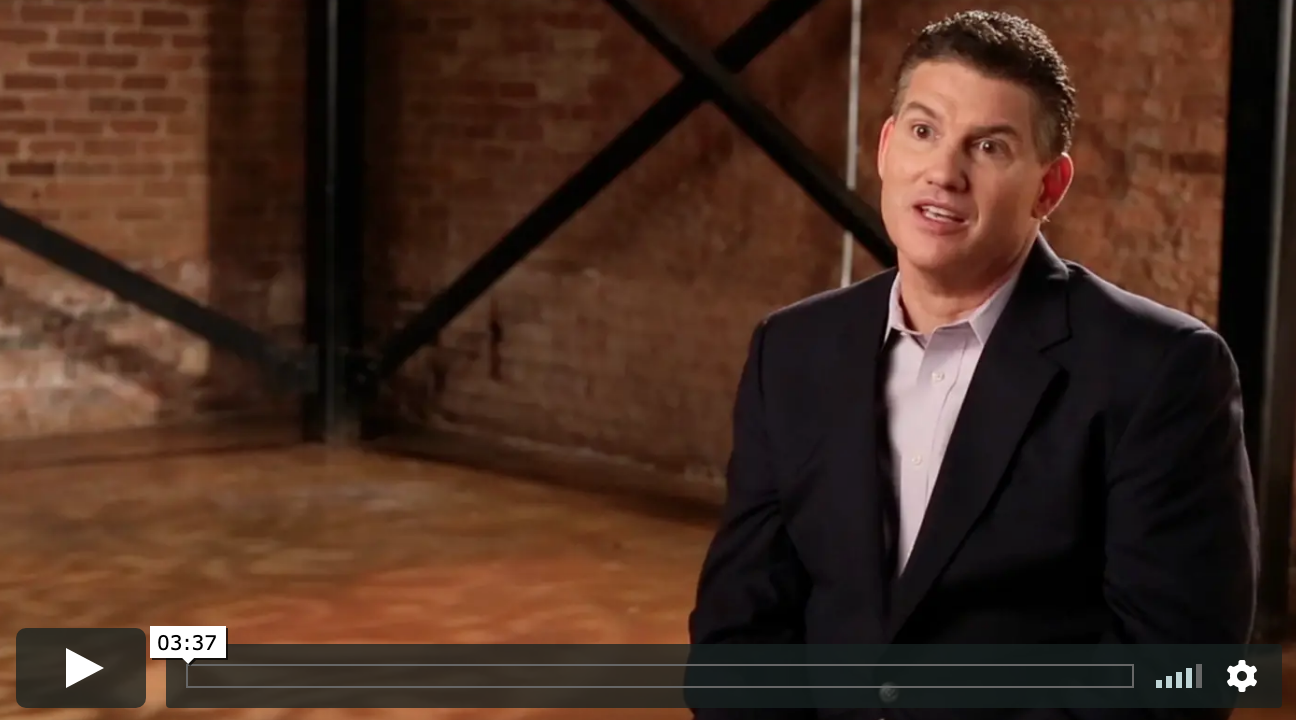
Application of Principles-Based Investing by Ron Blue

Each of the Core Principles is woven into Ronald Blue Trust’s investment decision-making process. Portfolios are constructed to achieve an ideal exposure to different economic environments at reasonable risks. Hear from Ronald Blue Trust representatives and other experts about how they use Principles-Based Investing (formerly referred to as Principled Reasoning) to optimize allocations and how they leverage Vident Financial solutions to embed principles into their investment portfolios.

Watch the full video by clicking on the image below.

Best Practices in Redemptive Methodology by Impact Foundation

 Photo by  Green Chameleon

Every business we invest in is part of God’s redemptive work in the world – bringing the reality of the Kingdom into closer focus. Some businesses provide goods and services that obviously make people’s lives better: a longer-lasting mosquito repellant or educational software for inmates. Their primary impact happens through the products and services they provide and it is easy to understand how they’re fit for impact investing.

But what about the Believer making great tables who intentionally lives out a plan for using the very business itself as a force for God’s redeeming work? This type of business makes the world a better place by the way it conducts itself even if its product or service isn’t specifically addressing quality education, poverty alleviation, clean energy, or freedom. While there may not be anything inherently transformational about the widgets a company sells, it nonetheless has a positive impact on employees, vendors, and its community.

We desire to invest in those enterprises and need a way to describe how they further our charitable purpose. Thus, we created a category called “Redemptive Methodology” to describe these unique organizations.

The idea of Redemptive Methodology borrows heavily from Praxis Labs’ concept of a “redemptive entrepreneur”, or one who seeks to embody the gospel in creating and building a venture that leaves a meaningful impact on the world. As David Blanchard has said in describing redemptive entrepreneurs,

“As fallen creatures, we take seriously and humbly our own sin and the brokenness of the world around us. Our endgame is for our venture to be an agent of redemption as we act as the hands and feet of Christ in the world, knowing that He is “making all things new.”

“REDEMPTIVE METHODOLOGY defined
An enterprise whose primary positive impact on the world happens through the way business is conducted. Its leadership, being rooted in Christ, follows the Spirit to intentionally participate in God’s transformational work in the lives of employees, vendors, & customers while creating sustainable value.”

Businesses built by these kinds of entrepreneurs live out the Gospel through great business practices: paying vendors on time or early, paying fair compensation, providing quality service/goods at fair prices, standing against corruption, and practicing good environmental stewardship. They have satisfied, repeat customers and high employee loyalty.

Christian leadership, on its own, is not enough. Scripture is clear that personal faith will result in changed behavior, which Paul calls “the fruit of the Spirit.” A CEO or group of senior leaders shaping a company with their personal faith can expect to display evidence indicative of spiritual health. As a corollary to the idea that “faith without works is dead,” the fruit of the company will provide the data points for measuring its impact.

Just as it takes roughly 5 years for a new apple tree to bear its first fruit, we cannot wait to look at the fruit of a business to determine whether it is fit for investment. Thus, we are creating a set of best practices to help early-stage ventures understand how to run a “Redemptive Methodology” business. As we vet enterprises, we can likewise use this set of best practices to determine if a potential investment belongs in our portfolio. The goal is to describe a common set of behaviors that if practiced regularly over time could be expected to result in the kind of fruit the business exists to create. Below is a start to that list. Let us know if you think we should add or change anything.

ADDITIONAL RESOURCES

Our blog is full of stories of companies putting into practice the ideals of Redemptive Methodology. Check out the list of blogs below.

Also, our friend Henry Kaestner, CEO of Sovereigns Capital and co-founder of Bandwidth.com, started a very helpful site https://www.faithdrivenentrepreneur.org. Lots of great articles, podcasts, etc. Check it out!!

BEST PRACTICES IN REDEMPTIVE METHODOLOGY

The following collection of best practices is not meant to be exhaustive but a starting place for companies desiring to enhance or describe their redemptive practices within their company. Minimum requirements are noted with a star. Please let us know if you have other ideas that we should include.

IMPACT ON EMPLOYEES

  • Pays fair compensation*

  • Jobs created and/or training for marginalized or underserved populations

  • Corporate chaplain service

  • CEO or other senior leader(s) regularly participates in spiritual disciplines

  • Flu shots, wellness programs

  • Marriage enrichment

  • Employee Assistance Programs

  • Conduct regular performance reviews*

  • Exercise hiring and termination practices that honor individuals*

  • Profit or equity sharing

IMPACT ON VENDORS

  • Pays bills on time*

  • Honors contracts*

  • Builds relationships that foster opportunities to interact with the Gospel

IMPACT ON CUSTOMERS

  • Satisfied, repeat customers*

  • Provides value (quality service/goods at fair prices)*

  • Truthful advertising/marketing*

  • Advertising/marketing built on a redemptive storyline (i.e., not selling to people’s fear or hunger for power, money, fame, sex, etc.)

  • Builds relationships that foster opportunities to interact with the Gospel

IMPACT ON COMMUNITY

  • Stands against corruption*

  • Owners and/or employees volunteer services in the community

  • Intentional relationships built with ministry/ church/ community leaders

  • Contribution of finances, goods, services to NGO’s, local churches

IMPACT ON ENVIRONMENT

  • Basic environmental stewardship practiced*

  • Clean water provided

  • Waste reduced

  • Improvements in natural resource management

What Widows Need: Enriching Her Financial Advisory Relationship

  Image by   Aleksander Popovski

This video was originally published here.
Check out
Ronald Blue Trust for other quality content!

The purpose of the study was to better understand what widows experience and thus build a service model that engages, educates, and equips them to make wise financial decisions for their lives.

In October 2013, Ronald Blue & Co. asked selected widowed clients who are served out of their Atlanta office to participate in a small, intimate focus group. With this study, Ronald Blue & Co. sought a deeper understanding of their needs, concerns, and desires. Ronald Blue & Co. wanted to hear their unique stories and understand how they wanted to be served, from how often they felt it was necessary to be contacted by their Ronald Blue & Co. advisor, to how much detail and information they needed to make informed decisions, to priorities relating to their wealth and families.

It was Ronald Blue & Co.’s hope that this research would be read and used broadly within their company by everyone who interacts with their clients and that it would provide new and better service insights, paving the way for an enhanced model specifically addressing the needs of widows.

Ronald Blue & Co. was thankful to their Atlanta office for expressing the need to improve and validate how widows are served and for overseeing this project. Ronald Blue & Co. was also thankful to Women Doing Well for facilitating the focus group and conversations, for gathering their findings, and developing a comprehensive and instructional white paper. Ronald Blue Trust supports the Women Doing Well mission of inspiring a movement of women living and giving generously.