Faith-Based Investing and Sustainability

Faith-Based Investing and Sustainability

  Image by   Noah Buscher

This article was originally published here.

Check out Inspire Investing for other quality content!

by Kevin Bifulco

Faith-based investments (FBI) are generally considered as the first proponents of the responsible investing segment, which screens out companies with businesses not complying with a precise set of beliefs. On the other side, sustainable issues are affecting financial markets including environmental, social, and governance metrics into corporate valuation.

Thus, since religious-driven investment firms are exhibiting an increasing trend both in terms of asset under management and fund’s creation, this research aims to comprehend not only their financial outcomes but also their sustainability performance in relation to specific equity indexes.

The analysis demonstrates that religious funds overperform the three selected benchmarks in all the ESG scores, while only a part of the funds has shown higher risk-adjusted returns in the long-term period.

Introduction

In the last decades, faith-based investments, generally recognized as FBI, are a growing niche inside the financial markets. Therefore, the relation between religions and finance has sawn an increasing attention by academics, to analyze differences and peculiarities between the “standard” conception of finance system, where the maximation of shareholders’ profit is the fundamental characteristic, and the “new” approach, usually considered part of the Social Responsible Investment (SRI) sector1, driven principally by the adherence to faith values. If this topic is associated with the sustainable direction wished and promoted at various levels of societies, from national governments to international organizations, in particular after the 2008 financial crisis, sorts out a subject that has not yet received a particular attention.

Sustainability is a widespread concept, it may be well expressed with the definition adopted by the United Nations World Commission on Environment and Development (WCED, 1987):

“Sustainable development is development that meets the needs of the present without compromising the ability of future generations to meet their own needs.”

Many fields may be affected by this sentence and surely the economic, social and environmental aspect, where the interest for future generations and the preservation of their needs must be balanced with the present generation. This achievement may be obtained only if high moral values are part of the equation.

Consequently, in accordance with different religious standards, faith-based investment institutions should reveal a considerable positive attitude with respect to environmental, social and governance (ESG) topics, or considering Corporate Social Responsibility (CSR), and with United Nations Social Development Goals (SDGs) launched in 2015 and to be reached by 2030.

CONTINUE READING THE FULL STUDY HERE

God in Economics

  Image by   Markus Spiske

This article was originally published here.

Check out Townhall Finance for other quality content!

by Jerry Bowyer

“Before we can even ask how things might go wrong, we must first explain how they could ever go right.”

These words from Friederich August Hayek, the Australian-born economist who won the Nobel Prize in Economic Sciences in 1974, set us on our path. To understand how economics may become warped, we must first examine economics in its original, pristine form. This, of course, requires us to return to the starting point of all things: God Himself.

What role did God play in the creation of economics, and what was His original intent?

The Garden’s Economic Model

To begin with, God provides the root of creation and the starting point for all models. The very first sentence in our Bibles says, “In the beginning, God created … .” In the verses that follow, we read an explanation of God’s creation and organization of various resources. As the narrative continues, God provides an oft-overlooked hint at his economy: He introduces an object with the ability to reproduce itself—a fruit with seed in it (see Genesis 1:1–12).

This establishes a pattern repeated throughout the rest of the creation narrative. God blesses His creations by assigning them the dual role of reproduction and distribution with the goal of filling the sea, the skies, and the land (Genesis 1:22–24). Ultimately, God creates human beings. Unique to this creation is the reflection of the Creator himself: “In the image of God he created them, male and female he created them” (verse 27b). To this unique creation, God gives a unique command: “Be fruitful and increase in number; fill the earth and subdue it” (verse 28).

Having established a model for production and distribution, God reveals His model for consumption:

I give you every seed-bearing plant on the face of the whole earth and every tree that has fruit with seed in it. They will be yours for food. And to all the beasts of the earth and all the birds in the sky and all the creatures that move along the ground—everything that has the breath of life in it—I give every green plant for food. (Genesis 1:29–30)

Six days of creation yield the Garden’s Economic Model:

  • Man was expected to work.

  • Work enables the earth to bring forth fruit according to the seed placed within it (production).

  • Creatures reproduce according to their own kind, filling the earth (distribution).

  • These creatures take, as their food, that which the earth produces (consumption).

  • A unique creation reflective of the Creator commands man to exercise dominion over everything else that was created (stewardship).

The opening text ends with the statement, “God saw all that he had made, and it was very good.” All of the objects God created were good. So also were the models God had created. Here was a balanced economy. Production was in balance with investment. Seed continued to reproduce, maintaining adequate supply to balance out the demands of consumption. The addition of oversight (Genesis 2:15) assured that the system would remain balanced.

Our God-Given Creativity

It is additionally important for us to recognize that, because God is creative in His character and nature, humans, having been made in the image of God, will likewise be creative in character and nature. From the very outset of human history, God granted humans a certain level of creative license. That is to say, while each of the other creations was solely responsible for reproducing according to its own kind, humans were given the task of managing and, to some extent, expanding the economy, increasing production through work and the careful oversight of the other creations, effectively taking on the creative element of God’s character with the capacity to modify the economy.

As British essayist Dorothy Sayers wrote:[1]

Looking at man, he sees in him something essentially divine, but when we turn back to see what he says about the original upon which the “image” of God was modeled, we find only the single assertion, “God created.” The characteristic common to God and man is apparently that: the desire and the ability to make things.

To ignore the existence of God when formulating economic concepts is to neglect the creative resemblance and creative capacity that humans share with their Creator. Those who fail to consider that humanity’s creative ability comes directly from humanity’s Creator tend to underestimate the importance of the wealth creation process itself in modern society, as evidenced by those still struggling to understand the wealth explosion of the last two or three centuries. In a similar vein, after the Fall, like all parts of God’s creation, people’s creative ability can be (and certainly are) misused for their own gain and to the detriment of other citizens.

What the Bible Does & Doesn’t Say about Economics

In summary, the Bible says that mankind has the resources of the earth with which to work and create wealth. As a measure of stored value, money exists for the bartering of goods and services. It appears that the Bible encourages a consistently valued currency. The Bible also encourages savings and investment of the money earned. Finally, government is established by God for the protection of the citizens and, by inference, of the commerce that takes place within its borders.

Admittedly, the Bible does not specifically address the complexities of the economic factors that fuel our economy today. But even though the Bible does not comment on housing starts and bank lending rates, principles of wealth creation can be developed, and investors can reason from these biblical principles and apply them to the current economic events to seek knowledge and wisdom for decision making.

The Economy Before and After the Fall

Prior to the fall, Adam and Eve were tasked with the management of the Garden of Eden, the subduing of the earth and the filling of it. They had a responsibility to perform “work,” and their tasks were blessed by God.

After the fall, however, pain and frustration became associated with these same tasks. Eve is told in Genesis 3:16, “With painful labor you will give birth to children.” Adam is told: “Through painful toil you will eat food from [the ground] all the days of your life. It will produce thorns and thistles for you. . … By the sweat of your brow you will eat your food” (3:17b–19a).

Finally, God moves Adam and Eve out of the Garden and closes the door on its economic structure, banishing humanity into a new model of sustenance. The principle-centered economic model makes its first shift from the Garden to modern day.

In the Garden, there had been balance, with God as the ultimate source of provision and the earth the tool through which He provided. Now work is toilsome, painful, and frustrating. Before, God had created all that was needed, and there was wholesome balance. Now, there is the potential for scarcity and lack. To not work meant to not eat. While God remained (and still remains) the ultimate source, after the Fall, Adam’s actions more directly factored into Adam’s supply. In this post-Fall economic model, our decisions affect our provision.

In order for Adam to secure resources for his consumption, in order to secure a surplus beyond that consumption for investment (i.e., seeding a field), Adam would have to experience the sweat of his brow. Herein we learn the principle that wealth is created through the medium of work.

Adam faced one of the classic decision-making dilemmas facing investors today: investment vs. consumption. That which he ate (consumed) could not be replanted (invested). On the other hand, if he were only to produce enough to cover his consumption, there would be nothing left to invest in future production.

Growing Options: Invest, Give, Tax

As society continued to evolve, the economic options available grew beyond the two available to Adam.

  • In Genesis 4:4, Abel introduced a new component: that of honoring God with offerings (charity).

  • Taxes to civil authorities and governments appear in Genesis 47 (to Pharaoh) and in 1 Samuel 8:14 (to Israel’s kings).

  • Moses introduced the temple tax as an obligation to the Israelites for the upkeep of the temple (Exodus 30:11–16).

The three areas these options represent—investing, charity, and taxation—are potential avenues down which our resources can still flow today. Some are based on belief systems, and some are mandated by law. However, all can be reasonably stated as non-personal consumption. As such, they are payments to the government or to the church, or investments in future productivity.

In the next part in this series, we’ll discuss a biblical view of investment, consumption, and how to weigh the two.



[1] In chapter 2 of Dorothy Sayers, The Mind of the Maker (1941), available at https://www.worldinvisible.com/library/dlsayers/mindofmaker/mind.c.htm.

Rethinking Risk/Reward To Succeed As A Steward Investor

  Image by   Cristofer Jeschke

This article was originally published here.
Check out
Impact Foundation for other quality content!

by Steve Doerr

In my 20s, I faced a decision: accept a job at a large, multinational corporation or pursue vocational ministry. With a freshly minted degree from an international MBA program in the Arabic language track, I was certainly more strategically positioned for the corporate job. And, yet, I could not help but feel that a vocation as a businessman would mean missing God’s best for my life, i.e., full time ministry as a pastor or missionary.

In spite of these misgivings, I decided to take the corporate job.

Over the course of the next three decades, I lived in several Middle Eastern and Asian nations, traveling to over 75 countries and interacting with people of all sorts of religious and non-religious backgrounds.

I am grateful I accepted the offer, as it has given me and my family countless opportunities to serve, adventures and invaluable life lessons. But I still lived with a sense of disquiet for many years. At times, I imagined myself on God’s B team, where my job was to support the A team: missionaries and pastors doing the “real work”.

Eventually, God graciously cleared away this false guilt as I encountered teaching that broke down the sacred-secular divide with respect to calling and vocation as a question occurred to me:

“Was Jesus’ work as a carpenter as valuable as His work in public ministry preaching and healing?”

That seemed to stump people I asked, until one day, a friend of mine responded, “Don’t you realize that everything Jesus did was simply in direct obedience to the Father? So when Jesus was working as a carpenter he would have been out of the Father’s will if he had chosen to go into public ministry too early.”

The implication: What the Father cares about is simply my obedience, or the input I give my work. He takes responsibility for the output or outcome.

This realization shifted my emphasis to the importance of listening to His voice. Searching Scripture to discern the sound of God’s voice has shown me a few basic ideas:

1.    God is the Owner of everything.1

2.    The Owner gives us the ability to generate financial capital and has entrusted each of us to be stewards of “His Stuff”.2

3.    The Owner will assess our performance on stewarding His stuff, just as we might assess the faithfulness and performance of a CEO or Fund Manager by how well they achieved the Owner’s objectives.3

As a steward of His stuff, I get to serve like a fund manager in God’s immense investment portfolio. He is a much more just, merciful Boss than I have ever had on Earth. Still, the system of goal setting and performance reviews I am accustomed to from my days in the corporate world can serve as a template for how we approach investing and stewarding His resources. In this context, two factors are critical for success: (1) Be absolutely certain that you have listened well and that your Plan aligns exactly with the Corporate Goals/ Owner’s Objectives; and (2) that you have carefully thought through the most effective and efficient way to accomplish the Plan.

WHAT IS THE OWNER’S RISK TOLERANCE? 

Every fund manager knows investment decisions must be guided by the owner’s risk tolerance and time horizon. The strongest financial return is often found in the riskiest investments, e.g., venture capital. Safe investments, on the other hand, yield less return, e.g. money market accounts.

We know God’s timeline is eternal. Jesus tells us to invest our earthly assets to store up treasure in heaven, where it is secure and lasting.4 Jesus is reconciling all creation to Himself.5 And we live in the “now but not yet”, where the Kingdom of God has come, and yet we still live in a world that is not quite restored. An eternal timeframe creates a wholly different set of investment guidelines, almost impossible for us finite beings to comprehend, which is why the question of risk is important.

How do we assess risk when investing for the King of Kings? Although God has given us the Holy Spirit and sound minds to strategize and plan, the outcome ultimately depends on Him.

Throughout Scripture, we see God rewards those who earnestly seek Him. We can invest with less fear, knowing He rates our performance based on listening and obeying.6 He loves us and gives us grace to live according to His ways and shows us mercy when we repent. Financial return is an important consideration, certainly, but it is not the only (perhaps not even the primary) measure Scripture uses to delineate success.

When heeding the commands of a sovereign God whose purposes for His people are always good, there is no way to lose. The only true risk is to run from His call and bury our assets in the ground, where they cannot be put to work for His Objectives.


1. Matt. 6:19-21

2. Col. 1:20

3. Lk 11:28, Deut. 28:1-2

4. Deut 10:14, Psalm 89:11, Job 41:11, Ps 50:10, etc.

5. Gen. 1:28

6. Matt. 25:14-30

Application of Principles-Based Investing by Ron Blue

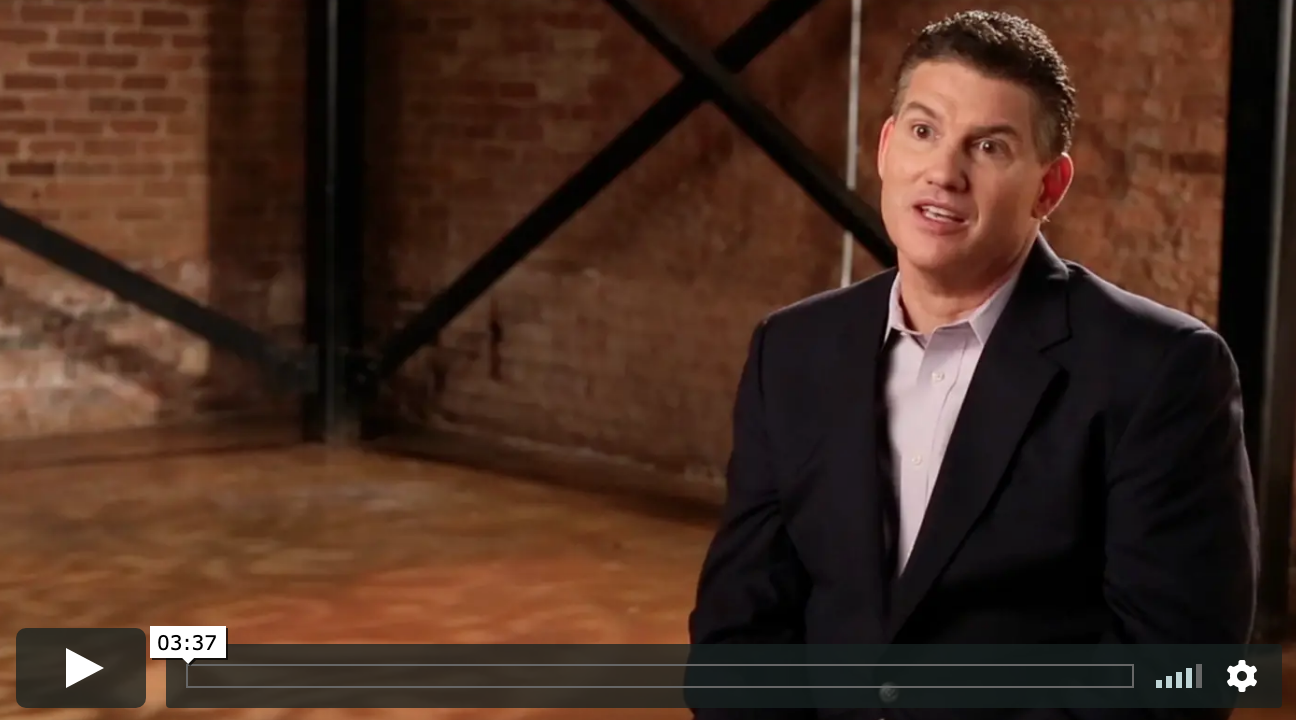
Each of the Core Principles is woven into Ronald Blue Trust’s investment decision-making process. Portfolios are constructed to achieve an ideal exposure to different economic environments at reasonable risks. Hear from Ronald Blue Trust representatives and other experts about how they use Principles-Based Investing (formerly referred to as Principled Reasoning) to optimize allocations and how they leverage Vident Financial solutions to embed principles into their investment portfolios.

Watch the full video by clicking on the image below.