Episode 157 – Marks on the Markets – Private and Public Overview with Justin Speer and Phil Jung

Episode 157 – Marks on the Markets – Private and Public Overview with Justin Speer and Phil Jung

Podcast episode

Episode 157 – Marks on the Markets – Private and Public Overview with Justin Speer and Phil Jung

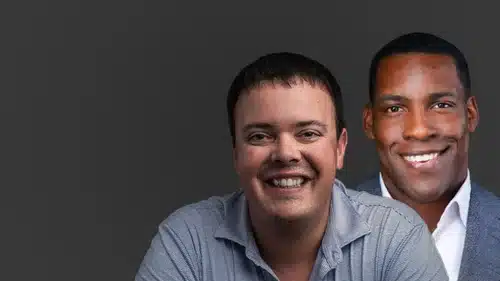
In this edition of Marks on the Markets, we’re joined by frequent collaborators, Justin Speer and Phil Jung.

Justin is the Principal and Senior Analyst at Sovereign’s Capital where he focuses on Private Equity. Phil also works with Sovereign’s as a Venture Capital Partner.

The two join John to give an overview of private and public markets as we head into Fall.

All opinions expressed on this podcast, including the team and guests, are solely their opinions. Host and guests may maintain positions in the companies and securities discussed. This podcast is for informational purposes only and should not be relied upon as specific investment advice for any individual or organization.

Episode Transcript

Transcription is done by an AI software. While technology is an incredible tool to automate this process, there will be misspellings and typos that might accompany it. Please keep that in mind as you work through it.

John Coleman: Welcome back to the Faith Driven Investor podcast. This is your host, John Coleman, and this is a belated monthly marks on the markets for September. Producer Joey has already disciplined me for this guy, so no one needs to write in. I know I’m a bit late on marks on the markets, but to make up for that, we have an extraordinary episode with two of my favorite people. Justin Speer is one of the leaders of our public equities complex at Sovereign’s Capital, and Phil Jung is one of the leading partners of our venture complex at Sovereign’s Capital. And today what we thought we would dig into is the current state of the markets broadly, but also what it’s looking like in public markets, what the economic outlook is, how we’re seeing the IPO market and also what late stage venture, an early stage venture are looking like along with how we’re coming alongside CEOs and other leaders in the midst of what continues to be a tumultuous environment. So, Justin, Phil, thank you so much for being here today.

Justin Speer: Thank you for having us.

Phil Jung: Glad to be on.

John Coleman: And Phil got in at 2 a.m. last night, so we’re expecting some really fun commentary out of him today.

Phil Jung: Yeah 3 cups of coffee so far. And yeah, it should be fun. Hopefully, hopefully this turns out okay.

John Coleman: Awesome. Well, I’m going to start with a little bit of a softball for both of you, and I’ll let Justin start so that Phil can drink a little more coffee. Just give us your current kind of 10,000 foot overview of markets. Justin, Obviously we want to get into both public and private. You’re a bit more public focused. Where do markets stand today in September 2023?

Justin Speer: All right. So we established a bear market trough in the third quarter of last year and have since had about a 25% recovery in the market, which is about the seventh worst, I guess, recovery from a bear market trough this far off the trough nearly a year actually was incredible. But positively, we’ve seen inflation, which was the number one problem for businesses and for all of us has really come off the boil in the last year. It’s actually it’s led into June, 12 consecutive months, so about 3%. And that’s where we’re hanging out from nine in terms of the headline inflation. And so that’s a good thing and that’s a function of what the Fed has been doing, aggressive, like the most aggressive tightening we’ve seen in at least 40 plus years with the Fed funds rate now at five and a quarter or five and a half. So we’ve had a monster move in interest rates and it’s really led to this. It’s an interesting backdrop. It’s a lot of just dichotomy. And what I’m saying, like in terms of big picture macro things that we’re seeing, we’re seeing consumer confidence has been pretty resilient, which is a function, I believe, of, again, excess stimulus that’s still in their pockets. We had $7 trillion of stimulus. It worked its way to the economy. We’re still working that down. And the other thing that’s really been surprising to me in the wake of the Fed’s tightening is the employment picture has been actually pretty solid. I would have expected and in fact, if you look at the yield curve and it was anticipating that we would see the unemployment rate move up, it really hasn’t moved up that much. And I think that’s really moved to the forefront of the challenges for business is just access to qualified labor. But on this front, I think that’s the balance Is the Fed, they’ve tightened. I don’t know how much more they need to go. I think the question is how long they need to hang out here. And we’ve seen a bifurcation in markets where housing activity has been pretty sluggish in general. Existing home sales, we’ve seen manufacturers struggling. If you look at the sentiment surveys for manufacturers, they’ve been subpar for a while, almost depressed. But on the other side of that, we’ve seen growth. Equities in particular have done really well. We’ve seen the emergence of generative AI, which has extended maybe some of the growth use or lifted the growth use for some large, large players in the market. So that’s supercharged some of this recovery. But it’s been a tale of really two different stories that I think the question is how this thing ends is can we get inflation down to 2% without breaking the economy? And I think if I look at valuations, for example, I’m getting two different rates. Large caps are actually kind of expensive. Large cap growth stocks are expensive value and small cap stocks are quite cheap. So the market seems to be saying two different things that the economy’s great for the large caps, but we may be entering a really potentially a pretty severe recession if I just look at the small cap valuation. So it’s one of the more complex backdrops that I’ve been a part of as an investor in the last 20 years.

John Coleman: Men, I want to unpack that a little bit more. But before we move to Phil, I wanted to follow up with one quick question. I think it was two or three months ago, it was accurate to say that it was nine or ten stocks, the mega-cap stocks that had driven more than 100% of the return of the S&P at that time. Is that dynamic still that pronounced Justin or has that moderated such that other larger stocks are growing in line with those mega caps?

Justin Speer: Yes. A year today the market. And this is the S&P actually the Russell 3000 is up about 18% year to date. And what’s really leading that is tech and communication services, which is Facebook, but they’re up over 40%. The broad tech sector, which is a big chunk of the market, is up 45%. Most of the other sectors are low single digits. You do have consumer discretionary, which took it on the chin. Last year is up 30%. But most of the other sectors are, you know, flat that up mid-single digits with the worst performing utilities and health care is down 1%. And of course, the regional banks, because of the bank turmoil in March, April, down 17% year to date. But yes, tech is really leading this thing, very big tailwind to the broader market from tech and digital. And consumer discretionary has come along here in the last few months.

John Coleman: It’s great. So Phil, moving over to you, I mean, you offer a dominantly in the private markets right now, particularly with venture backed companies along their growth from kind of seed to pre-IPO stage. Tell us what you’re seeing in valuations right now and how the market’s reacting.

Phil Jung: Yeah, well, first off, the last 12 year and a half, 12 months, year and a half, it was a tough time for the private markets and especially in the software space for technology businesses. You just heard in the headlines every week of large companies and private companies doing layoffs, reductions in forces and people looking for opportunities. Their next gigs because they were laid off, functional areas and team leads, all were cutting their budgets as well. You know, oftentimes in an executive team meetings, CEOs were asking each of their functional needs to figure out how they can trim their spend or expenses by ten, 20, 30%. So a lot of that happened. Now, fast forward to where we are at this point in the year. You know, there are starting to be signs of life. You know, green shoots or whatnot. And what we’re seeing in the private markets, you hear less frequently of rifts and further layoffs. A lot of that has already happened. A lot of companies in their first and second round of layoffs. And at this point, people are planning ahead for next year, 2024. And budget reforecasts have pretty much halted at this point for the rest of this year, and they’re not thinking forward. And so we’re starting to see signs of life expansion in average contract values. We see this in our portfolio as well, as well as perspectives in terms of growth prospects for next year. Hiring plans is slowly starting to pick up again as we go into 2024 and especially this time of the year, post-Labor Day before the holidays. This is traditionally a very active time for the private markets to be deploying and investing capital. People are back from their summer vacations and investment committees can now gather again and folks are looking to do deals before the holidays slow down again. And especially if you raised a fund over the last two or three years. I mean, you’re sitting on cash. Well, not cash, exactly. You’re drawing capital from your employees with capital calls, but you have a fund available that you are looking to deploy capital into in promising opportunities. So this is these next few months here. It’s kind of a sprint in the venture market of activity. So, you know, all I’d say there’s a cautious recovery that seems to be happening. If you look at a lot of the data that’s put out by Carta, Pitchbook, etc., valuations early part of this quarter and Q3 seem to be picking back up again from some of the lows in Q1 and Q2 of this year. So there’s reason to be optimistic and at least in the private markets for sure.

John Coleman: I want to come back to this question of the real economy, which Justin started to touch on both in the U.S. and potentially abroad, if you feel comfortable talking about that. You know, we’ve talked about on this podcast before that the most recent financial crisis was one of the strangest in recent history, certainly more echoing what we saw back in the 1970s than almost any recent period where you had this combination of supply shocks due to COVID, due to the Russian invasion of Ukraine, due to limited supply chain, is a hangover from COVID. And those incidents we saw massive inflation kicking in and the Fed having to respond to that as just in their rising rates. We saw this regional banking crisis that erupted in the middle of that. And so there were all these complex factors playing in. Certainly some of those seem to have calmed, at least from my perspective. The supply chain shocks seem to be normalizing for the most part. As Justin mentioned, inflation is headed in the right direction, although only with continued rising rates. What are you guys seeing in the real economy right now? Where do we stand with regards to where we were in that crisis? What are you paying attention to? And particularly on this front of recession in interest rates? Do you have a perspective on where we might be heading? And maybe, Justin, if you don’t mind, open this up on that front.

Justin Speer: Right. I think a lot of the challenges were just due to just these imbalances, in part due to the supply chains, due to absenteeism and people just staying at home from work in the immediate aftermath. But then. You tack on that stimulus. And it’s just fascinating to see that you saw money supply just take off like over 25% expansion in the money supply. And then people now have money to spend, but they don’t spend it on hotels and restaurants. Immediately they go out and they spend it on goods for shoring up their home and improving their home. So you saw in some instances like retail sales, like gap up over 40% year over year, it was insane. You know, retail sales are up 5%. So you’re pulling ahead in some instances, demand like more than five years in a single year. And so it just leads to these massive supply chain imbalances. And then obviously, the tail result of that is inflation. And so what the Fed has been doing is really trying to reverse some of that through the tightening measures, including increasing the Fed funds rate, but also money supply. And I think this is something that I’ve done some work on money supply contracted for the first time in 60 years in December of last year, based on sort of a statistical work and regression analysis that we’ve done. Money supply will have an impact in about a 12 to 24 month lag. So we are still yet to feel the full, long and variable lag of some of these measures. And I think that’s where a lot of questions lie with regards to the macro. I think that you’re going to still see some headwinds in parts of the economy in particular as the full manifestation of these actions from regulators or policymakers are continue to pay through the pipe on their way through. We’re going to see, I think, more of that manifest itself into the first half of next year. And so I don’t think we’re done. And that’s where the Fed is going to look at the data. It’s data dependent. The big one, though, that I’m watching in terms of the imbalances and the employment picture and employment, the unemployment rate is really a lagging indicator. If you look at job openings, the job openings are still well above historical levels. And if I look at it, are a little under eight or a little over 8 million job openings versus historically close to 5 million. But that’s come down from over roughly 12 million back in 2022. So we’re starting to see that come off of oil. And that’s going to go a long way in easing the pressures on inflation from wage. If that can continue, and I think that’s what we’re going to keep our eyeball on is really that is the employment picture. And the real question is, is this tightening going to manifest itself in ultimately breaking down the economy into a recession? And right now, I think the broader view is that if we do have a landing, it’s going to be a soft landing, which would be really amazing considering all the moving parts. But if we land on a soft landing kind of outcome, that would be a really ideal outcome. I think that’s probably being priced in right now. And the bond and the equity markets.

Phil Jung: Soft landing is a similar kind of narrative that we’re hearing in the private markets. I unfortunately have not run any regression analysis, John, so I’m sorry, I don’t have the wisdom of Justin to back up my claims with any sort of data. However, just anecdotally, you know, in the private markets, it’s especially in investing where a lot of that does go into technology, at least for venture capital, it’s very different than the broader kind of macro real economy where unemployment is low. You know, today as a consumer, if you’re looking to hire a plumber or in fact a person or if you’re a daycare center looking to hire workers or even in education in schools, it is tough. It’s hard to find folks because unemployment is so low. But in the technology sector, it is really, really hard right now if you’re a tech worker because there just aren’t a lot of job openings and folks that are expanding, companies that are growing. So there is some narrative around a tale of two cities in that sense. But broadly speaking, there does seem to be a soft landing approach for next year that people are planning for. Next quarter should be better than last quarter. The next six months should be better than the last six months. And the next 12 months certainly should be better than the prior 12 months. Boards are planning to build in this type of growth for next year’s budgets, as opposed to this year when there are constant forecasts and ratcheting down what we were expecting to see and with the rise of interest rates. If you are a fund that does make for a difficult environment for fund raising, given that a lot of investors and LP’s, you know, they can invest risk free at a 5% return, whereas in the risky private markets where cash would be tied up, these are typically long hold periods for private investments and a lot of the uncertainty. So if you’re a fund actively out in market in the last year, this year, it was certainly a tougher environment to raise capital. But if you had raised your fund in 2020, 2021, cash was flowing and a lot of those funds are sitting on available liquidity to deploy capital into. And so in the early stage Market seed series A, startups were still raising capital, the ones that had a real differentiated product to value proposition customers and really strong growth in metrics seen in Series A round. We’re getting done now. They were taking a little bit longer, perhaps months instead of weeks, as opposed to a few years ago, but cash was flowing into those companies. We did see a slowdown in mid to growth stage companies that closely mirror more of what’s happening in the public markets where Justin spends all of his time. But again, 2024 should be much better than what we are seeing in 2023 in terms of activity of the private markets.

John Coleman: That is super helpful. And Phil, don’t worry about having not run a regression analysis even in our short time with the FDI podcast. Justin Speer is responsible for at least 80% of the regression analysis run for this podcast, and we’re very grateful for grateful for it. You know, one topic that’s coming up a lot right now that I’d love to just touch on briefly is the IPO markets obviously important for the work that both of you do? Day to day IPO markets have been pretty frozen the last couple of years. You know, and leading into that, we had this weird dynamic where there was almost like a twofold IPO market. One, there had been this irrational explosion of SPACs, which we could talk about just a bit and how those have ended up. Some of those have ended up continuing doing really well. There was a company I talked to recently called Public Square, for example, that went public through SPAC quite successfully from their perspective. And there are others I know that are soon to go public through SPAC, but that market has died down. You don’t hear people launching SPACs very much now and then. The conventional IPO market has also been frozen as I think later stage venture backed companies are waiting for more favorable valuations in markets. So I would love to get y’all’s perspective as valuations have started to creep up both in public and private markets. What are we seeing today? Where did the IPO market stand and what do we expect in the near future? And maybe, Phil, if you don’t mind, Well, we’ll start with you on that one.

Phil Jung: Yeah. Yeah. Happy to start because I’m very interested in kind of where Justin takes this from, from what I share onwards. You know, a lot of the mid and growth stage companies were just waiting for the right time to see when the IPO windows were starting to open. Now, in the meantime, so many of these technology companies were getting much more efficient with their burn ratios, with their targets on profitability in the rule of 40, for instance, is a metric that’s often referenced by high growth or late stage private companies. And so you have almost this sideline this backlog of folks on the sidelines waiting. And in recent weeks, we’ve heard of folks like Instacart and ALM and Klaviyo waiting to go public later this year. And so there’s been a lot of conversation about whether these early entrants are going to really blow open the doors for a strong Q4 going into 2024. And all of that trickles down eventually to the early stage side once the capital markets open up from an exit M&A IPO window that gives earlier stage investors and companies a lot more confidence that, hey, there is opportunity for continued growth and capital allocation for us. So that confidence will instill down and trickle down. So I’m curious, Justin, what you’re seeing, because that is the sentiment amongst, you know, growth stage investors of we think it’s right around the corner. There are companies that have really strengthened their performance and their efficiencies and there’s a huge backlog of companies now call it plus 200 million of RR, you know, Agusto, Stripe, Brex, Databricks, others that are just kind of waiting to see when the right timing is. I think the big question is valuation. You know, where are these multiples going to kind of play out? And they’re certainly not going to be what they were like a couple of years ago. But are they closer to long term averages, maybe something like ten x of, you know, revenue multiples of what the public markets will bear this time around in the next couple of quarters? I think that’s a big question mark that private investors are eager to see and watch.

Justin Speer: Yeah, it’s fascinating. You know, there’s always in my mind, a particularly in an environment where we are, where it’s a slow growth environment, there’s always appetite for growth. And I think growth becomes even more attractive in an environment like this. It’s interesting to note also that if you look at the broader market growth, equities have outperformed value equities by 25 percentage points thus far year to date, second best since 2000 performance. It’s incredible strength of growth equities, which I think is a nice that’s nice fuel for confidence for IPOs. So I would I wouldn’t be shocked with the strength of the market today to see more activity on that front.

John Coleman: That’s really interesting. And I’m for my part, I’m hearing the same, which is now that valuations are recovering in public markets. It’s much more attractive for these late stage companies. I mean, the other thing we got to think about is a lot of these later stage companies in private markets, the funds that are holding them are coming to the end of their lives, right? Phil? And so because there has not been a lot of liquidity generated over the last two years, a lot of investors are getting quite anxious. And they haven’t been able to get liquidity through the secondary markets because secondary discounts are extraordinary right now and you’re looking at 30 to 60% discounts to NAV on secondary transactions. And so I think people are very hopeful that the IPO route becomes available to those securities and that will have a trickle down effect, it seems like, to the rest of the early stage markets.

Phil Jung: John, if I may just double click on that for just a minute, especially for our listeners who may not be familiar with fund dynamics. You know, most private investment funds have certain windows. It’s a ten year fund. Maybe there’s a couple of one year extensions, but in the LPas, they’ll be agreements. There’s an end of life where LPs are expecting to receive capital back. Right. It’s not like most funds just can hold on to a position in perpetuity. And there are other vehicles for that. But that’s not how most funds are structured. And so if you’re a large fund with a significant or material ownership stake in a company, you may put pressure on a company to go public. Maybe you’ll be one of the first to potentially open up this IPO window later this year or next. Because you need liquidity, you’re obligated to provide liquidity back to your investors. So that’s something that maybe not all entrepreneurs think about when you’re taking outside capital. Understanding the dynamics of where a fund is in their lifecycle, are they early in their investment period? Are there late in their investment period? What is the fund lifecycle timeline of that particular fund? So that’s something to be mindful of. One other interesting piece about companies going public is, you know, another reason to do that might be from a company entrepreneur’s perspective is to almost reset the preference stack. So for a lot of these high growth companies that have raised tens or hundreds and hundreds of millions over the last several years, when capital is flowing, when investors invest capital, they oftentimes get preferred shares. That comes with a certain liquidation preference. That means in an exit scenario, these investors are paid back first before the leadership or employees in an option that have ownership through an employee stock option pool, see any types of proceeds. And so you stack on hundreds and hundreds of millions of dollars depending on what the exit price is. Unfortunately, most common shareholders in these types of scenarios may not see any sort of proceeds, but what happens when you go public is all of these preferred shares convert to common. So in some sense you’re almost starting over in terms of that preference stack. So that might be another reason that drives companies to seek to go public to help with that conversion. So a lot of that goes into it. And again, Justin is the expert here and what that looks like. Those are some of the dynamics that are less talked about in terms of companies going public.

John Coleman: Yeah, I completely agree. Maybe to follow up on a thread, but to switch topics a bit headed into the next section. Justin had begun to bring up earlier segments that the markets seem to be excited about. I think AI is what everyone’s talking about feels eerily similar to, you know, eight nft’s in 2020 and like blockchain in 2017 or something. But, you know, I think we’d all admit that generative AI is a transformational technology. There have been great leaps made, particularly on the natural language processing side of that or on the large language model side of that through Chat GPT and others. What are industries or segments that you’re most and least optimistic about right now? And so Justin, maybe we’ll start with you on this, but as you think about industries, you’re really fired up to be an investor in those that you’re really cautious about right now. What are those?

Justin Speer: Right. And I think that on the heels of COVID and what that’s done is it’s really, I think, accelerated this growing affinity for digital experiences. And so where we’re seeing some really rapid adoption, I think it’s a secular growth thesis is in the adoption of these technologies. But really the shift towards electronic payments is one that I’ve been focused on. You know, that’s not something new, but there are some really, really robust areas of opportunity for disruption in a host of different sectors with payments and electronic payments in particular taking over. And there’s some really great cultures out there, really great leaders out there, small cap companies that have just massive addressable market so they can grow into. So I think that’s an area where I think there’s an area for disruption, for growth. And in an age where growth is hard to come by and the shake up in the financials in particular, and particularly the denting evaluations for SPACs, some of these companies, you know, came out of SPACs. And so there’s some really interesting valuations that I think don’t reflect necessarily the longer term opportunity that some of these companies have. And I’m pretty excited about.

Phil Jung: Yeah, on my end, you know, I think we’re full in this generative AI hype cycle. This past week was the latest YC Demo day over two days and effectively all the. Nominees reference that they were or some sort of AI company or generative AI company. Now, I think there is a lot of excitement, especially earlier this year, about what was happening in the space. And already there seems to be some clear winners. The entropics, the hugging face, the chatGPT, open AI, folks of the world. But what we’re most excited about currently, as we think about how AI can be used, are very specific opportunities. I use cases, verticals where I can assist and augment kind of human analysis or insights that are being driven. So for instance, we recently looked at a company, we’re still looking at a company that supports providers as they interact with patients during a live interaction to help document through technology. So there’s no manual labor that now needs to be inputted in notes and also the associated billing, the CPT codes and the requirements to help Bill for that time, which decreases the burden on the provider to spend after each patient visit, to spend and typing up notes and submitting all the required documentation for that time. We think that’s a really elegant use of AI technology in a way that’s real. Where [….] can you see immediate benefit? We’re also, it really continue to be excited about software. I mean, you know, it’s been how many years, decades since the phrase, you know, software eating the world has really taken over. But we’re still seeing applications of instances where software can continue to automate and provide just more efficiency. We’re excited about a company currently that has developed software for autism care clinics that are spending time with patients and their families. And these are children who are dealing with serious, prolonged kind of cases of support and need where often providers are working 30 plus hours with them. And all of the documentation in that case as well in terms of care plans and pathways and next steps and follow ups and appointments. All of that is still done pen and paper in some clinics. And so a software platform that really is the operating model for that clinic on how they run their business. We think that’s another way that software instance can really change the trajectory of how care is delivered. And so software, you know, specific use cases of AI, you know, those are areas that we use feel very excited about. And, you know, oftentimes people ask us, well, we have this great company, it’s not a software company. Would you consider investing? You know, currently that’s outside of where I focus today. And part of that is because for software businesses, it’s very different from other industries in the sense that, you know, once a software platform is created to deliver that same value to that next customer, it doesn’t require much in terms of incremental costs are that R&D has been developed, you know, that new user or that clinic or a customer can log on through a SaaS portal. So that’s a high margin business. And what that affords the company is margin to invest in other areas of growth or operations. And it gives you a little bit more room for error as you continue to scale headcount or sales and marketing team R&D, etc.. So we like those high margin businesses that can be scalable and we’ll continue to see, I think, a lot of growth in those areas. You know, an industry that has really fallen out of favor in venture is actually consumer consumer focused businesses. You know, during COVID, we saw this boom in e-commerce and home delivery of food and whatnot, post-pandemic. A lot of those industries and companies that saw, you know, rocket ship growth have really fallen out of favor. And that’s partially because, you know, one end user consumer behaviors, fickle, you know, preferences change and to to acquire customers, it takes a lot of marketing spend to stay top of mind. It requires massive marketing and advertising budgets. The cost of customer acquisition is very high relative to these other kind of software businesses, for instance. So consumer focused kind of opportunities have seemed to fallen out of favor, at least for now, in the venture industry. A lot of the direct to consumer models that used to be very exciting just even three or four years ago.

Justin Speer: That’s interesting Terms of the categories are the sectors that have been under pressure. You know, those pandemic gaming categories early on, I think are facing this this this hangover effect. That’s something to be mindful of because I don’t know not to look at everything, but I don’t know if current expectations from the broader market really reflect that reality, particularly as stimulus savings wear off. And I mean, how many times can you paint your home? Right? I mean, it’s just one of those things where we’re going to see a little bit of a hangover. And I think that that can last a while. The other area for us where there’s a lot of pressures in the banking realm, you have pressures from I didn’t realize this until I did a lot work on about nearly 85% of banks funding come from deposits that are yelling, you know, deposit rates of like 40 basis points. When I go money market rates and Treasuries and CDs at five and a half by five and a half percent. So their funding vehicles are going to be. Really under a lot of pressure. At a minimum, their margins are probably going to be under pressure over time. And then on top of that, you’ve just got dislocation and some of these valuations for office multifamily from this moving rates that’s going to affect the asset ledger book. And so it’s something that obviously led to a little bit of rumbling earlier than we haven’t even gone into like an economic kind of stress yet. Really, it’s more just valuations moving. But at the end of the day, I think banks are going to be an area where we have to be really careful with.

John Coleman: You know, And what’s interesting to me Justin to pick up on that theme. And then one that Phil mentioned with banks, there’s been this realization that what people thought of as a very safe place for money maybe isn’t. Now, no one lost a dollar because of federal guarantees, but in fractional reserve banking systems, there’s always been this disconnect where you deposit money in a bank, you think it’s incredibly safe because you’re not earning anything on it, or maybe you’re getting a small savings rate and then the bank levers that up 90%. Basically, they loan out, you know, 80, 90% of the money that comes in and deposits into into riskier assets. And because that’s been guaranteed through the FDIC and through these implicit guarantees of the federal government, I think consumers have largely kind of been unaware of that. But with the regional banking crisis, people have started asking themselves, like, why am I sitting in a repository account with greater risk when I can go to a money market with a better interest rate and there’s no real leverage risk like there would be in a fractional reserve account. And it’s fascinating because that is if that continues to catch hold, that is incredibly corrosive of the profitability of the typical bank structure, right, Because that’s where they get their money on the loans that they’re doing, the deposits that empower that. And I think people are more aware of how fractional reserve banking works now than they were even six or eight months ago. Probably the second thing I’d bring up, which Phil touched on, is, you know, as we look at these run in technology stocks, I think the tech sector for the first time in its recent history was forced to demonstrate discipline. And they actually did that in a way that investors appreciated. You know, one of the questions was always when this massive 15 year bull run in technology or maybe even longer than that ends, right, since the late nineties, basically. How are Google and Facebook and Apple and Amazon going to deal with belt tightening? Are they going to be able to conduct layoffs or are they going to be able to sort out which parts of their business are profitable and not profitable? Are they going to be able to manage costs when they need to because they’ve never been forced to do that before? And I think, Phil, my impression, both in private companies as well as their larger technology counterparts, is that investors saw real constructive cost control in those companies and they demonstrated ability to manage through crises when they needed to cut costs. And I think that’s part of what gave people confidence to get back into these names, right, is the idea that they saw them manage themselves reasonably well through what could have been a downturn. And so my hypothesis is that that was approved point that people have been waiting for for 15 years and that the tech sector actually largely passed on that. Great.

Phil Jung: Yeah, that’s a really great point, John. And now I got to say, I think it took a little bit of time, several quarters for that to really hit home for a lot of entrepreneurs and maybe even, you know, 18 months or so. But it’s really interesting, you know, in today’s environment, even when we get pitched opportunities at the seed or series stage. So very, very early companies oftentimes, you know, call it a million or a couple of million in revenue. Even entrepreneurs are presenting investment opportunities into their company as almost a dual path. We can leverage this capital wisely. We know if we put in a dollar in marketing, it’ll spit out 110% in top line revenue growth, for instance. And so we can use that towards growth and dual tracking it with this capital, there’s a path towards profitability. Right? And so even at the earliest stages of company formation for entrepreneurs to be thinking about that profitability targets and efficiency ratios and that’s just not something we were seeing, you know, five plus years, you know, the whole bull cycle almost. Right? When capital was plentiful, entrepreneurs were just thinking about, well, if I hit my next top line goal, I’ll be able to raise more capital. And burn does not matter as much. And so it’s really interesting. It took some time, but we’re definitely seeing that in today’s market.

John Coleman: Guys. This is the Faith Driven Investor podcast. You guys are faith driven. Investors want to turn now a little bit from the kind of financial market dynamics to what you’re seeing on the faith front. Two topics come to mind, but I want to start with one first, which is each of you takes a different approach to what we termed spiritual integration in the companies that you serve as a capital partner and what that can look like. And in fact, when we say spiritual integration, we just mean how does the leader of a company live out their faith in the context of the way in which they manage that company or they lead that company. And how can we as capital partners, encourage them on that journey in a way that creates human flourishing and love of neighbor within those companies? Maybe to start with, you Phil in the venture markets. What is the latest in spiritual integration? How are you all coming alongside companies and what are you encouraging companies to do? This may be different than what you would have done a couple of years ago, or that’s beginning to be innovative.

Phil Jung: Yeah, well, maybe I’ll start with the trend that I’m seeing More and more common is, as a lot of companies are either kind of remote or in a hybrid scenario and you’re not seeing everybody in the office. I’m hearing more and more examples of companies that have dedicated channels, whether it’s a Slack channel or other forum where people can share highlights, encouragements and also prayer requests as well from those within their company to celebrate the highs and the lows in ways that we might encourage one another. You know, some have explicit prayer channels, even though these are not, quote unquote, Christian businesses. Right? These are secular businesses led by believers. But they feel in this day and age where we’re all looking for something bigger than just us, they’re looking to join a company that cares about an individual and their whole self. They’re promoting and encouraging those ways to communicate and bring your whole authentic self to work. So I’ve been really strengthened and encouraged by that. In this environment, it is really tough if you’re an entrepreneur in the early days of company building, oftentimes you don’t have a fully built out executive team. Maybe you’re solo founder. The highs are really, really high and the lows are really, really low. And so we see our role as capital partners, obviously, with supporting business related initiatives and budget reviews and go to markets and all of that. But just encouraging founders who are so often heads down into their business, which can get demoralizing at times. We act as a reminder of, hey, you know, in this market, if you’re only growing, you know, two X instead of the three or four X that you are aspiring to do this year, that’s actually really good in this market. You know, this is what we’re seeing amongst your peers. That has been a huge encouragement. We’ve gotten that direct feedback, I think, oh my goodness, we’re only growing two X this year. Last year we did four X and I thought we were just, you know, sucking completely missing it. And yet it’s really helpful to get a sense of what you’re seeing in the broader markets. You know, that’s been a very small thing that we’ve realized. You know, we’re seeing so many thousands of companies a year having 80 plus portfolio companies. That’s a small way that we can encourage founders of what’s happening in the broader macro. But most importantly, it’s reminding entrepreneurs that their identity is not in their business, it is not in their performance. Yes, of course, it’s great if your company is thriving and things are going well, but first and foremost, your identity is as a child of God. And whether your company’s success then becomes the next unicorn or it fizzles out next year. And that kind of fizzle rate is very high in venture, by the way, an early stage venture that your identity is not in your work, it is not in your performance of your company, but it is purely because you are a child of God and reminding them of that, praying with them, asking how their families are doing, how things at home are going, how their church life or their community is going, and just reminding folks that there is more to life than just their business. Although it is very important. Just to be clear, that has been a great reminder for us, even as capital partners, to double down on that effort, especially during this time when things are shaky and raising capital becomes harder and growth becomes harder than in prior years. So we’ve been trying to be very intentional about that, setting aside to pray with our founders, with them, and outside of time with them too, with amongst our teams, encouraging them of what’s happening in the broader environment so that they can kind of stay plugged in. And in the know, I think, for instance, after we record this, this might be a great resource that we share out in terms of how Justin and John are thinking about what the public markets and the broader kind of later stage environment is looking like, especially for those early stage founders. I think people would be encouraged by that.

John Coleman: Fantastic. Justin, what are you all seeing? I mean, public companies, CEOs and public companies are obviously in a somewhat different situation than our earlier stage companies. What are you all saying there?

Justin Speer: And so we are really blessed to be a part of the culture here at Sovereign that really is focused on spiritual integration and recognizing that culture is really, really important. And we’re navigating pretty complex times with, you know, some and I’ll just be open and honest. Some strange ideas coming in to the marketplace about what a strong culture is. And so, you know, our process is all about finding companies that have faith driven leaders that are doing incredible things for their people. Your servant leaders have golden rule oriented values. These are companies that have incredible benefits. They do some really wonderful things for their people, not just their employees, the families and the communities around them, and do so in a way that’s really God honoring. And one of the things that we do at sovereigns and one important area of impact that we have on the public equity side is that we’re hosting these roundtables for CEOs of public companies to come together. And it’s a small group which creates like a really great format environment for just openness from peers who are dealing with similar types of challenges as public company CEOs. So we’re bringing these leaders together and they’re learning from one another about best practices that each of them are deploying within the organizations to serve the people and to enable their people to flourish. So I think that’s a pretty unique thing that I’ve really never been a part of in my career until I came here. It’s one of the highlights of my career, really, is to be able to be a part of that and really blessed to be a part of that. But we are just delivering these companies, the opportunity and the CEOs of these companies, the opportunity to learn from one another? And each leader has a different they have different roads, different geographies, different industries. And so as our co-founder Luke Roush would say, our aim is it to be prescriptive on a set of tactics but rather descriptive on how leaders can maybe serve their employees, build on what they’re already doing within each of their companies? And hopefully these CEOs will be served with such great ideas from their peers that they act on them. And that will manifest itself in the many thousands of employees that are represented by those leaders in these rooms just to deliver incrementally exceptional culture. And so we actually just had our first roundtable in Dallas have nine companies in attendance, over 40,000 employees represented, 100,000 family members. And that’s, from our perspective, what it looks like to positively serve these public company CEOs, not asking for anything in return, just trying to help them and help their people flourish.

John Coleman: That is awesome, guys. Well, you know, we end all of these podcasts briefly by just asking folks what they’re learning from scripture right now that they might want to share with others. And so just in a couple of minutes, Phil, is there anything on your heart right now that you’re learning and scripture you want to share here with the audience?

Phil Jung: Yeah, maybe. You know, I’m taking my own medicine in terms of what I shared last of even as an investor, just not rooting my identity in fund performance, you know, fund size, the logos that we’re able to partner with in terms of portfolio companies, you know, all of that is in God’s hands. And so in John 15, where it reminds us that I’m the vine and you are the branches, that if you remain in me, that you will bear much fruit and that apart from me, that you can do nothing. I think that’s so humbling and yet so empowering that even, you know, I may think that if I just am able to crank out a couple more hours of work, then maybe, you know, this next company or this next partner of ours, you know, we can close that deal or that opportunity. Well, you know, just as much if I go to sleep and be energized for the next day, God is still working in my times of slumber. And so just that reminder that even as an investor, that there’s only so much that I can do that is ultimately in the Lord’s hands and in that I find security and comfort and peace that transcends this world. I mean, that that’s the message that I’m trying to share with our entrepreneurs that I’m preaching to myself at the same time. So especially in this very competitive industry where there headlines every single day of activities and exciting things that are happening, just knowing that, yes, that is good. But also, you know, God is better in terms of how he is moving and what he’s able to do beyond our imaginations.

John Coleman: It’s a good word, Phil. I will say I feel a little bit guilty that we asked you to prioritize this over sleep given the 2 a.m. arrival last night. So Phil did skip his nap for the Faith Driven Investor podcast, but hopefully that’s a ministry resource that it’s a good priority. Thank you. Phil. Justin, what’s on your mind right now?

Justin Speer: You know, just coming off of the fact that Phil got in at 2 a.m. and he’s doing this, he looks fresh. I think you’re you’re doing well. Phil. But in that vein, you know there’s a section of text and scripture. Mark Chapter six really in verse 48 is where I’m thinking about It’s on my heart after all of our discussions, but know the disciples of Christ. They’re in training, they’re in basic training, and they didn’t really know who He really is. They knew he was special. They do not really how special he is, but he just fed 5000 miraculously. And before that he gave them the power over unclean spirits and they’ve seen him calm storm before. And the people after he fed 5000 wanted to make him a king. And Jesus departed to a mountain and his disciples were left like, What in the world? And we’ve left everything for this man. And now we’re leaving him. We’re alone in a boat, rowing in verse 48. So Jesus saw them straining. Rowing for the wind was against them. Now, about the fourth watch of the night, he came to them walking on the sea and we’re pass them by. So these men were probably three, four or five in the morning. They had just pulled an all nighter. They’re exhausted and they’re rowing in this boat and they’re afraid. And then here comes Jesus walking on the water. And then you come to realize that they now realize that this is more than just the king. He’s the king of kings. This is God. No one can do what he can do unless God is with them. And more importantly, that He is God. And so sometimes, you know, you get in the boat. And I realize that these companies that were investing and I didn’t realize that one in four people are coming to work with either mental health or a substance abuse issue. People are dealing with a lot. And sometimes we’re all dealing with a lot. And we are rowing and we’re trying and we’re going against the wind and we’re exhausted. And I think we just need to remember just as what Phil is saying just to keep our eyes on Christ. And and they apparently were still a lot of learning to do because they were afraid they still had to build their faith. And it wouldn’t be ultimately until they saw him on the cross. And he resurrected three days later that they really had their faith and their hearts were melted and they did some amazing things in his name after that, in particular about let’s just keep our eyes on Christ and recognize that our labors not in vain. And he’s with us and he’s in control and he is the master of the universe. And I love God very much, and I love these stories. To help remind me.

John Coleman: Man, I feel like Justin just ran a regression on scripture, right?

Phil Jung: That was going to say the exact same thing. John That is the equivalent of a regression analysis, man. I’m glad. I’m glad I went first.

John Coleman: Justin Phil, you guys are awesome. Really appreciate you making the time today. I really appreciate your insights on markets and I hope you will consider doing this with us again. Thanks for joining the Faith Driven Investor podcast.

Justin Speer: Thank you John, thank you Phil.

Phil Jung: Thank you.

Subscribe to the newsletter

Stay Connected
to the Movement

We know that as an Entrepreneur, your most valuable asset is time. So each month we take the very best of the podcast, the blog and all the news, resources, and upcoming events happening across the space and bring it to you.

Episode 157 – Marks on the Markets – Private and Public Overview with Justin Speer and Phil Jung

Episode 159 – Marks on the Markets – Thematic Investing with David Erickson

Podcast episode

Episode 159 – Marks on the Markets – Thematic Investing with David Erickson

John and Luke are joined by David Erickson, the Chief Investment Officer of Ascension Investment Management for this month’s edition of Marks on the Markets.

Ascension Investment Management helps their clients reach socially responsible investment goals without sacrificing returns. They do this by delivering high-quality comprehensive investment solutions that enable clients to better carry out their mission by allowing them to focus on the big picture

In this episode, David unpacks their approach in more detail, gives an overview of what he’s seeing in the market, and helps us understand the value of thematic investing. 

If you like this episode, be sure to follow, review, and share the show.

Relevant Links:

https://ascensioninvestmentmanagement.com/

All opinions expressed on this podcast, including the team and guests, are solely their opinions. Host and guests may maintain positions in the companies and securities discussed. This podcast is for informational purposes only and should not be relied upon as specific investment advice for any individual or organization.

Episode Transcript

Transcription is done by an AI software. While technology is an incredible tool to automate this process, there will be misspellings and typos that might accompany it. Please keep that in mind as you work through it.

John Coleman: Welcome back to the Faith Driven Investor podcast. This is John Coleman, your host, and I am joined today by co-host Luke Roush. Luke, how are you doing this morning?

Luke Roush: It’s a great day to be live, John. Good to be with Dave here.

John Coleman: That’s an endorsement. That’s an endorsement. Well, today we have a very special episode of Mark’s on the Market. We have Dave Erickson with us. Dave is the CIO of Ascension Investment Management, which manages more than $40 billion in assets dominantly for Catholic clients and institutions. And so they’ve been doing great work for a long period of time. Dave’s held that role since 2009. I believe he had more than 30 year career in investment management, including the University of Wisconsin, Strong Capital, PNC Bank, Chemical Bank and other institutions. And we are very fortunate to have Dave today talking to us about themes he’s seeing in the market and the way in which Ascension conducts thematic investing. So Dave, thank you for being here with us today.

Dave Erickson: Thank you for having me.

John Coleman: Well, listen, the first thing we like to do here, given that this is a mark’s on the market, where we’re just hearing perspectives on the current market environment is to get your kind of broad overview of where you think things stand today. It’s been choppy for the last 18 months Here. We’re recording in September of 2023. What’s your outlook for the remainder of the year for these choppy markets?

Dave Erickson: Well, again, thanks for having me. That’s the question of the hour is which landing do we have? Is it a soft landing? Is it a hard landing? Is it a no landing? And what’s been interesting over the last few months, it feels like there have been months. They’ve had each theme and it’s switched to another. It seems like, well, we’re definitely no landing. Its place is coming down. We seem to be going a soft landing. So that’s what we’re debating right now. I was recently at a conference where there is a panel of economists and they all were relatively in the same ballpark of kind of feeling pretty good about a soft landing. And it makes me nervous whenever I hear a consensus and people are agreeing, I feel like, well, there must be something we’re missing and something is wrong. You know, if I think of the history of how we’ve gone through Fed cycles and economic cycles, you know, normally if we hit a inflationary period, the Fed raises rates. It usually there’s a lag before those rates take effect. And if rates go too far, sort of slows the economy, too much unemployment rises. And some of that had it made a good point to me once that said, you know, unemployment has never gone up 1% or at least rarely have gone up 1% and stopped, which is what the Fed is trying to engineer right now. They want inflation to come down and inflation goes up a little bit. You know, we can handle that, but maybe we go from three and a half to four and a half, or if it stays there, there is your soft landing. I’m just skeptical that we can reach that so perfectly. You know, I think the lag of what the Fed increases and interest rates has had in the economy is not fully been felt. And I feel like we’re feeling it now. We’re seeing credit card delinquencies increase. We’re seeing layoffs, you know, gradually, you know, all of the growth metrics and consumer outlooks, you know, all those are just kind of getting a little bit worse. And that’s what it would look like if it became a hard landing, is you would see inflation drop, which is great. But then you’d also see growth in economic numbers also decline. You know, will it sort of glide into a really nice ending so that we hit a soft landing? And I think that question is still open for debate. You know, they’ve raised it very, very quickly. The economy, our economy, the global economy has been built on 0% interest rates for a very, very long time. And what happens when you refinance, you know, at five, six, seven or higher? I think those things are all in front of us. I have lots of thoughts about that. And can in all of that is that we’re trying to figure this out on the backs of a pandemic that we’ve never experienced before. So when someone says you should never say it’s different this time, I think, well, maybe it is different this time, because I don’t know if we’ve ever had a pandemic in an economy like this. So maybe we were fine. The pandemic came. There’s a lot of moving back and forth to get to equilibrium, but we will get there because we’re just trying to get through something we’ve never experienced before. So I guess I think forward I’m hopeful for a soft landing that at least if it’s a recession, it’s mild. But I think there’s a real risk that we sort of dip into more recessionary period then sort of hit it just right.

Luke Roush: To do a follow up on that is, you know, when you think about kind of a return to normal and what that looks like, do you think of it as kind of a return to historical norms, then we probably keep rates where they are? Or do you see us actually going back to where we were in 2017, 1819?

Dave Erickson: Yeah, I think it’s hard to imagine we go back to zero or, you know, one or 2% in short term rates. So, you know, but, you know, it has been in my career that I’ve seen, you know, short term rates at five, 6%. So, you know, we’ve been here before and I don’t remember us feeling that, you know, the world was falling apart or rates were too high. But we feel that now because we’re so used to zero, you know, our long term being two or 3% now our mortgage being sub 3%, you know that it’s seven. You know, our hair is on fire. There was a time when that was true. So what is normal? You know, those are just such good questions are the answer to, you know, I would be able to trade the next five, ten years and just do it. Great. You know, I think there were deflationary forces that we’ve been building upon for years with China exporting deflation for a long time. I think that is generally over or, you know, we have to have severe change to see that come back into play so that maybe, you know, what was normally, 2, as a short term rate, you know, maybe that adds another percent or two on top of that deep globalization. At the same time, the rate of technology change is so incredibly fast, it’s something that we’re super interested in. So, you know, normal to me feels like, you know, short rates on two or three long rates, you know, five ish or something, you know, could that be lower than we are now? But not back to the crisis days of 0%? You know, I think that would feel real good to me. A positive yield curve rates. People can earn money on their cash to some degree, but maybe not as high as we are now.

John Coleman: Well, Dave, one of the things I want to dig into with you deeply is this idea of thematic investing. So I had a chance to attend your investment conference just a couple of months ago. And what I found fascinating about Ascension Investment management’s approach to this and your approach to this was how thoughtful you were about formulating themes around which you are investing. And so what I wanted to do now was maybe get an overview just of how you guys think about thematic investing and what your themes are for the year, and then maybe start to spend some time walking through those as well. And so if you don’t mind, just for our listeners, lay out what is thematic investing look like at Ascension Investment Management and what are your themes for 2023?

Dave Erickson: Great question. So buckle up for this one because this is something I am very interested in talking about. But for context, as you mentioned, I have been in investing for a long time and you know, back in, you know, the nineties and the 2000, 2010, it seemed that if you were an institutional investor, a CIO, one of the themes that you really focused on was diversification, almost to the point that diversification was the goal. You know, you almost like if you had a new manager with return stream that was uncorrelated at it because you know, you can either lever that up or you know, you can add that to the portfolio and get a higher risk adjusted returns. So if you found another risk adjusted return manager, add that one. So diversification became the goal. Hedge funds really met this test because they were doing lots of different and interesting things. And so I really built portfolios and a lot of my career on that training is that it was diversification, diversification by asset class, by geography, by, you know, types of investment equity to debt. And as time went on, I thought, you know, we’re going through such technological change and disruption across all different areas health care, entertainment, just the technology just goes on and on that it seemed like we were spending a lot of time in diversifying asset classes that were capturing some of these themes, but also were capturing old themes because we just this is how we did it. And one thing that was a challenge for a CIO, I think for any investor that has to work with clients and explain their process is that if you ever want to make a change, it’s hard to change a process that you’ve defended in the past that you’ve done because it feels like you’re saying, You know what? I used to say it like this. Now I want to do it like this. And no one really likes, you know, changing processes at all. Feels like maybe something’s wrong. But one thing that was a blessing in disguise, I shouldn’t say because I know the pandemic was so terrible for people, but in a way, there was a consequence for us is that it almost drew a line in the sand for us to say, Hey, wait, we should be doing things different. The world has changed at the pandemic and maybe we should approach investing differently. And we saw that one of our health care clients you mentioned, we’re Ascension Investment management. We’re a subsidiary of Ascension, the health care system. And so we got to see a lot of disruption happen in the pandemic through the health care system. And one of it was telehealth that we were interested in having telehealth be released to our patients. And almost overnight, you know, March to April, the numbers went through the roof and we saw quickly that the disruption pace that we might have been before, whatever that arc was, is now been accelerated to a significant degree. And I felt that was true across the board and I felt this might be now a good time for us to change our approach and think about investing portfolios differently. And if someone says, Why are you changing? I had something. Well, the pandemic has changed things. So what we did at that point was we changed our team to be from asset class specialists who used to have an equity director, hedge fund person, real assets, you know, private equity. And what I found over time, what had happened the past, that if you were, say, a hedge fund manager, you were looking for the best hedge funds. If you were a real asset person, you were looking for real estate and you’d pound the table for a real estate almost all the time. And I wanted someone to think more. What are the themes that are important? And we can figure out the structure, the type of fund, the type of manager, but let’s find a theme. Let’s get that went behind our back first, because I feel like this change is coming. So we changed our folks to be generalists as opposed to specialists in asset class. And we’ve set up our process to say, go out and talk to as many people as you can and look for disruptive themes that we want to capture and at the flipside, you know, find disrupted areas that we want to avoid. And that caused us to, as I said, changed our staffing, it changed our asset allocation. We just basically said we’re no longer interested in certain asset classes like it [….] went down, certainly. But what we focused on is disruptive themes and themes that we want to capture. And if we get that right and are truly long term investors, I feel like we’re going to capture this correctly.

John Coleman: And before you get into the theme, because I actually think that’s one of the most interesting parts of this is what you’ve selected. And I’ve seen a preview of that at your conference. Just quickly comment. So how much does that actually shape the portfolio? And this is a question I had. So if you have these kind of $40 billion in assets, 40 billion plus, I would assume you still have some exposures that you’re seeking by asset class. You want some fixed income exposure, some public equities exposure, and then these themes are driving kind of a layering of that. But just talk, if you would, about how much of the portfolio is actually shaped by the themes versus more conventional exposures that you have, because I think this will be a new concept for a lot of people.

Dave Erickson: Yeah, I mean, we still have asset classes, We have to build a portfolio, we have to have benchmarks, you know, so we can at the end of the day, compare it to something. So if I were to think of in broad asset classes, we have public equities, we have private equities and private asset classes, we have cash and fixed income, and then we have some inflation assets that are more like insurance policies. We only use commodities and tips as an assurance policy for inflation, But don’t get into much more specifics than that. So the themes that we captured the best is in public and private equity. I mean, that’s really where we can look for long term thematic approaches and all the areas that I mentioned that we want to be owners of these companies and these ideas. You know, certainly you can pick it up in venture capital, for example, but it doesn’t necessarily have to be. But also in lending, you know, when we look at lending as a good example, you could have lots of diversified lending approaches, but we want to even be thematic there like, do we want to lend to, you know, energy or. Fossil fuel versus maybe data centers or cell phone towers. You know, we would be much more, you know, into the data side. We think that’s got the wind to our back as opposed to maybe a very well defined strategy. But it’s in an industry that we think is being disrupted. So, you know, we only have limited capital. We don’t have to do everything. We’re just going to choose the areas that we think have those themes.

John Coleman: Well, and if you would, now maybe you lay out at a high level what your themes are currently. And then Luke and I might just try and dig into those a bit more as you do that, just to understand where those came from and what you’re expecting in those different areas.

Dave Erickson: Yeah, so my team is the experts on these themes. I seemed to learn from them. We have these Monday get togethers called Lunch and Learns. That was another process that we had because we said, Hey, as generalists, you’re going to be out learning all these things and bring it back as a presentation to the group. And so I’m constantly learning about solar, you know, coming from space or deep sea mining for resources, like we have all these different things. But I had said one time, I don’t think I can do this and get away with this, but if I could build a portfolio from scratch, put it into a safe and not open it up for ten years, you know, I think there are three themes I’m really excited about. And what I would do is build a portfolio of these three themes from an equity perspective, say, private public, and then have some cash because I need to have cash and spending, maybe some fixed income for downside protection, like that’s my portfolio. If I could do that, those growth themes come down to three that I’m really excited is technology generally. But artificial intelligence. I would say specifically it is the kind of revolution that we’re seeing in health care and the transition to clean energy. I think those are three amazing themes that is coming now. Picking the winners and losers. Exactly is the trick. You know, it’s not every company that does is in these areas are going to be the next Amazon or what have you. But I think those are themes that if you just even were really good at those, you’re going to do really, really well. I’m sure there are many others. We feel like, you know, robotics, entertainment and VR space, there’s all kinds of things I think, that are just super interesting. But those three that I mentioned are the three key themes that we’re thinking about a lot.

Luke Roush: One of the things that stuck out to me, Dave, when you’re just providing the background, is this idea that you’re focused on kind of a ten year period, not a one year period or a three year period or a five year period. So kind of anchoring into those more time, less things rather than timely things. I think it’s important for your team. I’m curious kind of within AI health care and just kind of the revolution and change that’s occurring there as well as the clean energy industry, Are you actually taking kind of long positions on the disruptors and short positions on those that will be disrupted? Or are you more just trying to pick winners in that disruptor category?

Dave Erickson: Yeah, I think we are more picking winners and using that in our private equity space. Private credit, private real asset, you know, those that are structured to be long term, it’s not trading on a daily basis, you know, can take long term approaches to it, don’t have shareholders to answer to. So a lot of those themes can be, I think, best captured in the private equity space. But, you know, at the same time, many of these things are going to be picked up in public companies. You know, they have the money, the research, the, you know, Google and Apple. And so, you know, just owning those, I think, will pick up as well. But we don’t necessarily short the ideas as much as just avoiding the asset classes. So just for example, and, you know, if there are listeners out there there in these asset classes, you know, forgive me, I’m sure it’s and in the near term it could be very profitable. But, you know, like in high yield bonds, for example, that was a separate asset class for us with its own benchmark. And my thought process there, you know, these are generally companies that are over leverage but have high leverage, you know, have a lot of exposure and energy in different places. And so they’re rather than, say, short, you know, different industries, we just step aside, you know, and stay away from areas that are kind of not in these themes. And so if we can pick that right, I think shorting is just too difficult. And in the near term, we do have to live in the near term. So none of my clients that I work with is willing to sell you on a ten year basis. You know, I have to meet with them quarterly. And so if I, for example, think fossil fuels is a disrupted industry and then the Ukraine war happens, they lead, you know, the sectors in the S&P, you know, my performance can be really, really difficult. So we’re not so much shorting. It’s just we are under weighting those asset classes and trying to capture the long term in the privates.

John Coleman: Given the nature of Ascension investment management, you’d mentioned this going in. I’m actually fascinated by this disruption health care topic, Dave, because you guys are so close to this and I know we’ve seen this for a while heading into the pandemic. For example, one of the funds that I was leading had fortunately selected a couple of telehealth and e-health services. So like what was called Roman health at the time, now called ROE, there is a series of kind of mail order health. et cetera. And even at sovereigns, we’ve taken some bets on that space. But given that you have such an interesting perspective on this, both in the markets as well as part of this big health care company. When you say disruptions in health care, what does that look like right now? What themes do you think are playing out within that space?

Dave Erickson: Well, you know, certainly the health care industry is being disrupted by, you know, as much of the telehealth, but even, you know, urgent care centers that you see, you know, as opposed to going to hospitals necessarily. You know, how we staff logistics. I see that there are some robots being used in different places. So, you know, within that, like the ascension of related, I just think that the interaction with data and I don’t really know how artificial intelligence is going to be used necessarily within, say, health care system. But the things that I’m interested in more is more the longer term themes that I think will eventually affect all health care systems, you know, personalized medicines. It is using artificial intelligence to scan lab reports or data. It could be, you know, could we assist our nursing through some more efficiencies? I don’t know if robot nurses are a thing. I know that they exist and can do some functions. Certainly don’t know if they can replace, you know, the personalized care that you have. But, you know, there as I go through conferences, the challenge we have in health care is that, you know, we have some really interesting solutions. It’s very expensive. We’ve got to bring those costs down. So that’s affordable for everyone. It is just, I think, just an area that’s just ripe for ideas. And, you know, the specifics, it’s hard to get into to all of them. But, you know, those are just, I think, areas that are really interesting. And yeah, I think those are there’s I think that we’ll be pursuing.

John Coleman: And we recently had a guy named Finny Kuruvilla from Eventide on one of these marks in the markets episode, and he is a biotech and health care investor generally. And what I’m constantly reminded of myself Dave, because I agree with all the themes you outlined, he was great about pointing out just the increasing advances in biotechnology and understanding the human body, which is actually a hopeful theme right now. You know, a lot of what we see in the world is maybe heading the wrong direction, but some of the breakthroughs that we’re seeing in things like understanding neurological systems, understanding the way in which biotechnology can treat common causes of death like heart attacks or cancer, etc.. I just think it’s an incredibly interesting space, particularly on the venture and growth equity side, where you’re able to take advantage of some of the innovations that are happening in that industry as scientific progress continues to march forward.

Dave Erickson: Right, yeah. And you know, you see what was done with the pandemic, how we were able to come up with the vaccine that the new technology so quickly. I think I was really struck. I attended the Milken Institute conference, California, and that’s a very thematic conference. They’re going through all kinds of things like education, health care, and just sort of panel after panel on the health care side. It just was so interesting of just the research that they’re doing, the solutions that they’re tackling. It’s amazing. I think right now we’re trying to tackle it more from going to a very specific type of solution because we don’t really know where it’s all going. I’m sure it is a long road, but I think it’s an area that’s that’s going to have some amazing solutions. And so we’ll continue to pursue that space.

Luke Roush: Yeah, Dave that resonates with me. Just in terms of specificity on the problem that you’re trying to solve as you think about disruptive change in health care, I personally, you know, totally agree with the idea that specificity matters in terms of what you’re trying to get after. I want to switch over from health care to artificial intelligence, just because that seems like it’s kind of the phrase of the year for 2023. Love to get kind of your views on how you’re leaning into that as a trend. And maybe in a similar vein, is health care. Are there specific niches where you really feel like there’s promise to be an early mover as an investor?

Dave Erickson: Yeah, I suppose there’s two types of people. When Chat GPT drop, I think there are some that just dove in and couldn’t stop talking about it. That’s me. And then there are others who roll their eyes about it, and that’s my my kids at least are my or my wife and they’re tired of hearing about it. I just think that the artificial intelligence in ChatGPT, for example, is so interesting because it just almost was a fully formed technology that had been worked on for years, but sort of fell into my lap almost overnight. And I’ve seen people compare the technology of AI to the Internet, you know, is, you know, you got to make sure you’re not investing in Netscape, you know, so you got to make sure you do Amazon. So take it slow, take it slow, take it slow. And I think that’s true. I don’t know if the winners today will be the ones that we’re talking about five years from now. But when I think about the Internet, for me it was a slow process that I learned, you know, I had to get the technology to get installed. When it worked on my computer, it was very slow. So maybe I could do an email or upload something, but it would take forever. ChatGPT almost worked instantly for me and changed the world almost overnight. And it was free and it was easily accessible. Very quickly was an app on my phone. And so I feel like it’s almost like a different kind of technology. I think it’s more like maybe electricity in a way, is that, you know, before it was dark and now it’s like it wasn’t a gradual thing. And and the infrastructure is pretty easy if you have the Internet, you had chat the next day. So I think we’re still grappling with exactly all of the uses for it. I’m not one of those that feel it’s going to destroy us all or, you know, we’re all going to lose our jobs. But it’s an amazing tool that you can use right now. You know, I think for us and we’re as a team doing a team project where we’re talking to all of our partners and using it ourselves and then coming back to say, what are some applications today that we can use to make ourselves more efficient? And what, where do we think it’s going? And just the things that I just quickly say, you know, things today is that it helps me summarize and it helps me produce, helps me write like a lot of ways if I need to respond to someone and it takes me a half hour or so to put something out, I can probably get some a few thoughts down, have Chat write something for me, I can edit it. And that process now is 10 minutes as opposed to 30 minutes. So in terms of making me more efficient today, it’s fantastic. We don’t use it for helping us answer investment questions yet. You know, for us too, I don’t know if I trust the data at least. And actually I used it to come up with a trivia night for my family reunion. And one of the questions said that the sinking of the Titanic was in 1963, which I was like, Yeah, that’s not right. I have to be careful with the hallucinations for it. But I think the future, it just, it, it should just continually get better. And one of the things that I’m interested in, I would love to be able to take all of our data and put it into an AI sort of learning language model that can just be self-contained with our data, all of our notes, all of our research, all of our manager letters so that we can have a conversation with that data that I could say, you know, what’s our exposure in China, for example? And it can tell me, I don’t want to going out to the university, I’d like to build a self contained that I certainly am looking forward to. You know, Microsoft and Google applications that will be built in that I maybe I can speak a presentation into existence. You know, those are all things I think we are just about there and similar to our phones and maybe the iPhone is a good example. When we got the iPhone, it sort of changed things, but it eventually got better and better with apps is that we will continue to find, Hey, I use it for this way and someone else will say, That’s a great idea, I’ll use it, and it’ll just sort of multiply on itself. So I think we are just at the beginning stages of how we are going to be working differently with artificial intelligence. I think it’s more of a it’s a tool at this point than a replacement. I think it probably will replace in some ways, just like all technology does. But, you know, this is something that we have a high interest in. We want to understand it. It was spending just a lot of time in it. One thing and the last thing I would just add that I think is interesting is that most of the AI applications I think we’ll find in existing things we already have. So like Microsoft Office, there’s going to be an AI component to that. So is there a new company to invest in or does that just make Microsoft better? You know, so is I just going to be because you need the data, you need the computing power? You know, will there be a slew of new companies? Will Netscape and AOL be replaced by Google and Amazon, or is that just going to make the existing even better? Because it’s hard to have all the tools you need to make the effect of We’ll see about that. We’re trying to play either side of that and hoping finding more winners and losers on this.

Luke Roush: And that’s one of the things I think you’re going to have a real interesting front row seat to, given your themes you described, is the intersection of AI and health care and the use case that you describe in your own firm is also what a lot of health care foundations are looking for, which is kind of privatized data lakes or ponds where you can control what’s in there. You can control confidentiality of patient data, but still use that technology to be able to draw conclusions on treatment regimens, etc.. So have you seen any of that kind of intersectionality between those two themes today?

Dave Erickson: I’m sure that’s happening. If I had others on my team that are hitting the road and doing that, I would see that more. You know, I know there is a big we want to be very careful, you know, that data has to be ringfenced, you know, so that is not public domain or I don’t know of any example where that’s being used within health care necessarily. But, you know, I hear of the situations of, you know, a doctor analyzing x rays versus the AI and that effectiveness and where does that go. So I’m probably not the best person to answer all of those specifics within health care, but it just has to believe that it’s coming that why wouldn’t you use this technology to help you make. Better decisions alongside your own, I think is going to make things a lot more effective.

John Coleman: I want to back up a little bit and add one more layer to this, because you obviously, given the nature of this podcast in your work, have one more layer to your investments, which is the values of the people that you represent. Ascension Health is a Catholic institution. You represent a number of Catholic institutions with various values. I know the Catholic Church has been quite thoughtful about owning some of those, and then some of the groups you work with will have an even different set of priorities, I think, or a way in which they approach those priorities. As you approach your investment on behalf of those individuals, how do you think about incorporating Catholic values into your investing and what can that look like along the spectrum?

Dave Erickson: Okay. Yeah, it’s interesting. Ascension Investment Management, our parent Ascension, you know, is a very Catholic institution. I mean, it is we think of what we do as a ministry. You know, number one, we talk about our hospital systems as health ministries. We pray before most of our meetings. So we get together and think about it in terms of forwarding Jesus healing ministry. So I was so fortunate. It wasn’t necessarily my plan to have work so incorporate with my faith. But I’ve been blessed to work for Ascension and just some amazing people here, the way they approach their faith with this, which it was very evident to me early on, is that they did not want to invest in anything that violated their values. And so it was immediately very clear that we have a very sophisticated social responsible investment guidelines. I would say in terms of the Catholic space, I would put up our guidelines in terms of its sophistication and how we really try to refine it to work with managers and line up with anyone else’s. So that’s number one, is just making sure that whatever we do is that we are not violating our values. We’re trying to for the Catholic Church values and yet invest in the exact opposite. That would just be working against ourselves. But the second has been is how do we then be proactive in, you know, having our values be known and accomplished through the world. And we have different ways of doing that. Certainly within our companies, we are providing health care at discounted rates or for free. I mean, that’s what our non-for-profit health care system does. But we also have spent many, many dollars on impact investing, which I’m sure you’ve covered and lots of other podcasts. We’ve been doing impact investing since 2014. In 2014, we raised about $50 million in a fund of funds, all private funds either in environmental stewardship or in solutions that help the poor and vulnerable. And that could be in education, housing, food, financial inclusion. We’ve done lots of things. I know you’ve talked to Patrick Fisher. We’ve been a good partner with Patrick at Creation for a long time, so I’ve been so blessed with is that when we’ve asked to do new things and new ideas that would be proactively forwarding the values of the Catholic Church, they have been very willing to support us. And so it really feels that my faith has been intertwined with my work, and I feel very blessed about that.

John Coleman: Yeah, And just one quick follow up question on that. I will say, having been at your conference, I was privileged to meet some of the folks who invest with you all, and it’s often priests or nuns or others who have dedicated their life in service in such a deep and authentic way. Right? I mean, they really everything to their faith. One of the interesting components of your work, I think, is that and I think you don’t mind me saying this, you’re a Protestant Christian work [……] institution. And so maybe just comment. You know, often we see those worlds a bit divided, honestly in the impact space or in the investing space. Talk about how that works for you all and just the way in which you see your personal faith, if you don’t mind intersecting with that work and with these Catholic institutions.

Dave Erickson: Yeah, it’s really interesting. You know, I went to Wheaton College and so, yeah, I went I grew up in an evangelical church and and actually with my background, I had not spent much time with nuns or priests or really in Catholic faith. I had friends, but I had never really had attended services or may have been to a wedding or two. So there’s a lot of education for me to sort of understand. But it was very clear to me when I saw, like in the […..] guidelines of the things they wanted to restrict. I thought that just completely aligns with the values that I grew up with, whether it’s Protestant, Wheaton College or not. So what I’ve really been challenged by is I feel like in my church upbringing, it feels like the emphasis has been on grace. You know, it’s, you know, we’re forgiven. There’s no works I can do to receive the grace I received from Jesus. And so I think sometimes that can focus me more on sort of de-emphasizing works. I always like its grace alone. And so with Ascension, so the emphasis like, no, you know, we also want to do works, you know, and to see the sisters that I work with have dedicated their lives to, you know, works for the church, for the poor and suffering that has really challenged me. That just they shouldn’t be just sitting here and having devotions, you know, I should be out in the world and doing things as well. So they have really challenged me, you know, to get off my seat, to do more. And in terms of, you know, conflicts, I don’t feel like there is anything other than that challenge that, you know, we need to be caring for the poor, the widows, the orphans. And I think that’s affected my faith in going forward in my other church life.

Luke Roush: Yeah, that’s great. Great insight and great commentary. Switching gears just slightly into the work Dave that you guys do, allocating to other fund managers, what do you look for in those partners? How do you think about the relationship over time? Love to hear your comments on that.

Dave Erickson: Yeah, that’s a really interesting question. It varies by type. You know, I like to say we pick managers that share our values, you know, through and through. And it’s hard to always know picking through investment partners, they are experts at telling their story to us. And so I think one of the things I’ve learned more and more is that. One of the worst things I can do is to ask about, say, should I invest in China or not, is to talk to a China long only manager. Because you know what? They’re experts in having me invest in their fund. They’re going to tell me it is a great time. Invest in China or real estate or wherever that might be. So I think we do want to have very good relationships with managers. We do want to feel that they are partners with us. We need them to understand how we invest with our values. So if they are pushing against us, that’s not going to work. And so we quickly move away from that. I think that we where all this on our sleeve aggressively. So I think if Ascension coming in, they know this is what’s coming. We’re going to be coming with an SRI guidelines and lots of values on our sleeve. You know, we just we need them to show a definable edge that they can provide, that they are invested in areas that are in those thematic things. And if it’s something we just want beta, we just want exposure, then, you know, a lot of times we have lean toward more, say, quantitative managers that we can get lower expense basis, that we can really define exactly what we’re getting. But it all depends, you know, tenure relationships with private managers. You know, there is character building there that we need to find. It’s just very difficult to do even if you can visit them every day for, you know, every month for a year. And you are you really getting to know them? You do the best that you can. You want to pick ethical partners. You do a lot of reference calls, you do everything you can. But that is challenging. You know, these are people at the end of the day and trying to judge them is a challenging job. I think we’ve done a pretty good job. If I look through our managers now, I think we have people that have proven to be good partners. And when we go back to them, you know, with other products that they might be using because we’ve built trust over time.

John Coleman: Yeah. And I think people lose that sometimes who aren’t deep, especially in the private markets, is it’s as much about the people that you’re investing with and their alignment and their process and those sorts of things as anything, you know, given this is the Faith Driven Investor podcast, we do like to end every interview with a relatively unique question for an investing podcast, which is just is there anything you’re learning in Scripture right now that you wanted to share with others? I know you’ve got a deep faith. Life, as you’ve already articulated, would love to hear anything on your mind right now that’s prominent in your study of Scripture that you think others might like to hear about?

Dave Erickson: Yeah, I think the one thing I was driving at, I listen to a podcast, you know, often if I have time, I listen to Tim Keller’s sermons, which I just I know a lot of people do, and I’m sure there are others that are up and comers. But man, I just love coming back to Tim Keller and I listen to one on sort of Jacob wrestling with God and well, the one the point that he made about that was that as Jacob was struggling with his birthright and with his family and he was ready to sort of have this wrestling match with his family as he was going through that, then all of a sudden God showed up and wrestled with him instead. And I thought the point of it, without going into all kinds of detail, is that a lot of times when we’re struggling with something, we think we’re wrestling with work, we’re wrestling with the person at work. It could be a spouse, it could be. And, you know, we’re preparing ourselves to wrestle with these people. And a lot of times it’s not that who are wrestling with. We’re wrestling with God. We’re wrestling. There’s something in our lives that we’re struggling with. That’s where we’re really trying to work out. And if we sort of think about that and work that out with him directly, then that will take care of other things. And so I have been spending some time, you know, as work is challenging, my kids are grown and they still provide challenges and things like that. But I find a lot of times, you know, the wrestling that I’m doing that I think, oh, why is life unfair? It’s something within me that I’m wrestling with God. And if I get that right, some of these other things hopefully correct itself. So those are conversations I’ve been having with friends and pastors recently. When I know you asked this question, that was the immediate thing that came to my mind.

John Coleman: Well, Dave, we are very grateful for this conversation. And, you know, at Sovereigns, we often say capital has influence. Right. And that bears a responsibility for us because those of us who steward capital are responsible for making sure that’s a positive influence on the world. And I think it’s an encouragement to us and to all of our listeners that someone of your deep conviction, your deep values, is working on behalf of these really authentic Catholic organizations to try and steward their capital well and to create a better world as a result of that capital. So we’re really grateful for you for the work that you do, and we’re also grateful to you for joining the podcast today. Thanks so much. Dave Erickson from Ascension Investment Management.

Dave Erickson: Thank you so much for having me.

Subscribe to the newsletter

Stay Connected
to the Movement

We know that as an Entrepreneur, your most valuable asset is time. So each month we take the very best of the podcast, the blog and all the news, resources, and upcoming events happening across the space and bring it to you.

Episode 160 – Increasing Prosperity Around the World with Mark Stoleson

Episode 160 – Increasing Prosperity Around the World with Mark Stoleson

Podcast episode

Episode 160 – Increasing Prosperity Around the World with Mark Stoleson

What does Faith Driven Investing look like for a global firm dedicated to bringing prosperity across the world?

Today’s guest, Mark Stoleson, has wrestled with this question before as the CEO and Partner of Legatum, a global firm that wants to improve people’s lives by increasing prosperity across the world.

He joins us to talk about their approach, the power of building frameworks, and what it’s like to think globally about Faith Driven Investing.

All opinions expressed on this podcast, including the team and guests, are solely their opinions. Host and guests may maintain positions in the companies and securities discussed. This podcast is for informational purposes only and should not be relied upon as specific investment advice for any individual or organization.

Episode Transcript

Transcription is done by an AI software. While technology is an incredible tool to automate this process, there will be misspellings and typos that might accompany it. Please keep that in mind as you work through it.

Luke Roush: So good morning. My name is Luke Roush and welcome to the Faith of an Investor podcast. I’m joined here by my co-host John Coleman. John Good morning.

John Coleman: Luke Good morning. We’re recording this at 6 a.m. Nashville time. I know, so it is an early morning, but you seem delightfully energized this morning. Despite that.

Luke Roush: I am. I am. And we have a wonderful guest this morning. Our guest is Mr. Mark Stoleson, who is the chief executive officer and a partner at Legatum. We’re going to hear more about the firm this morning, but he’s been with the firm since 2006, served in a variety of capacities, including head of group investments. He’s worked with his partners there to incubate a number of the firm’s key philanthropic endeavors, including the End Fund, the Freedom Fund, the Luminous Fund, the Legatum Center for Development and Entrepreneurship at MIT, as well as of the Legatum Institute Foundation in London. So prior to Legatum, Mark was an attorney so he’s reformed out of that practice which is wonderful and he also hails a law degree from my alma mater, Duke University, which we have not connected on previously. So that’s really fun. Mark, welcome to the show.

Mark Stoleson: Luke. Thanks so much, John. Great to be with you both.

Luke Roush: Yeah, it’s really, really good to have you on. I’m a long time admirer of Legatum Mark, as I shared in our lead up to this, But I want our listeners to be able to benefit from some of the things that I really admired as we talked through your background. But just give us oriented in terms of where you all are at Legatum. And so your website has this wonderful tagline of having an ambition to improve people’s lives by increasing prosperity across the world. What does that look like for you guys? And maybe just take us down the walk and journey you all have been on?

Mark Stoleson: Yeah, absolutely. So maybe we could just start at the very beginning. So Legatum actually evolved out of another investment firm and it was a family run, sort of a family office investment firm that was 20 years old. And I work there as a young professional as you said, I’m a recovering lawyer, but a lot of those skills actually were really useful. So one of my jobs was working within our public equities portfolio, working on corporate governance issues, just trying to improve the governance and sort of what we would call ethical business leadership across our portfolio. So that was my start. What I found, and this is a really key part of the story, is that one of the principals in that firm and two of my colleagues all had a faith, and we discovered that early and oriented our friendships and the vocabulary that we use, that our outlook on things. And we wound up working very, very closely, very intensively for a couple of years. And then a shocking thing happened that we had the opportunity to stand out and create our own firm. And the genesis of Legatum happened around the table with all four of us basically saying, what do we want to do? Not just with our business, but with our lives? How can we use this business and this organization as a vehicle for purpose and for meaning, and to kind of focus on what David Brooks would call the eulogy virtues rather than the resume virtues in life. You know, when you cross over, you want to hear well done, good and faithful servant. What does that look like for your life? And that was an active part of the conversation. So we thought, well, number one, we want to keep doing what we’re doing. We want to build and run a world class investment organization. We want to multiply our capital, not necessarily play it safe and conserve capital. That multiply capital. We believe God is a God of multiplication and everything is possible. So with that kind of piece in place and that is part of our aspiration, then it was, okay, now if we multiply our capital, how are we going to use those resources in a way that we think are meaningful and positive and helpful? And that’s where Legatum, mission statement was born. A lot of companies have mission statements. We kind of feel like we carved ours out of stones right at the outset and it has never changed. So we’re 20 years into this and Legatum mission has remained the same, and that is to generate and allocate the capital and ideas that can help others prosper and that word prosper and prosperity for us, just given our beliefs, has a holistic nature to it. Prosperity is like the biblical principle of shalom, prosper, your soul, prospers, prosper to all the ways that are meaningful and in a life well live in your relationships, in the opportunities pursued, in the responsibilities that you have within your family, within your community, within your nation. So that was it. And, you know, that was the beginning of the story. But everything that happened afterwards was an expression of that authentic mission statement that I can go through and tell you about. I’m sure during podcast will kind of unpack what we have done. But the thing that follows now, you know the why and. Kind of what we set out to do and everything that follows. It’s been a journey of just trying things, failing, adapting, learning, trying to do better. A lot of things haven’t worked, but a few have and have really scaled the things that have really come to exemplify that original mission.

Luke Roush: One of the things that I’ve really admired is that you all were contrarian before. It was popular to be contrarian, and there are some bets and some investments that you guys have made in specific areas of the world. You’re a global firm. You said, I think in Dubai, split time between there in London, but you’re active globally. Maybe just take our listeners down a bit of the walk that you all have been on. I think it’s appropriate to start with the why and maybe kind of translate into the what you all have been working on over the last 20 years.

Mark Stoleson: Yeah, absolutely. So because we started and are investors, we can’t help it. We’ve got an investors lens that we use for everything that we do. So we think about capital allocation, we think about return on investment. And so within our investment business, you know, it’s proprietary capital that makes us a little bit unique. Obviously, our mission and our relationships, this partnership with four individuals has lasted for two decades. That’s unique. The mission is unique. The fact that we have proprietary capital is unique. It’s a huge blessing. What it enables us to do is invest with a long term perspective and actually follow that through. And so a lot of people talk about that. We know that, you know, just the power of compounding over time being patience and investments is really valuable, but not everyone can do that. So if you’ve got a fund life, you have to return capital to investors or you have redemptions. You know, you face forced selling at just the most inopportune times. We’re super blessed and fortunate that we don’t have to do that. And so throughout not just Legatum’s history, but our prior firm, we would find that we could make some of our best investment decisions when everyone else is panicking, when everyone else is fearful, when markets are roiling. And you see this major disconnect between the actual value and the price of something. And it requires a lot of discipline. Even when you have proprietary capital, it requires discipline and sort of intestinal fortitude to deploy capital when markets are really shaking. But we’ve been able to do that well. So one example, just one small example was in Covid, where we watched the situation unfolding. We watched not just markets, but nations just panicking. We did our research and when we do it, investors do. We started to read. We started to research and started the thing. And our contention was, I mean, we’re not scientists, we’re not PhDs, but just using common sense, using our own experience, using our faith. We looked at and thought this could be bad, but it’s probably not going to be as bad as is sort of current market prices are reflecting. And so, you know, we always carry some dry powder and some cash and we were down. I mean, our fund must have been down 25%, you know, in March, maybe February, March, April ish. And we had one position that was down over 50%. So we were definitely seeing the mark to market repercussions of all of this emotion and sentiment. But we did something that when Legatum does well, this is how we do it. We went 100% invested and for one of I think, twice in the last 20 years we borrowed money to invest, but we took a little bit of margin and just plowed it all in our existing portfolio. We know those businesses very well. We know everything about them. We know where their value lies. Got high conviction in their ability to create value in the long term. And we just went all in and that was one of our best performing years in the last 15 years was 2020. And so that’s zigging when everyone else is zagging. But that’s a great example of us doing what we’re configured to do. We made the opposite mistake and lost patience, and we’ve lost patience. When things go down too much, too fast and we’ve lost patience when they go up too fast, all of our models get stretched in banks, which we don’t. We like financial services and the price to book ratio goes like eight. In a country like India, even if the bank is growing at 100% for a year, we just, you know, we get rattled by that and sell out to it. And so we’ve made those mistakes over time. But one thing that really has taken root within the firm is the virtue of patience. And patience is the choice. And patience is a discipline. But when you actually use it in investment, it’s like a superpower. And so when we’re doing well, we have high conviction. We have a highly concentrated portfolio, and you’ve got a multi-billion dollar portfolio that’s usually invested across less than ten. Names will go narrow and deep, high conviction and intend always to hold for the long term. So it’s a bit like a private equity portfolio, but 50% of it is in the public markets.

John Coleman: Mark, I love that example, especially during COVID when you guys zagged as everyone else was zigging I guess, or zig when people zagged. What are the examples of that right now in your mind? Either countries where you feel like investors have panicked or have exited sectors? It’s still a pretty choppy economy right now, I think globally with inflation, with rising interest rates, with softness in real estate markets, etc.. And so we’re seeing a lot of places that investors are shying away from. Are there any high conviction spaces where you think people have overreacted now that you’re focused on?

Mark Stoleson: It’s a great question. I mean, just for a second, dialing back the talk a little bit, the whole heritage of this firm is in going places that other people don’t want to go. So, you know, in going places, that would be fashionable tomorrow, but that are out of fashion today, whether that’s a company or a country. And so a lot of the history is investing in Brazil. In the 1990s, no one wanted to go there investing in the former Soviet Union. So from the Czech Republic through to Russia during those years over throughout our history, we’ve invested in most countries. So we’ve invested in China and India and in Europe and in North America, South America. So I think if you look around the world today and ask where is the most out-of-favor country for investors, you know, at least somewhere near the top of the list right at this moment would probably be China. And so you have to look at it, study and think really hard. You’re looking at a situation that is driven by politics and geopolitics in addition to just economic fundamentals. That would be the type of place that Legatum would be monitoring, I would say, in looking for opportunities. China is a huge country, huge population. You know, it’s still growing and has, you know, hopefully its best years in front of it and it creates some amazing companies. So it’s a place that we would probably look. But right now when you start to see fear begin to reach sort of a peak stage, you can take your pick. You can find amazing companies in America that are out of favor in certain sectors, whether that’s within the energy sector and other places. So basically anywhere that’s out of favor is a place that we would be keeping a close eye on.

John Coleman: But one of the things I love about you all is the global footprint of the firm. In fact, here in Dubai, I think is your primary home office. I guess, Mark, I had the privilege of living and working in Saudi Arabia for a while and Afghanistan spent a lot of time in Dubai. Obviously, such a fascinating region. At the micro level. How did you decide upon Dubai and what is working as a faith driven investor look like in Dubai? And as you zoom out, how does that influence and shape you as a firm, that global footprint?

Mark Stoleson: Yeah, great question. So the choice of Dubai for Legatum, it was just really pragmatic. Frankly, we don’t have any investments that we own our own building. So we rented out we have tenants […..] and whatnot. But that is really our only investment in the entire region. So Dubai is a bit of a bedroom community for Legatum, but it served us very, very well over time and what we were looking for and we asked ourselves the question every five years or so like, should we still be in Dubai? Because we could be anywhere. But the key drivers of that decision were, you know, number one, we wanted a place where we could recruit and retain world class talent. So where can you find good schools, a good standard of living? It’s a safe place to raise a family. Then we wanted a place that logistically would serve our global footprint. So from Dubai, Dubai now has the world’s busiest airport. You can fly to Hong Kong in 7 hours, London 7 hours, Cape Town in 10 hours. The US is a little bit further, but you can kind of get a lot of places that we want to be and we love to be boots on the ground. Go visit countries, visit companies and really get a close perspective on our portfolio and on opportunities. So that’s a key part of our strategy. So logistically, Dubai is fantastic. And then third is just a really business friendly place. It’s easy to set up a business, it’s easy to run a business. It’s the legal framework. The infrastructure is fantastic. So, you know, we’ve looked around for other places to be, and some have one or two of those attributes, but very few have three. And so we’ve stayed in Dubai. What is it like to be a faith driven investor in Dubai? It’s awesome. Dubai itself is part of a republic. It’s part of a group of smaller sort of emirates. Or little countries within a country, the UAE, the United Arab Emirates. Dubai only has probably 2 million people in it, but it has 200 nationalities that live within Dubai’s. It’s a very cosmopolitan place, very international place, and it’s a very tolerant place. So you can practice your Christian faith. You know, I live on the Palm Jumeirah and I had people that were renting the home across from us or Orthodox Jewish people or who walk around with the yarmulke, you know, kind of traditional Jewish wardrobe. So Dubai is just a very tolerant, very open, very cosmopolitan place. I belong to an amazing church in Dubai. And we found that that type of openness and tolerance made it easier and made it possible for us to retain and recruit amazing professionals as well.

Luke Roush: One of the things that I think also has just attracted so many people to Legatum over the years and has really built, you know, your brand in a way that I think also reflects the faith of the founders is this idea of prosperity and what that looks like in and through your firm and the investments that you make and then how you select investments. So you talk a little bit on your website around the prosperity model and your prosperity ladder framework. Would to have you just unpacked that model, the framework? I think most firms don’t have a theory of change, how their work translates to change that we want to see in the world. But maybe could you take a couple of minutes and just unpack that for us, Mark?

Mark Stoleson: Sure. Absolutely. So if a God whose mission is to help promote prosperity is to help people prosper again, as investors, we want to do our homework and study like, oh, what? How do you make that happen? What are the component parts of prosperity? And we didn’t know literally when we started, we pulled out. I had a yellow legal pad and we were sitting in a room. We were like, I don’t even know what prosperity means. It sounds like money, but what does it mean? So we I went to the Webster’s dictionary and looked it up, and it turned out that prosperity is really multifaceted. It’s got a lot of things going on. And we realized probably we’re going to need some help. So we visited some professors at Oxford University here in the UK. So I’m talking to you from London today. And we got seven professors together who all had like an angle on what’s prosperity. And we asked them to deconstruct prosperity into its component parts and tell us, how do you do it, what’s it made of? And it’s made of the things that we’ve already talked about. But of course it takes wealth, but also what we call wellbeing, which is all this stuff that makes life worthwhile. It’s the quality of your relationships, it’s the amount of opportunity hope, you know. How do you measure hope and how does that get factored into it? Safety, security, health. All of these things. And after we had these genius professors kind of deconstructed it for us, we thought, okay, well, let’s put it all back together and do an assessment like how prosperous is the UK? How prosperous is the US? And once we started to pull on that thread, we thought, Wow, you can actually compare countries against each other. And gosh, if you can do that, that sort of feels like an index. You could have a league table or an index of prosperity of prosperous countries. And so our Legatum Prosperity Index was born on 2007. And looking back on that document today, which Legatum Partners co-wrote together. It looks really amateurish, really, you know, very basic. And over time, we hired an amazing group of folks to do things called regression analyzes and a whole bunch of other super high tech stuff, too. And I think they’ve got 88 different components to our prosperity index. And it’s a very sophisticated look at what drives prosperity on a national level and what restrains prosperity on a national level. And the idea was if we can create that kind of framework. For national leaders and decision makers. That’s a public service. If you’re a national leader who wants to see your country prosper, this can give you a good idea as to how to think about that and maybe where to allocate your time and allocate your resources. So that’s the prosperity index, the prosperity ladder. One of my partners, Alan McCormick, literally just wrote it on a napkin one day because he realized everything we do and the way that we think is about capital allocation and we understand how to allocate capital in the public equity markets. But then there’s sort of private equity and then there’s venture capital and then there’s sort of angel. We’re all familiar with those sort of different strategies of capital allocation. But we realized we’re doing a ton of work just in philanthropic efforts and charitable work, and that has all of the same attributes of capital allocation. You want to do your assessment, you want to allocate capital wisely, you want to look for a return on investment. You need to monitor that. What does an exit look like in philanthropy? And so we wound up just creating that prosperity ladder that we got some amazing feedback from it because it really does just sort of provide this taxonomy of capital flows and capital allocation in these different to meet different needs, basically.

John Coleman: One of the things I love about what you all do is the diversity of investment strategies you’re involved in. And as you mentioned, that even extends into philanthropy. Luke went through some of those at the beginning of the call, just in the different focuses that you all have as legatum. Could you unpack that a little bit and tell us what are those different strategies and why have you all chosen to get into each of those in a way that influences prosperity as you just described?

Mark Stoleson: Yeah, absolutely. So maybe I’ll start just for 2 seconds on the financial investment business. So the way that it’s configured today, it looks a lot like Warren Buffett. It’s got a little bit over 50% of the public equity markets, and that’s on an unlevered basis. We don’t borrow any money, we’re not shorting anything. It’s long on the highly concentrated portfolio and then we probably have about 40% in private equity. And private equity is probably a better fit for Legatum because we don’t feel like we’re traders or even investors. We want to be business builders, business owners, and that’s our mindset in investment. And then probably about ten or 15% of the portfolio is in venture capital. But venture capital is not our wheelhouse. We wouldn’t be good as a venture capital firm, but we do strategically want to be exposed to certain geographies or certain sectors and need a way to do that. And so we have about seven different venture capital fund partners that we’ve allocated capital to because they’re just way better at it. But we want the exposure. So one of the ways that Legatum thinks about investment is what we call as SBI is simple, big ideas. So if you think India is growing at seven or 8% and it’s got a population of over a billion people, there is an SBI, which is the rise of the Indian consumer, how do we express that simple big idea? And then we’ll express it through kind of the sectors that we like that we understand consumer discretionary tech, maybe financial services and banking. So that’s kind of how we think about our core financial investment business. We don’t think a whole lot differently about philanthropy. We want to look for value. We want to look for an outsized return on investment. And to do that kind of guy, go looking in the same types of places, places that are overlooked. So let me give you an example. Luke mentioned the end fund. The end fund stands for Ending Neglected Diseases. And what the end fund is all about is deworming people. So that story started with one of my business partners reading the Financial Times. He discovered that 1.5 billion people around on planet Earth have one or more forms of worms, intestinal worms. They can kill you, they can make you blind, they can make you lame, they can keep kids out of school, keep people away from work. So it has a major harmful effect on the health of a community family nation. You will only find these diseases in the poorest countries on the planet. So you won’t find them in America, you won’t find them in UK, Japan. Why? Because, I mean, all these diseases are global diseases. The worms are everywhere. It’s because in America we deworm people with a pill and we deworm animals as well. And there are a lot of countries that just don’t have access to those pharmaceuticals. So as we did our research, we discovered that pharmaceutical companies were actually, to a large extent, give you the medicine for free. The patents have run out. They don’t make any money out of it, but give it to you if you have a credible plan for kind of supply chain management distribution. Legatum chose two countries, Burundi and Rwanda, and said something that’s never really been done before is what’s called a Mass Drug Administration program on a nationwide level. We thought if working closely with the ministries of health. Those two countries, we just wanted to figure out if you could do a national process over 7 to 10 years, so long term time horizon to control and then eliminate these diseases. And what we found was the results were just off the charts, exceeded all expectations. We found that in some pockets of those countries, you have like 70 or 80% of a local population infected with these diseases. And with two treatments a year, you could get the disease prevalence down into the single digits, even down to zero in some places. So incredible results having proven the model, having de-risked it, which is just again, the investors lens, we thought, well, we don’t have the capital to roll this out to the whole planet, so we’re going to need to collaborate. And the end fund was born out of that spirit we took the Legatum name off of. It wasn’t the Legatum of Deworming initiative anymore. It became the end fund and we invited other donors and investors to join us. And today the End Fund is the world’s largest privately funded deworming campaign. It did over 200 million treatments last year alone. So it’s just it’s operates in over 30 countries. And to me, that kind of the punchline of that story is somebody has to have the risk capital. Somebody has to go out there and risk failing and prove the model. And once you’ve done that, the other part of the story is taking your name off the door, in some ways, opening it up to everyone else and making it something that people can collaborate on and feel a sense of ownership on.

Luke Roush: So, Mark, that’s remarkable story. I mean, 200 million treatments in the last year alone. Just unbelievable. There’s aspects, you know, when I hear you talk and we had a chance to talk a little bit before this as well, when I hear you talk, I mean, we’re talking with you on the Faith Driven Investor podcast, but there’s also a faith driven entrepreneur podcast, and there are elements of you and your partners and how you think about translating simple big ideas that SBI into reality. That really is akin to what we see in venture capital founders. Maybe speak a little bit about just the transformational potential with entrepreneurship and how you and your partners are wading into that idea.

Mark Stoleson: Yeah.

Luke Roush: Different parts of the world on both a for profit and maybe concessionary capital perspective?

Mark Stoleson: I mean, I think we as investors, we just instinctively love entrepreneurs, love the creators and the risk takers. But as we studied, prosperity didn’t take long to realize there is no prosperity in a nation without entrepreneurs. And these are the people that create the opportunities. They create the jobs. They are the engine that drives the ecosystem of finance and that really they are major servants for our national economy and prosperity. And so. But for us, entrepreneurship is even more. And the reason why we set up this Legatum center at MIT and the way that that works is we realize there are brilliant young folks from really, you know, disadvantaged backgrounds or countries that are very poor, just kids that could get into MIT but can’t afford it and have a bench or a calling to entrepreneurship. And we thought, gosh, if we can kind of come alongside them and just with a little bit of funding, give them access to that level of education and that level of network. And if they go back to their country, they’ll start a business, they’ll run a huge business. They may want to be running the whole country. And if during their time at M.I.T. as a Legatum fellow, if we could also give them a vision for the power and the virtue of entrepreneurship. So if they wind up in a position of political power and authority, maybe they can play a part in sort of removing obstacles and sort of paving the way so the more entrepreneurs will serve that society and drive more prosperity for everyone. That was the thesis behind setting that up. And the reason for that is when we look at entrepreneurs, we feel like and again, you know, entrepreneurs are people and people are are flawed. But big picture to us, entrepreneurship represents a basket of values, right? I mean, these are people who want to be creative and people who will put themselves out there and fail and then adapt and try again. So you’ve got perseverance, you’ve got patience, you’ve got audacity and boldness. There are so many. Character attributes that are so good about entrepreneurs that you just want to see, you know, spread out. You want to see sort of leavening a whole society, a culture of a society. So we love entrepreneurs because they do great stuff and create opportunities and jobs. But we love the idea of entrepreneurship too, because of what it represents in terms of values.

John Coleman: Going back to the global nature of your firm, Mark, in the way that you work with such a variety of people. I mean, you even just described it in things like the end project that you’re working on, where you’re working across countries. This is the Faith Driven Investor podcast from a Christian perspective. But we’ve also highlighted Jewish investors here. We’ve got a muslim investor coming up. You’re working alongside people of all belief systems in the work that you do. Any advice for folks on just navigating that as a person of Christian faith, working well with those who are sincerely motivated by other value systems or in a diverse environment where those value systems are represented?

Mark Stoleson: Absolutely. So Legatum has sort of three basic core principles that everyone signs up to and animates everything that we do. And the first one is excellence and elegance. And the second one is culture of honor. And the third one is flawless compliance. So because we operate in lots of different countries and lots of different cultures and lots of different sectors as well, whether you’re deworming kids in Africa or you’re deploying capital in the Japanese banks, you know, for us flawless compliance means you say, well within the safe zone, the right side of the line at all times, no exceptions. And we’ve got a team that’s, like you said, in London and in Dubai and also, you know, in the US and other places. So that’s really important. But the key, the twin kind of heartbeats of Legatum are really excellence and elegance and a culture of honor. And with excellence and elegance. It’s not just being, you know, masters of our craft, like really always looking to improve, always looking to do better in terms of how we invest and just how we conduct ourselves. The elegance part is we want it to be beautiful, but we want the relationships to be beautiful. We want our work product to be beautiful. We want them got a brand and what it represents to be not just excellent, but also beautiful. And the culture of honor is probably the most important part of what makes Legatum and I think really special and what makes it so effective in different cultures and with different faith traditions, because we don’t feel like it’s our role to tell anyone how to think or what to do. We come to serve it in the posture of a servant of wanting to come alongside people and help and contribute and honor other people. And that starts I mean, it starts at home for us. That means that starts within the Legatum team and within the Legatum family. And so something that we pay a lot of attention to is how are we treating each other? How do we make decisions? And culture always comes from the top. And within Legatum the top is the partnership of these four individuals, and we take a very intentional and disciplined approach to maintaining right relationships with each other. A couple of principles that really stood the test of time for us. One is what we call the power of agreement. And what that means to us is that we want to move in unity at all times. So especially with anything material for the firm, it doesn’t mean that we have to agree on everything. But if we wind up in a situation or a decision that we’re discussing that we need to take and we’re not in agreement, we make the highest priority to be in unity regardless of whatever we decide. And the second is what we call keeping short of counts. And so when you walk a journey with anyone, whether it’s in a marriage or a business relationship for two decades, you’re going to have good days and bad days. You’re going to misunderstand each other, you’re going to offend each other. It’s human experience. But the one thing we can do is keep short of counts and to raise issues quickly, not let things fester, not let any sort of bitterness take root, forgive each other and move on and just be very, very intentional about that. So when you see those principles, really something that we make a big priority with in the partnership, you can see it fed through the entire organization and the culture of honor that we strive to live by.

Luke Roush: I think those are great tips, Mark, and great stories of how you and your partners over 20 plus years have been able to stay together, stay unified, you know, engage in the merits when hard decisions need to be made, but ultimately come out and move in unity. I like that a lot. One of the things that we like to do at the end of each podcast is just take time to hear what the Lord is saying to you in and through Scripture. Sure. And how that maybe impacts your work and leadership of Legatum. So maybe just take a few minutes and share what the Lord is teaching you right now in this season.

Mark Stoleson: Well, I mean, two things that come to mind that are really sort of top of mind right now. And I’m sort of pondering why the Lord is raising these things now. But one is, you know, in Isaiah when it talks about the prophesying, the coming of the Christ is prophesying the coming of Jesus, and it says the government will be on his shoulders and it talks about these attributes. And one of them is that he’s the Prince of peace. And we normally hear those words around Christmas time. But for whatever reason, I feel like God really put that on my heart recently. And I think what he’s saying and I’m still really sort of noodling on this, is something about the importance of just good governance, good governance, good governments, good leadership, and whether that’s in your family or whether that’s in your organization, whether that’s in a nation, there’s this connection between good government, Christlike government and peace. Like if you’re not seeing peace, there’s probably a link to the quality of the government. And that’s really struck me because as a leader and as a leader of leaders within our organization, leaders have different personalities. And some people are more by confrontation, easier calling people out, calling people higher. Other people really are just more wired for harmony and they don’t want to confront things. And it’s something that I’m working on with some of our young leaders is just the necessity as a leader to bring peace. But sometimes you have to bring peace by raising the tough issues, by calling things out, by holding people accountable, by making it clear what you will tolerate and what you will not tolerate as a leader. And that’s hard. That can be awkward, that can be uncomfortable, that can make you unpopular, that can make you lonely. And yet it’s totally fundamental and necessary as a leader. So this link between good government, like Christlike government, I just for some reason I was really struck by that. The government’s on his shoulders and, you know, there will come a time when every new about every tongue will confess that Jesus Christ is Lord. When that happens, we will experience what that level of peace looks like because we’ll be living under his government alone. And it’s awesome. But I feel like it’s part of our role, not just as believers, as Christians, but as leaders to do our part to try to bring heaven to earth, to try to bring some of that within the authority that we have been entrusted with. So that’s one. And if we’ve got time, I’ll give you the second one. Second one, it does go to the power of unity again. And, you know, I’ve been really reflecting just on when Jesus talks about how his disciples will be known, it’s that you will be known not by what you achieve, but you will be known by your love for one another. Yeah, that’s how people are going to know that they’re Christians. That’s how the people are going to see a reflection of Christ those other people are going to encounter. The Divine is through our love for one another. And so even within the bottom context, even though the God him is not an evangelical Christian organization, we have people of all faiths and no faith that work within Legatum, and are very successful within Legatum. But that’s the perfume that I want to see coming out of the God is a love for each other and a love for humanity and a love for our neighbor. And that through that, I feel confident that God will make itself known, that his presence will be revealed if we love one another. But as a corollary to that, I just have noticed over two decades of doing this with my partners that when we are in unity, I feel like something spiritually powerful is unlocked and we can see it in fruit and in the oil of God’s favor in the activities. It’s almost like you get the relationships and it’s almost like it’s not always the case, but it feels like good things happen. And when you’re in disunity and disharmony, it feels like it just at least for us, it feels like it has a a restricting effect or almost feels like a kind of cauterize is God’s favor. And so it’s something that it’s just hugely important to get over yourself, make things right and run. Don’t walk back to a place of unity.

John Coleman: Mark That’s an encouraging word. We’re really encouraged by the work that you’re doing at Legatum and around the world. I’m really hoping to get to visit some time on a trip to Dubai. Luke It seems like we’re probably overdue for a trip out there, but just really thankful that you would come on today and share your insights and the insights of your firm with the Faith Driven Investor podcast and with the audience that we’re reaching. So thank you so much for being here today and for the work that you’re doing.

Mark Stoleson: John Luke Guys, thank you. Not just for this time, but thank you for what you’re doing with the faith driven investor, faith driven entrepreneur, the whole movement that you guys are stewarding. It’s super important. I hope that this is useful for someone out there as they hear it. And you’re both more than welcome in Dubai. We look forward to your visit.

Subscribe to the newsletter

Stay Connected
to the Movement

We know that as an Entrepreneur, your most valuable asset is time. So each month we take the very best of the podcast, the blog and all the news, resources, and upcoming events happening across the space and bring it to you.

Episode 161 – Israeli Entrepreneurs and Investors Share About Leading in Complexity

Episode 161 – Israeli Entrepreneurs and Investors Share About Leading in Complexity

Podcast episode

Episode 161 – Israeli Entrepreneurs and Investors Share About Leading in Complexity

What does it look like to lead in the midst of chaos, brokenness, and division? The recent events in Israel and Gaza have made the brokenness of the world even more acute and visible. There are a lot of thoughtful places where you might go to find perspective on politics, faith or even breaking news, but we wanted to bring something different to the table.

We’ve brought on two friends of the Faith Driven Movement, Mordechai Wiseman and Bader Mansour, to talk about what it’s like to lead businesses in the face of tragedy. Bader Mansour is the founder of NAZDAQ, a company that develops data solutions in Nazareth. He comes from a unique perspective as both a Palestinian and an Israeli citizen. Most importantly, he identifies a follower of Jesus of Nazareth.  As an executive for a network of 17 churches and one of the founders of a local seminary, Bader is also a recognized national leader within the Arab-speaking Christian community.

Mordechai Wiseman runs an investment fund and a consulting firm, and is the founder and chairman of Israel Firstfruits, an economic development agency for the local community of faith in Israel. He is also founder of the Messianic Business Fellowship, which is the only national network for marketplace believers in Israel, both Jews & Arabs.  The two have worked together for many years, have a deep relationship that transcends ethnic roots, and are rooted in their love for Jesus. 

They graciously joined the Faith Driven Entrepreneur podcast for a conversation about how their faith has informed their perspectives on leadership, identity, and the current conflict. Find out more about the work they’re doing in this video that premiered at the Faith Driven Entrepreneur Conference: https://www.youtube.com/watch?v=ySOzMWsSc3U

All opinions expressed on this podcast, including the team and guests, are solely their opinions. Host and guests may maintain positions in the companies and securities discussed. This podcast is for informational purposes only and should not be relied upon as specific investment advice for any individual or organization.

Episode Transcript

Transcription is done by an AI software. While technology is an incredible tool to automate this process, there will be misspellings and typos that might accompany it. Please keep that in mind as you work through it.

John Coleman: Welcome back to the Faith Driven Investor podcast. This is John Coleman, your host, and I wanted to float something new with you today. Usually we dedicate the first episode of the month to a feature we call marks on the markets. But this month, instead of focusing on the macro investing environment, we wanted to highlight a recent episode released at faith driven entrepreneur between an entrepreneur and investor based in Israel. The tragedy of the Hamas terror attacks, the rise of global antisemitism and the resulting war in the region that made the brokenness of the world even more acute. Invisible. So we wanted to invite some two leaders who had become friends of the faith driven movement. Bader Mansour is the founder of Nazdaq, with the Z, a company that develops solutions in Nazareth. He’ll get more into this, but he comes from a unique perspective as a Palestinian and also an Israeli citizen. But most importantly, as a follower of Jesus of Nazareth, as an executive for a network of 17 churches and one of the founders of a local seminary, Bader is also recognized national leader within the Arab speaking Christian community. Mordechai Weisman is the founder and chairman of Israel First Fruits, an economic development agency for the local community of faith in Israel. He is also the founder of the Messianic Business Fellowship, which is the only national network for Marketplace believers in Israel, both Jews and Arabs. He’s a Jewish Israeli follower of Yeshua Jesus. Like most Israeli Jews, he served in the Israeli Defense Forces. His son is currently serving as well, and we are keeping his son in our thoughts and prayers. Let’s listen to that conversation.

Rusty Rueff: Hey, everyone. All opinions expressed on this podcast, including the team and guests, are solely their opinions. Host and guest may maintain positions in the companies of securities. Discussed in this podcast is for informational purposes only and should not be relied upon as specific investment advice for any individual or organization. Thanks for listening.

Henry Kaestner: Welcome back to the Faith Driven Entrepreneur podcast. We have a special edition today. I’m here with Rusty. And Rusty and I are going to wade into this amazing scene that’s going on right now in the Middle East. We are not going to be talking much at all about politics. This is not what we do here. This is a podcast that is meant to help the Body of Christ, particularly business owners and entrepreneurs, understand how much God loves them and what he is inviting them to as they participate in the marketplace. There are times when that mission that we were all on might seem relatively easy. It might seem sometimes when that mission is hard, there are times when the yoke is light, sometimes when it is heavy. But for today, we had this incredible opportunity to have this perspective of two dear brothers that we’ve known now for years. As Rusty said in the intro, we featured them on some great video stories for context, and they’ve graciously allowed us to spend some time with them as they process where God has them and how they are seeing him at work. The questions they have, the prayers they’re lifting up, and it’s a special privilege to be with them for their perspectives about all of those things. Hopefully with gold today that we will all know more about how God loves us and we would accept the invitation to participate in the work that He’s doing, building the world when it is easy and when it is hard, when there are clear points for us to follow and when things are a little bit muddier. So today we go to Israel with Mordy and Bader. Gentlemen, good morning. Thank you so much for being with us. I know it’s been a crazy couple of weeks. Mordy, I’m going to start with you. I know that you get a sense this summer we were at the Christian Economic Forum together and you were starting to really feel keenly that something was afoot. You’re troubled. You very eloquently shared with us at the Christian Economic Forum what was going on in Israel. And now we found ourselves a couple of months later in a precarious situation that you and and your friend Bader right in the middle of. And Mordy, what are you thinking about this evening? Israel time. What’s going on?

Mordechai Wiseman: Thank you, Henry. It’s a privilege and an honor to share with the FDE community. Yeah, It always seems like life in the Middle East is pregnant. There’s something’s going on or something’s about to happen. But it’s definitely, for me, at least since really early 2022 even 2021, there’s this growing sense of apprehension in terms of what’s lying ahead. And as you shared really with this latest government and some of the internal processes within Israel, I’ve been feeling grieved at things that I knew were coming but were hard to observe in real time sort of emerging before us. And then this crisis broke out eight days ago. And I think Israelis in general are reeling because we’ve never faced something quite like this and comes after eight months of internal conflict, nine months of internal conflict. So I guess the pressure of feeling squeezed now for a while, feeling like God is moving us in a, yeah, undeniable way towards a certain direction, and then a real spike in pressure. Actually not a lot of fun, but we have to trust that God is squeezing out of us things that He is seeking to either remove or to produce from our lives. I’m just hoping I’m producing light in salt.

Henry Kaestner: As you process all of this. You’re doing this in the midst of a number of family, including your son. You served in the IDF. Your son is in the IDF. What what are you praying for?

Mordechai Wiseman: My first prayer is mercy. The enemy seeks to steal, kill and destroy, and war is his favorite tool. And yet God will use the schemes of the enemy to advance his kingdom. He turns evil to good, and he will. So we have to believe that despite everything that is going on, God is doing something profound. And yet all we can do is pray for mercy. Pray for to be given the strength to stand up under the pressure to be used for good rather than participate in the orgy of death. It’s easy to get drawn into the male storm of pain and suffering and trauma. And to some degree, that’s what being in the world, yet not of it means. It means that we mourn with those who mourn. We feel the pain of our people. And yet we also have a different identity and a different reality that is within us. And that’s easy to say. It’s very hard to walk through. So, yeah, I’m a veteran and actually my son is the fourth generation of our family serving in the Israeli military. And it’s easy to worry. It’s not just.

Henry Kaestner: I would imagine it is.

Mordechai Wiseman: Yes. I mean, I have literally dozens and dozens of my friends serving right now of our tiny congregation of 400 people. Over 50 are under arms right now, either as enlisted or reservists. So it’s easy to surrender, to fear or worry. And it’s that daily choice to look to the Lord and trust him that he is in control. And it’s really not how do I change circumstances, but how do I respond in a way that glorifies God?

Henry Kaestner: Mordy, thank you, Bader I’m going to ask the same of you. Such a privilege to have you, as Rusty mentioned in the intro and your story at the most recent conference. So gave me more of a perspective of what it looks like to be a Palestinian Christian in Nazareth. How are you processing this? What are you praying for?

Bader Mansour: It has been a very heartbreaking situation, you know, being a Palestinian and an Israeli. At the same time, my news feed is mixed with Israeli sources and Palestinian sources for a long time. So first of all, there is the grief and the sadness of all the people that have been killed in the massacre that happened just Saturday, You know, watching the news. Heartbreaking. I have lots of friends that lost loved ones. Also from the Israeli side, it has been very heavy on us here. At the same time being, I have maybe the privilege or maybe the the problem of belonging to these two troubled people, you know, So I am also a Palestinian. I am also in grief for my Palestinian people as well, that first of all, this was something they produced, you know, something horrible like this. At the same time, we are seeing the developments that are happening, the war and that is going on, you know, in Gaza and also the innocent people being killed. And at the same time looking at the whole situation and the whole history, it’s not a you know, this is I don’t see this as event in itself. You know, this is a continuation of my own life. And then before I was born of a conflict, you know, in this country what I am and it has been very heavy. We are praying, Lord, for mercy, you know, on the people of Israel, mercy on the people of Gaza and the whole people of this region, you know, on the Palestinians, also on the West Bank, on the people who are also in the surrounding countries. We are praying that this will not escalate into a larger war. We are praying for our safety. You know, Palestinian Arabs who are Israeli citizens don’t serve in the army. So I don’t have immediate family in the army. But we are afraid. We are afraid. Our prayers are for the Lord to have mercy and to send peacemakers. We need more peacemakers to come and help us. We probably couldn’t solve it ourselves, and we need people to come and help us get this whole Israeli-Palestinian conflict resolved in such a way that maybe we couldn’t do it on our own. We need help. So this is what I am praying for God to send more peacemakers and for the peacemaker himself to intervene and be with us at this time.

Rusty Rueff: Amen. Amen. You know, we live in this as we as Henry said, we live in this complex time. Mordy and Bader, you guys are right in the middle of probably one of the most complex issues going on right now in the world. At the same time, we have a background that’s really developing all over the world around a sense of identity. You know, where does our identity reside? And we’ve mentioned, you know, the two of you come from very different backgrounds, Bader you are Palestinian Israeli, Mordy, you’re a Jewish Israeli. Can you share with us, both of you, how your faith has helped you think differently about those who have different worldly identities? You talk a little bit about that Mordy Do you want to start first?

Mordechai Wiseman: Well, I think, again, just to provide a little bit more nuance. Israel’s home not merely to Jews and Arabs, but actually both on the Jewish side and the Arab side, identities are highly complex. I won’t speak to all the Arab community, but you have Muslim Arabs, you have Christian Arabs, the Bedouins, Druze and the Jewish side. You have people from not only that were native born or born in this land, but who’ve come from dozens of countries. And we have Jews from what we would call Middle Eastern background or Sephardic. We have European Jews, we have Orthodox and so many different identities mixed in that even the idea of Israeli is highly complex. Now, as a believer, I’m not only Israeli and I’m not only a Jew and I’m not only an Ashkenazi Jew and belong within even other subgroups within Israel, but as a follower of Yeshua, I have this sort of overarching identity and we tend to think of things I think in hierarchical. And I sometimes I find that it’s unhelpful to say, Oh, my citizenship is in heaven. So that kind of like vetos, all the other identities, I think that’s not helpful actually in daily life. And we see in Revelation chapter seven, verse nine, that people from every nation, tribe and language will be standing before the throne. God created our ethnic identities, created our cultural identities. And so my kingdom identity, my identity as a Jew who follows Yeshua infuses is at the center of all those other identities, informs them, hopefully transforms them, redeems those and that richness, the diversity that God created and making us so different then gets elevated perhaps through our kingdom identity. And sometimes it’s a veto. Sometimes there’s something in my background that is just wrong. There’s a cultural sin, a heritage that we hold on to that is just not pleasing to the Lord and that needs to be removed. But more often than not, it’s something that needs to be fixed or healed or redeemed because the root of it comes from God. So maybe that’s overly theoretical, but as a believer, for example, I’m a combat guy, right? I’m a veteran. My son serves in the army. There’s a side of me that understands the need to fight against those who have a murderous worldview. And yet, as a child of God, highly aware of my own sin, to recognize that these Hamas terrorists are people who need God, they’re sick in the sense that they were raised on hate. We’re raised to believe that their highest calling is to not only die, but to kill for Allah. And, you know, the highest prayer for them would be that they would get revelation and be saved. Just as Saul of Tarsus very sincerely persecuted the early church. And yet I also recognize that I have a mandate to protect those who cannot protect themselves. And so here I am, a combat veteran. Jesus says blessed are the peacemakers, right? I have a calling to protect those around me, and yet I have to pray for their salvation, even as I have to take a step in standing against them. It’s that complexity in that nuance that is not immediately resolvable in the here and now. And yet I have to see God to, in every given moment, respond in a way that honors him. So that’s how my faith informs my identities.

Rusty Rueff: As beautiful as beautifully said, I mean, I’m really I’m emotionally struck there by what you said about Saul of Tarsus. And I think, boy, I wish we could stop. And everybody just think about that more often, that if you were a Christian at that time. Right. And you’re watching Saul and what he did, that there were people who were praying for him. Right. There must have been people who were praying to God, remove this person. Remove this person. And that his conversion from Saul to Paul, the blinding of the light, could have also been an answer to someone’s prayers. Never would have framed that without you speaking about that. Thank you so much for that. Bader anything to add here?

Bader Mansour: Yes, I think, you know, also my identity is probably more complicated. But, you know, I’m an Israeli and most of my, you know, newspapers or television I watch is Israeil television? I read Israeli newspapers, I speak Hebrew fluently. I’m an Israeli. I have lots of Israeli friends. And so I have lots of love to my country. I care about my country. At the same time, I am a Palestinian. Palestinians in 1948 were scattered. Some became refugees in the Gaza Strip, some became refugees in Lebanon and Jordan and some the West Bank and some stayed in Israel. I am one of them. You know, my parents in 1948 became Israeli citizens. So I am also an Israeli citizen, but yet I am a Palestinian. So I also have this sympathy and love to my people. You know, I love my country, but I love my people as well and feel for my people. And I also, you know, my prayer language or my home language is Arabic. And, you know, I am Christian Arab, but I also have lots of, you know, Muslim Arab friends and some are also religious, some are less religious. And I also read a lot of newspapers in Arabic and feed and have friends everywhere, also in Gaza, also in the West Bank, also everywhere. So to being able to see also the point of view of the Palestinians and trying to understand if there could be anything to be understood about this whole, I would say, barbaric attack. But at the same time, why did it happen and why did these people I don’t think these people came just because they wanted to kill. It’s part of a complex situation that has been going on for a long time with lots of injustice and neglecting the Palestinian cause for so many years by insisting that these people can be there for 16 years in a big jail and nobody cares about them, and seeing the world move on and they are still there, nothing. Nobody cares about them. So I don’t justify what they did. Try to understand what’s going on and what hope these people have and trying to have empathy for the people of Gaza in addition to the people of Israel. So as a follower of Jesus, I look at this in such a way, you know, you know, I’m not trying to give two points of view here. I’m trying to say that, you know, in addition to all this, I am a follower of Jesus of Nazareth, where most people in this country, you know, the 14 million people or 15 million people that live from the river to the sea, both Palestinians and Jews, most of them don’t know Jesus. They need Jesus badly. So what is my role as a follower of Jesus in this whole thing? And, you know, can a few thousand people make any difference in this whole craziness that’s going on? So I see my role as the follower of Jesus is to follow the footsteps of Jesus and whatever I do by showing love to everybody, by showing empathy like Jesus would meet the mother of the dead son, and will go and speak to her show love to these people and these people, and also spread the good news of Jesus that he is the savior of the universe, savior of the world. He loves us and he wants the best for all of us. And this is our calling. You know, it’s hard to do it these days, but at the same time, this is why we are here, to stand up for showing the love of Christ for everybody around us.

Rusty Rueff: So I want to go a little deeper into this because I’m going to frame this in a way when people have differing views and they bring that into the workplace, which we see more and more of happening. I was joking with somebody other day. I said, I’m old enough to remember when we didn’t talk politics or religion in the workplace. Right. And today, which I’m very happy that we can share our faith in the workplace. We also share here in the United States, we start to share our political views in the workplace. And our political views have been divisive in many ways. Yet you all are in a situation where you must live and work together with people who have much, much different views. Views that actually are beyond just opinions have turned into actions. Can you share your insights for other faith driven entrepreneurs about how best to live and work together with those who have very, very differing views and not only differing views for the short term, but for the long term because, you know, we pray for shalom, we pray for peace in the Middle East. And these wars, they seem to you know, they come, they go. They never really go away, but it becomes acute and then it becomes less acute. You have to go back and work together and live together. So you have a unique perspective I think you can share for our listeners on how to work together, live together with very, very differing views. Help us with that.

Bader Mansour: It’s just something about, you know, here in Israel, you know, I’m also a little bit old here in Israel, and we spoke politics and religion at the workplace before you. You know, I worked also in America where we couldn’t talk politics here. We talk politics all the time. You know, it’s part of life here at the workplace. So when I worked in an Israeli company that was 400 Jews and one Palestinian, I was the first Arab to join the company. You know, it was a tough at the beginning, lots of prejudice, like, you know, a Palestinian in our company. Who’s this guy? What’s the story? And lots of heated discussions at work talking about differences. But I think this is where our role as agents of change, as people who are followers of Jesus, comes into the place where we can show a different face of our people, because people don’t know, you know, the Jews I worked with never met an Arab other than maybe somebody at the gas station. So they finally meet an Arab engineer and they talk to him. And I also did not have these close relationships with Jews at the time. So when people begin to talk and I think if we bring the ethics of the kingdom into our discussions where we also show respect, we can make change. It’s probably small, you know, it’s one person at a time or, you know, a few people. But I think this is where it has been challenging. But we grow together. Sadly, when we have war, we go back, you know, the tensions go high. People have very strong opinions and things go back. You know, the relationships can be very hard. But I think if we live together, we know that we are going to work together. We have the same goal and we can talk and we disagree. Like, you know Mordechai and I we can disagree about many things, but we can still be brothers in Christ and friends. So softness, empathy, love to one another. And that could be a way forward, in my opinion.

Henry Kaestner: That was that was beautiful. Maybe 80% of our listeners are listening to us in the United States and wondering what does this conflict have to do with them? And you just showed very much so. I mean, you know, one person of Arab extraction in a larger majority spot and sometimes Christ followers feel that way in the marketplace today. Now, a lot of our audience, most of our audience entrepreneurs and business owners, where they had this opportunity to set the culture. And I also think that in addition to just struggling with what does it look like to share our faith when some way and the reason for the hope we have and amidst a discussion with people of differing views, there’s also, I think, this sense in America of, you know, I just I just want to run my business. I want to grow my company. I want to grow 20% year over year, maybe quarter over quarter and cash. All this political stuff is just really just an inconvenient hindrance to me achieving my dream. Because what I’m really trying to do and I’m casting some disparagement against some folks generally here with hopefully that this ends up being encouraging in this appropriate level of challenge, which is, look, there’s a real battle here and it’s not against flesh and blood, it’s against evil and it’s in the marketplace. And God chose this for such a time as this. And we can see some of these things happen in Bible studies. We see this in our scriptural reading, and yet there’s this reminder that you guys are living through things right now, that there is a world at war and God chose us for a time. Is this and this concept of maybe coasting to our funeral and running our businesses and maybe we have triple the growth and we hand it to the next generation and we go ahead and we retire and we play golf and we move to the beach and God calls us home. You guys are live in a different narrative. You’re not thinking about. Well, maybe I’ll work a couple more years and I can kind of cash out and get that country club on the Red Sea or on the Med. Right. I mean, there’s some beautiful beaches in Israel, but you guys aren’t thinking about that right now. You think that guys put you on Earth for a different type of mission? You guys have both spent a lot of time in America, and I don’t want you to, you know, just unfairly rattle the cages of a Western entrepreneur. But what are you learning about faith and mission and purpose and where God has called you in a way that might be relevant for somebody who’s not in the battle right now? Maybe. But how do you reflect on that? You’ve been in a war zone for so long and yet you interact so much with folks in America and the West that don’t have the same type of perspective? What would be an encouragement or challenge to them as they look to learn more about the living God through their work?

Mordechai Wiseman: Well, let me take a swing at that. Trying to tie the previous question to that last statement, I think they’re linked. Even if let’s say you’re not as informed or as mission driven to impact culture. If you are merely just trying to be successful and close to retirement, you would have to still acknowledge that. In these days, usually wealth is created through people, and people form culture, and politics is merely an expression of our culture. And so when the debate is about who’s right and wrong, and that’s what we’re fighting over, and we believe that actually our propositional truth will achieve victory, convinced someone to come to our side, then we get into all kinds of trouble. And in the Middle East, when we recognize that we could talk all day, we’ve been talking for thousands of years and, you know, necessarily convinced each other that truth needs to be incarnational. So that’s why Jesus showed up in the flesh that my calling as an entrepreneur is to engage people. And in fact, the way I produce value and hopefully the value that I attempt to produce is fundamentally around the flourishing of human beings around them encountering God and his kingdom. I can’t convince them of that. I can’t argue them into that state. What I can do is be curious about them to actually try to understand who they are. Why do they take the way they do? This is really how we have to handle conflict here in the Middle East. We’re not going to win when I walk with my Arab and Palestinian brethren. Our organization of first fruits, our board, our staff and the people we serve are Jews and Arabs and Gentiles. We do not agree on a lot of stuff, and yet we have a commitment to walk together. We have a commitment to care for each other and to care with each other for others. And so truth is no longer a club in the sense of hitting people over the head, but rather truth is incarnational. And truth is how I engage you. And how do I want to understand why you are the way you are, why you behave the way you do? Not so I can convince you that I’m right and you’re wrong, but rather that I could show love, that I could see how God might have called us to walk together. And I believe that entrepreneurs who get that will build better cultures. So it’s not even about politics. It’s about creating a culture of listening, of caring, of engaging people. When we do that, we build not only organizations that are more effective, but we are the outcome that we wish to produce, which is people that care about people, people who invest in people. And then our unity is not about uniformity or agreeing on a set of principles, but rather the choice to walk together, which is what marriage is two people that are different, that don’t agree and yet choose to produce life together, to do life and produce life together.

Henry Kaestner: That was beautiful. Mordy Thank you. Bader

Bader Mansour: Yes. I wanted to be answered a little bit differently about, you know, I think most entrepreneurs here who are, you know, followers of Jesus and also others, I think, have a deep passion to do something a little bit different than just making a successful company. They want to see change in the society they are in at Nasdaq. You know, most of the people here serve in the church or in some kind of para church organization. And we see this is part of our calling, not just to make software and, you know, build the great company, which we are, but also to make change as Christians in our sphere and our society. And I think a lot of people also in America are, you know, faith driven entertainers and others as well who have a deep passion to help others. I like to mention a story that touched my heart. And I actually broke my heart a few days ago. One of the entrepreneur, he’s a Jew and Israeli Jew, one of the most successful entrepreneurs in Israel. Eyal Waldman, he is the founder of Mellanox. Somebody I admire because he has built a very strong company in Israel. And he has been also one of these companies who hired lots of Palestinians also to work in his company. Some of the managers in the company are also Palestinians, which is not taken for granted in Israel. But he also decided to open a branch in Gaza Strip and also opened a branch in the West Bank. And few days ago, his daughter was killed in the barbaric attack during the party and all that was going on near the of the Gaza border. He went and he found his daughter. And I don’t know him, but when I read this, I cried and I went home to sleep, you know, just like I was so devastated. And he said, I still believe in peace. I still believe in peace. And I tried to find his email and sent him a note, you know, just an encouragement and condolences. Lots of people here in Israel, you know, have passion to see a different kind of Israel and a different kind of situation, you know, going on here. We as faith driven entrepreneurs are called to do more on this. You know, I admire my friends at first fruit that are doing excellent work, you know, bringing Arabs and Jews together, working together and you know, others as well. So I think entrepreneurs usually in these places have passion. And I think lots of people all around the world have passion to see change in their societies. Here it’s a bit about conflict and about these kind of things, you know, because we are, in essence, a war zone. But, you know, I encourage all entrepreneurs to take a stand on a subject that they care for and do something about it. In addition to cashing out a great company and going to play golf, you know, the Pacific Ocean.

Rusty Rueff: So I want to switch gears for just a bit and talk a little bit about running a business in these kinds of moments, right, in these moments of crisis. So you’re both entrepreneurs. Just give us practical advice. How do you continue to lead a business during the midst of these situations going on in the background like the ones you’re facing?

Mordechai Wiseman: Well, I don’t know if I can give good advice. I can tell you what I did, which is initially I just gave myself another 10 minutes in bed. I just to collect myself and more seriously, recognizing that it’s so easy to throw yourself in. And in the moment of crisis, in the season of crisis, there’ll be many times that as a leader, you’re called to step up and step into the gap. But if you’re the only one doing that and you’re doing that constantly, you will not be around when sort of there, the key moment arrives. So you also have to pace yourself and you have to recognize you cannot win every battle and you don’t have to be the only person who steps into the breach. As an entrepreneur, you’re called to galvanize, and yet in order to galvanize. So you have to be able to lead by example. You often are the first to step up. You also have to acknowledge, though, you’re human. There’s nothing, in my opinion, more powerful in leadership than a vulnerable leader who, rather than being the He-Man or the she man or she woman or, you know, the one who seems to have all the answers and is always like, you know, once more to the breach, my friends, they first acknowledge that they’re afraid, that it’s hard, that they’re hurting, that they’re frustrated. If you don’t acknowledge humanity, it’s hard for people to follow you. That’s my experience as a military guy in the Israeli army. They do not follow you if they don’t trust you and they don’t trust you, if they don’t relate to you, if they don’t believe that you understand who they are and understand the risks that they’re about to take following you. And so listening, feeling, being vulnerable about our own feelings and expressing our pain, and then when everyone else is stuck and kind of like then stepping up and taking decisive action, being bold in your stance, galvanizing, and that shocks people out of that kind of place of I don’t know what to do and they will follow you. So you have to be first human and then you have to be leader. That’s sort of the pattern that I’ve seen effective in these times. And knowing that the crisis is not going to be momentarily. You need to have good oxygen. You have to assess how long is this going to happen, go on, and therefore pace yourself as well.

Rusty Rueff: I’m going to come to Bader in just a second. But can I just dive in a little bit more on that, you know, being authentic? What about those who might be listening, who are saying, I’m afraid to show that I don’t know what’s going on. I’m afraid to be weak in front of my team. I’m afraid to show that I have real emotions because, you know, they might look at me and say, well, you don’t have your act together. What words of encouragement can you give?

Mordechai Wiseman: The highest form of leadership, in my opinion, is creating a safe environment where people can make mistakes and grow if you are perfect. A No one actually believes that, but b everyone’s going to try to be perfect. You will not be able to learn and every mistake is catastrophic and therefore it all becomes a power struggle over your image. And without naming names or pointing out political figures, those leaders who spend their time working about and worrying about how they’re perceived versus those that step up and say, you know what, we made a mistake, but right now we need to take care of business and fight. There’s a clear I mean, within my culture where we have developed a clear understanding of what effective leadership is, we will not follow those people who are just concerned about their image. It’s clear that they have clay feet. We will not follow someone into death and fire if we don’t feel that they understand really what they’re doing, that they’re actually worried about us versus them. And so my only encouragement to a leader who’s afraid of showing weakness is to look to Jesus. You know, I’m assuming that everyone listening is a faith driven entrepreneur. Jesus showed pain. Jesus showed that he is struggling in the garden, in Gethsemane. He says, My soul is bitter unto death. He allowed himself to experience the pain and express it, and that gave him the reserves and the strength as a human. As he said, my heart, not my wills. But your be done. That wasn’t some sort of, you know, faith on Prozac. That was a surrender of saying, I have faced death in my soul. Now I’m ready to face it with my body. And that’s the highest form of leadership. It may not be helpful, but that’s the model that I have.

Henry Kaestner: It is very helpful.

Rusty Rueff: It’s good. Really good. Butter. Anything to add to that thing of, you know, how do we lead in these times of crisis?

Bader Mansour: Yes. I mean, Mordechai put it in a very good way. I just would like to say that, you know, in companies, what do you have? Crisis? We act as if like families, you know, the families, different people react in different ways. We hug everybody. It’s okay to work for half a day or a day or somebody wants to take a day off or somebody is not producing or somebody is home because his children are not at school or they are crying at nights, it’s fine. You know, it’s part of life. You know, we are patient, we love everybody and we pray for better days.

Henry Kaestner: I’m going to hand it back to Henry, but I’m going to ask the question again from another perspective. You know, Israel’s known as the startup nation, right? You guys, you know, the country actually stepped forward and many, many startups come out of the culture of innovation, out of Israel in this time of crisis. What do you tell those customers and business partners that you have outside of Israel in other parts of the world to manage their perspective of how your business is doing? And you know that there’s there’s stability and can we count on you in this moment of crisis, because entrepreneurs not only have to deal on the inside, but they also have to think about the outside and what’s the outside world looking at. So what are you telling your partners and customers from around the other parts of the globe?

Mordechai Wiseman: Well, I would say that 75 years of Israeli industry has proven that we are both resilient and productive, even during the times of crisis, that when the rockets are flying, we still export, we still produce. I think one of the ways in which Israelis deal with crisis is as much as we can maintain normalcy and not get bunker down, obviously, as Bader indicated and as we’re experiencing, there is a okay, gather yourself. There is a momentary pause where we’re not just doing business as usual, but there’s definitely strong narrative and pattern in Israeli society that even in crisis, we try as much as possible to maintain normalcy and try to move forward and take the next step. It’s not about solving everything. It’s about just keep moving forward and that history, that sort of. Proof that is in the pudding is what a lot of our international partners have come to rely on. And so, frankly, at least in my history, people are first asking, hey, how’s it going? How can we help? There’s actually a lot of care, even from, if you will, hard nosed business people, you know, before they say, hey, when is my product ready? It’s like, hey, is there something we can do? What’s going on? There is a season of favor. And Israelis have learned to, in that moment, gather strength and keep on moving forward. And yeah, I think our track record shows that as a nation, we’ve recovered and grown after every crisis. And I think that’s what the clients and customers of Israeli companies have come to expect.

Bader Mansour: Is our customers are also they all send emails with the troubleshooting problems or sales inquiries with first asking about us. And we usually tell them that we are fine and we don’t talk too much about the problem. We want to talk about the issues that are for them important, which are solving their problems, you know, on the other side. So we try to do business as usual as much as possible because we don’t want our customers to suffer or to think that we are not a viable company that will disappear sometime or something like this. And we have proved, you know, lots of things happened and we continue to do what we are doing on the other side. You know, we have spoken to a lot of our friends and business partners in the business world who are on the Jewish side trying to just send them a note and say, how are you doing as well? Because, you know, it all started with this I would call massacre, you know, on Saturday, you know, like ten days ago, mostly most people who were killed were Jews. And I know lots of my friends have friends that lost their lives or, you know, they are somehow involved. So, you know, in business, lots of people become your friends, even though you just do business with them. But they are friends also. In times of crisis, you ask about them, you just give them an encouragement. And I think this is the least we can do just to like people are asking about us. We are asking about the people that are suffering the most, which are the people of the south of Israel and also our friends in Gaza. But we don’t do business with but we have church relations with the Baptist church in Gaza. And we also ask about them, what’s going on, how can we help and how can we pray for you? So it’s the whole society, you know, people asking about each other, making sure everybody is doing fine in this world. And at the same time, we don’t want our customers to be worried that we are, you know, not strong. You know, we’re not going to be here in the future and we will be here, as we have always proven. And lots of companies, you know, have proven that they can be resilient. You know, they can be strong with all difficulties. You know, we will continue doing what we are doing.

Henry Kaestner: Bader we like to finish every one of our episodes by asking our guests what they’re hearing from God in his word. Maybe it’s today. Maybe it’s or of course, last week. But believing that God continues to speak to us through his people, through prayer and absolutely his word. What are you hearing from him?

Bader Mansour: Yes, lots of devotions. We have lots of prayer meetings. Our church services turned into places of comfort. Everybody’s talking about this. People are turning to God. I wrote down two verses that spoke to me, and not only this week, but in general, but more strongly this week, Act justly Love, mercy walk humbly with God. This is one and another one, though the fig tree may not blossom nor fruit be on the vines, though the labor of the olives may fail and the fields yield no food, though the flock may be cut off from the fold and there would be no herd in the stalls. Yet. I will rejoice in the Lord. I will joy in the God of my salvation. This has encouraged me as day in our Sunday morning service. So the Lord is good. He is with us in the midst of this difficulty. But we need to be acting justly, not only with our people, but with all people and have mercy, Love it, love mercy, and ask God for mercy, but also have mercy on the others and be humble. I think we need to walk humbly these days, just trusting God more and not trusting our own abilities or our own strength, but just asking the Lord to work through us because we are weak.

Henry Kaestner: That’s beaufiful,Mordechai.

Mordechai Wiseman: Well, I deeply resonate with everything that Bader has just shared. Those two verses have definitely been hallmarks of what God has been speaking to me recently. As I said earlier, I’m on the heels of two years of feeling like God is squeezing me. And no matter how hard I try to get the outcomes that I’m seeking, Lord seems to have other kinds of outcomes that don’t fall in my category of success. And actually, a week and a half, I think ten days before everything kind of went crazy on this side, I felt like the Lord asked me if I will give him permission to squeeze me again. And, you know, the question that keeps asking me is, do you trust me? Are you willing to ignore the normal human signals of my favor and just trust me? And that’s a hard one because you just, you know, am I doing the wrong thing? Am I missing your purposes? And this season, I feel like God is squeezing all of us. And it’s not out of a desire to hurt us, but to produce in us something that is unique. And it is a choice for us as children of God on whether we cooperate with his discipline or not. The discipline is not so much about punishing us. It’s not about punishing. It’s about helping us to grow, to become who he’s called us to be and see things as he sees them and respond to things the way he is calling us to respond to them. And anyway, so that’s kind of what God has been speaking to me and a whole bunch of lamentation songs have been extra meaningful to me in this season. And actually that last verse from I think it’s Habakkuk that Bader mentioned very powerful.

Henry Kaestner: Let me pray for you all on behalf of the listening community. Heavenly Father, we lift up these two brothers, these two men. We ask that you would continue to bless them, Dear Lord. We ask that you would allow them to know you, to be protected by you, to be able to be faithful through this ordeal, just as you protect their families, that your will would come about on Earth and Israel Palestine as it is in heaven. Dear Lord, I turn this prayer back on us and ask that these really beautiful, important lessons that you are teaching, Mordechai and Bader, would be the lessons that you’re teaching us. Though the battles may not seem as apparent as maybe they are to Bader and Mordechai this morning, where we are in Kansas City or Seattle or London or Cape Town. But they are there. Dear Lord, I ask that you would allow us all to be able to lead in such a way that we would be real with people, to be able to be vulnerable. And yet with a sense that we’re on a mission. We’re on a mission to advance your kingdom under your power, not ours, but under your power. And that gives us a sense of hope, gives us a sense of gratitude that you’ve created us for such a time as this, with as much brokenness that exists all over the world. Dear Lord, you’ve called your faith driven entrepreneurs, your business owners, to be in the midst of this battle today. Allow us to understand what the times are like […..] allow us to be able to walk in with the full armor of God. In a way that we know that we have a joyful hope set out in front of us in a way that is this countercultural sign of hope and purpose that the rest of the world is looking for. That doesn’t point to us as strong leaders necessarily, but points to you as the healer, as the savior of the world. Find us faithful in Jesus name. Amen.

Bader Mansour: I put this in front of me, a friend of mine, an American, gave me this maybe 35 years ago. It’s known, but I’ll say it. Maybe it can be a good ending to this discussion. If our greatest need had been information, God would have sent an educator. If our greatest need had been technology, God would have sent us a scientist. If our greatest need had been money, God would have sent an economist. If our greatest need have been pleasure. God would have sent us an entertainer. But our greatest need has been forgiveness so God sent us a Savior. We are all sinner, we deserve. You know, the punishment of God. And he sent us a savior.

Subscribe to the newsletter

Stay Connected
to the Movement

We know that as an Entrepreneur, your most valuable asset is time. So each month we take the very best of the podcast, the blog and all the news, resources, and upcoming events happening across the space and bring it to you.

Episode 162 – Angel Investing Overview with Mark Klopp

Episode 162 – Angel Investing Overview with Mark Klopp

Podcast episode

Episode 162 – Angel Investing Overview with Mark Klopp

Our ministry receives tons of questions around angel investing. What is it? How does it work? How can I get started?

In this episode, experienced investor and advisor, Mark Klopp, joins our host John Coleman to answer these questions and more as he provides us with a basic overview of Angel Investing. 

For more, check out this page: https://www.faithdriveninvestor.org/angel-networks

All opinions expressed on this podcast, including the team and guests, are solely their opinions. Host and guests may maintain positions in the companies and securities discussed. This podcast is for informational purposes only and should not be relied upon as specific investment advice for any individual or organization.

Episode Transcript

Transcription is done by an AI software. While technology is an incredible tool to automate this process, there will be misspellings and typos that might accompany it. Please keep that in mind as you work through it.

John Coleman: Welcome back to the Faith Driven Investor podcast. This is John Coleman. And I am very privileged to have with us today Mark Klopp to talk about the topic of Angel investing. Mark is an independent consultant, board member, advisor and investor. He’s focused on corporate venturing best practices. He’s an instructor for Global Corporate Venturing Institute and a principal advisor for Larta and Tech Future. He’s also an angel investor himself and serves as a board member and advisor for several startups and Christian ministries. And I know my partners have known Mark for some time. He’s such an incredible influence on this ecosystem, and we’re incredibly grateful to have him on today. So Mark, welcome to the FDI podcast.

Mark Klopp: Thanks, John. Great to be here and appreciate all that You and Luke and Henry and others are part of the faith driven investor movement and community that’s being built. I’ve gotten a lot out of it myself and happy to share what I’ve learned as well.

John Coleman: Well, we were joking before the recording started here for the audience that our audience knows, I sometimes get into rather eclectic investment topics that maybe don’t have the listenership of angel investing. But angel investing is a very popular topic that I think people will be engaged in, and we’re super excited to learn from you, Mark. You know, maybe just to start this term, angel investing is a little bit broad, right? People mean different things with that, I think. What is Angel investing mean to you? It’s a big topic. How do you define it and how do you think about the parameters of angel investing?

Mark Klopp: Yeah, that’s I think everybody probably has their own definition and mine is not an official one. But I think at a high level, John, that angel investors are really usually individuals that invest their own capital into startups. And usually that’s during the early stages of development. And for that they receive an ownership stake or equity. Sometimes they invest alone and sometimes in a formal or an informal group in order to pool resources and share due diligence. And now these businesses are early. They might not even have customers yet or generating revenue, but they could only have a business plan or a beta product test or a minimum viable product. So some of the capital is used for research and development to help the company formulate its product service, offering even to build a business strategy or identify a target market, depending on how early you invest. And for me, from a faith driven investing standpoint, that’s a subcategory of angel investing. And that means that I’m seeking out investing and mentoring an faith driven entrepreneurs and their teams, and that involves adding value beyond the cash investment in terms of coaching, strategic insights, as well as providing leads and introductions to investors, customers, partners. And the sweet spot for me is a company that has a strategic focus and values and a specific mission aligned with Christ. Hopefully being able to make some kind of kingdom impact.

John Coleman: When obviously angel investing. One of the unique things about it is that it is super early. Typically we know that super early investments are high risk. And so, you know, it is for a particular type of person and is different than the approach most people take, usually investing through professional fund managers or in a diversified portfolio of more mature investments. What drew you to Angel Investing is a discipline, and maybe it ties in to that, being able to counsel people in spiritual impact and those sorts of things. But what drew you to it and why has this become such an important part of your life and your investment portfolio?

Mark Klopp: Yeah, I think it goes back to my initial experience with investing was as a corporate venture capitalist, that was with Eastman Ventures, which is the corporate venture capital arm of Eastman Chemical Company. And through that I got to understand investing in the venture ecosystem. But that was secular and I always had a drive to try to find something that’s more impactful than just financial returns. So that was always been an underlying goal or objective. But I was constrained in what was strategic to Eastman at that time. And since I left there and learn some of the fundamentals and had a network build up in the investing world, I started consulting for corporations on VC best practices, which is kind of been my day job. And then investing also as an angel investor and serving on the boards and advisory boards for private companies, but from a spiritual standpoint. I read the book half time, which many of you may have also read and been influenced by as kind of, you know, what are you going to do to make an impact in your second phase of your career or life? And went through the master’s program at […]. Those have been big influences on my faith journey, especially as it relates to integrating faith and work. And I realize that the relationships, the knowledge, the learnings that I gained in the for profit world could be leveraged to make an impact in Christian ministry and start up arenas. So I started out with before the FDI community had been built by you guys, I was focused more on medical devices, which was my way of trying to make an impact or be involved with impactful investing, because I could understand as an engineer medical devices more easily and I could see where I was helping improve or save lives and many times. But then when FDI came along and kind of opened my eyes to the opportunity to make a kingdom impact beyond the secular play. So my interests as far as industries and application has broadened to more of a generalist with a kingdom impact being the central theme. It’s kind of been a lot of fun to learn about new technologies and industries, kind of keep me on a learning curve. And although many of the principles of investing apply across different technologies and business models, I still try to glean some wisdom from those experts that might be more experienced in the domain or space that may be new to me.

John Coleman: Well, if you don’t mind, I’d love to follow one quick tangent because you brought it up as your day job. And this is not exactly angel investing, it’s corporate venturing. And in my last role, I helped a bit around the edges. It was unique in that we were an investment firm, but as a corporate we were also thinking about new technologies, new innovative companies within asset management, etc. And so we we thought about this as well. And it’s a tough space to navigate, actually. I mean, you know, there are so many different stakeholders within a corporation. You know, you’re triangulating for different purposes with the investments that might be more multifaceted than you would as a pure VC. Maybe just as a quick tangent. Tell us a little bit more. What is corporate venturing and what makes it so both challenging and interesting for the corporations who choose to do it?

Mark Klopp: Yeah, it is. You’re right. It’s a very complicated algorithm to be able to balance the strategic desires of the corporation and the tastes and innovation outside with the startups. It kind of goes to the open innovation theme where corporations have started to realize and it’s becoming more mission critical to reach outside for open innovation and bring in technologies. Then while trying to find things that are relevant to the company to create options or to hedge or to build business intelligence for the company. And balancing that is a very difficult thing. And that’s why there is a need to kind of learn from the past about best practices and how that’s done. So a corporation might have a heavy emphasis on financial returns with a light on strategic. Another corporation may have almost all strategic and very little financial return objectives other than returning their capital. So it really depends on the corporate needs. But in general, they’re trying to do both because building a sustainable corporate venturing effort requires you to make a strategic impact to the company that is creating an M&A option, a licensing of new technology, a partnership or go to market collaboration, a new vendor to enable something or just in competitive intelligence and business knowledge. And those objectives are part of the investing. So you have the filter of what is strategic to the corporation. And you have the filter of a traditional venture capitalist. So many times corporations will co-invest with lead VCs, financial VCs, and just try to fit those deals that make sense strategically and then set up that collaboration almost in a business development role with a core corporate.

John Coleman: Yeah, love everything that you said, and we always thought about kind of you had to almost measure the return of the portfolio in a broader way because we were often investing for some sort of commercial acceleration. And so we might partner. We might invest, for example, with a natural language processing company in order to be their exclusive customer for a period of time in our space, right, in our industry. Yeah. So there were even if the financial return were modest in some respects, if it were able to accelerate a part of your business upon which you were relying, you know, you could think about multiple sources of return. And I think that’s what you’re describing is how do you do that while also, you know, everybody believes that in theory, although people do tend to look at your financial returns pretty aggressively when you’re doing that front line. And so, you know, you can say it’s a balance that everybody kind of wants both.

Mark Klopp: Yeah. When you’re like a 10 billion plus market cap corporation and you dedicate, let’s say, $50 million to a venture capital effort over multiple years, and if you get A5X return, that doesn’t make a huge impact to your now market cap. So you have to have a strategic leverage to that. And how do you measure that? It’s important. And that’s one of the best practices. Also, you’re not going to be around very long as a corporate VC if you lose money, right? So that’s right. The way to position is you’re a profit center inside a corporation that’s also doing innovation. And you can ultimately recycle and create kind of an evergreen fund yourself inside the corporation. And you’re returning more than the average return on invested capital for alternative uses of that allocation of resources.

John Coleman: Well, I could do a whole podcast on this, Mark. We might want to come back at some point, but maybe to return a bit to the angel investing side. You know, I’ve had such long experience here and you talked about deals in the abstract to give people a sense for the space, for the types of companies, for the role that you can play. Would you mind talking us through a couple of your more interesting deals that you’ve done and just how did those come about? How did you find them? What made you invest in them? Just talk us through those deals and give us a sense for what an angel deal looks like in the role that you can play.

Mark Klopp: Yeah, I just at a high level, I typically assist the CEOs on company strategy, financing, business development, licensing, corporate partnering and investor relations. Those are my kind of strengths where I can bring something unique to the table. And on top of that, I try to be kind of a coach or a mentor or encourager and sometimes a cheerleader or even a therapist as needed, since it’s kind of a very lonely and isolating to be a CEO of a startup because they’re looking for someone that can be vulnerable with and they can vent to other than their investors, employees or customers. So maybe a few examples of some deals that are been in the FDI space that I’ve done. One is called FRDM, headed up by Justin Dillon. That was a deal that was led by Tom Blaisdell and I co-invested with him. Justin worked for years in the nonprofit sector to build awareness of forced labor and human trafficking. And he recently was part of a FDI feature demo day type of webinar. So some of you may have heard his story and FRDM story, but they’re really trying to identify that forced labor and human trafficking as well as environmental issues in the supply chain. And he really learned that through his not for profit work, being an advocate in that area, so that right now they’re getting some great traction helping and some of the world’s best brands build transparent and responsible supply chains aligned with their company’s values. So that’s a really good example of one that has a kingdom mission, but also is solving a real problem in B2B. On the more consumer side. This is one where I’ve kind of ventured out beyond my normal focus is a company called Flaire F-L-A-I-R-E, and it’s led by Julia Carter. And this was fueled by her faith and desire for social justice, the work she did with IJM in Uganda. And with flaire, she wanted to build community and social interactions with the Generation Z. And she’s established a great culture. The company that’s one of the things I look for is, is there a cultural goal within the company to have kind of Christ’s values, even if it’s not such a clear kingdom impact, but influencing through culture. She’s building what she calls a friend powered AI that maps where your friends have been and what they recommend while keeping track of your own travel history. Adaptic Health is led by Luke Stewart. This was a deal was actually referred to me by Phil Jung at Sovereigns and something that you guys are looking at for a later stage. And that’s where I like to get some flow from venture capitalists who say, I like this, but it’s a little early. You might be interested in it. And Luke is actually a pastor and a board member at Vive Church, and he’s formed this company called Adaptic Health, which offers a software as a service or SAS platform that helps accelerate clinical development for drug and biotech development from the early stage of design through optimization. And it’s kind of like a copilot leveraging generative AI to streamline collaboration, dynamic literature, review, what if analysis tools and other kind of analytics to improve the efficiency and bring to life drugs that save lives as well as improve lives. Debbie Chen is the founder and CEO of Hydrostasis that provides real time hydration, monitoring and guidance. So from a wellness standpoint or health, dehydration is a universal problem, and that’s three out of four adults, in the US are chronically dehydrated, especially older. One of the lead causes for emergency. I know my mom’s suffered this many times having to go to emergency to get hydrated through IV and she had a monitor. It might alert that problem earlier.

John Coleman: I mean, what you’re describing is a really broad array of companies at a similar stage. Yeah. And you know, what I love here is, as you said, for a lot of venture firms, including ours, even if you’re early stage, there’s a stage that’s too early even for us, right, where Angel often play a critical role. You also you mentioned all these folks by name. And I know a big part of angel investing is that counseling role that you can play the coaching role. Would you mind talking to us a little bit more in depth about what that looks like, like when you come alongside one of these entrepreneurs? What are they going through typically that you can be helpful on? And what is that counseling, relationship or coaching relationship look like between the two of you?

Mark Klopp: Yeah, it varies depending on kind of the need. Many times it’s positioning for the next round of financing as well as rounding out the current round of financing, because I’m coming in many times right after friends and family. I may be one of the first angels. And generally at that stage. So it’s about making sure the structure of whatever their vehicle they’re using, whether it’s a stage node or a convertible or a priced round, is the right one to go after the target audience suggesting who the target investors might be, referring investors that might align with their values, giving them ideas of investment firms and corporates that they might want to think about approaching later and kind of the financing strategy in general. Also, many times there’s a need for a proof of concept or some kind of test evaluation and how to work with the corporation and make that palatable and appeal to the corporation. There’s a lot of insight that I can give. I’ve got a lot of experience with licensing and intellectual property strategy. So we talk about that many times and then just building out a board of advisors, if there’s not one in place or let’s say finalizing the board of advisors and rounding that out. And then just the encouragement, a lot of it’s encouragement and the subtleties of building a business that I try to bring in. Like I said, it’s sometimes it’s just someone to talk with on topics that aren’t comfortable for them to talk about with their investors or employees or customers. Is that specific enough?

John Coleman: Yeah. No, no, no. I think that’s a great overview and it is an opportunity because you’re coming at a unique point in time where, as you said, you’re kind of the first port of call after friends and family and they’re really often looking for counsel, especially if this is their first venture. Now, you have an extensive track record and experience in venture capital through corporate venturing, through more traditional venture. So you came at this with a lot of experience that angel investing is a different beast even than conventional venture investing comes with a lot of risks. It’s a different structure. And I suspect you maybe made some mistakes along the way. You know, as people are thinking about getting into angel investing because we hear about this all the time. I mean, people who have done well for themselves, who picked up great experience, who want to be an encouragement to others, who really want to take some risks. But, you know, it comes with some pitfalls, too. What are some of the mistakes you made along the way that others might learn from?

Mark Klopp: How long do you have?

John Coleman: This is a whole podcast, right?

Mark Klopp: Okay. Well, yeah, what is our time limit, there’s a lot to choose from. And you would think I would have known better in many cases. So let me give you a few examples. Early on in my angel investing experience, and this shouldn’t have been a mistake due to lack of planning, it was me failing to plan or at least accept that I should reserve adequate funds for follow on rounds. And that’s assuming conservatively on the time to return, because as an angel, you’re going to be in for the long haul. The interesting thing is that some of you may be aware of the J curve, which basically means you get the bad news early. And the good news comes later as far as financial returns. So the really good companies are going to take a while to generate a financial return through an M&A or an IPO or some other kind of exit. And this should have been obvious to me because we did that all the time in eastman ventures. And I knew how venture capital worked, but I didn’t plan well. And the other mistake I made in the early days was when I came from a secular. Angel investing standpoint. I many times got enamored with the technology or the application or the business opportunity and didn’t do enough due diligence around the character or the ability of the CEO to raise money or be a talent magnet or even execute on the business. I just got so excited about the product or the market, although, you know, market is important, but ultimately when you’re Angel, you’re kind of betting on the jockey as much as the horse. So as I moved into FDI, one of the challenges I have currently is time management and juggling kind of the day job like I talked about. But let me give you a couple of specific examples where I really messed up. One deal that I did early on before FDI was a medical device that treated emphysema with a less invasive approach. i was the first investor in on a convertible node, played an interim. I actually played an operational role for a period of time, VP biz dad role, and I received additional founders shares for that because I came in really early. So first money in and kind of played a role. So I kind of leveraged up my angel investing with some founder shares and the company did quite well. They were lined up for a Series C and then this is right in the middle of the financial curve, right at the start of the financial crisis. Oh, wow. A Series C came about. They signed the deal and literally everybody was signed up and in the syndicate. And the day of the wiring of money, they pulled out. Wow. Yeah. So the existing inside investors stepped up, but they did our very own arrests pay to play with a reverse split and all these other investor friendly terms. And my founder shares basically got wiped out. And then I had to come up with some money to pay to play and be in line for the liquidation preference. So that was a painful lesson. On reserving follow on zero. If you don’t do it, at least you have it if you need it. And then another mistake I made was on an exit. I invest in a company and advised In Touch Health, which is kind of a telehealth company that was acquired by Teladoc, which is kind of the leader in telehealth now and a public company. It was an all stock deal after the acquisition. During that time, when you’re locked up and you can’t sell. They had a run up in the Teladoc stock price. And once the window opened up that I could sell the Teladoc stock and liquidate some. I took out some like 15% of the shares and gifted some of it to the donor advised fund. And I left the rest right thinking it would go up further or they stay pretty stable because they’re a leader and then use that Teladoc stock as a kind of a holding stock for my source of funds going forward and then sell it when I had the investment opportunity. Unfortunately, with many Covid pandemic run ups, this one went down like 90% and it’s remained at that lower level. So I really beat myself up for being greedy and not contributing more of the stock to my DAF or selling more of it to hold in cash and reinvest in FDI companies or using some type of option to protect the downside. And so that was a very painful lesson and still hurts and one that I hope not to repeat any time with our investments going forward when there’s a stock consideration, take some gains, take more than you think you need, and use that to recycle into other companies.

John Coleman: Well, it’s just a good lesson on venture and public equities being dramatically different. Right. Which I think gets underestimated. You know, we’ve always talked about in the context of a fund manager, for example, people will hire you to manage the asset class. They’ve hired you to manage, not what that might turn into. You know, for a venture firm. Obviously, you want to be intelligent about the way that you exit a position even in public markets position and thoughtful about that. But ultimately they hire us for our venture fund to do venture capital not told public stocks and you know rather than capital to them so that they can diversify. And I think the same holds true when you’re an individual where unless you just have a very strong thesis and conviction around that resulting security, as you said, keeping your powder dry for the activity that you’re engaged in and a more diversified portfolio or these days you even get returns on cash market’s fascinating. We haven’t had that in 15 years.

Mark Klopp: […] Percent on a money market. Who would have thought?

John Coleman: Who knew? It’s like I’m a kid again. Yeah. You know, as you get into that, you touched on this earlier. But one of the unique things about your approach is how you play a spiritual role in the companies that you invest with and you are targeting faith driven leaders. It sounds like companies with redemptive impact. Where do you see opportunities for redemptive impact as an angel investor just for those who are thinking about getting in and, you know, whether that’s alongside teams that are faith driven, whether that’s the types of products and services or markets. You sort of you mentioned like I loved the example of I think it was called Freedom earlier, which obviously has an impact on human trafficking and supply chains, which is redemptive product, redemptive founder. But just talk to us about how you think about redemptive impact in your angel investing.

Mark Klopp: Yeah, that’s a tough one. And you can get pretty deep from a theology standpoint. And I have a lot of learning to do in this regard. For me, it’s a constant battle to avoid the temptation of a focus on financial return, because I’m kind of wired that way as an investor. So, you know, from a definitional standpoint, you know, I believe redemption to a Christian means that Jesus Christ, through his sacrificial death, paid a ransom for us as believers from the slavery of sin. And that’s to set us free from the bondage of sin. So how do you find that in your investing? I do believe that there is a redemptive potential in angel investing when you can find some kind of spiritual, social, economic impact and a results and also some financial returns because you want to be prudent and find a way to return that capital back into the system and recycle it to others that are doing the same on the for profit side or in your tithing or gifting on the not for profit side. So you might have a an investment goal or a theme to support ventures that renew or reshape or restore individuals, communities and culture Now so you can as an angel investor, I think you can not only provide funding to support a business that has a kingdom objective and a culture that models Jesus, but you have that opportunity to kind of get into it from a higher touch standpoint as a spiritual mentor and encourager kind of a Barnabas, as well as provide strategic advice and connections and basically think about how can you help? I always think before I do a deal is can I help this company some way beyond the cash? And what is that way? And have that discussion with the entrepreneur ahead of time. And sometimes that results in an informal mentoring. Sometimes they ask me to be an advisor in addition to being an investor, and I’m formalize that agreement as an advisor and an investor. And then when it’s formalized and we literally outline what I will do to help them in a document.

John Coleman: That’s fantastic, Mark. And I love the structure that you’re bringing to that. You know, I think often we see people without as clear a playbook, especially as they’re getting started. And so the idea that you’ve got these learnings that you can structure that provide a framework which you can interact even on the redemptive side, I think is is incredibly helpful. Maybe to pivot a bit to portfolio construction, we kind of talked about your experience for Teladoc. And you had mentioned, you know, you’ve got redemptive being financial return as a criteria. I presume that not all of your assets are in your angel investing. You’ve got a broader portfolio, although I may be wrong about that, as people are thinking about getting into angel investing. How do you think about that as a part of your portfolio and what percentage of your broader investment portfolio that should be and just how you allocate from your own financial picture knowing that this is a relatively risky asset class?

Mark Klopp: Yeah. And I can tell you what we do, and this is with my wife and I, Meghan, discussing and agreeing because you have to have your partner on board or it’s going to be ugly and you want support and encouragement yourself when you mess up. And forgiveness when you mess up as well as cheerleading when you do well as an angel. So our first priority when we think about investing is actually giving in the tithing standpoint. And we use a donor advised fund as a tool to tithe and then make grants from there to utilize the balance of each year and not have a huge overhang. So we have kind of a given autopilot thing going on with DAF and then we use opportunistically donate when we have unexpected gains. So we’re very involved with supporting on a continuing basis several Christian ministries. And our theme is basic needs, rescue and education. So some of the ones that we’ve supported are opportunity International, which is microfinance edify as Christian schools place in developing countries. IJM International Justice Mission, which is rescuing trafficking, slavery, Fuller Seminary down in Southern California. Jessup University, which is the only real Christian university in Northern California. Teen esteem, which helps kids and parents with making biblical based choices. Shepherd’s Gate, which is Women’s and Children’s Rescue City Team Miracle Messages and Mobilize Love. So those are the ministries that we try to support first with giving. And then on the Angel side, we’ve allocated 4 to 5% of our net worth to direct angel investing. And we kind of think of that as the riskiest and most illiquid part of our investment portfolio. And kind of also think of it like an extension or increase in the tithe that might have the bonus of a recycle and a return component. So when you make a grant, then that goes away and doesn’t come back. But if you make an investment that can come back and if we return at least the capital, then we’ve leveraged that up. That’s the way we kind of think about it. And the principal and the gains can be reinvested. But that doesn’t mean we don’t support not for profits because they’re all part of the kingdom and they have their own business structures and you’re getting eternal rewards. There’s not financial rewards for the grants. And we’re trying to move to something along the lines of what Greg and Tom Lernihan have done a great job articulating and a very evolved investment philosophy where they’ve broken it down into four quadrants with high and low spiritual and social impact and financial returns and kind of bucketing and compartmentalizing those investment objectives. So we’ve got when you talk about our overall asset allocation, we’ve got a rainy day fund, which is really cash that deals with some of my insecurity. And we’ve got about two years in money markets, Treasury bills, two years of runway in case anything ever came about that was unanticipated. And that also gives us a psychological confidence or boldness in pursuing riskier investments if we’ve got that safe investment to fall back on in case something comes about. And then most of the portfolio is a mix of brokerage and IRA accounts invested in diversified ETFs with about an 85 to 15% equity bond ratio. And then we’ve done some private limited partnerships in real estate, VC and private equity, and we’re an investor or a limited partner. And as you know, in the Sovereign’s Capital Access Fund, which is a fund of funds, and we’re excited about that because it’s not only focused on faith driven entrepreneurs and faith driven investors as funds, but, you know, we expect to get a great financial return, but it’s also an opportunity to learn and network and possibly consider direct deal flow coming from that portfolio. So these limited partnerships are also illiquid in the short term, but the goal is capital appreciation in the medium and long term. So that’s kind of the overall structure of our allocation, maybe more detail than we wanted to hear.

John Coleman: No it’s awesome because I think, you know, it’s easy to look at this from the outside as you’re thinking about getting started and really think that others have kind of their whole portfolio in this. And, you know, for some people that might be right. It is a risky asset class. Right. And so being thoughtful about your giving, about the needs of your family, about the way in which you allocate, like you said, can give you some security to chase down some of the more fun stuff that you can do as an angel. I will say your bond portfolio is typically not quite as exciting as your as your angel investing work, but I guess the money markets certainly are. But that’s the goal, is to have them not be very exciting, but to be able to pay for, you know, a bathroom renovation if there’s a roof leak and that kind of thing. Yeah. Mark, those are great comments. In summary, you’ve been doing this for a while. What would you say to those who are looking to get started in angel investing?

Mark Klopp: Well, probably the first thing is pray about it and talk with your spouse. If you have a spouse or a significant other and make sure that you guys are both on board and that you’re willing to kind of move forward in that regard because you don’t want that to create stress in the family and conflict. So that would be the first step. The second would be kind of jointly decide what percentage of your net worth or you’re comfortable risking and allocating for an illiquid investment that might not return in 5 to 10 years or maybe even longer. And then be prepared to understand those risks that you’re going to require a high tolerance for the risk and you should be prepared and really not shocked to lose your entire investment in any one deal if the startup fails or just winds down in some way. And then be prepared, as I mentioned earlier in follow ons, be prepared to include and set aside enough money for follow on investments in case that’s required or desire and maybe to the tune of 30 to 50% of your initial investment. Diversification is very important as a angel like it is in any venture capital. So make sure you invest in multiple startups can help you spread your risk and increase your chances of success and also making an impact. And then when you’re getting started picking an initial focus, if there’s a particular industry that you’re interested in or an expert with connections that you have where you can add value and maybe syndicate or introduce to customers, you might even think about a horizontal focus versus a vertical focus in maybe the kind of impact that you’re targeting, a theme in that regard, and then understand where you can add value and be ready, be willing and able to offer help and assistance in areas that you particularly skilled or experienced in which align with the needs of the company, not just pushing those areas, but having the venture leadership team kind of pull you into that with what they require. So you could have a set of capabilities you can bring and say, which one of these can I help you with? And then once you’re evaluating deals, make sure you do your due diligence and research. And before investing in a startup, you should really get to know the founders and the industry. And if you’re looking as a faith driven investor, convince yourself that the investment in the team aligns with your values and Christian values and objectives. And then as far as generating deal flow, you know, network with other investors and the FDI marketplace where you can find potential investment opportunities and syndication with other investors. You can do that through sharing due diligence and learn from those other experienced investors and FDI community. And there’s a sort of a bulletin board for the FDI community called the Marketplace. And that’s a great way to get exposure as a Christian investor. And then you can look at companies that are coming from Christian based accelerators like Praxis or Ocean and participate in those demo days and get access to what’s going on, because those have been kind of preveted. Prescreened for faith driven investors, faith driven entrepreneurs, and also potential financial return. Those will be some of the areas that I would start with as an angel.

John Coleman: Mark. You know, one way we love to end these podcasts and this has been remarkably informative is to ask people about something they’ve been reading in Scripture that they might like to share with others, something that they’re learning through Scripture or through their own study that they might like to share with others. Is there something that stands out to you right now that you feel like you’re learning that might make sense for others?

Mark Klopp: Well, you know, I’m just hearing the constant whisper from God to devote more of my time and talent and treasure to the kingdom and transitioning from, you know, I’ve got to regarding treasures. My families and friends know that my personal biggest struggle is guarding against the worship of financial security as an idol. And many verses in the Bible deal with that. And the Bible addresses money more than any other topic. And there’s a lot of great FDI content around mana and management and being a steward. So I’m constantly learning and struggling with that. So angel investing is kind of one way I’m trying to battle that worship of financial security by willing to part with some of this security in the form of investing in startups and then recycling those capital gains to reinvest. Another is supporting the church and various ministries. And my wife and I have been involved with the journey of generosity in the past, which made a big impact on our intentional giving plan, giving and tithing. And then I’m trying to back off of chasing consulting fees with corporations, which is tempting on those engagements that pay well. And some of that. Activity kind of allows me to take the focus off of making money while freeing up more time and attention. Apply my talents to kind of give advice, encouragement and make connections to faith driven entrepreneurs, our church and and ministries that we support.

John Coleman: Well, that’s that’s a really thoughtful reflection. I had the opportunity to speak at a breakfast just last week on this topic of what I termed good money. Right. Which is, you know, the Bible warns that the love of money is the root of all kinds of evil. And, you know, we all know that money can be destructive. We also know that money can be a tool for good. And there are some verses about that. You mentioned there are more verses in the Bible about money than almost anything else. I think it’s the research I saw said 2350 references to money, many of which concern its dangers, some of which concern its proper stewardship and the opportunity to create. And I know one thing that you agree with, and it’s kind of become a motto for us sovereigns that all investing is impact investing. It’s just a question of what kind of impact you’re going to have an idea that money is just one more thing in your life. There is a tool that God has given you to steward that you can submit to his purposes and that can ultimately make a positive impact in the world, but only if you’ve kind of let go of it and tried to put those resources at his disposal. And I think that message is a great reminder. You know, we don’t want anyone to take undue risks or do not provide for their family, but sometimes it can become an idol to hang on to things too securely rather than dedicating them to investments in nonprofits or start up companies or other ventures that might make sense for the kingdom. And so I think that’s a wonderful reminder in the way that you live your life.

Mark Klopp: Thank you.

John Coleman: This has been a remarkable conversation. I love how invested you are in the States. How much of a pioneer you’ve been in faith driven investing and your passion for those enterprises and those individuals and just your openness with us today given us a real download on what it could look like to be an angel investor. I know the FDI community is grateful and I hope we get to talk to you again soon. Thanks so much.

Mark Klopp: Thank you. John.

Subscribe to the newsletter

Stay Connected
to the Movement

We know that as an Entrepreneur, your most valuable asset is time. So each month we take the very best of the podcast, the blog and all the news, resources, and upcoming events happening across the space and bring it to you.