Episode 075 – An Eternal Time Horizon with Brent Beshore

Episode 075 – An Eternal Time Horizon with Brent Beshore

Podcast episode

Episode 075 – An Eternal Time Horizon with Brent Beshore

If you’re involved in Private Equity, you simply have to listen to today’s guest. And if you’re not involved in Private Equity, well, you’re still going to want to listen to Brent Beshore because in addition to taking an alternative approach to private equity, he’s an all around interesting person.

When it comes to PE, Brent doesn’t want to replace the founder. He doesn’t want to run up debt. And he doesn’t have a timeline for when he wants to sell. How does that work in practice?

Hear the CEO and Founder of Permanent Equity tell you himself…

All opinions expressed on this podcast, including the team and guests, are solely their opinions. Host and guests may maintain positions in the companies and securities discussed. This podcast is for informational purposes only and should not be relied upon as specific investment advice for any individual or organization.

Episode Transcript

Transcription is done by an AI software. While technology is an incredible tool to automate this process, there will be misspellings and typos that might accompany it. Please keep that in mind as you work through it.

Brent Beshore: It’s impossible to make good long term decisions if you’re short term in nature and use short term capital. And again, this kind of goes down to the structure, you know, when your time horizon is stretched to eternity. It does fundamentally change the way that you think about the day to day and the things that previously were anxiety filled. Frustrating not to say that I’m never frustrated or anxiety filled. That’s not true at all. But certainly a lot of that stuff has faded away. And I find myself a lot more comfortable that I worship a living God, that sovereign.

Henry Kaestner: Welcome back to the Faith Driven Investor podcast, Brant, be sure. In the House, Brant, welcome.

Brent Beshore: Thank you so much.

Henry Kaestner: One of the things that we do, many of our listening audience may not know this, but we do a couple of different things before we actually go live with you. One is that we do our infamous three to one clap to sync up our audio tracks, which sometimes works out really well and sometimes doesn’t. But the other one is more materially is that we pray. We pray for you, the listener. We pray for the technology, and we just pray generally for the guest in our time together. And in the prayer today, William had mentioned something that I thought was really interesting, alluded the fact that at one point in time he cold called our guest today. Brant and I had known that. And so, William, what was that all about?

William Norvell: Absolutely. You know, I have been following Brett’s career and sort of what he was doing, permanent equity when we were getting started with the lower middle market side of sovereigns and had run into a couple of roadblocks. Honestly, just that I thought he could understand from what I had read, from what I had heard. We’re going to find out later. I think Brant is a brilliant communicator, both with his writings and with what he talks. No pressure.

Brent Beshore: Brant, can we lower the bar of expectation?

William Norvell: Nope, nope, nope. We’re sick of a brilliant or signaler brilliant his writings and what he gives away and the thoughts and the way he catalyzes those are just really, really well done. And I said, you know what? I think this guy is going to be able to help with this problem. I have. And I forgot how I found your number or whatever, but I got your note and you were gracious to get on and spend to get half an hour with me walking through it. It was super helpful for what I was doing. And from then we found out we had a shared faith and we’ve been able to connect on other things. And gosh, I want to say it’s like three years from now. Now we find ourselves on this podcast and with tons of mutual friends. And as I was praying, it’s just like I am just always amazed at the plan God is writing that we don’t know, that we have no clue what God is up to. And we find ourselves here collaborating in a deeper friendship and in a friendship with more people. It’s just fun. It’s just fun. Indeed.

Henry Kaestner: Indeed. And I’ve been looking forward to this. You know, it’s infrequent that we have guests on the podcast out of the Faith Driven Entrepreneur podcast or the Faith Driven Investor podcast that, like me, our adult converts who came to faith later in life. And so Brant and I share that. And I think we can get into a little bit. In fact, maybe we’ll even to start there and just bring us up to speed with who you are, where you come from, your early days. Growing up, you’re wrestling with faith the time before you became an investor.

Brent Beshore: Yeah, well, again, thank you for having me on the show. I don’t think is particularly interesting for me to tell people about my background growing up in Joplin, Missouri. But, yeah, I grew up in Joplin, Missouri, southwest corner of the state. My dad worked for the same company for a long time. My mom was a college professor and we attended most of the time, attended a Presbyterian church in Joplin growing up as a PC USA church. And it just never clicked for me. I mean, I can remember when I was a real young kid, you know, I’ve always felt a pretty significant battle with pride. I didn’t realize at the time it was a battle with pride. But I can remember being six or seven years old, sitting in vacation, Bible school. And, you know, they kept talking about all this stuff. And I was like, this all seems very far fetched. And I don’t know why they keep talking about. But they had great sex, you know, and that’s what really mattered to me. And, you know, the fat kid, as long as you can just feed me snacks and I’ll pretty much go along with anything. So, you know, but I can just remember from a young timelike, just I just wasn’t a believer. Like I didn’t believe. I thought it was made up. And I didn’t see a lot of people who centered their life on it. It felt very much like religion. And now that I’m finding I mean, I think there’s a huge split. And I certainly have gone through this phase. And I think in my faith journey, is it not really being about God and being about me and it being about my religious performance. And so, you know, kind of continued on. I remember I asked my mom to drive me to the church when I was fourteen, probably. And anyway, I just had a lot of questions. I had a lot of questions about why God was who he claimed God was and why I couldn’t have faith. And I pretty much made up my mind at that point that I was an atheist. But, you know, this guy was an amazing human beings names Bill Christmas since passed an incredible teacher, kind, loving, gentle man who spent an hour with a punk, prideful fourteen year old kid who was pounding him with all kinds of questions, which I thought were incredibly novel. And come to find out, we’re like the little baby steps that you first start thinking about when you’re thinking about faith. I walked out of there and I was just convinced that there was no God and I was convinced that, you know, I’d kind of go along with whatever society wanted me to, but I wasn’t going to have any faith. I went to college, a school in the East Coast. All my professors were pretty much atheist. I mean, maybe some of them had some a little bit of faith here and there, but not much took religion classes from people who made fun of Abraham and, you know, said that it was all just a ruse to control people. And so, you know, became more and more hardened and got into new atheism. It was a very attractive, you know, the Dawkins of the world and the Hitchens of the world and got into sort of a really condescending view of faith. And that was really my life until kind of mid to late twenties. I mean, I woke up when I was. Twenty seven, twenty eight, I had gotten lucky a few times, and I really say lucky, I mean, obviously now I would say providential, but truly I couldn’t explain why I had been successful. I mean, I look back and point to a few things in hindsight, but I woke up with a beautiful wife who loved me. We didn’t have any kids yet, but I had more money than I needed. And a career which was seemingly on a really great trajectory. And I just felt empty and hollow inside. And I just thought there had to be something more than this. I was just kind of at the point where I was like, what is going on? And around that same time, I met some people who just acted very differently and who loved in a way that I didn’t know was possible and who didn’t have egos and who just were delight to be around and had fun and just lived free. And I was so attracted to me and I kept getting to know these people. And I said, what is it about you? What do you know? They say, oh, well, I mean, we’re followers of Jesus. And I was like, Oh, come on, please, seriously, that’s the thing, you know? And they took me under their wing and fed me lots of books and fed me meals. And it was a long, slow, painful journey to faith. Like God just wouldn’t let go is how I would describe it. And so yeah.

Henry Kaestner: So yeah, OK. So I completely identify with that. Twenty it was my age and and there’s some wrestling involved too. One of the things that’s impacted me recently is spending some time in jail packers knowing God. And yesterday I’ve been struggling a little bit with some of the Genesis stories. I mean there’s a lot to just be curious about, you know, in the tent and some of these between Abraham, Isaac and Jacob, they’re not always exemplars. Right. And I was particularly struggling with the Jacob story and and Jay Packers’, knowing God, he did a great job of talking about the wrestling with God story, which I had not fully understood, and putting the hip out of place. And one of the things that helped me about that lesson was just understand that Jacob just went and grabbed God, wanted to get out of there. You know, as the story goes, God said, let me go. And Jacob wouldn’t let him go until he got the blessing. And I thought, wow, that’s really interesting. As sinful as far as I am, there’s some precedent here that is messed up, as Jacob was. I mean, he was a deceiver. I mean, that’s his name. It just really kind of messed up in his dealings. But he wanted God. He wanted a guy. He wrestled with God. But in wrestling with God, he knew enough to know that he really wanted to hold on to him, and he did until God got his blessing. And do you see parts of that wrestling with God in your own life?

Brent Beshore: Yeah, I mean, this was a huge I think when I was a hardcore atheist, I looked at myself as being smart and capable and competent. I could I could do things. I didn’t need anybody. I didn’t I certainly didn’t need God. And then, you know, I was reading the Bible. Everyone’s an idiot in the Bible pretty much, right. Everyone but Jesus pretty much an idiot. And thankfully, because I’m an idiot, too, it gives me a lot of hope that God to work through me. I mean, literally, if you look at all the biggest figures in the Bible, I mean, they were all messed up in their own ways and God redeems them. Right. And I think that’s where the story for me of wrestling with God is really wrestling with who am I and wrestling with the deep seated sense that I have in my life. And the more that God brings them to the surface, the more that I wrestle with God with them. It’s amazing. It’s a I mean, it’s what a gift. I see things that have had a grip on my life for my whole life. And I still, by the way, so much, very much an idiot. So but it’s amazing to see those things lose grip. And for me to change my heart, to actually change towards people and to truly love and care for people in a way that I didn’t even know was possible.

Henry Kaestner: Very interesting. OK, so it looks going to take us to a conversation about permanent equity. You have a day job. Your faith informs a day job and will impact that a little bit, too. But you are the first person that we’ve had on the Faith Driven Investor podcast that is auditing seminary classes. So you’re serious about building out your knowledge? How do you have time and what brings you to it? Because you’ve been doing this for a little while, too, right?

Brent Beshore: Yeah. Yeah, I started let’s see, this is my third or fourth semester now of adding seminary classes. I mean, just a great opportunity. There’s a cohort at my local church that was going through Covenant seminaries classes, and I was lucky enough to be brought along. And it’s a great group of people and just trying to learn and explore. And I mean, how do I find time? I don’t know. God sort of I think makes time for it. And I love it. I mean, I’m a huge nerd and I love to read and learn. And I think if anything, if I’m being honest, it’s a lot easier for me to learn about God than to be in a relationship with God. And I think that’s actually something that I’ve been struggling with in seminaries. I’m very drawn to the intellectual side, the knowledge and the sort of apologetics and the defense of the faith and being thoughtful and logical about why I believe what I believe, which I think is a bad thing at all. I think that you can have a right doctrine and have a horrible, sinful heart that has turned away from God. And I think that’s something that I’ve actually been struggling with. As you know, I would say anybody listening who I don’t want them to find it intimidating like the Amen, amen. An area like I don’t want to be like this is somehow impressive, like for me, honestly, the more that I focus on my relationship with God and the less that I care about knowing more than everyone else. And I think that’s the comparative side of me. The prideful side of me, I think is it comes through in that the more I just want to focus on God, the better it is. And so I would say is being a seminary or reading, you know, you’re obviously a huge reader, Henry, as well. And, you know, I think that’s great. I think, though, that I’m learning the more I mature in my faith, the more I’m just really trying to focus on who got it and being relationship.

Henry Kaestner: You know, I think that’s really interesting. And I think that a lot of investors probably aren’t in the same spot. I know that I am as an investor, you do want to know a lot. You want to know about your industry. You want to know about your model. You want to know about deal structures. And so I think that we have a propensity in our relationship with God, with three thousand plus pages in a Bible to know as much of the text as we can to know systematic theology, to know the writings of what field or Spurgeon are and just gone. But the deep personal relationship where God is our father, ABBA is really hard for us. So that’s a great encouragement. You hit on something personal for me and likely for others as well.

Luke Roush: How do you think know. So just as somebody who’s an adult convert to faith, a lot of times that actually kind of changes everything about how you think about family, how you think about fatherhood, being a husband in an investor, maybe to speak a little bit to when you had this awakening, you’d had some success already as an investor, how did your coming of faith impact how you thought about shepherding capital? And maybe that dovetails into, you know, what I perceived to be a fairly novel structure in your fund with an evergreen structure. So you had any comments on that?

Brent Beshore: Yeah. I mean, the short version is it changed everything. I mean, I think that the things that hasn’t changed or the things that I’m still holding on to, that I haven’t surrendered to God and that somehow I want to go and wallow in my blood in that area in my life, that I’m learning more and more to have a distaste for. I mean, I still have those areas of my life that I haven’t. And I think that know in the business world looking at is everyone’s job around me to serve me. I mean, which is really as the boss, as the CEO. I mean, I had a mentality that was look like I don’t know how to say it. It was all about me. Right. And it was about we are going to work for me. I’m going to make money for me. Everything was around me. And that’s the exact opposite of the gospel, right? I mean, we worship a savior who willingly gave his life and who gave up everything for us. And, you know, what is the purpose of life? I mean, I think prior to becoming a believer, it was to amass as much. I mean, it was it was gain and it was to try to make as much as I possibly could and get as much as I possibly could and experience as much as I possibly could. And, you know, a lot of those tastes have changed in the more that I’m able to love people. I mean, that’s really comes down to. Right. And what does it mean to love somebody? It means not to love them in the way that you want to be loved. It’s to love them in the way that they want to be loved and that they should be loved. And so what does it look like in a business deal? You know, I saw am wrestling with a lot of this. I mean, to be completely frank, the challenge I have is it’s easy for a deal to look Zero-Sum. And I don’t think it ever is right. And I think there’s always an opportunity to collaborate with people and to make more. And that’s what God wants us to do, right? God wants us to love one another through the structured business, to grow the garden, to grow the cities, to encourage human flourishing. And I think that, you know, capitalism is an amazing, amazing vehicle, a gift from God to be able to do that. And so I don’t see conflict with that except for I see conflict with my own sinful nature, how I frankly, I want to be smarter than other people. I want to get a good deal. And I think that oftentimes when I feel that pull of wanting to do better in a comparative way, I think that’s where I’m in danger of harming the deal. I’m in danger of, you know, setting things up poorly and suffering the consequences down the road. And so when it comes down to it, the biggest thing, which is we’re in the investment business, we’re in the negotiation business, we’re buying companies or at least buying majority stakes in companies. We want to do it in a way that honors the people that we’re working with. And we want to work with them after the closing. And we want to have them feel good about it. We want to have them excited about the future. And oftentimes my son screws that up. You know, if I’m just being honest, like we’re all messy. I explained some of the other day, like, how can you be a believer? I say, well, look, the Bible explains a world that I see around me, the history that I experienced and predicts the future better than any other system I’ve ever been aware of by a mile. And one of the core doctrines is the doctrine of sin, right. Paired with the doctrine, the Imago day. And when you pair those two things together, it says that, look, we all have this incredible darkness in us that wants to come out, that’s comparative, that’s sinful, and we want to use it everywhere. And by the way, were made in the image of God. And if we fully appreciated each other, we’d be tempted to worship each other. Right. I mean, that’s how beautiful it is. I think in the ideal world that comes through. Right. I mean, you get this incredible excitement around a deal about the possibility of it. And it feels like the Imago day, right? It feels like we’re going to come together to build something more. And then you got everyone sending everyone’s messing this kind of junk all over, right, and you’ve got the lawyers are junk and we’re junk and we’ve got all this junk together. And it’s just it causes a mess. And so I think most of my job these days is trying to weed through the mess and look at my own self and my messiness and say, OK, how can I minimize the mess that I’m going to be putting into this transaction and really just try to figure out how I can give grace to people and how I can love people despite them, maybe not always having the best intentions like, oh my, perhaps I don’t either. You know, I should never be surprised by it.

Luke Roush: Yeah. Yeah. Maybe any kind of quick thoughts on things that got easier when you became aware of your faith and how you executed as an investor and then things that got harder as you became aware of that.

Brent Beshore: Yeah. So I mean, I would say the thing that became easier so it’s impossible to make good long term decisions if you’re short term in nature and you’ve short term capital. And again, this kind of goes back to the structure. You know, when your time horizon is stretched to eternity, it does fundamentally change the way that you think about the day to day and the things that previously were anxiety filled. Frustrating not to say that I’m never frustrated or anxiety filled. That’s not true at all. But certainly a lot of this stuff has faded away. And I find myself a lot more comfortable that I worship a living God, that sovereign. And that has I mean, there you go, Sovereign’s Capital. It’s almost like it’s intentional, you know, well played, well played. Except I’m just trying to plug in there for you. You’re welcome. 20 bucks. Anyway, when you stretch your time horizon to eternity, it changes the way that you can look at individual short term issues and allows you to think, frankly, much more clearly about what’s really important, what’s not. And for me, that has enabled a lot better relationships and frankly, it’s enabled a lot better transactions. What has gotten harder? Man, I used to love to get a good deal, like a good deal, like I used to love to be able to be like, look, I’m smarter. This is how I arrange things. So I did. And oftentimes I was doing it in a zero sum sort of fashion. And even though I still have the tendency to want to go there, I think trying to create win win win scenarios, you know, sort of if you think about all the stakeholder groups, because oftentimes we just think about the seller and the buyer. There’s a lot of other stakeholder groups than those two parties. Right? Certainly the seller, the buyer. You have the investors behind us. Right, that are our clients as well. You have the employee base. You have a leadership team. You have the vendors who most people don’t think about. You have the communities in which they sit. And of course, then you have the clients. How do you create a scenario where you’re encouraging flourishing among all those groups? And yes, you are sitting at the Nexus Point, right. That’s the beauty of capitalism. And you’re able to share in the flourishing. But that’s when things are really exciting, is when you get to do that. That’s where you should make money. You should make money because you’ve enabled a unique form of flourishing and you get to share in the benefits of that. You should not make money and you should not try to screw somebody over right out, do somebody in negotiation. And so I think that’s where that’s become a lot more difficult. And like I said, I’m still struggling with the day to day.

Luke Roush: So maybe just for some of our listeners who may not understand permanent equity, permanent capital or evergreen models, maybe to share a little bit about how that works and how it differs from what most people would be familiar with in a closed end time.

Brent Beshore: Yes, a traditional private equity. So we are a private equity in the sense that we are buying private securities, private equities, the equity side of the debt or equity. We’re on the equity side and we’re buying them from private companies, small private companies. And so how traditional private equity works, though, sort of beyond just the name itself, is you’re typically going to buy something you’re in levered up to a lot of debt on it. You’re going to try to optimize it within a short window of time, typically two to five years, and then you’re going to sell it to somebody else because their investors expect their money back. And in the process of that, you’re going to kind of do whatever it takes, right? I mean, like I said, it’s impossible, make good long term decisions with short term capital. If your time horizons two to five years, you’re going to make decisions that are going to benefit the company and going to show up in that time horizon. So what we do is in many ways the exact opposite of that. So we buy with no intention of selling the business. We are typically not using debt in our transactions. We are partnering with the leadership team that’s already there, certainly helping augment skill sets. We want to be helpful in how we do that. We are not coming in and clearcutting the leadership team, and then we’re really trying to encourage them to reinvest back in the business and treat people well and like I said, encourage flourishing. And so it just looks very, very different in practice. Right. I mean, how we’re able to structure our deals, how we’re able to operate the companies post close, it feels very different. And then, of course, we are not putting the company through another traumatic sort of sale scenario within a fairly short period of time. We’re able to do that because the capital raise. So the model that we created, which I think is unique, at least we haven’t or anybody else who’s done it this way, is we basically run funds that are very long dated so that our investors give us their capital for the better part of. Three decades and then there’s some options to renew if we want to continue forward, but it’s functionally indefinite capital writing three decades is a long time and so we’re able to come in and certainly generate a good return. That’s a focus of ours. In fact, we want to be world leading in the returns that we’re generating, but we’re generating in a very different way. So instead of levering up the company and hoping to get a big pop on the exit, we are trying to run these companies extremely well and create a flourishing within the companies that then we can share in on the way up, as opposed to trying to set out, negotiate and then sell it to somebody else who can work it out, negotiate them as well.

Henry Kaestner: So the better part of three decades feels like a long time. And maybe I say that just because I know that some of our investors have told us, you know, with our 12 year fund, that feels like a very long time. And and I think that it does. Do you offer liquidity along the way in the event that somebody is like, gosh, I love what you’re doing, but, you know, it’s been 10 years and you get some things they got to do.

Brent Beshore: Yeah. So there’s no guarantee liquidity along the way. What we’re used to doing is a lot of the businesses that we’re getting involved in have excess cash that’s coming out of them beyond what’s required or even what can be reasonably responsibly reinvested back into the companies. And so that cash flow stream that is aggregated and then goes out to the investors about once every six months to a year, depending on the situation. So there is a sort of a distribution stream that’s coming out of these companies. And of course, there’s always secondary liquidity. Somebody could sell their stake and we have a process for that internally. Thankfully, we really never had to. I mean, I think one time somebody, because they were funding a startup, had to balance some small position for them. Other than that, there’s a lot of trust. And I think that’s one of the things that’s beautiful is that, you know, our investors have given us a tremendous amount of leeway and trust and we don’t take that lightly. I mean, we know we have the best investors in the world with the best capital structure we think in the world, and that allows us to do things other people can’t do. It allows us to put trust into people that other people can’t put trust in and allows us to invest in industries that other people can invest in and situations that would be impossible. And so we consider that to be our core advantages, that we have better capital than everyone else. And then, of course, post close. We want to treat people kindly and generously, but also with a high expectation for excellence. So oftentimes those two things seem in conflict and we don’t think there’s any conflict between those two. God calls us to excellence. Do unto the Lord. Right. Whatever your hands find, do unto the Lord. Like we want people to pursue excellence and excellence both in their job and their career, but also excellence beyond what is the product look like? What is the service customer service look like now? Are we falling way, way short all the time? One hundred percent. We live in a fallen, broken thistles and thorns world. Totally get that. But we certainly want to aspire to be excellent. And so that’s where we drive our returns from.

Luke Roush: How does that approach just around time frame? How does that influence kind of where you hunt for the right kind of partnership opportunities, recognizing that not every company is conducive to generating Alpha over a thirty year run? How do you think about focus and concentration?

Brent Beshore: Yeah, that’s a great question. So one of the first filters we put it through is do we think this company is going to be around and the demand for this product is going to be around in twenty, thirty years? Spot on. Right. And if we don’t think it’s something that’s going to be around for a really long time, we won’t get involved in that. Like for us is nice because it weeds out a tremendous amount of fabs, a tremendous amount of we call them Hustle’s right. These are maybe the companies doing great media companies grown a lot, but we just don’t have a high degree of confidence that it’s going to continue on, at least in a shape or form that we can predict. And so it gets us into a lot of things that are what we call Main Street businesses. Right. So if you look at our current portfolio, right, we’re in construction. We think that the world will continue to build things. I think construction’s been going on for a while and probably will continue for a while. Right. And, you know, subsegments of that, like we’re partners in the nation’s largest swimming pool builder as an example. Right. One of our jokes that we say in our offices that people have been dipping their bodies in water for pleasure for, you know, millennia. And we think that will continue. And so we’re not concerned about the new app that’s going to make you feel like you’re swimming in a swimming pool. I think there’s just a tactile experience and a a shared familial experience. There’s a community experience, too. Swimming is a

Henry Kaestner: global warming play.

Brent Beshore: You know, we build in Arizona and it’s an oven already and getting hotter. And so we think that that’s probably pretty good for pool sales as well. But yeah, anyway, we try to be involved in things that we think are enduring and that are going to last for quite a while.

Henry Kaestner: Brant does not shy away from talking publicly on podcasts about different verticals that are interesting and beyond construction swimming pools. I remember hearing the story where you’re talking about how pet crematoriums were a very interesting high margin play. I think maybe since said that maybe that played out a little bit. But tell us more about some of the verticals that you’ve seen and are interested in.

Brent Beshore: I mean, I think one of my favorite parts of my job is to get to see all these unusual little missions that you never would have expected otherwise. Right? I mean, there’s behind every wine bottles exampled. There’s the things that you never think about, which is where does the sand come that forms the glass, right? How do you develop new molds for the punting at the end of the bottle? How do you develop the foil? Right. How do you do the ink that goes on the foil? What are all the different chemicals that are used and what are all the different methodologies and equipment that’s used to harvest? And how do you think about the storage of those things? I mean, we’ve literally looked at them using the wine business as an example of sort of interesting angles, like I would never buy a winery. Right. I shouldn’t say that. As soon as I say never got an interesting way of humbling me and I end up doing the things I say I never will, which I guess if I’m being honest, if I somehow stumble on a great wine investment, that’s probably a good thing. So I guess I’m happy to eat my work. But if you look at the wine business, I mean, owning a vineyard, there’s a lot of non-economic reasons why people own wineries. And so any time you have non-economic reasons for participation in an industry, you’re going to see a dramatic decrease in the return set. And so whenever we look at an industry, one of the first things we look at is we call it the sexiness factor of how sexy is the industry, how much interest is there other than economics to participate in the industry. And so this is where you get into really weird economics around things like wine and movies and restaurants even, and anything that’s sort of a consumer ish thing that people would pick up and look at. But beneath the surface of those industries, there’s all these little niches and interesting things that you can see. And so I just love seeing all the different business models. I mean, I would say, yeah, there’s certain areas like crematoriums. I joke that all you need is a storefront oven, which is kind of crude, but it’s true. And there’s a lot of emotional reasons why you don’t want to just put Fluffy in the backyard, that you want to have a proper burial and all of those things that come along with that, I would say that any more. What’s interesting to me is not trying to formulate my own interesting things that I want to go pursue. And I’m just fascinated by all the things that come to us that I just never even knew existed as using example in the wine business. I mean, we’ve looked at everything from machinery to new genetic techniques for grafting grapes to different vine and all these different things that you would never imagine that you look at. And that kind of goes for every single industry. And so I just love the variety and all the different ways that you can serve a customer. And I think that the best job in the world,

William Norvell: you’ve been thoughtful. You spent a lot of time coming up with this vehicle and everybody’s really interested in brands vehicle. He’s always super open handed. You’ve written extensively on your twenty seven year vehicle. You’ve written extensively on how it kind of works. The question I want to ask is we’ve got an audience of Faith Driven Investor do you fundamentally and I don’t know if I know the answer to this, do you fundamentally believe the 10 year, 12 year fund is broken? Do you think tonnes of Faith Driven Investor should be using the permanent equity model? Do you think it’s another tool in the tool chest and there’s a great number of tools, or do you see the market going? What encouragement would you have for other Faith Driven Investor to maybe starting a fund? How would you encourage them to think about what might be the right fit for them and what God might be calling them to?

Brent Beshore: That’s a great question. And look, I want to be clear. There’s been a lot of people who served a lot of companies and a lot of investors by using a traditional two and twenty ten year, 12 year, whatever the shorter term vehicle it would be. And I’m not going to sit here and say I know more than them. What I would say is that logically, when you think about first principles, the more optionality that you can have, the value of an option is in being able to make a decision down the road. And if you talk to any private equity investor has been doing it for very long and you ask him what’s the most painful company experience in their career, most of the time it’s not the one that went to zero. That’s actually not the thing that they’re most upset about. The one that they’re most upset about is the one that they just had a tiger by the tail. They knew that the thing was going to grow for decades. And they just I mean, the thing was a bonanza and they had to go and sell it. And they knew that the guy who they were going to sell it to or the woman they were going to sell to was going to experience an unbelievable ride up. And then they were going have to sell it to somebody else. Right. And so you get these really weird situations where it doesn’t make economic sense, it doesn’t make cultural sense to have to sell something, but you have to sell it. And I think the longer you can stretch that time horizon, it doesn’t mean you have to hold everything. I mean, this is something that’s very different than I think people would assume. Sometimes sellers will say it us. OK, so you’re pledging to never sell our business and we say absolutely not. That’s not at all what I’m saying. I think there are good reasons to sell and bad reasons to sell. Do you think there’s anything wrong with selling? And they’ll say, well, yeah, I mean, if you’re going to sell my business, then why wouldn’t I just sell it to traditional private equity? I said, you’re selling the business so there can’t be anything inherently wrong with selling. Right. It’s what are you selling for the right reasons or the wrong reasons? And I think a really, really bad reason to sell is the time clock stopped. Right. And you’re being forced to there are good reasons to sell, which is somebody would be a better owner of that asset than you are. Somebody would be able to encourage flourishing in that asset more than you can. They would be able to bring a skill set. They would bring as I’m going to slip into consultancy gear and going to use that word synergy. Right. They can bring synergy the table more than we can. So I would just say is from a fund structure standpoint, I encourage people to think about this as look optimally, it would be an indefinite sort of holdco structure. I think there are even problems with that. And Henry touched on it earlier with liquidity. And, you know, how do you make sure you get the right mix of investors? And, look, everything’s going to be complicated, but I think the longer you can stretch your time horizon, the better. Would it actually show up and returns? Would it actually show up in the value of the company? I think it depends on the company. It depends on the people. It depends on their mentality. But it never hurts to gain optionality. And I think that in this case, for where private equity is today, I think there’s a lot of people waking up, both CPAs and LPs. Right. I mean, there’s on both sides of the ledger saying I think it’s better to go longer as long as we have some checks in place and that we can be responsible for it. The other thing is just I mean, frankly, I’m thirty eight when we raise the first fund, I was thirty five. Thirty four. I mean, I’ve done it on my own with my own capital since my mid 20s. We first raised our capital as my early to mid 30s. If you’re going to have a long time horizon, you also got to have a long time horizon. That makes sense. So I mean, most people who get into private equity didn’t follow my path. Like, I joke that I’m the Forrest Gump of private equity for a reason. I kind of fell backwards into it. And so most people are spinning out in their forties and you’re just probably not going to have a 30 year time horizon in your 40s as a GP. And so I think there’s some very good reasons potentially in that situation to not have a longer time horizon.

William Norvell: Superville, that’s great. Says I think about moving towards our clothes. And Luke and Henry, jump in here. Just kind of you know, if you had one or two pieces of advice or investors on the other side of this podcast, they’re out there. They may be looking for venture capital companies. They may be looking for long term hold companies. They may be looking at the public markets. What do you think Jesus has taught you about how you look at investing? What would be one or two pieces of advice or thoughts that you would say, you know, this is something I’ve just been really thinking over as an investor that I think Jesus has shown me.

Brent Beshore: Yeah, I mean, I think one of the lessons that I repeatedly learned that I think is just cause God wants us on our knees, God wants our whole heart, God wants our whole self. And I don’t think that you should take investing and put it off to the side. And O’Henry is really passionate about this, too. And I applaud a lot of the things that he said and talked about. This is going to bring your whole self in your whole life and put it in God’s hands. And so when it comes to investing, you know, I would say having the humility to say, God, I don’t know, lead me and guide me, you give me wisdom. Don’t sort of move investing off to the side and have it be something where your analytical over here and your hard nosed and met people who it’s almost like they’re Christians on Sundays and maybe Christians on Mondays and Tuesdays. But when they talk to GPS on Wednesdays and Thursdays, they’re definitely not believers. Right. And I think that that compartmentalization is really detrimental to both their life and their returns probably over time as well, as well as it’s really detrimental to the people who are trying to invest. And so practically, what does that look like? It means that try to be kind and gentle and understanding and trying to figure out what is the thing that that investor, if you’re going to put your capital with an investor, what are they really trying to achieve and why are they trying to achieve it? And what makes you confident that the thing that that has created success in the past is going to be sustained? I think there’s a lot of people rushing into different areas. And I mean, certainly right now there’s a huge rush of people into what I call lower middle market private equity and pursuing all kinds different structures, which is wonderful. Right. And there’s a tremendous amount of need. And I’m not discouraging that in any way. But I would say is I’ve seen people who with no track record and with very little expertize in the space, raise money from people just because they say, hey, there’s this idea that I have. And the reality of it is, William, as you know, I mean, I’m preaching to the choir here. It’s brutally difficult. One of the things I want to make sure people get from my comments is, you know, I’m not being flippant when I say that I’ve gotten on my knees every single time after we close the transaction and prayed to God would rescue me. That’s literally true every single time we’ve ever made an investment. I’ve had a moment after close where I thought I shouldn’t have done this. This was a mistake. And look, God has rescued us. And I think that the area, the market people can look at and see, OK, you’re paying half of the multiples that you’re paying in the public markets. That’s really attractive. Look at the yields you can get. The reason why it’s cheap is because it’s really, really, really hard and it’s really fraught with risk. And these companies can go to zero very quickly. And so I would just say is, if you’re an investor thinking about entering into small business, private investing, take it slow work with somebody who’s done it for a while, learn the ropes. A lot more things sound good than are actually true. And I say that comes back down to humility. And God wants us humble and dependent and follow that from the Bible.

Henry Kaestner: It is it is all in the Bible

William Norvell: brand, I think said it so well. Like, one of the best ways that God lives with us is to pour his word into us and let us pour over his word with him. And so we do, as you know, love to ask, just like is there a verse is there a story that is helping bring some of those things you just articulated to life during this season? Right. I mean, God’s word just moves with us through the seasons of life and just wondering if there is something God’s been using in your life to help bring some of these thoughts to mind.

Brent Beshore: Yeah, first of all, it’s a great question. I’ll tell you, there’s no one verse or no one story. And I think you can see this repeated in the Bible. And this has taken me a long time and only recently has been a somewhat of a revelation to me is that I, for most of my life, have focused on the content of what I say and not how I say it. I focused on being correct in my logic and being thoughtful in how I would write something out. Right. Like that’s how I think is how I would write. And oftentimes what it does is it causes me relational issues because I don’t say things with a loving heart and with a goal of helping somebody understand. And this is just my own pride in my junk’s sort of coming through. But when I think about Jesus at the well, with woman at the well. Right. I mean, it’s the most beautiful story of love and acceptance while also not shying away from truth. There’s a lot of ways you can say truth without hurting the other person in the process. And I think that recently, you know, when I think about the story of the prodigal son. Right. And like just how the father was so loving and accepting of him coming back and loving and kind towards the older brother who I identify with a lot as well. Right. And I identify, unfortunately, both brothers in different ways. And I think that the whole point is the content of our conversations, the content of our interactions with others. It might only be 20 percent of really what people hear. And I think so often it’s the other big chunk is how you say it with the right tone, with the right kindness and love wrapped around it. So not to. Shy away from truth, I think you can get squishy and, you know, if you don’t have any truth in it, just all grace. And I think that that’s not loving actually either as well. But I just need to focus way more on that. And that’s something that recently I’ve tried to focus on more and stumbling my way through it. But I think just really trying to be thoughtful of who is the other person, what do they need and what is a way in which I can communicate with them in a way that shows them I care and that I’m for them. And even when I’m saying things that maybe are opposed to what they would hope, I would say

William Norvell: I mean, I’m in

Henry Kaestner: front. I’m grateful for you. I’m grateful for you taking the time for you, sharing what you’re doing. I think a bunch of different approaches, I think are really, really important. And I think that it’s particularly helpful for me. My big one takeaway, I mean, there are lots of different things about the model I think are important. Lots of different approaches to working with entrepreneurs and investments. And how we think about that that are unique and interesting would even get into the fact that you’ve got this really unique advantage of being in the center of the country and being able to take a look at some of these businesses that might otherwise be overlooked. And you had a really, really, really interesting. But the one thing that I’m going to take away from this is what we talked about before, which is that as an investor endeavors to know God and enjoy him forever, we have to be conscious of our propensity towards having both knowledge and academic knowledge at the expense of a close, intimate relationship with the founder and the owner of the universe. And that remains probably my greatest challenge. And you helped put some words to that, that I think that resonate with me and I hopefully a lot of our listeners. So thank you for that. Thank you for your time.

Brent Beshore: Yeah. I really appreciate you having me on. Thank you so much. And it’s a pleasure. Keep up the great work.

Subscribe to the newsletter

Stay Connected to the Movement

We know that as an Entrepreneur, your most valuable asset is time. So each month we take the very best of the podcast, the blog and all the news, resources, and upcoming events happening across the space and bring it to you.

Episode 098 – Crowdfunding and The Chosen with Dallas Jenkins

Episode 098 – Crowdfunding and The Chosen with Dallas Jenkins

Podcast episode

Episode 098 – Crowdfunding and The Chosen with Dallas Jenkins

If you haven’t yet watched The Chosen, we would highly recommend putting it at the top of your to-binge list. It’s an amazing narrative of the life of Jesus that has enjoyed significant popularity. Dallas Jenkins is the creator, director and co-writer of The Chosen, which in addition to being the first multi-season series about the life of Christ is also the most successful media crowdfund of all time.

All opinions expressed on this podcast, including the team and guests, are solely their opinions. Host and guests may maintain positions in the companies and securities discussed. This podcast is for informational purposes only and should not be relied upon as specific investment advice for any individual or organization.

Episode Transcript

Transcription is done by an AI software. While technology is an incredible tool to automate this process, there will be misspellings and typos that might accompany it. Please keep that in mind as you work through it.

Dallas Jenkins: I reached a point in my career shortly before the chosen, where I was genuinely OK with never making another movie because my movie failed. The movie that I had done, I had finally gotten to this place where Hollywood wanted to make movies with me, financed my movie, produced my movie The Resurrection of Gavin Stone, released in theaters. Everything was great. They wanted to make multiple movies with me over the next ten years. I was a director with a very bright future, and then my movie completely bombed. And in my lowest moment, confused wondering why God allowed this to happen, wondering where my future was. I genuinely got to a place where I didn’t feel responsible to feed the 5000. I only felt responsible to provide the loaves and fish.

Rusty Rueff: If you’re listening today to our podcast that you haven’t yet watched the chosen, well, we would highly recommend putting it at the top of your to binge list. It’s an amazing narrative of the life of Jesus that has seen increased popularity recently, and today we’re talking to the man behind the show. That’s right. Dallas Jenkins is the creator, director and co-writer of The Chosen, which, in addition to being the first multi season series about the life of Christ, is also the most successful media crowdfund of all time. Let’s hear from Dallas and let him explain how all of this has come to be.

Henry Kaestner: Welcome back to the Faith Driven Entrepreneur and at Faith Driven Investor podcasts were really fired up about today’s guest. I mean, any time we have a crossover podcast when we’re talking to Faith driven entrepreneurs and Faith Driven Investor, it’s kind of a big deal around here and it’s a big deal for me as a father of three teenage boys. It is definitely a big deal for William. If you’re not seeing this on video and this is an audio podcast, so we’ll do some video snippets. We put up on the website. William is sporting a t shirt today. What is the t shirt say? Get used to different, get used to different. And I think that if there’s something that you are more of a fanboy about other than Alabama, everything, it may be the chosen.

William Norvell: It very well could be. This is one of the highlights. This is definitely the first time I’ve ever worn a podcast t shirt to his interview and not really being ashamed about it. Like, you know, there’s certain times where you’re like, You know, I know I’m doing it and it’s going to be weird, but it has had such a profound impact on my life. I am so grateful for the work the Dallas has done and is a slogan get used to it. I ordered so many things with us because it it motivates me every day as as so many things throughout the series is done and just change my family’s life, the conversations we have and my walk of Christ profound way. So yes, I am wildly excited about today’s episode.

Henry Kaestner: So Dallas, thank you. Everybody now knows who our special guest is. It’s Dallas Jenkins, creator of the chosen Dallas. Thank you very much for being on the program.

Dallas Jenkins: Oh, I appreciate that and you look great. I know the listener can’t see it, but get used to different t shirt. Looks great, and that is based on episode seven of season one, when Jesus says that to Simon Peter, so get used to different. And that phrase really has become, I think, a calling card and a call to action for the show and for people who watch the show because I think it applies to Jesus, his ministry. I think it applies to everything that we’ve done with this show from day one. Everything about it has been different. So I feel like it’s something we say to the audience. It’s something Jesus says to us, and it’s something we say to ourselves. So I love that you’re that you’re bringing that T-shirt onto the podcast. I think it’s actually appropriate.

Henry Kaestner: MIT indeed. Indeed. OK, we like to do this with every podcast guest that is to understand a bit of your background, who you are, where you come from, the things that led you up until your creative career. Just give us five. Or please.

Dallas Jenkins: Well, my father is Jerry Jenkins. She’s the author of the left behind books, and even before the left behind books exploded in popularity, sold 70 million copies by the time I was getting out of college. He had written well over 100 books before that as well. So I grew up in a storytelling family. I grew up in a very strong conservative, fundamentalist Christian home, and I was actually sheltered a little bit from movies. Even my dad happened to be a big movie buff, but when I was growing up, they kept a pretty tight rein on things. I wanted to kind of protect my innocence until I got to about middle school when my dad started introducing me to some of the great movies of all time. So the storytelling side of me was developed from a young age, but the movie side of me didn’t come until I was in high school when I was growing up the

Henry Kaestner: set of those movies. I’m sorry to interrupt, but there’s a number of parents are listening to this and say, Oh my goodness, Jerry Jenkins Dallas Jenkins the inspiration in his he’s holding up dad. I want to see these movies, and then all of a sudden there’s like 12 that he’s kind of held back. And now, Son, I’m going to sit you down and we’re going to watch it. And maybe no one’s not the godfather. Where are they?

Dallas Jenkins: No one was The Godfather. Actually, I was actually literally going to say, Well, the first one was The Godfather, and that was when I was about eighth or ninth grade, and my dad started to say he basically started telling me, I’m a big movie buff. I watch all the movies just, you know, and I’d seen some as well. It’s not like my parents had me for movies and they were pretty. They’re pretty strict about what I watched. And then it became movies like The Godfather, and

Henry Kaestner: that makes me feel so much better about that being my number one. This is like, this is cathartic for me, so thank you. But he wanted

Dallas Jenkins: to introduce me to some of the great movies of all time. And I remember when I was a freshman in high school, I saw the movie One Flew Over the Cuckoo’s Nest, and that movie is what changed my life. It was there’s a scene in One of the Cuckoo’s Nest where Jack Nicholson is denied the opportunity to watch the World Series. And so he’s so angry about it. He goes over to a TV and just stares at the blank screen and starts broadcasting his own made up World Series game, and all of the other patients at the mental institution start getting into it and cheering and going crazy. And that scene, I was so emotionally engaged and I was so inspired watching it. I thought, whatever that is, I want to do that. I want to arouse in audiences the same kind of response that this scene is getting in me. And I thought in all the faith based movies or shows that I’ve ever seen, that never happens. I’m almost never moved emotionally. I’m almost never inspired. Sometimes I enjoy them. Sometimes I don’t. But I’m never emotionally engaged in biblical projects in Faith-Based projects, and there weren’t actually all that many back when I was growing up. So that’s when I turned from being an athlete, which was always kind of my goal and maybe a sports broadcaster to, OK, I want to make movies. I want to tell stories. And that’s when everything kind of changed in my life. And then when the left behind books exploded, when I was in college, I had the opportunity to work for the company that was going to make them into movies, just a small production company out of Louisville. And they were the ones who got the rights and were developing. And I went to work for them as a low level secretary, and I was just like an entry level, almost like I was like a paid internship. But over the first three and a half years or so, I worked my way up to help them with a lot of the things I really just decided while I was working there. I’m going to make myself valuable. I’m going to make myself irreplaceable. And so I’m going to try to find the things that they don’t understand or don’t know or need help with in the business, and I’m going to learn those things. And then by the time that they were ready to make the first left behind movie, I actually and my dad realized this movie isn’t actually going to be what we were hoping it was going to be. And maybe let’s do our own thing. So my dad and I started Jenkins Entertainment, which by that point he had the financial means to do something like that because of the success of the books. And so we decided to make our own movies. And that was the thing that we noticed really quickly. While we were kind of getting involved in the Hollywood scene was in the independent world at least. There were lots of people who were talking about making movies and developing movies, but there weren’t a lot of people actually making them. So we figured we could set ourselves apart by just going ahead and making one. So I was twenty five years old and we went ahead and produced my very first film. Hometown Legend High School faith based football movie before high school, faith based football movies were cool. We were a little bit ahead of our time and the movie didn’t do extremely well, but it got picked up by Warner Brothers, which when you’re an independent filmmaker, 10 percent of movies get picked up. I mean, most of them, don’t we? Right out of the gate got picked up by major studio, which is really cool, and that kind of began the last 20. I’m forty five now since twenty years ago that all that happened. So but that was that was the beginning that was kind of the Reader’s Digest version of how this all got started.

Henry Kaestner: What was it that you saw back then in just every action was about trying to solve a problem and lean into an opportunity? And just like the guys in the Cuckoo’s Nest are just trying to create their own experience and trying to to make something happen. There must have been something that you looked out there and just saw. Gosh, nobody’s doing things this way. We need to tell stories that do this with this type of quality to tell this type of story. What was it that drove you to that? What was it that you didn’t see with a company that was trying to do that with left behind? What was it that fueled you into this entrepreneurial space?

Dallas Jenkins: Well, yeah, it just seemed to be all or nothing. I mean, it was either movies coming from Hollywood that had a completely agnostic, atheistic secular. I don’t like to use the term secular too often, but when I would watch movies or television shows, I never saw myself represented, I never saw faith represented. It didn’t reflect the world that was. Not only did it not reflect my world, I don’t think it reflected the world at large. Art is supposed to reflect society in some way. And when you know, half the country, maybe a little bit less of the country are Christians, or at least have some sort of faith journey. And then the world of art and popular culture have none of that represented, just like 99 percent coming from one political, socioeconomic and religious worldview or lack of religious worldview. I just thought there needs to be more in that. There needs to be something involved in the pop culture conversation that includes faith or it includes my experience when it does happen, when it did happen, usually in the independent world, because the gatekeepers on the large scale pop culture world just had no interest in it, nor should they ever it wasn’t. I don’t expect them to necessarily care about a world that they don’t really participate in. But it was always really low quality or it was cheesy, or it was so Christian that it didn’t really connect. And I just thought there has to be room for a movie or movies that feel like normal movies. They just happen to have people of faith or happen to have a spiritual journey in some way that’s accurately presented. And so that was the hole that I was willing or eager to fill. Now the problem was, I don’t think I was good enough when I first started to make a movie that could truly compete on the pop culture level. So when I made this movie, Amen legend and Warner Brothers picked it up and I’m like, Oh great, a big, major studio. Well, the first thing who they wanted to do was try to appeal to a niche market, one that they didn’t understand, which was the faith based market or faith based market that hadn’t really evolved yet. The Passion of the Christ hadn’t come out yet. Left behind was popular, but that was on the book side of things. No one had really cracked the code. And so my movie was fine. It was good, but it wasn’t good enough to really break out into kind of the mainstream. So anyway, I ended up for the first, you know, kind of 15 years of my career operating in the faith based space and just coming to the conclusion that, all right, maybe I’m not going to reach kind of the pop culture mainstream, and that’s OK, but I’m going to at least do my very best to make the faith based media world as good as it can be, or at least what I can do to make it as good as it can be. So that was that was part of my journey and those were the holes I was trying to fill in. They tended to change over a couple of years. I think my calling shifted a little bit. At least my understanding of what I wanted to do shifted a little bit until probably twenty six or seven when I really felt God calling me to not try to shift any of my content. I’m just going to be unashamed and, you know, do content that brings people closer to Christ that isn’t trying to be cute or nuanced. While nuanced. I shouldn’t say that I’m trying to be nuanced, but I’m saying it’s not trying to apologize for its faith. Content is going to be unabashedly Faith-Based.

Henry Kaestner: So it’s clear that you’ve got a creative drive, and we did talk a little bit later about this on the podcast on a focus on excellence, but I’m intrigued by the relationship that you have with your father. It’s not often that an entrepreneur with a lot of vision and a passion gets started in a business with their dad, particularly one that’s a creative one like yours is. What was that like? There must have been a view that he had of what society needed in the stories it needed to be told, and you must have had the same or the same general concept. But what was it like starting a business with your dad when your dad had already been creative and maybe you wanted to taking a different direction? And, you know, left behind has a stern view on some aspects of theology. And one of the things that comes through now through the work that you’ve done is a more holistic view by, of course, examining the Gospels with so much more that’s in there. But what did that look like starting a business with your dad? And I shouldn’t ask a leading question as to presume that there are differences because maybe there weren’t but talked to us through that process.

Dallas Jenkins: Yeah, I wouldn’t say there were strong differences much. I mean, I didn’t have the same passion. I mean, left behind. We really wanted it to be a big movie that could really compete in the mainstream. We knew that it wasn’t necessarily going to be a movie for nonbelievers too much, but we really wanted it to kind of really be out there and be high quality, and we thought that that wasn’t going to happen. I think both of us had the same passion just to create something that felt like the kind of movie we would want to go see in theaters. And we didn’t get there initially. I mean, we didn’t. I don’t think we accomplished that for a little while, but I think we had the same passion. I mean, my dad is a genuine movie buff. He sees almost everything. And we had the same taste, for the most part. But he recognized that he was hands off when it came to the content for the most part, I mean, he would speak into the storytelling, but he recognized that there’s a big difference between writing books and making movies. And so that was really the only difference. Otherwise, he’s always been extremely supportive and has always been on my page when it came to the kinds of movies that we wanted to make. So my dad and I have been very, very close. As long as I can remember, I mean, I think he was always my dad, of course. But when I got into college is when we became friends as well. And we’ve just always kind of had the same passion, the same desire to impact the world. We love the same Jesus. We read the same Bible and want to make Jesus known. In the most fascinating thing is the journey that I’ve been on, that he’s been a part of and been able to watch in many ways to watch what has happening with the Chosen Today and how the left behind series came out 25 years ago. And to see it kind of follow a similar track, you know, to get out into pop culture relevance and to do that, it was not at all trying to be pop culture relevant. It was solely focused on like the left behind books were just solely focused on telling the story of the gospel in an interesting way, and that’s what the chosen is trying to do. So that may be a scattered answer to your question, but I don’t think we’ve ever really been in opposition to what our goals are, what our mission is.

Henry Kaestner: So as you look at taking on the gospel and you start off with some more general storytelling and then you get into like the greatest story ever told, I think about a staff meeting we had the other day. And William, who’s about to come on here in a second, was talking about how powerful one of the episodes was that he’s watching in season two. And one of the people that was on our staff, me said, Don’t tell me what happens. And then he realized, actually, I know what happened, right? Because we all know the story. And yet the way that you’re able to bring that out is done so well. And so it’s a question of like, how do you do it? And you know, is there going to be something that’s so memorable that creates this new shirt like, you know what we’ve got with season one, episode seven? Talk to us about that initial process, though, as you go ahead and say, we’re going to take on the gospel. Was that like, super intimidating?

Dallas Jenkins: Well, that’s a really good question. Yeah, I guess I have a bit of a superpower in that I don’t really care about the response to my work other than I want to have impact. I want to impact people’s hearts. And when I say I don’t care, of course, I don’t mean that in the arrogant sons. It just means that if I believe I’m doing the right thing, if I believe that God has called me to do something, and at that point, the train has left the station, so I’m not intimidated by it. I get excited by it. And I reached a point in my career shortly before the chosen, where I was genuinely OK with never making another movie because my movie failed. The movie that I had done, I had finally gotten to this place where Hollywood wanted to make movies with me, financed my movie, produced my movie The Resurrection of Gavin Stone, released in theaters. Everything was great. They wanted to make multiple movies with me over the next ten years. I was a director with a very bright future, and then my movie completely bombed. And in my lowest moment, confused wondering why God had allowed this to happen, wondering where my future was. I genuinely got to a place where I didn’t feel responsible to feed the 5000. I only felt responsible to provide the loaves and fish. And so all I cared about was making my five loaves and two fish is good and healthy as they could be. And when I really got to that place mentally, spiritually, emotionally, intellectually, all of that and I genuinely believed that all I cared about was that if I handed my loaves and fish to God and he deemed them worthy of acceptance, the transaction was over and I was comfortable with that. So. I wasn’t intimidated by doing this because I was like, what have I got to lose? I mean, it’s all gravy from here. I didn’t expect any of this to work. I mean, I did a short film for my church’s Christmas Eve service about the birth of Christ. From the perspective of the shepherds who was only going to be seen by my church. I shot it on my friend’s farm in Illinois, 20 minutes from my house, and there was no pressure. And while I was making it, I had this idea for the show. And so then when the opportunity came to release the short film to the world and to ask if people wanted to crowdfund season one of a show about Jesus, I figured we’d raise, you know, fifteen hundred dollars. And when we ended up shattering the all time crowdfunding record and raising over $10 million from 19000 people. I’m like, What the heck is going on here? Like, OK, fine. Sure. All right, let’s keep going. I haven’t had time to be in Tim Keller. I’ve had time to stop and think about it. And every time I sit down at a blank screen, the blank screen for season three, which we’re writing right now, doesn’t give a crap about how successful season one was or how much people love season two or anything. I just haven’t had time to care about those things. All I have time to do is make sure that what I’m doing is as good as it can be and as pleasing to God as it can be. So I’m not intimidated by the critiques that I’ve gotten. I don’t. Every day I’m called a heretic or blasphemer or a cult leader, and then that doesn’t bother me. And then every day, I’m also called by some people, the greatest filmmaker who ever lived in making the show that’s changed their lives. And that doesn’t impact me either, other than to just make me really humbled and grateful that I’m part of something that God is doing. So I hope I’m coming across OK because I don’t mean to sound arrogant and I don’t mean to sound condescending. It really just is a I feel like I’m playing with house money here. I know maybe a worldly gambling term isn’t great for a spiritual experience like this, but I just don’t like how I’m intimidated. I don’t know this God’s doing so many cool things. I just think it’s really exciting and fun. So that’s really what’s been part of it for me.

William Norvell: I think that’s amazing and that amazing perspective. I love how you said just like, yeah, it’s just about offering the loaves and fishes and what God does with it. And that’s every entrepreneur’s journey, right? If you don’t get to that point, if you don’t find your identity there, you’re going to find it and everything else, and that’s always going to ultimately disappoint. And so I think,

Dallas Jenkins: Oh, I’m sorry, I didn’t mean to. Go ahead. I’m reading a book right now called Billion Dollar Loser. It’s about the rise and fall of WeWork, which was, you know, this unicorn company. And then it completely collapsed. And the founder, you know, collapsed and all that. And I’m early in the book, but I read a lot of books like that, you know, books about the rise or the rise and fall of certain entrepreneurs. And it strikes me that so many people seem to build companies with the goal in mind of, you know, changing the world. And I think we do that ministry to I think faith based ministries or faith based entrepreneurs tend to have the same kind of goal. And it’s a good goal because you’re thinking, what’s wrong with wanting to change the world for Christ? The problem becomes when you are thinking about the result and when you are thinking about the number of people who are going to be impacted instead of thinking about the very first step that you’re taking and make sure that it’s grounded in what God wants from you. And I’ve read all about, you know, be bags, and I’ve read all about the five year plan and all of that. And you know, Sylvester’s book me, myself and Bob, which is one of the top five books I’ve ever read. And for any entrepreneur, any business leader, any ministry person, anybody, I mean, I think it’s great book for anybody. But if you want a book on a blow by blow account of what it looks like to rise and fall and rise and fall and be steered and go your own way and all this stuff, I mean, it is an extraordinary book. Phil Fisher, the creator of VeggieTales and he’s the one who said Where you’re at and five years is none of your business. And that is in the same universe as it’s not your job to feed the 5000. It’s only provide the loaves and fish. And when you truly get to that place and it’s hard to get there, and sometimes you may have to fail to get there, but when you truly get to that place, I’m telling you it is life altering and freeing and exciting and not intimidating, and it makes the journey exciting and fun, regardless of whether you have success or not. I have been preaching the same message for the last three years, including before the chosen even existed. I was telling people I found joy, I found this freedom and that it’s not my job to feed. The five thousand is only provide the lowest dish. I have no idea what’s going to happen next, but I’m telling you I’m in a better place than I’ve ever been in my whole career, and I’m at my lowest point in my career. And that was before the chosen even existed

William Norvell: at this school. How did that play with your family, with your friends? So I’m hearing that and I’m inspired. I’m interested. I’m listening to entrepreneurs out there. Is that something that they heard and said, Yes, Amen. Or did they fight that? How did that message eventually take root? What was that? An encouragement discouragement? How did you walk that journey?

Dallas Jenkins: Well, that is a great question, and my family’s involvement in this is really cool because there’s an episode in. Season one of the chosen where Simon is home. Seven Peter and his wife, Eden, who’s not explicitly discussed in scripture other than to say that Simon had a mother in law, but she is really upset at Simon because she can tell that he is straying from his faith. He’s trying to do things his own way. He’s trying to solve his own problems, and he ends up staying up all night, trying to solve his own problems, fishing all night and he can’t catch a fish. And the next morning he encounters Jesus and Jesus. You know, does the miracle of the fish. It’s a famous story in the Bible, and it fills two boats full of fish, and all Simon’s problems are solved from a fishing standpoint, and then Jesus asks them to give up everything and follow him. So Simon comes home to his wife, and he has to explain to her why he’s literally giving up everything and to follow Jesus and their earthly possessions might be in trouble because he doesn’t have a source of income anymore, and he expects her to be really upset and she starts crying and he’s like, Why are you upset? She’s like, I’m not upset. This is the man that I married, and she gets emotional and she’s like, This is what I wanted from you all along. And for my wife, Amanda, I wouldn’t say she was necessarily. Wanting for me all along to not have a future in this business, she was just as crushed as I was. But when we were sitting there crying together. It’s not a negative memory, but I get emotional thinking about it because we were home alone and just so confused and so broken, and God was pushing us to read the story of the feeding of the 5000, it was my wife who we pushed to read that story. And we were trying to figure out what he had for us in that story. At four o’clock in the morning when I was writing a 15 page memo on everything that had gone wrong and everything that I had done wrong and every choice that I had made that was wrong. And how could I avoid doing this again? You know, the mortem that most of us do after a success or failure and a man across the world who was in Romania, God laid it on his heart. Kal Dallas, it’s not your job to feed the 5000. It’s only to provide the loaves and fish, and he’s like, really, god, that’s what you want me to tell them. And it’s like, Yes. And he told me that at four o’clock in the morning, just out of the blue, I put out a Facebook message and I. For a moment, I wondered if my computer had been recording what my wife and I had been talking about all day long is the feeling at five thousand. Yeah, exactly. Bill Gates has been tracking us all along. So then he says, Yeah, it wasn’t me. God just wanted me to tell you that. So my wife was completely on this track of we don’t know the future, but we just want to be in God’s will. One hundred percent. One hundred percent. And then I resigned from my job for lots of different reasons. I was working at this church and there was a scandal and it was all a big deal. And so I resigned from my job and didn’t have income, didn’t have benefits, just had this hope that the chosen would in fact crowdfund millions of dollars so that we could make a multi-season show about Jesus based on a short film I did on my friend’s farm. None of it made sense, but my kids were certainly confused and a little nervous, and we sat them down and we said, Here’s what God we feel is leading us to do, and we are not going to have benefits. And yes, a month into our not having benefits, we had gotten this Christian Health Care Ministry. We had applied for that. This called Samaritan Ministries. And I’m not trying to do a plug for them, but it’s one of those ministries where you, you know, everything is self-pay and and it’s not official health insurance. And that’s what we were doing us all we had and that’s what we were able to afford. And I didn’t have I didn’t have a job, so I wasn’t on a health plan. And within the first couple of months, we had more health problems than we’d had in the previous 20 years combined literally $100000 worth of things from like me having a appendectomy to my daughter shattering her collarbone. I mean, everything went crazy and I didn’t have a job, and we just sat our kids out here like we believe that the church is going to provide. We believe God is going to come through and let’s just walk through this together. And it’s been so cool to watch my kids get a front row seat to not only God showing up for our own family, you know, and through this amazing Christian Health Care Ministry taking care of everything. But to see the chosen do what it’s doing and every now and then when I’m able to read to them someone saying my entire family has been transformed because of this show or someone in Iran saying, because you’ve done this show and because you guys have made it free and because you know, you’ve put it on an app, I mean, a country hostile to Christianity, and I was able to download it and save my soul. I’m able to read that to the kids and go to remember three years ago, it was just three years ago when we were sitting at the table and had no idea what our future holds. I encourage people to when they are in God’s will or when they are following a spiritual path as opposed to just doing it on their own. I encourage them to include your children in that process so that when God provides that, it may not be financial, it may not be physical. But when he shows up and you see the consequences and the results by consequences, I mean, in a good way of surrendering to God and not caring about earthly success, it can be a really beautiful thing for your family to experience.

William Norvell: Hmm. Hey, man, thank you for sharing that. I imagine lots of entrepreneurs that have felt similar feelings and been in that moment because as we know, this is not a journey where everything works. You know, obviously, I don’t think we have time to go into the whole story, but you mentioned pieces of it. I’ve heard you talk before. I think people could look at the success that you get. Wow, viral hit. You know, he did it. And you know, really, your story’s more of a 15 20 year overnight success of a long obedience to the same direction. And I think you even met Jonathan Rumi. Wasn’t he one of the thieves in your short video? Yeah, you had met him years before even God was sort of riding that path.

Dallas Jenkins: Yeah. So Jonathan Rumi, who plays Jesus in the chosen play Jesus for me eight years ago when I was doing short films and vignettes for my church, I was doing it for Good Friday services. And I did one about the crucifixion of Christ to the eyes of the two thieves on the cross. Jonathan played Jesus. He was only on screen for about five minutes and I thought, My goodness, this is the best depiction of Christ they’ve ever seen. Like his performance, I just loved it. And then we started doing it each year for Good Friday. And so when I had the opportunity to make the show, he was obviously the first person cast. But yeah, I’m telling you, sometimes it’s easy for people to go well, yeah. Viral hit. It’s easy for you to say now that you just trusted God, you just submit to do as well. And then, look, now you’ve got this international success and everything seems to be going well. I’m just telling you, I was giving the same message when I had no job. I mean, I remember I gave a speech to a Christian film festival and I was speaking to 750 people and was sharing the story of how God had worked in my failure. And I got up and I said, Look, I can’t give you much advice on filmmaking right now because I coming off of my biggest career failure. And the only thing I just did a couple of weeks ago was a short film for my church. But the. Birth of Christ. So all I’m just telling you is I have more joy than I’ve ever had, and I understand how God works more than I ever have. And you know, I feel like my whole career I’ve been seeking the wrong thing. I think I’ve been trying to be approved by Hollywood. I’ve been trying to be successful. I’ve been trying to be impactful. I’ve been thinking about the results and now I’m in this place where I don’t. I just I don’t care about that anymore as long as I’m going to God what he wants from me. And I think it’s two years later, I came back to that same festival. And it’s like, funny story since I talked to you last time, look at what’s happened. And they were they had already known they’d seen it, they’d seen the results. It was just so cool for the people at that festival, for my family, for friends to see this journey and to see what it looks like to be broken by God and to be surrendered to him and to not care anymore what your results look like. And then the cool thing to see what happens next and it won’t happen for everybody, you know, at least in terms of the results financial of the results being successful. But I do believe that there’s freedom and joy in that.

William Norvell: It’s amazing. And I want to switch to one thing we haven’t touched on much. You had the greatest crowdfunding campaign in history. Talk us through a little bit of that. Why did you do crowdfunding? Why was that the decision? Right? I mean, there were lots of different ways to fund this operation. You’ve been making movies. You had tons of connections. Why? Why did you go this direction and kind of what have been the results of it?

Dallas Jenkins: Well, I didn’t have tons of connections at the time because the movie that I’d made it failed. So all the companies had wanted to make future movies with me, you know, backed out, and I didn’t have much of a future. So the crowdfunding idea certainly wasn’t my idea. I thought it was ridiculous and I didn’t think it would work. You know, typically, the all time crowdfunding record was $5.7 million from projects like Mystery Science Theater. 3000, which had big crowds already behind them, had a big fan base, and I was coming off of a career failure, and our Facebook page that we started for the show had a couple of hundred people and it just friends and family. And it was Angel Studios, the company that saw my short film were blown away by it, heard my idea for the show really wanted to do it. And they said, We want to raise the money through crowdfunding, and I was like, Oh, that’s ridiculous. Now, crowdfunding doesn’t work. You usually see it on social media. People are trying to raise money for some small project or some little thing that they’re doing for their friends. And you never see the bar get all the way to the end because they never quite raise enough money. And I’m like, We need a few million to do a show like this to do it right. And the all time record is 5.7 million. When the world are, we think it’s going to happen. But I was in this loaves and fishes state where I’m like, Well, it’s not my job to worry about. That’s not my job to feed the 5000 that bringing my loaves and fish, my loaves and fish happened to be a short film on my friend’s farm in Illinois. So, you know, we’ll see what happens. And then I think what happened was, you know, because people have asked me, Well, how did you do it? You know? What’s the secret sauce? And I think the secret sauce is you do have to have, you know what we would call a proof of concept. And now our proof of concept, for whatever reason, was guttural, impacting people. I mean, the people, the 19000 people who invested, some of whom I mean the minimum was $100. And some people said, and I’ve never done this before. They don’t even have hundred dollars typically to put into something like this. But when they watch the short film, something about it compelled them. They just felt like when they watched it, something happened. Something supernatural happened, probably. And they just thought I had to contribute. I had to be involved in this. God was just like hitting me with a sledgehammer. And I don’t know why that is. You know, I don’t think I’m someone special who I don’t think I’m capable of doing something transcendent. And I think God had something to say. You know, I hesitate to say things like that because I don’t want to claim spiritual authority, but it sure does feel like God is doing something. And the proof is in the fact that through the show, people are reading their Bibles more than ever. People are praying more than ever. We’re just hearing that over and over again. And I think, OK, that seems to be the proof text that God has something to say and want something to happen as opposed to just doing it on my own, if that makes sense.

Henry Kaestner: At the outset, you talked about the fact that there are 19000 or there were 19000 that were involved in the crowdfunding, and there’s something really powerful about that and it hits home for me because we’ve run a ministry called Faith Driven Investor and Faith Driven Investor. So much of what we do there tends to be focused on the qualified purchaser or the accredited investor. And yet we know that it was the what owner might that really had the gift that really mattered to God. And what crowdfunding means to me is that faith driven investing doesn’t need to just be the purview of the rich young ruler. It’s something that can now be democratized as somebody that received money investment money from 19000 people. Can you just speak to that? A little bit more about what that means for you as you get out there and you rally the crew together and you focus on, let’s go ahead and let’s produce some more. What does it mean for you to have that many people rooting for you with real skin in the game?

Dallas Jenkins: Yeah, that’s such a great point. Yeah, I’ve talked about in that first round that we did for season one out of the 19000 people. There was one who invested $300000. There were a few others who did 100000, several who did 50000. The ones that meant the most to us and that were the most humbling. Like, we got one investment of two hundred and fifty two dollars. You know, clearly that woman she was from the Midwest, that was kind of the last of her disposable income for the month, you know, because it was such a specific figure. That meant as much or more than the gentleman who gave $300000. We think about that often, you know, we think about the people who are paying our salaries. I think there’s something really special about that. And when we got investors, you started to approach us and say, you know, we think we can get $30 million for you to do the next couple seasons and not have to worry about raising money all the time because it doesn’t stop there. Once we start doing season one, if we want to do future seasons, we have to continue to crowdfund. And this is a whole nother story of our decision to make the show totally free. But when we made the show totally free and now have to rely on people choosing to pay it forward if they want to, you know they don’t have to. We don’t force them. The show is totally free, but to keep the show going, they need to pay it forward if they so choose. And so we still have to pitch if for lack of a better term, our future seasons. And so yet when people came forward and said we want to invest, we just didn’t feel right about it. We didn’t want to diminish the share value of the nineteen thousand. It’s what keeps us up at night is making sure that we are honoring their faith in us. I mean, and they did that based on this short film that I did. They didn’t know if the show was going to be any good. They didn’t know it was going to be what it is. And I would say every single one that I’ve met has said, I don’t care about the return. I don’t care about the financial gain of it. If there is any, I’ll probably just put it back into the show and now their investment. I mean, we have done a valuation, a hardcore valuation, but their investment is probably worth five to ten times what they put in. The widow’s mite is going to return to them in a significant way. And there’s just something really beautiful about it, like you said, and it does remind me every day, you know, gosh, this is just something that we can never take for granted that our financiers are people who are not the kind of people who you’d normally expect. There’s a few of them, of course, but that’s not why they did. It is to make money. And that’s just so cool.

William Norvell: I mean, yeah, we are some version of that family. Our listeners may know I’m living with my in-laws right now, and we have lots of DVDs of the shows in here, and I’m not sure we have a DVD player. It is in the pay it forward mentality of my father in law just keeps buying them because he so wants to hand it to other people to let them know the story that you’re telling. And yes, this is not a promotional, but I’m going to promote it. The story of the disciples. I’ll let you tell it. Tell us a little bit. Give us a couple of minutes as we come to a close on why you chose to tell, like so intricate stories of the disciples and kind of their interactions with Jesus.

Dallas Jenkins: Yeah, I believe that if you can see Jesus through the eyes of those who actually met him, you can be changed and impacted in the same way that they were. If you can truly connect with one or more of our main characters, whether it’s Simon, Peter and his desperate attempts to provide for his family while being oppressed by the Romans and overtaxed and financially struggling. Matthew, the tax collector or someone who we portray as being on the autism spectrum and who is an outcast because he’s hated by the Jews for being a tax collector and disrespected by the Romans for being Jewish. Mary Magdalene, who’s oppressed by demons, has vices, has addictions, has fallen away completely from her faith. Nicodemus, a lifelong religious believer and leader, even someone who knows the scriptures and who is now coming face to face with something and someone who is turning his world upside down and wants a personal relationship with him, something he’s never had. If you can identify with their struggles, if you can identify with their questions, then you can hopefully identify with the answers to their questions and the solution to their struggles. And that’s why we take the time that we do. I mean, the first episode of season one, if you haven’t seen it yet, it’s been confusing for a lot of people, especially Christians. Non-Christians seem to have no problem with it. Because they watch it like they do any other show. Christians are like, wait a minute, what versus this based on? I don’t recognize this Bible verse. Who’s that guy? Where’s Jesus? I thought this was a Jesus show because we take the time to show you who these people are before they encounter Jesus. We take the time to establish their personal lives or personalities, their struggles, their story arc. And I think that’s what makes the show unique. And I think that’s what makes season by season shows unique multi-season shows as the characters. You really want to fall in love with these people so that you can engage with them over the course of multiple seasons. And so I just think that’s good television. I think that when you just take the time to really develop a story arc and a character arc and a journey for all of these people, it’s just that much more engaging than if you’re just strictly plot driven. Or in the case of the Jesus show, you’re just going verse to verse Bible, verse, the Bible, verse, miracle to miracle, and you don’t get a chance to understand or know anybody who is the recipient of these miracles. So there’s really no emotional connection. There’s not much you can learn from it. You’re just basically watching a reenactment of something you’ve already read. And I think that’s what sets our show apart and can sometimes be uncomfortable for people. You know, sometimes people are like, Wait a minute, that’s not in the Bible. You’re not supposed to add to the Bible, what are you doing? And we just have to remind people, this isn’t the Bible. Your Bible hasn’t changed since the show came out. This is a historical drama based on the people of first century Galilee, with using the Bible as their primary source of truth. And I think that that has been what has unlocked for people. So many of these stories and we hear constantly the Bible once one person said something we really loved. I felt like the Bible was in black and white, and now it feels like it’s in color. And it’s not because we’ve changed anything. It’s just because they’ve now, for some reason are understanding it better and being able to picture it now so that when they do read the Bible, it feels more alive than they did before they they understood it like they are now. So that’s a long answer to your question. I’m sorry, most of my answers have been long, but but that’s the why. That’s the reason is we want people to be more engaged when they read scripture Amen.

William Norvell: Now it’s a perfect answer. And you know, I can think of so many scenes from the wedding scene that I now see differently to the unbelievably dramatic conversation between Nicodemus and Jesus to the latest episode five where my brother texted me it got real. You got to watch it now. And, you know, unfortunately, we have to come to a close here, which means we may have to beg you for before

Henry Kaestner: we do that for you, I

William Norvell: might get a producer come in. We’re not. No, I’m

Henry Kaestner: not the executive producer. But I have a question that I love yet. It’s really very clearly it’s not all of it’s not scripture. Anybody who’s read scripture in the Gospels knows that some of the dialog you have is not part of the canon, right? And yet, because this is a tool that helps people to understand the God who loves them so much, you have decided to broaden these characters out so that people now watching it might be able to identify with them. But that’s some pretty heavy stuff, right? To be able to actually think about who this, you know, upon this rock, I’m going to build my church. I mean, this is Peter. I mean, he’s not supernatural and self, but I mean, he’s a pretty major historical figure, an incredible figure in the early church. And you’re endeavoring to understand what he look like, how he dressed and just the things that he wrestled with. What’s the process? You go by to just pray about that, to think about that, and then you’re the guy now who’s, you know, kind of defining for a lot of people what these Bible characters look like. How do you stay humble and all that? And that’s two questions the first good podcast host. I want to ask two questions all at once, but I’m trying to squeeze them in at the end. I’d love for you to go on a little mini recession on that, if you can.

Dallas Jenkins: Yeah, that is the scariest part. But I remember several years ago I was in Israel doing the research for the show, and I was in Magdalen, which is the birthplace of Mary Magdalene, and I was at a synagogue that had been on Earth. You know, just two decades earlier, they had found this synagogue under the Earth that had existed for 20 years. And I felt God laying it on my heart, and I don’t say that lightly. I say that with actually trepidation because, you know, how do you ever know fully that it’s God and not your own brain? And I didn’t hear an audible voice, but I felt God laying it on my heart that in several years, when people picture these disciples and Christ followers that the chosen is going to be what they have in their mind. And there hasn’t been up until now a definitive portrayal of these people like I didn’t have before the chosen, I didn’t have a picture in my mind of anybody other than Jesus, occasionally from a few movies. And you know, at the time when I felt, God blame it on my heart, I don’t know, you know, of course, at the time, I wasn’t sure if that was really God or just kind of my own thoughts. And I just thought, Wow, that’s really weighty, and I feel the weight of that and the pressure of that. But I felt also God kind of letting me know I’m not going to let you screw this up. This is going to be this is too important. And flash forward to now, and I hear every day someone will post on social media or send a note or something that says, this is who I picture when I picture the followers of Christ. And that is extraordinarily humbling because it makes you on one hand, you go along, that’s really cool. On the other hand, you go, Oh my goodness, I really need to be cautious. And we try to be cautious. But you mentioned episode five just now. You know, someone said it’s got real. Well, we made the choice to portray Mary Magdalen, who’s been delivered from demon possession. We made the choice of her to to backslide, to show her getting triggered by multiple things and backsliding and relapsing, basically. And if you haven’t seen episode five yet, I guess that’s a spoiler, but we give hints of it in the trailer and all that stuff. The Mary struggling. And for a lot of people, not the majority, but a lot of people really uncomfortable to really upset by it. Some people offended enough to claim they’re not going to watch the show anymore. And that decision took place on the front end. That’s where the prayer comes in. That’s where the consulting with our Bible experts and my pastor and, you know, our cultural and historical experts and biblical experts to go. Are we because we’re doing something that’s not in scripture, which is most of the show, really, if you think about it, if you just do the math. Ninety five percent of the show is probably not directly from scripture, because every time we show someone saying hello, it’s not from scripture, because scripture didn’t have anyone saying hello. So we’re always walking a fine line. We’re always having to be really cautious in making sure that we never violate the intentions or character of Jesus or the Gospels. So it is a lot of work on the front end to make sure that we’re staying within certain boundaries and making sure we’re not violating the character intentions. But then once we do it, I mean, there’s really no turning back. So the criticism is kind of what we expect anyway. We know it’s going to happen at some point from somebody. I’m sure even you as a fan of the show, if you haven’t already, you will have moments where you go. I would have done it that way or that doesn’t feel like the Jesus or the Peter or the Mary or whatever that I’ve read in the Gospels. I’m sure that’s going to happen, but hopefully. We just look at this as a this is a show that is attempting to be plausible, but it’s not a documentary he doesn’t claim to be scripture where is doing the best we can to portray plausibly an authentic version of what would have happened in these people’s lives during this time. So, yeah, it is a great weight and responsibility, but it’s also really fun, to be honest with you.

William Norvell: Am I allowed to go to the close now? Let me think about it. Yeah, I’m just going to close. I’m just waiting. I’m just waiting. You know, we’re we’re still in more Dallas this time, and that’s Crowd-Funding time. You know, he’s got things to do. Dallas will

Henry Kaestner: make it up to him then and make sure that you alluded the fact that he’s still doing crowd funding for season three, making it while

William Norvell: he is I, you know, and you can buy hats, you can buy shirts. I’ve got the hat on now you can buy DVDs or you can just give money and not profit off of it like I did, and I’m sure that that would probably go further. That’s probably his preference. But we are so grateful for your time. The number one thing we like to do at the end is try to bridge our audience and our guest and through the word of God. And so we love to ask at the end, you know, if you wouldn’t mind sharing something that God has taken you through, you’ve told us so much. But just maybe it could be something you came out today could be something you’ve been meditating on for a while. Just just where does God have you in his word today?

Dallas Jenkins: Yeah. I’ve already shared, I think, quite a lot of what God has shown me through this project, and I think that number one thing is the whole story of the feeding of the 5000. I want to read a verse that has become my life verse over the last five or six years, and it’s Psalm. Thirty four five. And it says those who look to him are radiant and their faces shall never be ashamed. And I think that’s just so much in that verse. Those who look to him are radiant and their faces shall never be ashamed. I can think of all the time that I’ve been ashamed in my life, and it’s never been what I’ve been looking at. God. It’s always been because I’ve been looking at myself. I’ve been inward focused. I’ve been lusting. I’ve been seeking fleshly desires. But when I look to God. And of course, now being in the presence of God can shame you in the sense that you feel human and you feel sinful. But when you’re really looking to God for your guidance, when you’re looking to him for your fulfillment, when you’re looking to him for your identity. And that’s the path that you are taking. Those who look to him are radiant and their faces shall not be ashamed. That’s where we need to be on a day to day basis are looking to him. That’s where we’re going to find radiance. And that’s what we’re going to find that lack of shame because shame comes from being alone and doing things that you wouldn’t be doing if you were looking to him. So that’s been, I think, a life first for me for a while now.

William Norvell: I met a man, well, I don’t think we cannot thank you enough for joining us here today and sharing the story and for just all the work you do and how faithfully you go about it and just grateful for your team and everybody tune in if you haven’t.

Henry Kaestner: That was. Thank you.

Dallas Jenkins: Thank you for having me on. I appreciate it.

Subscribe to the newsletter

Stay Connected to the Movement

We know that as an Entrepreneur, your most valuable asset is time. So each month we take the very best of the podcast, the blog and all the news, resources, and upcoming events happening across the space and bring it to you.

Episode 097 – Jon Erwin: No Longer The Underdog

Episode 097 – Jon Erwin: No Longer The Underdog

Podcast episode

Episode 097 – Jon Erwin: No Longer The Underdog

Filmmaker Jon Erwin has worked his way from operating cameras at sporting events to producing a major motion picture about a sports legend. His move from the sidelines to the studios has been earned through hard work and perseverance. It has also come by way of Jon’s strong desire to draw people to the hope and the truth of the Gospel. On the Faith Driven Investor Podcast, Jon shares about the early days of his career. He also talks about the making of “American Underdog,” how it came to the big screen, and why he believes in the power of strong stories that positively influence culture.

All opinions expressed on this podcast, including the team and guests, are solely their opinions. Host and guests may maintain positions in the companies and securities discussed. This podcast is for informational purposes only and should not be relied upon as specific investment advice for any individual or organization.

Episode Transcript

Transcription is done by an AI software. While technology is an incredible tool to automate this process, there will be misspellings and typos that might accompany it. Please keep that in mind as you work through it.

Richard Cunningham: Jon, we are so grateful you’re here. I’m actually going to start reason for having me because it’s so impressive. And then we’ll have you fill in some of the gaps, though. All right. Here’s some of the Jon Erwin story. Jon Erwin began his career as a teenager working for ESPN as a camera operator in his hometown of Birmingham, Alabama. In 2002, he founded a production company with his brother, Andrew, the brother were directing videos and producing concerts and television programs for platinum recording artists such as Amy Grant, Michael W. Smith, Casting Crowns, Switchfoot, Skillet and others. They received 11 GLAAD Award nominations and three wins for Music Video of the Year. In 2010, Jon and Andrew began exclusively developing dramatic feature films. The features of all opened in the top 10 box office on opening weekend, and they received the coveted A-plus CinemaScore twice. Some of those titles are October Baby, Moms Night Out and Woodlawn. Additionally, the list also includes the surprise hit ‘I can only imagine’ which became the number one independent film of twenty eighteen, earning over eighty three million at the box office. In 2019, Jon and Andrew launched the Kingdom Story Company alongside their partners Kevin Downs and Tony Young, and the production company just released the new feature film American Underdog. Based on True, an inspiring story of Hall of Fame NFL quarterback Kurt Warner and his wife, Brenda. So if you don’t have plans this weekend, you’re going to watch American underdog. There’s a lot of your Bible Belt, man. Let’s start with the basics. Who are you? Fill it in. Then what has God done in your life to bring you here today?

Jon Erwin: Well, I mean, my name name’s Jon. I appreciate you guys having me. You know, I think I’m a living testament that God can use anyone. And we all have unique gifts. I had to do what’s done in the bios. I had to do kindergarten twice because I was an ADHD disturbance to the class. It was more everyone else’s grades than it was mine, but it was like I was that much of a disruption. And you know, you can’t grow up further away from L.A. or from Hollywood than Birmingham, Alabama. So I just think, you know, as the Bible says, God uses the weaklings of the world to confound the wise. And he’s given us all gifts and there’s nothing more fun and fulfilling vocationally than when you can really find, you know, there’s a lot of things that we can do. There’s only a few that that we can uniquely do, and I think even fewer that we’re sort of called to do. And if you live in your calling and your unique ability and you do it for God’s glory and for reasons beyond yourself, vocationally life does not get more fulfilling than that. So I’m one of those lucky people that gets to, I say, the coolest job in the world. And, you know, we say that, you know, we work for the fans. Everything we do is is about the people sitting in the seats and the experience they’re having with the movies. And I’m very grateful to have the job I have, you know, and to tell stories for a living. And so we say we’re storytellers serving the greatest storyteller of all time. And you know, it’s interesting. God is really, really on the move in Hollywood in ways that are really cool to be a small part of.

Katherine Trout: Thanks for sharing that, Jon. I know one question I’m sure you get a lot is how did you get to where you are today and where you just see the hands of a in that? And he started you in a surprising place on the sidelines, operating guys.

Jon Erwin: Yeah, yeah. I can’t recommend this story, but I can tell you what happened. It’s I mean, first of all, desperation is a powerful motivator. And so sometimes it’s like when your only option is to figure it out, you keep going. I’ve heard it said success is long obedience in the same direction. And, you know, the Bible echoes that that, you know, in due season will reap. If we don’t lose heart, we don’t quit. Which was really the theme of the Kurt Warner movie American Underdog, which we wanted to do that film. But for me, I started working at a cable station when I was 12. My dad helped show there and he was a radio show. And then when I was 15, I had apprenticed for a cameraman from my church. You know, I think you get big opportunities when you do small things, well, you know? And so I had just carried around Australia and helped them out, and I was super curious, you know, as a kid and try to maintain that. I think if there is a nitroglycerin to success at any level, I’ve found it’s sort of the the two most valuable elements, I think would be just a level of resilience and a level of curiosity, like if you just watch those people that has a high pain tolerance and won’t quit. But you also love to learn and love to stay curious. Eventually, you’ll figure it out. And so when I was 15, that cameraman was on a University of Alabama football game. I should say roll tide and somebody got sick randomly a cameraman about three hours before the kick off. I lived an hour away, and so this guy, my mentor Mike, called me and said, Get over here right now. Don’t tell anybody how old you are. Just don’t say anything. You know, lies a strong word, but you know, basically just neglect to inform anyone of the actual truth. And so I went over there and I had the time of my life. I just, you know, 15 year old homeschooled southern Baptist, you know, in the reddest of the states. And all of a sudden it was like joining the circus and I had just a blast and did the game. They pay me $300. We’d have any money. So I had never seen that much money at one time and accruing agent called me the next week and just said, I guess they looked at the list and said, Are you a freelance camera operator in Birmingham? Because it’s right in the middle of the assessee? So there’s lots of televised games. I didn’t know if that was three different jobs or a single job, you know? So I literally just said, yes, that’s what I do that that’s that’s me. And I did a game on Auburn and then just started doing games every week. My brother quickly followed my dad with money. He did not have helped me buy a camera when I was 16 and help me get a loan, which you should be 16 for $10000 for editing equipment. And we just were off to the races and my brother and I, we started making stuff and I like this. There’s a Malcolm Gladwell book Outliers that talks about the 10000 hour rule. And, you know, basically that anybody that’s really successful has been 10000 hours refining their craft. And that was sort of what it was for me. And we were just we had the good fortune of charging people a little bit of money, like a $500 wedding. We videotaped orthopedic trauma surgeries. You know, we did birthday parties. I mean, anything that you could possibly do just to make stuff and just to refine our craft. And that’s how the whole thing sort of began.

Richard Cunningham: I cannot tell you how much I love that story. That is a wild 15 year old sideline of Alabama football game. We have one of the co-hosts of the faith driven podcast William Norvell would be just jumping out of a seat to hear that story. He is a diehard Crimson Tide family. All right, so incredibly humble beginnings. So cool to hear about how your dad also gets involved and kind of help with this passion, this calling. Now it’s 2002. You’ve got this incredible experience, the camera. You’re talking about 10000 hours and you and your brother just mastering this craft. You guys decide to go out on your own producing music videos, working alongside a lot of these Christian artists. What was that like? Yeah, I like the fact that

Jon Erwin: sometimes you have to have in life, you know, the courage to leap. You know, my kids go to the school, behold. And you know, they say that in the Bible, it’s based on the version of what God says. Behold, I’m doing something new. You know, can you see it? And for me, when there’s nothing really left to learn, that’s where vocationally I’ve got to move somewhere. And so I love working for ESPN. It was a great sort of 10 years of my life, but in my early 20s, we were trying to start really get our production company off the ground. And sometimes you can’t serve two masters, as the Bible says. And so, like Cortez, had to burn his ships, you know, to motivate his men. And I just remember calling all of the crewing agents and say, this has been a wonderful season of life and I have this dream. At the time, it was to direct music videos and commercials and really going to go for it. And I think I just need to chase it fully, and if I fail, I’m going to call you and beg for a job. But I’m going to I’m going to try and, you know, I have never regretted those type decisions. You know, looking back where I have regretted hesitating, you know, and maybe being afraid of what God could do. And there’s been, you know, three or four of them in my life. And so jump to music videos and commercials and did a ton of music, a lot of Christian music videos, some country music videos. And really, that was great fun. I mean, that was really where we found our sort of visual style and voice, and we did some fun videos at the time. The label would submit a song and you would have to typically write a six eight page treatment with a bunch of nonsense and adjectives like amazing and nuanced, and the band’s going to look beautiful. And it’s, you know, all these words that I don’t even know. They mean, you know, just to try to get the video awarded. But we had gotten popular and we’d won via the year a few times. And I remember we did a video. It was a we did a video for Skillet, this Christian band and literally the whole treatment was the band is singing at night. Things start to blow up. Then it starts to rain. Then it rains and things blow up. Then everything blows up the end, you know, and that was just the type of things that were just great fun to just do stunts and explosions and car chases. And, you know, each music video was like this little mini movie. So again, it was a way for us to refine our craft. And then sometimes the questions can be the most powerful agents of change. And I went to direct second unit on a faith based film called Courageous that Sony was doing in this real Cinderella story. A church out of Georgia was making movies. And as luck would have it or whatever George Washington called the Divine Hand, you know Sony was trying to get into Faith-Based films after The Passion of the Christ. And so they acquired these films from this church, Sherwood and started releasing them, and the first one to ten million a football film called Face the Giants. The second one called Fireproof, did like 30, and it was this big sort of thing. And so they wanted to do a film called Courageous, but they were making their films primarily with church volunteers. So it’s an incredible story. And so I went into direct because it was a police drama and there were car chases and action sequences and foot chases. You never want to combine car chases with church volunteers. It’s like that’s where people can die. And so it

Richard Cunningham: was really massive red flag, right?

Jon Erwin: Yeah, yeah. So I had directed all these music videos like the skill at one. And so it was my job to come in with a smaller group of professionals and some people and go do those action sequences in that film. So nobody died. And you know, it’s a Southern Baptist church in Georgia. And so, you know, exaltation is a big thing. And I remember Alex, the director of that film, got right up in my face right away and basically said, You know, we don’t quite understand you like, what’s your purpose and the purpose of your work? And what is the question everyone should ask themselves like? It’s a great book. Simon Sinek wrote it called Start with Why and that great leaders and organizations don’t begin with what they they begin with why. And they sort of emanate from the wire, you know? And so when you join great companies like Apple, I still I love Southwest Airlines and I just fly. I still stay on that airline just because I love the spirit of the airline and I love the way of it. And so it’s a great question, but this question I can answer. And so I for a long time, while doing those sequences on that film, I thought about that question like, why do I do what I do? It all just happened. My career plan was like. Indiana Jones, where like, I don’t know, making this up as I go, like from age 15, it it all just sort of manifested and I had gotten opportunities that people that dream of being a filmmaker from like birth and then go to film school don’t ever get. I mean, it was unbelievable some of the breaks that I got and some of the sort of the providence involved. And so I really that was my moment where a career became a calling and I realized I could fuze this thing that I had sort of practice for a while with my faith and that, you know, we’re this rare generation of Christians, and I think this is why Faith Driven Investor is so important that could actually accomplish the great commission in our lifetime. You know, when Jesus says take the gospel to the whole world, I mean, he said, it’s a people that know this content we’re on would exist for like 400 years. And so we’re this first because of technology generation that can really get it done. They can get the gospel all around the world. And I think the way we would have to do it is really to to harness some of the mechanisms. I love it where Paul says of David and actually serve the purposes of God in his generation, like the gospel never changes. The true truth never changes. But the way you get it to people really does. And so I love that phrase in his generation. You got to sort of own your time in mass media is just a great way to tell stories, a great way to communicate. So I think that that was the turning point where a career became a calling. Functionally, we went from a service company where, you know, sort of like Han Solo. So I got this ship. You need to go somewhere. You pay me and I’m out. I’m done as a service company to an intellectual property company where we were actually developing. You know, that was the business of it all. And that was another huge jump, completely different business. And, you know, like the line where Mike Tyson said every boxer has a plan until he gets in the ring, gets punched in the face. So beginning to sort of raise money for our own films and whatnot. It was, you know, we just you have to just get in and figure it out. But it was definitely we embodied that line for sure.

Katherine Trout: In Twenty Eighteen, that’s when you produced the film. I can only imagine which has quickly become a household name and not just Christian films, but films in general. We’d love to hear you share a little bit more about specifically for financing that movie. What was the process like? What ActionScript had you actually taken to get that up and running?

Jon Erwin: Well, from a financial perspective, it was very interesting project. We had raised money. Every filmmaker should. There’s two classes of money that you have to pull together to release a feature film in theaters. Now, as we do this podcast, we’re at a moment of disruption. It’s so fascinating. I could I could talk you off about a very similar COVID is is reshaping the movie industry in a very similar way that Napster reshaped the music industry. It’s that sort of level of disruption is permanent behavioral change. It’s like ten years of change in 18 months, and it’s just so fascinating to be in this moment of rapid and rapid change. But typically, there’s two classes of money. There’s the equity that it takes to make a movie, and then there’s what’s called pay, which is printed advertising, which is the advertising budget. And what’s interesting is I actually think that failure is actually the great teacher. There’s a great book from I think he runs the largest hedge fund in the world radio. It’s called principles, and he talks about just the power of a process he calls looping, which is basically just learning incrementally from your failures. And so we had made films that all open in the top 10. All of them had made money. Nothing had broken out, made a ton of money. And then we got to this film called Woodlawn that we did before. I can only imagine. And they say a filmmaker finds their story and tells it over and over again. Woodlawn is where we found the power true stories. And you know, tens of thousands of young people got saved because that movie I remember watching 800 teenagers go forward at a screening of that movie, and it just I feel like a movie doesn’t do the work. The movie just sets the stage. It’s like, we call it setting a volleyball that other people spike. It’s called emotional instigation. And no wonder Jesus told emotional stories, you know, and then explain them. But we spent more on that movie than we ever had before, and then we raised some of the money, but not all of it to market it. And that was the first time we didn’t recover the entire investment. We recovered about two thirds of the investment. And film is definitely a high risk, high reward. It belongs in your alternative portfolio. And if you’re a filmmaker out there, one of the big moral things to do is just never take money people need. When you make money, you make a lot of money, but it’s a volatile game. And so you just have to structure it right. And I think being honest about that upfront is actually a better way to raise money. But it just wrecked me. I couldn’t I couldn’t sleep at night and I couldn’t stop. I just I am hyper competitive, and so I have this thing. I say, either I win or we play again, like, I’m OK losing, but just please, let’s just go again. And so we did a five month postmortem on that movie. And really, you know, what’s interesting is that I’m in an industry where there is a category of people, literally. Called critics like it’s their job to criticize, and you have to separate your identity from the work and understand that’s OK. But what’s interesting is we never really solicit criticism from people that really care about us and want us to succeed. And it’s one of the funny things about business at every level is like because so much of it is just solving problems. And I think we don’t ever take the time to say, I wonder what I can learn. And I think a lot of times it’s actually worse in faith based film because we sort of back up the finish line to the results achieved. And then what I say is we sort of throw the God card in the sense that we say, well, we got the gospel out. So and we sort of don’t ever admit to not accomplishing our goals, and we certainly did with that movie. And it was the first movie that had this sort of burst of evangelical sort of use, but it didn’t. We didn’t accomplish our financial goals, and so we just confronted that head on. And one of the best things ever on a piece of paper was, you know, Woodlawn failed, and it’s my fault, and let’s figure it out. And so that led to this sort of study and so much came out of that process of learning. And that led to the way we were able to spot the value of I can only imagine when no one else saw it because of the data and because of what we had learned about theatrical, moviegoing and brands and it being sort of a branded driven event business. And so many people know and love that song. And so we saw value where other people didn’t see value. And that’s, I think entrepreneurism in general. You have to be looking at the same thing everyone else is and see what no one else sees, and it enables to do that. And then a very innovative financial model came out of that that no one said would work in the status quo of our industry. And basically, it was that these two categories of money, you have this equity category of money and then you have advertising put on top of that, this pay, which is debt, it’s last in first out that in the way most people, if you know anybody that ever lost money in a feature film, they’ll typically what happens is if the film implodes and doesn’t get made well or when it gets released, all of that money that it took to release it sits on top of the equity in your equity. Investors end up buried at the bottom of this totem pole of inequality. And then also, you don’t have leverage to negotiate your deals. Like in my business, I’ve found and I think in any business, the two most important words are control and leverage. And so you have to build cases of leverage. And when you only have the movie but you don’t have any money or plan to get your product to a consumer, you don’t have a business plan and so that you get into this acquisitions world. In the studio system, these are a publicly traded, diversified companies that can just bleed you out and wait till you’re broke. And so the fees were way too high with wood line and distribution fees and a lot of the fees on top of that. And so what we did is we just said, why can’t we? We did two things. We said, Why can’t we just take this sort of, you know, vertical inequality thing and just turn it over and raise money into a blended vehicle where if you invest in it, 40 percent of your money is deployed. Equity 60 percent is deployed to advertising all your money making money. But it becomes this thing that nobody thought could be achieved, which it was a dollar one return to the first investor and which was not the status quo. And so we actually went out raising money based off informing people of why they would lose money in film deals or had or knew somebody that had. And so it was this sort of whistleblower pitch. And then what we were trying to do about it, and it’s funny that honesty is what raised the money. We raised it quicker than we had ever raised money before, and it created this scenario. The other thing we did is I remember sitting my pastor at the time when I lived in Birmingham was Chris Hodges, which I still love him, and he’s one of the smartest guys in the church. And I was sitting in church. And I think a lot of business people have this sort of attitude towards nonprofits or towards the church that the business practices aren’t. But the Church of the Highlands, which is his church based off just a few very shrewd principles, is one of the most well-run organizations I’ve ever seen and debt free like a hundred and fifty million dollars in cash and assets. And it’s incredible. And his basic principle is this principle of margin. He basically does an annualized budget that’s 90 percent of the previous year’s spending, even though they typically grow 20 percent year over year. So that leaves this 30 percent margin that they just put away in the bank. So they never do, you know, financial drives. Basically, he plans forward based off where he’s been in terms of budgeting, and that hit me like a ton of bricks. I remember that service. I’m like, you know, he’s right, and we were so aggressive in where we thought we could grow that we forgot about margin. And so I can only imagine was built based off that principle with this blended vehicle to break even financially break even right at Woodlands box office of 15 million. Well, we did that in two days, and so everything between 15 million and 86 was margin, and so everyone did really, really well, and it led to the Lionsgate deal that we’re still in. Joined today, and so I just think that the enduring sort of things to consider are, you know, really take the time to learn from your failures. You know, I love to win, but I’ve found I don’t learn near as much when I when I actually learn a lot more, when I so just learned to micro fail and learn and apply quickly and just ask, you know, just have this curiosity to ask people what they thought, you know, you could do better or what went wrong. And then there are some principles that I love. A friend of mine, Craig Rochelle, is a pastor. He said, When you get around, great people don’t learn what they do. Your pride in their business, but learn how they think. And sometimes these simple principles of how to think can be pretty life changing in business. And so that’s how we raise the money for that movie. And then it led to the landscape you.

Richard Cunningham: I just we got to stop and point out real quick. Just some of the quotes you’ve pulled in that you’ve got a book of acts to Mike Tyson is just,

Jon Erwin: I you know, I’ll tell you this if you ever want to give me a birthday gift I collect, I love quotes, I just collect quotes and I have like your notepad on my phone. Is this ever running list? I love a good quote, and it is no

Richard Cunningham: secret you’re a storyteller because it is just amazed where you’re pulling from. All right, so I can only imagine massive success. You talk about the margin that happened between eighty six and fifteen and just love your humility in the way you all approach that and just kind of thinking through, like, how can we strategize on the failure we had prior so powerful? So the Lord gives you this amazing windfall and this audience right now we’re talking to is Faith Driven Investor, as many of you are credited who have probably had a similar situation. An amazing windfall and an opportunity now to steward some success they’ve been given. We’d love to hear about you and Andrew’s kind of mindset. Once that took place post, I can only imagine and say, Hey, how can we use this position of influence capital and how almost maybe our pick of the litter of what we want to do next?

Jon Erwin: Yeah, a really interesting thing happened. Normally in our, you know, entertainment is driven by a power law in terms of economics. And there’s some, you know, biotech is like that. And you know, basically it means that it’s a winner. Take all game and I love it for this reason. It’s a hyper competitive industry. And once you succeed, you know, it’s an industry where most things fail. There’s this natural inclination to sort of want to guard what you’ve learned and guard your brain and be like back away and sort of, you know, because it’s just so competitive. But I began to think, OK, if the real goal is to really substantively reclaim the imagination of a generation with the gospel, I give the gospel to our generation, our time. You know, that is something to be a part of that’s bigger than any one initiative. And what I had learned is these things that these anomaly events in faith film that really tipped like I can only imagine or what’s happening now. The great friend Dallas Jenkins and his show that shows and if you hadn’t seen it, it’s amazing. What a Kellyway that is. You should have him on your show. But you know that or even, you know, Phil’s company, the idea that the VeggieTales or even maximale movie The Passion of the Christ, it’s like there were these anomaly moments or Divine Franklin’s films, the Kendrick’s films, but nothing coalesced in the sense that there was no sort of snowball effect. There was no combined effort, and I began thinking about that. And just, you know, normally when a filmmaker succeeds, it becomes all about you. And it’s like, What? What do I want to do next? And I just began to think of this question, really that I felt God spit. Some have it in my life where our son, who’s eight now and he’s great, but he had sort of these health things we couldn’t understand up having to have immediate sort of open heart surgery when he was three and I was in the middle we imposed on, I can only imagine and I was actually directing a documentary called Steve McQueen American Icon, and I was immediately sidelined. You know, as they say, the show must go on, and that documentary was slated for the actual release in September. And it was not finished and people were buying tickets to it. And all this happened in June, and I had to recruit and empower another filmmaker, which was not my style. Prior to that, really, you know, I created things myself or with my brother and that filmmaker Ben Smallbone, he did so well. I remember sitting in that premiere thinking he didn’t do as good as me. He actually did better, and he took the ideas deeper and I was actually more fulfilled, having helped equip and empower him than I was doing the work myself. And that’s the moment that it sort of clicked. I’m like, Oh my goodness, we could scale like we could scale our processes, you know, you could always scale a system, you know? And so I’m like, This is, I think there’s a scalable system here, and I think that we could actually incubate and empower other filmmakers. And so I began to look at models like where these singular events, these anomalies, like a movie like Star Wars, actually birthed a company like Lucasfilm or Toy Story, birthed Pixar. And we began to think, what if this was bigger than our name? Because up to that point, it was called Irwin Brothers, and we just kept coming to this name Kingdom. And that led to Kingdom Story Company, which the idea just became this orbiting question. What can we do together that none of us can do alone? And it’s a very powerful thing. There’s a documentary series that I can’t recommend, but it’s great, but it’s called especially for an entrepreneur. It’s called the defiant ones, which is this guy, Jimmy Levine, who did this company called Interscope and Dr. Dre. And they’re sort of Jimmy’s company. Interscope and RJ sort of rise through hip hop, and they do beats together and sell to Apple. It’s really entrepreneurism story. And one of the things that Jimmy Iovine says to Will.i.am and that has become my my season of life that I’m in now that I’m really enjoying, which is, he said to Will.i.am. He said, You’re talented enough. If you can just keep your seat at the table, you’ll be successful. He said, or become the table. And he walked away and will.i.am was like, What does that even mean? And then it really clicked for him. If you can become the place where the right people can gather. That is a very powerful thing. And so what I realized is because I sort of love the business and love the creativity, and I see the art in the business and the business in the art that I could be uniquely useful at serving the visions of other creatives and really seeing them shine. And that’s really what this season of life that I’m in now is I’m loving that more and more, and it is unbelievable when you get a conspiracy of friends together in a common ideal and objective what can be accomplished and God’s just moving all over Hollywood. I remember when we did the Lionsgate deal was very good deal, and they dumped a ton of money into our films, our brand. But I was with felt the CEO and I came out and one of the heads of the other divisions was like looking around and he’s like, Hey, get over here. And I’m like, what? He said, literally, like, he told me his name. He said, I’m a Christian

Richard Cunningham: and there’s a few of us. And I’m so glad you’re here.

Jon Erwin: I kind to go, you know, and I’m like, I think this is you can come out about it. Like, I came through the front door. They’re paying us to be here. And it’s just. But there’s a lot of Christians in the industry at all levels that God has placed, and there’s just a lot going on. And I’m I’m really happy to be a small part of it, and it’s fun to just pull those people together that have never really worked together before. We’ve been what we call competitive allies. You know, but now we’re getting to work together, and it’s just an exciting time and exciting thing to be a part of.

Katherine Trout: Wow, that’s such a powerful story. And it reflects what the body of Christ is really designed to look like is to be collaborative and to be as one rather than competing against the other. So especially in a place like Hollywood, where it feels really isolating to be a Christian there, having that community is so inspiring, Jon. I also wanted to ask you, of course, about your new movie that’s in theaters now. American underdog? Yes, St. Louis native myself. OK, art has been always has held a special place in my heart. I believe that was my first ever football jersey was Kurt Warner.

Jon Erwin: That’s amazing.

Katherine Trout: Very exciting.

Richard Cunningham: I did not know this over here. It hit the big screen.

Katherine Trout: So tell us a little bit about what made you decide to tell the story of Kurt.

Jon Erwin: Well, I mean, as a filmmaker, I think you have to realize that you’re the first viewer, you know? And so I think, you know, it has to be a story that moves me, that I can’t stop thinking about that. I then feel like, OK, this is our story to tell, and there has to be a cause behind the movie that I believe in giving time to. So like I remember with, I can only imagine. I remember asking him because we’re documentary filmmakers first. So we do these sort of interviews. And I remember asking Bart, you know, if I were to literally put a gun to your head and say, Is Jesus real? What would you say? And he said, yes, and I said, And how would you know? I’m just always curious to answer that question, he said. Because of the change I saw my dad, he said, I I watch this monster transform into the man I wanted to become and into my best friend. And you know, his faith is the only way to explain that. And so we all know the song I can only imagine is a song about heaven. Come to find out it’s a son singing for his father, and I thought it was a very powerful thing. And so the idea and I remember, you know, it’s cool. There’s actually been over 400000 of these type responses, but there was a woman watching. I can only imagine there’s another woman in her and her son leaving, and this woman didn’t get obviously couldn’t and said, Are you guys Christians? And they said, Yeah. And she said, I’m not. But whatever happened to Dennis Quaid in this movie, I need to happen to me. I need someone to explain it to me. And they they witness to it right there. And so that’s sort of why we do what we do. What I love about Kurt Warner is I love the idea of I wanted to make a film. And I think anything I did, especially in the times in which we live. Famous story, well known story, one of the great underdog sports stories. But to me, it was about the audience and making a film so that people could see it and say, You know what, if he can accomplish his calling in life and his dream, you know, maybe I can, too. And if they can stay together and love each other, maybe we can, too. And it’s just it. It’s just such a thing. You could not be further away from your dream than Kurt Warner was from his, and yet, you know, we all you bought his jersey, you know, and I think that that’s the amazing thing and it’s just so much of life and success and fulfilling a calling is just never, ever, ever giving up. And you just never know. Funny with I can only imagine my dad when he bought me a camera, a 16, he actually said, Hey, dream ball, dream. Big dream, the impossible. And then he says, if you give 20 years of your life to something, you’ll be successful. And it was almost 20 years exactly to the success of I can only imagine. And I think that there’s something to that. I think a lot of people give up at your 19 or you’re 17, which is where all the work is, you know, and they just don’t endure long enough. And you just never know when that breakthrough moment in life is right around the corner. And so I loved the story for that reason, and I also loved the idea that Kurt Warner became a champion off the field and then brought it onto the field. He had the arm of a champion. He had the talent of a champion but didn’t have the heart of a champion. He found that in his relationship with Brenda and her son and her kids and their son specifically, who’s disabled? You know, I understand that part of the story well, and it was actually him really her faith rubbing off on him and him falling in love with her and her kids and embracing a world that was bigger than he was finding his faith, becoming a Christian, becoming a father and all those things that he learned off the field. And it’s it creates as much of a love story as it is a sports story. And they really won together the entitled son of Vince Gill, and we got and seeing as love changes everything. And it really is true for this story. They really won together, but I loved all that he learned. He found his character off the field, and that’s what allowed him to become a champion on the field. And I just love that part of the story. And I just want to make a story that reinvigorates the dreams of the audience. You know, we’ve all had a really tough year and a half, and our dreams have never felt further away. So I wanted to tell a story about someone that was as far from his dream as you could ever be. And yet he still endured and accomplished it. And, you know, willing to give it a platform for Kurt and Brenda to talk about their life and their faith and their love story. And so that was sort of why we did the film, and I don’t know if this is like everyone’s going to come out, but it’s still in theaters and lovely to see it. And then I think it’s Super Bowl weekend is when it’s coming to pulmonary edema.

Richard Cunningham: Awesome. So fitting come and come to home Super Bowl week and I love that.

Jon Erwin: Yeah. Yeah, yes. Good timing.

Richard Cunningham: Love this. So practical. How can investors invest in a portfolio of faith based films most effectively would love to hear you just riff on that for a second, Jon?

Jon Erwin: Oh man, let me get back to you because it’s a, you know, we’re we’re dreaming about that right now. You know, I was very fortunate in God’s providence to get in business with the movie studio Lionsgate after I can only imagine because our next film came out, it was funny. I can only imagine that huge run, never one a minute film of 2018, but we were never number one at the box office. We just sort of like, we’re a little Honda Accord that got behind the tractor trailer semi-truck that was Black Panther, and we just glided behind it. But you know, the film we did after that, I still believe, actually is no. The only time we’ve been number one number one movie the night it opened on Friday, the one in America. But that was March 9th, 2020, and so not the best we can to release a film that, you know. And so everything was shut down and we had to go digital. And what’s interesting and you know, I think the thing for those raising money is just always believe fully in everything that you put in front of investors. And you know, what’s funny about that? And there’s a ton of opportunity in the disruption. But COVID has ended up reshaping behavior in an incredibly fundamental way that I think while it makes one form of getting a movie to people, which is a theatrical movie business much more difficult not only for faith films, reward films and, you know, musicals and Pixar and a lot of the box office. Because during COVID, you know, basically it was the streaming wars. And so for new streaming services were launched. Everybody sort of upgrade their technology very similar to in the music business when the album was pulled apart and you could buy your favorite song for 99 cents. That just reshaped an industry, the revenue still there. It’s in different places. So I would say as disruptive as that is to the economics of the moviegoing business in general and the studio business and everybody, it’s also opened up some incredible opportunities elsewhere in the home. And so that’s what we’re really researching right now and really building is I think that there’s enormous opportunity and I think there’s an extent that we have to no one go where people want the content. And also and I realize this is a very political answer, and I’m sorry. The point is we’re building a strategy that really believe in that. I’d love to get back to you on. But I think that when you look at the streaming wars and this mergers and acquisitions bloodbath, that is the entertainment business, the end of that is. Basically, everywhere you consume, content is going to be owned in these sort of super conglomerates, ultimately owned by one of the four tech giants. And I just don’t see that sort of Silicon Valley mindset and political worldview sort of allowing overt Christianity in that sort of downstream. So at least my home, I’m probably not the best for controlling my home, but the way I feel is screens have sort of overrun my home. And if I look at the future, I could see three or four years a situation where it would be very difficult to get content on those screens. If we don’t act now, we don’t act in a very big way. And so I think that that’s what I’m really diving into, and I love the moment that we’re in the moment in time in our industry because it’s that mass disruption that just accelerates change that we’ll be talking about for a very long time. And I think if you’re willing to let go of old ways of thinking and see where the value is, there’s enormous value, but you have to sort of embrace change and embrace change very quickly. So I would say that the current model for what has worked up to this point, that was very difficult for an independent film where all your eggs in one basket. The question is right. You have to sort of diversify risk and, you know, go with a whole portfolio mindset. And then I think there’s just a lot of work to do on the economics of how these things, you know, we make money, not off people consuming entertainment. We make money off how they consume entertainment. And so when the how changes abruptly and quickly, it just takes time. And it’s these enormous opportunities open up and then other things sort of change rapidly what we’re seeing now. You know, just over the last two months, especially after Spielberg’s movie, that people’s expectations of where they want the content and where they would most enjoy the content are permanently changed. It’s got nothing to do with safety. It’s now have it loops that have been built, and I could talk your ear off on those just fascinating. So I think that there is an answer to the question, but it’s in sort of re-engineering the value chain of where the content is. And I think I wish I could say we’re close to being able to say what I really do believe is next and where there is a lot of value for films. But it’s going to look all different. The theatrical window will survive, but it’ll only be for specific things, and there’s a lot of things that were theatrical prior to the pandemic or not. So that’s my vague political answer. We’ve got it. We’ve got to build a different engine to the car.

Richard Cunningham: Jon, thank you again. Let me ask you this. But again, we are grateful. Thank you for the way you have used the story of Jon Andrew Irwin and the many, many gifts you’ve given them to Steward and the positions you’ve given them steward. And finally got it. It is all about your son and may we make much of his name? And thank you for the way people like Jon are doing that in the ever changing kind of spiritual warfare landscape of media. And so we just ask that you would be with Jon and the many endeavors that are in front of him be with all those that are on this call today. Thank you so much for the privilege together. We love you, King Jesus Amen Amen.

Jon Erwin: Appreciate you guys. I wish I could stay. There’s so many questions in the chat that I wish I could answer, but maybe next time, but come

Richard Cunningham: back any time we’ll take you, we’ll take you any time. Thank you, everybody.

Katherine Trout: Thanks, Jon.

Subscribe to the newsletter

Stay Connected to the Movement

We know that as an Entrepreneur, your most valuable asset is time. So each month we take the very best of the podcast, the blog and all the news, resources, and upcoming events happening across the space and bring it to you.

Episode 199 – The Good Investor with Robin John, CEO & Founder of Eventide Asset Management

Episode 199 – The Good Investor with Robin John, CEO & Founder of Eventide Asset Management

Podcast episode

Episode 199 – The Good Investor with Robin John, CEO & Founder of Eventide Asset Management

What if the biggest mutual funds in America force you to invest in companies that violate your deepest values? Robin John, CEO of Eventide Asset Management, refused to accept that trade-off and built a different path—one where capital flows toward companies that actually make the world better. In this raw conversation about his new book “The Good Investor,” discover why the question isn’t just what you won’t invest in, but what you should be rooting for every single day.

Please note that the views expressed by the hosts and guests are their own and do not necessarily represent the opinions of Faith Driven Investor.

All opinions expressed on this podcast, including the team and guests, are solely their opinions. Host and guests may maintain positions in the companies and securities discussed. This podcast is for informational purposes only and should not be relied upon as specific investment advice for any individual or organization.

Episode Transcript

Transcription is done by an AI software. While technology is an incredible tool to automate this process, there will be misspellings and typos that might accompany it. Please keep that in mind as you work through it.

Richard Cunningham [00:00:00] You’re listening to Faith Driven Investor, a podcast that highlights voices from a growing movement of Christ-following investors who believe that God owns it all and cares deeply about the heart posture behind our stewardship. Thanks for listening.

Intro [00:00:17] Hey everyone, all opinions expressed on this podcast, including the team and guests, are solely their opinions. Host and guests may maintain positions in the companies of securities discussed. And this podcast is for informational purposes only, and should not be relied upon as specific investment advice for any individual or organization. Thanks for listening.

Richard Cunningham [00:00:43] Welcome back, everyone, to another episode of the Faith Driven Investor Podcast. Great to have you with us. I’ve got Luke Rauch with me. Luke, it is episode 199. So this is releasing on June 16th. Hard to believe that on June 30th, we’ll be releasing big episode 200. But here for episode 199, we’re in for a treat as we’ve got Robin John, CEO of Eventide Asset Management out of Boston with us, and we get to unpack. Robin’s new book, The Good Investor, that releases everywhere books are sold on July 22nd, so later this summer. This is going to be a blast just hearing some of Robin’s story, some of kind of the story behind The Good investor, the book, what’s going on at Eventide within this broader FDI space we’re all so passionate about. Before we say hey to Robin, Luke, how are you, man?

Luke Roush [00:01:25] I am doing great.e My birthday is on July 21. I’m delaying celebration for at least one day in anticipation of the good investor. So it’s great to be around here with long-time friend, Robin, and someone I admire and think really highly of. So exciting day here, Richard.

Richard Cunningham [00:01:41] Robin, how are things in Boston? From what I’m gathering, tonight as we head into Memorial Day weekend, there is a big dinner at the John Household.

Robin John [00:01:47] Yes, my wife is, we have some guests over. She’s making her famous chicken biryani. It takes her the whole day. She started like 6 a.m. In the morning. We fry the chicken first, then bake it, then the rice, put it all together. I also wanna thank you. It seems like I made the top 200 list, episode 199, so thank you!

Richard Cunningham [00:02:08] You slid in right in time. No, man, we could not think more highly of Eventide, even before we went on air, it’s just the affirmation that we have for what Eventide is doing, investing that makes the world rejoice. And so I know we’ll get into some of that story here on the back end. But Robin, we got to start with kind of the roots of where all of this starts. And even in your book, you’ve got this powerful narrative of growing up in Southern India, sleeping on the concrete floor below the bed that you shared with your brother and grandfather just to find a little bit of coolness. And now you’re leading one of the more well-respected firms and kind of all of the values-based investing movement. Just talk to me about, when you think about this book releasing and thinking it back to the roots and what God has done in your story, just all you’re feeling right now in the wake of all that.

Robin John [00:02:53] I just feel extremely thankful and just every day I think about kind of where we came from. And you know, one of my heroes in the Bible is David. One of the things that makes him extremely kind of good as a leader is the fact that he would always remember what God did for him in the past. And even when he stands before Goliath, you see that he remembers. What God did for him when he stood before the lion, the bear. And you see that throughout his life. And so I’m just so thankful for where God has led me. I never want to portray that in any way I am more blessed today, even though the past was, there was more of a struggle in a way. It was a very blessed life. I got to see real faith. In my parents and my grandparents, and generosity lived out. You know, my grandfather was a church planter. Yes, I slept under the bed. The electricity went out around 6, 7 p.m. Every night. And so the fan would just stop. And at nighttime, you know, southern India is right by the equator. So it’s just very hot. And you got like cockroaches and coconut beetles and huge spiders inside the house. No bathroom in the house. We would walk to an outhouse. And in the woods, there are snakes, cobras. So often, I didn’t make it all the way to the outhouse

Richard Cunningham [00:04:33] This is a terrifying fighting of the elements just to go to the restroom.

Robin John [00:04:36] Yes, but again, such a wonderful, simple life. And I often think, you know, when the electricity went out, we prayed, we sang, we told stories, we spent time together as a family, versus watching the NBA playoffs late in time.

Richard Cunningham [00:04:56] The night which is going on right now here stateside so i think that’s and you’re a big basketball fan so maybe a little bit of a jab at then versus now yes yeah that’s right

Luke Roush [00:05:06] I just looked up a picture of Coconut Beetle, and that’s something else to see it crawling past your bed. So that’s awesome. I’m curious, Robin, just kind of how you made the pivot from more traditional work or traditional asset management into building Eventide, which particularly at the time that you and Finney and the rest of the team were doing it, it was a decidedly different road than very many others had embarked upon. Love to hear that origin story, if you wouldn’t mind.

Robin John [00:05:32] Yeah, I think like most Christians, I was struggling with a sacred, secular mindset. And I really believed that to do anything for God meant going into kind of the church ministry, the sacred. And you know, growing up in the Indian kind of Christian community, maybe it’s even pronounced than it is in the American Christian community where even terms like servant of God is only used for someone who is in church ministry. So I grew up hoping that God would call me into church ministry, and I ended up going through a series of prayer, taking classes at Gordon Conwell Theological Seminary here in Boston, and ultimately asked Finney to pray with me. Finney is the co-founder of Eventide. We would spend one day per week. Fasting and praying and would do this for months. And the prayer was all around what we could do for God to honor God. Initially, the ideas were very much ministry like nonprofit, church ministry type ideas. And ultimately we felt that God was calling us into finance. And there’s a whole long story there, but to summarize, Finney would often talk about how he would avoid ill God and gain. And he would not invest in pornography, tobacco, things like that, abortion. And he would look at the biggest mutual funds in America and say, if I look at The Top Holdings, I cannot invest in these companies. And so I initially said to Finney, Finney do you think other Christians would want to invest this way? And the idea of avoiding ill-gotten gain and having integrity and investing based on our biblical values. And so, initially we were set out to create an investment firm that really focused on avoiding ill-gotten gain. And through this prayer, I believe that God was really speaking to us and bringing people to us. And I got a phone call from a person named Tim, and Finney and I had started a house church in Boston prior to this. And Tim said Hey, I’ve never been to a house church. I wanna come and visit your house church.” And what we didn’t know about Tim is that he was a student of faith and business. And he didn’t that we were about to start a Christian investment firm. So Tim comes to the house church, overheard that Robin and Finney are starting a Christian mutual fund. So Tim had a way of speaking. So he said, I know what it means to be a Christian. I know a mutual fund is. Put that together for me. And so we talked about avoiding ill-gotten gain. And Tim said, that’s great. You know, I get it. Christians should avoid ill-gottten gain, but why are you only asking the question about where you’re not investing? If investing is the allocation of capital, where should Christians allocate capital? If God had a purpose for investing, what would that purpose look like? That really started the journey for us.

Richard Cunningham [00:08:58] Man, that’s awesome. All right, so we’re gonna get into that kind of investing as an act of neighborly love that you’re hitting on right now and that the book talks about as well. But just because I want to recap the story, and I know your story is well documented, but just for the sake of kind of linear thinking on this podcast. So it was, grew up in India, immigrated to the U.S. At eight, right? Yes. And then grew up the Boston area, went to Tufts, and then it was traditional finance, Bank of New York, Mellon, Grant Thornton, correct? And then it’s been an 18 year journey now with Eventide. Alongside you and Finny. Of course, Tim is a part of this founding story. Now, get into the practicals of how you guys started to push into, well, hey, if shepherding capital can be kind of an act of worship and not just kind of screening out what we’re against, the ill-gotten gain, as you say, what does it look like to showcase the neighborly love in terms of pushing capital towards what we are for in the world, if you will?

Robin John [00:09:51] Even before we think about that neighborly love framework for investing, there’s even a step even higher than that. And I talk about this in the book. Why were we created? Even before, we start thinking about investing. Why were created? And in Genesis 1, we see a God who’s a creator, and he’s a good God. The only thing we know about God in Genesis, Genesis 1, 2, 3… Is that he is a good God who does good work, and he calls his work good. He doesn’t say excellent, he doesn’t this is whatever else, this is great. He says, no, it is good. After every day of work, he says, it’s good. When he looks at all of his work, he says this is very good. And then the Bible says in Genesis 1.26 that God created us. Male and female, in his image, and why are we created in God’s image? The verse tells us, in Genesis 1.26, we were made in God image. It says so that we can steward his creation, so that can have dominion, King David says in the Psalms, dominion over the work of his hands. And I was recently telling somebody, If you look at the statue of David by Michelangelo, imagine if Michelangela had said, I’m almost done with the statue. I am now gonna give dominion over the work of my hands to Robin John, okay? This good looking statue of david, I would make him look so bad, okay. I wouldn’t know what to do with it. I wouldn’t know what do with the nose, the lips, the hair, the eyebrows, But, God… Has given us dominion over the work of his hands, I think he could trust us because he has created us in his image. And his image is the image of a good God who does good work that he calls good. So he could trust to do good work. So now coming back to investing, the reason I named the book, The Good Investor, is because we’re trying to answer this question, if we are made in God’s image, and God does good And we are made in this image of a good God and called to do good work. What does it look like to do a good investing? And so I think we have to now go a step further and say, okay, we’re supposed to love God with all our heart, soul, mind and strength. And we’re are supposed to love our neighbor as ourselves. And in Galatians, Paul says that all the commandments are summed up in that one commandment, to love your neighbor as yourself. The Bible calls it the Royal Law of Scripture. Is to love your neighbor as yourself. So we had to ask ourselves, how can we love our neighbor through investing? Who are the neighbors to a business? Leviticus chapter 19 gives us a clue. That’s where the love your neighborhood principle shows up for the first time in the Bible. But it talks to business people. It talks to the farmer, the vineyard owner, and says, love your neighbors as yourself, and the examples it gives there are the hired servant, the employee, poor in the community. So as we were starting Eventide, we made a whole list of these neighbors. We said, okay, a business should serve and love their customers, their employees, their supply chain, their host community, their environment, and broadly the society. So we came up with these neighbors, and we said, we wanna find the companies that through their products and through their practices are loving these neighbors and not exploiting these neighbors. In order to pursue a profit.

Luke Roush [00:13:50] So on the topic of kind of neighborly love and profit, you guys have figured out how to do that well in and through your portfolio companies and the partnerships that you’ve constructed. How do you think about managing through some of that tension, right? Not over the long term, but over the short and medium term, you could spend all of your time every day just really focused on loving your neighbor, but then at some point, right, you’ve got to develop a new therapeutic, you’ve gotta do the hard work of recruiting patients and proving out the science. How do you guys advise investors to navigate that tension without compromising on any values?

Robin John [00:14:27] Yes. So when it comes to investing based on values, there are a couple of kind of overarching principles. So one of the concerns that people would have is does this lead to underperformance in the long term or the short term? And I would say that one, even if it leads to under performance from a biblical perspective as Christians, should we not pursue this? So let me give you an example. Let’s say something that was very much accepted in our country in the 1800s even, so what, 150 years ago, was slavery. And if somebody came to us and said, hey, we can make more money selling slaves than we can investing in public equities, should we pursue that? I think today most Christians would say, no, we should not pursue that. That dishonors God, that dishonors our neighbor, We should not do that. Even if there’s more money to be made there. So why not bring that same principle to issues like human trafficking, pornography, abortion, you know, gambling, there are a whole list of things, right? So I would say even if investing based on values leads to underperformance, it is the right thing to do. But I would that the data proves that we should not have to underperform. And You know, there’s a group called the Biblically Responsible Investing Institute. You know they’ve done some research over the last 19-20 years and what they showed is that there are years where their screened index underperforms slightly, years where it outperforms slightly, but on the whole, over that period of time, the 19 or 20 year period, there was neither underperformance or outperformance. It was exactly the same as the benchmark. So, from a negative screening standpoint… I don’t believe that there’s much of an impact down or up, but I do believe that when you bring in positive value creation metrics, like employee happiness scores, a customer delight, those metrics can help us with performance. Companies that serve well their customers will have a higher net promoter score. Those customers are raving fans, and that should help the company’s long-term prospects. Same thing with the employee, right?

Richard Cunningham [00:16:55] Yeah, Robin, there was a I think it was a Warren Buffett adage kind of in the peak of ESG. He was famous for saying this. I think then Mark Andreessen made it said it too, which was and the whole kind of like multiple bottom line value based investing. Warren Buffet said, hey, you can give me a house. It’s a good long term store of value and it’s a Good place to live. Or you can get me a boat. It’s pretty terrible store of value, but it’s really fun thing to do and go out on. But don’t give me houseboat. It makes both a bad boat and a bad house. And I’ve always kind of like heard that as one of the main, like pushbacks to this idea of values-based investing. But I think your work at Eventide is helping kind of prove out, no, no no. There’s actually an opportunity here to say, stop thinking in the houseboat framework. There is an opportunity in the pursuit of excellent companies to add something else that is just kind of the human flourishing component of it, the care for all of the people inside of the value chain of a company. And so is there any? Kind of heroes or darlings of the portfolio that you’d talk about, that you guys have just been especially inspired by, that even Titus had the joy of partnering with, that, man, you exemplify kind of this justice-centered work, this human flourishing work, but also the excellent component as well, that kind of pushes back on this houseboat analogy.

Robin John [00:18:10] So to use the household analogy, first I do want to say that it doesn’t work well when it comes to investing because I do think that Christians need a renewing of our minds as Romans 12 talks about when it comes topics like work and investing. And if investing is the allocation of capital and if we’re supposed to love neighbor, really like we should be asking ourselves like where should we be allocating capital Another question is, what do we root for in the world? When we are investing in tobacco, every single day, you’re going to wake up and look at the tobacco stock, and you’re hoping that the tobacco company has more dividends, which means you’re hoping that more people are smoking. So one question to ask as investors is, What are you rooting for in world? So to answer your question, there are many things to root for the world, right? So when I look at our portfolio, So, I am just so encouraged constantly. About just the wonderful work that is happening around the world by Christians and non-Christians. A third of our investing at Eventide is in biotech, but both in biotechnology and outside of biotechnology, there is just so many stories I could tell. So when it comes to things like oncology, cancer therapeutics, when you are investing in a company that is treating Duchenne muscular dystrophy, where you see young boys who are stuck in a wheelchair, who are expected to die before the age of 20. Actually being able to reverse that, and where they’re getting out of a wheelchair, running up and down stairs. When you’re investing in companies where you’re treating Alzheimer’s disease and dementia, and when you know that most of the homeless population is dealing with schizophrenia, and the same drug can also treat schizophrenia, these are reasons to rejoice, right? Reasons to find joy in investing outside of biotech, that company that we’ve invested in. Is a trucking company. The trucking industry is known for drivers not being able to sleep at home in their own bed. They’re often on the road for days at a time, away from their wives and their kids. This one company that we’ve invested in, 90-something percent of their drivers sleep in their bed every night. So they have reconfigured their routes to be able to help their drivers, yet they have better on-time delivery rates for their customers. Than their competition. They have reinvested in their trucks so that the trucks are more environmentally friendly, safer technology, autonomous driving, so that their trucks are safer, not just for the drivers, but for society on the road. So these are the types of stories that we just get really excited about when we see that. Yeah, one of the things that we…

Luke Roush [00:20:59] Often talked about is there are four, I don’t know if you followed N.T. Wright at all, but the four big meta narratives in Scripture. There’s the creation mandate, we’re made in God’s image, therefore we are creative, as he was creative. There is obviously the fall of man all the way back to the garden, and the reason that we live east of Eden is a function of our disobedience. There is the redemption narrative that we were redeemed through Christ, and then there’s this concept of kinsman-redeemer as well, but. And then there’s the restoration narrative that we’re actually called to be restoring things that were originally intended for the garden, but that didn’t come to pass. And what I love about what you all are doing is you’re leaning, of those four, three of them are positive. Creation mandate, the redemption mandate, the restoration mandate. And the examples that you just provided are great examples of what restoration looks like. How do we restore things that are broken in the world? I’d love to also have you riff just for a moment on, what are the injustices that you all as a firm and as partners have identified that the investment world is complicit in? Obviously, tobacco is a great example, but there are other examples maybe as well. And how can we as stewards of capital actually step into the fight and find the agency that God’s given us as stewards to kind of find our voice there, any counsel that you would give to our listeners.

Robin John [00:22:25] There are so many examples of injustice in the marketplace, and obviously things like abortion and pornography and tobacco and violent video gaming and weaponry and environmental harm, gambling, subprime mortgages. There are just so many example in the market place. But I think the overarching theme is that humans generally, without God in our lives, without the Holy Spirit, we tend to become very selfish. And we tend to become exploitative and self-motivated. And there’s a reason why when you look at Hollywood, the way that they portray investors is that investors are just very greedy, exploitative people. Movies like Wall Street, Money Never Sleeps, Other People’s Money, Boiler Room, Margin Call, The Wolf of Wall Street. There isn’t a narrative about investing or investors. Paints a good picture about investing. Yet I believe that we as Christians have this ability to bring a better way, to bring God’s love and the good news to investing. That investing is not about exploitation. Investing is not just about promoting greed, but it’s about actually allocating capital to help bring flourishing in the world and to serve the needs of the world.

Richard Cunningham [00:23:48] Man, that’s awesome. And when you think about the work of even Tad Robin, you all shepherd a significant amount of capital and you sit in a seat of responsibility and influence as you engage with companies. I know there’s opportunities to vote your proxy and make your voice heard and engage and kind of come around company CEOs or boards and advocate for certain policies that push for human flourishing. Anything else you’re seeing right now that you’re deeply encouraged by, just kind of innovative approaches to company engagement or. Different methodologies to screening, because you guys are so often on the cutting edge of this. I’d love to hear about what you’ve kind of seen lately with your team.

Robin John [00:24:22] Yeah, it’s not just the Eventide team, but broadly, I would say all of us within the faith-driven investing space, one, I am extremely encouraged that more and more people are not only considering their investing, but considering the work generally. And you know, the faith and work movement over the past 15 years have really taken, you know I would, say when we were starting Eventide, that conversation was not the same. And Now, there are groups like Faith Driven Investing and Praxis and Kingdom Advisors and just so many of these groups having the same conversation and you got the faith and work groups all over the country, whether it’s the Denver Institute or the Charlotte Institute or the Pegasus Institute, Gotham Fellowship, Made to Flourish. I just see such energy with Christians to bring their calling into their work and to see their work as calling, investing as a form of work. So I am just extremely encouraged there. And I believe that we have an ability to do, as Jesus said in Matthew 5, 16, that when the world sees our good works, they will glorify our Father in heaven. So I think as more and more Christians are waking up to this idea of investing and working in ways to promote the common good and the redemptive good, I do believe that we’re gonna be able to have a witness before the non-Christian world.

Luke Roush [00:25:51] We’ve got a book coming out, Robin has a book coming out entitled, The Good Investor. I wanna talk just about the aims longterm for that book. And the legacy we leave is ultimately in Christ alone, but God calls us to use our platforms to magnify certain messages and to try to leave the ladder down for others coming behind. Maybe talk a little bit about what that looks like over the next 20 years and your hope.

Robin John [00:26:18] Yeah, so I believe that the work that we’ve done as sovereigns at Eventide, at Faith Driven Investing, I believe sovereigns started in 2009 or 10.

Luke Roush [00:26:31] Yeah, 2011.

Robin John [00:26:32] 2011. Yeah, so we started 2008. So around the same time. And I believe we’re just getting started still. And, you know, this is a movement building process. You know, I often tell our team that we have to almost create a market and then sell into the market. So the work we’re doing is movement building together. And if I go to any church in America, I I don’t even think 1%. Of the church has even considered the two things that we’re discussing here, that their work has calling, right, that they’re called into their work, and two, that God cares about their investing. I don’t think most Christians even have considered it. And we’re just getting started and sharing that message still. So over the next 20 years, someday, if God gives me a long life, my desire is that I could look back, I could walk into any church. And whether people practice investing this way or not, at least they have heard the message.

Luke Roush [00:27:35] Yeah, that resonates with me. And I think it’s a great reminder that even though I know at times, Robin, it probably feels like you guys have been at this forever. I know depending on the day, it feels like we’ve been at it for a little while. But the reality is in the narrative and arc of time, we’re still very much in the first inning of, I think, responding to a broader movement of the Holy Spirit in helping people understand the agency that they have as investors. You know, it’s a great joy to be able to be a part alongside many of our listeners in reconstructing how we think about stewardship. The narrative of Christ followers in the marketplace, advancing the gospel and advancing human flourishing in the ways that you guys have certainly done at Eventide goes all the way back to the early church. Three of the four early church planting centers were started by merchants and trades people. You look at the legacy of the Moravian. In Europe, you look at the legacy of, you know, the church up until the last 50 or a hundred years in the U S very, very progressive in pushing for change that promoted in an environment where humans could flourish. And yet at some point we kind of lost that narrative. And so it’s fun to be a part alongside many of our listeners to Eventide really being a bellwether in reigniting what has always been there and will always be there is that we are as believers in the marketplace, not second-class citizens, but instead we are in the same way that vocational pastors are, to be on mission every day. It’s a joy to watch how you and your team do that at Eventide, Robin.

Robin John [00:29:07] Yes, thank you. And I do believe there are different kinds of callings. And in no way do I want to say that someone who is in some part of the world suffering, sacrificially, starving because of their calling, and maybe being beat up because of their calling that what I do is the same as what they do. In no way am I claiming that. But we each have a calling in our work that we should pursue. And I also don’t want to portray that. Eventide, or my work as a CEO, matters any more to God than, like, my mother, who was a nursing aide. I wish somebody had spoken to her when we came to America that God cares about her work. Every day when she was cleaning the diapers of the elderly or bathing them, she was loving them and loving God in the process.

Luke Roush [00:29:59] Amen. Amen. I really appreciate that word and 100% agreed, Robin. That is well said.

Richard Cunningham [00:30:05] All right, Robin, a little two for one here to take us home. First is just kind of getting back to the book. What are you hoping, like pray, that people just feel after they finish the book? That’s one. And then two, I’m curious about this. If you could go back and tell Robin John in 2007 something he wished he would have known prior to starting Eventide and the journey you guys have been on. I’d love to know what that is. So take that in whatever order you want, but take us with some of that wisdom and thoughts.

Robin John [00:30:30] Okay, what I don’t want people feeling is judgment. I don’t want anybody feeling that somehow I am telling them that they need to change. But what I am hoping that people would feel is that God cares, that God loves them, that God has created them to do good work, that they have such potential to honor God in their everyday work, that it’s not just on Sunday, but it’s Monday, Tuesday, Wednesday, Thursday, Friday as well. So I hope I could inspire the person, that they could walk away reading the book, really inspire to honor God each and every day, and not just on the weekend or when they teach Sunday school on Sunday morning. And your second question was, what would I tell my younger self? The one thing I would tell my young self is, be faithful, don’t chase after success. Don’t chase money. Be faithful. Do what you believe that is honoring to God. In my early career, I took some jobs. I was just jumping based on what paid higher. I ultimately found no satisfaction in it. I found satisfaction when I prayed, when I felt that the Lord was leading me. And today, regardless of what happens, regardless of our AUM, I don’t care, like at the end of the day, I wanna know that Eventide is honoring God. Our purpose statement says Eventide strives to honor God and serve our clients by investing in companies. That create compelling value for the global common good. So wherever God takes that, if it means that Eventide was just the first step of that journey, that God raises somebody else to take this journey forward, if I could be used to honor God in this movement, like that’s where I wanna be. And I don’t want to chase after profit or success by worldly standards.

Richard Cunningham [00:32:23] Let’s shift the bullseye to faithfulness. What a great aim, man. Well, Rob and John, deeply inspired by this time together. Friends, The Good Investor releases everywhere in just a month and some change for when this podcast releases on July 22nd. Be sure to check it out. Even tight asset management, such an incredible kind of flag carrier in this broader FDI movement. Rob, I just encourage, by the way, scripture flows out of you, man, but it’s just, that’s cool to hear. Folks, for Luke Rauch, I’m Richard Cunningham. Thanks for joining us on this episode of the FDI Podcast. We will catch you on June 30th for episode 200. Big special release there. See you next time, friends.

Speaker 5 [00:32:59] We are grateful for the opportunity to serve this community and see listeners come in from more than 100 countries. Faith-driven investing can be a lonely journey, but it doesn’t have to be. The best way to stay connected is to join a group study with other investors looking to get the same answers to questions you have and find great community as they do so. There’s no cost, no catch. In person or online, you can meet an hour a week with other peers from your backyard or the other side of the world. You can also stay connected by signing up for our monthly newsletter at faithdriveninvesting.org. This podcast wouldn’t be possible without the help of many of our friends, executive producer, Justin Forman. Intro mixed and arranged by Summer Draggs, audio and editing by Richard Barley. Our theme song is Sweet Ever After by Ellie Holcomb.
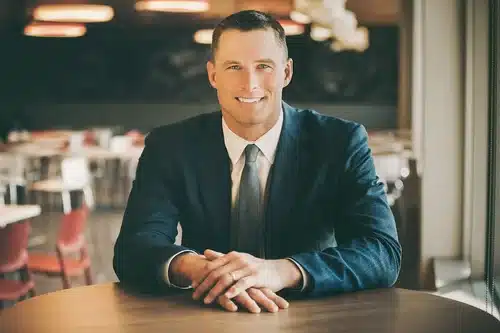
Subscribe to the newsletter

Stay Connected to the Movement

We know that as an Entrepreneur, your most valuable asset is time. So each month we take the very best of the podcast, the blog and all the news, resources, and upcoming events happening across the space and bring it to you.

Episode 168 – Empty the Storehouses with Eventide’s Finny Kuruvilla

Episode 168 – Empty the Storehouses with Eventide’s Finny Kuruvilla

Podcast episode

Episode 168 – Empty the Storehouses with Eventide’s Finny Kuruvilla

In Matthew 6, Jesus says to store our treasures in heaven, not earth, and in this episode of the Faith Driven Investor Podcast, Finny Kuruvilla joins John and Richard to talk about what that might mean for investors.

They’ll also discuss the importance of investing with a goal and supporting others, investing in the common good, and the role of wealth in the church. They also touch on market trends and Eventide’s perspective, as well as healthcare investing and innovations.

If you like what you heard, please share, review, and follow the show.

All opinions expressed on this podcast, including the team and guests, are solely their opinions. Host and guests may maintain positions in the companies and securities discussed. This podcast is for informational purposes only and should not be relied upon as specific investment advice for any individual or organization. Survey Disclaimer: Based on a survey of 1,479 respondents who self-identified as committed Christians (defined as having a Christian faith that is important in their life), ages 30+, with a minimum $100K investable assets or $75K household income. 54% of respondents indicate they have a financial advisor. 63% of respondents who have a Financial Advisor have not spoken to their advisor about any type of values-based investing (including faith-based investing, impact investing, or ESG). 62% of respondents who have a financial advisor would be willing to change financial advisors in order to get access to investments that align with their values. The survey was conducted by Pinkston, on behalf of Eventide, in October 2023.

Episode Transcript

Transcription is done by an AI software. While technology is an incredible tool to automate this process, there will be misspellings and typos that might accompany it. Please keep that in mind as you work through it.

Joseph Honescko: In Matthew six, Jesus tells us to lay up our treasures in heaven, not earth. So how is that going to work for investors? In today’s episode of Finny Kuruvilla from Eventide joins Richard and John to unpack this teaching from the sermon on the Mount and to give investors some practical ways they can implement this in their own lives. He and John both will also hit on a few market trends that they’re seeing, and they’ll talk about the ways they are continually evaluating what it means to lead a faith driven culture. All that and more in this episode of the Faith Driven Investor podcast. Let’s get into it.

Rusty Rueff: Hey everyone! All opinions expressed on this podcast, including the team and guests, are solely their opinions. Host and guests may maintain positions in the companies of securities discussed, and this podcast is for informational purposes only and should not be relied upon as specific investment advice for any individual or organization. Thanks for listening.

Richard Cunningham: Well, hello everyone, and welcome to another episode of the Faith Driven Investor podcast. We are grateful to have you tuning in wherever this podcast might find you. My name is Richard Cunningham. I have the joy of serving on staff with faith driven investor. Joined today by one of our amazing mainstays in John Coleman and John Coleman. We are in for a treat today because it is not just you and I in the podcast studio.

John Coleman: Yeah, that’s right. We are very fortunate to have one of the brightest minds in the space and someone that I’ve come to admire a lot. Finny Kuruvilla from Eventide Asset Management, one of the founders, obviously lead portfolio manager over there. And, it’s always a thrill to have Finny on. Thanks for joining us, Finny.

Finny Kuruvilla: It’s great to be with you. Thanks, John. Thanks, Richard.

Richard Cunningham: Yeah. Finny I was looking back to your podcast archives, and this is your fifth official FDI podcast to be on. And, you know, if we were to go back and probably mined the data of all of the faith driven investor videos, conference, talks, podcast, I mean, you might be our most quoted individual. So it’s hard to think of many people who have done as much for the faith driven investing movement as you have. And I also just love, you know, John, I don’t know about you, but when they look at me, it’s Richard Cunningham, comma, you know, breathing adult. But for Finny Kuruvilla it is Finny Kuruvilla at medical doctor, PhD, co-chief investment officer, senior portfolio manager, managing director, founding member of Eventide. As you said, so just what a joy to have you on and thank you for all the contributions, Finny, that you make to the broader ecosystem.

Finny Kuruvilla: Well, hey, thanks, Richard. And one of the things that I want to say in response to that very, very flattering introduction is we have benefited so much from the collaborative spirit that especially a driven investor has brought to the field. I truly believe that that’s something that honors God in that we’re supposed to be supporting one another, encouraging one another. And I just want to thank all of you for setting a high bar and showing us leading the way and what that looks like. So kudos to you all.

Richard Cunningham: Appreciate that. Well, let’s have some fun today guys. Finny, you’re catching us in this kind of theme of we’re unpacking conference talks that we’re giving, you know, recording to say on March 20th. This podcast will drop on Monday, March 25th. But a couple months ago, at the end of January, you gave this remarkable talk titled Emptying the Storehouses at the Faith of an investor annual conference. And we get to bring you on to kind of pull out some of the threads of that talk. And so if maybe for those that weren’t with us at the conference or haven’t gotten to check out your video yet, which will be all over the internet soon, maybe kind of unpack it a little bit and we’ll camp out there for a while.

Finny Kuruvilla: Yeah, sure. So this is a talk that is very much deep in my heart. In the talk, I didn’t actually get to give some of the backstory to it, but maybe I’ll do some of that now before recapping some of the talk. I was born and raised in Southern California, and my dad worked for an organization called World Vision, which a lot of, you know, it’s a humanitarian, humanitarian relief and development organization. It actually was my first job that I had when I was 16 years old, answering the telephones there. And one of the things that I did while I was working there was, you get to have your eyes opened to the plight of the global poor, and you get to see through videos. In my case, I wasn’t there out on the field. But through videos you get to see how millions of people live in different places all over the developing world. And it was such an illuminating experience to be able to see that. And then you step out of your world from World Vision, and then you’re now in Southern California, in LA and Pasadena, and you see the disparity there. While I was in college, I was very involved in InterVarsity Christian Fellowship. I still am, but while I was there, we did a Bible study through a passage where people go to John the Baptist and they say, hey, John, what does it mean to repent? And he gives a few points of what repentance looks like. But one of the points that he mentions is you who have two tunics should give to the one who has none. And I remember when I read that and study that, it just cut me to the heart because I thought, wow, am I really living like that? And I remember going, thinking about that passage in the light of what I was doing about vision and thinking again about the disparity, opening my closet, seeing that I wasn’t living consistent with that teaching from John the Baptist, who’s talking about the beginning of repentance. This is an advanced Christianity. Advance on God is the beginning of repentance. And so that ended up setting me on a trajectory of asking questions. Why don’t we talk about this as much as I think we should in the church today? And are we potentially sweeping under the rug some of the harder teachings that in some ways are? Be the most pressing for us who are living in one of the most prosperous, if not the most prosperous, economies of all time. So that was some of the background that formed me when I was in college. Specifically, the talk that I gave at this Empty the Storehouses FDI conference was on the sermon on the Mount and basically advocating that the sermon on the Mount is the place where we see the most direct teaching on how we’re supposed to be looking at money and the concept of treasures on Earth. One of the things that Jesus tells us is he says very plainly, very clearly, do not lay up for yourselves treasures on earth. And he says, that’s where moth consumes or rust destroys, where thieves break in and steal. He says, instead we’re supposed to put our treasures in heaven. And then he explains the rationale by saying, where your treasure is, there your heart is also. He goes on to say, no one can serve two masters. Either hate the one and love the other, or be devoted to the other one and despise the other. Can’t serve God and mammon. So that was the main text that I focused on. And one of the things that we took away and unpacked out of that is we ought to be taking that as face value as we possibly can. So I mentioned a couple of direct applications. So number one is we want to be investing in a way that’s directed at a goal. So if we’re investing we shouldn’t be just accumulating these piles of money. I think that’s something that’s easy to fall into if one is a prosperous individual. And if one lives in a place like the United States, where people are just kind of hoarding money and it’s easy to stop it in this place, or that we are supposed to be goal directed with our investing. If somebody says, hey, I’m saving to buy a house or start a business, great, let’s have that mentality. Let’s not have the mentality of the person who’s building the second bar. The second application that I talked about was we don’t want to be investing and take advantage of other people. And it’s hopefully something that especially. With Faith Driven Investors. We’ve talked a lot about this theme over the years, and I know you all thought very deeply about this as well, which is that investing, it should be something where we’re blessing others through that, not merely extracting value from others. And one of the passages that I think is very illuminating here is from Deuteronomy, where God says, don’t bring the earnings of prostitution into the temple because it’s an abomination to him. So God wants money that comes in his treasury not from sinful activities, but from activities that are building up the community. And so putting into practice love your neighbor, even in our investing, is a first order activity. And then I also mentioned investing just isn’t about the negatives. It ought to be about the positives as well. And we can support with our investing both the redemptive good and the common good. The redemptive good is, of course, advancing the church, advancing the kingdom, furthering the gospel, evangelism, discipleship. Common good would be helping people to be clothed, to be fed, to be whole in terms of not suffering from disease. And so that at a high level was the goal of the talk and some of the key points there. And that’s something that I think we always need to be pressing into and always reminding ourselves of some of those basics.

John Coleman: Yeah. And that’s you know, what’s really interesting is this is a topic I’ve been thinking about a little bit lately as well, and I actually started thinking about it for a World Fishing conference. So we’ve gotten to know Edgar Sandoval a little bit and just love Edgar, love world fishing. I mean, the mission that they’re on is phenomenal. And their leadership right now, I think is extraordinary. And they asked me to come and give a talk on money, how believers should look at money. And I love that sermon on the Mount passage. You know, there are well over 2000 references to money in the Bible. Many of them are cautionary statements like the love of money is the root of all kinds of evil. And yet God also clearly gives certain people in the Bible money to steward for his purposes. And it’s actually one of the blessings or tools that he offers them in order to forward his purpose. Abraham would be one of the first big examples of that, for example, or David in the New Testament. The examples are a bit more scarce, but even someone like Nicodemus could use financial resources for God’s purposes. And so the question I think for believers is what are you doing with that? And are you paying as conscious a set of attention to money as one of the blessings that God can give you as your other talents? And I think one of the things that I find at least is consistently people neglect this investing area. You know, there are really only three things you can do with money. You can give it away, you can help others with it, you can spend it or you can invest it. There’s not I mean, savings is just investing without any return. So there’s not much else you can do with it. And Christians spend a ton of time thinking about how they give away their money, even if it’s not a lot of what they give away. We spend a decent amount of time thinking about how we spend it, but I think the average Christian doesn’t think as much about the way in which they invest it, even though for many people that’s actually a bigger pool of capital than they’re giving or spending, right, for a lot of people. And anyway, I just think it’s a fascinating distinction that many Christians have drawn where they just they seek return, maybe even just to build this pile without purpose, as you described it, with their investments. But at the same time, I think God has really called us to pay attention every dollar and to make it purposeful, both in terms of the use that you’d have for it. But also, if I’m deploying this capital, like there should be some intersection with the Great Commandments or the Great Commission in the way that I deploy that capital as you’re referencing, whether that’s just staying away from the bad things, prostitution, trafficking, gambling, you know, things that are addictive, but also leaning into creating a more flourishing world for others. And I think that’s where Eventide has been such a leader in that space. But I think it’s just fascinating that Christians have not reflected deeply on that historically, or maybe as deeply as we need to.

Finny Kuruvilla: Yeah. You know, it’s fascinating what you mentioned there about some of those examples of individuals who did have financial resources. You pointed to Abraham, and he certainly be a good example of that. There is actually, in the New Testament, a fascinating passage. It’s in First Timothy chapter six, where Paul specifically addresses the wealthy that are in the church, and he tells them what they’re supposed to do. He says, don’t be haughty. And he says, don’t put your hopes in your money, but instead do good. Be rich in good works. Be generous and ready to share. So, you know, he’s contemplating the fact that there are already, at that time, plenty of people who have wealth. Another example would be John Mark, and we know that it was his home that the believers gathered in while they were in Jerusalem. And these individuals who had these larger homes tended to be those who would be the hosts, the patrons of the church. There was a very, very important function that the church required and needed in those early years. There were no church buildings or things like that for centuries to come. And so I think it’s something that is very good for us to remember. Which is that we’re not saying wealth is evil or bad or anything like that. This is not a call to condemn people or anything like that, but it’s a call to ask and hopefully challenge one another to say, are we truly doing good? Are we truly rich in good works with our wealth, and our wealth is on us now, has tremendous capacity to be a force for good or force for evil. And so I think even in the New Tetament, we see some of those admonitions and encouragements.

John Coleman: And I’ll let Richard push us forward. But I will say, you know, the one thing that occurs to me even in that passage that you’re referencing, or the two passages that you reference, is it’s not necessarily a bad thing or mindsets around wealth and the way in which we use it can be evil or can be a bad thing, but there’s never really a call to just store it up. And then at the end of your life, do something good with it. I think this is one of the traps we do fall into, like you said, is building this big pile saying, oh, what I’m good at is making it as big as possible. And then at the end of my life, I’m going to give it away over time. And I think rather everyone is called to start right this moment, thinking about the way wealth is used for the kingdom in the way it’s stewarded for God’s purposes, rather than just, you know, those of us who have proven some proficiency at kind of making wealth bigger, which is what investments is, you know, doing that for no purpose, right? Rather than deploying it according to those precepts right away.

Finny Kuruvilla: Yeah, that’s exactly right. I think it’s Ron Ballou who has this quote where he says, do your giving while you’re living, so you’re knowing where it’s going. And I like that concept because we know there are so many examples of individuals who have a lot of wealth, and instead of deploying it while they’re alive, they put it in some foundation. And this is something that I was actually just reading about. The foundations take a life of their own and often end up doing activities contrary to the wishes of the person who left the wealth to that foundation in the beginning. It’s actually the rule, not the exception. Or often things go haywire, and straying from the purposes that the individual who acquired the wealth really intended there. So I think it’s a great reminder for us, and I truly believe that that is the paradigm that Jesus is setting here is like, now give now while you’re alive. So in that treasure ahead of you, I don’t let it be corrupted here on this earth. Send it ahead and store it up for a bright future in the life to come.

Richard Cunningham: Yeah, finance that. You use the word at the end of your conference talk. It’s the arbitrage opportunity, right? Our stores of treasure here on Earth are in decay. So trade it now for something that lasts forever and just the ultimate arbitrage opportunity. I love the way you put it. All right, guys, well, that’s fun to hear you riff on just for the sake of time. Let’s keep on moving down the line. And so we’ll go back to some of those practical applications at the end, talking about those opportunities to promote good and flourishing, the common good, the redemptive good. Finny you were kind of alluding to. But for now, we want to hit on Finny. Your last FDI podcast appearance was roughly seven months ago, August of 2023. You and John had this wonderful conversation on all that was taking place in the world of health care investing and M&A markets being drier. But yet the S&P was, you know, just charging on with the likes of Meta and Amazon and Google, among others, the AI frenzy. But just love to kind of hear you guys. You know, this is not a marks in the market podcast. But Vinnie, we’d be remiss not to have you at least weigh in kind of with what, Eventide. Seeing what you’re seeing and kind of maybe since your last FDI podcast appearance as we closed out 2023, have kind of made it into the first quarter here of 24 of just what’s going on from the Eventide vantage point. What are you guys seeing? I know health care has always been a massive focus of you all. So maybe camp out there a little bit as well.

Finny Kuruvilla: Yeah, a high level. We’ve seen a lot even in the early months of 2024. Just a couple of themes and notable points here. You correctly noted that there was a lot of uncertainty in 2023, and the general consensus was that there would be a recession, but instead there was no recession and the S&P just motored higher. That was one of the stories of the year that it motored higher, despite the fact that there was high inflation in the fed kept raising interest rates. There’s still a lot of uncertainty with the economy and consensus right now is that there’ll be about a 40% chance of recession over the next 12 months. I put that with the giant asterisks because the economists were generally wrong last year. And there’s a reason why economics is called the dismal science. It’s often just very, very difficult to forecast the economy. And the joke is, of course, that economists have predicted nine of the last five recessions.

Richard Cunningham: That’s awesome, I love that.

Finny Kuruvilla: Yeah. And right now what we’re seeing is an interesting phenomenon where inflation is certainly come down compared to last year. But the S&P continues to track higher. It’s almost at 5200 as we speak right now really defying most expectations. There’s still a lot of debate about why that’s happening and why the economy is as resilient as it’s been. We’ve been in the camp that you shouldn’t buy the rhetoric of there’s going to be recession, partly because it’s such a novel, such. We’ve been in in the last couple of years, with the economy being released from all the Covid restrictions, and there’s just not good models that anybody can point to, in our view, that have the kind of confidence that should make us pound the table in either direction. So that, thankfully has worked pretty well. And overall we’ve seen that. Generally speaking, the economy, if there aren’t shocks, tends to do pretty well. And the innovation and the skills of the free market and what we know about businesses, they do pretty well about navigating through hard times. And when everybody’s talking about a recession, usually it’s not going to happen because there’s a lot of belt tightening that’s already gone on. One of the great I think, questions that we’re going to understand over the next year is what has been the role of this productivity number. So there’s this very mysterious number. It’s actually easy to understand conceptually, but it’s hard to measure empirically. So productivity is how much does a given worker how much does their output increase year over year. So I use the analogy of a person who works at a donut store and they’re making donuts. And if they can make 100 donuts a day in 2023 and in 2024, and they can make 103 donuts a day, their productivity has grown by 3% year over year, and it seems like one of the reasons that the economy has been able to do well, despite the inflation, is that we’ve been more productive than people have anticipated than economists anticipated. There’s a whole lot of reasons why that might be true, but I think one of them is not so much. AI is starting to play a role, but it’s probably a bit early to attribute the productivity improvements to AI. But it’s that there was so much belt tightening and so much concern about a recession, and companies were getting lean and mean through all of the doom and gloom rhetoric there. In that type of setting, you can actually and you typically would expect even that productivity would do well because everybody is ready and there’s not a lot of excess. And so that type of phenomenon is probably what’s been at play and why the economy has done so well, and in general, why the more people talk about recession and the more people that are fearful out there, you actually in the back of your head should be thinking, okay, good. I’m glad that there’s that fear that’s out there. And the other famous adage is that the market likes to climb the wall of worry, and it descends the slope of hope. And there’s definitely been a robust wall of worry that the market has been climbing over the last couple of years.

John Coleman: Between that and the blue quota, I’m getting a new appreciation for Finney’s ability to rhyme and create memorable markets.

Finny Kuruvilla: You know.

John Coleman: Finney, I would just say I don’t know how you think about it in general. I’m so skeptical of people trying to time markets without a specific reason, a time. Right, like, you know, right now, for example, we’re super cautious about office real estate, but there’s this specific set of context around that that makes you nervous about that sector, that particular asset class where you can identify, I think, generalized concerns about recession, market timing, cash on hand. It’s so difficult to predict in my mind. And if you look historically, by and large, just continuing to allocate in the way that you would with the tranches of, you know, you want to diversify your asset classes, you want to be thoughtful about the way in which you position a portfolio. But if you do that and you just stay in markets, typically that’s the best solution over the long run, rather than seeking to time more aggressively without a specific conclusion. And that’s been my push to folks right now. I mean, this is not financial advice on this podcast, obviously, but, you know, it’s very easy to get whipsawed by all these predictions. Market timing is notoriously difficult. And just as often as you get out and avoid a downswing, you miss a major upswing. And I’m with you. There are just so many long term reasons to be confident that, at least in the United States and in a fair number of other economies, the long term trends are oriented towards greater productivity, whether that’s AI, robotics, which is more of a real time thing. I think even in the industrial space, things like that, all these technological innovations are oriented towards improving productivity and output, and there’s really been no major setback on those. So I continue to feel the way that you feel, which is don’t overthink the timing of markets, or at least that’s the way that I would put it. Stick to what you feel confident in in your allocations, and make bets on those specific things where you feel you have a good understanding of where things are headed.

Finny Kuruvilla: Yeah, I couldn’t agree more. One of my mentors, who I’ve actually never met but I call my mentor because he made such a big impact on me through his books is Peter Lynch, and Peter Lynch has this great concept, which is that more money has been lost trying to time and dance around corrections than in the corrections themselves, that all of the artful positioning is not actually hostile and adverse to one’s net returns. I mean, there’s so many ways that one can show that we’ve got a lot of charts, and I have a whole lot, actually. We’ll talk about addresses this, but you’re absolutely right. And rather than timing the market, it’s time in the market that’s a better predictor of your long term returns. And you correctly noted that there are typically a handful of days. In a year that are going to be these massive upside drivers. But if you miss those days and I actually gave a talk on this, that this entire archive, if you miss those days, those handful of days in the year, I don’t have the exact number on top of my head, but your returns are a fraction of what it would be then if you are just simply staying in the market throughout it all. So yeah, it’s it’s a very important lesson to learn that most people haven’t learned really well. And I hope those timeless principles would be things that we would go back to again and again and remind ourselves that despite the fear, despite all of the rhetoric out there in general, it’s the more boring strategies that tend to outperform the more sophisticated ones.

Richard Cunningham: Yeah, I’ve heard it before. You got to be right a lot of times in terms of when to get out, when to get back in, the highs and lows and all of it. Might as well just be right once and stay in. What about on the health care side of things in terms of a very capital intensive, highly innovative field? You know, this is something you and John got into in your recent podcast. These fields tend to be hit pretty hard by the interest rate environment, as they need capital infusion as they’re oftentimes not profitable. Even tide has a big focus in that space on the health care side of things. What are you guys seeing there?

Finny Kuruvilla: Yeah, the space thankfully has come back a lot since we spoke last, and it’s been really good to see that we’re starting to come out of some of that very fearful capitulation that was happening, particularly in the October 2023 time period. So it’s been nice to see that. I still think we have a long way to go to come back to even be average. So we have this odd situation right now where the so-called Magnificent Seven, Meta, Amazon, Google, those types of companies are trading at very rich multiples and very lofty valuations. But we’re still in the situation that a lot of those smaller cap, more capital intensive industries like biotech are still considerably lower than they would normally be valued. And so that’s a first observation there. Second observation, I would say, is that on the innovation side, it continues to actually accelerate. And so even in the last couple of months, there have been a number of significant advances on the obesity front. So we’re closely watching this field. I think everybody knows now about [….] and all that. That’s just the very first gen medications. Those are injectable. We know that those medications have pretty serious liabilities, chief of which is that when you lose weight, you lose both fat and muscle. And it’s widely appreciated that you don’t want to be losing muscle mass in the same way as losing fat. But that’s what these medications do, is they’re dropping both together. There’s some very interesting innovations that are happening there where it’ll still take some time to work out a lot of the details, but. I’m confident that over time, we’re actually to get to medications that are going to be actually enhancing or at least stabilizing muscle mass, and it’ll be selective loss of fat. So that’s a pretty exciting development that is still in the clinical trial stage, but it’s something that we’re actively investing in. Another highlight here that I’d like to touch on just briefly, because I mentioned this last time, was we talked about this Car-T concept, which is to remind everyone that is. But Car-T is basically a way where you engineer your own immune cells to attack cancer cells. And I told the story of a little girl named Emily Whitehead, who was the first pediatric patient ever treated with one of these Car-T approaches where basically they do a blood draw, they take out your immune cells, they infect your immune cells with a virus in a dish, and that virus retrains your immune system to attack the cancer that’s inside of the body. You grow up those cells and then re infuse them back into the patient. And I told that story about her and she literally had her leukemia. She was going to die. She was on her way to go to hospice. And within 23 days her leukemia disappeared after receiving treatment. So that has now been extended. And this is like hot off the press just last month. So February of 2024, somebody said, hey, maybe we can use that technology to go and attack the cells that are creating autoimmune disease and in particular the disease called lupus. And they published in the New England Journal of Medicine, which is the top journal in the medical world that they were able to induce these patients into remission for one year. No disease, no steroids. It’s pretty amazing that now we can train the immune system to attack the bad cells of the immune system that are causing these autoimmune conditions. So it’s not FDA approved yet. It’s it’s still in clinical trials. And so we’ll hope that this crosses the finish line. But how exciting is that? I mean, just amazing. And then just last week. So again very hot off the press just down the street [….] At Mass General Hospital right here in downtown Boston. They use that same technology for brain cancer. So brain cancer is one of the more deadly forms of cancer that’s very difficult to treat. And what we know now is that this same type of therapy, works not just for liquid tumors like leukemia, which is what Emily had, but now we’re seeing it work for solid tumors as well. So again, it’s early stage, not FDA approved, but incredibly exciting here. And so we are in and I think what is easily characterized as the golden age of taking immunology and harnessing our immune system to address very serious diseases like cancer and autoimmunity. So I am just thrilled to see this innovation that’s happening at a very brisk pace. And my full hope and confidence is that as this accelerates, we’re going to get more and more of these therapies that cross the finish line to FDA approval, and our health care is going to continue to get better and better. So very exciting days for us here in the biotech and health care world.

John Coleman: Man, I always leave these conversations like very encouraged. Finny not all of our investment topics are quite this encouraging, both in terms of, you know, it’s such a natural intersection with this idea of human flourishing. Right? And even, you know, even when I like, think about the New Testament in such a simplistic and stupid way, a lot of what Jesus did when he was working miracles was helping people with their physical ailments, right? As almost an analogy to what could be done for the soul. Right? But also to just care for people physically here on earth. And you get to work in a space where that’s the goal every single day for everyone who’s working in this market is to try and make human life better. Maybe that’s a nice way to transition into the way that you guys think about faith and values in the context of the portfolios that you’re building. Again, there is this natural intersection with human flourishing, particularly in health care, which you’re so focused on. But how does Eventide think about the incorporation of values? Think about the promotion of human flourishing investing that makes the world rejoice in the context of your portfolios. And how are you all thinking about innovating on that every day?

Finny Kuruvilla: Yeah, it’s a great question, John, and it’s something that all of us who work in asset management, in any kind of faith driven way, ought to be constantly challenging us to. We would all concede that we’re in the early days of figuring all this out, and we’re trying to develop frameworks that are better and better and stronger and stronger, that respond to all of the dynamism of the markets. And we all know that markets are living, breathing animals, and we better be responding as well and sharpening our tools and our ethics. There’s a lot to be said here. There’s both issues, specific areas that we’re investing a lot of time in. And then there’s frameworks and heuristics that we’re trying to refine in terms of how we look at management. So. On the issues specific side of things. There’s a lot of talk right now about IVF and stem cells, all that which is in the news. And how do we bring pro-life values into these questions here. So we’ve been doing interviews with different ethicists. This week, in fact, I interviewed a well-known ethicists on the issue of life and how to think about that. I would say a lot of people who would say that life begins at conception. Haven’t thought very deeply about the implications of that. For example, stem cells and IVF, things like that. So we want to be really good and sharp in that. It’s an area where I think we’re probably just underdeveloped in general. We collectively the church are underdeveloped in general there. So there’s issue specific sets, and we would like to hopefully put out some whitepapers and videos as we learn more about how to hopefully elevate the whole field and community with us as we learn together. And then there’s the framework and heuristic side of things. How do we take our own learnings and bring that to bear and how we assess, for example, management teams or how different companies are interacting with? Save the environment or broader society, even the environment. We have a fantastic panelist here who covers energy. And how do we think about, as Christians all the questions around pollution and carbon and all of that. And it’s of course a huge field here, but we need to have views on that. And it’s easy to be reactive and to say, well, you know, this group over there, they’re hyper concerned about carbon credits or what have you. And they’re maybe not like minded to us in terms of some of their values. And so they must be wrong. So we’re going to go to some other side. How do we come up with good values here on some of these and good heuristics around what does it look like to be responsible with respect to some of these environmental questions? And I think that we’ve done some fantastic work even in the last six months, I would say especially probably be a topic of a whole podcast to get into some of the innards of that. But we’ve been investing quite a bit of time and energy, and to being able to assess our company well in terms of how they are interacting with the environment there. So those would be two of the areas that we’re refining and improving on.

John Coleman: Yeah. One of the topics you touched on, and I know there a lot of folks prefer this avoid embrace engage framework. There are a bunch of different frameworks. I think they’re helpful. But you know, there are different ones that work. We’ve been thinking a lot more about this engagement topic, which you’re highlighting, which is, you know, we have the ability, particularly in public markets, I think, to speak into societal wide questions, both generally, as you mentioned, through thought leadership, but specifically through the shareholding that we have in companies. Right, which has been a focus for us on the public equity side. The price for that is, I think you have to be really excellent at what you do to build a voice on the engagement topics from an investment point of view, which is why I think Eventide almost has the permission to speak into these. It’s what we’re seeking to cultivate as well. But I think my observation is that in cling more to the avoid side of the spectrum, historically, Christians have often missed an opportunity for what I’ll call constructive engagement. We’ve been willing to beat up on topics aggressively, but we haven’t been willing to engage in the really thoughtful debates about these topics to articulate a cogent perspective. And, you know, this idea of stem cells and IVF, for example, is one where there are obviously a huge number of well-meaning people on different sides of this debate who are going through extremely difficult life circumstances. Right. This is not a light topic and apart from it maybe the Catholic Church, which has actually articulated some principles around this in a reasonably thoughtful way. I think many of those of us in other branches, as a church, I’m a Protestant, have not been as thoughtful about our intellectual positions. And so I think one of the things I’m encouraged about that you’re talking about Finny, and even your own personal thought leadership that I hope others will take up, is how do we lean into these big issues of the day in the areas in which we’re investing, and be thoughtful about articulating a cogent set of principles for human flourishing around those, as we are our investment thesis. And I think if the great investors in the Christian worlds could do that, our ability to influence culture in a positive way would be enhanced greatly.

Finny Kuruvilla: Yeah. I will say a couple of things on this. And like you, I’m not a Catholic. I have a lot of respect for the Catholic Church, but I’m not personally one who would be considered as Roman Catholic. It’s something where one of the things that I have seen, that they have done well, and they could teach the rest of us some good lessons, and especially those of us who work on the investing side, is they have a way of thinking that I would call maybe more historically aware and more of a sense of building on that what’s come before us, you know, some of the times because of a false understanding of sola scriptura, it’s not actually legit it’s sola scripture to say the Bible is the only authority. True sola scripture says the Bible is the only infallible authority. But there are plenty of other authorities, hopefully the pastors and teachers in your home, your parents. We read books. We listen to people online. I mean, there’s varying levels of authority here. The correct understanding of soul scriptura, which I do subscribe to, is that the Bible is the only infallible authority. And I think sometimes because we’ve misunderstood sola scriptura, we believe that we kind of have to like, reinvent the wheel or just like read the Bible and come up with something, you know, spontaneously, as opposed to what’s actually a more faithful understanding of the Scripture, which the reformers and the radical reformers and everybody pointed to, which is that Scripture is the only infallible authority. But we are fools if we don’t try to learn from those who come before us. And I think that’s where the Catholic Church is, ahead of the Protestant community, in the sense that they’ve learned and they’ve built and they’ve developed frameworks and pressure tested them. And that’s something that I want to see more of in the Protestant world in general, is us give more thought to, hey, let’s learn from those who’ve gone before us and not be so chronologically arrogant that we believe that. We’ve got it all right. And everybody who’s gone before us hasn’t thought through those issues, because they have. There’s been very, very good work on these issues before us. And I think first, to make the investment of time to read and understand well what those who’ve gone before us have done and said is step number one, noting. Step number two is to somehow put together as best as we can and memorialize our understandings and whitepapers and podcasts and different discussions so that we can continue to move the ball forward in the process. And world is occasionally done that the Chicago statement would be an example of that. And biblical inerrancy is an example of where people will come together and put together these working group statements like, hey, this is what we think inerrancy means. And and even that will get revised and pressure tested. And that’s not violating sola Scriptura. That’s actually honoring the forefathers of the faith that have come before us. And so I think those will be some of the challenges that I would give to the investing community.

Richard Cunningham: Man, this is awesome. Do you guys riff on it? Kind of reminds me in ways where, hey, I’m the individual investor right now listening to you guys riff on this and it’s like, I wish I had access to John Coleman or Finny Kuruvilla on my shoulders. I’m thinking about the investment decisions I’m making, and I think eventide put out this post about engaging with Pinkston to interview Christians out there. And it’s just I think the push to everyone is, hey, you can engage with your advisor on these topics, and I think your survey results said 63% of Christians have never discussed values based investing with their financial advisor, even though 88% want to align their investments with their values. And so I think, you know, before we close here and FInny talk about what you’re kind of learning in Scripture, I think it’s just a great push to the every day and faith driven investor or the advisor out there to say, hey, these aren’t conversations that you have to reserve. Just to John and Finny on the Faith Driven Investor podcast, these are things you can lean into and your next kind of financial advisor update meeting.

Finny Kuruvilla: Yeah. The other part of that survey was that 62% of Christians are willing to make a switch to another adviser who offer investments that resonate with their values. And so it’s hopefully a wake up call that this is a time where people want their investments to be in line with their values. And you might even lose business as they go to another firm or individual who can speak to their heart values. Their most investors are more interested in those higher level conversations than they are hearing about beta and alpha and sharp values and things like that. Like that’s not necessarily where people’s hearts out. Of course, everybody wants competency. People want to know that their finances are being deployed and invested in a responsible way. But I think where the faith driven community, including the financial advisory community, ought to step up is to say, like, let’s differentiate ourselves from the robo advisors and everybody else by being able to engage at a heart level with some of these issues that are very, very important to clients.

Richard Cunningham: Yeah, that’s so good. Good words. Well, Finny, take us home. What’s the Lord been teaching you in Scripture lately? Maybe for you. All of team Kuruvilla and your wonderful family would love to hear that.

Finny Kuruvilla: I love this question, and I really appreciate that you all end the podcast with this question. Yeah, I’ll give you a short distillation of one of the themes of the last as a year of my life, but I went to a seminar. It was an all day seminar a few months ago that was put on by a group that specializes in going into hard situations where there’s been some kind of a breakdown, a church split, or a business that’s falling apart as a Christian group. And they go in and they do about 30 of these engagements a year, and they go in and try to mediate reconciliation, healing and unity to where there’s brokenness. And I’m in my late 40s right now, and I have sadly been watching a lot of my college friends go through divorces and a lot of hard experiences there. It’s sad to watch, and these are people who are in the church and know well the teachings of Scripture here. One of the things that I’ve learned is that. True conflict resolution and true unification of the church and families is a skill. It’s not something that comes naturally to any of us. It’s something that we need to be trained and prepared. And again, I wish I could talk about this for a lot longer here, but just very, very briefly. We are supposed to be the ministers of reconciliation. That’s our job description, if you will, that Paul uses in second Corinthians is that Jesus even says, blessed are the peacemakers, for they will be called children of God. How do you know that we’re children of God? The children look like the father, right? They look like the parents. They had the same skin color, hair, all that. Our resemblance to the father is that we’re supposed to be agents of peace. Because the father brings peace to the world. That’s supposed to be one known for. Unfortunately, it’s not usually the case. That’s what people think of reflexively. When they think of the Christians. They often think of divisions and splits and fightings and all that. And I am more and more convinced that because it’s a when not an if we’re all going to be having conflict in our organizations or families, etc., this ought to be a skill that is part of Christianity one on one, and we ought to be pressing so far into this that you can’t be a person who’s been sitting in a church for more than a year or two without having gone through some kind of formal, rigorous training on this. I know that sounds like a bold claim, but I really believe it. And that as I’ve gone through this training and read a book on it and really had my eyes open to the fact that here I am, in my late 40s, being raised in the church, that I hadn’t gone through this. And as I’ve gone through this, I thought, wow, I could have had a more successful 20s, 30s and early 40s had I had these skills in my tool bag. And there are very much learnable skills that require growth and challenge. But I think this is one of the great needs of our world today, is to have the Christian community rise up to the challenge of being peacemakers and ministers of reconciliation, and treating it like a discipline, just like we would treat any other discipline. You don’t learn naturally medicine, you get mentored and trained, and that you have to go through classes and exams and all that. It’s the same thing with this. Maybe not as daunting as having to go through medical school, but it’s a skill that we need to embrace there. So I’ve been thinking a lot about that and how we and the church ought to be much, much stronger on that and encourage that early on.

John Coleman: And I love that concept, and I know you’re talking about that at the individual level, but I even think at the social level, if you think about the instances over the last, you know, 30, 40 years where Christians were deeply respected for the work that they did, it was often in reconciliation, whether that’s Bishop to in South Africa, whether it’s the US civil rights movement where Reverend King and Andrew Young and others leaned into their faith and as a tool for reconciliation across differences. And it can be, you know, just such an inspiring thing for Christians to navigate.

Finny Kuruvilla: It really can. John. And let me just say one final comment on this. Jesus right after that says, you’re going to be the city on the hill, salt of the earth. They will see your good works and glorify the father in heaven. It’s through that kind of activity that the world is mesmerized with the power of Jesus, right? We live in a very broken, divided, hostile world. There’s poor dialog. It’s just it’s a mess. This is winsome. This is attractive. This is something that we can actually gain a social capital that we currently don’t have. So yeah. Amen to what you just said.

John Coleman: Finny Kuruvilla Eventide Asset Management. Awesome work you guys continue to do. Finny you’ve just been such a almost a founder in this space beyond even tide in such a pioneer here. I’m always humbled by your ability to reference scripture, usually in the original languages, which I know I definitely can’t do, I’m sure Richard can do, and it’s just such a blessing to our audience to have you on. Thank you so much for being here. And thank you, Richard, for hosting.

Finny Kuruvilla: Thank you John.

Subscribe to the newsletter

Stay Connected to the Movement

We know that as an Entrepreneur, your most valuable asset is time. So each month we take the very best of the podcast, the blog and all the news, resources, and upcoming events happening across the space and bring it to you.

Episode 140 – From Pro Athlete to Investor with Jeremy Lin and Robert Kim

Episode 140 – From Pro Athlete to Investor with Jeremy Lin and Robert Kim

Podcast episode

Episode 140 – From Pro Athlete to Investor with Jeremy Lin and Robert Kim

Can finances lead to a more loving world? Former NBA star Jeremy Lin and his business partner, Robert Kim believe so. The two of them, along with Patricia Sun, lead JLIN LLC, an organization dedicated to redefining love through entrepreneurship and investing.  In this special episode of Faith Driven Investor, Jeremy and Robert join Henry Kaestner and Faith Driven Entrepreneur Africa host, Wen Li Lim, for a compelling conversation about their passion to use capital for good and why they chose to use investing in addition to philanthropy. You can also hear more about Jeremy’s entrepreneurial efforts on the most recent episode Faith Driven Entrepreneur podcast.  Don’t forget to follow both shows on your favorite podcast streaming platform.

Transcription is done by an AI software. While technology is an incredible
tool to automate this process, there will be misspellings and typos that might accompany it. Please keep that in mind as you work through it.

Episode Transcript

Rusty Rueff: Welcome back, everyone, to the Faith Driven Investor podcast. When Jeremy Lin rose to Linsanity fame back in February of 2012, his name became associated with the fastest growing athlete brand in the world. But the buzzing fanfare of his success came with a cost. Jeremy experienced the immense pressure of having to measure up to Linsanity heroics. In this episode, Jeremy shares with the Faith Driven Entrepreneur Asia team how he has navigated these challenges and why he has since focused his energy on faith driven investing. We’ll also hear from Robert Kim, the managing director of JLIN LLC. Let’s dive in. Hey, everyone. All opinions expressed on this podcast, including the team and guests, are solely their opinions. Hosted guests may maintain positions in the companies of securities discussed. And this podcast is for informational purposes only and should not be relied upon as specific investment advice for any individual or organization. Thanks for listening.

Henry Kaestner: Welcome to a special edition of the Faith Driven Investor podcast. This is what I’ve been looking forward to for a long time. For lots of reasons. We’ve got Jeremy Lin in the house. We have Robert Kim, great friend of mine, a great encouragement to the Faith Driven Investor movement for a long time. And I have Wen with me, Wen and I have never done a Faith Driven Investor podcast together. But for those of you within the Faith Driven Investor community, Wen is awesome. Wen is in Singapore. Wen is a regional coordinator for Faith Driven Entrepreneur, an investor in Asia out of Singapore and my co-host on Faith Driven Entrepreneur Asia Wen. Good morning. Good evening.

Wen Li Lim: We do this all the time. Good evening. Good morning. We are on the other side of the world from each other.

Henry Kaestner: And most of the time is on different days. And we also have Robert Kim before I introduce Jeremy. Robert and I have known each other since almost the week I moved to California seven and a half years ago. And he struck me as a person who he is, is somebody who completely gets this movement, a wealth advisor, somebody who has really thought through the theology and studied this about what is God doing as we look to start investment assets? And, you know, C.S. Lewis talks about friendship being when you meet somebody and you say, gosh, I thought I was the only person who fill in the blanks. Well, Robert is that type of person who really gets in, leans into driven investing, and he’s got a special friendship and relationship with Jeremy and introduced us to Jeremy three or four years ago. But Robert, before we meet Jeremy. Good morning.

Robert Kim: Morning. How you doing? Or good evening for.

Henry Kaestner: That’s right. It’s in Korea, too?

Henry Kaestner: Yes, and you’re in Korea. So you just moved back to Korea, right?

Robert Kim: Yeah, three months ago.

Henry Kaestner: So for those of you can see this on video which is not most of you. You can see that Robert has wasted no time in decorating his apartment. He’s just getting right into the mission field is making it happen. We need to, Wen we need to send him something like some sort of like a movie poster or something. Right

Wen Li Lim: Ok, to anyone who’s in a zoom with Henry. He’ll look at every single thing in your background and he will comment on it, just like Robert’s background that has nothing. So, listen, Henry’s actually poking fun at Robert’s blank.

Robert Kim: Next time you come over to bring something, I’ll put it on my wall.

Henry Kaestner: Yeah. And we need to bring something for Jeremy, too, because Jeremy is on Zoom right now, and Jeremy’s maybe feeling a little self-conscious as well. Jeremy, good morning.

Jeremy Lin: Good morning. Good evening. I am definitely extremely self-conscious at this point, but I feel a little bit better because I’m you know, I’m in a hotel and this is just the hotel room. I guess I can just put this Faith Driven Entrepreneur book right behind me and have it kind of be the beautiful you wallpaper.

Henry Kaestner: There’s never been a better wallpaper. Major, major props, so Jeremy welcome to the Faith Driven Investor podcast. Prior to this episode, of course, we had a really, really great conversation with you and Patricia, Faith Driven Entrepreneurship and your identity as a basketball player, your identity as a human and your identity as a Faith Driven Entrepreneur, really one of the favorite episodes that I’ve ever done. You just got on the concept of identity, motive, joy, gratitude, Sabbath, rest, and that was awesome. I want to encourage our listeners to go back and listen to that. That was really special as we talked about Jeremy’s career and journey through Faith driven entrepreneurship and this conversation. As you may have gathered, we’re going to be talking about investing and what does it look like to steward the investment capital that God has given us all. And then you in particular, as you’ve done this in partnership with Robert, as he’s sought to provide sound counsel to you as you think about again stewarding that investment capital, on whether participates in the work that God is doing. So thank you for joining.

Jeremy Lin: I’m excited. Thanks for having me and this is really cool to be on. I’m excited for this one as well.

Henry Kaestner: Cool. Okay. So as we start out, give us some backstory. So you’re launched in the spotlight in 2011 in a big, big way, an incredible documentary called Linsanity. And maybe I’ll just a personal anecdote on this. I guess three or four years ago when we met, the kids were just off of school. That morning, we watched the documentary Linsanity. And my boys were probably, I don’t know, ten, 12, 14 at the time. And then I got a chance to say, hey, guess who I’m having lunch with, like the guy who is just in this documentary. And then we met and had this great lunch. And then you’re just incredibly gracious with your time and and spent time that evening with a group of faith driven entrepreneurs sharing about identity. But it was all about this identity as you are thrust into the limelight as a really young person in 2011. And what follows from that is these big, big time million dollar contracts. God gave you a lot of success on that with different teams in the years that followed that. But when did you start viewing investing the money that you’re earning? When did you start viewing investing as a tool for impact?

Jeremy Lin: Yeah, I mean, this was definitely a journey as well. And I think, you know, for a little bit of backstory, Robert Kim, before coming on, you know, he’s here a part of JLIN LLC now and we’re able to start this capital initiative. But before that he was with Caprock and he was my financial advisor for Robert. How long?

Robert Kim: Eight years. Yeah.

Jeremy Lin: And I just remember, you know, he saw the way that I was kind of going about my finances. And he would always kind of mention, like, you know, like investing is a really powerful way to, like, build God’s kingdom where you can really think about it. And for me, I was always so focused on philanthropy and I always knew, like from a young age, like, oh, philanthropic work foundation, where this is like where my heart is, is what I’m going to do. And Robert kept giving me different anecdotes, challenging my paradigm, saying, like, look, the nonprofit sector is great and it can help. There’s also a ceiling and there’s the nonprofit and the for profit sectors don’t merge together. You know, there are certain limitations to how much you can help somebody. And he gave this great anecdote about somebody who might be, you know, an NGO or a nonprofit, would be working with the child, getting him to a great place. They make it to college and want to attend and there’s no loans available or the for profit space has nothing available for him to be able to get to that next level of higher education to continue down this path, among other anecdotes. And that’s when I realized, wow, I really think that God has uniquely positioned our company and our brand to be able to touch and potentially connect and bridge both sides. And so that’s when we started really looking more deeply into investing as a huge vehicle to be able to build God’s kingdom. And honestly, like I didn’t even know that existed. You know, for me it was like it was so far out of the realm of what I could understand. And Robert continually over time, was able to, you know, develop that conviction within my heart. And now we get the chance to work together.

Henry Kaestner: […] so Robert. So let’s back up a little bit, because you came to this realization a long time ago. You and I remember talking about it, and now, as soon as I moved out here seven, half years ago. How did you come to that understanding that investments can participate in God’s kingdom with such conviction that you’re able to take this really high profile client and then boldly go in and suggest the same to him.

Robert Kim: Yeah. Really good question. I think for me, it wasn’t an understanding that it started really. It was more of a conviction that in my mind. So backing up a little bit in my twenties. I was working in New York City management consulting firm, working with some of the large tech companies in New York City. And at the same time, I was doing these short term global missions, right? I would go to Mongolia, I would go to different parts of Central America, Europe. And I just really kind of became friends with these people because I would go back, you know, every year. And these are like amazing people, super talented, super resilient, yet like they just didn’t have the access to the resources that I was enjoying. And I remember thinking I was living on Wall Street. I’m like, why isn’t the capital markets looking at this community? And I think that’s when I started praying, God, I want to invest your resources into communities like that. And I didn’t have enough means to do that on my own. But I think God was faithful. He just listened to that and he gave me an opportunity to learn how to invest, he gives opportunity to meet amazing people like Jeremy. And so I think it was more of like just a desire really and understanding sort of came after. And I think like I met Jeremy and as you can tell, you know, Jeremy, as authentic as it gets and I sense a deep desire to really meaningfully impact the communities through his platform. And I felt like God really knitted us together. I had a sense of that and that kind of sense developed over several years. And I started talking to him about, Hey, what about this area? You can do a lot here. It’s new, but you can do a lot here. And and I think naturally our friendships sort of got formed and it was more comfortable to share also. And as the ecosystem also matured, there were more investible projects they could actually place capital into as well.

Wen Li Lim: Right. And part of the mission of JLIN LLC is to impact culture and redefine love. And at Faith Driven Investor, we talk a lot about the idea that all investing is actually impact investing. And we believe that our capital has the power to shape cultures, communities, cities and even nations and Christians especially can use the capital to work for good. What do you hope JLIN has on the rest of the world through the impact investing that you do?

Jeremy Lin: I mean, I think wow, I didn’t think I was going to do this, but I’m like almost plugging the other the Faith Driven Entrepreneur podcast because Patricia had, you know, she was just on me like, you know, JLIN LLC needs this big long term goal. And she made me sit through like hours of meetings and asked me and picked the card everything I said and was like, I need more specifics. I need more like I need more. And I had to think for a year, literally like 12 months. And that’s when we kind of came up with this concept of redefining love. And we’re like, Man, if we could redefine love for the next generation, I think that’s what I would. That’s what I would want to go for. And it was just so divine because me and Patricia had talked about for so long. Like, we would love to work with Robert, but we don’t want to poach. And so we never mentioned to Robert like I mean, for four years. For four years we never mentioned anything. And then all of a sudden, Robert came to us and was like, Hey, what do you think about this and this? And me and Patrica we’re like, Oh, my goodness, like, what a divine.

Jeremy Lin: Like. I mean, the whole how we even got here was just really amazing. And so I think, you know, that’s when we started on this concept of can we redefine love and impact investing or investing in general is just one of those ways that we think we can do that. Can we start to view our investments, our wealth, our network, everything that within that realm? Can we view that as an opportunity to, you know, redefine love, give the next generation more opportunities to be there for ourselves and to be able to do it in ways that are really like dignifying and humanizing for each individual person, not just the people that are being affected by the company or the product or whatever that is. But also the the founders, the employees, the fund managers, like everybody across the board. Can we approach it from a way where we’re humanizing and really loving deeply on those people, as well as obviously bringing this new level of radical love through how we use our wealth or how we even view our wealth. I think, you know, Robert can go more into this because this is something that he is working a lot on right now and thinking a lot more on, but that is kind of the birth of it all.

Henry Kaestner: That’s amazing. So you and Patricia work on this loftier, bigger purpose about why are we doing all of this and what does success look like? And over the course of 12 months of going back and forth and her challenging you, you come up with something pretty ethereal. I mean, it’s pretty big, like redefining love. And I’d love to hear what that means in terms of like how you invest differently. So, Robert. You’re constructing a portfolio for a friend and a client that’s saying, I want my finances to be involved in the redefinition of love. What does that mean? What do you do with that?

Robert Kim: Yeah, that exact reaction that you have right now was and so is my reaction till today. You know, we talk a lot about this topic, but when I first heard Jeremy and Patricia kind of talk about redefining love and can we talk about what does that mean in the world of investing? Honestly, as somebody who has been deep into impact investing for a while, I was very shocked. I was like, I don’t know. I don’t even know what that means. And so I moved on from Caprock and joined JLIN LLC at the beginning of 2022. And so over the last nine months or so, I’ve been really thinking intentionally about what does that mean? Right? And I think we’re not quite there yet in terms of clearly defining what that means. But we know the following. We think that one is really around this notion that impact happens in the context of a relationship. I think the impact that we want to see really happens at dinner meals, in a coffee chats, right. And when we think about the founders that just face immense level of pressure, when we think about first time high impact potential fund manager, they’re starting out. They’re putting their life on the line. Right. And they go through incredible journey of highs and lows. What does it mean to really redefine love in that context as we invest in them? I think it’s spending time with them, I think is really creating an atmosphere for founders to be themselves without the sort of pressure to put up sort of this persona that, well, for the next fundraising, we’ve got to look like this. Right? And so we’ve been thinking really deeply about post investments. How do we create an environment or an atmosphere where founders can come freely and just really experience the love that we experienced personally? And same thing for the first time, general partners or fund managers as well. And so we’re working on that right now. And so that’s kind of first piece. The second piece I won’t really go into too much is really investing to improve access for the marginalized communities throughout Asia in the US. And so when I think about GDP per capita in Southeast Asia and a lot of it coming out of service sectors, the innovation happening on the technology side I think can really multiply that in the coming decade. And I think the impact that can happen in the context of that growth is going to be pretty special. So we’re pretty excited about that. So I would say like the relationship with the people we invest, how do we thoughtfully forge relationships and then improving access through the technology and business models that we invest in?

Henry Kaestner: So you guys have worked together for a while first, as you know, a client relationship with Caprock and then of course, now with JLIN. But you have made some investments together, of course, in the past. Can you speak to some that you’ve done that you think are good exemplars of the type of stewardship that you want to do that you’ve done?

Robert Kim: Yeah, definitely. The most recent one is a company called Ascent Funding. They’re based in the US and they’re in a education financing industry. So typically in the US and then also in Southeast Asia, if you want to get a student loan, really it depends on your parents credit score, how wealthy your parents are. And I think what that does is it immediately excludes people; one without parents or people with parents without too much means or wealth, because as soon as you don’t have a credit score, you know, you just started to build credit. And so this company called ascent funding created a, in our mind, relatively new way to underwrite a loan based on the student’s academic ability. And so they spent a lot of time understanding, you know, their academic ability and therefore that student’s ability to find a job post-graduation. And they really take a look at that sort of factor. And if they have a high sort of academic potential, regardless of your background, you know, regardless of whether you come from a, you know, high income or low income, you can get a loan. And that is really special because we care a lot about access, as we talked about. And that company is tremendously improving access to education through new financing structure. So I would say that’s the most recent one that we really love and that sort of exemplifies the type of companies we are looking to invest into.

Wen Li Lim: I’m going to ask Jeremy, earlier you were just talking about like philanthropy and then really then moving along and doing impact investing. Is there a particular project or even issue that is really close to your heart that you started out to kind of doing philanthropic work and just through, you know, talking to Robert and learning more that you’ve kind of moved into looking at impact investing in that specific area.

Jeremy Lin: That’s the unique part about this is I am extremely excited about my foundation and the stuff that we’re doing, the Jeremy Lin foundation we center around really empowering, overlooked API. And then at the same time, you know, when we think about investments and different things like that, we’re looking at different companies that will also provide, you know, and the thing that Robert will talk a lot about is access and mental health. I think those are two of the primary drivers that we’re looking at. And when we think about the pandemic, when we think about, you know, what I’m learning from everything on the foundation side and all the work that we’re doing, so much of it centers around mental health and what the kids have been going through. And, you know, even when I’m doing my UNICEF stuff, like it’s all about mental health. And when we talk to Congress, congressman and congresswoman and public officials, they talk about bullying and mental health. And these are things that we are trying to also provide. Can we provide more access to mental health resources? Can we invest in companies? Can we even approach the mental health of founders in a way that is able to help them get there? And I think that’s something that’s really unique, is, you know, when I think about a great coach, she helps me, all my great coaches in my life. That helped me become better basketball players, but they haven’t redefined love. Right? Like the coaches that have really redefined love for me are the ones who became mentors and lifelong friends because they cared more than just the results and what I was able to bring, right? Like it wasn’t just the profit or the numbers or it was being willing to walk through life with me and being able to meet me in my highs, in my lows, and to be able to care about me outside of my performance on the court. And, you know, these are the things that we want to bring to the people that we invest in because we won’t be the ones coming up with the product. But if we can meet them where they’re at and then even just to challenge them a little bit or to give them almost like a different perspective or to give ideas, maybe the product changes. And maybe because of that small tweak, it affects an entire territory of children, whether it’s mental health or access to education. But I know I’m a little bit all over the place right now, but it’s kind of just a snapshot into what we’re trying to do. And we talk about like what is Redefining Love look like. It definitely requires more radical love, being willing to grind it out and go through the rougher parts of the process that maybe other people wouldn’t be willing to go through and then caring more beyond just what the final result and the statistic shows.

Henry Kaestner: So either of you can answer this for listeners on this. Can you illustrate where you are and the spectrum between and maybe you have investments all across the spectrum, but between philanthropy through to social impact, which might have a patient or concessionary return all the way to market return. Do you look at the portfolio holistically that way, guided by this principle of love, guided by issues like community, which I know is big in mental health, which you just mentioned, but can you talk about and maybe even represent investments that might represent philanthropy, impact investing, which connotes that there’s going to be some sort of a financial return as well as a social return, and then also where you might make an investment that might be consistent with your ethos and what your call to that might be. More on the market return side.

Robert Kim: I can take a crack at it first and then Jeremy can obviously add on to that, I think. So across that spectrum, my good friend calls it One Pocket Investing. Right. So most investors have for profit pocket and then invest in pocket. So from a sort of a Jeremy Lin family office perspective, right. There’s a Jeremy Lin foundation that does the grantmaking right around underserved API communities with a theme of cross-racial solidarity. So we definitely have a focus there. Jeremy also does quite a bit of philanthropic activity or has some philanthropic activities over in Asia as well. And so we have that. We also have market rate sort of traditional investments and market rate impact investments they are right in the middle of sort of what you laid out Henry of like the lower return impact investments such as like program related investments, things like that. We have not done a ton of that there in sort of that middle category. So most of our impact investments have actually achieved market rate, whether that was a venture strategy or a real estate strategy or a private credit strategies. And so that’s kind of been sort of how we’ve been positioning the overall.

Henry Kaestner: Can you do those? Can you do a real estate strategy? Can you do a private credit strategy in a way that is different than the way the world might invest in it? That’s driven by your faith and just drawn to that a little bit.

Robert Kim: Yeah. So I think example always helps. So in real estate we invest in a bunch of properties and it was affordable housing. So because it goes back to access, you know, access to housing near the workplaces have a tremendous impact on the quality of life for the family and the kids. So we care a lot about affordable housing. So we invest in properties that are affordable to low to moderate income households, but driven out of our faith. And we’re not you know, I’m sure there’s more to be done. We are always learning honestly. But one of the things we sough out to do is can we serve the tenants a little bit more meaningfully? Right. I totally get that. They can live there at a lower rent free. What else they need? Right. Can we provide certain services at the properties? Around medical care, around budgeting? So what the property owner and the property management team did is they invited local churches and local nonprofits to deliver those services. So it was like, hey, free blood exam from 2 to 4 p.m.. Or you can learn how to manage financials, learn how to do budgeting, come and learn at this sort of hallway. Right? And for the kids before the school week, they would have like donation right coming from churches and other places. And you know that these churches. Right. And local churches like the big why of the reason they’re doing this is to share the gospel. And so they don’t explicitly say that to the property management teams, but that’s the motive. And we try to scan, you know, the local churches and local nonprofits and I think like driven out of our continue to seek out sort of like redefining what love means. I think there’s no limit there. But one expression of it is always asking what else they need? What else can we do? And I think that’s an example. And in terms of the financial return achieved what it was supposed to from when we were initially reviewing the opportunity.

Henry Kaestner: So this is market rate, so guided by your principles of loving on communities. This is actually an investment vehicle where you’re actually able to get a market rate return.

Robert Kim: Correct. Correct. And when I say market rate, market rate for these types of properties and I won’t go into like the difference between sort of a market rate properties versus affordable housing, but within the category of the properties definitely achieved what we expected.

Wen Li Lim: Jeremy, would you like to add to that?

Robert Kim: No, I mean, I think that’s a great example. I mean, there was, you know, even earlier well, I’m not going to add too much on to it, but there’s another company that we invested in a while back that also turned just plots of land into affordable housing, but then also targeted or tried to be more intentional about who we were renting out to whether it was, you know, widows or single parents or different, you know. And so these are all different ways that, you know, I think maybe you could just view things a little bit differently beyond just what has been the status quo. So those are just small examples of what we try to, you know, target, I guess.

Wen Li Lim: Well, I’m super excited that Robert’s out here in Asia, and I mean even before Robert moved over was to started chatting about the impact investment seen here and the kind of projects and the people that are on the ground working. So really glad to I mean, Jeremy, you’re in Asia as well, so just really glad to have you guys doing the work over here and really looking forward to see what it looks like to see. I know Robert’s coming to Singapore and we’re meaning a bunch of people together as well, just exchanging stories and learning from each other. So really exciting days ahead. But usually part of the episode we do this like Rapid Fire Round. So I ask a question something light, you got 30 seconds to answer, so I’m going to go to Robert first. Let’s start with you, what’s the favorite place you ever vacationed at?

Robert Kim: I think there’s a small island south of Korea called Jeju.

Wen Li Lim: Oh, I’ve been there.

Robert Kim: Oh, okay. So, yeah, it’s like the Hawaii of Korea. And every summer growing up in Korea, during my childhood, we went there. And so I think that stays with me pretty deep. And I would say that’s the spot for me.

Wen Li Lim: Well, I went there because it’s Winter Sonata, that Korean drama that came up like 15, 20 years ago.

Robert Kim: Right? Right. Right.

Wen Li Lim: Now, this is I know this is Henry’s favorite topic, dessert. So you’re both of Northern Californian. Where is the best place that you go to for dessert? And then I know Henry Henry’s going to chime in as well. Jeremy

Jeremy Lin: Well, I. If I want a nice desert, I usually go to Sundance Steakhouse in Palo Alto. Then I get the mud pie, which is a coffee ice cream pie with an Oreo crust. And I get no whipped cream, extra fudge. And they got the candied pecans on there. Oh, it’s a coffee Oreo chocolate blend of goodness.

Wen Li Lim: It’s like every ingredient you could think of Henry gone.

Henry Kaestner: Well, I tell you, we’re overindexed for listeners from Silicon Valley, so I fully expect that that advertising plug is going to result in Jeremy never having to pay for another mud pie ever again. I’m trying to figure out if I can kind of get in on that deal. For me, it’s got to be Dolce Spazio unless gosh it’s just incredible, incredible gelato. But the way that Jeremy described it, at first I thought I was going to say no whipped cream because he’s like watching his, you know, you know, he’s a professional athlete. But then he said, well, then extra hot fudge. And I’m like, Well, I guess that’s probably not the motive, but that sounds really good.

Wen Li Lim: Robert, what’s your favorite dessert up there?

Robert Kim: I don’t think I can be very top. Henry or Jeremy is honestly like I’m pretty simple when it comes to dessert. I just like anything chocolate. It’s a little bit more anything like dark chocolate, anything above 70%. I love as any dessert place that has that in there.

Wen Li Lim: I kind of feel anything above 80% taste like cardboard. So I’m with you there. Okay, my last question. So we’ve got an athlete here with us and so let’s go into that direction. If you could be excellent at one spot that you currently are not good at, what would it be and why? Neither one.

Jeremy Lin: I would say, MMA, because then I would feel really like I can protect people around me and myself in the majority of situations. It’s also like it’s pretty wild. I mean, you never know when you’re going to need some type of survival skills.

Wen Li Lim: Very practical. Robert

Robert Kim: I don’t know what the name is, but you know, like people like jump off a cliff with a little like sort of wings that they have and they kind of like videotape, like the mountains and the cliffs and whatever that is. I want to be really good at that.

Wen Li Lim: Is that handgliding.

Robert Kim: They’ll be like, really cool.

Henry Kaestner: No, no, no.

Robert Kim: It’s like, it’s not like it’s a suit they wear.

Wen Li Lim: Yeah, it’s like a squirrel jumping out.

Henry Kaestner: Squirrelsuit, that’s what it is.

Robert Kim: Yeah, yeah, yeah, yeah. That one.

Henry Kaestner: Robert, I would not have picked that for you. That’s amazing. I just got a glimpse into your personality that I didn’t know. That’s unbelievable.

Wen Li Lim: Well, over to you, Henry.

Henry Kaestner: To me, this first lightning round I’ve ever been involved, I don’t think anybody cares what I think. But I’ll throw in I throw in basketball from basketball because I had three boys, all of whom can beat me, on one and one handily. And I’d like to kind of throw down on them. I mean, I just I have had the fantasy that God would give me just for 5 seconds, the ability to dunk, and I’d go in with a 360 dunk. And then I just looked at the boys like, Yeah, what do you got now? And I’d only need to do it once, and it would only need to be in front of my three boys. We need to be in front of anybody else. And it’s okay if the film wasn’t on, but it would be awesome if it was. And then then that be done. Then that would be my […] moment God could take me up to heaven.

Wen Li Lim: It’s my job. Okay. Well, thanks, everyone. I love this part, but. Yeah, over to you, Henry, to close this out.

Henry Kaestner: Well, this has been awesome. And Jeremy has been really gracious with his time because we spent time on Faith Driven Entrepreneur, which, again, I hope that you all get a chance to listen to that because he talks so much, so eloquently about his identity as a Christ follower. But we finish out every one of our episodes across faith driven entrepreneur and all the different reasons we’ve got Africa now, Asia, and Global Podcast, and then of course FDI with endeavoring to understand what God is speaking to our guest about through His Word. And it doesn’t need to be this morning necessarily. It can be within the last week or last month, but a time in which you feel that God is just saying, here’s a message I have for you through the Bible. So, Jeremy, we’ll start with you.

Jeremy Lin: I shared one on the other podcast, but a different one is Exodus 14:14, where the Lord will fight for you and you have only to be still. And I think about when Moses and the Israelites were surrounded on three sides by water and Pharaoh’s army on the other side. And there’s a cloud separating them. And they’re. Going to basically like, okay, we’re trapped that we’re going to die. And this concept that God tells Moses, like, I will fight for you only to be still. And I never knew this. I never knew this until recently. But the Red Sea, when it parted, it did not happen right away. Like in some of the movies, it was An East Wind that took all night. And I think that’s, you know, very relevant to investing to entrepreneurship. But that sometimes when God moves, he doesn’t move right away. It takes him some time. He’ll use you know, it was an east wind that it took all night. And I’m imagining what those like seven, 8 hours would feel like for, you know, being trapped and thinking that this army is going to just come and slaughter me. Right. And knowing that God will sometimes take longer than you expect. But if we’re faithful, if we stayed true and connected to him, he will move and he will fight. And we have only to be still sometimes. And I think that was something that’s really encouraging to me.

Henry Kaestner: That’s a very, very good word. I’ve never read the passage that way. That’s really encouraging.

Henry Kaestner: Robert.

Robert Kim: For me, it’s Romans 8:38, very famous passage, neither death nor life, neither angels and demons. And it goes on, you know, neither hide nor death or anything else and all creation will be able to separate us from the love of Christ. I think that’s a really, really powerful message for me. Like as God reminds me, like, man I love you and nothing else matters. And he reminds me of that on multiple fronts, multiple parts of my life every day and truly blessed. And I almost feel like tying it to kind of what we’re doing here at JLIN. And it’s like, I love you so abundantly. Go share that. Go share that with people you co-invest with, go share that with people you invest in. You know, go share just the love in ways that you can. And it’s a privilege to do this with Patricia to do this with Jeremy. It’s a real privilege. And, you know, another sign of God’s love. It’s like, man, like God put amazing people around me that are just truly, truly special. Right. And so, you know, when Henry and Luke you know, all the other people in the Bay Area also just like amazing people working toward a collective mission, it’s it’s a great reminder that God blessed me abundantly. So this message means it means a lot.

Henry Kaestner: It does, Robert. He does. And you, Jeremy and you Wen, Patricia team awesome being with you, Jeremy. Thank you for your time. Thank you for your leadership, your humility, your candor, and your partnership in the gospel.

Jeremy Lin: I appreciate thank you guys so much for having me. We’ll talk soon.

Subscribe to the newsletter

Stay Connected to the Movement

We know that as an Entrepreneur, your most valuable asset is time. So each month we take the very best of the podcast, the blog and all the news, resources, and upcoming events happening across the space and bring it to you.