Episode 006 – Truth Telling and Impact Investing with Aimee Minnich

Episode 006 – Truth Telling and Impact Investing with Aimee Minnich

Podcast episode

Episode 006 – Truth Telling and Impact Investing with Aimee Minnich

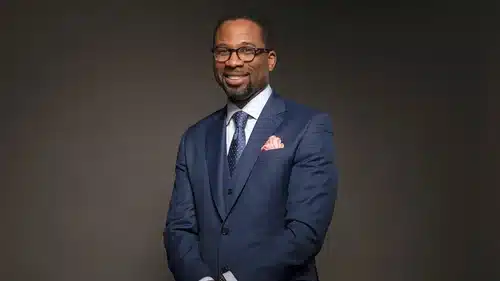
Impact Investing is a buzzword in the faith-driven investing world. But there are dozens of definitions out there for what it actually means. On today’s episode, we’re moving toward setting the record straight. Aimee Minnich has been around since the beginning of the Faith Driven Investor movement and through her work with the National Christian Foundation and the Impact Foundation, she’s proven herself an expert on what it means to invest with impact in mind.

When you listen to her episode, you’ll hear the history of impact investing. While the term has been around since 2006, Aimee makes it clear that this idea has been around for much longer. And in addition to looking back, she also gives us an idea of where impact investing is trending next. She also discusses the value of truth-telling and how that relates not only to the way we interact with others but to how we approach investing.

We’re so glad to have people like Aimee Minnich involved in this movement, and after you hear this episode, we think you’ll be excited to hear more from her in the future. 

Episode 6 - Truth Telling and Impact Investing with Aimee Minnich

by Faith Driven Investor

All opinions expressed on this podcast, including the team and guests, are solely their opinions. Host and guests may maintain positions in the companies and securities discussed. This podcast is for informational purposes only and should not be relied upon as specific investment advice for any individual or organization.

Subscribe to the newsletter

Stay Connected to the Movement

We know that as an Entrepreneur, your most valuable asset is time. So each month we take the very best of the podcast, the blog and all the news, resources, and upcoming events happening across the space and bring it to you.

Episode 174 – Sacrifice as a Road to Victory with Sam Rhee of Endowus

Episode 174 – Sacrifice as a Road to Victory with Sam Rhee of Endowus

Podcast episode

Episode 174 – Sacrifice as a Road to Victory with Sam Rhee of Endowus

In this special edition of the Faith Driven Investor Podcast, we highlight the story of Sam Rhee.Sam was formerly a CEO and co CIO, global head of Asia at Morgan Stanley before starting the fintech platform, Endowus. Today, Endowus primarily serves Asian markets with $5 billion in assets under management and has recently raised 95 million dollars in outside capital. In this unique narrative-style podcast, we hear how the biblical story of Abraham and Lot inspired Sam Rhee to step aside from the role of his dreams for the sake of a colleague and how God used that sacrifice to pave a path for victory.

All opinions expressed on this podcast, including the team and guests, are solely their opinions. Host and guests may maintain positions in the companies and securities discussed. This podcast is for informational purposes only and should not be relied upon as specific investment advice for any individual or organization.

Episode Transcript

Transcription is done by an AI software. While technology is an incredible tool to automate this process, there will be misspellings and typos that might accompany it. Please keep that in mind as you work through it.

Richard Cunningham: You’re listening to Fate Driven Investor, a podcast that highlights voices from a growing movement of Christ following investors who believe that God owns it all and cares deeply about the heart posture behind our stewardship. Thanks for listening.

Rusty Rueff: Hey everyone! All opinions expressed on this podcast, including the team and guests, are solely their opinions. Host and guests may maintain positions in the companies and securities discussed, and this podcast is for informational purposes only and should not be relied upon as specific investment advice for any individual or organization. Thanks for listening.

Richard Cunningham: Welcome to another episode of the Faith Driven Investor podcast. Grateful to have you with us from wherever and whenever you are tuning in to this episode. I’m Richard Cunningham and super excited about today’s episode is we’re doing something a little bit different. You’re actually going to get to hear from our man behind the scenes, our executive producer Joey Honescko, today as he walks you through the powerful narrative story of a wonderful, faith driven investor and faith driven entrepreneur out of Singapore. Sam Rhee, now Sam, was formerly a CEO and co-CEO, global head of Asia at Morgan Stanley. So this is a behemoth asset manager and a gentleman who ran a significant portion of such a large operation and recently has gone on to found Endowus, Endowus is a wealth tech platform serving Asian markets. That is all the way up to $5 billion in assets under management. And recently also as a fintech platform, has gone on to raise $95 million in outside capital and an environment that has been unbelievably difficult to raise outside capital. And as many entrepreneurs can likely attest to. And what you’re going to hear today is this powerful story of Sam and his kind of testimony in the I sacrifice, we win type mentality that he truly adopted, that our friends at Praxis embrace and talk about. So thrilled that you’re going to get to tune in for this. It is a moving story and let’s dive in.

Sam Rhee: I think that act of giving up what is your right is actually what defines us as Christians.

Joseph Honescko: That’s Sam, and he’s the co-founder, chairman and chief investment officer at Endowus, a tech enabled tool that helps democratize money management for everyone. But before we get into the founding of that company, I want to give us a bit of context. We’re going to do a little bit of time traveling, go through Sam’s history to see what led him to this company. In the Gospel of John. Jesus tells his disciples that they are in the world, but not of it. And all of God’s people can relate to this feeling of being stuck between two worlds. But Sam’s experience has given him a unique perspective on this reality.

Sam Rhee: I’ve been what’s called a third culture kid, a multicultural background, and I fit in really well, but I also don’t always belong anywhere.

Joseph Honescko: You’ll see throughout this episode that the spiritual metaphor isn’t lost on Sam, and in fact, his life displays this tension quite well.

Sam Rhee: As a Christian, that really kind of, you know, in a nutshell expresses who we are as in this is my identity and this is not my true home. And, you know, my home is in another place, and I’m here temporarily for a reason. And I’m placed here by God for a reason.

Joseph Honescko: Sam’s desire to discover the reason that God put him on earth is something he’s going to wrestle with for most of his life. And it started even as a young kid, because he grew up in the home of a pastor. But he’s quick to point out that he’s not your stereotypical pastor’s kid.

Sam Rhee: Yeah, so when I was young, everybody assumes that a pastor’s kid should be a pastor or a missionary. But because my father was quite different in the way he lived out his life, when I was a teenager, I approached my dad and I seriously was thinking whether I should go into full time ministry. What does it mean to have that calling to go into full time ministry? And he wisely at the time said that he loves the full time ministry. But what the world needs is not more pastors and not another pastor who’s going to build another church, but he wants us as his children to also do what his ministry is, which is raising leaders, lay leaders. So I think from that young age, he had instilled that in me. He kind of like really put that desire in my heart that I should be a good lay leader and not be going into full time ministry. But it’s a struggle. I always like, you know, think maybe I should go back into full time ministry, but God always brought me back into the workplace and the marketplace. And so it’s been a constant thing that God wanted me to be here.

Joseph Honescko: Did you catch that theme again? The tension between identities. A person living between two worlds. Ministry in the marketplace. His dad did help him see how the marketplace could be a place for ministry. But still it didn’t quite click at that young age. It was one of those classic head versus heart situations where he had heard the truth, but still had a hard time actually believing it and living it out. When you start asking around, you find that most faith driven entrepreneurs go through the same thing. We all at various times might know something to be true, but we find ourselves struggling to live in that reality. That was true for Sam, especially as he started out in his career in finance.

Sam Rhee: Well, going into finance was a fluke. I was a social science guy more interested in like international relationships and, you know, economics and stuff like that. So I wasn’t really looking to go into finance, but a family friend recommended me an internship in Korea and I thought, hey, summer break. You know, I can go there earn some pocket money, practice my Korean and brush it up and I’ll come back. But at the end of the internship, they said, why don’t you stay? And that was it. That was my career in finance. That’s how it began.

Joseph Honescko: As Sam’s career progressed, he found himself at the investment bank Morgan Stanley with a desire to move up in the world. And through that, he started to see his faith become less and less of a priority at work.

Sam Rhee: There was a part of me when I was younger where I think I was kind of enamored with the worldly things like, you know, chasing after the same things bigger bonus and promotions and the work faith integration wasn’t really happening.

Joseph Honescko: Sam again found himself stuck between two worlds the world of finance and the world of faith. And to be clear, it wasn’t like he was out there rejecting God. It was just faith became a lower priority.

Sam Rhee: You know, yes, I was doing the things in the work place, meaning I would lay my hands on the chest of my colleagues and pray for them. I’d like, you know, do Bible study in the workplace, but it wasn’t like fully integrated into the day to day investment space, I think, and you get caught up by a lot of this, you know, game that people play.

Joseph Honescko: Anyone who works in professional settings has experienced the same thing Sam has at different levels. We start to be taught that these are the certain things you’re supposed to go after, and whatever it is, we’re shaped by these stories that say, this is what your desire ought to be. So I don’t think it will shock anyone listening to hear that. For Sam, the thing he was told to desire was his own success above anyone else’s. To look out for himself and to do what it took to get to the top.

Steve Son: Finance has been one of those industries where it’s always had a bit of a challenge.

Joseph Honescko: That’s Steve Son, a former colleague of Sam’s from back in the day at Morgan Stanley.

Steve Son: How do you think would you.

Steve Son: Lead personally into your day to day work? Because you have whether you are investing as are businesses or trading, whatever else it is? You know, part of my goal is just to make money.

Joseph Honescko: Perhaps the biggest issue for anyone who’s trying to integrate their faith into the work is that our work can easily become who we are. For Sam, a lot of his identity became tied to a specific role in Morgan Stanley. Everything he worked towards revolved around getting a specific title.

Sam Rhee: One of the most important things that you need to get if you’re in an investment bank or a large company like Morgan Stanley is, you need to get to managing director, the MD. That’s the partner level. That’s the ultimate goal in life, basically.

Joseph Honescko: Act two finding a better identity. The first question in the Westminster Shorter Catechism, recited by Christians for generations, is what is the chief end of man? The Catechism proposes the answer to love God and enjoy him forever. And I think it’s fair to say that most Christians would generally agree with this statement. But how often do we really live this out? It’s so easy to get caught up in the ways of the world. We, like Sam in the story, might even find ourselves thinking a certain position, or an acquisition or a funding amount, or whatever it is is the ultimate goal in life. Those kinds of things can quickly become our chief ends. And for Sam, he actually had a chance to arrive at his chief end. All that effort he had put in. All the drive was about to pay off until something unexpected happened.

Sam Rhee: So I was out for promotion together with another colleague. So we were going to step up as the Co-heads of Asia. And you know, the promotion was almost guaranteed in our minds.

Joseph Honescko: You can put yourself in their shoes and feel the weight of this meeting. They’re going into this conversation they’ve been waiting their whole careers for. There’s excitement, probably a healthy sense of accomplishment. And there’s also that sense of contained professionalism. Like you don’t want to show all your eagerness too much. So they all sit down together and hear the boss say something neither of them ever saw coming.

Sam Rhee: Sat us down and said, hey, I only have space for one for most of this year.

Joseph Honescko: Even now, you can practically feel the energy drained from the room. Like when it’s so silent, you can hear your own heartbeat. And then something even more unpredictable happened.

Sam Rhee: What was really weird was that he said he can’t decide. So why don’t you guys talk it over and you guys decide?

Joseph Honescko: Keep in mind, too, that these aren’t longtime rivals in the company. They were friends and colleagues and partners in many ways.

Sam Rhee: We built the career of, you know, 15, 20 years to get to this level. And we’re the same age we are, you know, managing good books. We’re going to be the co-head of Asia. So we wanted to build this team together. And one of us becoming promoted first as an MD was going to potentially wreck this kind of relationship of trust.

Joseph Honescko: The decision they had to make didn’t just affect their position in the company. It affected their relationship too. So you can imagine the weight they felt when they were given a bit of time to think it over. Sam was entered back into that situation where he was stuck between two worlds. On one hand, he didn’t want to overstep his colleague, but at the same time, he had worked hard his whole life for this moment. He did deserve the promotion, so it would have been easy to do what most people would do in this situation and come up with the big plan on why he deserved it and why he should go first. It wouldn’t be personal, right? Just business. But that’s what makes Sam’s eventual choice so remarkable.

Sam Rhee: I went home and I spoke to my wife. We decided to pray together and when we prayed, God kind of impressed upon us that this was a Genesis 13 moment.

Joseph Honescko: All right, so now let’s take our time machine and go even further back in history. Because if it’s been a bit since you’ve read Genesis 13, that’s okay. For a lot of folks, it’s one of those small, strange stories that we may not fully grasp right away, but it’s also essentially the story we’re told at the beginning of this episode. Abraham and Lot have just left Egypt, where Abraham was given an extraordinary amount of wealth, and now he’s settling into the land that God has given him. He and Lot decide to split up the land, and when they look out, half of it is all green and beautiful. It’s [….], it’s perfect for agriculture and development. And the other side is, we’ll just say, not as promising. So even though Abraham has every right to make the first choice, he instead lets Lot choose. As you might imagine, Lot chooses the good land. It’s nothing personal, right? Just business. So Abraham made the choice to lay down the best option for the sake of someone else. He sacrificed so another person might win. And at this point, you might start to see where this is connected to Sam’s story.

Sam Rhee: That Abraham and Lot story really resonated with us, and God convicted us on that verse. And so next day I went back to the office. I sat down with my colleague and I told him that, hey, these are the reasons, you know, we have to build this company together. We have to trust each other. And if you really want it, I’m willing to let you go first.

Joseph Honescko: Everything Sam ever wanted in his career. He was willing to give up. Now what prompts someone to do something like this? Because if you’re sharing the story and you feel like it’s a little crazy or even over the top, that would make sense. It is a bit of a crazy thing to do, but Sam saw that the Christian faith called him not to a life of taking, but a life of giving.

Sam Rhee: The language of the world is to take, is to take what’s rightfully mine and take more, whereas Christ is. And Christians are about giving and giving more. And if you go back to like Philippians and Jesus and how he was in the form of God, but did not think equality with God, something that he should be grasping that defines what Jesus did, he came to this world as human being even though he was. God gave up his right, gave up everything, his claim, and he lived a life to set an example to us all. And that life of giving is what Christ wanted us to live. As Christians.

Joseph Honescko: You’re probably catching on that Sam sacrifice wasn’t just financial or professional, it was also a sacrifice of his own identity. Dave Gibbons, who’s an advisor and author and activist, has known Sam for years, and this is what he says about the identity shift that he saw happen when Sam turned down this promotion.

Dave Gibbons: Well in Asia. A lot of times you may not be referred to by your name. You’re referred to by your title. And so your titles, everything. You know, it shows where you are in the pecking order. And so a person who’s offered like a top position, of course you take it, you may offer some type of humble resignation like, oh, I really don’t want it. But yeah, you’d go after it. So for someone like Sam to turn it down, I know how hard it must have been for him.

Sam Rhee: I was still struggling. You know, I say God convicted me and gave us a verse. But that, like, giving that up was probably the most painful thing that I’ve done.

Joseph Honescko: Sam didn’t have some super power or some extra special line to God. He just had the same tools that are available to all of us. Prayer, Scripture, community, the spiritual disciplines that allow us to seek the wisdom of God Almighty. And it might be tempting to hear Sam’s story, or even the story of Abraham and Lot and say, yep, that’s what it’s like to follow God. Give up everything you’ve ever wanted, and then you just wait around. But Christians aren’t just called to die to ourselves, even though that is a big part of our faith. We’re also promised resurrection life. We do see victory. Sometimes it just looks different than we might expect. Here’s how Dave describes it.

Dave Gibbons: I think a lot of times the moves of God in today’s world is really countercultural, like with Sam. It’s like in an upside down way of thinking. But if you look at really who Jesus is, that’s what he was about. He said he came not to be served, but to serve and to give his life as a ransom for many. He chose not to take the royal, pathway to be the king of the land, but he chose to be the suffering servant who would choose that path. I think many times that’s the path of following Jesus is a path of death, you know, that has the promise of resurrection.

Joseph Honescko: We can see that resurrection promise in the chapters that follow Genesis 13. God honors Abraham’s choice, while Lot drifts towards the ways of the world and further away from God. But Abraham’s faithfulness ends up being a beacon of hope for Lot. His radical, upside down way of living made a difference to the person he sacrificed for. And that same thing happened with Sam.

Sam Rhee: I went back to his office and told him that, hey, I told the boss. You go first. You deserve it. So congratulations. And I thought he was going to be, like, really happy. But he was really serious. And I said, are you okay? What’s wrong? And he said, you know, throughout my life, I thought that I could do anything that others can do because, you know, he’s tall, is athletic, he’s intelligent. You probably could do most things that other people can do. And so he said that and he was like, but today I realized that there’s something that you’re doing that I just cannot get myself to do. And I was wondering why. And I realized that it was because you have your God and I don’t.

Joseph Honescko: Sam’s decision to sacrifice became a testimony to a nonbeliever, but it also affected his own way of looking at work for the rest of his career. From that moment on, everything was different.

Sam Rhee: It just hit me right there and then that, you know, I’d been a pastor’s kid. A good kid had lived what most people would say, a good Christian life. And I always talked about glorifying God, doing things for his glory or for his kingdom, or pretty much everything that I done was for my own glory. And when I finally gave up, something gave up my right. Then God was glorified. I mean, this title is not important to me anymore because I had done something finally for God and that encouraged me a lot.

Joseph Honescko: Act three. Building out of sacrifice. So here we’ve got a guy who grows up between worlds. His multinational upbringing. He’s never sure where he fits in. He goes into investment banking and begins to find his identity in his successes, while trying to balance that with his life of faith. But then he finally realizes that his significance is found not in his successes, but in his sacrifice. So for a while, he continues working at Morgan Stanley. He does eventually become the managing director, but it doesn’t carry that same weight anymore. He’s proud of his work, but he also knows it’s not his identity. And that’s when he feels God calling him to something brand new.

Sam Rhee: So God place that desire in my heart to solve some of the bigger problems in finance with technology. And the one that I’m most passionate about is the problem of global pension and the retirement adequacy retirement preparedness.

Joseph Honescko: If you’re not familiar with this problem, it essentially comes down to the fact that people who retire are unable to sustain themselves.

Sam Rhee: Imagine people working all their lives, retiring and not having enough saved up.

Joseph Honescko: Some have to drastically cut back their quality of life, and others even end up in poverty. But the bigger issue is that this problem is growing in the world.

Sam Rhee: People are living longer so that, you know, horrible reality is going to be a reality for much longer than people think. And people have not been taught, whether it’s at the school or at home or even in the workplace, how to manage their personal finances well, how to prepare for their retirement. Well.

Joseph Honescko: While this is a global problem, Sam says there are particular concerns within the Asian population.

Sam Rhee: Unlike the developed markets, I think that Asia has aged much more rapidly without becoming rich. So China India doesn’t even have a proper social safety net. And it’s a massive, massive problem for the biggest population in the world. And so I felt that there was something that we could do.

Joseph Honescko: That last line is the kicker there. The core conviction, the magic phrase. I felt like there was something I could do about it. This is the call of every faith driven entrepreneur who has completely trusted God with their life, with their talent and their resources. Here is where God uniquely placed Sam to make a difference in the world through his company Endowus.

Sam Rhee: Endowus is a digital world platform that allows you to invest your private wealth and public pension. Basically, we’re trying to empower individuals and educate them and advise them and guide them towards a better future.

Gregory Van: So there is a wrong that we are trying to solve in the way financial services delivered.

Joseph Honescko: That’s the voice of Gregory Van, the co-founder and CEO of Endowus.

Gregory Van: My real hope is that we leave our mark, our longer term mark on the entire industry so that they all need to work to serve the client best, not just squeeze as much margin as they can along the way, which is what we see a lot of the time today. And if Endowus is successful. The world will be a better place because people will invest better. They’ll manage their money better, therefore be able to live easier today knowing that they prepared for their future and therefore live better.

Sam Rhee: I think that’s been a passion for me to seek justice and righteousness in the space of finance, because that’s the space where I think the rubber meets the road, where this God and mammon fight is most intense, and God has placed me here for that reason, I think.

Joseph Honescko: So that’s the full circle moment of this story. Sam, like so many of us, spent the early parts of his life trying to figure out his reason, his purpose, his calling. Along the way, he drifted in the ways of the world, believing a promotion was the ultimate goal in life. But once he laid all that down, once he gave away what he thought he earned and what he deserved, he began to experience the freedom of life in Christ. But first, he had to stop chasing Mammon.

Sam Rhee: The Bible says you cannot serve God and mammon. It’s because money has power. It’s more than just an inanimate object. And so we have to submit it to God. And the only way to really deep mammon is through radical giving. Because the world is all about taking more, having more. Hoarding more of this money. And so radical giving. Giving up your right to own more. Giving up your right to having more money. Giving up your right. That is the only way we can defeat Mammon and submit money and finance to God. I think that act of giving up what is your right is actually fundamentally what defines us as Christians.

Richard Cunningham: That act of giving up. What is, you’re right, is actually fundamentally what defines us as Christians. Wow, what a good word from Sam Rhee. What a powerful story and testimony and friends. That’s the calling all of us as faith driven investors to dethrone Mammon in our lives, not to be caught up in the worries of the world and the deceitfulness of riches. Thanks for listening today. Know that if you are ever processing through working through some of these exact threads that Sam talks about, the faith driven investor community wants to serve you. There are groups to process and journey alongside. Love having you here and we will catch you in a couple of weeks. Thanks, friends.

Subscribe to the newsletter

Stay Connected to the Movement

We know that as an Entrepreneur, your most valuable asset is time. So each month we take the very best of the podcast, the blog and all the news, resources, and upcoming events happening across the space and bring it to you.

Episode 184 – SWGP + FDI: Disrupting the Economics of Sexual Brokenness with Eagle Ventures & GameSafe

Episode 184 – SWGP + FDI: Disrupting the Economics of Sexual Brokenness with Eagle Ventures & GameSafe

Podcast episode

Episode 184 – SWGP + FDI: Disrupting the Economics of Sexual Brokenness with Eagle Ventures & GameSafe

In a world where darkness lurks behind every screen, can capitalism become an unlikely hero? This eye-opening episode reveals how entrepreneurs and investors are wielding the power of business to combat sexual exploitation and human trafficking. From AI-powered solutions to disruptive economic strategies, discover how faith-driven innovators are turning the tables on predators and reshaping the battlefield in the fight for human dignity. Prepare to have your perspective challenged and your hope rekindled as we explore the cutting edge of redemptive entrepreneurship.

This episode, hosted by Richard Cunningham and Justin Forman, delves into the critical issue of online sexual exploitation and human trafficking, exploring innovative approaches to combat these pervasive problems. Dr. Lisa Strohman, a clinical psychologist with FBI experience, and Wes Lyons, a venture capitalist, offer their expertise and insights into this complex challenge.

All opinions expressed on this podcast, including the team and guests, are solely their opinions. Host and guests may maintain positions in the companies and securities discussed. This podcast is for informational purposes only and should not be relied upon as specific investment advice for any individual or organization.

Episode Transcript

Transcription is done by an AI software. While technology is an incredible tool to automate this process, there will be misspellings and typos that might accompany it. Please keep that in mind as you work through it.

You’re listening to Faith Driven Investor, a podcast that highlights voices from a growing movement of Christ, following investors who believe that God owns it all and cares deeply about the heart posture behind our stewardship. Thanks for listening. Hey everyone. All opinions expressed on this podcast, including the team and guests, are solely their opinions. Hosted guests may maintain positions in the companies of securities discussed, and this podcast is for informational purposes only and should not be relied upon as specific investment advice for any individual or organization. Thanks for listening.

Richard Cunningham Welcome back, everybody, to another episode of the Faith Driven podcast. And I say faith driven without entrepreneur or investor on the back end, specifically, as Justin Forman, executive director and president of Faith Driven Movements, is in the podcast studio. We’re doing something fun today and unique where we zoom in on one of the solving the World’s greatest problem themes, and we do it on our FDE and FDI podcast as we’re going to bring in marketplace leaders, entrepreneurs, investors alike talking about this particular problem. And we’ll introduce our guests here shortly. But Justin, big episode today, a tough topic as the particular problem we’re highlighting. It’s a heavy one. And I want to give you kind of some time to give context of this episode and then we’ll introduce our guests.

Justin Forman Yeah, big episode. And when we talk about solving the world’s greatest problems, we don’t have to look far to see how dark it is out there and to see how dark some of these things. And certainly this is one of those it’s one of the darkest places that you might look in terms of solving the world’s greatest problems. But as the world gets darker, I think we get more encouraged when we see light breaking through and we see entrepreneurs and investors doing things and pulling on solutions and levers that haven’t been pulled on before. And, you know, I’m I don’t know about you, Richard, but often times I feel my heart break. And I think of oftentimes the survivors, the people that are been hurt and they have been wounded. And what encourages me most about this group and so many others in solving the world’s greatest problems is the people that are getting upstream and thinking about what is that other lever and what is that other issue upon. And I think with today’s friends, as they share about what’s happening here, there’s an economic lever to some of these solutions. And oftentimes we don’t see these. We see our humanity, our brokenness, the morality. But we don’t know that there’s like really an economic problem to solve that if you can disrupt the economics, if you can disrupt some things for good, that some of the downstream things get that much more turned around. And so I think it’s a fun way where we get to see entrepreneurs and investors really stepping in to solve some of these big problems.

Richard Cunningham Today, the adult entertainment industry is a technologically advanced and high strategic engine. It knows how to prey on the most innocent, the most susceptible and the most unsuspecting among us. And their strategy is working. The average age of someone’s first exposure to pornography is 12 years old, and that initial dose of unsolicited supply creates an avalanche of demand. Porn sites receive more monthly traffic than Netflix, Amazon and Twitter combined. That’s all the movies watched on Netflix, all the shows streamed on Amazon and all the tweets. All of them combined received less traffic and attention than pornography. 28,258 users are watching pornography every second. Over $3,000 is spent on porn every second on the Internet. 35% of all Internet downloads are related to pornography. 40 million Americans regularly visit porn sites. 4.6 billion with a B. Hours are spent watching pornography videos on a single site in just one year. But what does that even mean? These are statistics. You’ve probably heard versions of them before. And while they’re wildly unsettling, it’s hard to know just what to do with. The truth is that according to the Journal of Sex Research, 64% of men and 30% of women are viewing pornography. And 100% of those people don’t want to listen to a podcast about the damage caused by porn. Let’s be honest. If you’re in the group that doesn’t view pornography, you don’t really want to hear about it either. It’s a problem that has long existed as part of the underbelly of society. It once lived in the fringes of our psyche like a shadow you’d occasionally see out of the corner of your eye. And while there’s a very real temptation to keep treating it like that as something that is someone else’s problem or not something that affects me. The reality is that it isn’t someone else’s problem, and if it doesn’t already affect you, it’s going to. This is a problem that if Christians don’t start taking it seriously, is going to continue to have massive downstream implications. There were only beginning to understand. So if your opinion of pornography is simply that it’s a moral wrong and something an Internet filter can solve. Buckle up. The reality of this problem is worse than you think. And then even worse than that. But if you clicked on this podcast, you already know we aren’t hoping to solve the easy problems. We’re staring the world’s toughest challenges straight in the face, and we’re talking to the people who are tackling them head on. Amen, indeed. Well, we’ve got Dr. Lisa Stroman in the podcast studio, clinical psychologist, author, recent author of Digital The Stress Growing Up Online, a specific focus on children and young people in this kind of issue of sexual brokenness. And then West Lyons, an accomplished venture capitalist, a very well-respected investor in this broader faith and investing movement of equal venture fund friends. Welcome on to the podcast. Before I go much further and don’t give an intro that nearly warrants how impressive you both are. Lisa, we’ll start with you and let’s get some kind of background on who you are and a little bit of your stories and then we’ll get going.

Dr. Lisa Strohman Sure. Thanks for having me. I am a psychologist, an attorney. I went to a joint program from undergrad to go into policy work and at that time was offered a position to work as an honors intern with the FBI, which was a super cool experience. And I worked in Quantico with the profiling team to classes at BSU and then was invited to become a visiting scholar based on that internship. And they sponsored my dissertation. So I ended up being with the Bureau for 6 or 7 years in total, depending on if you count the AP. And it was an incredible opportunity for me. I learned a ton and I was there when unfortunately Columbine happened. So I was shoved into this world of online safety and what kids were going to do with technology even before social media was launched. So I just remember pivoting and saying, you know, wanting to be a guardian ad litem was kind of my dream in that joint degree. But shifting over and just saying like, somebody needs to really look into and shepherd through the psychology of technology. And so I’ve spent a career doing that. So 25 years in that space.

Richard Cunningham And that’s so powerful.

Wes Lyons Wes Lyons thankful to be here? Thanks for hosting us. I get to work at Eagle Venture Fund, where we get to use venture capital to try to solve some of the world’s greatest problems. And one of the ones that we’re getting to work on under the banner of the Eagle Freedom Fund is investing in technologies that fight human trafficking. A huge chunk of that is online, a safe Internet for kids. Companies like Lisa’s Game Safe, where we’re trying to create scalable solutions to the sexual brokenness, to human trafficking. And it’s a really dark subject, but it’s also incredibly exciting to work with entrepreneurs who have scalable vision for change that bring hope.

Justin Forman Now, guys, I’m very grateful that you guys will both join us here today. It’s been a gift to spend time with you guys here recently filming different pieces of this story. And I think it’s important as we start this off to recognize this story has many different faces and has many different angles when we talk about brokenness. We can look around the world and it’s all encompassing in so many different facets, but specifically this issue. There’s exploitation, there’s trafficking, there’s sexual brokenness, there’s different angles to that. And so I think it’s important that as we start this conversation, we recognize that there’s different angles, but also to recognize one of the reasons why we do this podcast, as Richard and I team up for this, we want to highlight some of the things in the conversation that’s happening already in solving the World’s Greatest Problems initiative. And so if you’re not familiar with the website, if you’ve been paying attention to Faith Driven Entrepreneur and Faith Driven Investor, it’s a new initiative in a site that has been designed to say, how do we start having these conversations? How do we make what feels otherwise overwhelming and complex and make it accessible so that we can begin to process, to have these conversations, to feel how we might be called into this space as entrepreneurs, investors and giving whatever that might look like. So there’s a full episode where we work through some of the stories, we work through some of the conversation into that, and there’s going to be other pieces that you’re going to find there to include an incredible story that we’re filming with these guys and just what’s happening through Freedom Fund and Eagle Venture. So be sure to check that out. But I wanted to make sure that we start with that framework because a lot of people that are going to enter this conversation are coming from different places and going to think, Man, you’re only tackling a piece of the puzzle. And that’s right. There’s no way we’re going to able to round all the bases in this kind of conversation. But what I want to start with is I think oftentimes when we think about evil, we think about evil is this thing that we always slip into, and it’s this evil that maybe it’s like, man, we have a moment of weakness. There’s a moment of brokenness. And while that’s true and there’s responsibility, we all have to take for that actions. There’s a sinister intentionality that I think is on the other side of maybe the screening, the other side of this equation that we need to look at. And we said that was one of the things that struck me when we spent time together. And you just talked about the way that people are being targeted, the CEO, the way that people are trying to get people into this area of brokenness, specifically in this area of pornography from a young age. Can you speak into some of the things of what you guys have found in that journey?

Dr. Lisa Strohman Sure. You know, it’s interesting. I think that a lot of times when you look at the rates of exposure. Or to pornography or exposure into these kind of dark worlds. It’s happening sub10 at this point in our country. And so what we look at and obviously we’re not going to do causative studies in the U.S. because you can’t do experimental studies where you’re putting children into cohorts where they’re going to be have, you know, harms placed upon them. But you can do correlational studies and you can look at what’s happening. And so the average in the United States of where children are first being exposed is typically around second grade, where they’re given their first research assignment, which means that they’re mandated to go into this Internet world and research things that are tethered with ads and things like that that pop up on them innocently. But it’s almost like you can’t unwind that. And so what I’m seeing is that those children that have unfettered access or even monitored access, the parents think that they’re doing the right thing, are fundamentally different kids. And so in my practice, when I see if I go into, say, a speaking engagement in a school or I go to a town hall, I can tell you which of those children have been exposed because they’re hypersexualized even at like nine, ten and 11. You can just tell the way they dress, the way they present themselves, versus those children that don’t have that exposure, that are more innocent and natural. So we have to think through of like the technology is being a portal to these things that are industry moneymakers. And so when you’re going into a very high billion dollar industry where you’re you’re going in and getting children at such a young age, you’re getting ten plus years earlier than you can get them as active consumers legitimately. So that’s what we see and that’s what we fight against.

Justin Forman Yeah, the intentionality of that evil. In some ways it’s surprising. In some ways it’s not when you think about so much of like TV and media demographics and you talk about advertisers and they talk about the value of the younger audience, if you can get them engaged, of course, in a business, we understand there’s more of that. I hate to say it this way, but the tragic view of like a lifetime value and what you’re exploit, what you’re talking about bringing to light there is that, yes, they’re targeting people from a young age. You know, my wife and I, obviously, we have three kiddos and it was eye opening for us years ago when we would hear that the average age of exposure was above ten. I think it was first told to us like it was 12 and it was, you know, probably the picture that you would have would be the the bus ride home from school. And one of the kids has a cell phone and it’s unfiltered and it kind of goes from some of those things. But what you’re talking about under ten years old at that young age with that intentionality, it’s startling. And it’s it’s. It’s crushing. It’s almost kind of crossed a threshold where as parents, we are just it’s no longer that you can hide from it. You have to be prepared to kind of teach people how to deal with it. And, you know, one of the other things that I want to kind of bring into is they experience it in the unexpected ways. And, you know, after our time together, I cringed as a parent to think at how young of an age we had our kids in games, specifically things like Roblox and other things that you speak of that I mean, there’s just so much happening on these platforms that we don’t know about. Can you shed light on the game side of things and just what’s missing there?

Dr. Lisa Strohman Sure. I think that in gaming, what we see is parents want their kids to experience just fun. They want them to go out and they want them to connect. And that’s what we all should want. We want our kids to have those experiences. But what we’re seeing in gaming is that there’s no kind of line between adults and children in the gaming worlds. So some of these games like Roblox or Minecraft that you think about farm life like you think of, these are kid games. Well, imagine yourself if you’re a predator. And we know from David Erb, he’s the whistleblower from Metta that there’s tens of millions of predators online on a given day. And imagine if you’re looking for a child today and you’re going into a neighborhood with a van. It’s very unlikely that you’re going to see a child. But what they can do is they can go into these kids facing games and go into those very innocently with a totally innocuous avatar or pretend that they’re a child and they can have conversations and start to groom those children without that child even knowing, without the parent even knowing. And so the gaming community hasn’t figured out a strong stop on that. They don’t know what they’re doing or what they’re not doing. Right. And so they’re kind of clumsily trying to come in and fix that. And right now, when you look at kind of roadblocks as an example, they’re coming in like if we see anybody that is inappropriate online, we kick them off of our platform. Okay. Well, that’s fantastic. Now all they have to do is create a different avatar, a different sign on and come back on and do exactly the same thing. And they’re not notifying the parent. They’re not notifying anyone that the child may have been exposed to some sort of sexual deviancy or any of those things. So the child now holds that and is shameful and hurt and curious and not sure what to do with that information. And we’re not protecting our family unit by giving them the right or the ability to do that. And and that’s why I was so excited to join Game Safe. As they’re doing that, they’re giving contemporaneous reporting to the parent and allowing us to understand and see exactly what our children are being exposed to.

Justin Forman You know, one of the things I love about this podcast is that in the solving world’s greatest problems side of things, we get to deep dive on some of the statistics, the issues we tell, some of the stories in that episode. There’s incredible parts that we’re telling the story from the brokenness side of things, the therapy side of things, the statistics side of things. But one of the stories that our audience is particularly drawn to is that of Layla’s story of saying, What does it look like to take down and to bankrupt Pornhub? And we’re seeing that some of the solutions are not necessarily just saying how do we prevent how do we take away some of these things, but how do we really go at the very business model side of things? And where one of the things that you said when we spent time together is that this is sometimes more of an economic issue, more than it is anything else. Can you explain what are you guys finding out when you see the economic issue and how we can follow that?

Wes Lyons One of the key questions when you’re looking for a really scalable solution to an issue this hard is trying to figure out who has. It’s this magic pairing of the pain and ability to pay for a massively scalable solution. And in this case, you actually have to add that the parents feel the pain. And when they realize that their kid is in danger. And that’s what Game Save is primarily tapping into in the direct to consumer is parents want to protect their kids. And the ability to hand them the easy button, you can protect your kid. But then what we’re seeing here in the last even in the last ten days, as we’ve seen short sellers on Roblox actually buying big short positions and then publicizing, there’s incredibly high numbers of predatory activity happening there. Dr. Allison, just for sharing about. And that’s actually destroyed $2 billion of market cap in Roblox in the last ten days, kind of highlighting that there is very real economic consequences for not solving this problem. And it helps validate the thesis that we’ve been preaching that this is actually a business problem, if that makes sense, and that we can use business to some extent. Business or capitalism got us into the problem because Roblox has not put any brakes on this because they just wanted as many users as possible. If we’re very simple about it, and then we’ve been making the case that there is an economic model to scale really large solutions to this. So on both cases, you have pain in ability to pay. What would you add to that?

Dr. Lisa Strohman Lisa I think that that’s perfectly said in that respect because I think that we don’t ever take a second to understand the mechanism of what financial is driving the market for the gaming. Kids just want to play. Parents just want to have a safe place to let their kids go. But we don’t really think about it because they’re kind of free services. You can go on and you don’t have to pay anything initially. And so, you know, my work that I do with kids is really to educate them that they are no longer a consumer, but they in fact, are the product in a lot of these situations. And whether it’s the porn industry or whether it’s the gaming industry, they’re the product that is being sold and used to make money.

Justin Forman I want you to push into that one more before Richard. And we push into like the solution and the legal venture side of things in the work that’s being done. Lisa One of the things that was both fascinating and scary as you talked about, how the algorithm it’s this mysterious thing. It’s a mysterious piece of the conversation. We know it’s been a part of probably first introduced to us in our Google search and then our social feeds. And we kind of think of this, but it’s this mysterious thing. And yet to kids at an early age, it’s not actually so mysterious. And sometimes it gets to know them more ways than a parent can. And your analogy of kind of breaking that down of like what this algorithm is to kids at a young age, can you talk about kind of what is it, when do we first encounter it and what are we competing against as parents?

Dr. Lisa Strohman Wow. I mean, that’s a big question. You the algorithm start way into the very, very early games where the kids are doing, you know, say, ABC Mouse or some of the educational tools that parents will use. Any time that you’re putting a child in an interface that is online, you have to assume that there’s an algorithm that is leading them through that process, and it’s learning from that to better their product in the end and to better the connection and the drive for the child to return to it. What that does for a child is it’s training them. And I’ve argued this point. I’m very good friends with Dr. Drew Pinsky, who works in addiction. And he and I have talked through the fact that we’re really priming children to become addicts in other spaces by doing these very early introductions that are algorithmically keeping them hooked into these games. So, you know, it can be as simple as, like, understanding a child. I’ll take ABC Mouse because my children were on it. And the minute I saw that, it wasn’t about drawing the letter appropriately, but it was really more about getting the coin so they could buy the sticker to put on to the landscape. And you can see it happen if you’re looking for it, if parents are trained to look for it. And when that happens, it shifts. So my work in elementary school, I think, is the most vital work that I do because we have children that are open to learning and we’re open and not as exposed as they are by the time you get to middle school or high school. But in that elementary school age of very example, I would say is that many of them by sixth grade, I would say the schools that I’ve gone into in the last three years, almost 75 to 80% of those kids are truly looking at wanting to be as a career, an influencer or a YouTuber. And so for them to see those words has to have some modicum of understanding that it’s about following in. It’s about getting the likes and it’s about doing things that create that algorithm to give them more attention. And so I think that our consumerism of the children is being overlooked. You know, we’re looking at the parents or we’re looking at the schools, but the kids themselves, in my opinion, is the biggest solution that we can like dive into and support.

Richard Cunningham Well, I mean, this has been powerful to listen in on. Lisa gave us some kind of phenomenal context on her passion and motivation for this work and where it all started. Wes, you’re a venture capitalist and you are looking specifically at Eagle Venture Fund and within your Freedom Fund for solutions to human trafficking and kind of this issue of sexual brokenness. What was some of the original motivation for this investment thesis? And then after that, I want to get into some of those portfolio companies and kind of some of those redemptive stories of solution providers.

Wes Lyons Yeah, the origin story for me started on the battlefield in the Philippines, where I saw ISIS using children in combat. And that just wrecked me. I was actually already in the finance world and was mobilized as a reservist. So I was already thinking with the world of finance, when I encountered the really tough experience of spending the day hunting for kids, trying to save them before the unthinkable happens, and coming home and processing through the grief of what I was doing there. But also through the years of of processing and understanding how big this problem is. When you look at the breadth of a $345 billion industry of buying and selling people. It’s breathtaking. But also as faith driven investors meeting more and more and more entrepreneurs, you have these really exciting, scalable solutions has also grown our hope that we can be part of something that the large is doing that’s much bigger than ourselves.

Richard Cunningham And maybe a few examples of portfolio companies early on that you guys are extremely passionate about in the ways they’re attacking a problem.

Wes Lyons Well, Game Safe is a great example where they’re helping parents protect kids online. We’ve got to be part of tackling this journey where Texas is a phone that doesn’t have any exposure to the Internet or kind of any social media at all, or helping people have the best of an online phone experience. But actually none of the addictive elements to it, which is really been inspiring. And then another good example would be Darkwatch. There’s about 32,000 brothels operating in the United States run by 200 crime organizations, and they’ve mapped those cartels and actually coming to businesses and saying, Would you like to know if you’re doing business with the cartels? And in many cases, what people don’t understand is if you look at this $345 billion industry, that’s kind of like the revenue line on that. Overall, the business of human trafficking, the expense line, much of that expense line on the 345 billion is flowing through legitimate businesses. It’s flowing through rideshare companies, through hotels, through cryptocurrency exchanges, through banks. And most of the brands that we know and love passionately don’t want to do business with the cartels. And so if you can bring them that solution and there’s more than 40 hotel brands in court over literally human trafficking allegations right now. So when we see the short sellers losing $2 billion, when we see JPMorgan getting hit for $290 million, when we see these major flairs of what effectively are pain for corporations, that just brings out a treasure trove of opportunities to build scalable solutions that faith driven entrepreneurs who are hunting for ways to express the Kingdom of God are more than excited to step into.

Justin Forman So I want you to hit on that. Like if you weren’t paying attention, if you’re on a run and you missed those numbers on that scale, how many brothels, how many crime organizations?

Wes Lyons 32,000 brothels trafficking about a million people run by 200 crime organizations.

Justin Forman And $345 billion.

Wes Lyons There’s a little bit. So 345 would be a global number. And that 32,000 is a US number. So I don’t want to overly mix those.

Justin Forman But when you look at that and then you hear statistics of like there is more consumption than on Netflix and Amazon and X combined, we talking about a serious issue. What I love is the subtlety that you hit on is that the way that you can disrupt this is like where does all of those other operations pass through? And that you can attack kind of some of those things because as you’re pointing out to companies are thinking more about that because there’s a real price if they don’t pay attention to that. There’s a real price if they don’t have that, because the consumer, us as we’re buying and purchasing, we want to know that we’re purchasing for something responsible. Can you talk about that? Westlake, where some of the places where companies have taken note said, my goodness, we didn’t realize something was happening and maybe you don’t need to get specific on a company, but when you talk about an industry, what are some of those places where that whether it’s ridesharing or some other thing, where are those places where people are taking note of what’s. Happening.

Wes Lyons I think the hospitality industry as a whole has created a number of nonprofits and done a lot of training. So where we’re at in the movement, in the hospitality, about 80% of the trafficking in the US, if you just look at calls into the trafficking hotline, are happening in hotels. So they’ve done a lot of good groundwork where they’ve rallied into organizations and done training. What we’re trying to do is say, Hey, that’s amazing, all the ground that we’ve made. Now let’s apply a ton of tools like Deja Vu AI, who’s able to take an advertisement for a traffic person and actually do location work on where did that picture come from, or other tools where we can start bringing scalable solutions? Because if you imagine if you work in a hotel and you got training and are waking up and going, Wait, there is human trafficking happening, you can’t actually call the police because you felt weird about like that looked a little off. It’s just not at all appropriate to call the police to say she looked a little young or she looked a little scared, like, you can’t do that. But if you start creating the systems to say, hey, I’m just going to put this into the app, there’s something funny or I won’t say explicitly the things that you might clean up in a hotel room after 12 customers, but you can imagine what would be cleaned up. Those types of things are not things that you would call the police about. But if you start keeping track of those in a technology solution that’s also doing facial recognition. You can imagine we can decimate human trafficking domestically in the next few years.

Justin Forman So you talk about the economic equation, and I think what you talked about is like in sometimes you’re trying to raise the expense line item. Like can you talk about like the theory of change here and behind it, like, how do you defeat this? It’s not that you can probably eradicate all of it, but you can really attack it from a certain economic angle. Explain what you mean by that.

Wes Lyons Yeah, no, Thomas from Darkwatch really taught me to think about these cartels as entrepreneurs who have a revenue line on one side and an expense line on the other. And if you can drive down demand through a whole litany of making it more scary to go buy sex, any ways that you drive down that revenue line and then pushing up the expense line, there are fewer and fewer hotels where it’s safe to operate, fewer and fewer banks where it’s safe to operate. If you can get the expense line to cross the revenue line, that business breaks like we decimate trafficking. So it’s really it’s powerful to change our thinking from, hey, we have to catch everyone or like kind of we tend to think about it in the one off rape type of mechanism. That makes sense. You’ve got to catch the bad guy. But if you think of how to break a business, you just have to make expenses higher than revenue in the business breaks.

Justin Forman Yeah. Powerful thought. Before we go back, I want you to explain this idea of just why is for profit solutions so needed in this space? A lot of times our heart is a church feature and entrepreneurs, investors listening to this, we break and we think of like the survivor and we think of like, how can we help? But when you think about the other side of things and the for profit, why is for profit solutions needed so much in this equation?

Wes Lyons It’s a really good question and we had to wrestle with that too, as we started grappling with the gravity and magnitude of the issue. I would submit it’s just the sheer scale of the issue. And in our lifetime, we’ve watched a billion people come out of dollar a day, poverty primarily through capitalism. And it’s just it’s what capitalism is good at. Like, for better or for worse, it scales things. When we look at roadblocks as scaled it creative experience a little bit further than it should have. And that makes sense. For better or for worse, capitalism just takes things in. It scales them. And that same mechanism that seen a billion people come out of dollar day poverty. If we can aim those mechanisms redemptive at seeing millions of people come out of slavery, it just seems like one of the most exciting ways to grow capital on the planet.

Richard Cunningham Lisa, let’s go back to you for a moment. One of the things that’s been top of mind, this entire podcast as we’ve been just going over this, is I can’t stop thinking about social media. I mean Tik-tok, Facebook, Instagram, X, but then also the rise of artificial intelligence and deepfakes. And you’ve run into some situations there where technology is being used for brokenness. And I think you’ve got a pretty powerful story around A.I. and deepfakes as well. So what comments and thoughts do you have there?

Dr. Lisa Strohman I think that now that we have AI consumer ready, right? So there’s apps that you can go to the App Store or Google Play and you can download these apps that allow now any individual consumer to more for face, more for body like create videos. So when we talk about deepfakes, there’s all these different variations of it. But what I’m seeing happening now is that you’re starting to see kids experiment like they should, right? They’re curious and now they have what on the App Store allows a four year old to download four plus in many of these. Where you’re allowed to go in and create deepfakes on video or pictures or those kind of things. And so one of the cases that we’ve had recently was a school had just come into session. They’d been there for a couple of weeks. I get a call. The principal had been flagged as posting or having a video posted of himself that he was talking to a female student and the female student was asking for grades to be changed to all A’s. And the principal said that they would do that with a sexual favor in return. And so none of that was actually true. You know, two students had filmed this talking as a narrative had gone in, taken a picture of this principal and morphed his body into that video. But the consequence of that was now the FBI showing up at a school system. Right now, we have police officers involved for criminal action on the student. The family is now impacted because there’s suspensions and an impact there in terms of like schooling, choice of where they’re going to be and whether or not the school is going to let them back in. But more so, too, is the victimized principal that is really, truly dedicating his life to support these kids and to be in to talk to them and now trying to figure out how does he manage that? Does he privately press charges? Does he allow the school system to manage that himself? And so you’ve got this conflict of like just kind of very rape. And that’s one system or one example in a system that where I’ve already had at least two dozen calls on this issue. I think that in the App Store there was an app that I highlighted in a presentation I had recently that you have to be nine in order to notify someone, you know. So you’ve got, you know, these open source abilities for children to go in and do very, very awful things. And the teachers and the administrators are having to deal with it.

Justin Forman Yeah. And while I don’t even know what to do with some of those things of what you’re just mentioning, like we often talk about how money can be a tool for good, and business can be a tool for good, but it can be a source of brokenness. And in the same way, we’re seeing technology play itself out in that same manner where so much redemptive and great things can come from it. And yet we haven’t even like fathom the depths of intentionality of brokenness and how these same tools are being manipulated in the opposite direction. What I’d love to do is we’re kind of coming to a close here in this episode and we’re just scratching the surface of this, but what are the things that give each of you guys hope? What are the things that you’re seeing that you’re saying, Man, here’s the win. Here’s something, here’s the progress. Hey, it’s a dark world. It can sound like the sky is falling. But what are the things from each of you guys perspective that you’re seeing that gives you that hope? Well, let’s start with you.

Wes Lyons I mean, it’s so dark that you’ve got to lift your eyes to Jesus fast or else, like, no entrepreneur can give me true hope. But as we’re scanning out, we do get to spend most of our day working on solutions, and many of them are incredibly exciting. And getting to see entrepreneurs working together is also really, really powerful. Where entrepreneurs in the UK are working with entrepreneurs in the US and people working on policy start to cross, collaborate with those that are creating companies or even some of the people that are involved in the court cases trying to highlight what’s actually been this toward solutions. When we start seeing that cross collaboration happening, the body of Christ is standing up and saying, Let’s work together in a way that is deeply exciting.

Dr. Lisa Strohman You know, for me, I’ll use a personal example because I have multiple examples over the years. But recently I went to Wyoming and I was in a conference, probably 250 people there. The host of the conference, the prevention specialist, brought her daughter, who was 12 years old and was really fighting with her mom about wanting to have social media and all of the things. And I went up and gave my presentation and I talked about all of the different things that the industry does in order to take advantage of kids. And I talked about some of the things that it impacts their brains, their neurochemistry, their neurobiology, the structural aspects of their brains. And I talked about how it’s winnable when we stop and start to educate and we understand and give this power to the kids. And at the end of my speech, the woman came over and she said, My daughter would like to talk to you. And she came up to me and she had tears in her eyes and she gave me a big hug and she said, I just deleted everything on my phone. And she said, And I’d really be honored if I could be your team lead for your mentoring program in my school. And so I gifted it to her on site. And then we prayed and I told her it was going to be okay. And I know that that’s the answer, right? Scaling that and getting those kids to be the voice is light. They will do this. They will do the work because when they hear it and they know it, they will do it for us.

Justin Forman Such powerful things. You know, I think oftentimes we talk about solving the world’s greatest problems. And sometimes we say that solving the world’s greatest problems, we are oftentimes the world’s greatest problem. It’s us. It’s our sin, it’s our brokenness. And this is an issue that as parents, as ourselves in different places, we all find the church is certainly not been immune from it. This has been a big issue of our generation. And as you said, it’s an individual conversation. I think one of the things that I take away from this conversation with you guys is just a hope that this is also what a beautiful opportunities for the body of Christ to help the hurting to come along. For those that are surviving, they’re walking out of some of these brokenness or walking out of some of these painful situations and also to engage the economic side, the business side, and to say, hey, there is an economic equation that if we can disrupt, we’re never going to again eradicate sin from this world. That much we know, but we can really see some of this disruption happening for good. And so when I when I hear about why the story of Pornhub, when I hear about some of the different ventures and Evil Freedom Fund, when I hear about this economic model of what we’re going at, man, it makes you proud of the home team, makes you proud of the church. It’s like, man, we figured out how to take this upstream, how to take this to a different playing field and really kind of evaluate it in that way. And guys are just so grateful for you, grateful for the work of what you guys are doing, grateful for the way the Eagle and the freedom and just thinking about this in a different way. And as you said, bringing resources to bear that are needed for an issue of such skills. They’re so, so grateful for you guys. Thanks for joining us. Thrilled to have you guys here on the podcast. For those listening to this and want to push more into the issue in the conversation. Be sure to check out that Solving the World’s Greatest Problems website for the Faith Driven Investor is for the Faith driven entrepreneurs. That is a place where we’re going to dive into the issue. You’re going to hear some of the stories there, but you’re also going to hear specific ways that you might build and invest and give differently when you hear issues like this. And so some of the same companies that you heard West talk about some of the same ministries and that you might be able to give to, you can find a best list of those there and not sit on the sidelines, but find ways that you, your family or your business might get in the game here. So great being with you guys. Thank you for joining us.

Wes Lyons Thank you.

Dr. Lisa Strohman Thanks for having us.

Richard Cunningham Thanks for listening to the Faith Driven Entrepreneur podcast. Our ministry exists to equip and resource entrepreneurs just like you. With content and community, we know entrepreneurship can be a lonely journey, but it doesn’t have to be. We’ve got groups that meet in churches, coffee shops, living rooms and boardrooms around the world. Find one in your area or volunteer to lead one and bring this global movement to your own backyard. There’s no cost, no catch, just connection. Find out more at Faith Driven Entrepreneur or talk.

Subscribe to the newsletter

Stay Connected to the Movement

We know that as an Entrepreneur, your most valuable asset is time. So each month we take the very best of the podcast, the blog and all the news, resources, and upcoming events happening across the space and bring it to you.

Episode 189 – Stewards Not Spectators: A Conversation with Suzanne Daniel and Dana Wichterman

Episode 189 – Stewards Not Spectators: A Conversation with Suzanne Daniel and Dana Wichterman

Podcast episode

Episode 189 – Stewards Not Spectators: A Conversation with Suzanne Daniel and Dana Wichterman

What happens when we overcome initial reluctance to enter the world of impact investing? In this enlightening episode of Faith Driven Investor, Suzanne Daniel of the Pilgrim Foundation and Dana Wichterman of Impact Foundation share their journey from traditional philanthropy to impact investing, revealing how they’re helping create sustainable solutions for vulnerable communities worldwide. Their candid discussion explores the challenges of learning investment jargon, the importance of community in the faith-driven investment movement, and their vision for making impact investing accessible to all believers.

Please note that the views expressed by the hosts and guests are their own and do not necessarily represent the opinions of Faith Driven Investor.

All opinions expressed on this podcast, including the team and guests, are solely their opinions. Host and guests may maintain positions in the companies and securities discussed. This podcast is for informational purposes only and should not be relied upon as specific investment advice for any individual or organization.

Episode Transcript

Transcription is done by an AI software. While technology is an incredible tool to automate this process, there will be misspellings and typos that might accompany it. Please keep that in mind as you work through it.

Richard Cunningham You’re listening to Faith Driven Investor, a podcast that highlights voices from a growing movement of Christ, following investors who believe that God owns it all and cares deeply about the heart posture behind our stewardship. Thanks for listening. 

Narrator Hey everyone. All opinions expressed on this podcast, including the team and guests, are solely their opinions. Hosted guests may maintain positions in the companies of securities discussed in this podcast is for informational purposes only and should not be relied upon as specific investment advice for any individual or organization. Thanks for listening. 

Richard Cunningham Welcome back, everyone, to another episode of the Faith Driven Investor podcast. A joy to have you with us for what is our second FDI pod of 2025. We kicked it off just a couple of weeks ago with the marks on the markets with David Bahnsen and John Coleman would highly encourage you to check that out as we kind of recapped 2024 in the markets and looked ahead to 2025. 

Joined today by one of our co-hosts who’s with us frequently, Luke Roush out of Nashville, Tennessee. Luke, not only are you co-host in today’s FDI podcast, but here in a couple of weeks on February 7th, you’ll be co-hosting the annual Global Faith Driven Investor Conference, which is kind of a seminal and key event for the broader FDI ecosystem and movement and something we’re going to spend kind of the bulk of our show on today. But before we go that direction, introduce our special guests. Man, how are you? How is Christmas? Even though it feels like an eternity away and kicking off the new year for Team Roush. 

Luke Roush Doing great first couple of weeks in January. Always a little bit of slog getting back into it, but we are fully into 2025, very, very excited. About February 7th. We’ve got two phenomenal guests on who everyone will hear more from at the conference, but are really excited for today’s conversation. 

Richard Cunningham Yes, sir. Yes. So today is kind of a special behind the scenes peek with You’ve got three conference speakers here, obviously, Luke, you hosting, Suzanne Daniel, who I am to introduce here in a moment, and Dana Wichterman, chairman as well. We’ll kind of share some brief bios. You’re going to see all three of these names. 

In particular, you’ll see a special feature on Suzanne and her story. But Dana Wichterman will be featured on the conference as well. They’re too humble to take these titles, but Luke and I would absolutely consider them heroes of the FDI movement. And so allow me to quickly kind of introduce who they are and then we’ll welcome Suzanne and Dana on this show. But starting with Suzanne Daniel graduated from the University of Delaware with a degree in animal science and a master’s degree in physiology at the Ohio State. So she is relishing in her national championship. She co-founded the Pilgrim Foundation in 1988 with 1998 excuse with her father. The Pilgrim Foundation has partnered with over 50 nonprofit organizations spanning Africa, Haiti, China and the U.S. Foundation grants focused on supporting Christian nonprofits that serve the most vulnerable. Most recently, the Pilgrim Foundation has put a more prominent focus on social impact investing. We get into a lot of that today and aligning their portfolios with the values of her Christian faith. She serves on the board of the Gathering Impact Foundation, organizations that are near and dear to many in the space. And she and her husband, Mark, have four kids, two grandchildren, lots of pets. Suzanne. We need to hear about that. And then currently reside in West Chester, Pennsylvania. Suzanne, so welcome to the show. Great to have you. Will say hey to Dana here in just a moment, but how are you doing? 

Suzanne Daniel Great to be here. Thanks for having me. Doing great. Really relishing some Ohio State victories as well as the Philadelphia Eagles. So, yeah, feeling very blessed right now. 

Richard Cunningham Well, football lovers, Luke and I myself both probably envy that statement a little bit to have both teams clipping and doing well currently. That’s awesome. But hey, going over to Dana Wichterman, who you also see on the video conference on the seven. Dana spent her career as an international economic development professional at the U.S. Agency for International Development. She currently works at Impact Foundation, helping Christians deploy their charitable capital for impact investing. She serves on the boards of several for profit and nonprofits, including our very own faith driven movements. She’s the founder of Faith Driven Entrepreneur, an investor network in DC. She holds an Emmy in International Affairs from Columbia University, and she coauthored recently with her husband, Bill, a forthcoming book called Stewards Not Owners The Joy of Aligning Your Money With Your Faith. Excited to get into that because that’s a pretty big deal that you and Bill put that book out there. I know a lot of folks have been looking forward to hearing your insights and the wisdom you guys have to offer. But Dana, welcome to the show. 

Dana Wichterman Thank you so much, Luke and Richard, for having us. 

Richard Cunningham Well, friends, today is going to be a lot of fun. And we’re talking February 7th, the big FDA conference. Listen to some of the themes that you’re going to hear as we kind of go in through the conference. It all kind of falls under this banner of the idea of courageous capital. So you’re going to hear from Eagle Ventures, a story about a fund that’s investing in for profit companies to end human trafficking. Suzanne Daniel’s story is going to be featured. And so we’re going to get a little bit of behind the scenes time with her today. 
You can hear stories on investors making an impact in the movie industry, multifamily housing industry, combating the loneliness epidemic through innovative means like an organization such as apartment life. Jeremy Lin Linsanity is going to be featured on the conference, so a number of fun, just kind of threads and narratives are pulling on. I was talking to the folks on the FDA staff the other day who are responsible for putting together watch parties. 
I think the number is up to 122 Global Watch party. So the way you can join is go onto the Faith Driven Investor website, click on to the conference tab. It’ll take you to the area where you can register. For a watch party Would love to have you there. A global movement. But the conference takes place in local expressions, and so that’s enough for me. We want to hear from you, Suzanne and Dana. And so maybe what we didn’t hear in the bio a little bit is kind of that inflection point for each of you. Suzanne, we’ll start with you on when God kind of opened your eyes up to this FDI space and kind of open your eyes to, hey, I want to get in the game with not only my nonprofit capital or my philanthropic capital, but also my for profit investing capital. And so let’s kind of get some of that story from each of you. And Suzanne, go ahead. 

Suzanne Daniel Sure. It’s funny that you say like get in the game. I didn’t know there was a game. So I had been a grant maker at the Pilgrim Foundation for about 20 years and really just focused on making grants to solve problems and meet the needs of the vulnerable. But on one trip to Haiti, I realized that there was a nonprofit that was doing great work, that was spinning off a for profit company. And I went to their opening of the factory. I’ve told this story many times, but I realized at the end of all of this that this was a sustainable source of income for the people of Haiti versus grants. So I chased down the owner and we sat across the coffee table and I said, How can I help you? Because I had capital and she had a need for investment. And we both had no idea how to move forward. So that was really that’s the clearest inflection point for me where I realized that there was a problem that I didn’t know how to solve, but I had what she needed. I just didn’t know how to get it across the bridge. 
So that’s what drove me to find this game that you speak of that existed that I didn’t know was happening. So I sought out experts and I finally realized that there was sort of a loose conglomeration of people that were leading a movement. That was exactly what I needed to do. But I was very surprised that it was in its early stages. I thought I was the one that was missing it. So we can talk more about that. But I think that’s the inflection point that you are referring to. 

Luke Roush Well, Suzanne, you’re in a unique spot. You know, we talk a lot about within Faith Driven Investor and this construct of trying to solve the world’s great problems. There are really three ways to do it. You can build as an entrepreneur or you can invest as an investor or you can give as a philanthropist. And you’re in the unique spot of addressing at least two, if not three of those. Really? All three. Because you built Pilgrim alongside your dad. What have you learned just in terms of where you apply which to build, invest, give many insights maybe from that first experience, just using that as an illustrative example around which tool comes out of the toolbox because you’ve got them all in there. 

Suzanne Daniel That’s a great question and we’re going to speak more about this, I think. But I will always have a section of the toolbox that is early stage startup will probably not be profitable, but I’m trying to get it off the ground enterprise so that it could be investable later. I feel like that’s a very clear calling for me. So that would be build, I would think, helping entrepreneurs build before many people would think there was any logic to that. So I really feel called to that. And then there’s invest would be the entirety of the portfolio that we want to be sustainable. We want it to grow at a market rate so that we can keep making grants. We don’t have a plan to sunset at this point. So I would say invest is for profit. The third piece give would be the continuation of our philanthropic grants, just traditional grants that we make every year. And we do long term, unrestricted grant making. So that really is a continuous source of income for nonprofits. 

Luke Roush That’s great. Thank you. 

Richard Cunningham Yeah, I like what you said about the catalytic side. You know, I just came from a Praxis workshop not too long ago where they unpack that redemptive frame that I know many know. But kind of ultimately the way of Jesus being that the redemptive means and practice of business, which is, Hey, I sacrifice, so we win. And Suzanne, I can hear that kind of in your tone, in the way you’re approaching the hey, these early stage startups are it’s gritty and we don’t necessarily know what it’s going to look like, but there’s a willingness and a catalytic nature to say someone’s got to be on the ground floor willing to kind of take that I sacrifice. So this idea of this kind of kingdom principle can win. And so decide to tug on that thread later. All right, Dana, what’s the inflection point for you? You and Bill, maybe just you individually, whatever it might be, when God kind of woke you up to this idea of faith driven investing and getting you in the game. 

Dana Wichterman Sure. So I’ll address a bit what Suzanne said, that we were in the impact world. We always had a sense that we were to be about God’s kingdom work, but Bill and I were drawn mostly into the government work, so that was where we thought we could see some good being done. And then he moved us into the nonprofit world, just like Suzanne. I didn’t know there was a game going on in the investment world. I’d hadn’t even understood that investments have an impact other than depositing some money back into my own account when I invested Well, and the inflection point I remember clear is about. I’m at a generous giving conference about ten years ago next to somebody from Eventide, an asset management company whose tagline is Investing that Makes the world Rejoice. And of course, my analytical side was like, That’s so cool. What a great concept. And then as soon as I went home, I’m like, But that’s not for me. 
So, you know, the Bible, God tells us repeatedly he is good, he is trustworthy, and we are not to fear. What did I do? Monty Python. Runaway. Runaway. You know, I knew the Holy Spirit was saying, look at your own investments. And I ran away. Okay. Fear, lacking trust and trying to do it in the worldly way. But he is so patient. You know, the Holy Spirit just kept prodding very gently, very patiently through my husband, through our Christian financial advisor. And finally I said, okay, I surrender. I need to look at our investment portfolio, both our nonprofit and our Donor Advice fund through the National Christian Foundation, because those assets are invested until we decide to deploy them. But we also needed to look at our personal finances. And I can’t imagine now why we wouldn’t do it that way. Now I look back and say, Of course that makes sense, and it’s even fun and joyful. But it didn’t start out that way. So be careful who you sit next to at a generous giving conference. 

Suzanne Daniel If I can just add and relate to a day and I said if I had been exposed to this ecosystem the way she had, I would have done the same exact thing. The only thing that made me dig in was that we had a college scholarship program in Haiti and we needed those jobs to be sustainable or we were going to put these kids through college and they would have no employment. There are so few thriving businesses in Haiti. So it was only because I knew exactly who this was going to impact that. It made me do the thing that I wanted to do least. There was nothing less interesting to me than learning the jargon around investments that is like nails on a chalkboard for me. But because I love the people that this is going to benefit and I wanted to see them have a hope and a future and their identity restored to where the Lord wants to see them be. That was the only reason that motivated me to stay with it. But I am with you, Dana. If I met just an investment manager that said there’s this thing, if it wasn’t personally connected, I would have completely walked away. 

Luke Roush Well, I think both of your comments really point to this idea that the things that tug at our heartstrings are often complicated, and they often require different tools to address different parts of the problem. And so, you know, the reality of issues being multifactorial and making sure that we apply the right tool to the issue at hand, eventually, you know, what is needed is for people to be able to have stable employment and to be a part of either building something individually or joining in somebody else’s vision and helping them build that in sustainable enterprise. And so what I think is unique about you two is you both had experience implementing multiple solution approaches, not just giving, not just, you know, investing, but really thinking about problems holistically and trying to figure out, all right, what makes sense. You know, in the here and now with this part of the issue. And then how do you both of you have been, I think, encouraging and engaging with other individuals to come alongside you where you come alongside them? Because part of this is actually what do we do in community that we couldn’t do on our own? Maybe speak to an example of what one of those collaborations has looked like for you all. 

Dana Wichterman Yeah. Okay. Well, I’ll just say the faith driven community, once I discovered it, has been so instrumental in motivating me and giving me new ideas and encouragement and normalizing looking at your investments and knowing that they have an impact and then trying to use them for good. And so I would say even though Bill and I were very familiar with where God was calling us individually and as a couple in terms of our calling and individual impact, we didn’t know the where and the how and the why and even the when with investing, there’s a lot of timing involved in how to do smart impact investing. And so I would say the collaboration, even Suzanne and I and another friend, Michelle, we just have such a joy in drawing other women into this space because women are typically not as represented. We love to look at bringing underrepresented founders into the space and we love to learn from the other investors who are further along in their journey. I mean, just like Susie and I had to learn all this jargon. I had to look at Investopedia, like constantly. 

Suzanne Daniel Yup. 

Dana Wichterman And Suzanne and I helped each other get over our fear of imposter syndrome and just say, you know, we’re going to show up and learn from everyone. And we were so welcomed and mentored and so. I would say the collaboration has been instrumental to where both Susanne and I are headed in the future. 

Richard Cunningham I think it’s that spirit of humility that both of you have led with. Kind of brings me back to that comment earlier. Just been heroes of this movement because I think we all have it. The imposter syndrome, the don’t want to be found out, whatever it is. I mean, the theme of this year’s conference, Dana, you’re tugging on is the courageous capital. And you mentioned it with you and kind of Bill’s walk and your own journey was, do we really want to look under the hood? Do we want to do the uncomfortable work of looking under the hood and seeing what we’re invested in and how we’re going to feel conviction over that and how we’re going to make change. And that dovetails. Suzanne, we don’t want to, you know, tease out too much of your talk on the seventh that folks are going to hear in the video story that they’ve done on you and the Pilgrim Foundation, everything you’re involved with. But maybe give us a little bit of a teaser of kind of your story and how it relates to this year’s theme of Courageous Capital, what you’re going to be talking about in that feature story? 

Suzanne Daniel Sure. I’ve sort of explored that a little bit more as it’s come up with this topic. And of course, in the position that we’re in that we find ourselves in. It doesn’t seem like you have to be courageous. It’s a pretty blessed, wonderful life experience that I’ve been having with capital. I would say the courageous part was, first of all, realizing I didn’t understand the language. My degrees were in physiology, animal physiology. So I couldn’t even get further from the topic of business or investment. And I was also as generous and amazing as my father was in this process. He was an expert, and I felt intimidated by his shadow. And I remember years and years ago when I was probably ten years into making grants, asking him, can we look at what we’re invested in and determine if it’s aligned with what we’re trying to do in the world. And he very kindly said, it’s invested. Great. We’re trying to make as much money as we can so we can give away as much money as we can. And, you know, what else do we need? And I would open my mouth to say something, and I realized I didn’t have any words. And it didn’t seem like there was an ecosystem or anybody else saying. 
That’s why very quickly felt imposter syndrome. Like Dana said, that I was misunderstanding the Lord. I felt pretty compelled, but I also felt like I could and even to this day be misunderstood as sort of a bleeding heart female that just wants to make everybody happy and feed the children. And that wasn’t what my intention was. Even in our grant making, that’s not my intention. I want to build sustainable structures to move people forward. So I think that all of those things combined along with it being a very male dominated space with a ton of jargon, and the men I met were incredibly welcoming. But when you don’t have the language, there’s very little you can participate in. So I just had to keep showing up, but I didn’t want to be silent, but I didn’t have anything to say until I learned more about even just the vocabulary, like Dana said, like keeping a running list of words I didn’t understand or concepts that in a granular level were beyond my ability to sort of track with. I understood portfolio design and realizing that you need diversification and things like that that I have been exposed to as I grew up with a professional investor. But as far as nitty gritty and understanding, different vehicles, it was so far over my head. 

Luke Roush Well, one of the things that both of you understand, and I’ve been around you both enough to I think appreciate this is while jargon matters and it’s certainly important to be able to talk the talk and understand what people are referencing, the majority of investing is truly about people, and the majority of giving is really about people and leadership. And so, you know, it’s harder to give people the tutorial on how do you understand and evaluate people. It’s much easier to train on some of the jargon, but what really matters is actually understanding how people and teams work. And that’s what both of you guys have understood. And you’ve both, I think, had the courage to lean in early with something that’s nascent. You know, what we always say in our venture work is it’s okay to fail, but you want to fail fast and fail cheap. And so this idea of low cost probes and being willing to sort of jump in early to assess an idea and provide some of the seed capital to help make those ideas become a reality to be tested. I think both of you have been active in that regard, and I don’t know if you have a story or an example of what that’s looked like in your own either grant making or investing work. 

Dana Wichterman Yeah. Well, I would say that through Impact Foundation and helping people use their charitable capital, which is tax deductible at that moment and then invest it in transformational companies as opposed to granting it to nonprofits. I have seen a lot of people use that as a way to catalyze businesses that should be in the world but don’t exist because right now it’s too hard for them to start. Startups are hard. They’re risky and. So a lot of people use their impact account to catalyze. They know that they have to have patient capital. They may have to take 7 to 10 years to see a return. They may have to take a lower, you know, return on their loan. But they want to because they’re saying this business should be in the world and eventually it will get on its legs and be sustainable and be scalable. But for right now, I’m going to be a part of that ecosystem that is helping it get its wings. And so I think that’s a beautiful way to use your charitable capital in investing in faith driven companies. 

Richard Cunningham That’s really cool. All right. So both of you have interesting perspectives in that You both have kind of approached the FDI network in the space and stewardship alongside families. Suzanne, you with your father in the Pilgrim Foundation, kind of, you know, has been instrumental in how you guys have carried out everything you’ve done for the Pilgrim Foundation. Dana, you just wrote a book with your husband, which in of itself, we need to hear about just that process and journey. But what is that look like kind of from a community aspect of, you know, the FDA network. You know, everything about it speaks Catholic community. What does it look like when you brought your family into the fold? Suzanne And what does stewardship look like in that particular context? I kind of let you start and talk about that journey. 

Suzanne Daniel Sure. I think as I grew up in my family, my dad, I didn’t realize this until much later in life. Always made it comfortable to talk about money. It was just like talking about the weather. And he would make comments like, When I drop dead, you know, this is going to happen and this is going to move here. And we just always were. It was just sort of like what we’re marinated in. Unfortunately, he didn’t speak in jargon, so it didn’t help me. But I think it was just always a very unemotional topic. Nobody ever got triggered. So as I’ve experienced other people, as our family has grown, I’ve realized, gosh, this is a really upsetting topic for so many people and I just hadn’t experienced that growing up. So I we always talk to our kids that way. We talked about their futures, about saving, about them, but like, just matter of fact. And that was something that was really important to carry for the lack of drama around money and then moving into raising my own family for kids. We tried our best to just model generosity, do it rather transparently with our kids, whether when they were younger. It was our time. As they’ve gotten older, we’ve been more transparent about what we’re doing with our money and then also always pointing them back to the fact that as an inheriting family, which they understand, that came from my father’s hard work, it really is. Just ask the steward. We didn’t earn it. So I often equate this to my journey with faith. We didn’t do anything to earn our faith as if I didn’t do anything to earn what we inherited from my father’s success. So it makes it even easier for me to look at it as a stewardship role instead of an ownership role. And I’m so glad that Dana wrote about this, because obviously we have been blessed with more than we needed. So it’s even more clear that there’s a further purpose for the resources that we don’t need. And I think that’s a very high calling and really important to see as a stewardship position and not an ownership position. 

Richard Cunningham Man, thanks for the realness there, Suzanne. I think a lot of people can learn from that. All right, Dana, we got to know who’s the better writer, your bill, and then, of course, tell us about the book. 

Dana Wichterman He’s the faster writer and the more concise writer. But we’re both writers by profession and really enjoy both thinking and writing together. 

Luke Roush So what you’re really doing there is sort of quality versus quantity. That’s kind of what I heard come out of that book. Quantity. Bill’s got it. But in terms of depth, it’s all. 

Dana Wichterman Dana But thank you for asking. So we have discovered so many amazing people living out their kingdom, calling with whole life stewardship in that faith driven movement community that we just felt their stories need to be amplified. I mean, too often people say, why is God not showing up? And we’re like showing up everywhere through his people. We need to amplify these stories. So we chose 24 people to tell their stories. Suzanne is one of them, and Henry Kaestner is another. And many of the others that we’ve met through Faith Driven Entrepreneur an investor. And we wanted to show that God has as many ways to build and back or found and fund his good works as there are people on this earth. I mean, there is no one right way, but everyone can and should get in the game. I really think we were all made for good works and these are the good works that you can lean into. Everyone has agency in some capacity, whether it’s to pray or to act or to fund or to build solutions to these problems in the world. The world is broken and God wants to bring his healing to them as us being his hands and feet. And I see the faith driven movement as. Activating those hands and feet to be more effective and efficient. And so our book is just showing that capital has influence and that we need to take that seriously and steward it, not own it, do it joyfully and in community. The book is called Stewards, Not Owners The Joy of Aligning Your Money With Your Faith. It’s published by four front books and distributed by Simon Schuster and available on Amazon and available for preorder now and will be out in March. 

Luke Roush That’s beautiful. That’s going to be a message that resonates, I think, with couples all over the place. And I’m excited to go through it with Brooke. This next question is really for both of you. And so as you reflect on all that God has allowed you to do within the broader FDI arena, where do you feel like the Body of Christ has made significant progress? Where do you feel like we still have a lot of room to grow? And this whole idea of solving the world’s greatest problems, which has been a big push from faith driven recently and over the remainder of this year, just be great to hear your sense of kind of where have we made progress and where is there still a lot of work left to do? 

Suzanne Daniel I think there has been tremendous progress. I would say I’ve been focused on this for about 5 or 6 years, and in that time I have seen tremendous progress in the fact that there’s more that’s available to invest in. There’s more advisors to guide us. When I started, there was a handful that I felt like were accessible, and now there’s a buffet of choices of just services that can help you figure this out, specifically aligning your whole portfolio with your values. And there’s an entire ecosystem like we talked about to explore. But I feel like what’s limiting is most of this is only available to accredited investors. So as I talk to my adult children and their friends and Christians in my church, everybody of course wants to do this. But it really is difficult for them to penetrate the ecosystem when they are investing for their retirement, for their kid’s college funds. So I feel like we need to work harder to make it available to Main Street investors. And one thing that I’m working on with our advisor is really comparing the returns in our values aligned portfolio with our secular aligned investments, whatever they may be, and just proving to the ecosystem that you don’t have to take a loss, that there’s more and more data showing that you can compete with indexes and make the return that you need to to accomplish the goals that you have for non-accredited investors. So I think that that’s something we need to disprove, that assumption that you’re going to take a financial hit by aligning your values. But for me, I’m still trying to figure out if that’s actually true for myself, my own portfolios, but then also for different investment positions and strategies. And I just want to make sure that that’s true and get that message out and make more available to mainstream investors. 

Luke Roush I think it’s a good word, Suzanne. And one of the things that has been on the group’s mind, I think consistently over the last dozen years is this question of is impact really at odds in a zero sum game with returns? And so I love the fact that you’re gathering that data. I think it’s super important. And also being able to just differentiate, you know, in some areas there may be a trade in other areas or may not be a trade off. And so gathering data not just in aggregate, but also by different asset classes that are available to different types of investors to really, really important part of what each of us does individually in this space. Dana, over to you on that question. 

Dana Wichterman I would ditto everything Suzanne said. She’s spot on and I think it’s encouraging to see so many financial advisors become Kingdom advisors certified. There’s conferences now. It’s really through FDI and FTE that you all have brought the ecosystem together so we can find one another. You’re having the conferences, you’re having the fund managers come together, you’re having the entrepreneurs come together, the investors. So these small groups, you’ve helped us have shared language which Praxis really started that process of the right language. So we didn’t feel like freaks anymore. But now it’s like, okay, now we can use that language and develop tools and instruments. And so kudos to sovereigns for doing that with the ETF and Eventide for doing that. But we do need more products and we I think we will over time, but we need to demand more products, which means you all need to just continue your efforts to open more eyes. There’s a ton of Christians that just haven’t heard this message yet and once they hear it, they’re super excited. That’s why it’s important to come to the FDA conference and bring friends, and if they don’t come, send them some of the video messages in terms of so that their eyes can be open, because I really think it’s an. Invitation and one that once they see, they’ll appreciate. And I would say the area that really needs work is spiritual metrics and metrics in general. The nonprofit world has learned that, you know, to be effective and efficient and to know that you’re hitting your goal, you actually need a metric and you need to measure and you need to report on it. I think the Faith Driven Entrepreneur and investor world is starting to also take that on. But I think we need to work harder on it and provide money for our entrepreneurs to actually spend time tracking and developing metrics. I would encourage people there is a group that has formed out of the faith driven movement called Christian Impact Framework Project. Look us up on LinkedIn and join to see what we’re trying to do to have an open source language indicators and shared metrics that we can use in this ecosystem to really start learning more better practices and linking arms together. 

Luke Roush I think it’s a great word, and the construct of things that are measured tend to improve. It’s absolutely true in faith driven businesses the way it is in secular businesses. Richard, back over to you. 

Richard Cunningham Yeah, that’s awesome, guys. All right. Well, hey, grounded in some wisdom. And take us home with this question we love to ask at the close of each and every podcast. And I will start with you, and that is, hey, what’s God been teaching you in and through his word lately? 

Dana Wichterman Well, the verse that motivates me is a Fusions 210. For we are God’s handiwork created in Christ Jesus to do good works which God prepared in advance for us to do. And I think of it two ways, particularly as it applies to my journey in the Faith Driven Investor space. The positive one is kind of the Eric Liddell feeling that when I run I feel his pleasure. And Suzanne and I both feel this way when we’re investing under the Lordship of Christ into faith driven entrepreneurs and seeing them grow and really solve problems. We feel his pleasure, right? That’s just such a joy. There’s another example I use, though, too, is Michelangelo. When he was sculpting the David, he said the David was always resonant in that marble. I just had to chip away at that, which was not David’s. And so sometimes it hurts a little bit to be shaped and sculpted by the Lord, to become who you were meant to be and to step into those good works. But I see that as God sculpting out the sin, the pride, the greed, the fear, the worldliness so that I can become the Dana God wanted me to be. Richard and Suzanne and Luke. You can become who God created you to be. And then we will run and fill his pleasure. 

Richard Cunningham Suzanne, take us home. 

Suzanne Daniel Sure. I just finished a profound book that I just wanted to share with you guys. Maybe you’ve all read it. The Knowledge of the Holy by Tozer said everyone’s favorite. 

Richard Cunningham Tozer is amazing and dense all at the same time. 

Luke Roush Deep. And that’s the deep end. 

Suzanne Daniel I was grateful. It was 117 pages. It was an easy read, though, but I think that for me, just circling back after many, many years as a Christian into the holiness of God and the attributes of him really brought me to my knees as far as reverence and the posture I needed to have as I do this work that we’re not serving our body. We are serving a holy and omnipotent God that loves and adores every single person that this work touches. So I just wanted to read this two short statements from that book that just closed the last chapter. The more perfectly we know God, the more we will feel the desire to translate this newfound knowledge into deeds of mercy towards suffering humanity. And then the last line of the book, We are left for a season among men. Let us faithfully represent him here. So I think for me, reorienting myself around the fact that with whatever the Lord has put in my hands, I’m going to serve humanity because that’s the only reason that we’re here. And this book just made me really focus on the holy attributes of God in a fresh way. 

Richard Cunningham Come on. Well, friends, if you want more of Dana Wisdom and Suzanne Daniel, they’re speaking on the Faith Driven Investor conference February 7th. Go to Faith Driven Investor conference.org. Click register. Now you’ll be able to find a watch party, hopefully local to you. If there’s not one local view, there’s still time. Raise your hand. Host it locally hosted at your church, in your living room, whatever it is, gather some friends, as Dana said. But Suzanne Daniel, in a way, thank you both for all you’ve done for this movement. The ways you have both boldly let out, whether it be philanthropically with investment capital. I think a lot of people look to your humility, your example, and are deeply encouraged by it and feel that same kind of push to get in the game thanks to the ways you guys are leading up. For Luke Roush, I’m Richard Cunningham, Folks, thanks for tuning in to this episode of the Faith Driven Investor podcast and we will catch you next time. 

Narrator We are grateful for the opportunity to serve this community and see your listeners come in for more than 100 countries. Faith Driven Investor It can be a lonely journey, but it doesn’t have to be. The best way to stay connected is to join a group study with other investors looking to get the same answers to questions you have and find great community as they do so. There’s no cost, no catch. In person or online, you can meet an hour a week with other peers from your backyard or the other side of the world. You can also stay connected by signing up for our monthly newsletter and faith driven investing dawg. This podcast wouldn’t be possible without the help of many of our friends. Executive Producer Justin Foreman. Intro mixed and arranged by Summer Drags Audio and Editing by Richard Barley. Our theme song is Sweet Ever After by Ellie Holcomb. 

Subscribe to the newsletter

Stay Connected to the Movement

We know that as an Entrepreneur, your most valuable asset is time. So each month we take the very best of the podcast, the blog and all the news, resources, and upcoming events happening across the space and bring it to you.

Episode 041 – Innovating Impact in Opportunity Zones with Casey Crawford

Episode 041 – Innovating Impact in Opportunity Zones with Casey Crawford

Podcast episode

Episode 041 – Innovating Impact in Opportunity Zones with Casey Crawford

If you’re not already familiar with the name Casey Crawford, then you need to be. We had him on the FDE podcast a while ago and even then, we knew he’d be back. 

Today is that day. Casey is here to talk to us about Movement Charter Schools and the work they’re doing in Opportunity Zones. As always, Casey’s enthusiasm is contagious, so we’ll let you tune in and hear for yourself.

All opinions expressed on this podcast, including the team and guests, are solely their opinions. Host and guests may maintain positions in the companies and securities discussed. This podcast is for informational purposes only and should not be relied upon as specific investment advice for any individual or organization.

Episode Transcript

Transcription is done by an AI software. While technology is an incredible tool to automate this process, there will be misspellings and typos that might accompany it. Please keep that in mind as you work through it.

Henry Kaestner: Welcome to the feature of an investor podcast, if you’re a fund manager, investor or financial adviser driven by your faith or want to be driven by your faith, then you’re in the right place. The best way to stay connected in the faith driven investor community is to sign up for our newsletter, Faith Driven Investor ERG. This podcast doesn’t exist without you, our community. One of the things we’ve heard the community asks for is help in finding great deals to invest in. And so we’ve launched Marketplace. It’s a new platform of funds and direct deals, everything from private equity and real estate funds to ETFs, from philanthropic to market rate deals made in the US in emerging markets. Check it out. At the age of an investor ERG for Marketplace. While you’re there, please send us any thoughts you have about how this podcast might better serve you or any questions you have about being a faith driven investor.

Host: All opinions expressed on this podcast, including your team and guests, are solely their opinions. Host and guest may maintain positions in the companies and securities discussed. This podcast is for informational purposes only and should not be relied upon as specific investment advice for any individual or organization or school.

Casey Crawford: It was five miles to the nearest pediatrician, so most parents don’t have transportation on public transportation. It was five miles from New York’s pediatrician and the health care system came and told us that and said, hey, if you provide a space that will staff and we could really use that. The yeah, we’ll that for ten years. And I guess we saw the opportunity for partnership in these big infrastructures, education, health care, affordable housing. When you can work collaboratively with your state and federal governments, with power institutions that be, you can actually create some really synergistic impact.

And what we’ve seen, again, with a really nice, stable investment returns where it’s sustainable and scalable.

Henry Kaestner: Welcome back, everyone, to the Faith Driven Entrepreneur podcast. If you’re not already familiar with the name Casey Crawford, then you need to be. We had him on the Faith Driven Entrepreneur podcast a while ago and even then we knew he’d be back. Today’s that day. Casey is here to talk to us about the movement, charter schools and the work they’re doing in opportunity zones. As always, Casey’s enthusiasm is contagious. So we’re just going to catch it and let him take it from here.

Henry Kaestner: Welcome to the future of an Investor podcast. We’re not supposed to have favorites and guests on any of our programs. It’s just not fair. I mean, we’ve got maybe one hundred and seventy five different episodes now across the two properties, and that’s not even counting feature of an athlete. And actually, William, I think Casey is probably the only one would be crossover between all three. Right.

William Norvell: I’ve thought about it. Yeah.

Henry Kaestner: Right now. Yeah. We’ve never spent any time talking to Casey about his athletic career at all. I mean, Super Bowl and all that stuff. And we’re not going to know either, but maybe maybe for some other episode. But what I do want to mention is that the reason why if I were to have a favorite and clearly I can’t because we have so many children as you, well, it’s not fair to pick one up, but if I were to have one, one would clearly be Casey, because last time when we got on the phone with him, we just started riffing on one of my favorite podcasts that we’ve ever done, fill fishers with sharks about identity and talks about anxiety and effectively talks about the fact that, gosh, if you’ve got high levels of anxiety, maybe that’s a chance to really look at where your identity is. And Phil did such a good job of unpacking that. There’s a five minute segment there on Identi, maybe my favorite five minutes of any podcasts. And when we start off last time, Casey, I think appropriately said, dude, I liked it. I think I really liked it. But still, there’s some part of it just doesn’t resonate with me. And Casey, would you say?

Casey Crawford: I think it was haunting me because I so couldn’t identify it when I feel anxious often like I feel like the Lord continues to lead me into places where I’m very anxious and very hopeful that he’s going to come down and save me from whatever you just called me to us again, want to look to scripture. I see that same story playing out time after time with these guys that, you know, lift it up as heroes in the Bible, namely Jesus, who like I mean, the night before his greatest act of work is is in the guard against. And he just stressed out and seems like pretty anxious and seems pretty troubled and seems pretty stressed and stressed as he contemplates, you know, going and laying out his life.

Obviously, you know, half and and so I just I was processing that man that the Lord, I think, oftentimes has led me to these places where in my flesh I do have a lot of stress and maybe some anxiety. And it caused me it focuses me to, you know, look back up to him.

Guy Lord, in the physical, this makes very little sense. And I’m very nervous about it. I’m very anxious about it. It’s caused me a lot of stress. Like, you know, I’m thankful that you are above all of the physical world that you put me in.

And it’s you you have you’ve called me to it. You walk and see me through whatever that may look like. And so you’re that tension man of always being stressed and stressed and called into the battle. I think that God so often does not always want to be. It’s not in the cabana, you know, relaxing under the sun. It’s in the fight. It’s in the. Is it stretching, straining kind of place and that’s, I think, where the Lords will use those places to grow and grow. My hope and faith in him, I agree completely, and I think that that was great.

Henry Kaestner: So a lot of times will suggest that people listen to both of those podcasts now. And if you’re listening to this, you’re probably a part of the faith driven investor community. This is a faith driven investor podcast. And what we’re referring to is a Faith driven entrepreneurs series, maybe one hundred and thirty 140 of them. If you take those two together, the Phil Vishwa one and the Casey Crawford one, you’ll have a great foundation. And I’m not suggesting you stop listening right now and go listeners, but you might want to later. So today, Casey is on the fate of an investor podcast. And there are two things that I want to unpack with Casey. We talked a little bit, not nearly as much as I would have liked to last time about your emphasis on mentoring, because I think that mentoring has such a play as we make investments when we come alongside an angel investment opportunity point in the life of an entrepreneur. What is mentoring look like there? I want to talk about that and then I want to talk about something I think is super cool. We’ve unpacked this a bunch of times, just you and I personally, about how you have taken investment capital and relational capital and a love and commitment for inner city Charlotte to come up with something as super innovative. And one of the hopes that I have is that listeners to this podcast will come away and say, yes, I’ve heard about some really neat funds. I can make some investments there. And maybe, yes, I’ve heard about a marketplace where I can find different angel investments.

But this kind of concept of just how do I take all that I am and what might be unique and individual that God might place on my heart. Well, that’s been your answer. You haven’t just invested in index funds. You haven’t just invested in Eventide and Praxis and Timothee funds. As cool as they are, you’ve done something really unique and innovative. And so I want to get there on this podcast interview, too. But to do things in succession, let’s bridge off of that concept I’ve introduced, which is mentoring. You have this opportunity to mentor the entrepreneurs that you’ve invested in and comes from what you do, what movement, what is it you do?

Casey Crawford: So we try to think about think words are also very important. We try to think about phrases in language that’s relevant to culture and not just to Christendom, but really to the greater culture and mortgage. We have about four thousand employees we’re able to do about one out of every fifty home finance is now in America. So we’re kind of a broad reach and really engaged, lots of different khamees, a lot of different cultures around the US and a really intentional to think about the yes that while some of us are very much living out our faith day to day, that we want to do so in a way that’s when that’s engaging the culture in the culture. I understand. So we try not to use a lot of Christian and Christian words that frankly don’t resonate with even like many millennials who are themselves Christians. So one word that I grew up with hearing was discipleship. And then you should be a disciple maker and you need to be disciple and you need to be a discipleship. And over the last decade of being a business, you have lots of young folks in our company is a loving and engaging.

And about once a day I get an email or a LinkedIn or Facebook from somebody that says, Hey, Casey, will you? None of them said discipling everyone. I’m says, will you? And typically it’s mentor me. Will you mentor me? Will you mention mean?

I think millennials very much have it right and they understand the value of mentorship and maybe even worse than we used to call it, the value of discipleship, having someone that was older, more spiritually mature, kind of helped grow us in faith and understanding of God and who he is and how he loves us. Now we interact with that. And so we came up with Citizen Movement Mentor. We absolutely want to love and value our people. And if they want to grow spiritually, we want to provide them that opportunity to do so.

And so we created a mentoring group and it really came so many things that are borne out of God convicting me of sin, of sin in my life. And we put a lot of emphasis on physical wellness and kind of like loving the whole person in our community and company. I had a really great friend who I put into it who would be in the gym together like four or five days a week for a couple of years. You transformed by. But I was watching makes some kind of crazy decisions, like crazy decisions in his life.

I did not think lined up with the faith. The man that he had told me he wanted to be, the person he was in Christ and man, the Lord convicted me. I mean, I was considered judging him Amen he’s not doing this. He’s not in this these others. And Lord said if you put into him spiritually the way you put into him physically, we wouldn’t be having any of these problems. And I was walking by our gym when that happened, and he and I worked out four or five days a week together and I said, man, if we had that kind of time investment spiritually, where we were really spiritually being minted ourselves by the word and by those, you know, gross material, our faith, I think we’d be in such a different place and he’d be in such a place.

And so right then I called my say, hey, man, we’re still great friends. And, hey, look, I love you and I want you to know that you’re like the legacy you’re leaving. Here is one of mentorship. We’re gonna have a mentorship program that is dedicated, inspired by you and my lack of faithfulness to grow our folks spirits.

And so I hired a buddy of mine who had been in ministry for like 20 years. I played football with. And so I I need some help on some adult supervision in this because I’ve never put together a mentorship program. And Steve Macfarlan came in and he became our CTO or chief pastoral officer and he wrote a 40 week curriculum that our organization is completely voluntary, all volunteer based. And we have about five hundred folks now in our organization that are actively engaged in mentor groups. And as mentor groups go on for 40 weeks, you know, it’s a really in-depth commitment of four or five members of our community to just be open and vulnerable with each other and go on a spiritual journey to grow in their faith. And some folks come into it really far from God, maybe never setting foot in a church, not really knowing what this is, who he looks like, how I can relate to him. And some folks come into these groups having walked with Jesus for a number of years and a lot and being really close in that. And it has been true. I’ve been in small groups kind of my whole life. I can tell you doing them in the workplace has been one of the most transformative, powerful things I’ve ever done in my life, because the bottom line is we can’t hide from each other at work. And we have just seen, oh, my gosh, we’ve seen incredible life transformation happen in and through our mentor groups. And honestly, we wanted to keep it small because we didn’t know we were doing it. First of all, we just like 40 or 50 people and see how this goes and kind of iterate expand. We’ve had such a hunger for people that want authentic, intimate relationships with each other. And now during covid even more so and so, the groups have really exploded, expanded with about 20 other companies now that have picked up this mentoring program and done themselves. It’s not no rocket science to it, but I think there is a beautiful nuance of doing it in the workplace that makes it easier than anything I’ve ever done in the church. In church, I see maybe once a week, maybe four, five or ten minutes before the service that we all get up and sing and listen and don’t talk and go home at work. And we have 40, 50 hours a week where we are locking arms with each other. We’re providing for our families. We’re like living out, missioning, calling, or at least just our vocational occupation together. And we have some really deep beliefs. And you can see people laugh and see him crying and when they’re hurting. And so it’s so easy then to get into those really intimate mentoring groups where you can be open, vulnerable. And if you have some great material to go through, mean we just see people grow like crazy spiritually. So one of those powerful things we’ve ever done, that’s awesome.

Henry Kaestner: OK, so I want to get back to that here in a second. And I want to unpack a little bit more about what a chief pastor officer does when he finished writing it. Figure it out. Yeah, he’s still there. Is he still working? Oh, yeah.

Casey Crawford: Oh, yeah, yeah, yeah. He’s yes, he is going in a thousand directions. I mean, again, he was doing church planting time in the Redeemer Network on the West Coast. And what he would tell you is that he’s disengaging more people now than he ever did as a pastor, reaching kind of more folks are really far from God because, you know, folks in greater degrees will not darken the door of church.

They will not go into a church, but they will come into work. And he kind of jokes nice. You know, I used to beg him to come to church for an hour week and then I’d ask him to give me money because now I get him for forty hours and we’re buying them a paycheck at the end of the week. So this is a great deal.

So yeah, it’s been really, really neat journey with Stephen, what he’s been able to bring to our culture.

William Norvell: I just want to comment on that real quick, because we talk a lot about investing and we spend a lot of time talking about money. Right. Of course, on this podcast, I got such an incredible story, though, of, you know, you get the resources you had, the organization you had and decided to invest in that direction. Right. Not taking your money and putting it in. But I don’t think that’s such an interesting thing. You know, as you peel back the parable of the talents, I think a lot of people can narrowly end up talking about rate of returns and money, but God gives us so much more stewards, relationships, employees, suppliers, all of these relationships. And I just love that you took that and said, well, this is a place to invest my time and my energy and the resources.

Casey Crawford: Well, also leverage to write what you think about money and how we’re going to invest. And I know lots of folks who I will share Stephen’s salary, but it’s not like the biggest salary in the company. Something I mean, he’s kind of paid like our middle level managers. And yet we have one chief master lost and almost four thousand employees. That’s awesome. Leverage the material he puts out. You got seen. It’s up on the Web. Any one organization can access it. And now, again, over 20 other organizations, we have churches that are using this stuff. And so as I think about Kingdome stewardship of resources, I’m always thinking about leverage and what is a great use of leverage. And, you know, we’ve had corporate chaplains of Americans. Those were neat and were good. They definitely serve a cool role. But, man, we found incredible leverage in a role like this because all of our mentor groups, they’re. Volunteer, nobody’s paid to lead a mentor like no one goes to church because, oh man, William, I’ll pay you X dollars to lead your small group. That’s not how it works. So, yeah, it’s been a great investment to your point and a great use of leverage and scale.

William Norvell: It’s amazing to think about that. And I know you’re telling us, right. Probably jumped on about the first day of school. First day of school. Yeah. Yeah. I got to hear about this. So you’ve also leveraged this into movement charter schools. Tell us. I came about where that is.

Casey Crawford: So, you know, we were founded really as a mortgage company in a bank. And when we got to do that and really my vision, you know, seven or eight banks had been at the epicenter of the greatest really acts of financial violence perpetrated against the world in decades. And I mean, they were known for a lot of darkness, a lot of greed, a lot of destruction in our nation and even reverberating around the world. What really convicted me on was like, hey, what would it look like if a bank actually became known for how it loved and serve the marginalized? Know how a bank. Yes, maybe the wealthiest of those are able to afford homes, were able to even have bank accounts, but they took the profits and reinvested it to transform the experience of the marginalized. Maybe those who weren’t customers maybe would never be customers. And I got really expensive. Man, that would be a cool, cool story. Lord, I would actually love to be a part of that. That sounds like something like you would do it. It sounded insane. Crazy. There’s a whole law deal with that. But part of that call did we kind of stepped into this was like kind of like to go into land. I will show you something that sounds exciting. But how how how am I going to take resources and reinvest them in ways to see your kingdom come and love the marginalized? And that’s a tough question to wrestle with an answer. And I talked about that with Aton. I’m sure lots of listeners grapple with that, how to steward these resources. And I mean, I think all of us that are followers of Jesus are going to say, hey, first and foremost, look, if the Lord calls you to something that’s like kind of a do not pass go, don’t you know where to go do that? Thankfully, I think with my background in football, I didn’t have the brains and some of you all do to really deftly kind of evaluate all these different investment options and how we’re going to do these cool ways to just kind of gave me some stuff. And the first thing you gave me was this concept of a charter school. And a woman had written her doctoral thesis on why Christian schools, the only inner city serving the report. Four pages later, I’m going to save you the reading. They run out of money. We run out of money. At some point, they run out of money. Christian schools work really well. The wealthy suburbs where parents have the means to afford them. When they’re serving the poor, they run out of money. But there is a new structure. This is like fifteen years ago. It’s called a public charter and it’s a faith based, not for profit, buys a building, buys real estate, leases it back to a public charter. The faith based not for profit can own the building control. What goes on in that building? Twenty four hours a day. Seven days a week. The return on the investment can be created by the lease with that public charter school, the public charter, to faithfully secular curriculum. If kids want to come in at eight and leave it to no problem, they will do so. However, you can offer faith based wraparound services in that same building that the school occupies before school, after school and on weekends. And I read that thesis and it was like a lightning bolt that went through me. I understood it. I got leverage, I got scale. I understood real estate. I knew that, hey, we’re in the business of financing homes. The first question people ask, what are the schools like with the schools? Like when you bring world class education to a neighborhood, you actually lift the entire neighborhood, you bring all the property values up. And we were Amen, you know, churches these days are kind of starting to understand that like a 20 million dollar building to be used three hours a week, not the greatest use of investment leverage and scale. And so, I mean, why not occupy another space that had a really redemptive purpose to it for the other six days of the week? Right. And so we kind of imagined that we could bring churches in to come and to leverage space for multiple uses, create a return on the real estate investment. So lift the neighborhood, have this wraparound redemptive purpose and provide this incredibly needed service to children in America of education. And so that was the vision. And it was, man, it was big and scary because this is when we were teeny. We had five, ten employees and was one man. But it seems like those are 10 or 20 million. How are we ever for this? Do it so many questions. And so yet, I guess it’s ten years later now we’re opening up our fourth school and today is our first day of school. So we just welcome four hundred new, bright, smiling faces onto our brand new elementary school. It’s kindergarten and first grade on the east side town in the middle of covid. And we are so incredibly blessed because every kid is suffering a little bit with their lives, have changed a little bit, but by far the most impacted or the most marginalized if you’re living at or below the poverty line, covid has devastated a lot of things in your world. About two thirds of our kids in school get their meals at the school, so we serve breakfast and lunch at the school. And for many mothers, the meals they count on every day. And so we’re literally we’re balancing two. We have our kids come in in person and be able to eat or do we risk exposure to this infectious disease. And so we have an incredibly courageous group of teachers and administrators who have an amazing church partner who built a big, beautiful church in there. And yet we welcomed in our kids for the first day of school, a brand new school. We have two others that are up and running already. The new one was today. So we’re thrilled to be in this business and thrilled with God has done it and through it.

Henry Kaestner: That’s amazing. That’s just a beautiful story. By the way. I love the fact that William and I are ascribed to being deft evaluators. I think I’m trusting you, man. I’m. Oh, yeah. Amen. Yes. No, thank you. That’s right. Maybe I should just own it. No, that’s definitely William is one of those one of the things that is really just trying to put myself in the shoes of some listeners right now who are saying, that sounds awesome.

Henry Kaestner: You’re suggesting that I can go ahead and I can take some investment capital and I can do a partnership with a public charter school. I can get a return on my investment by leasing the facility out. I can control some level of the of integration. And with that, I can do some amount of partnership with the local church. Sounds like you do that with local health clinics, et cetera. I don’t know if I have the same and maybe I shouldn’t say that. Same background, same resource.

Maybe they do just want to make it back. And I can assure you of that. That provides some great resources to go do this, no doubt about that. But you couldn’t have a less qualified background. I had there’s no teacher in my history that would have put money on me opening the school.

William Norvell: Well, what I love to I mean, I think this is such a big thing. I don’t think you’ve talked about this in the podcast. Right. I mean, I also hear in your story, I mean, you’ve got this vision, if you will, a long time ago. And one of my favorite quotes, I think it’s a tribute to Bill Gates is always most people overestimate what they can do in a year and underestimate what they can do in ten. And mean when you’re talking about that is investment, that is leverage. That is like watching something grow compounded interest every single day, working on it, making it a little bit better. Of course, I have to talk a bit about football. But, you know, Nick Saban, they don’t strategy is tee shirt for like years when he got there, was outworked yesterday. You know, it was just like to do a little bit better, just do a little bit better. And by that twelfth game, we’re going to not be tired in the fourth quarter. And I hear that it’s like, yeah, I didn’t do this all tomorrow. I didn’t have ten million dollars. When I set out on this journey, I took a step and and ten years later, I couldn’t even imagine what it would be. And it’s bigger than I even thought. And the Holy Spirit.

Henry Kaestner: Yeah. William, I think you hit on that really well with a great quote about overestimating the one year underestimating the ten year walk back through some of the details about how you got started. So I’m listening to this right now. I’m an investor. I’m in Milwaukee. I’m like, oh, my goodness. Of course, that’s a no brainer. It’s education, it’s health care, it’s the church. It’s all those different things. And I think maybe I know some different people to do it. But what was it? You did so some of the particulars, for instance, you know, it’s old big box and old came out, right?

Yes, yes. The real estate first, right?

Casey Crawford: That’s right. I mean, to billions when we start small, we had this big vision, was committed to it, but then started looking sort of survey research like you would in any investment register to understand who are the good operators in the space and how do we want to emulate these folks and could they make the numbers work and what that look like?

And I was blessed to find a model right in my backyard in Charlotte, North Carolina, that was making the numbers work. They were getting no outside investment. They had ninety five percent of kids were minority. Ninety five percent of kids were at or below poverty line. And they were having three hundred percent better academic performance than their demographic peers. And they were doing it at a surplus every year. So that surplus and they were paying down five percent. Note on that facility, too, because they got no investors and they said taken out a loan. And so I kind of looked at them well, and they’re actually if I kind of strip this out without thinking about any appreciation, they’re creating like a six and a half, seven percent cash on cash return right now, serving twelve hundred kids in an incredibly redemptive way. And that’s kind of like that whole picture to me was a great return. When I think about the six and eight percent, I think about the stability, I think about the fact that it’s really underpinned by federal and state dollars ought to do is attract the kids and educate them well is doing something for sure, but that’s a pretty predictable source of income. I like the underline credit. Right. I kind of think and then think about wow.

And now I get to Steward a thousand lives for 12 years and pour into these kids because we educate our kids year round because they need that to catch up. And I get the point of all year for 12 years when we can actually start to change the trajectory of lives. And here’s what gets really exciting to me when I looked at it. This is a big pull to plan. And if we can actually raise the bar with our schools, we can raise the bar for every school because the market chases excellence.

And so there are a hundred and some odd schools in Charlotte. I don’t have to own and build one hundred some odd schools is the kind of tipping point concept. If I build 10 that are having three hundred percent better academic performance than the rest, I believe we now have a platform from which to speak. By the way we build our schools. About a third of the cost of the traditional public schools are built. So we’re already having architects come and go. We you built that house. What, your cost per square foot. What? Because we share a parking lot with a 70 million dollar elementary school. We just opened up our lives. When we’re 70, it’s going to house the same number of kids. And so already we’re starting to affect and impact the way school is done just by setting a new standard of excellence.

So when I look at the capital return, the spiritual return and then the reverberating impact, the leverage that excellence creates in a massive space like education, public education, for me it was just easy, no brainer stuff of where to allocate resources.

Henry Kaestner: So what are you going to do with that from here? What’s it look like? You’ve got a playbook. Are you sharing it with others? Are you going to run?

Oh, gosh, we have zero secrets and we’re learning as we go. So our plan is through ten schools in Charlotte.

We think if and when we do ten, we’re having two or three hundred percent better academic performance than our demographic peers.

We’re doing it, by the way, for only 70 percent of the dollar. So the traditional public schools will get almost twelve thousand bucks per kid. We only get eight. So we’re doing we’re actually saving the state money on every single child we educate and doing it two or three hundred percent higher rate of academic performance, and then we’re making it a sustainable investment. And, you know, we didn’t talk about this much, but we’ve also partnered with our health care providers to carve out pieces of our school to bring health care to serve the urban poor. It is a major problem right now is being a big shift in Medicaid. And so we go, gosh, we already have this space. It doesn’t cost us that much to carve out twelve hundred square feet, 30, 600 square feet and bring world class doctors and physicians into the neighborhood to kids that otherwise have a tough time getting to our first school, it was five miles to the nearest pediatrician. So most of our parents don’t have transportation on public transportation. It was five miles from new the pediatrician and the health care system came and told us that and said, hey, if you provide a space that will staff and we could really use that. The idea was that for 10 years and I guess we saw the opportunity for partnership in these big infrastructures education, health care, affordable housing. When you can work collaboratively with your state and federal governments, with power institutions that be, you can actually create some really synergistic impact. And what we’ve seen, again, with a really nice, stable investment return where it’s sustainable and scalable.

And that was our real hope, Henries, that we could build these redemptive projects in such a way that they could attract major investment capital because we know the is going to allow us to do it. We’ve been able to invest about one hundred million dollars and we’re thrilled with that. And we might be another 50 million this year. We’re thrilled with that.

But this is a massive problem that way outstrips our balance sheet, whatever that might ever look like. And we’re going to need to attract capital to some of these problems. So we kind of our thesis was made if we build these in a way, they can create a four, six, seven percent return in a really collaborative, synergistic way. We can attract some major institutional capital that might just like the return. I mean, you go by CBS for a lower cap rate than that. So we go, hey, if we can do this and have major, major impact, it’s a scaled amplify lever that we can pull in the marketplace.

William Norvell: So it’s super compelling. What do you think are the barriers to seeing this scale? At one point, I guess you get to 10 schools and then maybe does the governor said there are charter networks out there that have gone pretty fast.

Casey Crawford: Like one hundred know there’s some great ones out in Texas that go like one hundred two hundred maybe. And that’s great. So we’re that’s what we’re on track to do.

William Norvell: I’ve done that with the faith integration, though. Have they done that with their partnership with health care?

Casey Crawford: No. But you know what? They’ve blazed the trail, right?

Like there was no one that had done one hundred networks when they started. So that was kind of their battle. How do we scale this to one hundred? Two hundred? And they’ve given us a roadmap for how to go do that with kind of scaling of the leadership. So now we’re just adding a few elements, right? We’re adding it. I mean, I would say they’re really critical because the faith can be a critical and integral one. But we John Machel’s right in our leadership curriculum for our kids right now. So we’re going to have like kind of Maxwells sort of five leadership academies where kids are going to get all his stuff growing up for 12 years in our life. And we’re teaching the kind of values we have an after school program that we kind of developed with the faith centered after school program that’s against totally voluntary. No one has to be leveraging the faith based programs they don’t want to. And then the integration with the different health providers is stuff that we’re learning as we go. We stole that idea from Ben Novarro down in South Carolina who worked with a South Carolina hospital system to bring health care in his school. So, yeah, we’re trying to add kind of our own contributions to the movement as we move along.

William Norvell: He’s one of the things I’m struck by when I hear your story. As you mentioned, Charlotte, that’s where your company is. Obviously, your your company has employees other places as well. But that’s kind of your hub. And you explain in your story, right, of God working three, working out with a buddy and convicting you of something else that sort of sponsors and moves into something else. And I’ve heard you tell stories before and you’re so good at it. That’s why we love having you on God’s giving you that gift. I’m really interested in how you encourage people in investing specifically to think through their story. Right. What God has put in front of them, because I think it can be overwhelming sometimes you can listen to a podcast.

Yes, I need to integrate my faith of my investing. Like, what does that mean, sell all my stocks? Like, put it into something good, take it out. I realize I mean, you’ve mentioned two or three huge concepts. Right. But like, they’re unique to you. And that’s exciting to me that I don’t think that story gets told a ton is it doesn’t happen. And it’s great to piggyback on other things sometimes. Yeah. But other times for you, like.

Casey Crawford: Yeah, right. Right. I am. We do. And I do love to piggyback and love to amplify. The great work that I feel like I’ve got is others too. We’re getting to do a little bit more of that now, which is amazing. I’ll tell you, a part of our story is fascinating. And again, I didn’t grow up doing that a whole lot, afraid of what or whatever, didn’t spend a lot of time fast and growing up. But man, the Lord Rusty in season right now, a company like everyone, a mentor said, hey, man, I’d love for you all to join the other Muslims fast and pray together because they were in such a season right now of it’s kind of overwhelming. Let’s make more business than we could imagine because the federal government is using the mortgage industry to subsidize credit across the United States. So every mortgage companies just have a. They can imagine a stimulus that appropriate for like is this really bad history of God’s people when they received their blessing giving it. And so we fast and pray. And I would say you even the to start the company was a time of fasting and praying and then in working and thinking about how am I supposed to reinvest redemptive Lee and, you know, kind of understand what this look like, redemptive banquets that mean to look like and may God has been faithful every time to kind of bring the right and next project to us. And I know that’s not everybody’s story. And I hope it’s not a frustrating answer for some folks. I can hear folks going, I’ve certainly been a great man. God didn’t drop in front of me. This answer the first I say, I mean, just being honest with yourself, did you really spend some time fasting prayer over it and really seeking in that that he would like? Because I’ve certainly sometimes gotten frustrated while Lord, you direct me and then good friends that love me would convict me that process again. So I’d really move fast and pray over your investments the way you would over any other decision that you’re really wrestling with in life, because I think it’s precious. That resource that he’s entrusted us with is so precious and there’s so much potential wrapped in those resources. I don’t think his believers were called to invest like the rest of the world.

And we really, I think, better be thinking about that maximum Kingdome impact that that treasure is going to have is maybe sometimes that an alpha return or whatever, but great. But it’s so that I can take that return and do something internal with it. Right. It’s always got to have some kind of internal purpose to the investment. So, yeah, that’s always been our hard that’s been our story and it’s kind of God’s to test me in this game. It’s not the type concept, but like I would just say testing and test and testing this really cecum bass, Craig and Resler beg him to show you what to do next. And then if he let you down, email case you your movement dotcom and I’ll I’ll go talk to him.

Henry Kaestner: Yeah. Yeah. So this has been awesome. A whole bunch of different things and a whole bunch of different things I want to talk about next time. I think we’ve already established fact there’s an opportunity to talk about your story as an athlete and how this all works in as well with this new property we’ve got. But we need that next time. And just grateful for your partnership. One thing that we always like to do in cash, I’m still on something from Williams script, so I’m going to hand it actually right back to William. William, what’s the one thing we want to ask of all of our guests?

William Norvell: I’m going to say that’s all I get guaranteed to me. I can’t believe you’re going to steal my heart. Do that. You can’t do that. Like, say, hey, we’re going to send the kicker out. But sorry, but this time we’re going to let the quarterback take that one, too. He just he’s been warming up. He looked good in warmups. We’re going to let him take this. It’s just an extra point. It’s just an extra point. You know, what’s the point we love and you just fasting and pray.

Gosh, really love you pointing us back to that. And I love your urge to gently. Have you really done it? You know, but with that, what we do love to close with, we love to watch exactly what you’re talking about in weird ways, how our guest and our listeners get linked together through the word of God. It’s amazing when we hear the stories of, wow, I just really needed that word from the Lord. And while your other words were fantastic and we want to hear what God may be doing through your life, through his word right now, that could be the season. It could be today, it could be months, maybe something you’ve been meditating on or something God divinely gives you right now in the scripture to tell our listeners, well, I’ll go.

Casey Crawford: Just two hours ago, we had our mentoring phone call and there’s a number of us that are kind of taking Mondays to fast and bread. And Steven failed that test. Will also I mentioned to is leading us through. OK, so we were Daniel for like, it’s never gonna happen his dream. And he’s asking Daniel, what does this dream mean?

And Daniel’s basically down payment. You’re full of pride. You take in all God’s glory. And he is about to humble you, buddy, in a big way and never assume here will not doesn’t have ears to hear.

He’s being told like humble yourself doesn’t have to hear. He’s going to keep taking guts. Glory. That was today of Suku processing that with community. And we talk about the mentoring group and the importance of the community in the workplace, a crisis in our community and how God uses that. And so I’ll share with the guys today that my first ever play in the NFL first ever play.

Maybe we’ll touch this the next with him first ever play kick off the ball game on kickoff return on the way, if you remember the way only do to allow you to do this anymore, just like human cannon fodder. I just run back and throw yourself into the other day.

Sorry, I’m on the wedge and I’m running up to protect our ball carrier and I just smash into this like human fire hydrant.

And when I hit them like everything’s black for a minute and I kind of woke up and shook my hands and like, instinctively grabbed his shoulder pads and ran, ran, ran and whistle goes, that’s all kind of off me.

And I mean, I was, you know, when you were playing, I was on I looked down on my shirt and a white jersey and he’s just covered just a big red bloody mess all over my jersey.

And now, mind you, he had just about knocked. Me out, turns out here broken my nose, not both snaps off of my chin strap first. I was so arrogant football player I shoved him looking at you bleeding all over me.

William Norvell: He says those exact words, the arrogance piece of that sorry.

Casey Crawford: I guess that is one area where I leave and now I run to the sidelines, of course.

And the train, which he’s made your nose broken. You’re an asshole to me, man. Sometimes in life don’t we just need a community to look at us and tell us how you got a problem?

Hey, you never, never needed it. You couldn’t hear it from there. My dad was like, Anchorman, you got a problem. It’s all over. We all see it bleed all over you.

You’re full of pride, you feel, and God would stop it. And then the beauty of a crisis to me in the workplace, I think, is that we have those other brothers and sisters that can come around us like let and know we got a mess. I right. We’ll take care of and clean up. And that’s been the greatest gift I’m sitting in. I was almost in tears looking like 40. My teammates were just coming alongside the fast and the crying to see the Lord encourage each other and challenge each other and make sure that we are being humble and given God all the way.

That is his and his alone only he deserves that. None of us rob from that. And I need that in my life. And I think what God really revealed to me is just the power of that in the workplace.

Man, when we can have brothers and sisters in Christ, the workplace is weird and 40, 50, 60 hours a week with and they’re point things like that. That is an incredible, incredible gift.

Henry Kaestner: Indeed. Indeed, it’s a great word always says Casey Yurok, thank you for being our friend and our partner in the overall mission and really going to be fascinating to follow what you do over the next year. I think that you are an exception maybe to what Bill Gates has said. I think that you’ll be able to get those things done. And if there’s anything we do to help you to get that and then have you back on the show, if you have, God might use you to not only transform the mortgage industry as he’s done through you, as you’re intentional about giving him the glory, if he might use you.

And some of those that I know that are friends and partners with you on the real estate side to do the same thing with real estate investing in education investing, that’d be an amazing, amazing thing. So continue to want to watch your story. Grateful for you. Thank you, brother.

Casey Crawford: I love you guys. Honored to be on here. Man, it is so much fun. Just walk this out with you guys. So glad we got connected.

Henry Kaestner: Thank you so much for joining us on today’s show. We’re very, very grateful for the opportunity to serve the larger faith driven investor community. Hey, the best way for you to stay connected is to sign up for our monthly newsletter at faith driven investor Doug. And while you’re there, we, of course, want to hear from you. We derive great joy from interacting with many of you. And it’s been very rewarding to see people join the discussion now from all around the world. But it’s also very important to us that you feel like this is your show and that you’ll help make it something that best equips you on your journey, one that you’re proud of and one that you’ll share with others.

This podcast, it wouldn’t be possible without the help from many of our friends. Executive producer Justin Forman, program director Johnny Will’s music by Carl. Well, you can see and hear more of his work at Summer Drugstore.com and Audio and editing by Richard Bahle of Cornerstone Church in San Francisco.

Subscribe to the newsletter

Stay Connected to the Movement

We know that as an Entrepreneur, your most valuable asset is time. So each month we take the very best of the podcast, the blog and all the news, resources, and upcoming events happening across the space and bring it to you.

Episode 027 – Money Flows Toward Trust with Chuck Bentley

Episode 027 – Money Flows Toward Trust with Chuck Bentley

Podcast episode

Episode 027 – Money Flows Toward Trust with Chuck Bentley

Every once in awhile, we get to have conversations with living legends. Today is one of those days. If you’ve been around the faith driven conversation, you’ve most likely heard the name, Chuck Bentley

Chuck is the CEO of Crown Ministries, as well as the Founder and Executive Director of the Christian Economic Forum. His fingerprints are all over the Faith Driven Investor and Entrepreneur websites, and today’s episode is a reminder of why. 

He’s been a faithful steward of this conversation, he freely shares his wisdom born out of experience, and our conversation with him today is one you’ll enjoy…

All opinions expressed on this podcast, including the team and guests, are solely their opinions. Host and guests may maintain positions in the companies and securities discussed. This podcast is for informational purposes only and should not be relied upon as specific investment advice for any individual or organization.

Episode Transcript

Transcription is done by an AI software. While technology is an incredible tool to automate this process, there will be misspellings and typos that might accompany it. Please keep that in mind as you work through it.

Henry Kaestner: Welcome back to the faith driven investor. We’ve got a special edition here with Chuck Bentley, something that is really special for me. Chuck’s a great friend. He’s been a great encouragement to me for a long, long time. He is the leader of Crown Financial. He’s the leader of the Christian Economic Forum. He has a podcast he hosts himself with a really, really cool studio. Wish you could see if we had video up, you’d see why. I have great studio envy. He’s got something really set up because they’ve got incredible product. The Christian Economic Forum podcast is really, really, really, really good. And it really want to highly recommend that as I do what he does through the Christian Economic Forum. And so many more of you will know about his work at Crown Financial. I’m going to talk about all that today. So, Chuck, first off, thank you for being with us.

Chuck Bentley: Well, thank you, Henry. I enjoy being on the other side of the microphone today because I had the privilege of interviewing you just recently, and it was one of our top podcasts. I’m hoping I can live up to the bar that you set so high for us.

Henry Kaestner: You’re very kind. And apparently you don’t have any other guests. I might have been one of just one or two. And I know another one is competing against was my partner, Luke Roush. So it was a very low bar, but thank you anyway. So tell us all. As we get started. Want to hear a little bit about your background. But before we get into Christian Economic Forum, which I will ask you some questions on. Tell us about your background and tell us about Crown Financial.

Chuck Bentley: Well, just a quick background on myself, I grew up in business, I have a business degree from Baylor and went into the oil and gas business with my family. My father started the company years ago, and that’s primarily my background. I did a couple of other things before I got called in to do what I do today. I’ve walked both sides of the street of the for profit and not for profit world. I’m particularly drawn to Crown because we’re about teaching God’s principles of stewardship and stewardship is what I like to call the invisible power that changes everything. When you see good stewardship present, you know it. You feel it. You’re actually you’re at peace. You’re relaxed. It’s everything’s functioning the way it should. And when good stewardship is absent, everything is broken and in dire need. The scripture says that people groan and I think that’s an absence of stewardship. So at Crown, we perpetuate that and we use a lot of different means to do that. It was started by the late Larry Burkett, who wrote 70 books on the topic. And we now operate around the world helping people know how to be better stewards.

Henry Kaestner: 70 books. That’s awesome. So tell us about the Christian Economic Forum. It was born out of much of the work that you’d seen happen with Crown and people that had been gathered around. But tell us how it started. Tell us about the work and how it’s grown and why I think it’s so cool.

Chuck Bentley: One of the things that happened to me as I was traveling the world opening crown offices, that was my job for many years. So I’ve been to every continent except the cold ones, except the ones where they’re covered in tundra. And we were starting offices and the people that would greet me at the airport were invariably the top Christian leaders in those countries. And I could just go around the world and just point out who’s who of people who were the best Christian investors, the best Christian entrepreneurs, the best Christian stewards in their country. And I began to ask myself, why is that happening? I mean, I wasn’t networking to find these people. I wasn’t trying to find them. It just was a reoccurring theme. And then suddenly I realized two things were a common denominator. First of all, these guys were great stewards themselves. They understood the principles of stewardship. Their businesses were built on great principles of stewardship, and they had a heart to help the people in their community or their nation to flourish. And they knew those principles were going to be necessary to share what they knew was the invisible power of God, the power of being a good steward. And from that, I began to think, right, these guys aren’t working on their budget. They’re really managing a balance sheet. They have huge responsibilities. What would happen if I got them together and in an agenda-neutral environment and asked them just to start sharing and talk about issues that really matter at a macro level? These are very capable problem solvers. These are people that that’s how they’ve found success, is learning to find the core issue and get to quickly. And so I did it. I was the least likely person to be qualified to do it. The idea came when I was standing in the airport with my wife in Zurich, Switzerland, leaving a meeting where I’d met some of these great Christian leaders. The world was coming in to go to Davos, but I thought, we need something on par with that. That’s got the same professionalism, but allows people with the Christian world view to really share their hearts where they’re not going to be asked for money. They’re not going to be given a job to do, but they’re going to be able to share their knowledge and wisdom with other people. So that’s how we got started.

Henry Kaestner: Gotcha. OK, so one of the things that our listeners love, of course, everybody does, are stories. There’ve been some great stories that I’ve been a part of and that I’ve seen at the Christian Economic Forum. Tell us about some of your favorites.

Chuck Bentley: Well, I’ve got lots of favorite stories, Henry. One of them is the fact that the top Christian economist inside of China is a part of our forum. He was an atheist, sent to the United States to study the reason for our prosperity. He did an academic study. All of his research went back to China at the risk of his own life. And as an atheist said, I’ve got good news and bad news. The good news is I’ve discovered the secret of why America is more prosperous in China. The bad news is you’re not going to like the answer. Christianity. And he documented the fact that the Judeo-Christian ethic, the values and the operating principles of God’s economy are what accelerated us ahead of the rest of the world. And he defended that in a white paper that was read by 100 hundred million people at the risk of his own life. And through that research, he came to faith in Christ. And when I read the paper, I read it in The Wall Street Journal. And I said, you know, this guy is a kindred spirit with me. I believe that is the solution to the world’s economic problems is to know God’s principles. And so through a series of really miraculous events in my life, I ended up sitting at a conference next to the author of that whitepaper. We had never been introduced. And there we were side by side. I didn’t speak Chinese and he didn’t speak English. But through a translator, we met each other. And that began a lifelong friendship of two people who believe that we need to perpetuate the advancement of God’s financial principles to the whole world. And so he became somewhat of a partner, a silent partner in this endeavor. And he continues to help us to grow the forum and to spread that truth to every nation that we possibly can. That’s just one of them, Henry. Tell me your favorite story and that will stimulate some more of mine.

Henry Kaestner: Well, I think, you know, Craig Dealll and I think back to the Christian Economic Forum in California. I think that you had also address this in Singapore, one that I didn’t go to. But just what’s going on in racial reconciliation in Zimbabwe and massive forgiveness was really poignant having a black African or a white African on the stage together, hugging each other and talking about their shared passion for their Christian faith and ultimately their shared passion for each other, just amazingly powerful.

Chuck Bentley: That is powerful. In fact, that’s been one of my top podcasts, is telling his story through CEF of how God has used them personally, knows how to lose everything and still have joy and peace and contentment. Let me tell you one more that happened through the Christian Economic Forum, and I’d like to qualify this by saying I don’t wanna take credit for any of it. The forum has enabled some of these collaboration’s to happen, but I don’t think it’s because of us. I think they may not have happened without us, but I don’t want to beat our chests and say we’ve made this happen. But John Erwin is a friend of mine. We’ve been friends a long time and I invite him to come to the forum. And John’s a filmmaker and he came as a young guy and told his story. He was called on why I want to make films. And he said, because my generation will not read books, but they’ll watch films. And to really reach my generation, we’ve got to make non cheesy faith based films. And a couple of the guys that just resonated with them and unbeknownst to me, they met him out in the hallway and said, tell us your dream. What film are you trying to make? And he cast a little vision there. He was ready. You know, he had a little trailer, his mobile phone. Next thing you know, twenty five million dollars flowed into his organization that enabled them to have a breakout movie on in Hollywood.

Henry Kaestner: Which movie was that?

Chuck Bentley: Well, that one the one that those guys funded was Woodlawn. And it was a great movie. And then that went on from there to become Moms Night out. And then they did. I can only imagine. Yeah, of course. I can only imagine. Rung the bell. That one was a very big financial success for them, but I take great joy in that. Henry, I didn’t raise twenty five million dollars for John. He knows that. But I was able to put him in front of the people that helped him take the next step. And that does impact culture. That is one of the ways that our message gets out. And so I’m just so proud of that. And the stories go on and on.

Henry Kaestner: So this year, as can be the 10th anniversary of the Christian Economic Forum. You were gonna have it in Jerusalem. Obviously, that’s all changed. What’s this year looking like? And how do you anticipate the shaping future gatherings?

Henry Kaestner: I’d like to say that this crisis has helped us because it forced us into a corner. Many people think the Christian Economic Forum is just one event, one time a year. And that’s been our history. We really weren’t providing year round value to our members, but because we had to cancel Jerusalem, we kicked into high gear to say what can we do to share the principles and the knowledge among each other? And so we collected white papers. Those are starting to come out. They’re published every year. Then we began podcasting and we started a WhatsApp channel and started sharing information among our membership around the world. From that, we’ve seen great value being added to our members lives. There’s a couple that you know, that are in a real challenging time. They’re classified. They’re not in this country, but they’re classified as a business at great risk because all their customers are wiped out. Right now, they supply retailers. But through a prayer call that we hosted, they found a new customer. And that was just God at work, you know, and that’s going to help them keep more people employed and to grow their business. And so. We’re finding that God used the crisis to help us get better at what we’re trying to accomplish.

William Norvell: Thanks for walking us through that Chuck, William, here. So great to have you. And I’ve been fortunate to come to a few of the forums as well. And just so thankful for you responding to God’s leading and walking towards the path that he was opening up through some of these opportunities. And one of the things I know, and you mentioned it a little bit, as you get the opportunity to spend a lot of time with leaders and with people that are leading organizations, whether it’s for profit or nonprofit in all kinds of different countries around the world, you might be able to get a chance to interact with more people leading in different distinct environments than few others that we’re gonna have on this podcast. I’d love for you to share with our listeners a little bit about what it looks like to lead during these uncertain times. To timestamp this, we are doing this during the middle of the COVID crisis, we’re about six weeks in. What are you hearing out there and how are people thinking about what God is doing around the world and what their role is to lean in as a steward of the leadership that they’ve given that God has given them?

Chuck Bentley: I’ll give you two quick answers to that, William, because I think that’s been pretty thoroughly discussed on some of your podcasts that I’ve had the privilege to listen to. But I think I can add a few points. I think right now what I’m hearing among leaders is there’s a premium on wisdom. There’s not a premium on information because we’re overwhelmed with information, everybody’s got information overload and we’re almost saturated trying to keep up with what data to process, what data to throw out. So what’s risen to the top is how to respond with wisdom. And I think wisdom is being able to effectively apply truth to our lives. And we’re seeing God’s leaders who are filtering the headlines through God’s word. And those are the people making very, very wise decisions. That’s what the world needs right now. And that’s what God’s leaders are doing. They’re taking the data. They’re processing it. They’re checking it against scripture, and then they’re making really good decisions of how to apply that. I think, secondly is that people are moving more rapid than they would be otherwise. You’re seeing that I had one leader tell me I’m under a lot of pressure to make great decisions fast, and I’m concerned about that because I feel like I’ve got to be moving faster than I’ve been in the past. But when you curtail that pressure of quickness with the timeless, priceless wisdom of God, then you can move fast and know that you’re on sure footing. And I’m seeing that across the board. I’m seeing the leaders that I know and interact with being able to navigate this better than those who really don’t have a North Star, who don’t know how to process the data and make a wise decision.

William Norvell: And that’s a great transition. We didn’t spend a ton of time talking about what you did at Crown, but I don’t know if you would venture yourself an economist per say. You can answer that in a minute. I know you know a lot about the economy and you’ve spent a lot of time thinking about what God thinks about the economy. And during uncertain times, I would love if you would take us a layer into the certainty of some of God’s economic principles. And I know you’ve written about this before, so I’d love our listeners be able to hear the framework with which you think about how the Bible and how God thinks about the underlying foundational economic principles that he has laid out for us to follow.

Chuck Bentley: Now, I want to run through a couple of those quickly. And thank you for that opportunity, William and Henry, because I am not an economist and I’m not an expert really at anything. I think the one thing that I would maybe if I could stake my claim as an expert at anything, I would like to believe that I know what the Bible says about money and economics as well as most anybody else. I really have dedicated myself to study in that for the past 20 years. And there are principles that are absolutely certain that we can rely on right now. I have a son that suffers with perpetual or chronic anxiety and he just has trouble turning it off. At times. It’s affected his sleep. It’s affected a lot of areas of his life. And one of the things when it’s really happening, that hamster wheel is spinning in his mind. I’ll sat down with him and this little technique has helped him so much. I’ll say, what do we know that’s certain? And let’s run to what is certain right now and we’ll just start ticking off what’s certain. OK. You’re well, you’re not in danger. You’ve got opportunities. You know, we just start listing everything we know to be true and it brings calm into his life. And I think when there’s economic uncertainty like this, this massive gap of the unknown, I mean, we don’t even know what data to rely on in some cases and who’s telling the truth and who’s promoting propaganda. We just need to pause and run to what certain and God’s principles are what we know are certain. You know, when I look at what God says, we’re not owners were stewards. Then that should bring us relief. That should bring us relief from the stress that we are temporarily managing on God’s behalf. And the requirement for a steward is not to be successful, but to be faithful. And the Bible says if you’re faithful with the little, you’ll be entrusted with much. So that’s a huge economic principles world ignores because money flows towards trust. Just like water runs downhill. Money will always flow towards trust. So what happens in an economic crisis? Money leaves environments that are high risk and untrustworthy and moved to those presumed to be trustworthy, Singapore, Switzerland or the United States in a crisis. Money doesn’t flow to corrupt nations. It flows out of those nations. And so for a business owner or an investor to position yourself as being a trustworthy steward, faithful in the crisis puts you in a position to attract more investment. We’re always attracted to trust. And that’s where money will always go. And that’s something we know we’ll be certain before the crisis, during the crisis and after the crisis. And then one that I really love. I think we miss sometimes it’s a principle of meekness. The Bible says that we’re all to be meek because in comparison to God, we are very weak creatures. But meekness doesn’t mean we can actually means power under control. I tell people I’m helping to manage their finances. Well, you should always have more in storage than you have that the public can view. And when you manage your finances with meekness, it affects your lifestyle choices. It affects your business policies, affects everything in your life. And you’re demonstrating that the ego of money is not in control, that there’s a deep sense of humility and dependency when you exercise meekness in all of your choices. And the Bible promises in Matthew five five that the meek shall inherit the earth. And if you think about that promise, that certain promise of God, it should make all of us as investors and God’s investors to want to pursue being meek, to be really careful about how we feel about our own acumen in business, how we feel about the decisions we make, and to guide even when we’ve been successful, to guide all of our decisions with a great deal of humility. And just a quick story, a guy and CFO that I met. He owns a factory that they built, the equipment that built the factory that creates the products that are sold to 200 nations. Thirty five hundred people working in the factory. Top top business success in his country. Just a super example. And when he invited me home to his house for dinner, I remember going into the home and thinking I can is this is far simpler than I ever imagined. I just didn’t think his lifestyle would be so humble. Because it doesn’t have to be. But it was a choice that he made. And in our conversation, I asked him what was his life verse? And he quoted Matthew 5:5 and I thought, you know, he’s living it out. This is a very meek person. So those are just a couple of them. Maybe I’d mention one more, William, if we’ve got time. I like the law of inverse prosperity. The prosperity gospel gets confused in the Christian world today. And I like to teach Jeremiah 29 because everybody knows verse eleven. Some people have it posted on their wall or they live by that. Now, I know the plans I have for you declares the Lord plans to prosper. You not harm me. Plan to give you hope in future. But verse seven, he tells you what the plan is. And God said in Jeremiah twenty nine and seven that you should seek the prosperity and the peace of the city where I’ve called you. And he says, if you will seek their prosperity, you too will prosper. And so he flips the prosperity gospel upside down. And he said the best business plan, even if you’re a refugee in Babylon, is to help other people prosper. And if you think about the best business models in the world, the ones that almost require no selling, you know, they’re the unicorn type growth. They’re the ones that help somebody else get better at what they’re doing. Their service or their product improves the life of other people. And there should be no secret to any of us. But it’s a secret in the sense that it’s God’s idea, not man’s idea. God told his people to live that way. And I met a guy that was doing it. And interestingly enough, he had been incarcerated, found Christ in the prison, and he knew how to do mechanics. He got a job as a mechanical mechanic repair in this very large fleet of vehicles that were service vehicles. And that’s what he did for a living. And going along just fine. And one day got an idea. He calculated and this guy used to be in prison. He started counting how long those trucks were in the shop and shut down for making money for the owner. And on average, three days. And so he went to the business owner and said, hey, I’ve got an idea. Why do we get a truck and we go to the field and service these big rigs instead of having them bring him in to shut him down for three days? And he said, how long you think you repair one in the field? He said, three hours. And so imagine that business proposition. You get your truck fixed in three days or in three hours. And so they partnered on this business the first year, did over a million dollars and billings on this mobile diesel mechanic repair business, cutting down the time from three days to three hours. So those are some of the principles that come to my mind way. And they’re not the ones that are sort of percolating to the top of most people’s radar. But I think those are great ones to remember during this crisis.

Henry Kaestner: Chuck, you’ve been around this movement for a long time by the movement, I’m talking you about the faith driven investor movement. You’ve been with people as a store of money, as you think about investments, as this movement grows, as people start to think more purposefully and more intentionally about how they stored not just their donation capital, but also their investment capital as well. What are some thoughts or encouragements or just hopes that you have for the development of this space as people become more and more intentional with how they invest their money?

Chuck Bentley: Well, I think a couple of things. I hope that there’s more collaboration. I’d really appreciate some of the terminology that you and Luke have introduced to the movement to try to thank you. Say to try to de-tower of Babel this thing is it.

Henry Kaestner: It is. And for our listeners, we’ve got the video going right now. And so Chuck can see this picture of the Tower of Babel is behind me on my wall. I continue to be fascinated by what does it look like when the body of Christ comes together to build something not for their glory, but for God’s glory? And how special might that be if, you know, Brueghel’s painting, you know, the intricacy and the detail and the scope of this tower that they are building that, of course, was doomed for failure because there are building for the wrong reasons. But Chuck is talking to of course is what does it look like for a bunch of us to come together.

Chuck Bentley: Well, I think if you look at the history of the impact Christian investors have had on the world, it’s enormous. We were the group that primarily built the schools. We built the hospitals, we built infrastructure. We built dams. We built all the systems that created wealth for the world. And that’s really one of God’s gift to individual believers. And it’s just been remarkable to track that throughout history we’ve influenced the prosperity and flourishing of the whole world. And we’ve done that in a diversified way. And diversification is a great thing. It provides safety and it’s a good thing. But when there’s a deep sense of trust and that’s what’s essential in a movement that’s going to collaborate together where there’s a deep sense of trust, it’s really obvious that we could do more together than individually. And I think when people have common operating system of stewardship as opposed owners, you can set aside some pride, you can set aside some of that hubris and some of the metrics where we tend to want credit for things that are achieved and really do more together. And I want to encourage people to begin to do those kind of things together in the movement and to take on the big task. To me, it’s a David and Goliath type scenario where the people who are really skilled and equipped, they surface during the battle and they may not look like they’re bigger than the giant that they’re face in culture or a problem that’s in economic systems. But I think we can be some of the people that bring those five stones to bear on the guise of economics and in our culture and really see them change. And I’d like to see that happen. That’s one of the things that I’m pulling for.

Chuck, as we have probably about five minutes before William asks he final question, which is going to be what is God teaching you through the Bible right now, through his word, knowing our audience and forget about the script. Anything else that you think that investors should know or should be concerned about or should find their identity in or trend that you’ve seen out there that you’ve been thinking about, that you think that people need to wrestle with more, anything? What do you think for five minutes? What do we riff on?

Chuck Bentley: You know, I’m very concerned about the shift in culture that is turning negative towards very basic things in investing like profit. Very basic things like building a large business, employing a lot of people. I had a social media exchange with a young person just recently. And I was a little bit stunned by how sour and almost bitter and antagonistic he was towards people who’ve been successful. And that’s a very dangerous thing. I think when you look at the Ten Commandments and you put that through the grid of faith driven investor, God actually set up the original laws to help investors succeed. And if you look at the Ten Commandments on a macro level, cultures that worship God Almighty in him alone, they do better economically than those who have a myriad of idols and outward manifestations of some false God. And he will bless those who honor him. Then you look at the very practical elements of the Ten Commandments, like don’t steal. Don’t murder. Don’t lie. Don’t commit adultery. Those destroy trust. And when trust is destroyed, economies are destroyed. And then lastly, he said, do not covet. And that’s the only one that’s internal to our heart. The others are external, invisible, and you make laws against them and enforce those laws. But only God, in his words, said to an investor, to a believer, do not cover something else, has hindered. What that allows us to do is to joyfully celebrate success. I don’t have to envy your success. I don’t have to be greedy to try to replicate it or compare myself to it. God said you swim in your own lane and then you can be joyful for how I bless other people or the jobs they create or the wealth that they’re called to manage. And I really think that we need to uphold those values as we get more and more collectively and individually successful. We need to say, let’s celebrate the goodness of God and give him the credit and let that overflow and generosity, but protect the movement of the core values. As a believer that it is OK to succeed. God himself created a meritocracy and his principles allow us to flourish. And those are good things for people create jobs. And those are great outcomes. And we need to be able to in a winsome way, defend that position as Christian investors.

William Norvell: Chuck, thank you so much for diving into some of the principles and walking us through this. As I think about a listener, my guess is they might be really identifying with these and say, you know, but what does it look like in practice? You know, how do I take the first step? How do I go forward with that initial step towards putting some of these into work? And if you could give us an example of a person or two that in your life has really taken that first step in and built something that’d be great. So please do that for us, if you would mind.

Chuck Bentley: One of the things that I’ve seen investors trip up over is what really motivates the investor. Obviously, we have to have good returns and we have to have very sound investment principles. But when you strip all that back, what’s really motivating them? And I find that oftentimes they think cannot be motivated by something other than, you know, the desire to win or even greed, because a lot of times there’s nothing else that’s been proposed to fill that void. And what I’ve seen people do that have been successful in the investing side and not greedy and not driven by coveting or comparison, are just trying to build something bigger than the next guy. These people are driven by love. Love is a tremendous motivator. You know, when you say, I love my family and I’m gonna go out and bring something home for them to eat tonight. That’s OK. That’s, in fact, a good thing. It’s showing tangible expressions of love for your family when you really love the people you work with and you want to be sure they have job security, that’s OK to be motivated by that. When you want to see problems of the world saw where you can bring the blessings of God and human flourishing in this common grace to the rest of the world. And you really do love God and love people. That’s a great thing to do, Henry, and to make it tangible. A friend of mine named David Snyder, and he’d probably super embarrassed if I called him out on this. But David thought he might go to the mission field, you know, because he loved God. And that’s what you see a lot of Christians wrestle with. And he said, no, this is not my gift. He’s much more analytical, much more tactical. And so he said he was in college. He said, I think I’ll just figure out a way to help this guy who’s going in the mission field and needs support. So he bought a duplex and he lived in one side of it. Any place, 100 percent of the revenue from the other side, that duplex, while he was a college student to his friend who went to the mission field, and he was his primary launch into the world of serving on the mission field. And David got so excited about that. He thought, what if I buy another apartment and out of love for God and love for missions and love for people on the field? He bought another one, you know. And that core motivation of love for God, love for people led him to be a phenomenal investor. At one point in his career, his owned like 15,000 individual apartment units. And he loves the people in those units. He loves having chaplains onboard. He likes getting crown materials to teach them how to be better stewards. He takes care of them where they’ve got the covid virus. He had about 15 of his employees and tenants injured in the great tragedy of the mass shooting in Las Vegas, because he has a lot of units there and he just responded with such love and grace and kindness. He’s a picture of what a faith driven investor looks like to me, Henry.

Henry Kaestner: That’s a great example. I know, David. You couldn’t have picked any better. And he’s done very, very, very well financially. His investment returns have been outstanding.

Chuck Bentley: And love is a good motivation, Henry. And it also applies to that other problem that I have angst with. Is the world’s pushing back against people making profit, growing big companies employing a lot of people. You know, that’s not a bad thing. And if we can be a group that shows the love of God to the rest of the world, what a beautiful picture to have good financial returns, good business practices, very strong high levels of professionalism and integrity in show loved all the people around us.

William Norvell: Chuck, as we come to a close, we always love to see how our listeners and our guest are connected through God’s word. And that’s just an amazing time for us. We love getting notes in from people of just seeing what God’s word does through this medium. And so if you would mind sharing with us. Where does God have you today in his word or during the season, something that you might be meditating on that he might be taking you through?

Chuck Bentley: William, I’ve read through the word of God many times, and it’s a practice that I enjoy. That’s what I do as I try to just read straight through the word of God. Year after year.

But this year I’m doing something different. I’m listening to the word of God. So I have a Bible app that I really like reading it and how it’s done. And I get up in the mornings and I listen through it and it causes me to listen differently. And it’s had a great impact on me. I’m enjoying it so much. I literally look forward every morning to getting up for my time to just plug in the earphones and listen to it. But I got to part the other day in Jeremiah, where Jeremiah was complaining to God.

And there’s not many places recorded in the scripture, and I’m glad my name isn’t recorded in the scripture, as one who complained to God. I mean, if I were in the Bible, I would be embarrassed at some of the things that would be revealed about me. But Jeremiah, it’s revealed that he’s asking God questions and he’s not happy. And one of the questions he asked in Jeremiah 12 is how long? You know, he’s upset. He’s just really anxious. And I think for where we are right now, we can all relate to that question is how long, how long is this gonna go on? Seems like it’s going on forever. And I’m tired of it. And so God answers him. And I was just fascinated by his answer. He, as he typically does, ask you a question in return, just the way it did with Job. And so he says to Jeremiah. Jeremiah, if you’ve been running with men and you’re already weary, how are you going to keep up with horses? And he just reset the whole perspective for Jeremiah. And he pointed out to him that this has a purpose. You know, this waiting, this learning and growing in character in patience is to prepare you for another challenge and a challenge maybe you haven’t even imagined. And I feel like somehow right now we’re running with men and we’re complaining and getting weary.

But there’s going to be a day that God wants us to run even more difficult gantlet, a difficult challenge, and to use this time to be prepared for what lies ahead. I’m encouraged by that, William and Henry and I think that God’s people need to be those who can meet these challenges head on. Be patient. Wait on the Lord. Trust in him and then be ready for running with horses whenever that challenge hits us.

William Norvell: Amen. Thank you so much, sir. Thanks for joining us and spending time with us.

Chuck Bentley: Thank you, William. Thank you, Henry. I just admire all the work that you do. I look up and you guys have just been everywhere having a huge impact on this space, whether it’s the entrepreneurs, the athletes, the investors. I’m just so proud of the work you’re doing. And I’m just blessed to call you friend.

Subscribe to the newsletter

Stay Connected to the Movement

We know that as an Entrepreneur, your most valuable asset is time. So each month we take the very best of the podcast, the blog and all the news, resources, and upcoming events happening across the space and bring it to you.