Episode 093 – Sparking Global Change Through Catalytic Capital with Tsitsi Masiyiwa

Episode 093 – Sparking Global Change Through Catalytic Capital with Tsitsi Masiyiwa

Podcast episode

Episode 093 – Sparking Global Change Through Catalytic Capital with Tsitsi Masiyiwa

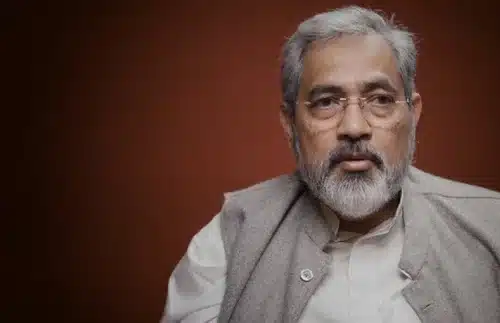
“How are we using the platform that God has given us to influence decision-makers and our communities to do good?” This is the question that drives Tsitsi Masiyiwa. One answer is by utilizing catalytic capital—a patient, flexible, risk-tolerant form of financing. Sometimes it accepts lower returns to accommodate the economics of high-impact organizations that are profitable but not profit-maximizing, whether due to an early stage of business development, tough markets, or a focus on impoverished populations. Tsitsi draws on her years of experience in philanthropy and as a social entrepreneur to share how Faith Driven Investors can leverage their capital to solve global challenges.

All opinions expressed on this podcast, including the team and guests, are solely their opinions. Host and guests may maintain positions in the companies and securities discussed. This podcast is for informational purposes only and should not be relied upon as specific investment advice for any individual or organization.

Episode Transcript

Transcription is done by an AI software. While technology is an incredible tool to automate this process, there will be misspellings and typos that might accompany it. Please keep that in mind as you work through it.

Jacktone: Faith Driven Entrepreneur Africa spotlights the stories across the continent, which is why you will mostly hear distinctively African stories on this podcast. But we are also part of a global network, so we’ll mix in some of the best stories from around the world to hear what God is doing in other areas as well. Today’s episode with Tsitsi Masiyiwa, what was originally recorded on the Faith Driven Investor podcast, and we are excited to share her story with you. Tsitsi is a philanthropist and social entrepreneur, she is executive chair and co-founder of Higher Life Foundation, whose primary goal is to invest in human capital development to thriving individuals, communities and sustainable livelihoods. Her work has garnered global recognition. She has received honorary doctorate degrees from Morehouse University in Atlanta, Georgia, and Africa University in Mutara, Zimbabwe, as well as the prestigious Champions for Change Award for leadership from the International Center for Research on Women. I. C. R. W. More recently, Tsitsi has pioneered impact investing in Africa through the establishment of Delta Philanthropies in 2017, which seeks to unlock and catalyze innovative solutions to the elimination of poverty by convening strategic partnerships and incubating new development models. We are excited to share her story.

Henry Kaestner: Welcome back to the Faith Driven Investor Podcast Special International Edition today with a special International Edition co-host, Reuben Coulter. Welcome to the program.

Reuben Coulter: Thank you. Delighted to be with you Henry.

Henry Kaestner: Reuben, you and I have known each other for years, and you’ve been the director of international strategy here and faith driven for what, about a year now? Something like that. And we’ve talked about all sorts of different really cool things going on in the world and projects that we get a chance to work on together as we look to encourage a global movement behind Faith Driven Entrepreneur and Faith Driven Investor, which is the topic we’re talking about today. And yet most of our listeners probably don’t know who you are. So, Reuben, who are you? Where do you come from?

Reuben Coulter: Well, as you may hear by my accent, I’m originally from Ireland, but based in Bristol in the U.K. and I’m married to a wonderful Polish lady. And we have two children, five years old and a three years old, the first born in Switzerland and the second born in Kenya. So we’re a truly international family, and I guess we’ve been called by God all over the world to serve him. I originally started off really wanting to understand how do we tackle poverty and help alleviate poverty around the world. And more recently, I realized that the question needs to be changed and needs to be flipped. How do we create prosperity and how do we help communities flourish? And so that’s taken me from working in the refugee camps in Darfur and Liberia for many years as a public health specialist. Then to the corridors of power at the World Economic Forum, where I curated the Davos event and the Africa Summit, and worked with business leaders and governments, helping them think through inclusive economic policies. More recently, I’ve become passionate about the role that entrepreneurs can play and how they are pioneers and changemakers and at the forefront of really tackling some of the big problems in our world. And some of the most incredible entrepreneurs I’ve met are from the continent of Africa, from Kenya, from Zimbabwe, from Nigeria. And they’re basically there isn’t a legacy infrastructure. And so they’ve had to build things from scratch in the area of financial technology, in agriculture, in health care. And it’s been just so exciting to be on that journey together with you. Henry over the past year.

Henry Kaestner: It has been and as I’m listening to you, it’s strange, of course, that we’ve waited a whole year to have you talk about it, and yet you’ve been behind the scenes. You’ve been helping us put together guests. And I’m so encouraged about doing this our first time, and I look forward to doing many more. And for this first time, we’ve got a very special guest that you have known now for a while and admired and had known that she would be a perfect guest for the podcast. And I’m hoping that you can introduce Tsitsi to us help us to understand what about her story really brought you in and then of course, we’ll ask her to tell her story. But Reuben, why don’t you introduce our guest and then I’ll ask her some questions and and then we’ll have a good conversation today about the balance between giving and investing and how to think about sub-Saharan Africa as a Faith Driven Investor.

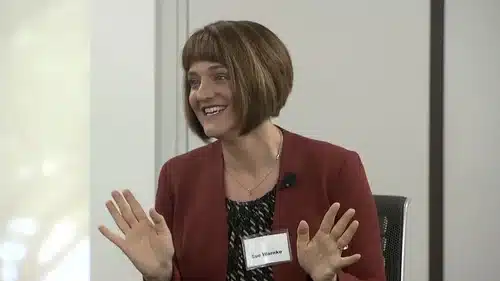
Reuben Coulter: Yes, I’m so delighted to have Tsitsi Masiyiwa with us today. She’s an African philanthropist and a social entrepreneur and she’s a pioneer. She is someone who has been working for decades as the executive chair and co-founder of the Higher Life Foundation, whose mission is to build thriving individuals, communities and sustainable livelihoods. And with a particular focus on her home country of Zimbabwe. I had the privilege of meeting Tsitsi and her husband Strive at a conference a number of years ago where thought leaders in the UK came together to think about how do we use our talents for the common good? And the reference for that conference was the small group at the Clapham Circle who met a few hundred years ago in this little suburb of London, headed by William Wilberforce and many others. And they said, How do we use our influence, our gifts to change slavery, change the labor laws in the country, and bring about what we now understand as reformation during the Victorian era. And that conference was asking how do we do the same? And Tsitsi has been asking these questions for both our home country and of course the continent of Africa. Tsitsi is also a founding board member and the chair of the Africa Philanthropy Forum, as she’s the trustee of the Legatum Institute, the End Fund, UNICEF’s Gender Unlimited Initiative. And on the boards of many other organizations, the list goes on. And we’re just delighted to have you today to share a little bit about your story and your journey, both on the philanthropic side and on the impact investing sides.

Henry Kaestner: Indeed. Indeed, that’s an incredible background with amazing depth. And yet Tsitsi you have not yet been on the Faith Driven Investor podcast.

Tsitsi Masiyiwa: No, never.

Henry Kaestner: Never. We’re humbled and honored that you’re with us. You’ve got an incredible life story. Give us an overview of that journey. Who are you and where do you come from? Please.

Tsitsi Masiyiwa: So I am a Zimbabwean born in Zimbabwe. Zimbabwe is a beautiful little country in southern Africa, population 15 million, very tiny GDP in comparison to the United States, around 21 billion. 70% of our population lives in the rural areas. And also it’s a very young population like the rest of the African continent. So 62% of the Zimbabwean population is under the age of 25. Primary economic activity is around agriculture, mining and a little bit of tourism. And with COVID, of course, tourism is not really making any headway. And I’m sure people have heard of one of the Seven Wonders of the World, the Victoria Falls. So that’s what Zimbabwe is famous for. In terms of me personally, you know, I trained in business not with any intention of going into business. And I also didn’t come from an entrepreneurial family background by any chance of the imagination. It was purely because I started studying agriculture and then discovered too much chemistry and moved to study business, which was a lot easier. But how we got into philanthropy was very much through the business door. So my husband used to be in construction buildings and his main customer was the government. And he decided after having come across an exciting new technology called mobile telephone technology, decided to set up mobile network service in Zimbabwe. So he applied for a license and the government said no private citizens cannot carry communication on behalf of the government and the public because of this sensitivity of information. And when he looked at the Constitution, what he read was that everybody had the right to access to information. So he decided to take the issue to court because he felt that the position the government had taken was contrary to our constitutional rights. And of course, I asked him he wasn’t a believer. I was a Christian then. And I looked at him and I said, Do you want to sue the government? He said, Yes. I said, Well, I have faith, and if it were me, I wouldn’t do that. What’s the basis of your confidence? He said, No, no, no. It’s a very straightforward case. I would take them to court. It will take three or four months after that will be done. And I would have my business. I believed him. And guess what? It turned out to be like a five years legal battle where we ended up literally losing everything we had. But in the process during that period, Zimbabwe was going through a pandemic, just like we’re going through a pandemic right now, and it was HIV and AIDS. And when I saw just firstly members of my own family die, I had an aunt who lost eight children from HIV and AIDS. And these are people I loved that I grew up with. And I began to question myself as a believer that what can I do? What role can I play? And it was in the process of that. Plus I was going to taking the government to court and ending up losing literally everything we had that I began to ask God, what is the purpose? What is my purpose? And if we went to have a business, what would we do with the money? Because. You can only sleep in one bed, drive one car, live in one house. So for all the pain and suffering. What was it all about? And I connected the dots between the terrible, heart wrenching experience I was going through and seeing communities just decimated by HIV and AIDS. And then also that opportunity, that intersection was about. Use the resources that you have to do what you can. And for Strive and I an obvious choice on how we could play a role in alleviating the suffering was to go into philanthropy and use our resources to give scholarships to orphaned children. So in a nutshell, that’s how we started the business and how we went into philanthropy.

Henry Kaestner: So this is no small business that you all have started. It’s got some level scale. Most of our audience are entrepreneurs and investors. Give us a concept to think about a business in Zimbabwe. Most people will have an image in their head. And yet what God has done through you all is something altogether different, a greater scale. Tell us about the business and what Econet Global has become.

Tsitsi Masiyiwa: Sure. So when we started, you know, we thought we’ll probably get 100,000 customers and live happily ever after. Well, as you know, that technology just opens amazing doors for development on the African continent. But in terms of our business in Zimbabwe grew from literally 0 to 100000 customers and over a period of time to 11 million customers. So currently, you know, we are the biggest MNO or mobile network operator in Zimbabwe. But we also saw opportunity so around early 2000. My husband left Zimbabwe and decided to move to South Africa so that we could explore new opportunities in South Africa. And that led us to begin to build the business. And we expanded from South Africa to the UK and then built a footprint on the African continent. So currently we are in more than 19 African countries. The business has since gone beyond mobile telephony to building fiber so millions of Africans can have access to the Internet. So we have built undersea cables, we have built on land cables, and we’ve really opened up Internet access into areas that honestly, there was just no way of people communicating from village to village or town to town. So it’s been incredibly fulfilling as entrepreneurs and also as believers to just see communities that would have no access to the Internet being used to open up these countries and build infrastructure. From DRC, Congo to Zambia to South Africa to Kenya, you know, the list goes on. We’ve actually built a connection from literally from Cape to Cairo. Yeah. So it’s an incredible journey.

Henry Kaestner: That’s incredible. And I recently saw a map of Africa and saw the United States in it, India in it, China in it, Africa. So when you’re going from Cape Town to Cairo, you’re not talking about a small area. There’s a lot of customers. It’s a lot of land. Tell us a bit about how your faith impacts the business you run and how you’re able to do business as you’re guided by your faith. That might be different than others that are in the same marketplace.

Tsitsi Masiyiwa: So I think right from the beginning, for me, it was important to be very transparent about my faith. So when we started our foundation, we just openly said it’s a faith based foundation. And we also decided not to really look for funding from anybody so that we would remain true to our values, our mission, our purpose and our vision. So faith is central to what we do. We hire stuff that’s come from all different religious beliefs. We have men who are not believers, who are not Christians, etc. but they come into the business and they come into the foundation knowing what our beliefs are, because that really informs the way we make decisions in partnerships, the way we make decisions in investments, and also the culture in the organization. So faith has been a central part of who we are and of what we do. And I think what has helped is just being very, you know, not everybody is able to do it, but for us, it’s just been very easy to be very open and transparent about it and and to talk about it openly here.

Henry Kaestner: So you and Strive have this incredible platform and influence because of the size and scale of the success that God is giving you. You’ve been labeled Africa’s power couple. How do you steward that influence and blessing?

Tsitsi Masiyiwa: Well, you know, thank goodness. You know, we have the Bible to build context on what power is and the ways things could get very complicated. So when people say power couple, for me it is more about how are we using the platforms that God has given us to be able to influence decision makers to do good and also to influence our communities that we are very heavily embedded in. Our philanthropic work is we implement all our projects. So we are very embedded in the communities that we work in. So in that respect, I think we are very much, let me tell you, rely on the power of the Holy Spirit more than any other power. It’s given us just the ability to be able to understand other forms of power that either affect what we do political power. Because a lot of the work that we do involves governments, regulators and […]. So it’s understanding the different forms of power, but knowing the power that moves us and informs how we do our business, our investments and our philanthropy.

Reuben Coulter: I’d like to shift gears. As the name of this podcast implies in the conference. We’re mostly focused on investing. However, we realize that not all the world’s problems can be solved purely by investing. Some issues do require philanthropy, or sometimes we like to call us gospel catalytic giving. That might be whether it’s a humanitarian response or addressing basic needs. So I’d like to understand a little bit more about your foundation, Higher Life. You have this wonderful tagline, Investing in People for Africa’s Prosperity. Can you unpack a little bit of what you do?

Tsitsi Masiyiwa: So at Higher life, we do impact investment at different levels. So we do grantmaking and scholarships because of the type of communities that we are working with and the type of communities that we invest in. Our primary target groups are vulnerable communities and in particular orphans. So that has informed the manner in which we do our giving the communities from early childhood development level to primary school to high school to university to Ph.Ds. So because we are building human capital resource, we see that is our contribution to strengthening Africa’s ability to provide highly skilled and competent pool of human resources, plus also lifting levels of literacy, especially for those who are not able to really go beyond high school. So the investment has to be scholarships and grants in then comes to working with communities where sustainable livelihoods is. At the center of what we try to do is to provide grants, but also low interest or no interest loans in order to give our communities the opportunity to invest in their livelihoods, but in a way that honors their ability to contribute something, which is, you know, their labor, their efforts, their times, their skills, but also in a manner that doesn’t burden them by having to carry out loans. You know, so where it’s appropriate, we look at doing impact investment and giving out patient capital in order to strengthen sustainability in communities, so ability for the communities to improve livelihoods. We’ve also found it important for us to also partner with your big suppliers, where we’ve gone in to invest in businesses for profit so that they can increase their capacity to be able to provide goods and services to communities that would be unattractive for them if they did not access our type of patient capital or types of investments.

Reuben Coulter: So it’s going to say, let’s unpack each of those, because each of those is, as I know, a huge piece of work. And so I’d love to kind of understand a little bit better. So you talked about patient capital. So can you explain to us kind of what that looks like in practice? And yeah, how do you go about doing that?

Tsitsi Masiyiwa: So for Patient Capital, we’re looking at where we have given loans at very low interest rates. So initially, I’ll give you a specific example of investments we did. Our goal was to increase poultry production because the two companies we’re working with needed to build capacity. But the investment that they needed for them to build capacity to service your small buyer required funding that was fairly inexpensive and also that gave them a lot of leg room to be able to build on their cashflows and also profitability. So that’s the patient capital. So what we did, we invested in these two companies. They were able to increase their capacity. Number one, to train new smallholder farmers. That would then be given a batch of one day old chicks, look after them, raise them over a period of 8 to 12 weeks, and then be the supplier back to the company that we invested in. So it has worked very well. Because it allowed those companies, like I said, to consider investing in small holder farmers that they ordinarily would not consider or would be unattractive for them also to. It allowed the companies to go into areas where levels of poverty are very high, levels of rainfall are very low, and where economic activity is at a minimum. So communities were able to see income generating projects that actually made money and improved the livelihoods of those farmers who have participated in projects like that. So I’m very excited in that. It’s an area we are expanding and in the next season we are hoping to recruit a lot more farmers. We also, if I can also just add one other project which also excites me. So there is a group of farmers who came up with a very climate smart type of approach to farming agriculture to increase productivity among small holder farmers. So we partnered with them and trained small holder farmers as a pilot during the 20, 20, 21 agricultural season. So we provided training, which was around $118 per person, and that included comprehensive training over a week, plus a small pack of your seeds and all the inputs that are needed for the farmers to plant a seed and be able to harvest enough maize for a family of six. We had a mixed bag of results, I have to say. I would love to say it was highly successful, but I think for the pilot we learned a lot of lessons. There were things, of course, that we didn’t know but we should have known or we were too ambitious. But I think the important lesson for me was to understand the impact that if we are to invest more of this patient capital in these small holder farmers, the impact is not only evident to the farmer in terms of higher income per family, but also it gives the farmers the ability to really be empowered and have skills so that even once we are gone, we are not able to offer them patient capital. They still have the ability to grow their crops in a sustainable manner.

Reuben Coulter: Yes, now that it’s super exciting and I believe the partner you are working with is foundations for farming. Is that correct?

Tsitsi Masiyiwa: Absolutely. Foundations for farming. And they have gone all over the world now. I think they are quite their rock star in terms of climate, smart agriculture.

Reuben Coulter: Yeah. So foundations for farming for our listeners is a wonderful organization helping farmers in regenerative agriculture, really using natural organic methods to grow, and they’ve just seen phenomenal results. I believe that Craig Deall is the CEO of Foundations for Farming. We were with them just a couple of weeks ago, and I believe this year was the highest crop yield that Zimbabwe has seen and 25 or 30 years, which is just so encouraging for the country.

Tsitsi Masiyiwa: Absolutely. I think that for me, the turning point was when the government realized that this was a sustainable strategy that would enable the country to be more food secure and also provide farmers with the right skills to be able to produce at a level that can take care of your average family in a village.

Henry Kaestner: Tsitsi I’m hoping you might be able to help us unpack a topic that’s come up a lot, and I’ve thought about it as an investor in Africa a bit too, and navigated through it with the help of some good counsel. But it’s just the concept of patient capital. There’s an investor in America named Marc Andreessen, and he’s famous for saying, I will buy a house, meaning I will make an investment or I will buy a boat, which he says is making a gift, a philanthropic gift. But I won’t buy a houseboat. A houseboat is a combination of two, and they have them on lakes here in America. And what he was doing is he was referring in that illustration to a houseboat being patient capital or an impact investment because it combined too many aspects of both giving and investment. And he just couldn’t make sense of it. So he wanted to stay away from that. I think that we as Christ followers need to be drawn into that space of patient capital, that it’s not so black and white. That’s not just market return capital. We clearly can see through to a 20% return on investment or that is just a gift that there’s a huge area in the middle and yet it is complex. Some of those complexities, as I’ve seen in the past, is how do you think about patient capital amounting to a subsidy and does that create an artificial market distortion that the entrepreneur can work their way out of so that they can then graduate to someplace where they can get access to maybe larger pools of capital that are in the market, but at market rates, how do you process that with your investing? And maybe I’m even thinking about the framework wrong.

Tsitsi Masiyiwa: It’s always important, I think, to look at the context because if you’re sitting in the US. And you’re looking at patient capital. What it means in the US is very different to what it means in Africa. Our histories are different. In the US you are probably maybe second or third generation university exposure to entrepreneurship. You’ve seen US grow from, you know, industrialization to information age, all those phases. We are not in an environment like that. Majority of the people that you are going to come across is first time graduates from university. These are those who you are likely to meet in a conference. But remember, 70% of the population still lives in the rural areas, number one. Number two. 70% of the population has no access to clean water and they have no access to power. So even the concept of a houseboat is strange. So if the fundamentals are different, it’s very difficult to arrive at the same conclusions or to see patient capital with the same lens. So patient capital for me allows us the runway we need as Africans to be able to catch up. So we need to where Europe and the US where the West is there to far ahead. You are talking of GDP per capita of 60,000, 80,000, 100,000. Majority of the sub-Saharan Africa is living on a dollar 90 a day. And so you have to look at where are the areas one needs to invest, number one, to build the skills necessary in order to create an environment that allows open space for innovation, for high levels of productivity, and that requires, you know, high levels of literacy and education. So that’s at one level. And then at the second level to understand the importance of business entrepreneurship. Capitalism is something that many sub-Saharan countries are not familiar with because we come from a background of countries. We are young countries that were born out of liberation movements and most of them with financed and funded by Union of Soviet Socialist Republic and China. So the influences of Russia, India, China in terms of entrepreneurship made entrepreneurship something that is not general mindset was a lot of people generally think of employment and jobs and not job creation and entrepreneurship and then added to that a perception that capitalism is evil and that it takes it does not give. So all these underlying factors, I think, have really affected the way in which you look at investment, you look at wealth creation, and also the way you look at what economic empowerment means. So when I then look at patient capital, I see it as it’s one of the strategies that we need to ramp up and ramp up very quickly in order to help us leapfrog so we can get to a place where we can begin to build an entrepreneurial class that is highly competitive and that can produce products or services at the level of your highly developed countries.

Henry Kaestner: That’s very helpful. So this is an investment. It’s an investment in a generation to be able to build the infrastructure, to build the culture, to build the mindset that encourages innovation and entrepreneurship. And I think what you’re suggesting here is that if you accelerate too fast in expectation that that these entrepreneurs who don’t have the university training and don’t have generations of this type of mindset, if you accelerate them too fast and to needing to return the same type of results you might have from a Western European investment that the system will break, it’ll be thought of as being exploitative and that we just we need to be patient and that the market will develop when people can start to trust the market. Yeah, along those lines, tell me a bit about the participants and I understand enough about sub-Saharan Africa to know that there’s not a broad base of local investors that can put local skin in the game. And yet you clearly are leading by example in that regard. And they bring so much confidence to a Western investor that wants to deploy capital but wants to do it on terms with others that really know the market, understand the culture, and also put their capital at risk, whether it’s patient capital and market return capital. Do you see that developing or are you and Strive just such an anomaly that that has not yet developed? Are you hopeful? Talk to us a little bit about the state of local investment, people investing back into the local community.

Tsitsi Masiyiwa: You know, I would like to think that the story of an I over time becoming the norm rather than the exception. And simply because we were very blessed to go into an industry in which Strive had expertize in. He was a telecoms engineer, so he understood what it takes to invest in an industry like that. He understood that local capital alone will not do it. So he knew that if years to build the business, some of the options he has to look at not only domestic capital to invest in the business, but also to look at long term capital, which is you’re taking the company public in order to deepen and widen the pool, the access, the capital for the business. Also, I think the experience he had had working with, you know, the World Bank has IFC, which was very much active when we started our business in the 1980s, especially in Zimbabwe, investing in medium size businesses and that is patient capital. So he was able to attract some of that funding. But Zimbabwe is not a normal country, by the way, because of the political complications around the US, sanctions against the country, etc.. But we’ve seen an amazing crop of entrepreneurs develop in your Nigeria, in Kenya, we’ve seen even a rising class in Ethiopia, in South Africa. And I believe that has come about by. Government’s understanding the importance of creating a macroeconomic environment and also a regulatory environment that makes it possible for local entrepreneurs to be able to access funding and also to just lower the entry barriers so that it’s easier the opportunities are easier to take advantage of. I think yeah so. h onestly, I don’t think, you know, we are a unique couple by any stretch of the imagination. I think we are very blessed to be able to have done what we’ve been able to do, but we are also in an industry. What we picked was a high growth industry and transitioning from mobile telephony to building fiber internet. I think that also was just very strategic in helping us to expand very quickly in a short period of time.

Reuben Coulter: Yeah, no, it’s it’s so encouraging. You were one of the first couples to sign the Giving Pledge, which, of course, Bill Gates and Warren Buffett and were encouraging other people to give away their wealth and become more generous philanthropists. And but you’ve also gone on to chair the Africa Philanthropy Forum, and you’ve been mobilizing others and encouraging others. And over time, that’s really grown into a substantial movement. And it’s great to see the emergence of philanthropists and investors giving back and making a difference. And COVID 19 has obviously devastated the world. This third wave has been hitting Africa and Zimbabwe particularly hard. What is the situation like on the ground now and how should international philanthropists and investors who are listening to this podcast respond? What should they be doing to support what’s going on?

Tsitsi Masiyiwa: I think, you know, COVID has it has devastated every country globally. And I think initially when it started, when we began to see the effects in countries like the UK, Italy and the US, a lot of people were talking about that maybe between 20 and 25 million Africans would die simply because the health systems, there’s no capacity to respond to the pandemic. And thank God it hasn’t happened that way. And I will say one of the things that I have seen that has really helped was, number one, all hands on deck. That is, everybody understanding they have a role to play in order to ensure that this pandemic does not decimate communities. And it also helps that the tools to make sure information gets very quickly to communities and communities are quickly educated about what COVID is, and its impact really helped a lot. So we were able to see information go quickly, move very quickly into communities on, you know, what is COVID, what are the dos and don’ts and how do you, you know, keep safe? But at the African philanthropy level, the philanthropists really stepped in and they stepped in in millions, not small amounts of money. There was deep levels of collaboration, especially in the private sector. We saw in South Africa a big solidarity fund put up in order to quickly get protective clothing and PPE and also testing equipment in collaboration with the government. We saw Nigerians also step in. They put in more than $100 million to quickly, again, partner with the government to get their test kits on the ground and get as many masses of people tested as quickly as possible. In the smaller countries, what we have seen through our work in African Philanthropy Forum is to see how smaller countries have built networks for resource mobilization money and also businesses have stepped in and a lot of private hospitals have been built in various countries in order to ensure that the health support systems are put in place. What we did in Zimbabwe, for example, we partnered with a philanthropist called Elma Philanthropies, and we’ve done a lot of training of literally from doctors to nurses to auxiliaries, staff training to build morale and strengthen the skills of the health sector. We also were able to partner to bring in quickly deploy equipment that was basic equipment that was needed in the major hospitals in order to ensure that we did not see a breakdown in health delivery services. So, you know, I’ve been very encouraged as an African philanthropist at seeing just how at the local level how communities have stepped in and mobilized resources to be able to respond. Of course, we’ve also seen, you know, schools close. And I think we’ve. Really lost two years in terms of education, kids not learning anything. I think majority of the children in especially in rural communities, just haven’t been to school for two years. So that is a major, major problem we are facing. How do we respond? I think you need the private sector to step in. The government needs to step in. And, of course, philanthropy needs to step in. And I think the donor community needs to change its model. This is also one of the things that became very obvious during COVID. You know, in the past, you’ve had all these donor agencies, communities that are constantly flying all over the continent and spending, having a very high cost structure to deliver their services. And what has been very evident is, well, no one can travel. And it’s not like the continent has collapsed because the donors have not been coming. What has become very evident is change the model, become more efficient in how you deploy resources and that the donor community must can do what it does effectively without having to, you know, to make too many decisions out of, say, in New York, Washington, D.C. or London, but rather to be more trusting of what local communities can do and partner with them to implement work that needs to be done on the ground. And then lastly, leave the private sector to do what the private sector knows how to do, which is they are very good at innovation, good at deploying resources, good at logistics. And also, they’re just an amazing reservoir of ideas to solve problems.

Reuben Coulter: Thank you. I think that’s a wonderful notes for us to end on is the challenge to philanthropists. We need to be locally led. We need to be driven by capable local leadership and trust them and empower them to do what they do best. They know their community, they know their people, and for the private sector and for the investor community to come in and innovate and supports the innovators and entrepreneurs on the continent to help them grow and develop. But don’t just transplant a venture capital model from the US, but understand what type of capital and supports is relevant in the local environments, and how can that help entrepreneurship and innovation flourish for the prosperity of Africa? One final question. We always love to wrap up our interviews with this question, which is Where does God have you, in his words, right now? What is he speaking to you?

Tsitsi Masiyiwa: Oh, I am so excited about what lies ahead, but I really feel we all need to take a very long term view in the decisions we make, whether it is in investment or making decisions in our own growth as individuals or families taking a long term view. See, when we make decisions with a long term view, you are always more willing to absorb the pain of change and decisions that one needs to make. So yeah, that’s what I feel. The Lord is saying that let’s not look at short term benefits and forego long term gains because we want instant gratification.

Henry Kaestner: Tsitsi., I’m grateful for your time. I’m grateful for your leadership in Africa and for the message that you shared with us today. I’m wondering if you might pray for us as we all leave and go out and have days where hopefully we’ll honor God and be used by Him for His glory. In Europe, where Reuben is, and in North America or Justin and I are in and in Africa where you are.

Tsitsi Masiyiwa: Sure, Father, in the name of Jesus. I’m just so grateful for this opportunity. The conversation we’ve had, Lord, these are not ordinary words. These are words that are spirit and life, that not only will they impact the way we think and the way the listeners think and see and perceive what we can do to make the world a better place, but also that these conversations will open up our minds to see just how great our God is and that we, through a difficult season of COVID, that we have an opportunity to do something compelling in unity with the Spirit of God, in unity with one another driven by love. Father, I want to thank you for the impact also of the work that is being done by your children, and that the doors that are open to the new doors that are opened will result in us being able to do things that cause your name to be glorified and to be testified in all this, in the name of Jesus Amen.

Subscribe to the newsletter

Stay Connected
to the Movement

We know that as an Entrepreneur, your most valuable asset is time. So each month we take the very best of the podcast, the blog and all the news, resources, and upcoming events happening across the space and bring it to you.

Episode 094 – Serving a Big God in a Big Way with Jonathan Reckford

Episode 094 – Serving a Big God in a Big Way with Jonathan Reckford

Podcast episode

Episode 094 – Serving a Big God in a Big Way with Jonathan Reckford

Jonathan Reckford is the CEO of Habitat for Humanity International. Before joining Habitat, Jonathan spent most of his career in leadership positions at Goldman Sachs, Marriott, The Walt Disney Co., and Best Buy.  Since joining Habitat in 2005, Jonathan has grown Habitat from serving 125,000 individuals each year to helping more than seven million people annually. It’s no surprise why he was named the most influential nonprofit leader in America in 2017. Today, he serves on the board of the Federal Reserve Bank of Atlanta, is a member of the Council on Foreign Relations and the World Economic Forum. Jonathan joins us today to share some of his story, what God is doing in and through Habitat, leadership lessons he’s learned in his career, and what it means to serve God at scale. 

All opinions expressed on this podcast, including the team and guests, are solely their opinions. Host and guests may maintain positions in the companies and securities discussed. This podcast is for informational purposes only and should not be relied upon as specific investment advice for any individual or organization.

Episode Transcript

Transcription is done by an AI software. While technology is an incredible tool to automate this process, there will be misspellings and typos that might accompany it. Please keep that in mind as you work through it.

Jonathan Reckford: Help, you know, find the cause, the thing that’s bothering you and your community and jump in. But to me, it’s do get your own hands involved in your own feet involved because if you do it just at a head level and you’re not relationally connected, you know, the relational connections create the heart change that then allows us to create the next change.

Speaker 2: Welcome to the Faith Driven Investor podcast. If you’re a fund manager, investor or a financial advisor driven by your faith or want to be driven by your faith, then you’re in the right place. The best way to stay connected in the Faith Driven Investor community is to sign up for our newsletter at Faith Driven Investor talk. This podcast doesn’t exist without you. Our community. One of the things we’ve heard the community asked us for is help in finding great deals to invest in. And so we’ve launched Marketplace. It’s a new platform of funds and direct deals. Everything from private equity and real estate funds to ETFs from philanthropic and market rate deals, Spain to the U.S. and emerging markets. Check it out at Faith Driven Investor. Talk for Marketplace While you’re there, please send us any thoughts you have about how this podcast might better serve you for any questions you have about being a Faith Driven Investor.

Speaker 3: All opinions expressed on this podcast, including the team and guests, are solely their opinions. Host and guest may maintain positions in the companies and securities discussed. This podcast is for informational purposes only and should not be relied upon as specific investment advice for any individual or organization.

Rusty Rueff: Hey everybody, welcome back to the Faith Driven Investor podcast. We’re so happy you’re back with us once again this week. Today we have a guest by the name of Jonathan Reckford. Jonathan is the CEO of Habitat for Humanity International. Before joining Habitat, Jonathan spent most of his career in leadership positions at Goldman Sachs, Marriott, The Walt Disney Company and Best Buy. Since joining Habitat in 2005, Jonathan has grown habitat from serving one hundred and twenty five thousand individuals each year to helping more than seven million people annually. It’s no surprise why he was named the most influential nonprofit leader in America in 2017. Today, he serves on the board of the Federal Reserve Bank of Atlanta, is a member of the Council on Foreign Relations and the World Economic Forum. Jonathan joins us today to share some of his story, what God is doing in and through habitat, and what it means to serve God at scale. Let’s listen in.

Henry Kaestner: Welcome back to the Faith Driven Investor podcast. I’m here with my co-host Luke Roush. Luke, greetings. Welcome.

Luke Roush: It’s great to be here. Great to

Henry Kaestner: be here. How are things in Nashville?

Luke Roush: Things in Nashville are lovely. What a great place to live. Come join us.

Henry Kaestner: A lot of people are you don’t even need to issue that invitation anymore. We miss you out here. We miss you out here. We’re grateful that we’ve got an incredible guest and a friend of both of ours and friend of Justin’s too. As we’ve gotten to know Jonathan over the years at the Christian Economic Forum, so shout out to chuck Bentley and his incredible leadership and bring together a group of men and women just really committed to understanding how God is at work in the marketplace, the financial markets and the macroeconomic environment. And I’ve been looking for this episode in particular because, as I said before we went on air this summer, I had several different highlights which are really cool. It’s just great to emerge from COVID and spend time with friends and family. But there is a hike that I took with Jonathan before the events get started, the Christian Economic Forum that was super encouraging for me and it was encouraging to me on multiple levels. One was a leader in the space that could challenge and encourage me. So it’s great just to spend time with Jonathan Richard just for that reason. But then there are two different things that really made an impact on me. Number one, we spent about half our time talking about what does it look like to be and Russell through being good fathers and how to attend to the different needs of our children. And I hadn’t expected to go on a hike with Jonathan Rickford and come away having been blessed in that area, but I most assuredly was. And then the second one was we spent some good time not just talking about habitat, but the broader macro economic environment that he operates in. Having been the CEO of Habitat for Humanity for a long time now, having served on the board of the Federal Reserve in Atlanta and helping me to just understand just the larger societal challenges that impact poverty and what does that look like and the merger of NGOs and public policy and free enterprise? And just the kind of the bigger cocktail, if you will, that we found ourselves in. Those of us were on this podcast caring about how we invest the assets that God is in trust us with, according to our faith. And in some ways, that can be really simple in terms of being faithful and obedient and getting down on our knees and asking God to lead us in other ways. It can be pretty complicated. And so when you find somebody like Jonathan, they can help you to navigate through that and make it less complicated. And to be clear. Poverty is a complicated process, but whenever you get the chance to spend some time, whether it’s on a hike in Colorado or on a podcast like I hope that you will experience today when somebody can help you to make sense of all that in a way that might be actionable, that’s a big deal. So that’s what we’re hoping to accomplish today. Jonathan, thank you very, very much for being with us.

Jonathan Reckford: Thanks so much, Henry. It’s great to be with you all.

Henry Kaestner: So we’d like to understand everybody’s story that comes on the podcast. And there’s a lot, of course, to you and who you are. And I know a bit about the fact that you grew up in one of the greatest towns in the world. So why don’t you share a little bit about your background and your time before habitat and before the Federal Reserve? Please.

Jonathan Reckford: So thank you and great to be with all of you. More broadly, my story, I would break it. Maybe two parts one the family side and how I got launched, and then a very unlikely career that just shows that God has a sense of humor, I think. But in one now I can look back and see how all those pieces were useful, even if my career didn’t make sense. In some parts along the way, I grew up in Chapel Hill, North Carolina, which is a spectacular place to grow up. Yes, Father was a classics professor at USC, now retired, and that was the fourth of five kids, and it really was a special place to grow up. Did a brief stint in England, which was very formative for second grade when he was on sabbatical, and that probably first opened my eyes to a bigger world in a new way, and I was blessed with a couple of really powerful role models beyond my immediate family. My grandmother was a quite iconoclastic and formidable woman. Her name was Millicent Fenwick, and she was one of the relatively small number of women in the US Congress in the 70s. And she was a civil rights pioneer and ferocious fighter for human rights. And some people know the comic strip Doonesbury. She became famous because Gary Trudeau created his character, Lacey Davenport, after her in the comic strip. But every time I saw her as a kid every summer and Christmas, she would say Myka six eight and is shown your man. What is good and what does the Lord require of you but to act justly love mercy and walk humbly with your God? And then she would ask us what we were going to do to be useful and her view of the good life as we’re supposed to be useful. And it took me a long time to live into that and my other real role models. My godmother, who was an extraordinary pathbreaking woman as well, an Australian who was the first woman president of Smith College and ended up through this talent, becoming lead director of Merrill Lynch, Nike Colgate-Palmolive and the executive chair of Lendlease Corp in Australia. So along with all sorts of nonprofit and writing bestselling books, and she had that incredible ability to be so gifted and yet fully present, which I found quite amazing and really tried to emulate her and I miss. She was my go to person for career advice all the way along, so was launched with that. On the career side, I was going to go to law school and go into politics because that was I was really passionate about and came to the shocking realization as a senior in college that I was only going to law school because I thought, that’s what you did to go into politics. And I had no actual interest in being a lawyer, so had to quickly find something else to do. And I’m not sure I would advise this from a career perspective. But as a political science and English major talked my way into a job in corporate finance at Goldman Sachs. With the hubris that I could learn finance faster than I could teach other people to communicate. And then I suffered mightily for that for a couple of years, and it was a great education and including the learning that I probably wasn’t cut out to be an investment banker. But it was also probably the low point for me in many ways, from a personal perspective, because I wasn’t leading a life that in any way really seemed to line up with who I was hoping to become. I was working all the time and in some ways acting out, and I think that period made me think I needed to readjust. And the first big inflection point for me was then I, instead of going on to grad school and I’d become interested in business. At this point, I applied for a bunch of things and was lucky enough to get a grant from the Henry Luce Foundation to work for a year in Asia and lose. His parents were missionaries in China. He was the founder of Time Magazine and created and still just 15 young Americans from all different fields every year to go work in Asia. And I was a huge sports fan, and Korea was going to host the Olympics so lined up and I was able to go over with Goldman, who was going to finance the first convertible equity offering for a Korean company. And I worked on that deal and then set up a job working for the Olympic organizing committee, doing marketing. And then in a giant twist, and they told me because they were the host country and qualified that they had just fired their rowing coach. They saw this rowing in my background and wondered if I would come and help coach their rowing team. And I told them I was completely unqualified and they said, No, we’re really serious about this. So I quit Goldman early and went to the US rowing coaching college. And if you sort of think Jamaican bobsled team, it would give you a, you know, they they were not globally competitive, but the US coach. We’re not intimidated and loaded me up. And the important part of that story is I spent the year living in the training camp with all the Korean coaches and athletes. And, you know, in a pre-internet pre-digital age, it could not have been a more complete immersion and removal from anything that was familiar for me. And that was the year I really got serious about face. I’d grown up in a nontraditional but devout Catholic family and had never walked away from my faith but never really owned it. And that year in Korea, God put the right person in my life. There were two of us of the 15 of us spread across Asia. The other person in Korea and the only non Korean I would see was my lifelong friend Jim Peterson, who was an American Baptist pastor and had just finished his Ph.D. in the ethics of genetic engineering and just in a brilliant scholar. And he was that person who could both go as deep intellectually, but also had the kind of the Holy Spirit flowing through him. And I met people who had one or the other, and I think he gave me the extraordinary gift of every Monday night for the rest of that year, and we went through systematic theology and the whole New Testament together. And it was really I had such a high bar of not wanting to be a hypocrite, but it was through that process that I gradually got to the point where I could take that leap and make a full adult commitment to my faith. And that really changed everything. So came back and went to Stanford Business School because Stanford was one of the only business schools back then that believe we needed professional management of nonprofits. And I was intrigued with the idea of at that point, I actually wanted to go be Peter Ueberroth and run the Olympics, but I wanted to find a mission that really mattered. And in business school, which is less true today than it was then I thought I should go to the private sector first, learn the skills and then put those skills over once I find the right mission. And what really intrigued me was strategy. And how do you grow organizations? And I know many in this audience are people who are true startups I got interested in how do you start new things within big companies? So I went to Marriott Corporation first and worked on two new businesses for them and then actually got laid off in the S&L crisis, went to The Walt Disney Company and got to work on a couple of big successes and one spectacular failure leading strategic planning for their real estate based entertainment. And then was recruited to a company called Circuit City

Henry Kaestner: before you move on from there. Everybody’s a Disney fan, and I know that you hired one of our great friends and partners at Sovereign’s Capital as an Imagineer. Michael Tremaine. But before you go in there. So two things. How did the cranes do? Did they do better in optics?

Jonathan Reckford: They did not do very well in the Olympics, but we beat the Japanese, which there you go. This context was there was a huge day.

Henry Kaestner: Okay. What did you work on at Disney?

Jonathan Reckford: So at Disney, I worked on their urban entertainment and something called the Disney Vacation Club, which was Disney’s timeshare strategy, which has become a large and very successful business, and then worked on this as a whole podcast in itself or a book someday. But a project called Disney’s America, which was going to be a new urban entertainment concept that then turned into a history based theme park in northern Virginia, which then drew the ire of The Washington Post and turned into a huge mess and ultimately got canceled. So that’s a whole story in itself, but the the original idea actually evolved in a couple of other businesses, which was how could Disney bring entertainment to kind of urban areas in addition to its theme park strategy?

Henry Kaestner: And then downtown Disney ended up being a pretty good success. I think you should take credit for that.

Jonathan Reckford: It is. I certainly don’t. And then there were projects like the town of Celebration, which is actually Disney’s first residential community trying to live a little closer. And that was actually very much tied to their actually their highway and road improvement strategy. So there’s a whole build out of the giant Disney complex, but I love living there and working there. The theme park side is very pixie dust movie studio side, a little more sharp elbowed, but

Henry Kaestner: OK, so going. I’m sorry, I interrupted you. So Circuit City?

Jonathan Reckford: No, I was giving you a long story. So Circuit City was starting something called CarMax, and I was just fascinated by that. And they were going to disrupt the whole way cars were being sold and sort of solve the conundrum of the lemon law and used car sales. So I went to and became head of strategy for Circuit City, and now my business credibility will be shot because of course, CarMax has done great. Circuit City is no longer around. And my hope was actually to start the next car max after we took it public. And then if people read Jim Collins, my old business school professor suggested is the only company that was in both good to great and how the mighty fall. So it became a cautionary tale. And at that point when I joined, they were, you know, had been the top stock on the New York Stock Exchange for a 10 year period and had really redefined big box retailing where retail is a tough area. And if you don’t re redefine, you can still get challenged. And I was then recruited. I really wanted to move from strategy into an operating role and have the the opportunity to be president of another. Now, sadly dead retailer called Music Land and some of you listeners on may be old enough to remember going to the mall to buy music or movies. And back then, Music Man had Sam Goody and Sancho’s video and two other chains and was the largest specialty retailer, music and movie. You said I always loved the entertainment world. And clearly, they had a huge challenge because the internet was coming. And what I didn’t plan on, but we had had grown. The business is the best buy bought it and I’ll fast forward that was in two thousand and two and it was clearly the right thing for the business to sell. It turned out to be a flawed acquisition, and I stayed for a year to help make it work. And then had one of those tough calls, as do I stay or do I go? And as my wife and I prayed about it, it just felt clear I’d already stayed in the private sector longer than I’d ever planned. And this led to a decision to leave, and I usually recommend don’t leave if you don’t know what you’re going to do next. But we just took the lead with a big non-compete clause into protection. And the next big inflection point in the way was that next period because with my wife’s blessing, I finally decided I’d want to do it went off on a short term mission trip to India to serve with a group of Presbyterian pastors in rural India. And it was one of those next moments where I think all those late in issues of social justice came roaring back where we were serving with the bank, which among the Dalits or the outcasts in India and rural areas. This is at the absolute kind of lowest social tier in society, where there are literally only allowed to hand clean latrines or clean up dead animals. And at that time, about half the children were dying before their 13th birthday because of the conditions they were living in.

Luke Roush: So Jonathan, where are you by yourself on this trip?

Jonathan Reckford: I was by myself, but with a group of I think it’s 12 or 13 other. No kids, no, no family on this trip. Actually, my kids were too small. They would have been it would have been overwhelming, I think, at that age. For them, though, they have since been on many trips with me. And so I really had the pastor who founded Habitat or came up with the idea of Habitat for Humanity had this phrase that divine irritation. But it’s that idea that we’re also good at seeing problems in our world and thinking someone ought to do something. But I think that moment of divine irritation is where God grabs you by the scruff of the neck and the responses that I have to do something. And I just came back from that trip with a deep sense of upset around poverty issues and how to engage and turn down a couple of really good business jobs, thinking, OK, I’ve got my deal with God now and almost got a couple of nonprofit jobs with international profits. And in both cases, I got to the finals and then they picked someone who’d already run a nonprofit, which was completely logical. And I was like, God, we had a deal. And suddenly all the doors closed and nothing was opening. And what I really learned in that would turn into quite a waiting period is one it was spectacular for my family and less spectacular for my ego, but in a really good way. And two, if I’m really honest, which is a little embarrassing. My deal was God, I’ll do anything you want as long as it meets my geographic time, financial and social gratification and all my other big deal cutting deal. Yeah, getting the deal and what I had to as imperfectly as I could get there. Move towards Okay God, no conditions is best able. I will. I will follow where you lead. And that, to my great surprise, led to my local church asking me to be the administrative executive pastor, which was not at all what I was looking to do. And all my friends who I trusted for career advice said not to. But Ashley and I really had a sense of that. This was a call and we should be obedient to it. And this is such a nice God part in retrospect accepted the job almost immediately got a call from one of the big headhunting firms with a great opportunity to run an internet retailer. And I remember just telling the search partner, Gosh, that sounds like a great job. I’m going to go work for my local church and I thought I am exiting the market and will be blacklisted forever. And two years later, when I was happily working at the church and not looking, she was the partner leading the habitat search who called up out of the blue and said, Jonathan, do you know anybody who’d be interested in Habitat for Humanity? And if I went back to that list with God, it checked every single thing on the list and I never thought they would hire me, but wrote this very passionate letter, saying, I think this is the kind of thing God has been preparing me for all this time. So that was 2005, and as you can tell, I could never keep a job. But this is it is a challenge, but an incredible joy to be part of this mission since then.

Luke Roush: So how do you think one of the things we talked a lot about in the context of Christian Economic Forum is human flourishing. And what does it look like for human flourishing to exist? Maybe speak a little bit just about housing and the role that plays in individual security community. Maybe just speak to that a little bit.

Jonathan Reckford: You know, I’ve I’ve had a chance to learn so much, Luke about housing. And, you know, I came with the lens not to solve housing by the lens, to think, how do you solve poverty? And certainly what I have experienced and then seen all around the world is housing is clearly not the only thing, but in some ways it’s a prerequisite. So if you think about after food and water, shelter is almost the most basic level of need. And what we know from the data is if people. Child grows up in good housing, she stays healthier, she does better in school and then is in a position to lift herself up over time. If you pull housing out of that equation, it’s extraordinarily unlikely that someone can both stay healthy and be educated. And so in many ways, we think of it as a prerequisite, almost for all the other things we want in life. But if you think about it, we certainly recognize that housing is only one component and people need all the elements of a healthy community, so they need access to food and fresh water. They need, of course, employment and the ability to earn income. They need health, they need education. So they are all interconnected and none of them by themselves. One challenge sometimes the nonprofit world is we all say, well, if we just solve housing, everything will be perfect. And I think the reality is, no, we have to actually partner in ways that create the conditions so that we can meet all the needs of a healthy and sustainable community.

Luke Roush: Absolutely. Absolutely. When you think about so we’ve dabbled as an investor in the kind of real estate technology and through different ways to re-imagine home ownership and trying to broaden access, but maybe just speak a little bit about some of the efforts, whether it’s Terwilliger center or kind of other things that habitat has done to really actually be a first mover in terms of real estate, technology and innovative models to change the system and how homes are owned.

Jonathan Reckford: Well, what I think the giant realization and when I joined in 05, it was an interesting it was not only a part of my plan, but we had the Indian Ocean tsunami, this massive regional disaster in Asia. And then we had Hurricane Katrina hit. Literally, the week I was joining, which was a massive U.S. disaster in terms of housing. And in both cases, it forced us to start thinking about scale in different ways, and habitat had gone really wide. One hundred and three countries and we had at that point one thousand eight hundred U.S. chapters or affiliates, but we were building very small number of houses and all those places. And so the question are in some ways, our core metric had been how many houses can we build? And that’s a really good it’s a good metric. But we flipped it to say, what would it actually take to meaningfully reduce the housing deficit in all the geographies that we serve? And that’s a much more scary question, but forces you in the system thinking a little bit to it what Henry talked about at the opening. Because in many ways, then you have to look at the whole housing value chain and think about how do you create the conditions so that markets would actually work for low income families? And I would argue we started primarily outside the U.S. in low and middle income contexts. Right now, you can clearly make the case in the U.S. that the market is failing because we can’t produce enough housing for low and moderate income families in this country, either. So that started us down a journey. And the first place was really policy and especially in the international context we take for granted in the US that you have property rights, you can get title to your house or entitled to a piece of property. In much of the world, especially women and marginalized groups can struggle to have legal right to stay on their property. And if you don’t have the right to stay on your land, it doesn’t really make sense to take a loan out. It doesn’t make sense to take risks to upgrade. So we created a global advocacy campaign called Solid Ground All Around Property Rights. And if you have a quick example, one of my favorite stories in Bolivia, women didn’t have the right to own land. And if you think about inheritance, divorce, abuse, all the different things that can happen if you have no right. And so we trained an incredibly impressive cadre oblivion women, and they not only successfully got title of their own land, they got the federal law changed. So if a man is married and wants to register either his land or his home, it has to be joint titled with his wife so that that would be an example of changing the enabling environment. Now the next step is can we help those 1.8 million women in Bolivia who now were enabled to be property owners to actually become property owners? And we would count that in the next layer? But so the first step is can we ensure property rights and good housing policy? Next layer was how do we increase access to finance? And what we found is banks in most low and moderate income countries would only lend to the top five percent of the population who actually had both income and property and were viewed as a credit risk. There was a huge unmet need. So we started with a bet that the microfinance industry there could be a business in making small home improvement loans to very low income families. And we started lending our own capital and training microfinance banks to do home lending and then working in the communities with the recipients of those loans that worked so well, we actually created a wholesale fund called Micro Build. We raised $100 million the first time we took on debt, and we started lending that out as a wholesale lender and then fund is now getting closer to wrapping up now. But we have directly helped over a million people get loans and then with add on capital, it’s now helped approaching 10 million people get housing finance. And so we have demonstrated which was the real goal that there a market opportunity for housing lending. And then the next step going down that housing value chain was could we impact services and products? And we created under this umbrella of our 12 Center for Innovation and Shelter, a shelter venture fund, small scale and shelter tech accelerators where we’re investing with and alongside entrepreneurs around the world who are coming up with better building products for very low income families. And then in some cases, they can actually test their markets with habitat in terms that we can be a buyer in a test market for them. In other cases, we’re creating cohorts to help them grow or scale their businesses because that would improve the access to good products for the families we’re trying to serve. And then the last step has been around skilled trades and how do we increase access and validate quality trades in the community? So the goal would be if we did this successfully, that all the conditions for healthy market would exist, where in some ways we could pull back and families can improve their own housing, which can scale. That’s how we’ve moved from helping tens of thousands to hundreds of thousands to millions of. Families, but we know the need is still far greater.

Henry Kaestner: So that’s super motivating on a bunch of different levels. One of them is that presumably at the outset of Habitat for Humanity, there was a desire to address the felt need of more affordable housing in partnership with the families. And there’s so much about the habitat model that we’ve come to know their families several skin in the game, they labor and it’s just a great opportunity to partner with local church. So we’ve understood that. And that’s one of the things that I learned on this hike that really just really changed my my context, my framework about the space. I thought that habitat was known for the 50 houses that it built in Durham, which is for those 50 families, is a very big deal, to be very clear. But we talked about the fact that Durham was short 14000 housing stock. And what you’ve been able to look at, let’s look at the problem that we’re trying to solve here. And at the beginning it was let’s get affordable housing. We’ll do it by building houses. But then under your leadership, you’re let’s say, what’s the bigger picture here? And are we ever going to be able to make a big enough splash through the tactic that we have of building houses? And let’s take a step back and understand what the broader mission and vision is and some of the other things we can do in addition to building houses. And so I thought that was great. And whenever an executive director of the ministry comes up and talks less about their programs, but more about why they’re doing what they’re doing in the larger systemic issues, I don’t I think that that’s awesome. That’s the type of ministry partner I get really fired up about. And then after coming out of that, you’ve been able to provide us all with a framework that starts off with policy and talking about homeownership and talking about title. Then you talk about finance and you talk about innovation, and then you talk about increasing access to skilled trades. And in none of those did you actually talk about building houses, but that’s how you’ve gone from serving 10000 families seem to be clear. All those 10000 families have had lives changed and transformed. But how you able to go ahead and look at the global issues? That’s super motivating and encouraging. I love all that talk about both of us.

Jonathan Reckford: But what I left out, which I hope many of your listeners and if you haven’t, you should is the volunteer peace and COVID has really gotten in the way of some of that BAM one lens that went with that. That sort of circles the loop is we want to engage the huge number of volunteers with habitat in some ways, not as a construction strategy, but as a social change strategy. And so if you put that together, and the reason we want people to come out and volunteer is when they come out. In some cases, it’s the first time they’ve actually had meaningful interaction with somebody outside their socioeconomic class in a relationship. And it helps them to understand and experience the mission in a way so that hopefully they will then become the people who are willing to change those local zoning laws. They’re willing to actually get engaged in thinking about housing differently. So if you then do the full circle, if we can change hearts and minds so that we can change policies so markets can work better, so habitat and other houses can build more houses in our case, then we can engage more volunteers who hopefully then keep making that change happen.

Luke Roush: And that’s powerful.

Henry Kaestner: So if I’m listening to this in Memphis, Tennessee or Eugene, Oregon or Billings, Montana and I’m just impacted by food, water and shelter, and I’m just really drawn to the shelter part. What are some tangible next steps about getting involved? What can people do? Maybe a good point of entry is to volunteer and to see how habitat does it. But talk to us a little bit more about bridging that gap of getting people in the game, advocating for policy change. I love the fact that, you know, Luke comes out this Luke, you know, public policy guy out of Duke. And so this is right up your alley, too. But public policy seems like it’s so politics. It’s just hard to just even get your arms around. How do you advocate for that? And yet some of that public policy change will do more than if you volunteered it, you know, building 100 houses. So how do you get involved?

Jonathan Reckford: I think it’s a both end. Of course, we want everyone to come help with habitat, so that goes without saying. But the reality is that everybody should help habitat help, you know, find the cause, the thing that’s bothering you and your community and jump in. But to me, it’s do get your own hands involved in your own feet involved because if you do it just at a head level and you’re not relationally connected, you know, the relational connections create the hard change that then allows us to create the next change. And I would say, sadly, all across America, it’s all talk us context. Now, what we have moved from is historically mixed income communities to economically and sometimes racially segregated communities, and economic segregation is creating an outcome that your zip code to some extent determines your economic future. Because what we know is that mixed income communities create the best outcomes actually for everybody, but particularly for historically disadvantaged groups or low income families. And so, you know, a great example my beloved hometown and actually just happened last week. So very fresh example when I grew up. If you worked for the university, you could live in the town. That’s not true anymore, really. Only the business school and medical school professors or tech entrepreneurs can live in town. Everyone else has to live outside Chapel Hill, so it’s no longer, you know, when I went to Catholic. Church growing up, anybody who is Catholic, so the church had blue collar and white collar doctors and business people and academics, all in community together. Not true anymore because only upper middle class people can live and therefore are the ones who are worshiping together. And then what has happened is sadly, this is not a Democrat or Republican thing. Human nature is once you’re a homeowner, you want to protect your major investment. And so not in my backyard or nimbyism is such a big deal and the brand of affordable housing is so broken. So that was a long way of getting to your question, which is what we really need are people of goodwill, and churches and people of faith should be at the forefront of this, which is how do we create inclusive communities where you do have mixed income and where there is a path of opportunity for folks? And in Chapel Hill, actually, I got to do the groundbreaking last weekend of an amazing mixed income community, and I’m so excited. But it took almost 19 years to get done because of community resistance. And so they were going to give up after 15 years of being rejected for being allowed to use it for habitat homes. They actually expanded their vision, which was a step in faith, bought more land. And last week we broke ground on a community that is going to be one hundred and one habitat homes and another one hundred and fifty market rate, affordable market rate, condos and houses. And it’s going to be a spectacular community, but it’s a good example. It couldn’t happen unless you got both City Council and the mayor and private sector leaders and the university. Everybody had to kind of come to the table to get that passed. And that’s where I think if people can first kind of get skin in the game and then translate that into being willing to talk to their neighbors and actually create some of that change, those two can go together.

Henry Kaestner: Is there a central resource also? So I love that example. I love the new expression nimbyism. I’ll use it three more times today. I may or may not give you credit. Is there another resource also that once you go ahead and you’ve done the the hard side and you roll up your sleeves and you’ve actually worked and you’ve gotten to know a little bit? Are there resources? Are there Bly’s? Are there podcasts that kind of explore the housing situation and where people can learn more about this? Yeah.

Luke Roush: Or funds or people who have kind of made a name for themselves, either through the investments it made or the strategies they’ve employed, he’d love to get your sense

Jonathan Reckford: from several different things. So, you know, a shortcut. We actually through COVID, have been doing a campaign called Homes Community Hopes and you and we’ve done a series of episodes so you can go to Habitat Ward and each one is tackling a different elements. The last one I did was with our new HUD secretary talking about some of these issues. Before that, we had one focused on housing and race and some of the historical issues there. We did one on economic models for housing innovations and housing. So those are some accessible kind of shorter versions. Actually, one of my dear friends and heroes, Ron Tolaga, who is the founding donor behind our Tillegra center, has also created a bipartisan center for housing at the Bipartisan Policy Center. And that’s a good source. There is the Urban Land Institute. There are a number of places that you know where there is as good information around housing and housing policy. Certainly the National Housing Conference, which we are a member, you know, and there’s federal level housing policy. But a lot of it is still local. And in some ways, the fundamental thing which is I love this audience is we have a supply problem. So the real question is how do you change the market conditions such that we can actually build way more houses we’ve been under building ever since the Great Recession? And that means we can now have a cumulative gap of four to five million units of housing. So one of the sessions actually I really enjoyed was what would it take to build ten million houses in the United States? And we had the the president of the Atlanta Fed and we had the head of the National Housing Conference and we had the chief economist for the Mortgage Bankers Association. And that was a great conversation because, you know, what would it take to do a step change level of increasing supply? And in some ways, we’ve got to think at that level from a federal perspective, but at the local level in your community? Same question. What would it take from a multi sector approach to make it possible to build enough housing for everybody in that community and make the math work? And the reality from a public policy perspective is that we’ll take some subsidy in either land or financing.

Luke Roush: So 10 million units is a lot. How many years of sort of, you know, pedal down work is that to actually dig out of that hole?

Jonathan Reckford: So we’re building depending on the month and year, you know, we were building between 700000 and 1.4 million units a year as a country. So that gives you a sense that, you know, we’ve got to significantly increase our build rate to catch up because we are if you assume any kind of growth in households, you’ve got a little bit of COVID distortion. But Covid’s actually made it worse because suddenly everybody wanted more living space. And so it’s actually exacerbated the problem because incomes haven’t gone up nearly as fast as housing prices, and that’s part of that supply imbalance problem.

Luke Roush: One, he’s got a whipsaw problem on materials, too, you

Jonathan Reckford: know, and huge supply. And issues lumber has just exploded, but many other items have slowed down, and skilled labor is scarce, so you’re getting squeezed on of all the key inputs.

Henry Kaestner: So you talk about that. So the last two areas, your framework, having added volunteers in to it as well, but where innovation and increasing access to the skilled trades. Can you talk a little bit about both of them? So you have a fund you alluded to? You said you’ve got a fund that invest in innovations in building better building products. Can you talk a little bit about that before you get into the work that you’re doing in increasing the amount of skilled tradespeople they come in? But tell us about running a fund.

Jonathan Reckford: So that has been quite a learning experience. So we’re actually exploring two additional funds. So we actually hired a fund manager. So in this case, we use a group called Triple Jump from the Netherlands because we didn’t have experience being a fund manager that we control the investment committee. But they do the vetting of the potential microfinance banks and organizations that are borrowing from us against our criteria. And then we’re looking at a larger fund that would continue to do housing microfinance, but also look at potentially micro mortgages and some larger scale loans as well, and a little bit bigger scope. So we’re just finishing the feasibility and we’re actually doing our feasibility for our first ever U.S. focused fund around a housing opportunity fund to help habitat affiliates, but also other housing non-profits to be able to acquire property. Because there’s a little bit of a gap today in the ability to the private sector can move so fast to grab property that non-profits are often at a big disadvantage. So we want to bring some more capital to that space. And again, we’re doing feasibility work there. Some examples outside the U.S. of the kind of we just made an investment in a company called Vaster TV, a stay in India, and they are building 3D printed houses in India. So we just built the first 3D printed home in India, and we think there’s an interesting growth opportunity there. There’s another company, also India based, that I think is really interesting. They have a great waterproofing technology that a lot of people are living in concrete homes with flat roofs, and there’s a huge cost if they get leaks, obviously quality of life and health issues, but also it degrades the quality of the home over time. So it’s a relatively low cost treatment that extends the life of that home significantly and improves the quality of life for the family in terms of livability. A third example is a company in Africa. In multiple countries now, which started in Rwanda that is called Earth Enable, and they found a process for sealing Earth floors to give them the health benefits of a cement or concrete floor. And so by compacting and then sealing it, it helps with many of the health benefits. There’s a huge health benefit for a family to have a proper or hard floor. And this, for a fraction of the price, allows the family to get those benefits from a smaller piece. So those are examples of. We also have a clean cookstove investment that’s rolling out very quickly in Africa. And because indoor air quality is such a big issue, even though it’s you could say it’s a little peripheral to housing, but if you’re cooking with kerosene indoors or charcoal or even worse, the health and air quality is so bad. So if we can actually lower costs for the family and improve their air quality, that’s a that’s a significant quality of life. But those are all private sector investments. And our thesis actually is the private sector can scale those things faster and they’re actually coming with solutions that are meaningful for those low income families and the communities we serve.

Luke Roush: One last question and then we’ll wrap, but 60 seconds or less. How do you see habitat partnering with the local church? Is there anything to be done there? Yeah, speak to that.

Jonathan Reckford: Maybe, you know, the church has been so much at the core of habitat, and it goes in some ways, a wise person say a long time ago, there are problems you solve and tensions you manage. And how do we keep that grassroots faith side and have the benefits of scale? Because as we move towards market based solutions, private sector actors, public policy, you lose that incarnational personal relationship on the ground in the community. And I think that’s where the church really comes in in a powerful way. And my hope is, you know, how that literally started in church basements all over the country and world. And my hope in some ways now is that we can be a servant back to the church because I think in our increasingly unchurched world, I think the face of the church has got to be come served with me, creating the credibility for a spiritual friendship that can then lead to come worship with me. And I think finding so if we can be a vehicle for churches to express in a very tangible way in the community, their faith and build relationship, I hope that. But for me personally, that’s a huge value because it is, I think, one of the the other tensions we want to live in is can we be Christ centered and radically inclusive? And some people today would say, you have to pick one. We are fully committed to both ends of that, but there are tensions that come with that.

Luke Roush: OK, so we got to keep going on that topic, though, because that’s actually the most interesting conversation that I had this year at the Christian Economic Forum is what you just said. So I know we got another call coming here, but this is really important. Maybe speak a little bit more to what you just mentioned in. Terms of radical inclusion, but also Christ centered. How do you navigate that leading an organization as diverse and as broad as habitat?

Jonathan Reckford: You know, our board is actually going to be talking about it in a couple of weeks and it’s something that I don’t think you ever saw that that we have to hold up that the, you know, the front of our mission statement is putting God’s love into action and the center is bringing people together and in ways those reflect those two pieces. So at our best, I think about when I was in Indonesia, in Banda Aceh, after the tsunami, one of the saddest places ever been context was there was a civil war. Christians were not allowed into Aceh and we had a habitat team from both the region and Habitat Indonesia that was part Christian, part Muslim. And I heard one of the comments and habitat as a Christian ministry. And one of the comments, one of the families when we were visiting with them was and obviously among all the heartbreak that they had rebuilt now they were starting to put together. And they said, you know, we may not share their faith, but we’re so glad they’re here. Those Christians helped us rebuild our community. You know, I think God can do a lot with that. And sometimes you know, what our call is is to show up with the serving towel and just love people and have faith from that. But it is tricky in today’s environment, and I think the biggest if the framing is, you have to pick one. It’s all over because we will tilt towards inclusion and end up drifting. I think from the center we would actually reframe that to say we are inclusive because of our faith. Jesus modeled inclusion and God loves every child in this world and in fact, the greatest love you or I have for anyone that we know is a pale shadow of God’s love for every child. So that’s the moral call to inclusion. It’s the reflection of our faith and our call.

Henry Kaestner: OK, that was gold. That was awesome. Jonathan, I’m so grateful for you and your friendship and your partnership and your leadership and being at the front end, the pointy end of the spear of a really global organization that’s doing things at scale, serving at the highest levels of government with the work that you’re doing with Federal Reserve, speaking into small communities and large ones. And yet, you know, a point back to your foundational faith and trying to understand not just like, well, I go to church on Sundays. And then I do have a and we just get an air on that radical inclusion side. But fighting that fight and just being able to point back to the most inclusive exclusive religion of all time, the inclusive story of Jesus Christ. So that was awesome. Thank you. Is there something that you’re hearing? One of the things we asked for every one of our guests on either a Faith Driven Entrepreneur podcast or Faith Driven Investor? My. Is there something that you’re hearing from God through his word and it doesn’t need to be this morning. It could be over the course of last week, last couple of months, but something that you feel that he’s speaking to you about through his word.

Jonathan Reckford: You know, thank you. Thank you for that opportunity. I was actually reflecting. I gave devotions. We have a virtual leadership conference going on this week with all of our board chairs and national directors from across Latin America and the Caribbean. And I was giving devotions on Monday night and and talked about the idea of waiting on the Lord and the AHA. And it reminded me of a conversation we’d had many years back with a group of theologians and often in my mental model waiting on the Lord is sequestering myself and having time to go deep and listen. And that’s really important. But this was a little bit of a twist on that day of wait on the Lord, which is we should actually put our serving towel and go serve the Lord. So it’s actually turning that around. Do can we wait like a restaurant server on the Lord? And how do we, as we’re trying to hear God’s voice, do that in faith? And it reminded me certainly of which we need for the COVID time of, you know, the message Joshua heard over and over again to be strong and courageous. The Lord, your god will be with you. And then I’m struck by that moment where finally, after 40 years, they’re going to cross into the promised land and the Jordan. Not the trickle it is today. Is this rushing river? And they had to actually step into the water, the end of the storm and then God’s still the water, and they were able to cross into the promised land. And so I think combining that idea, wait on the Lord with how do we keep stepping out into faith in the middle of the rushing rivers that are around us right now? And trust that God will be with us.

Subscribe to the newsletter

Stay Connected
to the Movement

We know that as an Entrepreneur, your most valuable asset is time. So each month we take the very best of the podcast, the blog and all the news, resources, and upcoming events happening across the space and bring it to you.

Episode 095 – The City Rejoices with Finny Kuruvilla

Episode 095 – The City Rejoices with Finny Kuruvilla

Podcast episode

Episode 095 – The City Rejoices with Finny Kuruvilla

Building and running a fund in a way that also promotes human flourishing? This opens doors to sharing about the incredible redemptive mission of God that drives us as Faith Driven Investors. Finny Kuruvilla—Co-founder and Chief Investment Officer at Eventide— unpacks how our investments can serve the greater good. Recorded without interruption at our 2021 Faith Driven Investor Conference.

All opinions expressed on this podcast, including the team and guests, are solely their opinions. Host and guests may maintain positions in the companies and securities discussed. This podcast is for informational purposes only and should not be relied upon as specific investment advice for any individual or organization.

Episode Transcript

Transcription is done by an AI software. While technology is an incredible tool to automate this process, there will be misspellings and typos that might accompany it. Please keep that in mind as you work through it.

Finny Kuruvilla: We’re here at the Faith Driven Investor conference, so it’s appropriate to ask the question, what does the Bible, especially the New Testament, say about investing? Now I wish we were all in the same room so we could do this interactively. But be brutally honest, the answer in your mind, what is the passage in the New Testament that most directly speaks to the topic of investing without any doubt or hesitation? I would answer the passage that most directly speaks to investing in the New Testament is found in the sermon on the Mount. It’s in Matthew Chapter six verses 19 to 24, where Jesus says, Do not lay up for yourselves treasures on Earth, where moth and Rusty destroy, and where thieves break in and steal, but lay up for yourselves. Treasures in heaven, where neither moth nor Rusty destroys and where thieves do not break in and steal for where your treasure is there, your heart will be also. The lamp of the body is the eye, if they’re for your eye is good, your whole body will be full of light. But if your eye is bad, your whole body will be full of darkness. If therefore the light that is in you is darkness. How great is that darkness? No one can serve two masters for either. He will hate the one and love the other, or else he will be loyal to the one and despise the other. You cannot serve God and Mammon. Wow, those are hard words, especially hard words for us who live in such a prosperous society and who work in investing that line. Do not lay up for yourselves. Treasures on Earth rings in my ears. How do we process this? First, we don’t want to run away from the sermon on the Mount, but we want to face it head on. There’s an author, Dean Smith, who says it well. The sermon on the Mount has a strange way of making us better people or better liars. In my talk, I’m going to give you two ways. How not to invest. And two ways to invest. Basically, two negative principles and two positive principles. OK. Two ways not to invest. First, only let your investing be goal directed toward a need like saving to buy a house or start a business. We shouldn’t have aimless piles of money sitting around. That’s exactly what Jesus seems to be speaking against. We wanted. He uses his words in as natural a sense as is possible. We remember and another place with very sober language, Jesus speaks in the gospel of Luke against a man who builds a second barn. We know that there is a type of blindness that money brings on a person that we have to be careful about. Did you also notice in that passage that I just read the last line? Jesus does not say you cannot serve God and Satan. He says you cannot. I love how someone put it in the early church who said that mammon is quote the form of idolatry with which the devil operates after the old idols lost their attraction to the Christian populace. We can call this mammoth olive tree. It’s the new idolatry. One author also puts it well by saying the world’s religion is acquisition. It’s getting its mammon. Jesus will not have his disciples believe the world’s religion or be possessed by the secular demon of possession. There’s a name for this doctrine, and it’s not very popular today, but it’s called the doctrine of non accumulation. We’re supposed to live simply and give away as much as we possibly can. That’s my first negative principle. My second negative principle is to not invest in ways that take advantage of others. In Deuteronomy Chapter twenty three, verse 18, it says you must not bring the earnings of a female prostitute or of a male prostitute into the House of the Lord. Your God to pay any vow because the Lord, your god detests them both God. In this passage, doesn’t want money donated to the temple donated to his house. They come from sinful activities. And really, this is just common sense, isn’t it? From simple love your neighbor thinking we need to cultivate a sensitive conscience and not take advantage of others? Many people inadvertently profit from activities like abortion, pornography or gambling. Surely there should be lines that we can draw. One of the things we talk about it, Eventide, is this analogy of a mafia wife, and we sometimes speak of how the mafia like wife lives in a way that is very lavish. She she enjoys the diamond rings and the fur coats and knows that something shady is going on the other side of the door, but doesn’t ask the hard questions. We don’t want to be like that. We don’t want to live in ignorance with this vague sense of unease there. In fact, Jesus says elsewhere in Luke Chapter 16, verse 11. Therefore, if you have not been faithful and the unrighteous madman who will commit to your trust, the true riches. OK, now I want to switch to two positive ways of investing rooted in the Christian faith. First, invest to serve the poor. This is a repeated refrain of Jesus, the call to serve the poor. I don’t think you need me to convince you of how often he says this. He even speaks in Matthew Chapter 25 of how the final judgment is cast in terms of how much we have served the poor and those who are imprisoned. My very first job after high school was working for World Vision, which is a Christian humanitarian relief and development agency. They do great work at helping the poorest of the poor, especially children, and there is, of course, a standard, very noble way of making donations to help organizations like World Vision. But there is an alternative path. It’s not competitive, but it is complementary. Every year I go to Africa to help out with a church plant and every time I go, I just got back a couple of weeks ago. I leave with this feeling that I wish we could start hundreds of ethical, high quality companies to employ the people there. That would do by far the most long term good to promote human flourishing in Africa. After all, we know that work is a basic human need. It imparts dignity and purpose, self-awareness of one’s gift skills and, of course, the financial resources to put bread on the table. In the last decade, many thought leaders and experts have advanced sustainable business as the single best way to remedy global poverty. What an opportunity we have to create and fund businesses oriented at this noble goal. Second, I want us to remember what Jesus says here, which he sees charging us to invest for our heavenly reward. Jesus says that we are to lay up treasures in heaven. He’s not just saying don’t store up treasures as an end unto itself, but he is saying to lay up treasures in heaven. Now I’m sure that many of you and many of us here would struggle to imagine exactly what Jesus means with this picture. Some people, even when they think of heaven, imagine it as people floating on clouds, singing songs, playing harps all day. John Eldridge puts it well when he says nearly every Christian I have spoken with has some idea that eternity is an unending church service. We have settled on an image of the never ending singalong in the sky. One great him after another, forever and ever. Amen and our heart sinks forever and ever. That’s it. That’s the good news. And then we sigh and feel guilty that we are not more spiritual. We lose heart and we turn once more to the present to find what life we can. There’s another part of the New Testament and Colossians three, where it says, set your mind on things above, not the things on the Earth. And we struggle with this. What are we supposed to think about? Are we supposed to think about people playing harps? Think about clouds, angels that look like chubby babies? I want us here to think about what Jesus is saying and to drill down on the concept of rewards. Jesus, in the earlier part of the sermon on the Mount, has talked about rewards. He talked about the father rewarding those who do their deeds, not to be seen by people, but to be seen by God. And here again, the theme of rewards comes up again. The basic message of this passage is very simple. Let us exchange what is perishable and decaying for what is glorious and eternal. It could hardly be simpler. Most of us know this in our minds, but I want us to move this into our hearts. So then we read it. Our hearts leap for joy. I mentioned that many people picture heaven in a more Gnostic sense where it’s this ethereal disembodied existence, and you often frankly read that kind of language in modern books. There is a diminishment of the sense of physicality and place ness of heaven, and thus we are confused and go numb when we hear about heaven. Of course, the answer to this numbness is to appreciate that both heaven and Earth are renewed. The new heavens and the new Earth will have a more impressive Grand Canyon, a more picturesque Acadia National Park and a downtown Boston where I am right now that will surpass anything that we can imagine. John Milton, the medieval poet, said it well. He said, What if Earth? But the shadow of heaven and the things there in each to other like? So what Jesus is telling us in this passage is to seek rewards in this next life, this unbelievably amazing new heaven and new earth. Now the next challenge we have and understanding this is that some people don’t know what to do with that. They almost feel guilty when they think about the concept of rewards. But I already told you, Jesus has repeatedly mentioned this concept of rewards in Chapter six of the sermon on the Mount. Are we supposed to do things that should be rewarded? The answer is yes. There’s a kingdom mindset. We are supposed to do this. Is it selfish? No, of course not. Selfishness is putting oneself above God, in others in its proper place. We are supposed to use investing to seek eternal rewards on top of it. Look carefully at verse 20, Jesus says. Lay up or store up depending on your translation for yourselves. Did you notice that those two words jumped out at me for yourselves? Doesn’t that seem almost selfish? We’re supposed to do things for ourselves. How does this all work? Well, it’s not a zero-sum game. In other religions like Buddhism, you’re supposed to renounce all desire. They say that suffering comes from desire, so get rid of desire. But here Jesus teaches the opposite. He promotes our passions and our desires. Rightly, order desires submitted to God’s will are good and proper and fitting. Dale Bruner says it well when he says Jesus does not quash ambition, he elevates it. The Christian is to be ambitious, passionate, acquisitive, enterprising for the father’s approval for the well done of God’s. Final judgment, thus, Jesus ethic is not so much ascetic as it is athletic with a similar idea. Randy Alcorn calls this concept the treasure principle. He says it very succinctly. You can’t take it with you, but you can send it on a head. I like how he says that you’ll never see a hearse. The funeral cars pulling a U-Haul. So hear what Jesus is doing as he’s giving us an arbitrage opportunity. What is arbitrage? Most of you know, it’s a fancy word. It’s very simple. It’s basically exploiting price or value differences. So if sugar costs 50 cents a pound at a store in San Diego, you can sell it for a dollar a pound at a store in Los Angeles. You back up the truck, you buy it in San Diego, you sell it in L.A. And for the people in the finance world, arbitrage is like the ultimate free money here. What Jesus is telling us is he’s giving us an arbitrage opportunity. He’s saying to convert earthly mammon into eternal rewards. Many of you have played the game of Monopoly, where you buy these various properties and charge rent for it, and you do this with this fake currency, this paper money. And imagine if you were to go to the store and take some of these green dollars and pink dollars and try to buy something, say, in a shoe store? Well, you’d be laughed out of the store. What Jesus is doing in this passage is he’s basically telling us that earthly treasures, earthly mammon. It rots, it gets stolen. It’s transient. And he’s saying, convert it into something that last, convert it into something that’s eternal and glorious. He’s giving us an arbitrage opportunity when you hold a dollar the next time you take out your wallet. I want you to think of this as monopoly money. It’s something that barely has any value whatsoever, except for this quick game of life that we happen to be in. Why not convert it through our giving, through our investing and just. That is eternal. There is an arbitrage opportunity that exists right now while we’re alive. We can give to the poor, we can gain eternal rewards. We can invest our dollars in ways that advance the global common good. What a deal. May we in faith give and invest our worldly treasures to serve others for the sake of an unending, glorious reward.

Subscribe to the newsletter

Stay Connected
to the Movement

We know that as an Entrepreneur, your most valuable asset is time. So each month we take the very best of the podcast, the blog and all the news, resources, and upcoming events happening across the space and bring it to you.

Episode 096 – The Bottom Line of Kingdom Economics with Brett Johnson

Episode 096 – The Bottom Line of Kingdom Economics with Brett Johnson

Podcast episode

Episode 096 – The Bottom Line of Kingdom Economics with Brett Johnson

Brett Johnson founded The Institute for Innovation, Integration & Impact, Inc. in 1996. His writings complement the work of this Silicon Valley think tank. Brett’s most recent book, Kingdom Economics, is an invitation to the faith driven investor who loves the nations and the planet too much to leave their money stuck where it grows but does not change the world for good.

All opinions expressed on this podcast, including the team and guests, are solely their opinions. Host and guests may maintain positions in the companies and securities discussed. This podcast is for informational purposes only and should not be relied upon as specific investment advice for any individual or organization.

Episode Transcript

Transcription is done by an AI software. While technology is an incredible tool to automate this process, there will be misspellings and typos that might accompany it. Please keep that in mind as you work through it.

Brett Johnson: And this is the fascinating part about Faith Driven Investor. It’s a combination of capital and faith, whereas in the world system, it’s capital without faith. The world system is crafted carefully so that you don’t have to depend upon God. And one day, you know, I realized one of the reasons I’m asking God for a million dollars or ten million is that: I don’t want to pray ‘Give us this day our daily bread.’ That’s really why I’m praying for. But then I realized if God gave me $10 million, he’d give me a $20 million problem if I’m a kingdom person. That’s what God does. He gives kingdom people providence for breakfast.

Rusty Rueff: Welcome back, everyone to the Faith Driven Investor podcast. Brett Johnson founded the Institute for Innovation, Integration and Impact Inc. in 1996. His writings complement the work of this Silicon Valley think tank. Brett’s upcoming book, Kingdom Economics, is an invitation to the growing Faith Driven Investor community who love the nations and the planet too much to leave their money stuck where it grows. But it doesn’t change the world for good. We’re excited to talk to Brett about his new book and to learn from his four decades of experience, helping organizations discover a purpose that is greater than just the bottom line. Welcome to the Faith Driven Investor podcast with Brett Johnson.

Henry Kaestner: Welcome back to the Faith Driven Investor podcast. I’m here with my partner, Luke Roush from Nashville, Tennessee. Luke, how are you?

Luke Roush: I am doing great. Great day to be alive.

Henry Kaestner: So our guest is very close to you. Up in Chattanooga and so on. The odd man out being out here on the West Coast. But I’ll tell you the different guests that we’ve had over the last couple of months. I can’t think of anybody that I’m more excited about sharing with our audience than Bret Johnson. Bret has been in this space of Faith Driven Investor and for a very long time, much longer than Luke and I have probably had longer than Luke and I have combined and has a great international and emerging markets perspective, great ministry and practice towards developing leaders, which he’ll talk to us about. And then just a great framework for us to think about the ancient truths that come from scripture, how we think about investing and the instructions from other religions and other faith traditions. And hopefully you’ll walk away from our time together here today, being better equipped to be a great steward of all the capital that God has entrusted us. So, Brett, thank you very much for being on the program.

Brett Johnson: I’m very excited to be with you. Thank you so much, Henry. Luke, good to see you.

Henry Kaestner: So, so many different places to go with you. And maybe we’ll even get into a little bit later. But lest I forget, you have this incredible podcast where you break down exodus and talk about what that means about faith in the marketplace. And you think, gosh, you could probably take the gospel, you probably take acts, you definitely take Nehemiah, but exodus. But somehow you just made that thing sing.

Brett Johnson: Yeah, that was fascinating during the pandemic. I think there were a lot of people thinking through What do I really want to do and how do I restart? You know, there was this great reset, and I think it was an opportunity for people to reset their foundations. And God is no stranger to restarts and there’s a whole national restart. And it’s a fascinating story. How God did that? So I just pulled out 50 principles of restarting something. And I think this is apropos in our careers nowadays in our working lives, we’ll have to restart numerous times, so we have to go back to scripture and say what the principles about restart. Otherwise, we get blindsided.

Henry Kaestner: I thought it was very, very good. We’re going to have the link in the show notes. Maybe we’ll mention again at the end, but what we like to do with every one of our guests before we get started into the meat of your current work, your current ministry, the things that you feel that God is teaching you. Give us an autobiographical sketch. Most of us know what a Tennessee accent sounds like. It doesn’t sound like yours, like

Brett Johnson: your quarry where you come from. I’m from the south, but the south of Africa, that’s right. And I grew up there, grew up in a family, actually that was somewhat by vocational. So my dad was a business guy. But I remember as a teenager, I asked my mom, what would dad do if he had no money? And she said, plant more churches, and that’s what they did. They planted churches and did business, and only much later in life did he become as it were a vocational pastor. And so I grew up in that environment. And for me, there were three things happening together. One was business. I worked at Pricewaterhouse, a chartered accountant, which is like a cousin of a CPA and worked with them for 10 years at the same time. I had been through the Sunday School Youth Group and ended up running a church. And so when I was running the church, I kept my ears open. When was God going to tell me to quit Pricewaterhouse so that I could do the church? And he never did. So now I had two jobs. And then what happened was I got connected with youth with a mission in Africa, and I found out that they were looking for guitar players, evangelists, etc. and what they really needed. Was it finance, marketing, business analysts and I had those people in my church seriously under deployed. So we had business, local church and missions. I had three jobs and I had to figure out how to integrate them. And so that’s how I got going. And that was in from about 1981, a little while ago. And then in 1986, we came to San Francisco for one year, a couple of kids and some suitcases, $300 in my pocket. And as the plane landed, God said, This is going to be your home for quite a while. So we started asking why? And through a series of things, God said, I want you to start a new kind of organization that integrates business, local church missions, all of that stuff into a new type of organization. So that’s how we got going.

Henry Kaestner: And so you end up down here in the South Bay, by the way, $300 would get you two tacos and a coke right about now.

Brett Johnson: That’s right. I was very much at that, said A. Credit card. And I remember Pricewaterhouse sent me to New York on a trip, man. I could pull out $300 a day out of the ATM. The hotel was $330 a night. I remember pretty quickly I had to establish credit and get a credit card in the US, even though I preached against debt for years. Yeah.

Henry Kaestner: So speaking of debt, you have a book that’s come out called Kingdom Economics. This give us your best elevator pitch to queue up this topic for us.

Brett Johnson: Sure. Yeah, I would say that heaven has an economy and we don’t know a whole lot about it, but we see indications in scripture that this trade in the heavenly somehow and there’s a lot in physical trade about that. And our job is to figure out how to bring heaven’s economy to Earth. And that sounds a little bit fuzzy. But we do see clear enough principles in scripture about biblical practices and principles. Tons of them actually in scripture. And so the goal of king economics is to look at the world of economics, finance, investing capital through the lens of scripture. And I would say, even with the faith driven investor, it’s not to become Christians or people who are driven by their faith to make investments for good purpose, but to actually figure out how do we beat people who do investing based on these heavenly principles or these kingdom or eternal principles of finance? Obviously, with the good results that we expect. So I would say, you know, there’s an economy in heaven and there’s an economy on Earth, and the underlying assumptions of what we call just business as usual are fundamentally different in many respects. There is some good overlap, but there are some things that are completely different.

Luke Roush: So Bret, as you think about kind of that work in your book, to what extent do those principles really speak into our relationship with money and how we shepherd money or our relationships with the environment that we work and the people that are our customers, our vendors, our partners, our employees? Does it really go into both sides of that? Or is it really more focused on the economics of it all?

Brett Johnson: Good question, Luca. I think right now we’re living in an era where financial capital has become somewhat commoditized. There’s a lot of it around and we’re recognizing when I say we, I’m not just talking about people of faith. I mean, you can go to the World Economic Forum or universities around the world, and they’re understanding capital is bigger than just financial capital, of course. And this is way beyond the triple bottom line, and there are many other facets. So there’s human capital, relational capital, social, environmental, et cetera. And there’s a big piece of it, which is spiritual capital, which we have to understand. And if we’re going to be engaged as people in faith in the warfare, if you like that is business. We have to have spiritual capital, so you can’t just look at it. In fact, many years ago when we. Started working with business people around the world, we’ve done maybe five years to work with hundreds of companies. And I found out there was an issue still around capital and this was about 2008 and Christians running good businesses getting a good purpose for their business still had a problem with greed. And Mammon means greed deified. So you’ve got to get to the heart of the issue. So I thought, what do we do about it? And we decided to do a Kingdom Economics forum in Johannesburg. We decided to put some truth together, which has now ended up in the Kingdom Economics book and the repurposing capital book that we could put a stick of dynamite up the giant’s nose if you like and blow the lid off this thing because we could get great business practices, great products that would bless people, we could be intentional. We could have pastors in every business, we could have prayer meetings, we could do all that kind of stuff. But unless you get to the issue of what is capital, whose money is it? What’s it for? What’s our relationship with money unless you get to the heart of that thing? We’ll never win the game.

Henry Kaestner: So if I haven’t made it clear so far on the podcast, I can’t think of a book that I recommend more heavenly than Kingdom Economics. If there’s one right behind it, be repurposing capital. You write something in Kingdom Economics that I think is really profound. I’d love for you to expand on it. You write a new future where kingdom economics becomes reality is premised on a great awakening among God’s people and an influx of people into the Kingdom of God. So that feels kind of heady and it’s kind of out there, and I think it’s a theological truth. But unpack that for us. What does it look like for us to experience this divine reality? And what does it look like for us to invite more people into the movement? I say this, of course, because Faith Driven Investor as a ministry is about inviting people into this movement as a way to help them experience the life that is truly life. But that’s something you’ve seen unpacked in scripture to riff on that a bit, please.

Brett Johnson: Yeah. And I’m very excited about the Faith Driven Investor community and the movement and the young generation, if you like of people, that’s growing up with a new and freer idea about capital and having to play. So I think that that’s fantastic. And when I talk about that awakening, I’m not talking about getting to a tipping point of fifty one percent Christians in a nation and so forth. That’s not what I’m talking about. I’m actually talking about the fact that unless we get to a spiritual awakening that goes in tandem with fully integrated with the deployment of capital, kingdom business, et cetera, we will do no better than the Sustainable Development Goals with a bit of prayer and Christian sprinkling on it. That’s not what we’re after. So reformation is essential, not just salvation. You know, if it was just about salvation, as you would know, Africa would be the best continent on the planet. I mean, there are so many Christians you can’t swing a cat and miss a Christian. So it’s not just about getting people saved, but it’s getting Sunday into Monday. And actually, I don’t think the devil cares what Christians do on a Sunday if you can have the other days of the week. So what this awakening? It gets to the heart of the matter. Unless you get to the heart of a business leader, the heart of somebody who’s an investor will end up doing good things but with the wrong tools. So I remember a Christian guy, he’d sold one of his companies in the Bay Area for a billion dollars back in 2000 or so, so it was a decent sized deal and he was not doing venture capital and so forth. He came to me, said, Brett, I’ve got this great idea. I want you to head up a company for us and what are we going to do? Is What if the supply chains of big businesses and if we find out that there’s any shenanigans in the supply chain, then what we’ll do is we’ll basically guilt them into hiring us to clean up their supply chain. And I said to him, No, I won’t do it this, why not? I said, Well, you’re trying to get rid of slavery in supply chains, but the spirit behind what you’re doing is exactly the same. And so we can’t tackle the problems in the world with the spirit of the world. You know, when scripture talks about Babylon or Egypt, it’s the spiritual principle driving economic systems that are independent of a dependance upon God. So we need an awakening. Otherwise, we don’t get to the heart of the matter. And once you get to the heart of the matter, then all sorts of creativity breaks loose in terms of how you invest, how you build a business where you go to the lengths you’ll go to. So this is a big issue at the heart.

Luke Roush: So, you know that that’s fascinating, and so the idea that sort of God’s ways are not the ways the world, the ways of the world are not God’s ways, an inappropriate analogy. You don’t bring a knife to a gunfight. Right? There’s something that’s more biblical than that that you could probably enlighten us with. But you know, I’d love just to kind of unpack that a little bit more because I think that there are a great many believers who are trying to do what God has called them to do in the marketplace, in their vocation. And yet some of the tactics that get used are basically the same tactics from the world kind of re-applied with some sort of gospel lipstick on it. Like, how would you challenge us, right? Henry and I and all of our listeners to like, reimagine what it looks like to bring sort of a set of gospel tools to those problems?

Brett Johnson: OK, great. I think I’d like to get to talk a bit about success because you’ve got to define the end game. I mean, why are we in things with God? Not for our own benefit? God didn’t put us on the planet to be blessed, to be happy, to live in Los Gatos, where the weather is fine and so forth. No, he put us on the planet to make a difference. To accomplish his agenda, he populated the Earth so that he had workers to accomplish his purpose. And we’ve adopted some evangelical notion that God was lonely. And so he made us so that he had his land. God could have got a puppy or a few more angels, and I know he created us to work with him in collaboration with him. So how do we define success? Well, it’s when God’s job gets done, not when the ROI is X or the return on capital or even the stewardship of capital is such and such a metric. So we have to define the end game. If we don’t define the end game well enough, somebody else will define it like the World Economic Forum or somebody you know, by 2030, you’ll own nothing and you’ll be happy. No, no, no. We have to define the game. People from every turn tribe and nation living like God, looking like God, a flourishing living to their full potential, working like God and so on. So I think that we have to define the endgame. Then I would say, look, we have to understand that this three big economic systems in scripture as I see it. One is, let’s call it Egypt or Babylon, and the other is the promised land. And in between you have the desert. Now, Egypt is quite interesting, but Deuteronomy Chapter 11 says, Look, the land that you’re entering is not like the land you’ve come from where you watered your vegetable garden by foot. But the land that you’re going to is a land that I look after and it gets its rain from heaven. If you obey me, I’ll send autumn and spring rains. If you don’t, you’re toast. That’s what God says. So let’s unpack that a little bit. In Egypt, there was a predictable water supply. It’s still there today. All you have to do, take your bucket, go down, get it. Water your vegetables and you’re done. No dependance on God. Just a little bit of effort and you get your paycheck every month. Now, the desert is a bit different because you’re dependent daily for water, for manna, for quail on God. And, you know, every single day. And we call this living by faith. And we’ve made this the epitome, the ultimate of a Christian experience. I used to work at IBM. I used to work at Google. Now I’m living by faith, and we make that the ultimate destination. It was meant to be a temporary gap to get some Egypt out of our thinking and then get us into the Promised Land. And the weird thing about the Promised Land is that everybody had capital. Everybody had a piece of land. Every tribe had an allocation. Every family had a means of income production, and they had to exercise faith. And this is the fascinating part about Faith Driven Investor ERG. It’s a combination of capital and faith, whereas in the world system, it’s capital without faith. The world system is crafted carefully so that you don’t have to depend upon God. And one day I realized one of the reasons I’m asking God for a million dollars or ten million is that I don’t want to pray. Give us this day our daily bread. That’s really why I’m praying for it. But then I realized if God gave me $10 million, he’d give me a $20 million problem. If I’m a kingdom person, that’s what God does. He gives Kingdom people problems for breakfast. So being in the Promised Land, he says, OK, you’ve got a means of production and you have to exercise faith because if you don’t do things the way I want you to do it, there will be no rain and the place is going to be a desert. So it’s a strange combination of capital and faith. And we’ve separated capital in faith, but in the promised land, they fully integrated the ones not a substitute for the other. They’re just fully integrated.

Henry Kaestner: He gives Kingdom problems to people for breakfast. The. His faithful for breakfast, that’s amazing, that’s a very good that snip, it’s going to show up somewhere. That was really good. So you’re talking about a countercultural way to think about economics. Are you thinking about a counter-cultural way to think about money countercultural way even within the Christian circles about living by faith? What are some of the other countercultural things that you see Christ’s followers falling into and it could be in one of these two places? Number one, we’re told, of course, not to be conformed by the pattern of the world or the worries of the world and deceitfulness of riches. So how do we avoid falling into those traps? But then also, what are some of the traps that you see that doesn’t come from the Bible, but their Christian culture would have an investor buy into? That’s not biblical? And you alluded to that about the time in the desert, but expand on that concept, please.

Brett Johnson: Sure. We touched a little on success, and I would say the other thing is what’s normal when we go to money? We often think if I’ve got money, it’s an indicator of God blessing me. Or if you’re in another country such as India, if I don’t have money, it’s an indication that I’m spiritual when both of those are extremes. So in the West, we strive for comfort and a problem comes along and we expect God to take it away. And that’s what we pray for. And other parts of the world, they figure this is normal. In fact, in judges, it says in chapter three, verse two, it says in brackets there were some tribes left over that didn’t get conquered and it says in brackets and he left them only to teach warfare to a generation that hadn’t known war. As parents, we want our kids to be more comfortable than we are. Go to a good college, have a good dorm room, a good experience and so forth. And God says you’ve got to expose them to battle. So when people become believers, we should rip up their passports, give them a kingdom passport and a military uniform. We should let them know this is a war zone. You know, historically, there’s a battle between good and evil, and we going to deploy our business capital a time out talents one way or the other. And so culturally, we’ve got used to being comfortable. What makes me comfortable versus what gets the job done, no matter what it does to my comfort level? That’s a big factor. And so we’ve almost become acclimatized to if I’m being blessed by God, I won’t have problems and God is thinking, Well, is there anything, anywhere in the world that’s out of whack with the way I want it to be? And how can a deploy Luke or Henry to go and fix that problem?

Luke Roush: So, Brett, one of the things you talk about in Promised Land is around guard owning the key resources, just unpack a bit more. The key resources. What does that mean for us and how do we respond to that?

Brett Johnson: This is a dual thing, and you’ll see a bit of this in the book of Acts when you remember the the real estate guys and nice and safari, right? Not that I have anything against real estate people, but there’s an interesting concept over there because and it’s the same thing mirrored in the Old Testament between A.A. and Safire. Everything was guns, but between an alliance of fire and the apostles. Everything was this, Peter says, Hey, the land was yours before you sold it, the money was yours. After you sold it between us and you. It’s yours between you and God. It’s all God’s. So when they went into the Promised Land, they said, Okay, this area over here is for the Benjamins. This area is for this tribe, that tribe between the different tribes. There were clear boundaries and within that property rights, ownership of property, etc. But between the people and God, God says the land is mine. The gold and silver is mine. In fact, it is the people of mine. What’s the implication? Well, you can’t enslave each other. You’ve got to treat the aliens and the widows. Well, you’ve got to have justice, you’ve got to have equity. So there’s the strange paradox, if you like between us and God, it’s all God’s between you and me. There’s property rights, there’s rewards responsibility. And so.

Henry Kaestner: As you talk in kingdom economics, you suggest that other faith traditions have wrestled with these problems and have a framework through which they think about the allocation of capital. What about the way that Jewish people or Muslims and how they’ve processed some of these ancient truths about money? How can they be either an encouragement to us as Christians are maybe a wake up call? How might they be a warning? What’s different?

Brett Johnson: That’s interesting, Henry. When you think about the major eras of capital and just to simplify it, you know, I’ve broken that out in one of my books, but there was an era where Christians abdicated the world of capital. It happened after about 324 A.D., the Council of Nicea. They put a distance between the church and the Jews and Christians got out of the world of capital. There had been quite actively involved. I mean, they were actively working, banking, trading, financing and it became their band interest, a sort of a religious view that Jews never got out of capital. In fact, the banks, as you know, come out of the merchants of Venice, that situation, they brought the bench out. You know, the story, how that evolved. But Christians got out of the world of capital for about a thousand years, and during that time, Islam started up. Now I think that in many respects, the Jews and the Muslims have a more integrated view of capital and Christians. Do we have the secular, sacred dichotomy that says some things are spiritual and some things aren’t? The Jews don’t have that view. They’re much more integrated in their view of things. And the Muslims are more deliberate about the use of capital. I will invest in your business. It’s not alone like a Christian bank where we say, Well, if the collateral is bigger than the loan, that’s fine. It’s an investment. I’m a partner with you in the business. Therefore, I have an incentive to grow you as an individual. Otherwise, I lose my capital and they use capital to disciple people. I remember back 40 years ago, forty five years ago, a friend of mine said, who’d started why? When a youth with a mission in Africa that the biggest problem in Africa was leadership. Some years later, I was sitting down with a couple of people that, you know, in Cape Town, and I asked them, What’s the biggest problem you see in Africa? Because they’d been doing prayer gatherings around Africa? And they responded, The Muslims are buying up the place now. The Muslims are thinking multi-billion dollars to impact the continent. The Chinese are in their wake. And Christians are like 10000 for an orphanage or, you know, maybe 100000 in a good Christian business that’s doing a bit of fintech in Kenya or Cape Town because it’s cheaper than doing it in Silicon Valley. And we think we’ve done it a whole deal, and we have to think bigger in this regard. And I think that the Muslims and the Jews have done a better job in that regard.

Henry Kaestner: As president, it makes me think of the speaker we had at the first Faith Driven Investor conference, Kenny Kuruvilla, who talked about maybe the fact you mention the merchant of Venice. He talks about Columbus being from Genoa and presumably trying to raise venture capital among the Italian city states and going to offer and then going to Portugal and not getting any. And and that’s why they speak Spanish in Ecuador and Peru and Bolivia. They should be speaking Genovese, right, or Italian or something like that. And the extent of that thinking is what language is going to be spoken in the marketplace in Africa, a place where you have more entrants into the job market than Indian and China, are they going to be speaking secular or are they going to be speaking Christian? Are they going to be speaking Arabic or Chinese? Or are they going to be speaking the language of redemptive products and services and loving your neighbor and being thoughtful? And I think that your admonition there is kind of hits me like when I hear about people just like in their giving is like, really, it ends up being like tipping, right? Christians are giving like three or four percent. It’s not giving. It’s tipping. When you say, guys, you know, go ahead and write a check for $10000 for an orphanage. Are we really in Arab? Would you suggest, other than looking at some of these other faith traditions? How is it that you’ve been able to get to a place where you feel about being all in on investments and seeing that this is something that is not just a kind of a side thing, but how do you reconcile that with a listener? That’s listeners right now is like, Wait a second, I want to send my kids to college. I want to have a retirement. If I go all in on a place like Africa, like it sounds like this podcast is encourage me to do. I got currency devaluations. I get all these different things. How do you break through that? What’s the wrong thinking there or is that the wrong thing?

Brett Johnson: Well, I think the thinking is, you know, what is God up to? The question is, you know, many years ago, I think it was Ed Silver, so or one of those guys used to ask people it might have been one of the other guys used to ask who once got in their business and all the Christians would raise their hands. And he said it’s the wrong question, the question is, who wants to get their business into God’s business? Same thing with your portfolio, with your assets. It’s very easy to get God in your business. You have a problem. Everybody wants God in their business. That’s when we want God in our best. Same with our finances, with our investments, and we’ve got to see the bigger purpose. I’ll tell you a story I said in Redwood City. Sitting with a lady, she was a money manager. She’d invested in the South American country, and no sooner had she get the money in the country than they froze the bank account. So now she was upset and she would say to me, Brant, please pray that there unfreeze the bank accounts. After she’d asked me this so many times, I’m sitting at breakfast with her. I started laughing. She said, What are you laughing about? I said, to get a napkin and I said, You went into that country because you wanted to do a capital deal. Get your capital in, get a return for your clients. Get out. But God wanted to impact the nation. So he sent you a problem, and the problem forced you to understand what’s going on in the nation. She found out it was corruption. A politician didn’t like the bank managers, so froze the money. So she starts praying. She goes down with intersperses. She’s meeting with local pastors. What’s going on? She funds out the societal problems about education and health care and corruption and everything. She even goes to the president and says to him, This is what’s going on. If you don’t sort this thing out by such and such a date, I’m doing a press release to all of these media outlets exposing this thing, which she did. I said you went in to do a capital deal, but God wanted to change the nation. So now you’re involved in government, in business, in church, in media, in family and so forth. So I said to some guys recently they wanted me to do something in some country. I said, You want to go in and out and sell a product. God wants to impact the nation. You can decide upfront. God will give you a problem that gets you squeezed out like a good fragrance into that whole nation. So my view is start with what God wants to do in the nation. That’s the big picture or in your city. It could be. Chattanooga could be San Jose, California, or it could be, you know, Namibia or some other country like this. You pick the country and you say, What is God doing there? You could also pick an industry if you like and say, Okay, what does God want to do in the world of, you know, food security or energy or whatever it might be, whatever your giant is, pick then and then work backwards into your investments and then look at the metrics. I think that resets things. Otherwise, we bring old school thinking that God doesn’t care about, you know, am I beating the index? Am I doing this? Am I? I mean, it’s just really we’ve got the wrong metrics on the thing. We have to look at God’s endgame and understand that. And then how do we fit into that picture? So then, you know, go ahead, Rick.

Luke Roush: Now I was just going to say to the discernment process of trying to understand sort of what is God doing in this nation? And then how might I participate in God’s story? Not sort of my own story and inviting God into what I want to do in discernment process for a believer to kind of understand what that looks like, what would be sort of three pieces of advice you would give to someone who is trying to understand sort of where is God at work and how might I be called to participate?

Brett Johnson: I would say God is interested in all of the nations, of course, and it might be through relationships or other ways that you end up there. That’s great. Once you get in there and look for their assets because God is just and he gives every country the assets that they need for the blessing of that nation. Our Western mindset says I’m going to bring in my American thinking or my European processes or my laws, my Roman Dutch laws or whatever to fix your country. A biblical approach says there’s something about the glory of God in this nation, and there are assets that God has probably put in that nation. Now, what are the assets so that they can start thinking possibilities? And then, yes, in the Kingdom of God, we can bring in some additional IP, some thinking, some financial capital, some other things relationships to add to those, but assume that they have assets because God is just find out the health of the assets. I think a lack of stewardship of assets for under stewardship of assets is one of the big giants in the world. You go to India. I mean, the place hasn’t been painted since the British left, you know, and you go to other countries and the railroads are messed up and so forth. So failure to steward assets is a problem. So you can bring the concepts of asset stewardship. I remember I went to Egypt, got a bunch of people together in the Wadi did. And I’m asking them, what assets do you have? And they look at me with a blank. Then they say sand sun. But the question got them thinking, and a guy came to me a few days later and he said, I’ve got a farm out in the desert. I did a calculation. I think I could put in enough solar to power half of Europe. But he just never thought about it before. But if you start with the assets, it’s respectful. It’s a good thing to do. Then I would say look at the health of the sectors of society. Look at the giants, the problems, the things that God cares about and then say, Who’s already tackling those? Let’s invest in the mezzanine type financing growth, financing into people who are already doing something and can be taken to the next level. For example, I went to Madagascar, found a guy that had bought a piece of land and built a mill to make bread, flour, gluten free bread flour out of some local ingredients bread, plant and cassava, and a bakery for $30000. I mean, all of that for $30000. Well, you can replicate that out again and again and again wherever they have those ingredients. So it’s not some speculative thing. So let’s say find out who’s doing good stuff, invest in them and be in it for the long haul. I remember going to Bali and met a guy who went there when there were no churches in Bali. Then he had about 47 churches around the world and he told me, Bret, the Kingdom of God is trench warfare. You don’t go into Indonesia, have a rally, declare that Indonesia is transformed and leave again. So this concept of patient capital so that there is a bill I would say is a key.

Luke Roush: You know, one thing that came to mind in some of your early comments about God’s Kingdom come in kind of here on Earth. This idea of restoration and Wright has written a lot about that was surprised by hope. And it was just kind of reminiscent with some of your talk track there. So anything else that has been influential with your thinking around what does it look like for a new having a new Earth to sort of come to where we are versus sort of, hey, it’s all going to burn in the end anyway? So who cares? Right? It’s because it’s not just about salvation, as you said earlier. Any other thoughts on that?

Brett Johnson: Yeah, I think you know in the book Transforming Society, which I know we don’t want to get into too many books, but what I see actually is three responses which we could talk about to this question. The question is, do we still have a mandate? I mean, I have godly Christian people who actually do investing who say, No, you can’t do all of this stuff. And their view is that over spiritualized, the whole thing, they say, we’re just going to get people saved. If we can get a whole bunch of people say, that’s great. Don’t mess with the economy, don’t mess with politics. We’re not called to do all of those things. The Kingdom of God is above all of that separate from all that. So it’s not invoked. So let’s say there’s three responses, even with the, you know, in the repurposing capital, which changes three responses. One is interventionism, which we’re seeing heavily in western countries. The other is isolationism. We’re going to have a Christian bank. We’re going to take our guns and our seeds and head to the hills of Tennessee, whatever we are. I think somebody just moved to Nashville. That’s probably not on your mind. And or it’s evangelism. Well, if we can just get enough people saved. So I think those are the three. Maybe we should talk about those three big responses to the fact that the economies of the world are in a problem. And I think the world understands the economies are fragile. And then what’s our response? And I think for me, the danger look is that we we just throw in some Christian principles into investing our finances, stewardship, whatever we call it, but we don’t actually fundamentally believe that we can change the systems. So we haven’t talked much about. There are people who want to invest to bring hope, flourishing and so forth. And there are others who are saying, No, we actually have to change the systems and the systems can be changed. Now I see two groups of people over there. One like that says we could change the banking regulations. We could change the way the Fed operates. We could change the underlying policies and procedures. And another group that says, you know, we have to go back to the gold standard or, you know, bitcoin is the new gold and so forth and they looking for a replacement type of system. But I don’t know that there’s a deep belief that we could actually see God’s economy become the dominant economy, and it’s a little bit like revival. There was a book called Like a Mighty Wind Miltary. There was an Indonesian revival back in the day. East Timor. You should read about it. The guy by the name of miltary, he’s still alive. He wrote a second book called The Gentle Breeze of Jesus. He said Unless you had your eyes open, you wouldn’t see the revival, basically. And I think this is where we are in the world of capital and finance. It’s almost like the opportunity is at our fingertips right now and we have to have our eyes. And to see it and to believe that God’s economy can become the dominant economy,

Henry Kaestner: that was very good, that’s very helpful. And they’re just so much more for us to do in future episodes. I’m grateful for the time that you spent with us. I want to go on to something that we asked each one of our guests before we sign off, which is what are you hearing recently from Guy threw his word. And I know that you’re in tune with that. You’ve written a lot of books on that. We talked before about, have you even unpacked exodus for somebody who’s in the marketplace? But what are you hearing? And maybe it’s not today, but maybe it is. But recently that might be an encouragement for all of us.

Brett Johnson: Yeah, Henry, thank you for the question. What’s been exciting this year is just doing a read through the Bible in one year, which I’ve enjoyed doing and just got a little bit to go. And I’m sorry that it’s going to end in a way, but I’ll have a bit more time for journaling again. But what I see when you look at the broad sweep of history all at once, how all of these books of the Bible connect and when you look at it, there’s often times when it looks like God’s not involved. The world is in a mess. Politics is going one way health care. Another way the economy is going another way. The gap between the haves and the have nots. And the question is, where is God in all of this? And God is brooding watching over all of this? His fingerprints are all over history. And I believe that we’re at a crucial time in history right now. And as Christians, people of faith, we need to be alert to it so that we see what’s going on in the big game as it were. So I’m very, very encouraged that we’re at a time in history where we could make more of a difference than we’ve ever made before. If we’re awake, if we’re alert and I really think we’re living out some of the things that we see predicted through the people like Daniel and Ezekiel and the Book of Revelation and so forth. And I’m not saying gloom and doom, I’m saying opportunity, and it’s an opportunity to be grasped. So the fingerprints of God on things that are happening today, it’s like. There’s a bigger game that’s being played and we can get wrapped up in politics, in economics, etc. that God is sovereign and he’s working and he’s wooing us to partner with him in the big things he’s doing in the world.

Henry Kaestner: OK, that’s very encouraging to look on. Big takeaway for me here is and I’ve heard this repeatedly through what Bret has shared. I hadn’t expected to hear this, but it’s just pay attention, be awake, understand the winds of what God is doing. Look for the problems or the opportunities that he serves you up for breakfast and understand that we were built for such time as this, and that there are some ancient truths that help us to think about how to deploy capital, how to think about assets in the different countries and cultures and countries that we invest in. And I’m just I’m grateful. I’m grateful. This was a great time

Luke Roush: is really high, high quality Britain. The other takeaway that I have is that as believers, we need to be very careful about applying secular solutions to problems that God’s call us to solve. Let’s just not rinse, repeat the solutions from the world. And that’s part of what I, you know, I think we see all around us, particularly in the last two or three years that has created some divisions and even some confusion around the witness that we have in broader society because of how we’ve at times as believers body, the church tried to use conventional solutions to resolve differences or other things so that that also is going to come up for several weeks in my mind.

Henry Kaestner: Great. Thank you. Very, very grateful for your partnership, your leadership in getting out there. We’re going to put the links to the books in the show notes link to the Exodus podcast, and we’re just grateful for you.

Brett Johnson: Thank you so much. It’s been a privilege to chat with you, and I love the work that you’re doing.

Subscribe to the newsletter

Stay Connected
to the Movement

We know that as an Entrepreneur, your most valuable asset is time. So each month we take the very best of the podcast, the blog and all the news, resources, and upcoming events happening across the space and bring it to you.

Episode 099 – Tom Darden: No Exit Investing

Episode 099 – Tom Darden: No Exit Investing

Podcast episode

Episode 099 – Tom Darden: No Exit Investing

Tom Darden is founder and CEO of Cherokee, a private equity fund which focuses on financial, environmental, and social returns for investors and communities. Cherokee has raised over $2.2 billion in five institutional private equity funds, and invested this capital in the acquisition, cleanup, development, and sale of approximately 550 environmentally contaminated real estate assets in the US, Europe and Canada. Since the 1980’s Tom has invested in over 100 companies using a “no exit” philosophy. Tom shares more about the benefits of investing for the long haul. 

All opinions expressed on this podcast, including the team and guests, are solely their opinions. Host and guests may maintain positions in the companies and securities discussed. This podcast is for informational purposes only and should not be relied upon as specific investment advice for any individual or organization.

Episode Transcript

Transcription is done by an AI software. While technology is an incredible tool to automate this process, there will be misspellings and typos that might accompany it. Please keep that in mind as you work through it.

Henry Kaestner: Welcome back to the Faith Driven Investor podcast. I’m here with my partner, Luke Roush. Luke, awesome to have you. We got a special guest.

Luke Roush: We sure do. Tom Darden goes all the way back to day one. You and I together almost 10 years ago now.

Henry Kaestner: Yeah, sure, man. And for those of you don’t know, Luke and I are in different places in the country now. He’s in Nashville. I’m in California. Tom is in Raleigh. But Sovereign’s Capital and really our emphasis and calling to the work of Faith Driven Investor and started in Raleigh and Tom came along side us and encouraged us and was there at the beginning and just more than any other person outside of the three of us. Andre, Luke and I just got it. And just like it didn’t need to be sold on it. And that was really refreshing because, you know, as a time at the beginning of sirens, when we really felt a lot of headwinds, right? I took his two and a half years, raised $12 million.

Luke Roush: Oh, my goodness. Oh my goodness. The level of hubris that we exhibited and also the level of rejection that we experienced was

Henry Kaestner: I was just thinking about the rejection part. I don’t know about the hubris, but there’s probably something to do.

Tom Darden: I don’t know about the rejection for it, but the hubris that you had no hubris truly believed from the very beginning that you were on it. This was something that the world needed and you guys were the right guys to do it. So it was just a privilege and an honor to be able to watch you guys build this thing that you built and thank you. Thank you. Thank you.

Henry Kaestner: Thank you. Many of our audience are going to know you. Many are not. And so what we like to do on every podcast episode is to get an autobiographical fly over the person we’re talking to. And you begin your life not so much as a Faith Driven Investor, but as a Faith Driven Entrepreneur. And we don’t need to go all the way back where you’re rebuilding British sports cars, although that would be fascinating to go into. But you know what? They start off the beginning. You grow up in a family. You grew up in North Carolina. Who are you? You can include the British sports car saying if you want.

Tom Darden: Yeah, I was born in Pennsylvania. My dad was in the Navy at the War College, and he was working on the first computer that they had. So I kind of had some technical genes, I think, from the beginning, and we lived in small towns in North Carolina. Morgan son Lenore Highpoint, North Carolina, Petersburg, Virginia. And when my dad was forty one, he quit work and went to law school. He wanted to be a lawyer and he had always wanted to be a lawyer for some strange reason. And I think I was very influenced by that. I then went to law school myself after I went to unceded college and to grad school. I studied urban environmental planning. I was very passionate about environmental issues from high school. It was an early environmental movement. It happened kind of post 60s. So I’m sixty six years old now, born in nineteen fifty five. So, you know, I was thirteen and nineteen sixty eight just to kind of give this some context. And it was a very tumultuous time. And the environment, civil rights, the Vietnam War were the big movements kind of inverted order. But the environment was on a lot of people’s minds. I was very influenced by that, just sort of feeling this sense of abject terror about pending environmental doom, which I know a lot of young people these days feel. Also, it’s kind of a sad thing to have inflicted on you. And I decided I wanted to do something about that. And I went to law school to be an environmental lawyer. I did work as a mechanic and bought a car when I was 13 and was very technical and ended up buying, fixing up and selling 20 cars or motorcycles. By the time I was age 20, that’s kind of how I made money. I was always working, doing some kind of work. Start with the paper route at age 10 and pretty driven to make money. I mean, I’d say somewhere in the vicinity of greedy. I went to law school at Yale. I didn’t like the law that much. I went to work at Bain and Company, and I did statistical analysis of the energy consumption in heavy industry. I kind of used that way of thinking about industry to buy these brick manufacturing companies that use a lot of energy and convert them to using wood waste. So biomass fuel, which saved a lot of money and that worked out well and then sort of bacteria growing company to grow bacteria for cleaning up pollution in the ground that led to creating the contaminated land cleanup business. And then let me

Henry Kaestner: stop there for just one second. We’ve never interviewed somebody who started a bacteria growing company. How did you get started? No, we haven’t. What does that even mean?

Tom Darden: Well, it really came from my background in grad school. When I went to grad school, I studied about waste treatment, different types. But sewage is processed by bacteria like people don’t know that. I mean, obviously lots of people know that if they’re in the business or involved in it, but the job of consuming and breaking down sewage and lots of other kinds of waste, it’s done by bacteria. It’s like, you know, society hires these bacteria to do this work for us. And I was overwhelmed by that. I remember in grad school, I drove my wife crazy, my wife to be crazy because I was just obsessed by this amazing phenomenon. So it’s always in my mind, and I knew that bacteria would. Consume all kinds of contaminants, and it was known that bacteria would consume contaminants in soil since it is an easy step from there. I had some contaminated land that I needed to clean up at these old manufacturing plants and I thought, well, instead of holding it all to a landfill or hiring some third party for it, we could figure out a way to do it ourselves. And I’ve got some professors at Virginia Tech gave us some money. We ended up building a business called Cherokee Biotechnology to grow bacteria. We sold bacteria to others in the remediation world, and we started a remediation company taking dirt, contaminated dirt and cleaning it up with bacteria. And then that led to being able to buy contaminated land, you know, more efficiently or not being so concerned, I guess, about buying contaminated land. We were willing to buy land if you weren’t willing to buy. And that led to creating our private equity funds. We raised $2.2 billion over about a 20 year period to buy clean up and then sell contaminated land. So anyway, that’s a little bit about kind of our background. I continued to invest in, you know, interesting technologies sort of like the bacteria stuff on the side. But then that kind of became our main focus. The thing I was doing on the side really became a primary work way, and I got three kids, four grandchildren.

Henry Kaestner: Well, along the way, you also started one of, if not the largest bread company in America, one of the larger companies in America. So you even mentioned that, you

Tom Darden: know, that was the thing I did when I left Bain and company is is a bought for brick plan sort of all together in a transaction substantially financed by a public company that needed to get out. They were losing a lot of money. And I did that because I had this plan to convert these plants to using biomass instead of natural gas, which is very expensive at the time. Gas prices spiked and it became uneconomic to make bricks, basically. These companies were losing money, but I had a plan to instead of using natural gas to convert them to using wood waste. I knew about that because EPA was beginning to regulate wood sawdust and forcing the sawmills to pay to put it in landfills where it produced methane. So it was a stupid solution. And I thought, Well, we can use that instead of fossil fuels as a fuel for the company for manufactured bricks. And so that led to an enormous cost reduction, plus a great environmental benefit. It was a wonderful thing. And then I just continued, I kept my bread companies ended up with eight brick plants and a number of distribution sites. We had a peak of about a thousand employees, and it’s great business. I really love the brick business and the teamwork and the work of the people in the brick plants.

Luke Roush: Tom, one of the things that you and I talked a fair amount about in the past is this idea of really focusing on long term and being an investor that thinks with a very different time frame than maybe the rest of the world. Can you share just a bit more on that? Why it’s important to you?

Tom Darden: Yeah, I think that it kind of relates to the question of liquidity. It’s not really the same, but I think of it as sort of in the same vein. Like, why do you care about time? You care about time because you want to have some sense that you’re going to fill in the blank? What have some money at some point in the future that you could imagine, right? So I kind of would refer to that as being liquidity. You want some predictability about your future financial state, and those are things that I think generally we should discourage in ourselves, you know, sort of from thinking that way. First of all, predictability about future financial stake. It’s kind of a fool’s errand in many ways, or it’s trying too hard to kind of get everything taken care of. Well, if I do that, then everything will be OK. You know, which obviously is not the case in our lives. I also think it greatly influences the types of investments that we do. We’re not we’re not willing to do certain things if we’re thinking about, well, how am I going to get out of this or how long is this going to last? You know, then that causes you to to have a bias toward investments that have greater liquidity. And then at least you can kind of control the time horizon in that case. You know, if you think about your capital, your investment activity as being part of your mission, part of your philosophy, part of your phase, you know, part of your beliefs, then I just feel like you should use that as the driver of what you do, as opposed to thinking more about the investment attributes or aspects of it themselves. If that that shed some light on that topic,

Luke Roush: well, and so on the topic of liquidity, you know, maybe just speak a bit as to how that has influenced your portfolio allocation between public equities and private equities.

Tom Darden: Yeah, right. Like the zero and 100 early on came to be infatuated by entrepreneurism and the effect that entrepreneurs can have or really businesses can have on people and really came to believe that business was the most important vehicle for almost any kind of social, you know, social or economic change or activity. And along the way, there were people who were nice to me or helped me or. And I just thought, I want to do that. I want to help make that happen. And you know, you could say, well, if you invest in the stock market, you’re doing the same thing, you’re providing capital to companies that end up creating jobs and doing all those great things. I’m not disparaging of that, but I wanted to do it more directly. Also felt like I had some ideas or some thoughts, or it could be helpful in that sense in a denied the premise of sort of diversification. I mean, I felt like diversification was it was sort of like not burning your boats. You know, when you cross the river, you should burn your boats because you’re in, and if you diversify, then you’re kind of not really in. And so what I would do is if I saw an opportunity or Amen in Austin or the film made sense to this, and then I would not invest in it. And the first deal that came along basically took 100 percent of the capital that I had. Well, the company did. I have almost no capital. But then after I ended up selling them, which was a big mistake, I had some liquidity and the first next deal that came along, I put almost 100 percent of it into the deal and just thought, I don’t want to kind of create a portfolio per se. I want to use this specifically productively in terms of some objective. And so that kind of takes you out of the public markets mentality of having a diversified portfolio about I so never buy any public stock, mutual funds or bonds. None of that stuff. And I pretty much kept to that bell. I have bought stock in public companies, so I went on the board of the board for public companies over the years and about stock in those companies while I was on mutual funds, bonds, stocks, any of that stuff. This publicly traded concept, I’ve got a four one K that is allocated that well,

Henry Kaestner: it seems, from having known you for the last decade or so that part of what drives you to is relationships. I think back, you know, we’ve had Pete Oakes on the program before. We’re good friends with a bunch of the folks that you’ve been in relationship with, and it seems that you get a lot of joy. I’m going to go back in a little bit and I’m going to talk more about what you do invest in. But my sense is that there are a lot of relationships that you’ve had the impact on and have had a big impact on you. Can you talk to that personal aspect of private investing?

Tom Darden: Yeah, I think it’s really, really important that for a lot of us, you know, our primary friendships are primary relationships from people that we work with. And I’m not a particularly social person. I tend to be fairly introverted, but I have very close relationships with the people that I work with, either here in my office or in these kind of loose, you know, loose affiliations of relationships where we work together, like so the people that you mentioned and the opportunity to grow and and thrive and learn from these other people that you’re in business relationships with, it’s really important to me, also have chosen very affirmatively to invest in a number of young people to try to think very intentionally about, Well, how can I use capital and business or knowledge relationships to sort of create a continuing rolling on forward into the future virtuous thing? And I think that’s a really important and wonderful, wonderful thing. I’ve had some powerful experiences not doing what you said, in other words, where relationship or values were not sufficiently weighed or taken into account in a business setting. And oh my goodness, you know, you just you pay a heavy price in those situations.

Henry Kaestner: So one of the things I think that I hesitate to say saying this, but that I see some of myself in you, is that both operators came out of an experience that was born out of wanting to solve a problem in the marketplace and for you, as on the environment that you then bridge from being an operator to an investor investing in the same team, the same problem that you want to solve as an entrepreneur, you’re now solving as an investor and doing it a great scale. Two point two billion dollars is a lot of scale looking at big projects. Talk to us a little bit about that, about the impact you see, being an entrepreneur, solving a problem and being an investor and solving a problem.

Tom Darden: Yeah, interesting issue. I think the happiest and in many ways most productive times of my life were when I was in operation. I think a lot of people who ended up started a business but then ended up as kind of an investor would say the same thing and the investment side of my life, it almost became a. I don’t have to say this, but almost sort of a necessity or a mandate like what are you supposed to do? You know, you end up with some resources. Then what are you supposed to do? And I feel very called to use those resources in a way that are consistent with my faith, with my values. And so that became my job, if you will. But it’s very different than the opportunities that you can have as an operator. And I’m always counseling. People don’t sell your business. Everybody as a business ends up, you know, they all want to sell their business and they won’t sell their business because they want liquidity in the market. They have liquidity. They’re going to be trying to figure out how to get back in the same situation. They just got out of it. I may be exaggerating somewhat, but so I’m always saying, no, please don’t do that and I’ll look back. You know, I was twenty eight years old when I applied to separate companies and straight away had five hundred to seven hundred fifty people, depending on the year. We were sort of looking at me every day and say, Well, what I do, boss. And of course, you know, I was clueless. I knew about one thing which was energy kind of energy and engineering, basically how to drive this energy conversion. But I went back and I have such regrets about not having responded to what was a great opportunity to have a real impact on people’s lives and even just simple things that that I knew about. I don’t know, like personal financial management. I think about the message of Crown Ministries and Compass and these organizations that are teaching people how to be responsible with their money. I was kind of born with that knowledge. We later began to teach basic skills, you know, reading, math, et cetera, basic skills. But just some of these things that we could have done with this big, big platform access to people, then I didn’t think about that or thought, Well, you know, they just work here. But that went right. This is an important part of somebody’s life, and I wouldn’t really I didn’t respond to that real mandate. I feel like if you an operating business, you have a much better opportunity to do that. Cure investor, you’re interacting with executives in the company, but you can’t reach down.

Luke Roush: So one of the things that I’ve always found unique in some of our conversations, Tom, is both your focus on not maintaining liquidity, the long haul, but also your willingness to, you know, take dreams and big, hairy and audacious goals and be a part of some real, meaningfully risky companies that are, you know, anything but safe. And usually those two things don’t go hand in hand. Some of the people that are really long term and are highly relational are thinking about stability a bit more, whereas you’re doing that, but you’re also, you know, aggressively taking risks around, you know, crazy ideas. Maybe just share a little bit about how you’ve thought through that during your tenure as an investor.

Henry Kaestner: And give us some examples of those crazy ideas. Sure.

Tom Darden: Well, I mean, you know, I guess the craziest of them would be age, which originally was was named industrial heat, and we now referred to it as h. But that’s our fusion research project, where we set out to try to gather as many leading minds who were working on a particular type of fusion sort of quantum level fusion or, you know, very fusion at a really tiny level as opposed to the big fusion initiatives, just to see if there was a way that we could create energy from nuclear fusion using hydrogen instead of radioactive material as fuels. And you know, this is like a crazy thing to work on and certainly is is an enormous risk. I actually think the risk return relationship is not so bad. If you did a pure financial analysis of it, you’d say the payoff would be vast in relation to the risk. But most people just can’t deal very well with, let’s say, 100 to one or even 10 to one probability of loss. Right? Just it’s just difficult for people’s brains to deal with that. And I just wasn’t born with that gene. That said, you can’t lose money or for fear of losing money. I just didn’t have the fear of losing money. And so again, it’s kind of a burn in the boats when you cross the bridge way of thinking about things like you’re in and now you need to work as hard as you can and try to make it work. But there’s some reasonable probability that that it won’t. And let’s do it anyway. That’s been my mentality about it. After the deals I’ve been in have lost money, and at least half of those have lost all the money. So, you know, to kind of get your attention.

Henry Kaestner: Talk to us about lessons that God’s taught you about himself through your investments. Any aspect times when you felt, you know, this is I’m communing with the living guy through what I’m doing. What does that look like or do you feel that way?

Tom Darden: Yeah, it’s sort of it’s something that I’ve been thinking about increasingly or, you know, really for a long time, but. Increasingly thinking or Bill, something maybe related to that, which is how does our work, how do our acts reflect glory on God or the glory of God, let’s say. And I see that constantly in the others that I work with these relationships that you mentioned, you know, if you see what Darrell Heald is doing, if you see what Jeff’s and what just grill was, period, Pete Hoekstra Leininger, you know, you guys, you know what you’re doing. I just see God’s glory that it’s so obvious that people are responding to a calling by God. They’re not chasing their own desires, or they’re they’re managing their own desires in relation to God’s impact on their lives. And it’s a very compelling thing. I think about the stewardship. Why do I so limit those early years when I was in the bread company? And it is sort of things left undone. And it’s because of a failure to respond to that. And by contrast, I wouldn’t do that again. Now we all could do a better job. But to feel that sense of motivation and the privilege of being able to think that I have an opportunity maybe to reflect God’s glory. Think about how that affects what you do.

Henry Kaestner: We entered into a section of podcasts now that we call lightning oracle to the lightning round is powerful for times. The answer is powerful.

Luke Roush: Very powerful.

Henry Kaestner: Now it was in a way, my big takeaway before we go in the Lightning Round is that your answer wasn’t prescriptive. It was this sense of seeking out the answer and asking the question. And that’s the thing that I hope that all of our listeners are just what is it about God’s glory as manifested in my work? Am I being brought closer to him? Is it about me or is it about him? Where am I experiencing this pleasure? Just open ended questions and just asking those questions basic conscious for all of us. And then, as we mature, allows us to think about the times in our past when maybe those questions weren’t front and center for us, but maybe could have been. So thanks for being vulnerable about that. Well, you

Tom Darden: never get there. You know, you’ll never get where you wish you were or, you know, it’s a it’s a journey and it’s an aspirational journey. It’s not knowing that you’re at the destination, you know?

Luke Roush: I’m going to start off, I’m

Henry Kaestner: going to start off with lightning round. I’m ready. OK. Tom, there’s a

Luke Roush: story that’s going around about you that involves you choosing to stay in a tent at a conference that you attended. I’d like you to speak more about that.

Tom Darden: Yeah. I don’t know. I don’t know if other people do this, but I actually have a lot of these, but just stupid little like calls or mandates or things I’m going to do. And one is that I want to be sleeping outside for a week every year. Like, like, it’s not OK to have a year ago that I sleep on the ground for a week and I say that for all kinds of reasons. And so meanwhile, I go to this conference in Iceland every year and I stay outside. It’s very crowded, by the way. I mean, the lodge itself is very crowded, so rooms are at a real premium. It’s actually kind of convenient to have somebody not in the lodge, but there’s a little place in the woods outside and set up a tent out there. And I’ve seen the tent. I’ve actually stayed in the tenant more than one conference. But anyway, sometimes I travel in work and I’ll take a tent and my little airplane outside while we were playing in more than 80 per cent of airports sleep on ground the. I just think it’s a good thing to sleep on the ground.

Luke Roush: I like it. I like it. How many did

Henry Kaestner: you take on the airport hotel? Do you have that? They take on the airport hotel? I’m like, Oh, there’s one in Dallas, there’s one in Denver. And for Tom Dart and there’s one everywhere.

Luke Roush: Tom, how many times around the country and you hitchhike?

Tom Darden: Well, I mean, I’ve hitchhiked California between Texas and Canada, hitchhike from Canada to Texas to Louisiana, which I calculated I’ve hitchhiked about twenty four twenty thousand miles, just sort of summing up these trips. And I thought it was kind of interesting. I wonder one day I’m retired because I hitchhike like a bandit. I mean, I was just a fiend when I was young. I started when I was 14. My family moved from Lenore, where all my friends were that I love so much to Chapel Hill, where my dad was going to law school and I have any friends as three hour drive. And I was 14 and I’d walk out of the room, hitchhike. It was the time when people did stuff like that. My parents were wonderful parents. I was full grown when I was 13 14, and so they just weren’t that worried about sudden hitchhike up to Lenore. And then I began hitchhiking longer distances and the child to New York all over the place.

Luke Roush: Last question for me, and all of a sudden, you know, a Yale Law School student, you know, one might imagine that you were kind of straight A’s all the way through. Walk us through your early secondary educational experience, please.

Tom Darden: Yeah, it’s pretty rough. So I was begun as an athlete, and all I cared about, probably in order, was girls sports and cars, or maybe cars and sports. I’m not sure which, and I truly thought that I was going to go play basketball at Duke. I went to Duke’s basketball camp when I was a kid, so I wasn’t worried about academics and failed a couple of courses my ninth grade year and then. But I quit growing and I was six two and weighs one hundred eighty pounds when I turned 13 six to eight hundred eighty pounds and I’m six to hundred pounds today. So every year I got shorter and shorter basically as everybody around me got taller. And when I was in the 10th grade, I thought, You know, this is not working out like I got. I literally thought, I need a new plan. And so I thought, I think I’ll study. And so my next year, I was about in the middle of the class. My junior year, I was number 10 in my class and my senior year. I was number one in the class for the first quarter. And then I was. I study like a maniac when I was in college and I just got really serious about academics at that point.

Luke Roush: That’s good. Henry, what do you?

Henry Kaestner: So sold one of mine or a couple of mine, but you did give me some more material. I’m going to go back in. Well, I’ll start off with one that’s off of what you talked about hitchhiking. I mean, you hitchhike that many miles. That’s unbelievable. Thirty seconds to ask you, what’s your favorite hitchhiking story?

Tom Darden: Well, I’m trying to think of the ones that I could tell by now, here’s the thing

Henry Kaestner: do we have like a PG 13 version of the FDE? I guess you can tune in to later to hear the real answers?

Tom Darden: Yeah, I’ll tell you those later. So I get picked up by this guys in a jacked up GTO, Pontiac GTO and discern within just a few minutes of being in this car that this guy is stoned out of his. I mean, he was stoned out of his mind and he’s driving this car and he had a gun and he was not being aggressive to me, but he was kind of waving this gun around it. Just he was he was pretty crazy. And my goal, any talk to anybody who was drunk or who was using drugs which lobular these drugs at the time I wanted to be driving, I thought, I need to get behind that wheel. So how can I contort this into me, helping him out by driving the car? And eventually I told him, of course, I knew a lot about the car and knew a lot about cars, and we’re talking about cars and and all that driving. And eventually I was driving the car. So driving through the night and there’s a car that pulls right up on my bumper and it looks like a police car. You know, I’m look in the rearview mirror, it’s got Iraq, and this guy has a stash of dope in the ashtray of the car. No kidding. And he keeps reaching in and grab his stuff. But but he’s asleep at this point. So I’m thinking, I’m driving this car guy to get these drugs out of this car. And so I start reaching in the ashtray, pulling out marijuana, but also some pills and trickling it out the open window beside me until it was perfectly clean. I got rid of all the drugs that he had stuck in the console. This car? Well, I mean, I realize he’s going to wake up at some point. This guy’s got a gun, something and what am I going to do? But I have plenty of time because he slept for a long time and I finally had to pull in and get some gas. And I told him he reached up to grab his drugs and he said, Where’s my stuff? And I said, You don’t remember. And he said, no, and I said, Well, there was a car behind us. I mean, there was a police car behind pulled up right behind us. And you said, Hey, we got to get these drugs and so we got the drugs. And you know, you were really paranoid about it or whatever. He’s like, Well, how about that? That’s that’s the strangest one of the Stranger Stories.

Luke Roush: Yeah, that’s the first time for the FBI podcast dumping drugs out the car window. That’s a first.

Henry Kaestner: Yeah, it’s awesome. OK? You wrote a paper while at Yale about acid rain, which is something that actually you and I have in common. Not the part of going and getting our J.D. from Yale, by the way, but the part about the fact that we’ve both written papers about acid rain. I wrote mine in high school. So my question to you is 40 years on is acid rain more or less of a problem than it was in 1981.

Tom Darden: Acid rain is a lot less of a problem, certainly in the U.S., probably even in China. At this point, it’s a function of coal, sulfur and coal, and all power plants in the U.S. still have scrubbers. Problem with scrubbers is that they eliminate the acidity, but they increase the CO2 output so they actually cause a coal plant to have more CO2. So it’s a bit of a dilemma like you’re trading one problem for another. But anyway, so many of the specific human health type environmental problems that we were so worried about in the past have been dealt with at this point. The environmental problems are much more systemic questions about how are we affecting the micro organisms through the pollution that we’re putting in the ocean or that’s fallen on the land from air pollution? CO2 global warming Those types of pollution issues are much bigger concern to this point, I think.

Henry Kaestner: OK, I had not known about your dream in high school, but my question is related to that. And that is that knowing Luke Roush, as you’ve come to know him, does that change your perception of Duke University at all or is that just not possible? It’s not

Luke Roush: fair.

Tom Darden: No, I was a fan of Duke. I didn’t have a problem with Duke when I was a kid. I went to basketball camp at Duke, as I said, and I was a big fan of Duke, and I actually had been somewhat involved with Duke. After that, I hired professors at Duke for an engineering project to work on a waste segregation system. I was on the board.

Henry Kaestner: There’s so much they could go with there. Yeah. Given the dirty work to the Duke case, but I won’t go there. Maybe it is good. All right. Well, let me ask you a simpler one. Maybe it’s not so simple. Duke plays Carolina basketball. How do you reform?

Tom Darden: You know, I mean, oh my goodness. Yeah, a lot. No, I would refer to I would refer to a lot of but you know, I just don’t know. I’m kind of holding the thumb. If there’s a

Luke Roush: duke who was our original first connection, Tom and I named the person Henry case, and we’re turning it around.

Henry Kaestner: Oh, my. Who it that they connected you to, Tom. You’re asking me 30 seconds or less. I have. I have no idea.

Luke Roush: That person was Joel Fleischman.

Henry Kaestner: Joel Fischer Oh, yeah.

Tom Darden: Oh, well, Joel Fleischman got me my first summer internship in Washington, D.C., working for a socialist think tank. No kidding. So, I mean, he was doing what he’s doing now. One hundred years ago, approximately when I was in college, he is one of the kindest, most wonderful men.

Henry Kaestner: For those of you don’t know, Joel Fleischman may be better known. Not for I did not know about the socialist part, but he’s really known for being one of the greatest minds around philanthropy in the United States.

Luke Roush: One hundred percent.

Tom Darden: He was the guy behind the billionaire who was the book called The Billionaire, who was the guy who who built duty free shops and was a billionaire. But he gave it all the way through the Atlantic Philanthropies, all anonymously. There was this huge thing going on with all this philanthropic money raining down on the world, and it was all. And Joel Fleisher was in charge of all of that

Luke Roush: in a really serious believer, interestingly.

Tom Darden: Incredible story.

Henry Kaestner: Yeah, Tom, we’re very grateful for you. You may know that the one question that matters most to us that we would ask anybody on a podcast like this is what you’re hearing from God, in his word, in the Bible. And it doesn’t need to be this morning, necessarily. But it could be last week. It could be over the last month. But we believe that this book is alive and that it continues to instruct us. And so hearing how it impacts those who come on the program is a special blessing. What are you hearing?

Tom Darden: I want to. I want to find ways to more precisely align my work, my activities with God’s will. And so my kind of constant prayer is God, show me your will and help me bring into alignment what I do with what you would have me do. And it’s not quite the same, but kind of related, you know, how do I let my works reflect God’s glory? That’s Matthew five 16. I’m just sort of obsessed with that because I feel like I could do a better job in that regard or trying to make that more specifically clear, I guess you’d say.

Henry Kaestner: Thank you. Thank you for being our long term friend and encouragement to Luke, and I thank you for being on the podcast for sharing. Thank you for making what it would even seem to be like a layup question. A difficult one at the end. And now I understand a bit about, you know, I had a conversation recently about rare seagulls, and I shared with you about the fact that my dad’s an ornithologist, is a bird watcher and loves rare birds. And and he would take me to the sewage treatment plant growing up because that’s where the rare seagulls would come. And usually when I tell that story to people as an explanation about why I am also not a bird watcher, you’re like, you picked up on it right away. You weren’t grossed out at all, and I didn’t know why. But now I do that. It’s a big science thing, and it’s the removal of waste. Is this redemptive thing and your life’s work had been about that. It’s about what is wrong. How do we get waste off? And it has something to do with even ornithology and sewage treatment plants. So that’s the first time we’ve ever talked about that on any podcast with FDE or FDE, you went there and I thought it was a beautiful thing. Thank you for sharing with us.

Tom Darden: Hey, thank you so much. It isn’t often that I get the chance to talk about sewage treatment, but I really appreciate the opportunity. I really appreciate you have to talk to you guys because I love what you’re doing and the impact that you guys are having. Thank you. Thank you. Thank you. Bless you, guys.

Subscribe to the newsletter

Stay Connected
to the Movement

We know that as an Entrepreneur, your most valuable asset is time. So each month we take the very best of the podcast, the blog and all the news, resources, and upcoming events happening across the space and bring it to you.

Episode 103 – Resilient Leadership in a World of Constant Disruption with David Ridely

Episode 103 – Resilient Leadership in a World of Constant Disruption with David Ridely

Podcast episode

Episode 103 – Resilient Leadership in a World of Constant Disruption with David Ridely

David Ridley knows a thing or two about real estate investing. Not only did he found and lead Invesco Real Estate for 27 years, but he also helped grow it into one of the largest and most diversified real estate investment firms in the world. And while the numbers are staggering, what is most impressive about David was his steadfast leadership. Learn more about building a resilient team in a world of constant disruption, what it takes to be salt and light in a big company, and what hope we have for the future.

All opinions expressed on this podcast, including the team and guests, are solely their opinions. Host and guests may maintain positions in the companies and securities discussed. This podcast is for informational purposes only and should not be relied upon as specific investment advice for any individual or organization.

Episode Transcript

Transcription is done by an AI software. While technology is an incredible tool to automate this process, there will be misspellings and typos that might accompany it. Please keep that in mind as you work through it.

John Coleman: Welcome to the Faith Driven Investor podcast. I’m John Coleman here with my partner, Luke Roush, and today we have the privilege of welcoming David Ridley to the show. Hi, David.

David Ridley: Hello there, John.

John Coleman: Well, I have to tell you, I’m really excited about this one. So I’ve known David for around a decade now. David was the founder and CEO of Invesco Real Estate, which grew to be a more than $60 billion real estate platform. Global everywhere in the world spanned tons of different products, and he also was just a great advocate for clients at the firm and someone that I considered a close friend and mentor. And so it’s really a privilege to have him on today. And we’re excited to learn how to build a $60 billion real estate platform. David, that should be a pretty easy task for you in the next 30 minutes or so. Is that right?

David Ridley: All right.

John Coleman: Well, talk to us a little bit about how you got started. We’d love to hear more about your life story as we dove in and just how you got into real estate investing.

David Ridley: You know, John, that’s good question. Because when I graduated with my finance degree from the University of Texas, nineteen seventy five, I had no idea what I wanted to do. But the one thing I did know I didn’t want to do is real estate. I wanted to be in stocks and bonds and all those really neat things. And somehow, the Lord has a sense of humor and shoehorned me right in the real estate. So it was kind of by accident. But if you don’t mind, I’ll just give you a little background on myself. I was born in San Antonio and my dad had been a B-17 pilot in the war and everything was new, you know, and he was the first out of eight that had ever gone to college. So we ended up getting transferred around a bit, and it was destiny that we’d moved back to Dallas because my mom died when I was nine and dad wanted to get us back or there was family. So it was just me and dad and my sister moved away to go to college. She might as well. That’s why I ended up down there, I think. And being with my dad all that time, he was pretty hardened guy. You know, he did. There wasn’t a lot of child-bearing books back then. I don’t believe he was a believer when he died as well. I hope he was, but he would tell me over and over. We’d be driving down the road and he’d see someone digging a ditch or working on a telephone pole. And he would say, Son, do you want to do that when you grow up? And he would just start beating into me. I was going to college. And so that was my beginning. So there’s one thing I knew I was going to do if nothing else in life, I was going to one day pass away, but I was going to pass away with college degree. So that’s how I happened, and I went down to UT and got out and came back and was fortunate enough to get into a management training program of a small life insurance company. And I went through this all the different departments, and they liked me enough in the real estate group that they hired me there. And so I started off on our biggest deal I think I ever did was like eight hundred thousand dollars on a warehouse and that it was a good start.

John Coleman: It was faith always important to you, David, or when did that become a part of your life?

David Ridley: You know, growing up without a mother and dad was never at home? OK, so that was good for me. I thought that was fantastic, but I was without any real great leadership and there was this woman down the block who had three of the most beautiful sisters you’ve ever seen, who I really thought were cute and a son that I played in my little football teams with an elementary school right through high school with Danny. And that woman was a godly woman and she prayed for me constantly. And so sophomore year comes around, I was getting in more trouble. Junior year was no better and I finally thought I’ve had it. Friend of mine asked me to read the Bible. I opened it up and it made sense. For the first time in my life, I understood the value of Christ’s sacrifice. And I prayed that night in bed between my junior and senior year that he would come into my life, and it was a remarkable change for me, and I jumped out of bed and drove over to her house the next morning to let her know. And she was a godly woman, and someone I think about constantly changed me forever.

John Coleman: That’s fantastic, David. And as you navigated, you mentioned you didn’t really want to get into real estate. You want to get into anything but real estate. So how did you end up in real estate?

David Ridley: Well, there was a program where you rotated throughout the company, and one of those was a real estate area and there was an Aggie in there and that Aggie decided he wanted to go back to College Station and open some ice cream stores. So I had written a really nice note. My dad had taught me to to do back in the low tech days, telling them how much I enjoyed it and that department. I’d done that earlier. So when he quit, they invited me down.

Speaker 3: And David, you know, maybe just for purposes of just listeners who were trying to get a sense of scope and scale, maybe share a bit about that. In terms of what your work in Invesco became, but maybe also speak to kind of why you went about that work and creation of jobs and sort of other things, it was a clear motivating factor for you.

David Ridley: What happened was that was my start in my career was south of life. I was fortunate enough to be hired by a large insurance company called Metropolitan Life, and they had their top person in the investment area, come to Dallas and made a little speech to us and told us where the world was trending. And it was towards managing other people’s money. OK? He said. The trillions of dollars that are out there, the investable dollars are located in pension funds, endowments, foundations, sovereign wealth funds, et cetera, et cetera. Well, that planted a seed in me that I wanted to be part of that. And so as fate would have it, this company, I was making a little bit of a reputation for myself and Dallas, and this company that had been around a long time in Dallas invited me over to start that kind of group. So I started it from scratch. It was me and a secretary. No clients, no money under management. They had a relationship with Texas teachers. They were impressed enough to give us a chance to be one of the firms that would do that for them. And that’s how it started. You know, they were OK with my qualifications. We got a contract signed and we had a nondiscretionary relationship with one of the toughest staffs I’ve ever had. And that’s how the thing got started. But it was tough. There were 10 years with only one client in. The worst thing about it was we had no idea how to get another one. Okay. And and so that’s how I got started. It was a very humbling experience, to say the least, competing against all the big boys, JP Morgan, Morgan Stanley. Some of these firms, you don’t know, but Reif and some other ones back then. So I don’t know where you want me to go from there, but I’ll tell you it was a it was a rough start.

John Coleman: Well, talk to us a little bit about that journey, David, because I’ve heard this story before and just how you came to Invesco, your interactions with Charlie. And then, you know, as I remember, there was a pivotal point in the history of the business where you decided that you couldn’t do it on your own and I’d love to hear you just tell that story as well.

David Ridley: Yeah. So I remember sitting on the kitchen counter trying to decide if I was going to make this move and start this firm. And Candy’s 80 year old grandmother was sitting there in the kitchen and she goes, David, in 30 years, it will take a bit of difference. So that was she really started this, I guess. So I jumped off the counter and drove my little purple opal down to downtown Dallas and joined the firm. And I had been into it for about two years. And when sort of this pivotal moment came, I’d been asked to come down to Houston by maybe one of their leading brokers. And I went down there and I looked at warehouses all day long in with her staff, and we were looking for investment opportunities all the time. And that night, at dinner, after dinner, I was trying to bond with these folks. So they bring me product and not others. The leader in that group, this powerful broker, kind of took his spoon and dinged the glass and he he sort of stopped the meeting and I thought he was going to say something nice. But he looked at us and looked specifically at me. And he says, David, what makes you think you have any chance to build this firm? Look, you’re competing against. And he started naming firms. And I was a bit in shock. And I remember chills run down my spine because I realized he was really right. I didn’t have much of a chance. If I’d really studied it harder, done a little more due diligence, I probably would have never tried it. And honestly, I don’t even remember the rest of that dinner. I just remember getting back to the hotel room and opening the door. I walked back to it. It was near the Galleria and there was this little wooden desk in the corner and I sat at that desk and I just wanted to cry about me and to ruin my career. I had a leadership position where I was. Maybe I can get my job back, but that’s not going to happen. So I took a pad of paper and I wrote down and I filled up every line with my weaknesses. Why this was impossible. I wasn’t smart enough. I didn’t know how to sell myself, you know, just on and on, and I took that sheet of paper and I put it on the floor and I got down on my hands and knees and put my forehead on it. I remember that, and I just prayed Lord, first, would you just take me out of this job and move me? But if you don’t want to move me, then you be CEO and I’ll be doorman or whatever else you want me to do here. But I’m done. And that went on for a while, and I stood up from that floor and I’ve never had this feeling in my life, just like someone took a thousand pounds and lifted it off, my back flew back to Dallas the next morning, creativity returned and just optimism. I had no fear of failure. I wanted to do well for all these senior people at this company, but I literally had no fear of failure any more. It wasn’t mine to lose. And that changed everything in the way God showed up was. He started introducing me to these people, John, that you know, that three of me retired with me and we went all the way together. And you know, finding people is almost impossible. The right people. And I couldn’t do it. Up to that point. So he tangibly showed up with these folks that we were able to team up with and do some great things. So I would say that we’re in the middle of writing a book and there’s three pillars in that book and in the first one has to do with being securely centered, and I will tell you that securely centered me for the next thirty two years. So it was a pivotal moment for me, John.

Luke Roush: When you talk about being securely centered, maybe just speak a little bit to what that looks like in the context of thirty two years at a big company like Invesco. What does it look like to be securely centered and kind of salt and light where you’re planted?

David Ridley: You know, tangibly, you can see it because. You don’t have the warning signs would be anxiety, insecurity, you know, comparing yourself to others. All those things. And when I speak to college students, I call those the big sins in business for a believer. And even when I’m speaking secularly, so all those went away, I immediately hired two people. One of them, I paid twice as much as me. And the other was David Farmer. Johnny, you remember I paid him like a quarter more than me, and it was about finding the right talent that could produce the right results for these clients and for our people that we were going to work for and have worked with us. And so that’s what it looked like. And to be secure in myself, you know? Yeah. And that helped move us into building a culture that was somewhat maybe unparalleled in our sector.

John Coleman: Yeah, talk about that a little bit more, David, because I’ve heard you talk about just the importance of your partners, the people, the culture that you built in. I’ve also even seen you tell this story, this story about that hotel room and really handing things over to God and in the workplace that you were really authentic about the way in which that transformed you. I’d love to hear how you started to build that culture, how you found those people and how your partnership evolved in a way that was so powerful.

David Ridley: You know, it was all experiential. John, I didn’t have any textbooks that talked about this. So. So first of all, let me say, I’m probably the least likely CEO you’ll ever meet. OK. My favorite verse talks about where Paul asked for his thorn to be removed or whatever that was, and God said, No, my grace is made strong in your weakness, and I’ve always known that I’ve always kept that promise close to my heart. So I didn’t go into this thinking I was the smartest guy in the room by any stretch of the imagination. So once I was centered, it was easy for me to realize that I needed to gather the best athletes around me, but also we needed to build great teams. We had to have great. We call it extreme team engagement. You know, as God has created us to do life with others, we call that other ring. And so I knew that was going to be key to us being able to win and have a healthy business. And so, you know, I happened to read, in fact, I’d left Invesco when I read this. I wish I’d known it when I was there, but it was St. Augustine in the fourth century, had a quote. It said humility is the foundation of all the other virtues. Hence the soul for that virtue does not exist. There can be no others except in mere appearance. And so when we would go out to build these teams, we would look for true humility. It was easy to find talent. It was hard to find humility in someone who could fit in. So we’d look for humility. We’d look for a team orientation as opposed to a star system. Then we try to find folks with a fire in their belly so that, you know, they get things done. And like you, John, you always walk around fast and get things done, and that’s what we needed. So from being centered, I was able to go find those kind of people who I thought were better than I was and I was able to empower them. That’s the biggest gift you can give. Anyone is empowerment. I learned that from a billionaire real estate guy in Dallas. I’m sure he’s a Christian, but he would get his key leaders in the room and he would ask them questions that I knew he knew the answers to. So I started doing that. I would let them be the experts. I just became the bandleader, the coordinator. And that enabled some folks to really grow and thrive. And we ended up with some great team play there, which resulted in a great culture which becomes your character in the marketplace. People know you for that. In the business case, for it is you end up with high stability. We never lost a partner. We never lost a client. Knock on wood, high stability of people and clients. That’s hard to replicate. You know when you’re competing.

Luke Roush: So David, as you kind of went from building the team kind of world class, humble individuals that had both fire in the belly, but also a servant’s mentality? And it wasn’t about them. It was about the mission that you guys were on together. Maybe just talk a little bit about moving from building the team to building the portfolio of investments, a lot of capital to work over time and then maybe just extend off of kind of what that look like BAM to the market today and what’s changed, maybe since you were running that group at Invesco?

David Ridley: Well, that’s a great question. Basically, one of the pivotal moments was a trip I made to Atlanta. We had just orchestrated a sale of our firm to Invesco. This was 1990. I flew over to Atlanta as a Saturday morning. I remembered and opened my book up the show. Charlie Brady, the founder of Invesco, What we were going to do to be successful. And it was this strategic multifamily investment program in the South. You know, it was all this. And we’re sitting there, his myself and a fellow named David Farmer, and he reached over right in the middle of my pitch. He just closed the book and I kind of looked at him with, Oh my god. That can’t be a good sign in any culture. And he says, David, listen to me. He goes, This is all great. I’ve been very impressed with your diligence in how you run your business. And, you know, he went on about things that he likes. But he said, You do understand if you can’t win, none of this makes any difference. None of this matters. And I began to realize at that moment my life, he’s right. We have to learn to win. So once you build great teams, it’s about having a healthy environment. We just talked about that. If you’re not winning as part of those factors, if one of them in winning, then you’re done. So that taught us the importance of this elite client engagement that we had to get really great at which we did. And I’ve got to tell you the way that happened. We were armed with great people. We developed something called the war room. We have the culture to do it. When we found out who our competitors were, we’d go in that war room and we would literally we had a structure where we knew more about those competitors, maybe, than they knew about themselves. And we juxtapose those strengths and weaknesses against our own. We would figure out ways to be more competitive. Part of having a great firm is the ability to have great meetings, and we had great meetings. We had rules of the room. You had to check your ego at the door. There was no rank in the room. If you’re at the table, we had an obligation to disagree. You know when you needed to, then when you left the room, your friends and those are the rules, and we had the most robust group meetings around winning. And they worked. And so we started. Once we got this together, it was all about having a value proposition that made sense, etc. Just absolutely amazing preparation. And once we got all that together, we just started winning clients. It was amazing. We went from one client to the first one was state of Nevada and went on and went to Los Angeles County, then Colorado. I remember almost crying on the phone. I had to hide my tears from the guy there in Colorado because I never thought we’d get a second client, much less a third one. So, yeah, that’s how we started winning. And it was around having a healthy environment where people could be empowered and grow. And it’s just a more holistic approach, and it’s not a secret anymore. McKinsey has studied this thousands of companies, and they determine firms that focus on their culture, meaning their health in factors that cause great cultures are four times more successful than firms that focus more on their acquisition or their ability to execute and operate. They’re just more important if they’re focusing on those things equally with those operational executional things. So we just happen to really get that.

John Coleman: David, that was one of the more fascinating things about the culture that you built. I remember and I’ve told the story elsewhere. You know, when you’d walk into your offices in Dallas right behind the reception desk, there was a big painting that had firefighters and teachers and police officers on it because those were your clients. Those were the beneficiaries of these public funds that were investing with y’all. And there was a real sense in your group at Invesco Real Estate that the clients really mattered and that that’s why you were there and that’s the purpose of what you were doing. It wasn’t just winning with clients, it was winning for clients and making sure that you were guardians of the capital that they were entrusting you with. Where did that come from for you and how did you instill that in everybody at the company?

David Ridley: You know everything. And you know this, everything comes down from leadership. So as a leader, it’s all going to reflect you. And that was a little bit of it, to be honest, was my natural personality. But what really honed this was having one non-discretionary client for 10 years that shaped us, man. There were many, many of our competitors that had commingled funds. They had hundreds of clients. They did not understand the servant’s heart that it took to satisfy one high demanding client for 10 years. So the only way to quickly exit our firm would be to not get that in. If you didn’t have that characteristic about you, you would win yourself out really quickly. So that came down to this humble heart that we had with these clients, and we just couldn’t be wrong. You know, in the way we executed that. So we did have a servant heart and they got to know that they felt it and we developed accountability. So we called it the Invesco Report card. So it was all about building trust. It wasn’t about investing money, it was having trust built and then it was about investing money in high levels of accountability. And one thing that really helped us to continue winning back to that topic was we developed the postmortem process so that when we lost, we don’t get in that room within five. Days in, find out why we lost and no fingers could be pointed because we’re all very potential to lay down a stinker here and there, which I’m probably doing right now, John. But what was definitely very disciplined in the culture of clients or everything just sort of permeated that picture you talk about. We talked about that all the time in quarterly meetings that we would have and I would be speaking. We’d refer to that picture. And I’d ask everybody in the room, if you’re involved in sales and client engagement, raise your hand and everybody in the room had to raise their hand before we could go on with the meeting. Because, you know, the smart investment, people don’t want to be known as marketing people or client necessarily client people, and they had to be in our culture.

John Coleman: I have seen David stop many a meeting until every executive raise their hand for the who’s in sales question, so absolutely authentic. Any good stories about what that look like? David, I remember one that you told me about the Boy Scouts coming to Dallas, for example, but any great examples of how that looked in action?

David Ridley: Oh gosh, you know? Yeah, that Boy Scout one, I went around. I actually did a survey of all of our Dallas team anyway, and we have like 20 Eagle Scouts. I had no idea. I never made it past the Cub Scouts, so I was so happy to use that statistic. But it was the one of the toughest presentations we’ve ever had. And they were tough. They loved to ask the toughest questions in this time. They asked my colleague, who’s now our CEO and Invesco, the address of a property that we invested in his city and we didn’t know that address. We knew the basic block it was on. I remember leaving that thing and pounding my steering wheel. I was so mad that we blew it. You know, we didn’t make it, and there were always that tough, but we won the account, Praise Lord, and we ended up having them as a client. They were very tough and we would have to remind ourselves it doesn’t matter how tough they are, we’re here to serve them. And we would just break our back to do it. And you know, that’s the way it was. Clients never wrong, although sometimes they have to be steered around investment ideas that they were never wrong. You know,

Luke Roush: maybe just taking a moment to look out the front windshield of where you think the market is going. David Witter, just a couple of pieces of counsel that you would give to aspiring investors who were looking at current uncertainty in the market in the next 10 years. Just a couple of pieces of counsel that you would offer from your own experience.

David Ridley: Well, what I would say is I know I’ve lived in my business life. I’ve lived through seven recessions. Every everyone had a black swan event to it. None of them. Did anybody guess you can never forecast what that black swan is going to be the best ones? The GFC, you know, we suffered through the Great Recession in some way, and it’s been almost 11 years since we’ve had one. So I know it’s coming. The Black Swan is out there and it’s probably happening right now with this new war we’re engaged in. And every one of them is scary. But in my humble opinion, they all pass. And you have to look at it that way. You can’t change the gravitational things that you’re doing. And like everything, these three pillars we’re talking about, you have to stay consistent with those disciplines that you have. So anyway, it’s important to recognize they’re going to happen and how you’re prepared for them in our business. There’s lots of things that have changed, and I’m maybe not the expert anymore since I’ve been gone almost seven years. But but we all know what’s happened to office buildings. Obviously, a black swan was COVID, and that was a big hit when that hit us. Office buildings are not nearly occupied like they were Amazon and others came along and changed. Retailing that’s left us primarily with industrial and multifamily is the darlings of the investment space these days that’s taken our camp rights, which are the first. That’s how you measure returns at your first year’s return in real estate. It’s taken out to historic lows in my earlier career. In fact, a friend of mine even wrote a paper. The answer is nine. OK, you bought real estate on a nine. And I remember seeing somebody took an eight and seven return on something, and I thought they were crazy. They were not correlated to treasuries. It was incredible. So now you’ve got the most expensive apartments in industrial properties you’ve ever seen out there. So people are having to lean into different things to satisfy clients. And some of those things are like medical office buildings look better than they’ve ever looked self-storage even residential mortgages or being, you know, all this, but through various conduits. The problem with those was bite size. But now invest goes into joint venture of some kind that they’re able to buy the bigger tranches of that loans now making lots of loans. It’s not your traditional money center bank anymore, your insurance company, there’s a lot of loans that our guys are making a private rate they formed to get to the retail markets. So all that’s new since I left. So every year, you know, it’s change and they laugh at me now they say, you couldn’t even work over here anymore, Dave. You wouldn’t know what’s going on. And I say, you’re probably right. You’re always having to change and be flexible.

Luke Roush: Well, the funny thing is that on the one hand, some of the facts and circumstances change. But part of what I take away from your commentary is that the most important thing? Rings around team, why you do what you do, how you care for clients. Those are more timeless principles than they are. Timely facts and circumstances are timely that core things are usually timeless.

David Ridley: I call them gravitational there things that have never changed in my career. I remember getting in before the Sun came up and talking about how we’re going to win clients and who we were going to be. And I remember making decisions that are still good decisions today, but one was we were not going to focus on any one property type. We were going to be the four main food groups which I won’t bore you with. We were not going to be a southwestern exposure. We were going to be national and that turned into global. We were not going to be one risk level. We were going to be up the scale from poor real estate to value added to opportunistic. And we didn’t want any clients having more than like five or 10 percent of our business, and we got that done eventually. When I started, we had one client who 100 percent so all those things are good business disciplines, but we got there, in my opinion, more predictably because of the disciplines around the three pillars. It’s building that kind of culture, and it’s the soft stuff that some people don’t understand that keeps them in marginalizes them towards not being able to be a really great, larger competitor.

John Coleman: And David, I know you’ve been up to some really interesting stuff lately, you’ve been kind of retired, I guess, although you’ve transitioned to some other things before we do that. You know, there are a lot of folks listening to this podcast who like you exist in larger, diverse organizations with all different types of people, and you led a large, diverse organization where people of different faiths or no faith at all. What advice would you have to those in those organizations about living their faith authentically in those types of diverse environments that aren’t necessarily faith based or faith driven?

David Ridley: You know, that’s a great question. I was convinced, you know, I mentioned that godly woman. Her name is Nelda Hassall. You know, when I first found the Lord in was saying I had my four spiritual laws book and I went to airports, I went all over the place in witnessing, and that’s not wrong. You know, that was a very rewarding thing. But as a CEO in a multi-faith company and so forth, you obviously can’t do that. So what Nelda had told me even back then, she says, you need to pray that God will bring people into your life that he wants you talking to. You need to just relax and pray that the Lord will open those doors. And so I’ve always had that feeling that that’s what I needed to do, and God has been good about doing that. So we didn’t go out to find just Christians. We went out to find the best talent we could in the lower stamp. As they interview people, they could see they’re really talented. Our job in the upper management was to figure out who they were, really personally, who their culture was and how were they humble as we talked about it and all those things? And it didn’t matter if they’re Christians. We ended up with a lot of Christians. But my feeling was it was to be salt light. And people knew who we were in our hearts. We wouldn’t hide it, but we didn’t put it on our sleeve and try to push it. There was a woman out in California, I was told the other day by our new CEO. He said she almost didn’t join us because she thought we were a Christian organization. And I thought, Well, that’s funny because we’ve never advertised ourselves as being a Christian organization, but people can see your values and who you are, and maybe sometimes it seeps through. But our job is to our people, first in our clients, then the stockholders benefit in our obligation is to have great people in that we can get great clients with who will then benefit our stockholders. And I was fortunate to lead one of my bosses to Christ, once you know, I mean, it does happen, but it’s not something that was on the front end.

John Coleman: And David, you’ve kind of taken a lot of the lessons you learned building a company over the course of a few decades, and you’re now talking to others about those. And I hear you even have a book coming together. Do you mind talking about kind of what’s happened after Invesco Real Estate and what you’re up to today?

David Ridley: Well, we traveled. We had a lot of fun. We went to. I’ve never been to Italy, believe it or not, we even had an office there and I’d never been there. But we just had a ball and one day candy and I looked at each other and we said, we’re so done with traveling. You know, I and 10 million miles on just American, you know, during my business life. So we settled down and my prayer was, I’m not going to go look for presentations, but I’m going to be open to do it. So Lord appeal, please open the right doors. And he did that through a couple of organizations. I started speaking the college students and I love doing that. I love. For twenty five years or more, I’ve been mentoring young business people. Now it’s college students and young business people, and that’s where I really find satisfaction now. Have I consulted? Yeah, I’m affiliated with, I should say. I guess I collaborate with Dr. Chip Roper, a brilliant man out of New York who is called out of the pastor who’s business in 20 years as a pastor, then called back to New York City from Philadelphia to minister to Christian executives. And we met each other, and together we’re putting a book together. It’s called resilient leadership. At this point, who knows what it will be called building winning teams in the face of constant disruption. I kind of like to think about it is leading without regrets. I kind of like that title because what I wanted to do, I’d always watch Southwest Airlines and Herb Kelleher, and I would see how he led without regrets. I don’t know that he was a Christian, but he really loved his people. And I can tell you when you retire, your legacy that you leave behind is about 100 times more important to you than you know it is or will be now. And so you want to leave behind people who knew that you love them and really feel great about the way you treated them and where there later. And so that’s what drives me and I want to write. I spoke with Chip, not necessarily for me, John, as I said earlier to you, it’s really, I think, going to give him legs as he builds his consulting business, which I participate some of those consulting assignments, but he’s got more to play for here than I do. So, hey, John, I think you’ll recognize my bio. You clean that up, buddy.

John Coleman: David was good at living the right life, and I was good at editing.

David Ridley: Yeah, I sent John my bio, and I think after he got up off the floor laughing, he rewrote it. I’m still using it over here.

Luke Roush: David, I think maybe the reverse that you were looking for earlier was, is it Second Corinthians 12 nine? Yeah, he said to me, my grace is sufficient for you, for my power is made perfect in weakness. Therefore, I will boost all the more gladly about my weaknesses so that Christ Power may rest on me. And just as you shared some about your career and just the humility that you do that with, it’s clear and where you find power from. So I’m grateful for you taking some time, and I’ll turn it over to John to wrap this up.

John Coleman: Yes, Sir David will have to ask one question as we close out and then any parting thoughts from you. And that’s just what is God been teaching you recently? And how has he been speaking to you?

David Ridley: You know, re impressing upon me the importance of habits that you need to stay with, and that means meeting with a coach before the game. And that’s getting up every day and spending my first 30 minutes with Christ and how importance obedience is in the fruits of obedience. To walk in life with a spirit filled mine takes obedience. It takes being obedient to God and listening to the Holy Spirit and staying with those disciplines. And so I’ve really had to work. You know, it was easier when I was working, frankly, to have those routines than now. So he’s been teaching me a lot about that and about being available, you know, and not stopping the mentoring and being available for consulting when someone calls on me, etc. So it’s a great life to be able to have time to actually do that and not have to punch a clock. You know that the powerful

John Coleman: that’s powerful, David. That’s awesome. And look, we are really grateful to have been able to talk to you today. I know I personally am really grateful for the example you set in the real estate industry and at the firm I used to work at and just the friendship that we’ve had over the years. And I know that this will be a great benefit to all those out there who are thinking about starting their own firms, folks like my partner who went through their own decade long process of building businesses just like you. So thank you for taking the time to spend with us today.

David Ridley: Yeah, it’s been a pleasure. I’m highly flattered. You reach out to me.

Luke Roush: No brainer. Grateful for you, David. Blessings to you and appreciate your time.

Subscribe to the newsletter

Stay Connected
to the Movement

We know that as an Entrepreneur, your most valuable asset is time. So each month we take the very best of the podcast, the blog and all the news, resources, and upcoming events happening across the space and bring it to you.