This article was originally published here.
Check out Impact Foundation for other quality content!
One of the most anticipated IPO’s of 2019 hit enormous roadblocks and it serves as a powerful case study for us. In private fundraising rounds, Adam Nuemann, WeWork’s CEO, enjoyed incredible favor with investors. That favor finally ran out as skeptical Wall Street investors found flaws in the company’s governance, valuation, business model, and expense structure. This pushback from investors caused WeWork’s parent company to withdraw its planned IPO.
The company, whose main business involves renting real estate for co-working spaces, had been valued at $47 billion earlier this year but recently revised that to around $10 Billion in order to court IPO investors. Investors also pressured WeWork to rewind a series of alleged conflict-of-interest transactions with its co-Founder, Adam Nuemann. Plus Mr. Nuemann had to give up some of his personal voting power. All of this wasn’t enough to alleviate concerns. The Wall Street Journal explains, “Investors have also been unnerved by deepening losses at the company, which last year bled $1.61 billion in red ink—nearly equal to its revenue of $1.82 billion.” WeWork’s woes provide a great case study in investor expectations.
Here’s what WeWork did NOT have, but you should if you hope to raise money from impact investors.
FINANCIAL TERMS THAT ALLOW EVERYONE TO WIN
WeWork has raised $12.8 billion privately and if it had gone ahead with its planned IPO at the relatively low $10 billion valuations, investors from previous rounds may have suffered. Writing about WeWork, Bloomberg notes:
“WeWork has become an extreme example of the excesses afforded to technology entrepreneurs in the era of unicorns — startups valued at $1 billion or more. Adam Neumann, WeWork’s co-founder and chief executive officer, was able to raise billions of dollars at astronomical valuations and spend freely, while retaining effective control over operations through special classes of stock.”
Many critics of WeWork have pointed out that the primary person who stood to profit from the company’s IPO was its CEO.
While this serves as a clear example of what NOT to do, finding the “right” answer requires more finesse. When it comes to faith-driven or impact investing, there isn’t a specific set of investment terms that is right for every company. Investors may choose to take a lower financial return if the expected impact is high. For example, a friend of ours provided a zero-interest loan to charity so it could acquire new land in Uganda to expand its Christian school. When asked why he would make such a risky investment with no interest, our friend replied: “the last time I did this I got nothing back. It was called a grant. If I could get even a portion of the capital back to give away again, that would be a win.” On the other side of the financial return spectrum, companies with strong economics may not provide social/spiritual benefit as strong as a charity but are worthy of impact investing capital. Their profits can fuel further giving for investors.
There isn’t a “right” answer; the goal is to keep pushing toward sustainable impact in the context of the specific business or charity.
For more guidance on fundraising for your company, check out great resources from Y Combinator:
GOOD GOVERNANCE
A strong and healthy board can provide important strategic direction, industry expertise or connections, and accountability. This was all missing from WeWork, as the WSJ explains:
“There are also concerns about the firm’s management and corporate governance standards. WeWork’s CEO and co-founder, Adam Neumann, has taken $700m out of the company before the IPO. He also owns properties that WeWork rents, a potential conflict of interest.”
A strong board could have kept We Work from conflicts of interest of this magnitude and might have allowed the IPO to stay on track.
It’s not uncommon for startups—or even older, closely-held businesses—to lack a strong board governance structure. It’s much easier to get going with just the entrepreneur in charge, but potential investors will likely expect more. Some may want the right to elect a board member or may simply insist on changes to the governing documents to provide for independent (i.e., not the CEO or her family) board members.
Kauffman Foundation offers a super practical, comprehensive resource for anyone looking for more help on this topic. Download it from their website.

Image by Jordan Rowland
With the help of faith friends from our gathering of Faith Driven Investors, we’ve begun drafting a set of Unifying Principles. Our hope is that we can begin to come together under these thoughts and ideas to work toward a more full vision of what it means to let our faith drive our investments.
If you have thoughts, questions, concerns, things you’d change or add, please let us know! We’re relying on you, our community, to make this resource the best it can be.
The Faith Driven Investor is for everyone. From the widow and her mite to the rich young ruler. The size and scope of your investment portfolio is irrelevant—we’re here to see how much good we can do with what we have.
We aspire that investment vehicles which include Spiritual Integration will be accessible for all investors. While SEC rules make this hard across all asset classes, it’s a worthy objective over time. We hope to be conscious and transparent with investors who have different capacities. The appropriate ‘pacing’ of different investors into novel investment vehicles may differ, but our objective is that all investors will be able to participate as products and supporting data becomes available.
Because we know what God can do with just a handful of fish and a few loaves of bread, we eagerly invite everyone to the table. You can be a part of this discussion. You don’t have to wait until you have a certain level of portfolio or until you have a few extra zero’s in your bank account. This movement isn’t about the numbers. It’s about the people involved.
So, don’t hesitate to jump in. You’re welcome here. There’s always a seat at this table for anyone who is interested in finding out how God can use the things He has given us as we give them back to Him.
Using Scripture as Our Guide
-
Luke 21:1-4 As Jesus looked up, he saw the rich putting their gifts into the temple treasury. He also saw a poor widow put in two very small copper coins. “Truly I tell you,” he said, “this poor widow has put in more than all the others. All these people gave their gifts out of their wealth; but she out of her poverty put in all she had to live on.”
-
Luke 16:10 He who is faithful in a very little thing is faithful also in much.
-
Hebrews 10:24 And let us consider how we may spur one another on toward love and good deeds.
-
Proverbs 19:2 Also it is not good for a person to be without knowledge, and he who hurries his footsteps errs.
-
1 Peter 3:8 Finally, all of you, be like-minded, be sympathetic, love one another, be compassionate and humble.
subscribe to the podcast here
“I think all of us can sense that something has gone wrong in America.”
Despite new levels of financial and material success, it feels like America is a more depressed and divided country than ever. But what does this have to do with economics? And how should faith driven investors respond? Today’s guest, Brian Fikkert, has a Biblically-based economics lesson in store for us today that asks all the right questions.
How can we have unprecedented wealth and declining happiness? Why doesn’t material wealth automatically lead to human flourishing? And what does the economy, both locally and globally, have to do with our relationship with God?
Brian Fikkert takes cues from both the economy and the Bible, and as you’ll hear in this episode, when we merge those two things, we come to the realization that what happens to us physically, relationally, and economically affects us spiritually.
Tune in to hear Brian Fikkert’s take on mainstream economic thinking and how everyone, no matter their income level, can glorify God through the way they save, spend, and invest their money. As always, thanks for listening.
Useful Links:
Practicing the King’s Economy: Honoring Jesus in How We Work, Earn, Spend, Save, and Give
Becoming Whole: Why the Opposite of Poverty Isn’t the American Dream
The Chalmers Center
subscribe to the podcast here
“The goal is not to grow an organization—it’s to build the Kingdom of God.”
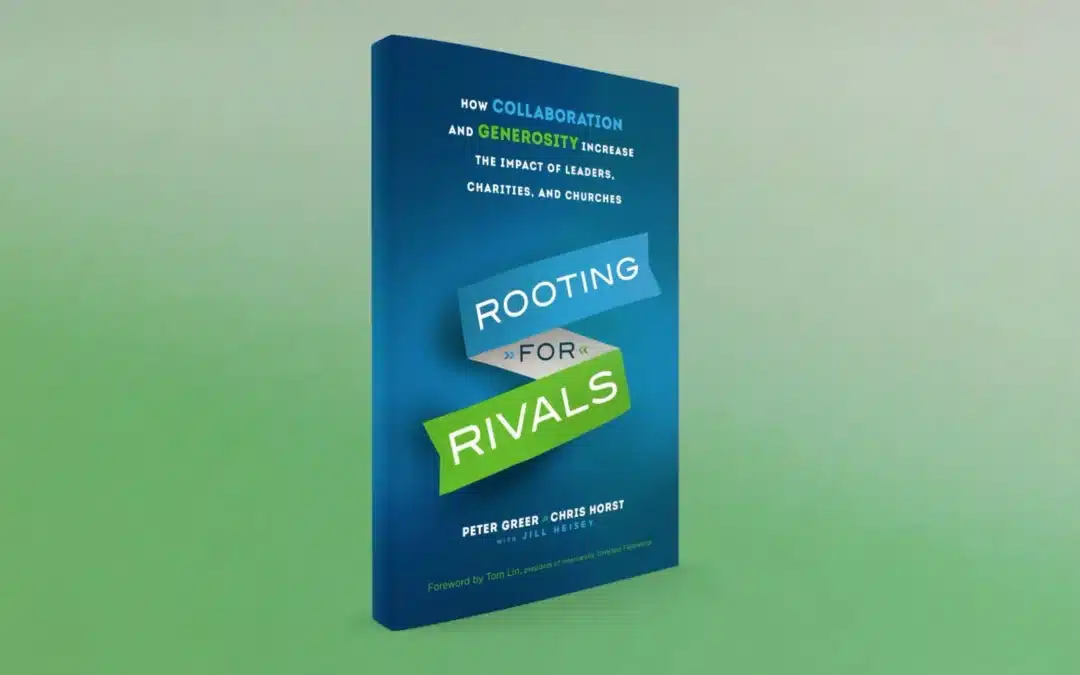
Now, if you’ve followed along with us for a while you may remember Peter Greer from an episode we did with him on the Faith Driven Entrepreneur podcast. If you haven’t already, we highly recommend listening to that interview. But in this episode, we’re talking specifically about his book Rooting for Rivals.
Peter is going to explain why he believes that leaders in this Faith Driven Investing community can multiply their impact when they focus on collaboration and cooperation. He shares both anecdotal and analytical evidence to support his theory, and we think you’ll be glad you listened in…
Useful Links:
Rooting for Rivals Book
Rooting for Rivals Podcast
How to Slay a Dragon: FDE Podcast with Peter Greer