A New Impact Investing Opportunity from NCF

from NCF

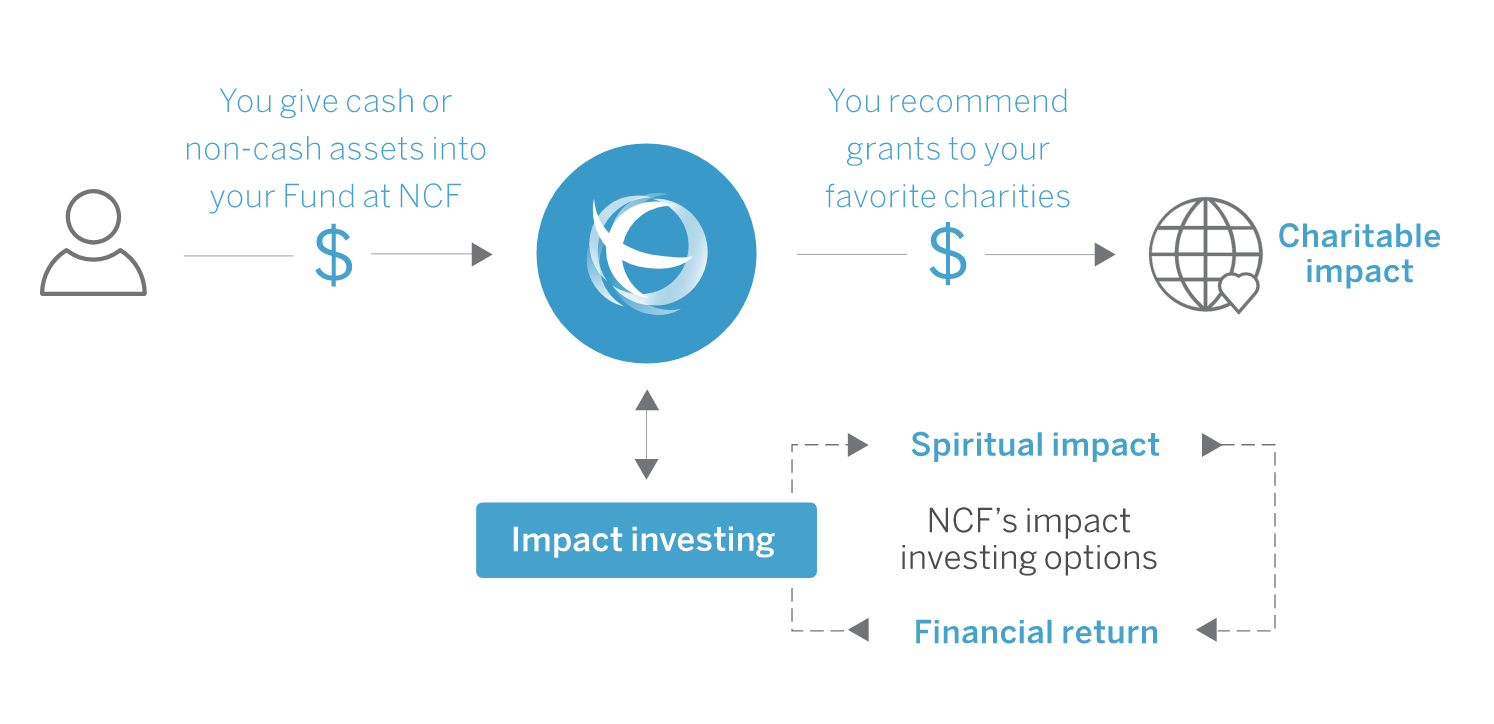
If you’re interested in impact investing, now there’s a new way to do it straight from your Giving Fund through the Sovereign’s Capital (Fund III) pool. This collaborative pool enables you to recommend investments to innovative, Christian-led companies that prove transformation happens in the marketplace and that capital equals influence.

You want to steward your wealth well. And so do the creators of Sovereign’s Capital, Henry Kaestner and Luke Roush. Sovereign’s investments are guided by a unique set of principles that led Henry and Luke to consider: How is this different from the way the world approaches money? What are the kinds of things we need discernment for as Christian investors? What investments should we pursue that will impact the kingdom?

Henry and Luke focus on companies where they can see both a financial and spiritual return. Luke explains, “For Christian-led companies, these things should go hand-in-hand, because biblical values and biblical principles show up in how a Christian leader cares for employees and customers. And these accrue to the benefit of spiritually healthy employees and strong long-term business.” As they have observed, this thriving ecosystem often produces both financial and spiritual return.

A New Opportunity Zone Platform: Blueprint Local

Over a year ago, the government recently passed a law to incentivize private capital to invest in deeply distressed census tracts across the country. In response, Access Venture has piloted direct investments in local businesses, placed strategic capital in anchor community real estate, and backed national growing companies that they think have the potential to strengthen communities across America. Learn more about what they’re doing below!

by Access Ventures

We are excited to announce today the official launch of Blueprint Local, a platform built help entrepreneurs access capital in their own communities.

At Access Ventures, we have been pioneering “one-pocket investing” in communities for the last five years. For the past six months, we’ve been testing the water on interest, direction and potential partnerships working up to this announcement, and are excited to finally share in more detail the journey as a founding member of the collaboration that is launching this new platform.

An Opportunity to Rebuild Communities

A little over a year ago now, the Federal Government passed and signed into law, the Investing in Opportunities Act (IIOA), more commonly referred to as Opportunity Zones. This was designed to incentivize private capital to invest in deeply distressed census tracts across the country.

Around that time, a group of us, including Ross Baird, the founder of Village Capital, began to discuss this new potential and ways to deploy it in communities in ways that builds wealth in communities, without being extractive. We saw a small window in time to build a strategy that could help set a narrative for the country.

In the past, early movers have mattered. We’ve seen some disappointment in past federal programs such as New Market Tax Credits – well-intentioned and in some cases used appropriately, but at the end of the day, a bill was meant to invest in operating companies that lead to jobs and wealth creation, devolved into another real estate investment opportunity for investors not from those communities.

In order to do something different, in the summer of 2018, we announced our plan to explore the development of such a strategy and teamed up with Ross Baird to lead the way to build on work that we have done in communities such as Louisville, Tulsa, and Columbus, and explore opportunities in many more. We’ve piloted direct investments in local businesses, placed strategic capital in anchor community real estate, and backed national growing companies that we think have the potential to strengthen communities across America.

Over the past nine years, through his leadership at Village Capital, Ross has demonstrated proficiency in finding and investing in some of the best entrepreneurs solving real problems across the country in sectors that have a direct impact on economic opportunity and environmental sustainability in communities across the country. Ross is one of the most experienced startup investors in economically distressed areas in America, and has spent nearly a decade helping build the ecosystems that help entrepreneurs succeed.

We then got to work! Ross began to have conversations across the country with like-minded investors, philanthropic organizations, and metro governments to better understand the direction and potential for this plan as we awaited final regs from the IRS. We learned a lot in that process, chief of which was the need for a robust and experienced team to accomplish this effort. Which is why we are excited that collaborating partners such as Brown Advisory, Village Capital, and Admiral Capital Group have joined in the effort to establish such a strategy.

Communities are complex organisms that need every type of capital strategically and intentionally coordinated.

We also learned while investors are attracted to the return potential of these platforms, they are extremely excited to see these returns through partnerships that directly impact their local communities. As such, we shifted our planning to focus on a series of community-based strategies instead of a national fund in some key regions.

We learned as well that a critical component to the success of these platforms is coordinated and aligned capital. Even though Opportunity Funds invest only equity, communities need social services supported through grant programs and creative permanent finance to stabilize businesses and families. Communities are complex organisms that need every type of capital strategically and intentionally coordinated. The communities that are taking these steps, are leading the conversation nationally and will, over the life of this program, see the greatest investment and most promising results.

Blueprint Local

And finally, we learned that at the end of the day, investor relations is crucial. Having a great reputation and demonstrated an ability to achieve results is paramount to the success of even creating an Opportunity Zone platform. We know that many Americans don’t trust Wall Street, and in many cases rightly so. And we also know that we had to have the best and most thoughtful thinking from the asset management world to successfully implement Blueprint Local. In exploring the asset management world Brown Advisory stood out in values alignment, its thoughtful approach, and its alignment with both mission and financial success. Brown Advisory has really stepped up to really lead the way with the creation of Blueprint Local’s platform as a joint venture. We believe this collaboration will grow into a dynamite team and strategy with their leadership and experience.

Blueprint Texas

As a part of this new partnership, we are excited to announce a blueprint platform in Texas. Joining this effort in Texas will be Admiral Capital Group, founded by NBA Hall-of-Famer David Robinson as well as Seavest Investment Group’s ReThink Community. This platform will concentrate its partnerships across Texas in areas that help foster economic growth, are inclusive and seek to address specific regional and community challenges.

This platform will employ a differentiated, holistic approach to improving community health through partnerships in the following:

1. Operating businesses: “Startup” capital for businesses positively impacting local economies and “growth” capital for established businesses seeking to create a meaningful presence in existing or new communities.

2. Real estate: Transformative partnerships in commercial infrastructure, as well as potential participation in housing strategies that support workforce development.

The platform will seek to partner with entrepreneurs for both attractive financial returns and meaningful, tangible impact. In addition to portfolio targets achieving market-oriented financial metrics, sustainable social criteria also must exist, including:

1. Increased community dynamism.

2. Diversity of the portfolio, both demographic and socioeconomic.

3. Local health indicators, such as physical (e.g., diabetes prevalence, hospital readmits), financial (debt, household wealth created), education and workforce (unemployment rate), and other factors

We have a once-in-a-generation opportunity to write the story of what it means to be a “one-pocket investor” in our communities. We are excited that Blueprint will be the next chapter of the story.
NCF’s First Impact Pool

 Image by  Stephan Mahlke

Image by Stephan Mahlke

The National Christian Foundation recently announced their first impact investing pool. Learn all about what it is, how it works, and how you can be a part of it in this brief article below.

by NCF

We are excited to introduce our first impact investing pool: Sovereign’s Capital (Fund III), a private equity investment opportunity that supports start-up or later-stage companies led by Christian entrepreneurs in growing fields, industries, and economies.

About the pool

Traditionally, givers have used grants from their Giving Funds to make a tangible difference for the causes they love. Now with NCF’s impact investing pools, givers can also make spiritual impact using their Fund balance. Our first pool is a private equity opportunity with Sovereign’s Capital (Fund III). 

Sovereign’s Capital is a private equity firm that specializes and invests in companies led by faith-driven leaders seeking Biblically-aligned impact and financial return.

The investment pool is now available, and will be open through August, 2019.

How it works

What to expect and how to get started

  • Once you recommend an amount you would like to invest, we place that portion of your NCF Fund into this impact investment pool, where it is combined with invested amounts from other NCF givers across the nation.

  • The investment lifetime will be 10-15 years, with some returns expected within five years. To support your ongoing grantmaking activity, you must maintain a liquid balance in your NCF Fund.

  • Because this impact investment pool is high risk, consult your financial advisor to decide if this fits into your long-term giving strategy.

Make your biggest impact today

Learn even more by downloading our 1-page PDF, or connect with your nearest NCF team to get started. We would be honored to serve you.

Why Invest $3 Million in “Redemptive Business”? by Impact Foundation

 Image by  Mitch Lensink

Image by Mitch Lensink

What exactly is a “redemptive business?” And why are these the type of businesses a faith-driven investor should consider supporting? Impact Foundation asks and answers those very questions in this article. They also provide a great look at Seat Kings—a redemptive business that employs prison inmates to manufacture bus seats. Read on to learn more about their business and what they’re doing to make it redemptive.

by Impact Foundation

Expanding on traditional Evangelism/Discipleship, the idea of Redemptive Business borrows heavily from Praxis Labs’ concept of a “redemptive entrepreneur”, or one who seeks to embody the gospel in creating and building a venture that leaves a meaningful impact on the world. As David Blanchard has said,

“We see a thrilling opportunity for entrepreneurs to be winsome witnesses, creatively demonstrating their faith by being part of the solution. This is the body of Christ at its best, loving our neighbors through the works of our hands.”

Businesses built by these kinds of entrepreneurs may engage in “evangelism” as traditionally defined – explaining the pathway to eternal salvation. And they go beyond that to live out the Gospel through the products and services they provide and the way they conduct business. 

THUS, A REDEMPTIVE BUSINESS IS AN ENTERPRISE COMMITTED TO REFORMING OR TRANSFORMING THE LIVES OF ITS EMPLOYEES, VENDORS, CUSTOMERS, AND ITS COMMUNITY IN LINE WITH BIBLICAL PRINCIPLES AND KINGDOM VALUES.

Because this definition is squishy, we look to the following characteristics to determine if a business aligns with our purposes:

  • Pays fair compensation

  • Provides value (quality service/goods at fair prices) 

  • Stands against corruption 

  • Satisfied, repeat customers 

  • Pays bills on time

  • Basic environmental stewardship practiced

  • CEO or other senior leader(s) regularly participates in spiritual disciplines

Seat King, a company founded by Pete Ochs, manufactures bus seats inside a maximum security prison in central Kansas. Watch the video and see Redemptive Business at work.

As the company does not produce a product with obvious spiritual significance, we must look deeper to understand how Seat King operates as a kingdom company. First, Pete pays more than minimum wage, whereas inmates would make only 45 cents per day in a traditional prison job. The state takes a percentage of their wages to help fund the prison—a social good. The men gain dignity as their work takes on meaning and their higher wages allow them to support their families and save for life after prison. More significantly, Pete and his management team spend time teaching the men leadership skills, lessons on how to be a better husband and father, and even start bible studies and discipleship groups in the prison. The life change in these men is profound and inspiring as seen in their own personal testimonies as well as reduced violence inside the prison and lower recidivism upon release.

While a business like Seat King does not offer specifically religious or spiritual products or services, it engages in evangelism and discipleship as a way of life. Thus, it earns the title “Redemptive Business”.

Apartment Life Uses Online Reputation for Advertising

CARES Teams are in a perfect position to invite residents to share about their experience because they have organic touch points through visits, events, and care activities. It’s friends asking friends face-to-face.

Behind the Scenes: A Look Into Talanton’s Due Diligence Process

 Photo by  Talanton

Photo by Talanton

Q: Why is due diligence so important?  

A:  When you meet entrepreneurs who have been motivated to start a company to do good in the world, they often have a compelling story, and more often than not, a purpose-driven character and a good dose of charisma. It’s an immediate draw, and our first instinct is to help. But the due diligence reveals the richer, more holistic story, hidden in the financials, the key performance indicators (KPIs), the policies (or lack thereof), the interviews with staff, clients and suppliers. To make a good investment, due diligence is paramount. 

Q: How long does due diligence usually take?  

A: That really depends on the company – how ready they are for investment and how responsive they are to our requests for information. We understand that small growing businesses need to raise capital, but this takes time and energy away from core business activities.  We have designed a phased stage gate due diligence process that stair steps the work companies need to do. Also, almost everyone on the Talanton team has extensive field experience and knows what a challenge it is to conduct the early stages of due diligence sitting in an office halfway around the world. At certain points during the due diligence process, one or more of Talanton’s partners travels to do site visits. We also rely on our trusted strategic partners, accelerators on the ground like Sinapis, to do additional third–party due diligence and verification for us. All that said, it’s hard to give a definitive timeline, but if all cylinders are firing, it could take as short as three months or as long as six or more months. 

Q: How do you connect with client management teams in country?  

A: Alongside the onsite visits that we do, we are consistently in communication with client management teams through email and video calls. How responsive they are with long-distance communication is an important part of our assessment, since the same responsiveness is expected for updates and reports to our own investors if we decide to invest.  We also connect with the companies through our African-based strategic partners, and often will use other individual consultants or industry experts in the country. Having multiple touch points with the company is part of good due diligence and strengthens the network of relationships. 

Q: What are the key pieces of information you look for to assess if they are the right fit?  

A: We conduct deep dives into four major categories when we conduct due diligence: 

  1. Impact First – We look at the company’s vision, social mission, KPI’s related to impact and then drill down on how they have executed on those things as well as their forecasts. 

  2. Governance and Management – We assess risks associated with the management team, the Board, company policies, culture and administration. 

  3. Market and Production – We assess risks associated with market conditions and production capability, and the company’s operational ability to execute the project. 

  4. Investability– We look at all financial aspects of the company – historical and projected. 

In addition to these four, there is a fifth piece that we consider as we go through due diligence: the management and technical support that Talanton and our network can provide to the company. Often this doesn’t fully materialize until we get through the entire due diligence, but it’s an important consideration for our team.