Collaboration

  Image by    Thomas Drouault

Image by Thomas Drouault

With the help of faith friends from our gathering of Faith Driven Investors, we’ve begun drafting a set of Unifying Principles. Our hope is that we can begin to come together under these thoughts and ideas to work toward a more full vision of what it means to let our faith drive our investments.

If you have thoughts, questions, concerns, things you’d change or add, please let us know! We’re relying on you, our community, to make this resource the best it can be.

One of the goals of this movement is to create an anti-Tower of Babel mindset among investors. It’s so easy to bifurcate the world of investing over and over again with groups splitting and keeping to themselves. The Faith Driven Investor movement is all about going in the opposite direction—instead of spreading apart, we’re coming together.

The secular investment world is known to work well together through the formation of investment syndicates and conferences that share best practices. Why shouldn’t the Christian world be the same? In fact, we should endeavor to be even more unified as we resist the move toward sectarianism and denominational tribalism that has characterized much of recent church history. We were designed to be in community and fellowship with God and to receive wise counsel from others that know Him. Iron sharpens iron.

Though impressive in its scope and ambition, the Tower of Babel failed because of the impure motives of those that labored. We are working together in the hopes, not of bringing glory to ourselves, but of offering a worthy sacrifice to God.

We believe that we can work together in community with excellence as we build something with God’s guidance for His glory. Therefore, we endeavor to check the purity of our motives regularly—which is something we need each other’s help with!

Because we come to this movement with a conviction of abundance, this foundation should give us the ability to work well together in sharing ideas, deals, and investors. We worship one God and our work is all for Him.

Using Scripture as Our Guide

  • Psalm 133:1 Behold, how good and how pleasant it is for brothers to dwell together in unity!

  • 1 Thessalonians 2:8 Because we loved you so much, we were delighted to share with you not only the gospel of God but our lives as well.

  • Romans 15:5-6 Now may the God who gives perseverance and encouragement grant you to be of the same mind with one another according to Christ Jesus, so that with one accord you may with one voice glorify the God and Father of our Lord Jesus Christ.

  • Philippians 2:2 Make my joy complete by being of the same mind, maintaining the same love, united in spirit, intent on one purpose

  • Proverbs 15:22 Plans fail for lack of counsel, but with many advisers they succeed.

Inter-Generational Generosity by Wendy Rogers

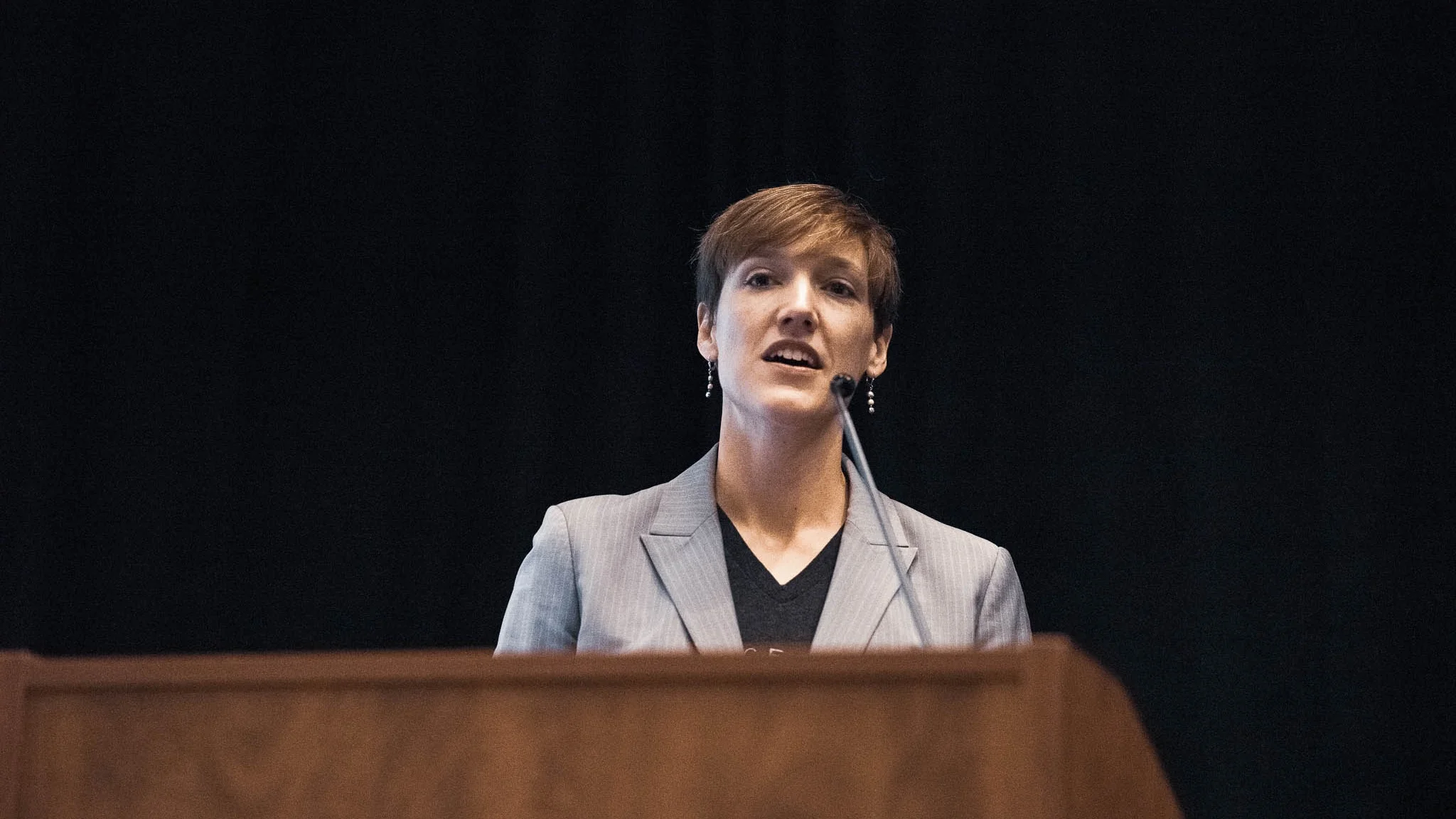
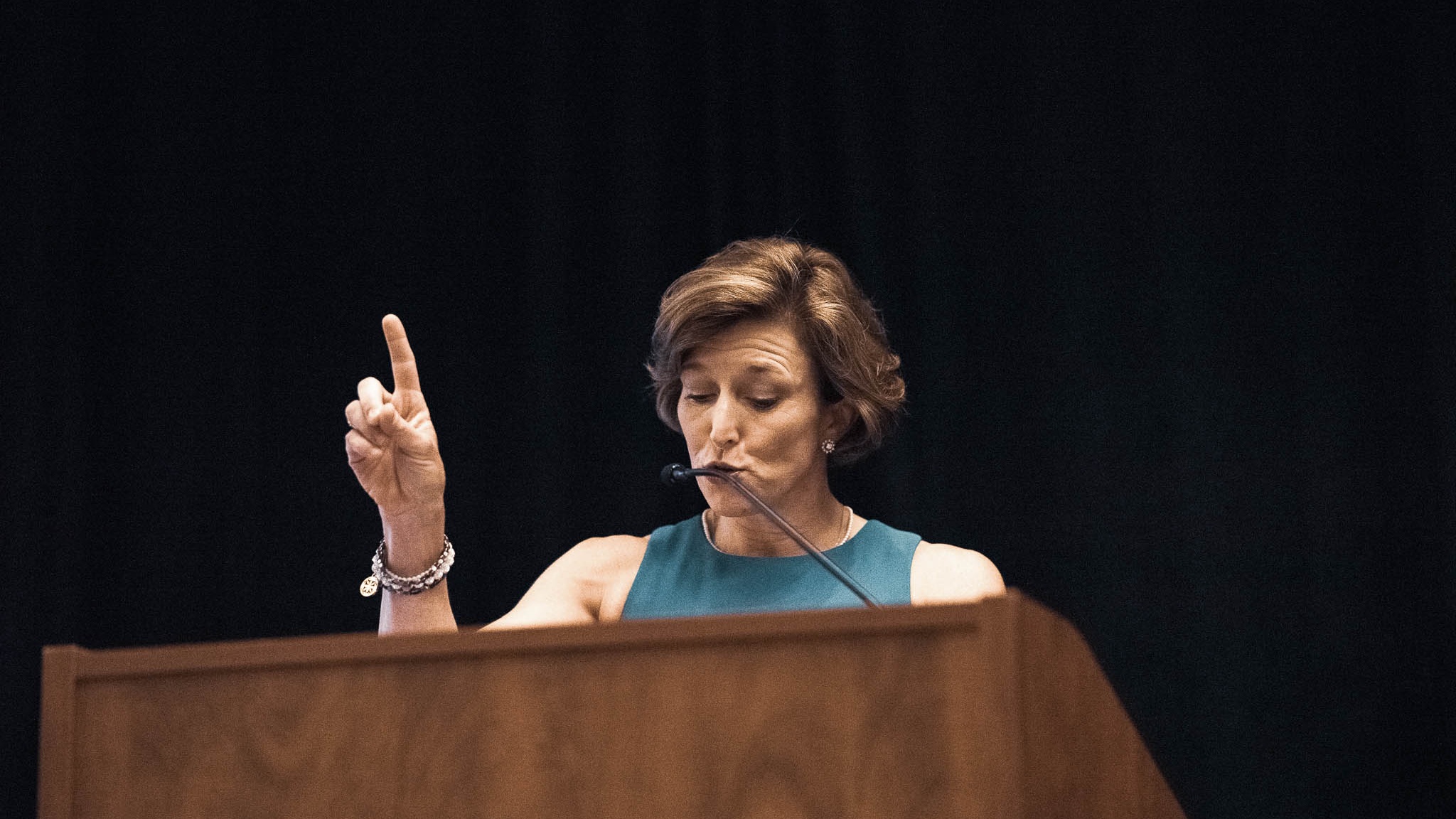
Wendy Rogers was one of the presenters at our recent event for Faith Driven Investors, and she was gracious enough to share a copy of her talk with us. Below is a transcript of her presentation about utilizing investment advisory firms and building alignment inter-generationally.

by Wendy Rogers

In Ted Style Talks, the experts say in order to drive your point home, you must divide your talk into three parts to be inspiring. Make your talk:

– Emotional

– Novel

– Memorable

Well, I must say the emotional part was the thought of me, a true southern woman, trying to bring home an effective point in under 5 minutes. In all seriousness, the topic of wealth management can get pretty emotional when families are not intentional around the vision of the wealth and the positive or negative disruption it can stir through the generations.

This is important stuff and it is not for the faint at heart. There is an expression from a Hermes Family Descendent that says, You do not inherit a family business, You borrow it from your grandchildren. And when I mention family business I am not just thinking about operating companies.

The Novel aspects of what I would like to share today would be the visual picture of what my grandmother taught me years ago. I grew up learning how to care for pecan groves and many times when we lost a tree due to disease, we had to be strategic in where we would plant a new tree. Ecologists taught us that a young tree grows better when planted in an area adjacent to the older, stronger trees. The roots of the young tree may actually graft themselves to one another creating an intricate, interdependent foundation. Let me provoke you a little—when you think in wealth and specifically in transferring any kind of wealth, what do you think is a healthy balance of independence and interdependence within a family or a family enterprise? 

Now to the memorable part. This picture here: I am a third generation family business owner stewarding wealth from a business my sweet grandfather started, my very determined father significantly grew, and then as a family we made a decision to sell to a Fortune 100 company. Here is a fun fact: I am one of three girls and we each have three girls, so there are, or will be, 13 women running the show.

The day after selling our operating company we knew we were in the family office business and we knew we had a great deal to learn about the preservation aspects of wealth, but we then had to get real focused on the growth aspects of those assets.   

We learned a lot about ourselves and also about our future need for surrounding ourselves with great strategic investment advisory partners.  

The transition from family business to business family is more about a mindset change. We, as family members, had to switch our mindset over to owners or stewards. We needed to learn a new industry…strategic investment management. 

In order to create, sustain and adapt family culture and values over generations, the family must be aligned, make fast and effective business decisions, and implement them. This just doesn’t happen overnight. Even to families who all love Jesus! 

The process by which the family owners collectively organize themselves to develop resilience in dealing with both the internal family affairs and the external business challenges is what many would call GOVERNANCE.

We had to learn to balance the many voices, then to translate this input into effective operations, clear decision practices and adaptive responses to new challenges.

Here again, we come back to independence and interdependence concept. I wish I would have understood those two words better 15 years ago.  

But before we could do all this, we had to revisit/collectively declare what we knew to be true about our family. How we were raised, what values defined us and held us together and the passions that pricked our hearts in making sure we clearly defined both our philanthropic and our investment vision and mission together. What was the purpose of this liquidity event and what did it mean to each of us? We sat around and discussed this at length. 

 We knew that inside our operating company we had values and an operating philosophy, a mission and guiding principles to guide how we worked and now as we set up new ownership structures we were going to need the same thing.

Family Enterprise Governance is the structure by which elements of the generative family alliance become aligned and integrated into practice. They need to listen to and balance the voices and perspectives of each group of stakeholders: Matriarch/Patriarch owners, young family owners to be, married in spouses and outside advisors. We knew we needed to work to create this framework and practice it and model it because we are now in the process and transition of on boarding new owners and the next generation, which as I mentioned are all female. 

We had to work hard to build this intergenerational alignment in investing, spending, giving and in living. This was not done overnight and we can never rest that it is complete. We instituted governance structures, shareholder agreements, management companies, estate plans and a family council. These were the fierce conversations to formalize and now we are living out our continuity plans. Picking partners and guiding these partners was a huge part of the process. The search, onboarding, and alignment of these partners is the role of family leadership.

We took the time to thoughtfully create and design an outside board of directors just like we did inside our operating company. This board is the core instrument for the family to build and sustain its distinctive culture and exercise faith -based oversight. This board upholds the legacy and values and defines the relationships among owners and across generations and is also open to anticipating and initiating change to take advantage of new possibilities  and respond to the expansion of the family. Mindset development is huge here as family members need to be tutored in ownership mindset. 

If we believe God owns it all, how do we live that out in our decisions about investing? In our decisions about spending? Bob Goff has said that all the rules change when you are flying under the banner of Jesus Christ. It changes everything…or it changes nothing.  It can’t just change a couple of things.” 

Many of these years proved to be like the old college science class of Lecture and Lab. We spent time and resources in the lecture section of this life -long class and we had to get clear as to the formal education we needed…we needed to invest in ourselves, but also trust our internal “knower” around who to align ourselves with. How to lead and yet learn from these partners. This is the lab part. We are doing this each day, each quarter as we listen to their advice and yet also find other outside, non -family  board members, partners in new private equity ventures and bring in thought -leaders to work with our family.  

Are we efficiently and intelligently using the resources God has granted us to generate returns but also generate human flourishing? This a recurring question we keep asking ourselves…the scorecard so to speak.

If we see ourselves as stewards and our Lord as the owner then we better get about the business of stewarding that well and that should never mean compromising or resting on our laurels to not cultivate growth and returns. We also had to act like geese and honk from behind in those leading us to stir bravery in each other, to live in faith and to continue to ignite purpose in our own lives but also in the lives of those around us. 


What Would the Good Samaritan Do?

  Image by   Simon Infanger

Image by Simon Infanger

This article was originally published here.

Check out Greenmoney for other quality content!

by Mark Regier

The phrase “What would Jesus do?” or “WWJD” emerged in American consciousness during the 1990s as motto for many Christians seeking to regularly reflect on how the moral teachings of Jesus could be reflected in their daily lives. As is the way of our modern culture, the reflective purpose of this cue soon became obscured by our collective passion for marketing and merchandise in all its many forms.

Whether one participates in organized religion or not, the idea of finding a mechanism that calls us to step outside of our personal situation to view things from a different, morally-grounded perspective can have many benefits. This was the original intention of WWJD.

This also appears to be the intention of many of the parables shared by Jesus throughout the New Testament. He is frequently presented responding to critical—even tricky—questions with stories that cause reflection, rather than answers that reflect or refine the religio-political rules of the day, as most expected. These parables were all the more disruptive by their inclusion of persons—women, children, tax collectors, slaves, etc.—in roles and situations that challenged the status quo and current thinking on what was “good” and “right.” The parables seemed designed to pull listeners out of their presuppositions and self-assuredness.

So what does all of this have to do with how we, as people of faith or good will, approach investing? And more importantly, how do we do this when we may not all agree on how it is to be done?

Both less and more than you might think!

Less, because the Parables and many similar religious teachings are not necessarily about “how to do” something, but more often about “how to be” in a situation. These stories challenge certainty about rules, righteous action, and our place in the world with a focus on right relationships–between people, classes, ethnic/racial groups, genders and with Creation itself. And it is this centrality of relationships that makes such teachings more relevant to the increasingly contentious and conflicted environment in which many values-based investors find themselves.

One parable that seems particularly relevant to the current SRI investment arena is that of the Good Samaritan. What is both ironic and even more timely is that this parable was offered in response to a question posed to Jesus asking, “And who is my neighbor”? It is a question of inclusion and value that echoes with importance through the centuries to America’s reality today.

Found in Luke 10:25-37 [1], this story—at least in its simplest form—has practically become baked into American culture. In short, the Samaritan (from an ethnic group often looked down upon by the dominant culture Jesus was a part of) stopped to help a man wounded by robbers while two religious leaders (a priest and a Levite) passed him by, presumably not stopping because touching the wounded man would have made them unclean according to the religious rules of the day.

When Jesus flipped the question to questioner, asking “Which of these three…was a neighbor to the man who fell into the hands of the robbers?”, the answer was “The one who showed him mercy.” One can easily replace any of these characters with modern stand-ins (and people have!) and get a similar reflective opportunity. The point is to step out of what we think we know and ask how our “answers” fit in a broader, moral frame—particularly when that challenges our current world view and objectives.

What then might we learn, applying reflection from the story of the Good Samaritan, to our collective work in faith-based, SRI/ESG investing? Here are my takeaways:

Relationships matter—For me, this is the overarching message of this Parable (and many others). Understanding the human component, motivations, objectives and needs in any situation—especially one of conflict—is critical. How can we first see what we share, not where contrast? No strategy, marketing opportunity, or clever taking of the intellectual high-ground is worth sacrificing community and collaboration in your wake. Being “right” (often a less certain thing than we think at the time anyway) should not preclude being in right relationships with those around us—even those we think are in opposition to us.

Remember the shared goal—One reason why relationships should and do matter, is that we often have shared goals, whether we choose to focus on them or not. It is unlikely the religious leaders thought the wounded man should die. Rather they chose to place their own rules and priorities above the shared goal—mandated by religious teachings–of caring for those in need. In the end, we all need to decide if it is the path or the goal that is more important.

The work is often messy—The issue of “purity” or remaining “clean” runs deep in the Good Samaritan Parable. This theme seems to echo within both the faith-based and SRI investment world as well today. While an important—and potentially valid–point of values reflection, avoidance rarely brings the solutions we want and need. Getting to our shared goal demands the ability to engage, understand, challenge, and compromise (practically a four-letter word in our current culture) with those of a different perspective. Whether corporation, investor or activist (or combinations thereof), achieving justice and sustainability has nearly always been messy.

There may be a cost—The Samaritan invested his own time and resources in caring for the wounded man, in both the short and long term. The Holy Grail of SRI—and particularly ESG—has been to prove that one can do demonstrable good for the world and deliver competition-topping performance. Incredible strides have been made, materiality demonstrated, and successful claims put forward. Yet in many cases there remain a number of asterisks, requiring a fuller look at the details to understand the complete picture. Perhaps the more important point to consider—whether approaching the investment task on behalf of the environment or a set of faith-driven values—is how much cost is too much and is the cost worth it in the end.

Being “wise” (or smart or clever or right) doesn’t trump mercy—In a culture and communication environment dominated by selective information, passion-driven marketing campaigns, and the need to find enemies/opponents, the question our community (really any community) increasingly faces is whether or not to engage in the popular “wisdom” of the marketplace or stick to the values that unite us. It is a hard choice to make with friends and competitors alike chanting “fight fire with fire.” And it is one we must all choose for ourselves.

In the end, the value of a moral reflective cue—like “What would the Good Samaritan do?”—is to cause us to stop and think about how our situation and related actions look from a different perspective, or in the context of diverse values that we claim to support. It wouldn’t surprise me if no two people respond to my own reflections in exactly the same way. I think that’s the point of parables anyway. All I can do is repeat Jesus’ suggestion—“Go and do likewise.”

Article by Mark A. Regier, Vice President of Stewardship Investing for Praxis Mutual Funds and Everence Financial (https://www.praxismutualfunds.com), a leading provider of faith-based financial products in the United States and a ministry of Mennonite Church USA. Mark has been involved in the field of ethical and socially responsible investing at Everence for more than 20 years. He oversees the company’s work in socially responsible investing (including investment screening, ESG integration, proxy voting, corporate engagement and community investing). In addition, Mark works with products and programs throughout Everence to strengthen their creative integration of faith and finances. In 2015, Mark assumed leadership of the sales and marketing efforts for the Praxis Mutual Funds.

Mark has served as a member of the Board of Directors for the US Social Investment Forum, the Interfaith Center on Corporate Responsibility, Partners for the Common Good, the International Working Group (USSIF), The Isaiah Fund for Disaster Recovery Investing, and the Highland-Good Steward SRI hedge fund. In 2006, Mark received the SRI Service Award, the US social investment industry’s highest honor.

With over 25 years of service to the church and a background in ethics and theological studies, Mark is often a resource to national and international media and organizations on faith-based and community investing issues.

“The Wealth Creation Manifesto” with Mats Tunehag

  Image by   Aaron Burden

Image by Aaron Burden

This article was originally published here.

Check out The Institute for Faith, Work, and Economics for other quality content!

by Kristin Brown

Is wealth creation godly or greedy?

The Bible teaches that the creation of wealth is both a godly gift and a command. Unfortunately, the biblical role of wealth creation is misunderstood in many churches today.

The good news is that there’s a global movement of Christians that are seeking to resurrect this topic in the church around the world.

We interviewed Mats Tunehag, a writer and consultant based in Sweden, who has served for many years as a senior leader in developing the concepts of Business as Mission in both the Lausanne Movement and World Evangelical Alliance.

Most recently, Tunehag served as the convener of the “Global Consultation on the Role of Wealth Creation for Holistic Transformation” in 2017. Out of this gathering of 30 business, missions, and academic leaders from 20 nations around the world came the “The Wealth Creation Manifesto.” Below is our discussion with Tunehag about the purpose of the Manifesto and what kind of response it is receiving:

IFWE: What is the Wealth Creation Manifesto and why was it developed?

Mats Tunehag (MT): The issue of wealth creation is often overlooked. The idea of wealth sharing sounds more “Christian” and generous—and we talk about that more in the church.

But there is no wealth to be shared unless it has been created. Thus, we wanted to explore and discuss wealth creation from biblical, historical, global, and practical perspectives.

The Wealth Creation Manifesto is a summary of the Global Consultation on the Role of Wealth Creation for Holistic Transformation of People and Societies. Out of the gathering, seven papers were peer-produced and peer-reviewed, looking at various aspects of wealth creation. We also produced an educational video with study guides.

A major focus for the Consultation was wealth creation and the poor. What really helps the poor, and what does history teach us? As we wrote in Christianity Today,

It is a fact that aid—wealth distribution—does not lift people and nations out of poverty. Wealth creation does. The biggest lift out of poverty in the history of mankind has happened in our generation. This has been achieved not through aid but by trade; wealth creation through business. As is demonstrated by the escape of hundreds of millions from dire poverty in both India and China since the 1980s, one cannot tackle poverty without a determined pursuit of wealth creation.

We often ask what causes poverty. But the real question is, how do people create prosperity for themselves, their family, and their community? Instead of asking what causes poverty, we need to ask, what causes wealth?

IFWE: What kind of conversations have been started around the Manifesto?

MT: The Wealth Creation Manifesto was quickly translated and is now available in 14 languages. That is one indication of the keen interest in the issue around the globe.

It is also important to point out that this was not the first time that the biblical call to wealth creation, especially through business, has been addressed. The Consultation was built upon similar consultations and documents, like the BAM Manifesto 2004, the Wheaton Declaration 2009, and the Atabaia Statement 2014.

IFWE: What biblical principles have been the most effective in helping people understand God’s call to wealth creation?  

MT: The first three statements of the Wealth Creation Manifesto assert the following:

  1. Wealth creation is rooted in God the Creator, who created a world that flourishes with abundance and diversity.

  2. We are created in God’s image, to co-create with Him and for Him, to create products and services for the common good.

  3. Wealth creation is a holy calling, and a God-given gift, which is commended in the Bible.

We also produced a Wealth Creation Manifesto with Bible References document. The Manifesto is based on, among other things, lessons learned from the Bible. So, we listed some initial scripture references regarding issues dealt with by the Consultation and expressed in the Manifesto.

IFWE: Where have some people had trouble understanding the Wealth Creation Manifesto? Has there been pushback?

MT: Some people mistakenly assume that wealth creation is about making some people rich or that the Manifesto teaches the prosperity gospel. However, the full title of the Consultation indicates a wider understanding of the purpose of wealth creation: “The Role of Wealth Creation for Holistic Transformation of People and Societies.” The prosperity gospel is not only heretical, but it also cannot achieve the goal of personal and societal transformation.

Pope Francis has also spoken to the worthy goal of wealth creation:

Business is a noble vocation, directed to producing wealth and improving the world. It can be a fruitful source of prosperity for the area in which it operates, especially if it sees the creation of jobs as an essential part of its service to the common good.

Others who have struggled with the Manifesto wrongly embrace the Malthusian idea of fixed and limited resources which must be divided into smaller and smaller pieces because of a growing world population. Thus, some call for a universal renunciation of wealth or for all Christians to pursue “simplicity” as a response to wealth hoarding. The Wealth Creation Manifesto takes a more nuanced approach:

Wealth hoarding is wrong, and wealth sharing should be encouraged, but there is no wealth to be shared unless it has been created. …There is a universal call to generosity, and contentment is a virtue, but material simplicity is a personal choice, and involuntary poverty should be alleviated.

The Consultation and its papers and educational video show that we can increase valuable resources—like food—and actually feed more people now than ever before.

We also show that businesses do provide essential solutions to the world’s most pressing issues, including environmental challenges.

The conversation between Professor Ron Sider’s article and BAM Global in Christianity Today is a good example of this discussion on the biblical and economic principles espoused in the Manifesto.

IFWE: What are the next steps for the Wealth Creation Manifesto? What are you working on now?

MT: We are doing more research and writing on wealth creation and creation care, building upon the paper “Wealth Creation and the Stewardship of Creation.” The plan is to present an expanded paper at the BAM Global Congress in 2020.

The Hidden Bible Story of Barzillai and What It Says About Using Wealth and Influence for Good

by Vip Vipperman

Wealth and influence – it’s a topic that comes up regularly in the business and nonprofit worlds, whether it is expressly mentioned or just thought about silently at networking events.  It’s important in the world, whether you are a believer or not, and it’s important to God.

And with this importance comes questions. What do we do with the wealth and influence we have? How can we get more of both? Are we wrong to want more? And ultimately, what would God have us do with both the wealth and influence we have and our desires for more? 

Using Wealth and Influence for Good: a Biblical Example

Throughout the Bible, we see how God calls people to use their wealth and influence to achieve His purposes. Most people know the stories of Abraham, Moses, David and the 12 disciples, but you might not know about Barzillai.

Hidden in the chapters of 2 Samuel is the story of a wealthy man named Barzillai, a believer in God and a supporter of King David – even when it wasn’t convenient or beneficial to be a supporter of the King.  In this portion of David’s story, he and his entourage are running away from his rebellious son, Absalom, who had staged a coup against his father and taken over Jerusalem.  But Barzillai remained loyal and hosted David and his men during this trying time, which was risky and expensive (2 Sam 17:27-28).

Eventually, Absalom died, and the rebellion ended, leaving David ready to head back and take his place back as the rightful king in Jerusalem. But before he crossed the river to head home, he paused to invite his patron Barzillai to come back with him so he could be given the royal treatment for the rest of his life.  Who wouldn’t want that?  Actually, Barzillai.  He already had wealth and influence.  He was content with where he was, and all he wanted was to return home to his land and his family and rest in peace.

However, he didn’t just decline the invitation and move on. Rather, he decided to use his influence to elevate another, his buddy Chimham, and made a move that changed Chimham’s life forever. He asked David to allow Chimham to take his place, to receive the place of honor David had offered to Barzillai.  In a way, Barzillai became a sponsor for Chimham’s career, opening up doors that he never could have opened without Barzillai using his influence on his behalf.

Barzillai’s influence and sponsorship of Chimham placed him in a position of wealth, prominence, power and influence unparalleled as one who sits at the table of the King. Chimham crossed the river with David and headed back to Jerusalem as one of the King’s inner circle.

Wealth, Influence and you

So, let’s bring this to present day.  How does this apply to us?

If you are a Barzillai – an investor or someone established in your career – you have an opportunity to lift up entrepreneurs in business and nonprofit worlds as well as those in the beginning stages of their careers, to introduce them to patrons, to share your influence and network so that they can be propelled and accelerated along in the process of growing their businesses, establishing their careers and impacting the world for Christ. 

For those who have recently exited a business, there is an opportunity to stay engaged in business after “retiring.”  Consider being a part of lifting a future leader up, taking them under your wing and allowing them to benefit from your wisdom, experience and influence.

If you are a Chimham – a new entrepreneur or someone just starting out – be praying for and actively looking for those potential Barzillais that might be a sponsor for your future, and don’t forget to pay it forward as you become more established. We all have something to give, no matter the season we are in.

So, how will you be a Barzillai to the Chimhams in your life?  How will you leverage the position, experience, power, influence and wealth you have gained over the years?  It’s an important question to consider because we know we can’t take it with us when our time here is done.

We asked a question at the beginning of this – what would God have us do with our wealth and influence? This story only partially answers that question by giving an example of what God has done with wealth and influence in the past, but Barzillai is just one story. We all have something to offer, and God will do something with what we offer Him.

So how will you use what God has given you to lift up others?  And how will your wealth and influence be remembered in the footnotes of these pages?  Will it be remembered as a tool to increase your own status and glory or a tool that lifted others up and brought honor and glory to God?

If you want to learn more about how you can be a Barzillai, contact vip@thelionsdendfw.com

The Search Fund: An Answer To Maintaining Culture in Traditional Businesses

This article was originally presented at The Christian Economic Forum 2018.
Check out
CEF for other quality content!

The Christian Economic Forum hosts a world-class Global Event each year to connect the top industry leaders and experts from around the world with other individuals who are compelled to act upon the principles of God’s economy. The following paper was presented at CEF 2018.

by Henry Kaestner

The concept of the buy-out fund has been around for decades, if not centuries. The latest flavor of the buy-out fund, the “search fund,” has garnered an increasing level of press over the past few years. This is because of its ability to provide better investment returns than other flavors of private equity funds, but this is not the only thing that should make us all take notice. It’s the unique way in which “searchers” discover and acquire companies that make it a great model for marketplace transformation, and with time it might prove to be a very effective way to put money to work for God’s Kingdom while looking for solid investment returns.

When we started Sovereign’s Capital (a venture fund family in the US and Southeast Asia), it was because of our belief that like-minded capital invested in a faith-driven entrepreneur might result in a company better equipped to love on its partners, vendors, customers, and employees in a way that pointed to something more significant than the manufacture and distribution of “widgets.” We believed, as do so many of you, that entrepreneurs fueled by the creation mandate and with their identity deeply rooted as a beloved child of God (not as the wunderkind of 20% month over month growth), might be a force for marketplace transformation on one hand, and on the other provide great financial returns for like-minded investors.

Through the grace of God, I think this thesis is being proved right. Don’t get me wrong—it’s too early to declare victory from the rooftops (other than THE victory). Still, we have seen that an entrepreneur whose hope is in the Lord can tap in this nuclear-like energy and lead businesses that scale, compete, and win in the marketplace.

We’ve seen this in Grab! in Southeast Asia, in CloudFactory in Nepal and Kenya, in FiveStars and ManCrates in the US, and in over 30 other businesses. What’s common among all of these businesses is what they are: fast-growing, venture-backed companies with valuations that are, at times, unbelievable.

Another commonality is what they are not: traditional, mainline, positive cash flow businesses that provide the marketplace and cultural fabric accompanied by valuations that can hold up at any stage of the economic cycle. It’s an issue of what is often thought of as dull/ boring versus exciting/new businesses. The point of this white paper is that we (Sovereign’s) and a whole lot of others (as price is a function of supply and demand) have missed how traditional, “dull” businesses are such a great force for the Kingdom. We started our venture fund to help cultivate the Kingdom-affirming culture while the DNA was being set in the early days, then help that company and DNA scale to impact more lives and markets. We’ve come to realize that a complementary need in the marketplace is to find companies that have already scaled such DNA and are impacting lives in traditional companies, and invest with an eye toward maintaining those cultures that affirm human flourishing as founders exit.

Thus we intend to be a part of a larger group that aims to fix this, and in so doing, invest in a new generation of high capacity, faith-driven leaders. This also means investing in the businesses and communities in which they serve, all with an eye toward building enterprises for God’s glory, seeing hearts transformed by the gospel, and doing so at entrance valuations that allow for more cultural impact per dollar invested. Just as importantly, we believe that investing in this class of business can provide risk adjusted returns, at or above venture.

Search Funds: Better Returns and Spiritual Integration Because of a Unique Staffing Model

“Search funds” are fueled by “searchers”; typically these are newly minted MBAs who are looking to forgo the management consulting or investment bank tracks in favor of being a CEO of a company on day one. Not all new MBA entrepreneurs become searchers. Some young entrepreneurs, inspired by a new problem for which they feel uniquely situated to solve, head off to start the next big new SaaS business or Hyperloop competitor. We see these folks on the venture side of things where thousands of venture capital funds are eager to learn about (and then bid up) the next Uber or AirBnb. Others, however, are more interested in more traditional businesses—those whose value is established rather than aspirational. These are the entrepreneurs we are focusing on in this paper and in our new fund. The businesses these entrepreneurs will run come in all sorts and shapes, anything from restaurants to light manufacturing to distribution. Searchers understand and value a company whose product market fit was established decades ago, and who has shown a long history of delighting customers, providing meaningful employment and who has a history of being a valuable member of the industry and the village/town/city where it’s based.

How a Search Fund Works

Searchers typically raise funds to fuel their search by selling units in their new fund (effectively selling units in their career). This provides the searcher with a modest salary and expenses and gives each unit holder the right to convert their investment into equity in the new company as well as an option to purchase more, which provides the equity capital necessary for the acquisition. The searcher typically then ends up with 20-25% of the newco with the balance being split between the search fund investors and a small option pool for key employees.

Why It’s Better

The advantage of this model versus the more traditional buy-out fund is that it’s the searcher who finds the deal and establishes the all- important relationship with the seller/founder/ outgoing CEO. This is the searcher’s dream job. They’ve found it and are therefore more likely to stick with it, perhaps dedicating their entire career to this company. The early relationship with management means they better understand the business they are buying and have relational equity with the outgoing leader. This provides mentorship as well as a smoother transition than would occur from a buy-out fund that recruits a new CEO post-transaction. The searcher then typically spends the next year learning from the former CEO and the senior management team before making changes too early that might compromise the standing of the company. The company then benefits from a searcher who knows the business and has new energy and ideas to grow the company.

We believe a model like this is a great solution for the tens of thousands of faith-driven business owners who are looking for an exit after decades of hard work, but who don’t want to give up the faith-driven culture of their businesses. These are men and women who are experts in their industries and leaders in their communities. With some level of earn out, they have every incentive to see the new owner prosper in the business. With the right type of Kingdom-minded seller, they should have additional incentive to invest in the discipleship of their successor as they are eager to see their business have the type of godly legacy that hopefully motivated them for their career.

We are committed to this model. We think there’s an opportunity to take it to a new level by bringing on board a team or cohort of searchers (perhaps 6-8) who can unite and take encouragement in shared purpose, combining the best attributes of a fellows program and its focus on discipleship with a YPO-type group that can provide community and encouragement both during and after the search process. Additionally, we believe that a fund (or a holding company for a more permanent capital model) that invests in searchers can provide additional benefits—from deal flow generation to procuring the networks of advisors—that can help the searcher through the transaction and beyond. Imagine a world of intergenerational friendships driving business forward around the globe for God’s Kingdom.

Read the whitepaper in its original form here.