A Longing For Things To Be Restored

by Rob Loughery

I recently spent some time catching up with a few guys I played college football with nearly 35  years ago. We were reminiscing and “trying to recapture a little of the glory,” as Springsteen’s  “Glory Days” so accurately suggests. It’s interesting to me, as I think all of us, no matter our age  or experience, have this inner desire to recapture the good ole days of the past. Whether our  memories are correct in how glorious the past was, I believe our hearts are deeply wired to a  longing for things to be restored or redeemed to the glory that they once were. We desire to  see what is broken, fixed; what is old and tired, renewed. This goes much deeper than the glory  days of high school or college; it goes to the original glory of Creation, the longing to see the  fallen world, redeemed and restored.  

The apostle Paul captures the essence of this longing in Romans 8:19-25 when he writes, “The  creation waits in eager expectation for the sons of God to be revealed…the whole creation has  been groaning as in the pains of childbirth right up to the present time. Not only so, but we  ourselves…groan inwardly, as we wait eagerly for our adoption as sons, the redemption of our  bodies.” What Paul is saying is that creation knows, and we know, too, that some time, and we  hope sooner than later, things will be redeemed, restored to the way it was meant to be – back  to the glory days. We all, including creation, groan inwardly for this restoration. There was  paradise and it was lost. We want it back again. I believe that is what is woven in the fabric of  our hearts. That is a longing we all deeply crave. 

Think about the great fairy tales and Disney movies. Being a father of three daughters, I have  watched and read my share of them. How do they begin? “Once upon a time….” The once upon  a time was a glorious past, a time when things were right and good. In every tale like these,  unfortunately, some tragic event takes place that dismantles the fairy tale beginning. Someone  opposed to that good story seeks to destroy that beautiful setting. The princess is locked up in  the castle and a spell is cast upon her or the prince is turned into a beast and his kingdom is  invaded. Something terrible happens that disrupts paradise and the good ole days aren’t so  good anymore…paradise is lost. The characters in these tales long for things to be as they once  were, they long for the glory of the past to be restored. They await a hero to rescue them.  Sound familiar?  

I love the way Genesis 1 and John 1 start: “In the beginning…” Just like “Once upon a time…”  We know that in the beginning it was good. God said so. He was pleased. This isn’t a fairy tale,  however. It’s a true story. Once upon a time we lived in community with Him – in community  

with creation and with one another. Yet, we don’t even get out of the third chapter of the story  before a spell is cast, a kingdom invaded and a community divided. You see my point: it’s  Genesis 1 and 2 that we long for, not our days from high school or college or the nostalgia of  1950’s or 1980’s. That’s what creation, as Paul notes in Romans 8, is groaning for, too. It is what  we ‘groan inwardly’ for, as well. It’s written in our hearts; it’s the larger story we live in. 

The writer of Ecclesiastes illustrates this point precisely. You see this longing – the groaning – is written in our hearts from the beginning of time: “He has made everything beautiful in its time.  He has also set eternity in the hearts of men; yet they cannot fathom what God has done for  them from beginning to end.” (Ecclesiastes 3:11) Each and every one of us knows…we just can’t  quite put our finger on it. We sense, deep down inside, that something is just not right, that  there must be something more. We can faintly recall this long ago past. It’s what we inherently  want because we know we were made for more, for something better. 

As followers of Jesus Christ, we know that we can have what was lost and broken, redeemed  and restored. We know that what awaits us is not only a new life in Christ, but a new paradise where we will live in authentic community with Him for eternity. A life the way God intended it  to be. This is true. It’s not a fairy tale. This is the promise of His story: a restored Kingdom, “on  earth as it is in Heaven.” “Now the dwelling of God is with men, and he will live with them….  there will be no more death or mourning or crying or pain, for the old order of things has  passed away.” (Rev 21:3-4) This is the story that each and everyone us live in. As believers we  know this promise to be true: “I am making everything new!” (Rev 21:5) But, what about now,  we ask. 

God invites us in the present moment to be part of the redemption of this world. We don’t  need to sit it out reminiscing about the glory days, passively waiting for it to come back. In fact,  we must act as though it depends on us. Through the power of the Gospel, God calls us to keep  in motion His perfect plan to redeem the world. God has given us the resources and the talents to renew, rebuild and restore community, including the physical (creation), the relational  (people) and the spiritual (faith) elements. He has invited us to be part of this great mission and it is up to us to invest our time, talents and resources to advance His Kingdom here on  earth.  

I really don’t think we fully understand or grasp that we have this authority and the resources from Him to do these works. I feel most of us think that this type of ability is reserved for the  famous characters in the Bible and not for you and me. But recall the story in Luke about the  seventy-two whom Jesus sent out on a mission. They weren’t exactly a heavenly host of angels  

or the next twelve draft picks to be disciples. They were just “seventy-two others.” I would  guess, a lot like you and me. When they return to Jesus after their work in the fields, they were  filled with “joy and said, ‘Lord, even the demons submit to us in your name.’” (Luke 10:17) Look at what they were able to accomplish. Jesus rejoiced, too, because He knew what those who  follow and abide in Him were capable to accomplish: “I saw Satan fall like lightning from  heaven. I have given you authority to trample snakes and scorpions and to overcome all the  power of the enemy; nothing will harm you.” (Luke 10:18-20) Boy, were they surprised. And I  think Jesus was, too. Surprised in the sense that He witnessed what His Father was up to: “At  that time Jesus, full of joy through the Holy Spirit, said, ‘I praise you Father, Lord of heaven and  earth, because you have hidden these things from the wise and learned, and revealed them to  little children.” (Luke 10:21)

Luke notes that Jesus was filled with joy at what He saw and then records these words from  Jesus: “Yes, Father, for this was your good pleasure.” (Luke 10:21) Now, please don’t read that  line of scripture and hear it as coming from the mild-mannered Jesus you remember pictured in  those colorful Sunday school workbooks you used as a child. Rather, read that with the same  type of emphasis while picturing an NFL player doing a dance in the end zone after he just  scored a touchdown. You see it pleased the Father that this was part of His plan and it was  revealed to everyone in attendance that day, which was probably a lot more than twelve plus  seventy-two. Jesus, who is stoked about what just happened, turns to the side (think end zone  dance) and privately expresses his joy to the twelve disciples, “Blessed are the eyes that see  what you see. For I tell you that many prophets and kings wanted to see what you see but did  not see it, and to hear what you hear but did not hear it.” (Luke 10:23) In other words, the  power and authority that prophets and kings throughout the centuries wanted to have and see  on display was finally here. That’s a lot of power we are armed with…are we making a  difference with it for His kingdom? 

If we invest our time, talents and our resources, we can have that type of impact too. We are  called to be part of God’s redemptive plan. We are called to use and invest the resources God  has blessed and provided us with to fix what is broken and redeem what has been lost. It is only  through the power of the resurrected King that we have this ability, for He alone has conquered  sin and death. These tasks are not reserved for only missionaries, ministries and pastors. As  faith-based investors and businesses, we have a critical role to play just like the seventy-two.  We must for much is at stake and we know, that in the end, we live happily ever after.

Nehemiah Development Company is a faith driven, PA real estate developer that’s deeply aligned with the Faith Driven movement as we “build redemptive community by renewing and restoring the physical, spiritual, and relational aspects of community that God desires and intended for us to dwell in”. We’re also 4th Soil Investments, the funds that back the projects, “Real Estate Investing for Financial Returns with a Kingdom Impact”.

A New Marketplace for the Common Good

 Photo by  Pete Owen  on  Unsplash

Photo by Pete Owen on Unsplash

by Greg W. Spencer and J. Greg Spencer 

Unrecognized Value 

Most social impacts, even when quantified, remain significantly undervalued by investors and, at times, are completely unrecognized by the market. While impact investments and the emphasis on Socially Responsible Investing have increased significantly since 2000, the value of such investments are often either evaluated using traditional financial metrics or insufficiently considered in non-financial performance. Therefore, non-financial performance, or “positive externalities” remain external to the transaction. 

We have evidence that this market failure exists from our own experience. After launching and operating several for-profit social ventures in East Africa over the last decade, we routinely sold the environmental benefits produced by our clean burning cookstoves into reasonably sophisticated carbon offset markets. However, we consistently received only a modest – if any – premium from also enabling families to save (and implicitly reinvest) more than twenty-two million dollars of income, thirty-one million hours of time, two and a half million trees, and arguably even more significant (but unquantified) improvements in health. We have also observed the inefficacy of development work and outdated models of donors and corporates paying for inputs hoping to achieve unverified impacts.

These unrecognized externalities mimic the conditions surrounding the emergence of the carbon markets in North America in the late 1990s. Working with large emitters who anticipated upcoming climate change regulations, we developed diverse sources and types of emission reduction projects to deliver newly created environmental assets. Ultimately, many of these project methodologies evolved into standards adopted by both commercial and regulatory bodies and became part of what is now a thriving industry. 

A New Marketplace for Good

We believe the solution to capturing unrecognized social value is the development of a “Common Good Marketplace” – a place to value and exchange independently verified social impacts categorized within the UN’s 17 Sustainable Development Goals (SDGs). This Common Good Marketplace might well emerge following a development process similar to that in the carbon markets. 

There are strong, but early indicators that this marketplace is already evolving. A handful of carbon registries, nonprofits, foundations, social enterprises and project developers are already creating new SDG-specific impact standards and methodologies with the goal of measuring social impacts. What we have not yet seen are any attempts to independently certify and then exchange these assets for value once created.

A marketplace will likely only grow when there is reasonably consistent supply and demand for the products and services provided. Therefore, the first step toward creation of such a market must be a much broader awareness that SDG impacts can be quantified for the purpose of being converted into assets. Once this awareness is combined with verifiable quantification methodologies, it seems only a modest step to then economically value and transfer them for the benefit of corporate buyers, foundations and donors, who could then better assess the “social ROI” of their investments. 

The Relevance of Resiliency 

The recent energy, airline and hospitality industry shocks, stock market volatility and higher long-term unemployment resulting from the COVID-19 pandemic demonstrates that corporate resiliency is more important than ever. “Resilience” can be difficult to monitor, quantify and develop, but through the lens of Environmental, Social and Governance (ESG) performance, it can more easily be identified and improved. According to Oxford University’s Robert Eccles, “Firms with a better ESG record than their peers produced higher three-year returns, were more likely to become high-quality stocks, were less likely to have large price declines, and were less likely to go bankrupt”. He was specifically citing the Bank of America Merrill Lynch ESG study completed in 2018. 

We know that investing in environmental performance and the purchase of environmental assets increases performance of the environmental component of ESG. We believe a similar thesis exists for using social assets: companies will increasingly invest in internal, supply-chain, and external (third-party verified) social impacts to improve their ESG performance and long-term resiliency.

Limitless Opportunity?

In any market, suppliers, buyers, technical experts, capital, and infrastructure are needed. This Common Good Marketplace would serve non-profits, social enterprises, development organizations, foundations, and corporates. Impact measurement experts, auditors, economists and registries (certifiers of and repositories for impact) would make up the technical expertise required to quantify and qualify impact standards and methodologies; developers would create new business models that investors would finance; and, finally, foundations and corporates would create demand by purchasing quantified, verified outcomes, thereby demonstrably improving their ESG performance. The opportunities seem limitless. Could this new marketplace match the $215 billion in transaction value last year for the carbon markets, and attract  investments as significant as Jeff Bezo’s recent $10 billion commitment to climate change (SDG 13)?

We know this market will require diverse expertise, actors and capital to work. We also know that faith like a mustard seed can move a mountain. Many of the faith-driven investors we have spoken to believe it is time for the faith community to demonstrate greater leadership in identifying and developing mechanisms and opportunities to enhance human flourishing.While we wait to see what roles are adopted by the faith community in this emerging impact marketplace, you may wish to consider how the organization’s you manage or support might benefit from developing quantitative, verified “pay-for-performance” funding mechanisms for their social and environmental impacts.

A Manifesto for Financial Advisors

This article was originally published here

by Jeff Haanen

Financial advisors play a critical role in the future of America.

They are stewards of a sacred trust, helping clients to save money for when they can no longer work, live a life of generosity, invest in businesses that align with God’s purposes for the world, spend wisely, and re-discover their calling to work and serve their neighbors over a lifetime.

If you’re a financial advisor, or you know one, what might it look like integrate Christian truth into this entire field, a $27 trillion-dollar industry that is shaping the destinies of millions?[i] (Click here to access a free downloadable pdf of this “Manifesto for Financial Advisors.”)


Here’s a place to begin.

1. Christian financial advisors help clients save money for when they can no longer work.

Saving is wise (Proverbs 21:20). Financial advisors have the privilege of encouraging people to prepare for the day when they cannot work due to old age or health. They also have the honor of helping clients still have enough to share with others (Proverbs 13:22; 1 Timothy 6:17-19).

But Christian financial advisors resolutely resist the narrative about saving for retirement built on utopian dreams of travel, never-ending vacation, and a care-free lifestyle. They recognize that sin and the Fall have affected all people, both wealthy and poor, and that there is no such dream of heaven on earth until Christ comes again. They also boldly call into question fear-based motives for saving in retirement, pointing people to trust God alone for their daily bread.

Also, since retirement (the cessation of work for a lifetime) is essentially a foreign concept to the Bible, Christian financial advisors work diligently to help people save for the day when they can no longer work due to health concerns, not for the day when they don’t want to work.

To work is to be human.

Financials advisors help their clients save money for retirement in order to provide for themselves in old age or illness, their family, and their community.

2. Christian financial advisors encourage clients to live a life of generosity.

God’s call to generous giving could not be clearer (Matthew 6:19-21; 10:42; Luke 21:1-4; 2 Corinthians 8:12-15; 1 John 3:16-18; Proverbs 11:24-25). Generous living most closely reflects God’s grace toward his people (2 Corinthians 8:9).

Christian financial advisors counsel clients toward sacrificial giving toward the mission of the church, the well-being of the poor, and the critical social, economic, and cultural needs of our day. They explore creative ways to facilitate their clients giving their cash, assets, time, skills, relationships, and influence. They lead by example.

Even though Christian financial advisors often don’t have a financial incentive to encourage generosity amongst their clients, they do so anyway because God first gave generously to them (John 3:16). 


3. Christian financial advisors counsel their clients to invest in businesses that align with God’s purposes for the world.

Christian financial advisors believe that God owns everything (Psalm 24:1), including both their client’s money and also the money that is invested in companies through stocks, bonds, and mutual funds.

They are leaders in the space of socially responsible investing (some Christians also call this values-based investing, or biblically responsible investing). They believe God’s purpose for business is to provide for the needs of world by serving customers and creating meaningful work, while giving glory to God.[ii] Profit, therefore, is a means to an end, not the end of business. They believe investments are intended to help businesses grow and bless their communities. Christian financial advisors also believe business has been tainted by the Fall, and today corporations, like individuals, are bent toward greed and injustice (Micah 6:8-10). There are no “neutral” investments.

Inasmuch as they are able, Christian financial advisors seek out investments for their clients that align with their client’s values and God’s good purposes for business. They take leadership in providing ample returns for their clients and multiplied societal blessing through their client’s investments.[iii]


4. Christian financial advisors counsel their clients to spend wisely.

God has given us money to be enjoyed and spent wisely. But Christian financial advisors also recognize that “godliness with contentment is great gain,” and Christian history is filled with vows of poverty and commitment to simple living for the sake of more deeply enjoying the riches of Christ (1 Timothy 6:6, 17-19).  Frugality is not a curse but a means to experiencing the abundance of God’s love, care, and heavenly riches.

Christian financial advisors are uniquely able to speak to our cultural moment and the current “retirement crisis” because they believe God himself, not the pleasures of this world, is our greatest joy. They believe in a deeper wealth than what money can offer.[iv]

Christian financial advisors counsel their clients to avoid debt, live within their means, defer gratification, and discover non-consumeristic ways to enjoy life and God’s good world.


5. Christian financial advisors counsel their clients to consider the different seasons of work over a lifetime.

Christian financial advisors see God’s pattern of six days of work and one day of rest as a blessing that lasts for a lifetime.

Rather than preparing clients to completely cease from work at retirement, they encourage sabbaticals and seasons of rest to renew a sense of calling for the next phase of life.

Therefore, they are instigators of a deeply counter-cultural movement. They begin to help clients save money for both sabbaticals and for when their clients can no longer work. They ask pointed questions to help their clients see a deeper purpose to life than entertainment or pleasure.  Christian financial advisors, then, become sages, mentors, theologians, and philosophers who help their clients prepare for the next season of work, whether they are 60, 70, or 80 years old.[v]

Christian financial advisors are the innovators who call for a new movement of work, sabbatical, and re-engagement based on God’s design for work over a lifetime (Leviticus 25).[vi] They openly challenge the Let’s vacationparadigm of retirement, and honor the men and women who work later in life as the dignified elders of our churches, communities, and society.

They are the first to point out the valuable, brilliant, and creative work of men and women stewarding their skills, knowledge, and abilities into the sunset of their lives.


For a free downloadable version of this manifesto, visit https://www.uncommonretirement.com/financial-advisors.


Endnotes

[i] Nick Thornton, “Here’s What the $27 Trillion US Retirement Industry Looks Like,” Think Advisor, 2 January 2018, Accessed on August 10, 2018: https://www.thinkadvisor.com/2018/01/02/heres-what-the-27-trillion-us-retirement-industry/?slreturn=20180714204623.

[ii] Jeff Haanen, “Theology for Business (Video),” Denver Institute for Faith & Work, Accessed on August 1, 2018: https://denverinstitute.org/video-the-purpose-of-business-today/.

[iii] Organizations like the Christian Investment Forum and faith-friendly mutual funds like Eventide Funds actively explore how to pursue competitive returns for their shareholders while upholding Christian values. For examples of philosophies of Christian faith and investing, watch the video “Investing 360 – The Story of Eventide Funds”: https://vimeo.com/223488058 or read “Integrating Faith Into the Way We Invest,” by Tim Macready, CIO of Christian Super, an Australian Pension Fund: https://denverinstitute.org/integrating-faith-way-invest/.

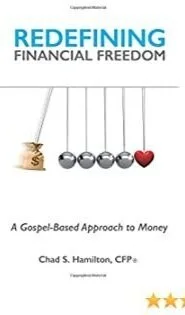
[iv] For an excellent treatment on faith, money, and retirement, see: Chad S. Hamilton, Deep Wealth (Denver: PFI Publishing, 2015).

[v] I recognize this is almost unheard of today. But my thesis in this book is that this rhythm of work and rest is more biblical than the contemporary idea of retirement and it more closely aligns with God’s intent for us to work, in different capacities, over a lifetime.

[vi] Rob West, the CEO of Kingdom Advisors, a Christian ministry to financial professionals, says, “One of the roles of the advisor is to not only help the client to answer the question, ‘How much is enough financially?’ – in terms of our financial finish line so we can maximize giving – but also, ‘What are you going to do in the retirement season?’ Even if we stop our vocation, what are we going to do to be of service to the Lord full-time for God’s glory?” Both Rob West and Ron Blue, the founder of Ron Blue Co. believe both wise financial decisions and a lifetime of work, which changes in different seasons, are biblical.

A Different Kind of Investment

by Christophe Dessaigne

If one were to do any type of internet search for the meaning of investing, the most common definitions found center around the following:

  • expending money with the expectation of achieving a profit or material result by putting it into financial plans, shares, or property or by using it to develop a commercial venture.

Page after page holds a definition that has profit and material result as its main tenet. Yet, as with most things in life, if you dig a little deeper, you’ll find another definition:

  • devoting one’s time, effort, or energy to a particular undertaking with the expectation of a worthwhile result.

For nearly 5 years, I lived and breathed the first definition of investing in my various roles at a private equity firm. I spent hours analyzing financial statements, conducting due diligence, attending community events 2-3 nights per week, and meeting with investors. I was, if you will, fully invested in my work, sometimes to the detriment of my health and, more often than I care to admit, to the detriment of my family. In the summer of 2019, I decided it was time to take an intentional pause. I needed to regroup, re-strategize, restore, and recalibrate. But I fully expected that, after some time of rest and a quieted spirit, God would lead me to my next exciting role in the impact investment world. And He did…though not at all via the path I would have chosen nor to a role I would have ever dreamt of.

Shortly after announcing my resignation, I was met with the news that cancer had reared its ugly head again for my father and my father-in-law, this time with a prognosis that did not bode well for either. My desire for an intentional pause found itself facing off against circumstances that belied the rest I craved. Yet, this pause found itself a victor, for it had bestowed upon me the gift of time to invest in being a stem cell donor for my father in a last valiant attempt to save his life. As my father’s health improved, and as I began seeing the rewards of a life that was not so laser-focused on work, I decided to do some freelance consulting work and created an LLC. Little did I know that one week later, the great COVID shut-down would occur. My three young children (7, 8, and 9 years old at the time) were suddenly home. And so was I. Our school district had no online infrastructure to deal with the sudden closure, and my fledgling week-old consultancy did not yet have enough clients to fill a full work week. So, I took on a new title— “Mr. D.”

I was now officially a homeschool teacher, untrained in the art of primary education, with no relevant degrees to suggest I might be able to carry out this new assignment. I filled my time printing out math worksheets and creating fun school projects for our children, all the while trying to build a business in the remaining pockets of time. I didn’t know it at the time, but this was the beginning of my deep dive into a new way of investing. In my mind, I’m not even sure I viewed it as an investment initially. Rather, it was both a risky stop gap and a circumstantial necessity, not a decision based on careful analysis and due diligence. Nonetheless, the investment seed had been planted and had started to grow.

The first signs of this growth revealed themselves in my relationship with my father who, by the time COVID had shut international travel down, was quickly declining, his body no longer able to accept my stem cells. While I thought my intentional pause was for my own restoration, God revealed it to be a gift of time that I could devote to investing hours in talking, worshipping, and praying with my father before he went to his Father on May 13, 2020.

The second signs of the growth of my investment came by way of my relationship with my children. Whereas I had previously been able to spend an hour or two each evening with my kids, I suddenly found myself spending 5-6 hoursper day with them. My wife and I longed for our children to grow up with strong Biblical literacy and a passion for God, but it often felt challenging to squeeze this into our busy lives. Now, with my new role, I was able to spend every morning in Bible study, worshipping and reading about great heroes of our faith. And while I taught them their math equations, I learned an important equation of my own:

Time + Devotion = Invested Relationship

As I continued to invest time in relationships, a new business investment opportunity presented itself, with a goal to give people back time in their lives. Over the course of a 75-year lifespan, the average American will spend 175-200 days grocery shopping. But he/she will spend less and less time at the dinner table together with his/her family. This new business aims to disrupt the current grocery shopping experience by providing an essential online grocery store through which every order is ready in 10 minutes. Our hope is that this disruption adds hours to individual’s and families’ lives so that they can further invest in their relationships.

There are two Proverbs that stand out to me when I consider the two definitions of investing:

“Whoever works his land will have plenty of bread, but he who follows worthless pursuits lacks sense.” (Proverbs 12:11)

God calls us to work—and to work our land. Therefore, keep investing in solutions to solve some of the world’s greatest problems. Keep investing in worthwhile pursuits in your businesses to “create plenty” and thus impact our world.

Train up a child in the way he should go; and when he is old, he will not depart from it. (Proverbs 22:6)

When a runner trains for a marathon, it is not a one-time effort. It is a devotion of effort and energy on a daily basis. So it is with training our children, and I have seen firsthand the results of regular investment in them. And though Proverbs are not promises, we can enter into this investment with the expectation of the worthwhile result that our children will not leave this path.

We are called to invest in our work and in our relationships. Let us do so with diligence!


Article originally hosted and shared with permission by The Christian Economic Forum, a global network of leaders who join together to collaborate and introduce strategic ideas for the spread of God’s economic principles and the goodness of Jesus Christ. This article was from a collection of White Papers compiled for attendees of the CEF’s Global Event.

A Faith-based Investing Index

 Photo by  Taylor Brandon  on  Unsplash

Photo by Taylor Brandon on Unsplash

by Sound Financial & WealthShield

Are you a 5 Talent guy/gal or will your Ox get stoned? Weird question, huh? 

Consider that God is so serious about our investments that Jesus complimented those that doubled their money. And He is equally as serious about the quality of our assets, that if they hurt people those should be destroyed, i.e. the Ox gets stoned to death. Jesus once told His disciples to be street-wise as snakes and yet innocent as doves. He gives us no wiggle room in between. He expects wisdom, creativity, and growth. We should not hide our money in the name of safety. And He expects innocence, we cannot present Him profits earned from activities that harmed people or the environment. Therefore, we should invest shrewdly, reach for great returns, and do good work in the process.* 

The issue at hand is: can we invest in stocks of good companies that do not harm people and still capture investment results competing with common indexes? Our friends at WealthShield built a stock index demonstrating the possibility of returns to answer this question. 

Given the data, we believe the answer is yes. 

In our research we compared this Biblically Responsible Strategy to the S&P 500 Total Return Index. This is a hypothetical scenario meant to demonstrate the possibilities of investments like these. We wanted to be as accurate as possible in our testing, therefore we included both wealth and asset management fees, attempting to demonstrate as complete of an investment picture as possible. In short these are the results; for every $100 invested in the Index upon its first historical data point (April 7th, 2000), a hypothetical investor would have $328.17 in total return on April 7, 2020, this is after advisory and asset management fees were paid. This is an annualized return of 6.12%. This compares to only $251.77 in the S&P 500 total return over that same timeframe which is an annualized return of 4.73%. We believe this answers the question, can we invest in Biblically responsible companies and earn a greater return? Yes, we believe the data demonstrates that this Index has the potential to compete with and even exceed the S&P 500 Total Return. And as Believers, we believe this helps us in our quest to invest in companies that do good work, while not harming people or the environment which is exactly what God’s word instructs us to do.

This is a link to the full article demonstrating this Index: FAITH-BASED INVESTING INDEX

(1)  The BRI Strategy Total Return Index is hypothetical in the back tested years (April 7, 2000- April 7, 2020). Hypothetical performance results are intended for informational purposes only to show historical performance had the model portfolios been used over the relevant period of time without any limitations or restrictions. There is no guarantee that the hypothetical results can be replicated. Hypothetical performance is presented net of Sound’s anticipated management fee of 1.44% per year from the inception date listed to present and includes the reinvestment of all income. Actual performance results will vary from this example.

(2)  Matthew 25: 19-23

(3)  Exodus 21: 28-29

(4)  Matthew 25: 24-28

(5)  Proverbs 16:8

(6) *The views and opinions of scripture are the views and opinions of the author based on his interpretation of the cited biblical passages.  

(7) https://www.soundfsg.com/uploads/docs/BRI-Index-Paper_v3.pdf 

A Global Technological Solution for Cross Border Giving

 Photo by  Christian Lue  on  Unsplash

Photo by Christian Lue on Unsplash

This is one of the 2020 CEF Whitepapers. For more information on the Christian Economic Forum, please visit their website here.

by Paul Bolte

The Problem to Solve

As an organization, TrustBridge Global Foundation was founded to make global giving easy so that charities everywhere could have all they need to accomplish their mission. In 2016, TrustBridge was registered as a charity in Switzerland and bank accounts were opened. The first problem has already been solved. Is there a market to make Christian cross-border giving easy? The pilot program run in 2017 and 2018 has proven that there is a definite need. 

So now comes the problem we are currently solving: how to systemize the platform so it can be scaled.

Step 1: Software Research

An extensive research of viable platforms was undertaken by TrustBridge member NCF (National Christian Foundation in the US). The following platforms were considered:

  • Oracle

  • SAP

  • Oracle NetSuite

  • Microsoft Dynamics

  • plus 8 other packages

After final research, the best solution was Oracle NetSuite.

TrustBridge was able to utilize this research to also come to the same conclusion that our global platform would be built on Oracle NetSuite.

Our goal was to allow donors and charities access to a web portal where they could make contributions and grants, and see the balance of their funds and all historical activity. Also needed was a monthly statement emailed to all fundholders. Sounds simple enough, but to achieve this we had to work through a series of stages.

Step 2: Configuration

The first time we logged into NetSuite, it was an empty shell. The potential was unlimited but there was nothing in the system that related to our organization. All the basics of our organization need to be configured:

  • Company details and branding

  • Currencies

  • Chart of accounts

  • Features enabled

  • Customer function used for donors

  • Sub customer function used for donor advised funds (DAF)

  • Vendor function used for charities

  • Contacts function used for individuals connected to donor companies, DAF’s and charities

Step 3: Segmentation

We needed a way to do fund accounting in NetSuite. We needed to be able to produce a balance sheet and profit and loss statement for each fund. We needed a way to separate transactions that happened in the same account in the chart of accounts but was for a different fund. At this point we:

  • Utilized custom segments for fund number and primary charity purpose

  • Connected fund number to sub customer/DAF record or vendor/charity record

We wanted a way to track our financials by currency but without having to do fund accounting in each bank account as the ownership of any asset granted to TrustBridge is with TrustBridge. To solve this, we utilized the concept discussed in a CEF whitepaper in 2019 of virtual currencies. We created a virtualized currency that was pegged to each of the real (FIAT) currencies. When FIAT currency is deposited into our bank account, we credit the fund with virtual currency, and debit TrustBridge in virtual currency so that the net effect is a value is held with the fund while the FIAT currency stays with TrustBridge. 

Step 4: Simple Customization

Once the system had the basics configured, we then needed to customize each feature to work for our needs. We made a strategic decision to have just one form for donors and DAF’s and one form for charities. Rather than have multiple entry forms for all the possible different types of clients, we chose to make the forms dynamic and to change based on information entered on the form. We decided to:

  • Add custom fields to existing record types (customer and vendor records)

  • Add custom sections in forms for each record type

  • Move custom fields into the right section

  • Build workflows to have fields hide or appear dependent on values in specific fields

Step 5: Define Accounting

We knew we wanted to have a series of transactions and transactions hit the general ledger, so we had to determine the basic building blocks: 

  • Donor contribution

  • Fund to fund transfer

  • Charity grant

  • Charity assessment

We also wanted to track the balances that TrustBridge held in each of its network members and to do this we utilized the subsidiary feature within NetSuite. This allowed us to record transactions happening in funds in countries outside the parent country of Switzerland. We then had to create further accounting building blocks:

  • Transfer to and from TrustBridge

  • Transfer to and from a network member

  • Subsidiary netting to ensure that only the fund portion of the transaction was recorded in the parent while not affecting the parent balance sheet and P&L.

The final accounting need was foreign exchange conversion. The accounting behind this requires multiple journal entries in two different currencies.

Step 6: Automate Accounting Entries (Custom Scripts)

Once we knew what our accounting entries should be, we then needed to automate the process so with a few simple pieces of data entered, multiple journal entries could be made. This is the stage in the project where the technological knowledge needed to achieve our outcomes was beyond the existing team. The story of finding a team of Christian NetSuite-only software developers in India is one of those miracles of God. Today we have access to a team of 40 people if needed in India who are NetSuite specialists.

We then created custom screens to reproduce all the transactions defined in Step 5.

Step 7: Fund Statements

The final stage of our initial goal was to produce a statement that could be emailed to fund holders to reflect all balances and activity happening in their fund each month. To do this we had to work through a series of building blocks again, so we:

  • Built an on-screen statement by fund, by currency, and by date range

  • Using NetSuite’s advanced PDF maker, produced a branded statement with all the fund activity included

  • Built a workflow to create PDF statements and for them to pass through an approval process by utilizing a folder structure within NetSuite Documents

    • Pending Approval

    • Financed Approved

    • Approved Statements

    • Email Sent Statements

    • Revision Statements

    • Not Sent Statements

  • Built an email sending system that would allow for all approved statements to be sent to relevant fund holders.

At this stage in the project we had achieved one of our original goals of being able to produce an accurate, beautiful looking statement that was emailed to fundholders. 

Step 8: Web Portal

The other part of our goal was to produce a web portal that fund holders could log into and perform transactions and see balances and activity. Rather than waiting until our NetSuite development was fully complete, we ran our portal project in parallel so that both projects would be completed around the same time. The web portal was again a series of building blocks.

  • Determine language to match NetSuite (Java, Java Script)

  • Build user interface

  • Develop back-end database and data structure

  • Build NetSuite APIs (application programming interface)

  • Connect APIs and backend of portal to user interface

We still have more to do to finish building our solution. In 12 months, however, we have taken an issue that needed a solution and built a viable working solution that we believe will ultimately impact the world by making global giving easier. We believe this because a user can now log in to a web portal and access their giving fund and grant to charities all over the world with the click of a mouse. By releasing donors into a world where global giving is easy, our prayer is that generosity will flow and the charities of the world will have all they need to accomplish their missions.