
CBS Sports Special on NFL star Derrick Morgan & KNGDM Group fund

Photo by Dave Adamson on Unsplash
Article originally posted here by KNGDM Group
by KNGDM Group
Visit their website for more information
Christian Economic Forum 2018: Maximizing Our Investment
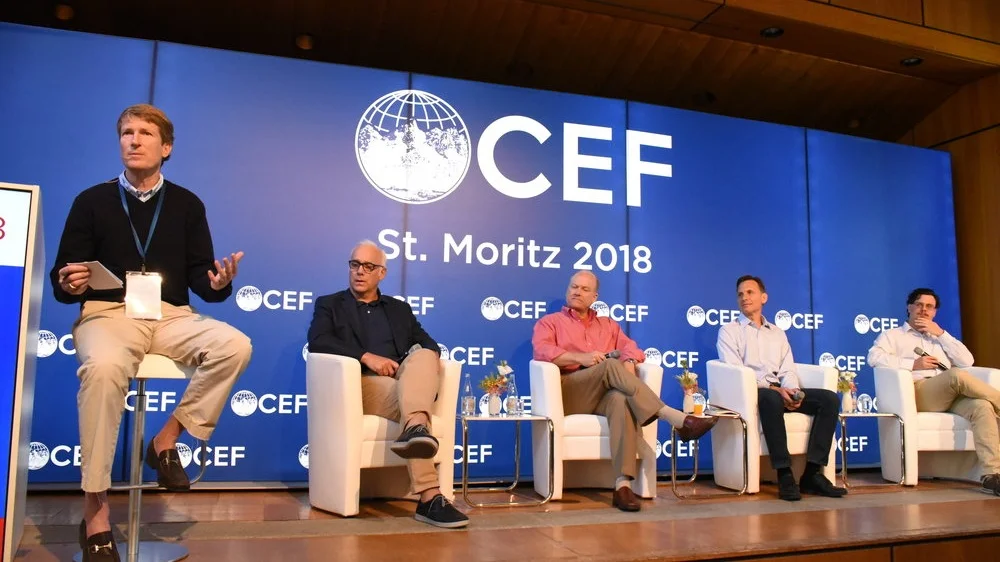
Photo by FDE
Last July 2018 in St. Moritz, Switzerland, Henry moderated a panel at CEF called “Maximizing Our Investments,” one of the 5 topics that year. (You can find his thoughts on the event and whitepaper here.)
In the video clip today, Henry and panelist Tom Blaisdell discussed permanent capital as a unique and valuable approach for the Christ-centered investor. The panel as a whole highlights the importance of kingdom-minded economics as critical to faith-driven investing.
Cheerful vs. Reluctant Philantropy

Photo by Tom Parsons on Unsplash
by Joel Morris
I was moved to write this white paper to help Christians develop a healthy theology of generosity. I wanted to address the ‘why?’ of giving. The motivation to give will determine if we will be happy or reluctant givers. Without addressing this issue, I would argue that we are robbing givers of the joy of giving and robbing the church of gospel resources.
Why should all Christians show profoundly more generosity more than those who haven’t tasted of salvation by grace through Jesus? The ‘why’ is usually always more important than the what. The drive behind the act. Why do people do incredibly generous and selfless acts? Why do people run into burning buildings to save others? If we examine our hearts on various areas of life with our Bibles open, I guarantee we will find it helpful and transformative.
The Biblical Case for Generosity
We can be generous in many ways. I’m only highlighting a few ways here in order to make application to everyday life, but I think that serving, giving money, giving time and talent, hospitality, food, stuff, and good works can all be bunched together under the theme of generosity – generosity overflowing from our life in Christ. It’s a heart response because we are recipients of such amazing grace. We didn’t save ourselves; we simply said yes to the greatest gift. Logic would then dictate that Christian generosity stand out from that of the ‘normal’ worldly generosity. In this sense we Christians should possess an unnatural and godly generosity. A cheerful, outrageous and extravagant generosity. This kind of happy generosity must be driven by love and not pity or even compassion. It isn’t a reluctant generosity. Christians aren’t to give grudgingly. If our motivation is to make ourselves feel better, then the motivation is self-centred even though it’s meant for someone else. Therefore, the generosity itself cannot be cheerful because we’re in essence trying to buy cheerfulness!
Christian generosity is to be a godly generosity, to be like that of our God. Yes, the unregenerate know how to give good gifts to their children, but how much more our heavenly Father who gives good gifts to his children! So, we who are his children share this overflowing generosity with our Father. We do to others what we would have them do to us. In fact, the Apostle Paul urges us to outdo each other in doing good to each other. How can any one of us actually live this out on a daily basis? How can we sustain this through our lives? It seems unobtainable to us.
We know from Mark’s Gospel, chapter 12, when Jesus answered the scribe’s greatest commandment question, He said:
“You shall love the Lord your God with all your heart and with all your soul and with all your mind and with all your strength. The second is this: you shall love your neighbour as yourself.”
These are the greatest commandments in the Bible according to Jesus. Why are they the greatest? I think it’s because our good works flow out of firstly loving God, and because we love God, we can love others as ourselves and do good works for them. This is the overflow of gospel generosity. I know that this is the ministry philosophy used by many successful churches around the world. It is the roadmap for how we can possibly achieve the kind of profound generosity and our good works described here. Firstly, we must love the Lord our God with all that we are, then and only then can we love others as ourselves – not through a transaction, what we can get in return, but because we love God unreservedly. The Psalmist in Psalm 119 verse 32 declares:
“I will run in the way of your commandments when you enlarge my heart!”
We can keep the Lord’s commandments because we have a big heart for him; because we no longer have a selfish, self-centred stony heart. God figuratively gives us a heart of flesh that keeps growing in capacity for loving him and others.
The sad conversation Jesus had with the rich young man in Mark chapter 10 verse 17 shows that he loved his money and possessions more than the God he said he served. If he had loved God as he should, he would love others and the overflow would mean that he would be free to bless others and to give all that he had and follow Jesus. Instead, he went away from Jesus sorrowful. This is why truly generous giving is a healthy practice for Christians. It helps us to keep loving God first before our possessions. It helps keep our love pointing in the right direction to Jesus.
False Motives
God wants us to be happy people because He loves us. The Bible says that the only way we will be happy is through knowing and loving the God who lovingly made us to love him. The problem is that people search for happiness in countless places other than in enjoying their creator God.
God also wants us to be happy in our giving. He wants us to be cheerful givers – people who are happy to give and happy in their giving. I realise that we don’t naturally put the two things together! What many will associate with happiness is gaining more stuff for me and enjoying myself with the stuff. Pretending to be my own god. Getting and keeping the things desired and longed after, like that thing at the top of your Christmas list. We think, “if I could just get that house or car, it’ll make me so happy”. But, as I’m sure we all know deep down inside, it doesn’t ever last!
Giving in and of itself doesn’t make us happier people. If this were the case, generosity would be a transaction motivation – that we give to make ourselves happy. The more we give, the happier we will be? It might sound nonsensical. “I give to feel good. When I give, it’s a good thing to do. Aren’t I a good person?” This is obviously counter to the gospel and salvation of grace. Giving is not what satisfies ultimately. Christians are already satisfied before the act of giving. If giving generously was the thing that satisfied and made us happy, it would be a works-based gospel. We can’t work our way to heaven, so why do we think we can work our way to happiness? This is the kind of trap that people fall into, isn’t it? “Giving to the poor and needy makes me feel good. It’s the right thing to do. It’s what Jesus did and we have to as well.”
Another trap people fall into is giving to get. If we give generously over here, the Universe will somehow reward us. If this is our motivation or comfort to be generous, then our generosity is flawed. We can also be cajoled into giving through guilt. “If you don’t give to this most worthy of causes, then you are a truly terrible and selfish person.” Fundraising campaigns will show us pictures of needy people and pull on our heart strings to try and make us give. Please hear me right: I’m not saying not to give to needy people. The Bible tells us to give to the poor and needy generously and to look after the widows and orphans.
My point is this: Why should Christians be generous? We know that being generous with our possessions or time is a good thing, but why? Our motivations for giving can be guilt-driven or perhaps even us wanting to impress others. “Look how generous and a good person I am!” The feeling can give self-worth. You might write a cheque for a gospel cause to buy the freedom to do whatever you want with what’s left. Have we thought about charity like this? When I give, do I give reluctantly? Can I truly call myself a cheerful giver? This is such a massive battle for us sinners. What our hearts love is what we treasure and want to hold onto. What can change my heart so I give cheerfully and not reluctantly?
Hilarious Giving
We want to be cheerful in life don’t we? The world tells us to be happy we need to prioritise security for family and retirement, then perhaps think about maybe giving a little, somewhat reluctantly. There is a corrosiveness that erodes our hearts in riches held onto and loved. Of course there is, and it takes the place of our saviour Jesus. There is a happiness in giving money away. How do you get cheerful? God is a cheerful giver and never reluctant. This is a wonderful unchanging truth about God.
God loves a cheerful giver because He Himself is a cheerful giver. God loves Himself. God is a Father eternally loving His Son through the fellowship of the Holy Spirit. The Son loving the Father back. It isn’t a self-obsessed love but a giving, outflowing and generous love. Flowing from the Father who sent out His only beloved Son to pour out His all on the cross for us. Generosity is at the core of the Christian life and our experience of God. God doesn’t give sparingly; He gives us abundantly more than we can ask or think. We become cheerful in our giving by giving like God, where His grace has been working in our hearts to abound in generosity to others. This verse below is some challenging teaching from Paul’s second letter to the Corinthian church on how people should give to support gospel work.
Whoever sows sparingly will also reap sparingly, and whoever sows bountifully will also reap bountifully. Each one must give as he has decided in his heart, not reluctantly or under compulsion, for God loves a cheerful giver. And God is able to make all grace abound to you, so that having all sufficiency in all things at all times, you may abound in every good work. – 2 Corinthians 9:6-8
The origin of cheerful comes from the Greek word ‘hilaros’ which is where we get the English word hilarious. Strong’s Exhaustive Concordance defines the usage as joyous, cheerful, not grudging. It describes someone who has already been won over, convinced and ready to act cheerfully. We decide in our hearts what we give, why, and to whom we give. It is God who gives us the grace to be able to have increasingly large good works like giving generously. We need supernatural grace from God, it is not in our natural capacity. Verse 11 says that we will be enriched to be generous in every way, not to hold onto it for our own safety and comfort.
It is God who supplies seed to the sower and provides harvest in the fields for us all to live. Paul says that God will multiply what we happily give and it will be like sowing for the gospel. Verse 10 centres around support for gospel ministry and the reaping will be for his kingdom. Our reward then will be tangible, but not here and now, in heaven stored up for us. The best kind of return we could ever want! We are enriched in grace to be generous in every way. Paul says it isn’t only supplying the needs of the saints, but overflowing in our thanksgiving to God – as He has been overflowing to us. In giving to support gospel work we are joining with the sower to cheerfully sow bountifully so that the harvest will be cheerful and bountiful. So, we see that generosity is a gospel issue. This is important for us to understand in the connection between giving and supporting God’s mission.
As you read this paper, use the opportunity for self-examination and reflection. Writing this short piece has challenged me in questioning “is my heart right? Am I generous enough? Are my motivations to give godly?” Lay your heart open before God. Let Him work in you as He desires you to be conformed to Jesus. Allow the Holy Spirit to change you to become more and more like our generous, life-giving God.
Chess, History, and True Identity: Storming Normandy or Leaving Dunkirk?

by Justin Forman, Executive Director, Faith Driven Investor and Faith Driven Entrepreneur
What I Learned From Senior Year History Class
Chess champ. History nerd.
For more than a few decades I’ve been able to keep these achievements and interests unpublished on my LinkedIn Profile and Instagram Account.
But in the spirit of “leading with a limp”, I thought now was the time to come forward with full transparency. In seventh grade, my teacher, who apparently watched some Hollywood movie and dreamed of discovering a local version of the next Bobby Fischer, bought my entry fee into a school chess tournament.
After beating a dozen upperclassmen, I earned the dubious honor of being handed an obnoxiously tall trophy during a school-wide assembly the following week.
In between playing basketball and soccer, I was also that feisty freshman who quietly found his way from the courts and pitch to sitting in senior history class. It was there, in what too often is a throwaway class taught by the head football coach, I found something that captured my heart.
For an hour a day, I was held captive. I found myself entranced by long-ago and well-worn stories of political intrigue, catastrophic events, and questionable decision-making. For a kid who wasn’t even old enough to drive, much less know about this dusty subject matter, it all seemed so new and relevant.
Fast forward three decades later and I’d argue that senior history class is up for a rebrand.
Too often it seems like history is viewed as a crazy, underappreciated, less successful cousin of a math class.
We’re learning a set of facts—dates, places, and names to remember lest they be repeated. And yet, it’s so much more than that.
As the History Channel boldly claims:,
“These are … the stories of our world … the story of us.”
Storming Normandy or Leaving Dunkirk?
World War II-era stories for some reason strike such a chord with me.
That time in the world seemed like it was defined by a season with little room for complacency. Everyone engaged, choosing sides. Risking and re-risking everything, everyday.
Most of us have seen the epic major motion picture “Saving Private Ryan.” Not just a movie, but I would argue a masterclass bringing the gruesome and harrowing story of taking the hallowed beaches of Normandy to the big screen.
But fewer of us perhaps have appreciated the quiet significance of a more recent film, “Dunkirk.”
The Dunkirk Evacuation involved a last-minute rescue of over 300,000 Allied soldiers who were trapped by the Nazis near the beaches of Dunkirk, France, in the summer of 1940.
Saving hundreds of thousands of soldiers from the beaches in a costly battle trying to escape… the perspective of trying to hold on a little longer to what will certainly be lost… so a few more might make it across.
For me, this movie was a stark reminder of the grounding leadership principle: define the situation and strategy before getting to tactics.
When I think of the conversations around Faith Driven Entrepreneurship and Faith Driven Investing I often wonder what situation we are in?
Are we trying to take the beach of Normandy and advance on an empire of evil to make way for a new world?
Or are we fighting a measured, intentional retreat, holding a perimeter of hope that might allow for others to be saved?
A Tough Forecast
I’ll admit, I’m confused. I wonder if the apostles and the early church felt the same? Did they think they were going to see 2,000 more years before Christ’s return? Or did they think—amidst martyrdom in the colosseum—that Christ’s return is imminent.
Surely the world must have felt pretty dark.
Rampant sexual immorality. An empire on financial collapse. A persecution of the church not in a distant realm of social media, but regular death and destruction right in front of them. With stakes and fire, lions and wolves tearing at brothers and sisters, it must have been heartwrenching.
I don’t know about you, but that history seems to be repeating itself. And today, it seems less like we’re storming an enemy.
It sure feels a lot more like Dunkirk.
We find ourselves stuck and surrounded. Scraping along the bottom of morality, war, bribery, and instability. Courts, Congress, and businesses being weaponized as accomplices. It’s a tough forecast.
Grounded in Identity
Earlier this summer I had the chance to spend a few weeks in Israel. We were capturing the story of an Arab, Palestinian, Israeli Faith Driven Entrepreneur.
Identity is a simple yet complex thing in Nazareth.
I was struck by one of the things we talked about at lunch …
“If you truly understand that your identity starts with being a child of the king. Then you’re grounded in the idea that this land, or any land for that matter, is not your home. And if you’re just passing through, then why fight so much over the land?”
Powerful truths spoken in the same land where Jesus first tread. The word Sojourner has never become more alive than in that moment. If so little can be made of something that has been fought over for so long, then what are we fighting to protect?
Our nationality, land, car, home, title, social media, or bank account. That big merger, client acquisition. Everything is actually worth a whole lot less than we make it when we consider the enormity and eternity of God and his kingdom.
As God is granting favor, as he is opening up doors for Faith Driven Entrepreneurs and Investors around the globe to do incredible things for his glory, let’s stay grounded while still lifting our eyes up to the heavens..
He gives us gifts. God answers our prayers. He provides pools of clear, quenching water in the desert.
But as much as we celebrate. Let’s also be reminded that what we produce are nothing more than makeshift forts. They’re cobbled together by piers and beams to make temporary safe harbors.
And yet, what we are building together with God just might hold out just long enough to bring more to the other side.
Because He Lives

Image from original post
Article originally posted here by Sinapis
What do you say to an entrepreneur who might have to lay off their entire staff?
What do you do when those employees need those jobs to survive?
These are painful questions for us. At Sinapis, our mission is to make disciples and alleviate poverty through the power of entrepreneurship. We believe one of the best ways to help the poor is to support growing businesses that create and sustain jobs. The entrepreneurs we serve lead small and medium-sized businesses (SMEs) in seven emerging market nations (Kenya, Uganda, Rwanda, Ghana, Liberia, Brazil, and Egypt). They are entrepreneurs by choice, not by necessity and work to grow profitable, faith-driven companies that provide for others and build the local economy.
These companies and the jobs they provide are under incredible pressure in this time of uncertainty.
Brian Gacheru is a Sinapis alum and the CEO of Pristine Linen and Laundry. The company provides commercial laundry and linen rental to the hospitality industry in Nairobi, Kenya. In late February – just over 5 weeks ago – his business was booming. Then COVID-19 happened. Fear gripped the world. Cases started to emerge in East Africa. Governments quickly put in place containment measures including closing borders and restricting air travel. Schools were closed, public gatherings including church services were discontinued, and curfews were instituted. Thus far, less than 350 cases have been confirmed across Kenya, Uganda and Rwanda, but it is too early to know how the disease will spread. What is clearer is the destructive economic impact of the crisis. For Pristine Linen, it’s primary customers are high-end hotels. As business and leisure travel turned off like a faucet, 90% of Pristine’s revenue dried up. Brian shared,
“Things have changed so quickly. A month ago, I was planning to hire a consultant to help me plan for the next stage of growth in my company. Today, our business is almost completely on hold.”
COVID-19 is testing the entire global community in ways we haven’t seen since World War II. Uncertainty and fear have become a daily reality everywhere, but this crisis could be particularly devastating in less developed economies with weaker health systems and reduced social safety nets.
According to the World Bank, growth in Sub-Saharan Africa has already been significantly impacted by the coronavirus outbreak and is forecast to fall sharply from 2.4% in 2019 to -2.1 to -5.1% in 2020. This would be the first recession in the region over the past 25 years. From an employment perspective, SMEs are vital. They provide two-thirds of all jobs worldwide and account for the majority of new job creation. Most SMEs are not able to transition to remote working, and few maintain more than two months of cash reserves. Even temporary disruptions in cash flow can wreak havoc on the business and on its employees whose families depend on a regular paycheck for survival.
As governments in these markets fight the spread of the virus, challenges abound. Testing capacity and ICU beds are in short supply. Large and densely populated cities make social distance a luxury that many cannot afford. For the urban poor, life is lived day-to-day, and sheltering in place for weeks at a time is not possible. The crisis is forcing many to travel to their home villages, which could further the spread of the virus. Limited government budgets constrain the amount of fiscal and monetary policy that can be offered to support a recovery.
In the face of the uncertainty and their own fear, the entrepreneurs we serve continue to use their businesses to advance God’s kingdom. One Sinapis alum has invited three employees and their families who lacked savings to live with his family until the crisis passes. Another has chosen to equally divide any ongoing profits that the business generates among the staff to ensure that everyone can pay rent and feed their children. One alum who has successfully managed his business for over 18 years was forced to lay off all eight of his employees. However, he is training them to grow emergency gardens in 20 litre containers and plans to distribute food packages in the weeks ahead. Yet another is distributing food to families in Kibera slum. Businesses dedicated to God play an essential role in promoting human flourishing in good times and in bad.
As we prepare to celebrate Resurrection Sunday, it is an opportunity to remember that we serve a God of hope. Our King died for our sins and conquered the grave. He rose victorious and sits on His throne today. No matter what we face, we can rest in the fact that our loving, compassionate God lives and reigns over everything.
A well-known hymn called “Because He Lives” captures this well. The song was written in 1971 during a time of social upheaval. Its chorus offers a trust-filled picture of confidence in Christ while not ignoring the struggles of life in a broken world.
Because He lives, I can face tomorrow
Because He lives, all fear is gone
Because I know He holds the future
And life is worth the living, just because He lives
The days ahead won’t be easy. Lives will continue to be lost. Many businesses will fail, and jobs will go with them. We do not know how this will affect the most vulnerable, and we are praying and working to preserve life. Entrepreneurs and business leaders placed by God in the marketplace are using what they have to minimize the impact on their employees and their dependents. They will fight to innovate and emerge stronger on the other side. But knowing He lives and holds the future, we can face this together with courage and hope.
FOR MORE INFORMATION ON COVID-19, PLEASE SEE OUR PAGE HIGHLIGHTING SOME OF THE BEST RESOURCES OUT THERE FOR FAITH DRIVEN INVESTORS & ENTREPRENEURS IN THIS SEASON.
Believing in Impact Investing

Photo by Edward Howell on Unsplash
It’s a short distance between social good and spiritual growth. But for whatever reason, this is a relatively ignored fact.
One of the more perplexing realities of impact investing is that the movement has not been led by believers. The GIIN (Global Impact Investing Network) 2020 Report revealed that the majority of impact investors were not faith-driven—a surprising fact given the biblical mandate on believers to love and serve others as an act of worship. But as FDIs step more boldly and directly into the impact investing space, we get to be a part of changing the reality.
We recently sat down with Mike Silvestri to talk about the excitement and potential of social impact bonds and the hope for FDIs to lead in perplexingly secular space of social impact investing. A Harvard Business School alumnus and Boston resident, Silvestri knows the difficulty of being a faith-driven investor in a largely secular city. He explained that he sees his role as “a prophet to my own people,” where he can make the short hop from socially conscious to Spirit-led investing, and take advantage of the opening that social/impact investing provides for gospel conversations.
The truth is, many of the goals of social impact investing are derived from biblical mandates. On a global, macro-level, even the United Nations’ Sustainable Development Goals are rooted in the gospel mission. Ending poverty, caring for the environment, eradicating disease and ending the hunger crisis, all of these are easily tied to commands in Scripture to love God and our neighbors. The biblical mission is the ultimate why for FDIs—and perhaps unknowingly, informs impact investors’ motivation as well.
When asked about living and working in a city that is in many ways, resistant to faith, Silvestri said that he is excited about operating in a space where people care about biblical values, whether they recognize them as such, or not. After all, building up communities and providing and enabling development are biblically aligned goals at the heart of socially responsible or impact investing. The close connection between gospel-aligned and gospel or faith-driven goals gives FDIs like Silvestri an opportunity to lean into faith in very clear ways.
Social impact investing bridges the gap between tithing and secular investing—and is a more sustainable method than solely relying on charity to build communities. Engaging in this practice can be, Silvestri noted, a form of Christian stewardship. This means that practitioners integrate their finances with their faith for the purpose of honoring God with what He (as the owner of it all) has given them to manage.
There is learning on both sides of social impact investing; believers can speak to the foundational motivations behind the practice, and the seasoned investors bring their own knowledge that can enable practical growth for the FDI community. Silvestri explained that a key to social impact investing is understanding root causes of issues that plague society. Where impact investors expend time and energy to understand the physical or systemic factors underlying these issues, FDIs know that even the deepest awareness of these is not the ultimate concern; rather, the core need of every person, in every place, is to know and put their faith in Jesus.
So for FDIs like Mike Silvestri, being able to both pray for and provide tangibly for those in need is an exciting opportunity that has the power to change investors, beneficiaries, and communities. If FDIs lead the charge of social impact investing, they can raise the bar not only in what to invest in, but in how to invest. Bringing knowledge and business acumen into their desire to live missionally, FDIs will set a standard of operational excellence and a deep level of gospel-driven care and compassion throughout the process. If done well, this opens the door for gospel conversations and can transform cities.