Pursuing Justice Through Faith-Based Impact Investing

    Azure    , a Calvert Impact Capital portfolio partner, is an initiative that mobilizes capital and technical expertise to upgrade and expand water services for the poor in rural and peri-urban communities of El Salvador. Azure was launched through a partnership between Catholic Relief Services (CRS) and the Inter-American Development Bank’s Multilateral Investment Fund (IDB/MIF).

Azure , a Calvert Impact Capital portfolio partner, is an initiative that mobilizes capital and technical expertise to upgrade and expand water services for the poor in rural and peri-urban communities of El Salvador. Azure was launched through a partnership between Catholic Relief Services (CRS) and the Inter-American Development Bank’s Multilateral Investment Fund (IDB/MIF).

Article originally posted here by GreenMoney Journal

by Amanda Joseph

Justice, justice, justice shall you pursue.

For many of us who engage in impact investing, this verse from Deuteronomy 16:20 is a familiar one, our clarion call to pursue a path of justice and healing – which includes the responsible stewardship of our personal and communal assets. Many more Americans have become familiar with this verse, as the words hung in the chambers of esteemed Supreme Court Justice Ruth Bader Ginsburg, a touchstone for her as she pursued a life committed to justice.

Today, the call for justice is growing louder, with a global pandemic that has laid bare the deep fissures in our society and a legacy of systemic racism and economic inequality that we as a nation can no longer ignore. And in the midst of this crisis and churning, we are also experiencing a great awakening  to the possibility of transforming society, as we acknowledge our interdependence, and make real a world that is just, equitable, and sustainable.

For all investors, but particularly for communities of faith in these turbulent times, the prospect of impact investing offers an abundance of meaningful opportunities to realign and reaffirm how our values support our investment strategies. From a congregation that decides to make a deposit in a local credit union or Black-owned community development bank, or to a church-based pension fund that invests in climate resilience, there are multitude of options and approaches across asset classes and impact themes for investors to explore.
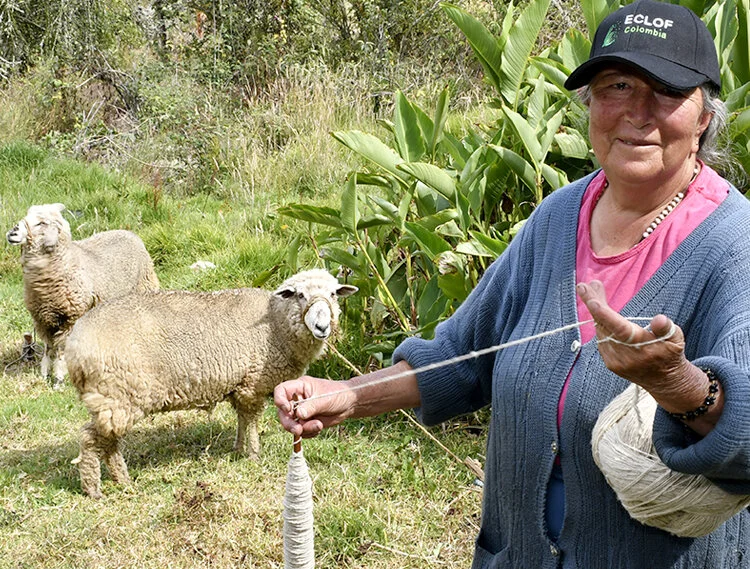
  Maria Ines Galvis, a sheep farmer in Colombia, received a loan from     ECLOF International    , a faith-based organization with a mission to promote social justice and human dignity through microfinance. ECLOF International is a Calvert Impact Capital portfolio partner.

Maria Ines Galvis, a sheep farmer in Colombia, received a loan from ECLOF International , a faith-based organization with a mission to promote social justice and human dignity through microfinance. ECLOF International is a Calvert Impact Capital portfolio partner.

Like many of us working in this dynamic space, my own impact investing journey began well before the term was coined. In the late 90s, I had the good fortune to work alongside visionary leader Jeffrey Dekro to organize the first and only national initiative to encourage American Jewish individual and institutional investing in CDFIs and low-wealth communities. Our “why” was steeped in Jewish values, teachings, and our historical experience as immigrants. To undertake the “how,” we looked to leaders across faiths as our models and partners, as well as to secular funds like Calvert Impact Capital, as we supported congregations, foundations, and communal organizations to make their first impact investments over the course of a decade-plus. We also launched an interfaith disaster response fund, focusing on critical recovery programs post-Hurricanes Katrina, Rita, and Sandy, demonstrating the power of interfaith investor partnerships.

In doing this work, we were part of a long and storied tradition. Faith institutions helped create the impact investing market as we know it today. Over the decades, faith communities have served as true pioneers and risk takers, demonstrating again and again that impact investing is a viable strategy in pursuit of justice, offering opportunity to our most vulnerable and disenfranchised communities, locally and globally.

  Calvert Impact Capital portfolio partner     VisionFund    , the world’s largest Christian microfinance network, provides comprehensive courses on sustainable farming and provides micro-loans for clients such as Indrani to grow their businesses.

Calvert Impact Capital portfolio partner VisionFund , the world’s largest Christian microfinance network, provides comprehensive courses on sustainable farming and provides micro-loans for clients such as Indrani to grow their businesses.

At Calvert Impact Capital, one of the first impact funds in the US, faith investors have been our partners since we began our work 25 years ago. By that time, faith investing in US community development financial institutions (CDFIs) and international microfinance was an established practice, with Catholic orders and women religious at the vanguard. Today, faith investors currently represent more than 15 percent of our $500 million capital base. They include congregations, churches, health care systems, mutual funds, and foundations, and span denominations and affiliations – Catholic, Baptist, Mennonite, Jewish, Unitarian, Methodist, and many others. We also know that many of our 5,400 individual investors are inspired by their traditions; our most recent investor survey revealed that 26 percent of respondents “invest because of my faith.”

As Director of Faith Based Initiatives, I serve as a resource and a connector for faith institutions and their financial professionals — chief investment officers, financial advisors, and asset managers — leveraging Calvert Impact Capital’s impact investment expertise. Since 1995, we have helped over 150 faith-based groups develop their first impact investing programs or enhance programs already underway; overcome barriers with internal finance committees, leadership, external financial advisors, and fund managers; explore creative ways to deploy their assets; and connect with other faith investors doing this work to share successes and lessons learned. We understand well that for many faith investors travelling from the faith-specific “why” to the “how” is a process of discernment, listening, and eventually, action. We also work very closely with financial advisors and professionals who are committed to supporting their faith clients on this journey.
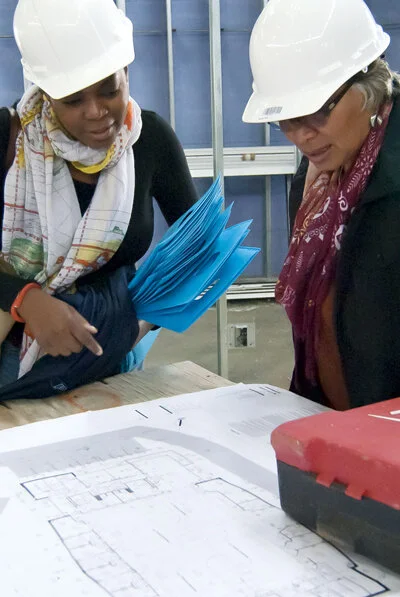
  Two Calvert Impact Capital staff members visit     Israel Manor     Inc. Life Center, a Calvert Impact Capital portfolio partner, in Northeast Washington DC, as construction is underway. Now open, Unity Healthcare provides health services and community spaces, and is co-located with Israel Manor Baptist Church.

Two Calvert Impact Capital staff members visit Israel Manor Inc. Life Center, a Calvert Impact Capital portfolio partner, in Northeast Washington DC, as construction is underway. Now open, Unity Healthcare provides health services and community spaces, and is co-located with Israel Manor Baptist Church.

Faith-based investors are natural leaders of the impact investing movement and we want to ensure they are fully equipped to reach their potential. This is why over the next year, we will offer a series of training opportunities and resources to educate faith investors and build a deeper impact investing practice among them.

In this effort we join a growing network of both secular and faith organizations, including the Global Impact Investing Network (GIIN), Interfaith Center on Corporate Responsibility (ICCR), FaithInvestCatholic Impact Investing Collaborative (CIIC) and many others, who share a commitment to seeing faith institutions engage more fully in the impact investing ecosystem and with whom we actively collaborate. And we also want to hear from you: What challenges are you facing as a faith-based investor or as a financial professional working with faith communities? What resources do you need? How can we help or work together?

Answering the call to be part of the solution to our urgent local and global challenges has never been more urgent. Drawing from the examples set by many faith investors so far, we encourage congregations and institutions of all faiths and religious traditions—and the community of financial professionals who support them—to seek justice and put faith into action through impact investing.

We welcome opportunities for conversation, collaboration, and partnership. Please visit the Calvert Impact Capital website or email me directly – ajoseph@calvertimpactcapital.org

Put Your Talent On The Table: A Challenge to Faith-Driven Investors to help End Human Trafficking

by Rachel Rose Nelson

This is the rallying cry of Tom Phillips, a faith-driven investor, entrepreneur, and long-time advocate in the global anti-trafficking space. Phillips first became aware of human trafficking nearly twenty years ago after purchasing a building on a Memphis city street where prostitutes walked up and down soliciting business. Worry for his business soon turned to concern for the women themselves. His first action step was a call to a couple local ministries, one in law enforcement and the other in rescue and recovery. Both partnered to help women safely exit the sex trafficking industry, part of what Phillips later learned was just one manifestation of the global crisis of human trafficking.

At its root, sex trafficking is an industry – one that takes different forms in different regions around the world. According to the International Labor Office, forced labor in the private economy generates US$150 billion in illegal profits per year. Of that US$ 99 billion comes from commercial sexual exploitation. It is an industry animated by a dark and complex web of factors no single organization can address on its own. But it took Phillips a while to see that business, his own area of expertise, was a vital part of the solution.

“It was when I started to travel internationally about 15 years ago that I saw how truly global this crisis was. Human trafficking began to get press around 2015 through the work of many ministries endeavoring to end it.”

But a frustration began to take shape as Phillips engaged more deeply. “Only one side of this was being addressed: Rescue. Everyone loves the stories of rescue. But this was not a comprehensive solution. And without a job these women were going right back into trafficking. It’s all they know.”

Once Phillips realized the  problem, he began to put the pieces together. “I call it a cradle to grave solution. We need to provide jobs so vulnerable women don’t get trafficked. And what’s better is once they get out, they’re staying out and they come back and help in the anti-trafficking space. They help create even more jobs and the passion is there to make it so no one else has to experience the same things they did. It’s incredible. Talk about an outsized return on investment!”

Tom envisions an innovative model that bypasses the normal grant cycles driven by varying agendas and timelines, to create a truly coordinated, collaborative model that he and his collaborators have titled Justice, Hope & Liberty (JHL).

“I’m tired of reading grant requests that piece together parts but not all of what’s needed. So my aspiration is to bring together a group of funders to provide the resources needed to design and test a multi-year, comprehensive model from regional research, to policy revisions, to law enforcement training, to rescue, aftercare and job creation. Our aim is to test the model in one region and replicate what works in other regions around the world.”

The model Phillips’ envisions is one in which businesspeople play a critical role – not just as funders of the work to be done – but as active participants. “We’ve got Freedom Businesses that provide jobs. But many are started by people who lack business expertise. I’d love to see the Faith-Driven business community rally to invest, mentor, and support these folks. Go out and visit them a couple times a year. It’s time to get your hands dirty!”

Not only does Phillips see an opportunity for the faith-driven investor community to help individual businesses, but to help create strategy for the industry as a whole.

“We need to identify business models capable of being scaled. We need bold strategy to see this industry grow to the place where there’s a job for every survivor. And more. We need job creation to help prevent trafficking in the first place.”

Putting Rocket Fuel in an Ordinary Car – Contextualizing Investment

 Photo by  SpaceX  on  Unsplash

Photo by SpaceX on Unsplash

by Amanda Lawson

I have a friend who bought a nice car that gets 50mpg. But it takes premium gasoline. If he decides to use the cheap stuff, he saves at the pump, but it costs him a couple hundred dollars at the auto shop. His car was made for a specific type of fuel. But it’s not just cars that function best in a specific context. Anyone who counts macros or is on Keto, Whole30, or any other kind of diet will tell you, you have to know your machine and what you put in it in order for it to function properly.

The same is true in the world of investing, especially when it comes to investing in emerging markets and economies. You have to know the context. All too often, well-intentioned businesspeople try to expand into or begin operating in underdeveloped economies both nationally and internationally. But when they do not understand the context into which they venture, and they try to implement solutions that work in another space, they flounder and can even cause more damage.

Humanitarian organizations that have on-the-ground understanding of cultures and contexts often lack the resources to implement sustainable solutions, leading to an abundance of under-funded, prolifically good-hearted NGOs with little recourse to solve the problems they understand.

Businesses attempting to break into CSR and SRI practices have the financial resources and human capital to make a difference, but oftentimes lack sufficient contextual understanding of issues or feasibility of their imagined solutions. The steps to understanding context bridge gaps that exist between these worlds and enables ethical business practices in emerging economies.

Understanding how to wield contextual knowledge is important. As faith-driven investors, a high degree of due diligence is a necessity. Without it, you’re walking blind into a social context you can’t fully understand. And even with it, you run the risk of opening yourself up to the opportunity to operate in a less-than-ethical manner that might increase your returns but stands in direct contrast to biblical principles of faith-driven investing.

For example, there was a skin-care company that wanted to branch into the market in the Egyptian economy. In this particular region, lighter skin was considered to be better; a sign of wealth and propriety, because those who could afford to either not work or work indoors (typically in a position that required a higher education level) would not be exposed to the sun as consistently and therefore maintained a lighter complexion than their compatriots of the same ethnicity who could not afford the same lifestyle. Armed with this knowledge, the company—desiring to maximize profits—began selling a skin cream called “Fair and Lovely,” which was marketed as a skin-lightening product. The cream itself had no effect on skin tone, yet because of context-specific marketing, did well for several years. But there was a clear ethical tension in the marketing campaign.

So how can understanding context be done right? According to Reuben Coulter, it’s a tricky line to walk—where investors come alongside local entrepreneurs as partners rather than saviors. He described the necessity of working with local, indigenous entrepreneurs who had the cultural and contextual knowledge of a community in order to successfully and sustainably implement solutions.

Acknowledging that there is no one-size-fits-all model for economic growth, Coulter explained that you cannot put rocket fuel in an ordinary car; what works in one context may not work for the next. He demonstrated the need for more partnerships with locals who have first-hand awareness of the problems and feasible solutions in a given context, and that by doing so, those local communities are given a powerful voice and opportunity to lead.

Bridging the gaps between local knowledge and business resources—tangible and intangible—leads to optimal and sustainable solutions. As investors begin to understand the contexts of their target recipient, they can more easily come alongside those implementing solutions. A gospel-driven desire to love people well (as commanded in the Great Commandment) is at the heart of this process. It demonstrates a level of understanding that comes from truly knowing and leads to compassion, reflecting the heart of the Lord through how we steward our finances intentionally.

If I attempt to use NASA’s rocket fuel in my little 10-year-old sedan, all I end up with is a catastrophically damaged vehicle. That isn’t to say that there is anything wrong with my car. Rather, it demonstrates my lack of understanding and awareness of the situation. The same logic applies to investing in emerging economies: everyone starts somewhere slightly different, and investors must understand the starting point—with all of its needs and resources—before they can attempt to move the car forward.

Podcast Episode 36 – Capital = Influence with Finny Kuruvilla

subscribe to the podcast here

Finny Kuruvilla, CIO at Eventide Funds, challenges faith-driven investors to consider the impact of their investment decisions.

Hear him remind us that there is an ethical responsibility on the part of the investor to know the impact of their funds. He explores examples of how investors have used their influence to inspire significant world change and encourages modern-day faith-driven investors to do the same.

Podcast Episode 37 – The Land of OZ with Jeff Shafer and Jerome Garciano

subscribe to the podcast here

Welcome to Opportunity Zones 101. Today, we’re talking with Jeff Shafer, Co-Founder and CEO of CommonGood Capital and Jerome Garciano on Opportunity Zones—what they are, why they matter, and how Faith Driven Investors can approach these unique ventures as a way to integrate their faith and investing. 

If you’re familiar with Opportunity Zones, or if this is literally the first time you’ve ever heard that phrase, today’s episode is a chance to get acquainted with something that can provide value to you, the investor, and to local cities across the U.S.

Power and Leverage in a Time of Crisis

 Photo by  Leon Seibert  on  Unsplash

Photo by Leon Seibert on Unsplash

The sands of time on which we stand continue to shift all around us. Poised leaders who are used to being in control are constantly putting out fires. Faithful and qualified employees find themselves hunting for new jobs on LinkedIn. And the relationships between entrepreneurs and investors are as uncertain as ever.

Thankfully, leaders stepped up to lead the charge on how Christian business leaders and investors should respond to the power and leverage they have (or don’t have) during these pressing times. Below, you’ll find an email that Luke Roush & Jake Thomsen sent to Sovereign’s Capital portfolio companies. We believe their words of wisdom can encourage you as well…

———

by Luke Roush & Jake Thomsen

One of the questions we’ve fielded in recent days is what is an appropriate vs. inappropriate use of leverage is during a time of crisis. The specific context where this conversation is that a well known private equity firm recently announced:

“We just called all the landlords of our portfolio companies and said ‘We’ll give you 50% of your rent for the next 90 days, take it or leave it. This is not to be repaid later…it just is what it is.’ – At this point, 100% of our landlords have taken these terms.”

This and other recent examples sparked an internal conversation about what is appropriate and inappropriate during these extraordinary times. As we prayed through this topic and sought counsel from our chaplain, Toby Kurth, here are two concepts we think are appropriate to reference:

1) Crisis Reveals Character – The question is what will this crisis reveal about my character? What does it look like to pursue righteousness in this environment? There are many places to go in Scripture that deal with integrity and keeping our word. Even deeper than that, as followers of Jesus, an all-of-life pursuit of righteousness should guide everything we do in personal and public life.

Proverbs 2:20-22 is instructive:

“So you will walk in the way of the good and keep to the paths of the righteous. For the upright will inhabit the land, and those with integrity will remain in it, but the wicked will be cut off from the land, and the treacherous will be rooted out of it.”

We also draw wisdom from Matthew 5:37:

“But let your ‘Yes’ be ‘Yes,’ and your ‘No,’ ‘No.’ For whatever is more than these is from the evil one.”

2) Righteousness – Tim Keller’s commentary on this topic is particularly helpful – “BE RIGHTEOUS. When Proverbs speaks of the righteous and the wicked, we think it means the ‘moral’ and the ‘immoral.’ That is only part right. The Hebrew words for righteous—tzedeq and mishpat—have a strong social aspect. Bruce Waltke writes: ‘The righteous are willing to disadvantage themselves to advantage the community; the wicked are willing to disadvantage the community to advantage themselves.’” (Keller, God’s Wisdom for Navigating Life)

In light of this wisdom, here would be a few points as each of you lead through your unique set of circumstances:

1) Situational Awareness – In times like these, it’s appropriate to re-examine all obligations in your business. This includes supplier contracts, customer contracts, real estate contracts, employment contracts, etc. Our faith and how that is reflected in and through our work is non-negotiable, but many other things are negotiable in extraordinary times like the ones we’re living through. We encourage you to engage early and often in collaborative (as opposed to combative) discussion with counterparties, recognizing that we have more in the way of a shared destiny than a zero-sum game.

2) Competing Priorities – Leaders are called to balance different priorities to include creditors, investors, staff, vendors, customers, landlords, etc. In a world where fulfillment of all obligations becomes impossible, how do we as leaders sort through these priorities? These are good things to wrestle with, and tradeoffs may be necessary. Our legal system has some definition around creditor prioritization, but if you’re wrestling with this, our Sovereign’s team is happy to be a sounding board – anytime day or night.

3) Our Word as a Bond – If two parties agree to re-negotiate a contract, that’s reasonable and appropriate. What it looks like to “bear down” and get an appropriate deal given a host of different conditions can be widely variable. What isn’t appropriate is to walk away from obligations without conversation, or with our only conversation to be a “take it or leave it…if you leave it, we’ll see you in court” negotiation as we pound the table…see Matthew 5:37 above. 🙂

Our hope is that this counsel is helpful, as you actively pray and discern how The Lord is calling you to act and steward what He has put in your charge.