The Power of Investment Gleaning

 [ Image from original article ]

[ Image from original article ]

Article originally posted here by Impact Foundation

by Impact Foundation

Lawrence Sheffield started Magic City Woodworks to help young men in inner city Birmingham bridge the gap between idleness and meaningful work. They offer a one-year paid apprenticeship training men to be teachable, to gain character, and to gain skills that will serve them in future employment. While product sales are an important and growing component of Magic City Woodwork’s revenue, their mission to employ marginalized, unskilled young men means they will not be as profitable as a traditional furniture company. Donations and low-profit investments help make protect the organization’s ability to focus on job and life training central to its mission.

Would loaning money to this company at less than market-rate interest be a bad investment? Many well-meaning investors are split on questions like this. Some argue that profit maximization is always the goal. More profit, more impact, right? And often that’s the line that secular impact investing keeps feeding us. A major study by the Global Impact Investing Network suggests there’s no trade-off between profit and impact.

Does that need to be our definition of success too? Or does our faith compel us to a different standard? In Scripture we see at least 4 uses of capital commended: direct aid, tithing, market-rate investing, and gleaning. We are familiar with the first three — charity, tithing and traditional investing for return. To be clear, all of these are worthy of our effort and money. I love investing for market-rate financial return but gleaning deserves more attention. If we want to make a dent in global poverty through our investments, we must become more familiar with this ancient practice.

Remember how Ruth gathered at the edges of Boaz’s field? Boaz was following the command from Leviticus to allow for gleaning.

The Theology of Work Project explains:

“Gleaning is a process in which landowners have an obligation to provide poor and marginalized people access to the means of production (in Leviticus, the land) and to work it themselves. Unlike charity, it does not depend on the generosity of landowners. In this sense, it was much more like a tax than a charitable contribution. Also, unlike charity, it was not given to the poor as a transfer payment. Through gleaning, the poor earned their living the same way as the landowners did, by working the fields with their own labors. It was simply a command that everyone had a right to access the means of provision created by God.”

Our economies may not be as ag centric anymore, but gleaning nevertheless is instructive for all of us because gleaning has to do with “provision” rather than harvesting crops.

In fact, there are plenty of you in this room practicing modern-day gleaning within your own businesses. One of you has a business inside a prison, providing jobs and dignity and reducing recidivism. One of you operates a cattle feed lot, slaughterhouse, and distribution business in Ethiopia to provide jobs and access to the global economy for local families.

I’ve observed that it’s sometimes easier to practice gleaning within our own companies than it is to understand how to do it as investors. For over a decade I’ve worked with generous families of wealth helping them steward their philanthropic capital for maximum positive effect. What about these families, for whom the “field” that they’ve been given to work is managing philanthropic capital? How are we to think about the concept of “gleaning”?

I think many are afraid to consider “investment gleaning” because it seems that accepting less than full market rate return is the purview of the unsophisticated. If I lend money at 8% when everyone else is getting 15%, doesn’t that make me the fool in the room? Others fear that it provides an excuse for lack of excellence from the entrepreneur.

Those things certainly could be causes of poor returns, but that’s not what gleaning entails. True gleaning involves excellence, access, work and sacrifice.

In ancient times, a farmer leaving some of his fields unharvested meant he had to be even more efficient, more effective with the portions he was working. In order to make enough to feed their family and follow the command to leave room for the poor to glean at the edges, God’s people had to be the very best farmers around. Excellence is always a hallmark of gleaning.

The next two items go together. Gleaning means access for the poor and marginalized. Access isn’t the same as a handout. Access to the means of production means wages for work. I would never advocate for eliminating charity, but I do fear that if we aren’t creating pathways to employment through our philanthropic capital then we may be doing more harm than good. If you’ve been to Haiti, you’ve seen this first-hand. There are instances where aid given to the poor and marginalized can create access – scholarships for education or career training are a great example. So is aid in the context of a disaster or mass displacement. But at some point we need to begin asking when “access” looks more like a job than a gift.

Sacrifice is the least glamorous hallmark of gleaning. It’s also the scariest. What looks like sacrifice to others often feels like simple obedience to the person making the sacrifice. Maybe its time to rethink our risk/return paradigm. If God is omnipotent, His return horizon is eternal, and we’re just His money-managers, then really the only meaningful risk we encounter is disobedience. When we get to the pearly gates, I don’t think He’s going to ask us whether we got a 15% IRR or beat our benchmarks. I am confident, though, that the ways in which we provide for His children who are poor and marginalized will be remembered.


POSTSCRIPT

I had the privilege of presenting my white paper at the recent Christian Economic Forum. I’m sharing my written comments in the hopes that it may spark a conversation in our community. After CEF, Christianity Today ran a story about how gleaning can transform modern CSR efforts.

Bruce Baker and Tom Parks share many stories of businesses carrying out the biblical practice of gleaning in their article in Christianity Today. It’s a worthy read and it caused me to add an attribute of gleaning that I’d left out of my talk at CEF. They point out that there’s another significant attribute of gleaning that I left out: transformation through relationship. A job, by itself, rarely brings about the kind of story-book, radical life change that we hope when we set out. A decent job plus healthy relationships along with life-skills coaching and the Gospel – in word and deed – often can.

The Purpose of Capital

 Photo by  Srinivas Reddy  on  Unsplash

Photo by Srinivas Reddy on Unsplash

CEF White Paper: Christian Approaches to Investing

by Reuben Coulter, Transformational Business Network (TBN)

Divided we fall 

Until the end of last year my family and I lived in Nairobi, Kenya. It’s a cosmopolitan, dynamic and entrepreneurial city, but 40% of its population live in Africa’s largest slum. Over the past decade, Kenya has experienced an average GDP growth rate of 5.7% but it’s estimated that only 40,000 people (0.1% of the population) have benefited. 

This vast inequality is strikingly visible in the emerging economies of Africa and Asia but has also begun to become ingrained in Europe and America. The backlash against inequality has given birth to popular anger against the ‘system’ – which has been manifested in the Occupy Wall Street protests in 2011, the current divisiveness of US politics, the protests on the streets of France and the political chaos caused by Brexit.

Amid the opulence of Davos this January the conversations centred inequality, environmental degradation and populism. But the political and financial elite, despite their concern, appeared unable or unwilling to address the underlying causes of this malaise. As one of my colleagues at the World Economic Forum stated: ‘One of the pillars of trust in a society is the feeling that life is getting better, not worse. But in too many economies, there is a sense that opportunities for the next generation are dwindling rather than expanding.’ 

Capitalism as Freedom

In the 1970’s Milton Friedman wrote a seminal piece entitled, Capitalism and Freedom, in which he describes the connection between democracy and capitalism. He focused on the potential of capital to be a vehicle for freedom. This insight is powerful and yet limited, as he viewed this purely in individualist, economic terms. His statement that ’there is one and only one social responsibility of business – to use its resources and engage in activities designed to increase its profits so long as it stays within the rules of the game’ has become a central tenet of shareholder capitalism.

The Biblical concept of freedom is far broader and deeper than this view. God reveals the deep brokenness of our world and sets out a new vision of human flourishing – “Behold, I am making all things new” (Revelation 21:6). The prophet Isaiah expresses God’s anger at the injustice in Israel: ‘Justice is far from us, and righteousness does not reach us. We look for light, but all is darkness; for brightness, but we walk in deep shadows’ (Isaiah 59:9). He uses the Hebrew word ‘tsedeq‘, to combine justice (a system of equality and fairness) and righteousness (personal morality). In the Old Testament, God revealed his desire for social, economic and spiritual justice to the nation of Israel through the Mosaic Law. In every generation, the principles of Jubilee ensured that the poor and marginalised had an opportunity to be freed from their debt and have their land restored. In the New Testament, Jesus reaffirmed the importance of the call to justice and his purpose to fulfill the law (Matthew 5:17). He saved his harshest words for the Pharisees who claimed great knowledge of God but neglected, ‘the more important matters of the law – justice, mercy and faithfulness’ (Matthew 23:23). 

Renewing all things

Our current system of shareholder, or ‘profit at all costs’, capitalism is driving inequality, environmental degradation and the breakdown of societal cohesion. People desire communities with strong relational bonds, jobs which give dignity and certainty about the future. Instead, they live in polluted and fragmented neighbourhoods with zero-hour contracts and no ability to save. We have become separated from capital and are now at its service, as opposed to it serving us. It is unlikely that we will be able to solve the world’s problems with the same thinking that has created them. 

In Judaism, this concept of transformation is known as ‘tikkun olam’. Interestingly, it is linked to the overcoming of idolatry. As Christians we need to free ourselves from our subservience to capitalism (or any other -ism for that matter) and rethink the purpose of capital as an instrument for freedom and justice. Our desire as individuals is for freedom but when we elevate our sovereignty above all others it becomes selfishness and greed. When we seek national or ethnic sovereignty at all costs it becomes racism or imperialism. Only when we are grounded in Christ’s sovereignty do we experience true freedom as individuals, societies and for all creation. As the old hymn goes ‘Make me a captive Lord and then I shall be free’. Our responsibility as investors and business people is not only to our shareholders, but to all stakeholders and ultimately the Creator of all things.

Sovereign Capitalism and Mutual Return

Impact investing is now de rigeur and many say, ‘If I can ‘do well and do good’ then why not?’. Often as Christian’s, we simply add a faith component to a traditional investment approach.  But we believe that impact investing is not simply about aligning one’s capital with one’s values but rather is a recognition that an exclusively economic understanding of capital and value falls short of both what is and what is needed. We need to think in terms of Sovereign Capitalism and Mutual Return, which is the establishment of a just system which recognises the rights and responsibilities of all stakeholders and the combined social, environmental, spiritual and financial return of an investment. 

We also need to be honest and recognise that there will be trade-offs between these returns to deliver overall Mutual Return. For example, in Africa we often observe impact fund managers who are under pressure to ‘commercial’ returns which leads them to push businesses into undesirable exponential growth and/or cut costs. This may result in them paying employees poorly or cutting corners on safety or environment policies. Over time investors and businesses completely divert from their social mission. 

When understood at this level of purpose and meaning, those who continually question whether or how one may achieve “competitive” or “market rate” returns on impact capital are skating on the surface as opposed to delving into the greater possibilities of how we might optimize the total performance of capital in the fullest sense of the term. Our concept of ‘time horizon’ begins to embrace an eternal perspective. Rather than exclusively focus on individual investments we begin to engage in the transformation of the systems of injustice. We explore if our investments additive or extractive and if the risks and rewards are fairly shared between all stakeholders (investors, entrepreneurs, employees and communities). The answers to these questions are not straightforward but as Christians we must wrestle with them.

Cattle on a thousand hills

The World Bank estimates that at least 600 million jobs need to be created in the next 10 or so years globally. At Transformational Business Network, we believe that raising ‘oxen’ is the best way to achieve inclusive prosperity and economic justice. Oxen are small and medium enterprises, which have historically been the engine of economic growth in high-income countries. Their value and impact are often underestimated. They account for 90% of all businesses worldwide and create 4 out of 5 jobs worldwide. In emerging countries, Oxen often offer products and services that address social issues such as financial services for the poorest, healthcare solutions or off-grid energy. They have steady financial growth, long-term perspective and are deeply rooted in their community. 

‘Unicorns’ and ‘gazelles’, high growth, disruptive businesses, have captured the imagination and pockets of investors. But the ‘winner-takes-all’ approach enables them to monopolise their position which inflates costs, sucks up talent and drives inequality. In 2017 a Vilcap report showed that >90% of impact investment in East Africa went to these types of business and all of them were led by ex-pat founders. Meanwhile, indigenous Oxen businesses are starved of capital as the returns they deliver are not commensurate with their perceived risk. As a result, finance becomes unaffordable and enterprises that can secure high-cost finance often experience significant financial pressure which can prevent further growth and reduce their social impact. New investment models are needed to enable them to succeed. 

Catalytic capital will be critical to bring about this change. It is patient, risk-tolerant, and concessional in ways that differ from conventional investment. It is an essential tool to bridge capital gaps and achieve both breadth and depth of impact, while complementing conventional investing. Currently only 5% of total impact investments is concessional while the rest is seeking ‘market rate’ returns. Recently a $200m vehicle, the Catalytic Capital Consortium, was launched by MacArthur, Rockefeller and Omidyar Foundations to address this gap. 

During the first Industrial Revolution in Europe and America, in response to the societal injustice Christian leaders responded with redemptive imagination to create values-based businesses, mutual societies and cooperative banks. Business leaders in Africa and Asia have the potential to create social, environmental and spiritual transformation of their societies. But without our partnership it is likely that they will fail and in turn, their nations will fail. 

The Catalyst Fund

At Transformational Business Network, we seek to bring about systemic change and act as a platform for investors (philanthropists, angels and funds) and entrepreneurs (via accelerators and capacity builders) to support purpose-driven Oxen in Africa and Asia. Last year I wrote about our work with local partners to strengthen the entrepreneurial ecosystem, to build the capacity of these enterprises and to embed values in business. 

In our next phase we are establishing a Catalyst Fund to unlock affordable, expansion capital for Oxen enterprises in East and Southern Africa. This is a low-cost debt fund which will provide “mutual impact” capital (not “risk-adjusted” funding) at sustainable levels. The Catalyst Fund is designed to co-invest with existing funds to unlock previously unavailable private capital.

If successful, this fund will enable hundreds of Oxen to grow, create thousands of jobs and  provide proof of concept that by funding these enterprises societies can flourish. It will also demonstrate that this is a stable and viable market for investors to deploy capital at scale with “appropriate” returns.


The good news

If global faith communities allocated only 10% of their total assets towards impact it would grow the current pool of impact investing from current USD $114 billion to over US$ 400 billion. It is encouraging to begin to see the green shoots of these new approaches beginning to appear. The binary mentality of investment (maximise financial return but ignores impact) versus philanthropy (maximise impact but expects no financial return) is breaking down. Academics like Dr Michael Schluter at the Relationships Foundation in Cambridge, UK, Dr Bruno Roche at Mars Corporation and Jed Emerson have provided some of the intellectual rigor and theological underpinning in their work on relationality and mutuality. Pioneering philanthropic foundations like Access Ventures and Sagamore Institute have begun to use their assets catalytically to create restoration in marginalised communities. Last year at the Christian Economic Forum, the World Evangelical Alliance developed guidelines on investing for Christians worldwide and this year a forum on Faith-Driven Investing will take place. 

None of us can achieve this alone. As Christians we need to act prophetically rather than reactively. As investors, philanthropists, governments and corporates we need to act cooperatively rather than competitively if we are to bring about real transformation. Hopefully as the Christian Economic Forum community, we can continue to work generously together for the common good and the glory of God. 


About Transformational Business Network

Transformational Business Network (TBN) is a global movement of values-based investors and entrepreneurs committed to creating jobs and inclusive prosperity in emerging and frontier markets. Over the past 15 years we have directly mobilised over £65 million of investment to enterprises in East Africa and South-East Asia. We have three areas of focus:

  1. Ventures – Developing investable pipeline through supporting accelerators and other intermediaries

  2. Capital – Mobilising catalytic capital through blended finance 

  3. Network – Creating values-based transformation through building relationships


The Redemptive Story of Hans – From A Time of Pandemics, War with Russia and Hyper Inflation

This article will deal with a global pandemic, war with Russia, and a following situation of hyperinflation. You might think that I am either a prophet anno 2022 or a conspiracy theorist, but I´m neither one. I am talking about historic events that went down on the European continent and in my country of Norway more than 200 years ago.

So there you have it; I am a Norwegian. Let´s quickly jump back a millennium ago when we were vikings. We conquered Northern Europe and beyond with superior ships and an unhealthy dose of savagery. We discovered North America around the year 1000 AD and even ruled Russia.

Then our viking kings were brought to their knees by God as they accepted Christ. They gave up Odin and Thor and started worshipping the God of the Bible. We turned our pilaging ways towards building stronger communities. Necklaces with Mjølner (Thor´s hammer) were transformed into crosses. The art and craftsmanship from the magnificent viking longships and their carvings were repurposed and redeemed to build thousands of beautiful stave churches. The rune stones previously seen as holding magic powers were now being used to share the gospel. Some vikings even joined the crusades to Jerusalem.

  Detail from a runestone carved by vikings between 1040 and 1050 – depicting the nativity scene of the Bible.

Detail from a runestone carved by vikings between 1040 and 1050 – depicting the nativity scene of the Bible.

Then, in the 14th century, more than half our population was killed by the Black Death that came to Europe by way of Crimea. This plague left Norway in ruins, and subsequently, we entered a Scandinavian union that increasingly led Norway to become a nation under the rule of Denmark for several centuries. With the reformation, the church became the extended arm of the king of Denmark to rule cities and villages all over Norway, and the religious practices of the church became more and more secularized. Alcoholism was a huge societal problem, and very few people attended church services on a regular basis.

Let´s move forward to 1796. We were just past the French revolution (1789), and Napoleon was on the brink of pulling Europe, including Russia, into a war, while millions were dying from smallpox and famine. The continent was on the onset of hyperinflation, and on to the scene came a young peasant illegally preaching the word of God while not being an ordained priest. His name was Hans Nielsen Hauge, and by God´s grace, he brought God´s freedoms to the nation of Norway. His methods were preaching, writing, and the incorporation of businesses.

Even today, more than 200 years later, you can measure different spiritual demographics in Norway based on which regions he visited and not. And in every supermarket in Norway, you will still find products that have a direct lineage back to his entrepreneurial efforts.

It All Started Out in the Field in 1796

One spring day, at the age of 25, young Hans worked the fields of his father while singing the hymn “Jesus, I long for Thy blessed communion.” When he came to the second verse, he sang:

“O take Thou captive each passion and win me,

Lead Thou and guide me my whole journey through!

All that I am and possess I surrender,

If Thou alone in my spirit mayst dwell.”

This led to a complete surrender that captured the heart of young Hans, and this is how he later came to describe this experience:

“Then my mind became elevated to God in such a way that I lost my own sense of presence as well as what was going on with my soul, because I was outside of myself. I felt as if the world was nothing to regard, and I regretted not having served our great, good and almighty God more. My soul felt something supernatural, divine and blissful. It was a glory that no tongue can express. Nobody can take this away from me, because I know that from this moment on, my spirit was filled with everything that was good. Especially, I could sense a heartfelt and fiery love for God and my neighbor. My mind was renewed, I mourned all my sins and felt a powerful urge that other people would share in this grace with me. A strange desire grew in me to read the Bible and the teachings of Jesus. I could sense a new light of understanding it, and to bring together all the teachings of God´s men into this one goal: Christ has come as our saviour, and we should by his Spirit become born again, repent, and be sanctified more and more towards the character of God to serve the triune God alone and to embetter and prepare our eternal souls towards eternal glory. Then it appeared to me as if the world itself was lowered down into evil, and I was stricken with grief. I asked God to awaiten the punishment so that some could be redeemed. I really wanted to serve God, so I asked Him to tell me what to do. Then it resounded within me: You shall profess my name to the people, urge them to repent and to seek me while I am available, call me as long as I am near, touching their hearts, so that they can turn from darkness to light.”

The conservative, Lutheran bishop, Andreas Aarflot, in his doctoral dissertation in 1970, described Hauge´s experience with God out in the field as a baptism in the Holy Spirit—putting Hauge´s experience alongside the pentecostals that would emerge on the world scene one hundred years later.

Although young Hans just had a few weeks of elementary school education, he was an avid reader. He had most of his theological influence directly from the Bible and from the writings of Martin Luther, and he was also greatly influenced by the piety movement out of Halle in Germany, by way of Pontoppidan and others in Denmark. Still, his self consciousness and strong convictions as to being called so specifically by God were a clear distinction between himself and his contemporaries.

What Was the Situation in Norway at the Time of Hauge?

The end of the 18th century was a hard time for Europe—gigantic volcanic eruptions, enormous climate changes, harvests gone wrong, famine, and disease. All these external factors were a trigger for the French revolution and the Napoleonic wars that took place during these years. Politically, the independence of the United States with its first president, George Washington, in the same year as the onset of the French revolution sent strong signals of change, as a significant percentage of Norway´s population emigrated to the US.

Hauge was a child of his time—born at the dawn of the age of enlightenment and at the very onset of the industrial revolution. And the enlightenment was a great equalizer where positional privileged power was challenged by merit based power.

What Did Hauge Do?

We can only summarize a few of Hauge´s many accomplishments in this article. His ministry was very holistic with a wide area of topics and angles.

He Wrote

Let´s start with his writings. He wrote and published 33 books or pamphlets, and he wrote at least 500 letters that were distributed among his followers. The books were printed in approximately 250,000 copies in his lifetime—in a population slightly below 900,000. Many people were taught to read through Hauge´s books. Even though he had no academic training, his writings were maybe his most effective tool, and he also employed people to travel the country, ensuring a wide distribution.

He Travelled

Hauge travelled by foot and by boat through most of the long country of Norway and even to parts of Denmark. On his own two feet, he walked more than 10,000 miles during his most active period from 1796 to 1804. And everywhere he went, he started businesses or mentored other entrepeneurs during the day and preached the gospel at night. Through his travels, he left behind small communities all over the country that continued to gather and share the gospel—forming a movement of prayer houses that lives to this day.

He Preached the Word of God

Preaching the Word of God and calling people to repentance and to accepting Christ as their Lord and Savior was always the foremost calling upon Hauge´s life. He preached, and he trained others to preach. In his active years from 1796 to 1804, he experienced a lot of persecution from the clergy, but in his later years from 1814 till his death in 1824, something had shifted, and he received a lot of clergy visitors to his home to offer them mentorship and counsel—including bishops and professors of theology. It is typically estimated that around 25% of the population of Norway became born again Christians due to the direct efforts of Hans Nielsen Hauge.

He Started Businesses

Hauge started around 30 businesses himself in as diverse industries as farming, fisheries, real estate, grain mills, sawmills, import/export, wholesale, papermills, printing houses, bookbinders, book publishers, newspapers, book sales, brick factories, weaveries, mining for metals, lodging, salt factories, potash factories, tanneries, shipyards, shipping, and banking. In addition to his own businesses, he helped birth around 120 others through encouragements, investments, or mentoring.

He Was Imprisoned

At the time, if you were not an ordained priest, it was illegal to preach the Word of God. Because of this, Hauge was imprisoned 11 times. Most of them were for a few days or up to a month, but in 1804, he was imprisoned for 10 years with no sentence. This broke his health, and his ministry could no longer include travelling after he got out in 1814.

He Broke Chains and Set People Free

Despite being imprisoned himself, and loosing a lot of his personal freedoms, his ministry can be summarized as someone who lived out Isaiah 58 regarding the merits of true fasting:

“to loose the chains of injustice

and untie the cords of the yoke,

to set the oppressed free

and break every yoke”

For the Norwegian people at the time, except for a few privileged working on behalf of the king in Denmark, there were many liberties that were not offered to people:

  • You could not move freely around the country. Hauge defied that.

  • A lot of people were illiterate. Hauge helped people learn to read, which was important for them to become more aware and to address their own situation.

  • You could not choose your own profession. It was mostly decided for you at birth. Hauge helped thousands to break away and choose their own destiny.

  • You were not free to share the gospel. Hauge defied that as well.

  • You were not free to trade. Hauge gained rights to trade and helped his movement through that privilege.

  • Women did not have even close to equal rights. Hauge instated women as preachers and as leaders in his movement one hundred years before they received the right to vote in Norway.

  • The country was not free to choose its own leaders. The Haugians took an active role in establishing the constitution and the independence of the country of Norway.

  • Haugian politicians always spoke against privileges and monopolies and always favored free enterprise and free trade with opportunities for everyone.

The Haugians – the Legacy of Hauge

During the course of the 19th century, the followers of Hauge, sometimes called the Haugians, became quite influential in establishing the Norwegian constitution and in shaping Norwegian parliament, as well as in starting businesses. The Haugian entrepreneurs weren´t aware of modern terms like ESG, stakeholder perspectives, impact investments, multiple bottom lines, etc., but they were building off of Hauge´s perspective articulated like this in one of his many books:

“In our businesses we try to shine our light upon the world so that they may see that we are God´s children in all necessary deeds.”

From this statement, it became clear that putting bread on the table and providing jobs were necessary deeds for a Christian. Provision and human flourishing were integral parts of the Haugians´ calling, and working hard became an important foundational value. Being saved was something that embraced all of life. And since Christ died for everyone, this also became a great equalizer for Hauge. Everyone was valuable, and everyone ought to contribute to the best of their abilities. The Haugians employed people with physical and mental disabilities and gave everyone living wages. Hundreds upon hundreds of businesses were started. Several still exist today.

In modern times, more and more new companies are reviving the Haugian tradition. Some of them are affiliated with the Christian Economic Forum, and some have even incorporated these foundational Haugian corporate values into their bylaws (source: https://haugeparagrafen.no):

  • Surrendering to Christ

  • Loving our neighbor

  • Building society

Many have tried to learn from and systematize the ethics and practices of Hans Nielsen Hauge over the years. But it is this author´s belief that you can not achieve what Hauge did by copying his deeds or his patterns of behavior. You need to consider what caused the transformation in Hauge´s life, and in my opinion, the key is the full commitment and surrender to Christ in all areas of life that gave Hauge great success—albeit through many hardships and personal losses. It was the work of the Spirit in and through Hauge that made him serve and persevere in such an astonishing way. And the Spirit was allowed to work in and through Hauge the moment he put his self interest on the altar—that day in the field in 1796. 

Yet again, the European continent experiences pandemics, war with Russia, and strong inflation. Again, our societal fabrics are shaken at their core, churches are being closed down, religious liberties are being challenged, and in the western world, fewer people are becoming born again Christians. What seemed solid a couple of decades ago, or even just a couple of years ago, has easily become fragile. But as we can read in Ecclesiastes, nothing is new under the sun. History will repeat itself because mankind will never fundamentally change. But we can take comfort in the fact that God never changes, and what He has done in the past, He can do again—if we are only willing to submit our lives to His perfect will. If God could do it once through Hans Nielsen Hauge, He can do it again through you and me. Will you surrender it all?

Article originally hosted and shared with permission by The Christian Economic Forum, a global network of leaders who join together to collaborate and introduce strategic ideas for the spread of God’s economic principles and the goodness of Jesus Christ. This article was from a collection of White Papers compiled for attendees of the CEF’s Global Event.

The Rise of the Chaplains

 SHUTTERSTOCK / THE ATLANTIC

SHUTTERSTOCK / THE ATLANTIC

Surveys often tell us that the current generation and the ones that follow it are less religious but perhaps more ’spiritual’. At face value, it comes off quite discouraging. Does that mean that our faith is no longer relevant? Quite the contrary. In workplaces especially, there is a resurgence of Chaplains and counselors as employees are seeking a more holistic solution — and even asking for them as part of their benefits packages. What an exciting time for entrepreneurs and other business leaders to meet them in their needs with a Christ-centered solution!”

Article originally posted here by The Atlantic

by Wendy Cadge, Sociology professor at Brandeis University

Their grandparents may have gone to church. But today, many Americans turn elsewhere to meet their spiritual needs.

The pandemic has thrown into sharp relief a shift in American religious life. Growing numbers of Americans, especially under the age of 30, are not religiously affiliated or involved with spiritual or religious organizations. They do not have local religious leaders to call in a crisis like their grandparents did. Instead, in moments of great need, many are turning to chaplains and spiritual-care providers.

Religious congregations have been slowly yet steadily declining over the past 20 years as the number of people engaging with chaplains and spiritual-care providers is on the rise. In a national survey conducted last year, 21 percent of Americans reported having contact with a chaplain in the previous two years, mostly through health-care organizations. Close to a quarter of theological schools have started degree programs for chaplains in the past two decades. And the number of people completing clinical training for chaplaincy positions is increasing.

In interviews I conducted with 65 chaplains across greater Boston, I discovered that the work they do around death is what most unifies them across sectors and distinguishes them from social workers and others they work alongside. It is not surprising, therefore, to read about chaplains running toward death rather than away from it in the midst of the COVID-19 crisis.

Click here to read the full article!

FOR MORE INFORMATION ON COVID-19, PLEASE SEE OUR PAGE HIGHLIGHTING SOME OF THE BEST RESOURCES OUT THERE FOR FAITH DRIVEN INVESTORS & ENTREPRENEURS IN THIS SEASON.

The “Robinhood Bro” Culture

Article originally posted here by Inspire

by Shane Enete

Let the Good Times Roll

When I first began investing in the stock market, the year was 1995, and it was one big money-making party.   

slickcharts.com/sp500/returns

During this time, when I purchased a new stock, my two biggest questions were “how much will this go up?” and “should I sell half of my position now (locking in my gains), or let it ride, baby?” 

Fast forward to today. 

  slickcharts.com/sp500/returns

Over the last two years, a similar surge of good stock market returns have left many people exuberant about their stock market portfolios.

So exuberant that one particular billionaire investor, Chris Sacca, tweeted this: 

“To everyone who got into trading stocks this year, I have a little hard truth for you: You’re not actually that good at it….You just caught a wild bull market. Take some money off the table.”

This tweet received a backlash from angry new investors, leading to this follow-up tweet by Chris:

To the angry Robinhood bros who got into trading stocks this year: I was wrong. You’re amazing. This has nothing to do with the market. It’s all you and your mad skillz. Don’t take profits off the table. Double down, on margin. Borrow everything you can. Stocks never go down!”

Robinhood Bros

The term “Robinhood bros” refers to the aggressive trading culture within the popular free trading app, Robinhood. 

Robinhood allows investors to buy and sell stocks with $0 commission. A recent New York Times article found that Robinhood investors traded 40 times more shares than Charles Schwab customers, sold 88 times more risky options contracts as Schwab customers, and over half of Robinhood customers were new to the stock market (average age of 31). 

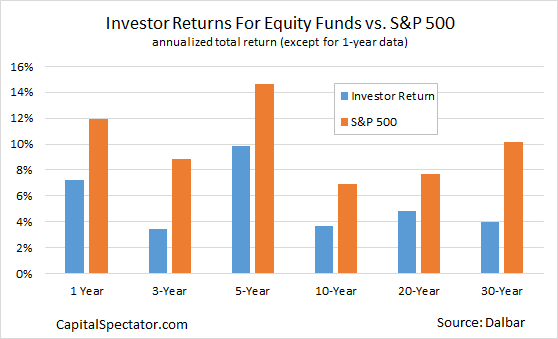
This high trading culture is likely bad for portfolio returns. Numerous studies have shown that over-trading causes individual investors to woefully underperform the stock market. Dalbar institute found that the average investor’s stock market investment return was 5.5% while the historical average annual return of the stock market (S&P 500 since 1929) was 9.9%.

The biggest contributor to that performance differential being investors’ failed effort to “time” the market, oftentimes being sucked into the market’s euphoria near market tops and “buying high” while subsequently succumbing to despondency near market lows and “selling low”.

Inferior returns for the average investor

A Slippery Slope

While the $0 commission fuels a temptation to over-trade, there is another, far more dangerous, temptation that is awakened: gambling addiction.  

It was late into the night and Alex Kearns, 20 years old, collapsed into his bed and fell asleep. He had spent most of the evening trading his stock portfolio. When he awoke, his habit was to check his Robinhood balance, and so he opened the app. He had to blink a few times to recognize the balance: -$730,000. Upon seeing this horrifying result, Alex decided he had no way out and committed suicide.

While this true story may seem extreme, frequently trading stocks online has been shown to exactly mirror how gambling addiction works. In fact, frequently trading stocks online has been shown to meet the criteria for addiction according to the DSM-IV classification of psychiatric disorders. 

According to another study, stock market gambling addiction starts with a number of small early wins followed by larger and more riskier investments. Trading, then, becomes the main activity of daily life. Financial losses tend to exacerbate this behavior since these traders are under the illusion that they are able to restore control and recover losses.

Unfortunately most of the current investors on Robinhood have experienced a number of small early wins (e.g., stock market, Gamestop, FAANG stocks). This has likely sown dangerous gambling addiction seeds. It is sobering to think about what is going to happen to this young generation of online stock traders when bigger stock market losses finally come due.

Stock Market Redemption

In today’s raging stock market, many investors assume that the stock market is a place where stocks only go up (just like my 90’s self). However, there is one crucial difference between the 1990’s and today: $0 commission. My 90’s self could only buy a position in a stock occasionally because brokers assessed a heavy commission on any odd-lot trade (a trade less than 100 shares). This commission made me trade fearfully and infrequently, knowing that it could wipe out all of my gains. 

It was this fear of trading that was the key for me avoiding overtrading and gambling addiction. 

But, how can an investor today develop this fear when there are no commissions? There are two key behaviors that need to happen:

1. Change your mindset to investor-owner

The four criteria of gambling are: money betting, irreversible betting, a binary win or lose outcome, which depends entirely or partly on chance. 

When you invest in the stock market, how much of what you are doing is dependent entirely on chance? If your time-frame is one day, one week, or even one month, it is very likely that most of what you are doing is entirely based on chance. Avoid this way of thinking by becoming an investor-owner. 

An investor-owner thinks in terms of years, not days. They try to find productive assets to purchase that will most likely earn a sufficient rate of return. They understand that when you pay too much for something, you will likely have lots of risk with a very low expected return. 

So, regarding the highly traded stock, Gamestop, a gambler will mostly look at the past return (+1,800%) and will relish the thrill of becoming a part of that fun ride. An investor-owner is a business-man who sees an increase in the stock price as a bad thing (paying more is bad). They will only purchase Gamestop shares if they are trading at a reasonable price given its level of expected revenue growth, earnings potential, and competitive advantages.  

2. Only look at your portfolio once-a-month 

Every time you open up a trading app and see red, it sends a signal of pain into your brain.

Behavioral finance has shown that a portfolio loss is twice as painful as a gain is pleasurable. This creates a gambling-type behavior known as “loss aversion” where people “double-down” on losing positions in order to avoid the painful sensation of losing money. 

I don’t know about you, but I don’t like pain, so I simply only look at my portfolio values once-a-month. Since I am an investor-owner, and my investments are long-term investments, this works great for me. Stop-loss orders, or alerts, can always be added on certain positions. 

By checking my portfolio just once-a-month, I feel so much less pain and I am much less likely to obsessively trade, in general. But, if your mind-set is anything other than an investor-owner, this discipline will likely not be possible for you.

One final thought: our role as investor-owner towards companies imitates’ God’s role as investor-owner towards us. God gives us His resources and asks us to manage them in a way that lets others know of His goodness, over a long period of time. When we invest in other companies, we should do the same. We are taking God’s money and letting the managers of companies manage it, with the hope that, over a long period of time, the products and services that we are helping to produce will help others know of God’s goodness.

Sources:

  1. Robinhood Has Lured Young Traders, Sometimes With Devastating Results. New York Times. December 17, 2020. https://www.nytimes.com/2020/07/08/technology/robinhood-risky-trading.htm

  2. https://www.capitalspectator.com/investor-returns-vs-market-returns-the-failure-endures/

  3. Robinhood Has Lured Young Traders, Sometimes With Devastating Results. New York Times. December 17, 2020. https://www.nytimes.com/2020/07/08/technology/robinhood-risky-trading.html

  4. Marković, H., Nikolac, N., Tripković, M., Haluga-Golubović, I., & Ćustović, Z. (2012). Connection between addictive behavior and investing on the stock market in Croatia. Alcoholism and psychiatry research: Journal on psychiatric research and addictions, 48(2), 69-80.

  5. https://www.ncbi.nlm.nih.gov/pmc/articles/PMC5422017/

  6. Grall-Bronnec, M., Sauvaget, A., Boutin, C., Bulteau, S., Jiménez-Murcia, S., Fernández-Aranda, F., … & Caillon, J. (2017). Excessive trading, a gambling disorder in its own right? A case study on a French disordered gamblers cohort. Addictive behaviors, 64, 340-348.

The Role of Faith in Modern Africa

Video originally posted here by TED Global

by Ndidi Nwuneli

Ndidi Nwuneli has advice for Africans who believe in God — and Africans who don’t. To the religious, she advises against using God to outsource responsibility for what happens in their lives. To the non-religious, she asks that they keep an open mind and work with faith-based organizations, especially on issues like health care and education. “There’s so much potential that can be realized when we walk across the divide of faith and, hand in hand, try to solve many of our problems,” Nwuneli says.

[ Photo by nappy from Pexels ]