Episode 178 – Investing in Dude Perfect with Jason Illian

Episode 178 – Investing in Dude Perfect with Jason Illian

Podcast episode

Episode 178 – Investing in Dude Perfect with Jason Illian

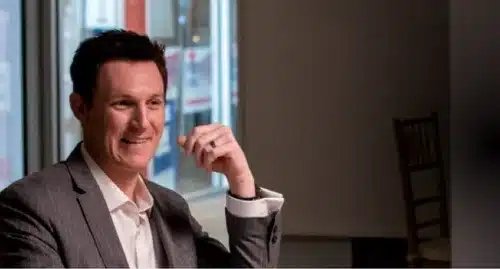
In this episode of the Faith Driven Investor Podcast, Richard Cunningham and Luke Roush interview Jason Illian, the founder of Highmount Capital. 

They discuss Highmount’s recent investment in Dude Perfect, a popular content creation group known for their Youtube channel and live shows. 

Jason shares his background and the importance of family in his life. He also highlights the trust and influence that Dude Perfect has built with families and the potential for future growth and expansion. The conversation explores the business model of content creation and the impact that faith-driven investors can have on culture through their capital.

All opinions expressed on this podcast, including the team and guests, are solely their opinions. Host and guests may maintain positions in the companies and securities discussed. This podcast is for informational purposes only and should not be relied upon as specific investment advice for any individual or organization.

Episode Transcript

Transcription is done by an AI software. While technology is an incredible tool to automate this process, there will be misspellings and typos that might accompany it. Please keep that in mind as you work through it.

Richard Cunningham You’re listening to Faith Driven Investor, a podcast that highlights voices from a growing movement of Christ following investors who believe that God owns it all and cares deeply about the heart posture behind our stewardship. Thanks for listening. 

Hey everyone! All opinions expressed on this podcast, including the team and guests, are solely their opinions. Hosts and guests may maintain positions in the companies and securities discussed in this podcast is for informational purposes only, and should not be relied upon as specific investment advice for any individual or organization. Thanks for listening. 

Richard Cunningham Luke, we are not in a habit around here of power ranking, faith driven investor podcast guests. You know, the Lord has brought so many special people into the fold over the years of us getting to do this and just hearing their stories has been wild and overwhelming. Just to see God’s work across asset classes and different types of investments. But I will say, when we’re used to talking about public markets or stocks and bonds and real estate, what have you. It’s going to be really fun today to say we’re talking trick shots with our guy, Jason Ilion, who just made a significant investment into none other than dude perfect. And so Luke, how are you, man? What a joy we’re getting to do this today. 

Luke Roush I look forward to talking about every investment. But as you said, there’s certain ones that are created unequally in terms of their cool factor and their fun factor. And this is absolutely one of those for me and for you. 

Richard Cunningham Absolutely. And we’re both a bunch of, sports lovers, has been athletes. Luke played football at Duke. I played baseball at Baylor. Jason Elion, who’s with us, was a former TCU football player himself. He’s a two time successful tech founder, former managing director of Cook Disruptive Technologies, which is the multibillion dollar venture and growth arm of Cook Industries. And cook is the largest privately held company in the US. But he’s recently gone on to start high amount capital and kind of the, you know, flagship significant headline has been high amounts recent investment into dude perfect. So Jason alien from Wichita Kansas. Welcome to the Faith Driven Investor podcast man. Great to have you. 

Jason Illian Thanks, guys. Thanks for having me. And by the way, I am so glad you don’t have power rankings because like, dudes would be really high and I’d be really low on the power rankings. So like, it’s good that we’re not doing this and we’re letting the board guide us on how we do this. 

Richard Cunningham I love it. Well, folks, also, if you if you pick up any hostility in the pod today, it’s because I mentioned I’ve got the love for the Baylor Bears. Our actual most recent FBI podcast guest of guide Stone, Brandon Pizarro, is a Baylor bear. Luke’s son, Sam, who was a football player at Stanford, opens up the season against the TCU Horned Frogs, who are the biggest rival to the Baylor Bears. So if you’re picking up any hostility at all, it’s because we’re inviting Jason on to kind of hear the other side of the aisle today. 

Luke Roush Tag team Richard, for once, you and I are on the same side of the table here with respect to college loyalty. So, you know, man. 

Jason Illian That’s okay. And I’m willing to speak slower for my Baylor Bears that are listening. That’s okay. So we can help them all out. It’s so good. 

Richard Cunningham Well, Jason, maybe before we get into him, out in the in the background of him. Out and like, the the investment, dude. Perfect. Let’s hear a little bit about you and some of your backstory. The way the Lord’s worked in your life and your family, and kind of because I know it has key significance into why you’re up to what you’re up to today. 

Jason Illian Yeah, yeah. Well, thanks for having me on the show, guys. It’s good to see you again. You know, when we talk about what we’re up to, it always. For us, it always just starts with my family. I’m exceptionally blessed to have three incredible kids. Reign, who’s 16 and a sophomore quarterback. As we’re talking sports. He’s a quarterback this year. We’re excited to see him, be at the varsity level. My daughter sage is 14 and she’s playing volleyball and beach volleyball and had a lot of success the summer on the beach circuit, winning a few national tournaments. And then my youngest, who’s his name’s rogue, and we gave him the name rogue, as in set apart for the Lord. Right. And the man is exactly how we named him, right? Be careful how you name your children. But rogue is awesome, and he is one of these guys that just completely on on fire. And the way we we keep kind of these, these three Power Rangers, point in the same directions because I married up and I have in my coverage with, Alicia, who’s my wife, and we’ve been married now about 17 years. Absolutely love of my life. She’s incredible. She is, not only the mom and kind of the CEO of our household, but when she’s not doing that, she’s also done some speaking and writing. In the Christian space, her heart is really for women’s ministry. And so that’s kind of the beginning and really the foundation of all that we do. And, you know, one of the thing that’s really important to us and then, you know, we can hit on this later if you want as well. But I will say more that I’ve learned kind of being in my career in finance as an entrepreneur. I can tell you neither of those things go well if things don’t go well at home. Right. And as I’ve learned that many things in life in our culture would be in a much better position if dads would first and foremost focus on running their families. Right? And if we lead our families well, then we can leave our our jobs and our corporations and our entities as well. And I haven’t always done that perfectly. In fact, I don’t do it perfectly to date. If Alicia was on here, she could fill you in on that. But it is become more and more of a focus for my family specifically, is how do we lead our three kids well and our family? Because that’s really what’s creating the next legacy and culture of companies and things that we invest in and, and places we go as a country. 

Richard Cunningham And that’s good stuff. I love hearing that, and it’s evident hearing you talk about your children, just the passion and the heart you have for them. Love the sports background as well. So you can kind of hear this story crescendoing as it reaches the dude perfect aspect is that it sounds like Team Alien, similar to the. The Roush family has just a deep passion and love for sport. So maybe give us some of the the high mountain background and at the same time kind of the dude perfect. And how these two kind of came on a collision course. 

Jason Illian Yeah. So, as you mentioned, beginning, you know, I started off as an entrepreneur myself, started a couple software companies and sold them. And then in 2017 ish or so, Coke Industries asked me to come up and help them build their growth and venture arm. And so did that for about seven years. And, you know, the the real blessing of being a coach for that time is when you have nearly unlimited capital. You get in a lot of very cool meetings and you get a chance to learn a lot. Right? So we had the real privilege of building a pretty tremendous network of VCs, family offices, entrepreneurs, all sorts of incredible families and groups, mostly domestic, but some all over the world as well. And by the time I’d left Coke, I think we, you know, we’ve had roughly $3 billion or something that we put to work, ranging from smaller investments of kind of five to 10 million to 3, 4 or $500 million investments. And, my wife and I, at that time, it just felt led that God was taking to somewhere else. And so we kind of stepped out in faith and started high capital and did that with two other partners. One of them is a gentleman by name, Dave David Hawkins. And, David’s in New York City. He’s an elder Redeemer Church, but he also has a background as, kind of a classically trained investment banker and investor. And so he was an early investor in Alibaba and Airbnb and Open Door and some really well known companies that you would know. But he also just thinks from a biblical framework. Right. And so that’s how he put it together. And then the other gentleman that’s with us is Scott Flukey. And Scott is our CEO and general counsel. And, Scott was a coach for 25 years, was about to retire. His team was overseeing most of the transactions that happened at Coke Industries. And that says a lot because we did a lot of transactions there. And he just joined our team and said, hey, this is really where my heart is. And so that was the genesis of came out and I out. It’s been around is as a firm for about 18 months now. So going on two years and you know I can talk about you know, where we kind of play in the investment space. But the easiest way to say was like, we were really looking for high performance teams that are in the growth mode and early middle market private equity space, where we can come along not only as capital but as a true partner to invest in their firm, to come along and say and say besides capital and everybody’s money is green, how can we really help you grow? And we do that from putting frameworks and for us, you know, biblical frameworks in place of how do we think about growth and how do we think about, you know, aligned vision and values and complementary capabilities. And if you do those things and then you align incentives, you don’t guarantee success, but at least you help put these companies in position that they can be successful. And that’s really the heart of human capital. And, that’s really what we were doing when we ran into dude. Perfect. 

Luke Roush Maybe talk a little bit, Jason, if you wouldn’t mind. So that’s phenomenal background. And, you know, deals are a product of, circumstance, timing and, and in fit, maybe talk a little bit about how that deal came together. What got you excited about it? What? You know, where are you going? 

Jason Illian Yeah, yeah. You know, one of the things we talk about a lot of high amount is we think and frameworks and mental models, right. Of like, how do you do things so things aren’t equations. But they’re like frameworks. And we actually have a framework we think about on relationships too, because at the end of the day, we can all only have so many close friends. So we kind of have a framework that we think of, of like, you have your, you have your community, you have your network, and you have your ecosystem, and your community is like your top 20 or 25 people in your network or 25 in your community, that when they call you, you automatically pick up the phone. So, you know, Luke, as an example, you’re you’re in my community. Like, if you call me on something on a deal, I’m going to call you back that same day or text you right back, because I trust you’re not going to just be lobbing junk over that fence to me. Like I trust we built an up relationship, that I know that whatever you’re sending me, I need to spend time on. And so we built up this. There is certain relationships that we know that we trust right away. And then there’s a network of people that we’re getting to know that may be part of our community. And then there’s the ecosystem that’s everybody else that we’re still trying to get to know and spend time with. But we can’t all have 500 best friends, right? We just can’t do that. And so the dude perfect opportunity came through our community, right? We had somebody in our and that was close to us reach out and say, hey, the dude’s they’ve grown this tremendous business and would you mind talking to them? But they’re they’re going to raise some capital. And would you guys might talking them help them think through how they would do that? And frankly, we didn’t go into this thinking we were going to be the investor. We did came into this with kind of a, you know, give first mentality of like, how can we help these guys? We love what they’re about. We love what they’re doing. My kids love to be perfect. If nothing else, that’ll help my street cred. That night at dinner to say, hey, I talked to the dudes guys, right? And so like, hey, let’s just talk to them. And it was through that conversation that we begin to realize, wow, they have something really special here. And that kind of kicked off the dude perfect relationship. 

Richard Cunningham That’s awesome. Yeah. Henry talks about often here. When Lecrae wrote the forward for faith driven entrepreneur and, you know, Henry Kissinger, of course, co-founder of Faith Driven Investor alongside Luke Sovereign’s capital alongside Luke, he said, having Lecrae right it up to street cred, through the roof. And so I can imagine rain, sage and rogue when you’re coming home talking about happenings at Dude Perfect, you’re like, all right, Dan, I’ll listen a little bit differently. 

Jason Illian Yeah. I mean, you don’t you don’t get that right when you talk about a sass company, right? I mean, the business side, they’re just kind of like phase. Yeah. They like hey, today we talked about dude perfect. And all of a sudden they’re like, did you meet the dude? How many dudes were on there? And at that point, like, I didn’t know the dudes as well as they did, right. But honestly, the the great part about that is it started to help us understand the type of, pull that the dudes really had with families and with kids across the country, and we can talk through all sorts of diligent stuff. But I would say the main thing that came out of all of our diligence is I have never seen a group that has built this much trust with families. Right. Usually you have, a lot of trust with a small group of people or you have, you know, a little trust of a large group of people. These. Guys have a lot of trust with a lot of people. And and it’s not just the kids, it’s the families too, because they’ve spent literally 15 years building it up. And so everybody can say, hey, this is an overnight success. But it really wasn’t right. These guys started taking trick shots at A&M. Never really thought this would become something. And as they tell their story, there were many years that they weren’t even doing this full time, right? They all had to quit their jobs. And you know, Tyler, who’s kind of the lead character at times, he’d tell you, like, I thought I was going to work in the lawn business, right. Like, and can you imagine seeing Tyler come in in your backyard, mowing your lawn when you see what he does on camera? And and so it wasn’t an overnight success at all. They spent this time building this up, and they had to make a lot of hard decisions, like quitting their jobs when there wasn’t enough money there for turning down the adult beverages who wanted to advertise because that’s not what they believed in. Right. And so all these steps along the way kind of brought them to a point that they thought, hey, we now need some partners alongside us to help us grow. 

Luke Roush I’ll tell you, as a TCU grad, it’s very magnanimous of you to build a bridge to, College Station. That’s really generous of you. 

Jason Illian Yeah, we all need to show grace. We all need to show grace wherever we can. Just like to the Baylor side. But listen, I mean, the great thing about what these guys did it. A&M, and these, these five guys in general. Right? All of them is they wholeheartedly care about people. I will tell you, like in the diligence process we go down a dude perfect headquarters in Frisco, Texas. And it’s not open to public. Right. It just says dude perfect on the building. But there’s not there’s not retail or anything there will be in our new headquarters, but there isn’t the current one. And people will literally stop to just wait to see if the dudes will come out. And we came there one day and there was a family that showed up there, and the dudes came out because they saw him on camera. They came out and were signing autographs and talking to them. This family was from Australia. They flew into the States to be in Florida. They were on their way to California, and the only reason they stopped in Dallas was to stop by Dude Perfect headquarters in hopes that somebody would come out and say hi. Like, I’m like, are you kidding me? Like, I would never stop with my whole family of six people and a totally different city to look at a building and hope that people come out right. But that just shows you how much this family has learned to trust the dudes and what they’re doing and what they’re building. And I think that goes far beyond trick shots. I mean, we can talk about it as trick shots, but it goes it goes far beyond that. When you when you start to build that kind of relationship and trust with the people that listen to you. 

Luke Roush Maybe some things, that as you’ve gotten to know their, operations from a business perspective, anything that, was surprising to you, I mean, obviously tons of trust with tons of people, I think. I love the way you said that, Jason, but what else? Just about actually the business model of what they have built. Love to get your insight on that as an investor. 

Jason Illian Yeah, there’s 2 or 3 things that were really interesting, outside of the numbers, and we can talk about that too. But one was they literally have built a very highly profitable business with the five guys and a business manager. Right. That’s about it. Like they have some other people filming and working behind the scenes, but they did not build this, you know, heavy front end executive team that was out selling. Almost everything that they done had become incoming. They were being very reactive, but because they had built so much trust and had taken the time to do that. Big brands, big sporting teams, you know, right after Scottie Scheffler wins the Masters two days later, where’s he go? He goes up to the perfect headquarters, right? Like like that’s normal. That’s not normal. Like you just won the Masters. And now he won a gold at the Olympics, right? But that’s the kind of trust that they built. So one, just building this with a really small team. And then the second piece, which I thought was really interesting, is when you talked to the dudes, they made some decisions really early on, to be all equally in this together. Right. So they all shared this, they all shared the same incentives, and they also put some boundaries around things we will do and things we won’t do. And so if you watch the Olympics this year, you saw that like, hey, Snoop Dogg was all over the Olympics, right? Which is interesting because Snoop, Snoop Dogg was a heavy rapper that was using every word that you would not want to share with your kids 15, 20 years ago. Right. He’s made a shift to this space, but the dude’s always started from this space one because they’re believers and Christians and said, hey, we want to have an influence in this space. And two, they said, we also want to just create content that the whole family can watch and feel good about and not just watch, but hopefully go do stuff like they just want people to put people in screens there, like put them in screens, but then will they go play in the backyard? Can we bring toys to them? Can we do things to get them to interact? And, I can tell you, because we just talked to Disney on this and some other large brands, but they’re all asking, how do you do this? Like these other brands are now asking, how do you do this? Well, because this next generation that grew up on phones like these guys, our kids are digital natives, right? Like if they can swipe through phones, by the time we can turn ours on, right, the dudes can talk to this audience really well, and other brands are trying to figure out how to do that. So they’ve they’ve made some early decisions, Luke, on building their business. And at the time it wasn’t even a business. It was just how do we have influence? Well, that have allowed them to now create the business aspects of that. And the business aspects are now like, how do we do videos and content? How do we do product, how do we do merch like it’s grown? But from day one it was like, what’s the core? And and who are we in that core? And they’ve stayed true to that pretty much every step of the way. 

Richard Cunningham That’s great. Yeah. My wife and I have been on a journey this summer, a little bit of kind of leaning into and almost like deconstructing you know some of those bigger kind of. What is that word I would look for, like existential type questions. And one of the things we’ve kind of gotten back to is like the identity piece. And we found Jamie Winship, who’s got this great book called Living Fearless. And Jamie talks about leaning into your identity. And, and there are some things about you, probably as a young kid that reign true now and today. And so for me, I love sports. I love to compete, I loved organized competition. And I think of the dudes. And Jason, you mentioned it earlier. Could you imagine Tyler mowing your backyard? Like I’m sure he would do it with incredible excellence with a smile on his face. But I think of their particular work as one where I’m like, I see guys stepping into their identity of who they are, like just authentic goofballs who love sports, who are dynamic, who are using it as a platform for Jesus. And they’re working out of kind of that true identity, if you will. And that authenticity as you’re talking about is catching on. So and so you’ve come in a time out, you’ve got this incredible amount of influence as candidly, a very large check that has come to the door, that’s helping shepherd the next generation of dude. Perfect. Where is this thing going? Like, what do you have envisioned for what is next? What does the team have envisioned for what’s next? And teased out a little bit, but kind of what what do you think it’s all going to look like in this next generation? 

Jason Illian Yeah. So like we said, the dude started with just the five guys. And really what it’s become is more of an ethos, right? It’s a dude perfect ethos. And when you even run into, you know, pro athletes, they’ll stop the dudes and say, like, my kids love you and we want to do this. And we have to all agree, even as dads, when you see the dude stick a rocket in a football and throw it, 300 yards are precise. Oh, I could do that. Like we were even drawn in that, like the fact that this is fun and it’s sports and it’s family oriented. Right. And so what’s happening is it’s starting to merge where you’re getting pro athletes want to participate in pro sports teams wanting to say, hey, we want to take the helmets off. Our guys and the dudes leaning into that and family’s leaning into that. And so it’s really becoming an ethos so that the next step is to say, hey guys, you built it to this point, and now there’s some really massive partners that want to partner with us. How do we take that to the next level, where we can do more content and bring on potentially even other dudes in other areas that can participate? And I often think of it almost like, a WWE model where, you know, it used to just be like, Hulk Hogan was the cool one, but over time you have all sorts of people that are participating, and I think that’s what Dude Perfect is becoming. It’s becoming an ethos that it doesn’t matter whether it’s football, basketball, cricket, beach volleyball or whatever, how do you make it fun and how do you get the family to participate? And that’s really where the dudes were saying, hey, we’re at a high level. How do we take this to a legacy level? And in all fairness, like we were not by far the largest investor at the table, there were 2 or 3 other very well known large private equity groups that had come in with massive checks to say, we want to help you do this. And we we couldn’t do that of our size. And we just brought a different model and said, hey, we’re not coming just with the most money. We’re coming with both a faith and a values orientation to help you. And if you guys want to do that, if you want to take more money, go with them. If you want to be aligned from a faith and value and still have the opportunity to create, you know, multi-billion dollar platform, then you can come with us. And I think it spoke a lot to me when they said, hey, we’re willing to turn down more money in our pockets today to go build something that we think is better for families long term. And that just helped me respect them. Even all the more. They say, hey, we can we can go do something special, and do that together. And so, it’s been a real pleasure to get to know these guys and their families. And if they weren’t dude perfect and you were just hanging out with them, you’d be like, these are the best neighbors ever. Because that’s the kind of guys they are, even when they’re not on camera. 

Luke Roush Well, so it’s sort of like the DC or the Marvel Universe. You’ve got the dude universe every time. Maybe that’s. 

Jason Illian Yeah, there’s an. 

Luke Roush Opportunity construct that. 

Jason Illian That’s right. Yeah. And it just like every just like every movie. Right. Like there’s one movie and then the other one builds off that movie and does the same thing. I think that’s where it’s going. And, you know, the more that we talk to people, we’re feeling that already from pro sports teams and now colleges because colleges are turning into semi-pro. Right. Like how do we take the helmets off those guys and gals? And I think you’re seeing it even in the international level as you watch the Olympics, like, how do you really highlight these athletes? And at the end of the day, we all know this because we’re all sports fans. It’s not just the athletes you get excited about. Like. You know when you there’s a difference between what Noah Noah Lyles just did and and Sydney McLaughlin. Right. Noah Lyles was out there pounding is just saying it’s all about me. Sidney when she won the first thing she’s like it’s all about the Lord. It’s a bigger story. And people are like, I’m drawn to that, right? And I think that’s what the dudes realize is, like, we have that opportunity to do that on a global scale. And so it’s to steal your very good, you know, comparison there, Luke, is like I think there’s chapters coming and I think we’re still in the early chapters. 

Luke Roush Yeah. Well, it makes a ton of sense. And what I’ve always appreciated about that platform is, generally, their content pushes people to engage, and not just kind of passively consume, but to go out in the backyard, go out the front yard and do stuff. Right. Go have adventure. And, you know, life is something to be lived, not observed, from a distance. And so particularly with their some of their earlier stuff, you know, these are things that can be replicated in a, in a backyard context, whereas, you know, if you were to compare and contrast, you know, another major influencer or content creator and Mr. Beast, a lot of what he does is, like, harder to kind of replicate. It’s more consumptive rather than, collaborative and co-creating together. And that’s what I’ve always really appreciated about the dude’s content is that it’s something that you can feel like as a kid, that you’re almost actually part of the co-creation process. 

Jason Illian Yeah. Well, I mean, I will tell you even later this year, you know, not to steal their thunder, but, you know, they’re launching, dude, perfect bounce houses and other outdoor stuff that families can participate in because they want them doing stuff together. Right. And so that’s different for Mr. Beast launching a chocolate bar just because I like chocolate. Well, okay, there’s nothing wrong with chocolate, but like, these guys are being very thoughtful about, hey, how do we get families to participate and play games and do stuff together, not only as a family, but as a community? And when you do stuff like that. Wow. Like what? What’s the endgame for that? I just think it keeps replicating itself, because none of us get tired of having community people around us. 

Richard Cunningham Jason I so I’ve got a a question here as you think about the future of dude perfect and kind of this Luke and I and John Coleman and others, you here on the FDI podcast, we use this terminology a lot of like faith driven investors getting in the game with their capital. And, you know, ironically you’ve got Dude Perfect with All About Games, which is a fun play on words there. But as you think about this downstream effect that we as investors can have on culture through our capital, there’s a very tangible example and representation here of what’s taking place in Dude Perfect. Do you see possibilities elsewhere across the marketplace? Like right now we’re talking content creation, getting children wholesome content we can trust that invites them in for something fun, but then sends them out to go be a part of the adventure as well. Do you see it elsewhere across the marketplace where there’s possibilities? 

Jason Illian Yeah, I do, I actually think it’s, I actually think there’s a huge opportunity that’s beginning to turn, and I think the dudes are just a piece of that. Right. And how big they decide to grow that is going to be based on their own vision and how the Lord blessed them and how hard they work to get there. But I think, I think the more that we’ve to not only talk to families, but just looked at data and see, like families are looking for opportunities to engage with their kids, not just in the week trip to Disney, but what can I do tonight? And what can I do this weekend? And what can I do with my neighbors? And and because the phone’s in a sense, we thought like they’d make our lives easier, they’ve kind of siloed us because we do a lot of stuff on our phones. They’re now looking for ways to better engage with one another. And so, the dudes have done a good job to think about, like, hey, when we do videos, how do we also get them to engage elsewhere? And, and I think that same thing, things happening and, you know, you can go to early or younger kids of like, how do we get them to engage. And then even, you know, college age kids and beyond of like, how do we get them to to to engage with one another not only with products, but, you know, real life experiences too. Right? And so I think there’s a huge open gap in this space. And when you see people like whether you like Mr. Beats content or not, one thing is, is he’s done a good job drawing people in to say like, hey, look what we’re doing. And while I think a lot of what he does is kind of like one off spectacles, I think the dudes have done a better job of creating a roadmap of like, this is the space we’re playing and we’re playing in sports and we’re playing with families, but I think there’s other ones and you could say whether it’s animated films or you could say sports or you could say music, I think they’re all starting to learn, like if we can help people engage with what we do versus just by one time, who knows what the upside is to that? And I can tell you a large private equity group, that’s what they’re looking for, right? They’re looking for the engagement aspect. Because it’s one thing to have a revenue line that continues to grow for three to 5 to 10 years. It’s another thing to see that thing split into five revenue, five revenue lines because of the high engagement that it has. 

Luke Roush Yep. Yeah. And that makes a ton of sense to me. As as you think about. So stepping back from kind of the dudes themselves and just thinking about content creation, distribution, engagement, extension of kind of the core product where you started in the new geographies or new adjacent spaces. How do you see the business model that feels very evolutionary right now, which oftentimes creates opportunities for investors because the, you know, status quo is less entrenched. How do you see that that business going well? 

Jason Illian So the old business model, right, was a lot of the top down. Hey, we’re going to go spend 150, $200 million and create this experience for this movie. And we hope they like it. Right. I think the new model is like field, the. 

Luke Roush Field of dreams. If we build it, they will come. 

Jason Illian Yes. If we build it, they will come. Right. And we’ve seen time and time again over the last decade that’s not actually worked a lot. There’s been a lot of failures in that spot. So now what’s happening is you’re seeing people that are building their own audiences from the ground up very authentically, and people are being drawn to that. And because they’re being drawn to that, that person, to that brand, then from there they can do all sorts of stuff. They can sell swimsuits or drinks or whatever, right? Whether you like Logan Paul or not, he sold a ton of prime right energy drink. Right. Which, by the way, I don’t like the taste of it at all. But it’s worked for him, right? And it’s because he built, you know, he built a personality for them, for himself, I think, or at least our, our thesis and belief is there’s a lot of that stuff that I think is kind of fringe and on the edge or adult if you do that kind of stuff in a family friendly way or faith based way, there is it’s a huge market and it’s thirsty for it. And we’re seeing families all the time saying, what else can we consume or do or experience in this space? And they’re just not been a lot of those types of things. So I know a lot of the things that sovereign is worked on in terms of movies and films and other things in that space and what we’re doing with Dude Perfect and other groups. There’s lots of other groups that are trying to do this, like we’re supportive of all of them. Like even if we don’t don’t even if we don’t financially benefit from that, if we can step in and help them and do something that’s going to help create something that is beneficial to families and has a positive impact and culture, and ultimately points to Jesus, that man we’re in. Tell us a little bit. 

Luke Roush Well, it’s like, Andy Crouch, his book on culture making. Jason, it’s much easier to build new culture than to try to reform something that is kind of not in alignment with what we see as as the world really needing. And what I love about, just the cost of production. Yeah. It’s what it’s where you started, which is, it’s like two dudes in, like, one production guy and a couple other camera folks, and that’s about it. And so, you know, self-publishing with Amazon and others has also changed and democratized the publishing industry, so that, you can create and distribute content. And it’s the merit is there, you can find ways to really build a crowd. It’s no longer, you know, an oligopoly where, you know, there’s a few folks that can effectively exclude everyone else from participation. It’s much more democratized now. And that’s certainly on full display in what the dudes have built over the last 15 years. So, yeah. 

Jason Illian And I think it’s going to continue. Right. Because now that we have these super powerful phones that were as powerful as large camera systems in the past, and now you’re going to have AI coming up where it’s going to even make, like, animation, being able to be done by the average person over time so they can create an animated film that used to cost hundreds of millions of dollars, you could do it literally from your at home in the future, right? So those things are going to democratize it even more. So then it comes down to what’s the story, what’s the focus? How are you really drawing people in? And if it’s just a one hit wonder, it may work from time to time, but that’s not something you can really invest and build around versus the ones that are really thinking about kind of a more platform or market place approach to it. 

Richard Cunningham All right, Jason, two fun rapid fire questions before we close with our big one. First is if you’re not one of dude Perfect’s already 60.3 million subscribers and you have somehow haven’t heard of these guys, and Jason Alien is showing his favorite video to someone to give a sense of who these guys are. Which video are you showing? 

Jason Illian Oh man, that’s probably a question for my kids, not for me. But I would say, you know, the one that just caught me recently was the one where they stuck a rocket and a football. Being an ex football guy. And I watched him throw it like 300 yards. I was thinking like, dude, I could so do that as they either throwing it or trying to catch it myself, right? I was like that. That was just a cool. Took me back to when I was 12 years old, being playing in the backyard thinking, man, that would be just the coolest thing to do. And just a credit to them about capturing the imagination of an old guy. Or old guys. As well as the kids of saying, hey, we can all do this. 

Richard Cunningham I love it, all right? Then the next one is, have you made the ask to be in a video, or do you think we’ll ever see you in a video? 

Jason Illian Let’s let’s hope that the dudes take this a better direction than asking somebody like me to be in a video. Maybe if they ask my kids or one of your kids, right, then they’re going the right direction. Listen, everybody wants to be in a dude perfect video, and I will tell you, they have stuff coming up with, like, Steph Curry and pro athletes. But one of the things they’re really talking about too is should we bring on some just big fans in certain videos on a go forward basis, like you’re part of a sweepstakes to get in the video. You do this, you help somebody, you get in a video and they’re thinking through like how they do more of that, which is really cool. Right. It’s kind of like saying, hey, the Olympics is coming up. We’re putting Luke in lane eight to just see how he does versus the other swimmers. That’s going to be awesome. And I think the way that I think about that is just so cool. And like, who doesn’t want to watch that or experience that? 

Richard Cunningham Luke Rash I don’t know how you are in a pool, man, but I’d love to see that. And it’s. 

Jason Illian Not pretty. 

Luke Roush It’s not pretty, I think. And, you know, I, I’ve entered one triathlon in my life, and I did call for the safety canoe about 200m into my swim. 

Jason Illian But that’s why the color commentary is all the better. Like, if you’re sinking when everybody else is swimming hard, it’s going to be awesome. 

Richard Cunningham Hey, I would put good money on you though, Luke. As a former DB on the foot race, I’d like to see an. 

Luke Roush That’s, I’m more terrestrial based. I know, I’m. 

Richard Cunningham Land mammal. 

Jason Illian We’ve already emerged. 

Luke Roush Out of the primordial soup. We now walk on land. That’s the reason why this happened. 

Jason Illian Yeah. Don’t worry. I’m not only a land mammal, I’m now a slow moving, large land mammal. Versus the other days where I used to be quick. So don’t feel bad. You’re not alone. That’s great. 

Richard Cunningham Well, Jason, this has been a ton of fun. And this is the question, man. We love to close with on every faith driven investor podcast. And that is what’s the Lord been teaching you in and through his Word lately? 

Jason Illian Yeah, it’s a great question. You know, I think the thing that you can teach me the most that now is in Proverbs, it says a man is tested by his praise. Starts beforehand like a, you know, a crucible for silver and, you know, a furnace for gold, that a man is tested by his praise. And I think that means that there’s a few things he’s working on. My heart. There is one. Not only what do I praise and where do I spend time spending like so if I’m spending all my time in work or around sports or whatever else my kids are going to think like work and sports is where their identity is tied. And if I look at my calendar and my checkbook, sometimes it’s way too tied to those things versus being tied to my identities in Christ, in Christ alone. And so that’s where I praise in the second piece is like, when I get praise, is it mine, or am I just redirecting it to the one who is kind enough to give me some encouragement? Right. And when I see athletes that pound their chests and say it’s all about me, that is too much of that could have been me as well, right? If not saved by Grace. And so just trying to teach even my three athletes in our house, or the small football teams we coach in the local area ones. And one of the things I love about the dudes too, right, is like they’re saying like, don’t point yourself. It’s not about you, right? It’s about the one who created you, is about the one who gives you grace. It’s about the one who died for your sins. And that is just a continually humbling, learning daily thing in our house that I’m learning. And, you know, the great thing about being married is you have a beautiful bride that is a giant mirror of reflection. And she is, you know, very gracious enough to tell me in kind ways when I fall flat on my face. And I do that plenty. But by grace alone. Right, I get a chance to get up and do it again. And that’s my biggest hope for my kids. And the thing that God’s teaching me is like when they go play, when I, I never hear about what’s on the scoreboard. And I honestly, the more I, the longer I live even about the scoreboard for high mount, I’m not I’m not measuring it by what the AUM is, right, or how many unicorns we have. I’m trying to measure it more by the influence and impact that we have. And what’s what next generation leaders are we creating and what hope are we instilling? And what joy are we living with if we do those things and we can control those things, those inputs and outputs will take care of themselves, and there will be days that we lose. It just happens, and God will teach us in those losses. In the days that we win, we’ll celebrate and point back to Jesus and we’ll do it all over again. 

Luke Roush That resonates with me in a big way, Jason. And, you know, one of my favorite quotes is that there are two things that define us our patients when we have nothing, and then our attitude when we have everything. And if I were to sort of recast that quote in the context of Scripture and what we know to be true because of who Jesus is, it’s do we trust in him when things are really difficult? And do we maintain humility and understand that all things come from him when good things are happening? And so I’m excited for the opportunity. You and your partners have to co-create and to build something beautiful that is redemptive force for good in broader society. Our scorecard, our scoreboard needs to look different than the rest of the world. And I love your articulation for the ways in which these kinds of investments have the opportunity to not just generate return, but also shape culture in ways that are really meaningful and draw people towards, the hope and truth and love that we experience every day through our faith. So thank you for being on with us. It’s been a joy and, super excited for what you’re going to build. 

Jason Illian Yeah. Thank you guys. 

Richard Cunningham Awesome. We’ll catch you next time everybody. 

We are grateful for the opportunity to serve this community and see listeners coming from more than 100 countries. Faith driven investing can be a lonely journey, but it doesn’t have to be. The best way to stay connected is to join a group study with other investors looking to get the same answers to questions you have, and find great community as they do so. There’s no cost, no catch in person or online. You can meet an hour a week with other peers from your backyard or the other side of the world. You can also stay connected by signing up for our monthly newsletter at Faith Driven investing.org. This podcast wouldn’t be possible without the help of many of our friends. Executive Producer Justin Foreman intro mixed in, arranged by Summer Driggs. Audio and editing by Richard Bali. Our theme song is Sweet Ever After by Ellie Holcomb. 
Subscribe to the newsletter

Stay Connected
to the Movement

We know that as an Entrepreneur, your most valuable asset is time. So each month we take the very best of the podcast, the blog and all the news, resources, and upcoming events happening across the space and bring it to you.

Episode 023 – Redeeming Capitalism for the Common Good with Ken Barnes

Episode 023 – Redeeming Capitalism for the Common Good with Ken Barnes

Podcast episode

Episode 023 – Redeeming Capitalism for the Common Good with Ken Barnes

We hope you’re ready to learn because today’s episode is chock-full of lessons, insights, and theories that are here to educate and inform you, the Faith Driven Investor. 

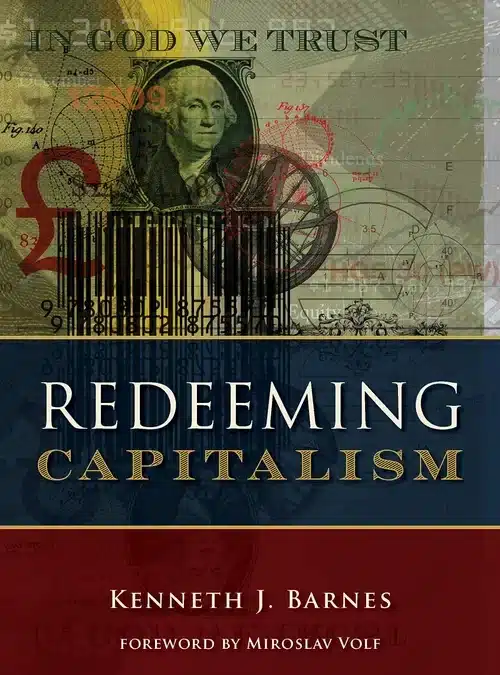
Today’s guest is Ken Barnes. Ken works as the Director of the Mockler Center for Faith & Ethics in the Workplace at Gordon-Conwell Theological Seminary. He is also the author of Redeeming Capitalism, which takes a look at our current capitalistic society through both a theological and economical lens. 

Ken shared a history of the relationship between capitalism and morals, where the two began to separate, and what we can do to bring them back together. As always, thanks for listening.

Useful Links:

Redeeming Capitalism Book

Why Redeeming Capitalism is Important

Imagining a Virtuous Capitalism

All opinions expressed on this podcast, including the team and guests, are solely their opinions. Host and guests may maintain positions in the companies and securities discussed. This podcast is for informational purposes only and should not be relied upon as specific investment advice for any individual or organization.

Episode Transcript

Transcription is done by an AI software. While technology is an incredible tool to automate this process, there will be misspellings and typos that might accompany it. Please keep that in mind as you work through it.

Henry Kaestner: Ken, thank you very much for being on the show. It’s awesome to have a guy that’s been as thoughtful as you have about a really important topic. And you’ve written a book recently and given a talk that I heard and Wichita, Kansas, that really compelled me, compelled me to think in a way that was different than I had before. And as I heard, I thought, gosh, we really need to have our audience listen to this as well. I presume that as people listen to this they will have all sorts of different views on the topic. And yet I am sure that our time together will be able to provoke people into thinking more seriously about how God might entrust them and be glorified through the shepherding of his investment resources. So your book is called Redeeming Capitalism. It’s that subject of the talk you gave. So I’ll start off with capitalism. Does it need to be redeemed?

Ken Barnes: Well, first of all, let me just say thank you for having me. It was a pleasure to finally meet you at the summit and really a joy to speak to you and your guests on the podcast. So, great question, does it need to be redeemed? And the answer is yes, because everything needs to be redeemed. You know, we live in an imperfect world. We live in a world which is marred by sin and corruption and our economic system is not immune to that. So as somebody who spent the overwhelming majority of his life, not as an academic, but actually as someone who was deeply involved in the markets, I did business all over the world at a very high level. Loved my business career, but I saw firsthand the good, the bad, and the ugly of global capitalism. And I’ve thought deeply about this for a long time. And I really think it not only needs to be redeemed. I think if people of faith and goodwill don’t redeem it, we’re going to hate what replaces it. And so I think it’s a really important discussion to have. And so that’s why I wrote the book.

Henry Kaestner: So your theory is that capitalism works. And that the challenge before us is not to change the structure necessarily, but to address the moral vacuum at the core of the way it’s done now. So I love that phrase moral vacuum. Tell us more about what you mean by that.

Ken Barnes: Sure. So as I say in the book and I tell my students all the time when I go on the road and give lectures, I remind people that capitalism is a subject, not an object. It doesn’t have any agency of its own. There is no, what we theologians call hypostatis about it. It is simply a term we use to describe a particular phenomenon. And that phenomenon is the remarkable way that lightly regulated, highly monetized, free markets create wealth. That’s all capitalism is now. Because of that, it has no moral compass of its own. So it will reflect either the morality or the lack thereof of the cultures that choose to employ capitalism as a system of wealth creation. And that’s why we have the moral vacuum, because we are living in an age where we have lost our moral standards, if you will, which traditionally in capitalist countries were built on Judeo-Christian values.

Henry Kaestner: So building on the idea that capitalism can’t be mischaracterized as some sort of living, breathing organism, but rather it’s just more along a system and maybe a collection of decisions made by actors all acting independently. You bring up this concept that every economic decision effectively made by a person represents a moral choice. And I found that fascinating. Tell us more about that. What does it mean when we make economic decisions? First of all, maybe you can unpack what are those economic decisions and then what do you mean by a moral choice when I decide to make an investment in that mutual fund or in that stock or that private equity?

Ken Barnes: Sure. So there is a cause and effect to every decision we make. And capitalism is, as you just said, nothing more than the cumulative effect of those countless decisions that are made both by individuals and by corporations and by governments, etc.. So because there is cause and effect by definition, every one of those decisions is a moral choice because it affects someone or something. So if you think about the decision, whether or not I should buy a 100 dollar pair of shoes or a thousand dollar pair of shoes. There is in essence a moral choice there because I could do something else with that delta of $900. So there might be a very good reason to buy a thousand dollar pair of shoes. There might not be, but I can’t deny the fact that there is that delta that has to be dealt with.

And so if you take that concept and you apply the costs, all economic decisions, it means that we can’t just make economic decisions in a moral vacuum. We can’t pretend that there is neither cause nor effect. We can’t pretend that it doesn’t involve how we steward God’s resources, how we steward the wealth we’ve already created, how we steward the planet, because at the end of the day, we were created right from the earliest mandate of the Bible, the cultural mandate to go and multiply. Which means we are supposed to take all of the gifts that God has given us in creation and participate with God, if you will, on this ongoing creative process. So we must do it in a way that reflects kingdom values, the values of the God in whose image we are created.

So this is very, very much a moral question. And by the way, sometimes people will ask me, they’ll say, Ken, are you an economist? And I will say to them, not in the sense that the Guild of Academic Economists think of themselves because economics has become a mathematical modeling science no more. They try to predict what the cause and effect of decisions will be. But traditionally, economics was indeed a moral science. And we can go all the way back to Adam Smith, who was a moral philosopher, not an economist who originally codified what we now call capitalism.

William Norvell: Interesting. OK, so take us back a little bit, because you kind of walk us through a little bit. But I guess my first question is, how did we end up here? You know, you mentioned where God created us. You mentioned a few other people on the road to capitalism. Walk us through how we sit here today with the system that we have, then kind of want to build on that. But what sort of happened to separate these things? And are these cracks inherent in the structure that we find ourselves? Or is it possible, I know you’ve been talking about redeeming it, but just walk us through how we stand here today would be great.

Ken Barnes: Sure. So I purposely use the term redemption because that is a theological term, although ironically in its earliest usage, it was an economic term. Then it became a theological term. We think about the redemption of our souls. And it’s a term that people understand that overcoming the effects of previous sins. That’s what redemption means theologically. So if we think about we want to redeem culture, we want to redeem education, we want to redeem society, we want to redeem capitalism. That simply means we have to recognize, just as what we talked about, redeeming our souls, that there is a need for redemption. We have sinned. Secondly, that we are responsible for our sins. Thirdly, that there are some things we can change and some things we merely have to endure. And fourthly, that God expects us to do our best to bring about that redemption, to bring healing to that which is broken, because that’s what the cross is all about, to bring healing to a broken world. So when it comes to economics, if you go back to the earliest days of economics, I tell people that capitalism hasn’t always existed, but markets have. There have always been opportunities for exchange. And so the old adage is that two men went down to the river. One had wool, one had wheat. The one with the wheat was cold. The one with the wool was hungry. And you had your first market. But that’s not capitalism, because capitalism is much more complex. But over time, as human beings begin to trade primarily to overcome scarcity, which is a direct result of the fall, we found that human nature sometimes got in the way. And so instead of acting in the most virtuous manner, we acted in very selfish, even exploitative manners. And that has been true throughout history. And the Bible speaks to how we are to conduct business. And it goes again all the way back to Torah, all the way to the teachings of Jesus and the apostles, that God hates dishonest scales, that God expects us to operate with virtue and integrity and honesty, and that we view economic activity as being more than just wealth creation or accumulation. But economic activity ultimately is about human flourishing. How can we use the resources, the labor and the technology that God has given us and or we have created from what he’s given us, in order to help human beings flourish? That’s the purpose of business and economics. And if we allow sin to corrupt it, then we will have a bad economic system. However, if we apply kingdom values and virtues then we can redeem it.

Henry Kaestner: I want to go back a second just to the science of economics, because one of the things that you do a really good job of building out in the book and in your talks is how Adam Smith had been misconstrued. You look at some of the other historical economists and the way that we’ve kind of co-opted some of this original teaching about the way that markets work and what the purpose of, I shouldn’t say, the purpose of capitalism because it’s subject rather than an object. But tell us more about where we may have gone wrong. One of the things that maybe I’ll do is even take a step back. When we talk about capitalism and when you talk about capitalism, you take great measure to make sure that people understand that there’s been a lot of good that’s been achieved. Their global wealth is increased fashion, global population or poverty has been reduced, average income, longevity, infant mortality, etc. is making improvements, but that there still 750 million people live on less than $1.90 a day and wealth tends to be unevenly distributed. Give us a construct, if you can, about the economic theories that have been presented over time and how if we’re sitting here and we’re with Adam Smith and he were to reflect back on the market and he were to understand that he’s oftentimes built up as a person that is the capitalist ideal, how would he react to that in light of the good and the bad of capitalism, a system that has been widely attributed to him?

Ken Barnes: People mistakenly attribute that to him, but he had nothing to do with it. He was an observer. I always remind people that the title of the book wasn’t Wealth of Nations. It was an inquiry into the nature and the causes of the Wealth of Nations. He was keenly interested in what human motives drive people to create wealth and why some nations and cultures do it better than others. That was his intellectual curiosity. What people forget, however, is that 20 years before he wrote that book, he wrote a book called Moral Sentiments. And in Moral Sentiments he describes really quite eloquently that what it means to be human means to be reflective of the divine. And he talks about what we would call empathy he calls sympathy in the book, but he talks about how every human being has an innate desire not to merely please themselves, but also to serve others, because it’s a reflection of the goodness of God. And so he took that for granted when he wrote his later work, Wealth of Nations, and what he was more interested there was not so much the way people empathize for others or the way people reflect God morally. For him, that was a given. That was a truth that was self-evident to Adam Smith. A lot of Enlightenment thinkers, actually. What he was interested in was what were the motives that made this new economic system work. And what he decided was that what made it work was the fact that no one was actually behind it, that no one was manipulating it. You know, he was speaking against the previous economic ethic, which was mercantilism. And the mercantilist system was a closed economic system, basically. And the only way you could create wealth, it was seen, was if you could go out and find more gold. And so you would go out and you would travel to the new world that if you bought that gold, that meant you were richer and then you would hoard the gold. So when it came to the settlement of international transfers and things, your objective was to keep your gold balance higher than the other nation states’ gold balance so you could defend yourself more efficiently. That was the mercantilist system. And so it was basically an unholy alliance between a very selected government and private monopolies whose sole purpose really was to make the state richer. That was the mercantilist system. He looked at what was happening, particularly in the American colonies. By the way, and he said, if we liberalize this system, if we unshackle this system from these monopolies, and if we allowed human beings to simply be creative in the marketplace, the cumulative effect of people doing that which is good for themselves, will also be good for the community, will be good for others. So he famously made the comment about it’s not from the benevolence of the baker and the butcher and the brewer that we get our dinner but from their self interest. Well, some people over the years have mistakenly identified that as an argument for ethical egotism, an argument for, if you will, kind of a selfish rule of if I only look after myself, everyone else will be OK because they’re doing the same thing. That isn’t Adam Smith at all. It’s Adam Smith if you take that particular quotation out of context and if you misunderstand what self-interest is. When Jesus gave the double love command. He said, Love the Lord, your God with all your heart, your mind, your soul, your strength, and your neighbor as yourself. The natural presumption is that we all love ourselves. Self-love is not selfishness. There is nothing evil about self love. There’s nothing evil about wanting to create a business that makes your life better as well as other people’s better. Where it becomes evil is when we look after ourselves at the expense of the other, or we exploit others for our own benefit. That’s when it becomes evil. So people have completely misunderstood. Adam Smith And in fact, if anything, he was a de-ontologist or even a virtue ethicist because he understood that in order for the system to work for everybody, then there had to be a certain moral purpose for it beyond just an individual person making more money. And so when you unpack Adam Smith, you see that, you know, he didn’t believe in things like inheritances. He thought inherited money concentrates wealth to a degree that actually hurts people in the long run. Adam Smith thought that no human beings should make less than enough to have more than what is required for subsistence. That’s what we would call a living wage. Adam Smith actually promoted the living wage and was vehemently opposed to slavery because he said if you have an economic system where everyone doesn’t have the chance to flourish and participate, you kill the system. He even went so far as to say that excess profits have the same impact on an economy as high interest rates, again, because if you have too much money concentrated in too few hands, you actually hurt the liquidity of the system and everyone doesn’t flourish. So Adam Smith had a completely different view of liberal economics than what he has been painted as over the years.

Henry Kaestner: So that’s fascinating to me. And we recently had a podcast episode where we unpacked motives a little bit and what purpose and what mission is. So you’re suggesting that people have misread Adam Smith and I don’t want to put words in your mouth, but maybe you’re also suggesting that some people have also misread the word of God a bit. Maybe people would associate Adam Smith with just self interest and therefore validating that view of market. And then maybe some Christ-followers have said, well, self-interest is awful. We just need to love our neighbors well. But they’re leaving out as myself. So there are number of entrepreneurs that are listening to this in addition to investors, and a Christ-following entrepreneur wrestles with things often, maybe more so than the secular entrepreneur, but they look at proverbs twice a month and they see that all man’s ways seem pure to him, but his motives are swayed by the Lord. And you’re suggesting that if we see an opportunity to build a business for ourselves that we’re interested in and we see an opportunity to be able to provide for a family, that in and of itself is not a bad motive because we’re to love our neighbors as ourselves. But it’s when we do it at the expense of others. That’s where the problem comes in. Talk about that also within the context of what’s recently come out from the Business Roundtable. I know that you’ve talked about Friedman in the past. Big news that came out this summer is the redefinition or repurposing of business. What’s your reaction to that?

Ken Barnes: I thought it was an excellent statement and long overdue. Let me say something about Milton Friedman and the Friedman doctrine. As I say in the book, in a footnote when I talk about his ethic of morality in business. I am highly critical of his understanding of business ethics, but I’m not highly critical of his economic theory. You know, if you think about the time and the circumstances of Milton Friedman, when he was at the height of his powers in winning a Nobel Prize in economics, he looked at the world and he said, we have a glut of resources, a glut of labor power and not enough capital. So we need to find a way to monetize the system better in order to create wealth across the board. He was right and that was a good idea. Where he went wrong is when he said that the only ethical responsibility, the only moral responsibility of a business executive was to make as much money as possible within the constraints of law and customs. And the reason why he was wrong about that is because that then becomes an idol, that then becomes a God, that then becomes the purpose. Not to mention the fact that he doesn’t bring time into the equation. And I can give a lot of examples and I give some in the book where someone can make a lot of money and they can do it under the guise of that’s my responsibility as an agent for the shareholders. But if you don’t take time into the consideration, you can see opportunities for people to make excessive profits doing very, very dodgy things in the short term and actually create an existential threat to the business, which is very bad for the shareholders in the long term. So he doesn’t take time into consideration. Also, when he speaks about law and custom, the law and the custom are two different things. And the law is always one step behind the bad guys, right? Law is not a replacement for ethics. Business schools 30 years ago didn’t teach business ethics. They taught compliance. Now they teach business ethics because they’ve realized that you can comply with the law and still do very, very bad things. And in terms of local custom. Again, he doesn’t clarify what he means by that. But what we’ve seen is that as cultures, especially in the West, abandon the moral underpinnings of their societies, the custom soon becomes to lie, cheat, steal, do whatever you can to get ahead. So that’s not obviously an acceptable ethic. When the CEO roundtable came out and you know, when the news hit the wires and Jamie Diamond makes this announcement, he didn’t just make it on behalf of himself, he made it on behalf of 500 CEOs who recognized the fact that while every CEO has a duty and responsibility of calling to serve their shareholders and to maximize shareholder value, it must be done within the context of a larger stakeholder requirement because no one creates wealth in a vacuum. We all create wealth based on the environment around us. So the infrastructure, the education, the technology, all of the things that support economic activity, they are all vital to the creation of wealth. And so therefore shareholders have a position of first among equals, among other shareholders, because the common good is ultimately the most important good that we seek. And that’s not exclusive from individuals seeking wealth, but it means it’s seeking wealth subordinate to the common good. So I thought the statement from the CEO roundtable was excellent.

William Norvell: Ken, I want to go back to one thing you said aboutt the time component. I think that’s really interesting as investors, because at some level, different investors have different time horizons, different managers are the heads of companies for different time. How do you think about that in the system as a believer? You know, I feel like I can make arguments for both sides if I thought hard enough. And sometimes thinking hard is hard for me. But I think it might be easier for you. Walk me through that to go one layer deeper on how to think through different time horizons, how that impacts people, how that impacts employees, how that impacts human flourishing and how that impacts returns, which is as part of the capitalism system as well.

Ken Barnes: Yeah, that is a great question. So if you think about the original Borse concept, the public trading of shares, the purpose of that was to allow the public a broader community of people to share in the benefits of the wealth created by private companies. That was also designed to raise capital for investment for those companies to grow. But the general consensus was that people bought and held shares for the purpose of enjoying part of the profits. Now we all know that that doesn’t happen anymore on a wide scale. Yes, there are pension funds and things that are long in the market. And your listeners understand this better than they need me or anyone else to explain it. But part of the problem is because of trading technology, because of the excess liquidity in the market, because of a lot of reasons. We now have a situation where a lot of the economic activity that is taking place in the markets themselves is really churning money more than creating actual wealth. And so we’ve developed the very short term horizon. And I’ll give you a classic example. I worked for a multi-billion dollar company. Those of us who were senior executives, we all had share options more than others. And the concept of a share option is that if you rewarded executives by encouraging them to increase the share value of the company, they then eliminate the conflict between their interests and their interests as agents because they share in the higher price of the stock. The problem is we all know that it’s quite possible and happens fairly often that executives will make short term decisions in order to get a buy recommendation from the analysts on a conference call because they are about to have, you know, a million share options strike date hit. And so they get a bump in the stock because the analyst really liked what they heard. Oh, we’re going to, you know, trim a thousand jobs. We’re going to do whatever it might be and we’re going to increase our ROI’s. So therefore, we want to buy recommendation. And in fact, it may actually not be good in the long term or even the medium term interests of the business to do some of those things. But they do it because they will get a bump in the share price of the exercise, the options, and pay themselves, if you will, an off the balance sheet bonus. So that sort of thing, that kind of manipulation of the way markets can work is a serious problem and the time horizon issue is part of it.

Henry Kaestner: So now that we have this broader definition of the purpose of work and of mission to include these other stakeholders, do we as a Christ-follower, do we have the opportunity, do we have the responsibility maybe to think about sharing the good news of Jesus in a culturally appropriate way, in a winsome way, with gentleness and respect? Do we add that fifth bottom line that actually makes those middle additional bottom lines have more sense? Or just I’d be really curious to hear your reaction to that.

Ken Barnes: I think that’s up to the individual investor and the people who are running the companies. If that is at the core of who they are as a business, then absolutely, because that’s their telos, right? That’s their purpose. But that doesn’t mean even in the general economy that we can’t exercise these virtues because, you know, virtue is part of God’s calming grace. I always tell people that even an atheist knows the difference between right and wrong. Whether they acknowledge God as the source of that knowledge is one thing. But even if they don’t acknowledge the source, it’s there. The imago dei, as it’s called, the image of God that is written on the hearts of everyone created in His image, which is everyone, is there whether you know it or not. And so the common grace allows us to have these conversations about bringing virtue in to business and economics without even having to worry about whether we’re going to become accused of proselytization because we’ve got to specifically talk about the gospel. In some places that’s appropriate and people shouldn’t be afraid to do it. In some places, it’s more problematic. So they’re going to have to let the Christ in them shine through. But let me tell you something about virtue as well in common Grace. The thing that separates, frankly, my book from other books that people have written about virtue and business is that I include the so-called theological virtues as business virtues, as common grace virtues. I think faith, hope and love should be at the center of economics, should be at the center of business. And when people experience faith, hope and love in business, they will want to know the source. They will want to know how that happened. So I’m very enthusiastic about Christ followers getting involved in this conversation.

Henry Kaestner: So if you’re listening to this and your saying, OK, yes, I get it. I know faith, hope and love. They’re important virtues and the fruit of the spirit. How do I exhibit them in my workplace and then how do I exhibit them as an investor? How do we get beyond the theory of that and how do I actually get involved in the practice of that? Are there any examples that come to mind where you see that it’s been done well with faith, hope and love have been brought to bear in a business or in an investment policy where indeed the shareholders are ministered to, and then the other stakeholders are as well in a way that’s consistent with one’s faith and maybe even bears witness to the source of their faith.

Ken Barnes: Yes. And I talk about a few of them in the book, but one very interesting one happens to be a privately held company, not a publicly held company. But I happen to have some intimate knowledge of it from when I was in Oxford. The Morris Corporation established something called Morris Catalys, and it was a program, if you will, within the business to figure out what the purpose of their business was. Basically, they started with a very simple question how much is enough? I mean, how much is enough? The Morris Corporation makes billions and billions of dollars and it’s a family owned business. And so when they came to the conclusion that X was enough and they realized that there was a significant delta between X and Y. Y was what they were probably going to make X is what they thought was enough. The moral dilemma became what do we do with that Delta? Now, one option would have been to start a foundation and put the money into the foundation and then, you know, give it away to charity and that’s fine. They decided instead to look at their entire supply chain and not just the businesses in the supply chain, but even the communities that support the businesses in that supply chain. Because let’s face it, a confectionary company spends a lot of time and a lot of money in places where they make cocoa beans and sugar cane, which is a big part of their product. And the people live very often very, very close to subsistence level. So they went to those communities and even in the distribution channel and all the way through to the Western distribution channels and across their other businesses, not just candy, but pet food and all the things they do. And they said, what if we backfed that excess profit into the supply chain, but had partnerships with the communities to ensure that that money just didn’t go to one entrepreneur in the community and he became rich and everyone else remains poor. And they found ways to ensure that communities were building hospitals and schools and irrigation and, safe plumbing. On and on. And it was a remarkably successful endeavor. And guess what? They’ve actually ended up making even more money. So, you know, I honestly believe that God rewards that kind of virtuous behavior. And I’m sure you know that if you look at how investment funds that specifically are geared toward this kind of activity compared to the rest of the industry, they almost always outperform those other funds.

And so there are a lot of examples out there and also from an investment standpoint. I think one of the great challenges that’s going to be coming down the future is also what are the best opportunities. And that’s how we use artificial intelligence in making these investment decisions. As you know, algorithms are being created all the time where they try to use knowledge, economic data to predict how markets are going to move and then buy and sell recommendations are done electronically without any human control based on the information that comes into the algorithms. Well, we could do the exact same thing with it comes to virtuous companies that we want to invest in virtuous companies. I believe we can create algorithms that tap into non-economic data to see how companies are treating their suppliers, how they are treating their other stakeholders, how they are perceived in the community, how they are paying their people, etc. And we can really start to identify virtuous companies beyond just their balance sheets.

William Norvell: That’ll be a fun day. That’s really exciting. And I agree. I mean, I could foresee that coming if anyone is working on that. Let us know. I got a feeling there might be.

Ken Barnes: I just finished a course at M.I.T. in my spare time, if you can call it that. And I’m looking at this very thing. So if I get the information, I’ll tell you.

William Norvell: Let me know and Ken this has just been a joy. You know, we’re coming towards the end of our close here. And I want to take a little bit out of economics and jump to, if you wouldn’t mind, would really love to know where God has you right now. Let our listeners into your life. And maybe specifically we try to figure out, you know, where in his world is he taking you on a journey to be this morning? Something you read can be this season that he has you meditating on. And it’s always fun to hear how the living word of God continues to push, encourage and change our outlook on things such as capitalism and our personal life and all other things. But let our listeners into your world a little bit, if you would.

Ken Barnes: Yeah. Thank you very much. So, you know, I had this magnificent career, international business, and I loved it. But I also, for you know, 30 years served the church as part of the staff team, as an ordained minister and also studied theology, which allowed me to eventually do what I do now, which is to be a seminary professor. And my area as my title implies is I deal in workplace theology and business ethics. And so what I love and what’s really keeping me motivated and exciting is seeing future pastors coming into Gordon Conwell Seminary. And instead of just being taught how to do good systematics, or how. todo good exegesis, which is all very important, they engage with our work at the Mockler Center because they want to go back into their churches and they want to be able to equip and empower and encourage Christian investors. Christian business people, Christian entrepreneurs to act Christianly in the marketplace, you know. So that just turns me on in such a big way because they didn’t have that when I was a seminary. And I wish I had had that when I was running businesses as well. All my life, I’m happy to say, is very wrapped up in the rhythm of the seminary. I get to go to chapel often. I interact with these future pastors and with my theological colleagues. I have, I think, a pretty disciplined prayer devotional life. I highly recommend that. But a very important thing of what I do is I think it’s my job to explain to churches that people like yourselves and your listeners very often feel unloved and misunderstood and underappreciated in their own churches. Except when someone needs a donation and sometimes they feel spiritually bereft and maybe even a little bit theologically challenged.

I want to see a whole generation of pastors be raised up who will love business people, who will love Christian investors, who love Christian entrepreneurs and help them get alongside them to be Christ followers in the marketplace. To me, I’ve got the best job in the world, and that’s what I do.

Subscribe to the newsletter

Stay Connected
to the Movement

We know that as an Entrepreneur, your most valuable asset is time. So each month we take the very best of the podcast, the blog and all the news, resources, and upcoming events happening across the space and bring it to you.

Episode 180 – Eternal Treasures – Investing In What Lasts with Richard Garnett

Episode 180 – Eternal Treasures – Investing In What Lasts with Richard Garnett

Podcast episode

Episode 180 – Eternal Treasures – Investing In What Lasts with Richard Garnett

In this episode of the Faith Driven Investor Podcast, join Justin Forman as he honors the life and legacy of Richard Garnett, a faith-driven entrepreneur and actor who recently passed away after a courageous decade-long battle with cancer.

This poignant episode features a powerful teaching from Richard himself, focusing on investing in what truly matters. As we reflect on Richard’s recent passing, his message takes on new depth and urgency. Tune in for an inspiring exploration of intentional living, generosity, and the art of cherishing each moment.

All opinions expressed on this podcast, including the team and guests, are solely their opinions. Host and guests may maintain positions in the companies and securities discussed. This podcast is for informational purposes only and should not be relied upon as specific investment advice for any individual or organization.

Episode Transcript

Transcription is done by an AI software. While technology is an incredible tool to automate this process, there will be misspellings and typos that might accompany it. Please keep that in mind as you work through it.

Justin Forman Welcome back to the Faith Driven Entrepreneur and Faith Driven Investor podcast. It is a gift to be with you guys today. There are some days more than others that we just look around and appreciate and have perspective of making the most out of every moment and not taking for granted anything that we have in front of us. And this is one of those days. About a week ago, a friend forwarded a story of Richard Garnett, and it was a talk that he had given some time ago. But we got a chance to watch it and listen to how is it a professional actor of 15 years and TV and film and theater? He went on to be a feature of an entrepreneur and a faith driven investor and thinking intentionally about how to be generous with his time, how to be generous with the things that he was stewarding. And man, there are times when you can hear theory, you can hear idea. And then there’s times when you hear people’s story. And when you hear people’s story in light of the moment and what they’re battling and battling health and sickness and the journey that Richard was on, that somehow those pictures become that much more real and that much more vivid. And last week, Richard went home to be with Jesus after battling cancer for the past ten years. And there are a few messages that I think I’ve heard in the last year or the last ten years that are as powerful as this. So we wanted to share this with you. We’re grateful for our friends, McClellan Foundation and others that captured this and wanted to share this with the movement so that it might be an inspiration and encouragement and a challenge to us all. Let’s listen. 

Richard Garnett I’m Richard, and I’m dying. And I thought I’d tell you my story. I work in financial services, and one of my favorite clients, their headquarters is in Brussels. And if you go into the men’s toilets in their offices in Brussels, in front of each men’s urinal is a sheet of A4. It’s laminated for obvious reasons, and it has on it what’s called their lessons from the Loo. It’s basically all the deals that went south where they’ve lost 20, 30, 40, 50 million and the lessons that they’ve learned. So what I’d love to share with you is my lessons from the loo of life when it comes to money. I became a Christian when I was 16. For the first half of my life, first 20 years, God called me to be a professional actor. That didn’t involve making a lot of money. You’ll be surprised to know. I was taught to give the first 10% to the church and the other 90%. You can do with what you want. Actually, we couldn’t afford orange juice. We couldn’t afford biscuits. Didn’t amount to much. And then in the late 90s, I was in Japan doing some Shakespeare. I’ve been away from home for five months and our third daughter was born. And I cried out to God for a way to earn a living that didn’t involve living out of a suitcase.

And he very graciously answered my prayer. I was a long story cut short by the chairman of one of the largest companies in the world that I never heard of to kind of help him do his speeches and do his communication. And that started the journey of what we and my team do for the last 25 years. Basically, we help people persuade other people to give them hundreds of millions of pounds. And the challenge of that is I will find myself earning in half a day or a day what I had been earning in a week, two weeks, a month as an actor. What did I do with that? Well, 10% went to the local church. The rest of it, I’d been told, was mine to do with what I wanted. So what did I do? I looked around my church. I looked around my town where I live. I without even thinking about it, I inflated my lifestyle. What had been holidays in the UK became holidays abroad. What was wool became cashmere. The kids went to private school. We moved out every five years because we could open up and up the property ladder. And after a while, I felt a deep disquiet that that was the right thing to do.

And. You know, Jesus tells the story about the farmer who has excess at the end of the year and builds barns. Can you remember the word that Jesus uses to describe that farmer The fool? I was that fool. I came to the conclusion that I was a living embodiment of foolishness. Now, Jesus had some advice, actually, kind of at the back end of that story, he says, Be rich towards God. But what did that actually look like? So I started to do some research. And what I found staggered me. If you take evangelical Christians in the world, 20% of them reside in the West. Let’s call it North America, Europe, the UK, and 80% reside in the rest of the world. So you’ve got the wealthy church and the poor church, the wealthy church, evangelical Christians in the in the West. Guess every year what proportion of our income we give away. 2.5%. I came to the somewhat shocking conclusion that I was one of the greediest generations of evangelical Christians ever to inhabit planet Earth. We give out 2.5% to our local churches. On the whole, they spend roughly statistically 50% on buildings, 25% on the staff team, 10% on missions. Some of that goes abroad. Net what does that mean? That means for every hundred pounds that God gives to evangelical Christians in the West, 25 PE goes outside the West. One quarter of 1%. And this didn’t strike me as fair. So what was my responsibility to that? I didn’t consider myself wealthy. I basically drove a Ford Mondeo estate. I had clients who earned 100 million a year. They were wealthy. I wasn’t. And I did the research.

Guess how much you have to earn to be in the top 1% of the wealthiest people on the planet. 30,000 pounds a year. I was earning more than 30,000 pounds a year. I was at the top of God’s financial pyramid. If God wanted to fund His work around the world, I’d be the first person that he came to. So what did I do? I opened a stewardship account. We upped our giving percentage. And then the question was, Well, who do we give to? So at the time, my local church was raising 4 million for a building refurbishment program. And I can remember saying to my vicar, I’m not sure if God had 4 million spare. He’d invested in that. Now, leaving aside the extraordinary hypocrisy of me saying that having moved from a perfectly fine four bedroom house to the five bedroom house, that was my do wrapper. Leaving aside that hypocrisy, I still thought that was the right thing to say. So we did support our local church, but also we determined that most of it would go overseas because that’s where the huge opportunity for the gospel is and that’s where the massive needs are. So where? So my clients are very smart investors and one of their principles are invest in great people doing great things. So that’s what I prayed for. Great people doing great things. There was a girl in our church. She’d just come back from a gap year. She was 18 years old. She went to Romania and in her gap year she found five and seven year olds sleeping off the streets. So she started an orphanage in her gap year. She wanted money. There was money in our pot and our stewardship pot. We supported her. Then my business partner took me to Uganda to an orphanage. I didn’t want to go to Africa, frankly. The idea horrified me. But he dragged me there. He bribed me to go there. And what I found astonished me. I found couples had moved into the African bush at the height of the Aids crisis. Christian couples and they built a house and the house had three rooms. In the first room they put seven beds for the seven orphaned girls they adopted. In the second room, they put another seven beds for the seven orphaned boys they adopted. In the third room is where they lived. And I suddenly had this epiphany. I’m not part of some irrelevant subculture of Christians in the UK. Believe in weird stuff. I’m part of a global network of inspirational, extraordinary people doing amazing things, and they could do with my help. And I had enough money in the pot to help them. I can remember taking my daughter there and we went on holiday to one of Uganda’s national parks. It’s beautiful. And when I was on holiday, I suddenly thought, I wonder if these kids have been on holiday in their own country. And I said to Sam, how much would it cost to actually take these 80 kids in their parents community of 150 people on holiday, Probably the only holiday of their life to one of their own national parks. And he gave me the number. Do you know what the number was? It was less than we would spend on a bog standard two week holiday in Europe for a family. There was money in the pot. Jesus said something really interesting about money. He says where your treasure is, then will your heart be? When I invested in that holiday, it gave me such joy. Such joy, and it still does to this day. And the more I invested in this kingdom, the more joy I got. More than the joy of a new house, a foreign holiday, whatever it might be. And then somebody said, Why don’t you meet a man called Eric in Paris? We’ll meet at the bistro. Never a hard thing to do to have a meeting in a Parisian bistro. I went there and I said, Eric, what are you doing? He said, This was the beginning of the 2000s. I want to use the Internet to convert the French. Good luck with that. How are you doing that? This was the beginning of the Internet, by the way. So my corporate clients were using the Internet, but I hadn’t met a Christian who was doing it. He said, I’m converting the gospel into like a seven minute YouTube video called The Father’s Love Letter. And then strategically using Google AdWords to draw people to watch it. And when they watch it, they can click on a link if they want to become a Christian. I went, That’s smart. So what are you finding in terms of conversion rates? He said for every 100 people who watch it, four people say they want to become a Christian. I went, That’s extraordinary. And what’s your vision? He said, Well, I want to translate it into the other major languages. There are 30 of them English, Spanish, Farsi, Japanese, Chinese, etc., etc. But how much would that cost? He gave me a number. There was money in my pocket for it. And I’ll tell you, I came out of that meeting and I’ll tell you how I felt. Imagine it’s about 20, 30 years ago. You’re in Harvard. Next door to you is a strange man called Mark Zuckerberg. And he wanders in one day and he said, I’m going to start this thing. I’ve got a weird name for it, Facebook, but I need some cash. And if you give me some cash, I’ll give you shares in the business. If you knew then what you know now, what would you sell in order to get shares? Be the first investor in Facebook. I would sell everything and wander around in underpants for a year. I’d persuade my parents to sell their home to cash in their chips. That’s what I felt like. My my mindspace moved from. What’s the minimum percentage I can get away with before God? And what is the most I can get for a turtle treasure? Here’s what I think God pays us. And this is chocolate money. Can you see this? It’s what you consume at Christmas. All the money we have this side of happiness. Chocolate money. We can consume it all when we invest it globally in what he’s doing locally, regionally, nationally. Internationally. It becomes eternal treasure. And suddenly I was thinking, why should I spend 20 grand on a car when I can buy a bill banger for five and invest 15 for eternity? Long story short, I’ll take you to 2005. Our marriage collapsed. I was feeling awful. What was my first response to that? I’ll buy myself a holiday home that will make me feel better. I like to say I like golf. I get somewhere there. And then a friend rang me up and said, Don’t be stupid, Richard. You’re self-medicating your pain. There are better things to do with the money and the work. There’s a devotional I love called God Calling two Old Ladies by 100 years ago, Anonymous. When they prayed, Jesus spoke to them. And they write down. They wrote down what he said. And every January the 5th, I’d read this is what Jesus said to them about money. Don’t be afraid of poverty. Let money flow freely. I will let it flow in. But you must let it flow out. I never send money to stagnate only to those who pass it on. Keep nothing for yourself. Hoard nothing. Only have what you need and use. This is my law of discipleship. I wanted to be brave. I wanted to be brave. I wanted to be like that. I wanted to live without a safety net. So I stopped paying into my pension fund and I set my lifestyle. And then I determined to give whatever the excess was away to invest it in the kingdom. I wanted to do that, but it was terrifying. Every January, I’d feel the enemy say to me, Richard, because I’m self-employed, at the beginning of the year, my diary is empty. Every genre, I’d feel the enemy say to me, you know, this is the year you get found out. You know, there’s the year that nobody’s going to ring you. And I felt Jesus saying to me, Will you give me until Christmas, Richard? If you’re on a park bench at Christmas, we can have a conversation. For 15 years. I was filling that park bench and I’ve got 15 of these paper diaries in my bedroom to prove that you cannot give God that God meets your needs in every conceivable way. And that for me was really, really exciting to be part of that journey. And then I’ll take you to 2014. Christmas Eve. I’m in a hospital in Watford and a young man who looks like he’s about 16 is actually a doctor, comes and kneels down and looks up into my eyes. That’s never a good sign, is it? And he says, You’ve got cancer. We think you got cancer. On January the 5th, I was with an oncologist and they confirmed it. My cancer was mesothelioma. It comes from asbestos. They reckon it comes from asbestos in old theaters, actually, and it’s incurable. And they said you’ve got about a year, 18 months to live. At that point, my son, who was in the meeting, had his laptop over and he said, Dad, I found it. I said, What have you found? He said, I found him. He said, Tell him a joke. The oncologist was somewhat surprised. I said, okay, what’s the joke? You said? How do you treat a patient with me so clearly? Omar? As best as you can anyway. Memorable moments. Since then, I’ve had chemotherapy. Two big operations, 60 rounds of immunotherapy, 60 rounds of radiotherapy. Couple of months ago, they said the cancer’s move from the right lung to the left lung. It’s stopped working. So we’re going back to chemo. So I’m in the middle of chemo, so my brains are fog and I have to sit down and. Here’s my thought. The closer I get to death, the more grateful I am. Because I’ll tell you this. If somebody has got a servant, I’ve got the opposite. I’ve been awful at talking about my faith to other people. I’ve been dreadful at inviting people to Alpha or Christianity explored whatever it might be. But the fact that Jesus gave me an opportunity to invest some of the money that He’s given me in the first place. I mean, don’t you find it fairly hysterical that a rather stupid unemployed actor is is employed to advise people, to persuade other people to give them hundreds of millions of pounds? I find that ludicrous. But the chance to make a difference. We have a cancer club at church. It’s not the most popular club, to be fair. I like it. We’ve lost a few. We’ve gained a few over the years. One of my friends, Sandra, is dying at the moment and she said the closer I get to death, everything drops away. Apart from two things. Love the love that God has for me, the love that I have for others and making a difference every day. Can I make a difference? She coaches from her bed. Six people. She’s an extraordinary woman and I can resonate with that. The chance to make a difference is so important to me. A young man called Ed phoned me up a couple of years ago, said We found a people group in India that has no gospel presence at all, and we found 15 Indian evangelists who want to go full time to invest their time in reaching the gospel with them. I went, Ed, how much would that cost? He went, all in all, 15 full time evangelists, unreached people group. 12,000 pounds a year. 12,000 pounds a year to change the lives of an entire people group. That really excited me. It still does. Let me end with three things I’d love to say to you. Do you know if Western evangelicals gave not 2.5%, but 10%, do you know how much more money would flood into the kingdom every year? I’ll tell you, 100 billion pounds. That’s 100,000 million pounds. That’s the same that Putin is pouring into the war in Ukraine. Imagine that as a power for good across the West, across the world. But I’m not asking you to be more generous of that reason. It’s for purely selfish reasons. This side of heaven. I’ve known very few things that give more joy than being a part of what God is doing financially and in eternity. Actually, we get this treasure. What is this treasure? John Lennox, who many of you know is a mass professor at at Oxford, a lovely Christian man, and he’s written a book on what to do when we invest our time and treasure and talent. And he uses the story that Jesus tells of the dodgy steward. He used money to buy friends. And he says, when we invest our time and our treasure in what God is doing, we. We make friends. We make friends. I have friends all over the world. By God’s grace. And I’m so looking forward to getting to Harvard because we can sit down and I’m going to hear their stories. And the fact that I’ve been able to play some tiny, tiny, tiny, minuscule part in their stories thrills me now. And I know Will through me then I hope that’s part of my treasure. One of my great heroes in life is a man called George Miller. For those of you who don’t know, George Miller was a Victorian German gentleman who got called to move to Bristol, and God called to look after orphans. And in the course of his life, he looked after 10,000 orphans. And he’s one of the founding fathers of orphan care in the UK. George Miller’s life as to extraordinary elements to it. Number one, he never asked anybody for money. And looking after 10,000 orphans costs a lot of money. The only person he asked was God. Every day he asked God and God gave him. 210 million pounds at today’s prices. Now, why could God trust him so much? I think the second thing that makes Muller extraordinary is of the 210 million pounds that God gave him, he gave away to other ministries all across the world. 70 million. One third he gave away. Do you know what Miller’s legacy is? Because at some time he supported 200 missionaries in China. Well, his legacy isn’t just what he’s achieved in the UK. It’s the growth of the Chinese church. Muller’s legacy, 150 years later, is 120 million Christians in China who are there because partly of what he funded. So my question to you is, are you not just serving your local communities and your churches, but are you serving the global church? Because Western money can make a huge difference. Let’s take the 4 million that we spent on our refurbishing our church. If you invested 1 million and you gave it to my friend Ed and the charity called 500 K in India. India, you know, has 500,000 villages with no Christian presence at all. 1 million. There would support 500 full time evangelists for three years and lead to the planting of between 1000 and 1500 churches. If you put 1 million to work in Africa, where so many families live on less than a dollar a day, and you gave it to a Christian charity called Five Talents, you’d actually support 10,000 women. The poorest of the poor. To be able to read and write and count and save and earn their way out of poverty. If you invested 1 million in Bible translation because we know without the Bible, you can’t evangelize. And still 2 billion people on the planet with no translation of scripture in their heart language. If you invest in just 1 million, you be able to translate the Bible for a people group of 20 million. And make God’s story accessible to them. And then if you were really strategic and you decided to use the Internet to access the 12 least rich countries in the world, you know what 1 million would achieve if you gave it to Jesus dot net, who are very smart at this stuff. You’d basically, in those 12 countries, enable the gospel to be seen 100 million times, which would lead to 200,000 people indicating that they wanted to come to Christ and to be followed up on line. Think of the difference that 4 million can make around the world. The last thing I want to say is this. Thank you. Thank you. And bless you in everything you have done for his kingdom and everything you are doing and in everything you will do. Bless you. 

Justin Forman After listening to that message, there might not be a lot of words that need to be said. I can’t think of many, but I hope that you’re inspired. I hope that you’re challenged. I hope that you’re encouraged. I hope that if you’re listening on this on the drive home, that it gives you just a whole booster shot of energy when you run into the things of your family. If you’re running into the workplace, would it leave all of us with this idea that it’s worth the trade, it’s worth the trade of living a life that’s fully alive, living a life that is staring into the headwinds of what society and what culture might say, but saying we are living for something so much bigger than this world. Many of you guys might have a chance to join that conversation even this week. The Faith Driven Entrepreneur Conference. I pray along that journey that you might find friends, that you might find community, that you might find people and fellow travelers that you can lock arms with and live that intentional life, that surrendered life that Richard just shared with us. God, I pray blessings on each and every entrepreneur as they’re listening to this. I’m so grateful for the words that you have given that you gave Richard and that you shared with us today. May we? We’ve challenged and inspired to live fully a life fully devoted to you. And it’s in your name we pray. Amen. 

Subscribe to the newsletter

Stay Connected
to the Movement

We know that as an Entrepreneur, your most valuable asset is time. So each month we take the very best of the podcast, the blog and all the news, resources, and upcoming events happening across the space and bring it to you.

Episode 179 – Marks on the Markets: Private Equity & Secondaries Outlook with Andrew Behrman & Chris Kim

Episode 179 – Marks on the Markets: Private Equity & Secondaries Outlook with Andrew Behrman & Chris Kim

Podcast episode

Episode 179 – Marks on the Markets: Private Equity & Secondaries Outlook with Andrew Behrman & Chris Kim

In this episode of the Faith Driven Investor Podcast, Richard Cunningham, Andrew Behrman, and Chris Kim discuss the private equity world and the secondary market.

They explain that private markets offer unique benefits such as diversification and active involvement but also come with trade-offs like limited access and illiquidity.

The conversation focuses on the secondary market, which allows investors to offload their positions in private funds. They discuss the recent growth of the secondary market and its importance in providing liquidity in a time of lower distributions.

All opinions expressed on this podcast, including the team and guests, are solely their opinions. Host and guests may maintain positions in the companies and securities discussed. This podcast is for informational purposes only and should not be relied upon as specific investment advice for any individual or organization.

Episode Transcript

Transcription is done by an AI software. While technology is an incredible tool to automate this process, there will be misspellings and typos that might accompany it. Please keep that in mind as you work through it.

Richard Cunningham Welcome back, everyone, to another episode of the Faith Driven Investor podcast. A joy to have you with us for what will be a Tuesday, September 3rd marks on the markets edition of the Faith Driven Investor Podcast, releasing this episode one day later from our normal Monday cadence in celebration of Labor Day. And speaking of Labor Day, man, it is hard to believe there are only four months left in 2024. To our Northern Hemisphere friends, hope you have had a wonderful summer to everyone out there. Hope back to school and the beginning of a new semester and your rhythms is in a sweet spot for you and your loved ones. One final housekeeping item I want to make note of is we don’t have our mainstays, Luke Roush or John Coleman and the FTI Podcast Studio with us today. They’ve got a dense travel schedule going on, but not to worry because we’ve got an unbelievable amount of firepower with us in the studio for this March on the markets episode, and Andrew Behrman of Sovereigns Capital and Chris Kim of Argosy Strategic Partners. Gentlemen, welcome on to the podcast. Great to have you guys with us. 

Andrew Behrman Thanks, Richard. So exciting to be on. And, obviously you’ve been a fan listening to you guys from afar. So it’s really exciting to be, here with you and Chris. 

Chris Kim Yeah. Same here. I’m really honored to be here to appreciate it. 

Richard Cunningham Well, thank you guys for your time. I’m excited that the listeners are going to get to hear from you all. So normally, gentlemen, on the way, we do a mark’s in the markets episode, naturally, we kind of spend time looking at public markets or the economy at large and things like that. But both of you are private equity investors, and so we’re doing something a little bit different where we might get some of those macro thoughts here and there as they relate. But we’re going to spend the vast majority of our time looking at the private equity world and universe. But given this is each of your first time on the face of an investor podcast, that would get some background, an intro from each of you. So, Chris, maybe we start with you kind of what kind of work are you up to? A little bit of your background in story? 

Chris Kim Okay, so I have the privilege and honor leading Argosy Strategic Partners. I founded in 2019, and we are a division of RBC capital, and they are an asset manager based out of Wayne, Pennsylvania. I don’t even know where Wayne was when I started interacting with Argosy folks, but I do know king of them all. So I heard it was like right next to freshman. So I was like, okay, so I kind of understand where went that. But yeah, before that I spent some time at a secondaries firm, but definitely later on go into a little bit more what is secondaries and what it’s been to. You know, what we’re talking about with the private market. But outside of that I feel like every day is just either work or trying to, like, keep up with my two little kids. I have a four year old and almost two year old. And I think when I come to my desk. Man, I’m like, this is so much easier than at home. And I keep up with like, so bless my wife who is, you know, holding on the fort at home. But yeah, just going back to, you know, lady Irish street partner has been doing since 2019. We’ve got on our team to five now here in New York City. And hopefully we’re going to keep growing the team. So and then spending a lot of time very much indeed because I feel like that’s going to be the biggest component of our team going forward. And these are they absolutely fascinate me. So I don’t know if against any am I just like as much anything more than happy to talk about defenses, the indoor contact? I don’t know any out. 

Richard Cunningham So fantastic intro Chris. Thank you a lot to unpack there, but I love the shout out to the bride as I hope someday she’s listening to this and feels affirmed by your commentary on her work. Andrew. What about yourself, man? 

Andrew Behrman Yeah. Happy to. So I’m originally from central Georgia. I went up to undergrad at, Georgia Tech. So proud. Yellow jacket, big week, zero for the jacket since everybody tuned in. So we’re fortunately on top of the SEC this week because no one else has played other than their opponent Florida State. So taking screenshots now. So the last you go, I started off my career out of Georgia Tech and investment banking, actually at SunTrust right here in Atlanta, was working on what they call their acquisition finance desk at the time, really focused on underwriting some of these sponsored buyout deals from private equity firms. Didn’t know that I end up in private equity, but before my analyst years were done, ended up taking a role over at Invesco large global asset manager on their alternatives and institutional strategy team. And, you know, corporate strategy focused on things like fundraising, product development and M&A strategy for Invesco to grow their alternatives business. But while I was there, I had the opportunity to, meet and report into John Coleman and was only a few years later, I think, March of 2021. I like to think I was John’s first call. I might have been the sixth or seventh in actuality, but, I got the call about sovereign capital, learn the story, and was just so excited at the opportunity to join. So I came to the firm and helped us launch our Fund of funds complex back in the summer of 2021. And really, the focus for us is to find private capital investment managers that are part of the faith driven investor movement to invest behind and build a diversified portfolio for investors. So I’m out here now in Atlanta with my wife Ali and our son, Jordy James. We just moved back to Georgia. We’ve been on a kind of a hiatus, while I’ve been working at sovereigns. We’ve both managed to finish grad school, which has been a nice accomplishment. Between Barcelona, Spain and Wilmore, Kentucky, two very similar places, if you’re familiar with either of those. And it’s been an awesome journey. And, glad to be back here, at Home Base. 

Richard Cunningham There we go. Well, fantastic to have you both on. This is going to be a ton of fun. Great diversity of experience, as you can hear. And, Andrew, you mentioned that you are running the fund of funds complex at sovereigns. I think that’s an important place to start. Let’s do a little private equity 101. You’re investing in a number of other private markets fund managers. So maybe, you know, I think people here private equity and they have some natural assumptions of it takes $1 million to get into it, or high risk or just feels complicated, has something to do with funds, but maybe kind of level set and set the stage for us here because it’ll help Chris when he’s talking about what the secondaries market is. If you kind of define the private equity or private markets investing universe for us a little bit. 

Andrew Behrman Sure. So maybe I’ll start by just saying, you know, we’re fortunate in here to have a leadership team that helps us run the fund of funds complex. So it’s a great benefit to have John and Luke leading that strategy. Obviously, we have a team behind them now, obviously yourself, Richard, me and Jonathan, let’s quickly break down the private markets broadly. So if you look at the global asset management universe, right. Everything under the sun as far as asset management is concerned, you’d see there’s about $120 trillion under management broadly. Right. That’s what BCG is. Global report little US scoping down to the private markets. You’re really talking about a specific set of strategies that comes down to things like private equity and venture capital, private debt, real estate infrastructure and secondaries, which is somewhat of a mixed universe. Of all of the strategies that Chris will tell us more about and those strategies in kind of 2022, 2023, they represented about 14 to 15 trillion of that 120. Right? So meaningful, but still smaller in the grand scheme of, the asset management universe. So the big expectation there is that many investors, both institutional and retail, are expected to continue to allocate to these strategies for a number of reasons that we could get into. But by 2028, most estimates you would see out there would say that private markets are expected to be something between 20 to $25 trillion of total assets under management. So a lot of growth coming from that universe. Strategies. 

Richard Cunningham Great rundown. Yeah. I mean, the growth is significant. Momentum is significant. I like what you. Pointed out there about both institutional and retail investors kind of having their mind on the private markets. And Chris, that kind of slides over to you. So what is a secondary strategy and what is a strategic partners specifically up to as you think about kind of the private market universe, and where do you guys kind of carve out a corner in the market if you will? 

Chris Kim Yeah. So I guess to kind of go a little bit more into this whole private funds universe that I was talking about, that’s around 14 to 15 trillion as the latest report. I think covering a lot of the other assets. One thing that really differentiates private fund universe and, you know, it can be a little different depending on the strategy within the private fund universe. But most of it I would describe as illiquid in the sense like when an investor goes into private fund, they are making some level commitment in terms of dollars and time, and they’re going to lock up their capital with this manager and then managing to go out and execute their strategy. So if it’s like a traditional buyout, I can go probably do you know buyout companies if it’s infrastructure you’re going after infrastructure assets, real salaries etc.. But unlike stock market where you could probably sell most of the time, whenever you feel like you really aren’t in control, that you actually give up control of your capital to these fund managers, you trust them and I hope that they will deliver what they say now just returns that also to strategy and maybe other values that go behind there to go along with their strategy too. And with that illiquidity cost, I guess that was the genesis to secondary market. And it kind of started around in the 90s where, you know, private equity still was in traction, is gaining some momentum and some investors. A lot can happen in 10 to 15 years. So it’s just a typical timeline that your money is locked up in these funds seems really long 10 or 15 years. But within that 10 or 15 years you don’t wait till like the end. Is it like money back? You know, as they sell a company? These are paying distributions back to you as a limited partner. And the investor by a lot can happen, like I said, in ten, 15 years. So if you want to offload your position or your remaining value, you will have to access the secondary market. And generally as of today, the secondary market represents 1 to 2% of the overall private market. So if it’s the 14 or 15 point that actually number works. It’s like spot on to around 1%. The secondary market is on track to hit probably 140 billion plus in volume this year. So that tells you Jericho 1% and it’s grown quite significantly. I would say just a little context. In the early 20 tens, like 2014, the volume was around 40 billion. So it’s grown quite a bit. And to dive even a little bit more into secondary is just mainly three big buckets. One in the secondary world there’s the general trade of LP interest, which is kind of example we’ve been talking about. If you’re an investor and say so-called fund manager, you’re a limited partner, and if you’re also of interest, you’re selling your LP interest to someone like us, our strategic partners, which is what we do. We mainly focus on the lower end of the market because, like I said, like 140 billion, big number, higher average transaction size. It’s up to like 5 million. So we are like the real like lower middle market of the secondary universe because the average fund size in second is whereas a billion plus. It’s pretty pathetic in the secondary universe. And we feel we are here in the lower end of the market because it’s extremely underserved. Not many dedicated secondary buyers or a liquidy solution provider. So it’s a lower than market and just talked about the markets are going to keep growing the private markets. We believe also they can keep growing. And that means probably most likely the secondary volume will continue to grow as well. 

Andrew Behrman Yeah. And just to your point there, Chris, I mean, if you look back to 2015, in the private markets, the total AUM or something like 5 to $6 trillion, right? So in just over 6 or 7 years, the markets more than doubled. So obviously that growth and trajectory of overall assets under management there, you’d expect there will continue to be a need for liquidity beyond the current macro forces of kind of lower distributions coming to investors and needing a solution in the form of secondaries to get that liquidity. But you mentioned something important about kind of the private markets generally that’s kind of worth double clicking on. You know, in the private markets, they differ pretty substantially from the public markets by the form of unique benefits and unique trade offs that come to investors. Right. And so I’ll start with the benefits. You know, there generally private markets have less correlation to the overall public markets. Right. So people generally think, hey, if I can get access to some of these other asset classes, if there is a public market drawdown, there’s less chance that my private strategies will experience the same drawdown. And let’s put some figures of that, you know, the expected kind of correlation for private equity to the S&P 500, something like .43. Right. Whereas in venture capital the correlation to the S&P 500 is actually negative. It’s something like just negative 0.07. So it goes to show you that there’s a real diversification effect of being in these strategies. So that’s attractive to investors. There’s also, you know, the form of active involvement that you can have when you invest in a manager that has direct control of assets through actual full ownership. In the case of buyout, for example, board representation back there is often in venture capital to help influence decision making and also an opportunity to kind of partner closely with management teams right to drive value. So all of that translates many times to investors kind of saying like, hey, there’s an opportunity here in the private markets for higher returns potentially, and diversification of my overall book. But just as you mentioned, Chris, that comes with trade offs and the form of access is actually quite limited to some of these strategies. They have investment minimums many times that require relationships and regulatory considerations. And then you also have there’s no real time price in private markets like we see in the public markets. Right. Often you need to wait a whole nother quarter before your fund or your investment to strike a value. And with that comes the consideration that you may not actually be able to get out of that investment right away. There’s an illiquidity constraint in the overall private markets there. So worth mentioning that as it relates to secondaries. 

Richard Cunningham All right, Andrew, one of the things you said is that there’s benefits and trade offs of accessing or being exposed to the private markets. And I want to talk real quickly about the performance side of things. Public markets have been on this just historical bull run. And I think the temptation is to believe, well, then private markets must be just taking it in the teeth. We’ve heard about, you know, VCs kind of struggles or re correction from 2020 through 2022 highs maybe real quickly just provide kind of a snapshot for the moment in time where we are from a performance standpoint, publics versus privates and things like that. 

Andrew Behrman Yeah, absolutely. So if you look at kind of the back two years, you’d see exactly what you’ve just articulated, Richard, a not much positive movement, if anything, just this slightly positive movement in private equity, what we call net asset values or valuations, compared to something like a 15 to 20% markup and the public equities valuations. Right. And if you zoom out though for a bit and say, okay, let’s look at the back four and a half years, what you’d see is that private equity valuations have generally trended just about the same level of return as the Nasdaq and S&P 500. Right. So widening the timeline there matters. And then if you look at any rolling ten year period, the data would suggest that if we go back from literally this year all the way back to 2001, any rolling ten year period, there’s very few where private equity has underperformed that of public markets. Generally, it’s going to overperform or outperform over a ten year through the cycle type of strategy. And beyond that, it also matters a lot in private markets. It matters a lot who you pick. Right. And what I mean, there is that, manager dispersion is a real thing in private markets. It’s also true in public markets. But what you would see is if you looked at the public market. So U.S fund kind of global equities, if you looked at kind of the bottom quartile of returns versus the top quartile, what you’d see is that spread is something like 7 to 9%, right. So 200 basis points of performance. So you can get from being in a bottom quartile versus a top quartile manager. So that’s your manager selection window there. U.S core real estate similar story about a 6% bottom quartile performance 8% top quartile has over the past ten years. But then you go to private equity and some of these more private strategies. What you see is over the past ten years, the bottom quartile private equity performance is something like 2% and the top quartile is 23%. So imagine the level of outperformance that simply comes from picking the best managers. Now obviously that’s tough to do. It takes a lot of diligence, takes intensive resources. But considerable difference there. And similarly, in non-core real estate, for example, what’s often categorized as a private market strategy, bottom quartile -2%, top quartile 14%. So the kind of summary there is, you know, who you pick matters. And it creates an opportunity for outsized performance for manager selection. Right. And so that expertise of your underlying managers is going to matter. And then because of the level of active ownership that you can get from these private managers, you’re going to be able to ensure, ideally, that the values of the managers that you’re picking align with your own values, right? So you have a little bit more of an active role and who you’re picking as well in the private markets. 

Richard Cunningham Great commentary, Andrew, and I’m going to do my best to kind of summarize where we are at the moment, just kind of in terms of the conversation, if you can’t tell these guys are just a brain trust. It is fun to hear you guys riff on this. So you’ve got the private equity universe. And oftentimes, unless you are the one directly going to invest in underlying companies, startups or mature businesses, you’re going to partner with a fund manager, Mr. or Mrs. Investor, and your title as you partner with that fund manager is a limited partner. And you guys stop me if at any point I’m venturing off course here. Chris, you pointed out in Andrew your. Just talking about the illiquidity side of it, that oftentimes these agreements are 10 to 15 years of partnership. Now, the upside of that partnership is the opportunity for low correlation to the public markets. Andrew, as you were just talking about, or the historical outperformance that private markets have displayed in private equity, venture capital, private credit, what have you across those different types of asset classes? Now, one of the biggest things though, with that liquidity constraint, yes, is the desire for outperformance. But also you get seven eight years down the road and you might say, hey, I need to offload this position. It’s done well. It’s possibly matured. Maybe it hasn’t, but I can’t hold on for the rest of the remainder of this fund life. And it’d be great if someone wanted to buy my position from me. In the same way you would go out and liquidate stocks in a public exchange in the stock market that just does not exist in the private markets. And so that’s where secondaries have been introduced. And so I hope that kind of sets up a summary for where we are right now as we get into some of the commentary. Because Chris, secondaries are all the rage. It seems like as people are talking about, you’re giving me a head shake back and forth and your humility. But as people are talking about the private markets and, you know, honestly, the run that the public equities have been on, you know, the climbing interest rates, some of the macro conditions that private markets have been dealing with that have led to a little bit of a recent drag on performance. People are really talking about the secondaries market. So what are you seeing right now. Kind of give us some of the performance commentary or maybe just the overall thoughts on where things are currently. 

Chris Kim Yeah, I guess secondary is kind of having a moment right now for the past one two years is definitely been. And I like I mentioned earlier, it’s been growing, but primarily due to the lack of M&A activity, IPO activity, especially if you have any exposure to the private markets, you’ve probably or self or organization already, now that this report is coming in, has gotten a lot lighter. And so because of that, that’s actually boosted the secondary, you know, along with the historic run that the public markets have been on. But the private markets have been quite a robust self, not just in way and also in M&A activity or IPO. So if you’re invested in these private funds, you probably knows, you know, for next span of years. The past 510 years have been a lot of money back to and kind of I would say a lot of private investors, the way they manage a portfolio is that they are rarely just invested in just one private fund. You know, they’re probably investing in a whole basket, a whole portfolio of private funds, and they’re like, oh, I’m getting all these distributions. And what they do is they are committing to the general partners next fun. And their hope is that as they get these distributions, they can use that for a following commitments to the next funds by assets issues. And it has lightened up. But they’ve already made these commitments. You know they find themselves in this a little awkward in balance. You know lower distributions. But the outflows are now greater. That’s one of the main reasons why secondary is just kind of having a own. 

Andrew Behrman Yeah. That’s like an extremely important distinction. Right, Chris of like performance in the private markets versus public markets, the way it’s recorded is actually quite different. If you’re invested in a stock and you see on paper that stock is now increased in value by 20%, chances are you could sell it pretty soon and get something around 20%. You know, depending on the day and where the markets are and private markets, you see a couple of different types of markings, right? You see all managers recording what’s called net asset value, which are what they expect. The fair value is of your investments at a point in time. And what you’re articulating is that there’s a difference between what value is recorded there on the paper and the actual cash that has been received by investors, what we call, DPI or distributions paid in. And so it’s, I think critical to understand and as you mentioned like secondary is having their moment is, you know, many times that distributions as a percentage of the nav net asset value, it kind of hovers around something like, I don’t know, 30%. Right. So people can kind of expect, you know, generally I’m going to start to recover some distributions and I can commit to new funds. What’s kind of occurred over the past two years since rates have increased, exit activity has declined. And what we’ve seen is that distribution as a percentage of net asset value has declined all the way to something like 10%, a figure not seen since the great financial crisis, when liquidity was also obviously hard to come by. And so maybe, say a little bit, Chris, about how does secondary step up as a solution and that environment. 

Chris Kim Yeah, that’s exactly what’s happening Andrew, thanks for that. Where one of the main reasons why we’re having our moment is that when distributions are going back down at ten, 15% a value, sometimes it breaks out when LPs are used to a 30% rate at distributions and it’s not happening. The secondary groups can come in and help fill that gap. And you’re basically taking the control away from the GP and back. As the LP is, is you’re always rely on the GP to send back the capital to you, right? And it helps boost that DPI number. And in today’s memo, it’s hard to even blame the GP, the high rates and just all the macro factors that are going on like GP’s, or are they just not happy with the prices that you get for their assets? They tell LPs, we got to wait longer. You know, it’s hard to sell our remaining assets. So us LP goes, well, yeah I could just sell my position on the secondary market. So that’s kind of like an interesting dynamic that’s happening where the secondary market kind of in some way empowers LPs to have this other outlet of accessing capital. And because of that, what’s happening there, there’s also a greater interest, I would say, in the last few years for fundraising for secondary funds. It’s probably no secret that fundraising has been pretty tough for most private funds strategies. All right. We use Pitchfork quite a bit, and I was looking at some of the pitch book numbers, and I noticed for their December 2023 figures for the last 12 months, they were all negative for all sectors private equity, venture capital, real estate that except secondary secondaries was up 65% in fundraising activity because people I guess LPs view secondary. So like this could be a moment where secondaries can come in and start buying up all these assets at probably an attractive price because something that I haven’t mentioned about secondaries because of this illiquidity factor, there’s also an illiquidity discount that comes into play. So when you’re buying a value in and you talked about the net asset value, and a lot of times you price off that. In the end, more times than not most secondary transactions occur at a discount. Like if you own a Microsoft stock is trading X dollars. If you want to sell it, you get it probably at that X dollars with that, maybe a little spread plus or minus at probably $0.05 or something. But on the secondary market, if your position is worth $1, it’s very rarely you probably can sell it for a dollar. You probably have to sell it at some level of discount. And there’s a lot of factors that go into that level down. 

Richard Cunningham Chris, this is fascinating. So now you’ve got me captivated by what are some of these underlying assets or positions that are selling. Is it you know, we’ve heard a lot in the news about Venture capital’s tough slog because valuations got so high in 2020 and 2021. So is it positions and interests and startup companies that are growing, or is it the buyout managers you guys were talking about earlier that, you know, buy control or the ownership entirely of a firm or a company? So I’m curious about what you’re seeing on the market, if you will, for secondaries managers like yourself to go in and acquire. 

Chris Kim Yeah. Earlier I mentioned like the secondary market is really divided into three big buckets and the first bucket being LP interest and debt cost. It’s around 50% of our activity. And now within that LP interest it’s primarily buyout. Buyout is the heavy. It’s always been the anchor of secondaries activity. Most funds generate quite well and they’re easy to trade. And then if you look at say in the venture world, probably the second largest within the secondary universe, it’s still the discounts are quite large on the venture side, and a lot of it has to do with usually, you know, most venture companies are on the younger side and not cash flow positive. A lot of times you’re pricing basically off the latest funding round versus a lot of buyout companies. They do a full valuation analysis with the like. There’s various ways to go about a comparables, DCF, things of that sort. But the venture assets a lot of times the companies like well the companies worth the 2021 series B that was raised in 2 or 3 years has elapsed. You know, not really much has happened to that company. You know, you even wonder, is the company even operational? You know, with all of these. 

Richard Cunningham It’s a long time in the life of a company. 

Chris Kim Yeah. Especially when a company that’s like only say like five years old. So the last two years, you know, you really want to know what’s been occurring. But it’s sometimes hard to get that information about the company unless you work there or something. And also, I think people are just worried that venture assets are very inflated the past 3 or 4 years, you know, their rates at astronomical valuations for multiple reasons. And with the high rates, it definitely doesn’t help as much. I think venture capital assets, you know, companies are trying to grow at really fast clips. I think interest rate checks anymore. That’s how I did a buyout in the venture. I think there’s definitely quite a bit of activity with credit funds. Right. It’s a pretty hot sector right now. Generally you know the risk perceive of credit funds slower. So a lot of secondary buyers like that kind of yield and they trade quite low real estate along with venture very difficult right now I think the spreads are to live. And when I talk about spread for both venture and real estate or just anything in secondaries, it’s just what the sellers are willing to sell an asset for. What a buyer’s willing to pay the gap is just still to versus buyers. It’s not too difficult for a buyer still to come to an agreement, and there’s still activity in the mentioned real estate, but it could be greater to spread narrow. But spreads are quite there. 

Andrew Behrman Yeah, I think I mean that’s a key piece right. Like on the discount, Chris, as you come as a buyer to buy a fund interest, it’s largely. Are they going to be related to? Well, what’s the strategy of the underlying assets. Right. Like how early stage is this company, how reliable is the underlying value that all of these assets are being marked at? I would assume and then there’s some function of beyond. I mean, you articulated all of that. Well, there are some certain types of companies where the valuation is probably a bit more reliable, like buyout for example. And then there’s also a component of timing, right. Well, for example, if I want to sell my house and I can wait 36 months, I’ll probably get a better price if I need to sell it tomorrow. Right. And so maybe just say a little bit about how does the speed of needing liquidity, because what comes to mind here is kind of the institutional versus retail seller. And I know you operate with both types of sellers. So maybe just say a little bit about, you know, how does that kind of speed of exit required relate to the discount that you might see? 

Chris Kim Yeah. Thank you for pointing that out, Andrew. It’s definitely one of the biggest factors when it comes to pricing. Even within the secondaries world, there’s different timelines that people work with. And my brain’s all over the place. I’m like, well, where do I start? I would say starting with like large and small sellers, they’re just different profiles, like most large sellers, like they’re probably large pension groups. They are large endowments, foundations and universities. And a lot of times they don’t make that decision on a whim. And they’re going off, let’s say, a $1 billion portfolio LP interest. You know, they probably planned it out many quarters in advance. And a lot of times they’re not doing it because they lack liquidity. It’s almost we call it a portfolio reallocation. They are just moving capital around. They have an X amount of dollars or percentage. Private markets know related some other portfolio or they want to deploy it somewhere else. Or they could be like a new CIO comes along for this university and they’re like, I need some money. So I could implement this strategy within the portfolio, the overall portfolio of the endowment for small sellers. You a lot of times they’re like high net worth. So are small family offices falling down. And then even liquid is, I would say, more than just a simple reshuffling of the capital. Maybe some of the sellers you dealt with were providing liquidity solution for them so they can meet their debt payment. Maybe the father passed away the family and the children. They want to figure out the capital that’s locked in these private funds that the father invested in and used for something else. They buy a house. So I would say a lot more real, like more relatable situations for small sellers. And that’s kind of like one of our main purposes to be that liquidity solution provider. And the timing does help with pricing because like stock market, the exchange rate, I don’t know what the seconds it takes. It’s probably like a millisecond to take a trade. And you go your broker, can you get it into cash flow shows up in your brokerage account, even though stock the fast as you could do a secondary trade for like a typical LP interest trade, it takes about a quarter, a full quarter as in like months. So it’s not a fast process. And for a seller that really needs cash, the last thing you want is that trade to fall through. And then they got to restart the process and it takes them another three months. So I think something that we’re really striving for our security to be very reliable. It’s dependable. That’s probably where a lot of folks on all sides want to work with sellers, want to work with us. Intermediaries want to work with us even though they’re large secondary buyers. You know, we’re hoping that they’ll recommend us because, you know, we’re dependable. We don’t try to trade deals. You know, I always like, tell our group that our word is gold. So even before a contract is out, like if we say we’re going to do it at this price or at this timing, you know, we’re going to do our best to, you know, stick to it. So there’s a little plug on us, I guess. 

Andrew Behrman Yeah. Well it’s important, right. Because as the private markets grow, generally retail investors are going to increasingly enter. And that can be a good thing right to have exposure to that in your portfolio. But what I hear you saying a bit is, you know, all investors need to be considerate of what’s my total asset allocation, what’s my risk tolerance, what are my liquidity needs going to be. And generally, institutions are going to be in a situation where they have a longer time horizon. They can be a bit more patient. And so that’s just a key consideration for, you know, retail and high net worth investors as this market continues to grow and become part of their asset allocation. 

Chris Kim Yeah. And one of the thing I would add is generally large institutions like I mean I know they might have their own version of it, but they don’t really have like life events that smaller like high net worth come across and that can shake up the plan. But I would say institutions generally have like they have a big shake up. Something happens to them, something big event. Usually I would say they’re they have such a long term plan that any kind of whether it out versus the smaller sellers. 

Richard Cunningham Or key articulation from a rapidly growing and honestly just exciting development in the private markets guys. So thank you. All right. Brace yourself. This is going to feel like a hard pivot. But I think it’s key on a marks in the markets episode. Just to kind of make sure we’re as faith driven investors orienting ourselves around everything we’re seeing from a headline standpoint and all that’s going on. And so the general question I want for you guys is. What is top of mind for you right now in your work? And as you’re, you know, faithfully going about being an excellent investor in light of, hey, we’ve got an election in the next 60 to 90 days. There is talk of an imminent rate cut coming here in September, maybe 50 basis point, 75 basis points. Public markets have been on a historic run. Is there going to be a continuation of that soft landing, hard landing? Where are we going to end up the inflation situation with kind of the balancing act of the fed in their rate cuts. You know, as you do your work and as I’m in a faith driven investor, you’re listening to this podcast, what are those things kind of top of mind. How can we, as you know, the people of the cross kind of keep that redemptive mindset in the midst of all of these ever changing and ever active headlines? And so I’ll kind of give you that grab bag to both of you and let you comment where you wish. And then we’ll close with our final question that we love to ask after that, Chris, go ahead. 

Chris Kim Oh, that was a lot I want to try and digest right now. I think the Lord’s just been constantly reminding me with, I don’t want to necessarily call it noise, but everything is happening out in the world. Never forget to steward what he’s given me. Well, like as in like, I don’t consider myself the likeliest of like, leaders. But I think given this opportunity, this group, you know, I got two little kids now and yeah, I was even having a dinner with someone last night, and we’re just talking about what it takes to just become wise. It just seems such a lost thing. My wife always says, and I say, she’s the wise one in our family. I gotta learn from her. You know, the world doesn’t need more smart people. She always reminds me of that. And yeah, it just comes with, like, just understanding how little we really know and how little we actually have in our control. I think ultimately just an added bit more on him. But sometimes it gets lost like it gets up in there, like you listed all these factors that go going and it just conflict is raising my work here and now I’m trying to build a team and think about how to build a culture and everything. But yeah, sometimes my mind just gets to ahead of everything too fast and I just go slow down just for life. And I forget the really important stuff. I would say not to try and see the things you do are important. I don’t even know if that really just any things you just brought up, but that’s something that’s been really like on my heart lately. 

Andrew Behrman Yeah, I think it’s an important consideration, Chris, of like, just like we were talking about investment horizons of different institutions. I mean, as private capital investors, we’re fortunate and blessed to have the benefit of thinking through the cycle as it relates to investments right over multi year periods. So our capital is able to be a bit more patient than you may see at times in the public markets where things are driven by a quarter to quarter performance, we have a little bit more ability to say no. We want to have an active influence for the long term. And I think as believers, you know, we have we have the ultimate eternal mindset, right? Like we know where the end is headed. Right? And so we can be really grateful and rest assured in that making our plans right as we should, and diversifying, having a strong asset allocation but relying on, you know, it’s the Lord’s timing, it’s his will be done. And we know what the salvation story is and what the redemption of creation is in. 

Richard Cunningham Looks like man, that’s good from both you guys. I mean, I think the general answer I got there was, Richard, tune out the noise. There’s a lot of headlines and it’s just not worth getting lost in them. 

Andrew Behrman Look, there’s going to be changing dynamics, right? I mean a lowering interest rate environment. Maybe some M&A activity does pick up. You start to see some of those distributions, Chris, that haven’t been as present in the markets. 

Chris Kim I would just add like to address some of the actual topics. I just start with the rates and everything. Like at least amongst the secondary investors, there is a strong opinion that we do believe M&A activity will open up starting in the second half, if not first half of next year, with the expectation of rates absent of any major macro geopolitical event. That goes on and it’s reflecting the secondary price. Secondly, pricing has been increasing overall and deployments been also increasing too. So when you have positive things going on, generally, it does indicate that there is an anticipation and expectation that net asset value should in the coming quarter. In the coming years, distributions are going to pre. So this slow historic ten plus percent. There’s an institution debt that’s going to rise as well. And so with those things secondary investors are trying to load up on assets. As they’re acquiring assets they’re only yielding 10 to 15% you know in distribution. So we’ve been seeing a lot on our side. And one thing that’s kind of nice about us, and I think Andrew’s probably in the same situation. Like we are essentially a funnel. You know, we actually have hundreds of positions. So we feel a notice if we actually talk to the GP’s, we talk to all of these private firms and hear what they’re seeing in the market, and they’re getting a lot more activity with their portfolio companies, but they’re perceived to be performing a little better. Do you say they’re actually getting more inbound interest, maybe to be acquired or do some kind of strategic X, Y, and Z with it? So definitely activity is picking up in some sectors more so than others, I would say, by having good run things. Ventures, though, seems to be lining a little bit, but it’s like picking up two and depends where you operate that you’re right. It’s been, I think, very strong play, especially with the hiring. So people look elsewhere for access to capital. 

Andrew Behrman Yeah, I think there’s comfort in diversification I think and that’s probably true for any investor to say like, let me build an asset allocation that’s going to be in many ways all weather, so that when tough times do come in the short term, I’m prepared and can keep that long term mindset in mind. I mean, I think as a fund investor on the private equity side, I think we constantly are thinking about, hey, what’s our top down view of secular trends that are going to continue to occur throughout the cycle? Right. And then secondly, how do we pick great managers with expertise that can navigate those cycles? Well, and I think if you’re able to do those two things, you know, in a diversified way, you should be able to perform well. 

Richard Cunningham Two words, gentlemen, great summaries. And this is the question we love to ask at the close of every FDI podcast is, what’s the Lord been teaching you in and through His Word lately? Andrew, we’ll start with you. Chris. We’ll close with you. 

Andrew Behrman Yeah, well, it seems like it’s been a theme here, but, probably just the theme of patience and having a long term mindset. You know, I’ve got a 16 month old now. I continue to build the team here at sovereigns. And, you know, I’ve been reading about the patriarchs and the Old Testament, you know, and often when the patriarchs made decisions without seeking the Lord’s guidance first or in haste, things didn’t turn out so well. And so, I’m generally reminded, you know, to have patience, to be thinking with a long term view in mind. And it’s easy, I think, to get kind of gung ho about how to steward capital. Well, right now, and I’m reminded that, you know, that’s a multi-year exercise. And I’m also called the steward in my family, my community, and be an active believer in, active in my calling. 

Richard Cunningham You know, one of the things we love to talk about in the faith driven landscape and that is faithfulness over willfulness. I really appreciate that, Chris. What about yourself? 

Chris Kim Yeah, I think kind I touch upon that earlier about just wisdom. I think just as a father of two kids now and trying to lead this group too many times, I still find myself not boasting in the Lord, and he keeps bringing me back to first Corinthians that the only thing that’s worth trusting is in the Lord. So I think that’s been heavy on my heart and keep me grounded. If I lose sight of that, that it’s actually like, I know the podcast variety, the backgrounds, you know, where we’re at. But, you know, I’m in New York City and if there’s anything that need some humbling, it’s probably the city, you know? So I think it’s very easy to get caught up with all the activity that’s happening around you. And it’s just wonderful to have to work to just constantly remind what it all comes out to. But I’m called to do so. Try not to take any credit. I got a question. That’s awesome. 

Richard Cunningham Well, Chris Kim, our strategic partners, Andrew Berman, Sovereign Capital, what a joy to have you guys on friends. This has been another edition of marks on the markets with Faith Driven Investor. We will catch you next time. Thanks so much for tuning in. 

We are grateful for the opportunity to serve this community and see listeners come in from more than 100 countries. Faith driven investing can be a lonely journey, but it doesn’t have to be. The best way to stay connected is to join a group study with other investors looking to get the same answers to questions you have, and find great community as they do so. There’s no cost, no catch. In person or online, you can meet an hour a week with other peers from your backyard or the other side of the world. You can also stay connected by signing up for our monthly newsletter at Faith Driven investing.org. This podcast wouldn’t be possible without the help of many of our friends. Executive Producer Justin Foreman intro. Mixed and arranged by Summer Driggs. Audio and editing by Richard Barley. Our theme song is Sweet Ever After by Ellie Holcomb. 
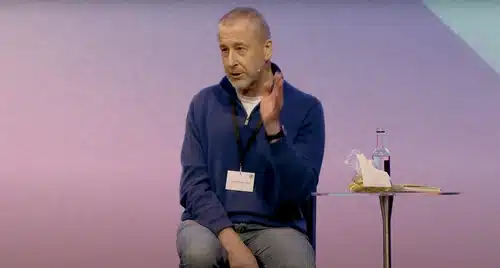
Subscribe to the newsletter

Stay Connected
to the Movement

We know that as an Entrepreneur, your most valuable asset is time. So each month we take the very best of the podcast, the blog and all the news, resources, and upcoming events happening across the space and bring it to you.

Episode 183 – Marks on the Markets: Frontier Investing with Pragma Advisors

Episode 183 – Marks on the Markets: Frontier Investing with Pragma Advisors

Podcast episode

Episode 183 – Marks on the Markets: Frontier Investing with Pragma Advisors

Ever wondered where the next great investment opportunities lie beyond the familiar US markets? In this episode, the Pragma Advisors team reveals groundbreaking research showing less than 3% of faith-driven funds are deployed outside the US, highlighting a massive opportunity in frontier markets. Through stories of transformation and practical insights, they explore how investors can make an eternal impact while seeking returns in underserved regions. This episode challenges listeners to think differently about risk, return, and the role of faith-driven capital in building sustainable businesses in the world’s most overlooked markets.

Join Richard Cunningham and John Coleman as they examine frontier markets and the 2024 Pramga Investment Market Study alongside Patrick Lowndes, Andrew Winker, and Tamanno Hodjihanova

View the full report here: https://www.pragmaadvisors.com/investment-study

All opinions expressed on this podcast, including the team and guests, are solely their opinions. Host and guests may maintain positions in the companies and securities discussed. This podcast is for informational purposes only and should not be relied upon as specific investment advice for any individual or organization.

Episode Transcript

Transcription is done by an AI software. While technology is an incredible tool to automate this process, there will be misspellings and typos that might accompany it. Please keep that in mind as you work through it.

You’re listening to Faith Driven Investor, a podcast that highlights voices from a growing movement of Christ, following investors who believe that God owns it all and cares deeply about the heart posture behind our stewardship. Thanks for listening. Hey everyone. All opinions expressed on this podcast, including the team and guests, are solely their opinions. Hosted guests may maintain positions in the companies of securities discussed, and this podcast is for informational purposes only and should not be relied upon as specific investment advice for any individual or organization. Thanks for listening.

Richard Cunningham Welcome back, everyone, to another episode of the Faith Driven Investor podcast. A joy to have you with us whenever and wherever you are catching this episode. It’s the end of October 2020 for its marks on the Markets Pod. The guy we featured on our last Mark’s In the Markets podcast is in the studio with me, our co-host John Kuhlman. And John was talking domestic markets, kind of US public markets, broader economic thoughts in the midst of an election year, federal, you know, rate cuts, things of that nature. And John, we’re doing something different today, which I’m really excited about because I know we’re going to talk about a subject that is particularly top of mind and top of heart for many inside the Faith Driven Investor community. And we’re going to zoom in on different markets, and that’s frontier in emerging markets. So, John, how are you, man? Good to have you in the podcast studio. And we’ll get to introduce our guests here shortly.

John Coleman Yeah, Richard, I’m doing really well. Obviously, this is a topic near and dear to each of our hearts, the heart of our friend Henry Kaestner, who’s spending a ton of his time thinking about developing markets and frontier markets now. And I’m really excited to look into this. It also gets us out of the echo chamber of the US election and interest rate movements for the time being, so we can think a little more broadly. So it should be a lot of fun.

Richard Cunningham Isn’t that the truth? And so we’ve got the Pragma advisors team here with us. It’s a full house. Patrick Tamano Andrew Just some leaders in the FDA space. Friends. I want you all to introduce yourselves and you’re going to start with you. And then also, Patrick, when we come back to you, maybe some of the origin stories as to how this crew came together to put together this particular pragma investment market study for 2020 for Patrick to make sure is.

Patrick Lowndes Man Well, thank you so much for having me and my team here, Richard and John. This is really exciting to get to feature some of this research and some of what we’ve been up to for, gosh, almost six years now. And from the Seattle area, it was five lovely kids, happily married and coming out of the software industry, but really becoming a generalist across a lot of different kinds of companies. And so a lot of my work and just following the work of really what God is up to in some of the hardest parts of the world to do business now is just drawn, my team and I here to research and canvas the market and so I can share a little bit more about the origin story in a sack. But yeah, we’re we’re pumped to be here.

Andrew Winker Great. Well, I can jump in. Yeah, it’s great to be on the podcast. I’m calling in from Houston today. My wife and I are Houston, been here for for several years. My passion for this space first started right when I was getting ready to enter the workforce. So like most millennials, I had some kind of vague idea of impact in my head, but didn’t really know where to direct that. So right before I entered the workforce, I took a class called Perspectives through my local church and really just opened my eyes to the global nature of God’s kingdom, you know, the intersection of the unity of the body of Christ, the diversity of the body of Christ, and mutually how we partner together. And I realized that I really want to dedicate my life to building that kingdom, not my own. So that, somewhat unnaturally maybe led me into consulting. But one of the things that led me to jump into that field, I started my career at a Bain and company out of school, and I really loved solving problems alongside tight knit teams of people. Some of the things that gave me the most joy. So the natural evolution of that for me is I’ve gone throughout the first kind of seven, eight years of my careers thinking about what problems exist in the world today, that I want to really put my shoulder behind solving, and then to who do I want to do that alongside? So right now I’ve that that’s led me a couple of different places. Right now I’m in a fun place where I’m getting to pursue work kind of through a portfolio career, doing a couple of different things, looking at work at the intersection of one redemptive business to radical generosity of capital and then three frontier markets. And I’m like the ones we’re looking at. So Paragon was a great fit for that and excited to kind of be a part of the team with Patrick and tomorrow.

Tamanno Hodjihanova Yeah, I love it. Well, my friends, I’m Tamanno. I was originally born in Uzbekistan, so a big part of my passion for Frontier and emerging markets is because I’m a part of the people that will never get to hear right unless we have development and capital and things that are working in those areas and markets for the gospel and and the end for flourishing and what that looks like. I’m calling in from Dallas, Texas. I went to a small little school here and have stayed in the area close to my local church and do a couple of different things. Part of my work is with the Lion’s Den and help with a big part of that event, and it’s happening in April every year. And then also recently jumped on with a financial advisor, Rachel McDonough, and work alongside her at Wall Square to really connect the head and the heart of investing. Right. How do we take the values that we know that we are called to as believers? And what does it look like in the ways that we do capital?

Richard Cunningham Fantastic. So as you can hear, we’ve got some experts in the crowd. Get tech entrepreneur, tech investor, Bain consultant with that kind of structured consulting background and then to mano with her roots with Lion’s Den, Rachel McDonough, who’s been such a key leader in this space in terms of helping advisors and Faith Driven Investor get in the game. And so I’m going to set up a little bit of context on this study. And one of the key things I want to note is this. Study we’re talking about from pragma, there are 2024 kind of frontier in emerging markets investment study. It will be available in the show notes for you to download. And then today’s kind of topic is going to really be unpacking it. But the reason this is so important is when you look at US public markets, thanks to folks like Tim McCready and the work of Bright Light and his team, among many others, it’s pretty easy to go get your arms around the size and kind of the scope and breadth of the Faith Driven Investor movement ecosystem because of reporting standards. Now it gets far more difficult even in established domestic markets here in the US and the private space to understand how large is the faith driven investing ecosystem as we think about venture capital or private equity or private credit, among other asset classes. And you’ll get where I’m going with this, because if it’s difficult in the US, imagine how tough it is to kind of grasp and get a sense of when you go into not only international markets but frontier in emerging developing markets internationally. And that’s the noble and honorable work of our friends here at Pragma who said, Hey, we want to go find who are the fund managers, who are the kind of people captivated by the love of Jesus who understand that redemptive and good business can be a force for good in places where that otherwise might not exist. And so that’s what our friends are going to be unpacking here today. And Patrick, with that in mind, would love some more of the origin story, how this crew here came together, what the Lord originally put on your heart and why Pragma came into existence and kind of some of the your origin story. And then we’re going to get into the research.

Patrick Lowndes And that’s excellent. So a little bit of background. It was, again, like I said about six years ago when pragma started, but even before that, probably for now 15 years I’ve been that the Lord’s called me to be really generous towards NGOs bringing transformation of all different kinds in these tough parts of the world. So my eyes been here when I realized that God’s heart includes all people all over the world, and especially the ones that are overlooked. We like to send, you know, a lot of our work to where there’s already a foundation. There’s already, you know, a strong presence of believers and Christians. And so I’ve been very much motivated to say, well, hey, where where haven’t we gone yet? And so six years ago, we started getting together. Probably about 15 people started circling together at a conference and we said, How do we get together and encourage each other more often? Maybe do some small investments together? How do we help outside of like these conference highs that we typically get? I think we’ve all been to one of those conferences where we’re like, Well, now what? Right? So we started getting together and shortly after we started getting together, I had a pretty big exit event and sold my first software company to ServiceNow. And all of a sudden, you know, at the ripe age of 30, I had this pile of cash that I was like, Wow, what am I supposed to do with this now, Lord? And so I began kind of canvasing the market, figuring out who is putting capital in these parts of the world that I care about. And to be honest, the list was not very long. I mean, John, fortunately, sovereigns is one of the short listed names there that we had, but it wasn’t I think it was 17 funds and sources of capital that first year in 2019 when we did the research. And then over the years it’s blossomed and grown. And that word, yeah, I think I’ll just say that word pragma advisors. It comes from this, you know, the parable and in Luke 19 where Jesus is saying this master said to his servants, Go put this money to work. So we’re very interested in like, how can we put our money, our talent, our skills to work? And you know, what that’s blossomed into is this focus on the frontier in emerging markets. Starting from only 17 funds. A few years ago, we analyzed more than 100 funds. So praise God for just the movement and the momentum behind the growth in this space. You know, Richard, we can get into some of the details on like how we selected, you know, what we looked at. But I just want to tell that little bit of backstory so people know kind of the origin of where we all started from.

Richard Cunningham And then you guys have an interesting definition for Frontier in emerging markets, I think is also helpful to kind of level set before we get going into the research is just like as your team thinks about defining frontier in emerging markets, oftentimes that can be just an economic calculation as to like a country’s GDP or whatnot. And what they’re doing kind of from an economic marketplace or mindset. How is the team thought about that as before we kind of get into the research for kind of the geographic landmass for what we’re talking about.

Patrick Lowndes Yeah, excellent question. Yeah, we hear this a lot and I think there’s a few angles where we can commonly look at this and I’m going to break it into three parts to make it simple. So the first one is economically frontier, right? So they’re not a Tier one market still very much developing are on the world scene. It’s frontier and it’s growing. There’s a lot of potential and there’s usually a reason why it’s not a Tier one market. And that gets to the second issue in frontier and emerging markets, which there tends to be some social, you know, political instability, you know, I’ll say destabilizing factors that make these markets more difficult to do business, more difficult to flourish. That’s why they’re not Tier one markets. And so I think a lot of people have said, hey, I want to go where it’s economically. They’re not doing well and I want to solve social issues. And we totally agree. Like, let’s do that. I mean, I love where the movement’s gone and. Sub-Saharan Africa. Also out in Southeast Asia. That third piece that matters to us in our research and as we are kind of evaluating which funds to include, because is this question of where do people only have a very small fraction of a percent of Christians that are living and doing work? Because as Christians were called to be a blessing to our own community? Right. That’s part of what God has asked us to do. But if there’s like less than 2%, 1%, a fraction, then it’s really hard for people to get a taste in a relational way of who Jesus is or what is his kingdom like. And so we’re really interested in places basically where there’s very few Christians because we feel like that’s truly the frontier from a spiritual perspective. In addition to the economic and the social frontiers that we’re also tackling. So is that helpful?

John Coleman Yeah. And I want to follow up there, Patrick, because I think what you all have articulated so far is the impact thesis for Frontier in emerging markets meaning and especially the distinctively faith driven impact you’re articulating how do we help a portion of the world develop or stabilize that’s unstable or developing? How do we, in the process of that, share the gospel, be a good neighbor, demonstrate the love of Jesus? The third question I always have, though, is kind of is there an economic or commercial case for this? And I know there are risks inherent in frontier in emerging markets, obviously, but do you believe there’s kind of a commercial or an economic case for investors to feel rosy, not just the impact that they can have, but potentially about the return profile?

Patrick Lowndes Yeah, absolutely, John. And I don’t want to steal too much thunder from my team as we’re going to get into some of that in the report and kind of what the different categories of financial and commercial return. So that’s certainly something we’re going to hit on. The little bit that I’ll say is, you know, some people look at a new market and they get excited about opportunity. Right? But I’d say most people that haven’t done an investment overseas or in a fund overseas, they are usually waiting for a later stage company. They’re waiting for a lower risk because I don’t want to lose it. In other words, I’ve got my grip pretty tight on fear of loss. Right? And that’s the reason why we don’t see people put in half their portfolio necessarily in these markets. Right. We’re talking about a smaller chunk, but there is an increasing amount of opportunity. There’s another type of investor that looks at these markets and says, wow, I can go after non consumption like the prosperity paradox talks about. I can go after non consumption in a market with kind of a venture capital sized return, but with a much more stable and profitable business because they’re just like no competition is for some of these things. So in a stable market, it’s really hard to get big returns unless you are like innovating and the only one doing it. Whereas in these other markets there’s a lot of whitespace. And so some investors and this is where we’re looking for more fund managers to come out, but some are really focused on where’s the whitespace and the big opportunity to scale. And that’s where there can be massive economic opportunity. And we’re starting to see more and more people analyzing their market like that, which is quite financially attractive.

Andrew Winker I think one thing I would add there, Patrick, it’s a great point. Really, I would take like a macro lens and a micro lens. I mean, if you look at kind of canvas the markets, we’re looking at like at the macro lens, you’re looking at two thirds of the world’s population, one third of the world’s GDP and only 10% of the world’s private capital. So just by that alone, a lot of these markets are just undercapitalized. You know, there’s a lot of kind of opportunity at that. But I think the caveat there is if you try and kind of cram that opportunity set into the just kind of pure worldly return maximization kind of mindset, it breaks a little bit because I don’t think what you can expect is to solve kind of all of those challenges on the typical ten year fund lifecycle to 20 mile, you know, So it kind of takes a different model. And I think there’s a real opportunity for the Body of Christ to lean in to some of that risk and think about redefining what does it really look like to see the Kingdom of God transcend in this kind of market with all the flourishing and blessing that that would entail? But I think that we kind of have to shed a lot of our traditional kind of risk paradigms in doing that while still maintaining a level of excellence.

Richard Cunningham I think we’re hitting on something important here. And I want to go to Tim on a real quick because she is our person who is has the frontier in emerging markets routes being from Uzbekistan originally. So how would you comment on this? And I know we’re kind of pushing off getting into the study. We’re going to get their promise. We’re kind of teasing it out further. But Tamara, I think it’s important to kind of get your commentary and then we’ll dive in.

Tamanno Hodjihanova Yeah, that’s great. I mean, maybe let’s go back. I didn’t hear the name Jesus until I came to the States. So I am one of the people who grew up in a region in a place of the world where the name of Jesus is rarely heard and continues to be the case for a big part of the world. And that is a big part of the reason that I think both my heart and. It’s hard as and learning to recognize that we as a body of Christ have a commission and a challenge to walk into the hard of places like this and redefine risk and look into a different way of investing to recognize that maybe yes, John, we’re maybe not in a place where we can have the same amount of return as you would hear in these markets or even in the public markets here. But there is a place in a space for us to lead out, to recognize that there is an opportunity here that we can both have spiritual, economic and social and environmental impact all at the same time. And we have gotten to see a big part of the organizations and the times that we’ve gotten to highlight, just even as Patrick mentioned, having 17 come to over 35 this year and see the movement of local leaders and international leaders working in these places and seeking to look at transformation differently, seeking to look at risk differently. I think there’s a lot to be said for how this space is changing and how it will continue to over the next couple of years as we get to see more capital and hope and pray that more capital would get deployed in these areas.

Richard Cunningham That leads to a lot of questions. So let’s dive in and let’s kind of go bottom line up front friends and maybe kind of when you look at this study from a 30,000 foot view, maybe major takeaways and also kind of some of the methodology of the study as well, because we’ve talked about the number of funds there are out there, the number of capital allocators and the people we can kind of go evaluate and get their sense of how they’re thinking about impact plus return is is it more concessionary? Is it fully market rate, whatever that might be? What was kind of the overall approach to the study? And then maybe kind of some of those larger takeaways and then we’ll dive into those as we go?

Patrick Lowndes Yeah. Andrew, would you like to maybe talk about we looked at more than 100 funds. What were some of the screening factors that we had? Because I think that while some people might look at the study and say, Hey, wait, you’re missing so-and-so. And I think it’s just good, maybe the level set with that. And then, yeah, we’ll jump into some of the high level themes, but would you mind hitting that for us?

Andrew Winker Yeah, no, I think that one of the things I had found into my brain for my consulting lifestyle was kind of what it means to take a hypothesis or a thesis driven approach, you know? So with that in mind, kind of our overall way we looked at this was just start off with a couple of relatively simple critical questions that we wanted to answer. So things like we already talked about a little bit, what do we mean by frontier markets? You know, who’s even participating in this space, who’s been doing work here? How much capital is being deployed? Where is it being deployed? What’s the target financial return of those investors. So we kind of set out with a couple of questions we wanted to answer. And then from there, it was a lot of kind of honestly, a lot of picking up, don’t you know, we did over 30, 40 kind of interviews to really get a kind of a bottoms up perspective of what’s going on in these markets. We supplemented that with a lot of secondary research. I mean, huge things. It was incredible to kind of go through the database that FDI has of these kinds of different funds in different places and get to supplement that with some primary research. So kind of a combo of both of those things. And we do want to celebrate. There’s a wide variety of approaches people have to this. Our particular criteria for when we were looking at funds was first and foremost sources of capital that are kind of led by Christians or followers of Jesus, focused on companies with Christian or Kingdom kind of led founders and leaders that are pursuing multiple bottom lines of impact and what they’re doing, and they’re deploying capital directly into companies. So those are the four kind of criteria we looked like. And that kind of frames up the who in the landscape that we’re looking at in the study.

Richard Cunningham Helpful. So we got Faith Driven Investor is deploying into Faith driven entrepreneurs direct investments. So the investor is kind of exercising their influence as being a shareholder on the company’s cap table. Good. Patrick, what else would you add?

Patrick Lowndes The thing that I was going to highlight were and you ask are like, what are the big takeaways? And this might be obvious, but just to state it and you’ll see it graphically in the study, just there’s a big uneven distribution of capital. We’re talking about less than 3% of funds in the space deployed outside of the US. And if you’re looking in, our target area tends to be North Africa and the Middle East and the better part of Asia. We’re talking about point 1% of funds that are intentionally deployed towards these kinds of markets. So I mean, we got a lot of headroom to grow in this space. But the second big takeaway that we had is just we talked with lots of fund managers. We talked with individual investors who are prolific in this part of the world. And another theme came up, John, it kind of begs it goes back to your question about what are your expectations? And so, you know, having the right expectations matters a lot. So this is the third time we’ve done this study. Some of our favorite reports that we do and the analysis is are two by two. And I’ll just take a second, Richard. I’ll just unpack that. So what we’ve got is this two by two looking at on the y axis going up the left side, we’ve got kind of geography. Where are you focused? Right. So again, the parts where capital is prolific and saturated, abundant, it’s on the bottom. And where it’s not abundant tends to be. On the top in our target area of focus. And then on the bottom is the target investor financial return. There’s about 44 funds that we analyze in this space. And you can see a nice gap of how much capital that’s being deployed. And what you’ll see when you look at that is just it’s pretty stark how tiny the dots are and the bubbles are that are deployed in these parts of the world. And then just as you kind of get to the more established parts of world, naturally that’s where more capital will be. So we think that’s a helpful way for people to understand who’s focusing on some of these harder to reach areas in the frontiers and how can I orient part of my own risk profile to try to maybe step into that, maybe to try to you know, this is called Faith Driven Investor. Like, where’s my faith? Am I going to invest only by risk adjusted returns, or am I actually going to invest in faith that maybe in sometimes makes me look like a fool, right? Am I willing to actually risk some of my own perception, you know, in the market to friends or my financial advisor? If I make some bets, that might look really risky. But to the kingdom of God, if you’re able to move the needle beyond just the financial, do you remember to move the needle on other areas? I mean, I had a CFO one time show me the IRR, you know, with looking at all the factors, all the bottom lines. And if you look at for all eternity, out to the right. The IRR numbers are ridiculous. If you truly do value those other kinds of impact as being real impact. So it’s just a very different way to look at investing in these parts of the world. So that two by two, I just give a shout out there, Richard. That’s usually our favorite. People say, I never knew where the money is going in the world.

John Coleman So let me dig into the topic with you also, as I mentioned to you guys, since we were chatting beforehand. I’ve spent a little bit of time in developing markets, worked in Afghanistan and Saudi Arabia, had teams in the Middle East and Africa and Asia for a while. And, you know, there are a lot of legitimate challenges, I would say, that make excellence operating in emerging markets even more important than operating in U.S. markets. You know, on Faith Driven Investor, we often talk about trying to institutionalize the space such that people are investing because we’re really excellent at what we do, not just because we’re Christians. And I think the demand for that in emerging markets or frontier markets, and this is my personal opinion, can even be greater because I’ve also seen how destructive certain types of philanthropy and investment can be in emerging markets. There are legitimate concerns that entail real risk. People care about the security and safety of the people for which they have responsibility. Obviously, even regulations, anti-terrorism measures like we had to blacklist certain countries in the frontier markets, even at relatively extensive investment firms. I was out because we couldn’t be implicated in not understanding where the financial management of those funds was going to. And even when I was on the ground in Afghanistan, we were still having to pay for things with briefcases full of cash and the controls over that was challenging. It was really challenging to think about operating in that environment. So apart from just kind of the risk tolerance people might have for losing their capital, how do you think about the demand for excellence in emerging and frontier markets, both for the protection of investors, but also to assure that that capital is serving a constructive rather than a destructive purpose with the people it’s encountering?

Andrew Winker I mean, John, I think it’s an excellent question. I mean, I think that we’ve all seen a lot of the harm that aid can do when you might be trying to solve the wrong problem with aid. You know, and I think one of the really cool things that we see in this space is a lot of the things that we highlight is there’s really kind of a community element to it. You know, so if you think about how are we not just deploying capital into these regions, how are we really also putting our shoulder behind trying to really think about solving some of those problems alongside others? So several of these groups I mean, I work at the fund that has kind of every single investment is paired kind of within this mentor network. You know, so if a company that’s doing a food distribution business in Central Asia is looking at, hey, how do we solve some of these problems, well, let’s find someone in our network that was a VP at Cisco Foods for for 25 years. And how do we actually connect them to where we’re not reinventing the wheel, solving some of these problems? It’s just a more effective distribution, you know, of really kind of matching those problems. But I think that that will take patience. You know, I mean, you’re dealing across some more like that example I gave was someone that probably is more Western on the Cisco side dealing with someone in a frontier market, with a different culture, with a different kind of land. And so it really does, I think, take this mutuality of relationships going in to do that. But I think there’s an incredible opportunity for it. I think it just takes kind of reengaged with a little bit more than capital, which is one of the reasons we had a lot of there’s a lot of incredible capacity builders doing work in this space, too. You know, so we really long to see there be collaboration across, I guess we could call the whole value chain of capital into these markets, you know, and really see some collaboration both across kind of individuals joining these teams, but also organizations themselves.

John Coleman I love those stories and I would love I mean, if you all have another example would be kind of fun to hear a story of someone who’s navigating this well.

Tamanno Hodjihanova Yeah. I don’t know if I have a story, but maybe to add on to what Andrew was saying is I think it’s also really important to have local leaders on the ground in those countries. Right. It’s one thing to try to have a fund here focused on a country in the West, you know, from the West perspective, and that’s great. But there’s a part of trust community building, relational building that you don’t get unless you have a team and people locally on the ground that know, get a sense for the culture, know what it is to work. And so a lot of the organizations that we interviewed and you tell me if I’m wrong, but most of them have and or travel pretty extensively into those regions or have teams on the ground or have partnerships that they have developed over the years that allow them to help with some of the due diligence, some of the work that’s happening in relational building as well as our story that we can think of. I think that’d be fun to share.

Andrew Winker I was just going to share, I think one group that’s kind of pulling together a lot of this stuff in a really cool way is a group called Angelo Investment Network. And so they’re actually a network of these different fund managers and kind of entrepreneurs. And so one of the really encouraging things that I learned through this study was just kind of seeing the seeds of some really incredible locally led ecosystems in places like Egypt, Pakistan, Mongolia, with a lot of national and leaders really coming together and saying, hey, how do we think about really blessing our markets? You know, and I think that we really have an opportunity to join with our brothers and sisters in those parts of the world, you know, and learn from each other, you know, and actually pull up to the table and listen. There’s kind of this convening of these leaders. And so I think that that’s one story, an example of I think that we really can kind of come to that table as listeners and say, hey, what does God do it in these parts of the world that we might not even know about, you know, and how do we kind of doing this? That’s one group, I think, from the study that I was really encouraged by. There’s there’s plenty more. We we actually kind of profile meetings like 5 to 7 that we know particularly well. So if you’re curious for more specific kind of stories, I would point to those in the study of some of those kinds of sources of capital or funds that have been operating for a long time in these parts of the world.

John Coleman That’s awesome And maybe articulate. You know, I think one thing that people overlook, there is such a history of charity in these regions, right? I think when people think about doing something good in Africa or in parts of Central Asia or in parts of Southeast Asia that are more impoverished, they typically think about funding one of the excellent humanitarian organizations, anti-poverty organizations like World Vision or Compassion. And those play a role. But I also think that the future of these regions will be contingent upon them developing their own sustainable enterprises. Right. I mean, that was really the work we were tasked with when I was in Afghanistan was aid was almost distorting that economy in unhelpful ways because the smartest, best equipped people were all figuring out ways to just work with the United Nations or with other organizations handing out aid rather than building businesses. Right. That would exist long after these aid organizations had exited. Talk about, if you don’t mind, just kind of the role that private capital plays in building sustainable industry or business in these areas versus the philanthropic which is worthwhile in its own right. So I’m not diminishing that but is not well equipped for certain problems.

Patrick Lowndes John, we have on page six of the report, we have a really. A nice classic. That kind of helps picture the difference and like kind of the role that aid and charity play alongside in sort of like relief as opposed to just like rehabilitation and then the final stages like development. How do we now develop out of that? Right? So I’d point people to page six of the study, but at a high level, you know, leaders like Angela have told us we don’t just need people to show up and dump lots of investment capital into markets today. We don’t need that necessarily right now. What we need is the awareness of where communities are and ecosystems are in the stage of maturity and readiness, because sometimes we’re still working on the basic like shifts in mindsets and critical thinking and shifts and mindsets on how does relationships work. But transparency, where I’m willing to collaborate instead of hoard power, right, where I’m not in a survival mindset, but I’m in more of a flourishing, an abundance mindset, right? Kurt Laird’s book, The Culture Key, really unpacks this. If you want a good long read on this topic. And he actually was in Afghanistan telling a lot of these stories. So I would say coming to the table as an investor, the first good question to ask is who’s already here? What’s already happening and how ready are they to pursue? Even if you have a pitch deck in front of you, like how ready are they within their market to operate this kind of a business? Right. And those are the kinds of questions, some of the most excellently run funds, they have networks of people on the ground. These are not people just flying in from across the world and have no context culturally. So I think that’s how we as Faith Driven Investor can come in with foreign direct investment as an excellent partner and co investor.

Richard Cunningham That’s really good. All right. So there’s so much in so many different directions we could go in and I’m enjoying this conversation a lot, but one of the things I want to talk about is making it super relevant to the Faith Driven Investor who’s listening to this and is just like, Man, I’m just trying to think about how to implement negative or positive screens in my public market holdings and my asset allocation here domestically at home, like Frontier and Emerging Markets was maybe on my mind from a like a charitable capital standpoint. Now you’re kind of giving me the argument that, okay, like maybe this should also be something I consider from a investment capital standpoint. Patrick, you mentioned on page six that kind of overview of moving beyond charity. And I also think, you know, Greg learned a hand as the person I think of in the FDI ecosystem is help kind of popularize this idea around. Like as Americans, we give $557 billion and I’m using your data here. This is from 2023 to charity. And we have a million and a half nonprofits in the US competing for that same kind of pool of capital, which is that $557 billion it’s given the charity. Now that’s a significant amount of wealth and capital that’s given, but there’s $50 trillion of investable assets in the US alone. And we probably estimate just from kind of demographic data that 50% of that is held by Christian. So I love the way that you guys unpack this, where it’s saying, Hey, there is a charitable universe to this, but there’s also an investable universe. So maybe lean more into those tensions. And I also want to talk about kind of dipping back into the terrible waters, how this is possibly a way for someone to engage with donor advised fund capital. So now it’s kind of the blended world where it is given capital that can also be thought of as impact investment capital, not just given capital to adapt. That goes out as a grant to A501C3, but it’s given that could then be invested. So what thoughts do you guys have there?

Tamanno Hodjihanova And that’s great. So I think the question of I love that we get to blend both charitable and investment, all our conversations in the ways that we approach capital and maybe to make it super practical to the general Faith Driven Investor audience. Right. It certainly is recognizing that and we say this a lot on the feature and podcast, Everything that we own, everything that we have got, owns, right? It is all his those resources all belong to him. So what would he have you do? What could that look like? Is there things that you’re not currently thinking of in the ways that he would have you to do with that capital that may be a little outside of your comfort zone, and a part of it is leaning in to recognize that that could be the case. And a second is there’s a section in the report where we talk about how do you prepare yourself and then how do you walk with people and walk alongside them? The stuff is really hard and nuanced and it’s not something that you jump into and automatically know what to do or how to walk in the steps over. There are people who are leaders that we stand on the shoulders of that have continued to do this work. And so I would just encourage you to walk alongside your financial advisor if that’s the case. Right. Or finding people in the future in space that are working out sort of answer the questions that are hard and take a lot of time and due diligence. The other part of it is getting involved in communities and in events that are doing work like this that allow you to take small steps and invest with others to learn more. Something that I think I would encourage our veteran community is to look that our patients, we often want really quick results for lots of different things. I want to be able to invest capital and great after this all works out. But the reality is most people have been burnt out in front of an emerging market investments. We’ve talked about this beforehand. This is really hard. It’s probably not going to go the way that you thought will. And so taking baby steps will be the best way to walk into that space to know how you do that with others and then recognizing that there are ways and things that we can learn even when investments may not go the way that you thought. And this is also not a big part of your portfolio. Please don’t put all of your investment capital into what this looks like. But there are ways that we get to deploy mindfully and with wisdom to know how to do that. Does that help A little bit. And Andrew, please. The deaf world is fascinating because I think it’s a great first step that will allow you to donate, but also then get to experience kind of the investment side and working alongside some of the funds and companies.

John Coleman And maybe before Andrew jumps in, the one comment I’d offer there is people can often put more capital to work here than they think. I agree with you. If you’re managing kind of a balanced portfolio of your private capital, that frontier in emerging markets would typically be a small percentage thought about differently in the dark world, for example, which you just brought up. If you’re dedicating a lot of philanthropic capital to the emerging world, your ability to repurpose that, at least temporarily, for investments in the emerging world, which could ultimately then also be given philanthropically because you’re trying to earn a return on that capital could be a smart way to deploy that. Right. If you’ve got a great deal of your wealth, I mean, we know people, thank goodness, in our ecosystem who really believe this idea. You talked about that it’s all God’s right. And so they’re putting 90% of their net worth into philanthropic capital. You know, thinking about repurposing some of that, at least for a time, into investment capital or vice funds through places like Impact Foundation, etc.. You can actually put a lot of capital to work here and with a totally different mindset than you might take to call it your standard investment portfolio. Right. And so I would push our listeners maybe a bit further than you would because you’re being so conscientious that especially with resources like you all are developing that give people Guideposts to where they might steward this effectively, our ability to think creatively about the capital we deploy in this space and hopefully provide enough capital that we can be catalytic to those regions. I think there’s an extraordinary opportunity there. And you’re right, everyone needs to be sensible. You don’t want to put capital to work that you need to survive or that your kids need to go to college necessarily. But there are pools of capital out there that I think people could see through this way. So not contradicting what you said at all, but just saying you’re being incredibly conscientious, which is appropriate. But I think the vast majority of Christians who are dedicating a lot of philanthropic capital really could think more creatively about the ways in which they deploy that sometimes in this space.

Andrew Winker John I think that’s spot on. And if you look at the last like in 2022, there’s an estimated 224 billion in DAF assets. You know, if you look at our study, like when we kind of layer in, I mean, obviously pointing to Tim McCreadie did some awesome research. There’s 100 billion public markets Faith Driven Investor you know so even if you just think about wait, there’s two acts the number of DAF capital assets sitting waiting to be deployed. I think that the idea of permanent capital is an excellent lever. You know, it seems like a no regrets move that if if you had a magic wand and you could think about how can we creatively and patiently take that capital, that might be it’s already pre given, you know, and think about really joining alongside others. I think that’s a definitely a an arrow in the quiver to think about. That being said, I mean I do think there really are opportunities from anything from pure donation, you know, to helping to operating budgets of things, to catalytic capital, you know, looking at more kind of below market returns, but with a longer term impact all the way to there are opportunities for above market returns, as Patrick was saying, in some of these places. You know, I think those are all kind of areas in the quiver in an impact foundation. Using your DAF to invest is definitely an important lever there. I think that on the concept of time horizon is important here. You know, in general, I think that faithfulness over long periods of time is what yields fruitfulness. And so if we really are investing for eternity, you know, I think that we need to be able to stretch beyond that typical ten year fund life cycle that most people think about. And that’s typically the book end of our time. And if we’re honest, a lot of times you’re not even patient for that long. You know, if you’re really trying to invest for enduring transformation, it’s going to take time and patience, but it will be so worth it. It is so much joy to get to labor alongside our brothers and sisters, join Shoulders and do this together. But it’s going to take it out of the comfort zone a little bit.

Richard Cunningham I want to do this real quickly. I want to hear from each of you. When you think about the number of funds you got to interview the 40 something plus that ended up in the study and a name comes to mind from it from an impact methodology and approach. We’ve got to be careful here that this is by no means an investment recommendation. We’re trying to highlight and shine a spotlight on great work and faithful believers getting to work in markets that otherwise there hasn’t been a lot of activity. But I think each of you Rapid Fire would love to hear you talk about a particular approach that you’re captivated by and maybe kind of set up who they are, where they’re operating, what their kind of methodology is to kind of help give more kind of color and texture to some of these funds you’ve interviewed. Patrick, let’s start with you.

Patrick Lowndes Yeah. I mean, I think clearly the leader in this space, I would say, is transformational as Sammy for more than 20 years, I mean, $9 million of capital and the level of diligence and rigor on the ground and the people, I mean, they have basically shown us as younger, you know, next generation shown us, here’s how not to screw it up. Right. And so I think I look up to transformational, see me as probably one of the leaders in the space. And we did highlight we did a little feature on them. And again, it’s not a recommendation, it’s just something to go research. We’re a research group with that. So yeah, that’s one.

Andrew Winker I can go next and let tomorrow. Hopefully I don’t steal yours tomorrow. And I loved I think a lot of listeners might be familiar with the Lion’s Den. You know, there are some great lions dens in Birmingham and in DFW. One of my favorites that I’ve gotten to participate in the past couple of years is a lion’s den put on by a group called the Open Network. And that’s a really incredible way to kind of learn in community. You know, so making direct investments in some of these companies, getting to meet and just hear the stories of people running these businesses, but then also going to invest alongside others, you know, who have some experience doing that. So it was a really fun way for me, kind of relatively early on to pull together capital with some friends and invest in that kind of way. So again, as Patrick said, caveat that with 50 million different kind of disclaimers of not professional investing advice, but we really I think they’re doing some great stuff. And Angela network, as we said earlier to you.

Tamanno Hodjihanova Yeah, I’ll hone in on Angela for a little bit. I know we’ve already mentioned them, but something that really stands out to me with them is that they’re not operating out of the US. They’re also very locally ecosystem minded, right? So they are bringing together leaders and investment operators that are based in those regions and helping them to think holistically about a transformational plan not just for their city, but for the entire country. And then looking at how to create ecosystems and support around that, that allow for long term development and transformation, which I think is just super, super cool. That’s really encouraging for my heart to know that we have local leaders on the ground that are creating funds and investment networks and working alongside to do that for their own regions, which is at the end of the day, that’s where we want those communities to be.

John Coleman Well, I know Richard’s about to drive us to our final question, which we always ask about what folks are learning through Scripture. I wanted to conclude before we do that and we closed the podcast just saying two things. One is I really appreciate the work that you guys are doing. I think we are called as Christians to engage with the poor and disenfranchized. We’re called to engage with the world broadly to those who are unreached. So many of those are outside of the developed markets right now, where most of us live. Most listeners are actually in the United States, for example, where there’s a mission field of its own. But we’re really called to engage more broadly than that and to bring the church abroad. And I think we have an obligation to that, not just as Christians, but as human beings, right? Where there’s the greatest need in the world is often outside of our country. And I love that you guys are adding rigor to this, that you’re trying to help be a guidepost to others. Patrick That you’re putting your own all of your putting your own resources against this in a way that’s showing that you’re supporting on behalf of something greater than yourself, not just for yourself and the heart that you all have for this is awesome. And I’d really encourage FDI investors, as Richard was saying, this is kind of the final horizon. This is the frontier for most folks because, you know, public equities is where you start getting into private equity itself is a little bit challenging. Sometimes thinking about doing that in Ethiopia or in Afghanistan or Tajikistan, etc., is probably even a step further. And the fact that you all are trying to professionalize this space, but research against it to identify those who can be effective partners in this space. Man, what an awesome mission. Field and our our hope. I know I know Henry is deeply passionate about this is that folks will join him in that mission or really inappropriate ways to monitor to your point, with their own finances. Think about how to do that and really make this a core part of the way in which they engage philanthropically and through investment dollars, whether philanthropic or private in me. And I’m just so encouraged by the work you all are doing to put diligence behind this and rigor behind this, because I think it’s exactly what’s needed in this space.

Richard Cunningham Yeah, I’ll pile on because I’m scrolling through the research report in full, as John is saying this comment, and I’m astounded. Like you’ve got a market map and it’s not just the sources of capital. We’ve been talking about the funds I’ve highlighted, but there’s also the capacity builders, there’s the investor support. So the advisors that are really thinking about this, there is the infrastructure in terms of like, hey, how could this capital actually flow? Then there is specific breakdowns of those different sources of capital who they are, where they’re operating. There’s investment minimums. Then there’s thought leadership around like, Hey, is that equity, is it debt, is it performance based kind of revenue financing? What does that look like? They unpack the value of having a guide. They provide specific highlights and amounts deployed. I think people often ask is like, hey, give us the specifics. We’re looking for kind of the the teasers and the two pages and that overviews of like how I could actually as a Faith Driven Investor step up and get in the game. And so I think this research, as John is saying, is crucial to that. I’m also a sucker for a good two by two framework, and Patrick got into that earlier. It’s phenomenal. It breaks it down geography basis. So I’ll stop there. I could pile on all day long, but thank you guys for this exceptional work. And we’re going to close with what we always love to ask. I’m going to go around the horn and be brief because I know we’ve gone a little long here. Is that what’s God been teaching you in in through his word lately? We’ll go Patrick Tamano and then Andrew. That’s our final question we love to ask each and every iPod.

Patrick Lowndes Well, we’re in the book of Exodus at our church and how God shows his power over the gods among us. And the most popular competitor to God being the God of men in our money. So I’ve just been encouraged that even in this alternative investment class, I shouldn’t worship my financial security or my portfolio return, but I should be just remembering that God is my provider. Seek His kingdom first. You know, even like I was just mentioned in the Richard Garnett episode 180, just being focused on eternity. So that’s what I’m learning in the Book of Exodus.

Tamanno Hodjihanova Yeah. That’s awesome. I love the Book of Access. I’ve been reading through the Gospel of Matthew and I’ve just been struck by how many times the word behold gets used before miracles or certain things that Jesus will do. And just a reminder for my heart. Right. The Lord is not asking us to do all the things just for the sake of doing them, but rather we get to behold and see the work that he’s doing and will continue to do and join alongside him in that. And man, what a cool way of getting to see his glory and his faithfulness even more so as we just get to look to him for those things.

Andrew Winker It’s an awesome company. Yeah, I’ve been trying to spend a lot of time just naturally. I’ve kind of run pretty fast, so trying to slow myself down and really enjoy, just kind of trying to chew on just the Sermon on the Mount. And so specifically just it’s been incredibly freeing for me, hearing Jesus’s words talking about do not be anxious, you know, just kind of soaking in the language of will he not much more. Just those kinds of words. So really trying to simplify my life around what does it mean to seek first the kingdom? You know, it’s his job to provide for my needs, not mine. A lot of times I can kind of run to that. And so those types of things can sound cliche to me, but so I really have to remind myself that seeking first the kingdom doesn’t mean seeking first my job or my work so that I can seek first the kingdom or trying to mobilize others into seeking first the kingdom without doing it myself. It it’s really, truly trying to build my whole life purpose around enjoying God, beholding Jesus and partnering with Him to build this kingdom where it’s moving. And so it’s truly what my heart longs for, or at least it’s what I want it to. Sometimes it doesn’t, but that’s been freeing for me.

Richard Cunningham It’s good. Andrew My wife’s memorizing the Sermon on the Mount right now, and I think it’s slowing her down.

Andrew Winker She’s got me beat. I’m not trying. I’m. I’m. I wish I could memorize it.

Richard Cunningham She’s way cooler and better than I am. All right. A bonus round question really fast, Patrick. Pragma has done this incredible study, but there’s more that you’re up to. And I think kind of the framework of what all you’re doing helps people kind of understand the necessity and the size of the opportunity. So close is there.

Patrick Lowndes I’ll give you three pillars. So this is our first pillar insights into research. And this is also what has been happening where capital is flowing. We’re also beginning to look at where market opportunity could be in some of these markets. So more on that. That’ll be a future episode. We’ll talk about that. The second piece is just investment advisory and trying to work with family offices that are looking to get more strategic. How do I take the first steps? How do I think about all the different options in the space? And the final piece is, even if you have market opportunity and you have a plan to deploy capital, you need talent, you need great operators. And so we’ve been doing this for six years now, helping operators get a little bit sharper. And so that talent pipeline is the third pillar of what we like to do. And there are some ways that we do that. But yeah, we love any and all those things that are going to catalyze more resources, more excellent operators. And at the end of the day, a lot more people that love Jesus blessing the nations and the whole world with their gifts.

Richard Cunningham Super cool. Well, hey, this has been the Faith Driven Investor podcast where we’re zooming in on the 2024 pragma investment market study focused on emerging and frontier markets. Patrick Kimono Andrew, one encouragement to have you on Friends. You’re going to download this report either at pragma advisors.com or we’ll have it in the show notes. So we’re going to look at and say, Yeah, this looks like it was put together by some expert consultants. It’s good work. And so thank you for being on Friends and we will catch everyone next time.

Andrew Winker Thank you.

Speaker 2 We are grateful for the opportunity to serve this community and see your listeners come in for more than 100 countries. Faith Driven Investor. It can be a lonely journey, but it doesn’t have to be. The best way to stay connected is to join a group study with other investors looking to get the same answers to questions you have and find great community as they do so. There’s no cost, no catch. In person or online, you can meet an hour a week with other peers from your backyard or the other side of the world. You can also stay connected by signing up for our monthly newsletter and faith driven investing Dawg. This podcast wouldn’t be possible without the help of many of our friends. Executive Producer Justin Foreman. Intro mixed and arranged by Summer Drags Audio and Editing by Richard Barley. Our theme song is Sweet Ever After by Ellie Holcomb.
Subscribe to the newsletter

Stay Connected
to the Movement

We know that as an Entrepreneur, your most valuable asset is time. So each month we take the very best of the podcast, the blog and all the news, resources, and upcoming events happening across the space and bring it to you.