Episode 172 – Finding Financial and Spiritual Returns in Real Estate Investing with Chuck Welden

Episode 172 – Finding Financial and Spiritual Returns in Real Estate Investing with Chuck Welden

Podcast episode

Episode 172 – Finding Financial and Spiritual Returns in Real Estate Investing with Chuck Welden

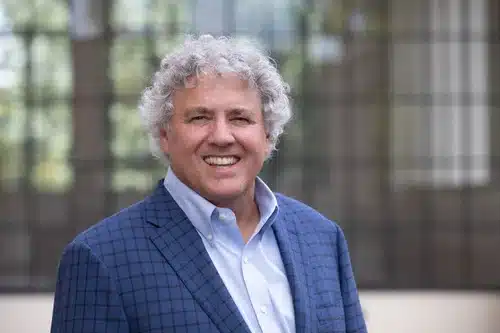
Chuck Welden, co-founder of Weldenfield, joins the Faith Driven Investor Podcast to discuss faith-driven investing and the impact of real estate on communities. 

Weldenfield is a real estate investment company that focuses on multifamily properties and deploys volunteers to live on-site and build relationships with residents. The goal is to create a social fabric and provide opportunities for gospel presentations. 

Chuck, Richard, and Luke dive into the importance of measuring key performance indicators (KPIs) to track the impact of work and ministry, as well as the importance of taking risks and managing expectations in early-stage investing.

Chuck also gives some guidance for believers looking to get in the game and steward their capital for the good of others and the glory of God. 

If you like this episode, please rate, follow, and share the show with others.

Conference Video Mentioned (Produced in partnership with Faith and Co.)

All opinions expressed on this podcast, including the team and guests, are solely their opinions. Host and guests may maintain positions in the companies and securities discussed. This podcast is for informational purposes only and should not be relied upon as specific investment advice for any individual or organization.

Episode Transcript

Transcription is done by an AI software. While technology is an incredible tool to automate this process, there will be misspellings and typos that might accompany it. Please keep that in mind as you work through it.

Richard Cunningham: What’s going on, everybody? Welcome to another episode of the Faith Driven Investor podcast. We are grateful to have you joining us as we record this. It is Monday, May 13th, 2024. This episode will actually drop on Monday the 20th, but whenever or wherever this faith driven investor podcast finds you. Thrilled to have you listening. My name is Richard Cunningham, joined by one of our faithful mainstays in Luke Roush, co-founder and managing partner of Sovereigns Capital. And Luke. We are in for a treat today, my friend, aren’t we?

Luke Roush: We are indeed. We’ve got one of our great friends who’s on today and someone who I’ve got a personal relationship with […] together with him, we’ve served on boards together. We participate in things like Christian Economic Forum together. And I really appreciate his generosity. And actually jumping on the podcast today, I was worried he might still be in mourning since Saban’s retirement from Alabama, but he’s come out of, mourning to, spend an hour with us, and we’re grateful for it.

Richard Cunningham: Yeah. Chuck Welden out of Birmingham, Alabama. Weldenfield the lion’s den. You know, Chuck, I had the privilege of joining the faith driven investor movement in May of 2021. So three years ago. And I’d be willing to bet that there hasn’t been a week that’s gone by since I’ve been involved with Faith Driven Investor, where the name Chuck Welden wasn’t mentioned. And I think it’s just because you’ve been blazing a trail, leading so much of this kind of conversation around what is faith driven investing, living it out yourself. And so we are overjoyed and thrilled to have you on the podcast, and you find us in this season, Chuck, where we are going back to folks who were featured on the 2024 Faith Driven Investor conference that aired in January. Whether they were a speaker, there was a video story on them, and Faith encoded this just masterful job telling the story of Welden Field, the real estate investment company that you helped run there in Birmingham. And so catches up, Chuck, who are you? What is Welden Field all about? For those that maybe didn’t get to see the conference feature, and we’re just so thrilled to have you on the pod today.

Chuck Welden: Well thank you. Chuck Welden from Birmingham, As you have already said, one wife four kids and ten grandkids. So that’s that’s the way you want to do that as far as ratios. Thanks for having me on the show. It’s pretty risky, you know, handing me a microphone. I assume you have some ability to turn me off or edit at the right time. And by the way, if you want to hear any Luke stories like, when he shipped his new […] to my office by accident, if that would be helpful, you know, to help set the stage. I’ll be glad to tell you the rest of the story sometime. You know, in Birmingham, we’re big fans of FDI. Eversource has a watch party every year, and we all go to it and love it. So thank you all for really investing in the whole country in the movement. I really appreciate what y’all do. I would like to start with 2 or 3 quick comments though. I like to say when I get a situation like this, one is, you know, if we’ve accomplished anything, it’s only because God’s been about it. We just basically, where’s God involved? And let’s go jump on his bandwagon. Number two, if you think you’ve been accomplished just because of all the folks that have invested in us. I mean, Birmingham is a backwater town, and yet we’ve had so many great people come here, invest in us, befriend us, teach us, mentor us. And it’s really advanced our thinking. We could not have done it without that. And third thing is, I know I’ll butcher whatever you say today, so I really prefer […] to watch the SPU video or the little five minute animated video that we made. They both do a great job explaining the fund and why we’re doing it and what we hope to accomplish. So if they sent Richard, we can refer people back to that. That’s probably the best thing we can do at the end of the day.

Richard Cunningham: Yeah, we absolutely can. And when people hear SPU, it’s Seattle Pacific University. They’re the crew behind Faith and Code that did this remarkable feature of Welden Field. But yeah Chuck hand it over back to you.

Chuck Welden: So maybe I’ll just give a little context for who. Weldenfield is basically my father, my uncle and another gentleman, Mr. Field, hence Weldenfield. They created the company back in 1977. And we’re active in property management in both multifamily. And then also we do development and redevelopment of hotels, multifamily, single family land and do good bit of private equity investing, including sovereigns, which has been a blessing for us as far as kind of a scale of our operations. I have about 850 employees, 14 states. We manage about 200 properties, about 20,000 units, and we’ve developed well over 12,000 units of multifamily, 3000 units of single family, you know, several hotels. So that doesn’t mean that we are smarter. That doesn’t mean that we make less mistakes. In fact, it probably tells you that we’ve made more mistakes because we’ve done all that. But we like to fail forward and try not to repeat the same mistake again, but we always assume it is. So that’s kind of a background of, you know, Weldenfield in a nutshell.

Luke Roush: The idea of actually failing forward and, learning from past mistakes. In the early days of sovereigns, we had something called RMD, which we, aggressively tried to avoid. And RMD stands for repetitive Mistake disorder. And, we suffered from RMD in the early days. But to your point, there’s opportunities to just process together as you bring new team members on. Sometimes they experience the same mistakes that you made before, and that really means that you are, in this case, me. I failed to appropriately train them on some of the mistakes that we had made. And so this idea of continuous learning and improvement, not just for existing staff, but new staff, you know, you’ve forgotten more than a lot of people will ever know about real estate Chuck. So maybe speak a little bit about that. Some of the things that you guys learned in the early days, that they really want to make sure that you’re avoiding in the current moment.

Chuck Welden: Yeah, we have lots of theories going into this, and it’s like, where’s the Tysons? That everybody’s got a plan until they get in the mouth. And so it’s true in real estate too, you know, we to about five properties of the fund in a variety of locations but for different demographics, all things that would help expand our knowledge base so that we could do a better job going forward. And we’ve learned some things. I mean, learned lots of things. For instance, we basically have 3 to 6 people volunteering ten hours a week that live on site. They get a rent stipend, and basically we provide a fishing pond. That’s kind of what we do. We give them a fishing pond. They want to love their neighbor, serve them, be involved in activities and social events that have a chance to lead to a gospel presentation. We call it connect, share, gather, train. That’s what we provide. We were we’re a fishing pond. And here’s some of the things that we learned quickly in the fishing pond. One is when you buy a property, you think you own it, but people who have lived there already, they own it. You’re visiting their house for the first year. After a year or two, it becomes your house. And so we have to be less aggressive the first year or two than we thought we could be. We thought we could be more aggressive, and really, we have to be more cautious and really go deep in those relationships. Number two, we started off thinking we’d only have 2 or 3 people per site. We realized quickly if somebody leaves or if two people leave, all of a sudden, all those relationships you’ve created, all those time spent, you have to start over again. If you have 3 to 6 people there, then or two people leaving doesn’t put you back to ground zero again. The third that we found out is ministry is messy. You got to be ready for anything to happen.

Richard Cunningham: That’s awesome. Chuck, maybe back up for a second and talk to us about how you kind of got to this investment thesis or methodology. So we’re really talking multifamily real estate investing here, buying apartment buildings. And then you’re talking about thoughtfully deploying people into these apartments. And you mentioned volunteers. So I’ll be curious about how that works as well from an economic standpoint with the fund and returns and what all that looks like. So thoughtfully deploying people into these communities to go spread the gospel and be on mission.

Chuck Welden: Let me tell about how we get here first, and I’ll come back to more details about what the program looks like.

Richard Cunningham: Yeah, give us some of the breakdown.

Chuck Welden: So basically, if you go back 20 years, I’ve been on about 20 missions trips, 12 countries, multiple times in my whole family or different members of my family. You know, one of those missions trips one day in Honduras of building another school building and, you know, wondering how many mistakes did I make today and what’s going to happen next Monday when we leave? Who’s in to come fix all the mistakes we made. And by the way, the four guys sitting on the hill watching me, I wonder how many of them would be working on this project if I wasn’t here volunteering today. So all of a sudden, Austin Hug here induced me to the concept of job maker versus job taker. So I set on a path, a journey to find out is there a way for me to use my business skills, my legal skills, my financial skills, real estate investment banking, those kind of things in a way to advance the gospel by being a blessing in the country instead of taking jobs or volunteering. By the way, vision trips are great. Volunteering is great. I don’t want anybody misinterpret me how important that is for family and for us as Christians, but in my case, I feel convicted. I need to do something a little bit different. And so we just covered business missions. So we then invest in 40 companies in about five continents, in about 15 countries and largely businesses. We knew nothing about honey bees, cattle, it, bookstores, dairy farms, insurance, whatever it was. And then one day, several of our investors, including Luke’s partner Henry and the McLeland Group and, Tom Phillips, 3 or 4 guys came to me and said, hey, why are you doing this? You’re on these boards of these companies around the world, your gallivanting around, why don’t you do your own real estate business? And by the way, [….] Ramones said, Chuck, I know how to make money. I don’t know how to give money away, but can I make money and be a blessing at the same time? And so I got challenged to see if we could figure out how to take real estate. And figure out a way to have impact investing within the real estate compounds. And so that’s really what the challenge was. So we started the fund raise about $20 million, about five properties. And that’s what we’ve been doing for four years now. It’s still only about 5 or 10% of our total business, but it’s a growing piece of our business. And think about all the different people out there that are actually activating this space in the ecosystem, including sovereigns and FDI, you’re a large part of this. But as a result of that, we’re getting more and more investors asking is, can we have a positive impact instead of a crazy impact?

Luke Roush: Maybe speak a little bit about. So one of the things we’ve talked about, Chuck, is kind of being known for what we’re for rather than what we’re against. And when you talk about resident impact on the folks that you have a chance to minister to maybe talk a little bit about what that looks like, you know, and how you’re for people who live in the apartment complexes that you guys have.

Chuck Welden: Yeah. If you think about it, in multifamily, the average person only knows three people in the whole community. I mean, it’s lonely and Covid only added to this, but it’s already there before Covid. Yeah. How about your own neighborhood? How many people in your own neighborhood do you really know that you’ve had supper with or similar sandwich? It’s just not true the way it was in the 60s and 70s. So what we realized is, if we can bring these 3 to 6 people to come live on the site, not parachute in, they live there. They’re part of the community. They create relationships. They earn their right to be heard because they’re working out at the gym. They offer to babysit for the mother who’s sick. They offer to bring food for the husband who’s out of it doesn’t have a job. We act as a social and service community, and then we do events and parties, and we create a social fabric. And that leads for an opportunity for these folks who agree to give us ten hours a week for the fact that we give them a rental reduction. They volunteer and use those ten hours, and we create a program of activities. They turn in. We’re very big into measuring things Luke. And, you know, KPIs are huge to you and to me. We measure 12 inputs all the way from prayer walks. How quick do they meet the resident when they move in? When do they have their first spiritual conversation? When do people come to events? How many people came to the events? How many events do we hold? We measure 12 to 15 things and we measure three outputs as well. We measure outputs of people returning to returning to faith, those coming to faith, and those attending Bible study or churches. And we trust God for the outputs. And, you know, we think we’re in control of the inputs. We’re really not even in control of the inputs, but we constantly evolve and change our inputs. If we don’t see outputs that match the effort we’re putting in. So it’s all about KPIs for us. We have a business plan and we have a spiritual plan, and they both have to be prioritized for what we’re doing.

Luke Roush: It’s good.

Richard Cunningham: Man I love that. Now you had a line that was you don’t treasure what you don’t measure. And then I believe you guys have hired for a position called a chief spiritual officer. Is that correct?

Chuck Welden: Yes. What do you think? That if you don’t have somebody responsible and that lives it every day, then it won’t get done? As one of the team members said, years ago, the spiritual was number five on my list. I had to set about fixing the roof leaked. We had to get the survey finished. I had to interview a manager, and so was number five. Back in the day was number one, but the next day started back at number five again. Because tyranny of the urgent always allow spiritual and important things or priorities, or spend time your kids or your wife to always be […]. It can be done them all. And these urgent things had to be done today that aren’t always the priority. So we said if we didn’t dedicate somebody, no one would really focus on it. In the end, we hired two guys, both 50% of their time. Calling priority is the chief spiritual architect. He’s designing the system or, designing the training, the recruiting methods, the discipleship modules, the evangelism training everybody. And Randy Wilson is the chief spiritual officer. He’s implementing those things they both can do either job or both are better at their respective jobs.

Richard Cunningham: That’s awesome. Yeah. And and Randy has a line in that video in the conference that I thought was so good where he said, if there is profit and no spiritual impact, we failed. If there is spiritual impact and no profit, we’ve also failed. It is finding kind of the tension and the lever to balance. And so talk about that a little bit as you approach investors. And I love how black and white you got in the video where you said, hey, in a traditional multifamily investment strategy, here’s kind of an expectation around the return profile. If you want to kind of ratchet up the spiritual integration and deploy these people into these communities, here’s where the returns might change and what that looks like. And so talk about that side of things and kind of how you guys have all process through that.

Chuck Welden: Sure.  And of course, anything I say today is subject to the fact that we’re in a transition point right now on returns in almost every industry, particularly real estate, have cap race, interest rates and insurance number. Traditionally, I would have told you that in our value add program, 15 to 18% internal rate return over a 3 to 5 year period, we decide in the fund. First of all, we would go longer. Instead of three five years, we would go 7 to 8 years because our investors wanted us to go deeper with our roots, so that when we leave one day, there’s a chance somebody’s still living there, somebody still living on the property. That still carries on the mission for some time period afterwards. So that’s one thing. Secondly, we sort to charge 200 basis points, which is basically 2% of the equity on an annual basis. So we told everybody your return would be approximately 2% less than what we’d get in a normal deal. So instead of 15 to 18, maybe 13 to 16. Now the numbers are being redefined right now because of there’s nothing trading right now. So we’re just use relative numbers for this conversation. And all these investors said, great, if we can get that return and have this kind of impact. We’ve had about 60 people either come to Christ or recommit their lives, most of them after 10 to 20 years. I mean, they have a church in ten years, maybe 20 years in some cases. So that’s what we did. And, they accepted those returns and we’ve accomplished those returns. So everybody seems to be happy so far.

Luke Roush: You know, here’s the way I kind of think about it, Chuck. And you and I have talked about this extensively before, but I kind of think of this journey that you’re on with the Weldenfield fund. It’s kind of being a first mover risk, right? Like you’re trying some new things. You’re going to make some errors of commission, in terms of what you try from a spiritual integration and both evangelism as well as discipleship perspective. But ultimately, you know, to the point that you were alluding to a moment ago, if you’ve got 5 to 7 years to demonstrate the results of this risk that you’re taking in terms of community member retention, right. The churn that you see or maybe see less of in your communities. I like to think that actually, buyers will appreciate some of the things that stem out of that. You’re not doing it for that reason, except, you know, that output is a byproduct of really caring for and loving people well, where they are. And so, you know, is there any idea that, hey, actually, at the end of the day, maybe the property is worth more than it would be if we hadn’t done this? And so what you give up along the way, you kind of get on the back end again, not the animating reason to do it, but it is kind of it’s interesting, you know, it seems concessionary in the early days and yet maybe not over time. Any thoughts or perspectives here? A few years in.

Chuck Welden: Yes, we have a lot of debates internally and with other investors like you and Tom Lowe particularly the challenge me the most in this area. You know, big picture wise, you know, apartment life, which is somebody we used on over a dozen properties over the years. They’ve done several studies to say it’s actually accretive, that the money you spend actually pays you back like 3 to 4 ratio. We decide just to be conservative in our underwriting. My father is a pretty hard man. And so I’ve been taught to under-promise and overdeliver. And so I really instinctively really in the end, the 2% that we’re spending in, by the way, it’s a maximum of 2%. Sometimes we spend less. And I’ll come back to that. We spend sometimes less than 2%. But I believe that in many cases. It’s costing us nothing because people are staying longer. We’re getting great reviews. We’re having people tell us that they moved in specifically because of friends of theirs that enjoyed that. We’re there are. So do you think you’re happier residents that stay longer? The turnover expense is less. They leave the apartment in better shape when they do leave, and they give you better ratings on their net. That’s really kind of like the perfect thing is, I guess there’s this guy 12 years ago. Let’s talk about being a good neighbor. So maybe it actually works. And so I do believe in the end that we’re not spending that whole 2%, maybe half and maybe none. I don’t know if it really will ever give you your performance. Certainly gives you a better in a Y a better T 90 trailing 90 for, you know, for purposes of selling on the back end. So certainly on the back end you may get a benefit also because you had lower expenses. But as you said, that’s not the reason we’re doing it. But I think at the end this is not costing anybody very much at all.

Luke Roush: That’s good, that’s good. And, you know, I think that there is this, this idea of trying new things. Right? Anytime we invest in an early stage company, they’re taking risk. Right. And there’s inherent risk in the process. But, you know, there’s an opportunity for believers who want to be more impactful in how they shepherd capital to take some of that risk. Right. And as you demonstrated and more people jump in, it’s just like the standard adoption curve. And I think your point about, you know, managing expectations, we always say expectations minus results equal satisfaction. And so the message is, you know, manage expectations. So I think it’s good.

Chuck Welden: But you maybe think it’s only I probably would like to touch on, you know, just like we one day had that aha moment that the […] kids had no shoes. As I was telling you, we invest in all these […] businesses that weren’t doing it with our own 850 employees and our own 20,000 units, we had that aha moment that our kids have no shoes. So I like to point out that we think we have 4 or 5 customers or clients or whatever you want to call it. We drew a, archery bulls out in the bulls, our residents. That’s our most important clientele that we believe we are called to minister to. But the next circle for us is our employees own site. Just because we’re Christian owned doesn’t mean that everybody that works for us is a believer. So we’ve had them also come talk to us about things because of what they saw, how we treat people. The other group is the construction crews are largely Hispanic Latino construction crews, and they come for 30 days to six months and often don’t go home very often. They once a month. So we’re now hiring Spanish speaking pastors to come in on a weekly basis and minister to those gentlemen. Soccer match, or come to the restaurant and have some beers and hang out and eat. So we realize that’s an opportunity we didn’t think about in the first three properties. So look at this example of mistakes we made or being an early adopter. We didn’t have a playbook to go back. But yet we’re realizing that. But the two people that we’re most excited about, maybe that is really interesting looking. Probably the same thing is the operator and the investors. We want all our investors to be so excited about when they get our spiritual report. They say, I can elevate, I can do this at my manufacturing plant, I can do this at my car dealership, I can do this at my bank, because at some point, demonstrating something is better than arguing. I mean, I don’t matter, arguing I love arguing, I’m a lawyer, but I don’t win any people with a lot of arguments. But I do want people to try new ideas when they see it and they experience and they taste it. So we think our investors and and secondly, other operators. We’ve had 15 other operators from around the country come to Birmingham. We did a person with eight of them about a month ago. We have two guys, including Nick Bonner, Luke, who, you know, he’s bringing a guy from California that he thinks he’s got lined up to think through how to do some of this. And they’re coming to Birmingham for two days just for us to invest in, them, we learn from them as well. I don’t I mean, we always learn from everybody comes, but he’s really coming to see what we’ve learned. So operators and investors are two other great people to have an influence on.

Richard Cunningham: Man, that’s good fun to hear about the multiplication. And it’s also gets back to Chuck that laser sharp focus you guys have on the KPIs. And you know, you treasure what you measure to use the word you use and focusing on those engagements. And it’s not just to feel good, hey, let’s write a check to the good guy so that it feels like we’re winning in our investment portfolio. But you’re actually coming back and saying, here’s how we are focusing on gospel progression and gospel impact inside of our community. So that’s deeply inspiring.

Chuck Welden: Enriching. Every company has a certain missional potential. And we think that if you don’t sit down your eyes, look at your balance sheet, your eyes look at your checkbook, your eyes, somebody evaluate your handicap on your game. You’re looking to see how many pounds I lifted this week. What’s my personal best this week? I’m talking to Luke, not me right now, but so everything else we keep score in life. But the one thing we don’t keep score on is this we say God’s and everything we do, we pray before meetings and those are all wonderful things. But for me, those are cop outs. I want to get my hands dirty and figure out every intersection point that exist, and try to capture every intersection point that we financially can capture. So that’s how we look at it.

Richard Cunningham: I love it, it’s motivating. Hey, there’s another thing I want to get into here, Chuck, that you’re also pretty passionate about. And that is this tension of raising rents and affordable housing and just the situation we’re in right now. It just, you know, cost of living in America is just growing, whether it be inflation, interest rates, you name it. But specifically on the rent side of things, how do you guys wade into those waters as a real estate owner and operator?

Chuck Welden: You know, I think the last time I cried was when I watched [….], so I don’t cry. I mean like once every 20 years, but I almost cried. And here’s the story. The first property was under contract. John Ray told me to go look at it in Pensacola. I walked in. There’s older gentleman. He’s paying rent with cash and managing 20,000 units. I knew what that meant is he can’t afford to pay his rent by the 10th. So as he gets checks from Social Security or wherever else, pensions, whatever, he’s getting his money, he’s paying weekly. And I said to myself, this is going to be an unintended consequence because we rehabbed the property and renovate it, raise the rents in order to give your investors the returns that they would like to have. You’re gonna raise rents 100 and $400 per unit per month, and some people will not be able to afford that change. And that was on Saturday. I came back on Monday, our weekly meeting. I said, guys. The homie, today’s about one topic. What are we going to do here? Because this man Joe won’t be there a year from now. And his story got worse. He got dementia, his wife get dementia. And our residents found his sister, who he had talked to in 20 years and moved him to Atlanta, where he finished his days. But I was so humbled by that situation. So we now try to look at the rent row and go talk to people and let them know what’s going up. In some ways, we should do this. We should not want people to leave. We should want everybody to stay as long as possible, and then they just get kicked out when they can’t pay the rent. We said, no, no, we’re going to talk to people and we’re gonna go help them. If they’re lower income, we’re going to help them get on the waiting list at the local housing authority, or we’re going to help identify some of the properties in town. But they’re so full right now and so that did not solve all the problems. So we took some of the money and used a little bit of a benevolence fund to help transition people a little bit. Basically, we took the investors moneys, and that was part of the reason we have that money is to serve our residents. And thirdly, Wilson has let them stay a month or two longer at the lower rent. But I would be lying. If I said we solved all the problems and then we did have people get hurt through this process. But there’s no somebody else gonna buy that property. And we came to the conclusion that we would just do the best we could and try to do more than anybody else would have done. But, Richard, there are consequences. There’s always unintended consequences.

Luke Roush: Have you thought Chuck where you own properties. And it may be just it’s a different market segment and it’s not what you guys do, but have you thought about going down market in a similar zip code so that you’ve got a place to transition people into? Or is that just kind of out of scope for what you told your investors you do with the fund?

Chuck Welden: Yeah. We purposely designed this first fund to be a medium fastball down the middle of the strike zone, where we knew that we had a chance to hit a double or triple and not strike out, because we know that if we fail, we don’t know anyone out there. There’s other people doing great stuff. Launch. Careful. There’s there’s 3 or 4 of the great funds out there. Sovereign’s has its own real estate foundation. Great guys out there, but largely is. We’ve met with everybody that we can find. We haven’t found many people doing very much like what we’re doing or like Launch or Sovereigns is doing. So we purposely decided to not take hardly any risks. Looked like that. But you have to hear the roots of it. Weldenfield is for the first 15 years was affordable housing. Section eight tax credits 202 for former home. So we have a heart for that. And our team has a heart for that. And so that is something we hope. But here’s what happens. Every time somebody brings us up to me I’ll say, okay, let’s talk about let me tell you what your returns are going to be. And they say, well, that’s not really the return I want. I wanted X. And I said, well, then you don’t want to do affordable because affordable does not make as much money. It’s a tougher market. You’re not going to make as much. But we’re still praying and hoping that some investors migrate into the affordable world so that we can do some things like that Luke. But these funds are just, you know, you see us being a mass properties. Really.

Richard Cunningham: Chuck, you said a line earlier that when you guys leave, you know what happened. There’s another tension to manage there in terms of Weldenfield comes in, buys the property, holds five, seven, ten years, whatever it might be. Cash flows in the interim and then ultimately sells to the next owner. What does that look like? Talk to us about the kind of the tension to manage as you leave a property.

Chuck Welden: Great question. And you’ve really hit on the two biggest tensions that we’ve discovered so far. I mean, there’s other business challenges, but those are two structural tensions in our mind as far as leaving. We know we’re leaving. Even Nasser, who built that big statue, it fell down eventually. Nothing lasts forever. And so what we’ve done is we’ve tried to bring in local churches and local ministries where we can. I mean, use example Bellevue Baptist have of Memphis, Tennessee is right down the street from one of our properties, and they never have 2 or 3 people from the church living on the property. And we’re encouraging that. We’re thinking that we have local in Huntsville. We had a guy that came up to us when he saw his prayer walking or saw Randy prayer walk and said, who are you? Why are you here? Explain what we’re doing. This guy goes out of the neighborhood and I walk my neighborhood in this apartment community, I think every week for like 15 years, hoping something would change, hoping that. And so we’re trying to find those persons of peace, those people who care about their neighborhood, churches that care about their neighborhood ministries, like No Place Left or the big life that care about their neighborhoods and their towns and get them to move in. With the idea that even when we leave, maybe they’ll stay 2 or 3 years and Weldenfield even talked about and like, we have a property we may be selling right now, and we’re talking about taking some of our part of the profits and trying to seed the property for another year or two. Because once somebody moves in there, they can keep doing all the activities. It’s not like the new company is going to kick them out. Now, they may not be as cooperative, and they may not let them hang the sand inside the elevator and people, things like that. But overall, once you’re a resident, you know people, you still get a chance to talk to them.

Luke Roush: So this whole idea of community, I think is really, really interesting, Chuck, because one of the things that I’ve never appreciated before, getting to know you and understanding the work that you do and others do is, you know, Class-A apartments. There is no community. People want to be able to go home, retreat into their apartment, and they’re kind of not looking to know anybody on the hall or anybody down the way. You know, class B, class C apartments are very different. A lot of folks that are hanging out and spending time in community with others, and they really are hungry for friendship. And so I think that’s something that you guys have really cute in on that, I think, is it’s indicative of a broader need that our society has to know and be known. And I love what you guys are doing there.

Chuck Welden: Yeah, I think you’re right. And I mean, there’s another verse on that one as well. harder for rich man to go through that eye of a needle than a camel. So the whole idea is that if you’re wealthy you don’t think you need anything. So we our residents have real problems. They have depression, they have drugs, they have broken marriages. And these are all opportunities for us. We had a lady whose husband was so mad at her. He wouldn’t go to her birth of a second child. He didn’t show up to the birth of his second child. So two of our team members, two girls from our team, went and stayed with her for 48 hours for a C-section delivery. She becomes a Christian. Her 12 year old becomes a Christian. I don’t know how I, you know, if I care about the guy, I don’t know where he is, but, I mean, these broken relationships. These are opportunities. And there’s same things exist in the eight properties. But we had it so much better. We can had things so much better.

Luke Roush: You talked about it, man. Being a good neighbor. Some guy 2000 years ago to use your line talked about that. Hey, Chuck, this is not a marks in the markets episode. Will be really brief here, but would be remiss while we have you and your just deep tenure in the real estate investing field not to get such some quick comments on. State of real estate market. I know we’re talking multifamily primarily today, but and I saw something in the news about a Fort Worth office building that sold for a 140,000,000 3 years ago, sold in an auction the other day just for 12 million, and say that it feels like there’s a little bit of doom and gloom, whether it be this interest rate environment, you name it. But any comments from you on kind of just the state of real estate investing and where things are?

Luke Roush: I’m not a math major, Richard, but that property in Fort Worth carry the one. Okay. Yeah. That’s a bad investment.

Richard Cunningham: That’s that’s not going to feed the kids.

Chuck Welden: When you take zeros off, it’s bad. We put zeros on. Yeah. Office has got a very tough road. I mean, office isn’t going away, but it’s going to totally be be a new bottom for it. We don’t know where that bottom is right now. Retail has come back a little bit. But the neighborhood, you know, not the big box but the neighborhood where you can eat and get services that’s becoming stabilized and actually growing right now, a little bit industrial, has been the darling along with multifamily for the last ten years. Industrial starting to slow down just a little bit. I was with some industrial guys all last two weeks and they talked about how things are slowing down the pre leasing. It’s really slow right now in particularly in even Dallas and Austin in Houston, multifamily reason we like multifamily is that people have to live somewhere. I mean, all these other things you still do in your house, are you at your house right now when we do this? Richard, are you at your house?

Richard Cunningham: I sure am.

Chuck Welden: Okay, so two out of three of us are at our houses, not me. So multifamily is here to stay? There’s a shortage of housing. 3 to 5 million. There’s a projected 45 million people living in apartments. That’s the size of Canada. So that’s not going to change anytime soon. I think there’s record delivery coming on, and 24 in the first half of 25. We’re looking at some new development opportunities, trying to deliver them in 2026 because that’s when there’ll be no deliveries coming right now. So multifamily is, I think it’s a good place to be right now. There is a correction being made. Properties are probably go down 10 to 30% of what they were worth at the peak. And some of those recover that very quickly over the next 2 or 3 years. Some won’t I would just say that whoever talks to you may find somebody that has some scars, make sure they have some scars, because so many of the guys who are going broke right now. I mean since 08. And they’ve never had a bad day in their life. They’ve never seen a day in which they didn’t make money and things went up in value. Yeah. That’s, that’s that’s is somebody who’s been around a while and have good track records. But I think multifamily will settle back in and probably be in the 13 to 17% returns over the short time period. Which is, you know, compared to 15 to 18 traditionally. There was a few years where was in the 30s, but that was just a that was a freak accident where everything happened just right. That was never sustainable. So that’s my projection of multifamily right now.

Luke Roush: That’s good, that’s good. And it’s relevant. And I think a lot of people are trying to figure out what to believe, both in terms of the underlying asset class itself and then also in terms of the rate environment, which is. Yeah. Any thoughts on that?

Chuck Welden: Yeah, interest rates are very tough and cab rates course are directly related to that. Ten year Treasury and B bonds really drive up cap rates because that’s kind of the alternatives. If you wanna look at a risk adjusted valuation that’s kind of how people compare. You know the ten year get down to 380 jump back to before 50 maybe. I think it’s in the four 40s. Now, the question is what would be long term? I think it would be in the 350 to 400. I don’t think it’ll stay above 400 forever, but I don’t see it going below 350 anytime soon. I mean, is I think that, and the idea of inflation, trying to get that down to 2%, I think is impossible. They should just say 3% or 4% and just go with it. There’s too much consequences to what they’re doing right now. You know that thinks cap rates. I think it’s a good time to be buying because I do think there’s a possibly some rate cap reduction. I think there’s a possibly some interest rate reduction. And insurance has already dropped $5, went from 800 dollars to 2000 is probably back down to 16 1700 now. Probably will continue to come down. And it’s just a great fear pendulum. All these guys left because they get burned. And then people made so much money that the guys who lost money were coming back because they realized, oh, these other guys are making the money that they lost. And so we call the greed fear pendulum. You can’t ever stay on one side, the other. You always run back and forth.

Luke Roush: Yeah, maybe just wrap us up, Chuck. We always like to finish with one question, which is, what is God been teaching you in and through his word? Recently. So, over to you on that.

Chuck Welden: Well, I’m in the Psalms right now, and I guess maybe the theme I see over and over again is faithfulness and obedience. There’s so many songs by David and the other writers that talk about somebody attacking them, or somebody persecuting them, or sickness or whatever these things are that they’re experiencing. But it seems like those who are obedient and faithful. As they said, I think it’s Psalm 73. And then I walked into the temple and it changed everything. I mean, walking to the temple and seeing God’s goodness and grace reminded them that they could be obedient despite the situation. And so it’s so hard sometimes to even I mean, our business is tough right now. It’s been tough for a year and a half to two years. But, I think every time we’ve had a downturn in the economy, I’ve been through four of them. The only thing that made me feel comfortable was just being obedient and faithful and treating the investors money, just like you would treat yours doesn’t mean you always win. You’re still gonna lose. But that’s how we sleep at night.

Richard Cunningham: Amen. Well, Chuck Weldon, just from the bottom of our hearts. Man, thank you so much. What a joy to have your tenure and your expertise involved in the faith driven investor ecosystem to have you today, specifically on the podcast. And so, friends, this has been the Faith Driven Investor podcast episode with Chuck Welden of Welden Field at a Birmingham, Alabama, key leader in the Birmingham Lion’s Den movement and just a longtime friend of the ecosystem. And so thank you all so much for listening. We will catch you next time.
Subscribe to the newsletter

Stay Connected
to the Movement

We know that as an Entrepreneur, your most valuable asset is time. So each month we take the very best of the podcast, the blog and all the news, resources, and upcoming events happening across the space and bring it to you.

Episode 173 – Marks on the Markets: A Data-Backed Look at the State of Faith Driven Investing with Tim Macready

Episode 173 – Marks on the Markets: A Data-Backed Look at the State of Faith Driven Investing with Tim Macready

Podcast episode

Episode 173 – Marks on the Markets: A Data-Backed Look at the State of Faith Driven Investing with Tim Macready

Brightlight’s Chief Investment Officer, Tim Macready, joins John Coleman and Richard Cunningham for a discussion on the state of faith-driven investing, the opportunities ahead, and the impact of faith values on investment portfolios.

The three delve into the theology and purpose behind faith-driven investing, as well as the role of corporate engagement in influencing companies for good.

The conversation also explores the growth and performance of the faith-driven investing market as well as key market trends.

Tim also discusses his groundbreaking research about the effectiveness of and the opportunity for Faith Driven Investing around the world, providing listeners with practical insights that will help them get in the game.

All opinions expressed on this podcast, including the team and guests, are solely their opinions. Host and guests may maintain positions in the companies and securities discussed. This podcast is for informational purposes only and should not be relied upon as specific investment advice for any individual or organization.

Episode Transcript

Transcription is done by an AI software. While technology is an incredible tool to automate this process, there will be misspellings and typos that might accompany it. Please keep that in mind as you work through it.

Richard Cunningham: You’re listening to Faith Driven Investor, a podcast that highlights voices from a growing movement of Christ following investors who believe that God owns it all and cares deeply about the heart posture behind our stewardship. Thanks for listening.

Rusty Rueff: Hey everyone! All opinions expressed on this podcast, including the team and guests, are solely their opinions. Host and guests may maintain positions in the companies of securities discussed, and this podcast is for informational purposes only and should not be relied upon as specific investment advice for any individual or organization. Thanks for listening.

Richard Cunningham: What’s going on everyone? Welcome to another episode of the Faith Driven Investor podcast. Grateful to have you tuned in from wherever you’re getting this podcast. This is dropping on Monday, June 3rd. So for those of you in the Northern hemisphere, happy Summer. It is upon us in Austin, Texas. It’s scorching hot already. And with that in mind, we’ve got John Coleman in the podcast studio, Tim MacReady. And this is going to be a really fun episode. It’s a marks on the markets episode. But before we go there, I want to quickly plug some things going on in the FDI ministry and ecosystem, and that is Foundation courses. Kick off July 8th and October 14th. Those are kind of the final two cohorts for this year, and we take great joy and pride in producing content like the FDI podcast within the faith driven investor ecosystem. But as with all things inside the body of Christ, it is better and community and alongside brothers and sisters. And so we’ll just heavily encourage you if you’re listening to the podcast and you have yet to go through an FDI Foundation course, this is the way to experience kind of the beginning of community within the FDI ecosystem. And once again, July 8th and October 14th, something really fun that we’re also doing, taking place on June 21st and 22nd, as well as September 13th and 14th, is kind of this weekend workshop for spouses and couples where you can experience the FDI Foundation course in a weekend. So maybe you as a spouse have gone through it and you’d love to take your husband or wife through the course. This could be a really neat opportunity to kind of experience faith driven investing community in a retreat style setting. And then all of this. If you have any questions faith driven investor.org, go hover over community or email Samantha Couch or Ben McLennan from our team. They are both Sam or Samantha at Faith driven investor.org and Ben at Faith Driven Investor.org. So I know that’s an abnormal kind of plug here before we start a podcast, but just know that we are deeply proud of these community opportunities and they are deeply meaningful experiences. Tim MacReady, John Coleman have both participated, helped lead, have been featured in all types of community opportunities that we’ve offered there with me in the podcast studio today. John Coleman, how is your Memorial Day?

John Coleman: Man, it was great. And just let me follow up with that plug. I have heard so much awesome feedback on the FDI groups on the community. So you guys are building the content is really good. I’ve obviously experienced it myself, but I keep hearing from people how impactful it’s been and so I hope everybody listening will really consider if they haven’t done an FDI group, if they’re considering a weekend community. I think this new couple’s content is really cool, actually. Jackie and I are thinking about going through it soon. I know Brooke and Luke, we’re a big part of that as well. So just great work to the faith driven investor team there because you guys are piecing together something incredibly meaningful.

Richard Cunningham: Thank you, John, for that. All right, John, I mean, he’s got to be one of my favorite people. If we were to like power rank folks involved in the FDI ecosystem, Tim is easily my top Australian voice, I’ll tell you that much. But led $1 billion Australian pension fund. So Tim, please correct me if I say anything wrong. Christian super. Recently in 2022 relocated his family to the States. He’s in Colorado. He’s running bright light, which is just an amazing research institution and just financial services organization that is going across kind of this broader FDI ecosystem and providing institutional level research, diligence, scoping out the kind of breadth and depth of the FDI ecosystem. And it’s just a really key and important leg of the stool as it relates to helping get people in the game of faith driven investing. In our January 2024 FDI conference, Tim was a featured speaker. He gave all types of data on just what is going on in the FDI ecosystem, the growth we’ve seen just in the last few years alone, such a key voice. You’ll always see him speaking at things like Kingdom Advisors. So Tim, what a joy to have you on the podcast. And let’s start with you kind of filling in any of the gaps of my kind of career progression for you there, because your story is just too interesting not to highlight.

Tim MacReady: Richard. John, really good to be with you and with our audience today. Yeah. So to kind of dial a little further back, even I grew up on the mission field. Parents were missionaries in Papua New Guinea. I returned to Australia for college at 17 and studied actuarial science with the goal of kind of getting into financial services and seeing what was what opened through God’s kind of moving there ends up working in corporate pensions consulting for nearly five years, kind of building skills. And then, as you mentioned, moved to Christian super, pension fund, superannuation is Australian for pension and spent 15 years there really exploring. What does it mean in the context of a pension fund where you’re stewarding assets on behalf of 30,000 Australians? What does it mean to be faithful? What does it mean to think about not just retirement from a biblical perspective, but also investing from a biblical perspective? And we really wrestle through what strategies can we use to develop this faith based investing capability? Can we screen out of the portfolio those companies that are misaligned to. Our values and to human flourishing. Can we invest more in those companies that are leading towards flourishing? Can we exercise our influence as shareholders? Can we even invest in faith driven entrepreneurs and faith driven leaders in the marketplace? And as I said, do that for 15 years. Out of that team of Christian Super, we formed Bright Light, which is where I work today. We’ve got people across Australia, New Zealand and myself here in the US, really at this intersection of how do we marry faith values and investment portfolios in a way that is excellent and has integrity to our investment objectives and our faith?

John Coleman: Well, if I could just pump up Tim a little bit more because you could miss it in that description, which was beautiful. He was really one of the first movers in the institutional marketplace, in faith driven investing, particularly from a positive screening perspective. Tim, I think what you all did at Christian Super more than a decade ago starting to get into this, I know, in full transparency for the audience. There were early investors with sovereigns, but from my point of view, kind of along with the McLellan Foundation, maybe a couple of others, Christian Super led the way for what the evolution of faith driven investing could look like, covering both negative and positive screening, getting beyond negative screening, trying to support managers who are doing that. And now I’m just so encouraged by what you all are doing in the context of bright light as well, carrying on and evolving that legacy further. And I think with your background also adding a lot of rigor to producing frameworks and data regarding faith driven investing that can help solidify in institutionalize the industry in really meaningful ways. So some of our audience might not be familiar with that background, but Tim has been a leader here for more than a decade, as he articulated. And I think his work at Christian Super and now Bright Light has been some of the most important in the industry.

Richard Cunningham: Tim we get to get on calls often. So I’m going a little off script here, but you’re kind of theology for the why behind faith driven investing I think is so captivating. And so as we get into bright light in the research, you’re doing, some of that conference talk that you gave, I think it would be helpful to, to start with some of the why? Because I think some people still are kind of like, what’s the big deal? Why faith driven investing? I don’t kind of find it compelling yet. And we want this to be something that’s never prescriptive or presumptuous. We want the Lord to lead here. But your kind of articulation of the theology and you’re kind of personal. What I thought has always been super meaningful.

Tim MacReady: Yeah. I mean, I love getting into this, Richard. I think when we look at the calling and vocation that God gives us as believers, there’s a general calling to faithfulness, to obedience, to living out our faith in every sphere of life. And so for those of us working in the investment field or in finance, I think it’s really important to understand and to think through, well, what is it? What is the redemptive purpose? What is the contribution to God’s redemptive plan for the world that investing or finance has? And for me, it boils down to this. Investing in general as an activity takes capital from places where it would be unproductive, to places where it can be used productively for profit and for human flourishing to produce goods and services that promote human flourishing. And I think that’s a vision of investing that we could get on board with, even without a deep understanding of the gospel, the idea that God has an overall redemptive plan for the world that is about flourishing in about relationships with him and with each other. And so then as a believer, how do we live that out? Well, we look for places where investing can be more redemptive, can lead to more of those goods and services that create flourishing, and can move away from some of those goods and services that don’t create flourishing. Companies do a lot of good. They create jobs. They create products, they create services. They create marketplaces where people can interact. These are all good things. As Christians, as believers, my theology of investing is how do we do more of that? How do we support companies that are doing more of that? And so that looks like how do we support faith driven entrepreneurs, faith driven investors specifically, but also how do we get alongside those broader parts of the market that are actually also about flourishing, even if not necessarily specifically faith oriented in their approach?

John Coleman: Well, in Tim, I think what you’ve articulated there, the flourishing thing can sound a little bit like motherhood and apple pie, to use a US expression, where everybody says, of course, of course, that’s what we want. But I think it’s, you know, one of my side gigs is I write a little bit primarily for Harvard Business Review, and the big topic I write about is purpose, meaning human flourishing. And the situation we face in the world right now is reasonably bleak, actually, even as the world is becoming more prosperous, safer people’s perception of their own flourishing of things like loneliness, of disengagement, of dissatisfaction, of purposelessness is growing right despite that prosperity. And so it’s not a given even within capitalism, which I think we think it’s the right system, right? It unleashes human potential. It’s innovative. But even within that system, it’s so possible for people to not flourish, to feel disengaged, to feel like their work doesn’t have meaning. And if you look at all the stats, I think globally only around 15% of people feel engaged at work right now, depending on the country. There’s no country I’ve seen where a majority of people feel like work is a meaningful source of purpose in their life. I think the highest I’ve seen is Italy in the 40 something percent, in South Korea at 6%. Right. And so there is so much work for people who believe in human flourishing, who want people to feel purpose, who want people to leave work better than they came, to create work environments like that, to create redemptive products and services. And so I think it’s easy to gloss over that idea of redemptive products and services, flourishing workplaces. But from my point of view, it’s never been more important than it is today. And the disconnect has never been greater. In meeting our task as investors and entrepreneurs is a real challenging and timely one.

Richard Cunningham: Yeah, it’s well said from both of you. All right, John, when we had Matt Monson on, you used the phrase towering intellect. And so I’m going to repeat that phrase here for Tim MacReady because buckle up folks, as you’re listening, we’re about to get into some just awesome data. So Tim, you do a lot of research, at bright light on a macro level of kind of the growth of the FDI ecosystem, but then also in just individual manager diligence and looking at product offerings and funds out there and understanding, hey, is this a good fit for particular advisors and their clientele or institutions? And you serve in a number of roles at Bright Light, but I just kind of want to hand the floor over you and say, hey, you’ve done so much study on the kind of the ecosystem and the faith driven investing movement. Where should we start this conversation? And then I know we’re going to get into some numbers. So it’s going to be fun to hear.

Tim MacReady: Yes thanks, Richard. So to kind of start with what’s our role in the ecosystem for groups like us that kind of support a lot of market participants? It can be kind of tough to pin where exactly we fall. So our job is to help the people who want to invest in line with their values, to find the right investments to make. If you imagine, and I know there’s many metaphors flying around, but if you imagine capital markets as systems of plumbing that funnel capital from one place to another, the way that pipes funnel water from one place to another in the faith driven ecosystem, many of those pipes are blocked or still being built. And our job with a plumber who comes along to build the pipes and to unblock the pipes. And so we support investment advisers, family offices, charitable foundations, donor advised funds and all kinds of other investors who want to align their values in their portfolio. And so, as you’ve said, that means we research the market broadly, but we also research individual strategies and products across both the public and private markets in the faith driven investment ecosystem. And then we use that research to help construct diversified portfolio, whether that’s tailored for individual clients or model portfolios that advisors can use across multiple clients that integrate these faith based strategies across both public and private markets. And this necessitates a lot of research. We research because we want to bring confidence, transparency and excellence to this space of faith driven investing. And we hope that our research does that in the macro sense. When we do research into the state of the faith based investing market. It shows the depth of the market. It shows that this is a real market with over $100 billion invested in it. It demonstrates the performance of the market. It shows that there are strategies that have track records of delivering good performance, and it just helps people to understand what it is that they’re investing in. So that’s the confidence side. It also brings transparency by publishing research. We’re able to show that there are differences between faith based strategies and their broader market counterparts. We can show that when faith based funds screen companies that are not aligned to Christian values or not supporting flourishing when portfolios are different, we can show that these organizations exercise their rights as shareholders differently. We can show that they are finding positive opportunities to invest in companies doing good, or to use their influence for good. Transparency helps us to understand why faith driven strategies are different in a way that we hope inspires and helps consumers to make informed decisions in line with their values. And then on the excellence side of things, we’re able to highlight trends. We’re able to find gaps in the market. As many products as there are, there are still some parts of the market where there’s only a few products on the shelves, or the shelves are looking a bit empty, and we’re able to push the ecosystem and specifically the managers within the ecosystem towards excellence. Five years ago, for example, best practice largely looked like just screening out sin stocks in certain industries. Now, screening can be much more nuanced. We’ve got corporate advocacy and engagement strategies being more widely adopted. We’re seeing the beginnings of integrating more positive impact criteria into portfolio design. All of those point towards excellence. And then we can also identify those products and strategies where we think improvement is needed in order to kind of lift to that excellence level. And then when we get to researching individual strategies, it’s the same thing. It’s the confidence, the transparency and excellence to help people to allocate. And we can go into some more detail in that as we continue our conversation.

John Coleman: Tim, would you say a little bit more about the corporate engagement side in particular? You know, we just had two wonderful Catholic investors on the podcast. We had Tony Minopoli from the Knights of Columbus and Andrew Abela from Catholic University, both of whom are helping the Catholic Church think through what this looks like. And I do think, as you’ve articulated in public markets, there’s this pushing a negative screening is kind of table stakes for most now. I think almost everyone believes that that has a role at some level. Some people screen out 20 stocks, some people screen out 800. You know, that’s a choice of preference. I think the next step, which is becoming easier and easier, especially through things like direct indexing, is corporate engagement and proxy voting. This idea that if you hold a stock, you should take back your voice and use your voice to potentially influence the companies. And then, of course, I think as you articulated, that third step, which is the hardest, but also perhaps the most worthwhile, is this positive screening or thematic engagement, like how do we invest specifically in things we’re supportive of, corporate engagement in particular such a hot topic right now? Would you say more about what that looks like from a Christian perspective? I know you’re doing some of that. Like how does that manifest and why is it important?

Tim MacReady: So we use corporate engagement to speak to a wide range of strategies, all designed around the central goal of influencing the companies that we’re invested in for good, in alignment with our values. We’re at the point now where I think table stakes for corporate engagement is proxy voting it its shareholders. When we own shares in companies, we have rights to vote those. Many times the company, at their annual general meeting will present all the standard things. Approve the auditor. Approve the remuneration report, elects new directors all of the nuts and bolts that make a company work at an operational level. But increasingly over the last five seven years, companies are either bringing themselves or having brought into the discussion at these annual general meetings resolutions on a whole range of other things. It might be resolutions to investigate supply chain transparency risks for a company that’s sourcing from offshore. It might be resolutions to explore what the implications of paying a living wage or a certain minimum wage would be to low income employees. And many of these resolutions actually speak in large part to the values of the company. Yes, they’re about the long term financial success of the company, but many times they’re speaking to the values that shareholders expect a company to live out in the way that it conducts its operations. And so those kinds of resolutions, we think it’s really important for faith based firms who are managing assets to understand and to vote on sometimes something that at first blush looks wonderful, like eliminate all child labor from a supply chain can actually be very complex for a company to do, and we might prefer to see more nuanced approaches that, say, understand the risks of child labor in a supply chain, and take steps to support communities who are kind of forced into that situation. But even just exercising votes, there is, we think, table stakes now for managers working in this space. And five years ago, that wasn’t true. Five years ago, most managers just outsourced their proxy voting to a central firm who would just vote them in whatever way they thought. But then we take a step further. So those conversations around supply chain, around child labor, around politicization, around what communities are served, around creating flourishing spaces for employees, invitations to a broader dialog with a company on those issues. And we think that the best strategies today, and we do this with some of the clients that we support on their behalf, actually involve sitting down with companies and saying, hey, we’re believers. We represent a broad pool of assets that comes from people who believe in the dignity of everyone made in God’s image, who want to see flourishing, who want to see your company profit and succeed. We’d like to have a conversation with you about these issues, about how trafficking risks might play into your operations, or how risks of certain localized environmental issues where they might be polluting local rivers and causing problems for water supplies. All of these things, we think, are invitations to speak to companies and to demonstrate that we think as Christians we care about their long term profitability, but we also care about how they do their business and the people that they serve.

John Coleman: Well, one thing that I think is unique about what you’re talking about, a lot of times corporate engagement has been portrayed in public and often as executed as negative, like we’re lobbying against something right now. There’s a big example where a couple of big pension funds are fighting Exxon on something and trying to get rid of the entire board, for example. What we found is sovereigns. And I think what you’re describing is often the leaders of these companies want to do the right thing. Often they actually want to do things that help people to flourish. Often they’re people of faith, right, who agree with some of those principles, but they need a voice to articulate those amongst their shareholders to try and prioritize them. And so this isn’t just negative. It’s not just beating companies up. Often. It’s working with management teams to help them more fully express the values they already hold. And in that way, I think corporate engagement can be more than just the kind of beating up a company, although that might be necessary sometimes. It can also be encouraging them to do the right thing, helping them to understand where something is happening that they might not have seen, or being a shareholder voice for something the leader would like to do, so that it’s easier to have that discussion with their board.

Tim MacReady: Absolutely, John. I think corporate engagement brings both the prophetic voice and the priestly voice, the prophetic voice that says, this is wrong. As believers, we believe in the dignity of all people. And this direction that you’re going company is wrong. But often it also needs to be the priestly voice that gets alongside internal resources of the company and gives them the support to advocate internally on these kinds of issues. And so I think both are important.

Richard Cunningham: Man, it’s good to hear you guys riff on Tim. You mentioned it in your earlier comments about kind of this idea of just unknowingly, almost kind of just lobbying away your corporate engagement. And a lot of times it’s been institutional shareholder […..] are the two main kind of proxy voting in corporate engagement. You know, almost service providers, if you will. And Jerry Boyer did some research recently just looking at the way those organizations are voting. And you kind of wonder, hey, how did so much money so rapidly plow into ESG and spaces like that? And it’s really it’s because these centralized locations. Tim, you were talking about that. Many large institutions just kind of wield their influence, if you will, just because it’s what everyone else is doing. They vote the rights, if you will. And so that’s kind of how we get into situations where there’s a lot of just homogenous, similar behavior among these kind of mega corporations, if you will. All right. Well, cool to hear you guys hit on that topic, Tim. Confidence, transparency, excellence. In terms of the reasoning and the rationale behind a lot of your research on the confidence piece, a lot of it is showing the depth and breadth of the market and the broader FDI space. And this gets back to that conference talk that you gave in January. Any comments there? And just kind of insight on where we are on a macro level within the faith driven investing landscape?

Tim MacReady: Yeah, we are gearing up to publish our second annual research report into the state of play in public markets for faith based investing and faith driven investing. This year, we’ve gone past $100 billion in faith based strategies across mutual funds and ETFs and [….] funds. Last year, I think we were at about $90 billion. So there’s been good growth in the market over the last 12 months. There are 164 mutual funds and ETFs, and that’s not even accounting for all the separately managed accounts, strategies and model strategies that people can have access to as well. With 25 managers working directly in the faith based investing space, including 20 managers working solely in faith based investing. So every product that they have is integrating faith alignment strategies in some way. And so there’s this depth of products available. But also like a $100 billion market is a big market. We might look at that relative to the size of the asset management market overall in the tens, if not hundreds of trillions of dollars and think it’s just a drop in the bucket. And it is. But $100 billion is a big number, and that’s a lot of assets that are being thoughtful about the way that they’re stewarded for values as well as for growth. So we look at the performance of the market as we drove deep this year. We wanted to look at whether performance that was coming out of faith driven strategies is consistent with what we would expect and with what we see in the broader market. And the answer is that it is we divided the universe up into passive funds and active funds, passive funds that just invest essentially in an index or a benchmark, and active products that are seeking to add value. And over the last 12 months, we found that 38% of the active funds outperformed their benchmark. That is better than the broader market, where 36% of funds outperformed their benchmark last year in the index or passive fund space. We found that performance is very closely aligned to the indexes that once you accounted for fees, essentially those funds perform pretty much exactly as you would expect them to. Now there’s a range of quality in that. There are strategies that seem to be consistently outperforming. There are strategies that seem to be consistently underperforming, and there are many products that seem to cluster around what we would expect their performance to be based on the benchmarks for the kinds of assets that they’re investing in. But overall, as I said, we just found that performance is consistent with what we’re seeing in the broader market. We also have done a deeper dive this year into fees and costs, where we have found that fees are expenses of the mutual funds and ETFs are slightly higher than what we see in comparable products in the broader market landscape. You can get index products. The average index fee at the moment in the broad market is five basis points, or 0.0 5%. The average fee in faith based index products is around about 0.25% up our products available from as little as nine basis points all the way through to about 44 basis points. And similarly for active products, we found about a 15 basis point fee increase for face products over their non faith products. But crucially, we also found that the average fees in faith based products are falling faster than fees in the rest of the industry. And so as more assets flow to faith based investing, we’re starting to see those fees expenses converge with the broader market. And it’s very common as new products and strategies are developed for fees to start higher and then drop down. So overall, the big message that we’re finding from our research is that this is a credible movement with a significant amount of capital invested and performance that aligns with the kinds of performance that we would expect in the kinds of performance we would get if we didn’t adopt faith based investing strategies.

Richard Cunningham: Yeah. That’s encouraging. And another one of the things you said, too, is that as the credibility grows, the assets grow. It seems like the fees are falling and the ability to access is getting easier, as that number has jumped to that 164. And that’s only mutual fund and ETFs. I think you mentioned 25 managers and 20 of which are working solely in the faith based space. Tim. So this is public market side. You do a lot also on the private market side, specifically on manager diligence and individual, you know, fund diligence, probably harder to capture all of the macro data like it’s, you know, available in the public markets. But what are you seeing there? As you look across kind of the private markets.

Tim MacReady: Yeah. And Richard, let me speak to why we think that the micro-level research is important as well. So it’s one thing for me to get up and say, hey, this is a big market. There’s lots of products available, but that doesn’t necessarily help people to know which products to buy. As with anything in investing, putting the wrong portfolio building block into the wrong part of the portfolio, even if it performs as it’s expected, can actually lead to investment outcomes that are not aligned with a client’s objectives or with an investor’s goals. And so one of the things that’s challenging about allocating to faith based strategies is clients may not know how to talk to advisors about all the different options they have. 164 product is an awful lot of products. And as you’ve said, it doesn’t even take into account all the separately managed account strategies or all the strategies in the private markets. Advisors might not be able to access all the products. And so it’s important not just to understand the broad landscape, but to understand the investment credentials and the faith integration credentials of a product, to know whether it’s right for you or for a client that you’re working with. Even with something as basic as screening, there are so many different approaches to what is screened and how screening is applied. Do we just take the traditional sin stocks, or do we also try and hit on some of these much more qualitative and subjective issues, like child labor or trafficking or harassment? And so we think it’s just as important when you’re building a faith based portfolio to understand the role of each building block in a portfolio. We would love to know. We would love to be able to confidently say which strategies will outperform next year, in which ones won’t, but because we don’t, each strategy has to play a role in a diversified portfolio. Some will perform better if markets do well, some will perform better if markets struggle. And then you need the expertise to package these different products together into a coherent strategy that performs the way that the client expects us to. And so that’s why across both public and private markets, we research and evaluate strategies across the areas that we think matter to faith based investors, both their investment merits but also their faith integration merits. That is particularly important in the private markets. It’s much harder to get data. We don’t have a concrete scale where we know exactly how many assets are invested. We know it’s into the billions of dollars. We just don’t know how many billions of dollars. We saw about 50 strategies launched last year, specifically in the faith driven space, whether that’s groups investing in faith driven entrepreneurs, whether it’s groups investing in multifamily housing and putting chaplains in to support community development and gospel witness opportunities, whether it’s in the private credit space where we see groups lending to faith driven and impact driven entrepreneurs, even in some of the more esoteric spaces cooperatives, employee ownership. We’ve just seen a lot of products launched in the last year. And so we know, as I said, roughly 50 products launched last year. The highest category was private equity and venture capital with probably 30 or so products, real assets. So multifamily housing, office, etc. was probably about ten strategies and about ten strategies in private credit and other types of approaches. We’re going deeper on trying to understand the scale of the market and map the performance. It’s going to take us a little longer than it did for the public markets, because the data is not so readily available and it’s often in inconsistent formats. But that’s part of our job, is to translate that complex data into something that consumers can understand. As we look at the private markets, here’s what we do see. We see increasing size. We’re seeing many managers starting to come back with fund three fund four at larger sizes than what they raised in earlier funds. We’re seeing scalable opportunities, particularly in the real estate space, and we’re seeing an increased what we would describe as institutional quality, what you might also call kind of professionalism and excellence across the board, just lifting levels as the movement grows and as the amount of capital invested increases.

John Coleman: Well, I think one of the things you highlighted that’s really important from our perspective is thinking about both the spiritual integration or impact, as well as the financial acumen or the investment quality. I think one of the things that’s plagued the industry a bit in the past is the gray lines in faith driven investing between concessionary investing and market return investing, and sometimes people had an impact thesis. They would kind of pitch it as market return, but it was really concessionary in some respect. And I think the future is look, there is a role for concessionary investing. Not everything has to be at market. I think that spectrum between philanthropy and market returns is broad, and there’s actually room along every part of that spectrum, including pure philanthropy, but getting much clearer about which strategies are concessionary for their asset classes, which are market return is incredibly important. And, you know, one of the things that we’ve embraced is in a variety of ways. There are theses in faith driven investing and spiritually integrated investing that can lead to market outperformance. The thesis we embrace as a firm is that faith aligned cultures can outperform the cultures that promote human flourishing, and a love of God and love of neighbor can beat their competition in the marketplace. And hopefully that leads to investment performance. But I think the data in the institutionalization of the industry to be clearer about those distinctions, about which strategies fall, where will only help the industry move forward, because then people will have clarity what they’re measuring from an investment performance sense against mainstream offerings versus what they’re doing with some sort of concessionary impact thesis, right? Whether that be through philanthropic dollars or whether that be, you know, through their private investing dollars, but acknowledging, you know, that they’re intentionally seeing something below market for the risk that they’re taking something. We see a lot. For example, Tim, on the credit side, when you talk about things like Micro-lending super valid strategy but often has concessionary elements to it, right. And I think people having a good understanding of that framework in which products fall and what parts of that spectrum is only good for the industry as it moves forward.

Tim MacReady: Absolutely, John, it speaks to this transparency piece of being able to say, what do we expect a particular strategy or products to deliver? And then we can measure whether the excellence flowed out of that is we set realistic objectives and setting realistic objectives, not just in the return side, but also in the impact side. One of the things that we have seen starting to happen in the industry, in faith based investing, is people with a lot of good intentions, but not necessarily a clear plan on how they’re going to demonstrate that they achieved the impact that they set out to achieve, whether it’s spiritual impact, social impact, creation care impact. And so one of the big areas of focus for us as we research products and strategies at the moment is, yes, continuing to push them on investment excellence, but really pushing deep on, okay, you’re making these claims about if we invest in faith driven entrepreneurs, this will happen. Or if we put chaplains in multifamily apartment buildings, this will happen. Where’s your evidence? What are you going to measure? What are you going to report back? How are we going to be able to demonstrate that this faith driven capital is delivering the kind of outcomes that are expected and with financial performance? I don’t want to say that’s easy, but it’s relatively straightforward. We know what return we got at the end of the day with the impact performance. We want to see products being able to trace a line that says, here’s how we think we’re going to have a positive impact, support human flourishing. Here’s what we did, here’s what we measured to see whether that’s happening or not.

Richard Cunningham: Tim, one of the lines I’ve heard you give is that the credible objections or hesitations for advisors and institutions to keep saying no to this space are starting to disappear. So maybe unpack that a bit more, and then I want to go rapid fire with you both on a little bit of just kind of tying comments on the marks on the market style of this podcast and just overview a little bit of what we’re seeing as we turn the calendar from May into June.

Tim MacReady: So Richard the common objections we hear. The market’s not big enough. It doesn’t have enough depth. There’s no evidence that the performance is going to be similar. What if I’m giving up performance and leaving something on the table? And that’s a legitimate question, right? Like we want to be faithful stewards to invest as the master would have us invest. We get objections around kind of my advisor doesn’t understand this or all of these kinds of things. And what we’re seeking to do is systematically explore each of these objections and understand how valid they are. I think with $100 billion in 164 mutual funds and ETFs, the kind of depth of the market argument is dead in the water. There are some niche areas where faith based products don’t exist. There are, for example, that we’ve found zero index bond funds. And so if you really want an index bond fund in the faith based market, you’re going to struggle to find that. But there are a lot of low fee bond products that seem to perform very closely to the index. If you like growth stocks, there’s growth products. If you like value, there’s value. If you like small cap, the small cap. All of these different styles are available in various products. And so I think argument number one, the depth of the market isn’t there. I think we’ve comprehensively demonstrated that by and large it is. If you want to get into some very niche strategies, it may be harder, but the depth of the market is there for the vast majority of what clients and advisors are looking for. The second question is this performance question that we believe we’ve tackled this year. And I mean, as researchers, we want to have integrity as we approach our research. As we went deep on performance, we didn’t know for sure philosophically, theologically, as John has articulated, we think that there’s a lot of merit to faith based investing strategies in terms of the way God has set the world up to work. But what would the evidence show? Well, the evidence is showing that the performance is there in line with the broader market. And so we think we’re on the edge of kind of comprehensively busting that myth as well. Or that objection in terms of my advisor doesn’t understand this or can’t access the strategies. This is where we want to really challenge people. Push your advisor, make your advisor work with whoever is controlling their list of products to get these strategies on, and kind of tell your advisor, well, if you can’t get me access to these kinds of strategies, then maybe you need to think about who you’re working with, because there are [….] firms out there that will give advisors access to these strategies. And sometimes people need to be willing to push their advisor or encourage their advisor to move. There are some areas where I think there’s legitimate concerns. The work that we’ve done on […..] this year does show that faith based investing is marginally more expensive than its secular counterparts. We would encourage people to kind of wrestle through is that small additional cost worth it for the extra value that these organizations are bringing? All of the things that make faith based, investing genuinely faith based take time and they take effort. And so it makes sense to us that those products would be marginally more expensive than the non faith based counterparts. And so while that might be a legitimate objection, we’d encourage people to kind of wrestle with that question of what would the master have us do with what he’s entrusted to us? And is 15 basis points really that much of a barrier when you look at the value that a lot of these faith driven managers are actually generating in terms of their not just its screening, but the impact on the companies through their engagement work. So we think that most of those barriers are either kind of demonstrated to be easily overcomeable or on their way to kind of having solutions.

Richard Cunningham: And that’s good. Tim. And it’s really good to hear you articulate. It paints the necessity and the importance of a firm like yours in the work you’re up to. All right, both of you, rapid fire. We’ve done a marks on the markets and really on here on like the state of faith driven investing. But I want to do that even further and just kind of say what key happenings in the markets. You got rapid fire here. And I know that’s not much time to unpack what’s going on in the economy and public markets, but we’d love to hear from both of you what you’re seeing lately and you’re working in your research.

John Coleman: You know, I think since the last month, one of the key themes in the market, I’ll highlight two themes that I think are really prominent right now. One is the disconnect in the way that people feel, at least in the United States, versus the statistics on the market generally. There have been a number of surveys recently, particularly with the presidential election coming, showing that a majority of Americans feel that we’re in recession, even though the data would not confirm that. Quite the opposite, a number of Americans are feeling inflation more acutely than the data would say is happening. And so there’s actually a really active debate right now about the distribution of economic activity in the United States, even though we’re not technically in recession, even though inflation seems to be slowing, at least the growth of inflation seems to be slowing. It’s normalizing a bit. Even though the markets are up, many people are still feeling the impacts of inflation and what they perceive as an economic slowdown more acutely. And indeed, there were some statistics recently that showed at. Least in real terms rather than nominal terms, that the majority of Americans are worse off than they were a few years ago. From an economic perspective, because inflation has outpaced their personal well-being, and there are even a lot of serious people now discussing whether CPI and inflation measures capture what’s important. One of the easiest to understand examples was, recently there was a report that put out the increases in fast food prices at places like McDonald’s, and you could see that a lot of menu items had either doubled or more than doubled over the course of the last few years, which, of course is greater than what I think it’s been about 18% inflation over that period of time. And so there’s a feeling that maybe CPI isn’t accurately reflecting the types of things that are hitting most Americans, particularly things like housing, things like food, etc., that are quite important to them. And then the second topic that I see that we’re tracking is this continued disconnect between what I’ll call the Mega stops, the Mega cap stocks in small and mid-cap stocks. Large cap stocks have been on a roughly decade long run. Now, it’s not even just large caps. It’s the Magnificent Seven, or potentially a slightly larger group of securities in that, led by companies like Nvidia and Nvidia was worth $100 billion a few years ago. Now it’s worth $2.5 trillion, I think. And they just released earnings that outpaced even what the analysts expected. And I think there’s a question mark about how much longer that can last. Like, will we see a reversion to the mean between mid-cap and small cap stocks and large cap stocks? Or is there something sustainable, particularly in this mega cap run, particularly related to innovations like artificial intelligence that make it more sustainable? So I think all of us would have thought maybe a couple of years ago, like Nvidia has to slow down at some point. And yet it could be that AI is just becoming such a critically important part of the economy that we’re seeing a fundamental economic transformation. And so I think there’s a lot of discussion right now around what people’s public markets exposure should look like. Given that historically mid-caps and small caps are now undervalued relative to large caps, and yet we continue to see this persistence in return. So those are two topics, at least over the last couple of weeks that I’ve been tracking.

Tim MacReady: Yeah, I’d agree with John there. And I’ll pick up that point and kind of run with it. I think this dislocation that’s happened between the large cap growth stocks, particularly those Magnificent Seven and the rest of the market, is really interesting. It does seem to be largely driven by these kind of expectations of productivity enhancement through artificial intelligence. And I think those stocks are positioned well to benefit from that. But people have seen that when we look at parts of the market that might be undervalued. One of the questions that I would ask is, well, who are the other beneficiaries? All of this artificial intelligence is going somewhere. Nvidia produces and is deeply involved with kind of many of the systems that will enable artificial intelligence, but where are the companies who are going to be the beneficiaries of this, whether it’s pharmaceutical companies that might be able to significantly increase the pace of their research or the effectiveness of their research, whether it’s professional services firms where they might be able to significantly increase productivity by using artificial intelligence tools to automate many of the responsibilities of those firms. We just haven’t seen the same run up in the companies that are going to be the beneficiaries. And the uses of artificial intelligence that we’ve seen in the companies that are going to be the protagonists and the drivers of the creation of the tools of artificial intelligence. The second thing that I kind of draw attention to is around this kind of economic outlook, interest rate […..] that we’re at at the moment. For most of the last couple of years, the consensus was that all of the money that we had pumped into our economies in Covid, all of the kind of reduced interest rates that then kind of saw interest rates sharply increasing, that there was going to be a day of reckoning for that. And that day of reckoning probably looked like a fairly typical recession. Well, that’s not how it’s played out in the US. Companies and corporate profits have been really strongly resilient over 2023 and 2024. Europe struggled a little more, but even in the last quarter, we’ve started to see good economic activity indicators coming out of Europe there surprising to the upside. And inflation is tracking back towards the kind of 2 to 3% target across developed markets, albeit with all the caveats that John has mentioned there around, whether it’s actually still as useful a metric as it was. And so investors are now expecting not to fall into a recession. We think that’s probably a reasonable expectation. There’s an optimistic outlook among investors that doesn’t match the more pessimistic outlook among consumers. And we think a lot of the gap between those two things is going to be borne out in the pace of interest rates cuts, if and when they do come, people are expecting rate. Cuts to come in the latter part of 2024 into early 2025. If those are delayed, we may well start to see that business confidence and business indicators dropping back to where consumers are. If the rate cuts come through and we start to see a lot of people, particularly in the US, refinancing mortgages and feeling more comfortable with spending, then perhaps the consumer outlook increases to match the current business outlook. But I think if I were watching one thing over the next six months, it would be what are the expectations of rates in terms of what the market’s thinking and how that matches up to what various central banks around the world are saying that their intentions are?

Richard Cunningham: Right on. Impressive, gentlemen. That’s the markets in, like, 5 to 6 minutes with Tim MacReady and John Coleman. Very impressive. All right. Tim will take us home with this. This is our favorite question to ask on the FDI podcast. What’s the Lord been teaching you and in through his word lately. And we’ll close with that.

Tim MacReady: So I have spent a lot of time in years past thinking about contentment as the foundation for all Christian financial activity. It’s contentment that enables us to be joyfully generous. A discontent person can be generous. They can kind of, through gritted teeth, pull their wallet out and put money in the plate every Sunday. But the biblical command or invitation is not to generosity. It’s to joyful generosity. And only a content person can genuinely be joyfully generous. What I’ve been reflecting on in the last 18 months or so is how much trust leads to contentment. As someone who’s kind of studied a lot, both theologically and in investment markets, working in finance. I’ve thought a lot about trust and contentment. And I thought when we were living in Australia, I’m doing a pretty good job of trusting God to be my provider of not relying on external things. But I can tell you, when you pick up your family and move 8500 miles across the world to another country, it really challenges and things that you thought, yeah, I’m trusting God for that. You realize that? No, it was just that I had a sense of stability and security and having lived in the same house for ten years, and kids have been going to the same school for six years, like, it’s actually not that I was necessarily trusting God, but that that sense of stability was there. And so I didn’t need to trust. And so we’ve faced a whole range of situations, from simple things like going to the DMV and getting a driver’s license to working out how to buy a car when you don’t have a credit history, and all of these kinds of things that have really challenged my sense of stability and contentment and finding in myself that I think that always points back to a trust issue in God, do I trust that he is my Heavenly Father who loves to give good things? Who wants the best for me, and who will give me everything that he has promised? Not everything that I want, but everything that he has promised that he will give. And so I’ve been doing a lot of thinking and reflecting on that, and just the way that instability shows us where those places where we might have thought we were doing pretty well, but actually our trust might be a bit shallow than we expected.

Richard Cunningham: Wow, Tim. That’s good. That’s a really good word to close on. Well, friends, this has been Tim MacReady on a faith driven investor. Mark’s on the Markets podcast episode. What a joy to have you on. Thank you for the work you’re doing through Bright Light to you and your team. This has been exceptional for John Coleman. What a blast, gents. Have a wonderful day and we’ll catch you all next time.

Subscribe to the newsletter

Stay Connected
to the Movement

We know that as an Entrepreneur, your most valuable asset is time. So each month we take the very best of the podcast, the blog and all the news, resources, and upcoming events happening across the space and bring it to you.

Episode 173 – Marks on the Markets: A Data-Backed Look at the State of Faith Driven Investing with Tim Macready

Episode 175 – Marks on the Markets: The Risk, Return, and Rewards for Investing in Africa

Podcast episode

Episode 175 – Marks on the Markets: The Risk, Return, and Rewards for Investing in Africa

In this episode of the Faith Driven Investor podcast, Richard sits down with Henry Kaestner and Andrew Firman about the returns, rewards, and risks involved in investing in Africa.

They discuss the opportunities and challenges of investing in the continent, the importance of spiritual integration in business, and the potential for economic development in Africa.

They also highlight specific examples of innovative solutions being developed by African entrepreneurs to address real problems in the region. The conversation emphasizes the need for mentorship and support for African founders and encourages faith-driven investors to consider investing in Africa.

All opinions expressed on this podcast, including the team and guests, are solely their opinions. Host and guests may maintain positions in the companies and securities discussed. This podcast is for informational purposes only and should not be relied upon as specific investment advice for any individual or organization.

Episode Transcript

Transcription is done by an AI software. While technology is an incredible tool to automate this process, there will be misspellings and typos that might accompany it. Please keep that in mind as you work through it.

Richard: You’re listening to Fate Driven Investor, a podcast that highlights voices from a growing movement of Christ following investors who believe that God owns it all and cares deeply about the heart posture behind our stewardship. Thanks for listening.

Rusty: Hey everyone! All opinions expressed on this podcast, including the team and guests, are solely their opinions. Host and guests may maintain positions in the companies of securities discussed, and this podcast is for informational purposes only and should not be relied upon as specific investment advice for any individual or organization. Thanks for listening.

Richard: Welcome everyone to another episode of the Faith Driven Investor podcast. A joy to have you with us from whenever and wherever you’re getting this July 1st, 2024 marks on the markets episode of the Faith Driven Investor podcast. I’m Richard Cunningham, wonderful to have you with us. And all of you know, as our investor audience that we typically in Mark’s on the markets look at predominantly US public equities when we do this. And we’re taking a little trip across the pond today, deviating from the markets we normally look at. And we’re going to a continent that we have a deep passion and love for here in the FDI ecosystem, none more than our two guests here. And it’s the continent of Africa. And so we’ve got Henry Kissinger on to provide a little color commentary. And Andrew Furman, who runs Clio Ventures. Gentlemen, welcome onto the pod.

Andrew: Thanks for having us.

Henry: So good to be here, Richard.

Richard: Yeah. And I should say, welcome back, as you guys are both mainstays and great friends across this movement, have been trailblazers across the movement, and a lot of the work you’re doing right now is trailblazing in the continent of Africa. So let’s start there. As we get into this episode, where did that passion for Africa start in both of you? Andrew, we’ll start with you.

Andrew: You know, it’s a great question. I always sort of joke, if you would have told me five, six years ago, this is what I would have been doing, I probably would have chuckled it. It wouldn’t have quite made sense. The journey for me, and I think probably to Henry to some extent, because we’ve been on this together, even though he’s been on it longer than I have, is it really kind of came up as a really natural need that we saw in terms of capital mix with just some really incredible founders and people that we were meeting. I think a lot of this, and I know we’ll touch on this a bit later, but I think there are a lot of misconceptions people have that I had as well. And just, you know, early on and in that faith driven investor and faith driven entrepreneur journey, just meeting more and more and more specifically, I would say tech founders in Africa. And you walk away from these conversations thinking, this is not what I thought. This is incredibly awesome. Somebody needs to back them. So the really cool part of the journey for me is that it was incredibly unexpected, very natural, very iterative. And here we are.

Richard: That’s awesome. Henry, what about you? I feel like you’re kind of the John the Baptist for the continent of Africa, within the faith driven investing space. And so maybe give us a little of the background and color for your passion for the continent.

Henry: Oh gosh. Well, it sounds like a great thing to say. The reality, of course, is that the body of Christ has been here in Africa for hundreds of years, both on the missionary side, but to build hospitals and schools and and even business to. And while some of the legacy has been clouded by the extraction element, exploitation element of a lot of people that have gone into the marketplace in Africa, there have been some wonderful people and some amazing people on the continent that have been investing in faith driven entrepreneurs for decades. And yet there is, I think, though, I think you’re speaking of something that collectively, the body of Christ, primarily in the West, is starting to pay attention to it a bit more. And I think that we’re all kind of looking in emerging markets a little bit differently over the last 4 or 5 years. I think part of it is God removing the scales from our eyes to look at the rest of the world and realize that there’s 7.5 billion people who do not live in America. And that is we look at stories like and Bible, as you see on the parable of the Good Samaritan, we just realize that our neighbor is not necessarily the person living next door, but around the world. And realizing that God had worked through my career to help me to understand that there’s a lot of joy and a lot of productivity that can come from investing in emerging markets. We started an investment fund about 13 years ago, and seven of our first ten investments were in Jakarta and Singapore, and they were very, very successful both in terms of spiritual integration but also in terms of alpha. And that helped me to understand that there are great opportunities to invest with excellence overseas. And so when I went to Africa five years ago, six years ago, for the first time in a long time, I really think that God told me that all of the things that I’ve been doing up until then were in preparation to learning how to do investing and entrepreneurship with excellence. But bringing me to Africa and it’s given me great joy. Yeah, I love talking about it.

Richard: It’s awesome. And Andrew, why is it an investing approach as opposed to something like philanthropy or government work or NGO work, which is all exceptionally meaningful, as Henry was just talking about great believers being on the ground in Africa. But why investing in your specific approach?

Andrew: Yeah, it’s a really good question. So let me just say at the outset, there’s a wonderful place for both philanthropy and charity, government aid, all of that. There’s natural disaster. We want to get people food. We want to get people water. We think the data is pretty clear that aid, whether it’s government, philanthropy, charity in the wrong area, can substantially harm economic development. And we think we’ve got a couple decades worth of data to show that in Africa, but also other places as well. So our heart for investing is we want to see that economic development. We think that a lot of the other aid and philanthropy are very helpful and needed Band-Aids. But we can’t just keep giving Band-Aids to Africa. We actually have to give that capital to see it take a step in terms of economic development. I think there’s another question within there as well, which is we’re. Really excited about venture, specifically because we think that a lot of cases, I don’t know if we think Africa’s going to grow in the same pattern that other places have, but for us, venture is being able to bring really innovative and a lot of times new solutions and ways of doing things to very real problems. And so we look at investing to say if we want a long term change trajectory of Africa and actually see people grow no longer dependent on that aid, that’s what we think is a solution, is investing in the continent.

Richard: Henry, what might you add to that?

Henry: So I’m fascinated by the relationship between dignity and dependency. And I can think about a number of different times in my life where I’ve been given things and I can be grateful, but also a number of things where God’s allowed me to have opportunities to really to innovate and create and get out there and take chances and fail and and to do well. And it’s been that iterative creative process where I’ve really felt like I’ve come alive in my faith, and I really felt like I’ve been able to make a contribution to society. And I think that it’s given me the right type of pride, a sense that God might use me, and that by going through a journey with him and taking chances in employing people and making a service and testing it out in the market, well, it allows me to feel like I’m in a place to be able to help lead the transformation in whatever marketplace or whatever industry has put me in. But what makes an entrepreneur? How does an entrepreneur thrive? How do you do the helping on the teaching? Well, part of it is the job skills, and there’s some incredible organizations that help teach entrepreneurial skills. All throughout the canon, I think about snap and I think about trigger, but capital and the Holy Spirit are the fuel that allow veteran entrepreneur to thrive. And when you can come alongside somebody and be strapped to the mast with them by putting skin in the game. I’m mixing too many metaphors, but you follow me. But being in it with an entrepreneur and like, I know that you’ve got this vision and we’ve talked about how you might think about product market fit, we’ve talked about how you might think about intellectual property or supply chain. And I know that you want to go out there and you want to hire some people, and you want to develop some channels to market, and you’re going to need some capital to do that. And I’m in it with you. That’s a powerful bond. There’s something about putting in the fuel that symbolically says, you know, beyond the training that I gave you, I’m in it. I’m going to go ahead and take something that’s near to me and dear to me that I’m stewarding and throw in with you the encouragement and the wind in the sails that that gives to an entrepreneur is amazing. It’s the way that God created us to be in community. And I think there’s something really special. We do that, and to be clear, that’s best done when it’s multifaceted, when you’re able to come into a deal together with local capital. Right. It’s oftentimes a bad recipe. When we go ahead and we have money, we’re coming in from the West. We find an entrepreneur in Africa. They win us over from their heart story. And we come in and and we invest in them. A lot of times that doesn’t go super well because at some point in time, their vice president of finance is going to leave, and then they need a new one, right? The local capital, they comes in at equal terms to us, is going to be able to help them to get a new vice president of finance or to make the introduction of the customer that they need. But the capital that we come in with, and maybe some of the experience we have in a different type of market can add value to. And so it’s just kind of it’s a mix. It’s a bunch of different things that allow for the entrepreneur to feel like I’ve got partners that have got my back that are praying for me, that are in it with me. I’ve got local partners, I got partners from overseas, and now I’ve got the momentum to get out there and do all that God has given me to do.

Richard: It’s well said. And then when you think about Africa from a just general tailwinds perspective and kind of from a demographic 30,000 foot view markets perspective, I’ve heard both of you kind of make the case for Africa demographically, whether it’s the population size and age and just everything that’s taking place on the continent. Unpack a little bit of that more, because there’s truly a passion here for the redemptive and the financial alpha side of faith driven investing in Africa. But there’s also, just from a good business sense, almost economic case for Africa as well.

Andrew: Yeah, it’s a great question. So, you know, at the outset, let me give a quick sort of definition of what we practically see as venture capital in Africa. I think a lot of times in the US, we’re specifically thinking of, you know, advanced software, whatever that I SAS, whatever that might be. And to some extent, yes, it’s there in Africa. I don’t think we are going to see a lot of, you know, homegrown new AI type products out of Africa. That’s not exactly what we see. My definition of a venture capital investments a little bit simpler, which is something that can take on a rocket like growth trajectory. And so with that in mind, when we look at what we’ve seen be successful in Africa, I think there’s a little bit of a difference with the US, where in the US some of venture, not all is kind of nice to have products, right? Even thinking about ChatGPT incredibly useful to me. I probably use more AI tools and a lot of other people, but I’m using that with a. Over my head with access to food. I have the necessities already in Africa. A lot of the deals we’ve seen successful on the venture side are ones that are solving a core problem. So food access, last mile delivery, things like that. So going to your question, Richard, I view it as a couple things. There is a long list of tailwinds, whether it’s demographics, even tech penetration, smartphone adoption, all of that’s there. But I also think the other aspect that makes venture specifically very attractive, and I mean this from a tailwinds perspective, is there’s still a lot of problems in Africa. So we took a couple investors out there a few months ago. And I think one of the eye opening things for them was we were in a country in West Africa. And as we were driving from the airport to the hotel, they were seeing these local informal markets. And you’re kind of looking at all this and at the infrastructure or lack of it and thinking, well, how can venture exist here? But then you sort of have this moment of a really amazing tech founder that understands venture, looks at this is a glass half full mentality. There is a problem to be solved. And if we can do that in a commercially viable way, the world is our oyster. But also we’re going to be able to help a lot of people. So I think when when people hear my case for it, I think there are a lot of times surprised to hear me put there are a lot of problems that need to be solved on that list of tailwinds. But that’s what we think. We think there are a lot of great things in its favor, and the fact that there are opportunities we think are going to be solved by innovative solutions. That’s where venture comes in.

Henry: Yeah, and I think that’s important. Also, when you talk about venture, let’s talk about what we think of when we think of the African entrepreneur until 5 or 6 years ago. And this is gonna sound wrong because it is wrong. I thought of the African entrepreneur as somebody that’s making handicrafts, making oven mitts, and helping disadvantaged people to learn how to diversify their income by, again, making handicrafts. Or I thought about Fairtrade coffee, or I thought about mining or things like that. I had no idea about what was going on in fintech or software as a service and how Africa now it’s got 20 or 30 years of a legacy of jumping over traditional legacy telecommunications banking. You think about some of the best financial apps in the world have their origin in Africa. You think about Android, what is it? 5 or 6 unicorns have come out of the continent of Africa. There’s an innovative, particularly in West Africa. There’s an innovative aspect to their culture, and then there’s this financial need that has helped them create different products, which actually their marketplaces are ahead of what we have in America. And that’s continuing on. And one of the things that we’re seeing now is, is just seeing more and more African technologies. And that’s why you’ve got unicorns coming out of Africa. You couple that with the fact that you’re going to have twice as many people in Africa, because the average age in Africa is 19, with the fact that they are having massive economic development, many of their economies are growing at a rate faster than the United States. You bring all those things together, the innovative culture, the size of the market, the speed at which it’s growing. And you’ve got this cocktail for great financial returns from venture at lower valuations. And you’d find in the United States, which has lower growth rates and a different type of product base. And so that’s exciting. You couple that with the fact that, well, clearly the West has gotten bigger market. You’re starting to see downstream opportunities for liquidity. So when you come into a deal and see a deal or an aid deal, maybe ten, 15 years ago, the market wasn’t mature enough to a place where you could really see where acquisitions would come in, or there could be a B round or C round. But increasingly, you’re starting to see that because strategic in America are looking at Africa and seeing the market size and saying, you know what? We’ve been duking it out with people for market share here in the West for quite some time. Let’s go to where the market’s getting bigger and where it’s getting more prosperous, and where there’s more capital to buy the products and services online through the apps and the marketplaces and people coming to Africa.

Richard: What about from a risk standpoint, guys, because so Kaleo Ventures has a portfolio of 30 plus ventures, and just you guys are off to an incredibly hot start. Henry, I know on your own, you’ve also done a number of deals in Africa, whether it be through funds or with other faith driven entrepreneurs. When you’re talking to LPs and people are just you’re talking about Africa in the case and you’re making a number of the point you’re making right now, I got to think they’re just like, hey, this frontier market is probably has so much risk. How do you approach that conversation? How do you get someone to kind of from all of like the demographics you’ve pointed out in the possibilities, but how do you kind of get them warmed up to the idea of like, hey, there is a legitimate economic viability here?

Andrew: Yeah, it’s a really good question. You know? And one of the funny things for me is I think people are surprised where a lot of times in conversations with anyone who’s curious about Africa, they’ve got a list of ten things that scare them and it’s foreign currency. It’s all that. And I think people are expecting me to have a really good argument for why their view of economics is wrong, or that geopolitical. And it’s only not that I normally respond yes to most of the risk they face where I push is, I think sometimes we complicate some of the basic tenets of investing. If we can think back to what it is seventh grade, eighth grade algebra, and we think about, you know, probability weighted outcomes or it’s, you know, the parentheses. Are expected return. That’s what investing is. And I think a lot of times we forget that most of what we consider risk, which I put in quotes because I don’t always know what people mean when they talk about the risk. Most of it is just basic math, which means we can tweak some of the inputs and get a different output. Like one example I normally give is. A lot of times I’ll talk to people who view Africa only as concessionary and they do equity investing. In my mind, that’s a math problem. I’ll ignore dilution and a lot of other of the complications here. But like, let’s assume that your average entry valuation for a company is $10 million and you say you’re a concessionary fund because maybe you’re returning a net IRR of like 10%. That’s not the company’s problem that you’re investing. It’s not the portfolio company. If you have that valuation that you get in that $5 million entry, your return profile looks very different. Now, a lot of other considerations with minimum check size, maximum all that. But the bottom line for me is risk is really a math problem. If you gave me a $10 million valuation US deal. Same deal in Africa for ten. My case isn’t that we do the deal in Africa. We wouldn’t. The question I have is at what level of valuation does that become attractive if you bring that $10 million deal in Africa down to eight to 6 to 4 to 2 to 1 at some level, as an investor, you go, okay, even though there are these ten risks we don’t see in the US, man, it’s attractive at a $2 million valuation. So our main pitches, we think investors tend to view risk in a binary fashion. The US is not risky. Africa is risky. But we forget that Warren Buffett aphorism that you can find a great company that makes an awful investment. That’s how we view it. Risk is not binary. There are ways to structure around it, and a lot of it is based on the valuation that you find.

Henry: Okay. I love that I think that’s right on. But I’m going to go ahead and look at it from a little bit of a different angle. My biggest risk is getting up to heaven. And God is like look you knew there seven half billion people didn’t live in America. And you knew that when you gave a cup of cold water and in the name of Jesus, you took care of the poor. Those are the different types of things that pleased me. And since you knew was my capital all together, who told you that it was all about building up a bigger pile of capital so that you could either hand it on to next generation, or give it away, because you knew intellectually that giving it away wasn’t always the best way to lift people out of financial spiritual poverty. So my risk is at the end when I get up there and I’m called into account now, I think that the interview is going to go great because we have a loving God who loves us, and yet we know that there’s going to be some level of accounting about what we did while we’re on Earth and beyond that. And because that sounds too fear based, I right now want to experience his joy as I steward his capital. My greatest risk is that I live this existence where I just have index funds, and just the things that might seem to make sense on a risk adjusted return by just staying in America. And I live this plain vanilla life in a way that’s black and white, and I miss the technicolor, beautiful tapestry of investing in these different economies. And yes, with excellence in a way that you can get return. But I get down on my knees and I ask God how I might steward his capital. Where might I deploy his capital through the experiences he’s given me in a way that advances his kingdom the most, I have to change my paradigm about how I think about risk now. I think as we do that, we might find that we might get great return in terms of financial return. And I think that we can invest with biblical values and make great returns, not at the expense of biblical values, but because of them. And fortunately, that’s worked well in Southeast Asia and thus far in Africa. But the greater risk for me, the greater risk is God saying, listen, I give you all this opportunity, all this capital of steward. And you knew that the marketplace was going to double in Africa. You knew that investing in entrepreneurs and then entrepreneurs were cultural change agents. You knew all of these things, but you just elected just to do it where it was safe. Man, I just don’t want it to go down like that. And so at same time, I don’t want to preach or force anybody to invest in Africa, in my experience. So it just getting down my knees and like, God, how would I do this? And I felt him calling me to do that as a big part of what I do. But the listeners to this might go through that same exercise. Lord, how would you have me steward your capital? I just listen this crazy podcast guess you kept on telling me about Africa is the place to be. Lord, if you want me to go there and to investigate it and look at the different funds that are out there and look at their assets under management, look at their track records, look at their spiritual integration, and whether they indeed are moving the needle in the way the marketplace is set up. If you lead me there, find me faithful. If instead you have me to invest in faith driven investing in real estate in America, lead me there. But allow me to experience your joy now while I allocate your capital, and allow me to just be faithful and obedient to what you’d have me do.

Richard: So maybe let’s get into specifics of some of these stories pulling color for us a little bit. So. This episode releases on July 1st, 2024. We’re recording it on Friday, June 21st. Andrew Henry, you’re hopping on a plane and going to Africa tomorrow, so talk to me about some of the entrepreneurs, the folks. You get to go see some of these. Henry, you’ve used the word spiritual integration a number of times now, as you guys invest specifically in faith driven entrepreneurs. Tell us some of the stories and some of more captivating things that you’ve seen.

Andrew: Yeah, I’d love to. So, you know, going back to what I said about some of the really good venture founders we find in Africa are ones that are tackling something that is a problem that would cause people not to invest in Africa. So one of the common ones we hear is, well, how can there be economic development when there’s not consistent access to the power grid, right. And so we’ve got two startups that I absolutely love. One of them is focused on, you know, it’s a it’s a software solution that helps utility providers minimize grid loss. And with some of the initial pilots they ran, you know, they’re a couple of years past launch now. But average on grid time went up by about 35 or 40%. So if you think of the working day and you’re adding 35 or 40% of power to the working day, the economic benefit of that is massive. And so again, it’s this glass half full mentality. Yes. Lack of access to power is a huge problem in Africa, but a really good, innovative founder is going to find a way to fix that. We’ve got another one that, you know, for a lot of places in Africa, solar is actually probably one of the best solutions. It’s incredibly cost effective. And it’s also very dependable because a lot of these rural areas especially, or even some of the urban areas, there’s some of the at the mercy of the grid, which ties into governments. Have they been efficient with funds, all of that. So to be able to essentially have your own grid through solar is massive. But the upfront cost of solar is very prohibitive to actual adoption. So we’ve got a company that is essentially a credit or financing plug. So kind of a mix of fintech and climate tech. And those are the kind of solutions that we think are great. They adapt well to the context in Africa. If they’re successful, they’re going to help an incredible number of people, but they’re trying to do this in a commercially viable way. So those are the types of solutions we see as identifying a real problem in Africa. They’re thinking, how can we think through a new innovative solution to cover that. And so we just continually meet with founders. We don’t invest in everyone we meet unfortunately. But you know, I think everyone we meet with, we just love this passion and this energy of, you know, whether it’s the continent as a whole or in most cases, it’s their country that they love and they want to see and grow, and they’re just trying to think through really new, cool ways to solve very real problems.

Henry: Yeah, well, I’m glad that you don’t invest in everyone that you see. I think that a good venture portfolio invest in a distinct minority. So I think the selectivity that you and other managers have there is really, really important. But I want to also introduce a different paradigm. And I semi conscious of the fact I’m getting all preachy on this podcast. I don’t think that that sells podcast very well, but there’s a working theory of change that I have when I think about the alleviation of financial and spiritual poverty in Africa, that I think is really compelling for me. And it’s twofold. One is that when you think about spiritual integration, because that’s the other thing, like, so we talk about risk. We’ve unpack that a little bit, some nuance. And I think that Andrew looking because he is he’s a fiduciary manager to deliver and wants to be a top quartile fund to deliver great financial return. That’s his job. And he does that. And that’s important. And I looked at risk from a little bit of a different level as an LP in his fund about how I get excited about what it looks like to come alongside these men and women of their faith as they look to be a blessing on their community. And one of the things that is really just captivating me, and has allowed me to experience more joy in my investing in Africa, is that when I sit down with an entrepreneur in Africa and I meet some of Andrew’s portfolio or some of the portfolio companies of the other funds we’ve invested in, they get spiritual integration in the fact that they can bring their whole selves to work into the marketplace every day. Somewhat of a foreign concept here in the United States, when you work with a feature, an entrepreneur in America, you have to help them to come along to understand that their work matters to God, and that being a Christ follower means that you can share your faith when someone in your story, when somebody in the marketplace, you can pray for people in Jesus’s name. These are all things that are counterintuitive to a Western entrepreneur that is trying to throw off the vestiges of an evangelical Gnosticism. What in the world does that mean? Well, you know, a lot of us in the missions world will know that you can go to a place where they formerly had animist beliefs, and then they convert to Christianity. You go to their churches and it’s kind of this mix up of just, you know, kind of some of the animist traditions and then the new Christian ones. It’s called syncretism. And it’s easy for us from the West to be able to see that and say, that’s really weird, and that’s messed up, and it is. And yet we’re unconscious of the same type of syncretism we have here in the United States, and that is that we come out of the Greek belief. Gnostics were early heretics, but it was just the way that things happened in the agora, in the Greek marketplace. The Greeks believed in a separation between the secular and the spiritual, and we have exacerbated that. And that ends up being the case today. And you don’t see that in the Bible. You see Lydia, you see Paul. You see Priscilla and Aquila, you see these people bringing their faith into the marketplace in a way that was just inclusive. Well, we have to realize that because we come from the Greek tradition, we have those challenges. They don’t have that in Africa. In Africa, the traditional faith traditions are that if you have a problem with your business, you go to the witchdoctor and he gives you an idol to put in the store window, or he gives you a powder sprinkle over your competitors products. When they come to Christ, they haven’t come out of that type of background. And of course their work matters in the spiritual world. They have no problem praying with people in Jesus’s name. They have no problem talking about their story. We don’t have to talk about the integration, about being a blessing, making a redemptive product and service, loving on their partners, vendors, customers in place. That becomes intuitive and the next thing that happens, and this is one of the things that Andrew and I are going to be spending some time with, with some of these companies next week, is that as they integrate their faith and they become more generous and they understand that God owns it all. They’re in a great spot to go on boards of ministries and orphanages in the villages they came from, and to love on the people in an expanding marketplace. Nigeria has 210, 220 million people going to 400 million. The people are going to have the best idea about how to come up with the right type of new systems for adoption, or foster care or church planning are going to come from this entrepreneurial class. They’re going to be coming in with their own financial money, their own resources, their time, their resources, and then inviting us to come along side with them. So sometimes I wrestle with. You know, we’re investing all these fintech entrepreneurs, many of whom are Western educated. And is that really going to be enough to lift people out of poverty in these villages? Because that’s a big passion of mine. Well, I think that part of the answer is understanding that since entrepreneurs are the cultural change agents and continents in emerging markets like Africa, that if we can come along with them and give them an alternate sense of what success looks like from the financial success that they will have, what does that look like? And instead of going ahead and buying a flat in Kensington or sending their kids to Eton or Deerfield or Phillips Exeter for them to instead understand that God owns the financial resources that will come out of their business, and to pour that back in to their countries that they know the culture of. That’s what gets me really fired up.

Richard: Henry, why are you talking about those specific countries? I think it’d be helpful to do this real quickly. Where are you guys focus currently from? Like, a specific country standpoint. And are there differences? Kind of. Africa is a massive place, like in kind of what you’re seeing in West Africa versus East Africa, and where kind of some of your focuses.

Henry: Well, Andrew should answer that for his find a clue from a family office perspective. We’ve invested in funds in East Africa, in South Africa and then in West Africa. I may have a special place in my heart for West Africa, because the dynamism of the marketplace and just there’s a creativity and innovation of entrepreneurs there that’s really compelling. But there are great opportunities to invest in entrepreneurs all over emerging markets and in Africa, pretty much in every sector.

Andrew: You know, and I would agree with what Henry said. You know, on our thesis, we are technically a Pan Africa fund, so we’re one of the few we can actually do North Africa as well, even though, to be clear, we haven’t. I think a lot of times, you know, we’ve done a lot of investing in East Africa. So some in Kenya, Uganda, Ethiopia, South Africa, Latin Nigeria. The one clarification I normally make is I think especially when Western Christians talk about Africa, they tend to say Kenya and Nigeria in the same sense. And I just try to remind people Kenya is just over 50 million people, Nigeria’s 220. So yes, again, very developed countries. We’ve got some great portfolio companies. Kenya. We love Kenya. Nigeria is big. And when you think about, any kind of venture backed company to have a captive market that’s four times bigger without having to go cross-border is a very big deal. So we are pan Africa and probably with deals in 12 or 15 countries. But, really West Africa for us is a good additional focus to have just because, again, it’s just such a larger population to some extent, a little bit more untapped. I think that a lot of the DFI and some of the more impact focused money for a lot of good reasons has centered on East Africa. The UN’s there, there’s some easier entry points. And so to some extent, West Africa is a little bit more untapped. And as Henry said, in some ways we just see a little bit more of an innovative approach to problems because they really haven’t had the capital access in the past. And so their only option is finding something different that’s market compatible.

Richard: Well said. Thanks for explaining that. That’s probably a good point to plug if you’re a faith driven investor out there. Curious about frontier emerging markets, Africa specifically, whatever it might be, there are faith driven investor groups designed to go focus on specific geographies. I feel like I mean, I want to plug in, explore West Africa, East Africa or Southeast Asia, what have you. There are ways to plug in to the FDI kind of community and ecosystem with that geographic lens, alongside other faith driven investors who are passionate about a particular area. All right, gents, last question. And then I want to hear about what the Lord’s been teaching you in his word. And we’ll wrap this thing. But I’m a faith driven investor listening to this podcast, and I’m still kind of wondering, man, like, it just feels like the investment minimums would be so large to go into Africa and make a change or just I’m not there yet. Like, I can’t hop on a plane reasonably like the two of you and go to Africa tomorrow and things of that nature. What all opportunities as you think about the continent, are there beyond maybe just capital or what is kind of that final thing you’d like to kind of encourage someone with or leave with them?

Andrew: It’s such a good question. You know, one of the things about a year ago, I started we’ve got some friends who are a little bit later founders maybe kind of series B or series C in Africa. And over the course of a couple of weeks, I pulled all of them and essentially asked them how much of the mentorship that you’ve been given from people in the West has ported over to the African context? And the reason I ask that question is, as I talk to Americans, I think their view is I don’t have anything to offer. Right? I mean, I just don’t understand Africa. I don’t stand a local context. I don’t understand the risks that they face. And the average number and I have is written down. The average number was 95%. So in other words, the founders at succeed tend to say almost all of the mentorship that we can glean from somebody in the West ports over to Africa. So yes, there are local things that you might not know, but I think my encouragement would be if you’ve got a heart for it, and maybe over the capital or the logistics or even the time to pursue it, don’t underestimate the impact that you can have made. Terms of mentorship perspective to a younger or just earlier founder in Africa. I think that would be the encouragement I’d want to give is there are more ways to help than just capital, and it’s probably going to be more helpful than you think.

Henry: My encouragement would be to just check it out. And there’s some really, really neat funds out there. And of course, Andrew with Kaleo. But you’ve got Sango, you’ve got a Rua future Africa Ventures platform, aka Creed. There’s just some really, really compelling ways to get in, to invest with excellence, with people who understand the marketplace and then just and pray about it. If the body of Christ just realized that God does care about how we steward his capital and ask him, Lord, should I be looking at this or not? That’s the big one.

Richard: All right. Well, our favorite question to ask on the pod, what’s God been teaching you in it through his Word lately? And we’ll close there.

Andrew: You know, I think my answer, this is one of those things that’s not new, but I think we have to continually remember as believers, I’ve been in the book of Hebrews in Leviticus a lot, and I think Lord’s been hammering home is the work is finished. I know Jesus said that on the cross, but you see in Hebrews, you know, he sat down at the right hand of the father. Our high priest sat down. He finished his work. That’s what the Lord’s been showing me. The work is done first.

Henry: I love, of course, this question, and really the story in the Bible is that I think it got really used on me recently. Is the ten lepers okay, Jesus going down the street and he sees ten lepers and he heals them all. And some amount of time goes by and I don’t know how much time it was, but one comes back and thanks him in a loud voice. Okay, what happened? The other nine? What do they do? Well, I don’t know. They went back to the office and all these emails get caught up on. Or maybe some of the lepers went back and try to figure out if that cute girl that they knew before they had leprosy is still available. I don’t even know what they’re doing, but they got distracted. Only one came back and said, thank you. If you look at that story from an apocryphal vantage point, Jesus walks down the street, sees ten lepers, and says, here’s the deal. You’re going to have to work for me for the next 7 or 8 months. I’m going to get you at 6 a.m., and you get off your shift at 10 p.m., but at the end of that, you will have earned your freedom from this debilitating skin disease. How many of the ten would have taken him up on that deal? The answer is all ten. And then we have this challenge with the beauty and the challenge of our Orthodox Christian faith, which is we have unmerited favor, free grace. And the question is, am I the one leper? Am I going back and praising God in a loud voice? Or am I completely sucked in by the worries of the world and the deceitfulness of riches? And I don’t have the opportunity to have the type of return of the 30, 60, 100 fold. Because if we just have an intellectual cultural understanding, the odds are that nine out of ten of us won’t live the type of life that we’re capable of, and we’re at a disadvantage to other faith traditions in some of these emerging markets that are based on earning your salvation by doing good works. But again, if we can really capture the beauty of the gift given us and the value of it, then God can use that to multiply again 30, 60, or 100 fold, which gives us an advantage over the faith traditions where you have to earn something. And so what he’s been teaching me is and just really question is like, are you the one leper I want to be the one leper. I don’t want to be the nine.

Richard: That’s awesome. Well, Andrew Furman, Cleo Ventures Henry Kastner, obviously co-founder of the Faith driven movement, both of you guys are such a profound encouragement. You’ve been trailblazing inside this FDA space. Safe travels to Africa. Have a wonderful trip. Thank you for what you guys are doing, the work you’re doing, the ways you’re kind of helping faith driven investors shift their focus from maybe just their domestic focus to what else God is doing across the globe. What a joy to have you on, gents.

Subscribe to the newsletter

Stay Connected
to the Movement

We know that as an Entrepreneur, your most valuable asset is time. So each month we take the very best of the podcast, the blog and all the news, resources, and upcoming events happening across the space and bring it to you.

Episode 176 – What to Know About Donor Advised Funds with Impact Foundation’s Aimee Minnich and Jeff Johns

Episode 176 – What to Know About Donor Advised Funds with Impact Foundation’s Aimee Minnich and Jeff Johns

Podcast episode

Episode 176 – What to Know About Donor Advised Funds with Impact Foundation’s Aimee Minnich and Jeff Johns

Richard and John check in on two of the key trailblazers of the Faith Driven Investor Movement, Aimee Minnich & Jeff Johns of The Impact Foundation, to learn how Donor Advised Funds (DAFs) can help investors who want to use their capital for God’s Kingdom.

The four of them discuss the power and necessity of impact investing, the history and mission of Impact Foundation, and the importance of innovation and entrepreneurship in the charitable sector. 

Aimee also shares her recent experience testifying in front of legislators about rules surrounding donor-advised funds and gives practical next steps for those who want to get in the game with impact investing. 

All opinions expressed on this podcast, including the team and guests, are solely their opinions. Host and guests may maintain positions in the companies and securities discussed. This podcast is for informational purposes only and should not be relied upon as specific investment advice for any individual or organization.

Episode Transcript

Transcription is done by an AI software. While technology is an incredible tool to automate this process, there will be misspellings and typos that might accompany it. Please keep that in mind as you work through it.

Richard Cunningham: Welcome back everybody to another episode of the faith driven investor podcast. A joy to have you with us. If you are in the Northern hemisphere. I pray your summer has been friendlier to you than it has been to us here in Austin, Texas, from a weather perspective. It is scorching hot, but John Coleman, [00:01:00] that’s not what we’re here to talk about today, because we have two fabulous guests in the FDI podcast studio.

And my friend, you’ve actually been out of the Keller commentary seat for a few, uh, FDI podcasts recently, as you’ve been everywhere this summer speaking at conferences, hosting conferences. It looks like you’re at a conference right now. Welcome back, man. Good to have you here.

John Coleman: Yeah, scorching hot probably also describes all the commentary I have saved up for today, given that long absence and given the quality of the guests that we have today.

I’m very excited.

Richard Cunningham: You are exactly right. Jeff Johns, Aimee Minnich of the Impact Foundation, some of our closest friends, thought partners, people we look up to dearly here in the faith driven investor movement. It’s a household name here if you’re around the hoop of faith driven investor frequently. But Jeff and Aimee, so good to have you guys on.

Fun fact, Aimee actually hosted the very first ever FDI podcast roughly five years ago in July of 2019. So, Aimee, good to welcome you back.

Aimee Minnich: And it’s taken that long to get me back on because [00:02:00] that’s what they thought of my first performance. So, I guess y’all must have forgotten.

Richard Cunningham: It’s been a five year sabbatical.

Jeff great to have you here too, man. Let’s start with this, guys. I think it’s just kind of helpful to level set who, who is Impact Foundation. You guys have been such key contributors to the FDI movement, but not everyone knows all of the gaps that Impact Foundation steps into and what all you guys do.

So maybe a little bit of the history story of Impact Foundation, your stories, and then we’ll kind of go from there.

Jeff Johns: So Aimee and I both grew up in families where business was what we talked about at the dinner table, basically every night. And, you know, I think we knew about cashflow from a young age, probably around the same time as, um, our parents were, you know, discounting the value of our Christmas presents and talking to us about if we’d invested that money instead, what that might look like.

And so that was kind of part of our blood. Uh, Aimee’s younger than me and her family, I think came into, uh, business and wealth a little bit later, [00:03:00] but for mine, it was always kind of part and parcel of everything we did. And You know, I went through a journey for a long time, kind of wrestling with some questions that are a little bit more common now about how much is enough and where we should spend our lives.

And at the same time, you know, I was really trying to seek, you know, what does it mean to be successful in business? And what does it mean to live a life of meaning? And that led to a few mentors who told me like, look, if you want to be in business to give away money, Maybe you should go upstream a little bit and help this burgeoning generosity movement with all the things that are happening there.

And so I went and interviewed with Daryl Heald, and he told me what was going on at Generous Giving. And then I talked with David Wills at the National Christian Foundation. And it was like all of a sudden, the purpose that God had for me at that season was revealed. I was the first MBA at a table of accountants and attorneys at the National Christian Foundation when they hired me.

I was 28 years old and a newly minted [00:04:00] MBA and thought I knew a few things and it was quite a ride for those first few years where I got to help NCF grow their offices and it was so easy. Our good friend Kevin Palau would just call me and tell me which cities he had been working in and who was ready for an NCF office and then Chuck Bentley at Crown would tell me where they had Crown champions.

And I would get together with those two groups of people and just say, Hey, do you want to start a community foundation for Jesus? But you can do the relationship and we’ll do the accounting, the software, the technical stuff, all the boring stuff. And it was the easiest sale ever. And so that led to just this tremendous growth period.

And during that time, one of my favorite affiliates was the affiliate in Kansas city. And Aimee was running that. And we got to know each other pretty well. She saw me as she would call me the corporate stooge. It’s not

Aimee Minnich: fair to lie, Jeff. You lied and said that we were your favorite. No, I said you were one of

Jeff Johns: my favorite.

Aimee Minnich: Okay, alright. Fair. [00:05:00] That’s fair. We had a lot of fun and we really didn’t take no for an answer. Like if a donor asked us for something, we were going to do it. And so that’s actually how we got into impact investing because one day we had a family call us and say, Hey, we want to make a loan to a ministry in Uganda.

And I’m thinking to myself, I’m sure that’s not illegal. We can probably figure that out. And so we did, we figured out how to make a loan from a donor advised fund to, uh, this ministry in Uganda. And that was the beginning, tiny little seed that became impact foundation. Impact foundation is like really fancy plumbing.

In some ways, I mean, we’re more than that, but at our core, we’re like plumbing for financial resources. So you have 1. 4 trillion dollars that’s been set aside in private foundations and donor advised funds nationally, and 7 to 10 percent is given away each year, which means there’s more than a trillion dollars that’s been set aside for charitable giving.

People have [00:06:00] gotten a tax deduction on it and it’s waiting to be given away. And while it’s waiting, it’s invested in something. We exist to put that to work in something for the kingdom of God. So it might be hydroelectric dams in Honduras. It could be solar farms or solar installations in Southeast Asia, agriculture in Africa, or one of our very favorites.

Sovereign’s capital.

John Coleman: Can I ask a question touching on what you guys both touched on? Because Jeff started off saying, you know, we both grew up in families where we talked business every day at the table. And Aimee, I love what you just said, where you basically said anytime a donor comes to us and wants to do something, we’re going to help them figure it out.

And I would say one of the challenges often in the nonprofit sector is kind of, a lack of an entrepreneurial spirit within certain organizations, right? Particularly in the charitable sector over time, the institutional charitable sector and the donor advised fund structure was actually huge innovation in charitable giving and philanthropy.

And what you guys have done [00:07:00] from my point of view is dive in and innovate on that even further in the spirit of enabling other people’s entrepreneurship. Like, where do you think that comes from? And how do you as a team keep that spirit of innovation and entrepreneurship alive in the charitable sector?

Aimee Minnich: Yeah, I’ll jump in on that. So donor advice funds were invented in the early 1900s. So like 1917. Is that right? Yeah, 1917, 1918.

Jeff Johns: Wow. That’s

Aimee Minnich: when they were innovated. Was it the Cleveland

Jeff Johns: Foundation, Aimee?

Aimee Minnich: Maybe they were one of the early ones. The one I’m thinking of is in New York. And so there were these community foundations, people who wanted to come together as community members and do what they saw Rockefeller Foundation and others doing at a big scale.

And so community foundations were a way for the everyman, sort of, to be able to give back. And then we saw the rise of community foundations and donor advised fund sponsors. But when Fidelity Charitable and Vanguard and Schwab Came on the scene and said, you know, we’re not just going to offer financial [00:08:00] services.

We’re going to also help our clients with these giving tools. That’s when we saw this explosion of donor advice funds. And when we saw that explosion of donor advice funds, we saw some rules come into play. In 2006, we finally got the pension protection act to give a definition to donor advice funds and start some regulation.

And when he said, we talked about. Business around the dinner table. That was not an exaggeration. That’s like literally all we talked about. Like what’s the loss ratio? What’s the return item ratio? What’s the latest marketing campaign? Who are we acquiring this week and how is that going? And who are the problem employees?

Like. And I thought that was normal. And so that’s how my brain is wired. I remember I was practicing law and I walked into the corner office of the guy whose name was on the door and I was working on a project for him. I sat down at his table and I asked him about, you know, there’s stacks and stacks and stacks of files on his desk.

And he said, you know, some of those [00:09:00] files have been there for 40 years. I’ve been working with these families for 40 years, and I remember thinking to myself, Oh my gosh, I think I’m gonna die. I cannot. Imagine doing the same thing for the same people for 40 years. That sounds so boring. If there wasn’t an innovation to happen in donor advised funds, Jeff and I would have come up with one because there’s really only so many times you can talk about.

before you’re like, okay, what’s next?

Jeff Johns: And that being said, something that I find fascinating is I run into people every day who have no idea about the power and simplicity of giving through a donor advised fund. So it’s still for us, obviously we talk about it all the time, but it is so powerful. It’s such a great way of giving your best asset cash is the worst way to give.

Appreciated stock, much better private stock, better yet. And so when you have those liquidity events, you can create tons and tons of [00:10:00] generosity and the simplicity and the reporting of donor advice fund is super powerful. One of my favorite things about our innovation at impact foundation is we do not want to be your primary donor advice fund.

We work hand in glove with all the donor advice funds out there to do impact investing. You should not mess around. I think Luke Roush once said you shouldn’t dabble in private equity. And you really shouldn’t dabble in impact investing with charitable capital either, because there is so many things that have to be done properly in order to do this well.

So we’re the solution, not only for our good friends at the National Christian Foundation to partner with for donor advised funds to impact investments, but we work with Fidelity Charitable. We work with all the community foundations, Waterstone, the Signature, any of those people who want this done, we get to work with them.

And we specialize in The tax, the investment, all the side that has to do with investing with charitable capital, which is great.

Aimee Minnich: You’re kind of underselling how you specifically, you Jeff Johns, got into [00:11:00] this, right? I mean, you’d gone to Hong Kong to open up an NCF affiliate in Asia, and you came home and who was it that called you?

That friend of yours who called and said, you know, Jeff, every time I pray for you, the phrase impact investing comes to mind. And this is what like January, 2015.

Jeff Johns: Yeah. Mike. And he met me in Hong Kong actually. And he was working on some stuff there. And he’s been our good friend from Houston for a long time.

And it was a whole confluence of things where family after family that we talked to has said some version of, look, we went deep with generous giving. And we’ve decided that we don’t need more money for ourselves. And our kids don’t need more money, but we love to make money and we love private investments.

So God created us to do that. Can we use our charitable capital to make these private investments? And so saying yes to them was great. And now one of my favorite conversations, I get 75 year olds all the time who say. I’m not sure I should enter into a 10 year fund at [00:12:00] this point in my life, right?

They’re like, uh, I don’t want to burden my kids with 64 K 1s that they have to manage. And so for people like that, we manage all the K 1s. All their kids have to do is give away the proceeds for these impact investments. So there’s so many little fun things that have come up for how we can serve these families who are generous.

Richard Cunningham: Alright friends, so while we’re talking mechanics of donor advised funds and all that impact foundation can do as a specialty type of donor advised fund that’s making impact investments with charitable capital, Aimee, you’re our resident attorney in the room. And so, I want you to really quickly just for our audience to define a donor advice fund super simply just so we’re kind of all clear there before we go forward.

And then in light of that, you were actually just on Capitol Hill testifying in front of our legislatures about some rules around donor advice funds. So what are kind of some of the updates in this space and why is it pertinent to Impact Foundation and what’s going on in kind of the broader redemptive investing movement?

Aimee Minnich: Yeah, a donor advised fund is simply a [00:13:00] charitable checking account. You can put money in or put an asset in and get a deduction, a tax deduction at that moment. And because you got a tax deduction for it, it’s gone forever from your pocketbook. You can’t get it back, but you have authority to recommend grants and recommend investments.

And like I mentioned before, there’s over a trillion dollars in private foundations and donor advised funds nationally. And most of the time while you’re waiting to grant it, you can invest it in some version of a pool of capital that ranges from conservative to very, very conservative. And then when you’re ready to make the grant, you make the grant.

And our innovation on that is saying, Hey, wait a minute, actually, you know, we’ve heard our friends say every investment has an impact. What if we actually intentionally tried to place capital? Into companies that align with our mission. And so let’s say your normal donor advised fund is at Fidelity or at NCF.

You would grant to impact foundation, recommend an [00:14:00] investment to us. We’ll do the vetting, we’ll sign the paperwork and then we’ll fund the investment. And then when the returns come back, they go back to your donor advised fund at impact foundation to either reinvest. Or you can send it to your donor advice fund it came from originally.

And so donor advice funds are these really flexible, helpful tools for my family and I, my husband and I love to use a donor advice fund for our giving because it separates the step of obedience, like actually giving money, taking it out of our own bank account, which we do right away. As soon as money comes in, we, you know, tithe on it or give what we feel like the Lord has called us to give, put it right in that donor advice fund.

And then that step of obedience is complete. And then we can wait and listen to the Lord about what he might be calling us to do. And so we have some grants that we set up that are automatic and recurring. And then sometimes, you know, we have some friends who were missionaries in Ukraine. They got kicked out of Ukraine.

And so we had the opportunity to help them relocate and make some special [00:15:00] gifts to them. to actually get them back on their feet with their missions agency in Poland. And so things like that, if we didn’t have this sort of savings account for giving, we wouldn’t have the same flexibility that we do.

John Coleman: One, I think that’s such an important point before you jump into the hill, Aimee, because I hear people express this concern sometimes about DAFs, where they wonder, you know, if you’re giving, shouldn’t you be giving it away right away?

It doesn’t adapt, just kind of prevent you from passing along to the end charity. And I’d say my observation is just like yours. It has made us much more consistent givers because just like you, basically we have NCF withdraw, A percentage of my normal income, whenever that comes in every month, we know when it comes in, it’s a percentage.

And then we do more when there’s other events that would cause additional income. We then have the opportunity instead of like rushing to figure out how to give that away at the end of the year. I’m always shocked with the nonprofit boards. I’m on how that last couple of weeks in December, there’s like this flood of donations and it’s people kind of wanting to hit their target or wanting to do something, but not having been [00:16:00] thoughtful or considerate about it.

Whereas we don’t do that anymore at all. We, I mean, we kind of give throughout the year. When we plan to do so with the organizations were involved with and the technology between, as you said, the kind of primary donor advised fund, which you guys work with. And you all is so simple. I actually I don’t think we’ve talked about this.

I did a transfer to my impact foundation account this morning and it took all of Probably 60 seconds, I think, to get it done for the thing that I was transferring it into. And your team is just always so well prepared, so professional, so helpful through that process. And so I think it can be intimidating when people hear these types of things.

Like, maybe this is hard. I don’t know if I can figure it out. I’m going to wait on this. And I just love it because it makes us so much more consistent and thoughtful, as you said. And it’s so simple.

Jeff Johns: Yes. The other thing I love about the Donor Advice Fund, when we go to fundraisers, I know my wife is always going to ask me this one question.

How much have we given to these people over the last X [00:17:00] amount of years? And my family started a private foundation before we knew about National Christian Foundation. And if I had to ask our accountants how much we had given, it would probably take a month. But if I pull up my NCF account, I can figure it out within 30 seconds.

And then she’ll say, what’s your number? And we almost always have relatively close to the same number. We enter the grant before we leave the rubber chicken dinner and it’s done. It’s like so great. So it’s really, really helpful in the data and the simplicity.

Aimee Minnich: I heard a stat one time, and I want to say it’s from Barna, but I don’t know for sure, that the average person who thinks they’re giving to their church monthly, so, you know, you ask somebody, how often do you tithe?

Well, they say every month, but actually they’re really giving nine to ten times. People who think they give monthly, Forget sometimes. And it ends up being 9 to 10 times per month. So a donor advised fund, because you can set those recurring grants, actually makes people more regular and consistent in the discipline of giving.

And I say discipline in the spirit of [00:18:00] Richard Cunningham Foster, because it’s a spiritual activity. Giving money is a spiritual activity, not just a transaction.

Richard Cunningham: That’s really good. So Aimee, tell us a little bit about what happened on Capitol Hill.

Aimee Minnich: Yeah, I’m not sure if I was technically on Capitol Hill. I was at the IRS building, but it’s pretty close, like neighbors.

I was in the neighborhood. Fair enough. Thanks. So in 2006, Congress passed the Pension Protection Act. It added to the Internal Revenue Code the first time there was ever a definition for donor advised fund.

And then they made some rules. And most of the rules that they made sort of paralleled rules that were already in place for private foundations. And so, and then they said to the treasury, Hey, treasury, you can go create some interpretive rules to help people figure out what we meant because we didn’t say everything we meant.

So you can fill it in for us. So fast forward a few years to 2023. So there’s a long time, we waited a long time and the treasury promulgated some proposed rules and I’ll [00:19:00] say it as kindly as I can possibly say it. They were not well received within the donor advised fund community. And there were, you know, four sort of consistent themes that everybody wanted to talk about and sort of raise caution flags about.

But I didn’t hear any of the commentators talking about the one that felt most significant from our perspective, which is around investing. And so I reluctantly said to Jeff, Hey Jeff, I kind of think I need to submit a response letter to the IRS. And he’s like, I don’t know that that’s a good idea. Will they even listen?

Jeff Johns: You know what happens with that, right? Yeah, exactly.

Aimee Minnich: He didn’t want me to raise attention of the IRS, but I felt like it was really, really important. And so then what happens in this rulemaking process is if enough people send in a letter and say, Hey, we’d like a hearing, the IRS is obligated to. provide a hearing and listen to the testimony.

And so then you have to submit to provide testimony, and they had set [00:20:00] aside one day for testimony. They actually ended up having to do two full days of testimony because there were so many people who wanted to tell the IRS ways in which they could make the proposed rules better. And so I did that, and it was really kind of fun, actually.

I learned a lot. I met new people. Other lawyers and other experts in the space. The only downside was I had to wear heels all day and that is a total drag. But otherwise it was really cool. I don’t know how it’s going to turn out. The IRS and the treasury are pretty closed lipped on how these things will come out.

But the other big thing that happened, and I’m sorry to be a Supreme court deke, but there was a huge case that just came down a couple of weeks ago. Overturning a 1984 case. Yeah. called Chevron, which, uh, the Chevron deference has been overturned now. And so we’re not exactly certain what that’s going to mean going forward.

But one thing that seems pretty clear to everybody who knows these sorts of things is regulatory bodies will be [00:21:00] more careful when they create new rules because the courts don’t have to provide the same level of deference that they used to to regulatory agencies issuing rules. So all that to say, I’m pretty confident.

Actually, I’m confident a lot of the time, and sometimes I’m right. But I’m pretty confident that the proposed rules are not going to get enacted.

Richard Cunningham: Well, good rundown. I mean, sorry about the heels, it sounds like a very successful and fantastic trip and prayerful for positive outcomes as well. All right. So something if people have been listening to the FDI podcast for the last few months that they hear John and I talking about all the time is this concept of getting in the game of faith driven investing.

And we’re hopeful and prayerful that faith driven investors will come to see that all that God has given us. giving them the steward as an opportunity to faithfully and obediently step into what he’s called them, whether it be your income statement, your balance sheet, whatever it is. And so impact foundation is knocking on the door of almost 600 million out.

Impact investments, which is incredibly exciting. But as you [00:22:00] guys think about the concept of getting in the game of faith driven investing, talk about the stories of investors where you’ve been super inspired, the mechanics of how impact foundation is enabling people to do that with charitable capital, maybe as opposed to just their normal, traditional investment capital.

How you all think about counseling investors when you run into a situation when someone’s like, Hey, I want to do this investment. Should I do it through my donor advice fund or should I do it with personal capital? Yeah. Educate us and coaches up there.

Jeff Johns: Yeah. So one of the things that I think is incredibly important to understand when we started at impact foundation, impact investing, wasn’t quite as proven out the products.

, but now there is so much great product out there. Yeah. And so we need to be very certain that people do not. Use the thought about charitable capital to say, okay, I’ll do my impact investing with my charity money and I’ll take all the rest of my money and just kind of do it according to wall streets tenants.

So we tell people all the time, let’s get in the game and move a percentage. And I know, you know, faith driven investors starting to talk about what does it look like to [00:23:00] maybe have 20 percent of all your capital aligned. We’re all stewards. Every dollar that we have belongs to the Lord and we stored it equally.

So impact foundation, the decision to use charitable capital is simply. Do I have extra money sitting around in a private foundation or a donor advised fund or do I need a tax deduction this year? Those are the two drivers of why you would decide to use charitable capital to make your impact investment.

There’s a third for a particular subset of families I mentioned earlier. Families who have decided that they do not need any more money for themselves and their kids don’t need any more money just do all their investing with their charitable dollars. And people like that do exist. They’re some of the most Fun, free, humble, amazing families that we work with who are just like, Oh yeah, it’s all gods.

And I’m going to put his name on every investment that I do. So those are kind of the three reasons that you would use impacts foundation, but we never want people to say, Oh, well, you know, I’ll do impact investing with charitable dollars and I’ll do regular investing with kind of my other dollars because the products are all too good now.

And there’s too much movement [00:24:00] that’s been made in this space. So that being said, some people want to dip their toe in the water before they jump into the swimming pool. And so we’re a great way to kind of do maybe a first test run with an impact investments.

John Coleman: Can I ask a followup question about what Jeff just articulated?

Because I did have one of those topics on my mind and I’ll tell you in my mind, Your uses of capital between giving and investing fall on a spectrum. That’s the way that I think about it, at least in that, you know, on one hand, you really are looking for high return investments, whether those be values oriented or not, because we agree completely that you can have values aligned, high return investments.

On the other hand, you have. kind of pure philanthropy. And there is this category of impact investing that we typically would call concessionary, where either the risk is greater than is justified by the return, so it wouldn’t commonly be viewed as a responsible or more fiduciary investment, or where the return is Consciously sacrifice for mission where it’s mission first and return second rather than [00:25:00] holding those two things in tension, and I’ve known Investors who have also considered uses of charitable capital for investing in things that are intentionally concessionary Right where they’re very purposefully placing the mission of what they’re doing above the return and their perspective, for example, is and I’m going to lay out the case for you.

So you can tell me how you think about this or what you hear from investors. But this I’ve heard before where they’ll say, you know, I really want to do good work with this. I want to have a positive impact on society with these charitable dollars. I think, actually, in this case, rather than pure philanthropy, the right answer is to invest in this thing.

I know it’s unlikely to get the same return as investments I might otherwise pick in a portfolio, but I’m comfortable with that, right? Because I’m really choosing to do a philanthropic activity. An example of this, you know, guys might be something overseas, for example, where there’s currency risk, there are other risks, the markets are uncertain, but you say, you know what, instead of donating to this area, because I think maybe my charitable [00:26:00] dollars might have a perverse incentive in this area.

situation. I’m going to invest in something, right? Or it might be with, you know, there are certain instances of like school bonds, for example, where you’re getting a very low return on your fixed income money, but you’re helping to fund schools, public charter schools, Christian schools, et cetera, as they’re being built.

So there’s almost quasi philanthropic intent with that. How do you think about that? Is that a case that you commonly hear? How do you advise people when they’re thinking about it that way?

Aimee Minnich: For sure. It’s something we hear a lot, and I also have a friend who challenges the use of the word concessionary.

Because he said, if we’re thinking about it in terms of total return, maybe your financially driven investment is concessionary on impact. And I’m hopeful, I’m genuine when I say this, I am truly hopeful that in 25 or 30 years, the measurement on impact is so powerful and robust that we can actually figure out how to quantify the impact that we’re having so that we can compare it to the financial return.

And then we only call concessionary things that don’t have [00:27:00] Impact commensurate with the financial return that they’re providing to investors. So with the caveat that I’m not a hundred percent in love with concessionary language, I understand the point you’re making and it’s totally valid. There are a lot of people who say I would never invest in a Christian movie.

with my own money, but it’s a great use of charitable capital because, you know, the last grant I made was a zero return investment. So even if I get some of this back, it’s better than the last grant I made, and I think it can have outsized return. Now, the Christian movie example is a not great one because the spectrum or the landscape for investing in film and media is changing, but it used to be the case that, why would you ever invest in a Christian movie?

Maybe we should use a different example.

John Coleman: But I do think there’s a case here, you know, a lot of folks I talk to, we’ve all become familiar with where pure philanthropy can, in certain circumstances, actually be destructive. And there’s, I think a lot of us believe that Implementing market forces, like in the developing world, for [00:28:00] example, there have been numerous examples.

I spent a little while in my professional career working in Afghanistan, where charitable capital, especially from governments, actually quite often had a perverse impact on that society. It actually accomplished the opposite of what it intended to. And incorporating market forces so you can build more sustainable industry within that society so that you can help to build the right incentive structures for people.

In that society, and so that’s part of it too, Aimee. I think it’s like there’s also this move from thinking either I got to go invest in the S& P 500 or I got to go give money away. You know, somewhere in the developing world or something like that to saying, Hey, maybe we can kind of combine this impact.

I’d like to see in the world. This vision I have for positive social outcomes with what I believe to be true, which is starting businesses or running enterprises or investing or actually the more sustainable ways of creating human flourishing in a society. And so that’s one of the things I love about the space you all occupies.

I do think. You’re one of the [00:29:00] levers that’s making that type of decision more possible for people and helping people with that calculus more intentionally, at least from my perspective.

Jeff Johns: Well, not only that, it’s the dignity that comes along. With the value that is created, because right now you’re in the developing world and someone comes and gives you money so that you can take care of your kids.

And you feel a certain way about yourself and your country and God. And then instead, somebody comes and invests money in you and you create value and you pay them a return. You’re not beholden to them. They’re not like somebody who’s come to save you. They’re just an investor. And you have the pride of saying, now I’m going to change what’s happening in my community.

And, you know, I used to be on the board of the seed company, which has a lot of Bible translation. And just over the last few years, I’ve been. Africans started paying for Bible translation in Africa instead of Americans paying for Bible. How cool is that? So there’s all this dignity to say, okay, it’s now time to change the paradigm.

Yes, we have some [00:30:00] investment capital that they don’t have that we can, you know, speed things up, but they are taking a little bit and turning it into a lot and God told us to be fruitful and multiply and so I just love the example of them being able to do that.

John Coleman: And then the other side, I think the thing you all are equipping is, and you mentioned this with the rise of DAS at like Fidelity and Schwab.

Typically within a Fidelity or Schwab, you can basically invest in index funds or public companies, right? This is it. And what you all are doing is giving the individual. Some of the capabilities of a big family foundation or endowment or a nonprofit where you can get into more sophisticated, higher return products so that over time, your charitable capital is growing even more aggressively, potentially, if you invest it well, and you’re basically making these tools available to normal people who don’t have hundreds of millions of dollars in a private family foundation.

And so I think that’s the other really neat innovation right where Even if it’s a high return investment that someone’s going into that’s more focused on that, even though it has impact oriented, Aimee, as you mentioned, that tool is available to you [00:31:00] now in a way that it probably wasn’t before. And certainly isn’t at most of the major donor advice funds today.

Aimee Minnich: That was the motivation of one of our earliest clients and board members. They said, our high return years are probably in the past, you know, we’ve sold our company. They had actually sold it twice, I think. And they said, and yet we have these ministries that we love to support. And we want to make sure that we are able to create a revenue stream for funding them into perpetuity.

But the three to 4 percent that we can get in one of these safe index funds.

And so they started putting their money in private equity and venture capital firms or funds, and the money that they’re making from that is funding the growth of their grants that they’re able to make. And so it’s kind of a win all the way around.

Richard Cunningham: That’s awesome. With all this in mind, Before we go to kind of our signature closing question where we ask you about what God’s teaching you in scripture, how about a investment inside your portfolio, a story from each of you about some of your kind of like, this is what makes [00:32:00] impact foundation so special investment stories.

Jeff Johns: So one, I just, I like the simple ones that are easy for people to understand. And it also happened to be the 500 millionth dollar that we invested is in a group called pure flow. So pure flow is in Uganda. And what they do, if you’ve been to Uganda, the way that the average citizen gets around is on the back of a motorcycle called a bota bota.

So the taxi drivers, you know, they can’t afford a regular car and the traffic is terrible. And so the bota botas get people from here to there very quickly. The average bota bota driver cannot even afford to send their children to school because they’re just working for the person who owns the motorcycle.

It’s a 1, 200 investment for them to buy the motorcycle, which would be a lifetime for them to usually get together. But we can give them that 1, 200 investment at a relatively low interest rate. They’re paying back between 12 and 18 months at a 97 percent rate. Every single vote, a voted driver. to a Bible study and the majority of them get in a group and start to kind [00:33:00] of do life together and think about other things because as soon as they own their own motorcycle, they finally have some free cash flow.

They have some wealth to deal with. They have some giving questions of their own to deal with on kind of a micro level that then gets bigger and bigger. And a lot of them start second and third businesses within three years. So just so simple, like, Thank you. 1, 200, what I would pay for a plane ticket these days, I can change someone’s life, give them an asset that now means that they can start creating wealth.

Aimee Minnich: We have over 600 investments and I sit on both sides. I sign all the transaction documents. And so sometimes skeptical me says my favorite investment is the one that isn’t causing me difficulty. But that’s only when I’m really grumpy. Really, actually, some of my favorite investments lately have been in film and media.

Because my kids are 12, 13, and 16. And one of the things that we actually all enjoy and nobody argues about is watching a fun story together. And it’s one of the few times where [00:34:00] we can all, like all five of us, two boys and a girl and a mom and dad, sit down and get along and not have to talk about whether you’ve done your homework and did you put your laundry away and all of the things that sometimes feel heavy.

Watching a redemptive story together is actually brings us together and yet it’s really hard to find great stories to watch as a family. So selfishly I love some of the film investments we make because it gives my family and I something to watch. But also, I think even bigger than that, these stories that we’re able to bring into the world, like the possum trot story that just came out on July 4th, is a fantastic story and motivator to get people thinking about how the church can care for orphans and kids in foster care in really impactful ways.

And so to me, those are some of the most fun things that we get to be a part of.

Richard Cunningham: Thanks for breaking that down, guys. All right, well, take us home with this and we’ll close here. What’s the Lord been teaching you in and through his word lately? [00:35:00]

Aimee Minnich: In repentance and rest is my salvation, in quietness and trust is my strength.

And it sounds really simple and very easy, and yet it’s very, very difficult to live out. I am a person who feels like, Showing my own weakness would be, like, life threatening. Like, how could anybody ever take me seriously if they saw me as a weak person? And yet, in quietness and trust is my strength. So actually, when I stop talking, or when I stop problem solving, or when I stop trying to fix things myself, that’s when I really find true strength.

Jeff Johns: So, at Impact Foundation, we get together every day and we pray. And that’s been amazing. Aimee a while ago said, let’s just have a day where we’re just worshiping. We’re not asking God for anything. And so Monday, there’s no prayer requests. It’s no like, Hey, my dog’s sick or anything like that. It’s just purely like worshiping God.

And so we’ve tried to keep it fresh. And so one of the team members had an idea that we [00:36:00] should look into our favorite hymns. And then we will talk about the hymn, listen to the hymn, and read through it. And so, I went this week and I chose, Come Thou Fount of Every Blessing. And if you remember one of the lines there is, Here I raise my Ebenezer.

And so I started looking into it, and an Ebenezer is a time when you know without a doubt that God has intervened in your life. And so what I’m trying to do is to remember and give thanks for those times and share them with my kids, share them with my friends and family to show the glory of the Lord because God intervenes in our life so often.

And sometimes I feel like, like my kids, when I do things for them, I appreciate it when they’re like, Hey, thanks dad, that was awesome or whatever. And I think God’s waiting for us every once in a while to maybe notice some of the things that he does for us. And so I’m trying harder just to say, Hey, God, thank you.

That is an amazing display of your glory and your blessing to me.

John Coleman: Well, Jeff, Aimee, I think I speak for myself and a bunch of other folks in the ecosystem saying that you all have [00:37:00] been truly instrumental. To growing faith driven investing, I think y’all are sitting at the heart of some of the most important innovations in the giving world, as well as the investing world.

And I know y’all’s hearts are in it. You really have a passion for this, Jeff and Aimee, both. I mean, hearing you even talk about the investments you’re excited about, it just reminds me, you know, how much you all really care about what you’re doing and what it took, the sacrifices it took to innovate this and bring it together.

And the spirit of collaboration that you bring to this place, working with the other donor advised funds, working with different. Asset managers, different investments with different givers. This is all about how you can help to coordinate people for a greater purpose. And so I hope if folks haven’t checked it out before, Hey, I hope everybody listening to the FDI podcast at this point has a donor advised fund.

If you do not have a donor advised fund, get out there. Check them out. There are some awesome ones that Jeff talked about earlier. And secondly, I hope that everyone with a donor advised fund is also looking at impact foundation and thinking about how they can partner with impact [00:38:00] foundation and their primary donor advised fund to begin to explore this investing universe even more aggressively and think about some of the really neat things that they could do with their charitable capital.

So Jeff, Aimee, thank you so much for being with us today. And we’re so grateful for the work that you’re doing.

Aimee Minnich: Thank you.

Jeff Johns: Thank you, John. Thanks, Richard Cunningham. You guys are amazing partners.

Subscribe to the newsletter

Stay Connected
to the Movement

We know that as an Entrepreneur, your most valuable asset is time. So each month we take the very best of the podcast, the blog and all the news, resources, and upcoming events happening across the space and bring it to you.

Episode 177 – Marks on the Markets: A Midyear Macro Look with Brandon Pizzurro

Episode 177 – Marks on the Markets: A Midyear Macro Look with Brandon Pizzurro

Podcast episode

Episode 177 – Marks on the Markets: A Midyear Macro Look with Brandon Pizzurro

In this episode of the Faith Driven Investor podcast, Richard Cunningham and John Coleman interview Brandon Pizzurro, Chief Investment Officer at Guidestone, to discuss the state of the US markets. 

They cover topics such as the performance of the S&P 500, the dominance of big tech companies, the potential for a small cap rotation, the impact of artificial intelligence on the market, and the possibility of rate cuts and inflation. 

The conversation also provides insights into the current trends and dynamics in the US markets and discusses the possibility of a soft landing for the economy, with declining rates and inflation reaching a more normalized level.

All opinions expressed on this podcast, including the team and guests, are solely their opinions. Host and guests may maintain positions in the companies and securities discussed. This podcast is for informational purposes only and should not be relied upon as specific investment advice for any individual or organization.

Episode Transcript

Transcription is done by an AI software. While technology is an incredible tool to automate this process, there will be misspellings and typos that might accompany it. Please keep that in mind as you work through it.

Richard Cunningham: Welcome back, everyone, to another episode of the Faith Driven Investor podcast here. For this end of July 2024 Marks on the Markets edition and John Coleman. I’m particularly excited about today because our last few marks on the markets episodes hasn’t been a good kind of macro. Look at US markets, US equities, we’ve gone super deep with Tim McCreadie on the FDI space. Then we had Andrew Furman on talking about tech investing in Africa, which was fascinating. So I would highly encourage you to go back and check out those episodes. But we’ve got the perfect guest on today to kind of zoom is back out here in the end of July and look at all things kind of US markets. Brandon Pizarro, chief investment officer, president at guide Stone Capital Management, coming to us from Dallas, Texas. Gentlemen, welcome in to the FDI podcast studio.

Brandon Pizzurro: Hey. Good morning. Thanks for having me.

John Coleman: Yeah, I’m super excited for today. I mean, for listeners who aren’t familiar Guidestones, it’s one of the most important faith based institutions. That’s an allocator in the industry representing a number of Christian organizations, particularly Baptist organizations. But I know you’ve moved beyond that, Brandon, and serve a broad array of folks. And Brandon in particular is someone I’ve gotten in over the last few years and just have a remarkable amount of respect for the insight that he brings to public markets. So I think it should be a fun discussion today.

Brandon Pizzurro: Thanks, John. I’m excited. Looking forward to talking to markets.

Richard Cunningham: Yeah, absolutely. And so, Brandon, I think it’s 2017. You joined guide Stone and you guys are looking after now just south of 20 billion in AUM. And so just an incredible volume of assets to Stuart. And as John said, just a key leader in the Faith-Based investing space.

Brandon Pizzurro: I appreciate the compliment, Saro. We’re doing good work here. And it wouldn’t be without an army of people behind me. It’s making it all run. So God’s definitely blessed us with a great group of people to kind of coalesce around some of these things.

Richard Cunningham: Awesome. Well, gents, it’s July 23rd as we record this, and there have been plenty of headlines as of late. There was a failed assassination attempt on a former president. We’ve got the sitting president who has said, hey, I’m not going to run in this upcoming election campaign. Markets have been just on an unbelievable run. So where do we want to start? We start in the public markets and look at the S&P 500 and everything that’s going on there. And just kind of generally.

Brandon Pizzurro: Sir, certainly a good place to start, kind of the epicenter of what your average investor or even institutional investors would think about. When you say markets your mind goes towards S&P. So it’s certainly a good place to start.

Richard Cunningham: Absolutely. Let’s do well Brandon John, what do we seen? I mean it just feels like The Magnificent Seven have been on a terror of all terrors. Last week it started to look like things might slow down a little bit. Wednesday and Thursday showed some turbulent markets, maybe some kind of reallocation to non-tech non growth stocks. But here we are kicking off this week with just a rebound of Nvidia in particular. Markets are way up. Some people are saying well they’re so far concentrated into these kind of particular top 10% holdings if you will the S&P 500. What are you guys seeing Brandon.

Brandon Pizzurro: Yeah I mean big tech just can’t be stopped is probably the biggest thing to say at the front end there. The fact that we’ve had such a proliferation of these top ten in these top five and Mac seven and they’ve they’ve evolved, right. What we call them the Fang, the Mag seven, you know, all of those have really just done a fantastic job of just propelling markets forward. The big differentiation that I think a lot of people are looking at is just outside of those Mag seven. What’s the rest of those roughly 493 names doing so from an equal weight perspective, if, say, Nvidia was equally weighted with everything else in the S&P 500, you know, just watching that gap between those two oscillate, it’s really exploded out. One of the things I think’s important is what’s propelling that. So it’s different than like in 99 where a lot of that was based on eyeballs and clicks and pets.com. Right. Kind of the poster child for one of those silly names that just got this huge valuation. The earnings growth, these names do have earnings growth. They’re not running for no reason. In particular the differentiation though if you look back in 23 earnings growth for those big, you know kind of mag seven names around 57% where the rest of the S&P 500 median was around 4%. Just huge gap out 2024. We’re expecting somewhere around 37% for Mag seven and about five for the median. But as you get into 25 and 26 that collapse, it’s dramatically looking out to 26, which I know for prognosticators seems like an eternity from now. You’re really only looking at about a 14% earnings growth on those top seven and around a nine on the median. That’s median, meaning that there’s plenty of names that could well outperform that Mag seven grouping. So the exceptionalism that you’ve seen in that large growth space is starting to narrow that violent reversal. Well we saw markets with the small caps was tremendous last week. And I’ll pause there. But there’s certainly a lot to be said about the small cap rotation we can get into.

John Coleman: Yeah, I think this is a great place to camp out because as Brandon highlighted, you know, one of the stats I saw recently was that right now or effectively probably last week before this reversion that we saw, which Brandon highlighted the gap between the Russell 3000 and the Russell 3000 equal weight, which basically eliminates the cap weighted nature of the Magnificent Seven in some of the larger stocks in the, Russell was the highest it had been since March 2000, which was immediately preceding the.com. Right. And so there’s been this just incredible run by Nvidia in particular. I mean, I can’t remember a time when a single stock dominated the returns of the entire stock market in the way that Nvidia has, at least in my professional career. And the Magnificent Seven. More broadly, when you start to talk about Microsoft, alphabet, etc., have led this like super large cap run, especially over the last couple of years. We think that that is not quite like the.com bubble, as Brandon highlighted, the fundamental business models of the Magnificent Seven, or substantively better than a lot of the securities that collapse in the.com bubble, for example. So Nvidia has a real business. They’re a good company from what I can tell. And there are fundamentals that really support their growth and their profitability. The same is obviously true of Microsoft, of alphabet, of meta, of Apple, of some of these big names that have been running. We do, however, think that we might be reaching a point at which their run relative to the rest of the market, the gap between their valuations and the rest of the market, their appreciation of the rest of the market, is such that will likely see a reversion. So if you look, for example, just that the S&P 500 index as of like 630 of this year, the S&P 500 index, which is cap weighted, was about a 22 times price to earnings. Right. And if you look at that Mac seven, they’re often up in the 30s or 40s for some of those stocks. The S&P 500 Equal Weight Index, which actually spreads among those 500 largest securities. The appreciation was only 16.9 times. Right. So there’s this massive gap in the price to earnings. It’s larger than it has been historically. And I think that’s been a part recently, which we’ve been putting some research into this almost decade long run or a little more than decade long run in large caps generally. So if you look, for example, at 1999 to 2013 or end of year 99, so 2000 to 2014, effectively small cap and mid-cap dramatically outperform large cap over that period of time. Right. So if you look at the Russell Mid-Cap index, it was up 217% over that time, whereas the Russell 1000 was up 74%, the S&P 500 was up 64%. Massive differential. If you look 2014 through present through June of this year, large cap indexes like the S&P 500 was up 259% during that time, whereas the Russell Mid-Cap is only up 160%. So we’ve been through this decade now. So there was this decade where small and mid-cap dramatically outperformed large cap by 2 to 3 times. Now, we’ve been in this area where the large cap stocks led by the Magnificent Seven and a few other technology stocks have dramatically outperformed small and mid-cap for a decade. And so the question we’re asking ourselves is, does that continue? Or do we get back to historical norms where if you look over the last 25 years, comprehensively small and mid-cap have performed better than large cap, even blended over that period of time. Do we get to a place where there’s a reversion to the mean, not where those stocks collapse, as in the dotcom bubble? Because I think they’re fundamental business models, which Brandon highlighted are better than many of the stocks we saw collapse at that time. But where we see at least some gravitational pull of that other 95% of stocks that we’re paying attention to with the top performing technology stocks. And that reversion itself would actually represent a dramatic catch up from the rest of the market, particularly if interest rates do indeed begin to decline later this year.

Brandon Pizzurro: Yeah, that small cap rotation is real. One of the things that I gravitated towards when we’re doing some back of the envelope, what just happened, right last week with Russell, 2000 shooting up, reached an all time low versus the Nasdaq back in July. So that disparity that’s going back to 1979, by the way, that disparity it just really gapped out wide. But then when we saw that take off that was the fourth largest single day outperformance spread over the Nasdaq since 1980. What were those other time periods. The 87 low a global financial crisis low. The Covid.

Richard Cunningham: Low.

Brandon Pizzurro: And then last week. So we had those four key areas just going back decades where we saw that. And so it’s almost like there’s a lot of expectation built into small caps that they’re just ready to go whether or not it’s time for them to run truly. And we can talk about some, you know, headwinds and tailwinds relative to rate cuts that are potentially on the horizon. But small caps definitely peaked their head back out. We’re in the spotlight. And we saw the second largest weekly inflow ever going back to data tracked back to 17 years. So people that were underweight small cap there might be that catch up trade. Right. People always tend to do it after the fact. But if institutional investors that are underway, retail investors that are underweight definitely got caught off sides.

John Coleman: One, I’d be interested, Brandon, in your reflections on like what has caused this disconnect because it does seem different than some of the other time periods that you mentioned, where obviously we can pinpoint big extreme events or big extreme periods of time. You know, as I think through it, there could be a number of dynamics at play. I love your reflections. You know, one is just. The way passive funds work today. There are so many people concentrated in the S&P 500, cap weighted, you know, a tilt towards the larger cap, which is kind of a structural thing in the industry. I think in a period of time where people had a lot of uncertainty about the economy and where interest rates were rising, I think there was more of a feel of safety in some of these big technology stocks, you know, that caused them to run. And then certainly over the last year, at least, this isn’t part of the ten year trend. But maybe over the last year, this run about artificial intelligence. You know, maybe as the closest thing to the kind of.com dynamic where, you know, 5 or 6 years ago it was probably blockchain or, you know, something like that where anything just touching artificial intelligence has exploded. So I don’t know what you attribute it to, but I’d be so curious that, you know, which the dynamics do you think are most important right now and like, which may in fact be fading, that could cause the broader index to catch up. Yeah.

Brandon Pizzurro: Great observations. I mean, I exuberance is very real and it’s centered around Nvidia’s earnings right. When they’ve released earnings the last two marches for those time periods you’ve seen those just be massive inflection points. Remember when SVB and some of these other kind of, you know, those banks started to collapse. It started to have some fragility to them, those kind of midcap banks. It really started to get people worried and a lot of angst over what was going to transpire in that banking sector. But Nvidia basically saved the day, right? Yes. The government came in and helped, you know, backstop and support these banks and tidy everything up. But really, markets completely oscillated and turned their attention over to, oh, Nvidia is doing well in this. I think it’s going to be here and here to stay. So that has been the safety trade, so to speak. It’s amazing that large cap tech has been kind of a defensive sector in a lot of ways. That’s where people have gone. And to hide out you get treasuries and U.S. large cap growth. So that’s definitely one area that’s been kind of predominant in terms of the way that the trades worked out. But you’re right. I mean, passive flows have been such that there’s been this preaching of passive for such a long period of time in we’re believers in active and passive. I mean, there’s definitely a place for passive, but that’s just where a lot of money’s gone. And there’s more passive than active money now out there in the retail space. And so those tend to be very large programmatic trading. When these big giant passive funds have to move, you’re going to have a lot of momentum behind that. But camping back out on the I think in particular, I think it is astounding how much people have gravitated towards that. I think the easy money, so to speak, has been made in that I trade Nvidia’s run and some knock on adjacent names have run as well, but you’re going to have to start to get a little bit more discerning in what’s AI adjacent that’s going to continue to have legs. No doubt artificial intelligence is here to stay and will continue to change our lives for the rest of our lifetimes and beyond. But the fact that people are trying to pick the next Nvidia or the next, you know, where’s the growth going to come from? You’ve seen a lot of people talk about the energy demand that’s going to come from AI demand, and people are concerned about our infrastructure and our grid to support AI generation. So people are going to try to tease that out. But it’s interesting how much that is really kind of neutralized. Any other concerns that have come up in markets? Inflation gets batted down, uncertainty, geopolitical or even domestic politics and heat warnings across the consumer, all of that fallen by the wayside. So that’s going to have to be dealt with head on at some point once this AI continues to fade a little bit. But there are other things that should be concerning relative to how well we’ve kind of seen in masks. I think some of the underlying trends by just having these big names wrong. Yeah.

John Coleman: And I know Richard probably wants us to move on to the next topic, but I’ll drop a couple of quick comments on the AI front, specifically Brandon, because I think you’re spot on in any trend like this. Look, I personally believe that AI is a secular trend, artificial intelligence. I mean, anyone who’s used ChatGPT, which is still a rudimentary version of artificial intelligence, knows this is going to transform the way in which we do business. Probably a lot like the internet did, right, where it is transformative technology. That said, I think we’re starting to see some conservatism or caution arising at the pace at which this has been promoted. You know, Goldman Sachs, I think, recently came out to caution that the level of capital investment in artificial intelligence was probably unsustainable, given the near-term revenue bump of those. I was listening to the All In podcast a couple of weeks ago, and they were focused on the same trend. Just how much more can an even an alphabet or a Microsoft invest in this topic, and how much revenue would needed to be demonstrated to continue the investment at that level, which is obviously where all the revenue is coming from for Nvidia. The second is right now there are a couple of competitors that are just dominating like Nvidia competition. Never sit still. The fact that Intel is trading at a small fraction of the valuation, for example, of Nvidia. But, you know, they’re inevitably working on these things. There will be competitors who arise who kind of spread. I think some of the impact of this. And then the third, which I always tell people, having worked in big companies before, is there are always micro factors that we tend to underestimate within very successful companies. It make it incredibly difficult to perform over the long run. So I’ll just do one. This survey I found on Twitter, so I can’t vouch for its veracity, but it was conducted by survey firm of 3154 Nvidia employees, and they asked what their net worth. Well, I saw that. Yeah, right. So think about the run. 36.6% of those surveyed, 1154 of that, 3154 said their net worth is now greater than $20 million, 7.8% rated between 10 and $20 million. Only 24% of those surveyed had a net worth under $1 million. And if you think about what I mean, it’s been on such a run that very mid-level employees in Nvidia are now fabulously wealthy. The best engineers are wealthy, probably beyond their wildest imaginations. And that puts pressure on a company, right? Because some people choose to retire, some people choose to then go launch their own things. And so I think there are just a lot of reasons to kind of think through very carefully the allocations amongst these artificial intelligence players. Now, I think it’s a secular trend, but like anything like that, we have to approach it with a real dedication to try and develop insights on those particular firms and on how much those trends can continue to run.

Brandon Pizzurro: Yeah, time to take a breather and reassess.

Richard Cunningham: Hmhm man, that’s fun to hear you guys in pack AI, we’re moving down the line and let’s talk inflation and what appears to be possible rate cuts coming maybe September undetermined. The Fed Fund futures certainly believes that we’re going to get at least one, maybe two. That Jerome Powell is going to finally make the move. CPI for June was at three when it was expected to come in at 3.1. So we’re seeing some positive news now. I think that needs to be said in light of if we back up and look at the end of March 2024 versus just five years ago, March 2019, the CPI has rose 23%. So that kind of gives you kind of the staggering sobriety around just how large inflation is. Can we get lost in kind of these numbers of like is it going to get down to two. Is it three whereas the CPI can end up. But what are we thinking about rate cuts, the overall macro effect. They could potentially have the kind of stickiness and the persistence of inflation and where we are today guys.

Brandon Pizzurro: Yeah I mean great question to your point. The September rate cuts priced in around 94% where futures are pricing at this morning. So it’s interesting to see that the market has coalesced around this idea that we’re going to get this rate cut right in September. Now, we do have a fed meeting that people tend to be overlooking right. Next week. We’re in that blackout period where you’re not seeing a whole lot of fed officials going on the offensive in their media blitz, which, by the way, is just kind of more of a recent phenomenon. Right? It wasn’t that long ago that the fed was completely mum until you got the fed meeting, and that’s where you got your kind of 1 or 2 day insight. And then they were quiet again for multiple months now we have fed governors and people adjacent to the fed and voting members and voting members that are giving their viewpoints on all of the media stations and doing talks, closed door talks, you know, public talks. So anyway, it’s interesting to see just how much they talk these days. So it gives markets more volatility I think because they’re hanging on every single word. All these sell side shops put out pieces highlighting what was said. They have eye back to eye point right. They have AI that’s going through and interpreting what they said whether it’s bullish or bearish. So it’s been in the driver’s seat right. The fed is the driver in all of this. So it looks like we’re going to get our cut. And that’s dramatically changed since the beginning of the year when we expected all these rate cuts. It’s trickled down. I mean you saw people that were getting, you know, laughed out of the market, so to speak, by saying we’re only going to get 2 to 3 this year perhaps, or even none. Well, that’s a real possibility. Now, the 2 to 3 is kind of base case and none, you know, possibly. Right. There’s a world where that does become a thing. It’s not impossible. But that’s really the zeitgeist. What the Fed’s doing, whether they’re doing it or not doing it, that’s all anyone can speak to. And certainly it’s been a big driver from a correlation perspective to markets. We do get quite a few data points this week for fed members to ingest before that announcement next week. And remember, they can change their mind right up until like just a mere 12 hours or so before that number’s released. So there’s a real opportunity for them to ingest PMI. This week. We get their favorite inflation gauge on Friday. We’re getting some consumer data. We’re getting housing data. So they’re getting a slew of data on this blackout period before they speak next week. And so anything can come out of that.

John Coleman: Yeah. And I think, you know, an important corollary to that, what Brandon is talking about, I do think expectations are that at the very least, the rate increases are over unless there’s some dramatic change in the underlying signals and that people are, as you said, Richard, pricing in a potential rate cut before the end of the year, maybe in September. As Brandon said, a lot will depend on some of the feedback they’re getting from the numbers next week. But what we are seeing are the types of signals that you would expect to trend in that direction, right? So employment is softening a bit. I think long term employment was up a bit in June over that same time last year by about 400,000 on long term unemployed. So employment softening a bit. CPI is decreasing but other measures are decreasing too. So the Goldman Sachs core inflation number for example, just dropped below 2%. And there are a lot of debates about what the right inflation measure is. And you know we don’t want to get into those. But it does seem that the inflationary trends are backing down now and then. Inflation is declining incrementally and with softness in employment with a little bit of risk in the underlying economy. It does seem like the type of environment where you could begin to see rate cuts. I think what is challenging for everyone to consider right now is just there is so much unpredictability and political situation in the United States right now. I still think there are so many opportunities for exhaustion of shocks in environments like this, whether you know that the international conflicts or whether it be unexpected shipping challenges. That’s the stuff we’ve seen over the last couple of years. So you always want to approach this prediction about rates coming down very cautiously, I think, because there are so many variables at play. But I do think we’re finally seeing after a couple of years here, an environment where we could start to see rates begin to decline, where we could start to see inflation get to a much more normalized place. And frankly, it looks like we might be heading for a soft landing. Right. Which we all kind of hoped for but thought was unlikely. You know, employment is dropping a little bit or unemployment is rising a little bit, but we really haven’t hit any sort of dramatic recession or any dramatic increase in unemployment. And so my net net right now is it feels like I was critical of how they handled the initial inflationary environment. I think the fed has actually done a pretty good job over the last 18 months or so of trying to navigate us to a soft landing. And I mean, my hope is that’s where we end up, which would be about the best case we could have predicted two years ago.

Brandon Pizzurro: Yeah, I agree, John. I mean, it’s interesting that at the beginning of the year, if you said soft landing and if you did, they stuck their neck out there, that was definitely not part of everyone’s calculus. That soft landing could come to fruition. Now again, that’s kind of turned into a base case of you’re right. The Fed’s generally engineered a pretty good what appears to be soft landing. Thus far things have moderated. Nothing’s spun out of control. Markets have continued to be healthy. The economy continues to be pretty healthy. Consumers have been healthier than anyone could have possibly predicted. Right. The expectations that their excess savings were going to run out far before where we stand today have been, you know, expected for about a year now. But to your point on jobs in particular, that jobs workers gap is back to about February 2020 levels, if we saw some further softening in labor demand, that might actually hit, you know, real jobs right now. What that just means is we’re having, you know, a lot of these job openings that are starting to close, people are pulling those back. But as that labor market softens and we kind of start to cool down a bit further from there, you know, and that’s not a linear process by the way either. Right. That non-farm payroll, if you look at where the street is versus actual, there continues to be a pretty big disconnect where the street expects it to be versus where those have come in the last three and four months. So because of that, it’s harder for people to gauge where this market is heading and whether or not we can really kind of plant the flag on saying soft landings occurred. But thus far, things have simmer down in a pretty orderly fashion, and that’s what you’re looking for. We don’t want to see total destruction, but we do need to see a little bit of this come off the boil. There is going to be pain on the margins, right? Nothing’s ever painless as you’re transitioning an economy. But thus far, so far, so good. Really.

Richard Cunningham: That’s encouraging to hear you guys. And I want to, you know, re-emphasize that on the Faith You’re an investor podcast. We are people of deep optimism regardless of what is going on, always, especially from an eternal perspective. But I do want to play devil’s advocate just for a second and talk about corporate bankruptcies being at an all time high this last month, government spending, you know, just as a percentage of U.S. GDP is getting to be alarming. So there are some contrary signals to kind of this idea of soft landing inflation coming down. We’re going to finally get that rate cut. The employment market kind of finding its right balance coming in at 4.1. You know, the highest in a couple of years. What is the other side of not getting that soft landing possibly look like. What could be kind of you know, maybe something internationally geopolitically shocks markets, John, is to kind of what you were talking about. Political headlines get more and more kind of unsettling, if you will play the other side out, just kind of real briefly before we move on. Yeah.

Brandon Pizzurro: The other side of the coin absolutely exists. I mean, we’ve only had a 5% drawdown this year, and it hasn’t been since 2021 that we’ve had such a tepid drawdown in markets. And that’s obviously a full annualized basis for 21. But that’s far in 24. A 5% drawdown is pretty minor. We could absolutely benefit from having some of the heat come off further. From a market perspective, it would be healthy, in fact, to have the markets draw down a bit, reset themselves. We opened this discussion with talking about just how far and how fast things have gone. Oscillating back, reverting back a bit would certainly be healthy. There’s a lot of things that could be cracks in the facade, and we talked about the consumer. The consumer, I believe at this point finally is starting to get exhausted. They’re fed up with the inflationary environment and rather. Than just being fed up. They just simply can’t afford to live the way that they had been, and they had spent all of their revenge spending, so to speak, coming out of Covid. Americans do a great job of spending to that very last nickels burning a hole in their pocket. And we’ve done just that. If you stratify that out amongst income quintile, so to speak, even that top quintile of earners is starting to really run out of gas when it comes to their spending. And that obviously the consumer is a massive part of U.S. GDP that could absolutely start to retract this economy by quite a bit. So there’s that front. You could have inflation pick up again, especially if you get a rate cut. And that’s inflationary in some areas. Depending on where we go from a political standpoint, you could have some inflationary policies that creep back in and we start this whole cycle over again. The market psyche would be absolutely rocked if we got a rate hike. We’re not predicting that. And that’s nowhere near base case. But that’s just yet one more thing that could add to the stones that are stacking up on on one side of that liability column. And to your point two. Speaking of liabilities, our interest payments as the US government is probably going to eclipse $1 trillion in interest payments coming up very soon. That is absolutely unsustainable. So we have a lot of things and factors that are baking into all of this that are cracks that could become massive fissures. And it’s always the thing you don’t necessarily expect. Maybe it’s not the Black swan, but maybe the gray swan, right. Something in between. That’s the bit of a known unknown. Those are the things that crop up when people aren’t looking. So we should never be so foolish as to think that we as, you know, people that are observing markets and in them every day have any way or capability of fully mitigating against some of these downsides. So there’s very real concern that we’ve gone too far too fast. We have yet to really ring fence a lot of these issues that I mentioned, not the least of which, of course, is geopolitical or even non-U.S. markets and economies.

John Coleman: Yeah. And I would say if you ask me for kind of one short term thing to watch, just to complement. But Brandon was saying valuations are pretty high in the stock markets right now. If you think about it’s not necessarily Black Swan. It’s just looking at historical averages. You know if you look 2002 to 2020. So pre-pandemic the average price to earnings in public markets was just above 15 times our forward price to earnings or just below 16 times thrown off a little bit to the downside by the great financial crisis. So even say it might be a turn or two higher than that right now. They basically said it 22 times. And so it’s 40% higher than the pre-pandemic average of the last 15 years. And so we are seeing price earnings multiples in public markets that are historically quite high. And in the long term problem, you you guys are highlighting with government spending in the United States, I think is real. Give a speech recently where, you know, we think rates are high, all this kind of stuff actually putting in context the environment we’re in today, inflation’s pretty normal given 50 year historical standards. Rates are actually pretty much the average of the like the last 40 or 50 years. Mortgage rates are like pretty much the average. I mean, people forget in the 80s, for example, there were like 15% mortgage rates, right? I mean, you know, pretty out of control inflation. So a lot of those readings are actually we feel tight because since the great financial crisis, we’ve been living in like a zero interest rate environment. But that was actually the historical anomaly. And so we’re actually a little bit closer to normal rates right now, which I think is a cause for optimism because it’s like, look, the economy function pretty darn well, you know, for 50 years operating at these rates. And so we got used to something lower. But the big problem I see is how much government spending could long term really hamper the effectiveness of the US economy. That’s the big difference versus the last 50 years, Brandon said. First quarter and next year we’re going to pass $1 trillion in interest payments annually. The deficits are as big as they’ve ever been. Basically right now, that’s across administrations, Republican and Democrat. There’s no meaningful push right now to reform entitlements, which are, you know, between interest rate payments, health care and Social Security. That’s the vast majority of government spending right now. So even if you cut military spending in half, for example, you’re not really cutting the long term budget deficit or the debt. And I think over time, that’s the type of thing that genuinely can overtake an economy. We saw that happen in Japan, where they ran these massive deficits and built up a debt over time, and we’re not immune to that. And I think that’s something over the medium to long term that I think we can’t underestimate the impact of, and which is quite different from all the kind of 50, 60 year historical metrics that we’d otherwise look at in the United States. The other thing is, our growth rate right now is like much better than Europe. For example, the US is 26% of the global economy. The state of Missouri is richer GDP per capita than the country of Germany. I mean, you know, the United States is a really effective, successful, wealthy nation. And yet most of our growth recently has been a result of the increased government spending. And so I do have long term concerns about the growth of the US economy, especially in light that the long term debt that we’ve accrued as a government.

Brandon Pizzurro: Non-u.s markets remain about two standard deviations cheap to U.S. markets, just U.S. exceptionalism across the board.

Richard Cunningham: Wow. Right. Well, that’s a great segue, guys, because let’s talk U.S. government spending in particular. Who’s going to be in charge come this next election cycle. There’s all types of debate about how much who’s in the white House, the House and the Senate, who’s in control actually pertains in the markets. But boy, it sure does get the headlines. We now know who Donald Trump’s running with in Ohio, Senator JD Vance. President Biden will not be going up for reelection, at least at this time. It sounds like the Democrat nominee will be Vice President Kamala Harris. Where are we at with all of this, Brandon, in your role stewarding so many assets, leading a massive team? How do you keep your team kind of, you know, level headed and on the playing field, kind of focusing on the right things in the midst of, you know, all of the political headlines and everything like that. And also just praise God. What took place in Butler, Pennsylvania, did not end up resulting in the death of a former president and that Donald Trump is okay and back on the campaign trail. So how are you guys kind of processing all of the political headlines in the midst of all of this, Brandon?

Brandon Pizzurro: Yeah, absolutely. I mean, there’s a lot of noise right around these time periods, right, in terms of elections. And so, first and foremost, I say this a lot when people maybe catch me in the elevator or I do a presentation, maybe to our board. It’s just that markets like certainty and regardless of what outcomes are, there’s certainly a variety of outcomes. And there’s different ways to play those outcomes. But markets like the certainty of knowing who those people will be, those people being president, vice president, and then of course, you know, on down the line House, Senate, etc.. And that is where we really try to focus people in on is like, once you know the rules of the game, you can play to that game, but it is a bit of a distraction. It’s something that you have to take into account. That’s where you kind of start to think about the probabilities of each of these scenarios. You can’t lose too much sleep over it. It’s something that you have to monitor and take into account. It goes into your overall calculus of what areas would benefit from what scenario. So you can always do the, you know, kind of cross sectional matrix, so to speak. But it’s something that’s certainly real. If you’re kind of taking this back from a market perspective, it’s all great. Poll the other day that just said that 70% of young voters in key battleground states say that cost of living and inflation are the most important issue. Think about that 70%. And I mentioned young voters in particular, because that’s an interesting point. In 2024 is actually the first election in 30 years in which baby boomers won’t be the majority voting bloc. And so the young voters, well, that’s always been a phrase and a theme that people look to. They’re an important cohort this time around. And cost of living and inflation is 70% of them is concern. By the way, the next biggest issue is abortion. And so in terms of us being faithful in the way that we are voting and keeping our focus there and stewarding assets and contemplating life and being pro-life, that’s the second biggest issue. And while there’s both sides of the equation in abortion, of course, when that poll comes out from a secular, you know, pollster, we know that there’s faithful people that are being included in that poll and that that’s an important element of where young people today thankfully see that pro-life stance. So just an interesting thing to take into account. But there’s a lot going on from a political standpoint. But will I have to stand by and see where the chips fall?

John Coleman: Yeah, I have zero, ability to predict what’s going to happen in this country over the course of the next week. Four months, I think. Yeah. Day, 24 hours, you know? Gosh, all I would say is I’ve never certainly in my lifetime, there’s never been as unpredictable a political environment. I think in the 60s, you saw the closest analogy to now where very unfortunately and obviously, I mean, the one thing we can all say, it’s like political violence has no role in a democracy. The attempted assassination of former president was a horrifying thing. You know, the only analogy that comes to mind for me is the late 60s, where they went into where Bobby Kennedy was tragically assassinated as the leading candidate for president among the Democratic Party, unpopular Republican, went into the convention not knowing exactly who would be the candidate. There was a lot of disruption. The external environment was pretty chaotic as well, really, and that was before I was born. That’s the only time I can think of that looked a little bit like this time in recent US political history. And so it’s very unclear. It does seem like now we have a pretty good sense that Harris and Trump will be the two presidential candidates. The prediction markets now have them pretty close to equal. I mean, Trump on predicted I think is at $0.57 on the dollar. Kamala is at $0.44 on the dollar. And so it’s tightened a little bit. I think the markets have Trump probably winning. I think there will be obviously between Democratic and Republican administrations. There are different approaches. Republicans are typically more anti-regulation, typically in favor of lower taxes. Democrats are typically the opposite in markets, you know, tend to look favorably on less regulation, on lower corporate and individual taxes. What’s interesting to me right now is neither candidate is trying to address structural spending problem. So they both effectively said that we’re not going to touch Social Security. And. Health care, Medicaid and Medicare. And the modern Republican ticket is a little more populous and a little more big government, I think, than a recent history of Republican tickets. Just in terms of, you know, you saw the president of the Teamsters union speak at the Republican National Convention recently, which is a huge change. And Vice President nominee Vance. Senator Vance has actually been a pretty big proponent of unions, for example. And so I find it harder to predict what’s going to happen in politics now than any time in my lifetime. I think my hope as a person of faith and as an American is a couple fold. One is, some of the more extreme rhetoric in this election has got to come back to Earth. I think certainly acts of violence have no place in the 60s. The Democratic convention that I talked about had a ton of violence at it. Honestly, going into it, I really hope and pray that’s not the case with the coming convention. That’ll happen in August. And, you know, my hope is that as Americans, we really take a sense of responsibility and that we can restore a sense of stability and civility to a process which has become quite chaotic this year. But beyond that, I don’t know that I have any particular insight to what the next 24 hours will look like, much less the next four months.

Brandon Pizzurro: Yeah, it seems like almost every year you could say we are living in unprecedented times. And I think it’s almost always true as well. So yeah, there are corollaries and there’s things that we can learn from, from the past and history rhymes, but it is very interesting to see it unfold in real time.

Richard Cunningham: Well, hey. Well, we’re talking about kind of having that eternal, steadfast approach to just all things as relates to political times, whatever it might be. I do want to spend just a couple minutes, Brandon, while we have you talking about the faith based investing space, the innovation you’re seeing, some of the things you’re deeply encouraged by, maybe some of the areas where we still need to innovate. We don’t have a ton of time to hit on this, but Guidestones being such a look to leader across this space, should we be missed not to kind of have an opportunity for you to lean in real quickly on all you’re seeing and kind of the faith driven investing ecosystem?

Brandon Pizzurro: Sure, I appreciate that. We’re certainly seeing. I think a wider adoption and acceptance for maybe those that were on the periphery, maybe those that were faithful, that never really saw the juxtaposition of where their money intersects with their faith. And I believe all of the players in the space Guidestones and all the others that are doing great, faithful work in the faith based investing space have really done a superb job in starting to get the word out and having people start to embrace what this is. I think a lot of the ways in which we have approached just trying to be biblically sound, you know, one of the things I try to tell people is that if you flip to the back of your Bible, you’re not going to have a list of things to do and don’t from a faith based investing standpoint in terms of, you know, public markets and private markets, that as long as you try to be as most biblically centered as you can, and that’s what we seek to do. And I know a lot of others seek to do the exact same thing, and then that’s going to win over time. I believe we’re starting to see that. My head of intermediary distribution the other day and I were talking, and he was just saying that out in the field, the sense is that he doesn’t necessarily have to open so much with. Here’s kind of what faith based investing means. It’s more of giving them more detail on how to go about doing it. And he just said he feels like there’s a stronger yearning from people not only in the pews, so to speak, but just even a broader public that are coming around to seeing. It’s not a mutually exclusive proposition. You can have faith based investing, and you can also seek to solve your retirement or any other investing goal. So I’m really encouraged by just kind of the momentum, so to speak, that’s really been taking place here. And impact investing, which again, a lot of people are doing great work in, in that space that we’ve fully embraced as well. And I think that’s not only the next frontier, but just being biblically sound is really kind of the, you know, the North Star that we always have to seek to honor.

John Coleman: And I say a lot of that is driven. You know, the idea is how do we just better align all of our capital with the values of our faith? Like, how can every resource at our disposal be aligned with our mission personally or institutionally? And I’d say, just briefly, to affirm what Brandon was saying, it’s the intellectual curiosity and the seek to innovate are the leaders of these institutions in a way that’s aligned with mission? I think that drives the trend that allows people to really serve their constituents better. And I’ll compliment Brandon on what I’ve seen. I think his curiosity about this space, his willingness to innovate, the exploration of these trends, it’s leaders like him who are really able to push the boundaries of what this can look like in a sensible way, in a fiduciary way, and with the professionalism that needs to take place for this to become an institutional approach to faith driven investing. And I hope we can all kind of continue that innovation, that intellectual curiosity, coupled with the commitment to excellence that’s necessary to make this a sustainable trend.

Richard Cunningham: It’s awesome. Well said, both of you. All right. Well, we’ve covered a lot of ground, gentlemen. And, Brandon, you get to take us home. Just we love asking this question. And it is. What is God been teaching you and in through his word lately?

Brandon Pizzurro: Yeah, it’s it’s a great question and a constant. Right. Every day. There’s always something to learn. There’s always that striving towards, you know, keeping your faith closer in alignment in that walk and encouraging not only yourself, but also others around you. And that’s part of my role here, Guys town, as well as leading from that standpoint. I kind of settled on a verse I think that’s been running around in my head quite a bit more recently. And that’s first John 217. It’s just the world and its desires pass away. But whoever does the will of God lives forever. And I think that’s really a mantra that we should be getting behind all of us, right, in the Faith-Based investing community broadly. It’s just that what we are doing, we’re dealing with intermediaries and counterparties and trading and accounting statements and everything else that goes into the world of what we all do every day. But we need to daily pick our head up and just remind ourselves that all of these things pass away. We’re doing these things for our current human existence on this earth, but there’s certainly the next world, and that’s the eternity that we’re seeking, you know, to find, you know, our passion in our heart in. And that’s where we really need to our, our store of treasure. Right. But that verse in particular has been resonated with me lately as we seek to lead our team in the second half of this year and going forward.

Richard Cunningham: That’s awesome. Well, Brandon Pizarro, president Chief Investment Officer at Guy Stone Capital Management. What an encouragement to have you on, John Brandon, both of you. Thank you for your wisdom. We looked at a lot today. It’s great to get some fresh perspective and just appreciate you both and friends. Thanks for joining us.

Brandon Pizzurro: Thanks so much. Enjoyed being on.

Subscribe to the newsletter

Stay Connected
to the Movement

We know that as an Entrepreneur, your most valuable asset is time. So each month we take the very best of the podcast, the blog and all the news, resources, and upcoming events happening across the space and bring it to you.