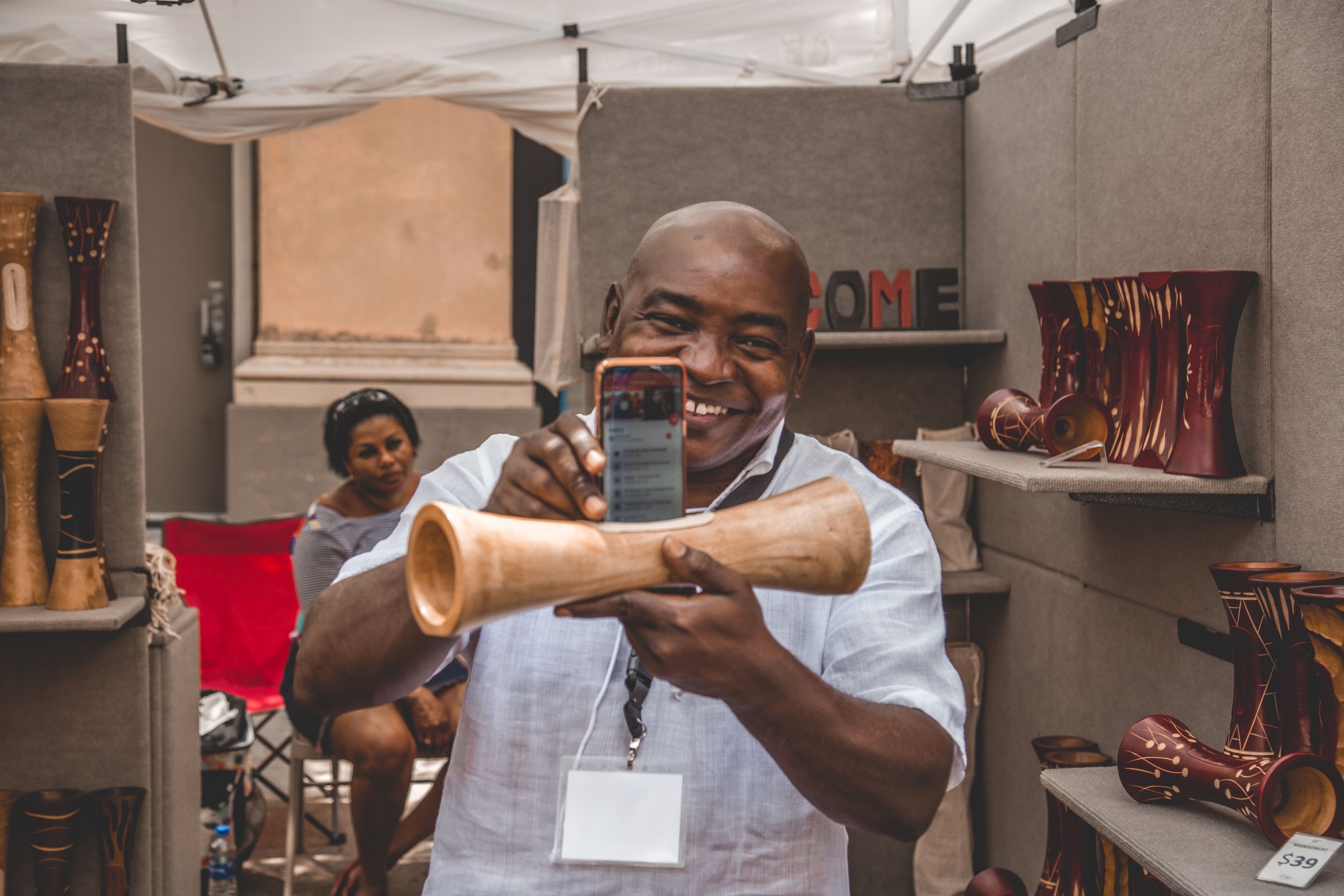
Episode 9 – Chickens, Chaplaincy, and How Faith Shapes Publicly Traded Companies with Donnie Smith, former CEO of Tyson Foods

subscribe to the podcast

Today’s episode finds us in Tennessee talking to Donnie Smith, who previously served many years as CEO of Tyson Foods and oversaw record growth and some pivotal acquisitions.

Donnie’s contagious enthusiasm and passion characterized his tenure at the company, which he joined in 1980 at one of the entry-level management roles. He led Tyson Foods to be a company with a conscience, focused on feeding the world great, affordable food, while also making a positive difference in people’s lives. On a national level, fewer high profile companies have utilized chaplaincy as a tool to care for a diverse workforce. 

As we think about how faith and chaplaincy intersect with the world of public equities we couldn’t think of anyone better to share about their experience. Tune in to hear Donnie talk about what it was like living out his faith in a publicly-traded company and some of his personal experience in Faith Driven Investing.

Useful Links:

Donnie Smith RightNow Media Videos

Truth at Work: Donnie Smith

Former Tyson CEO Focuses on Family Legacy

Episode 11 – A Founding Father of the Faith Driven Investor Movement: Ron Blue

subscribe to the podcast

It’s not every day you get to have a conversation with someone who is widely considered to be a founding father, but that’s exactly where we found ourselves with Ron Blue. If you’ve been around the Faith Driven Investing conversation at all, you’ve no doubt heard the name, which is why we’re so excited he agreed to sit down with us.

When it comes to time with Ron, it’s like sitting in front of a firehose. His extensive experience lends to the profound insight and wisdom he has about the current state of Faith Driven Investing and what’s to come. You won’t regret tuning in to hear the half-hour he shared with us.

Whether you’re new to Faith Driven Investing, or whether you’ve been involved in this movement your entire professional career, you’ll love this conversation with Ron Blue. As always, thanks for listening.

Useful Links:

Master Your Money

Thinking Right About Your Money

What’s Your Why? The Ron Blue Story

Principles-Based Investing: The Ron Blue Investment Framework

Episode 10 – Why We Should Invest in Sinners with Tim Macready

subscribe to the podcast

Today’s episode finds us all the way down under—in Australia with our guest Tim Macready. Tim is Chief Investment Officer at Christian Super. He has been responsible for the development of the Fund’s Responsible Investment Approach, which is applied across the entire portfolio and now incorporates Negative Screening and Impact Investing. 

What we think you’ll love most about this episode is hearing Tim talk about how he set out to create the “perfect, faith-driven fund”. But then he realized…We’re all sinners. He’s a sinner, every company is led by sinners, and every customer is a sinner.

He talks openly about how that shifted his perspective, some of the tough decisions it led him to, and how he stewards that calling today. As always, thanks for listening.


Useful Links:

How Our Faith Affects the Way We Invest

Where Are the Christian Investors?

Why I Invest in Sinners

Why Context Matters for Early-Stage Investing in Africa

by Tony Chen

After spending 3 years living in Kenya, we returned to the States in 2018. I had invested as an angel investor and built a portfolio of 15 Kenyan companies, and I felt convicted in my prayers: “Tony, what you had started doing in Kenya, go deeper.”

This gave me new clarity and compelled me on a journey to better understand the funding models for Africa and to launch a new fund. I also became instantly curious about how funds launch, and more importantly, how funds pivot and iterate over time. How do funds change course to better achieve product-market fit?

As a 5-time tech entrepreneur, I love the process of pivoting and iterating the next version of a potential product in 5-week sprints. We code like crazy, let adventurous beta-customers try it out, get feedback, and then based on that feedback, rinse and repeat every 5 weeks. I received some great advice from a friend who’d transitioned from tech entrepreneurship into tech VC, “Yes, you can iterate on funds. But instead of 5 weeks, it might take 5 years to get your first data points. The worst thing you could do is deploy all this capital today, and in 5 years, you’d be very wise, and very broke.”

How do I squeeze 15 years of wisdom into 15 months? That motivated me to learn from experienced investors who’ve iterated. We asked them: What drives outcomes in early-stage ventures in Africa, and how have you changed your approach? I partnered with two African thought leaders, and together, we interviewed 100+ Africa-centric entrepreneurs, investors, and LPs, took 900+ pages of notes, coded our findings into 15 key themes, and synthesized our findings. We published the resulting report this past January entitled Chasing Outliers: Why Context Matters for Early-Stage Investing in Africa (free access at kinyungu.com/chasingoutliers).

We learned a ton. First, the obvious.

Silicon Valley venture capital is largely a mismatch for most African ventures. The VC model works when the context has these critical ingredients: huge markets, high lifetime value of customers, efficient infrastructure to capture and retain customers cheaply, and plentiful investors at every stage of the business lifecycle. In most African markets (and actually in most markets globally), none of those ingredients are present. Context matters.

Another important contextual element is time horizon. Things often take longer in Africa (and many emerging markets). Exogenous shocks — a shaky transition of power, a drought, a new head-scratcher regulation — are frequent. Relationships and trust take time to build. Also, an entrepreneur trying to solve problem A realizes she can’t unless she also solves problems B & C. How do you create the “Amazon of Africa” if there aren’t addresses? How do you loan money if there isn’t such a thing as credit scores? These foundational problems — reframed — are massive opportunities. Investors willing to look deeper into the context will be rewarded. But most overestimate what can be done in 1 year and underestimate what can be done in 10.

Venture capital is like a race car. With smooth, straight roads, good weather, and a pit crew, you can get places fast. It’s a beautiful vehicle designed for a very specific purpose under very specific circumstances. But too often, too many have copy-and-pasted it into other arenas too widely. Why aren’t we talking more about 4-wheel off-roaders built for versatility or even little motorbikes designed for agility?

Now to a non-obvious lesson.

One of my personal take-aways from the research was that these $50-500k checks into early-stage African tech companies are crucially strategic, still represent jaw-dropping opportunities, and yet are almost impossible to pull off as a stand-alone fund using typical investment structures. I found 4 groups who had tried launching $20M early-stage tech funds who all failed. I looked at the ~30 groups that were writing $50k checks in Kenya, and every single one had other revenue streams: donor capital and/or a parallel business (usually advisory or intelligence). To be honest, this was hard to accept. I thought I was being faithful by “going deeper” into launching the fund.

So, what do you do when the exact thing you thought you were called to do isn’t feasible?

Ironically, one of the crucial things I look for in investable entrepreneurs is their pivoting ability. The best entrepreneurs are the best pivot-ers. It reveals a certain curiosity and humility that they can learn from the market. It also reveals that they haven’t fallen in love with their solution. No, they’ve fallen in love with solving a problem. Looks like I needed to follow my advice.

I began exploring alternative structures with longer-term focus and niche investment strategies. I became quite encouraged by the entrepreneurs and investors who are pivoting within these realities. One fund’s primary investment thesis was companies that solve those “problems B & C” — reducing the friction of doing business. Some are innovating around fund structure and instruments used. A group within the Faith-Driven Investor community is innovating how due diligence “lite” can be done so that smaller $50-500k checks can be written in more sustainable ways. Some agri entrepreneurs are pursuing end-to-end vertical integration to build unique moats. I’m excited to see more and more notable CEF members like Verdant Frontiers, Talanton, and Saad Capital (and other Faith-Driven Investors like Future Africa). All four are working in Africa, executing unique niche strategies, utilizing non-traditional structures, respecting the local context, and gaining great traction.

In the midst of this exploration, in God’s timing, an opportunity came up, and I joined one of those innovators — Verdant Frontiers — as a Partner.

Verdant will also acquire my firm Kinyungu Ventures and the existing tech portfolio.  Together, we’ll bring a long-term value creation approach in the African tech sector. I’m excited to be able to continue investing in African tech companies, while also being part of a broader entrepreneurial team passionate about building large-scale businesses across the African continent.

I’m excited for a new season that is dawning. There’s no doubt in my mind:

Africa’s moment has arrived.

Opportunities abound, and redemptive entrepreneurs and investors have pivoted to capture this opportunity by building great teams, executing with resilience, respecting the local context, and thinking long-term.

Article originally hosted and shared with permission by The Christian Economic Forum, a global network of leaders who join together to collaborate and introduce strategic ideas for the spread of God’s economic principles and the goodness of Jesus Christ. This article was from a collection of White Papers compiled for attendees of the CEF’s Global Event.

Why My Grandma Struck the Church out of Her Will (and Replaced It with a For-Profit Company)

Article originally hosted and shared with permission by The Christian Economic Forum, a global network of leaders who join together to collaborate and introduce strategic ideas for the spread of God’s economic principles and the goodness of Jesus Christ. This article was from a collection of White Papers compiled for attendees of the CEF Global Event.

by Matt Elsberry

At CEF, we’re blessed to be a part of a community that challenges the status quo. This paper is significantly different than my two previous efforts.

This paper and my grandma’s decision prompt a critical question: Are churches and non-profit ministries the only way money can be used to build the kingdom of God? I chose a provocative title, but I am at least attempting to write with humility. There is much incredible kingdom work happening through traditional churches and traditional ministries that are worthy of capital. This paper and my grandmother’s decision are less about diminishing these forms of kingdom building and more about promoting an alternative route, one that is being increasingly represented by incredible members and businesses in the CEF community. Perhaps many of these are also worthy homes for kingdom-building capital. My grandmother certainly believed so, and in her final days, she put her treasure where she wanted her heart to be also, with the kingdom builders.

Here’s my tribute I shared at her funeral. [Elaine Elsberry]

How do you measure the value of a life well-lived?

In my grandmother’s obituary, one word stood out to me more than any other word…curiosity. Certain words have immense power and require thousands of others to explain. “Curious” is certainly one. Like Grandma, it brings a host of descriptors to mind. She was a tiny giant, open to learning something new for every one of her 35,000+ days. She had this uncanny, erudite way of using her curiosity to inspire and draw out your own.

Words hold no respect for the strong and mighty; her tiny, 90-pound frame could break down walls and destroy kingdoms. Words could transport her mind far beyond the stamina of her body. She could teleport with her mind as effortlessly as she could turn the next page of her book.

In a word, she was curious. And her tenacious curiosity made her a tireless force for good—yes, for worship. In ancient Jewish culture, the highest form of worship was knowledge. What more respect/honor could you give someone other than to learn everything about them? And if this is indeed God’s world, and each author ever to have put pen to paper is His child, then each word is a holy utterance—a fragment of a clue in the cosmic story God is constantly unveiling about Himself.

And Grandma drank deeply from this well.

She was insatiable—and darned if not more contagious than Covid.

I was one of the lucky ones to have caught her curiosity. Many others did, too.

Countless times she would throw out a thought, “What do you think God means by…” or, “Why do you suppose God allows….” I ache to remember those questions, to be surprised by the unveiling of a cosmic record with constant availability of those precious, finite, fleeting moments, made even more valuable by their expiration.

If you had the privilege of having one of those conversations with my grandma, you’d know that after careful reflection on the ensuing discussion, she would usually lean forward and say: “Well I suppose…” before delivering a powerful truth.

I guess I always knew it in my heart, but it took her death for me to realize that she was one of my favorite people in the world with whom to have a chat.

God, I wish for just one more of those conversations. Like a spoiled child, I took for granted the delicacies that I could have called upon at any moment, and yet too often did not.

I chose my words carefully around Grandma—not out of fear but out of respect. Each word holds meaning, and I could count on her to contemplate each one and assign value to it.

She upped my game. Her curiosity would often expose weak logic or unchiseled thoughts. Sometimes while talking with her, I would find myself outside of myself, examining my own thoughts, questioning their merit. I often would concede, “I guess I’m not sure,” after conversations with Grandma.

And it’s for this reason I suppose curiosity usually precedes humility. It’s hard not to be humble when you are constantly learning.

I threw some crazy ideas at her these last few years:

  1. That God doesn’t only build His kingdom through church as we currently define it but wants to use business as well.

  2. That 99% of our available wealth is invested in companies that care nothing for the kingdom of God, while we put what equates to a fraction of a penny into “the kingdom” through charitable investments.

  3. That we largely let the US government dictate what constitutes a “kingdom-building” gift through its tax legislation.

And she was remarkably unfazed. She even cheered me on as I sought to help build a for-profit company that was committed to building the kingdom of God, showing up week after week after week to our company prayer time. And as an affront to the status quo, one last cannonball of curiosity, she did something many would consider scandalous. She struck out the traditional church from her will and penned in our for-profit company—one last big hug and encouragement from even beyond the grave. “I approve grandson. And I’m proud of you. Use that tenacious curiosity of your own to challenge the giants in front of you.”

This was an overwhelming thought to me. The most curious person I knew had dropped a fat stamp of approval on my own curiosity. These ideas my curiosity had led me to were more than ideas, they were worth the money she had reserved for the kingdom of God. And in her final days, she decided that LivFul (our company) was a better bet for growing the kingdom of God than her traditional church was.

This is no small thing, and while I tremble at the weight of the implication, I’m also glad for shoulders larger than mine who carry it (and us along with it).

I love you Grandma, and thanks to you, I have renewed strength to persist. You will forever be a part of me and my calling to demonstrate the building of the kingdom of God through business.

You are forever part of LivFul, and our legacy is surely yours as well.

I suppose my grandma threw down a bit of a gauntlet here. If you’re a business leader, the challenge is to make your business a worthy place for housing kingdom capital. Would you feel comfortable receiving a donation in lieu of it going to a church? If not, why not? I can assure you that there is no difference in how God views money entrusted to either…it’s clearly all His.

At LivFul, we don’t take this gift lightly. My grandma believed we could steward the money better than her church, and that’s quite the bar to live up to.

At the end of the parable of the talents, the man who had turned five into ten tried to give the money back to the master. “Thanks, but no thanks,” he said. “Please keep managing it for me.”

May we endeavor to build the kind of businesses that are so exemplary of the Kingdom of God that, when we try to hand the money back to God, He says the same. “You’re doing well! Keep stewarding this for me.”