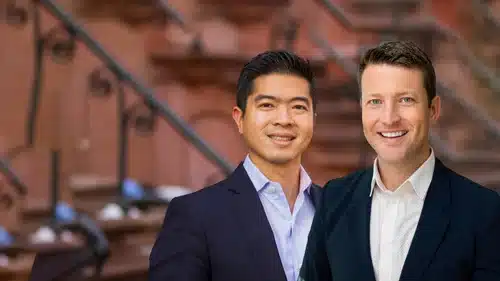
Episode 189 – Stewards Not Spectators: A Conversation with Suzanne Daniel and Dana Wichterman

Episode 189 – Stewards Not Spectators: A Conversation with Suzanne Daniel and Dana Wichterman

Podcast episode

Episode 189 – Stewards Not Spectators: A Conversation with Suzanne Daniel and Dana Wichterman

What happens when we overcome initial reluctance to enter the world of impact investing? In this enlightening episode of Faith Driven Investor, Suzanne Daniel of the Pilgrim Foundation and Dana Wichterman of Impact Foundation share their journey from traditional philanthropy to impact investing, revealing how they’re helping create sustainable solutions for vulnerable communities worldwide. Their candid discussion explores the challenges of learning investment jargon, the importance of community in the faith-driven investment movement, and their vision for making impact investing accessible to all believers.

Please note that the views expressed by the hosts and guests are their own and do not necessarily represent the opinions of Faith Driven Investor.

All opinions expressed on this podcast, including the team and guests, are solely their opinions. Host and guests may maintain positions in the companies and securities discussed. This podcast is for informational purposes only and should not be relied upon as specific investment advice for any individual or organization.

Episode Transcript

Transcription is done by an AI software. While technology is an incredible tool to automate this process, there will be misspellings and typos that might accompany it. Please keep that in mind as you work through it.

Richard Cunningham You’re listening to Faith Driven Investor, a podcast that highlights voices from a growing movement of Christ, following investors who believe that God owns it all and cares deeply about the heart posture behind our stewardship. Thanks for listening. 

Narrator Hey everyone. All opinions expressed on this podcast, including the team and guests, are solely their opinions. Hosted guests may maintain positions in the companies of securities discussed in this podcast is for informational purposes only and should not be relied upon as specific investment advice for any individual or organization. Thanks for listening. 

Richard Cunningham Welcome back, everyone, to another episode of the Faith Driven Investor podcast. A joy to have you with us for what is our second FDI pod of 2025. We kicked it off just a couple of weeks ago with the marks on the markets with David Bahnsen and John Coleman would highly encourage you to check that out as we kind of recapped 2024 in the markets and looked ahead to 2025. 

Joined today by one of our co-hosts who’s with us frequently, Luke Roush out of Nashville, Tennessee. Luke, not only are you co-host in today’s FDI podcast, but here in a couple of weeks on February 7th, you’ll be co-hosting the annual Global Faith Driven Investor Conference, which is kind of a seminal and key event for the broader FDI ecosystem and movement and something we’re going to spend kind of the bulk of our show on today. But before we go that direction, introduce our special guests. Man, how are you? How is Christmas? Even though it feels like an eternity away and kicking off the new year for Team Roush. 

Luke Roush Doing great first couple of weeks in January. Always a little bit of slog getting back into it, but we are fully into 2025, very, very excited. About February 7th. We’ve got two phenomenal guests on who everyone will hear more from at the conference, but are really excited for today’s conversation. 

Richard Cunningham Yes, sir. Yes. So today is kind of a special behind the scenes peek with You’ve got three conference speakers here, obviously, Luke, you hosting, Suzanne Daniel, who I am to introduce here in a moment, and Dana Wichterman, chairman as well. We’ll kind of share some brief bios. You’re going to see all three of these names. 

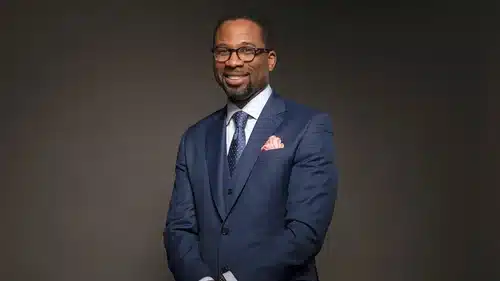
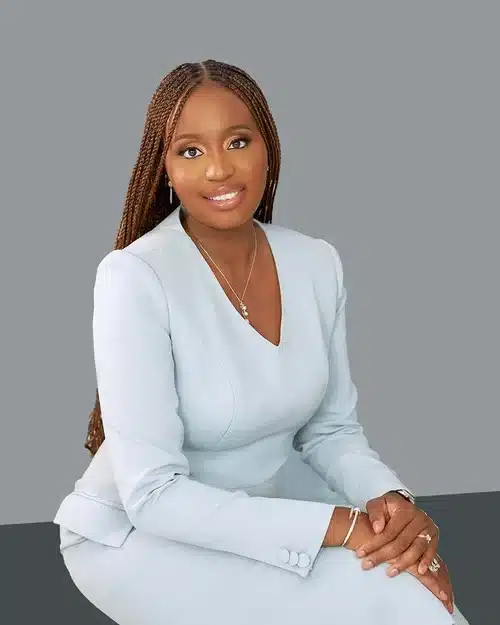
In particular, you’ll see a special feature on Suzanne and her story. But Dana Wichterman will be featured on the conference as well. They’re too humble to take these titles, but Luke and I would absolutely consider them heroes of the FDI movement. And so allow me to quickly kind of introduce who they are and then we’ll welcome Suzanne and Dana on this show. But starting with Suzanne Daniel graduated from the University of Delaware with a degree in animal science and a master’s degree in physiology at the Ohio State. So she is relishing in her national championship. She co-founded the Pilgrim Foundation in 1988 with 1998 excuse with her father. The Pilgrim Foundation has partnered with over 50 nonprofit organizations spanning Africa, Haiti, China and the U.S. Foundation grants focused on supporting Christian nonprofits that serve the most vulnerable. Most recently, the Pilgrim Foundation has put a more prominent focus on social impact investing. We get into a lot of that today and aligning their portfolios with the values of her Christian faith. She serves on the board of the Gathering Impact Foundation, organizations that are near and dear to many in the space. And she and her husband, Mark, have four kids, two grandchildren, lots of pets. Suzanne. We need to hear about that. And then currently reside in West Chester, Pennsylvania. Suzanne, so welcome to the show. Great to have you. Will say hey to Dana here in just a moment, but how are you doing? 

Suzanne Daniel Great to be here. Thanks for having me. Doing great. Really relishing some Ohio State victories as well as the Philadelphia Eagles. So, yeah, feeling very blessed right now. 

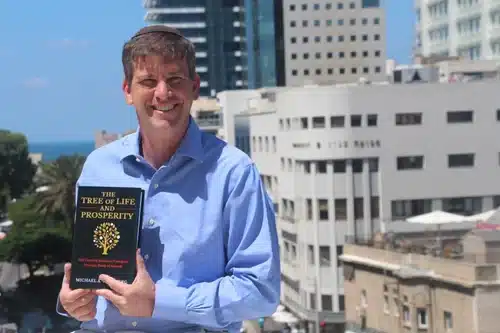
Richard Cunningham Well, football lovers, Luke and I myself both probably envy that statement a little bit to have both teams clipping and doing well currently. That’s awesome. But hey, going over to Dana Wichterman, who you also see on the video conference on the seven. Dana spent her career as an international economic development professional at the U.S. Agency for International Development. She currently works at Impact Foundation, helping Christians deploy their charitable capital for impact investing. She serves on the boards of several for profit and nonprofits, including our very own faith driven movements. She’s the founder of Faith Driven Entrepreneur, an investor network in DC. She holds an Emmy in International Affairs from Columbia University, and she coauthored recently with her husband, Bill, a forthcoming book called Stewards Not Owners The Joy of Aligning Your Money With Your Faith. Excited to get into that because that’s a pretty big deal that you and Bill put that book out there. I know a lot of folks have been looking forward to hearing your insights and the wisdom you guys have to offer. But Dana, welcome to the show. 

Dana Wichterman Thank you so much, Luke and Richard, for having us. 

Richard Cunningham Well, friends, today is going to be a lot of fun. And we’re talking February 7th, the big FDA conference. Listen to some of the themes that you’re going to hear as we kind of go in through the conference. It all kind of falls under this banner of the idea of courageous capital. So you’re going to hear from Eagle Ventures, a story about a fund that’s investing in for profit companies to end human trafficking. Suzanne Daniel’s story is going to be featured. And so we’re going to get a little bit of behind the scenes time with her today. 
You can hear stories on investors making an impact in the movie industry, multifamily housing industry, combating the loneliness epidemic through innovative means like an organization such as apartment life. Jeremy Lin Linsanity is going to be featured on the conference, so a number of fun, just kind of threads and narratives are pulling on. I was talking to the folks on the FDA staff the other day who are responsible for putting together watch parties. 
I think the number is up to 122 Global Watch party. So the way you can join is go onto the Faith Driven Investor website, click on to the conference tab. It’ll take you to the area where you can register. For a watch party Would love to have you there. A global movement. But the conference takes place in local expressions, and so that’s enough for me. We want to hear from you, Suzanne and Dana. And so maybe what we didn’t hear in the bio a little bit is kind of that inflection point for each of you. Suzanne, we’ll start with you on when God kind of opened your eyes up to this FDI space and kind of open your eyes to, hey, I want to get in the game with not only my nonprofit capital or my philanthropic capital, but also my for profit investing capital. And so let’s kind of get some of that story from each of you. And Suzanne, go ahead. 

Suzanne Daniel Sure. It’s funny that you say like get in the game. I didn’t know there was a game. So I had been a grant maker at the Pilgrim Foundation for about 20 years and really just focused on making grants to solve problems and meet the needs of the vulnerable. But on one trip to Haiti, I realized that there was a nonprofit that was doing great work, that was spinning off a for profit company. And I went to their opening of the factory. I’ve told this story many times, but I realized at the end of all of this that this was a sustainable source of income for the people of Haiti versus grants. So I chased down the owner and we sat across the coffee table and I said, How can I help you? Because I had capital and she had a need for investment. And we both had no idea how to move forward. So that was really that’s the clearest inflection point for me where I realized that there was a problem that I didn’t know how to solve, but I had what she needed. I just didn’t know how to get it across the bridge. 
So that’s what drove me to find this game that you speak of that existed that I didn’t know was happening. So I sought out experts and I finally realized that there was sort of a loose conglomeration of people that were leading a movement. That was exactly what I needed to do. But I was very surprised that it was in its early stages. I thought I was the one that was missing it. So we can talk more about that. But I think that’s the inflection point that you are referring to. 

Luke Roush Well, Suzanne, you’re in a unique spot. You know, we talk a lot about within Faith Driven Investor and this construct of trying to solve the world’s great problems. There are really three ways to do it. You can build as an entrepreneur or you can invest as an investor or you can give as a philanthropist. And you’re in the unique spot of addressing at least two, if not three of those. Really? All three. Because you built Pilgrim alongside your dad. What have you learned just in terms of where you apply which to build, invest, give many insights maybe from that first experience, just using that as an illustrative example around which tool comes out of the toolbox because you’ve got them all in there. 

Suzanne Daniel That’s a great question and we’re going to speak more about this, I think. But I will always have a section of the toolbox that is early stage startup will probably not be profitable, but I’m trying to get it off the ground enterprise so that it could be investable later. I feel like that’s a very clear calling for me. So that would be build, I would think, helping entrepreneurs build before many people would think there was any logic to that. So I really feel called to that. And then there’s invest would be the entirety of the portfolio that we want to be sustainable. We want it to grow at a market rate so that we can keep making grants. We don’t have a plan to sunset at this point. So I would say invest is for profit. The third piece give would be the continuation of our philanthropic grants, just traditional grants that we make every year. And we do long term, unrestricted grant making. So that really is a continuous source of income for nonprofits. 

Luke Roush That’s great. Thank you. 

Richard Cunningham Yeah, I like what you said about the catalytic side. You know, I just came from a Praxis workshop not too long ago where they unpack that redemptive frame that I know many know. But kind of ultimately the way of Jesus being that the redemptive means and practice of business, which is, Hey, I sacrifice, so we win. And Suzanne, I can hear that kind of in your tone, in the way you’re approaching the hey, these early stage startups are it’s gritty and we don’t necessarily know what it’s going to look like, but there’s a willingness and a catalytic nature to say someone’s got to be on the ground floor willing to kind of take that I sacrifice. So this idea of this kind of kingdom principle can win. And so decide to tug on that thread later. All right, Dana, what’s the inflection point for you? You and Bill, maybe just you individually, whatever it might be, when God kind of woke you up to this idea of faith driven investing and getting you in the game. 

Dana Wichterman Sure. So I’ll address a bit what Suzanne said, that we were in the impact world. We always had a sense that we were to be about God’s kingdom work, but Bill and I were drawn mostly into the government work, so that was where we thought we could see some good being done. And then he moved us into the nonprofit world, just like Suzanne. I didn’t know there was a game going on in the investment world. I’d hadn’t even understood that investments have an impact other than depositing some money back into my own account when I invested Well, and the inflection point I remember clear is about. I’m at a generous giving conference about ten years ago next to somebody from Eventide, an asset management company whose tagline is Investing that Makes the world Rejoice. And of course, my analytical side was like, That’s so cool. What a great concept. And then as soon as I went home, I’m like, But that’s not for me. 
So, you know, the Bible, God tells us repeatedly he is good, he is trustworthy, and we are not to fear. What did I do? Monty Python. Runaway. Runaway. You know, I knew the Holy Spirit was saying, look at your own investments. And I ran away. Okay. Fear, lacking trust and trying to do it in the worldly way. But he is so patient. You know, the Holy Spirit just kept prodding very gently, very patiently through my husband, through our Christian financial advisor. And finally I said, okay, I surrender. I need to look at our investment portfolio, both our nonprofit and our Donor Advice fund through the National Christian Foundation, because those assets are invested until we decide to deploy them. But we also needed to look at our personal finances. And I can’t imagine now why we wouldn’t do it that way. Now I look back and say, Of course that makes sense, and it’s even fun and joyful. But it didn’t start out that way. So be careful who you sit next to at a generous giving conference. 

Suzanne Daniel If I can just add and relate to a day and I said if I had been exposed to this ecosystem the way she had, I would have done the same exact thing. The only thing that made me dig in was that we had a college scholarship program in Haiti and we needed those jobs to be sustainable or we were going to put these kids through college and they would have no employment. There are so few thriving businesses in Haiti. So it was only because I knew exactly who this was going to impact that. It made me do the thing that I wanted to do least. There was nothing less interesting to me than learning the jargon around investments that is like nails on a chalkboard for me. But because I love the people that this is going to benefit and I wanted to see them have a hope and a future and their identity restored to where the Lord wants to see them be. That was the only reason that motivated me to stay with it. But I am with you, Dana. If I met just an investment manager that said there’s this thing, if it wasn’t personally connected, I would have completely walked away. 

Luke Roush Well, I think both of your comments really point to this idea that the things that tug at our heartstrings are often complicated, and they often require different tools to address different parts of the problem. And so, you know, the reality of issues being multifactorial and making sure that we apply the right tool to the issue at hand, eventually, you know, what is needed is for people to be able to have stable employment and to be a part of either building something individually or joining in somebody else’s vision and helping them build that in sustainable enterprise. And so what I think is unique about you two is you both had experience implementing multiple solution approaches, not just giving, not just, you know, investing, but really thinking about problems holistically and trying to figure out, all right, what makes sense. You know, in the here and now with this part of the issue. And then how do you both of you have been, I think, encouraging and engaging with other individuals to come alongside you where you come alongside them? Because part of this is actually what do we do in community that we couldn’t do on our own? Maybe speak to an example of what one of those collaborations has looked like for you all. 

Dana Wichterman Yeah. Okay. Well, I’ll just say the faith driven community, once I discovered it, has been so instrumental in motivating me and giving me new ideas and encouragement and normalizing looking at your investments and knowing that they have an impact and then trying to use them for good. And so I would say even though Bill and I were very familiar with where God was calling us individually and as a couple in terms of our calling and individual impact, we didn’t know the where and the how and the why and even the when with investing, there’s a lot of timing involved in how to do smart impact investing. And so I would say the collaboration, even Suzanne and I and another friend, Michelle, we just have such a joy in drawing other women into this space because women are typically not as represented. We love to look at bringing underrepresented founders into the space and we love to learn from the other investors who are further along in their journey. I mean, just like Susie and I had to learn all this jargon. I had to look at Investopedia, like constantly. 

Suzanne Daniel Yup. 

Dana Wichterman And Suzanne and I helped each other get over our fear of imposter syndrome and just say, you know, we’re going to show up and learn from everyone. And we were so welcomed and mentored and so. I would say the collaboration has been instrumental to where both Susanne and I are headed in the future. 

Richard Cunningham I think it’s that spirit of humility that both of you have led with. Kind of brings me back to that comment earlier. Just been heroes of this movement because I think we all have it. The imposter syndrome, the don’t want to be found out, whatever it is. I mean, the theme of this year’s conference, Dana, you’re tugging on is the courageous capital. And you mentioned it with you and kind of Bill’s walk and your own journey was, do we really want to look under the hood? Do we want to do the uncomfortable work of looking under the hood and seeing what we’re invested in and how we’re going to feel conviction over that and how we’re going to make change. And that dovetails. Suzanne, we don’t want to, you know, tease out too much of your talk on the seventh that folks are going to hear in the video story that they’ve done on you and the Pilgrim Foundation, everything you’re involved with. But maybe give us a little bit of a teaser of kind of your story and how it relates to this year’s theme of Courageous Capital, what you’re going to be talking about in that feature story? 

Suzanne Daniel Sure. I’ve sort of explored that a little bit more as it’s come up with this topic. And of course, in the position that we’re in that we find ourselves in. It doesn’t seem like you have to be courageous. It’s a pretty blessed, wonderful life experience that I’ve been having with capital. I would say the courageous part was, first of all, realizing I didn’t understand the language. My degrees were in physiology, animal physiology. So I couldn’t even get further from the topic of business or investment. And I was also as generous and amazing as my father was in this process. He was an expert, and I felt intimidated by his shadow. And I remember years and years ago when I was probably ten years into making grants, asking him, can we look at what we’re invested in and determine if it’s aligned with what we’re trying to do in the world. And he very kindly said, it’s invested. Great. We’re trying to make as much money as we can so we can give away as much money as we can. And, you know, what else do we need? And I would open my mouth to say something, and I realized I didn’t have any words. And it didn’t seem like there was an ecosystem or anybody else saying. 
That’s why very quickly felt imposter syndrome. Like Dana said, that I was misunderstanding the Lord. I felt pretty compelled, but I also felt like I could and even to this day be misunderstood as sort of a bleeding heart female that just wants to make everybody happy and feed the children. And that wasn’t what my intention was. Even in our grant making, that’s not my intention. I want to build sustainable structures to move people forward. So I think that all of those things combined along with it being a very male dominated space with a ton of jargon, and the men I met were incredibly welcoming. But when you don’t have the language, there’s very little you can participate in. So I just had to keep showing up, but I didn’t want to be silent, but I didn’t have anything to say until I learned more about even just the vocabulary, like Dana said, like keeping a running list of words I didn’t understand or concepts that in a granular level were beyond my ability to sort of track with. I understood portfolio design and realizing that you need diversification and things like that that I have been exposed to as I grew up with a professional investor. But as far as nitty gritty and understanding, different vehicles, it was so far over my head. 

Luke Roush Well, one of the things that both of you understand, and I’ve been around you both enough to I think appreciate this is while jargon matters and it’s certainly important to be able to talk the talk and understand what people are referencing, the majority of investing is truly about people, and the majority of giving is really about people and leadership. And so, you know, it’s harder to give people the tutorial on how do you understand and evaluate people. It’s much easier to train on some of the jargon, but what really matters is actually understanding how people and teams work. And that’s what both of you guys have understood. And you’ve both, I think, had the courage to lean in early with something that’s nascent. You know, what we always say in our venture work is it’s okay to fail, but you want to fail fast and fail cheap. And so this idea of low cost probes and being willing to sort of jump in early to assess an idea and provide some of the seed capital to help make those ideas become a reality to be tested. I think both of you have been active in that regard, and I don’t know if you have a story or an example of what that’s looked like in your own either grant making or investing work. 

Dana Wichterman Yeah. Well, I would say that through Impact Foundation and helping people use their charitable capital, which is tax deductible at that moment and then invest it in transformational companies as opposed to granting it to nonprofits. I have seen a lot of people use that as a way to catalyze businesses that should be in the world but don’t exist because right now it’s too hard for them to start. Startups are hard. They’re risky and. So a lot of people use their impact account to catalyze. They know that they have to have patient capital. They may have to take 7 to 10 years to see a return. They may have to take a lower, you know, return on their loan. But they want to because they’re saying this business should be in the world and eventually it will get on its legs and be sustainable and be scalable. But for right now, I’m going to be a part of that ecosystem that is helping it get its wings. And so I think that’s a beautiful way to use your charitable capital in investing in faith driven companies. 

Richard Cunningham That’s really cool. All right. So both of you have interesting perspectives in that You both have kind of approached the FDI network in the space and stewardship alongside families. Suzanne, you with your father in the Pilgrim Foundation, kind of, you know, has been instrumental in how you guys have carried out everything you’ve done for the Pilgrim Foundation. Dana, you just wrote a book with your husband, which in of itself, we need to hear about just that process and journey. But what is that look like kind of from a community aspect of, you know, the FDA network. You know, everything about it speaks Catholic community. What does it look like when you brought your family into the fold? Suzanne And what does stewardship look like in that particular context? I kind of let you start and talk about that journey. 

Suzanne Daniel Sure. I think as I grew up in my family, my dad, I didn’t realize this until much later in life. Always made it comfortable to talk about money. It was just like talking about the weather. And he would make comments like, When I drop dead, you know, this is going to happen and this is going to move here. And we just always were. It was just sort of like what we’re marinated in. Unfortunately, he didn’t speak in jargon, so it didn’t help me. But I think it was just always a very unemotional topic. Nobody ever got triggered. So as I’ve experienced other people, as our family has grown, I’ve realized, gosh, this is a really upsetting topic for so many people and I just hadn’t experienced that growing up. So I we always talk to our kids that way. We talked about their futures, about saving, about them, but like, just matter of fact. And that was something that was really important to carry for the lack of drama around money and then moving into raising my own family for kids. We tried our best to just model generosity, do it rather transparently with our kids, whether when they were younger. It was our time. As they’ve gotten older, we’ve been more transparent about what we’re doing with our money and then also always pointing them back to the fact that as an inheriting family, which they understand, that came from my father’s hard work, it really is. Just ask the steward. We didn’t earn it. So I often equate this to my journey with faith. We didn’t do anything to earn our faith as if I didn’t do anything to earn what we inherited from my father’s success. So it makes it even easier for me to look at it as a stewardship role instead of an ownership role. And I’m so glad that Dana wrote about this, because obviously we have been blessed with more than we needed. So it’s even more clear that there’s a further purpose for the resources that we don’t need. And I think that’s a very high calling and really important to see as a stewardship position and not an ownership position. 

Richard Cunningham Man, thanks for the realness there, Suzanne. I think a lot of people can learn from that. All right, Dana, we got to know who’s the better writer, your bill, and then, of course, tell us about the book. 

Dana Wichterman He’s the faster writer and the more concise writer. But we’re both writers by profession and really enjoy both thinking and writing together. 

Luke Roush So what you’re really doing there is sort of quality versus quantity. That’s kind of what I heard come out of that book. Quantity. Bill’s got it. But in terms of depth, it’s all. 

Dana Wichterman Dana But thank you for asking. So we have discovered so many amazing people living out their kingdom, calling with whole life stewardship in that faith driven movement community that we just felt their stories need to be amplified. I mean, too often people say, why is God not showing up? And we’re like showing up everywhere through his people. We need to amplify these stories. So we chose 24 people to tell their stories. Suzanne is one of them, and Henry Kaestner is another. And many of the others that we’ve met through Faith Driven Entrepreneur an investor. And we wanted to show that God has as many ways to build and back or found and fund his good works as there are people on this earth. I mean, there is no one right way, but everyone can and should get in the game. I really think we were all made for good works and these are the good works that you can lean into. Everyone has agency in some capacity, whether it’s to pray or to act or to fund or to build solutions to these problems in the world. The world is broken and God wants to bring his healing to them as us being his hands and feet. And I see the faith driven movement as. Activating those hands and feet to be more effective and efficient. And so our book is just showing that capital has influence and that we need to take that seriously and steward it, not own it, do it joyfully and in community. The book is called Stewards, Not Owners The Joy of Aligning Your Money With Your Faith. It’s published by four front books and distributed by Simon Schuster and available on Amazon and available for preorder now and will be out in March. 

Luke Roush That’s beautiful. That’s going to be a message that resonates, I think, with couples all over the place. And I’m excited to go through it with Brooke. This next question is really for both of you. And so as you reflect on all that God has allowed you to do within the broader FDI arena, where do you feel like the Body of Christ has made significant progress? Where do you feel like we still have a lot of room to grow? And this whole idea of solving the world’s greatest problems, which has been a big push from faith driven recently and over the remainder of this year, just be great to hear your sense of kind of where have we made progress and where is there still a lot of work left to do? 

Suzanne Daniel I think there has been tremendous progress. I would say I’ve been focused on this for about 5 or 6 years, and in that time I have seen tremendous progress in the fact that there’s more that’s available to invest in. There’s more advisors to guide us. When I started, there was a handful that I felt like were accessible, and now there’s a buffet of choices of just services that can help you figure this out, specifically aligning your whole portfolio with your values. And there’s an entire ecosystem like we talked about to explore. But I feel like what’s limiting is most of this is only available to accredited investors. So as I talk to my adult children and their friends and Christians in my church, everybody of course wants to do this. But it really is difficult for them to penetrate the ecosystem when they are investing for their retirement, for their kid’s college funds. So I feel like we need to work harder to make it available to Main Street investors. And one thing that I’m working on with our advisor is really comparing the returns in our values aligned portfolio with our secular aligned investments, whatever they may be, and just proving to the ecosystem that you don’t have to take a loss, that there’s more and more data showing that you can compete with indexes and make the return that you need to to accomplish the goals that you have for non-accredited investors. So I think that that’s something we need to disprove, that assumption that you’re going to take a financial hit by aligning your values. But for me, I’m still trying to figure out if that’s actually true for myself, my own portfolios, but then also for different investment positions and strategies. And I just want to make sure that that’s true and get that message out and make more available to mainstream investors. 

Luke Roush I think it’s a good word, Suzanne. And one of the things that has been on the group’s mind, I think consistently over the last dozen years is this question of is impact really at odds in a zero sum game with returns? And so I love the fact that you’re gathering that data. I think it’s super important. And also being able to just differentiate, you know, in some areas there may be a trade in other areas or may not be a trade off. And so gathering data not just in aggregate, but also by different asset classes that are available to different types of investors to really, really important part of what each of us does individually in this space. Dana, over to you on that question. 

Dana Wichterman I would ditto everything Suzanne said. She’s spot on and I think it’s encouraging to see so many financial advisors become Kingdom advisors certified. There’s conferences now. It’s really through FDI and FTE that you all have brought the ecosystem together so we can find one another. You’re having the conferences, you’re having the fund managers come together, you’re having the entrepreneurs come together, the investors. So these small groups, you’ve helped us have shared language which Praxis really started that process of the right language. So we didn’t feel like freaks anymore. But now it’s like, okay, now we can use that language and develop tools and instruments. And so kudos to sovereigns for doing that with the ETF and Eventide for doing that. But we do need more products and we I think we will over time, but we need to demand more products, which means you all need to just continue your efforts to open more eyes. There’s a ton of Christians that just haven’t heard this message yet and once they hear it, they’re super excited. That’s why it’s important to come to the FDA conference and bring friends, and if they don’t come, send them some of the video messages in terms of so that their eyes can be open, because I really think it’s an. Invitation and one that once they see, they’ll appreciate. And I would say the area that really needs work is spiritual metrics and metrics in general. The nonprofit world has learned that, you know, to be effective and efficient and to know that you’re hitting your goal, you actually need a metric and you need to measure and you need to report on it. I think the Faith Driven Entrepreneur and investor world is starting to also take that on. But I think we need to work harder on it and provide money for our entrepreneurs to actually spend time tracking and developing metrics. I would encourage people there is a group that has formed out of the faith driven movement called Christian Impact Framework Project. Look us up on LinkedIn and join to see what we’re trying to do to have an open source language indicators and shared metrics that we can use in this ecosystem to really start learning more better practices and linking arms together. 

Luke Roush I think it’s a great word, and the construct of things that are measured tend to improve. It’s absolutely true in faith driven businesses the way it is in secular businesses. Richard, back over to you. 

Richard Cunningham Yeah, that’s awesome, guys. All right. Well, hey, grounded in some wisdom. And take us home with this question we love to ask at the close of each and every podcast. And I will start with you, and that is, hey, what’s God been teaching you in and through his word lately? 

Dana Wichterman Well, the verse that motivates me is a Fusions 210. For we are God’s handiwork created in Christ Jesus to do good works which God prepared in advance for us to do. And I think of it two ways, particularly as it applies to my journey in the Faith Driven Investor space. The positive one is kind of the Eric Liddell feeling that when I run I feel his pleasure. And Suzanne and I both feel this way when we’re investing under the Lordship of Christ into faith driven entrepreneurs and seeing them grow and really solve problems. We feel his pleasure, right? That’s just such a joy. There’s another example I use, though, too, is Michelangelo. When he was sculpting the David, he said the David was always resonant in that marble. I just had to chip away at that, which was not David’s. And so sometimes it hurts a little bit to be shaped and sculpted by the Lord, to become who you were meant to be and to step into those good works. But I see that as God sculpting out the sin, the pride, the greed, the fear, the worldliness so that I can become the Dana God wanted me to be. Richard and Suzanne and Luke. You can become who God created you to be. And then we will run and fill his pleasure. 

Richard Cunningham Suzanne, take us home. 

Suzanne Daniel Sure. I just finished a profound book that I just wanted to share with you guys. Maybe you’ve all read it. The Knowledge of the Holy by Tozer said everyone’s favorite. 

Richard Cunningham Tozer is amazing and dense all at the same time. 

Luke Roush Deep. And that’s the deep end. 

Suzanne Daniel I was grateful. It was 117 pages. It was an easy read, though, but I think that for me, just circling back after many, many years as a Christian into the holiness of God and the attributes of him really brought me to my knees as far as reverence and the posture I needed to have as I do this work that we’re not serving our body. We are serving a holy and omnipotent God that loves and adores every single person that this work touches. So I just wanted to read this two short statements from that book that just closed the last chapter. The more perfectly we know God, the more we will feel the desire to translate this newfound knowledge into deeds of mercy towards suffering humanity. And then the last line of the book, We are left for a season among men. Let us faithfully represent him here. So I think for me, reorienting myself around the fact that with whatever the Lord has put in my hands, I’m going to serve humanity because that’s the only reason that we’re here. And this book just made me really focus on the holy attributes of God in a fresh way. 

Richard Cunningham Come on. Well, friends, if you want more of Dana Wisdom and Suzanne Daniel, they’re speaking on the Faith Driven Investor conference February 7th. Go to Faith Driven Investor conference.org. Click register. Now you’ll be able to find a watch party, hopefully local to you. If there’s not one local view, there’s still time. Raise your hand. Host it locally hosted at your church, in your living room, whatever it is, gather some friends, as Dana said. But Suzanne Daniel, in a way, thank you both for all you’ve done for this movement. The ways you have both boldly let out, whether it be philanthropically with investment capital. I think a lot of people look to your humility, your example, and are deeply encouraged by it and feel that same kind of push to get in the game thanks to the ways you guys are leading up. For Luke Roush, I’m Richard Cunningham, Folks, thanks for tuning in to this episode of the Faith Driven Investor podcast and we will catch you next time. 

Narrator We are grateful for the opportunity to serve this community and see your listeners come in for more than 100 countries. Faith Driven Investor It can be a lonely journey, but it doesn’t have to be. The best way to stay connected is to join a group study with other investors looking to get the same answers to questions you have and find great community as they do so. There’s no cost, no catch. In person or online, you can meet an hour a week with other peers from your backyard or the other side of the world. You can also stay connected by signing up for our monthly newsletter and faith driven investing dawg. This podcast wouldn’t be possible without the help of many of our friends. Executive Producer Justin Foreman. Intro mixed and arranged by Summer Drags Audio and Editing by Richard Barley. Our theme song is Sweet Ever After by Ellie Holcomb. 

Subscribe to the newsletter

Stay Connected to the Movement

We know that as an Entrepreneur, your most valuable asset is time. So each month we take the very best of the podcast, the blog and all the news, resources, and upcoming events happening across the space and bring it to you.

Episode 041 – Innovating Impact in Opportunity Zones with Casey Crawford

Episode 041 – Innovating Impact in Opportunity Zones with Casey Crawford

Podcast episode

Episode 041 – Innovating Impact in Opportunity Zones with Casey Crawford

If you’re not already familiar with the name Casey Crawford, then you need to be. We had him on the FDE podcast a while ago and even then, we knew he’d be back. 

Today is that day. Casey is here to talk to us about Movement Charter Schools and the work they’re doing in Opportunity Zones. As always, Casey’s enthusiasm is contagious, so we’ll let you tune in and hear for yourself.

All opinions expressed on this podcast, including the team and guests, are solely their opinions. Host and guests may maintain positions in the companies and securities discussed. This podcast is for informational purposes only and should not be relied upon as specific investment advice for any individual or organization.

Episode Transcript

Transcription is done by an AI software. While technology is an incredible tool to automate this process, there will be misspellings and typos that might accompany it. Please keep that in mind as you work through it.

Henry Kaestner: Welcome to the feature of an investor podcast, if you’re a fund manager, investor or financial adviser driven by your faith or want to be driven by your faith, then you’re in the right place. The best way to stay connected in the faith driven investor community is to sign up for our newsletter, Faith Driven Investor ERG. This podcast doesn’t exist without you, our community. One of the things we’ve heard the community asks for is help in finding great deals to invest in. And so we’ve launched Marketplace. It’s a new platform of funds and direct deals, everything from private equity and real estate funds to ETFs, from philanthropic to market rate deals made in the US in emerging markets. Check it out. At the age of an investor ERG for Marketplace. While you’re there, please send us any thoughts you have about how this podcast might better serve you or any questions you have about being a faith driven investor.

Host: All opinions expressed on this podcast, including your team and guests, are solely their opinions. Host and guest may maintain positions in the companies and securities discussed. This podcast is for informational purposes only and should not be relied upon as specific investment advice for any individual or organization or school.

Casey Crawford: It was five miles to the nearest pediatrician, so most parents don’t have transportation on public transportation. It was five miles from New York’s pediatrician and the health care system came and told us that and said, hey, if you provide a space that will staff and we could really use that. The yeah, we’ll that for ten years. And I guess we saw the opportunity for partnership in these big infrastructures, education, health care, affordable housing. When you can work collaboratively with your state and federal governments, with power institutions that be, you can actually create some really synergistic impact.

And what we’ve seen, again, with a really nice, stable investment returns where it’s sustainable and scalable.

Henry Kaestner: Welcome back, everyone, to the Faith Driven Entrepreneur podcast. If you’re not already familiar with the name Casey Crawford, then you need to be. We had him on the Faith Driven Entrepreneur podcast a while ago and even then we knew he’d be back. Today’s that day. Casey is here to talk to us about the movement, charter schools and the work they’re doing in opportunity zones. As always, Casey’s enthusiasm is contagious. So we’re just going to catch it and let him take it from here.

Henry Kaestner: Welcome to the future of an Investor podcast. We’re not supposed to have favorites and guests on any of our programs. It’s just not fair. I mean, we’ve got maybe one hundred and seventy five different episodes now across the two properties, and that’s not even counting feature of an athlete. And actually, William, I think Casey is probably the only one would be crossover between all three. Right.

William Norvell: I’ve thought about it. Yeah.

Henry Kaestner: Right now. Yeah. We’ve never spent any time talking to Casey about his athletic career at all. I mean, Super Bowl and all that stuff. And we’re not going to know either, but maybe maybe for some other episode. But what I do want to mention is that the reason why if I were to have a favorite and clearly I can’t because we have so many children as you, well, it’s not fair to pick one up, but if I were to have one, one would clearly be Casey, because last time when we got on the phone with him, we just started riffing on one of my favorite podcasts that we’ve ever done, fill fishers with sharks about identity and talks about anxiety and effectively talks about the fact that, gosh, if you’ve got high levels of anxiety, maybe that’s a chance to really look at where your identity is. And Phil did such a good job of unpacking that. There’s a five minute segment there on Identi, maybe my favorite five minutes of any podcasts. And when we start off last time, Casey, I think appropriately said, dude, I liked it. I think I really liked it. But still, there’s some part of it just doesn’t resonate with me. And Casey, would you say?

Casey Crawford: I think it was haunting me because I so couldn’t identify it when I feel anxious often like I feel like the Lord continues to lead me into places where I’m very anxious and very hopeful that he’s going to come down and save me from whatever you just called me to us again, want to look to scripture. I see that same story playing out time after time with these guys that, you know, lift it up as heroes in the Bible, namely Jesus, who like I mean, the night before his greatest act of work is is in the guard against. And he just stressed out and seems like pretty anxious and seems pretty troubled and seems pretty stressed and stressed as he contemplates, you know, going and laying out his life.

Obviously, you know, half and and so I just I was processing that man that the Lord, I think, oftentimes has led me to these places where in my flesh I do have a lot of stress and maybe some anxiety. And it caused me it focuses me to, you know, look back up to him.

Guy Lord, in the physical, this makes very little sense. And I’m very nervous about it. I’m very anxious about it. It’s caused me a lot of stress. Like, you know, I’m thankful that you are above all of the physical world that you put me in.

And it’s you you have you’ve called me to it. You walk and see me through whatever that may look like. And so you’re that tension man of always being stressed and stressed and called into the battle. I think that God so often does not always want to be. It’s not in the cabana, you know, relaxing under the sun. It’s in the fight. It’s in the. Is it stretching, straining kind of place and that’s, I think, where the Lords will use those places to grow and grow. My hope and faith in him, I agree completely, and I think that that was great.

Henry Kaestner: So a lot of times will suggest that people listen to both of those podcasts now. And if you’re listening to this, you’re probably a part of the faith driven investor community. This is a faith driven investor podcast. And what we’re referring to is a Faith driven entrepreneurs series, maybe one hundred and thirty 140 of them. If you take those two together, the Phil Vishwa one and the Casey Crawford one, you’ll have a great foundation. And I’m not suggesting you stop listening right now and go listeners, but you might want to later. So today, Casey is on the fate of an investor podcast. And there are two things that I want to unpack with Casey. We talked a little bit, not nearly as much as I would have liked to last time about your emphasis on mentoring, because I think that mentoring has such a play as we make investments when we come alongside an angel investment opportunity point in the life of an entrepreneur. What is mentoring look like there? I want to talk about that and then I want to talk about something I think is super cool. We’ve unpacked this a bunch of times, just you and I personally, about how you have taken investment capital and relational capital and a love and commitment for inner city Charlotte to come up with something as super innovative. And one of the hopes that I have is that listeners to this podcast will come away and say, yes, I’ve heard about some really neat funds. I can make some investments there. And maybe, yes, I’ve heard about a marketplace where I can find different angel investments.

But this kind of concept of just how do I take all that I am and what might be unique and individual that God might place on my heart. Well, that’s been your answer. You haven’t just invested in index funds. You haven’t just invested in Eventide and Praxis and Timothee funds. As cool as they are, you’ve done something really unique and innovative. And so I want to get there on this podcast interview, too. But to do things in succession, let’s bridge off of that concept I’ve introduced, which is mentoring. You have this opportunity to mentor the entrepreneurs that you’ve invested in and comes from what you do, what movement, what is it you do?

Casey Crawford: So we try to think about think words are also very important. We try to think about phrases in language that’s relevant to culture and not just to Christendom, but really to the greater culture and mortgage. We have about four thousand employees we’re able to do about one out of every fifty home finance is now in America. So we’re kind of a broad reach and really engaged, lots of different khamees, a lot of different cultures around the US and a really intentional to think about the yes that while some of us are very much living out our faith day to day, that we want to do so in a way that’s when that’s engaging the culture in the culture. I understand. So we try not to use a lot of Christian and Christian words that frankly don’t resonate with even like many millennials who are themselves Christians. So one word that I grew up with hearing was discipleship. And then you should be a disciple maker and you need to be disciple and you need to be a discipleship. And over the last decade of being a business, you have lots of young folks in our company is a loving and engaging.

And about once a day I get an email or a LinkedIn or Facebook from somebody that says, Hey, Casey, will you? None of them said discipling everyone. I’m says, will you? And typically it’s mentor me. Will you mentor me? Will you mention mean?

I think millennials very much have it right and they understand the value of mentorship and maybe even worse than we used to call it, the value of discipleship, having someone that was older, more spiritually mature, kind of helped grow us in faith and understanding of God and who he is and how he loves us. Now we interact with that. And so we came up with Citizen Movement Mentor. We absolutely want to love and value our people. And if they want to grow spiritually, we want to provide them that opportunity to do so.

And so we created a mentoring group and it really came so many things that are borne out of God convicting me of sin, of sin in my life. And we put a lot of emphasis on physical wellness and kind of like loving the whole person in our community and company. I had a really great friend who I put into it who would be in the gym together like four or five days a week for a couple of years. You transformed by. But I was watching makes some kind of crazy decisions, like crazy decisions in his life.

I did not think lined up with the faith. The man that he had told me he wanted to be, the person he was in Christ and man, the Lord convicted me. I mean, I was considered judging him Amen he’s not doing this. He’s not in this these others. And Lord said if you put into him spiritually the way you put into him physically, we wouldn’t be having any of these problems. And I was walking by our gym when that happened, and he and I worked out four or five days a week together and I said, man, if we had that kind of time investment spiritually, where we were really spiritually being minted ourselves by the word and by those, you know, gross material, our faith, I think we’d be in such a different place and he’d be in such a place.

And so right then I called my say, hey, man, we’re still great friends. And, hey, look, I love you and I want you to know that you’re like the legacy you’re leaving. Here is one of mentorship. We’re gonna have a mentorship program that is dedicated, inspired by you and my lack of faithfulness to grow our folks spirits.

And so I hired a buddy of mine who had been in ministry for like 20 years. I played football with. And so I I need some help on some adult supervision in this because I’ve never put together a mentorship program. And Steve Macfarlan came in and he became our CTO or chief pastoral officer and he wrote a 40 week curriculum that our organization is completely voluntary, all volunteer based. And we have about five hundred folks now in our organization that are actively engaged in mentor groups. And as mentor groups go on for 40 weeks, you know, it’s a really in-depth commitment of four or five members of our community to just be open and vulnerable with each other and go on a spiritual journey to grow in their faith. And some folks come into it really far from God, maybe never setting foot in a church, not really knowing what this is, who he looks like, how I can relate to him. And some folks come into these groups having walked with Jesus for a number of years and a lot and being really close in that. And it has been true. I’ve been in small groups kind of my whole life. I can tell you doing them in the workplace has been one of the most transformative, powerful things I’ve ever done in my life, because the bottom line is we can’t hide from each other at work. And we have just seen, oh, my gosh, we’ve seen incredible life transformation happen in and through our mentor groups. And honestly, we wanted to keep it small because we didn’t know we were doing it. First of all, we just like 40 or 50 people and see how this goes and kind of iterate expand. We’ve had such a hunger for people that want authentic, intimate relationships with each other. And now during covid even more so and so, the groups have really exploded, expanded with about 20 other companies now that have picked up this mentoring program and done themselves. It’s not no rocket science to it, but I think there is a beautiful nuance of doing it in the workplace that makes it easier than anything I’ve ever done in the church. In church, I see maybe once a week, maybe four, five or ten minutes before the service that we all get up and sing and listen and don’t talk and go home at work. And we have 40, 50 hours a week where we are locking arms with each other. We’re providing for our families. We’re like living out, missioning, calling, or at least just our vocational occupation together. And we have some really deep beliefs. And you can see people laugh and see him crying and when they’re hurting. And so it’s so easy then to get into those really intimate mentoring groups where you can be open, vulnerable. And if you have some great material to go through, mean we just see people grow like crazy spiritually. So one of those powerful things we’ve ever done, that’s awesome.

Henry Kaestner: OK, so I want to get back to that here in a second. And I want to unpack a little bit more about what a chief pastor officer does when he finished writing it. Figure it out. Yeah, he’s still there. Is he still working? Oh, yeah.

Casey Crawford: Oh, yeah, yeah, yeah. He’s yes, he is going in a thousand directions. I mean, again, he was doing church planting time in the Redeemer Network on the West Coast. And what he would tell you is that he’s disengaging more people now than he ever did as a pastor, reaching kind of more folks are really far from God because, you know, folks in greater degrees will not darken the door of church.

They will not go into a church, but they will come into work. And he kind of jokes nice. You know, I used to beg him to come to church for an hour week and then I’d ask him to give me money because now I get him for forty hours and we’re buying them a paycheck at the end of the week. So this is a great deal.

So yeah, it’s been really, really neat journey with Stephen, what he’s been able to bring to our culture.

William Norvell: I just want to comment on that real quick, because we talk a lot about investing and we spend a lot of time talking about money. Right. Of course, on this podcast, I got such an incredible story, though, of, you know, you get the resources you had, the organization you had and decided to invest in that direction. Right. Not taking your money and putting it in. But I don’t think that’s such an interesting thing. You know, as you peel back the parable of the talents, I think a lot of people can narrowly end up talking about rate of returns and money, but God gives us so much more stewards, relationships, employees, suppliers, all of these relationships. And I just love that you took that and said, well, this is a place to invest my time and my energy and the resources.

Casey Crawford: Well, also leverage to write what you think about money and how we’re going to invest. And I know lots of folks who I will share Stephen’s salary, but it’s not like the biggest salary in the company. Something I mean, he’s kind of paid like our middle level managers. And yet we have one chief master lost and almost four thousand employees. That’s awesome. Leverage the material he puts out. You got seen. It’s up on the Web. Any one organization can access it. And now, again, over 20 other organizations, we have churches that are using this stuff. And so as I think about Kingdome stewardship of resources, I’m always thinking about leverage and what is a great use of leverage. And, you know, we’ve had corporate chaplains of Americans. Those were neat and were good. They definitely serve a cool role. But, man, we found incredible leverage in a role like this because all of our mentor groups, they’re. Volunteer, nobody’s paid to lead a mentor like no one goes to church because, oh man, William, I’ll pay you X dollars to lead your small group. That’s not how it works. So, yeah, it’s been a great investment to your point and a great use of leverage and scale.

William Norvell: It’s amazing to think about that. And I know you’re telling us, right. Probably jumped on about the first day of school. First day of school. Yeah. Yeah. I got to hear about this. So you’ve also leveraged this into movement charter schools. Tell us. I came about where that is.

Casey Crawford: So, you know, we were founded really as a mortgage company in a bank. And when we got to do that and really my vision, you know, seven or eight banks had been at the epicenter of the greatest really acts of financial violence perpetrated against the world in decades. And I mean, they were known for a lot of darkness, a lot of greed, a lot of destruction in our nation and even reverberating around the world. What really convicted me on was like, hey, what would it look like if a bank actually became known for how it loved and serve the marginalized? Know how a bank. Yes, maybe the wealthiest of those are able to afford homes, were able to even have bank accounts, but they took the profits and reinvested it to transform the experience of the marginalized. Maybe those who weren’t customers maybe would never be customers. And I got really expensive. Man, that would be a cool, cool story. Lord, I would actually love to be a part of that. That sounds like something like you would do it. It sounded insane. Crazy. There’s a whole law deal with that. But part of that call did we kind of stepped into this was like kind of like to go into land. I will show you something that sounds exciting. But how how how am I going to take resources and reinvest them in ways to see your kingdom come and love the marginalized? And that’s a tough question to wrestle with an answer. And I talked about that with Aton. I’m sure lots of listeners grapple with that, how to steward these resources. And I mean, I think all of us that are followers of Jesus are going to say, hey, first and foremost, look, if the Lord calls you to something that’s like kind of a do not pass go, don’t you know where to go do that? Thankfully, I think with my background in football, I didn’t have the brains and some of you all do to really deftly kind of evaluate all these different investment options and how we’re going to do these cool ways to just kind of gave me some stuff. And the first thing you gave me was this concept of a charter school. And a woman had written her doctoral thesis on why Christian schools, the only inner city serving the report. Four pages later, I’m going to save you the reading. They run out of money. We run out of money. At some point, they run out of money. Christian schools work really well. The wealthy suburbs where parents have the means to afford them. When they’re serving the poor, they run out of money. But there is a new structure. This is like fifteen years ago. It’s called a public charter and it’s a faith based, not for profit, buys a building, buys real estate, leases it back to a public charter. The faith based not for profit can own the building control. What goes on in that building? Twenty four hours a day. Seven days a week. The return on the investment can be created by the lease with that public charter school, the public charter, to faithfully secular curriculum. If kids want to come in at eight and leave it to no problem, they will do so. However, you can offer faith based wraparound services in that same building that the school occupies before school, after school and on weekends. And I read that thesis and it was like a lightning bolt that went through me. I understood it. I got leverage, I got scale. I understood real estate. I knew that, hey, we’re in the business of financing homes. The first question people ask, what are the schools like with the schools? Like when you bring world class education to a neighborhood, you actually lift the entire neighborhood, you bring all the property values up. And we were Amen, you know, churches these days are kind of starting to understand that like a 20 million dollar building to be used three hours a week, not the greatest use of investment leverage and scale. And so, I mean, why not occupy another space that had a really redemptive purpose to it for the other six days of the week? Right. And so we kind of imagined that we could bring churches in to come and to leverage space for multiple uses, create a return on the real estate investment. So lift the neighborhood, have this wraparound redemptive purpose and provide this incredibly needed service to children in America of education. And so that was the vision. And it was, man, it was big and scary because this is when we were teeny. We had five, ten employees and was one man. But it seems like those are 10 or 20 million. How are we ever for this? Do it so many questions. And so yet, I guess it’s ten years later now we’re opening up our fourth school and today is our first day of school. So we just welcome four hundred new, bright, smiling faces onto our brand new elementary school. It’s kindergarten and first grade on the east side town in the middle of covid. And we are so incredibly blessed because every kid is suffering a little bit with their lives, have changed a little bit, but by far the most impacted or the most marginalized if you’re living at or below the poverty line, covid has devastated a lot of things in your world. About two thirds of our kids in school get their meals at the school, so we serve breakfast and lunch at the school. And for many mothers, the meals they count on every day. And so we’re literally we’re balancing two. We have our kids come in in person and be able to eat or do we risk exposure to this infectious disease. And so we have an incredibly courageous group of teachers and administrators who have an amazing church partner who built a big, beautiful church in there. And yet we welcomed in our kids for the first day of school, a brand new school. We have two others that are up and running already. The new one was today. So we’re thrilled to be in this business and thrilled with God has done it and through it.

Henry Kaestner: That’s amazing. That’s just a beautiful story. By the way. I love the fact that William and I are ascribed to being deft evaluators. I think I’m trusting you, man. I’m. Oh, yeah. Amen. Yes. No, thank you. That’s right. Maybe I should just own it. No, that’s definitely William is one of those one of the things that is really just trying to put myself in the shoes of some listeners right now who are saying, that sounds awesome.

Henry Kaestner: You’re suggesting that I can go ahead and I can take some investment capital and I can do a partnership with a public charter school. I can get a return on my investment by leasing the facility out. I can control some level of the of integration. And with that, I can do some amount of partnership with the local church. Sounds like you do that with local health clinics, et cetera. I don’t know if I have the same and maybe I shouldn’t say that. Same background, same resource.

Maybe they do just want to make it back. And I can assure you of that. That provides some great resources to go do this, no doubt about that. But you couldn’t have a less qualified background. I had there’s no teacher in my history that would have put money on me opening the school.

William Norvell: Well, what I love to I mean, I think this is such a big thing. I don’t think you’ve talked about this in the podcast. Right. I mean, I also hear in your story, I mean, you’ve got this vision, if you will, a long time ago. And one of my favorite quotes, I think it’s a tribute to Bill Gates is always most people overestimate what they can do in a year and underestimate what they can do in ten. And mean when you’re talking about that is investment, that is leverage. That is like watching something grow compounded interest every single day, working on it, making it a little bit better. Of course, I have to talk a bit about football. But, you know, Nick Saban, they don’t strategy is tee shirt for like years when he got there, was outworked yesterday. You know, it was just like to do a little bit better, just do a little bit better. And by that twelfth game, we’re going to not be tired in the fourth quarter. And I hear that it’s like, yeah, I didn’t do this all tomorrow. I didn’t have ten million dollars. When I set out on this journey, I took a step and and ten years later, I couldn’t even imagine what it would be. And it’s bigger than I even thought. And the Holy Spirit.

Henry Kaestner: Yeah. William, I think you hit on that really well with a great quote about overestimating the one year underestimating the ten year walk back through some of the details about how you got started. So I’m listening to this right now. I’m an investor. I’m in Milwaukee. I’m like, oh, my goodness. Of course, that’s a no brainer. It’s education, it’s health care, it’s the church. It’s all those different things. And I think maybe I know some different people to do it. But what was it? You did so some of the particulars, for instance, you know, it’s old big box and old came out, right?

Yes, yes. The real estate first, right?

Casey Crawford: That’s right. I mean, to billions when we start small, we had this big vision, was committed to it, but then started looking sort of survey research like you would in any investment register to understand who are the good operators in the space and how do we want to emulate these folks and could they make the numbers work and what that look like?

And I was blessed to find a model right in my backyard in Charlotte, North Carolina, that was making the numbers work. They were getting no outside investment. They had ninety five percent of kids were minority. Ninety five percent of kids were at or below poverty line. And they were having three hundred percent better academic performance than their demographic peers. And they were doing it at a surplus every year. So that surplus and they were paying down five percent. Note on that facility, too, because they got no investors and they said taken out a loan. And so I kind of looked at them well, and they’re actually if I kind of strip this out without thinking about any appreciation, they’re creating like a six and a half, seven percent cash on cash return right now, serving twelve hundred kids in an incredibly redemptive way. And that’s kind of like that whole picture to me was a great return. When I think about the six and eight percent, I think about the stability, I think about the fact that it’s really underpinned by federal and state dollars ought to do is attract the kids and educate them well is doing something for sure, but that’s a pretty predictable source of income. I like the underline credit. Right. I kind of think and then think about wow.

And now I get to Steward a thousand lives for 12 years and pour into these kids because we educate our kids year round because they need that to catch up. And I get the point of all year for 12 years when we can actually start to change the trajectory of lives. And here’s what gets really exciting to me when I looked at it. This is a big pull to plan. And if we can actually raise the bar with our schools, we can raise the bar for every school because the market chases excellence.

And so there are a hundred and some odd schools in Charlotte. I don’t have to own and build one hundred some odd schools is the kind of tipping point concept. If I build 10 that are having three hundred percent better academic performance than the rest, I believe we now have a platform from which to speak. By the way we build our schools. About a third of the cost of the traditional public schools are built. So we’re already having architects come and go. We you built that house. What, your cost per square foot. What? Because we share a parking lot with a 70 million dollar elementary school. We just opened up our lives. When we’re 70, it’s going to house the same number of kids. And so already we’re starting to affect and impact the way school is done just by setting a new standard of excellence.

So when I look at the capital return, the spiritual return and then the reverberating impact, the leverage that excellence creates in a massive space like education, public education, for me it was just easy, no brainer stuff of where to allocate resources.

Henry Kaestner: So what are you going to do with that from here? What’s it look like? You’ve got a playbook. Are you sharing it with others? Are you going to run?

Oh, gosh, we have zero secrets and we’re learning as we go. So our plan is through ten schools in Charlotte.

We think if and when we do ten, we’re having two or three hundred percent better academic performance than our demographic peers.

We’re doing it, by the way, for only 70 percent of the dollar. So the traditional public schools will get almost twelve thousand bucks per kid. We only get eight. So we’re doing we’re actually saving the state money on every single child we educate and doing it two or three hundred percent higher rate of academic performance, and then we’re making it a sustainable investment. And, you know, we didn’t talk about this much, but we’ve also partnered with our health care providers to carve out pieces of our school to bring health care to serve the urban poor. It is a major problem right now is being a big shift in Medicaid. And so we go, gosh, we already have this space. It doesn’t cost us that much to carve out twelve hundred square feet, 30, 600 square feet and bring world class doctors and physicians into the neighborhood to kids that otherwise have a tough time getting to our first school, it was five miles to the nearest pediatrician. So most of our parents don’t have transportation on public transportation. It was five miles from new the pediatrician and the health care system came and told us that and said, hey, if you provide a space that will staff and we could really use that. The idea was that for 10 years and I guess we saw the opportunity for partnership in these big infrastructures education, health care, affordable housing. When you can work collaboratively with your state and federal governments, with power institutions that be, you can actually create some really synergistic impact. And what we’ve seen, again, with a really nice, stable investment return where it’s sustainable and scalable.

And that was our real hope, Henries, that we could build these redemptive projects in such a way that they could attract major investment capital because we know the is going to allow us to do it. We’ve been able to invest about one hundred million dollars and we’re thrilled with that. And we might be another 50 million this year. We’re thrilled with that.

But this is a massive problem that way outstrips our balance sheet, whatever that might ever look like. And we’re going to need to attract capital to some of these problems. So we kind of our thesis was made if we build these in a way, they can create a four, six, seven percent return in a really collaborative, synergistic way. We can attract some major institutional capital that might just like the return. I mean, you go by CBS for a lower cap rate than that. So we go, hey, if we can do this and have major, major impact, it’s a scaled amplify lever that we can pull in the marketplace.

William Norvell: So it’s super compelling. What do you think are the barriers to seeing this scale? At one point, I guess you get to 10 schools and then maybe does the governor said there are charter networks out there that have gone pretty fast.

Casey Crawford: Like one hundred know there’s some great ones out in Texas that go like one hundred two hundred maybe. And that’s great. So we’re that’s what we’re on track to do.

William Norvell: I’ve done that with the faith integration, though. Have they done that with their partnership with health care?

Casey Crawford: No. But you know what? They’ve blazed the trail, right?

Like there was no one that had done one hundred networks when they started. So that was kind of their battle. How do we scale this to one hundred? Two hundred? And they’ve given us a roadmap for how to go do that with kind of scaling of the leadership. So now we’re just adding a few elements, right? We’re adding it. I mean, I would say they’re really critical because the faith can be a critical and integral one. But we John Machel’s right in our leadership curriculum for our kids right now. So we’re going to have like kind of Maxwells sort of five leadership academies where kids are going to get all his stuff growing up for 12 years in our life. And we’re teaching the kind of values we have an after school program that we kind of developed with the faith centered after school program that’s against totally voluntary. No one has to be leveraging the faith based programs they don’t want to. And then the integration with the different health providers is stuff that we’re learning as we go. We stole that idea from Ben Novarro down in South Carolina who worked with a South Carolina hospital system to bring health care in his school. So, yeah, we’re trying to add kind of our own contributions to the movement as we move along.

William Norvell: He’s one of the things I’m struck by when I hear your story. As you mentioned, Charlotte, that’s where your company is. Obviously, your your company has employees other places as well. But that’s kind of your hub. And you explain in your story, right, of God working three, working out with a buddy and convicting you of something else that sort of sponsors and moves into something else. And I’ve heard you tell stories before and you’re so good at it. That’s why we love having you on God’s giving you that gift. I’m really interested in how you encourage people in investing specifically to think through their story. Right. What God has put in front of them, because I think it can be overwhelming sometimes you can listen to a podcast.

Yes, I need to integrate my faith of my investing. Like, what does that mean, sell all my stocks? Like, put it into something good, take it out. I realize I mean, you’ve mentioned two or three huge concepts. Right. But like, they’re unique to you. And that’s exciting to me that I don’t think that story gets told a ton is it doesn’t happen. And it’s great to piggyback on other things sometimes. Yeah. But other times for you, like.

Casey Crawford: Yeah, right. Right. I am. We do. And I do love to piggyback and love to amplify. The great work that I feel like I’ve got is others too. We’re getting to do a little bit more of that now, which is amazing. I’ll tell you, a part of our story is fascinating. And again, I didn’t grow up doing that a whole lot, afraid of what or whatever, didn’t spend a lot of time fast and growing up. But man, the Lord Rusty in season right now, a company like everyone, a mentor said, hey, man, I’d love for you all to join the other Muslims fast and pray together because they were in such a season right now of it’s kind of overwhelming. Let’s make more business than we could imagine because the federal government is using the mortgage industry to subsidize credit across the United States. So every mortgage companies just have a. They can imagine a stimulus that appropriate for like is this really bad history of God’s people when they received their blessing giving it. And so we fast and pray. And I would say you even the to start the company was a time of fasting and praying and then in working and thinking about how am I supposed to reinvest redemptive Lee and, you know, kind of understand what this look like, redemptive banquets that mean to look like and may God has been faithful every time to kind of bring the right and next project to us. And I know that’s not everybody’s story. And I hope it’s not a frustrating answer for some folks. I can hear folks going, I’ve certainly been a great man. God didn’t drop in front of me. This answer the first I say, I mean, just being honest with yourself, did you really spend some time fasting prayer over it and really seeking in that that he would like? Because I’ve certainly sometimes gotten frustrated while Lord, you direct me and then good friends that love me would convict me that process again. So I’d really move fast and pray over your investments the way you would over any other decision that you’re really wrestling with in life, because I think it’s precious. That resource that he’s entrusted us with is so precious and there’s so much potential wrapped in those resources. I don’t think his believers were called to invest like the rest of the world.

And we really, I think, better be thinking about that maximum Kingdome impact that that treasure is going to have is maybe sometimes that an alpha return or whatever, but great. But it’s so that I can take that return and do something internal with it. Right. It’s always got to have some kind of internal purpose to the investment. So, yeah, that’s always been our hard that’s been our story and it’s kind of God’s to test me in this game. It’s not the type concept, but like I would just say testing and test and testing this really cecum bass, Craig and Resler beg him to show you what to do next. And then if he let you down, email case you your movement dotcom and I’ll I’ll go talk to him.

Henry Kaestner: Yeah. Yeah. So this has been awesome. A whole bunch of different things and a whole bunch of different things I want to talk about next time. I think we’ve already established fact there’s an opportunity to talk about your story as an athlete and how this all works in as well with this new property we’ve got. But we need that next time. And just grateful for your partnership. One thing that we always like to do in cash, I’m still on something from Williams script, so I’m going to hand it actually right back to William. William, what’s the one thing we want to ask of all of our guests?

William Norvell: I’m going to say that’s all I get guaranteed to me. I can’t believe you’re going to steal my heart. Do that. You can’t do that. Like, say, hey, we’re going to send the kicker out. But sorry, but this time we’re going to let the quarterback take that one, too. He just he’s been warming up. He looked good in warmups. We’re going to let him take this. It’s just an extra point. It’s just an extra point. You know, what’s the point we love and you just fasting and pray.

Gosh, really love you pointing us back to that. And I love your urge to gently. Have you really done it? You know, but with that, what we do love to close with, we love to watch exactly what you’re talking about in weird ways, how our guest and our listeners get linked together through the word of God. It’s amazing when we hear the stories of, wow, I just really needed that word from the Lord. And while your other words were fantastic and we want to hear what God may be doing through your life, through his word right now, that could be the season. It could be today, it could be months, maybe something you’ve been meditating on or something God divinely gives you right now in the scripture to tell our listeners, well, I’ll go.

Casey Crawford: Just two hours ago, we had our mentoring phone call and there’s a number of us that are kind of taking Mondays to fast and bread. And Steven failed that test. Will also I mentioned to is leading us through. OK, so we were Daniel for like, it’s never gonna happen his dream. And he’s asking Daniel, what does this dream mean?

And Daniel’s basically down payment. You’re full of pride. You take in all God’s glory. And he is about to humble you, buddy, in a big way and never assume here will not doesn’t have ears to hear.

He’s being told like humble yourself doesn’t have to hear. He’s going to keep taking guts. Glory. That was today of Suku processing that with community. And we talk about the mentoring group and the importance of the community in the workplace, a crisis in our community and how God uses that. And so I’ll share with the guys today that my first ever play in the NFL first ever play.

Maybe we’ll touch this the next with him first ever play kick off the ball game on kickoff return on the way, if you remember the way only do to allow you to do this anymore, just like human cannon fodder. I just run back and throw yourself into the other day.

Sorry, I’m on the wedge and I’m running up to protect our ball carrier and I just smash into this like human fire hydrant.

And when I hit them like everything’s black for a minute and I kind of woke up and shook my hands and like, instinctively grabbed his shoulder pads and ran, ran, ran and whistle goes, that’s all kind of off me.

And I mean, I was, you know, when you were playing, I was on I looked down on my shirt and a white jersey and he’s just covered just a big red bloody mess all over my jersey.

And now, mind you, he had just about knocked. Me out, turns out here broken my nose, not both snaps off of my chin strap first. I was so arrogant football player I shoved him looking at you bleeding all over me.

William Norvell: He says those exact words, the arrogance piece of that sorry.

Casey Crawford: I guess that is one area where I leave and now I run to the sidelines, of course.

And the train, which he’s made your nose broken. You’re an asshole to me, man. Sometimes in life don’t we just need a community to look at us and tell us how you got a problem?

Hey, you never, never needed it. You couldn’t hear it from there. My dad was like, Anchorman, you got a problem. It’s all over. We all see it bleed all over you.

You’re full of pride, you feel, and God would stop it. And then the beauty of a crisis to me in the workplace, I think, is that we have those other brothers and sisters that can come around us like let and know we got a mess. I right. We’ll take care of and clean up. And that’s been the greatest gift I’m sitting in. I was almost in tears looking like 40. My teammates were just coming alongside the fast and the crying to see the Lord encourage each other and challenge each other and make sure that we are being humble and given God all the way.

That is his and his alone only he deserves that. None of us rob from that. And I need that in my life. And I think what God really revealed to me is just the power of that in the workplace.

Man, when we can have brothers and sisters in Christ, the workplace is weird and 40, 50, 60 hours a week with and they’re point things like that. That is an incredible, incredible gift.

Henry Kaestner: Indeed. Indeed, it’s a great word always says Casey Yurok, thank you for being our friend and our partner in the overall mission and really going to be fascinating to follow what you do over the next year. I think that you are an exception maybe to what Bill Gates has said. I think that you’ll be able to get those things done. And if there’s anything we do to help you to get that and then have you back on the show, if you have, God might use you to not only transform the mortgage industry as he’s done through you, as you’re intentional about giving him the glory, if he might use you.

And some of those that I know that are friends and partners with you on the real estate side to do the same thing with real estate investing in education investing, that’d be an amazing, amazing thing. So continue to want to watch your story. Grateful for you. Thank you, brother.

Casey Crawford: I love you guys. Honored to be on here. Man, it is so much fun. Just walk this out with you guys. So glad we got connected.

Henry Kaestner: Thank you so much for joining us on today’s show. We’re very, very grateful for the opportunity to serve the larger faith driven investor community. Hey, the best way for you to stay connected is to sign up for our monthly newsletter at faith driven investor Doug. And while you’re there, we, of course, want to hear from you. We derive great joy from interacting with many of you. And it’s been very rewarding to see people join the discussion now from all around the world. But it’s also very important to us that you feel like this is your show and that you’ll help make it something that best equips you on your journey, one that you’re proud of and one that you’ll share with others.

This podcast, it wouldn’t be possible without the help from many of our friends. Executive producer Justin Forman, program director Johnny Will’s music by Carl. Well, you can see and hear more of his work at Summer Drugstore.com and Audio and editing by Richard Bahle of Cornerstone Church in San Francisco.

Subscribe to the newsletter

Stay Connected to the Movement

We know that as an Entrepreneur, your most valuable asset is time. So each month we take the very best of the podcast, the blog and all the news, resources, and upcoming events happening across the space and bring it to you.

Episode 027 – Money Flows Toward Trust with Chuck Bentley

Episode 027 – Money Flows Toward Trust with Chuck Bentley

Podcast episode

Episode 027 – Money Flows Toward Trust with Chuck Bentley

Every once in awhile, we get to have conversations with living legends. Today is one of those days. If you’ve been around the faith driven conversation, you’ve most likely heard the name, Chuck Bentley

Chuck is the CEO of Crown Ministries, as well as the Founder and Executive Director of the Christian Economic Forum. His fingerprints are all over the Faith Driven Investor and Entrepreneur websites, and today’s episode is a reminder of why. 

He’s been a faithful steward of this conversation, he freely shares his wisdom born out of experience, and our conversation with him today is one you’ll enjoy…

All opinions expressed on this podcast, including the team and guests, are solely their opinions. Host and guests may maintain positions in the companies and securities discussed. This podcast is for informational purposes only and should not be relied upon as specific investment advice for any individual or organization.

Episode Transcript

Transcription is done by an AI software. While technology is an incredible tool to automate this process, there will be misspellings and typos that might accompany it. Please keep that in mind as you work through it.

Henry Kaestner: Welcome back to the faith driven investor. We’ve got a special edition here with Chuck Bentley, something that is really special for me. Chuck’s a great friend. He’s been a great encouragement to me for a long, long time. He is the leader of Crown Financial. He’s the leader of the Christian Economic Forum. He has a podcast he hosts himself with a really, really cool studio. Wish you could see if we had video up, you’d see why. I have great studio envy. He’s got something really set up because they’ve got incredible product. The Christian Economic Forum podcast is really, really, really, really good. And it really want to highly recommend that as I do what he does through the Christian Economic Forum. And so many more of you will know about his work at Crown Financial. I’m going to talk about all that today. So, Chuck, first off, thank you for being with us.

Chuck Bentley: Well, thank you, Henry. I enjoy being on the other side of the microphone today because I had the privilege of interviewing you just recently, and it was one of our top podcasts. I’m hoping I can live up to the bar that you set so high for us.

Henry Kaestner: You’re very kind. And apparently you don’t have any other guests. I might have been one of just one or two. And I know another one is competing against was my partner, Luke Roush. So it was a very low bar, but thank you anyway. So tell us all. As we get started. Want to hear a little bit about your background. But before we get into Christian Economic Forum, which I will ask you some questions on. Tell us about your background and tell us about Crown Financial.

Chuck Bentley: Well, just a quick background on myself, I grew up in business, I have a business degree from Baylor and went into the oil and gas business with my family. My father started the company years ago, and that’s primarily my background. I did a couple of other things before I got called in to do what I do today. I’ve walked both sides of the street of the for profit and not for profit world. I’m particularly drawn to Crown because we’re about teaching God’s principles of stewardship and stewardship is what I like to call the invisible power that changes everything. When you see good stewardship present, you know it. You feel it. You’re actually you’re at peace. You’re relaxed. It’s everything’s functioning the way it should. And when good stewardship is absent, everything is broken and in dire need. The scripture says that people groan and I think that’s an absence of stewardship. So at Crown, we perpetuate that and we use a lot of different means to do that. It was started by the late Larry Burkett, who wrote 70 books on the topic. And we now operate around the world helping people know how to be better stewards.

Henry Kaestner: 70 books. That’s awesome. So tell us about the Christian Economic Forum. It was born out of much of the work that you’d seen happen with Crown and people that had been gathered around. But tell us how it started. Tell us about the work and how it’s grown and why I think it’s so cool.

Chuck Bentley: One of the things that happened to me as I was traveling the world opening crown offices, that was my job for many years. So I’ve been to every continent except the cold ones, except the ones where they’re covered in tundra. And we were starting offices and the people that would greet me at the airport were invariably the top Christian leaders in those countries. And I could just go around the world and just point out who’s who of people who were the best Christian investors, the best Christian entrepreneurs, the best Christian stewards in their country. And I began to ask myself, why is that happening? I mean, I wasn’t networking to find these people. I wasn’t trying to find them. It just was a reoccurring theme. And then suddenly I realized two things were a common denominator. First of all, these guys were great stewards themselves. They understood the principles of stewardship. Their businesses were built on great principles of stewardship, and they had a heart to help the people in their community or their nation to flourish. And they knew those principles were going to be necessary to share what they knew was the invisible power of God, the power of being a good steward. And from that, I began to think, right, these guys aren’t working on their budget. They’re really managing a balance sheet. They have huge responsibilities. What would happen if I got them together and in an agenda-neutral environment and asked them just to start sharing and talk about issues that really matter at a macro level? These are very capable problem solvers. These are people that that’s how they’ve found success, is learning to find the core issue and get to quickly. And so I did it. I was the least likely person to be qualified to do it. The idea came when I was standing in the airport with my wife in Zurich, Switzerland, leaving a meeting where I’d met some of these great Christian leaders. The world was coming in to go to Davos, but I thought, we need something on par with that. That’s got the same professionalism, but allows people with the Christian world view to really share their hearts where they’re not going to be asked for money. They’re not going to be given a job to do, but they’re going to be able to share their knowledge and wisdom with other people. So that’s how we got started.

Henry Kaestner: Gotcha. OK, so one of the things that our listeners love, of course, everybody does, are stories. There’ve been some great stories that I’ve been a part of and that I’ve seen at the Christian Economic Forum. Tell us about some of your favorites.

Chuck Bentley: Well, I’ve got lots of favorite stories, Henry. One of them is the fact that the top Christian economist inside of China is a part of our forum. He was an atheist, sent to the United States to study the reason for our prosperity. He did an academic study. All of his research went back to China at the risk of his own life. And as an atheist said, I’ve got good news and bad news. The good news is I’ve discovered the secret of why America is more prosperous in China. The bad news is you’re not going to like the answer. Christianity. And he documented the fact that the Judeo-Christian ethic, the values and the operating principles of God’s economy are what accelerated us ahead of the rest of the world. And he defended that in a white paper that was read by 100 hundred million people at the risk of his own life. And through that research, he came to faith in Christ. And when I read the paper, I read it in The Wall Street Journal. And I said, you know, this guy is a kindred spirit with me. I believe that is the solution to the world’s economic problems is to know God’s principles. And so through a series of really miraculous events in my life, I ended up sitting at a conference next to the author of that whitepaper. We had never been introduced. And there we were side by side. I didn’t speak Chinese and he didn’t speak English. But through a translator, we met each other. And that began a lifelong friendship of two people who believe that we need to perpetuate the advancement of God’s financial principles to the whole world. And so he became somewhat of a partner, a silent partner in this endeavor. And he continues to help us to grow the forum and to spread that truth to every nation that we possibly can. That’s just one of them, Henry. Tell me your favorite story and that will stimulate some more of mine.

Henry Kaestner: Well, I think, you know, Craig Dealll and I think back to the Christian Economic Forum in California. I think that you had also address this in Singapore, one that I didn’t go to. But just what’s going on in racial reconciliation in Zimbabwe and massive forgiveness was really poignant having a black African or a white African on the stage together, hugging each other and talking about their shared passion for their Christian faith and ultimately their shared passion for each other, just amazingly powerful.

Chuck Bentley: That is powerful. In fact, that’s been one of my top podcasts, is telling his story through CEF of how God has used them personally, knows how to lose everything and still have joy and peace and contentment. Let me tell you one more that happened through the Christian Economic Forum, and I’d like to qualify this by saying I don’t wanna take credit for any of it. The forum has enabled some of these collaboration’s to happen, but I don’t think it’s because of us. I think they may not have happened without us, but I don’t want to beat our chests and say we’ve made this happen. But John Erwin is a friend of mine. We’ve been friends a long time and I invite him to come to the forum. And John’s a filmmaker and he came as a young guy and told his story. He was called on why I want to make films. And he said, because my generation will not read books, but they’ll watch films. And to really reach my generation, we’ve got to make non cheesy faith based films. And a couple of the guys that just resonated with them and unbeknownst to me, they met him out in the hallway and said, tell us your dream. What film are you trying to make? And he cast a little vision there. He was ready. You know, he had a little trailer, his mobile phone. Next thing you know, twenty five million dollars flowed into his organization that enabled them to have a breakout movie on in Hollywood.

Henry Kaestner: Which movie was that?

Chuck Bentley: Well, that one the one that those guys funded was Woodlawn. And it was a great movie. And then that went on from there to become Moms Night out. And then they did. I can only imagine. Yeah, of course. I can only imagine. Rung the bell. That one was a very big financial success for them, but I take great joy in that. Henry, I didn’t raise twenty five million dollars for John. He knows that. But I was able to put him in front of the people that helped him take the next step. And that does impact culture. That is one of the ways that our message gets out. And so I’m just so proud of that. And the stories go on and on.

Henry Kaestner: So this year, as can be the 10th anniversary of the Christian Economic Forum. You were gonna have it in Jerusalem. Obviously, that’s all changed. What’s this year looking like? And how do you anticipate the shaping future gatherings?

Henry Kaestner: I’d like to say that this crisis has helped us because it forced us into a corner. Many people think the Christian Economic Forum is just one event, one time a year. And that’s been our history. We really weren’t providing year round value to our members, but because we had to cancel Jerusalem, we kicked into high gear to say what can we do to share the principles and the knowledge among each other? And so we collected white papers. Those are starting to come out. They’re published every year. Then we began podcasting and we started a WhatsApp channel and started sharing information among our membership around the world. From that, we’ve seen great value being added to our members lives. There’s a couple that you know, that are in a real challenging time. They’re classified. They’re not in this country, but they’re classified as a business at great risk because all their customers are wiped out. Right now, they supply retailers. But through a prayer call that we hosted, they found a new customer. And that was just God at work, you know, and that’s going to help them keep more people employed and to grow their business. And so. We’re finding that God used the crisis to help us get better at what we’re trying to accomplish.

William Norvell: Thanks for walking us through that Chuck, William, here. So great to have you. And I’ve been fortunate to come to a few of the forums as well. And just so thankful for you responding to God’s leading and walking towards the path that he was opening up through some of these opportunities. And one of the things I know, and you mentioned it a little bit, as you get the opportunity to spend a lot of time with leaders and with people that are leading organizations, whether it’s for profit or nonprofit in all kinds of different countries around the world, you might be able to get a chance to interact with more people leading in different distinct environments than few others that we’re gonna have on this podcast. I’d love for you to share with our listeners a little bit about what it looks like to lead during these uncertain times. To timestamp this, we are doing this during the middle of the COVID crisis, we’re about six weeks in. What are you hearing out there and how are people thinking about what God is doing around the world and what their role is to lean in as a steward of the leadership that they’ve given that God has given them?

Chuck Bentley: I’ll give you two quick answers to that, William, because I think that’s been pretty thoroughly discussed on some of your podcasts that I’ve had the privilege to listen to. But I think I can add a few points. I think right now what I’m hearing among leaders is there’s a premium on wisdom. There’s not a premium on information because we’re overwhelmed with information, everybody’s got information overload and we’re almost saturated trying to keep up with what data to process, what data to throw out. So what’s risen to the top is how to respond with wisdom. And I think wisdom is being able to effectively apply truth to our lives. And we’re seeing God’s leaders who are filtering the headlines through God’s word. And those are the people making very, very wise decisions. That’s what the world needs right now. And that’s what God’s leaders are doing. They’re taking the data. They’re processing it. They’re checking it against scripture, and then they’re making really good decisions of how to apply that. I think, secondly is that people are moving more rapid than they would be otherwise. You’re seeing that I had one leader tell me I’m under a lot of pressure to make great decisions fast, and I’m concerned about that because I feel like I’ve got to be moving faster than I’ve been in the past. But when you curtail that pressure of quickness with the timeless, priceless wisdom of God, then you can move fast and know that you’re on sure footing. And I’m seeing that across the board. I’m seeing the leaders that I know and interact with being able to navigate this better than those who really don’t have a North Star, who don’t know how to process the data and make a wise decision.

William Norvell: And that’s a great transition. We didn’t spend a ton of time talking about what you did at Crown, but I don’t know if you would venture yourself an economist per say. You can answer that in a minute. I know you know a lot about the economy and you’ve spent a lot of time thinking about what God thinks about the economy. And during uncertain times, I would love if you would take us a layer into the certainty of some of God’s economic principles. And I know you’ve written about this before, so I’d love our listeners be able to hear the framework with which you think about how the Bible and how God thinks about the underlying foundational economic principles that he has laid out for us to follow.

Chuck Bentley: Now, I want to run through a couple of those quickly. And thank you for that opportunity, William and Henry, because I am not an economist and I’m not an expert really at anything. I think the one thing that I would maybe if I could stake my claim as an expert at anything, I would like to believe that I know what the Bible says about money and economics as well as most anybody else. I really have dedicated myself to study in that for the past 20 years. And there are principles that are absolutely certain that we can rely on right now. I have a son that suffers with perpetual or chronic anxiety and he just has trouble turning it off. At times. It’s affected his sleep. It’s affected a lot of areas of his life. And one of the things when it’s really happening, that hamster wheel is spinning in his mind. I’ll sat down with him and this little technique has helped him so much. I’ll say, what do we know that’s certain? And let’s run to what is certain right now and we’ll just start ticking off what’s certain. OK. You’re well, you’re not in danger. You’ve got opportunities. You know, we just start listing everything we know to be true and it brings calm into his life. And I think when there’s economic uncertainty like this, this massive gap of the unknown, I mean, we don’t even know what data to rely on in some cases and who’s telling the truth and who’s promoting propaganda. We just need to pause and run to what certain and God’s principles are what we know are certain. You know, when I look at what God says, we’re not owners were stewards. Then that should bring us relief. That should bring us relief from the stress that we are temporarily managing on God’s behalf. And the requirement for a steward is not to be successful, but to be faithful. And the Bible says if you’re faithful with the little, you’ll be entrusted with much. So that’s a huge economic principles world ignores because money flows towards trust. Just like water runs downhill. Money will always flow towards trust. So what happens in an economic crisis? Money leaves environments that are high risk and untrustworthy and moved to those presumed to be trustworthy, Singapore, Switzerland or the United States in a crisis. Money doesn’t flow to corrupt nations. It flows out of those nations. And so for a business owner or an investor to position yourself as being a trustworthy steward, faithful in the crisis puts you in a position to attract more investment. We’re always attracted to trust. And that’s where money will always go. And that’s something we know we’ll be certain before the crisis, during the crisis and after the crisis. And then one that I really love. I think we miss sometimes it’s a principle of meekness. The Bible says that we’re all to be meek because in comparison to God, we are very weak creatures. But meekness doesn’t mean we can actually means power under control. I tell people I’m helping to manage their finances. Well, you should always have more in storage than you have that the public can view. And when you manage your finances with meekness, it affects your lifestyle choices. It affects your business policies, affects everything in your life. And you’re demonstrating that the ego of money is not in control, that there’s a deep sense of humility and dependency when you exercise meekness in all of your choices. And the Bible promises in Matthew five five that the meek shall inherit the earth. And if you think about that promise, that certain promise of God, it should make all of us as investors and God’s investors to want to pursue being meek, to be really careful about how we feel about our own acumen in business, how we feel about the decisions we make, and to guide even when we’ve been successful, to guide all of our decisions with a great deal of humility. And just a quick story, a guy and CFO that I met. He owns a factory that they built, the equipment that built the factory that creates the products that are sold to 200 nations. Thirty five hundred people working in the factory. Top top business success in his country. Just a super example. And when he invited me home to his house for dinner, I remember going into the home and thinking I can is this is far simpler than I ever imagined. I just didn’t think his lifestyle would be so humble. Because it doesn’t have to be. But it was a choice that he made. And in our conversation, I asked him what was his life verse? And he quoted Matthew 5:5 and I thought, you know, he’s living it out. This is a very meek person. So those are just a couple of them. Maybe I’d mention one more, William, if we’ve got time. I like the law of inverse prosperity. The prosperity gospel gets confused in the Christian world today. And I like to teach Jeremiah 29 because everybody knows verse eleven. Some people have it posted on their wall or they live by that. Now, I know the plans I have for you declares the Lord plans to prosper. You not harm me. Plan to give you hope in future. But verse seven, he tells you what the plan is. And God said in Jeremiah twenty nine and seven that you should seek the prosperity and the peace of the city where I’ve called you. And he says, if you will seek their prosperity, you too will prosper. And so he flips the prosperity gospel upside down. And he said the best business plan, even if you’re a refugee in Babylon, is to help other people prosper. And if you think about the best business models in the world, the ones that almost require no selling, you know, they’re the unicorn type growth. They’re the ones that help somebody else get better at what they’re doing. Their service or their product improves the life of other people. And there should be no secret to any of us. But it’s a secret in the sense that it’s God’s idea, not man’s idea. God told his people to live that way. And I met a guy that was doing it. And interestingly enough, he had been incarcerated, found Christ in the prison, and he knew how to do mechanics. He got a job as a mechanical mechanic repair in this very large fleet of vehicles that were service vehicles. And that’s what he did for a living. And going along just fine. And one day got an idea. He calculated and this guy used to be in prison. He started counting how long those trucks were in the shop and shut down for making money for the owner. And on average, three days. And so he went to the business owner and said, hey, I’ve got an idea. Why do we get a truck and we go to the field and service these big rigs instead of having them bring him in to shut him down for three days? And he said, how long you think you repair one in the field? He said, three hours. And so imagine that business proposition. You get your truck fixed in three days or in three hours. And so they partnered on this business the first year, did over a million dollars and billings on this mobile diesel mechanic repair business, cutting down the time from three days to three hours. So those are some of the principles that come to my mind way. And they’re not the ones that are sort of percolating to the top of most people’s radar. But I think those are great ones to remember during this crisis.

Henry Kaestner: Chuck, you’ve been around this movement for a long time by the movement, I’m talking you about the faith driven investor movement. You’ve been with people as a store of money, as you think about investments, as this movement grows, as people start to think more purposefully and more intentionally about how they stored not just their donation capital, but also their investment capital as well. What are some thoughts or encouragements or just hopes that you have for the development of this space as people become more and more intentional with how they invest their money?

Chuck Bentley: Well, I think a couple of things. I hope that there’s more collaboration. I’d really appreciate some of the terminology that you and Luke have introduced to the movement to try to thank you. Say to try to de-tower of Babel this thing is it.

Henry Kaestner: It is. And for our listeners, we’ve got the video going right now. And so Chuck can see this picture of the Tower of Babel is behind me on my wall. I continue to be fascinated by what does it look like when the body of Christ comes together to build something not for their glory, but for God’s glory? And how special might that be if, you know, Brueghel’s painting, you know, the intricacy and the detail and the scope of this tower that they are building that, of course, was doomed for failure because there are building for the wrong reasons. But Chuck is talking to of course is what does it look like for a bunch of us to come together.

Chuck Bentley: Well, I think if you look at the history of the impact Christian investors have had on the world, it’s enormous. We were the group that primarily built the schools. We built the hospitals, we built infrastructure. We built dams. We built all the systems that created wealth for the world. And that’s really one of God’s gift to individual believers. And it’s just been remarkable to track that throughout history we’ve influenced the prosperity and flourishing of the whole world. And we’ve done that in a diversified way. And diversification is a great thing. It provides safety and it’s a good thing. But when there’s a deep sense of trust and that’s what’s essential in a movement that’s going to collaborate together where there’s a deep sense of trust, it’s really obvious that we could do more together than individually. And I think when people have common operating system of stewardship as opposed owners, you can set aside some pride, you can set aside some of that hubris and some of the metrics where we tend to want credit for things that are achieved and really do more together. And I want to encourage people to begin to do those kind of things together in the movement and to take on the big task. To me, it’s a David and Goliath type scenario where the people who are really skilled and equipped, they surface during the battle and they may not look like they’re bigger than the giant that they’re face in culture or a problem that’s in economic systems. But I think we can be some of the people that bring those five stones to bear on the guise of economics and in our culture and really see them change. And I’d like to see that happen. That’s one of the things that I’m pulling for.

Chuck, as we have probably about five minutes before William asks he final question, which is going to be what is God teaching you through the Bible right now, through his word, knowing our audience and forget about the script. Anything else that you think that investors should know or should be concerned about or should find their identity in or trend that you’ve seen out there that you’ve been thinking about, that you think that people need to wrestle with more, anything? What do you think for five minutes? What do we riff on?

Chuck Bentley: You know, I’m very concerned about the shift in culture that is turning negative towards very basic things in investing like profit. Very basic things like building a large business, employing a lot of people. I had a social media exchange with a young person just recently. And I was a little bit stunned by how sour and almost bitter and antagonistic he was towards people who’ve been successful. And that’s a very dangerous thing. I think when you look at the Ten Commandments and you put that through the grid of faith driven investor, God actually set up the original laws to help investors succeed. And if you look at the Ten Commandments on a macro level, cultures that worship God Almighty in him alone, they do better economically than those who have a myriad of idols and outward manifestations of some false God. And he will bless those who honor him. Then you look at the very practical elements of the Ten Commandments, like don’t steal. Don’t murder. Don’t lie. Don’t commit adultery. Those destroy trust. And when trust is destroyed, economies are destroyed. And then lastly, he said, do not covet. And that’s the only one that’s internal to our heart. The others are external, invisible, and you make laws against them and enforce those laws. But only God, in his words, said to an investor, to a believer, do not cover something else, has hindered. What that allows us to do is to joyfully celebrate success. I don’t have to envy your success. I don’t have to be greedy to try to replicate it or compare myself to it. God said you swim in your own lane and then you can be joyful for how I bless other people or the jobs they create or the wealth that they’re called to manage. And I really think that we need to uphold those values as we get more and more collectively and individually successful. We need to say, let’s celebrate the goodness of God and give him the credit and let that overflow and generosity, but protect the movement of the core values. As a believer that it is OK to succeed. God himself created a meritocracy and his principles allow us to flourish. And those are good things for people create jobs. And those are great outcomes. And we need to be able to in a winsome way, defend that position as Christian investors.

William Norvell: Chuck, thank you so much for diving into some of the principles and walking us through this. As I think about a listener, my guess is they might be really identifying with these and say, you know, but what does it look like in practice? You know, how do I take the first step? How do I go forward with that initial step towards putting some of these into work? And if you could give us an example of a person or two that in your life has really taken that first step in and built something that’d be great. So please do that for us, if you would mind.

Chuck Bentley: One of the things that I’ve seen investors trip up over is what really motivates the investor. Obviously, we have to have good returns and we have to have very sound investment principles. But when you strip all that back, what’s really motivating them? And I find that oftentimes they think cannot be motivated by something other than, you know, the desire to win or even greed, because a lot of times there’s nothing else that’s been proposed to fill that void. And what I’ve seen people do that have been successful in the investing side and not greedy and not driven by coveting or comparison, are just trying to build something bigger than the next guy. These people are driven by love. Love is a tremendous motivator. You know, when you say, I love my family and I’m gonna go out and bring something home for them to eat tonight. That’s OK. That’s, in fact, a good thing. It’s showing tangible expressions of love for your family when you really love the people you work with and you want to be sure they have job security, that’s OK to be motivated by that. When you want to see problems of the world saw where you can bring the blessings of God and human flourishing in this common grace to the rest of the world. And you really do love God and love people. That’s a great thing to do, Henry, and to make it tangible. A friend of mine named David Snyder, and he’d probably super embarrassed if I called him out on this. But David thought he might go to the mission field, you know, because he loved God. And that’s what you see a lot of Christians wrestle with. And he said, no, this is not my gift. He’s much more analytical, much more tactical. And so he said he was in college. He said, I think I’ll just figure out a way to help this guy who’s going in the mission field and needs support. So he bought a duplex and he lived in one side of it. Any place, 100 percent of the revenue from the other side, that duplex, while he was a college student to his friend who went to the mission field, and he was his primary launch into the world of serving on the mission field. And David got so excited about that. He thought, what if I buy another apartment and out of love for God and love for missions and love for people on the field? He bought another one, you know. And that core motivation of love for God, love for people led him to be a phenomenal investor. At one point in his career, his owned like 15,000 individual apartment units. And he loves the people in those units. He loves having chaplains onboard. He likes getting crown materials to teach them how to be better stewards. He takes care of them where they’ve got the covid virus. He had about 15 of his employees and tenants injured in the great tragedy of the mass shooting in Las Vegas, because he has a lot of units there and he just responded with such love and grace and kindness. He’s a picture of what a faith driven investor looks like to me, Henry.

Henry Kaestner: That’s a great example. I know, David. You couldn’t have picked any better. And he’s done very, very, very well financially. His investment returns have been outstanding.

Chuck Bentley: And love is a good motivation, Henry. And it also applies to that other problem that I have angst with. Is the world’s pushing back against people making profit, growing big companies employing a lot of people. You know, that’s not a bad thing. And if we can be a group that shows the love of God to the rest of the world, what a beautiful picture to have good financial returns, good business practices, very strong high levels of professionalism and integrity in show loved all the people around us.

William Norvell: Chuck, as we come to a close, we always love to see how our listeners and our guest are connected through God’s word. And that’s just an amazing time for us. We love getting notes in from people of just seeing what God’s word does through this medium. And so if you would mind sharing with us. Where does God have you today in his word or during the season, something that you might be meditating on that he might be taking you through?

Chuck Bentley: William, I’ve read through the word of God many times, and it’s a practice that I enjoy. That’s what I do as I try to just read straight through the word of God. Year after year.

But this year I’m doing something different. I’m listening to the word of God. So I have a Bible app that I really like reading it and how it’s done. And I get up in the mornings and I listen through it and it causes me to listen differently. And it’s had a great impact on me. I’m enjoying it so much. I literally look forward every morning to getting up for my time to just plug in the earphones and listen to it. But I got to part the other day in Jeremiah, where Jeremiah was complaining to God.

And there’s not many places recorded in the scripture, and I’m glad my name isn’t recorded in the scripture, as one who complained to God. I mean, if I were in the Bible, I would be embarrassed at some of the things that would be revealed about me. But Jeremiah, it’s revealed that he’s asking God questions and he’s not happy. And one of the questions he asked in Jeremiah 12 is how long? You know, he’s upset. He’s just really anxious. And I think for where we are right now, we can all relate to that question is how long, how long is this gonna go on? Seems like it’s going on forever. And I’m tired of it. And so God answers him. And I was just fascinated by his answer. He, as he typically does, ask you a question in return, just the way it did with Job. And so he says to Jeremiah. Jeremiah, if you’ve been running with men and you’re already weary, how are you going to keep up with horses? And he just reset the whole perspective for Jeremiah. And he pointed out to him that this has a purpose. You know, this waiting, this learning and growing in character in patience is to prepare you for another challenge and a challenge maybe you haven’t even imagined. And I feel like somehow right now we’re running with men and we’re complaining and getting weary.

But there’s going to be a day that God wants us to run even more difficult gantlet, a difficult challenge, and to use this time to be prepared for what lies ahead. I’m encouraged by that, William and Henry and I think that God’s people need to be those who can meet these challenges head on. Be patient. Wait on the Lord. Trust in him and then be ready for running with horses whenever that challenge hits us.

William Norvell: Amen. Thank you so much, sir. Thanks for joining us and spending time with us.

Chuck Bentley: Thank you, William. Thank you, Henry. I just admire all the work that you do. I look up and you guys have just been everywhere having a huge impact on this space, whether it’s the entrepreneurs, the athletes, the investors. I’m just so proud of the work you’re doing. And I’m just blessed to call you friend.

Subscribe to the newsletter

Stay Connected to the Movement

We know that as an Entrepreneur, your most valuable asset is time. So each month we take the very best of the podcast, the blog and all the news, resources, and upcoming events happening across the space and bring it to you.

Episode 158 – Investing in Artificial Intelligence with James Cham

Episode 158 – Investing in Artificial Intelligence with James Cham

Podcast episode

Episode 158 – Investing in Artificial Intelligence with James Cham

How can Christians thoughtfully approach the topic of artificial intelligence?

How should we use it? What are the ethical considerations? Is it good or dangerous?

These are relevant questions for Faith Driven Investors as AI continues to be a topic for conversation in both the business world and the broader culture. 

That’s why we’re excited to feature James Cham on the podcast. 

James is an early-stage venture capitalist and a partner at Bloomberg Beta, a Silicon Valley-based firm that invests in the “new world of work.” Conversations about Artificial Intelligence and Machine Learning are a big part of his day-to-day life. 

In this crossover episode, he talks with the Faith Driven Entrepreneur hosts about wrestling through the ever-changing landscape of technology with wisdom, discernment, and a redemptive vision of the world.

All opinions expressed on this podcast, including the team and guests, are solely their opinions. Host and guests may maintain positions in the companies and securities discussed. This podcast is for informational purposes only and should not be relied upon as specific investment advice for any individual or organization.

Episode Transcript

Transcription is done by an AI software. While technology is an incredible tool to automate this process, there will be misspellings and typos that might accompany it. Please keep that in mind as you work through it.

Henry Kaestner: Welcome back to the faith driven entrepreneur podcast, William we’re here with our guest, James Cham in the house, a fellow Californian. But you are broadcasting this in from Washington, D.C., where you’re going to talk about the subject matter that we’ve brought you to talk about. And this is building, William, on some work we’ve done recently about artificial intelligence. And two nights ago we did an event for Inklings. Inklings. As a group, we get together every month, month and a half out here. James Cham has been added a bunch of folks talking about Christians in Web3. What is it looks like for Christians in blockchain? What does it look like for Christians in artificial intelligence obviously with chatGPT there’s a lot of talk to it. But William, correct me if I’m wrong, but the precipitating event for today, but the origination, the genesis for today’s podcast comes from a panel you heard James talk at at the Praxis event. Tell us more about that.

William Norvell: Yeah. So Praxis, another great friend of the movement, as everyone knows, had their redemptive Imagination summit that they call it up in Napa, California, a few weeks ago. And you know, this year there was a shocking lack of cryptocurrency panels and a shocking increase in AI panels. I mean, I’m if I could set people up to stick around for the next 40 minutes, I leaned over. I was actually sitting next to our other fearless leader Justin Forman. I said, We’re going to get this on the podcast fast. This is like the most at the moment forward thinking on not only where AI was going to go, but what should we be thinking about as believers? What shouldn’t we be thinking about? What should we be thinking about with our children? What should we be scared of with our children? Our Some of our children may be different and some should lean in to learning about this now, and some maybe should be held back from that first season. So I think it spanned just an incredible view of what God would have for this space, how we should thoughtfully think about it, and how, of course, we shouldn’t be scared of a revolution that’s coming. And thoughtful Christians need to be a part of it, or we’re going to lose the battle by abandoned the playing field. So with that, James, welcome.

James Cham: It’s good to see you guys.

Henry Kaestner: So, James, I want to ask you what is motivating the urgency and excitement around AI? Why is everybody talking about it now? And we’ll talk more about why Christians should care, but why is this all the rage now? Why are there so many panels and everybody is talking about AI, the space you’ve been in for a long time, What makes everybody focus on it now?

James Cham: You know, the great A.I. demos have always been with us since like the sixties. There’s was great demonstrations in which it’ll do this thing or that thing and even, you know, sort of as recently as like five years ago or two years ago, I’d show some amazing demo of some amazing product that will do this sort of that magical thing. And then someone would say to me, Hey, can I use this? Can I try this? I say, Well, give me a few moments. I need to prep the data. I need to do this and that. I need to change this, you know, and then give me a couple of weeks and you’ll be able actually try this out. And it might or might not work. And what’s different about now is that in the last year and then in the last six months, there have been a series of investment bets the actually paid off such that now we’re at a point where like everyone and anyone is able to use the most advanced large language models in a way that like used to be cloistered inside Google or clustered inside Facebook where only the smartest people in the world, we’re able to play with it and fiddle with it. And now, in part because of a series of both business decisions and technical advancements, this is available to anyone. And that suddenly means that these things that were theoretical questions became real opportunities. And that has implications not just for business, but also for the way that we think about faith.

Henry Kaestner: So what are some of those large language models that have now made their way out into the public? Just give an overview. I sense that a number of our listeners know what they are. Some of them might not. What is that? How is that accessible now for everybody?

James Cham: So right now it’s most accessible either through a set of services from Google or Microsoft or from Openai. And let me just take a step back to describe sort of like one version of the history of AI, which is what is AI. AI is a dream, AI is a dream that the computers will be able to do things that humans will be able to do in terms of thinking. And what’s interesting about that dream is that along the way, over the last since like basically the sixties, we’ve started to be able to do things with computers that like humans that would be difficult. And each step along the way we’ve said, Oh, this is not quite A.I., this is not quite A.I.. You know, the fact that you can beat someone in chess, that’s impressive, but it’s not quite AI. And then we’re at this point now where these large language models are flexible enough and open ended enough that for the first time, a lot of even the best practitioners are saying to themselves, Oh my goodness, this might mean that we’re close to true artificial intelligience. And this only happens because of a series of slightly crazy technical miracles. And let me just describe a few of them. Right? So one of the first ones is this idea that we’re able to represent ideas in sort of super high dimensional space that you can sort of like get some idea and the set of statistical techniques that don’t really matter right now. You’re able to represented as math, right? And that idea that you can represent as math and then do math against it suddenly meant that you can manipulate them in interesting ways. So that’s the first miracle. So that’s like one miracle. The other miracle that sort of has been surprising to everyone is then you’re able to take like sort of, you know, all of the Web, compress it down into these models and then you’re able to like, do a whole series of queries and chats against them. And then the surprising thing about that is that that will actually end up creating coherent results. So that’s the first thing you saw, but that didn’t really work that well. The thing that worked really well was when you asked the models to explain their thinking step by step, and suddenly it meant that like, you know, sort of you ask it some physics problem and it wouldn’t answer correctly, and then you’d say, to it. Okay, answer this physics problem and describe it step by step. And suddenly, like for the first time, it would start answering things much more precisely. And this was sort of shocking and confusing to a bunch of sort of people in the industry because all of their historical work around thinking about natural language processing and how people talk like that was thrown out the window by just saying, we’re going to process a bunch of text compressor down. Are we getting too technical? I feel like I’m taking you down the wrong.

William Norvell: Yeah, well, I love it. I think we needed to go there. And now. Yeah, let’s take a step back up. Right. And so I think one of the things that was really intriguing is you talked about how and no point in human history, for the most part, has a technology, this advance been able to be utilized by so many people so quickly? Right. And how that’s going to have I mean, I mean, you can just go on Twitter or LinkedIn. I mean, there are Hindu A.I. companies born a day that can build you a PowerPoint, build your website. I mean, people are taking this technology and building on it. You know, like a developer tools, right? Like, it’s amazing. And so I’m curious as you look out, I mean, I’m sure it’ll be in the interim, But, you know, let’s bring it into this conversation. You’re an investor for a living, right? You invest in venture capital. So how do you think about the space from Bloomberg Beta perspective and where you think, you know, let’s do now, you know, soon and later? Right. What do you feel like the most impressive uses are now? What do you think’s coming soon and what do you think? Hey, people are getting ahead of themselves. That’s still a ways out before that type of technology is going to be able to exist.

James Cham: Mm hmm. Okay. So the thing that is now is that most machine learning used to be built for very purpose built reasons. Right? That a lot of cases you just have to do a lot of work to get it trained to answer a question. Exactly right. And now for the first time, it’s extraordinarily flexible, and that’s disorienting to most people. And so that flexibility means that you can now ask relatively open ended questions and sort of discover sort of what the model knows or doesn’t know. And then now in terms of like short term, what’s available to it, you know, I think there are a lot of startups that are making a lot of money very quickly because they found a specific niche, right, that they figured out, oh, I can create text for this thing or that thing and I can sell it for 20 bucks and it cost me two bucks to generate and sort of like that sort of opportunities right here, right now. There’s also a whole set of like opportunities around wrapping these models with agency where they can actually then affect the world. Right. And then that sort of thing, which basically now you’ve got these models going around and sort of like browsing a website or touching this or that. Like that’s clearly the next thing. Right after having chatGPT, the next natural thing everyone wants, right, is that ability to have these things actually do something. And that part, it’s a little less clear, right? It’s a little less clear what it’s good at and bad at. And that’s sort of the thing that’s happening right now in real time that out in Silicon Valley right now, you’ve got like 50 different people, 50 different teams trying to figure out exactly when does this model work and when doesn’t it work, when it tries to click on a website or browse this or solve this problem. But that interaction with first the digital world and then that interaction to the rest of the world, that’s clearly the thing that’s just out there. And to be honest, a little scary.

William Norvell: In this would be thinking about a practical example that may not be a sexy example. This would be like me go to ChatGPT saying, Hey, I need to take a flight to Dallas. Right? I’ve got an off site in Dallas coming up in a few weeks and I need to book an Airbnb, booked dinner reservations on Monday and Tuesday, booked my flights and send the itinerary to so-and-so. And is that a query that’s going to be possible here in the near future? Words like, Oh yeah, that be taken care of.

James Cham: That’s the sort of thing that feels like it’s right around the corner and right now works very well in demos and almost works well enough that people are going to roll out. And so this is the other part of it, which is like it is a information diffusion of knowledge story where we live in a world where everything is so connected that, you know, people are able to play all over the world and thus try these technologies out and see what works and doesn’t work and then tweet about it like in the afternoon. And that cycle of innovation and try things is like both really exciting and terrifying, right? Because it does mean that there’s much more room for mischief now than there was before. And sort of our old illusions of being able to control the technology sort of thrown out the window.

Henry Kaestner: Tell us more about that. Tell us more to the some of the things that you’re it’s like, oh, my goodness, you know, this could happen in I mean, in some of this stuff. I got to tell you, as a dad or just a human being, I get really worried about what this means for the adult entertainment business and just, you know, what this ends up being in terms of just taking people down, just really, really bad places. But what are some of the other things that you look at and say, wow, the emergence of this is going to be this is the type of mischief that can happen or maybe just riff on that a little bit.

James Cham: Yeah, I mean, I think here are a couple interesting angles. So in part because these models are so flexible and because their programs are so consistent, they can be much more polite on a consistent basis or much more persuasive on a consistent basis than say, I will if I didn’t have enough coffee in the morning. And so that creates a full set of interesting opportunities. And in part because they’re cheaper to run than like, let’s say talking to me, you can end up replacing humans in conversation in all sorts of interesting, both good and bad ways. And now what’s interesting, though, is that one way to think about it is to think about it from the point of view of a consumer in which the consumer maybe gets fooled into having a relationship with what is essentially just a big bunch of numbers. Right? So that’s one side. But the flip side, which I think is much more relevant to entrepreneurs and much more relevant to people building stuff is like the actual danger of these models and of AI right now is it gives you a chance to pretend that you’re not responsible, that you could build this system that does great mischief, and then you will say, Oh no, it wasn’t me, it was the model that did it right. And I think that that sort of like avoidance of responsibility is actually going to be the big, big temptation for entrepreneurs. And that is the place where I think Christians have a lot of wisdom, right, where Christians will be able to say a lot of smart things about the responsibility we have when we create something and both for good and for evil.

William Norvell: Yeah, it’s fascinating. It reminds me. So my wife and I went back and started watching the show called Person of Interest. I don’t think I ever heard of it. Jim Caviezel was the star who, of course, played Jesus in The Passion as well. And it’s ten years ago. But it goes through the whole concept of the show is this brilliant engineer built in artificial intelligence that, of course, national security wanted to buy. Right? Because they could predict national security threats and it would pop out who’s relevant. And they’re a threat to national security. And the show takes a turn because turns out there’s irrelevant numbers as well. The system also finds people that are going to get mugged on the street, and that’s what the show goes off. And guys, But in the context of that, they talk deeply about the decisions he made while building the system. And for instance, one of the big decisions he made is ten years old. Sorry if I’m ruining it is it erased its memory every night and how that had to be true, or else it would learn at a speed that eventually, like he couldn’t control it anymore. Right. But they go so deep into these deep. And then there’s a competing A.I., of course, that comes along. That’s evil. And that’s a fun story. I think You talked a little bit about national security last time I heard you talk, and I was curious for you to take that direction and say, you know, as an example, you could build something great that can be good, that can be used for very much not good things.

James Cham: I mean, I think so. These models, right, are going to be extremely flexible, extremely persistent. And they will do things that we will consider thinking. They will have ideas that are going to be similar to consciousness. And why does that happen or how does that happen? We’re not totally sure. But one way to think about it is that they’re able to find structure and analogies that our brains sort of like implicitly do, and it’s now doing that explicitly through math. And so in that case, it might be able to do things that look creative, right? And it might also be able to do things that end up becoming very, very. But because they’re machines, they’re much more persistent than we will be. And so, for example, your ability to hack into some system, you know, like, I don’t know, I might know 15 techniques to hack into some system. I might get bored because I kind of want to read Twitter or there’s a basketball game going on. I get distracted. But these models will be very persistent and they will go through every single possible security hole and find every single possible vulnerability and take advantage of that in a way that no human will and those sorts of sort of little angles and opportunities I think are quite scary. And I think there’s a good reason why a lot of the government and governments all over the world are concerned about this. But I’d say that the hard part there is like and my thinking has evolved on this. I used to think that the solution might be some newfangled regulation. I now think that in some ways the right solution are very, very old principles around What are you responsible for? You benefit. Are you responsible for like the upside and downside of something? You know, sort of who’s liable and all those questions. And some of these are super old and super straightforward. So that’s one piece. And I think the other piece that’s interesting about this is that I think a lot of regulators and a lot of people are pursuing A.I. because they’re hopeful and optimistic, are utopian in their thinking. And I think it’s very, very clear from, you know, all of history and certainly in the Bible, right, that sort of tools are flawed. And part especially tools are created in our image because we are flawed, right. Because of original sin. And I think that realizing that these models will never be perfect, that these models will always be tragically, flawed, the same way that we are, like, that’s going to be an important truth and something that we’ll always have to think about. And that’s a wisdom that we as Christians and a perspective that we as Christians to provide that I think is unique and helpful.

William Norvell: And so where is that? So where? So as you think about a believer investing in the space, coming to the space and talking to entrepreneurs who may be thinking about building in the space, I mean, I think that is yes, I mean, these models, I assume, were always going to be a factor of us, right? I mean, since you’re in DC, you know, there was a political one, right, where it’s like ChatGPT basically won’t say any nice things about Trump, but will say nice things about Biden. Basically, like if you asked it, like, tell me, like great qualities and like, well, you know, there’s people that built this thing, right? There is bias built in right to whoever. And, you know, there could be bias built in the other way where somebody wouldn’t say anything nice about Biden either. Right. But I’m just curious where and how should a Christian think about, you know, do you need to build something new? Does it need to be on its own? Can you influence from inside a large organization that’s already working on this? And just what is the posture to make it a biblical worldview or.

James Cham: Yeah, there are a couple of angles I think built into that. One of them is the sense that as these models get bigger, they do seem like they get smarter and more interesting. But the other part about it is that there’s a bit of a power law, right? That to build the next version, sometimes it’s going to be like 10 to 100 X more expensive. And so that math around it does end up meaning that it’s critical that Christians are in some of the biggest companies in the world to influence and think through what this actually might mean. So I think that’s one part. The second part is that you notice that as you talked about chatgpt, and I think this is a little bit of a marketing thing, there is a temptation to treat it as if it is the God model, right? As is. Oh, you know, if only we can influence our great God chatgpt, then our lives would be better. And I think that’s the other temptation, right? That’s the temptation of treating it like an idol. And I think that’s one of the sort of there’s one temptation, which is to say, let’s ignore it and run away from it like a […]. And then there’s the other temptation was to say, you know what? Actually this thing is God, right? Rather than a sub creation made by humans. And the moment we treat it like God, then we have a whole set of other problems.

William Norvell: Okay, So let’s go a layer deeper into that. So, you know, I remember we had Frank Chin on a while ago, and I remember he talked about some of that. It’s like, hey, some things humans weren’t made to do. It’s part of the toil. I mean, I think we were talking about autonomous driving at the time, and he said, you know, look, all the truck drivers are upset, but like, think about that job. That’s not a human flourishing job. You’re away from your family, you’re driving all day. It’s stressful on your body like this is a good thing for humanity, actually. Now we need to help those people find new jobs and retrain them. But that job in and of itself, Frank was arguing, is. Not a human flourishing job. And so I’m curious, from an artificial intelligence standpoint, are there certain task? Is the people scared, of course, that we can talk about the doomsday Terminator two scenario at some point, but is this actually a thing we should embrace because it’s going to make us more human? Is there an argument for that that we get more humanity out of this?

James Cham: Hmm. You know, this goes back in some ways to praxis, which is that there are a set of decisions that we can make about the kinds of businesses that we want to support and the kinds of businesses that could flourish. So that’s the first part, which is it is a decision made by people around what kind of businesses we’re going to allow. That’s the first part. But the second part is like I will admit that like I have an essentially tragic view of work and of humanity, which is that it’s flawed. We’re all post fall. We try the best we can. I think that there are a whole set of jobs that are actually I actually honor truck drivers. I think it’s a great job. I think it’s really important. I think it will fulfill a bunch of important things for people. And, you know, like, I don’t know, I compare this to sort of my ancestors who were either toiling in the field, some rice field, or sometimes maybe like running money from one place to another, right. Doing things that were like. And so I feel like our question of like what is a good, fulfilling job is so contextual, right? And is so much based on like sort of our current conception. I don’t know. My great grandfather, you know, was away for like nine months out of the year in order to like, go from one place to another. Right? And that was still seen as a good job. So that’s one piece, right? But is just to say that, like, I think jobs are going to be tough and it’s super contextual. And then the other part that I’d say is like it is also important to be very, very cold hearted as we think about these models right now and the economic moment we sit in, which is to say that like if you thought about like the last big policy decision the United States made around globalization, the promise that we made to like citizens was globalized. Things will be cheaper. And by the way, you will benefit from the fact that things are cheaper and we will take care of you. And be honest, both Republicans and Democrats have not done that, in part because there was a moment where workers had a chance to influence sort of a whole set of decisions and in part because maybe you trust the Democrats a little too much, or maybe you trusted your labor union leaders a little too much. That promise was not fulfilled. And we are actually right now in a very, very similar moment where there is a lot of everyone smells the benefit and all the great things that these models can do. And at the same time, there’s a great bargain to be made between sort of all the folks who are working in sort of a bunch of jobs that might be displaced. And I think like that bargain is an entirely political thing that needs to be coldhearted rather than utopian or blinded by sort of my various startup dreams.

William Norvell: So let’s get a practical questions here. If you were an ex job, you would be wildly scared of this technology taking over your job because that’s something and all the headlines, of course, always come out with, you know, technology is always going to take all the jobs, right? Just different versions of it. I’m curious from your perspective, if you were. So let’s talk about kids in college. Henry’s got two boys in college and one coming up soon. What should or shouldn’t they study? Right? Yeah.

James Cham: White collar jobs that require people to be polite actually are at great risk that, you know, sort of there was a time ten, 20 years ago where everyone said, oh, the truck driver is going to be in trouble, or like the guy who the farmer’s going to be in trouble. That’s not really the risk here. The really the real risk and all these sort of these sort of folks like me playing with spreadsheets and emails and trying to be polite to people and talk to them and persuade them in some consistent way. And so there’s a whole set of white collar jobs that are going to be different. So I’m giving a presentation in a few minutes to like some congressional staffers. And I have this one slide of this huge floor of an insurance building. It comes out of like the movie The Apartment from the Sixties, and you had desks of people who would like have a little calculator, a little hand calculator, crank some number out, take the slip, pass it over to another desk. And what’s interesting about that work, which was like entire floors of buildings, is like that’s basically a spreadsheet that those hundreds of people on the floor were replaced by a single spreadsheet. And that’s on the one hand, terrifying, right? And it means great dislocation. But on the other hand, it’s also true that we’ve been okay, that if you look at sort of like life from the fifties on to the nineties, it turned out that like those dislocations end up being okay and being managed. But that’s like entirely, I think, a political question and less like a fit of the world question.

Henry Kaestner: So I want to take this in a slightly different direction. I just am fascinated by this and it’s less around how we invest and it’s less maybe around some of the innovations that come from entrepreneurs in the business, which is so much of our audience. But it’s more. But the one thing that unites most listen to the podcast, and that is our belief that there is a truth, that there is absolute truth. It’s not relative. You can point back to God’s Word as immutable. And, you know, as you get ready to talk to his congressional staffers, I mean, this is a nation under God. I wonder if there’s an opportunity for there to be this kind of operating. Well, it’s an operating system of which all of a brain of all AI sits on, which is every type of answer that comes out of this query that I might have of a chatGPT has some sort of biblical foundation to it. And so that I am like, for instance, you know, we invest in faith driven entrerpreneur, faith driven entrepreneur is the common element of this podcast, and there’s some sort of this belief that the thing that unites us all is to realize that there’s there real mistakes made in Second Chronicles, where the Good Kings of Judah didn’t see God out. And there’s real problems with sin in this area and pride and what the wisdom that comes from proverbs and psalms, etc., Can any you that like a coded in to this operating system in the chatGPT. So the answers you come out are actually informed by two or 3000 years of truth. Now somebody might say, well, gosh, that’s too myopic. It’s just Christian and or we take one nation under God. It wasn’t just a Christian, God, whatever, but 99% of Americans believe in God. It’s only 1% that are really atheistic. And the general concept that there is a God and that America is unique and is one nation under God is still believed in by the majority of the people in the marketplace. Is it possible that there could be one type of truth? There kind of is kind of coded in to all of these things so we can then say, Well, I actually can’t go that far off the rails because at the root code of all of this comes from Scripture.

James Cham: I think that’s partly a commercial question, right? I think it’s important not to confuse chatGPT and the work that open AI to all the really impressive good work that open AI is doing and building their own model with all the models that are potentially available. Right. It’s possible that we live in a world where opening AI end up being the only people who are able to build advanced models. But if that happened, that only really happened because of regulation. Because the truth is right now there are enough people chasing them, enough people building their own versions of models using the same set of techniques. And so my guess is that, you know, we’ll live in a world where there are a number of providers of very big models, and then your ability to either fine tune it or wrap around it, questions like, Oh, here’s your answer now. Like how does this reflect various biblical values? And then we answer this question around how it answers various biblical values like that could be done right? Sort of the other weird miracle around like these large language models is that they’re very good at self-reflection, that you can give it. You can say to it, hey, you know, answer this question, and then you can ask it, Hey, is this question biblical? Is this answer biblical? And then you could ask again, Hey, was this answer really biblical? And AI actually come up with a better answer, right? So those sorts of things you can do and they aren’t necessarily bounded into like one specific model.

Henry Kaestner: That’s interesting, so like there’s the web, and I don’t know as much about this as I speak to it, but there’s the web and then there’s the dark web. And I wonder if there’s like the chatGPT that’s informed by the world’s great religions, of which are commonalities. And so that any answer, any query, any type of pontification or reflection or theory or opinion that’s expressed by the chatGPT, undergirded by the world’s great religions comes out with something. And then anything that would be sinister, not based on these commonly accepted things would be part of like the darkGPT. And people would kind of know like, Hey, this is the origination and it this AI is a part of this overall code that has this kind of underbelly. And so it could never, ever convince me to kill somebody or it can never encourage me to lie, bear false witness. It can never encourage me to do any type of activity that would have to do with adultery or whatever, things like that.

James Cham: And so let me make one really important distinction, which is chatGPT is an application that is built by Openai. So it’s like one very specific application that’s built on top of a very big model that openai I spent a bunch of money in order to get it to work right? But there’ll be other people who spent a bunch of money to build models. And also the other slightly crazy thing about like these models is, you know, what are they really? Are they really answering the question or are they just trying to imitate what other people have done, what other people have written? And so in some ways, you know, they. Really are just trying the best they can to like generate text that matches something you tell it to do. And so you I think folks apply. Try this. One of the crazy things you can do is you can say, Hey, pretend that you are a Christian who lives in San Diego, who really likes baseball, and then answer the question in this way. Or you can say, pretend that you are a Christian who really likes socialism and answer the question this way include references to the Bible. And so these models will try the best they can in order to fulfill the sort of setup that you gave it. And so in some ways, that sort of thing is available right now, and it’s more a question of commercial adoption and sort of the economics of it than it is a question of whether it’s technically doable.

Henry Kaestner: So is it right to encourage and challenged the listeners this podcast about how might you innovate on top of open air with a biblical strain so that a consumer, you know, parents of three children and say, I’m actually going to go ahead and I’m going to buy into and pay a subscription so that my kids have questions about life’s big problems or about history or something like that, that it’s done through a biblical worldview, that AI becomes part of their teacher. And when they ask these questions that I can answer at home about evolution or any type of chemistry or anything like that, that I can have the screen that everything they ever ask of this thing is informed by a biblical worldview because that’s actually programed in the system. Kind of like what I have seen guys or any one of a number of different types of pay for services that have been screen out negative stuff. This could actually be a service that do there’s a positive screen.

James Cham: I mean, you could do that right now. And like the hard part with it is you could basically sprinkle that in the beginning of any query, the chatGPT and it’ll do a pretty good job. And then whether you wanted to make that a separate application or a separate business, that’s a good question. But you can literally go to chatGPT right now and say, pretend that you are a very thoughtful sort of evangelist who takes the Bible seriously and, you know, just went to Africa and is based in Silicon Valley, you know, and then answer this question and it’ll do an okay job. And then what even crazier is like, you can provide lots and lots of answers that, you know, that person gave and they use that as examples that it can then use to generate, you know, possible future answers.

William Norvell: It’s not going to test out. I’m going to see chatGPT 2021, but we got enough podcast out there. I’m going to see if I can train somebody to answer questions like Henry or Rusty. I think we should try that.

Henry Kaestner: Okay. Well, that’s absolutely a thought that based on what James just said and the interplay that we’ve had thus far, there are infinitely better questions that I could have asked along the way that a chatGPT is like, okay, James Cham just said this on the podcast. What should I ask as a follow up? I’m sure Chat GPT right now could come up with 100 better questions than the ones that I asked.

James Cham: And I think the opportunity. So on the one hand, like that’s going to be magical and it’ll seem so different from anything we’ve ever seen before. But in other ways it’s not different at all. Remember that sort of relationship with the Henry Bot in some ways is very similar to like your relationship to Billy Graham or David Letterman, which is say it is a relationship not with the actual person but with an image of the person. Right? And those are the things in sociology would be called parasocial relationships. And they can be very, very helpful. And they do great good until they become idolatrous. and then that sort of temptation is as old as the Bible, right? That the chance for us to treat something that is a parasocial relationship or relationship with a king who doesn’t really know us and worship him or our ability to sort of like have a relationship with like some mountain and then worship the mountain. Right? That temptation is going to be the thing that we’re going to struggle with a lot more in new and interesting ways.

William Norvell: Yeah, that’s good because that’s real. You know, we just did obviously a tribute podcast to Tim Keller, and I feel like that, you know, he’s had a big influence on my life and I’ve probably shaken his hand twice. Right. But the amount of like, did I answer questions? You know, here’s kind of what Tim Keller would say about that, right? Even though I don’t really have a personal relationship with him, like, yeah, that’s been around for a while. You read enough books by someone and you watching it. I mean, I’ve listened to a hundred sermons from him and read 20 of his books. Like, I can kind of like, here’s kind of what he would say to that.

James Cham: That’s right. And then the interesting thing then as Christians is to have a distinction between those parasocial relationships and sort of the relationship with someone who seems like would be distant and seems like it would be all powerful and all knowing and yet actually has a relationship with us, right? Because our relationship with Tim Keller might be parasocial, but our relationship with Jesus is actually social, right? That actually, like we actually have a relationship with him and an understanding. That distinction I think, gives us room to think about these questions in a way that ends up being a little bit easier than it is for non-Christians because we’ve got a model like not a machine learning model, but so we have an example of what it’s like to have an actual relationship with someone versus having that sort of Parasocial relationship was important and again, beneficial, but very different than. Having a relationship with Jesus.

William Norvell: James is a company in here. You know, we get along, foreigners listening. I’m one of them. I’m curious to hear your answer here. What should we be folding into our business? How should we be taking some of these tools, if at all? Right. I assume the answer is yes to some degree. Like, what should I be doing? I’m going to pitch you in 12 months. Right? Like, what if I haven’t done X? Are you going to be like, wow. Like, man, you got to, like, get with the times. Like, you got to. And is that statement even true? Does everyone need to be using some of these tools in their business? Is that advantageous to build a better growing business?

James Cham: You know, there are some point in maybe 1997 when people started building web applications and they didn’t have names for it yet. Right. They didn’t really know how to describe it. Everyone sort of thought Yahoo! Was the dominant thing and maybe those like we thought we’d all buy Oracle applications that were served through some Web server. And we’re sort of at that point, we’re sort of at the point where it’s clear something’s working and exactly how it’s going to work or exactly what’s to be the dominant business model. All of those questions are unclear. And so if I’m you I’m trying to figure that out right now that there’s a little bit of a race right now to figure out what are these models really, really good at and what’s going to be the thing that, as it turns out, to be really, really valuable. So if we use our web example from like the late nineties, early 2000, you know, you talked to some senior executive Yahoo! Who was the dominant company at that point. And if you told them, the most important asset you have is shared address books. They’d be like, That’s dumb. Address books is like a feature. And if you told them that, like that part that would search through the web turned out to be the most valuable part. They’d be like, That’s dumb. That’s just a feature of our portal. But of course, it turned out that Google, which indexed the web and then became like the stopping point for everyone else, turned out to be incredibly valuable. And that shared contact list is basically social. Right. And it turned out that like that turned out to be the really, really valuable thing. And so we’re still at a point where we don’t really know what’s going to be the durably valuable thing. And so we’re all playing around right now. And so if I’m an entrepreneur, I’m at least devoting, you know, sort of a few hours a day just trying to figure out the outlines of what’s possible right now.

William Norvell: That’s good. That’s good

Henry Kaestner: Wow, that’s awesome. So that is a great takeaway. Spending some concerted time thinking through this, reading up on it, because it does feel like this is a marketplace changing type of event and it’s a big deal. There’s going to be opportunities for great innovation, for inclusion in your business. And we need to be able to have answers about how this impacts our life. And so many of us are parents and we need to be thinking through this. And as we do that, I think that there’s going to be some great innovations and Lord willing, we’ll figure out what this means for translating the Bible and contextualizing the Bible into different languages and our languages, an infinite number of great applications, because it feels like this is a technology like so many others that could be used for good or for bad. And so Christ followers need to not bury their heads in the sand and just like, wow, this is this scares me. So we’re going to go away and we’re just going to be real conservative and we’re to, you know, go back and live on farms and not use phones. But we actually need to lean into this and get involved and get engaged and be serious because everybody else’s.

James Cham: Yeah, I think there are a few angles on that. So one is, you know, the biggest bargain in the world right now is 20 bucks a month to subscribe to chatGPT plus like I make no money, I have no financial interest in open AI. But I would do that. And you know how you said this is the time to read about it? This is probably the time to read about it. This is part time to read it and try it. Because the weird thing about now is that you literally can go on right now and you could get the capabilities that used to only be available to the smartest, smallest set of people inside Google. Right? And you suddenly now can play with these things and figure it out faster than they can what’s possible. So that’s one piece. I think the question that you asked about kids is just so, so important. And in some ways, we are really, really lucky because we’ve already experienced what the phone transition looks like, Right. And there’s a way in which we as parents can have a proper amount of skepticism about what works and doesn’t work. Right. That like if you were to go to 2010 and sort of think about like the phone and how your kids should think about the phone, right. You might have thought, well, this is so different from the web. It’s so different. But now we actually have specific examples, our head about what happens when these things become super, super accessible and what it means for folks to go astray and what it means for someone to be totally consumed by something. Right. And all those examples we can think about because they happened to us, right? And then we could be wiser about how we end up thinking about this for our kids.

William Norvell: It’s so good. You’ve been here before, so you know, we’re. We’re going to close. We would love to hear where God’s speaking to you today and whether that’s about AI or not. There’s a lot of other fun things he talks to us about. Where in his world are you today? And you know, what’s he telling you from his scripture and what’s coming alive to you in a new way?

James Cham: You know, the thing that has stuck with me for the last few years is this idea of old men dreaming dreams of revival. And I think that that continues to animate me and excite me, that I think that we’re at a time of great uncertainty, both from a technology point of view, but also from like be honest, like our position in the world as Americans. And I think it’s at those times of uncertainty where there’s the best chance of revival because suddenly we can’t rely on all the normal answers. Right? The things that have worked for us since, at least like, I don’t know, the mid eighties, they’re not working anymore. Right. And so this means that there’s a whole set of folks who are open to like God working in surprising ways. And I find that really encouraging. And so that’s the thing that I pray for and sort of try to dream these dreams and hope that young men and women do amazing things. And and that’s probably what excites me the most right now.

William Norvell: Amen.

Henry Kaestner: Amen, indeed. Fascinating.

William Norvell: Wait, I got something we’re going to finish with. I got something to finish with, so I just want to chatGPT while you’re here. And I told him to pretend that he’s Henry Kaestner, the host of faith driven entrepreneur podcast, co-founder of bandwith.com and Elder of the PCA church. I’d like to ask you some business questions. What are the three most important things to do as you build your business? According to Henry Kaestner AI, one faith integration pastor is a strong advocate for peace driven entrepreneurship. He believes one’s faith should not be separated from the work, but rather integrated into every aspect of it. People and culture employees are the backbone of any business, and Kaestner emphasized the importance of treating employees while fostering a positive company culture and investing in term and growth. Happy, motivated employees are more likely to deliver their best work, sustainable and ethical business practices. Number three Kaestner encourages entrepreneurs to focus on long term sustainable growth for short term gains and to make business decisions that are ethical in line with their faith and their values. Wow. We think. What do we think?

James Cham: You’re tearing up? You’re tearing up.

Henry Kaestner: While I get this stupid and I put it around my eyes. And fortunately, this isn’t a video podcast, but but yes, I am tearing up. But it doesn’t have to do with that. It’s fascinating and scary because what it doesn’t do is it doesn’t point to it talks about generally about faith as if that just kind of like a character attribute without a relationship with a living God who as sinful as I am, died for me. And our response and joy and gratitude of the gift of life now and eternal, that I can then just return to the altar with all that I am is the aroma of Christ to be a blessing and of others, and balancing the joy in the gratitude with the faithfulness and the obedience, and something as multidimensional and just spiritual in the aroma of Christ. So I would answer as a human being, I would answer those questions differently. Now, all of those things can glean different topics on the web, and yet it feels like it’s looked at it through an academic exercise versus a spiritual life, heart transformation one.

James Cham: So I would not anchor myself too much on the idea that that won’t change. And I did a bad job of explaining this earlier. But these models are just based on what people have said, right? And these models are just trying to the best they can to guess what would be the next word based on the first set of words that you gave it to. And then what’s interesting is, like as we progress and provided with more words, the more data or certain types of words and certain kinds of data, then the models will say something different. And so I bet you that if it recorded everything that Henry said on a daily basis and you sort of asked that question again, it would come up with a different answer. And so the super uncomfortable, weird, like I think what’s going to be uncomfortable for us is how good these things are at like feeling human, right? And that’s going to be both a great salve for us. It’ll like make life is a lot better and it’ll also be a great temptation.

Henry Kaestner: Well, yeah. Okay.

William Norvell: Fascinating.

Henry Kaestner: That is fascinating. James. Thank you, brother. Thank you for your friendship, for your partnership. And thank you for spending time. And may the Lord bless you as you get ready to make this presentation in Washington and excited to see how God will go through you and and may He lead all of his people to being able to be participants in the new technology and lean into it and just maybe protect us all. In Jesus name, Amen.

Subscribe to the newsletter

Stay Connected to the Movement

We know that as an Entrepreneur, your most valuable asset is time. So each month we take the very best of the podcast, the blog and all the news, resources, and upcoming events happening across the space and bring it to you.

Episode 033 – The Prosperity Paradox with Efosa Ojomo

Episode 033 – The Prosperity Paradox with Efosa Ojomo

Podcast episode

Episode 033 – The Prosperity Paradox with Efosa Ojomo

How do you remove corruption from a society? How do you create lasting, sustainable prosperity in developing nations? 

Neither of these questions has an easy or obvious answer, but today’s guest is a leading thinker in how we can make positive investments in developing countries. Efosa Ojomo is co-author of Prosperity Paradox, and he’s here to help us think about how to create prosperity. 

He was such a great podcast guest that we asked him to speak at the FDI event in a few weeks, so you’ll want to tune in today and then at the conference to hear everything he has to share.

All opinions expressed on this podcast, including the team and guests, are solely their opinions. Host and guests may maintain positions in the companies and securities discussed. This podcast is for informational purposes only and should not be relied upon as specific investment advice for any individual or organization.

Episode Transcript

Transcription is done by an AI software. While technology is an incredible tool to automate this process, there will be misspellings and typos that might accompany it. Please keep that in mind as you work through it.

Henry Kaestner: Welcome back to the failure of an investor podcast. I’m here with William, my co-host. William, how are you?

William Norvell: I’m doing fantastic. Gets a little hot out here in California, which is rare for an Alabama guy to say, but we’re hanging in there.

Henry Kaestner: Well, I know that you’re in a house that doesn’t have air conditioning and you’d ordinarily open the windows. But we’ve got wildfires and that’s thrown a little bit of a wrench into things.

William Norvell: You’ve got you’ve got ash raining down end times, ash over there. Right.

Henry Kaestner: It’s crazy. It really is crazy. So today we’ve got an amazing guest. And this is a big deal for me. For those who you know a little bit about my background coming out of bandwidth as we start up Sovereign’s capital, we wanted to focus on Southeast Asia. We had some good relationships in Indonesia and Singapore. And through the grace of God, we’ve made about a dozen investments have gone really, really well in investing in Faith driven entrepreneurs in Indonesia and Singapore. But increasingly, God has put Africa on my heart. And I went with my family this month. Last year I’m recording this right now in August 20, 20, August to 2019. I went back to East Africa for the first time since 1984. I’ve been in South Africa a number of times in that time. But I went back to East Africa for the first time and obviously a long, long time, you know, so incredibly impressed by the amount of advancement and just how the marketplace was just thriving. And I guess anywhere around the world, there isn’t a lot of change over the course of 35 or 40 years. But definitely in East Africa. And as we have had this ministry of Faith Driven Entrepreneur, which preceded Fater of an investor, I thought, gosh, was it look like to bring together faith driven entrepreneurs and faith driven investors to understand what’s going on the marketplace? So we had a couple of Faith Driven Entrepreneur events. One was just this kind of impromptu meet up where we had 200 faith driven entrepreneurs getting together. Nairobi went back in February to try to understand where were investors, local Kenyan Christians investing and just met? No, really just motivating great godly people in government and in industry and then again in church and then among the entrepreneurial class and just felt completely drawn into their stories, just really encouraged and just really encouraged by the way that these astronauts were able to minister to me about how they had this heartfelt mission about loving on their communities in a way that was just it was just awesome. So I’m on an Africa kick and I’ve been on one. I don’t think I’m ever going to get off it. And I came across a book, I guess it just bought in the airport. And I’m reading through this new book called The Prosperity Paradox by Clayton Christensen, and Efosa Ojomo. And I’m reading through it and just amazed by it. And it’s making the case for investing in Africa. And as I’m reading it, I knew a little bit about Clayton Christensen’s faith background. And it comes from a Mormon faith and just very vocal about how faith influences the way that he thinks about his work and unfortunate and also known that he had just passed away. And I’m reading this and seeing the contributions from his coauthor, Efosa Ojomo. I wonder if Efosa has a faith foundation as well. Wouldn’t it be incredible if he has also committed Christ Fowler and that informed his work? And so then I’m like, OK, I’m going to look for this guy. I’m going to find this author because I wonder if he is. And if he is, he might help us unlock as a group of faith driven investors, how to go about investing. And so we track him down. And as it turns out, he is a committed Christ father. He did coauthor the book. And he is also on today’s episode of Faith Driven Investor. You can’t make this stuff up. Efosa, welcome to the program.

Efosa Ojomo: Thank you. Thank you so much, Henry and William. It’s really an honor to be here. Wow. Thank you.

Henry Kaestner: Super cool to have you. So we start every episode by, we’re going to get into the book, but we get to the things that guy has taught you in your life and the hopes that you’ve got for Africa. And together, mostly you. To be clear, that burns mostly on you. We’re gonna make this case for investing in Africa that you can actually do well, that you can help involved in lifting a continent out. And there’s some big deals to be done and there’s some really compelling opportunities. But before we do that, we’d like to interview each one of our guests and understand a little bit of their background. Who are you? Where do you come from?

Efosa Ojomo: Yeah. Thank you. So I’m originally from Nigeria and I was born and raised there till I was 16, where I moved to the States for college. I was born into a really loving family. I’ve got three siblings. We’re all thankfully Christ followers. There was one of those things where at an early age can’t really describe it. But I just had this awareness of God’s love for me and for all of us.

And so, you know, I would say my parents were what you would call a good people. They were nice people. They taught us to be kind, humble, caring, generous.

But, you know, they didn’t quite introduce the gospel to us, like we weren’t going to attend a Sunday school, that kind of thing. But I was nine years old and went to boarding school. Somehow I just was aware that there was a God that loved me, and that was when I decided to commit my life to him.

Now, since then, it’s been a journey, as any Christ follow would tell you. Ups and downs. But I would say that’s when the journey started for me. And so, yeah, I mean, I think that sort of explains my background upbringing. The connection to the US, though, is quite interesting because it also connects to the work I do today. When I was 16, I was fortunate to get a scholarship to come to college in the U.S. I bought a one way ticket. No intentions of ever going back to Nigeria. Sort of typical immigrant story. You know, you’re gonna come to America, embraced the American dream, and life was going to be good. And I got to tell you, I was there. I mean, I got a job as an engineer. I was working and bought a house, bought a car, even bought an SUV, you know, big gas guzzling SUV. And I was I was all about America. But then my life changed after I began reading about poverty, development and economics. And we can go into details as we talk.

Henry Kaestner: Yeah. Yeah. So Nigeria’s this country. And maybe I’ll just talk about the elephant in the room. Many of our listeners have been in contact with people from Nigeria before that have invited them to participate in different things. And your family, too was brought into some of the challenges that are part of Nigerian. We’re going to be clear. This is episode about talking about the very good things going on in Nigeria and Africa. And yet many of us have this experience of interacting with people in Nigeria and there’s some amount of corruption. And that impacted your family, I think, with your sister.

Efosa Ojomo: Yeah, yeah. Yeah, absolutely. So the thing about, you know, growing up in Nigeria and Nigeria, especially perhaps, I mean, other emerging economies, but Nigeria is this idea of poverty, which is connected to corruption, very connected to corruption, becomes normalized. All right. And that’s a big difference between, say, growing up in Nigeria and the US, you know, poverty and corruption and normalized. And so the experience you’re talking about is one that I talked about in my TED talk where my sister got her office broken into. Someone stole some stuff. She went to the police station and they essentially the folks at a police station essentially asking her for a bribe to pay a little something for them to be able to do their jobs. And for her, she was just confused, like I just got robbed. You are the police. You’re supposed to help and you’re asking me to commit another crime. And it just didn’t make sense. But that is not an anomaly. Right. That’s just one example of how corruption shows itself in the country. The problem is that gets normalized. And the idea that we can never develop until we fix everything was really ingrained in me. It was ingrained in my sister, in many people in Africa, which I think is one of the biggest issues in terms of thinking about how the country and the continent can develop.

Henry Kaestner: OK, so let’s tackle that corruption a little bit, just even at the outset. Let’s get right into it. How do you remove corruption from a society? How do you deal normalize that as a way of life? What’s that look like?

Efosa Ojomo: Yeah. So, I mean, there are a couple of ways to tackle this, right? One is we tackle this as a moral cultural problem. Right. So corruption is bad. We all know it’s bad. You need to stop it. If you don’t stop it, nothing can happen. And that, I think, is the dominant way. Corruption is often discussed and it’s often handled. You know, we have the Transparency International Corruption Perceptions Index. We have ease of doing business indices. We have, you know, world governance indices. These are, you know, these indices that show us how does a country rank in governance and corruption and so on. Right. That’s one way to handle it. If you country moves up, you know, the idea is you can get some extra investment. But then the other approach, which is the approach we take in our research, which is the approach that has worked for many prosperous countries today, is to handle it more scientifically and to do that. What we have to do is to lean into this idea of corruption and ask the question, why are people engaged in corruption? Right. Why do people engage in corruption, seem to engage in corruption in this country? Maybe not so much in this other country. Did people in rich countries today ever engage in corruption at a similar scale or level? What types of corruption are there? Right.

Are all corruption or forms of corruption created equal? And when you lean into those questions with some humility, with the understanding that you know. Maybe the folks engaging in this kind of corruption are not just all evil and terrible and there’s no hope. Maybe I need to understand the circumstance better. You begin to uncover some truly amazing insights. And that’s the approach we’ve taken. And in doing that, what we find is the vast majority of people who engage in corruption are doing that to solve a problem.

They’re doing that to typically increase incomes so they can afford a place to live so they can pay for health care so they can get justice. Like my sister. Imagine if she paid that bribe. She didn’t. Just to be clear. But if she did, it wasn’t like she wanted to choke up on whatever day she was robbed and said, I want to pay this. I want to just go be corrupt.

You know, it would be that she had to engage in it so she could get justice. And when we begin to unpack why people engage in it and the different forms, we begin to see the role, the critical role, innovation, entrepreneurship and increase in investment can actually play in helping people and communities mitigate incidences of corruption.

Henry Kaestner: So if I’m following you’re talking about the concept that development and wealth creation has this inverse relationship with corruption. So as an economy gets stronger and there’s more innovation, it feels a little bit like a chicken and egg thing. Right? Some people say, well, but I get that. But I’m I can invest any money until I see corruption go down. Are you asking people in are their stories of success in investing in places like Nigeria where investors have gone in and said, you know what? I know there’s corruption. And yet I still see opportunities and that type of investment and development has paid off for the investor while decreasing corruption? Or do I have it backwards?

Efosa Ojomo: Yeah, no, you’re absolutely right. It is this notion of chicken and egg. In fact, one of the things that I said in the TED talk I gave was societies don’t develop because they’ve reduced corruption. They’re able to reduce corruption because they’ve developed. And then when you just think about how we fight, corruption requires a lot of resources and many low and middle income countries don’t have the mechanisms, the money to actually fight corruption. But to your question about other opportunities and so on. Absolutely. There are so many opportunities. The minute we begin to see things differently. Right. So one quick example is, is one that we highlight. I highlight this. A lot of my research in our book and even in the TED talk is the story of Mo Ibrahim. You know, so about 20 years ago, 22, to be more precise. He looks at the continent of Africa. No joke. And he says, I want to go and build mobile telecommunications infrastructure on the continent and get cell phones to the average African. Now, for many of your listeners who know when they hear the word Africa, the continent, I mean, what comes to mind? Poverty, corruption, malaria, destitution. I mean, it’s often bad words that are associated with the continent. Twenty two years ago, it was a lot worse. And that was you know, The Economist wrote an article, The Dark Continent essentially is saying where Africa is a hopeless continent. And the idea of mobile phones was still new. It was still new even in rich countries. So it wasn’t like it was widespread and every single person had it. Right. But he looks and says, I think I can create value if we give the average person access to this phone. Talk to a lot of his colleagues at the time, they thought he was crazy. There’s no way this continent would absorb this technology. There’s no way that people can’t eat. How could they possibly afford this? Well, it turns out that he sets up cell tell mobile telecommunications company in the midst of an Africa that poor, you know, corrupt and so on. And he is able to, in the span of seven years, create a market for mobile telecommunication services. Right. Inexpensive cell phones, mobile minutes for more than five million customers generates revenues of more than half a billion dollars a year, net income of a little over one hundred million a year and sells his company right, sells his company in seven years, 1998 to 2000 and five, four three point four billion dollars. Now, Mo Ibrahim is sitting on the list of one of the world’s richest men today. But, you know, the question is, how did he mitigate corruption? How did he fight this? Well, you have to have a strategy to deal with whatever obstacles come your way when you decide to invest somewhere. And so for him, he said we’re going to have a zero tolerance policy on corruption. And so when they went into a country, they made sure they began building relationships with top. Level government officials that were not corrupt. I mean, there’s this idea that every single person on the continent is corrupt. That’s really not the case. So he built relationships there. Then he set policies within his organization that if you’re going to cut a check for anything over thirty thousand dollars, you have to get board approval. We have to make sure we understand why we’re cutting the check and so on. Now, at the onset, this is inefficient. This is no way to run a business. But it’s important to understand some of these policies will not last forever. Right. These are ways that you can mitigate some of the issues and obstacles in doing business in emerging economies. Once he was able to do this and built a business model that made the cell phone affordable and accessible.

I mean, millions of people flooded into the markets. And today what we have is a continent with close to a billion mobile phone subscriptions, over 100 telecommunications companies all across the continent generating taxes of 15 to 20 billion dollars a year for African governments. So that, again, they can improve their governance, build infrastructure and so on. And that industry is now worth close to 200 billion dollars on the continent. If he waited for Africa to root out corruption and build out its infrastructure. Have a governance structure similar to, you know, richer countries. He’d still be waiting today. But it’s this beautiful evolutionary process of the role of innovation and how it helps develop society that we really want to share in the work we do.

William Norvell: Efosa, William here. Thank you for going into that. I might get to the book. Next, I want to ask one question, though, while you’re going down this path of corruption. So it sounds like they put a very tolerant policy. But as a Christ follower, I remember a conversation business go around this. And I was all high and mighty saying how great I was and how morally superior I was to people. And one of my friends from the Middle East in a really winsome way said, you know, if you want to do business like that is what it is. And that’s just the way the economy works. And he said, hey, if you call it a facilitating payment, maybe you’ll sleep better at night. And he had a really, like, core thesis that, you know, this is just part of bottom line net income. And this is the way you get a building permit. And it is what it is. And to be fair, I have another experience in life where I built a building in Chicago where I noticed some line items missing. And I asked a senior executive and he said some version of the same thing is that if you’re going to build a building in Chicago, you’re gonna have a line item there. I don’t know if you want to know what’s in it or not. And he was dead serious. And so my question is, as a Christ-follower, how do you think about that? Are there places where, you know, corruption is a big word? Facilitating payments a smaller word, bribe is a bigger word, means some version of the same thing. Is that business? I mean, do you think he really and I’m not saying he didn’t build a three point four billion dollar company without ever paying anything that was not, you know, right down the middle of the fairway. And how have you seen that play out in other investments there?

Efosa Ojomo: Yeah. Yeah. So I don’t know I don’t know the answer to that question. I believe him when he says, look, this is how we built this and I haven’t heard otherwise. Right. And if you’re going to build something that big. I think people would say, oh, you’re a hypocrite. Look at what you did. Look what you did. The question, though, is critical. So one of the things that I think Christ following investors. Right. Investors who just are not about I want to make as much money as I can, but really want to be a force for good and a force for God in the world. Should understand is this notion that C.S. Lewis talks about in his book where he says, Christ, little Christians all over the place should be like good infection. It’s like we should go to a place. And because of the way we are, we should infect the place as sort of like little Christ’s running around. And over time, we’ll see how that place changes. One of the best ways you can do this is through business. Now, what this means is we need to lean into places that seem overtly corrupt and figure out how to do business there. But in terms of how you navigate around it, I would recommend another book, which, by the way, everyone I am. She’s a professor out of University of Michigan. The name of the book is called China’s Gilded Age The Paradox of Economic Boom. And I think it’s vast corruption. And what she describes is this idea that not all corruption is created equal. This notion that there are really four types of corruption. Right. That’s petty theft. So the stuff that my sister was experiencing and as grand theft and embezzlement. Right. So when you hear Senator has embezzled 10 million dollars or Westminister, that’s grand theft. And then there’s. Access, money and access. Money is a lot of times and no different from, you know, what we lobbying. Right now, we might have good justification for it and say, I want to help the lawmakers write the law. I know more about the issues. But, you know, typically access money. It’s sort of, you know, lobbying. We just call it lobbying. And it’s not corruption. It’s transparent and so on. And the last one is speed. Money, right. So you want a new driver’s license. So you want something new permit or something. And then you pay money and it speed things up when you begin to categorize corruption that way. What you find is we have all seen them falling short of the glory of God. Right. And so it’s really hard for me to think of a society where there isn’t one or more forms of this corruption going on. It doesn’t condone it. And I think as Christ followers, we have to lead lives of utmost integrity and then we have to also make decisions on where we go. So Mo Ibrahim, for instance. Right. He did not set up shop in Nigeria.

I mean, most populous country in Africa that would have given him a lot of, you know, economic prosperity. Now, I don’t know why he didn’t, but my guess is he tried and he’s like, I can’t play ball the way these guys want me to play ball. And so he didn’t set up shop there, set up shop in Sierra Leone, Liberia, Uganda, much smaller economies still did really well. And so I think as a Christ follower, we will be convicted in one way or another and we will have to make decisions on where we go, how we invest. But sort of the high level broad. Oh, I can’t go here because there’s corruption and I’m a Christian. I’m not even gonna lean into it. I don’t think that’s the way we should think about it.

William Norvell: Oh, it’s fantastic. Thank you for taking us down the detour. I love that for framework of kind of thinking through it. And I think that’s super helpful. OK. We’re gonna shift back to this ownership back of the book Prosperity Paradox. We talked about a little bit. I want to give you a chance. Give us the core thesis of the book and what you’re really trying to draw out and writing it.

Efosa Ojomo: Yeah. Quick, quick story on that. In 2008, I read a book about poverty and economic development. The author of the book, William Easterly a professor out of NYU. He dedicated the book to a 10 year old Ethiopian girl who had to wake up every morning at three a.m., fetch firewood, walk miles and sell so she could take care of a family. Right. I’m in my room. February Wisconsin crying. I’m crying uncontrollably. I’m not really a big crier, but I couldn’t help myself because I thought there are hundreds of millions of people, young children in the world that are struggling like this. And I could not connect, sort of reconcile my faith, the story I was reading and how I was lead in my life. I remember earlier I talked about I embrace the American dream wholeheartedly and I just wanted a lot of nice things. There’s nothing wrong with that. But I think I was just really convicted. And that year I started going back home to Nigeria every year to do some poverty alleviation work. Now, in the process, I started an organization called Poverty Stops Here. We built a bunch of wells in different communities and virtually all the wells broke down and hit me that something is wrong with this process. Right? Because what we did was we looked at poverty as a lack of resource problem. And the solution, therefore, is you provide the resource. You go to a community, you don’t have water, schools, wells, hospitals, you provide the resource and you fix the problem. Unfortunately, that way of solving the problem is not sustainable. So that’s a big lesson that I learned. And that’s the paradigm shift we want to happen for people that read the book. The core thesis is you don’t fix poverty by trying to fix poverty. Instead, you fix poverty by trying to create prosperity. Right. And when you try to create prosperity, you realize that you can’t do it without focusing on entrepreneurship, innovation, and more specifically, what we describe as market creating innovations. And these are innovations like the one more Ibraheem built where you make a product that’s really expensive, complicated, you make it simple and affordable. So many more people can afford it. And when you do that, what ultimately happens is you generate a lot of wealth. So Mo Ibrahim and a lot of wealth, you create a lot of jobs that can help people earn much more income. You generate tax revenues, like I described earlier, about the mobile telecommunications industry and the tax revenues that they’re now generating. And perhaps the most important thing is you begin to foster a culture of innovation and entrepreneurship so other people see this new market you’re creating. They want to take part in it. Investors come in, entrepreneur. Nurse come in and you begin to innovate and develop newer and newer products. And that’s what we realized and that’s the core thesis in the book. The more market creating innovations we develop, the more societies can prosper.

William Norvell: Efosa, we’ve talked a little bit and I think this is common. You end up talking a little bit, unfortunately, when you talk about an investing in Africa, some of the negative connotations that come along with it. But obviously, there are just incredible assets that are unique and only to Africa. And even that Sennett’s I’m one of those people that, you know, when you say Africa, I can’t even name all the countries. Right. And I know they’re there. But in my mind, it’s like one big place and I can’t get out of it just to confess that and ask for forgiveness that I have not done my research. But so tell me and our listeners a little more about the uniqueness of investing in that continent.

Efosa Ojomo: Yeah. So, I mean, I could talk for an hour. I will focus on three things here. Number one, it’s the youngest continent. And when we talk about that in economic development talk, we talk about this idea of a demographic dividend. Right. It’s essentially when the people working outnumber people in retirement. And so this a nation or a region has this demographic dividend. Many other parts of the world are growing much older. Africa is very young and the median age is about 18 or 19 years old. Now, what that does or what that means is if an investor can create a market on the continent, you’re going to have customers for a very, very long time. Right. So that’s one thing that’s unique to the continent. The second thing is, at this stage, the continent, not only is it young, but it’s very susceptible to technology. Right. So when you look at the proliferation of technology on the continent, what you find is the continent can actually leapfrog a lot of traditional technologies. And so just look at the way mobile telephony spread all across the continent. Internet and data is next. And that also is going to spread. And so begin to think about new business models and how to attract this growing customer base. So that’s the second thing. The third, which is often seen as a negative, is actually a positive. It’s this idea that there is vast nonconsumption on the continent. And, you know, we define nonconsumption in our book, in our writing. It’s essentially when a vast majority of people in a region cannot access a product or service that would benefit them. And so when you look at Africa, just vast nonconsumption of many of the most basic things. I mean, from housing to even food to health care to education. It’s just vast right now. You can look at that and say that there’s no opportunity there. These folks are too poor. If Mo Ibrahim did that 22 years ago, he wouldn’t have created this vast market. But when you look at nonconsumption and say, oh, my gosh, if I go into this market, to this region, create a market, I will not have a lot of competition because right now people are not consuming. You can actually turn that around and see there’s a ton of opportunity. I think the challenge is many entrepreneurs and investors look at Africa and compare it to wealthier countries. From the governance side and even from the market side, you see the continent is in what I call the market creation phase, which means when you go to Africa to create a new market, we’ll stick with Mo Ibrahim example. He talked about how if you wanted to do a mobile telecommunications company in London or the U.S., he would have just signed papers in a conference room.

And the deal would have been done on the continent in the several countries he started. He had to build the cell towers here to educate a workforce. He had to build some clinics in some communities where his workers would live. He had to engage in community development projects. That’s not an anomaly in the market creation phase as long as an investor knows. These are the things that have to do. Then the returns that are waiting for them are going to be significant. When we look at what Henry Ford did when he was building the US, when we look at what Kodak did, Eastman Kodak, you go to Rochester, New York and see all the stuff that’s there named after him. Amadio, Giannini, Bank of America. We see similar activities. Right. And so what we really want to share with investors is this is not an anomaly when you have to build some of these things. But if you do it in a theory driven way, in a predictable way, you can actually reap a lot of rewards and help communities develop.

Henry Kaestner: So I’m fascinated by this concept to nonconsumption. I get the sense and maybe it’s accurate, maybe it’s not, that there are opportunities that are akin to what we saw in the United States, maybe back at the turn of. Last century, when Vanderbilt and Rockefeller and Stanford and all these people were going ahead and investing in places that things didn’t exist and they were able to shape culture, create culture by investing in the marketplace in profound ways. And I think that what strikes me is I listened to you talk is that there are similar opportunities here. What a compelling not only is there a market to be developed, but as you said, as a young content, you know, average age 18, 19 years. You’ve got consumers for life. That’s really profound. I’m also influenced and impacted by the fact that turning back again to go back in history about how committed Christ followers developed schools and hospitals that are all throughout Africa. And had that very focused in terms of bringing Christ and the gospel to an entire continent. They did that by investing early when other people wouldn’t have done that might take away from this is that there’s a sense for us to do that again and that we can invest in culture, in the marketplace in a way that points to God. And maybe it’s going to be easier to influence an economy for God than it might be for a more developed nation when things are more entrenched. I’d love for you to riff on that. Am I going down the right path on that? Is this that opportunity for us to go in instead of the schools and hospitals as we did one hundred years ago? Now’s the time for us to invest in a marketplace.

Efosa Ojomo: I mean, I think so. I mean, when you think about what work means for a lot of people, I know Tim Keller was on this show. I did a talk. And, you know, his book, Every Good Endeavor, talks about the importance of work in the life of a Christ-follower. When you think about the importance of work, just the average person, Crossville or not, we spend a majority of our waking life at work. So when you talk about influence, how do you influence a society? What better way to influence a society for good and for God than figuring out ways to create businesses and organizations where you have integrity, honesty, truth, goodness as core principles and core values? What better way to do that, especially when that organization is in a system where that’s really not the norm? Right. And so, in a way, I see it as a huge opportunity if more faith driven investors go to Africa, invest in a certain way. Right. We have to figure out how to shape culture, not the other way around, but invest in a certain way. I think that’s going to give us so much more bang for our buck than maybe going into a poor community, you know, donating a school or some T-shirts. I mean, I think investing is what we should be thinking more about.

Henry Kaestner: Yeah. I want to be careful that you don’t harsh on T-shirts. That’s how I get my entrepreneurial start selling T-shirts.

Efosa Ojomo: Yeah, I heard that podcast, too. And that’s why I talked about T-shirts, because I know I’m kidding. I did.

Henry Kaestner: I love the fact you pander to your host. Thank you for that. I love you for it. It’s awesome. Okay. So if you’re a listener out there, this is where we’re going to do a little bit of crowd participation. We at faith driven investor in Faith Driven Entrepreneur had been super encouraged by the development of two different things. And I want to ask you first, if he knows of other things, we might be missing out. But one is this focus on investing in the ecosystem of Faith Driven Entrepreneur ownership. And I think about organizations like Hope International. I think about a Gorai in Snapp’s and TBN and others that are creating this kind of following Christ driven enterprise in the marketplace by doing training and many MBA A’s in matching up mentors with entrepreneurs, et cetera. So there’s a philanthropic opportunity that’s there. And yet, as investors, there are also a whole bunch of new funds to develop over the last 12 or 15 months that we’re tracking. I think about Sard and Tree of Life in South Africa and talent in and Sierra v.C and NovaStar. Can you go kinfolk in others? And I’m just really encouraged by the advent of professional management, both on their capacity building side, but then also in the fund management side, because otherwise it’s hard for the average listener to say, what do I get started? I mean, do I go online and just kind of go on Angeles or we fund? But there’s some other ways, and I’m loving the way that the market for faith driven investor is developing. Anything I’m missing there?

Efosa Ojomo: No, I mean, I think you’ve hit the nail on the head. It’s one of the things that we have to begin thinking about, creating a better infrastructure that enables people who get this message and want to get involved to be able to get involved. There’s a fund called Future Africa, a young Christ follower who is figuring out ways to get people to essentially crowd fund investments. That’s why he calls it golden palm. Investment is another one. Good friend of mine went to Harvard Law School Business School, and he’s investing in key sectors in the economy, health care, technology, Verrat, Capital Management and other HBF alarm seem to be biased to the HBF alarms reason?

William Norvell: No, not at all. I don’t hear that at all.

Efosa Ojomo: Yes, health capital is another one focused on agriculture, really figuring out how Africa can become a breadbasket for the world. And so what’s interesting is you don’t have to go too far to find faith driven investors on the continent. Everybody I’ve mentioned is a faith driven investor, which to me was fascinating because I thought, oh, who’s doing this in Africa? Not necessarily who’s a Christian doing this in Africa? And I was like, oh, wow. Faith, faith, faith, faith, faith, you know.

Henry Kaestner: So I tell you, though, you know, HBS definitely has it up on the Stanford Graduate School of Business. William, how do you respond?

William Norvell: No comment.

Henry Kaestner: All right. Well, thank you for not shifting it back to how the University of Delaware alumni base is doing in investing and faith driven opportunities in Africa. And that’s the crowd participation part. As you hear, as you, the listener, understand new players that are in the capacity building space or in the investment space. Share it with us. Superimportant that we as a community can understand more ways that we can get involved in Africa. William brings to close, please.

William Norvell: Yeah, I will. And the only thing I’ll say before that is as you were listing of names and if you listen to this podcast you may hear me say this a bunch of my favorite quotes, but African investing in Africa just totally reminds me of that famous Bill Gates quote that most people overestimate what they can do in a year and underestimate what they can do in 10. And when you list all those names, my mind just went to this like, what is this conversation going to be in 10 years? It’s going to be so much more. And it’s hard to see that and to start investing in those people now. For our audience to start learning now to listen to those names, obviously email us if you want to learn more. We’re not hard to find. I just had this vision of this conversation in 10 years. And you say. And who knew? Well, it could have happened when we actually had this conversation. And only God knows. Right. And my other favorite quote I’ve heard from God is, you know, now tell you what I was up to, but you wouldn’t believe me even if I told you. And that’s our God if we are faithful and walk with him. And on that note, we are running close to time. So we love to figure out where our guests are in God’s word and where he may be pushing them. So if you have a moment, maybe just share with us where you might be, where he might be taking you today or the season. And let our audience into your life and your walk with God’s word.

Henry Kaestner: And I’ll interject here for folks who need time and think I love the fact he’s got this chalkboard behind him and he’s got the great quote from Jeremiah, 29, that’s up there. It’s written down. That’s true. I don’t know if that was in preparation for today’s call. I don’t know if his next calls with the World Bank. Tell us about that.

Efosa Ojomo: Well, that’s just called my wife and I have up here to encourage us. You know, any Christ follower will tell you the journey is not linear. It’s not straightforward. And so we need reminders that we are on God’s team. He is here for us. He loves us. And that’s just one of the ways we remind ourselves that he has good plans for us, plans for welfare and not for evil. And so, anyways, I think, you know, to your question, William, where my wife and I are now in our faith, we just celebrated our one year anniversary. Is this Matthew six, 33 to 34. Those two verses. Right. You first. A Kingdom of God and his righteousness and all these things will be given to you as well. And then the verse 34 says, therefore, do not worry about tomorrow for tomorrow, worry about itself. Each day has enough trouble of its own. It’s just this idea of putting God first. It sounds really simple, but we’ve been asking ourselves, what does it mean to put God first? To be proactive about our faith, to anchor our lives on our faith. And then everything else flows from there.

And so every year we’ve decided now that we would figure out an issue that we know God cares about and we would lean into that issue, that issue of injustice. That issue of poverty, whatever the issue is, would lean into that issue. And then whatever extra time we have, whatever extra money, whatever extra whatever goes to everything else. But first God issue and then everything else. And so that’s where we are right now. And we’re we’re pretty excited about that.

Henry Kaestner: It should be. That’s awesome. We are, too. Thank you very much for your life’s work. Thank you for your time. And just excited about our partnership and your faithfulness and where God’s got you.

Efosa Ojomo: Thank you. Thank you.

Subscribe to the newsletter

Stay Connected to the Movement

We know that as an Entrepreneur, your most valuable asset is time. So each month we take the very best of the podcast, the blog and all the news, resources, and upcoming events happening across the space and bring it to you.