Episode 183 – Marks on the Markets: Frontier Investing with Pragma Advisors

Episode 183 – Marks on the Markets: Frontier Investing with Pragma Advisors

Podcast episode

Episode 183 – Marks on the Markets: Frontier Investing with Pragma Advisors

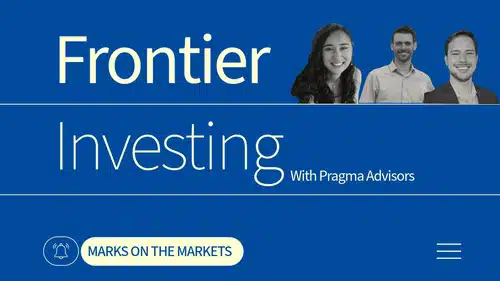
Ever wondered where the next great investment opportunities lie beyond the familiar US markets? In this episode, the Pragma Advisors team reveals groundbreaking research showing less than 3% of faith-driven funds are deployed outside the US, highlighting a massive opportunity in frontier markets. Through stories of transformation and practical insights, they explore how investors can make an eternal impact while seeking returns in underserved regions. This episode challenges listeners to think differently about risk, return, and the role of faith-driven capital in building sustainable businesses in the world’s most overlooked markets.

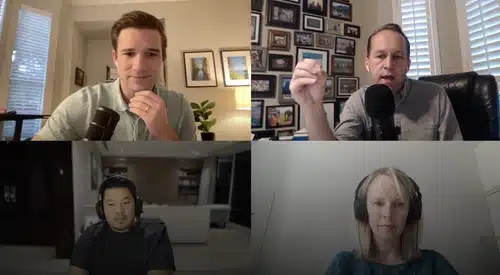
Join Richard Cunningham and John Coleman as they examine frontier markets and the 2024 Pramga Investment Market Study alongside Patrick Lowndes, Andrew Winker, and Tamanno Hodjihanova

View the full report here: https://www.pragmaadvisors.com/investment-study

All opinions expressed on this podcast, including the team and guests, are solely their opinions. Host and guests may maintain positions in the companies and securities discussed. This podcast is for informational purposes only and should not be relied upon as specific investment advice for any individual or organization.

Episode Transcript

Transcription is done by an AI software. While technology is an incredible tool to automate this process, there will be misspellings and typos that might accompany it. Please keep that in mind as you work through it.

You’re listening to Faith Driven Investor, a podcast that highlights voices from a growing movement of Christ, following investors who believe that God owns it all and cares deeply about the heart posture behind our stewardship. Thanks for listening. Hey everyone. All opinions expressed on this podcast, including the team and guests, are solely their opinions. Hosted guests may maintain positions in the companies of securities discussed, and this podcast is for informational purposes only and should not be relied upon as specific investment advice for any individual or organization. Thanks for listening.

Richard Cunningham Welcome back, everyone, to another episode of the Faith Driven Investor podcast. A joy to have you with us whenever and wherever you are catching this episode. It’s the end of October 2020 for its marks on the Markets Pod. The guy we featured on our last Mark’s In the Markets podcast is in the studio with me, our co-host John Kuhlman. And John was talking domestic markets, kind of US public markets, broader economic thoughts in the midst of an election year, federal, you know, rate cuts, things of that nature. And John, we’re doing something different today, which I’m really excited about because I know we’re going to talk about a subject that is particularly top of mind and top of heart for many inside the Faith Driven Investor community. And we’re going to zoom in on different markets, and that’s frontier in emerging markets. So, John, how are you, man? Good to have you in the podcast studio. And we’ll get to introduce our guests here shortly.

John Coleman Yeah, Richard, I’m doing really well. Obviously, this is a topic near and dear to each of our hearts, the heart of our friend Henry Kaestner, who’s spending a ton of his time thinking about developing markets and frontier markets now. And I’m really excited to look into this. It also gets us out of the echo chamber of the US election and interest rate movements for the time being, so we can think a little more broadly. So it should be a lot of fun.

Richard Cunningham Isn’t that the truth? And so we’ve got the Pragma advisors team here with us. It’s a full house. Patrick Tamano Andrew Just some leaders in the FDA space. Friends. I want you all to introduce yourselves and you’re going to start with you. And then also, Patrick, when we come back to you, maybe some of the origin stories as to how this crew came together to put together this particular pragma investment market study for 2020 for Patrick to make sure is.

Patrick Lowndes Man Well, thank you so much for having me and my team here, Richard and John. This is really exciting to get to feature some of this research and some of what we’ve been up to for, gosh, almost six years now. And from the Seattle area, it was five lovely kids, happily married and coming out of the software industry, but really becoming a generalist across a lot of different kinds of companies. And so a lot of my work and just following the work of really what God is up to in some of the hardest parts of the world to do business now is just drawn, my team and I here to research and canvas the market and so I can share a little bit more about the origin story in a sack. But yeah, we’re we’re pumped to be here.

Andrew Winker Great. Well, I can jump in. Yeah, it’s great to be on the podcast. I’m calling in from Houston today. My wife and I are Houston, been here for for several years. My passion for this space first started right when I was getting ready to enter the workforce. So like most millennials, I had some kind of vague idea of impact in my head, but didn’t really know where to direct that. So right before I entered the workforce, I took a class called Perspectives through my local church and really just opened my eyes to the global nature of God’s kingdom, you know, the intersection of the unity of the body of Christ, the diversity of the body of Christ, and mutually how we partner together. And I realized that I really want to dedicate my life to building that kingdom, not my own. So that, somewhat unnaturally maybe led me into consulting. But one of the things that led me to jump into that field, I started my career at a Bain and company out of school, and I really loved solving problems alongside tight knit teams of people. Some of the things that gave me the most joy. So the natural evolution of that for me is I’ve gone throughout the first kind of seven, eight years of my careers thinking about what problems exist in the world today, that I want to really put my shoulder behind solving, and then to who do I want to do that alongside? So right now I’ve that that’s led me a couple of different places. Right now I’m in a fun place where I’m getting to pursue work kind of through a portfolio career, doing a couple of different things, looking at work at the intersection of one redemptive business to radical generosity of capital and then three frontier markets. And I’m like the ones we’re looking at. So Paragon was a great fit for that and excited to kind of be a part of the team with Patrick and tomorrow.

Tamanno Hodjihanova Yeah, I love it. Well, my friends, I’m Tamanno. I was originally born in Uzbekistan, so a big part of my passion for Frontier and emerging markets is because I’m a part of the people that will never get to hear right unless we have development and capital and things that are working in those areas and markets for the gospel and and the end for flourishing and what that looks like. I’m calling in from Dallas, Texas. I went to a small little school here and have stayed in the area close to my local church and do a couple of different things. Part of my work is with the Lion’s Den and help with a big part of that event, and it’s happening in April every year. And then also recently jumped on with a financial advisor, Rachel McDonough, and work alongside her at Wall Square to really connect the head and the heart of investing. Right. How do we take the values that we know that we are called to as believers? And what does it look like in the ways that we do capital?

Richard Cunningham Fantastic. So as you can hear, we’ve got some experts in the crowd. Get tech entrepreneur, tech investor, Bain consultant with that kind of structured consulting background and then to mano with her roots with Lion’s Den, Rachel McDonough, who’s been such a key leader in this space in terms of helping advisors and Faith Driven Investor get in the game. And so I’m going to set up a little bit of context on this study. And one of the key things I want to note is this. Study we’re talking about from pragma, there are 2024 kind of frontier in emerging markets investment study. It will be available in the show notes for you to download. And then today’s kind of topic is going to really be unpacking it. But the reason this is so important is when you look at US public markets, thanks to folks like Tim McCready and the work of Bright Light and his team, among many others, it’s pretty easy to go get your arms around the size and kind of the scope and breadth of the Faith Driven Investor movement ecosystem because of reporting standards. Now it gets far more difficult even in established domestic markets here in the US and the private space to understand how large is the faith driven investing ecosystem as we think about venture capital or private equity or private credit, among other asset classes. And you’ll get where I’m going with this, because if it’s difficult in the US, imagine how tough it is to kind of grasp and get a sense of when you go into not only international markets but frontier in emerging developing markets internationally. And that’s the noble and honorable work of our friends here at Pragma who said, Hey, we want to go find who are the fund managers, who are the kind of people captivated by the love of Jesus who understand that redemptive and good business can be a force for good in places where that otherwise might not exist. And so that’s what our friends are going to be unpacking here today. And Patrick, with that in mind, would love some more of the origin story, how this crew here came together, what the Lord originally put on your heart and why Pragma came into existence and kind of some of the your origin story. And then we’re going to get into the research.

Patrick Lowndes And that’s excellent. So a little bit of background. It was, again, like I said about six years ago when pragma started, but even before that, probably for now 15 years I’ve been that the Lord’s called me to be really generous towards NGOs bringing transformation of all different kinds in these tough parts of the world. So my eyes been here when I realized that God’s heart includes all people all over the world, and especially the ones that are overlooked. We like to send, you know, a lot of our work to where there’s already a foundation. There’s already, you know, a strong presence of believers and Christians. And so I’ve been very much motivated to say, well, hey, where where haven’t we gone yet? And so six years ago, we started getting together. Probably about 15 people started circling together at a conference and we said, How do we get together and encourage each other more often? Maybe do some small investments together? How do we help outside of like these conference highs that we typically get? I think we’ve all been to one of those conferences where we’re like, Well, now what? Right? So we started getting together and shortly after we started getting together, I had a pretty big exit event and sold my first software company to ServiceNow. And all of a sudden, you know, at the ripe age of 30, I had this pile of cash that I was like, Wow, what am I supposed to do with this now, Lord? And so I began kind of canvasing the market, figuring out who is putting capital in these parts of the world that I care about. And to be honest, the list was not very long. I mean, John, fortunately, sovereigns is one of the short listed names there that we had, but it wasn’t I think it was 17 funds and sources of capital that first year in 2019 when we did the research. And then over the years it’s blossomed and grown. And that word, yeah, I think I’ll just say that word pragma advisors. It comes from this, you know, the parable and in Luke 19 where Jesus is saying this master said to his servants, Go put this money to work. So we’re very interested in like, how can we put our money, our talent, our skills to work? And you know, what that’s blossomed into is this focus on the frontier in emerging markets. Starting from only 17 funds. A few years ago, we analyzed more than 100 funds. So praise God for just the movement and the momentum behind the growth in this space. You know, Richard, we can get into some of the details on like how we selected, you know, what we looked at. But I just want to tell that little bit of backstory so people know kind of the origin of where we all started from.

Richard Cunningham And then you guys have an interesting definition for Frontier in emerging markets, I think is also helpful to kind of level set before we get going into the research is just like as your team thinks about defining frontier in emerging markets, oftentimes that can be just an economic calculation as to like a country’s GDP or whatnot. And what they’re doing kind of from an economic marketplace or mindset. How is the team thought about that as before we kind of get into the research for kind of the geographic landmass for what we’re talking about.

Patrick Lowndes Yeah, excellent question. Yeah, we hear this a lot and I think there’s a few angles where we can commonly look at this and I’m going to break it into three parts to make it simple. So the first one is economically frontier, right? So they’re not a Tier one market still very much developing are on the world scene. It’s frontier and it’s growing. There’s a lot of potential and there’s usually a reason why it’s not a Tier one market. And that gets to the second issue in frontier and emerging markets, which there tends to be some social, you know, political instability, you know, I’ll say destabilizing factors that make these markets more difficult to do business, more difficult to flourish. That’s why they’re not Tier one markets. And so I think a lot of people have said, hey, I want to go where it’s economically. They’re not doing well and I want to solve social issues. And we totally agree. Like, let’s do that. I mean, I love where the movement’s gone and. Sub-Saharan Africa. Also out in Southeast Asia. That third piece that matters to us in our research and as we are kind of evaluating which funds to include, because is this question of where do people only have a very small fraction of a percent of Christians that are living and doing work? Because as Christians were called to be a blessing to our own community? Right. That’s part of what God has asked us to do. But if there’s like less than 2%, 1%, a fraction, then it’s really hard for people to get a taste in a relational way of who Jesus is or what is his kingdom like. And so we’re really interested in places basically where there’s very few Christians because we feel like that’s truly the frontier from a spiritual perspective. In addition to the economic and the social frontiers that we’re also tackling. So is that helpful?

John Coleman Yeah. And I want to follow up there, Patrick, because I think what you all have articulated so far is the impact thesis for Frontier in emerging markets meaning and especially the distinctively faith driven impact you’re articulating how do we help a portion of the world develop or stabilize that’s unstable or developing? How do we, in the process of that, share the gospel, be a good neighbor, demonstrate the love of Jesus? The third question I always have, though, is kind of is there an economic or commercial case for this? And I know there are risks inherent in frontier in emerging markets, obviously, but do you believe there’s kind of a commercial or an economic case for investors to feel rosy, not just the impact that they can have, but potentially about the return profile?

Patrick Lowndes Yeah, absolutely, John. And I don’t want to steal too much thunder from my team as we’re going to get into some of that in the report and kind of what the different categories of financial and commercial return. So that’s certainly something we’re going to hit on. The little bit that I’ll say is, you know, some people look at a new market and they get excited about opportunity. Right? But I’d say most people that haven’t done an investment overseas or in a fund overseas, they are usually waiting for a later stage company. They’re waiting for a lower risk because I don’t want to lose it. In other words, I’ve got my grip pretty tight on fear of loss. Right? And that’s the reason why we don’t see people put in half their portfolio necessarily in these markets. Right. We’re talking about a smaller chunk, but there is an increasing amount of opportunity. There’s another type of investor that looks at these markets and says, wow, I can go after non consumption like the prosperity paradox talks about. I can go after non consumption in a market with kind of a venture capital sized return, but with a much more stable and profitable business because they’re just like no competition is for some of these things. So in a stable market, it’s really hard to get big returns unless you are like innovating and the only one doing it. Whereas in these other markets there’s a lot of whitespace. And so some investors and this is where we’re looking for more fund managers to come out, but some are really focused on where’s the whitespace and the big opportunity to scale. And that’s where there can be massive economic opportunity. And we’re starting to see more and more people analyzing their market like that, which is quite financially attractive.

Andrew Winker I think one thing I would add there, Patrick, it’s a great point. Really, I would take like a macro lens and a micro lens. I mean, if you look at kind of canvas the markets, we’re looking at like at the macro lens, you’re looking at two thirds of the world’s population, one third of the world’s GDP and only 10% of the world’s private capital. So just by that alone, a lot of these markets are just undercapitalized. You know, there’s a lot of kind of opportunity at that. But I think the caveat there is if you try and kind of cram that opportunity set into the just kind of pure worldly return maximization kind of mindset, it breaks a little bit because I don’t think what you can expect is to solve kind of all of those challenges on the typical ten year fund lifecycle to 20 mile, you know, So it kind of takes a different model. And I think there’s a real opportunity for the Body of Christ to lean in to some of that risk and think about redefining what does it really look like to see the Kingdom of God transcend in this kind of market with all the flourishing and blessing that that would entail? But I think that we kind of have to shed a lot of our traditional kind of risk paradigms in doing that while still maintaining a level of excellence.

Richard Cunningham I think we’re hitting on something important here. And I want to go to Tim on a real quick because she is our person who is has the frontier in emerging markets routes being from Uzbekistan originally. So how would you comment on this? And I know we’re kind of pushing off getting into the study. We’re going to get their promise. We’re kind of teasing it out further. But Tamara, I think it’s important to kind of get your commentary and then we’ll dive in.

Tamanno Hodjihanova Yeah, that’s great. I mean, maybe let’s go back. I didn’t hear the name Jesus until I came to the States. So I am one of the people who grew up in a region in a place of the world where the name of Jesus is rarely heard and continues to be the case for a big part of the world. And that is a big part of the reason that I think both my heart and. It’s hard as and learning to recognize that we as a body of Christ have a commission and a challenge to walk into the hard of places like this and redefine risk and look into a different way of investing to recognize that maybe yes, John, we’re maybe not in a place where we can have the same amount of return as you would hear in these markets or even in the public markets here. But there is a place in a space for us to lead out, to recognize that there is an opportunity here that we can both have spiritual, economic and social and environmental impact all at the same time. And we have gotten to see a big part of the organizations and the times that we’ve gotten to highlight, just even as Patrick mentioned, having 17 come to over 35 this year and see the movement of local leaders and international leaders working in these places and seeking to look at transformation differently, seeking to look at risk differently. I think there’s a lot to be said for how this space is changing and how it will continue to over the next couple of years as we get to see more capital and hope and pray that more capital would get deployed in these areas.

Richard Cunningham That leads to a lot of questions. So let’s dive in and let’s kind of go bottom line up front friends and maybe kind of when you look at this study from a 30,000 foot view, maybe major takeaways and also kind of some of the methodology of the study as well, because we’ve talked about the number of funds there are out there, the number of capital allocators and the people we can kind of go evaluate and get their sense of how they’re thinking about impact plus return is is it more concessionary? Is it fully market rate, whatever that might be? What was kind of the overall approach to the study? And then maybe kind of some of those larger takeaways and then we’ll dive into those as we go?

Patrick Lowndes Yeah. Andrew, would you like to maybe talk about we looked at more than 100 funds. What were some of the screening factors that we had? Because I think that while some people might look at the study and say, Hey, wait, you’re missing so-and-so. And I think it’s just good, maybe the level set with that. And then, yeah, we’ll jump into some of the high level themes, but would you mind hitting that for us?

Andrew Winker Yeah, no, I think that one of the things I had found into my brain for my consulting lifestyle was kind of what it means to take a hypothesis or a thesis driven approach, you know? So with that in mind, kind of our overall way we looked at this was just start off with a couple of relatively simple critical questions that we wanted to answer. So things like we already talked about a little bit, what do we mean by frontier markets? You know, who’s even participating in this space, who’s been doing work here? How much capital is being deployed? Where is it being deployed? What’s the target financial return of those investors. So we kind of set out with a couple of questions we wanted to answer. And then from there, it was a lot of kind of honestly, a lot of picking up, don’t you know, we did over 30, 40 kind of interviews to really get a kind of a bottoms up perspective of what’s going on in these markets. We supplemented that with a lot of secondary research. I mean, huge things. It was incredible to kind of go through the database that FDI has of these kinds of different funds in different places and get to supplement that with some primary research. So kind of a combo of both of those things. And we do want to celebrate. There’s a wide variety of approaches people have to this. Our particular criteria for when we were looking at funds was first and foremost sources of capital that are kind of led by Christians or followers of Jesus, focused on companies with Christian or Kingdom kind of led founders and leaders that are pursuing multiple bottom lines of impact and what they’re doing, and they’re deploying capital directly into companies. So those are the four kind of criteria we looked like. And that kind of frames up the who in the landscape that we’re looking at in the study.

Richard Cunningham Helpful. So we got Faith Driven Investor is deploying into Faith driven entrepreneurs direct investments. So the investor is kind of exercising their influence as being a shareholder on the company’s cap table. Good. Patrick, what else would you add?

Patrick Lowndes The thing that I was going to highlight were and you ask are like, what are the big takeaways? And this might be obvious, but just to state it and you’ll see it graphically in the study, just there’s a big uneven distribution of capital. We’re talking about less than 3% of funds in the space deployed outside of the US. And if you’re looking in, our target area tends to be North Africa and the Middle East and the better part of Asia. We’re talking about point 1% of funds that are intentionally deployed towards these kinds of markets. So I mean, we got a lot of headroom to grow in this space. But the second big takeaway that we had is just we talked with lots of fund managers. We talked with individual investors who are prolific in this part of the world. And another theme came up, John, it kind of begs it goes back to your question about what are your expectations? And so, you know, having the right expectations matters a lot. So this is the third time we’ve done this study. Some of our favorite reports that we do and the analysis is are two by two. And I’ll just take a second, Richard. I’ll just unpack that. So what we’ve got is this two by two looking at on the y axis going up the left side, we’ve got kind of geography. Where are you focused? Right. So again, the parts where capital is prolific and saturated, abundant, it’s on the bottom. And where it’s not abundant tends to be. On the top in our target area of focus. And then on the bottom is the target investor financial return. There’s about 44 funds that we analyze in this space. And you can see a nice gap of how much capital that’s being deployed. And what you’ll see when you look at that is just it’s pretty stark how tiny the dots are and the bubbles are that are deployed in these parts of the world. And then just as you kind of get to the more established parts of world, naturally that’s where more capital will be. So we think that’s a helpful way for people to understand who’s focusing on some of these harder to reach areas in the frontiers and how can I orient part of my own risk profile to try to maybe step into that, maybe to try to you know, this is called Faith Driven Investor. Like, where’s my faith? Am I going to invest only by risk adjusted returns, or am I actually going to invest in faith that maybe in sometimes makes me look like a fool, right? Am I willing to actually risk some of my own perception, you know, in the market to friends or my financial advisor? If I make some bets, that might look really risky. But to the kingdom of God, if you’re able to move the needle beyond just the financial, do you remember to move the needle on other areas? I mean, I had a CFO one time show me the IRR, you know, with looking at all the factors, all the bottom lines. And if you look at for all eternity, out to the right. The IRR numbers are ridiculous. If you truly do value those other kinds of impact as being real impact. So it’s just a very different way to look at investing in these parts of the world. So that two by two, I just give a shout out there, Richard. That’s usually our favorite. People say, I never knew where the money is going in the world.

John Coleman So let me dig into the topic with you also, as I mentioned to you guys, since we were chatting beforehand. I’ve spent a little bit of time in developing markets, worked in Afghanistan and Saudi Arabia, had teams in the Middle East and Africa and Asia for a while. And, you know, there are a lot of legitimate challenges, I would say, that make excellence operating in emerging markets even more important than operating in U.S. markets. You know, on Faith Driven Investor, we often talk about trying to institutionalize the space such that people are investing because we’re really excellent at what we do, not just because we’re Christians. And I think the demand for that in emerging markets or frontier markets, and this is my personal opinion, can even be greater because I’ve also seen how destructive certain types of philanthropy and investment can be in emerging markets. There are legitimate concerns that entail real risk. People care about the security and safety of the people for which they have responsibility. Obviously, even regulations, anti-terrorism measures like we had to blacklist certain countries in the frontier markets, even at relatively extensive investment firms. I was out because we couldn’t be implicated in not understanding where the financial management of those funds was going to. And even when I was on the ground in Afghanistan, we were still having to pay for things with briefcases full of cash and the controls over that was challenging. It was really challenging to think about operating in that environment. So apart from just kind of the risk tolerance people might have for losing their capital, how do you think about the demand for excellence in emerging and frontier markets, both for the protection of investors, but also to assure that that capital is serving a constructive rather than a destructive purpose with the people it’s encountering?

Andrew Winker I mean, John, I think it’s an excellent question. I mean, I think that we’ve all seen a lot of the harm that aid can do when you might be trying to solve the wrong problem with aid. You know, and I think one of the really cool things that we see in this space is a lot of the things that we highlight is there’s really kind of a community element to it. You know, so if you think about how are we not just deploying capital into these regions, how are we really also putting our shoulder behind trying to really think about solving some of those problems alongside others? So several of these groups I mean, I work at the fund that has kind of every single investment is paired kind of within this mentor network. You know, so if a company that’s doing a food distribution business in Central Asia is looking at, hey, how do we solve some of these problems, well, let’s find someone in our network that was a VP at Cisco Foods for for 25 years. And how do we actually connect them to where we’re not reinventing the wheel, solving some of these problems? It’s just a more effective distribution, you know, of really kind of matching those problems. But I think that that will take patience. You know, I mean, you’re dealing across some more like that example I gave was someone that probably is more Western on the Cisco side dealing with someone in a frontier market, with a different culture, with a different kind of land. And so it really does, I think, take this mutuality of relationships going in to do that. But I think there’s an incredible opportunity for it. I think it just takes kind of reengaged with a little bit more than capital, which is one of the reasons we had a lot of there’s a lot of incredible capacity builders doing work in this space, too. You know, so we really long to see there be collaboration across, I guess we could call the whole value chain of capital into these markets, you know, and really see some collaboration both across kind of individuals joining these teams, but also organizations themselves.

John Coleman I love those stories and I would love I mean, if you all have another example would be kind of fun to hear a story of someone who’s navigating this well.

Tamanno Hodjihanova Yeah. I don’t know if I have a story, but maybe to add on to what Andrew was saying is I think it’s also really important to have local leaders on the ground in those countries. Right. It’s one thing to try to have a fund here focused on a country in the West, you know, from the West perspective, and that’s great. But there’s a part of trust community building, relational building that you don’t get unless you have a team and people locally on the ground that know, get a sense for the culture, know what it is to work. And so a lot of the organizations that we interviewed and you tell me if I’m wrong, but most of them have and or travel pretty extensively into those regions or have teams on the ground or have partnerships that they have developed over the years that allow them to help with some of the due diligence, some of the work that’s happening in relational building as well as our story that we can think of. I think that’d be fun to share.

Andrew Winker I was just going to share, I think one group that’s kind of pulling together a lot of this stuff in a really cool way is a group called Angelo Investment Network. And so they’re actually a network of these different fund managers and kind of entrepreneurs. And so one of the really encouraging things that I learned through this study was just kind of seeing the seeds of some really incredible locally led ecosystems in places like Egypt, Pakistan, Mongolia, with a lot of national and leaders really coming together and saying, hey, how do we think about really blessing our markets? You know, and I think that we really have an opportunity to join with our brothers and sisters in those parts of the world, you know, and learn from each other, you know, and actually pull up to the table and listen. There’s kind of this convening of these leaders. And so I think that that’s one story, an example of I think that we really can kind of come to that table as listeners and say, hey, what does God do it in these parts of the world that we might not even know about, you know, and how do we kind of doing this? That’s one group, I think, from the study that I was really encouraged by. There’s there’s plenty more. We we actually kind of profile meetings like 5 to 7 that we know particularly well. So if you’re curious for more specific kind of stories, I would point to those in the study of some of those kinds of sources of capital or funds that have been operating for a long time in these parts of the world.

John Coleman That’s awesome And maybe articulate. You know, I think one thing that people overlook, there is such a history of charity in these regions, right? I think when people think about doing something good in Africa or in parts of Central Asia or in parts of Southeast Asia that are more impoverished, they typically think about funding one of the excellent humanitarian organizations, anti-poverty organizations like World Vision or Compassion. And those play a role. But I also think that the future of these regions will be contingent upon them developing their own sustainable enterprises. Right. I mean, that was really the work we were tasked with when I was in Afghanistan was aid was almost distorting that economy in unhelpful ways because the smartest, best equipped people were all figuring out ways to just work with the United Nations or with other organizations handing out aid rather than building businesses. Right. That would exist long after these aid organizations had exited. Talk about, if you don’t mind, just kind of the role that private capital plays in building sustainable industry or business in these areas versus the philanthropic which is worthwhile in its own right. So I’m not diminishing that but is not well equipped for certain problems.

Patrick Lowndes John, we have on page six of the report, we have a really. A nice classic. That kind of helps picture the difference and like kind of the role that aid and charity play alongside in sort of like relief as opposed to just like rehabilitation and then the final stages like development. How do we now develop out of that? Right? So I’d point people to page six of the study, but at a high level, you know, leaders like Angela have told us we don’t just need people to show up and dump lots of investment capital into markets today. We don’t need that necessarily right now. What we need is the awareness of where communities are and ecosystems are in the stage of maturity and readiness, because sometimes we’re still working on the basic like shifts in mindsets and critical thinking and shifts and mindsets on how does relationships work. But transparency, where I’m willing to collaborate instead of hoard power, right, where I’m not in a survival mindset, but I’m in more of a flourishing, an abundance mindset, right? Kurt Laird’s book, The Culture Key, really unpacks this. If you want a good long read on this topic. And he actually was in Afghanistan telling a lot of these stories. So I would say coming to the table as an investor, the first good question to ask is who’s already here? What’s already happening and how ready are they to pursue? Even if you have a pitch deck in front of you, like how ready are they within their market to operate this kind of a business? Right. And those are the kinds of questions, some of the most excellently run funds, they have networks of people on the ground. These are not people just flying in from across the world and have no context culturally. So I think that’s how we as Faith Driven Investor can come in with foreign direct investment as an excellent partner and co investor.

Richard Cunningham That’s really good. All right. So there’s so much in so many different directions we could go in and I’m enjoying this conversation a lot, but one of the things I want to talk about is making it super relevant to the Faith Driven Investor who’s listening to this and is just like, Man, I’m just trying to think about how to implement negative or positive screens in my public market holdings and my asset allocation here domestically at home, like Frontier and Emerging Markets was maybe on my mind from a like a charitable capital standpoint. Now you’re kind of giving me the argument that, okay, like maybe this should also be something I consider from a investment capital standpoint. Patrick, you mentioned on page six that kind of overview of moving beyond charity. And I also think, you know, Greg learned a hand as the person I think of in the FDI ecosystem is help kind of popularize this idea around. Like as Americans, we give $557 billion and I’m using your data here. This is from 2023 to charity. And we have a million and a half nonprofits in the US competing for that same kind of pool of capital, which is that $557 billion it’s given the charity. Now that’s a significant amount of wealth and capital that’s given, but there’s $50 trillion of investable assets in the US alone. And we probably estimate just from kind of demographic data that 50% of that is held by Christian. So I love the way that you guys unpack this, where it’s saying, Hey, there is a charitable universe to this, but there’s also an investable universe. So maybe lean more into those tensions. And I also want to talk about kind of dipping back into the terrible waters, how this is possibly a way for someone to engage with donor advised fund capital. So now it’s kind of the blended world where it is given capital that can also be thought of as impact investment capital, not just given capital to adapt. That goes out as a grant to A501C3, but it’s given that could then be invested. So what thoughts do you guys have there?

Tamanno Hodjihanova And that’s great. So I think the question of I love that we get to blend both charitable and investment, all our conversations in the ways that we approach capital and maybe to make it super practical to the general Faith Driven Investor audience. Right. It certainly is recognizing that and we say this a lot on the feature and podcast, Everything that we own, everything that we have got, owns, right? It is all his those resources all belong to him. So what would he have you do? What could that look like? Is there things that you’re not currently thinking of in the ways that he would have you to do with that capital that may be a little outside of your comfort zone, and a part of it is leaning in to recognize that that could be the case. And a second is there’s a section in the report where we talk about how do you prepare yourself and then how do you walk with people and walk alongside them? The stuff is really hard and nuanced and it’s not something that you jump into and automatically know what to do or how to walk in the steps over. There are people who are leaders that we stand on the shoulders of that have continued to do this work. And so I would just encourage you to walk alongside your financial advisor if that’s the case. Right. Or finding people in the future in space that are working out sort of answer the questions that are hard and take a lot of time and due diligence. The other part of it is getting involved in communities and in events that are doing work like this that allow you to take small steps and invest with others to learn more. Something that I think I would encourage our veteran community is to look that our patients, we often want really quick results for lots of different things. I want to be able to invest capital and great after this all works out. But the reality is most people have been burnt out in front of an emerging market investments. We’ve talked about this beforehand. This is really hard. It’s probably not going to go the way that you thought will. And so taking baby steps will be the best way to walk into that space to know how you do that with others and then recognizing that there are ways and things that we can learn even when investments may not go the way that you thought. And this is also not a big part of your portfolio. Please don’t put all of your investment capital into what this looks like. But there are ways that we get to deploy mindfully and with wisdom to know how to do that. Does that help A little bit. And Andrew, please. The deaf world is fascinating because I think it’s a great first step that will allow you to donate, but also then get to experience kind of the investment side and working alongside some of the funds and companies.

John Coleman And maybe before Andrew jumps in, the one comment I’d offer there is people can often put more capital to work here than they think. I agree with you. If you’re managing kind of a balanced portfolio of your private capital, that frontier in emerging markets would typically be a small percentage thought about differently in the dark world, for example, which you just brought up. If you’re dedicating a lot of philanthropic capital to the emerging world, your ability to repurpose that, at least temporarily, for investments in the emerging world, which could ultimately then also be given philanthropically because you’re trying to earn a return on that capital could be a smart way to deploy that. Right. If you’ve got a great deal of your wealth, I mean, we know people, thank goodness, in our ecosystem who really believe this idea. You talked about that it’s all God’s right. And so they’re putting 90% of their net worth into philanthropic capital. You know, thinking about repurposing some of that, at least for a time, into investment capital or vice funds through places like Impact Foundation, etc.. You can actually put a lot of capital to work here and with a totally different mindset than you might take to call it your standard investment portfolio. Right. And so I would push our listeners maybe a bit further than you would because you’re being so conscientious that especially with resources like you all are developing that give people Guideposts to where they might steward this effectively, our ability to think creatively about the capital we deploy in this space and hopefully provide enough capital that we can be catalytic to those regions. I think there’s an extraordinary opportunity there. And you’re right, everyone needs to be sensible. You don’t want to put capital to work that you need to survive or that your kids need to go to college necessarily. But there are pools of capital out there that I think people could see through this way. So not contradicting what you said at all, but just saying you’re being incredibly conscientious, which is appropriate. But I think the vast majority of Christians who are dedicating a lot of philanthropic capital really could think more creatively about the ways in which they deploy that sometimes in this space.

Andrew Winker John I think that’s spot on. And if you look at the last like in 2022, there’s an estimated 224 billion in DAF assets. You know, if you look at our study, like when we kind of layer in, I mean, obviously pointing to Tim McCreadie did some awesome research. There’s 100 billion public markets Faith Driven Investor you know so even if you just think about wait, there’s two acts the number of DAF capital assets sitting waiting to be deployed. I think that the idea of permanent capital is an excellent lever. You know, it seems like a no regrets move that if if you had a magic wand and you could think about how can we creatively and patiently take that capital, that might be it’s already pre given, you know, and think about really joining alongside others. I think that’s a definitely a an arrow in the quiver to think about. That being said, I mean I do think there really are opportunities from anything from pure donation, you know, to helping to operating budgets of things, to catalytic capital, you know, looking at more kind of below market returns, but with a longer term impact all the way to there are opportunities for above market returns, as Patrick was saying, in some of these places. You know, I think those are all kind of areas in the quiver in an impact foundation. Using your DAF to invest is definitely an important lever there. I think that on the concept of time horizon is important here. You know, in general, I think that faithfulness over long periods of time is what yields fruitfulness. And so if we really are investing for eternity, you know, I think that we need to be able to stretch beyond that typical ten year fund life cycle that most people think about. And that’s typically the book end of our time. And if we’re honest, a lot of times you’re not even patient for that long. You know, if you’re really trying to invest for enduring transformation, it’s going to take time and patience, but it will be so worth it. It is so much joy to get to labor alongside our brothers and sisters, join Shoulders and do this together. But it’s going to take it out of the comfort zone a little bit.

Richard Cunningham I want to do this real quickly. I want to hear from each of you. When you think about the number of funds you got to interview the 40 something plus that ended up in the study and a name comes to mind from it from an impact methodology and approach. We’ve got to be careful here that this is by no means an investment recommendation. We’re trying to highlight and shine a spotlight on great work and faithful believers getting to work in markets that otherwise there hasn’t been a lot of activity. But I think each of you Rapid Fire would love to hear you talk about a particular approach that you’re captivated by and maybe kind of set up who they are, where they’re operating, what their kind of methodology is to kind of help give more kind of color and texture to some of these funds you’ve interviewed. Patrick, let’s start with you.

Patrick Lowndes Yeah. I mean, I think clearly the leader in this space, I would say, is transformational as Sammy for more than 20 years, I mean, $9 million of capital and the level of diligence and rigor on the ground and the people, I mean, they have basically shown us as younger, you know, next generation shown us, here’s how not to screw it up. Right. And so I think I look up to transformational, see me as probably one of the leaders in the space. And we did highlight we did a little feature on them. And again, it’s not a recommendation, it’s just something to go research. We’re a research group with that. So yeah, that’s one.

Andrew Winker I can go next and let tomorrow. Hopefully I don’t steal yours tomorrow. And I loved I think a lot of listeners might be familiar with the Lion’s Den. You know, there are some great lions dens in Birmingham and in DFW. One of my favorites that I’ve gotten to participate in the past couple of years is a lion’s den put on by a group called the Open Network. And that’s a really incredible way to kind of learn in community. You know, so making direct investments in some of these companies, getting to meet and just hear the stories of people running these businesses, but then also going to invest alongside others, you know, who have some experience doing that. So it was a really fun way for me, kind of relatively early on to pull together capital with some friends and invest in that kind of way. So again, as Patrick said, caveat that with 50 million different kind of disclaimers of not professional investing advice, but we really I think they’re doing some great stuff. And Angela network, as we said earlier to you.

Tamanno Hodjihanova Yeah, I’ll hone in on Angela for a little bit. I know we’ve already mentioned them, but something that really stands out to me with them is that they’re not operating out of the US. They’re also very locally ecosystem minded, right? So they are bringing together leaders and investment operators that are based in those regions and helping them to think holistically about a transformational plan not just for their city, but for the entire country. And then looking at how to create ecosystems and support around that, that allow for long term development and transformation, which I think is just super, super cool. That’s really encouraging for my heart to know that we have local leaders on the ground that are creating funds and investment networks and working alongside to do that for their own regions, which is at the end of the day, that’s where we want those communities to be.

John Coleman Well, I know Richard’s about to drive us to our final question, which we always ask about what folks are learning through Scripture. I wanted to conclude before we do that and we closed the podcast just saying two things. One is I really appreciate the work that you guys are doing. I think we are called as Christians to engage with the poor and disenfranchized. We’re called to engage with the world broadly to those who are unreached. So many of those are outside of the developed markets right now, where most of us live. Most listeners are actually in the United States, for example, where there’s a mission field of its own. But we’re really called to engage more broadly than that and to bring the church abroad. And I think we have an obligation to that, not just as Christians, but as human beings, right? Where there’s the greatest need in the world is often outside of our country. And I love that you guys are adding rigor to this, that you’re trying to help be a guidepost to others. Patrick That you’re putting your own all of your putting your own resources against this in a way that’s showing that you’re supporting on behalf of something greater than yourself, not just for yourself and the heart that you all have for this is awesome. And I’d really encourage FDI investors, as Richard was saying, this is kind of the final horizon. This is the frontier for most folks because, you know, public equities is where you start getting into private equity itself is a little bit challenging. Sometimes thinking about doing that in Ethiopia or in Afghanistan or Tajikistan, etc., is probably even a step further. And the fact that you all are trying to professionalize this space, but research against it to identify those who can be effective partners in this space. Man, what an awesome mission. Field and our our hope. I know I know Henry is deeply passionate about this is that folks will join him in that mission or really inappropriate ways to monitor to your point, with their own finances. Think about how to do that and really make this a core part of the way in which they engage philanthropically and through investment dollars, whether philanthropic or private in me. And I’m just so encouraged by the work you all are doing to put diligence behind this and rigor behind this, because I think it’s exactly what’s needed in this space.

Richard Cunningham Yeah, I’ll pile on because I’m scrolling through the research report in full, as John is saying this comment, and I’m astounded. Like you’ve got a market map and it’s not just the sources of capital. We’ve been talking about the funds I’ve highlighted, but there’s also the capacity builders, there’s the investor support. So the advisors that are really thinking about this, there is the infrastructure in terms of like, hey, how could this capital actually flow? Then there is specific breakdowns of those different sources of capital who they are, where they’re operating. There’s investment minimums. Then there’s thought leadership around like, Hey, is that equity, is it debt, is it performance based kind of revenue financing? What does that look like? They unpack the value of having a guide. They provide specific highlights and amounts deployed. I think people often ask is like, hey, give us the specifics. We’re looking for kind of the the teasers and the two pages and that overviews of like how I could actually as a Faith Driven Investor step up and get in the game. And so I think this research, as John is saying, is crucial to that. I’m also a sucker for a good two by two framework, and Patrick got into that earlier. It’s phenomenal. It breaks it down geography basis. So I’ll stop there. I could pile on all day long, but thank you guys for this exceptional work. And we’re going to close with what we always love to ask. I’m going to go around the horn and be brief because I know we’ve gone a little long here. Is that what’s God been teaching you in in through his word lately? We’ll go Patrick Tamano and then Andrew. That’s our final question we love to ask each and every iPod.

Patrick Lowndes Well, we’re in the book of Exodus at our church and how God shows his power over the gods among us. And the most popular competitor to God being the God of men in our money. So I’ve just been encouraged that even in this alternative investment class, I shouldn’t worship my financial security or my portfolio return, but I should be just remembering that God is my provider. Seek His kingdom first. You know, even like I was just mentioned in the Richard Garnett episode 180, just being focused on eternity. So that’s what I’m learning in the Book of Exodus.

Tamanno Hodjihanova Yeah. That’s awesome. I love the Book of Access. I’ve been reading through the Gospel of Matthew and I’ve just been struck by how many times the word behold gets used before miracles or certain things that Jesus will do. And just a reminder for my heart. Right. The Lord is not asking us to do all the things just for the sake of doing them, but rather we get to behold and see the work that he’s doing and will continue to do and join alongside him in that. And man, what a cool way of getting to see his glory and his faithfulness even more so as we just get to look to him for those things.

Andrew Winker It’s an awesome company. Yeah, I’ve been trying to spend a lot of time just naturally. I’ve kind of run pretty fast, so trying to slow myself down and really enjoy, just kind of trying to chew on just the Sermon on the Mount. And so specifically just it’s been incredibly freeing for me, hearing Jesus’s words talking about do not be anxious, you know, just kind of soaking in the language of will he not much more. Just those kinds of words. So really trying to simplify my life around what does it mean to seek first the kingdom? You know, it’s his job to provide for my needs, not mine. A lot of times I can kind of run to that. And so those types of things can sound cliche to me, but so I really have to remind myself that seeking first the kingdom doesn’t mean seeking first my job or my work so that I can seek first the kingdom or trying to mobilize others into seeking first the kingdom without doing it myself. It it’s really, truly trying to build my whole life purpose around enjoying God, beholding Jesus and partnering with Him to build this kingdom where it’s moving. And so it’s truly what my heart longs for, or at least it’s what I want it to. Sometimes it doesn’t, but that’s been freeing for me.

Richard Cunningham It’s good. Andrew My wife’s memorizing the Sermon on the Mount right now, and I think it’s slowing her down.

Andrew Winker She’s got me beat. I’m not trying. I’m. I’m. I wish I could memorize it.

Richard Cunningham She’s way cooler and better than I am. All right. A bonus round question really fast, Patrick. Pragma has done this incredible study, but there’s more that you’re up to. And I think kind of the framework of what all you’re doing helps people kind of understand the necessity and the size of the opportunity. So close is there.

Patrick Lowndes I’ll give you three pillars. So this is our first pillar insights into research. And this is also what has been happening where capital is flowing. We’re also beginning to look at where market opportunity could be in some of these markets. So more on that. That’ll be a future episode. We’ll talk about that. The second piece is just investment advisory and trying to work with family offices that are looking to get more strategic. How do I take the first steps? How do I think about all the different options in the space? And the final piece is, even if you have market opportunity and you have a plan to deploy capital, you need talent, you need great operators. And so we’ve been doing this for six years now, helping operators get a little bit sharper. And so that talent pipeline is the third pillar of what we like to do. And there are some ways that we do that. But yeah, we love any and all those things that are going to catalyze more resources, more excellent operators. And at the end of the day, a lot more people that love Jesus blessing the nations and the whole world with their gifts.

Richard Cunningham Super cool. Well, hey, this has been the Faith Driven Investor podcast where we’re zooming in on the 2024 pragma investment market study focused on emerging and frontier markets. Patrick Kimono Andrew, one encouragement to have you on Friends. You’re going to download this report either at pragma advisors.com or we’ll have it in the show notes. So we’re going to look at and say, Yeah, this looks like it was put together by some expert consultants. It’s good work. And so thank you for being on Friends and we will catch everyone next time.

Andrew Winker Thank you.

Speaker 2 We are grateful for the opportunity to serve this community and see your listeners come in for more than 100 countries. Faith Driven Investor. It can be a lonely journey, but it doesn’t have to be. The best way to stay connected is to join a group study with other investors looking to get the same answers to questions you have and find great community as they do so. There’s no cost, no catch. In person or online, you can meet an hour a week with other peers from your backyard or the other side of the world. You can also stay connected by signing up for our monthly newsletter and faith driven investing Dawg. This podcast wouldn’t be possible without the help of many of our friends. Executive Producer Justin Foreman. Intro mixed and arranged by Summer Drags Audio and Editing by Richard Barley. Our theme song is Sweet Ever After by Ellie Holcomb.
Subscribe to the newsletter

Stay Connected
to the Movement

We know that as an Entrepreneur, your most valuable asset is time. So each month we take the very best of the podcast, the blog and all the news, resources, and upcoming events happening across the space and bring it to you.

Episode 182 – Solving Joblessness | Creating Sustainable Jobs in Africa & Asia | FDI + SWGP Special

Episode 182 – Solving Joblessness | Creating Sustainable Jobs in Africa & Asia | FDI + SWGP Special

Podcast episode

Episode 182 – Solving Joblessness | Creating Sustainable Jobs in Africa & Asia | FDI + SWGP Special

Convinced that Christians would better handle their personal finances if they were counseled objectively with the highest technical expertise and from a Biblical perspective, Ron Blue founded a financial planning firm in 1979. Today that firm manages $13.5 billion in assets for more than 10,000 clients nationwide. Ron joins us to discuss why he thinks stewardship is just as much about investing as it is giving. 

All opinions expressed on this podcast, including the team and guests, are solely their opinions. Host and guests may maintain positions in the companies and securities discussed. This podcast is for informational purposes only and should not be relied upon as specific investment advice for any individual or organization.

Episode Transcript

Transcription is done by an AI software. While technology is an incredible tool to automate this process, there will be misspellings and typos that might accompany it. Please keep that in mind as you work through it.

Ron Blue: All of a sudden in five years, I had a national clientele, a rich, wealthy Christians who wanted to give, and that’s how the whole thing got started. And today, there’s ten thousand clients at that firm Serve’s that are giving away one hundred and fifty million a year. They’re managing about 12 billion in assets. And I look back and I realize how God prepared me to do what I did. I can take zero credit for it.

Henry Kaestner: Welcome to a special edition of the Faith Driven Investor podcast, From time to time, we’ll get involved in a broader definition of investing. And this is one of those times when we think about storing the wealth that guys entrust us with. Much of that is going to take place with investing in mutual funds and in stocks and bonds and venture capital, private equity, all the different topics that we have rolled out over the course of the last year and a half or so, over 75 or 80 podcasts with speakers like Frank Chen from Andreessen Horowitz, Andrew Stevens. And gosh, we’ve had just about every asset class. But lest we think that it’s just about investing that God cares about, which is different, of course, in a way, a lot of people think about it, the reverse of that as people just care about giving. But since we and you is listening to this podcast, subscribe to more of this one pocket mentality, that is we stored these assets. We have an opportunity to participate in the work that God is doing. We need to, from time to time, start focusing a bit on the giving side as well, and in some cases were called to go ahead and make that investment into the private equity fund or into the mutual fund. And in some cases, we’re called to be faithful to the giving opportunity that’s right in our midst. And so every once in a while, maybe every 10 episodes or so, we’ll get into that a little bit more deeply. And whenever we do that and do that with one of my best friends in the world, Darrell Heald, you probably know enough about my story by now to note, at age 28, I came to faith. At age 38, I had what I call my born again again moment when I met Darryl. And Darryl asked me the simple question, Henry, why do you give? And that sent me into God’s word. And it just changed my life. So whenever we have an opportunity to talk about this, I’d like to bring Darryl back on board. We’ve been partners in ministry and invested in so many things since that time 13 years ago, which I’m super grateful for today. We’ve got an incredible guest in Baila. So before I go any further, Darryl, welcome. Welcome to the program.

Darryl Heald: Thanks. And good to be on the program. And I’m super excited. You could have just skipped over any of my intro. Let’s go straight to our guests.

Henry Kaestner: Well, before we do that, we’re going to go almost straight to our guest from Blue. And Ron, by the way, welcome to the program. It’s awesome. Have with us back again

Ron Blue: a little bit. Yeah. Yeah. I’d love talking to you guys.

Henry Kaestner: You’ve always been such a great encouragement to me talking about this, these formative experiences that God has put in my life in these really important relationships. Ten years ago, we started Sovereign’s Capital and it was Darryl that introduced us to you, and you went ahead and got it right away and said, I’ll do anything I can do to help you. And we asked if you’d be on our board of advisors and if we could get this guy who’s probably the biggest name in Christian investing and the generosity with which you said, yeah, absolutely. You know, if any way I can help you and you put my face on your website and just tell other people that you’ve talked to me and that blew me away. It blew me away. I’ll never forget. I’ve told you before, but I’m going to tell you and our listeners that again, as we’re getting ready, though, I was taking certain liberties with our relationship and I showed up this podcast nine minutes late. And what our listening audience may not know is that we on occasion will have several of these podcast recordings we do in sequence. And we just got off the podcast interview with Dallas Jenkins, who is the guy behind the chosen, and we’re talking about him. And he had a message. He also has known Ron, interestingly, and this is something Ron, I don’t think you knew, is that Ron hired Dallas well before he was famous to direct a video that Ron did, which I think is super cool. But one of the things that came up in the interview we had with Dallas was that somebody had come to him early on in his career and said Dallas. And I was on a Facebook post on a video he’d done, and he wasn’t sure that the film they had done had been received as well as he had hoped. And somebody from Romania four o’clock in the morning said, Dallas, your job is not to feed the 5000, it’s just to supply the five loaves and two fish. Now, they’re just beginning with what you have. And then, Ron, as I was explaining interest, apologizing for being late, you shared an anecdote that was very similar to that. And whenever I hear those repeated themes, it makes an impact in my life. It makes me feel like God is trying to tell me something and maybe as well. And you were talking about a time when you thought you showed up to an event and it wasn’t as well received. Or maybe there weren’t as many people there as you would have wanted in your bride. Told you what

Ron Blue: she said, Ron. She said God said feed the sheep, don’t count them. And it changed my whole perspective. You know, it just it took away the whole idea of how big the audience don’t make any difference. It may be an audience of one because you don’t know who God is going to put it in the audience and you don’t know what he’s going to say to them. So my job just to be faithful to deliver his message and he takes it from there however he wants to. So don’t count them. Just feed them. And appreciate. Henry, you’re feeding. Flock here of people that are really becoming serious, you know, when you get serious about your money, you’re serious about your faith, and when you put those two together, that’s a big deal. That’s why Jesus spoke so much about money, because it’s the greatest barrier to my relationship to the Lord. The God of Mammon steals that every single day. And we live in a culture that I think is the most difficult to live in because there’s so many temptations. And I don’t mean that in a condemning way, but I say, you know, I didn’t even know what I needed till I went to the mall and that and there’s billions of dollars being spent every day trying to make me discontent. And a lot of it gets through.

Henry Kaestner: So I’m still with you.

Ron Blue: It’s hard to live in this culture and have the proper perspective on money. So I’m delighted that you’re doing what you’re doing.

Henry Kaestner: Well, thank you. And to your point, we’re trying not to count our listeners in, but they know all three of them know that I love them. And Mr. Tony

Ron Blue: Abbott, your wife doesn’t count

Darryl Heald: two of them. Love I love.

Ron Blue: I’ll tell if

Henry Kaestner: you are one of those two people, though. You’ll know that we’ve had Ron on before. We featured Ron and one of our conferences, and he weren’t our first ever lifetime achievement award. And so some number of the folks listening to this are going to understand some of who you are in your background. But before we get into that, I really want Daryl to guide our conversation today because it’s something that’s so near and caught to who he is and and the ministry that guys got him on. But give us a flyover. Who is Ron Blue? What have you done? What is God done through you in your career? Bringing us up to speed real quickly and then going to go real deep on generosity?

Ron Blue: Well, can it real quickly. I turned 79 this year just a few months ago, and I was fine with that until I realized that I was living in my 80th year. Then I began to feel really bad

Henry Kaestner: right now that if we could all look as good as you do in our 80th year, then nobody would ever have to fear being 80, that’s for sure. But you’re now to be clear, you’re seventy nine.

Ron Blue: Right? And the good news is that before long I’m going to be able to shoot my age in golf. If I can live long enough,

Henry Kaestner: I’m not going to live that

Darryl Heald: long.

Ron Blue: Well, that quick story, I was raised in a Christian home, but I totally rejected the faith. And I went to college. I went to college to have a good time. I did got kicked out twice, got back and got married. That changed everything. Got my MBA from Indiana University in nineteen sixty seven and went to work on Wall Street with at that time Pete Margaret Mitchell and was with Pete Murray for three years, starting my own firm. I didn’t want to stay with the big firm, so I started a firm in Indianapolis which today is still going by the way and

Henry Kaestner: name on the door to

Ron Blue: the same name on the door. They don’t know who I am. Anyway, I spent seven years doing that and during that seven years my wife came to Christ in nineteen seventy two, asked me what I thought about that, and I threatened her with divorce because I was on the success track. Then I was an entrepreneur and I wanted to become wealthy and I was getting it. So she didn’t say anything for two years but she lived out first beta three and there was a godly woman that I there was something different. And so I prayed to receive Christ on my way to play golf. In nineteen seventy four, I had the four spiritual laws. I was by myself read through those and I said to the Lord, I don’t want to change anything, but I’m willing to be changed. And that day I shot a thirty six on the front side and I said, man, if I had known this how to become a Christian in a long time ago, if I got back on my game on the backside. But that led to joining Campus Crusade two years later and working in Africa for two years. I traveling to Africa. I made ten trips. But during that time I was also teaching leadership seminars and decision making seminars in the United States. I was gone 70 percent of the time and my wife, we were in a strange city when we moved to Atlanta. My income had gone from one hundred and fifty thousand to twenty five thousand and we had five kids below the age of 12 and she had a husband gone 70 percent of the time. And she called me at the office one day and she said, How do you get on Christian? And I said, What do you mean? She said that this is the abundant life I’ve had, all the abundance I can take. And what that led then was I was with Dr. Howard Hendricks, who was a friend and mentor, and he had been asking for financial advice from me. And I had been out of the financial world for a couple of years. But he said, would you take a look at my finances? Which I did, and I was able to sit down with him and Gene and say, you know what, Howie, you’re doing just fine. And it was like a load came off of his shoulders. This was in nineteen seventy nine. And now when I look back over those 40 some years, I realized that the question he was asking is really the question almost everybody wants the answer to, and that is how am I doing? They want to know the answer to that question, every one of us wants to know, and of course, it changes over time. So I felt like having traveled to Africa, that there was a lot of money in the United States. So I determined through a series of things that I wanted to help Christians plan to manage their money so they have more to give away. And that was not called financial planning at the time. Financial planning didn’t exist. There was no such thing as a CFP, and it was product sales or investment sales and insurance sales and so forth. But the first client that I had, he wanted to give a million dollars to Campus Crusade. I did not know him. He was a physician. And I said, well, what’s your income? He said, eighty two thousand a year. I said, What’s your net worth? He said, I don’t know, three or four hundred thousand. And so I’m thinking, there’s no way he can give a million dollars away. But God in his providence had done something. And that was the last couple of years as a CPA. I had done a lot of bank projection work and all it was was projecting cash flows over five years and working them out to a final net worth statement. So that’s what I did for this doctor. And it turned out he could give away a million dollars. He gave he had more property than he realized. He gave away his property, lowered his taxes, increase his cash flow, increases giving with Florida’s taxes were to increase his cash flow. And you worked all that out. And in five years, he could give away a million dollars and still have basically what he started with. And I thought there’s a lot more people like that. And I thought recently, what if he’d only wanted to give one hundred thousand? That would have been my bar. But it was a million, and so my bar became a million, and because he gave it to Campus Crusade, Dr. Bright asked me to speak at all of their donor events. And I would say, look, if you want to give away a million dollars or more, I can help you do that. And not only that, you can pay me to help you. And so I knew how to build a time based business, so I didn’t have to sell any product. And I knew how to do financial planning. And all of a sudden in five years, I had a national clientele, a rich, wealthy Christians who wanted to give. And that’s how the whole thing got started. And today, there’s ten thousand clients that the firm serves that are giving away one hundred and fifty million a year. They’re managing about 12 billion in assets. And I look back and I realize how God prepared me to do what I did. I can take zero credit for it. And it’s such a joy now to I can look back and say, wow, isn’t this great? And I’ll finish with this. What I found was the people that gave away those huge sums of money were the most joyful people I knew and the most contented. They were accomplishing something with the resources God had entrusted to them and they were experiencing the joy of giving. So they were good investors. They were good entrepreneurs, but they were better givers. And I don’t mean that on a comparative basis, but so I’ve had a great life. Henry, helping people give away money

Darryl Heald: your life, indeed. Thank you for sharing the history. What a legacy it’s got. I mean, it takes a while to tell a story when you start to your seventy ninth year.

Ron Blue: Yeah, but

Darryl Heald: I love you. So Henry and I know each other thirteen years, but Rodney and I’ve known each other over 30 years. Yeah. So I was the young real estate broker and the company I was working for actually owned the building where you all were Ozzfest. And so I was two floors below Rodell Balloon Company and I was going to church with a couple of the young financial planners that were working for Ron. And they started give me these books that he wrote, Money Matters and Money Matters for Your Kids. And I was very much influenced by Iran. And Judy, Kathy and I both have been. And one of the reasons why we did what we did, a lot of ways that we raised our kids around these money issues, giving and things like that were influenced by you. And I’m thankful. So we’re really grateful for that. And it’s kind of fun that our families are friends. We’ve served on a number of boards together as well. But Rodney, thanks for joining us today. One of the things that I know that I’ve heard you talk about a number of times is what are the impediments to giving? You have this triangle like why aren’t more people giving? Because you just gave this great example of this guys says, hey, I want to give a million and so on. But where is that kind of a state of giving? And in one sense, there’s a lot of resources out there. Occasionally we see a person like this doctor being generous. But what’s holding a lot of other people back?

Ron Blue: Well, I think if I were to boil it all down, Darryl, I think there’s three things that have to happen in giver’s life. No. One, there has to be transformation. You’ll never see maximum giving apart from transformation. So it begins with a heart attitude, a belief in what the Bible says about eternity and about my life here. But secondly, there needs to be intentionality. A lot of people give, but they really give out of their surplus. So they give large sums of money maybe, but they don’t necessarily maximize their giving unless they have intentionality. And I used to say there’s two questions. No one who owns it, you got to answer that question. But the second big question is, how much is enough? You know, how much is enough to accumulate, how much is enough on a lifestyle? And there’s not a right answer on that. There’s only a faith answer on it in the faith answer says, OK, God, what would you have me? And I would ask this way, how much do you want me to keep? And the rest I’ll give away. I love what Bob Buford, my friend, said to me one time, he had heard me ask that question, how much is enough? He said Ronnie said, I figured out how much is enough. I doubled it and gave the rest away.

Darryl Heald: I said,

Ron Blue: But that’s OK. He said, a finish line. And if you have a finish line, then the question becomes if you’re accumulating. Why am I accumulating more? And I believe so. There needs to be intentionality. But I think there’s a third thing that is very helpful in maximizing giving, and that is accountability. And I was in that business of providing accountability and I required all of my financial planners to have a financial planner, myself included. I have a financial planner. You know, I’ve written 20 books on finances, but actually read one book 20 times. But I have a financial planner because I can’t hold myself accountable. And Judy and I think differently a lot on the giving. She’s far more generous than I am. I mean, she’d give it all away. When we sold the business, I felt pretty good. She said, you know, God gave you all that. I said, you’re right. She said, you better give it all away so that when my retirement. But when she said that, then we told the financial planner what we were going to do. And so we’ve been held accountable to not accumulating them. And I would continue to accumulate if I didn’t have a financial planner holding me accountable to a decision that I felt like I had made at a particular point in time. Anyway, there are lots of stories about that. But I think transformation, intentionality and accountability are really three things that when they take place, you see maximized giving. And I will say this to that. I know that the only thing that breaks the power of money is giving. You ain’t got to open your hands or you’ll never experience the freedom of a relationship with Christ because you’ll always be there be two things to be going on. No one will be fair. And fear mentioned a lot in the Bible. And when you if you haven’t done that, there’s a fear of loss. And you obsessed with it, and that’s the biggest, you know, I talk and you’ve heard me say this, the paradox of prosperity and the paradox of prosperity is that the more you have, the more choices you have. Therefore, the more confusing it becomes. I mean, anybody that’s owned a boat knows what I’m talking about. When I sell the boat, they say it’s the second happiest day of their life, or if you own two homes or whatever it may be. And we’ve had two homes and I’ve had a boat and was happy with all of it was gone. But the more you had, the more choices you have and therefore the more fear of loss and the more confusing life becomes contrary to the American dream. And I’m not talking against people living well at all. That’s not the issue. God places people such as you guys, and I think probably such as the audience in positions of great influence because of the success they’ve had either invested in rebuilding their businesses. And that’s a good thing. And it’s OK to enjoy that. It says God gives me Rusty all things to enjoy. But he doesn’t say that joy should be my objective. He said also says right along with that, you’ve been given much in order to give much. So generosity, investment, entrepreneurship, they all tied together because they represent success in many ways, but then conquering the success by living generously.

Darryl Heald: That’s great. Thanks, Ron. I love those three things there. And so what is the so I mean, there is a significant financial services industry out there, right. That is looking to serve, you know, everyone listening to this podcast. So then what’s the disconnect with the current level of service and what you’re talking about? And if I’m kind of leaning in to what you’re saying right now as an investor and wanting to be more intentional, have that accountability, what does that look like?

Ron Blue: Well, the problem in the financial services world is that there’s a conflict of interest inherent in it. So, you know, when I tell people that my metric of success in the financial planning firm was how much our clients are giving away. Not how much we were accumulating, and today, if you would talk to around the blue adviser, they would talk about how much their clients give. And, you know, as a consequence of that, we almost never lost a client one. And number two, we almost never lost the client generationally. So now I’ve lived long enough to see people and I knew through it Kathee years and years ago. And he’s now in there for generations of the cafes. And they’re all working with advisors that are faith based, an advisor that is faith based and a client that is faith based, share the same language and the same value system. So if I’m an investor or an entrepreneur, I’m looking for an advisor. I want to know what that adviser believes. I want to know what motivates you. I want to know what he thinks about giving, because theoretically, if a client gives to a million dollars, I’ve lost the fees on a million dollars. What I found is when a client gave away a million dollars, got replaced with somebody who had two million. So I think there’s a scarcity mentality. And to me that is almost it just can’t be because the scarcity mentality says I serve a God who can’t create and I serve a God who’s not sovereign. I was once talking to a group of advisers and there were six Merrill Lynch advisors sitting next to one another. And I said, Are you guys in competition? And they kind of squirmed and I said, if you are you do not believe in a sovereign God, God can raise up those clients and he will. But, you know, faith, I see the evidence of faith in retrospect. I never see it in prospect. So I’ve got to make that decision, do that thing. That’s right. And then God honors that and blesses it.

Henry Kaestner: By that you mean you can see patterns in your life where God was faithful and blessed you in times when you didn’t see that happening. But it’s so much more difficult for us to anticipate how that pattern will continue in our lives. We’ve seen it time and time again about how God is provided right when we needed. And yet it’s so hard to just kind of project that forward as if God was sovereign and love me up until May. Twenty six, twenty twenty one. And then after that I was on my own.

Ron Blue: Yeah, well that’s true. And the life of faith never stops. You know, I struggle like everybody day to day. Now I do say this. I had good mentors and I do have a quiet time almost every day. And today I was meditating on abiding in Christ. What does that mean? You know, and it means total surrender. But I knew that, but I needed to know it again today. Yeah, and now it’s near the end of the day and I need to know it again. So the life of faith doesn’t end, but it is a life of fruitfulness and joy. Also, when you look back and, you know, I got the privilege now of looking back and not seeing what I did, but seeing what how God used even me. He used Balan’s as he could use me. And my wife taught me that

Darryl Heald: we love dearly. We love to feel. But what are the things that we actually just had a discussion on today? So we’ve seen this out of covid, this incredible rising market, so many asset prices going up so often. So one of the conundrums, it seems like with when we think about what we’re stupid in asset is like, if I think it’s going to continue to go higher, why give now? What would be your advice on that?

Ron Blue: That’s a great question. Yeah, I love that question. I used to get that a lot when I used to get it. When I was speaking to donor groups, they said, you know, if I’d give me a million dollars, I could make two million and I have more to give. So I said, well, let me let me give you an illustration. Most people know the magic of compounding. If I took ten thousand dollars and compounded it at twenty five percent over 40 years, it would grow to seventy three million dollars without adding another penny to it. If, on the other hand, it only compounded out at twenty four percent, same time period, it would be 52 million. So it’s the twenty one million dollar difference on one percentage point. Now the reason I say that is because what is God’s interest rate. Thirty fold. Sixty fold. One hundred and thirty fold is thirty thousand percent and sixty four to six thousand percent. Nine hundred dollars. Ten thousand percent. So how much is ten thousand dollars given to the kingdom. At ten thousand percent for all eternity. That’s the difference, so I want to do my given while I’m living, so I’m knowing where it’s going and I want it I want it invested in the kingdom because the return in the kingdom is far more than what the stock market’s going to return. So I use that illustration because people can grasp that and to say, well, I’m going to give when now you need to give right now and say something else. I think you need to give some cash to nondeductible cash. And I got this from a pastor who he did this and I picked up the example. So it was not mine, but I carry cash in my pocket and I look for people that are unnoticed. The most unnoticed are those who clean the bathrooms in airports, and so when I go out and I do a lot of flying, so when I go in the bathroom, I look for that cleaner and they’re always standing in the corner head down, sometimes not saying anything. And you walk over and you give them 20 dollars or forty dollars or one hundred dollars, whatever it may be. And the joy that you see on their face, that’s far more fun, if you will, than writing a big check to a ministry that had a guy followed me out one time and he said, I saw what you did. Why did you do that? And I said, listen, I am so blessed. I want to share that blessing with somebody else I love.

Darryl Heald: Rod, one of my favorite stories you have, why don’t you tell our audience is the Chick fil A’s story, the lady that.

Ron Blue: Yeah, I’ll make it short. I used to take my son many years ago to breakfast every Friday, one of my sons to and there was this lady named Rex and she worked at Chick fil A. We’d always meet at the Chick fil A and she was always the most pleasant, smiling and so forth. If she got saucy when I opened the door, she would have our meal ready for us because we’re always ordered the same thing. So I was walking out one day and I thought, I wonder if you can keep a fast food waitress. And I’ve never done that. So the Lord convinced me to tip her, give her something. So I reached in my pocket and I pulled out of twenty and the Lord said, You cheapskate, you got a lot of toys. And I said, Oh, no. So I took five hundred dollars and I followed him up. I went back in and I said, Can you take a tip? Is it OK? She said, yes. So I gave her one hundred dollars. She didn’t know how much it was and walked out. And the next week I was back in the chick Ticketfly and I was before my son had come and she came over to the table and she said, I was so happy. When you gave me the money last week, I needed a new set of tires, she said. But when I got home, my daughter, who was in high school, came home and there was a girl in her class who had had a fire in their apartment and they lost everything. She said they needed the money worse than I did. And so I had the ability to give that hundred dollars to that family. And I thought, man, I gave out of my abundance and she gave out of her property at that impacted me, I mean, and convicted me for sure. So I encourage people who you can give a lot of money away, but I encourage people to give some cash away to give it away. We’ve got a family that has ten kids that, you know, here in Atlanta. They had two of their own and they adopted three from Africa and then a family. The parents died and they adopted all five of them. So they have ten. So at the end of the year, Judy said we need to give them some money. We go to Costco every now and then fill up some cards and take it over there to them. But she wanted us to write them a check. And I thought, well, if I write that the helping hands, it’ll be deductible, but they’ll also take their percent. So I wrote the check and we drove over there and we gave it. And that type of giving is is just blessed giving. I really enjoy that. And I don’t want I don’t want to talk about me in the sense of I’m so good because I am not naturally generous by any means. I’m naturally pretty selfish. And, you know, I like nice things. I like to fly first class. I like to drive a Lexus, but I God won’t let me drive a brand new Lexus anymore. I have to buy. I used to run ride.

Darryl Heald: I mean, we could love to hear more stories than all, but why don’t we do this? I mean, because you have helped people do all this planning. So you talk about this blessed giving. What is your allocation look like? Kind of know we think about asset allocation all the time. And and so I’ll go from a giving standpoint, what is your advice on what are the dimensions and all in a giving allocation?

Ron Blue: Well, no one there’s nobody including Bill Gates or Warren Buffett that has enough money to solve all the needs. So you can’t solve every need with money. And so I generally counsel people. Where’s your heart? You know, what’s your passion? One of the things that you think are important, you can give broadly, but have again, I’ll come back to this intentionality. What is it that you really want to give to that you’re committed to? And I think husbands and wives need to be talking about this together because they probably have different interest. And that’s OK, that’s the way we grow. So I think giving it’s not an allocation. Well, I do believe in tithing to the church, but that’s the beginning point. I don’t really consider that the giving. I mean, it is. Yes, but the real giving takes place after that. I’m giving out of obedience. I want to give out of obedience, but I also want to give out of desire. So what is it that motivates me and that can change over time? So I can for people, it’s not necessarily an allocation. The Bible talks about giving to widows, giving the orphans, giving to the poor for sure, and giving to the church. But there’s a lot of ministries and I want to attach my money to my heart when it comes to giving. So I have things that I like and things that Judy likes. You know, it is funny because every time we get a letter from John Erickson, I know it’s going to cost me money because Judy loves Johnny. She loves the minister. We’ve known John for 40 some years and that’s a passion. So any time Johnny goes, she gets money because it’s a passion. So I said, give her your passion is tell your heart to your money in terms of your giving. So, yeah, I’m sorry, Daryn, when you’re asking me questions, you’re asking me questions in my sweet spot.

Darryl Heald: Why does the government. So what is that? Let’s say your blessed peace is like how much percentage of your giving and what do you all look like it? What about global? What about, you know, nationally? How do you kind of break that down and think about some of the different buckets that you’re giving to?

Ron Blue: We made a decision early that we like to give to people, so we give a lot to missionaries. We made a decision along that line that people that are working in Third World countries have more difficulty in raising money than they do in America. So we have a tendency to get more internationally when we’re giving to missionaries and missions than we do in this country. We like to give it comes down to people. What’s the impact on people? So the sex trafficking, the poor, that’s where we like to put our money and that’s our passion. I heard today we have high school curriculum on personal finance and we charge the school twenty five dollars a student to give them the curriculum. The guy that heads up our high school ministry and our institute read a testimony today of a high school junior who how, having gone through the class, it had changed the direction of his life to wanting to be in ministry. And that’s where he was going. And he said, twenty five dollars bought a changed life. That type of thing means a lot when you’re giving and I think we’d like to give to where we see the results. Also, it’s hard to give some place that you’re not tied to, literally tied to. So we pray about it a lot. We don’t give to everything that comes to our door by any means. And I don’t feel guilty and not giving because God has given us the ability to give. He’s given us the places to give and I can’t give every place. And in some cases it may be if I give, somebody else doesn’t have to give. So I don’t feel guilty at all about turning down requests for money.

Darryl Heald: Thanks, Ron. Another thing to where I’m just curious with I’m sure a lot of the listeners probably have children, grandchildren and all how you, Judy, have written on this before, but could you give us some ideas on how we can help our kids or grandkids understand that it’s more blessed to give our safe?

Ron Blue: Well, there’s two things about training children that can really sum it up. And I had a father asked me one time, how do you train your kids to manage money? And I said two things. No one more is caught than taught. So they’re going to do what you do. That’s the biggest factor in how kids handle money and think about money, and I said, the second thing is you learn to manage money by managing money. And that’s the really hard thing today. And a credit card society of having your kids manage money. But there needs to be a way and there are ways that they can do that. And that same father said to me later, he said, I realized when you said that, that because I do online giving my kids had never seen me tithe. And we didn’t talk about it because we had made that decision. We did our online giving so they’d never seen me tithe. So just think about it. What am I doing to communicate the values of giving one? And number two, how can I train my children to manage money? And here’s the mistake that parents make. They don’t let their kids make mistakes, especially the wealthy. I see they can afford to bail them out. And I don’t mean out of jail, but they can afford to do a lot of things. So what would that look like?

Darryl Heald: What how would you set that? What would be a couple of suggestions that you would say, hey, you know, you should try these couple of things?

Ron Blue: Well, no one intends on the age. OK, so we started training our kids. By the time the youngest was eight, we kind of had the system figure it out. And so we gave them a budget to buy their clothes and we knew that they would have spending money needs, that they would have needs to make gifts to Christmas and so forth. And we wanted them to say, but we wanted them to tithe. So we gave them money and we did it on a monthly basis so that they had to manage the money. So when you give them one twelfth of their clothes, money. In February, they don’t have to buy their school clothes until August, so they had to learn to say, but they also had to learn that when the envelope was empty, they were done and we allowed them in some cases to trade from one envelope to another, with the exception of tith in savings. But there had to be their ability to make the financial decisions. So somehow you probably need to help him set a budget and then figure out the management side of it, especially with the credit cards today, because cash, you just don’t deal with cash much anymore.

Subscribe to the newsletter

Stay Connected
to the Movement

We know that as an Entrepreneur, your most valuable asset is time. So each month we take the very best of the podcast, the blog and all the news, resources, and upcoming events happening across the space and bring it to you.

Episode 185 – Market Reactions to the 2024 Election with Ross Roggensack of Oak City Consulting

Episode 185 – Market Reactions to the 2024 Election with Ross Roggensack of Oak City Consulting

Podcast episode

Episode 185 – Market Reactions to the 2024 Election with Ross Roggensack of Oak City Consulting

In this episode of the Faith Driven Investor podcast, hosts Richard Cunningham and John Coleman welcome special guest Ross Roggensack to break down the 2024 U.S. election results and explore their potential impact on the economy and markets. As President Trump begins his second term, the discussion delves into the implications of his policies on various sectors, from venture capital and private equity to foreign conflicts and inflation. The conversation also takes a introspective turn as the hosts reflect on the importance of humility and seeking God’s guidance in both personal and professional life. Join us for a thought-provoking discussion that combines faith, finance, and the ever-changing political landscape. 

Please note that the views expressed by the hosts and guests are their own and do not necessarily represent the opinions of Faith Driven Investor.

All opinions expressed on this podcast, including the team and guests, are solely their opinions. Host and guests may maintain positions in the companies and securities discussed. This podcast is for informational purposes only and should not be relied upon as specific investment advice for any individual or organization.

Episode Transcript

Transcription is done by an AI software. While technology is an incredible tool to automate this process, there will be misspellings and typos that might accompany it. Please keep that in mind as you work through it.

Richard Cunningham: You’re listening to Faith Driven Investor, a podcast that highlights voices from a growing movement of Christ, following investors who believe that God owns it all and cares deeply about the heart posture behind our stewardship. Thanks for listening.

Speaker 2: Hey everyone. All opinions expressed on this podcast, including the team and guests, are solely their opinions. Hosted guests may maintain positions in the companies of securities discussed, and this podcast is for informational purposes only and should not be relied upon as specific investment advice for any individual or organization. Thanks for listening.

Richard Cunningham: Welcome back, everybody, to another episode of the Faith Driven Investor podcast. It is the end of November 2024. We are talking marks on the markets and given that it’s the end of November, we want to wish you and your loved ones a very happy Thanksgiving.

If you happened to catch this podcast on the other side of the Thanksgiving holiday, then wishing you a blessed start to your advent season. I’ve got John Colman in the podcast studio with me. John, we’re talking markets. We’re talking economy. Not sure if you heard there was an election earlier this month. And so we’re going to kind of look at how things are responded to that. But as overjoyed and thrilled I am is to have you in the studio. We’ve got a very special guest with us today, don’t we?

John Coleman: Yeah. We’ve got a frequent FDI contributor, maybe frequent Ross Roggensack who runs Oak City Consulting, a long time leader in the faith driven investing movement. Brilliant on markets. Just a great friend of mine, great friend of a lot of folks in the movement. And we’re so privileged to have you on today. Ross. Thanks for coming.

Ross Roggensack: Well, thanks for letting me. I’m always glad to be here.

John Coleman: Always glad we knew you would be able to handle a very laid back topic. Like US elections, you know, where there are no emotions at play. So congrats on taking on such an easy podcast with.

Richard Cunningham: The wise sage. Well, guys, great to have you with us. So let’s start there. Let’s hit on that November 5th election. So we’re coming up, we’re recording this on Friday, the 22nd. This podcast will release during the week of Thanksgiving, so it’ll be kind of roughly right around three weeks out.

Post-election, Trump won 76.1 million votes to 74.2 was Kamala Harris to Donald Trump in the popular vote. So he got that one. He won all seven key battleground states, winning the Electoral College. 312 to 226. The Senate race took out to 5347 in favor of the GOP. And while there’s still three uncalled races in the House race, it looks like Republicans have 219 right now to the Democrats to 13.

So, guys, I want to start here is what happened in this election. How did this all kind of transpire and was this the outcome you saw coming? Were you surprised and maybe John will start with you on that.

John Coleman: Yeah. So I’d maybe put the election just in a little bit of historical context, at least on the Republican side. This is probably the biggest electoral victory for a president since George H.W. Bush in 1988.

So if you’ll remember, you know, in 2000, President George W Bush, there was a disputed election for some period of time between he and Al Gore. It was incredibly close, one of the closest in history to that time in 2004, President Bush won in a bit more convincing fashion. He even had a slightly wider popular vote margin than President Trump did, although with 16 million fewer voters. But he had a smaller Electoral College margin.

And then, of course, President Trump’s first victory back in 2016 was quite narrow and he lost the popular vote, won the Electoral College. And so for Republicans, at least, this is a mandate in the way that they interpret it, because this is the biggest electoral victory that a Republican presidential candidate has had since 1988.

What was behind that was a very broad based movement in the electorate. Some of these stats may be a bit outdated. Some of our friends in places like California have not been able to calculate votes entirely yet. And so I’ll be talking from some stats I heard probably a week ago as some of the count on the West Coast was still ongoing, but effectively Trump gained ground versus 2020 in all but two states.

So 48 states moved in favor of President Trump among almost every demographic category. And of course, you can cut those in a variety of ways. Kamala Harris seemed to pick up ground among unmarried women. For example, the President Trump seemed to pick up ground amongst most other categories, including what was surprising to many people amongst minority communities in the US.

So Trump won one of the largest shares of the black male vote of any Republican in quite some time. He got a little more than 20% of the black male vote. He got nearly half of the Hispanic vote in the US, which has been not typical for Republican presidential candidates. And again, he won more margin in 48 states. They kind of moved his direction.

And so this really was an across the board pickup in electoral support for President Trump in almost every category and where he didn’t pick up ground. There were issues at play, I think, like with unmarried women, where abortion was quite a big topic, you know, where there was just momentum for Democrats in that area.

And so I think you could say this was a very wide ranging victory for President Trump. That victory had tails. You know, famously, President Trump, the last few elections, Republicans have not gained ground in the way that they thought they would. The last election, there was supposed to be a red wave. A. Quote that didn’t materialize.

And yet, in this election, President Trump now has a 53 vote majority in the Senate. As you noted, they’ll have control of the House of Representatives by a pretty decent margin. And so this did look like a mandate to bring in a new mode of administration, I think, across the board in the federal government.

And I think there were a number of things that moved that. I think, one, just the economy is not where people want it to be. I think there’s broad based dissatisfaction with inflation, for example, and just the cost of living. I think there were a series of cultural issues that were at play in the Trump campaign hit on those quite a lot with relation to a variety of hot button cultural topics.

Immigration was obviously a huge issue in this election because of the perceived mismanagement of that under the Biden administration and Kamala Harris’s participation in that. And then a series of just desires about the economy generally.

I mean, the Biden administration and later the Harris campaign had endorsed things like an unrealized capital gains tax increase, taxation, etc., that I think a lot of people reacted negatively to. And so I think there were a number of issues working in his favor. And the truth is, when a sitting president is as unpopular as President Biden is, and when an economy is as weak as it is right now under this sitting administration, there’s often a vote for change. And I think that materialized.

Richard Cunningham: Ross, what would you add to that from your vantage point?

Ross Roggensack: A couple of things. Just as a person who believes in God and the Bible. I think that we know that God’s in control and that regardless of who won, even if Kamala had won, he would still be in control. He’d still be on the throne. So everything’s going to be okay whichever side you run for.

I think I wasn’t that surprised. I remember when the assassination attempt happened and he jumped up and did the fight, fight, fight thing. I looked at my wife and said, this election’s over. You can’t beat that. And just kind of thinking about I don’t know if that’s providential. I don’t know if the hand of God was on him. I won’t try to intercede on that.

But I do think that something was happening, and I think that it was. After that you kind of saw neutral, seemingly neutral people. Elon Musk and Joe Rogan and others kind of jumped in just because they saw, I think, what was happening and what needed to happen. And so I’m just really glad that he won the popular vote. That was a good. Wearing the last time when he won the electoral but didn’t win the popular vote. And we you know, I think that’s part of the reason the markets have been so giddy is that they’re able to kind of put that tension behind it and just move on. So it’s a new day. It’s a fun day. And I’m glad.

John Coleman: One, the fact that the election, as you said, Ross, it was over that night. Right. Basically, I mean, if you stayed up late enough, you kind of knew what the presidential outcome was going to be. The House is still a bit up. And I do think that’s been a good thing for the country. And I think it’s been a good thing for markets that there hasn’t been a disputed election at all in this case. And there’s a clarity of the outcome.

And you could feel that. I mean, we’ll look back on this. I can’t wait for the books that are written about it. It’s hard to almost process all that happened in the last three months. I mean, we had a sitting president replaced on the ticket of his own party mid campaign after the first presidential debate and then a new candidate put in place with no. Kind of subsequent primary system, etc.. I mean, there were just a lot of moving pieces at play here and it is nice to have a definitive outcome. I think if nothing else, no matter where you land at it outcome, I think it’s good for the country right now and lets people kind of move forward with clarity.

Richard Cunningham: Yeah. So Trump’s putting together his team and thank you guys for those insights and maybe it might be helpful to have one of you talk about maybe just the Senate confirmation process of Cabinet picks as we get into this.

But there’s some kind of highlight names, like you’ve got this Department of Government Efficiency coming out with advisors like Ellen and Vivek Ramaswamy. Matt Gates was picked to be the attorney general, and now he has stepped aside, as it sounds like it was a distraction to the whole kind of Trump administration. And now it’s Pam Bondi out of Florida, Matt Whitaker for Naito, Tulsi Gabbard for Director of National Intelligence. Marco Rubio is Secretary of State, RFK Jr for Secretary of Health and Human Services.

So you’re starting to see a lot of these names come up and there’s massive responses kind of in both directions as you see on them. But ultimately, what is the a strategy or mandate, John, is the word you used earlier, as you see with who Trump is putting around him to be a part of this administration?

John Coleman: Yeah, you know, it’s not every pick is in place right now. And certainly there are some important picks, I think, remaining to be had. I know there have been some rumors today about the Department of Agriculture, for example, and what that might look like. I think there have been a few signals in the picks that he’s made so far.

One is it does seem like he’s picking folks who will shake up the existing system, which is what he promised during the campaign. I mean, to have Robert F Kennedy at Health and Human Services, Tulsi Gabbard at that DNI. Seth at the Department of Defense. And, you know, a variety of other picks, You can tell this is not an establishment cabinet in many ways and that they are looking to make dramatic changes.

And like you said, the DOJ’s the Department of Government Efficiency with Vivek and Ellen is explicitly intended, I think, to be a signal that they’re shaking things up. And that’s very consistent with President Trump’s campaign. Right. I mean, I think they ran on this and they said we are going to make dramatic and big changes. And I think what you’re seeing is them coming through on that campaign promise to really make dramatically different picks and to do something different.

I think in the foreign policy realm, there have actually been a couple of signals you can pick up. One is my impression is that this is a very pro-Israel cabinet so far. You know, one of the big two conflicts in the world right now is Israel and Lebanon or Iran, however you want to position that conflict. And I think Elise Stefanik at the U.N. is a big defender of Israel. I think Mike Huckabee being ambassador to Israel is a signal. I think Marco Rubio has been a strong supporter of Israel at the State Department, the Ukraine war.

You know, Trump has promised to try and drive that to conclusion. And it strikes me that even apart from his VP pick, J.D. Vance, that the signals are there, that he’ll do that. And yet, if you’re a person who’s worried about disruptions in the international order, I do think, for example, that Marco Rubio and Mike Waltz are extremely mature politicians, thoughtful people who you could expect to navigate those conflicts quite well.

And so I think there is a balance there on the international order front between folks who kind of know how these things are done and those who are intended to shake things up that hopefully portend a really thoughtful approach to the end of those conflicts, which is, you know, Trump has said he’s going to end Ukraine on day one, which I think within the first 30 to 60 days is what he’ll shoot for. I think he’ll look to end the conflict in Israel. And it seems like he’s going to try and make good on those promises.

You know, the other pick that’s outstanding right now is the Treasury Department. At the time of this recording, there’s been some back and forth on that because of Trump’s trade policies. He put Howard Lutnick, who’s a big supporter of his tariff policies in at Commerce. And then there’s still a bit of an ongoing debate around Treasury, at least the last I looked in the news right now. And I think that will be an important signal. But overall, this is a cabinet that is looking to shake things up, I think. And it seems like he’s really going to try and make good on that campaign promise. But Ross, what are you saying?

Ross Roggensack: He’s shaking things up. All right. And I think that here Treasury movies between Kid Rock and Ted Nugent. There you go. You know, I think that who he’s talking about for Treasury sounds really good. And I imagine for markets that will be important as well as whoever he puts at OMB, those are kind of the big things we’re sort of watching. And certainly the names he’s floating for Treasury probably are all good.

Richard Cunningham: Unpack that correlation a little bit, Ross. Why are those two positions in particular so key for kind of economic and market outlooks? Well.

Ross Roggensack: Treasury is just so important as it relates to especially a lot of what Trump talks about in terms of tariffs, etc.. And then just the way the Fed interacts with Treasury, it needs stability. He can’t sort of take a flier on that when he’s got to. I was joking in case anybody wasn’t sure about ten. Nugent It would be fun, though, but I think that somebody like Kevin Warsh would calm markets. Understand that there’s an adult in that seat and nothing crazy is going to happen. So I think that the market’s really at this point probably could well be assured that at least somebody is. And that’s probably maybe a reason for some of the rally the last couple of days as his name came out or the other studies mentioned. So it’s. So far, so good.

Richard Cunningham: So let’s go there, because all of this ties back to kind of underlying outcomes and markets and economy is this is the FDA I pod and Ross the point you’ve kind of made in the month response to the election.

It seems like markets generally are viewing Trump’s policies as stimulatory less regulatory oversight. Prospect of lower taxes. You even saw things or particular kind of segments of the market really jumped. If you know, if the prospect of lower interest rates continues to take place, something like the Russell 2000, which is more of your small cap universe, continues to jump.

So a couple of quick numbers is S&P 500 is up roughly 25% on the year, 2% on the month. If we’re looking at kind of November and just the response, the election, Russell, 2000 is up 18% on the year, 8% on the month. So significant jump. Nasdaq, which is, you know, maybe you’re more tech oriented kind of concentration of 29% of the year. We know a lot of that has to do with the Magnificent Seven and just the way they’ve ripped

So markets and we’re now here in public equities most particularly have seemed to be just positive in response to the election. Is that what you guys are kind of diagnosing as well?

Ross Roggensack: Yeah. I think certainly if you think about the 2016 election when he won and the market at least overnight was straight down and then straight up, and then we had a pretty wildly bullish environment until he was inaugurated. It feels similar. Some differences here and there, but certainly feels a lot like the last time he was elected.

And so I think there’s some confidence in small cap U.S. based companies and probably in private equity and M&A in less regulation and more growth, less taxes. I mean, all those things are positive and especially with the House and the Senate, I think that there’s some confidence that, you know, by the spring we’ll have a tax bill done. I mean, things are going to happen fast, as I think certainly he learned and they all learned they got to get it done now or it won’t get done.

So I think we’ll see a lot of stuff happen and the markets about tomorrow, not today. And the markets are thinking about the summer or the fall when we’re past those tax cuts and we’re maybe thinking about what is the event going to do to cut government and maybe will the war in Russia be over and maybe, you know, all the kind of things that I think are forcing the market up right now?

John Coleman: Yeah, I would say it’s not even a very partizan thing to say that the last administration, it proposed some things that were extremely negative for markets on capital gains taxation, unrealized capital gains tax there. FTC under the Biden administration has been extraordinarily restrictive. The DOJ had been aggressive, the SEC had been aggressive. There were a lot of very negative things for markets embedded in that.

I think I agree with Ross. I mean, a couple of the factors at play right now that markets love deregulation. I think we’ll see a lot of cutting of regulation. I think markets like that, there’s a decent chance the M&A markets open up under a new FTC commissioner, which would be really good for markets.

I think the chances that taxes go up dramatically, corporate taxes or personal income taxes or capital gains taxes have diminished quite a lot, you know, and that would have caused a sell off at the end of the year. I think if people thought that cap gains taxes were going up next year, people would have liquidated this year, which would have caused a sell off. And I think there’s not the urgency around that right now.

And so I think in general, there is a much more business friendly environment at play right now and probably more pro-growth environment deregulation, you know, with hopefully a healthy attitude towards M&A markets, etc..

I think the one thing that might warrant some watching is the continued inflationary pressures in the economy, some of which is obviously outside of President Trump and his administration’s control. The Fed has lowered rates, but that hasn’t impacted a lot of our fixed income markets, mortgage rates, etc., because there is still a fear about inflation, I think in markets right now.

And if rates were to come down more significantly, we’d see more of a bump in small caps and mid-caps, we’d see more economic activity. People are looking for that. If Trump can end the foreign wars that are going on right now in Ukraine with Ukraine and Russia with Israel, I think that’ll be good for markets.

And then the tariff policies, the big question mark probably, I think, you know, he’s proposed a fairly aggressive approach towards tariffs in the United States towards other countries. And we just have to see how that materializes. It’s been quite some time since that was a platform in a presidential election in the United States. And there are potentially some good things that are out there, potentially some challenging things that economically. And I think that’s one area people will potentially be watching in the first few months.

Richard Cunningham: You mentioned a lot to unpack there, John, and want to be sure we kind of go line by line and under almost like the lens of let’s play out the other side of this and kind of what are some of the negatives.

Although there’s been a lot of optimism and positive response like. IPO and M&A markets are just low and have been very slow. And the hunger and the starvation of and the need for distributions is out there. I mean, the last three years have been some of the lowest since the kind of great financial crisis in eight and No. Nine in IPO and M&A markets thinking about like an asset class like VC and 2022 to 2024 combined.

There have been less distributions in the VC asset class than there were in 2019 alone. And you know, you think of these companies like a databricks or a stripe or, you know, plaid camp. All these folks have been waiting on the sidelines for that IPO. They just continue not to kind of come to fruition. So does a Trump administration help activate these markets as or even correlation there? What do you guys see there? Because there’s just a necessity for these markets to pick up.

John Coleman: Yeah, I mean, Richard, just to emphasize one thing, you’ve said, you know, liquidity in private markets has been really challenging. I think, Ross, you’ve probably seen that venture’s probably the most extreme example of that. That’s true in private equity. It’s true in some other categories. We just have not seen distributions coming out of funds. We have not seen companies selling the IPO. Markets have been slow and the M&A markets have been slow.

And again, part of that is just the position of the current FTC commissioner, Lina Khan, who’s been very restrictive, I think, on M&A markets, particularly by larger companies. And so we haven’t had the exits that would typically allow for distributions out of venture and private equity portfolios.

And because we’ve seen a bit of a downturn, at least up until about a year ago in the economy and a rise in interest rates, people have been trying to hold positions in funds for longer to squeeze the return out of them that they could they didn’t want to sell when valuations were compressed or when they were down.

I think we’re starting to see those come back independent even of the Trump election. I think we started to see valuations rise. Venture valuations have certainly started to creep up. And I think at some point you just have to start selling these things. You have to have an opening in M&A and IPOs. You can only sit on these positions for so long.

And so I think in particular, if the FTC’s position towards M&A is a little bit looser next year and if people have a favorable view of the forward looking economy, which would push up valuations which are often predicated on a forward look at earnings in companies, which seems to be happening because of public equity markets, I think we could see much more activity in the new year, liquidating private equity and venture portfolios.

And I think it almost has to pick up at some point. Right. It’s been a pretty anemic three years for liquidity and there’s just so much pent up demand to create liquidity that it’s difficult for me to imagine that continuing through the next year. Ross And what are you seeing?

Ross Roggensack: Yeah, I mean, some of it is just pent up demand, so I don’t want to give Trump too much credit. I do think he might be in a position where it will get better. Some of it will be because of that. But, you know, in terms of negatives, you know, J.D. Vance has been a bit on Lina Khan’s side and the FTC, and maybe there’ll be a little bit of hesitancy, I’m not sure, in terms of wanting to break companies up or slow down that momentum.

But it does feel like the pent up demand and just where we are in the cycle, we should be entering a better season for Venture especially and probably for private just because of the way money flows are starting to go. So it’s probably good timing for Trump, which is a lot of what a good presidency is, is just being in the seat at the right time sometimes or not at the wrong time, you know?

Richard Cunningham: Yeah, Ross, that’s a great point. I think that’s something we need to keep in mind is that markets are exchanging hundreds of billions of dollars of hands a day, and they’re going to do that regardless of who’s in the White House.

So we definitely don’t want to give credit or take away credit to any to full an extent. While this helps kind of set the competitive landscape or the rules of play in a lot of ways, who’s in the administration? Definitely appreciate it.

Ross Roggensack: Don’t worry, we will take credit. Well, that’s so true.

Richard Cunningham: Going on, let’s get into, John, another one of the points that you unpacked and that was fed and rate cuts. You know, one of the things that I think kind of flew under the radar is on November 6th and seventh, there was a second rate cut in this kind of cutting cycle.

There was the massive one back in September. We’ve come down now to a range of 4 or 5 to 4.75. But you mentioned, John, there’s still some inflationary pressures that is taking actions now. They’ve cut rates all the way up to 75 bips and kind of this period, we’re still seeing a really high ten year treasury, though the spread on yields between risk free rates, you know, the US treasuries and what corporations are having to pay to borrow money is at a 17 year low, 26 year low on kind of credit grade bonds.

So where are you at as you look at kind of the Fed’s policy, the inflation picture that we’re looking at and maybe with the optimism that we’re seeing overall, what could possibly break the system? Is there something in play here that we haven’t hit on yet that could be a big sensitivity to all of this kind of forward looking optimism we are feeling?

John Coleman: Yeah, I’ll be brief because I think Ross is more of a fixed income expert than I am. I would say yes. My impression is there is still fear of inflation in the system. There’s a lack of certainty around what government spending is doing, for example, to that environment.

I know several people who believe, for example, that we have been in a mild recession apart from government spending, which is obviously deficit spending consistently right now, and that that’s been kind of artificially inflating our view of how the economy is performing. And we’ve certainly seen that even within some of the businesses that we advise. You know that the last year has been a bit bumpier than it might look at a surface level in markets.

And so there’s a little bit of uncertainty around that. I think people are also worried about the long term financial health of the US federal government, given the debts that we’ve accumulated in the reset of interest rates coming in the new year on those debts, which is going to take our payments, I think above $1 trillion annually in the new year.

And there’s just no signs in the underlying economy that all the areas of inflation haven’t totally come back to normalized rates. You know, I think the Fed, Ross, is still said they’re targeting 2%, although they’ve been a little soft on that number to try and achieve the soft landing. And it doesn’t seem that we are achieving that level right now.

And look, inflation is just notoriously hard to tame, right? Periods of inflation often lasts a little bit longer than you think. You can’t clearly read when they’re over all the time. And so I think markets have a tough time achieving a degree of certainty that those periods are over. And until that happens, and until people are comfortable with the direction of the economy, I think it’s going to be very difficult to get rates in a in a series of places around the economy much lower. But Ross, I’ll defer to your expertise in this area.

Ross Roggensack: Yeah, I’m not an expert. I’m just old. I’m not an expert. But I do think when the Fed cut in September by 50 and then 25 again in November, you know, we’ve seen rates much higher than even when they cut. And so it feels like there’s a tension of maybe a chance that we’re growing faster than what the Fed thinks. And so they’re moving too quickly. So the bond market is trying to tell them to stop it because they’re going to juice the economy too much to where we get inflation back.

Lately, there’s been the bond vigilante kind of threat out there that if the Fed and the government just spends any more money, that we’re just not going to buy bonds anymore. And so there’s always that threat. I’m a little surprised since the election that we haven’t seen the ten year come down in yield. I would have thought it might have just because that sort of bond vigilantes and would be shaken off a bit for a while because there would be some expectation that we would shrink government. Government is just so large. It’s twice the size it was 15 years ago.

And I know John spends way too much time in Washington, and it gets bigger and richer every time you go, I’m sure. And we know where that money comes from. It comes from us. So it’ll be interesting. I would expect the biggest risk in the market is that that if we see the ten year go to five or somewhere near there, that that would not be handled very well by the stock market, I don’t think.

So that’s sort of the the boogeyman out there is rates of rates can come down some more. That would help. But the longer they stay up here at 440 or so, they started to creep to five. That should be a warning sign to all of us that you should sit up and pay attention that maybe some bad things could happen, at least for a while.

John Coleman: I think almost certainly, Ros, you need to launch a podcast called Bond Vigilante at this point, or at least get a T-shirt.

Richard Cunningham: I’m in agreement.

John Coleman: Only appropriate.

Ross Roggensack: Now we’ll get Ed Yardeni to teach, and he’s the one right now is the one that came up.

Richard Cunningham: With some kid rock hair for Ross and a Bond vigilante t shirt would be would.

Ross Roggensack: Be the look that said that they threw.

Richard Cunningham: Up the shocker sign for all those at home. Man Let’s go back to John. You mentioned one last thing, kind of like the caveat to all of what you’re saying, and that is foreign conflict and just kind of the geopolitical scene, the two major wars.

Let’s double click into that a little bit because I think that’s another one of those hey, all of the optimism, kind of uniformity around House, Senate president kind of all in one direction. But here we have with these foreign conflicts that are pretty unpredictable and feel very fragile at the state. What thoughts do you guys have there? Russ, we’ll start with you.

Ross Roggensack: Well, not to be too much of a Republican here, but what’s happening right now in Russia with us approving the missiles that are being flown into Russia, that are missiles that are training is really dangerous. And I do think in this lame duck period, they need to calm this down or else we could have a very serious issue in Russia and in Ukraine if that doesn’t reverse itself or at least if somebody doesn’t calm the message because there’s a lot of threatening language by Putin about nuclear weapons, that.

Is really scary. And we will forget about the stock market in a hurry if a nuclear bomb gets dropped in Ukraine. No doubt. So I don’t really know what they’re trying to achieve. It’s scary and I don’t know what they’re trying to do. It’s confusing to me. And a little bit frightening, actually.

John Coleman: Yeah. You know, this is an area where everything is pretty unpredictable. I mean, I can offer some of my thoughts on where I suspect we’re headed. But the truth is with these I mean, international conflicts are very difficult to predict.

And, you know, first, as Christians, we just got to be. Any time there are wars at this scale, like what’s happening in the Middle East, what’s happening in Russia, in Ukraine, it’s just a human tragedy. Right. I mean, the number of civilians who have died in both of those conflicts, the number of civilians who are still threatened, even the military personnel who are dying and are threatened. I mean, it’s a human tragedy that that’s happening. And I think, you know, all of our prayers, regardless of where we stand on the political resolution of those, are that that human cost can end, that people will stop dying, that we can find a resolution to these. And, you know, certainly we want to be sensitive to that as we’re predicting things.

I’m actually reasonably bullish on a conclusion to those conflicts over the next year, and I’m reasonably bullish that we won’t see other conflicts developed with nations like China which might pose a threat. And I’ll voice why. The first is I do think that in both of the conflicts, Ukraine and Russia and Israel and again its neighbors, so Lebanon, Iran, you know, the Palestinian territories, the clear signal is that the new administration would like to actively in those conflicts.

I think with regards to the Israel conflict, there is a clear signal, the pro-Israeli stance among the administration, at least in the appointees we have so far. And I think the Trump administration’s strong ties with places like Saudi Arabia, you know, Saudi Arabia has already signaled that they’re willing to lower some of their standards for normalization of relations with Israel since President Trump won the election.

Are all signs that we could see that come to conclusion and Iran contained in the region a bit more, because if you had the Saudis and Israelis working together hand in hand with the American government, there are probably solutions that could be had to the ongoing conflict there. So I’m somewhat bullish that that will happen.

And then in Ukraine and Russia, I think both sides are legitimately exhausted with the conflict at the moment. Ross is right. Putin said some scary things. He revised his nuclear policy. Ukraine is now launching long range missiles into Russia. Russia recently launched a nuclear capable missile into Ukraine, even though it didn’t have a nuclear warhead attached to it. Those are super threatening signals.

My hope is that those threatening signals are jockeying in advance of what they understand will be a strong push for a negotiated settlement in the first days of the Trump administration. And the question there is exactly what they’ll agree to, the two big levers being how long won’t Ukraine have to promise not to go in to Naito? And how long will Naito have to promise not to allow Ukraine in? Is it ten years? Is it 20 years? Is it longer? And then the second is obviously where the territorial lines set. Putin would love to freeze them where they are I think on the front, Ukraine would like to push those back and only give up something like Crimea, for example. And so that will become the process for debate. I do think there will be a settlement to that. I think Putin may not acknowledge this, but he would like to see an end to that conflict. It hasn’t gone well for Russia, hasn’t gone well for Ukraine. Both sides are probably in a place now where they’re willing to talk with the right people at the table.

And then finally, I’m bullish. You know, some people still have a fear that conflict could escalate with China. And once again, I’m somewhat bullish that it won’t. I think China’s in a weaker domestic position than most outsiders recognize right now. I think their economy is a bit weaker. I think they just announced stimulus, I believe, over the course of the last week or two. They’ve got a debt problem. They’ve got a real estate problem. They’ve got a shrinking population.

And they’ve just witnessed what happened to Russia when it went into Ukraine, a conflict they thought would be easy, which has turned out not to be easy and quite embarrassing for the Russian state. It’s hard for me to imagine without some sort of massive provocation, China, for example, invading Taiwan or something of that nature at this time.

So I’m somewhat bullish. We can get those conflicts under control next year and I’m hopeful we can obviously because of the human cost. But, you know, the caveat is these things are hard to predict, right? You don’t know what these international actors are thinking. And so you can only hope for the best and develop policies you think you know, can drive those to conclusion.

Richard Cunningham: You know, we got a bond vigilante and a foreign policy writer on the podcast today. It’s good to be wrong.

John Coleman: All of this stuff will be proven wrong by the end of next week. Richard.

Richard Cunningham: It’s for the best part as you’re on the record, so we’ll be able to call you out right away and we’ll. Yeah, Thank you guys for sharing that. It’s been a thousand days plus now. And Ukraine, Russia and 400 plus Israel, Hamas. So as you’ve talked about, John, just the cost of life.

Ross Roggensack: 600,000 Ukrainians have died in this war, 600,000. Think about that number. Just amazing. That we know of.

Richard Cunningham: Well, maybe that’s a good place to just kind of stop. Put a pin in the conversation and just say, Hey, for anyone listening that maybe is disheartened by the election outcome. Here’s something like I was talking about the foreign conflict or on the other side of the coin is just overjoyed by the election outcome.

Let’s get back to that kind of like eternal mindset, biblical perspective. We asked the question at the close of every podcast of What’s the Lord been teaching you in and through His word lately? And so maybe in light of the subjects we’ve covered in just your time with the Lord, how would you process and kind of think about this? What encouragement would you guys offer? Ross, we’ll start with you. John will close with you.

Ross Roggensack: Well, my church has been walking through Joshua. And a few weeks ago we ventured out to the Battle of Jericho, which wouldn’t be encouraging to many. So I’m not going to go there. But just before the battle. Joshua is I guess he’s meditating or praying and he looks up and there’s a soldier in front of him with a strong sword.

And Joshua looks at him and says, Are you are you for us or against us? And this is the Lord now speaking to Trinity right in front of him. And the answer was no, which is not an answer. It’s basically that’s the wrong question.

And our pastor kind of asked us to think about in light of that, in the light of what we do in our work, oftentimes I want to go in a direction. I ask if the Lord is with me or against me. Am I going in the right direction? And our pastor kind of rephrased it and said, maybe we should be asking the Lord which direction should we go and not? Am I going in the right way? So maybe that’s a good thing to think about as we welcome to the next season, is us just being quiet and asking, Lord, where are you going? You know, where are you going? Can I go with you? So that’s sort of what I’ve been thinking about.

Richard Cunningham: And that’s good, Ross. We’ve been processing through God’s will and just call on my wife and I his life. Honestly, just lately just been processing the big questions I just got Where would you have us? And we keep coming back to the word will.

And what you just said remind me of first Thessalonians 516, which is rejoice, always pray, continually give thanks in all circumstances, for this is God’s will for you in Christ Jesus. We want to ask those questions about right and wrong. Got you on this side, that side, and you just stops and says, Rejoice, pray, give thanks. That’s my will for you. Kind of like you’re saying, God, what direction would you take me in? John Coleman, Take us home.

John Coleman: Well, first, just let me know. I’m almost shocked. We got through an entire podcast right now without having to talk about cryptocurrencies. Given that Bitcoin is almost at 100,000. I know that’s Ross’s favorite topic because it’s probably his heaviest asset allocation is is Bitcoin.

Ross Roggensack: So you’re a wealthy man right now?

Richard Cunningham: Ross That’s my fault for not bringing up crypto, but it has been rippin.

John Coleman: It has been good time in the crypto markets. You know, I have been thinking a lot over the last few days about humility. I heard the founder of Hello on a podcast recently talking about humility. They have some prayers for humility on the app. I’ve been using the Halo app actually to do daily devotionals and things like that, and they have some great prayers on humility.

And then I was actually watching a sneak peek of a TV show on Monday that I won’t reveal that forthcoming from some friends of all of us here on the podcast. And there was a scene with the Prophet Samuel where he was talking to Saul and he talks about how when Saul was small in his own eyes, God made him great. But then when Saul started to believe his own story, him to fail to attribute God, obviously he was humbled and it’s just helped to remind me constantly.

Like any time we start to feel on top of the world for anybody feeling on top of the world right now, you know, we need to remember God is in control and that we are subject to him and we should always seek humility. We should have humility. We should remember to give glory and credit to God. We shouldn’t let the valleys be too deep or the peaks be too high.

Right? We should know that we’re on a journey and that journey will have both suffering and triumphs. And we should just always be cautious in our dealings with ourselves and with others that we constantly give credit to God, that we treat others as better than ourselves, and that we as Christians are setting an example for how we treat others so that we communicate that message of humility and love that Jesus consistently gave us.

And it’s only by doing so that we can ever truly achieve great things not for ourselves, but for others and for God. Right? And that’s just really hit home for me over the course of the last week with a couple of messages I’ve seen.

It’s an area I fall short all the time, and so it’s something I have to keep in front of my eyes. You know, Ross is smiling way too big when I made that last comment about falling short on humility. But but it really is. I mean, you got to pray about it. You got to think about it. And I’m too tempted to give myself credit for stuff sometimes. And I think we all are. And, you know, as folks are feeling either great or bad right now, it’s important that we all remember to put that in context of eternity and the role that we play here. For the God that we serve to fear.

Richard Cunningham: The Lord is the beginning of wisdom. I think humility is one of those great byproducts of wisdom. Ross Robinson of City Consulting, John Coleman of Sovereign’s Capital Friends. This has been another episode of the Faith Driven Investor podcast. Wonderful to have you with us. Have a great Thanksgiving. Start your Advent season. We’ll catch you next time.

Speaker 2: We are grateful for the opportunity to serve this community and see your listeners come in for more than 100 countries. Faith Driven Investor It can be a lonely journey, but it doesn’t have to be. The best way to stay connected is to join a groups study with other investors looking to get the same answers to questions you have and find great community as they do so. There’s no cost, no catch. In person or online, you can meet an hour a week with other peers from your backyard or the other side of the world.

You can also stay connected by signing up for our monthly newsletter at Faithdriveninvestor.org. This podcast wouldn’t be possible without the help of many of our friends. Executive Producer Justin Foreman. Intro mixed and arranged by Summer Drags Audio and Editing by Richard Barley. Our theme song is Sweet Ever After by Ellie Holcomb.
Subscribe to the newsletter

Stay Connected
to the Movement

We know that as an Entrepreneur, your most valuable asset is time. So each month we take the very best of the podcast, the blog and all the news, resources, and upcoming events happening across the space and bring it to you.

Episode 186 – REIT’s & Redemptive Innovation in the $1 Trillion in Church Real Estate with Nick Bonner of AARE

Episode 186 – REIT’s & Redemptive Innovation in the $1 Trillion in Church Real Estate with Nick Bonner of AARE

Podcast episode

Episode 186 – REIT’s & Redemptive Innovation in the $1 Trillion in Church Real Estate with Nick Bonner of AARE

A groundbreaking vision to unlock $1 trillion in underutilized church real estate could revolutionize how faith communities use their buildings and democratize Christian impact investing. Nick Bonner shares his remarkable journey from developing an innovative church-sharing model to launching what may be the world’s first Christian impact investment REIT. Through unexpected setbacks and divine redirections, Bonner’s story demonstrates how surrendering business plans to God can lead to even greater opportunities for kingdom impact.

Please note that the views expressed by the hosts and guests are their own and do not necessarily represent the opinions of Faith Driven Investor.

All opinions expressed on this podcast, including the team and guests, are solely their opinions. Host and guests may maintain positions in the companies and securities discussed. This podcast is for informational purposes only and should not be relied upon as specific investment advice for any individual or organization.

Episode Transcript

Transcription is done by an AI software. While technology is an incredible tool to automate this process, there will be misspellings and typos that might accompany it. Please keep that in mind as you work through it.

Richard Cunningham You’re listening to Faith Driven Investor, a podcast that highlights voices from a growing movement of Christ, following investors who believe that God owns it all and cares deeply about the heart posture behind our stewardship. Thanks for listening.

Speaker 2 Hey everyone. All opinions expressed on this podcast, including the team and guests, are solely their opinions. Hosted guests may maintain positions in the companies of securities discussed, and this podcast is for informational purposes only and should not be relied upon as specific investment advice for any individual or organization. Thanks for listening.

Richard Cunningham Welcome back, everyone, to another episode of the Faith Driven Investor podcast. Man we are nearing the end of 2020 for Luke Roush and really it’s been since May, since we’ve had the opportunity really in earnest to hit on the real estate markets. And we’ve got an incredible leader in the space. Nick Bonner with us here today that will introduce your momentarily, but excited to have you back in the podcast. Luke, I know it’s been a couple of weeks and excited to be talking. Real estate feels like it’s after an election. A lot of Fed activity, everything that’s been going on, we just kind of need to pay tribute to that asset class and large. But Luke, how are you doing? How is Team Roush this Thanksgiving?

Luke Roush We are doing great. We had a great Thanksgiving. Grateful for unique times that we live in. And certainly the last handful of months has been unique in the real estate realm and dynamic, which makes for a fun podcast session. So this is a great guest and a great conversation we’re going to have today.

Richard Cunningham It sure does. So coming from sunny San Diego, California, where he can probably dunk on as in terms of weather as our friend Nick Bonner. Nick has been a leader in the FDI real estate space for quite some time, thinking about just redemption inside of real estate. Longtime CBRE, Caldwell Broker, great expertise. Nick, awesome to have you on the phone with us. Man.

Nick Bonner I was a joy to serve and I’m grateful for you guys and your entire team. What you’re doing to spur the movement of faith driven investing. We’ve heard Luke say it before. Aslan is on the move. You guys are helping investors to be found faithful and they can return. So thank you guys for what you doing.

Richard Cunningham Absolutely. Well, Nick, you’ve got a wild story. And I think that’s just kind of where we want to start with this podcast is your time at the Pine Tops Foundation what you’ve had your hand in over kind of your career, I think will help frame up where we’re going and kind of what happens now and present day with your work. But I just want to hand over the mic to you to kind of contextualize this episode a little bit and who you are.

Nick Bonner Awesome. Well, thank you. Yeah. So I’ll start off just like a quick background on me because I think it helps sort of frame this up. Pastor’s kid born and raised, actively involved in the church my whole life, spent about a decade on the board of a church board, 13 years on the board of a Christian foundation called the Pine Tops Foundation. In about the last 20 years in commercial real estate, in the capacities of lender, broker, property, manager of my own assets, investments and the like. And all that has sort of helped frame up a lot of my thinking around some of what we’re going to dive into today. Since I started volunteering with the foundation, we’ve deployed over 500 grants and over 40 different private placements, the majority of which were for impact investments. And I mentioned that because my roles in commercial real estate in the foundation have opened my eyes to a very broad spectrum of the deployment of capital and the impact that it can have, which has really stirred up a lot of good questions and opportunities around this space for me. Give me a what I think is a pretty unique perspective. So I’ll start real quick with Pinetop, just to give you a brief overview of that. So Private Christian Foundation, we set out about nine years ago. We sort of said, Hey, we need to come up with a theory of change because in spite of being one of the wealthiest Christian nations in history, the church in America has declined. And so we don’t have a money problem. We don’t have a critical mass problem. We have an efficacy problem. So what are we going to do to steward God’s money in a way that actually results in real change? And so the answer to that was what we call the Great Opportunity Report or the GAO report for sure. And how we came about with that was initially was intended to be a confidential internal domestic strategy for us. But we quickly realized it was something that was just much bigger than anything we could ever tackle on our own. And so what we did with that is we basically asked two questions. One, what is the state of the church look like in 2050 and how do we change that? So we built demographic models around it, and then we went back through history and said, okay, how do we change that based off historical record? Like, where have we seen big growth in the church and are there common denominators there? And the answer was, Yeah, there’s five. And so we built a chapter on each one of those five intro to kind of frame it up and then a closing chapter of just ideas, just tons of ideas to like, all right, how do we get after this? So if you’re listening to this podcast and you’re like, okay, this is an investor podcast, but a lot of people on here are faith driven. And so if you’re tired of people talking about the church and how it’s dying and how it’s, you know, not efficacious, read this report and get inspired and get to work, there’s some really exciting ideas that come out of that and so you can find it. It’s free. Great opportunity, dawg. We probably had 40, 45,000 downloads on it. We’re not marketing. And it’s just it’s kind of tough to tell like how much exposure it’s had because it’s a PDF document that just gets forwarded around. But our best guess is, you know, probably 45,000 different church leaders of major denominations and ministries that have been using that as their game plan. That’s required reading in a number of seminaries and denominations. And so, you know, we’re excited about what it’s. And I’m more excited about what other people will do with it when they get a hold of it and start to ideate on like, Wow, what’s my part in this? So one example of that is a real estate model called Open Doors. And what’s fun about this is this wasn’t even my idea. Like we hired a bunch of McKinsey consultants and KKR people. There’s 150 different people that helped us put this dock together. Their names are in the back of it. And they came up with this idea that like, hey, as we look at the overall church, like your two biggest costs, like most companies are people in real estate and arguably maybe there’s a vocational angle in there for pastors. But clearly the low hanging fruit is in the real estate because as I started digging into it, I realized the average church in an American city spends half of their finances on a building that the only fully utilize about 5% of the week.

Richard Cunningham Absolutely. I’ve always thought about that.

Nick Bonner It’s a colossal waste of stewardship. I mean, it’s just like it makes me angry when I think about it. And so their idea was we’ve got to have a better model for that. What if we had for profit sustainable solutions with third parties that owned this property? What if we had sort of like a we work for churches like 20 years ago, if I would have told you that you’d be interested in sharing your music collection, your home in your car, you’d be like, You’re crazy in your office space, for that matter, right? But like, here we are. So why is the church so far behind this? Why couldn’t we do that, too? So a couple other big stats for you, as I sort of do some of an original research on this is there’s about $1 trillion of equity just buried in the dirt in church buildings, just church buildings alone, not even the rest of the real estate the church owns. And so if we deployed that capital alone, we could triple the current rate of church planting. And why that’s important because I didn’t know really anything about church planting before this report is church planning is one of the five most catalytic things that could be done that would be positively disruptive for the church. It is a common denominator behind all big revivals in American history. One other stat on that, which is roughly 12% of companies own their own properties, but roughly 84% of churches own theirs. And it’s such a big difference. It’s like, wow, why are we settling for, you know, a property tax exemption and maybe 3% appreciation when the scripture tells us that we’re given returns of 30, 60 and 100 fold? Like what if we were putting our capital into our mission in the same way that businesses put their capital into their mission? And so that was sort of the big idea behind like, okay, we’ve got to do something different about about real estate. So what does that look like?

Luke Roush Yeah, well, I’d just dovetail on that, Nick. One of the things that we talk a lot with business leaders that we partner with about is stay focused and stay clear on the business that you’re in. If you’re in the business of distributing heavy industrial equipment, focus on distributing heavy industrial equipment. Don’t focus on somehow trying to become like a real estate mogul through the the dirt that’s underneath your dealerships. And so we try to always remind business leaders of what is the business that you’re in. If you’re in the real estate business and you’re trading multifamily properties, you probably want to own the real estate. But if you’re in almost any other kind of business, you’re looking to control that costs and make it a variable expense rather than a sunk asset. So what you’re bringing up is very apropos. And, you know, it’d be curious to go back and figure out how did we get here? Maybe it’s just a spirit around kind of own in the building that started, but more importantly, I think more constructively, where do we go from here in terms of trying to return to the core mission, which is reaching people with the Gospel? So please continue.

Nick Bonner Yeah, I know with you and I’ve got a whole white paper I wrote on how we got here that you guys have been nice enough to post on FDI on, you know, basically takes you into the etymology. It’s about words, like language matters. Like we can’t even look at a building and call it the right thing. We look at buildings and we call them churches. They’re not churches, the churches, the exits, the gathering of people. So, so long as we look at buildings and say, that’s a church, then we actually even create a mindset where a pastor is like, Wait, you want me to share my church? No, this is my church. Like, I’m not sharing this building. And so we just need to think differently about this. And to your point, there’s an example I give of you guys get pitched by businesses all the time. So let me pitch you on a business idea for a moment. All right. So I’m going to start a business. It’s a predominantly retail business. We are only going to be actually visible to the community a half a day a week. We’re going to go to our main parishioners and we’re going to ask them to take their day off for 2 to 4 hours and spend that moving, picking up stuff and moving in and out the rest of the week. There’s going to be zero sign that we actually are even in existence. And as the CEO of this company, I’m going to spend a decent amount of time on things that are. Pletely outside of my scope or set of abilities. Do you want to invest in me? You’d be like, Are you.

Luke Roush Crazy? That sounds like a long cut, Nick.

Nick Bonner Right. So this is the model. This is plan A for church planting. Like we’re sending these guys out to battle the go get slaughtered. Like these poor pastors have these really crummy models that they’re given. And so you probably hear my voice. We just we need better solutions for this. And so I don’t want to camp on this for too long. But the quick idea with this whole open doors model was let’s go out and buy buildings or create a fund for profit sustainable, fund them, go buy buildings, be a church industrial office, whatever, it just have to work for the users, renovate it so that multiple churches can share the space when they need it, when they don’t need it, which we just learned is the majority of the time, at least the entirety of the building. We rent that out to other uses, like Christian preschool or coffee shop or coworking or let’s just let’s take wedding space back. I mean, an event space is a huge income generator and all of those uses can both subsidize the church’s cost to be in the space and bring in new sources of people. So that might not normally set foot inside of a church. So now you put the well inside of the building. You have these divine collisions that can occur within the church and you’re creating a sense of space of a third place that people want to be in. And you just tell the pastors, Hey, you’ve got access seven days a week, why don’t you sit in the lobby and just hand out coffee to people as they come in like they’re showing up at your front door? Just love people and basically take all the distractions away from them. So that was the model set out to do it. I love Henry Kissinger’s example of like introducing somebody to the world of sushi where he says, like, you got like the apartment life model over here. And that’s like, you know, the California roll. And then you’ve got, you know, some of these other private equity funds that are like the nigiri sushi, right? You don’t take somebody straight into Gary Sushi. You start him at the California, get an appetite and you go towards that. Well, this open doors model, like there’s so many different moving pieces to it and then there’s like all this cultural overlay and spiritual things of like people, you know, hating on the church that it’s like, that’s the nigiri sushi. And I came out of the gates swinging for that, and it was hard. It was an interesting time because I was a part of a group. It was kind of like the first FDI group ever, only unofficial. You’ll recognize the names of like Beaner Skin. And I don’t know if, you know Matt Migliore is, but couple of other guys that are part of this.

Luke Roush These are some of the urges and they threw in real estate.

Nick Bonner The O.G.. So we all get together. Dan Mack it maybe not a name you guys know, but it’s just a phenomenal human being. And a buddy of mine, John Kim, we all get together. We’re like, How do we solve for this stuff? So it’s during Covid. We’re like, Well, let’s just do like a video. Like we can’t meet with people. Just do a video meeting like, you know, every week. So it was awesome. Was first FTI Group during that time super formative for me. This is when Ben starts Callus Capital was turns in the Sovereigns real estate fund. We introduced each other like narthex, which is doing like their own real estate fund co hatch. Well then Field Redemption Collective. There’s like all these groups that are spinning in our minds and we’re learning about all these great solutions that entrepreneurs are pursuing and having the realization that, like, man, access to this capital is really hard because the only thing that investors love more than their money is their time. And so if you want to invest in one of these models, it’s going to take time to go evaluate is brand new. Like these aren’t California rules. These are somewhere between that and the Gary Sushi. And so God gave me a vision during this time that was like, Man, I love these people in their models so much. I’m going to take the operator route. But my goal is to prove this so well that we could go raise up ultimately a REIT where all of my buddies, we could all collaborate and roll up all of our individual funds into this massive REIT because then we can begin to democratize the capital in this space. Right now, the barriers of entry for anything really Christian impact is really high. If you don’t invest in this stuff, you got to have typically minimum like a quarter million bucks. Be ready to have your money locked up for 5 to 7, maybe ten years. And oftentimes there isn’t a massive amount of diversification. So if grandma wants to invest your money, you’re saying, no, grandma, don’t, don’t do it. And so what if there were a highly diversified vehicle that had a $2,000, you know, minimum and a ton of flexibility that opens up the pool so much bigger. And so I sort of got off track a little bit. I wanted to share an example of one of the thought experiments also that led me to this space. So years ago, Tom Blaisdell wrote this white paper where he explains that there’s we all think that government is supposed to solve this stuff. Or guess what? Like there’s only about 15 times the amount of government money available, then donation capital. And certainly donation capital was not enough to get the job done. There’s 100 and. 50 times the amount of investment capital available in the ecosystem. Then there is donation capital. So the thought experiment on this is. So all the two pocket investors, right? Let’s just imagine for a moment that in the philanthropy space we could create a KPI that measured kingdom impact. I don’t believe you can, but let’s just imagine for a second that you could. So if we did, let’s imagine that the philanthropy space has a 100% return on their KPI. Let’s imagine that the impact space does a really poor job and they only have a 1% return on theirs. Even in that scenario, the impact investment space would still have a 50% greater return than the philanthropy space because of its sheer size. Right. And so please don’t understand me. Like philanthropic capital is absolutely necessary. I’m just trying to cast a bigger net, bigger vision beyond that as the sole apparatus for solving the world’s issues. Right. So this is not binary thinking. This is like a continuum. God made 17,000 types of butterflies. So there’s plenty of room for expression and creativity in our work. But this thought experiment gives you a sense of like, how critically important it is to actually get into this impact investment space and start doing work there.

Richard Cunningham Right? That’s really important. I want to double down on that real quick because I think that’s just worth stopping because it actually plays off really nicely. One of the most legendary FTI videos, in my opinion, for those that have been through kind of the six week FDI cohort is when Greg learned a hand unpacks this concept and he talks about, you know, Americans are given somewhere around 400 to $500 billion to philanthropy, which what you’re talking about charity each year. And that number is actually going down, which is a bummer. You know, we the church should be joyfully, hopefully like increasing that number in that share that we’re giving. And that’s such a small percentage of GDP. And what you’re talking about here is the hundred plus trillion dollars in investable assets out there. Just a small portion of that was unlocked for other than, you know, purely profit driven purposes, which making a good return is absolutely key. You’re saying what could take place here is just an even greater multiple. Am I am I understand that correctly?

Nick Bonner Yeah. And I love Greg learned a hand. And that is a man that has put his money where his mouth is. And his two by two model was instructive and edifying for me as well, where like, you know, on the vertical axis, you’ve got the spiritual impact on the horizontal, you’ve got financial. Everybody wants to be talking to the right, but what about top on the left? Like what about concessionary investments? Like where’s our space for that? And like, where’s our ability to like seek the Holy Spirit’s guiding in that space. In fact, a lot of the times he’ll tell you this and I’ll tell you the same some of my favorite investments are talking to the left. So there’s certainly needs. One of my dreams is after we sort of prove out the right thing is actually go out and do a concessionary fund. But it’s a hard issue. And I think I need FDI to help mature the hearts of a lot of the faith driven investors before I’m willing to take a flier on that one.

Luke Roush Hey, Nick, one question that I wanted to ask pertinent to the reconstruct is any time you think about creating an open ended vehicle like that where there’s more flexibility around minimums, more flexibility around individuals who can access it is from a networth perspective. And then also having the liquidity to be able to support that more open doors access pun intended. Given your background, I’d love to have you just talk a little bit about how do you tactically start that? Like once it’s big, once it’s stable and you’ve got sufficient liquidity reserves and all that to be able to facilitate churn, it’s easier to imagine. But a lot of times I’ve seen folks get hung up on this model because they can’t figure out how do you get critical mass at the beginning? Maybe talk a little bit about how you’re facing into that or thinking about facing into that in the coming years.

Nick Bonner Yeah. So I don’t want to blow the story too much, but for the vehicle, the plan would be raise enough money that you can get an initial critical mass. And so, you know, an initial rig, A-plus offering, would allow you to do 75 million a year every year until you’ve got enough capital and operational history to go to an investment banker and say, okay, let’s go big now. And what an investment banker is willing to start with as their minimum, whether that’s, you know, 300 million or 2 billion, you know, that’s the question that would need to be answered at that point in time based on that fund and its performance. But ultimately, if you go the I.B. route to the road to Wall Street, we bring.

Richard Cunningham Luke on the pod for investment expertise, and you can just see him foaming at the mouth, chomping at the bit. Want to get into that conversation?

Luke Roush I love innovation. I love people who are looking at what others have looked at and seeing new opportunities. That’s really what innovation is. Very rarely is it inventing something new, but it’s figuring out how to apply a concept from one field in the maybe a new field and just creatively playing at the margin of, you know, intersecting circles. So I really like the construct and I think that know what you’re really pointing towards, Nick, is the democratization of faith driven investing. Even if it’s true that the majority of assets are held by very few individuals globally, the reality is that, you know, the vision, mission, dream, I think that we all share this is our collective mission is to be able to allow everyone to participate, whether in big ways or small ways, in this idea of reflecting our values and how we steward capital and to try to look for market based mechanisms that can lead to an enhanced ability to plant churches and do some of the things that you’ve outlined through that Global Opportunity report, which is incredibly insightful for me. And it sat on my desk for well over a year as I just kind of processed and reprocess the contents. So really grateful for point. Absolutely, in a way with that.

Nick Bonner Yeah, well, praise God and thank you. Yeah. One of the visions that God had given us with this is like the widow’s might. Like when we came out with this, we went to a number of the operators that are doing really good work, and the people that are running the ministry side of their work came to us, were like, I can’t invest in the work we’re doing. I don’t have a quarter million dollars. But like this vision of like being able to go to Wall Street and have a lower minimum, man, like I’m in. So there’s a lot of people that want to be a part of this. And that’s what’s driving me more than anything is all my friends and family that are like, Hey, I’d love to be a part of this, but I can’t do it just yet. And even like even the investors that have a lot of the money, like so my best friend’s house, three years old, he had a liquidity event recently and he came to me. He’s like, Nick, you know, I want to do a faith driven investing real estate thing. What do I do where I go? And I’m like, Yeah, here’s like six different funds have invested into you. And he’s like, Dude, I don’t know what I’m doing. I don’t have the time to dig through this. So is there an easy button? Like, is there like way I can invest in all of these? And I was like, Well, yeah, we could figure that out. Actually introducing the business, give us like solvency. Got a real estate fund, do that. So yes, trying to solve for that is the fun part. So let me take you back. Yeah.

Richard Cunningham I was about to say, bless my linear brain that likes to hear the conclusion of the story that gets us to the present day and go quickly through the kind of like the open doors to now.

Nick Bonner Yeah. So open doors start that, by the way. Like I still got a full time job at CBRE and joked during the time of working two and a half full time jobs and working full time at C, which is not like a residential where you can work like 20 hours a week, like you got to be full time. And it’s a very competitive industry. Plus volunteer and Pinetop plus starting this whole Open Doors syndicate, I thought it would take 18 months. And right before Covid, I was well on my way on pace for that. And then Covid hit and bunch of other things hit. And, you know, it ended up taking more like six years. And so during that time, I mean, this is a podcast for another day. But like I just had to say it was rough. I ended up having a full on panic attack. And I’m not a person that is panicky, my wife. Laughed when our therapist diagnosed me with anxiety. She was like, You don’t have anxiety, but there’s something to like going after this stuff that has real repercussions. And so I actually wrote a whole white paper on like discerning that call in, like, how do we know if like, we followed God when we’re in the middle of like, the desert? Did I do wrong or this is actually where you brought me God. And so during this time I bump into Dallas Jenkins and he’s like, Nick, you have to read me and myself and Bob by Saul Fisher The story of the collapse of Vegetables and shout out to the Holy Post. By the way, I’m Phil Fisher. So I read the story and he’s got we have time to go into it in detail. But like he talks about the Schumann Night Woman, which is not a story that I remember in the Bible, but quick upshot on this. So there’s this woman who’s barren. She’s serving a Leisha. He says, Hey, God’s going to give you a child. God gives her a child. A year later, she raises him up. When he’s in his teens, the child basically ends up dying in her arms. So she goes to her husband. Her husband asked her how she is, and she says this astounding thing. She says, all is well, which is not something you would normally say when your first and only child dies. She goes a like she asked the same questions. Use this all as well. And it’s clear that she’s messed up about this, by the way, like she’s like grieving over this. But the question that he poses in this is like, what kind of a God gives somebody a dream and then takes it away. Right. And then the second question is, what kind of a person answers all is well when their only child dies in their arms in the answer is like God had clearly taken her through a journey personally where the moral of the story that she learned was like, sometimes God gives us a desire or a dream only to take it away only because only then, after taking it away, can we really know if we love him more than the desire or the dream. And should he ever give that dream or desire back to us, only then would we ever actually be able to experience it to its fullest. So this is a super powerful lesson for me through this process because I think I sort of made this like seeing how important this vision was. I think I, in spite of my best efforts, I sort of made it a little bit of an idol. And so I’ll pause for a quick diagnostic for those listening, if you want to figure out if you’ve got an idol of your own, let me ask you two quick questions. The first question is fill in this blank. For me, living is for me, living is for me. And be like, I don’t know, going on great surf trips or, you know, hanging out with my family or having success in business. Right.

Richard Cunningham Spoken like a guy who lives in San Diego.

Nick Bonner Yeah. All good things, right? And then answer that next one for me, dying is for me, dying is, man, if I lost this or if that happened. Right. So if your answer to those two questions is anything other than Jesus, then you’re set up for failure. Because the problem is, for me, living is like all of those things can be taken away in an instant. The only possible answer that can fit in both blanks and protect you from suffering is if the answer is Jesus. So I’ll fast forward through the story and I’ve got the money raised. I’ve got 30 plus churches that are like, If you build, it will come. We’re excited. I got multiple redundancy and all the tenants. I’ve pulled the trigger on the Lego. I spent all the money, I’ve got everything ready. I’ve got a couple of buildings lined up and God presses pause in a big way. And so I’ve got to tell you, this only got story for a moment because I think people will be blessed by it. So five years prior, I’d been shopping for a new church after 17 years of the same church and during the storm camping out in the book of Colossians, I’m reading cautions every day for the entire summer. The Lord is speaking to me through caution so loudly that I actually read chapter one every day for 30 days straight. Never done this before or since then. Every time I read it, he speaks to me. So I go to 12 different churches, and if you know me, I’m a nerd. I got my spreadsheet. I’m evaluating these churches on like 15 different points and three pastors preach on Colossians chapter one. And I’m like, What are the chances? And the Holy Spirit, you know, meets me in a way as a sort of Baptist Presbyterian background that I am not used to being about. I’m like weeping in these churches, super embarrassing, but I don’t really care at the same time. And at the end of it, I’m like, God, wow, this is amazing experience. Like, what are you doing here? Like, I can’t attend three church. I got to pick one and he doesn’t give me that answer, so I have to pick one. So I pick one church back into the story. Fast forward five years. So church one, I’m attending church. Two of those three joins our church in August of last year and says, Hey, like we just love you guys are doing are going to join your church now two on the same roof. And then in September, a third church comes to us and says, Hey, we’re closing down at the end of this year. We want to sell our building to you. But this isn’t a market sale. We’re not stupid. This is a. Time passed. We see a legacy here and we want to basically hand this thing over to you. You’ve got to pay off our debt and our severance. But, you know, it’s a $50 million building. They want to sell us for 5 million bucks. And long story short, with this process, the church can’t raise the money because they’re like, look, their only catches. You got 30 days to raise 5 million bucks. So I call the people I know. I’m like, let’s get you a $45 million write off. You guys could buy this thing for 5 million. You could gift it to my church. Nobody wants to do it. Shocker to me. I can’t believe it.

Richard Cunningham I know where this is going. Back to the open doors thing. Yeah. Wow. I’m excited to hear how this ends.

Nick Bonner So bottom line is, we’re closing in and I’m like, Yeah, we’re not going to buy this thing. What are we going to do? And I feel like praying about it. I’m like, got to understand what’s going on. And guys like, Hey, who did I give that vision to? You have three churches under the same roof and I’m like, Me is like, Well, what were those three churches? And so I go back through my notes, You want to get to the third church was the preach on Colossians. There’s the church that wants to sell this building to us. And I’m like, Whoa, goosebumps, right? Like, okay. And then God’s like, Hey, how much money does the church need? 5 million bucks. And how much money do you raise for the open doors model? 5 million bucks. Like with God, like.

Richard Cunningham Isaac on the altar necklace.

Nick Bonner This is the Isaac on the altar moment, man. And so rule number one is churches don’t own real estate with open doors like they can’t like you need a third party. And so, again, just to abbreviate all this, I make the decision. I go to my lead capital provider. I’m like, Hey, here’s the idea. I don’t really know if you want to do this, but here’s the opportunity. We could do it alone. I could just back out. We could just sort of put open doors on pause and they’re like, This is great, let’s do it. And I’m like, okay, I was open. You’d say, No, but here we go. So bottom line is I put open doors on hold, give up my capital, then help them close escrow on the building. And that may end up being the first open doors building. And it may not. It’s out of my control. And so for the second time in six years, I give up my career and then found myself on the other side of it saying like, okay, God, like, what do we do now? And the following from that was really a dark night of the soul. My wife gave me John Comer’s book Lit The Dark Night of the Soul, which was cathartic during that time. So just like just felt like God had just sort of hugged me out to dry. And so this was a time of of a lot of soul searching. But now I just have to say that God is just so good and so patient. And I was rebellious in my heart during that time. But he just showed me a tremendous amount of grace through it. And I think the upshot during this time was what I came down to, in spite of all my anger about sort of like giving up my career twice now, this is like, you know, God, whatever you want to do with me, do with me. Where else can I go? It’s like Peter, like only you have the words of life. So if your endgame is for me to end up, you know, poor and naked and alone, then, like, I guess, like, okay, there’s nowhere else I can turn to. So that was a really, I guess, maturing time in my face. And I think I’ll speak to this maybe a little bit later. But there are few biblical characters that didn’t have a desert journey that God took them through or they just had to like abandon basically all things and make the decision that it’s really only God. It’s not the dream, it’s not the desire. It’s got to be only God. So you fast forward to today, which is shortly after all that happened. I got a phone call into Andrew Arroyo from Andrew Arroyo. Real Estate is a buddy of mine who calls me and says, Hey, Nick, I think there’s a generational wealth making opportunity in commercial real estate. We’ve got 40% of all commercial, say, debt roll. In the next three years. There’s going to be a lot of people that need to sell fundamentally good buildings for discounts just to, you know, meet redemption cues and to pay off their lenders. And so I said, yeah, it sounds interesting, man, but I’ve just seen too much. And for me, it’s in Pachter bust. Like, I can’t do anything that doesn’t have a legitimate impact. It’s like me too, like I’m in the same boat. He’s like, Nick. He’s like, for the last X amount of years you’ve been sharing all these Christian models, all these redemptive impact models of people for free. What if we did that? You actually got paid to do it? I was like, Whoa, that would be a dream come true. And so fast forward on this. Again, we’re in the process right now of starting, as I understand it, the world’s first Christian impact investment rate. And it’s one of those things where it’s like Mark since got this quote where there decades when nothing happens in days or decades happen. And this is one of those for me where I feel like by giving up Isaac on the altar with this whole open doors thing, like God allowed me to, instead of hitting my 20 year vision of like, Hey, we’ll go to open doors. And 20 years later I have a right. It was like, Now let’s just do the rewrite. Now you’ve been faithful, go. And so I’m super excited by this idea because we just yesterday, I mean, this all happened in real time. So what’s today’s Thursday? So Tuesday I sent my farewell notice to everybody at KB yesterday. The SEC got back to us and said, We’re officially qualifying you guys to be a read on. And is real. Like, it’s getting real really fast. I haven’t even updated my LinkedIn profile. So bottom line is we’re going to go start this REIT that can do all those things that we were talking about where we’re going to go find all these other operators and invest into them and lift up their arms and provide an easier route to capital on both sides of the equation. Want to grow both the supply and the demand side of the equation. So if you got a question of the REIT, we’ve talked about that more later. But I just want to say that the lesson here for me is it’s actually the second time in my career that God has taught me this lesson. I hope there’s not a third, but it’s a Joseph story. Like God doesn’t move in a linear fashion all the time. A lot of times we think he should go from point A to B to C to D, and God can go to A to F, over to Q and straight to Z and right back to again if he wants to. But like if you look at the stories in the Bible of people like Joseph, it’s like, man, we’re not in control of this stuff. God is in control of this stuff. And if we can just hang on to him, the places he’ll take us to, all the places will go.

Luke Roush I think that’s a good word. And you know what I would say, Nick? Is that what you’re talking through in terms of the journey that you’ve been on, is what it looks like to be actively faithful and guard against being willful. There’s certain things that God has put in our control and is allowed to be in our control and those other things that are kind of outside of our control. It’s a trying to discern, as you did in your path through the desert, what is the voice of God? What is maybe the voice of the enemy or your own voice? Kind of speaking of the voice of the world, speaking in the year, trying to discern which voice and listening for the accent that God has and how he speaks to us, which oftentimes is corroborated by Scripture and or godly counsel around us. That is what discernment looks like in the process of being faithful, but being actively faithful and moving forward with full recognition that God controls the outcomes and teaches us things along the way. And in Patterson’s quote, around decades happen in days and other times it’s, you know, days happen over decades. I think that’s a really important reminder around controlling what we can control and trusting God with some level of the timing and the outcome. So this has been super instructive and informative, I think, for Richard and I sitting here and it’s great to hear your story. I love the process that you’re going through to be able to democratize real estate and what it looks like for more people to get in the game, which in the words of Henry and Justin. So, Richard, over to you.

Richard Cunningham Yeah, I mean, if you’d allow me, honestly, the liberty just to try to summarize like Nick, because it’s powerful and it’s a really cool, as you said, only God story, kind of all of it, but it’s this catalytic vision. You receive it pine tops for how you can engage as kind of this church issue that we have the systemic church issue. And I love that. It’s so overlaps with your passion and your background and, you know, just professionally what you’re capable of, which is in the real estate space. And so then you get this vision for open doors, which is for church real estate spaces, to kind of step in as an antidote and a healer. There Open Doors is at the finish line, docs are created and signed, capital is raised, and you’re there on the goal line. And then all of a sudden the Lord comes down the pipeline with this $50 million church that is an opportunity to be acquired for 5 million. You sacrifice the capital, the Isaac on the altar moment for Open doors. This project you are so excited about for the acquisition of this church leads to what sounds like a pretty dark season or just a lot of contemplation of like, God, how would you use me? And then all of a sudden this Rick comes to fruition in a way which was the ultimate end game. You started open doors with in a way that you could never have kind of fathomed. And so I just I love that it’s God not moving in a linear fashion and so deeply edifying. And there’s 30 podcasts inside of just this one podcast that we could pull on each individual strand. But maybe Nick closes down with this of just like generally you’ve given so many just kind of incredible tidbits of wisdom in here, like what it was like kind of that last piece of advice you might leave the audience with as it relates to real estate or just engaging with the space, what have you. And we’ll close there.

Nick Bonner Yeah. So and there’s so much I want to say on this front. So I’d like to speak to two different audiences here in your podcast. So first, to those who haven’t yet done any impact investments, I’d say, you know, there’s this great Leonardo Da Vinci Code who says, I’ve been impressed by the urgency of doing knowing is not enough. We must apply. Being willing is not enough. We must do right. So if you haven’t done impact investment like start now, it doesn’t matter how much money you have, like you start now. Don’t wait until your victory lap. Our time is now. How are you stewarding the other 90% of the capital that God’s entrusted with you? And if you don’t have time to go investigate, 400 different operators go investigate and five funds make them do the due diligence and I’ll give you a freebie. Like there’s a bunch of people that are on this podcast. Chuck Weldon was just on this podcast. He’s fantastic. Invest in him. We’re going to. Launch capital. Their outstanding guys are great. Yeah, we’re talking about really solid people. And so those who are active, I’d encourage them to consider the Greg learn a hand to buy to. I mean, try some concessionary investments and see what God does and go pray about that. There’s this Viktor Frankl quote that says Success like happiness cannot be pursued. It must ensue, and it only does so at the unintended side effect of one’s personal dedication to a cause greater than oneself or as a byproduct of one’s surrender to a person other than oneself. And so my final thought on this is if your identity isn’t being an investor, you will likely do a poor job of furthering that gospel through investment. Dump your identity as an investor or receive your inheritance as a child of God. Bring him your loaves and fish and watch him walk away.

Richard Cunningham Come on. Nick Bonner. Thank you. How awesome to hear your story, man. Thank you for what you’re doing for this broader, redemptive investing space, specifically within the asset class of real estate. I’m excited to follow your journey. Friends in the FDI ecosystem, I would say keep your eyes open on LinkedIn, social media, everywhere. You’re going to see Nick around and this is going to be something that we’re going to follow along closely. So friends, Happy Advent, we’ll catch you for one last FTI podcast after this one to close out 2024. But otherwise, we’ll catch you next time. Thanks so much.

Speaker 2 We are grateful for the opportunity to serve this community and see your listeners come in for more than 100 countries. Faith Driven Investor It can be a lonely journey, but it doesn’t have to be. The best way to stay connected is to join a groups study with other investors looking to get the same answers to questions you have and find great community as they do so. There’s no cost, no catch. In person or online, you can meet an hour a week with other peers from your backyard or the other side of the world. You can also stay connected by signing up for our monthly newsletter at Faith driven investing.org. This podcast wouldn’t be possible without the help of many of our friends. Executive Producer Justin Foreman. Intro mixed and arranged by Summer Drags Audio and Editing by Richard Barley. Our theme song is Sweet Ever After by Ellie Holcomb.
Subscribe to the newsletter

Stay Connected
to the Movement

We know that as an Entrepreneur, your most valuable asset is time. So each month we take the very best of the podcast, the blog and all the news, resources, and upcoming events happening across the space and bring it to you.

Episode 187 – Inside Faith Driven Investor with Samantha Couch & Justin Forman

Episode 187 – Inside Faith Driven Investor with Samantha Couch & Justin Forman

Podcast episode

Episode 187 – Inside Faith Driven Investor with Samantha Couch & Justin Forman

A raw conversation reveals how wealth’s isolation is driving an unexpected movement of faith-driven investors to find their tribe. Leaders Justin Foreman and Samantha Couch join Richard Cunningham showcase Faith Driven Investor’s global expansion in 2024, from European watch parties to intimate mastermind groups uniting investors seeking deeper purpose. Their bold message for 2025? “The riskiest thing is to do nothing” – and their growing network of Christian investors is proving it.

Please note that the views expressed by the hosts and guests are their own and do not necessarily represent the opinions of Faith Driven Investor.

All opinions expressed on this podcast, including the team and guests, are solely their opinions. Host and guests may maintain positions in the companies and securities discussed. This podcast is for informational purposes only and should not be relied upon as specific investment advice for any individual or organization.

Episode Transcript

Transcription is done by an AI software. While technology is an incredible tool to automate this process, there will be misspellings and typos that might accompany it. Please keep that in mind as you work through it.

Richard Cunningham [00:00:00] You’re listening to Faith Driven Investor, a podcast that highlights voices from a growing movement of Christ, following investors who believe that God owns it all and cares deeply about the heart posture behind our stewardship. Thanks for listening.

Speaker 2 [00:00:17] Hey everyone. All opinions expressed on this podcast, including the team and guests, are solely their opinions. Hosted guests may maintain positions in the companies of securities discussed, and this podcast is for informational purposes only and should not be relied upon as specific investment advice for any individual or organization. Thanks for listening.

Richard Cunningham [00:00:46] Welcome back, everybody, to another episode of the Faith Driven Investor podcast. What is the final FDI pod of 2024? So with that in mind, friends, Merry Christmas. I know this podcast will release the week of Christmas, so maybe you’re catching us on a drive to see people you love. Maybe you’re taking a break in the Christmas tunes wrap in that final Christmas present, what have you, and we’re hanging out with you. But regardless of where you are, I hope you have yourself a wonderful Merry Christmas. And hey, with that in mind, a couple of quick housekeeping things. We’re going to return to the FDI podcast after a little break around Christmas and New Year’s on January 13th. So mark your calendars. That will be our likely first release date of 2025 will be coming in hot with a marks on the markets. And then one final thing to say about today’s episode is no Luke Roush or John Coleman with us. A couple of our mainstays. We’re bringing in another one of our mainstays who’s been a frequent guest of the FDI podcast recently, as we’ve been doing a couple of blended FTE and FDI pods, President and executive director of the Faith Driven Movements, Justin Foreman. And just so we’re doing something special today is we’re just going to highlight what all is going on in the FDI movement, what our guide has done in 2024. And you’ve brought someone exceptionally special with us today to do that.

Justin Forman [00:01:59] We have. I thought this was the podcast we were talking about Baylor football. Was this not the Baylor football like pre-game, but.

Richard Cunningham [00:02:04] That’s our next.

Justin Forman [00:02:04] One. That’s an.

Richard Cunningham [00:02:05] Excellent one. Yeah. After we’re going to spare, I guess you and I eight and four takes on the Baylor Bears, even though you think we think we won the national championship.

Justin Forman [00:02:12] Yeah, we might get recording before we go way too far. And that indeed it is good to be back. You know it’s fun. I feel privileged to be here to really kind of bring together friends, you know, in any good office, friendship, family rivalry, whatever word you choose to use, there are sometimes a couple of people that just are just like culture core. And when I think about that, when I think about faith driven investing, I think about Richard. But I also think about Samantha and I think about just the fun banter that you guys have had over the years about the movement, about the mission. And it’s fun just getting friends together here, just to talk about to celebrate what God’s done. You know, I know our faith during we’re often so quick to build, to think. To do that, we need those moments to reflect and we need those moments to celebrate. And I think that there’s ample amounts of scripture when we think about reflection and stones of remembrance. And I hope that in some ways, you know, the conversation today is a chance to do that, to reflect upon what God has done over this past year. And when I think about what God has done, certainly a huge part of that has been the work of Samantha leading the team Faith Driven Investor for the coaching and community and so much else. And so it’s really fun to be together here again.

Richard Cunningham [00:03:28] Yeah. So welcome to the podcast studio from the Louisville, Kentucky area. Samantha Couch Sam is a vice president and helps lead the team at Faith Driven Investor. So oftentimes with Luke, John and myself and then the guests we bring in, we’re talking markets, we’re talking asset classes, what it might be, just kind of things we’re seeing as investors and the movement ourselves. And I just don’t say and rarely do we kind of take a step back and just say, hey, let’s focus on the team. Who is building this movement? Sam is helping lead out the FDI team. And let’s just pause and acknowledge, Hey, look at all that like God did in 2020 for you. So faithful it’s celebrating. Kind of tease out some of the things to come in 2025. So Sam, great to have you on the spot.

Samantha Couch [00:04:07] Thank you so much. Like just inside, it’s really, really fun to have the group back together and to be with you. So I’m excited to be here.

Richard Cunningham [00:04:14] I’m going to be great. So let’s travel back in time a little bit to beginning of the year. And there was the first kind of standalone FDI conference is all around this theme of getting in the game, saying maybe kind of take us back to it. Was January correct, when this conference came out and just highlight some of what took place? We did a number of podcasts following the conference with guests who spoke on it. But take us back to kind of the genesis of 2020 fourth annual FDI Conference.

Samantha Couch [00:04:41] Yeah, it was a great time. And like you said, it was the first time that we’d ever done it as a standalone. You know, previously we’ve been kind of tacked on to the podcast, so we didn’t really know what to expect, but we just knew that we were excited about it and it just took off like wildfire. So we had watch parties all around the world. I think we had over 90 large parties and people stepping into this and saw just great celebrations in places like Chicago. We had over 100 people attend the launch party in Chicago. I think two of the top five launch party locations were in Europe, which was really fun to see in the Ukraine and the Netherlands and the things that we’ve seen come out of the community and the group together in the Netherlands have been incredibly inspiring, really fun to watch. And it just seemed to really be such a pivotal moment for the Faith Driven Investor movement and the growth that we’ve seen over this past year. And everybody who’s been stepping into communities, stepping in to lead a foundation group, be a part of a foundation group, all of the many, many conversations we’ve been able to have with individuals over the last year have really. Because of how fantastic that conference was in January.

Richard Cunningham [00:05:50] Absolutely. We had a big conference watch party here in Austin. Reiner Center of the National Christian Foundation, helped host it in partnership with FDI, which is great. And so, Justin, why did kind of you bifurcate what was the decision that it’s like, hey, let’s keep the conference in September, let’s move FDI out on its own? It’s hard to believe that only happened this year. This shows how much growth there’s been in the movement that was still in 2020 for calendar year. And what was kind of the heart there?

Justin Forman [00:06:14] Yeah. You know, I think one of the things to pause for a moment to say, like what’s the method of the madness? And some that’s still being figured out, right? But when you figure out just kind of what the mission of Faith Driven Entrepreneur feature and investing is, and at its core, it’s really about awakening the body of Christ to see in this moment, in this unique time the unique role that entrepreneurs and investors have to play. And the world is surrounded in full of darkness and we can see that we don’t have to look far to find it. I think the question for us is, is, as we would say, what does it look like to kind of take that beachhead of darkness and bring light to it? And when we think about that, maybe it’s kind of like if you were drawn up, battle plans coming ashore on the beach and you were saying, okay, woman What would be the tip of the spear? And when we thought about that, we know the entrepreneurship culture. There’s no doubt that we don’t have to look far down the street from your hometown to find, you know, an entrepreneur creating self-driving cars, robots and reusable rockets. And there is no doubt when we see that happening that it’s shaping culture and we see that same thing happening in faith driven investing.

We see the stories of Anthony Tan, we see Sam read some of those stories. We see stories of Susanne Daniel and so many others that are getting involved in partnering with other entrepreneurs. And so when we think about the mission of Faith driven, it really starts with that entrepreneur. Changing culture. Shifting culture. But any entrepreneur can’t get very far without having that supply line and that support. And that’s where the Faith Driven Investor and conversation has come in. And, you know, as you said, we’re smile at the fact that it kind of like in some ways it was really the first year for the Faith Driven Investor conference. But for the past few years, it paired up with the conference and there was a conference on one day and you have the conference. And the second thing, I think what we found out was there was just a lot of people that, you know, you get fatigued and the two day conference for there is a lot of content. You don’t get a fair chance to really absorb it, but also to find the unique people that should be there for it.

Justin Forman [continued] And so the decision to spread those out was to give each their own room and a chance to breathe and to be that top of funnel moment to introduce people. We really look at this as the front door. It’s the front porch of a conversation to say, you know, a couple of hours from the convenience of a zoom screen or in-person with friends that you can really get a chance to say, how do I find out about this big trend, this big thing that’s happening? And I’m hearing a lot of people talk about, but I just don’t know what it is. I don’t know what’s happening and I don’t know how to get involved. And so it’s that really kind of one, two, three set up that when we really think about this event, it’s designed to do and we think that the content starts the conversation. We think then it moves into something further with these foundation groups, and I’m sure Sam will share a little bit more about. But it was an exciting time for us to really say there is a bigger thing happening and Faith Driven Investor to separate it, make it its own day.

And I think what it also was exciting for our team is it changed the dynamic of who you partner with when you partner with NEF. The conference, a lot of times that was a church and it makes sense. That’s where the entrepreneurs are. When we think about the Faith Driven Investor event, it really has opened up the door for so many great partnerships with advisors and friends like National Christian Foundation and Blue Trust and others that have been hosting these, saying, You really called to bring this content and this mission and this message to our people and we want a place to do that. And if you can help us set the table for it and what a great chance it is to partner. And so, yeah, it was fun For many years that we’ve done it. We really believe that this was kind of really the first one where the FDI flag was planted. And I think we saw that both in the response with, you know, close to 100 watch parties, 2000 people in attendance and high capacity investors, people are giving up their time then are really saying, hey, I’m stewarding large sums of capital and we want to find those ways to make a difference with it.

So, yeah, a fun moment for the movement. It’s one of those stones of remembrance when you see organizations and ministries partnering with it to really push the conversation forward.

Richard Cunningham [00:10:12]

And love it. And we’re going to talk about the 2025 conference coming up here shortly as we kind of hit on some of the things coming down the pipeline. But Sam, you lead a stellar team, a full team, and I swear no one has more jam packed calendars in the FDI team. And so naturally, the conference in January is not the only thing that’s happened. And so then kind of from there, Justin mentioned this audience that you serve the high capacity investor who wants to get in the game to use the conference team with their capital. What is then kind of the year look like in these foundation groups and what have you?

Samantha Couch [00:10:42]

Yeah, so the natural next step. For anybody who’s coming into the conference is to either host a foundation group or to be a part of one. And for those of you who are listening, if you aren’t familiar with our foundation’s group, it really is. It’s a great time of community to come together with your peers for six weeks, to watch some of our content and know walk through some great conversations and talking about really the heart posture and what Faith Driven Investor is, and to be able to have that in community with other people. Right. Because so often if we are working really hard to listen to the Word of God and to be obedient and that’s what this is, this hard posture of getting down on your knees and praying about how God wants you to steward the resources that you’ve been gifted with. Having a community to also be in that conversation with and be prayerful and intentional about that with you is so important because if you hard to discern your voice verses the voice of God. And so having your peers and some people for accountability to walk through that is critical when you’re talking about things like this. And walking through that, we have those cohorts, gosh, we do basically four different cycles of cohorts a year and we’ll do that again in 2025. So it’s just been an incredible year of growth, like I said earlier, and looking at even 2023 versus 2024, we almost doubled in size in the number of people who are intentionally stepping into this community. We even had opportunities to go deeper and more specific topics like real estate and emerging markets and public markets, direct investing, solving the world’s greatest problems, which is something else that we’ve been talking a lot about. And so it’s been really, really fun not only to see people take this first step into community, but also come out of it on the other side of like understanding where they feel like God has called them to, and then having a deeper community to step into and have those conversations around real estate or emerging markets and things like that.

Justin Forman [00:12:35] You know, I think Sam’s hitting on something huge. Wealth isolates. Let’s face it. We need to say the very clear thing out loud and that oftentimes it’s hard to find a safe place. You know, one of the things I love about what Sam has really talked about here is creating both a high bar and a safe place, but creating a place of affinity. And I think to find a safe place and to find that high bar, you have to find a place of affinity. And it’s not because that we’re trying to push people into it’s about numbers and scales, but it’s about the unique challenges that we face. Depending upon how much God is entrusted us to steward, depending upon the structure of how that is set up, family offices and donor advised funds and whatever that might look like. It just looks different.

And so what I’ve loved is, is this year we’ve been able to step into that where we can say, Hey, here’s a group for advisors, here’s a good friend Busters. They’re at the stage, here’s a group for advisors are stepping into that stage. And I think that one of the things that I’ve loved is, is that we’ve been able to drill down and kind of some of the questions, kind of the personas of people are in this journey. And Sam can allude to some of this, but I think that we find that there’s probably three personas that people step in in this conversation with. One, they’re intimidated. They’re just afraid. They just don’t know what is under the hood. And and candidly, some of us just don’t want to spend the time to. It’s not because it’s not good. It’s not because it’s a worthwhile endeavor. We just are afraid or afraid of what we might find there. Maybe our investing is canceling out our philanthropic initiatives and we’re we just don’t want to spend the time and we need some help.

Now, obviously, there’s great people in the movement, river Guides, that will help you with that process and make that accessible. But I think the unassuming, kind of easy, accessible online nature of some of these community groups really makes it easy for people to get in. I think the second person that we find that’s coming to this group is entrepreneurs that are scaling. They believe in the power of entrepreneurship, a culture. They know that for a fact. They’re convinced of it in their heart, but they just don’t know what that looks like. To do that and to invest in faith driven entrepreneurs in the way that maybe they’ve been invested in. And so I think that’s a fun dynamic that’s coming of age and you’re seeing that growing as these are scaling.

Justin Forman [continued] And then a third one and this is, you know, something we really want to make clear, it’s the teachers and it’s the leaders. It’s the pioneers of this movement. And we have to really pause here to say this movement is a your movement and it only goes as far as you roll up your sleeves to help make it go. Like oftentimes we can think that there’s somebody else that’s going to do something. But that’s not the case here. This is an active movement where everybody that’s called into it needs to be a part of it. And our call is is really to say, okay, what does it look like to get these teachers, to get these leaders to realize that you might feel like you’re only a couple of steps ahead. But in this movement, that’s new and that’s for me, it’s those couple steps that make all the difference. The person right behind you.

And we need these leaders to step in to say, what does it look like to facilitate a group? What does it look like to facilitate a watch party to make this stuff happen? We try to make it easy. We try to make it easy so that the easy button can get pushed and we can set the table for it. But nonetheless, this is one of those times where there’s needs to be that are a factor, that replication factor. That pay it forward kind of moment. Otherwise, this thing doesn’t go very far. But thankfully, we’ve seen people rolling up their sleeves and saying with humility, I don’t pretend to be the expert. I just know a couple of things that I’ve learned from somebody else in this movement, and I want to pay that forward. And so I just love that as we think about groups in the work that Sam and her team has done, the maturing that’s happened that we’ve made it, we’ve gotten better at matchmaking. We’ve gotten better at being able to match people to the stage of group where they’ll have the best experience, but also the stage to find the best leaders to lead that next group.

Richard Cunningham [00:16:21] Yeah, it’s well said from both of you. And I think, you know, in an effort to make sure that folks listening are not like, gosh, this is super promotional about groups or what all FDI is doing, like that is not the heart of this at all. Because I want to kind of talk about this real quickly is that, one, as we know, discipleship and growth spiritually is a hand to hand combat sport like it happens and intimate settings between you and the Lord or you in tight knit community. And that’s what this facilitates.

Richard Cunningham [continued] But also the groups are kind of the first line of defense of like what is taking place. These are the front lines in the movement, like the themes we’re unpacking on a podcast oftentimes bubbled back up to us because a real estate group is talking about how much equity is locked up in church real estate. And so then last week we have Nick Bonner on the FDI podcast, or folks are getting together and saying, Man, the content inside our home that we’re watching on whatever streaming platform it is, is just not redemptive. And so then all of a sudden we’re processing that on an FDI podcast with a filmmaker or someone at a studio, and that’s informing investment product that now is out in market and people can go into or hey, there’s prohibitively high investment minimums across some of these private market funds. What kind of vehicles can exist that an everyday investor who’s maybe not accredited or a QC or he could get in the game? And so it’s what’s taking place in FDI groups that are informing the themes that we’re talking about on the pod, that are also informing what’s taking place on the conference and what have you. And so it’s just I think it helps to kind of call out and point out how this ecosystem in this movement almost feeds itself. And Sam, it’s your team is kind of leading the charge there. So a couple of things I want Sam you to hit on real quickly are some of the key partnerships that have formed and you’ve been encouraged by in 2024 with just other leaders across the movement. Justin’s mentioned some of them, but then also just who’s on your team and servant and kind of building this out in the day to day?

Samantha Couch [00:18:04] Yeah, absolutely. And it was really fun what you hit on real quick. And Nick Bonner, that name just reminded me like a lot of the guests on the podcast are also leaders of these foundation groups, you know, so it’s just it really is such a full circle movement. I love to see that happen. But partnerships over the last year, a couple that have been super fun to step into one would be next. It is so fun to get to know these individual chapter presidents. I had a great time at their impact gathering in Arizona a couple months ago and then just getting to meet people in person who I’ve been talking to for the last two and a half years has been super rewarding. And these chapters are such champions of the Faith Driven Investor movement. I’m a huge fan of everything that they’re doing and so it’s just been great to step into that and like just instead to use some of that language of setting the table, you know, that’s a lot of what we’re working to do is just setting the table and asking and inviting these people to step into this and giving them an opportunity to gather together in person.

Samantha Couch [continued] And these kinds of chapters are a great opportunity to do that. Like you said, Brian de Santo in Austin is such a champion for us and always hosts an amazing watch party. We’ve got some fun things coming up with him later on this year. I have a chapter in my own backyard. I got together with them for coffee last week and so it’s just been a really, really great year of sharpening those relationships and getting to know one another and how we can serve one another better. And then on the heels of that trust, we have a great relationship with the folks over at Blue Trust. And this year they really wanted to step into having all of their advisors go through our our foundation script. So we kicked that off with our staff, leading them kind of like a train, the trainer type of group with 50 of the Blue Trust members stepping into and walking through that content with us. And it was such a great time. It was really good to get to know them better. And then they’ve gone on to lead internally with their team. Some of them have gone on to lead their customers and their clients. We’ve got an incredible course that echoes a lot of what’s in our foundation’s course, but it’s specifically targeted towards couples. And so we’ve had some of them step into that with their clients. It’s just a great tool to be having those deeper conversations together with the people that they’re serving. So that’s been a really good one to step into this year as well.

Justin Forman [00:20:13] You know, one of the things that I think is so encouraging about those partnerships as well as so many others, is that we need to recognize there’s a moment in the movement that’s happened that we’ve figured out some of the plumbing. And what I mean by that is we’ve figured out how to to set up the donor advised fund account and just what that looks like. Well, what I love is hearing the leaders from National Christian Foundation, Blue Trust and so many others there saying it’s as much about that, but it’s about the community around it. And there’s an emphasis of saying we will only go as far. We will only. Be encouraged to use those tools to use those tools more effectively, more deeply, more generously. If we have a good community surrounding us, because the world is going to tell us now, the world is going to say, slow down, stop. Wait a second. Let’s see how this plays out.

Justin Forman [continued] But it’s when you’re surrounded by peers that are seeing how there’s a compounding impact, that if you deploy this capital now, think about the impact that that’s going to have or generations. And so I think what’s fun is you’re seeing in those partnerships a push towards community. And I think that one of the things I just continue to emphasize is we are figuring out ways to partner with people every day. And so if you’re an organization out there that’s hearing this and saying, gosh, how would we do this? We would love to engage with it because we love serving behind the scenes. We love kind of being that backstop to support with the content and the tools for community. But it’s fun to see A growing number of organizations are now saying, okay, this is how we can implement it in it. Because they have that renewed emphasis and purpose on community.

Richard Cunningham [00:21:44] Awesome. And Justin, I think that kind of help sets the stage for where we’re going next on the pod and we’re going to close with some kind of FDI 2025 conference and more things in 2025. But I think there’s kind of three things that I want each of you to tug on a little bit of building out this community further. And those are FDI plus solving the world’s greatest problems. And on that one in particular, Justin, I’ve actually done a couple of recent joint SWGP FDI podcast releases, so the audience has a little bit of an understanding of what this is or solving the world’s greatest problems kind of theme is. And maybe the third one is halftime and what will happen there. And so all kind of seminal moments and seminal kind of cornerstone things inside the movement studies, FDI Plus and halftime. So maybe I’ll let you start and then Justin will go to you to kind of wrap up comments on those three kind of particular initiatives and just big things that are unfolding across the FDI space.

Samantha Couch [00:22:37] Yeah, absolutely. FDI Plus, this has really been born out of all of these conversations we’ve been having with these individuals who come through Foundations group that we were just talking about, who, when I’m having these next steps calls and helping them determine like, what’s the right next step for them? What does that look like? We get a lot of questions about how do I do this? Who do I do it with? And to just this point earlier, this is overwhelming. I don’t even know if I want to look under the hood. I don’t know what’s happening. I’m very intimidated by this. And so there’s just a lot of questions and confusion. And I think a demand really to be able to go deeper and to be able to do this with peers and to get a really deep six weeks is great. It is a great first step. But this is an opportunity to step into this and really go deeper.

And so we’re launching something in January called Faith Driven Investor Plus. And that’s really what this is. It is an opportunity to step into what’s next and to be able to go deeper. And so we’ll start that with what we’re calling our launch weekend. We’re going to do that in 4 to 5 different cities this year. But in January, we’re kicking off in Chapel Hill and we are bringing families together to talk about in that weekend specifically just to gather together and kind of find your people, but also, you know, understanding, solving the world’s greatest problems. So what does that look like for you? How does God break your heart for the kingdom? Where are you called? To give generously but also invest. And when it comes to those causes and those issues and understanding that and like, what does it look like when you start to craft out an investment thesis for your family? What does that look like when you’re having that conversation with your spouse or with your adult children? That is a blessing of this time together. Most people are coming with their significant other with their spouse. We even have some people who are bringing their adult children so they can all be a part of this and then go together for this content. So it starts with an in-person gathering and then we’ll get together monthly afterwards online for about five months as we continue these conversations and kind of this sharpening as we talk more about how do you get in the game. So if you haven’t yet really starting to make those moves forward in order to do that and if you have, how do you go deeper and how do you do that with peers and trusted friends and even an advisory board? And what does that look like?

Justin Forman [00:24:49] You know, I think you said it best, Richard, when we talked about this episode. It’s going to sound like we’re up here pitching and sharing about things. But what we’re really doing is we’re building places that people have asked for to say, okay, how do I find a chance to take the next step in? I think that as fired up as we can get about a podcast or a piece of content, in many ways it’s a stop sign that causes a U-turn to get people to say, The world might be telling me to go this direction, but how do I turn things around? And as you do that, that’s what a foundation course might be. And so over six weeks, you get a chance to really say, man, there’s a there there, there’s a destination to go to. But just because you see a podcast, just because you go through a six week course doesn’t mean you’re going to flip to the other side of the world, flip the portfolio reallocation completely on its head because the world is going to be one of those things is going to tempt you, pull you in different directions, and you need peers and you need people that. Aren’t just wondering if they should, but are convinced that there is a better thing out there and they want to go to the same destination.

And so I think that’s what’s exciting to me about FDI Plus, is this is a group of people that are raising their hand, saying there’s an intentionality that I want to have to make sure that there’s a map and there’s a frame that when we start out for this journey that we’re going to have checkpoints know for on the right track. And that’s what this road map and that’s what this family investment thesis on family investment policy that seems talking about is really all about. And so yeah, it’s been a fun journey for us to have some of these groups. But then people are saying, Hey, what does it look like to do this with fellow travelers that are coming from a similar stage? They have a similar destination in mind. And so we’ve been able to pull in some of the ingredients of kind of the half time process. But really, this one is kind of further down that stage, maybe from some other half time courses and experience and program because it’s about the allocation. It’s about starting to say, Hey, I have some clarity on some family strengths. We have some understanding that we want to dethrone the hold that money might have on our life, but we want to be intentional about our giving and investing with friends, and I love it.

Justin Forman [continued] It was fun to start the invitations all credit to Sam and her team. The way that we were able to do that was this fun boxes that we’re able to send out to people maybe with something between 007 or The Incredibles in terms of these invitations. It didn’t explode after you watched it, but it was a fun way to really say this is a big deal, this is a big deal and a big thing and something’s happening. And we want to say what could happen if we could bring people that aren’t lookers, but they’re intentional about it and saying, what more could we do together? And so in the year ahead, you know, we’ve already got for these gatherings confirmed, I think we’re working on a first. But these are intentional communities and conversations where people through a launch weekend and then through 5 or 6 other monthly gatherings are going to be intentional about discovering peers are in the same direction following that path and getting in the game. And so it was an honor and privilege to invite many friends in the movement that we knew were looking for this had expressed that they were looking for this, But many times we don’t know what God’s doing in your heart. So if you’re in that stage and you’re in that place and something’s provoked news, you’re hearing this and saying, and that might be me, check it out at Faith Driven Investor plus.org and you can be able to learn about what’s happening there and talk to somebody from our team to see if this might be a fit of something to explore because of the types of things that we’re sharing about and connecting people with.

You know, guidelines would say that this has to be a qualified purchaser, somebody stewarding 5 million or more in terms of capital to get in the game. But if you’re at that stage, if you’re at that place, that’s the season and position that God has you in and you’re committed to doing something. We want to make sure that you’re surrounded with like minded peers that can do that. So yeah, it is one of the things we’re most excited about. And you know, to bookend kind of what you said, Richard, the conference that we have coming up here and February 7th, you know, we’re not going to hold any punches back. One of the things that we often talk about Faith Driven Investor investing, you say like, hey, what’s the style? What’s the tone, What’s the way that we’re doing this? And if you’re refining a, you know, an avatar or somebody that was like from a pastoral voice to say, what’s the tone? It’s a Francis Chan David Black kind of tone that says, Hey, time is short. What’s live for the things that matter and what does that look like?

Justin Forman [continued] And so this FDI conference coming up on February 7th and will be happening online or happening also in person, over 100 different watch parties around the world. We’re already seeing just on a path of growth of how that’s growing significantly from where it was last year. And I think that’s just a testament to so many fund managers, advisors, leaders in the movement that are pushing this conversation for it. And we hope it’s a front porch and a chance to gather. We think that kind of the theme, this riskiest thing is to do nothing is really that call to say, you know, it truly is the riskiest thing. When you look at the parable of the talents, it’s pretty clear when you do nothing, when you bury it, that’s not what God’s looking for. He’s looking for us to get around people that are going to push us, encourage us to deploy it, and to do that with intentionality. And so that’s the theme of the event. Some incredible stories. The thing that I love most about this conference is I’m seeing the content come together is this is not a movement in theory anymore. This is born out in reality. This is deeply intertwined in the stories of families and individuals that have looked under the hood, found out how it was canceling out some of their philanthropic efforts, and they said, that’s not enough. We’ve got to change it. We’ve got to look differently at the way that we invest, the way that we give. And so my hope is that this year, particularly people see themselves in the story, that they see somebody that maybe it’s a Susanne Daniels or Alice or whoever it is, and the content that they would see themselves and say, I can do that too. Yeah, it might take a step, might take a first step and my take a little bit of work. But there’s a joy in the journey that I see them on. There’s a life that I want and I want that for me. I want that for my marriage. I want that for my. Family. And I think that it’s just, again, further evidence of what God’s been doing over these last couple of years. So when you see these theories turn into stories. And so really looking forward to that. And we’re so grateful for the work that Sam and her team is doing to serve and support so many of these different watch parties.

Richard Cunningham [00:31:02] Sam, what else would you add to that with the big February 7th event? Some of the themes you’re excited about seeing come to life and maybe help just distinguish like the global FDI event and then kind of the FDI plus offering, because I think we hit on a number of events, but maybe just kind of help real quickly clarify what those are each individually.

Samantha Couch [00:31:18] Yeah. So the conference again is February 7th. And to find out more, you can go to Faith Driven Investor conference.org. But that is a great first step. It is a great like Justin said, it’s a front porch to the movement so you can look to see if there’s a watch party happening in your area. If there’s not and you want to host one, we’d love to talk to you about that. And you can do that or you can stream online and just watch individually. But that is about two and a half, three hours of content that really sets the tone for the year with the Faith Driven Investor movement. But it is a really, really good time to be able, if there is one, in your area, you may not know who else has stepped into the movement in your city. And you can meet new people, you can find peers, you can have people to rustle through these conversations with. And so it’s just a really great first step. The Faith Driven Investor Plus is different than the conference, of course, right? So this is an opportunity to go deeper into those conversations to join us for a launch weekend at one of the 4 to 5 events that we’ll be having this year. And to be able to kind of walk through that journey of what God’s calling you to do and to be able to step into that deeper and have those conversations around people. I think something we’ve said a lot this year is that we can do more together than we can apart, and that is the the blessing of community and finding those people, whether it’s at a watch party for the conference or if you want to go super deep into Faith Driven Investor plus finding those people so you can do more together so you can have those conversations together, have that accountability, have those relationships and those friendships to kind of steward those conversations and that obedience and what God’s calling you into doing.

Richard Cunningham [00:32:51] Good clarification. Thank you. So February 7th, 2025, FDI conference. It is kind of the launch of the new year, if you will. I’m sure we will have speakers on the conference back on the pod and then these FDI plus gatherings. And just that’s a line Justin uses all the time. If you follow him on socials or hear him speak, as the movement goes wider, there is such a necessity to go deeper. And that really is the FDI plus audience in that kind of cup range who can really go out there and do something about what God is putting on their heart. Given the different kind of thresholds and markets they might be able to enter into. I want to kind of hit on this real quickly and we’re going to ask the question we ask at the close of every FDI part, and that is, hey, one theme about 2025 that you just think is paramount to where this movement is headed, whether it’s something that’s going to be pulled on in the conference or just something in particular for FDI, what is one theme in 2025? You’re like, Yeah, I think God’s really going to be doing something in that kind of realm. Justin, I’ll start with you.

Justin Forman [00:33:49] Action. It’s all about action. You know, I think that it’s funny, so many things in life that you can kind of be, you know, firefighter aim. I think sometimes in the Christian world, in the space, which sometimes we can. Amy may, may, may, may, may, may never fire. And what excites me is I think we’re getting to a place in a season where people have taken aim, their hearts are calibrated, something’s changing and they’re ready to take action. And so when I think about that, there’s just a virtuous cycle that just one feeds the other. And when you act, it just changes your heart in that way. And so I love that virtuous cycle. And I think that that word action really embodies where I think the stage, the Faith Driven Investor movement is right now.

Richard Cunningham [00:34:35] Spoken like a guy who started an organization called Faith Driven Entrepreneur happens to meet a number of businesses himself. Something about action and Justin Foreman saying, What would you say?

Samantha Couch [00:34:45] He stole My answer. I’ll go a little bit different, which is activation, right? That is, I think, what is happening now. And because we know wealth isolates and fear paralyzes and so faith produces action. And so being able to set the table and inviting people into this, to give them the opportunity to take action or to start thinking about that, that’s what I’m seeing right now. And my big hopes and dreams for the year ahead is activation.

Richard Cunningham [00:35:11] Come on. All right. Well, you guys get the privilege of answering this for the final time of 2020 for what is God been teaching you and and through his word lately. Sam, let’s go to you, and then Justin will finish with you.

Samantha Couch [00:35:22] Yeah. The word that keeps coming to mind when I think about this and just the prayers that have had in the quiet time of God has been obedience. You know, we know that resistance doesn’t mean that you aren’t going in the right direction. You know, we are prepared for resistance, right? Because often we don’t know. It hangs in the balance. And so it’s these steps of obedience along the way that gets you into, you know, what God has in store for you. And so many times we’re battling resistance or hard and God’s just pruning us into something really, really beautiful that’s just on the other side. It’s hard to see sometimes. So for me, it’s just kind of been meditating on this word of obedience. I’m really leaning into that relationship with God. You know, I heard something not too long ago that the rabbis, when they were teaching the 14 or 15 year olds and they called them to follow them, you know, the saying was like, go be covered in the dust of your rabbi. And so that is so beautiful to me. And I want to be walking so closely in obedience with the Lord that I’m just covered in his dust. And so that’s where I am right now. That’s what he’s telling me.

Justin Forman [00:36:29] That’s hard to follow, but it’s beautiful to see that. And I think that that speaks to a lot of the journey that we’ve been on as a ministry. But I think maybe I’ll use a cheat code here and maybe not a particular verse, but I’ll maybe just kind of a theme. I think that oftentimes the home that I grew up in, it was really about the father, the son, and then this other retired guy. And I think it has just been a journey and a joy and like a childlike wonder these last ten years to see the Holy Spirit work. And this sounds silly, but I think some people who are listening will relate to it when you’re looking for it. You see the Holy Spirit in an email. You see it in a text. You see it in conversation. You see it in a closed door. You see it in an open door. You see it in a frustrating conversation. You see it everywhere. And I think pausing to see the thing behind the thing is just that season that I’m in, but celebrating it with this, like, childlike wonder is been a fun, fun thing for me. So when I say, what is God speaking, it’s I think he’s speaking in a way that again, for many years of my life it was historical and it was factual, but now it’s real. And watching the little things and that’s just been a childlike wonder. Maybe as we think about this Christmas in the holiday season, we talk about that childlike wonder at this time of year that’s been amplified for me to see the childlike wonder how he works, things that are unexpected.

Richard Cunningham [00:37:52] Samantha Couch and Faith Driven Investor Justin Foreman, of all the faith driven movements, but very much involved and tapped in to what’s going on at Faith Driven Investor. Thank you guys for joining us today. Thank you for what you’re doing to build out a movement that myself and so many others here listening are beneficiaries of. Friends, Merry Christmas. Hope you have a wonderful closed year 2024 start to 2025. And thank you again. We’ll get you next time.

Speaker 5 [00:38:17] We are grateful for the opportunity to serve this community and see listeners come in for more than 100 countries. Faith Driven Investor. It can be a lonely journey, but it doesn’t have to be. The best way to stay connected is to join a group study with other investors looking to get the same answers to questions you have and find great community as they do so. There’s no cost, no catch. In person or online, you can meet an hour a week with other peers from your backyard or the other side of the world. You can also stay connected by signing up for our monthly newsletter and faith driven investing Dawg. This podcast wouldn’t be possible without the help of many of our friends. Executive Producer Justin Foreman. Intro mixed and arranged by Summer Drags Audio and Editing by Richard Barley. Our theme song is Sweet Ever After by Ellie Holcomb.

Subscribe to the newsletter

Stay Connected
to the Movement

We know that as an Entrepreneur, your most valuable asset is time. So each month we take the very best of the podcast, the blog and all the news, resources, and upcoming events happening across the space and bring it to you.