Episode 109 – Practicing the King’s Economy with Michael Rhodes

Episode 109 – Practicing the King’s Economy with Michael Rhodes

Podcast episode

Episode 109 – Practicing the King’s Economy with Michael Rhodes

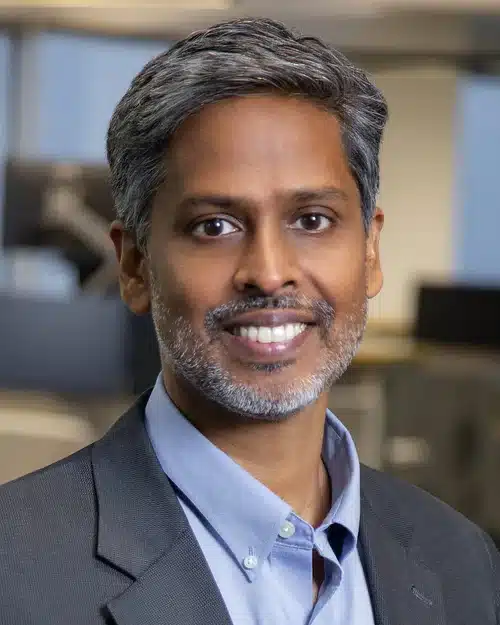
Dr. Michael J. Rhodes is a Lecturer in Old Testament at Carey Baptist College in New Zealand. He is a Teaching Elder in the Evangelical Presbyterian Church and serves as an assistant pastor at Downtown Church in Memphis. Michael co-authored a book on economic discipleship, “Practicing the King’s Economy: Honoring Jesus in How We Work, Earn, Spend, Save, and Give” with Robby Holt and Brian Fikkert. He joins us today to share more of the story.

All opinions expressed on this podcast, including the team and guests, are solely their opinions. Host and guests may maintain positions in the companies and securities discussed. This podcast is for informational purposes only and should not be relied upon as specific investment advice for any individual or organization.

Episode Transcript

Transcription is done by an AI software. While technology is an incredible tool to automate this process, there will be misspellings and typos that might accompany it. Please keep that in mind as you work through it.

Henry Kaestner: Welcome back to the Faith Driven Investor podcast. I’m here with Luke. Luke, good morning.

Luke Roush: Good morning.

Henry Kaestner: It’s good to see you. It’s not even morning here in California anymore. It definitely isn’t in Tennessee. So I just I spaced out one. But I just want you to know that I’m thinking about you and I’m missing you and I’m fired up that we’re going to do this podcast because it’s hits on something that’s really near and dear to both of our hearts as we get involved in investing together. We wanted to do something other than just just a regular private equity fund or an index fund or something like that. We wanted to do something that was more innovative and participated more in what God is doing in the world. And we’ve got a guest today who’s written about that concept, the concept that we’ve kind of tried to live into very, very imperfectly. But when we think about the backdrop about us living and allocating capital and seeing entrepreneurs get out there and create redemptive products and services, it’s in this larger framework or matrix, if you will. And I think that all too often I’ve been thinking about it in an incomplete manner and just I didn’t do great my micro macro classes at the University of Delaware. I was too busy selling t shirts, but I remember just these different principles, like, this is the way the market works, don’t mess with it, just kind of get on and you know, it just there’s something bigger and there’s a guy who’s written a book on it and we’ve got him with us on the podcast. Welcome, Michael Rhodes.

Michael Rhodes: Thanks, Henry. It’s great to be here.

Henry Kaestner: So, Michael, what do we like to do with every one of our guests as they come on as get a biographical sketch? Who are you? Where do you come from and what’s brought you to today?

Michael Rhodes: Yeah. Thanks, Henry. Thanks for having me on. Yeah, I’m Michael. And right now I’m in Memphis, my home where I have lived for most of my adult life. I grew up here and sort of a lifelong follower of Jesus who was really taught early on that the key to a full, abundant life was to live under the Lordship of Jesus, guided by Scripture. So I took that on board pretty early, but I was a part of a church community with a really ugly racial history and a very wealthy church community in a very poor city. And when I was growing up, the church was trying to grapple with both of those issues. And so as a result, there were just some incredible leaders who came into our church and opened God’s word and really exposed me to his heart for the economically poor and the heart for reconciliation and solidarity with all people. And so I kind of went into college, really fired up about participating. Living a full life under the Lordship of Jesus in line with Scripture in those areas. So I went to Covenant College. I studied community development with Brian Ficker, who we co-wrote Praxis in the King’s Academy with. And it’s always fun to write a book with somebody that you would have dedicated the book to if you hadn’t written with them. And that was true of writing the book that we’re talking about today with Brian and my pastor, Robby Hall. But anyways, I was at Covenant, learned about three developments, got married right after college and was headed to Kenya for two years. But sort of by what looks like an accident, it was definitely God’s plan. I ended up for six months in this one very poor, predominantly African-American community in South Memphis, and I was working for an organization almost by accident that was doing job training and financial literacy and helping people get their GED. All adults, almost all African-American in this one shop, in this community. And it just totally blew up my world. It wasn’t any credible experience. And so after two years in Kenya, my wife and I came back to Memphis. We moved into that neighborhood, and I went back to work for that organization called Advance Memphis for about five years. And that experience of living here in this neighborhood and working among economically poor people and being a part of a church that was trying to be involved with that has driven really all of my adult life and all of the kind of questions that I have. And so those questions that I have from living here and working here drove me back to seminary and then a Ph.D. program. Eventually, I left advance and worked for five years for an organization teaching community development and mission at a Bible college for adults predominantly black bi vocational ministries here in Memphis. And then the really crazy left hand turn in the last two years is that through a long process that caught Rebecca and I completely off guard. God now seems to be calling us to New Zealand, to Carey Baptist College in Auckland. And so the pandemic has made that complicated. But for the last year and now a little bit of some change, I’ve been teaching Old Testament to students who are in New Zealand. So that’s a little bit about me. I have four incredible kids, Isaiah Amos, Nuba and Jubilee. My wife is Rebecca, she works at our church and. Yeah, Jubilee.

Henry Kaestner: Yeah, what an awesome name.

Michael Rhodes: Yeah, that’s kind of fun because you know, when you write a book, people are asked to come talk about it. And I was out talking at a church and I was giving a talk on the Jubilee and Rebecca was pregnant and I came off the stage and she goes, We’re going to name our little girl jubilee. And I’m like, We are. That’s amazing.

Henry Kaestner: So it’s pretty cool.

Michael Rhodes: Yes. I got two prophets As and Amos, one legal institution, Jubilee, and then Nova, the hippie name is actually named after Rob Holt’s wife, whose name is Nova. Christine Holt. So my coauthor, Robby Holt, his wife is the namesake for our third child.

Luke Roush: It’s exciting. How excited are they to go to New Zealand?

Michael Rhodes: Really pumped. The history of Rebecca Nye’s relationship is that I come up with a crazy idea and then kind of get cold feet right at the edge and she like takes the ball and runs it into the end zone. And so I applied for the job in New Zealand. She was the one who was like, No, we have to do this. And the kids, you know, we’ve been teaching them words like bittersweet to try to think through this move. But they’re really excited to me. Six months decide to do it. And when I came out of the room and I was like, I just wrote an email to New Zealand, I’m going to take the job. You know, Rebecca knew that, but I was sort of saying it and I came back a few hours later to the house and the girls, my two girls had packed their bags already. They got their.

Luke Roush: Wires crossed about what.

Michael Rhodes: It meant to say we were going. So, yeah, they’re pretty pumped.

Henry Kaestner: That’s all. Is there a chance you actually go from winter to winter, though?

Michael Rhodes: It is very possible. We’re hoping that we’ll be able to be there by this summer, our summer, which would be their winter. So, yes, that’ll be kind of a maybe a worst case scenario on the move. But at this point, we just be happy to be there and for me to not be teaching online anymore.

Luke Roush: Yeah. You know, Michael, you talked a little bit about just what inspired you to write the book on practicing Kings economy. If you had to pick sort of one thing, you know, many great companies are born out of just a sense of calling purpose, maybe frustration with the way the world works. And then entrepreneurs want to do something about it. And I think many great songs, works of art books, are kind of out of that same kind of calling a sense of purpose and need to speak into it. We had to pinpoint that on one thing. What would it be?

Michael Rhodes: Yeah, so that’s a great question. I have seen my whole life, adult life under this sense of call to help the church hear and respond to Scripture summons to become a community of justice and mercy and righteousness for the economically poor. So that’s the big mission. That’s a subset of God’s mission that I feel particularly drawn to. But this book has an even more narrow sort of inspiration. So when I was working at advance, I was going out trying to help people with stuff on their criminal background find jobs and whatnot. And because I grew up here, I would get asked by churches to come who supported the nonprofit to come talk to Sunday schools and whatever. And, you know, I was used to giving the giving talk, right? And I had done that a lot, you know, raised money as a missionary. God wants to give your money so that we can go do this thing. But I realized working at advance that people could give us $16 trillion, you know, but if nobody was willing to hire someone with a violent criminal offense on their background, we didn’t have a model, right? We could not do our work unless people were living differently in the way they hired and managed, not just in the way they gave. And that was the transformation point because, you know, I think if you think about our economics, your life or my economic life like an equation, and on one side of the equation, you have all the inputs, all the stuff that goes in our work, what we own, we invest, what we save, blah, blah, blah. And then on the other side of equal sign is profit. We take home the vast majority of the time when Christians have talked about our economic lives, we’ve laser focused on that take home pay, what Christians can give from what they’ve earned. And that is a huge piece of Christian economic discipleship. But from a biblical perspective, it is just one piece. If you look at the Bible, the Bible talks about how you work and with whom you work and how you treat your workers, and for that matter, how you treat the land and the animals that you interact with. It talks about how you interact with other farms, if you like, other small farmers, the whole of economic life. Right? That’s the subtitle of the book Work, Earn, Spend, Save and Give. The whole of the equation is what God is Lord over in Jesus. And so economic discipleship then isn’t just about what you do with what’s left over. At the end of the day, it’s about bending all of that towards Jesus’s Lordship and Jesus Kingdom. And so on the one hand, you know, you can hear that it’s like bad news because it’s like kind of more stuff where Jesus is getting in my business literally. But on the other hand, it’s like the most exciting news ever because it means that every aspect of our economic life can be an opportunity to experience God’s presence, to participate in His mission. And that’s like the most exciting thing. So when I was at Advanced Memphis, working with this company and I would see business guys who’d been asked for money for their whole lives get asked for, Hey, would you hire this guy or this woman? And when that worked, all of a sudden it’s like a new aspect of my life has become a site of God’s generous kingdom. People’s eyes light up. They get super fired up. And that’s the kind of joy that I wanted and desired for myself and for my neighbors. And so I really got disappointed that so much and I don’t mean to be uncharitable, but so much Christian stewardship material, so much faith and work stuff, so much entrepreneurial. It just misses this idea that all of your economic life God cares about. And secondly, all of your economic life can be bent towards God’s kingdom concern for the vulnerable and the marginalized. So that’s why Robbie and Brian and I wanted to write this book and felt like, you know, I mean, it came out of talks that I started giving at these churches to say, look. God cares about it all. And it was largely as a way to get them to try to partner with this organization to help invest in. One of our entrepreneurs that we were working on were hire one of our job training graduates or whatever. So that’s really the laser kind of catalyst for the book in a lot of ways.

Henry Kaestner: And it since I have is you just talking to us is that not only does God care about these things, but that as we look at these multiple dimensions, that we have this opportunity to step into something that’s much more complex and beautiful and is less black and white. It’s more like Technicolor. And presumably the joy that some of these employers experience when they’re a part of being involved in relationship with some people, just gives them a new dimension and more joy, right?

Michael Rhodes: Yes, I think so. And it allows for connection. So one of the laws that has really animated me has been the gleaning walls in the Old Testament. I just love the gleaming walls. I think they’re so cool because, you know, at one point when I was working at Advanced, the statistic that we were using was at six or seven out of ten adults in our neighborhood were not working right. So in a context where six or seven out of ten adults are not working, and then we were seeing the transforming power of a good job. Not just any job, but a good job can really be transformative in a person’s life. You know, and this idea in the Old Testament that farmers who are kind of the family firm, if you like, are supposed to leave some of their harvest, which is functionally their profit in the field to create opportunities for the vulnerable, to work the orphan, the immigrant, the widow and the poor. That just blew me away. And that sort of became kind of one of the things that I would talk to guys, men and women about is like, Hey, what would it look like to create space, right, for the outsider in this company? And, you know, again, that can be a hard message, you know, because not only do we like money, which is maybe okay, some of the time and profit, but we’ve sort of been taught that the very purpose of a business is to maximize profits. Right. Which the gleaning laws just they just don’t work along those lines. They require a different sort of framework. They don’t reject profitability. The farmer wants a harvest, but they don’t maximize it because they create space. So the one thing that seems like a hard ask, but then you look at a book like Ruth, right? The whole book of Ruth only works because of these cleaning walls, because the gleaning laws exist. Ruth, who is this like complete outsider? This outsider’s outsider becomes a fully invested insider in the community. She’s inspiring the neighborhood. When Boaz sees her in the field, he says, the entire Israelite village knows what you, foreign outsider, have done for our widow, Naomi. So the gleaning laws allow Ruth to become a fully invested member in the neighborhood. They allow Ruth to become the just woman who takes care of the widow, her mother in law, and the farm. All of a sudden it becomes this site for connection, where Ruth and Boaz meet right to the most powerful men in the story. Boaz and the least powerful person in the story, Ruth, meet in their economic life because of these cleaning walls, which I just think is a vision of what you’re talking about. Henry, where like when we get that multi technicolor, you know, we complicate the picture a little bit. All of a sudden, every aspect of our economic life is an opportunity to encounter God and our neighbor, including some of the neighbors that we often don’t meet. Right. That we often screen out, which is really important. You know, we live in an age where just economic segregation, right? Forget racial stuff. Economic segregation in our neighborhoods is on the rise. And there’s some argument that economic segregation is on the rise in the workplace. And so it’s more important than ever that we ask how can the spaces of our economic life be places of encounter with God and neighbor?

Luke Roush: Are there any specific examples just in terms of companies that you’ve interacted with or storylines that you’ve kind of watched unfold? That would be a great manifestation of what this looks like practically.

Michael Rhodes: Yeah, I love that question. So I mean, one of the huge privileges for me has been to get to know companies, not because of me who are living this out, you know, whose stories we kind of some we got to share in the book and some I’ve learned since, you know, and I’ve been working on a project with the Chalmers Center for a while now where we’re gathering some of these stories as well. So just name a few. One is my friend West Gardner out in Colorado. He’s a serial entrepreneur. He started this thing called prime trailer leasing.

Luke Roush: Love was an awesome story.

Michael Rhodes: It’s such a great guy and his, you know, the youth pastor, his church at the time, Dave Runyon, you know, helped him kind of think through some of this stuff. And so they started hiring single moms from a halfway house that Wes had been giving to. Right. So they’d been generous with what’s on the profit side of the equation. But now they’re saying, how do we be generous? How do we bend the way we work towards those same concerns? And now all of a sudden, these single moms are coming in to work in the company. And I talked to Wes one time. This is the thing that has stuck with me from West Side Story. He said, you know, Michael, I used to see payroll as a liability. You know, I go look at my pal and payroll is, you know, a problem. Now I go look at all the money that we pay people, and I see my payroll as profit. I look at that number and say, look how much money we’ve earned, right? I think that shift is like so radical, right and powerful. And, you know, that company did great work. They didn’t stop being a business and start being a nonprofit, but they did figure out how to bend their workplace towards these single moms. Cascade Engineering is a company I believe they’re in Michigan. Their chief talent guy, Dave Barrett, and I have spent a lot of time on the phone together. They’ve helped, like more than 800 workers get off welfare through working in their companies. And one of the things that shifted for them was they made every single person in the company do some training on material poverty. Because what Dave would say is we tried several times to make this shift and we failed again and again. And finally we realized the reason why we were failing was because we looked down on poor people. And when we stopped doing that, we started seeing transformation. And these are all sorts of crazy stuff. They’ve worked with their local government to get a social worker like on site in their business and all this stuff. And then there’s like some cool local stories. A couple of years ago we put on a conference where we were talking about some of these ideas and company here. Bryce Core in Memphis heard what we’re doing and came and listened and they heard about it. And organization here called Economic Opportunities that takes men and women coming out of prison. And they have a model where they bring in a group to your company and you sort of pay the nonprofit and they pay the guys, the men and women. And it’s sort of a transitional work opportunity. Now, this Bryce Care, they heard about this opportunity at the time. As I understand it, they were throwing away any resumé that anyone had any kind of serious criminal record on. Well, they went and got in partnership with this nonprofit. And a few years later, it’s like 10% of their local workforce has a criminal record and they’ve promoted people into management and they’re taking our guys. So it’s really cool stuff on the employer side that I think is just really phenomenal. And I course tell stories about guys who said, You know what, I’m going to start seeing wages as an opportunity for generosity and I’m going to bump starting wage up to $15 an hour. I had a friend who called me up and said, Hey, I’ve been listening to you. I’ve been listen to your boss. I’ve been reading about the civil rights movement and one of the guys who was striking in the sanitation workers strike here in Memphis, which is a big part of our city story said, I just believe a full day’s work ought to allow man to put food on his table. And he’s like, I’m just going to bump up my starting wage as an act of just commitment because it seems like the right thing to do, you know? So there’s all sorts of stories like that, you know. And in the book we tell lots of stories, tell stories about worker owner cooperatives and people who are sharing profits with all sorts of fun stuff at the level of the firm, the business for how we can bend our economic life towards God’s good news, particularly for the economically poor, which is a real focus of the book and of Robby and Brian and us.

Luke Roush: That’s great. I’m excited for Lightning Round, but I don’t know if it’s the right time yet. Henry We’re.

Henry Kaestner: Almost there. We’re almost there. You know, Michael, at the beginning of the podcast, the interview, you’re talking a bit about your time in Kenya. Yeah. And as I think about this alternate imagination for how you run your business across these six themes that you have in your book, the worship and community, etc., I think that you’ve done a good job of scoping out what that can look like in cities like Memphis. Talk to us a little bit about your thought about how those of us in the West and this is actually a quote from you, but the church in the West is rediscovering the fact that God cares deeply for the poor. More and more churches and individual Christians are looking for ways to practice economic discipleship. But it’s hard to make progress when we’re blind. Our own entanglement in our cultures, idolatrous economic practices talk about that through the lens. Just any wisdom you have about a Westerner realizing things like they’re going to be more entrants into the job market in sub-Saharan Africa over the next 20 years. Then like India and China, I mean, it’s a big place. And yet there’s also 50 years history of colonialism, right? So you want to kind of go in there and then, you know, you read a book like with your coauthor, Brian Fricker, you know, when helping her out. So what’s a framework from your time in Kenya so that those of us are listeners and say, I think we need to invest in sub-Saharan Africa. How do we do it? But how do we do it? Well.

Michael Rhodes: Yeah, I mean, there’s a lot there. I do think that in the first part of that quote from the back of our book about we in the West, I think it’s worth saying and Henry, I think you were getting at this earlier, that the dominant economic picture of what humans are like in the West has been what Brian Ficker, who’s an economist, calls the homo economicus, the economic man. Right. So, you know, this is going out of style a little bit, but most of us, if we took economics in college, we had books that talked about homo economicus. This is what people are like. And what Homo Economicus says. Is that what people are? Fundamentally is we are individuals with limitless desires in a limited world who are constantly seeking to maximize our own consumption of goods and services and experiences. So we are fundamentally individual profit maximizers. That’s who we are, right? And Scripture has a very different view of what people are and what we’re called to be. But our economic way of thinking has been based on a kind of homo economicus idea. So in our book, the first thing we say about our economic lives, first principle is what you worship God with your money. Right. That’s the background is you love God. Right. To worship key is the first. The second here is the community care, which basically says that I am always part of a we and my economic well-being is always to be oriented towards that way. And, you know, we have this metaphor that we use in the book where we say typically when we think about care for the poor in the church, our functional metaphor is of a soup kitchen. You know, I have some leftover profit on one side of my equation, so I’m going to give that away to people who don’t have whatever the resources. You think about soup kitchen, you got soup scoopers on one side and empty bowls on the other. And that’s the theory of change. And we say, okay, food insecurity is a real thing. There are definite times when we want to do that kind of one way giving of goods and services. But the Bible’s fundamental vision is not a soup kitchen where everyone gets fed, but a potluck where everybody brings a plate. So, like, if a soup kitchen divides the room up into givers and receivers. You can’t have a potluck until everyone’s a giver to everyone and a receiver from everyone. And that makes the community fundamental. Now, that’s a long way around to say. My friends in Kenya know that deep in their bones and I’m on like baby step kindergarten level, learning it because we’ve been disabled into that western homo economicus. I am fundamentally a pleasure maximizing individual. We have trouble getting just how communally oriented the Bible is. My friends in Kenya do not have that problem. Right. They get it. And so the first thing I would say is when we’re interacting with saints in the Global South, we should expect that in many ways their economic discipleship, they will be further along that journey than we will be because they have experienced less deforming discipleship from this kind of hyper individualistic economic way of being. And so I was part of a phenomenal church in Nairobi, and it brought together people from all these tribal and ethnic groups that really don’t like each other outside the church. And we would have these potlucks and you would see everyone giving and receiving, and you would see the community becoming central to who we were. We were becoming family. And I think that picture of becoming family is central not only to the Bible’s kingdom vision, but to the Bible’s kingdom economic vision. And so, you know, one thing I think is when we think about how to invest, well, we need to defer a lot to the folks on the ground from the places where we want to participate. So often the and I say this as a former missionary, so, you know, I’m not trying to cast guilt somewhere else. It is so easy, so often for us outsiders to come, assuming we have all the answers because we are wealthier. And wealth is the sign of success. So really deferring to the folks on the ground, not only because they’re closer to the issues, but also because sometimes they’re just less screwed up than Jared comes. The money is really important. Also, I really am excited about folks who are investing in people in the global South’s ability to bring their best plate to the potluck through their economic lives. Right? So there is a ton of need for food aid. There’s a ton of need for health aid. There’s an argument for direct giving in a variety of contexts. But I also think it’s really exciting. And Christians are involved in the Global South in the way that allow people to bring their best plate to the potluck through their own energies and agency. So the trauma center has done incredible work helping some of the poorest people on the planet start savings groups. And the stories of these usually women who gather together and pool their resources are just amazing, you know? And I have friends in Kenya who are starting businesses in some of the poorest neighborhoods in Nairobi to try to help people who are in a community with just incredible unemployment find dignified work. And there are people you know, one of the reasons why I shifted away from like sort of direct nonprofit work into more teaching is because I realized sort of my gifts and where they are and where I’m strongest and where I’m not strong. So, you know, for people in the Faith Driven Entrepreneur and Faith Driven Investor network who are geniuses at figuring out how to make things work economically. And some of those folks. There are good ways of investing financially in businesses in sub-Saharan Africa and elsewhere. And I’m not an expert on that, but I think participating in that is really important. And I think when we go to invest in the Global South financially, we’re partner with companies in the Global South. Economically, it’s more important than ever to remember that just as God calls us to be risky and sacrificial with our giving at the end of our economic productive output. God might be calling us to be risky and sacrificial in the way we invest and partner and do business in those places as well, especially since there can be enormous roadblocks to doing all of that. So, I mean, those are some quick intuitions, although I’m certainly not an expert anymore at kind of thinking about that in a global context.

Luke Roush: There’s so much to unpack there. We could spend a ton of time, but I love the idea of taking the last five or 6 minutes that we have and going lightning around. This is something that Henry and I just recently started doing. We both are really liking it. So I’m going to start off and then I’m going to turn to Guy Henry. He’s gonna follow my lead better than I followed his lead last time. So first up, 30 seconds or less. Author you most disagree with and why?

Michael Rhodes: And author I’m so agree with and why.

Luke Roush: Yeah, just for the support of it.

Henry Kaestner: Just show somebody who’s left. That’s easy. Just showing things.

Michael Rhodes: Um. Oh, gosh, throw bombs.

Luke Roush: We encourage you to throw bombs.

Michael Rhodes: I didn’t know you could pass.

Henry Kaestner: You can pass at any point time you could pass.

Luke Roush: You got 10 seconds and I’ll try.

Michael Rhodes: I’ll tell you, I don’t like people who think that we need to be encouraged to appreciate material possessions, people who think we’re too worried about being affluent. That bothers me. I think a plain reading of the New Testament says if we’re the most wealthy people that have ever existed on the planet and we are, we have some tough questions to answer. So any author that’s trying to blunt that a little bit drives me bananas. I like.

Luke Roush: It. I like it. Okay, that’s.

Michael Rhodes: Good. You can fill in those blanks. These days are on your own.

Luke Roush: All right. It’s good. It’s good. There’s nobody on today’s call, though, which is great. Second question what is the belief that you hold that most of the world would probably disagree with? 30 seconds or less go.

Michael Rhodes: In addition to the thing about every aspect of our life being an opportunity to bend sacrificially towards the kingdom. So every economic transaction gives us that opportunity potentially. In addition to that, I would say that where we live is a fundamental aspect of our discipleship and that if we want to experience real community, where we live will matter a lot.

Luke Roush: So defend. Okay, so this is good. This is good. And again, just for the support of it, defend moving to Auckland, New Zealand versus Nairobi, Kenya in that light.

Michael Rhodes: Yeah, that’s a great question.

Henry Kaestner: Still in the global south.

Michael Rhodes: Well, for one thing, you know, God opens doors. So, you know, I applied to this school in Auckland as a practice interview going to Old Testament jobs on the planet. I didn’t know I wanted an Old Testament job. I just thought I’d got a Ph.D. in that, so it was worth exploring. I got a third letter of rejection from one of them, and then the other one was from Kerry, which I knew nothing about. But then as soon as we started talking, I realized these people were looking for someone to teach Bible but oriented towards mission and justice, specifically on issues of economic and ethnic justice, which is my passion. And Tim were saying it’s for a long time I have really felt I have lived in kind of a black, white world, partially because of the make up of Memphis. One thing that I know that I have missed is getting my mind around the experience of Native Americans in this country and First Nations peoples more generally. And our school is very committed to being bicultural among basically descendants of the Brits and the Maori Indigenous people of New Zealand. And so that emphasis really got me excited for what I could learn from them and that has already paid huge dividends. So that’s that’s a big improvement.

Luke Roush: Okay, I’ve got one more that I’m doing. My partner. Yeah. Okay. Yeah. Versus New Testament write as an Old Testament scholar, given some of your talk track. Right. In terms of the realities of what Jesus said about sacrificial living, I would have expected you to be a New Testament scholar. How did you end up getting kicked out on Old Testament?

Michael Rhodes: Yeah, I think because it’s easy to fit the New Testament into that give more away box, whereas the Old Testament, because it covers more ground across more different kinds of economic systems, it’s sort of the earthier testament. And so it gets into the fundamentals of how you manage the entirety of your economic life. Now, I actually think that Jesus speaks to that like forgive us your debts, right? That’s something I actually think we misread as to where they’re sharing their goods. We read that wrong because we make it all about generosity. But I think the only reason why I know that stuff is because I really dug into the Old Testament. So I love Jesus, but I think you get Jesus best when you start with Moses and the prophets and move forward. So little bit by bit.

Luke Roush: Thank you, Henry. Over to you.

Henry Kaestner: Okay. Lightning around 30 seconds or less. Best ribs in Memphis.

Michael Rhodes: Cozy corner, no doubt.

Henry Kaestner: Really. Okay. All right. Next. Next, what flavor of ice cream do you like to have after a great Memphis dry rub? Ribs.

Michael Rhodes: Man, any ice cream? Sounds good. Now, I’m a sucker for strawberry ice cream these days.

Henry Kaestner: Where do you get it?

Michael Rhodes: In Memphis. There’s a place called the Beauty Shop that has phenomenal ice cream.

Henry Kaestner: Okay.

Michael Rhodes: All right. Nashville Beginnings. Back in the day.

Luke Roush: A baby. Bring it, bring.

Henry Kaestner: Okay, Ecclesiastes. Does Ecclesiastes offer up that our economy is fueled by coveting another’s goods?

Michael Rhodes: Okay. So Ecclesiastes is really tricky. Started talking about in 30 seconds. But basically what you have is the narrator telling us a story about the teacher, right? So the narrator gives us the story of the teachers wrestling. So I don’t think you can take anything the teacher says without a grain of salt. Right. You’re always going, where is the teacher in this journey that he’s on? Right. But I do think he has a very poignant observations that much of our economic life is driven by greed and competitiveness. And what conservative Christians need to know is you can build in the short term a functional, effective, growing. Economy on set. That’s what Ecclesiastes would remind us. So the fact that it works doesn’t mean that it’s good, right?

Henry Kaestner: So it’s meaningless or it’s meaningless under the Senate, right?

Michael Rhodes: That’s right. It can be driven solely by, you know, what you’re describing, wanting to be better and all that stuff.

Henry Kaestner: Okay. Could you play Brian Ficker basketball? Who wins?

Michael Rhodes: Uh, he fouls a lot, cheats, so.

Henry Kaestner: So you play it? It’s happened.

Michael Rhodes: It’s happened? Yeah. I’ve run down the court with him trying to grab my shorts. I mean, he’s like, nine feet tall. You shouldn’t need to do that.

Henry Kaestner: But I said, okay, okay. We’re going to say that you get it next when you’re ready. Yeah. Okay. How cool was it for the boy in the story of the five loaves and two fish? And is that something is available for us?

Michael Rhodes: Yeah. I mean, I think that question, you know, what’s in your hand? You know, what do you have? I think that’s a beautiful I think the surprising thing about the story of the good news is that God chooses to use people and he never gives up on that. And so often, you know, God chooses Adam and Eve and they rebel. God chooses Abraham as the vehicle of his blessing to all nations, the world, and they fail. And so where Israel is faithless on the whole, God sends the faithful Israelite Jesus, right? And so often we read the story of Scripture as God had these big plans for people, they mess it up. So Jesus came and now we’re off the hook. And that is a garbage reading of the New Testament. The story of the Bible is that God sent Jesus to get His project of crewing his world back on track. That’s why the end of Revelation God’s people are co ruling with God in the end, because God wants to use people, which is incredible. And so would that boy with his few loaves and fishes is experiencing is a glimpse of what God invites all of us into, which is to be used to participate by the King in making everything that is broken, new. Right. What could be more exciting than that?

Henry Kaestner: Okay, Spectrum, you can go 8020, you can go 60, 40, 40, 60. But you got to end this spectrum as we allocate our investment capital. On one hand, there’s Ben sacrificially. On the other hand, there’s leaning into the joy that is available to us by participating in the work that God is doing. His Kingdom Where are you in the spec version of Christ, our being and that spectrum?

Michael Rhodes: I don’t know that I see the spectrum. I think that bending sacrificially is part of how we participate joyfully.

Henry Kaestner: Well said. Well answered. Well answer. I love it. I refuse. I don’t think I hemmed in by that.

Michael Rhodes: Yes, I don’t think that means that we’re not ever investing in ways that we expect to yield a good financial return. Right. And, you know, really honestly, one of the same is for me to come on to a podcast like this that has investors on it is to say, look, I’m a Bible scholar. I’m going to try to give you some principles. You’re going to have to work it out, right? You are going to have to figure out how to do this. But what I know is when we invest our money, we often have the opportunity to exploit. Right. And we often have the opportunity to intentionally bend our investments to impact words the way that God wants his world. And that what I’m saying has got to be better for everyone, for the world, for me, for you. So we talk about impact investing in the book some this idea that we can intentionally invest in companies and in spaces that bend towards God’s kingdom, that could look a lot of different ways, you know, that advance. Sometimes we were helping people invest in small businesses started by women and minorities in our neighborhood. Right. Sometimes that means taking more risk or potentially a lower return to do something that matters. In my neighborhood, I’ve been able to do impact investing by buying homes on two occasions in a residential economy. That does not work to try to help some of my neighbors become homeowners. That’s hard. I’ve made a little money on that. I think on the current one, I’m going to lose a little money possibly. But man, I know the joy of getting to put my money to work, doing something that God cares about. And there are platforms. You guys, Henry, are running a platform. I think marketplace is a new opportunity for accredited investors.

Henry Kaestner: Okay, sounds too much like a commercial in your through the 30 seconds. As much as I love the fact that you’re going there.

Michael Rhodes: You want. Can I give one more advertisement? Yes. Nice try. Not for you guys. So because Marketplace is only for accredited folks. Right. And so if you’re not an accredited folks like me, I’m not. Kiva allows you to make zero interest lending and we funder is a platform that a friend of mine helps run. Johnny Price Yeah, exactly. Allows you to make equity investments in companies. So just this week, my family was able to make an investment in a company that’s trying to turn restaurants into worker cooperatives. Man, I’m not going to make as much on that as I might make in the stock market. Whatever, man. What if the money that God gave me I got to use to build an economy that he’s going to be more excited about? And that’s awesome. Yeah, it is. But you guys, it’s you guys and your constituents, you’re going to have to work out the details, right? Because I’m just a Bible teacher and.

Luke Roush: Hey, we always like to wrap up with something that God is teaching you and that you’ve discovered recently, in God’s Word, a whole bunch of good nuggets from our podcast that would suggest and point to different things. But one thing that God’s taught you recently.

Michael Rhodes: Well, I’ll say two things. I am working on a new book right now on justice and studying justice in Proverbs. I’ve been really struck by this idea in the Bible. I think that justice and wisdom go together. And so if you seek justice without wisdom, it ends up being powerless. But if you seek wisdom without justice, it ends up being predatory. And I really want to meditate on what that means for my economic life for a while. And then also I’m on a couple of years journey in the Psalms of realizing just how much God wants a relationship with us, that he not only will say, Hey, Michael, you can say anything you want to say to me. He’ll give me some scripts that require me to say some crazy stuff to him so that I can learn just how vulnerable God and I can be in our relationship together. And that includes scripts from the Psalms that have us asking God about where he is and why he hasn’t shown up and whether justice is really working in the world. So those are some things I’ve been thinking about and writing about and they have touched me personally recently.

Henry Kaestner: Michael is awesome to be with you. Thank you very, very much. Heavenly Father, bless Michael and his family as they get ready to move, go in front of him to just be with him, to make new friends and to be able to have just great relationships with his students. And dear Lord, please speak to them. Continue to speak to them from your word in the Old Testament, the beauty from there and the wisdom that comes in mixed with justice and may your kingdom come on Earth as it is in heaven, in Jesus name. Amen.

Luke Roush: Amen. Amen. Amen.

Michael Rhodes: Thanks, guys.

Subscribe to the newsletter

Stay Connected
to the Movement

We know that as an Entrepreneur, your most valuable asset is time. So each month we take the very best of the podcast, the blog and all the news, resources, and upcoming events happening across the space and bring it to you.

Episode 110 – Beyond Risk and Return with Allison Long Pettine

Episode 110 – Beyond Risk and Return with Allison Long Pettine

Podcast episode

Episode 110 – Beyond Risk and Return with Allison Long Pettine

Allison Long Pettine is an investor and entrepreneur passionate about supporting leaders who strive to positively impact society. Allison’s approach to investing is built on respect, collaboration and partnership. Because she began her career as one of the first employees of a medical device startup, Allison’s perspective on investing goes beyond simply financial risk and return. She brings over 15 years of venture capital experience to each new venture, taking an active role in her investments, from co-founder to serving on boards. We’re excited to learn more from Allison on the Faith Driven Investor Podcast as she talks about increasing the success rate of entrepreneurs.

All opinions expressed on this podcast, including the team and guests, are solely their opinions. Host and guests may maintain positions in the companies and securities discussed. This podcast is for informational purposes only and should not be relied upon as specific investment advice for any individual or organization.

Episode Transcript

Transcription is done by an AI software. While technology is an incredible tool to automate this process, there will be misspellings and typos that might accompany it. Please keep that in mind as you work through it.

John Coleman: So welcome back to Faith Driven Investor, where we get to talk to a variety of people working in different areas about the intersection of investing in their faith and the way in which they are creating an impact on the world. I’m John Coleman coming to you from Atlanta today. And we are very, very privileged to have Allison Long pertain with us today. It’s hard to sum up all of Allison’s experience. She’s a venture investor. She’s been an operator. She’s got a variety of passions, I think, in and around the investing world. And we are really privileged to welcome her and learn from her today. Thanks for coming on, Allison.

Allison Long Pettine: Thank you so much for having me.

John Coleman: So, Allison, talk to me a little bit just about your background. Introduce yourself to the community and tell us how you got to where you are today.

Allison Long Pettine: Sure. Typically, I’ll just talk about my work background, but I think because this podcast really focuses on the integration of faith and work, my background and my purpose is I think I see God’s definition of that is really like precedes me. Even so, my family is originally from China. My dad immigrated here when he was seven and so I’m kind of second generation and I’m also one of three girls. So I have two sisters and I’m the middle. So that kind of frames, just like my childhood, my growing up and I lived with my grandparents, I lived with my dad’s parents. And so, you know, just being multicultural, having that whole side of my grandparents, my parents who escaped communist China is very rooted in my identity. And faith has always been a really big part of my life. So my parents raised me and Christian. We prayed every night before dinner, you know, like I grew up reading scripture with my mom. So I think for me, like my first identity, right? My first background is as a Christian, a child of God. And then in terms of my career, I knew really early on. So my dad was an entrepreneur. He started his own real estate business and he kind of was the American dream, right? So he escaped communist China, moved here when he was young, started over his whole family, started over, and then ended up going to UCLA, Harvard Business School, and started his own career in real estate after an eight year stint at Carnegie Hall. So for me, like, that was always the narrative of him in my life. And I knew from a very young age I wanted to be in business. And my dad told me, You know, you can do anything you want, you just can’t be in real estate. So I had to pay my own path, right? So after I graduated from college, I moved to New York City, part of finance. This is in 2004 and really like it was very God led. I think my whole career has been God led where I thought I was going to get a job in finance, you know, work for an investment bank. I was interviewing at all of the investment banks that were around and of which half of them aren’t even there anymore in 2004. So I moved to New York and I ended up getting a job in venture capital. So I didn’t get a job at an investment bank. I got a job in venture capital, and at the time I really didn’t even know what venture was. So it was one of those things where a friend of mine, he’d helped me prep for all these events and big interviews, and then I told him, like, I have an opportunity to work at this venture capital firm. They invest in medical devices. And he was like, You have an opportunity to work in venture. You got to take it, you know, like that’s the job that us bankers, he was a banker at the time. He’s like, We want those jobs, so you take that job. So I had the fortune of working for this venture firm that happened to be run by three brothers. So it was a family business and they invested in orthopedic medical devices and they had an exit out of their first fund. And they started basically this incubator concept where they would acquire undervalued technology and create companies around them. And so I was one of the first employees at one of their first incubated companies, and the CEO was my boss, and he was also a partner at the venture firm. So basically I worked for him and I got exposure on the startup side and I also got exposure on the venture side. So it was kind of like a crash course in all things, you know, early stage ecosystem related.

John Coleman: Was that hard to navigate that kind of dual role between the investment and operating side?

Allison Long Pettine: You know, I was primarily on the operating side like that was my primary role and then I got opportunities to, you know, due diligence on new technologies they were looking at. And for example, there was an orthopedic surgeon who had a really great idea for a technology in medical device technology, and they gave me the opportunity to basically work with him. Filled out his patent, his IP, and then negotiate a deal and structure a deal with him. And that was, you know, maybe three or four years into my time there. So I feel like it wasn’t actually challenging because my primary focus was on the operating side. And then I got these incredible opportunities to just try things out. And it was a very entrepreneurial place in that sense where, you know, you kind of either sink or swim, like they would hire a lot of entry level analysts and kind of just see what happened. Right. It was like, well, if you’re going to make it, you’re going to make it, you’re going to figure it out. And so that was really a great training for me because I had to learn on the fly. And I’m a very experiential learner in general. But I think it also gave me confidence to say, okay, like if I can’t figure something out, I will figure it out. And you know, like fast forward to today where we invested a lot of founders. I think that’s one common trait that I always look for is just people who realize, like even though they don’t know something, they’ll figure it out or they’ll surround themselves with people that they need to in order to figure it out. So anyway, back to that, you know, like I worked there for six years and then I left. That was in New York City and came back to California, got my graduate degree, and then started my own fund in 2012 to invest in early stage companies.

John Coleman: That’s amazing. So, you know, as you think about that decision to do something more entrepreneurial, even working at a venture firm because it is a common path for highly educated folks, go work at an investment banker consulting firm or something more structured. Where do you think that entrepreneurial impulse or that willingness to embrace entrepreneurship came from? Is it something ingrained in you? Do you think it might have been a part of the immigrant story, for example, that your dad pioneered starting over a new life, starting a company like how do you think you got comfortable with that more entrepreneurial approach to life?

Allison Long Pettine: Yeah, I mean, I think it’s very much in my DNA just for my parents and my grandparents. Right. I think being an entrepreneur, that word is very overused in this day and age. I think all of us possess entrepreneurial characteristics. Right. And it doesn’t really matter if you’re, quote unquote, traditional startup entrepreneur or if you are working at a large company. Right. Like we all have entrepreneurial characteristics. And so I think it’s really a matter of being aware of what those are defining them and then being able to structure and utilize those characteristics in your everyday life. And I think that’s part of what God calls all of us to do right, is really understand what are areas that we’re strong, where areas he’s calling us to take risk to be uncomfortable. Right. But for him, not for us. But yeah, I think, you know, like it was just in the way my parents thought, right? Like, they were always encouraging me and my sisters to do things that weren’t comfortable. Like, I studied abroad at a very, very young age. So in high school, I studied abroad. In Montreal, I studied French, I studied Italian and Chinese at home, but I went to Montreal. My parents really encouraged that, right? Like there was no sense of fear around the unknown for even on their part of like, don’t go there. It’s a far place. You’re only 14. And I think that kind of encouragement really led me to have the courage to do it without really thinking about it.

John Coleman: What did failure look like in those contexts? Because, you know, it’s one thing to push yourself or to push your kids out. I’ve got kids now to do something. And then the way in which you embrace failure or handle failure as a person seeks independence, I think really shapes who they are and how they operate moving forward. What did Encounters with Failure look like for you on that journey to independence as you charted your own course?

Allison Long Pettine: Yeah, well, I think, you know, I talked about my first job adventure. When I think about a failure like that was one of the most difficult times in my life. And I think for me, I really try to reframe the word failure, right? Because there’s such a judgment on failure where failure is a part of life. And I think if we see failure as a step in the direction that God ultimately wants to lead us, then, then it’s less about something we did wrong. It’s less about our egos. So I think for me, you know, like when I think about a traditional failure, like I graduated from UCSD, I wanted to move to New York, as I mentioned, and I interviewed for four months at literally, like when I say every investment, think it was like every single investment bank, Morgan Stanley, Goldman Sachs, Bear Stearns, UBS, in every single department, wealth management, investment, banking, research, sales, marketing. And time after time, get turned down, turn down, turn down. Right. And I’m sure a lot of entrepreneurs can relate to this, right? It’s like you pinch people, you get turned off. And that was I mean, it was wearing on my soul to have again and again people just say, hey, you’re not good enough. You know, like that could be seen as a failure, right? Like, I didn’t get the job that I wanted. And I think what came out of that was. I was like, Look, I know that I can get a job. It’s ridiculous that I’m not. I know that I can. And I just kept trying. And, you know, those four months that I interviewed, like I was at the top of my interview game, right? Like I could walk into any place. I knew exactly what to say. I knew the story like from September to December, like I had honed it on that skill. And so then when this job with the venture firm came up, I was ready for that interview. And so I think when you think about failure, it’s like, well, yeah, those were a series of failures, but God was shaping me and he had a different plan for me. And, you know, I think if we can look at that with his perspective, then it takes it off of us a little bit, but also like it even changes this word failure mean. So like similar to you, I have young kids, they’re four and seven and I’m trying to normalize this word failure, right? Like, what did you try? So first of all, they’re like, What’s failure? I’m like, That’s awesome. And second of all, it’s like, well, failure is just trying something that didn’t work right. And so we talk about this at the dinner table, like, what did you try that didn’t work today? And it could be something super small. My son was like, I kicked the ball on kickball with the wrong way. I’m like, That’s great, right? Like you tried something different. You didn’t know how it was going to go, didn’t work out the way you thought it was going to. But the next time you try it, maybe it will. Maybe it won’t. So I think it’s reframing kind of this definition of failure. And I think even with the entrepreneurs that we invest in, we try and hopefully instill that message to, right? We’re like, Yeah, we want their companies to succeed. But like, it’s God’s plan. If your company doesn’t succeed, it’s not because you weren’t trying 1,000% right. It’s because God had a different plan for you and for us as investors. If our investment company doesn’t succeed, that’s not on me. Like I’m doing everything I possibly can to make this thing work.

John Coleman: One You’ll often look back, as you said, on these periods where you thought you were failing, where there wasn’t a fit with something you were interviewing. I see this in careers all the time. I’ve seen it in my career. You know, when you get to our age and our stage in our career, people often look at it and say, Oh, you’ve achieved some success. And it must have been, you know, an upward ride. And they get discouraged about where they are. But I think both of us would say almost everyone we know who’s ultimately been successful has encountered these periods where things weren’t working right, regardless of what you call it. And often you look back on those periods is incredibly providential, right, that you thought something was supposed to go one way, but the failure was actually, you know, either God or life telling you that it wasn’t the right fit, that you actually had a different path to pursue and it was helping to shape you to pursue that. And I love that about your story and how you’re able to learn from those experiences as you weren’t getting the jobs you wanted to ultimately shape, the career that you would then take. I think that’s that’s inspiring. And I think a lot of younger people need to hear that because they’re encountering the same thing right now. And it’s easy to see that as failure rather than as a redirection.

Allison Long Pettine: Right.

John Coleman: So talk to me. One of the great things about your career, and I think it’s a good thing about venture investing in particular, is that there are very few venture investors who don’t have some sort of operating experience who are worth their salt. You know, when you go into a lot of private equity shops, you’ll find folks who were bankers and then private equity investors and never actually spent time in the company. Whereas I think venture investors will often have come from a product management role or CEO of a company, or at least worked within a startup. What do you think you learn from being an operator in startup companies or in venture backed companies that is paid dividends for you as an investor?

Allison Long Pettine: Yeah, well, I think the whole venture ecosystem has really changed a lot, you know, and I think you’re spot on. I think now most people who are venture investors do have operating experience and oftentimes you’ll see first time fund managers who have come from some sort of role that they’ve been successful in on the operating side, on the startup side. And then they’ll translate that into an investment role, you know, for me. So I started Chris and Rich Partners in 2012. And honestly, one of the reasons why I started it is because in San Diego I saw that most of the people who were doing early stage investing, like first there weren’t a lot of seed funds, but then I think a lot of people who were doing early stage investing were individuals who had a passion for helping people succeed. Right. And they had success in some line of business, whether it was like they were a lawyer or they ran a company for 30 years, but they didn’t really have startup expertize. And so I think for me, at the very beginning, when I started Crescent Ridge, you know, I didn’t have that much investment experience per say, you know, in terms of sourcing my own deals and doing diligence and all of that sort of stuff. But I did. The understanding of what it took at the very early stages to build a startup. And I think having that perspective of like all odds are against you. Right? Like day one, you have nothing. Like, you’ve got to basically create something out of nothing. At every step along the way, you’re trying to fight for cash. You’re trying to fight for talent. You’re I mean, it’s everything. And you’re trying to figure out your customer. And so I think really understanding that and feeling that and living through that helped me immensely, just empathetically. But also when I was doing diligence on companies, right? It was like, Well, what characteristics do you look for in entrepreneurs? Because I had been there myself that I wasn’t the founder, but I feel like I was there along the entire way. And, you know, I had been in positions where, you know, I crafted all of our board presentations, but I also did all of the presentations to our investors when we were running on fumes. Right. Like I remember one point in my career, we had literally like one week of cash left and I was the one responsible for putting the presentation together, pitching our investors saying like, this is why you need to invest in our company right now, because we need to make payroll. And I think going through that and really understanding like the ups and downs of it helps me be a better investor because you know, it’s going to be okay or it’s not going to be okay. And I think knowing that and having that perspective aligns me a lot and puts me and the founder kind of in sync as opposed to like, I’m bringing the money you need to be responsible for the money as a founder. Right? Like I’m here with you.

John Coleman: Yeah, that’s great insight. So take us into Crescent Ridge Partners a bit. You’ve mentioned founding it in 2012. You are in San Diego, which is where you’re from. I think you went to school there, which is an unusual place for an early stage. Well, maybe not that unusual today, but traditionally has not been a hub for early stage venture investing, for example. Why did you set up in San Diego and why did you set up Crescent Ridge to do.

Allison Long Pettine: Well, the San Diego is another good thing because I was in New York very happy in New York. I love New York City. You know, the energy just the it’s a very special place and I have a lot of fondness for it. But I met my husband there and he got a job in San Diego in 2009. So he moved here several years before I moved here. And it was honestly just we got married. He really loved his job. I wasn’t sure what I was going to do after grad school. I knew I wanted to, you know, probably do something on my own, wasn’t sure what. And he ended up, like we said, let’s just give San Diego a shot. And then I moved down here and I realized that there was actually a lot happening in the startup ecosystem. It was just very it was local, right? So a lot of people didn’t know about it. And it was different than, you know, L.A. was just starting to emerge at that time. Silicon Valley had already had kind of an explosion, but I think San Diego had a different feel and a different vibe. And I feel like investors would come down here and they wouldn’t really get it and then they would leave. And so I identified, you know, like, no, there is something here. And I think that, you know, even though there’s not a lot of capital, there’s a lot of talent. And any time you see talent like, you know that there’s opportunity, at least that’s how I see it. So I started Crescent Ridge thinking actually like, okay, I’m going to have to go to L.A., go to the Valley, go to New York just to find deals. And as I dug more into the local San Diego ecosystem, I realized, no, actually, like there’s a lot here. And because there’s not that much capital, there’s lower valuations. There’s actually a lot of opportunity for an investor if you can find the good deals. There’s a lot of junky deals, too. And so I think for me it was just a matter of like I felt an affinity toward San Diego because I lived here, I wanted to integrate in the community. I saw an immense opportunity, incredible opportunity for the ecosystem to grow and flourish. And so I just started investing here and I think, you know, so one of the things that I’m passionate about also is investing in women led startups and women leaders. And I didn’t actually start doing that until 2018. But I think that there’s a lot of similarities between what I identified in San Diego, just in terms of, you know, kind of under estimated talent regionally. You know, it’s very akin to kind of what I see in women. Right. And I think it’s just there’s certain patterns that investors are used to that don’t exhibit the same. And that’s what we see in Woman. I think that’s what I saw geographically in San Diego. And so. I think for me it’s always like, well, where can I identify, you know, kind of talent where others maybe are overlooking? And I think that’s a differentiator because I don’t have other things to lean on, right? So like, there’s a lot bigger funds. There’s a lot of people who maybe have a better pedigree than I do. Right. And I think for me, it’s utilizing the talents God’s given me in the place that He’s brought me to. And how can I do his work in one of the places?

John Coleman: I love that theme between San Diego and women founders that you talked about. It’s in investing in folks that others have underestimated who still have the same kind of talents and abilities as everyone else right there and undervalued thing in the marketplace, whether that’s because of their gender or it’s because of, you know, their geography or some other characteristic of them or ethnicity or whatever. There are all these opportunities to find people of great potential and underestimated areas, but it does rely on you being able to identify potential and to see that potential. And I think that’s an underestimated part of being a venture capitalist is the people side of things, the ability to look at a founder in an early stage and see potential. How do you think about that? How do you find that you spot potential in these early stage founders that gives you confidence that they have what it takes to fight through this entrepreneurial process?

Allison Long Pettine: Well, being a venture capital investor is it’s a very roundabout path, right? Like it’s not linear. And I would say for a long time, I was like, I have no idea if I’m any good at this. And some days I’m like, I still don’t know if I’m good at this, but I think, you know, like after I passed the 15 year mark, I was like, okay, I feel like maybe I know a little bit like I know what I’m doing. But, you know, I think the tricky thing with venture is it’s about pattern recognition, right? And so pattern recognition, once you identify those patterns, it’s great. But it also is very dangerous because essentially that’s what biases are, right? Like biases are just a very snap judgment based on our patterns. And so I think the best venture capitalists are able to identify a pattern very quickly. Right. Like I will say, like within a few minutes, I know whether or not, you know, company will fit within our investment thesis. But I think for me, one of the things that’s important in our investing work across venture and we do real estate and private equity as well is just making sure those patterns don’t get stale or like we’re not sticking to one pattern. And so we’ve developed this framework that I think helps us do that where so we have this framework called Four Dimensional Wealth. And that really came out of my own experience with investing and feeling kind of this conflict between the purpose of investing purely to create monetary wealth and like what God has put me on this earth for, right? And you know, I can get into that story later, but I think that God doesn’t really care about money, and that’s just my personal belief. And so if as an investor, I’m here to create money, then like, what am I doing right? Like, what am I doing to satisfy God? And so I think this four dimensional wealth framework really helps redefine wealth in a way that for me aligns my profession with what God is asking me to do, like why He’s put me on this earth and because it’s been inspired by God. I would say like he’s at the center of it all, but it’s not a Christian framework, if you know what I mean. So the four dimensions of wealth are one financial and we are an investment company. We’re in the business of making money. We want to generate competitive or superior to competitive returns, and that’s very important to us. But I think in addition to financial, relational, right, so like we’re also creating relational capital and relational wealth and that is essentially building and deepening bonds between people. So how are the companies that we’re investing in? How are we creating relational capital with the founders, but also how are they doing that in their businesses? And then third is social. So we are here on this earth to steward this earth and this planet and the people in this planet. And God really clearly states that in the Bible. And so it’s not enough to just say, okay, well, we’re making money and we’re also deepening connections and building close relationships. Like we also really need to think about our environment, our communities, the people who have been overlooked and how are we creating businesses to actually serve those people. And then finally, it’s intellectual. So intellectual capital of creating an. Electric Apple. And that’s that’s really maximizing the talents that God’s given us know. So I think we’re called every day to show up as the best versions of ourselves, because God has given us these incredible resources and talents. Right? Whether it’s our brain, whether it’s our money, whether it’s our network, whether it’s, you know, just the clothes that we have. Right? Like the fact that we can get up in the morning and walk out the door. And if we’re not, you know, utilizing those to the fullest to serve others, then we’re not doing him the justice and we’re not serving him fully. And so I think really for me, it was almost like an accountability because there have been so many times in my life where I feel like God and God works different for all of us. Right? Like for me, God’s usually like he, like, hits me over the head with a frying pan. You know, I’m doing my own thing. He taps me. I’m like, Thank God he tossed me again. You know, I feel like, hit me on the back and then he’s like, okay, you’re not listening to me. And so this four D well framework we call 40 well, for sure it really is to make sure that, you know, I don’t need to be hit over the head with a frying pan again because I think God leads me to places. And then I’m like, thank God. Like it’s a bus stop. Right? Like, thanks for dropping me off by. Yeah. And that’s not what he wants. You know, he wants us to be on the bus with him the whole time. And even though he leads me somewhere, I think there’s an accountability around my own actions. And there’s always this constant desire to do things for myself and for my ego and my pride. And that’s not pleasing to him and that’s not fulfilling to him. But I think it’s challenging. It’s not easy, right? Like we live in a world where it’s about being the best and it’s about competing and it’s about headlines. And so really, it’s redefining what my definition of success is and aligning it with what would be pleasing to God. I think I went way off what your question was, by the way.

John Coleman: No, no, no. That’s fantastic. No, I love your reading in the spiritual component of that. You know, by day, I also work at a values aligned investment firm. It’s a faith aligned investment firm in our case explicitly. And I love your articulation of the four dimensional framework for wealth that you use in objection we often get is that people believe those dimensions are in conflict. So they’ll say, sure, you should have, you know, in ours we even have a spiritual dimension to it explicitly, but we’ll have social dimension as well. And they’ll say, Well, you’re an impact fund, right? Meaning concessionary, because obviously the financial return in the social mission are in conflict. Do you ever get that objection? And how do you handle that? How do you think about that tension?

Allison Long Pettine: I think from the earliest days of when impact investing came around, that was my biggest issue with Impact Investing. And you still hear it where people say, well, if you’re an impact investor, you’re basically sacrificing returns. Right? And I think that to me, really, it’s like nails on a chalkboard, because I don’t think that’s the case. And I think one for us, it’s framing our time horizon, right? So, yes, if you want to juice returns and you want, you know, the highest IRR in the shortest amount of time, then maybe you can achieve all four dimensions. But our definition of success is actually sustainable companies over the course of, you know, ten, 20 plus years. And if you want to build a company that lasts, it is actually essential to focus on all four dimensions. You can’t not. So our investment thesis is basically by focusing on the non-financial elements of wealth, dimensions of wealth, relational, social and intellectual, you strengthen the financial case. So the financial case has to be there to begin with. But if you’re investing in the other three, the financial actually becomes greater. And what happens is a lot of times people will disregard investing in the three, right? They’ll say, oh, those three things are nice and they’re nice to haves, but we actually really just care about financial and we’re only doing those three in order to get the financial. And then it’s not authentic, right? Then you’re just back to one day, you’re just trying all these things in order to create one wealth. And so for us, it’s really, I think, this authenticity around the four dimensions. And if you really care about deepening relationships, that is going to pay off at some point, maybe not in this year, maybe not in the next six months, but it will. And we’ve seen this time and time again. So one of the things that we’re trying to do actually is prove out this investment thesis. And so we’re embarking on this journey where we’re developing actually scorecards. So we’re developing 40 scorecards. All our diligence is going to start the process. Any time a company goes through diligence with us, we’re going to take this assessment and we’re going to spit out a 40 wealth score, and that’s going to help us essentially underwrite the company. And once we invest, if we decide to invest, then we’ll actually do a case study with these companies and say if they opt into it right. And say, hey, if you want to build 40 wealth, let’s see if what we believe actually holds true. We’ve got some companies in our portfolio anecdotally that we can point to, and we’re going to do some retrospective case studies as well. But I think this is where, you know, having data to back it up is really helpful. Part of it is for us, I think, just to say like, okay, is what we’re saying actually true? But I think also part of it is so that other people who aren’t necessarily early adopters are interested in pursuing this type of investing. And I think the 40 wealth, I mean, a lot of people have something similar. So it’s not proprietary to us. I think for us it just helps us give us a common language because I think there’s so many people who want to do the right thing, but it’s so abstract. What does it mean to do the right thing? And the four DS can look different for every founder, every investor. But at least we have some sort of commonality to say like, okay, well, we’re pursuing 40. Well.

John Coleman: Yeah, I love that. And we don’t have the 40 framework ourselves, but we are similarly trying to prove out a framework that says, look, we actually think the incorporation of values along the lines that you’re identifying not only aren’t in conflict with financial return, but like you said, they’re essential to building great long term companies. And there’s especially in the private equity side. And I want to get to how you diversified your investing a bit before we we kind of circle back to the spiritual side, especially in the private equity side. You’re always going to find firms that are able to juice returns through excessive amounts of risk or through transactional behavior. Right. But it doesn’t create long term sustainable companies, typically. And it introduces a lot of risk to the equation where in both the venture and private equity worlds and likely in the real estate world or even the public equity world, if you have this more forward approach to to a company, you’re building a culture and a foundation for that company that’s sustainable long term and ultimately sets up a greater competitive advantage. Right. Which can reinforce the financial return that you’re getting over time. And so I’d love to see the results as you start to get those back. We’re all, I think, engaged in our own little exercises, trying to make sure we quantify that. But I think, well.

Allison Long Pettine: Maybe there’s even a collaboration that I’m I think my mind always goes to like, how can we help each other? Because I guess also part of it is, you know, we’re doing this for God. Like, I think for us it’s not I would love for several people to work on something together. Right. Because I think it’s just the more we are able to prove this out, I think the more we do his work. Right. You know, also part of it is just we identified on the financial side that financial metrics often are lagging indicators. Right. So, yes, I think what would be fascinating and for you as a who we were in private equity because you have that you as you venture and private equity but I think on the private equity side you have more data right venture so early and so volatile but private equity like you’ve got a lot of data and I think you can potentially look back and see like okay the years that were really good. Like those are actually a result of investment in the other three dimensions, right? And then like one of the things we talked about is if you could look at like stock market data and see companies like a blockbuster, right? Yeah. Why did that happen to Blockbuster? Like they were probably low on a few of the other dimensions of wealth. Right. And because they didn’t invest and you could argue maybe intellectual, maybe relational, right? Like because of that, they ended up going out of business. But I think there’s ways to kind of put all of this stuff together. But I think it’s also a matter of perspective. Like you can’t like to your point, you can never prove to someone that’s looking to juice their returns over a three year period that 40 wealth is going to work. It’s not going to work.

John Coleman: Actually, it won’t work. Not net one.

Allison Long Pettine: Fan. Exactly. So I think it depends on if you’re talking about apples and you’re saying like, try this orange, it’s delicious. It’s like you’re just speaking a different language. So I think it’s a matter of also really understanding like what’s our definition of success over the long term? Over the short term, right? Like what are you aiming for?

John Coleman: Well, so I want to touch on one topic and then maybe circle back. We always ask everybody at the end what you’re learning from scripture right now and why that’s important. I’d love to talk to you about a million other things, including digging into the idea about female founders and female venture capitalists and getting deeper. So maybe we’ll have to get you back on some time. But my impression is now you have expanded your remit again. You’ve got a great passion for founders, but you’re also doing private equity and real estate investing now? I think so. Your dad told you never to do real estate investing and you actually are touching on that now. And if I understood correctly, you’re actually working with your father to some extent now on some of that as well. Talk to us about that transition. And is it different at all to be working with a family member and how you navigate that as an investor?

Allison Long Pettine: Well, I work with my dad. I also work with my husband, who technically is the one on the real estate side. So okay, so maybe following that rule. But no, my dad and I have come full circle now. We work together. And then I also work with my sister who runs our family foundation. So now I work with my whole family basically. And her brother in law runs the solar finance company, which we’re invested in. So yeah, I’m deep in it. But, you know, I think part of it is, you know, that’s the position that God has put me in and he’s allowed me to. And it’s been incredibly rewarding. I mean, there’s challenges for sure, but I think that I feel honored to kind of. Serve my family and be in this position where we all share the desire to serve God, right? And we all have the same perspective around capital and our talents and our resources, which is like we’re stewards. And that’s really unique, I think. I think a lot of people who are investors don’t have that luxury. And so I’m just grateful that I’m able to do what I do in the context of my faith, because, you know, I have people who are aligned with me in that. And I think, you know, you guys probably feel the same. It’s all runs. And I think it’s a gift that God has given me.

John Coleman: Yeah, I totally agree. And especially the more the diverse, the more diverse the environment. I think the more important a shared sense of mission or values. Right. Because you need things that hang together or the greater the potential for interpersonal conflict, the more that shared mission matters. And that’s so interesting in the context of a family dynamic, too, which is even more complicated than than your typical organization in a lot of ways, but that that can hang true for you all and that you’re able to work so smoothly with that similar perspective on wealth and a similar perspective on the reasons you’re investing, not just what you’re investing in.

Allison Long Pettine: Yeah, I always say like if I can deal with these interpersonal dynamics in my family and it’s a great training ground for other people, it’s like the most sensitive first, you know, relationship.

John Coleman: And you can’t get rid of them with your family. You know what.

Allison Long Pettine: I really mean? I know. Okay.

John Coleman: So talk to us. The last thing maybe to touch on, you’ve been very open about your own spiritual walk. We love to conclude just with what you’re maybe studying in Scripture now or something. You’re learning that you’d love to share with everyone else.

Allison Long Pettine: Yeah. So I feel like God always gives me themes for the year, right? So one big theme that I was working on a few years ago was surrender. So I think for me this year it’s identity. And a lot of my life I’ve struggled with my own identity around like ego pride, not being good enough inadequacy. And this year really just God has placed on my heart this desire for a sense of peace in knowing like my identity is actually found in being a child of peace. Wow. And that’s a very powerful thing. It’s like I’m able to receive that, but I think sometimes it’s hard to receive that, you know? So I’ve been trying to integrate that into, you know, all aspects of my life as a mom, as a businesswoman, as a wife, right? Like as whatever else we do in our community. And I think that it’s also allowed me to experience God’s grace, and it’s been very, very profound. So continuing to listen to him, make sure my intentions align with his intentions and redefine and reshape my view of myself and the world in his life.

John Coleman: When it’s ever finished. She always heard working through that. Like you said, just reshaping his life goes on. So that’s a great word, Alison. This was a fantastic discussion, really excited about what you’re doing in the investing world. I excited to see the results of your data on the 4D approach and hopefully we’ll get to have you back some time. Thanks so much for joining today.

Allison Long Pettine: Thank you for having me. Sounds like we’ve got a lot more to talk about.

Subscribe to the newsletter

Stay Connected
to the Movement

We know that as an Entrepreneur, your most valuable asset is time. So each month we take the very best of the podcast, the blog and all the news, resources, and upcoming events happening across the space and bring it to you.

Episode 111 – Redemptive Real Estate with Jimmy Wright

Episode 111 – Redemptive Real Estate with Jimmy Wright

Podcast episode

Episode 111 – Redemptive Real Estate with Jimmy Wright

Jimmy Wright is co-founder and President of Launch Capital Partners, based in Louisville, Kentucky. Growing out of years of conversation about business, ministry, and the Christian life, Launch Capital was founded as a viable marketplace response to ministry opportunities presented by the global migration crisis. We talk to Jimmy about ways Christ-following investors can direct capital into the marketplace and work towards establishing redemptive real estate.

All opinions expressed on this podcast, including the team and guests, are solely their opinions. Host and guests may maintain positions in the companies and securities discussed. This podcast is for informational purposes only and should not be relied upon as specific investment advice for any individual or organization.

Episode Transcript

Transcription is done by an AI software. While technology is an incredible tool to automate this process, there will be misspellings and typos that might accompany it. Please keep that in mind as you work through it.

John Coleman: All right. Welcome back to the Faith Driven Investor podcast. This is John Coleman. And today I am joined by a fantastic guest, Jimmy. Right. Jimmy is the president of Launch Capital Partners in Louisville, Kentucky. And he knows a wealth about investing, particularly about the idea of built communities and redemptive real estate and everything in between. So please join me in welcoming Jimmy to the show. Jimmy, how are you?

Jimmy Wright: Good, thanks, John. Glad to be here.

John Coleman: How are you up in Kentucky today? Is everything going well up there? You on the road?

Jimmy Wright: It’s finally starting to break here. The weather is it’s getting a little bit warmer. It did this to us last week. It does this this time of year is rough here in Kentucky. You get really hopeful and you get 70 and 80 degree days and then boom, you’re back to forties again. But yeah.

John Coleman: I feel it. I think we’re all anxious to get into spring and summer here. You know, Jimmy is we just dove in. You know, I’ve gotten to know a little bit about your background, but just for the benefit of folks here, tell us a little bit about yourself. Where are you from? How did you get into investing? What was your path to this point?

Jimmy Wright: Yeah, so I was born and raised here in Louisville, Kentucky, still live here in Louisville. My wife, Dana, and I’ve been married for 14 years. We have five kids in the house. They range from ages 11 down to five months old. Oh, wow. We’re pretty busy at home. We just moved a little bit outside of Louisville to a little more rural community, which is fun to have bunch of dogs and cats and whatever the kids catch in the creek and the moved out to a little country church. So it’s a lot of fun. Yeah, we’re having a good time.

John Coleman: That’s fantastic. And how did you get interested in real estate? Was this where you kind of entered or were you interested in the faith aspects of this previous to getting into real estate?

Jimmy Wright: Yeah, I mean, this is really it’s really a story of God’s providence all the way through because it’s definitely not a planned past that I had really thankful for and glad to be here. But it wasn’t my plan at all. So we started this journey about 12 years ago when I started really considering integrating faith and work together before I just I had the two separated and went to church and put on my work and went to work, but I went on a mission trip. Had two pretty important points during this time. I went on a mission trip to Indonesia and helped some missionaries there do some work on water. And while I was there, I noticed that I couldn’t help them with language, I couldn’t help them with anything, except I had project management experience and I was like, Well, you could do this or that in your business and I think improve it. And I think you could get more production and more clean water to people in the response that I got was, Yeah, that’s great. We don’t really need business improvement here. We just need and I’m like, Well, what do you need? And can you go back and just make money, give them assistance, and then and then we’ll do the mission. They said it in a very kind way, but that’s what I took from it. And even talking to some pastors, it’s like, well, you know, like make all you can and then give, or which was just really, really unsatisfying because I didn’t feel called to vocational ministry, but I was serious about my faith and learning more and wanting to apply it in every way that I could.

John Coleman: Yeah. And you know, what we hear commonly, Jimmy, around here is this separation of faith and work where people have work on one side and they think I’ll just make a lot of money and then do philanthropic activity for the things I want to support or the churches I want to give to you. And that that activity is over here. And really, I think there’s an emerging consensus among folks that it’s really the integration of those two things. It’s most powerful. You know, you mentioned your mentor talking you through that. What did that look like as you transition from the corporate world? There started to evaluate your position in the corporate world to this idea of potentially starting a new venture like Launch Capital Partners.

Jimmy Wright: I mean, Ross McGarry mentored me and he was really great about is a former pastor but also at work some in the business world. So he was able to kind of bridge that divide. And one thing that he just did really well was be able to speak into your business. So he had a pastor’s heart and he had a heart to love the world and love neighbor and see that worked out everywhere in life, but had some of the acumen and some of the background to be able to speak in to broad categories in your work. This again was not planned, but I started into real estate by another guy that worked at the corporate America with me, and he said basically like, why don’t we get into some real estate, be good for retirement? And that was the plan. That’s how I got started into real estate.

John Coleman: And so this was entirely. Of a side hustle, so to speak, in modern terms. At the beginning where you had a job in corporate America, it sounds like project management and other things, and this was in a friend deciding real estate could be a really interesting path to secure retirement, to generate extra income.

Jimmy Wright: That’s exactly what it was. So we listen to podcasts and learned real estate and then on the side nights and weekends, we would go and buy these houses and rehab them and refurbishing them and then put them in bank financing and put a tenant in. And we just we started cycling through that. And then at the same time, a co-founder of Lunch with me, him and I, our families, moved into the same neighborhood in Louisville. And that neighborhood was a historically refugee neighborhood of immigrant nutrition and really which was born out of both of our desires to do outreach. So we were just trying to do community outreach and looked around and noticed that all the nations were around us. So I got on the board of a local nonprofit. We did backyard bible clubs, we did an apartment complexes in the neighborhood, and then we also did homework help and some after school care for kids and just started working with and loving the refugee community. And out of that, Ben Hedrick is his name. Ben and I’s relationship came word launches and it came about through really serving the refugee community and being an advocate for them.

John Coleman: And had that been a passion of yours forever, or was this something that you kind of moved to the neighborhood for that reason or it just kind of happened as you coincidentally moved in? Like where did that passion come from for you?

Jimmy Wright: We moved into the neighborhood because it was where you could get the most house for the money. Yeah. So my wife thought Spanish. She was involved in missions and had a heart for the nations. And I did too as well. So we had that bent a little bit, but we didn’t really get involved until we found ourselves in the middle of it.

John Coleman: That’s amazing. So you and Ben were building this business, flipping houses. How did that evolve from the two of you kind of rehabbing houses, putting in tenants to this idea of launch capital where you’re starting to aggregate capital and it becomes more central to who you are. It’s not just a side hustle anymore, but it becomes central to who you are.

Jimmy Wright: Yeah, great question. So we started we were rehabbing the houses. We started working with resettlement agencies to place tenants. And we thought about a business model that could really cater to the immigrant immigrant community. And as we were developing that, we just continued to grow. And God blessed it in several ways to where we were able to scale pretty quickly. We then brought on some private investors who came in and gave us financing. We then rehabbed and refinanced these properties out and managed them and scale it that way. And then really the turning point was we got a few tenants in. And so just how well the ministry aspect was going and I just decided that I want to do this full time. So I was saving up money for to launch out, so to speak, and go full time. And at the time my company was going to get bought. So I had a severance package that supposedly was in line for me. And what is happening was it never came through. We never got bought. So Oh wow. And in the meantime, my boss moved apartments and my job was on the innovation side and wasn’t core and the company was cutting costs at the time. So what ended up happening was I got let go and rather than having six months of runway, I got let go. And they’re like, your insurance ends tonight and see, wow. So we just prayed at that point and we’re thinking like, what do we do? I want to pursue launch, but I have a growing family to provide for and didn’t quite get my savings up to where I wanted to. So Dana and I just prayed and decided to just go for it. And when we did, literally, it was two weeks after we decided to go for it full time that some bigger investors came through. They’re now partners and then a portfolio of about 150 units that needed a big rehab. And this was in 2016. So exactly the time where there was a big refugee rush, all that came through at exactly the same time to where I could pay myself as a general contractor and have a job and get going. So it’s yeah, it’s really amazing how it all came through.

John Coleman: It’s amazing how providential that process is sometimes. You know, we’ve heard versions of this. I have a version of this myself where. Crying situation turns into the thing that helps you to catalyze, to move into something that really is a calling for you and that ignites you. And at the time, it can feel hard. But I think looking back, you often see the providence in that and see the word you’re getting from God about what you’re intended to be doing.

Jimmy Wright: We never would have been able to buy that property, and I may never have been able to even go full time had that not happen.

John Coleman: And talk to us about. So this started as a thing where it sounds like you were doing standard real estate by house for a good price rehab it get a tenant and launch has really transitioned into something that’s deeply spiritually integrated or that incorporates a lot of meaning and value into what it’s doing with communities. How did that arise? It sounds like partially organically, and what does that look like now for many of our listeners, this idea of redemptive real estate or communities is new. So talk to us about what that looks like for y’all and how that came about.

Jimmy Wright: Yeah, so we had planned to do it from the beginning. We wanted spiritual impact baked into what we did. So traditional property management tends to automate, tends to distance itself from the tenant, all in the name of efficiencies. So what we were doing is the opposite of that. So we went backwards in time and hired resident managers. So we have one resident manager onsite for every 50 units that we are interesting and 1400 units right now. So these families live on site and they’re like the old building supers. So if a tenant needs anything, they have a door to knock on, which is really helpful with language and cross-cultural dynamics. So they come to the door. These are often families that are connected to local churches. Some of them have been overseas. Some of them want to go overseas. And we have many that are now overseas and they yeah, they just care for the tenant and they can’t care for 50 other families like one family can’t obviously care for 50 others. So the nonprofit that we initially volunteered with, we now have a deep connection to and we’ve helped them to expand out to work with 50 different churches here in Louisville. So we have volunteers come in and they’re connected to our resident managers and they deal with some of the overflow of needs that come through. So the nonprofit will do homework help. They have a ladies tea. They have on after school care, some ESL programs and different programs on site. And since we don’t need the office space because we have resident managers, we use that office spaces, community centers that the churches do program out of.

John Coleman: So that’s a core model. You basically set up and align Capital Partner or partners with a nonprofit that’s dedicated to impact in the community with a residential model and people on site who are dedicated to the health and well-being of the residents. And it’s at the center of those things. You can really enable this model that’s meaningfully different than others that you’d find in these communities.

Jimmy Wright: I imagine it is, yeah. It’s highly relational, highly impactful and really focuses a lot around building the community.

John Coleman: Was there ever a concern? I can imagine that one of the reasons people have automated is cost, right? Is making the financial model work. How did she think about the business model underlying this impactful group that you’ve set up and were you ultimately able to reconcile the idea that this could actually be a better investment as well as the right thing to do?

Jimmy Wright: Yeah. So normally on apartment complexes of the size that we buy, there’s a leasing agent on site and a property manager on site. And what we’ve done, the math kind of works out to where if you divide the leasing agent out for 50 units, then that pays for the resident managers and then the rest of the property management staff. We have a central back office and we have centralized maintenance. So the resident managers aren’t typically doing maintenance activities, they’re doing leasing it like property management. It’s whatever they call it. So economically it’s neutral on the cost side. But as far as the model, typically our tenants stay about twice as long as national average. So the turnover rate is about 45%. We’re at about 22% on our stabilized. Wow. So part of that is the community development and the word of mouth advertising that happens. So once you go into a community and start to improve it, word travels and then good tenants refer other good tenants and you get a. Virtuous cycle there. So we’ve shared a lot of meals together. We’ve shared stories with each other of different heartaches. We we’ve walked together to life. We have Yusef, who’s a Syrian, with him and his family, still connected closely with, and he makes waffles every Monday. It’s the best waffle round. And so you can go over every Monday news that will be out there frying this waffle. We have Elizabeth from the Congo who arrested me and your family arrested very deeply with she’s now a member in our church. So we see her here for her regularly. There’s so many stories of the resident managers stepping into people’s lives in really extraordinary ways. As a hunter, for example, is a resident manager and apartment complex. It’s primarily Cubans and an elderly Cuban gentleman who he built relationship with ended up being taken to the hospital. It’s very, very serious for him. And so he called for his property manager to in his deathbed. And he wants to see his property manager. He’s he’s known for several months. And it’s just a beautiful example of these people living out there. Common.

John Coleman: That’s awesome. And it’s such a great representation of the church as well. You know, the real church, the global church, the body of Christ, where it is every single person on this planet, you know, from different backgrounds, with different experiences. And I think it’s so easy living in any community to get in a bubble of your community right here in my little part of Atlanta or in your little part of Kentucky. And yet because you’re able to live in these diverse communities with people relocating, dislocated from their places of origin and united only in this common experience or hopefully in their dedication to faith that you get such a cross-section of the world right. And of what the body of Christ can look like. How have your kids responded to that? I can imagine. It’s been an amazing experience.

Jimmy Wright: Yes, they’ve loved it. My oldest is 12, so it’s 12 down to five months. I don’t think they quite appreciate it as much as they will, I think, in the future. But yeah, they have friends from many different cultures and hear different languages all the time and are asking their friends questions about their home, where they’re from, and yet they love it. And as parents, we’re really glad to give them that experience and exposure that normally you pay thousands of dollars for, go overseas, but the nations are coming here and we as a church have to learn how to receive them.

John Coleman: That’s awesome. As I think through what you’re describing, I also think, wow, you’re just so invested in these communities. You have such a dedication to them. At the same time, you’re trying to build a business, right? A commercially viable business. Do you find there’s ever a tension there between the kind of care that you have for these communities and making this business economically sustainable and successful?

Jimmy Wright: Yeah, sometimes there is a tension. We have been really fortunate to be able to find property that we can preserve affordability and also have some quality to the housing. And we have a dedicated maintenance staff that’s really experienced and goes above and beyond to give tenants a good quality property. There are and we try to have we have as much grace as we can. There’s tension sometimes with a tenant doesn’t pay, then creates conflict and difficulty. Fortunately, there are actually the refugees. Immigrants are really committed to paying rent.

John Coleman: Yeah, I mean, that’s fascinating that I would have thought that refugee communities would actually have greater problems as tenants with delinquency, with financial troubles, with stability. And yet part of your model seems to be that those folks are actually really great tenants, that they’re thoughtful, that they pay on time that’s stable. Talk more about that. What makes these communities such good tenants and how does that feed into the model?

Jimmy Wright: Yeah, so the model works great with immigrants and refugees because what they’re missing is that cross-cultural peace. And a lot of times there’s misunderstandings and inability to communicate. They cause tensions and it’s not a lack of willingness to pay. And think about these people have come over from. Many of them have lived in tents or in conditions. And the first thing they’re going to pay this is the roof over their head. They’re really committed and family oriented. So they pay well. They are also are great workers by and large. So Homeland Security does a lot of checks. There’s no drug issues. They generally get employed here in Louisville. The market is like the UPS. It’s a big hub here. So there’s a lot of warehouse jobs that pay pretty well that translate to affordable living conditions here in Louisville. So it works well in this market. Also, they’re just generally overlooked because they come over with no credit history, no job, and then they’re putting their application down in a market that’s already short. Millions of homes now at this point. So they’re constantly beat out on paper.

John Coleman: That’s fascinating because it is it is this overlooked group for exactly the reasons you mentioned. They don’t fit neatly within the categories that we typically have for renters with a credit history, etc.. And yet all of the intrinsic qualities that would make them great partners as tenants in a community are their right, and they understand what it means to be in a more stable and safe environment and how valuable that is. You know, as people are listening, they’re probably wondering, A, how they could potentially get involved with the work that you’re doing at launch, or B, how they might serve immigrant communities or refugee communities in their own part of the world, wherever that might be, either here in Atlanta, for example, or also in other cities. You know, if someone were asking those questions, what would you say to them about ways in which they can support your efforts or potentially even stand up their own?

Jimmy Wright: Yeah, our effort. We’re constantly raising funds, so we’re always raising new funds. We also are looking for like minded property management so that as we’re getting ready to raise a large fund and we’re looking to different cities for property management help because it’s difficult to export property management, it’s a hard to take across the country. So we’re looking for that. I would just say that there’s many cities that have thriving refugee ministries that are connected to churches. We’re not special, unique in that way. Our innovation is tying all these things together. So feel free to reach out to me. I’ve spoken to many of them and I’m happy to connect you to different ministries.

John Coleman: That’s awesome. What cities are you moving into?

Jimmy Wright: Jimmy Well, we’re looking at Dallas right now. We’re looking at Raleigh, North Carolina and the Triangle area, actually, and also where the fund will take on it, probably another Midwestern city or two like the Midwest. It’s a great place for people to settle, and it’s where a lot of people go for secondary migration. So they land somewhere and then realize that they can’t afford to live there or they sort of resort and talk to each other. And the Midwest is growing a lot.

John Coleman: That’s awesome. Good luck in that expansion. I want to end with a couple of questions. You know, we always end and I’ll circle back to this in a moment with what you’re learning from scripture right now or what God is teaching you right now that might be relevant to our audience. Before we get to that, though. I would love to know, is there anything you feel you’ve learned in working with either a particular refugee that you all are serving or with these communities that you would want to share with others that you think could be valuable?

Jimmy Wright: Yeah, I’ve learned to be less ethnocentric. I’ve learned that I felt like my world and my culture was at the center of the map. And in working with refugees and immigrants and learning how they do things and how they approach things, how they generally think differently has really opened my mind and a lot of the people here at launch to new ways of thinking and really broaden our perspective. It’s been a real joy to work with them and I think we get as much as we’ve given in a lot of different ways.

John Coleman: One of the lessons I feel like I come back with every time I travel and spend place in a somewhere that’s culturally different than my own is just how much there is to learn from different ways of thinking, how different people operate around the world, and how ours isn’t the only way. Right. And in fact, there are ways other places in the world and other communities that are better that we could learn from. And being surrounded by that every day and this melting pot of these refugee and immigrant communities has to be a really powerful experience. I’m sure, as we talked about, it needs to some tension sometimes, but it’s also a really powerful experience.

Jimmy Wright: Many of the warm cultures that I’ve learned a lot from like so are and are super hospitable and put me and my family to shame and how welcoming and appealing giving they are and how, you know, there’s never a closed door. I think that we can learn in the States a lot from that.

John Coleman: And it’s a lot of this idea of welcoming the strangers among us. When you’ve been a stranger, it’s probably a lot easier to kind of empathize with the stranger in that experience that they’re going through. Must be so powerful about being disconnected from their communities and having to form a new community and must forever change the way in which you work with others and empathize with others. So, Jimmy, I want to conclude with something we ask everyone, which is just a lesson you’re learning in Scripture right now, or that you feel that God is teaching you that you’d want to share with everyone here.

Jimmy Wright: Yeah. Sort of two quick things. So my wife and I have been praying and thinking about loving our neighbor and who is our neighbor. And as we’ve been reading scripture and praying, it’s been on our hearts to care for widows, orphans, materially poor, and continue to care for the soldiers. We call them the wops, jokingly. But that’s throughout the Bible. You’re never going to go wrong caring for those groups that we’ve been praying and thinking through that. And then also, I’ve been reading Ecclesiastes recently and kind of thinking about the concept of beginning with the end in mind. So we’ve been thinking through both the winds of the widows and orphans and the truly poor and sojourner, and where do we want the end to look like in life and working backwards? Because there’s so much that is so distracting in life that I’ve come to think about a lot of distractions recently, and our world is just full of distractions. And I think if we’re not super intentional now where we’re going. And I think the Book of Ecclesiastes really comes with a fine point. And then if we focus on where we’re going, keep our eyes on Christ and our eyes on the target, then we’re able to eliminate distractions.

John Coleman: Jimmy, this was an amazing story. You’ve mentioned it a few times, but Jesus obviously told us the two greatest commandments are love, God, and love your neighbor. And it’s hard for me to think of a better way to do that than building communities like you’re building that reflect the love of God and that serve the people who are most important to Him and whom He loves and creates a community among these people who probably wouldn’t have thought of themselves as neighbors, but now are, and they’re neighbors with you. And I just think it’s really powerful what y’all are doing through Launch Capital and really, really grateful for the work and the service that you’re doing there. So thank you for joining us today and telling us about it.

Subscribe to the newsletter

Stay Connected
to the Movement

We know that as an Entrepreneur, your most valuable asset is time. So each month we take the very best of the podcast, the blog and all the news, resources, and upcoming events happening across the space and bring it to you.

Episode 112 – Marks on the Marketplace—May 2022

Episode 112 – Marks on the Marketplace—May 2022

Podcast episode

Episode 112 – Marks on the Marketplace—May 2022

Once a month, we take a look back at what God is doing in the world of Faith Driven Investing and the global markets. We also spend time looking at current trends and outlooks with great interest and discernment in hopes to identify God’s redemptive work in the world. Tune in as investment professionals push the conversation forward about faith, investment philosophy, and the frontiers where innovation is happening. This is Marks on the Markets for May 2022.

All opinions expressed on this podcast, including the team and guests, are solely their opinions. Host and guests may maintain positions in the companies and securities discussed. This podcast is for informational purposes only and should not be relied upon as specific investment advice for any individual or organization.

Episode Transcript

Transcription is done by an AI software. While technology is an incredible tool to automate this process, there will be misspellings and typos that might accompany it. Please keep that in mind as you work through it.

John Coleman: Welcome back to the Faith Driven Investor podcast. This is John Coleman and we’re introducing an exciting new segment today marks on markets where we get a series of experts from around the faith aligned investment space to speak about markets, what they’re seeing in markets, and how you can begin to interpret what you’re seeing in markets. This is the first episode in that series and we are super privileged to have an amazing group. Today we’re joined by Dolores Bamford, who’s the co-CEO of Eventide. In addition to a long and prestigious career. We have Jake Thomsen, who’s the managing partner of venture capital at Sovereign’s Capital, and we have Nick Stonestreet, who’s the CIO and CEO of Ronald Blue Trust, a wealth management and advisory firm based out of Alpharetta, Georgia, just about 30 or 40 minutes north of me, although I think Nick is in a different area today. So we’re really grateful to have you on and very much looking forward to speaking with you all today. So, Dolores, I’m going to go to you first. It would be putting it mildly to say that it’s been another tumultuous month in markets. The last few months have been pretty tumultuous. What do you think are the major factors moving markets right now?

Dolores Bamford: Hi, John. I’m so excited to be here and to talking with you and being part of this podcast. And you know, first of all, as you said, it’s been a very tumultuous month. It’s been a tumultuous six months, I would say, in the markets. And there have been many really important, serious issues that have been impacting the markets. I would say the most significant issue that’s been affecting the markets the most, in my opinion, has been a change in interest rates or this dramatic change that we’ve seen in interest rates and a dramatic change that we’ve seen in the Fed’s position on monetary policy, just moving from a very aggressive easing policy to an aggressive, hawkish position and with plans of rapidly raising interest rates and going from quantitative easing to quantitative tightening in response to a lot of inflation and supply chain constraints. That’s seen and it’s in the markets. So if the Fed is watching inflation closely for its policies, then it’s really important for us to watch these trends as well. The trends in inflation and commodity prices to gain insights into the future actions regarding interest rates and quantitative tightening. The positives that we see right now in the markets is that the markets are discounting a lot of fear right now over the Fed and a lot of fear over the inflation trends that have been manifesting themselves over the last 6 to 12 months and a lot of supply chain constraints. But for us, we see these trends in the supply chain constraints peaking and potentially rolling over soon and valuations becoming a lot more attractive right now. So the bottom line is that the markets have digested and discounted a lot of this action from the Fed. And there are a lot of opportunities right now for significant upside if one is patient and one has sort of a long term time horizon. So bottom line is we do recommend staying high quality and investing in financially strong and resilient companies because the storm may still continue for a while and the markets may remain volatile as the Fed continues its sort of more hawkish position. So that’s going to be important, but also to remain invested and to stay patient and persistent in your investing philosophy because at some point the markets will turn.

John Coleman: Yeah. Thank you, Delores. And it has been a little bit of a perfect storm, particularly for prices with supply chain disruption, with gas prices going up, oil prices going up because of the war in Russia and Ukraine, I’m sorry, as well as other factors. You know, Nick, one of the questions everyone has right now is just how individuals are responding to this. Obviously, the tumult can lead retail and institutional investors to make dramatic changes in their portfolio. What are you hearing from clients and how, if at all, are you advising them to shift their portfolios?

Nick Stonestreet: Well, you know, John, there’s always going to be a level of concern in tumultuous markets from clients. And, you know, we can talk about broad themes, but then now we’re talking about it, you know, idiosyncratically what’s happening to individuals. And really, one of the kind of themes that we have at Ronald Blue Trust is we think that, you know, the best portfolio for a client is the one they can stay in long term. And so going through and making sure that the client’s objectives line up with their portfolio is critical. And then, John, we use time based portfolios. So instead of, you know, just kind of one pie chart, we’ll have four pie charts over different time bases. You know, when the pandemic hit March of 20, we saw that kind of a shock and then a bounce back, right? So we saw that kind of a pattern. And clients could see, you know, it was their ten year bucket or 15 year long term, ultra long term part of their portfolio that got hit. And they know they have a long time to recover. This one’s a little bit different because it dug in a little deeper because we’ve seen fixed income really struggle as well. And so if they’re looking at time bases, their short term is held up reasonably well. But intermediate term, which is mostly fixed income, has taken a hit along with the long term. So some of our clients have been a little bit concerned, especially around fixed income and the kind of hit that fixed incomes taken. So walking them through their plan and understanding that they can still meet their financial goals is a great source of bringing peace of mind to clients. And most of our clients are planning clients. We have very few investment only clients. We kind of discourage it. And so if they can line up and look at their plan and see out over that horizon, even though it’s a bit different this time because of how hard fixed income is getting hit, then most clients have been pretty settled. We haven’t had a lot of issues, you know, we haven’t been called into meetings where you just have to calm down clients. It’s been pretty much business as usual. However, I do think as this persists, we get another down leg. Then we’re going to start to see more and more nervousness out of our clients. But by putting in the portfolio, they can stay in long term and by having time based buckets. I think the methodology that we’ve used with clients has helped them stay extremely calm during a pretty tumultuous time.

John Coleman: Yeah, and I think one of the things that’s probably helping on some fronts is just we have seen a remarkable upturn in markets over the last couple of years. And we’re basically in the midst of a 15 year bull run right now. The danger of that is a lot of younger investors, even at institutions, have really never experienced a bear market or a downturn if they didn’t live through the great financial crisis. The upside of that, however, is everyone’s portfolios versus a couple of years ago were up so dramatically that even this pullback has often not eroded the value that they’ve gained since the pre-COVID levels. Jake, one of the areas that might be a modest exception to that in some cases is growth stocks. Growth stocks have taken among the biggest hits of the last few months. And I would love your perspective on why that is. Just why are growth stocks taking such a hit and how is that filtering into the venture and growth markets in private markets? Are you seeing those compressions in value materialize, for example, an early stage venture or is that still something to be determined?

Jake Thomsen: Yeah, thanks, John. It’s a very relevant question because a lot of this is happening in real time. But it was kicked off, as you mentioned, by a lot of the adjustments in the public markets. You know, you see a lot of tech companies that are really responding to the forces that deliver some impact. I’d probably categorize those as the emotional response. And the more fundamental response is that the voting machine in the way machine that Buffett would describe. And on the emotional side, you have a lot of these macroeconomic factors, and you’re dealing with an asset class that is very high risk, high reward. Right. These high flying tech stocks, many of them weren’t around even ten, 12 years ago. There are VC back companies that now make up almost 75% of the market cap of U.S. public markets. So it’s a big part that has grown very quickly. And when you start seeing things like inflation and like the war and Covid and the rest, they’re just nervousness. So those are the kinds of stocks that have seen a lot of speculation that are going to adjust most quickly from an emotional perspective. I would also highlight on a more fundamental way to look at it. If I’m an analyst and I’m looking at a technology stock and I’m saying, what is it worth today? I’m using the classic method of just kind of cash flows, or I’m looking at all the future cash flows and I’m bringing them to a value today to see what they’re worth. And geek out in corporate finance for just a second. Got a few variables that really matter. Right. And two of them are growth and the risk of a company that is proxy by the cost of capital. And so during COVID, we saw huge growth in a lot of these companies. We were doing life completely different. We actually thought that a lot of that would stick around, right? Whether it’s exercise bikes at home or video recordings for work or e-commerce. All these companies saw huge growth that we kind of thought would stick around. But over the last six months or so, we started to see what turns out. When we come out of COVID and the lockdowns, we return more to the long term growth of those stocks. So this is a correction in our expected growth goes down, which impacts our guide today. And the second piece would be the interest rates, right? If you’re looking at the cost of capital, well, it turns out as interest rates increase, that’s a major factor, that cost of capital. So all those future cash flows are now worth less today. And so many technology companies, the major part of the value in the future, especially you look at SPACs, right? We’re coming out of the golden age of SPACs where most of these companies did not have profitability. Right. That’s one of the allure of SPACs. Much easier to do that. And so you have that basket of companies that’s been hit even worse because of those interest rates. And again, those companies are now worth less. So you have analysts at are predicting less for value. Of course, the big banks are going to follow suit and that’s going to compress the prices for those public companies. And your point, that does impact what we’re seeing on the private side, because that’s a bit of the canary in the coal mine for those those private companies. And it’s very logical because if you think about the series C investors so later stage still private and I need this for a round numbers I need to get a 4x return on my investments all of a sudden I look my exit market has now fallen by say 50% while get my four x return my entry multiples now be half of what I was offering. Right? So I’m going to drop those. And when I do that as a series C investor, series B followed suits, then A and then C, so we’re seeing that starting to trickle down. Q4 we really saw a lot of public stocks take a hit. Q1 We started to see either later stage multiples. You saw Fidelity and others writing down some of those big tech stocks we haven’t yet seen seed and series a compression, although all the early indicators are there. Deals that used to take two or three days, literally are now taken four – six, eight weeks again, which is a really good thing. You can actually have a relationship and get to know somebody in that case. And so you’re starting to see some of that change on the earlier stage too, not quite there yet, but everybody expects it to be in Q1, Q2.

John Coleman: One of the more fascinating pieces of research I saw out of my old team at a place I used to work. We had some venture investors there and they had done research at past economic downturns. So what happens when there’s a market downturn in tech, in an economic downturn, and it’s often in the period immediately following that, that there are a huge number of early stage companies launched that go on to be very innovative. So the research that they pulled together and it made conceptual sense. When public markets go down and even later stage venture markets go down, all the options that people had in these technology companies become effectively worthless, right? Because they’re so far out of the money. And so you see the most talented engineers and business leaders will often lead some of these companies that have rewarded them in options because the cost of leaving is so much lower. And so they’re actually a huge number of really innovative startups that can come on the back of these bear markets sometime. And so, you know, there could be a ray of light through the clouds in terms of the potential innovation in earlier stage startups. I think that come on the backs of these bear markets. Switching back to Nick and Dolores, maybe I’ll ask both of you, maybe Dolores, if you wouldn’t mind commenting first. We talk a lot about market movements and started talking about interest rates. I’m going to focus now a little bit on the the real economy, the actual underlying economy. And you started talking about inflation. Dolores were obviously keeping an eye out this morning. There was a jobs report where jobs had grown, but less than folks expected. And obviously first quarter GDP was down and people are potentially expecting a recession. How are you feeling about the real economy right now and do you think that’s baked into markets?

Dolores Bamford: I can definitely answer that in two stages one on the economy and then on the markets. With respect to the economy in the US, consumer and corporations are in great shape financially in general. The economy is on a strong footing except for, I would say, the lower income part of the economy. Right. That is hurt more by inflation. Right. So people who don’t have as much income or savings are really going to be hurt. More and more of their income is going to be for goods that now are going to be costing a lot more like gasoline, food, housing. So say the lower income part of the market is starting to hurt significantly with the higher income part of the market still relatively strong. But I do see the probability of a recession overall increasing because of higher interest rates, weakening equity markets in fixed income markets, geopolitical issues and the continuation potentially of higher oil prices that will continue to put pressure on the economy and economic growth. So I think there is definitely a probability of the economy slowing for sure. We do see the probability of the economy slipping into a recession less than 50% in the near term because of the overall strength of the economy in other places. But it’s definitely going to weaken. And to be honest with you, it’s actually very important that it weaken because the Fed is looking for that to maybe moderate its positioning in raising interest rates. So it actually will be a positive. I know this sounds contrarian, but it’s actually positive for the markets to see the economy start to slow down and for these inflationary pressures to start to subside. So you can definitely see that in many commodities and many other types of spending reports that the economy is starting to slow down. And that is absolutely a good thing in the long term that we can get people to stop spending so much and that we start getting pricing on food and the essentials to slow down. Now, with respect to the markets, we think that a recession is baked in too many parts of the market. As Jake was talking about, some of these higher growth areas have been totally destroyed in terms of valuations. Many parts of the market, high growth stocks have been really hit hard. Other parts of the market that may be reflecting value stocks or more commodities may not be discounting a recession. They may actually be discounting the economy or their pricing to be very strong. So it’s a mixed picture. But overall, I would say the market in general is discounting a recession.

John Coleman: Nick, I’d love to turn to you. Any any additional thoughts there? Or do you see it differently at Ronald Blue Trust?

Nick Stonestreet: First, I just want to comment with some of the things Jake said, because I have kind of a simplistic framework for sort of the sell off and growth. And I think it’s just kind of useful for investors to think of that and also for venture knowing the cost of capital gets higher. Companies that consume capital are going to suffer. And so, you know, most of the earlier stage companies and a lot of the really growthy names, you know, consume capital. And so the cost of capital gets higher, those companies are going to suffer. So I think that’s just a simplistic framework. I think, you know, for this discussion on the economy, one of the things that people maybe have forgotten because they haven’t been through inflationary cycles in a long time, is that inflation is really stubborn. It’s really stubborn. And I think even Janet Yellen was, you know, talking about how she kind of missed it on that and a lot of people missed it. When we look at what’s happening with inflation, of course, the oil price, but then the supply chain issues, I mean, we always think, you know, what’s driving up prices. And again, a very simplistic framework. I know that’s like economics 101, but it’s, you know, more dollars chasing fewer goods. Right. So why do you think housing prices are moving, more dollars chasing fewer goods? So I think that, you know, the theme going forward for a while, maybe the next 18 months to two years, is that you’re going to continue to see the stubbornness of inflation bear out. There doesn’t seem to be a lot of willingness to attack the oil prices by bringing align more supply. You know, there’s a whole political discussion about that, too, but just the basic economic discussion. And of course, as we’ve mentioned before, war in Ukraine are issues, too. But I think what we’re facing is going to be more stubborn than what people think. And then the question is, do that take us to inflation or not? Okay. Yeah, I think maybe we could tip into recession. Yeah, maybe in the next year or so we could. But I don’t know that recession is as big of a risk, as stubborn, a longer term inflation. And I think that’s where we’re going to be for quite some time. You know, oil goes through every aspect of the economy. Supply chain issues don’t seem like they’re abating in some areas, but it seems like it’s going to continue. And so I would say that’s the biggest risk right now, is that inflation is here. It’s going to be here for a while. And could it tip the economy into recession? Yeah, I think that’s a possibility, but I’m less concerned about it tipping the economy into recession. I’m more concerned about how long inflation is going to stay at that level, maybe even accelerate from here and what measures are going to be taken to rein it in. I think people need to kind of buckle in for about of inflation that’s going to continue for the next couple of years.

John Coleman: Yeah, that’s super helpful. Nick. I think I agree. And maybe to come back to again, one potential source of optimism that Dolores touched on it at the beginning is supply chain, where it’s been so constricted for a couple of years. We were with the CEO of a retailer yesterday, and I think he mentioned that the cost of a container from Asia has gone from something like $4000 to $15000 over the course of the last year. And I know that in a business we recently purchased in the heavy equipment industry, that we are on a two year backlog for some of the essential equipment right now because manufacturing has slowed down in places like China, where the Zero-Covid policy has persisted. So if that begins to loosen up, that could potentially both help fight inflation because goods would begin flowing again and also help the real economy maybe shifting from the real economy to the least real economy. Jake Thomsen Crypto markets have been absolutely crazy right now, and I think one of the biggest surprises for me coming in was Bitcoin, you know, has consistently been referred to as digital gold and could not have behaved less like gold over the course of the last couple of months. What’s happening in crypto markets and where do you think we go from here?

Jake Thomsen: Yeah. Crypto markets are obviously incredibly strange and volatile and you know, Gartner’s got the hype cycle. You’ve seen that where in the early stages of technology you have a whole lot of activity right shoots out. There’s kind of hype, then it’s quickly followed by what’s called the trough of disillusionment, right? People realize, well, is this really applicable? Can we use this? And for years you can have this disillusion time. We’re actually a lot of the most interesting projects come out and I’d say we’re we are sliding quickly down into the trough disillusionment and a couple of things that I’d say, one maybe on crypto more generally and then Bitcoin specifically when we talk about Bitcoin because it’s almost 50% market cap, there are 10,000 plus other active coins that are out there. And you’re at best. Most of them don’t have any real world use at worst, many of them are very scanny. And there’s a lot of nervousness when you start to see, again, interest rates, speculative assets. People are selling those off. And it can’t be overstated the importance of the meltdown of the terrorist stablecoin that Luna and Terra USD that that happened a few weeks ago where you essentially had a $60 billion asset go to zero because it showed all the weaknesses of a token and a blockchain that isn’t maybe as rigorous or circumspect or doesn’t have that product market fit as explained.

John Coleman: Could you explain stablecoin Jake, just for those less familiar, what’s a stablecoin and why is that important that it collapse?

Jake Thomsen: Yes.

Jake Thomsen: Absolutely. So Stablecoins are very important because it essentially will be a proxy for, in this case, a U.S. dollar. So if I’m going to go, maybe I want to send you some money, John, but I want to do it very cheaply free on the blockchain. I can just send you those U.S. dollar proxies and you can go in cash flows into your bank, for instance, by their special use for transactions. So oftentimes you will buy Bitcoin with your stablecoin because you’re not using a fiat U.S. dollar to go do that. You’re transitioning your FIAT dollars into a stablecoin which can buy bitcoin, but it keeps that price relationship between dollars and Bitcoin. And there are some very good ones too, to be clear, right? There are ones that are 1 to 1 backed by U.S. dollars, and maybe it’s a $20 billion market cap. You got $20 billion sitting in an account somewhere. But this coin in particular, what’s called an algorithmic stablecoin where not to get in the details of it, but they had a mechanism where there’s another part of it, a coin called Luna, that as the peg starts to wobble a little bit, you can burn Luna, which is that pegs to be an arbitrage opportunity to keep the peg at $1. But it’s almost like basing it on the full faith and credit of a new blockchain rather than something with a real value behind it. And it’s only been around for a few years. There was some chink in the armor with an attack, then it all just essentially had a run on the bank and went down to zero. And that was a huge shock to the system. That was $60 billion of value gone. It’s estimated that led to about $500 billion in value over the next few days. And so you see shocks like that. And so all of crypto is going to be lumped in together. And so Bitcoin for no other reason would be sold for that I believe. But getting a Bitcoin more specifically, I think one reason you don’t see it being an inflation hedge and maybe the case that it would be is that it’s a limited supply. It’s getting to be more widely adopted. Right. Some of the features of what might seem gold. But for something to actually be a good hedge against inflation, people have to believe that it’s going to retain its value with inflation. And there’s been so much speculation Bitcoin, that’s just simply not the case. Right. That’s almost a self-fulfilling prophecy. And one of the challenges of Bitcoin right now is there’s no intrinsic value, right? Other good hedges, you have an intrinsic value, real estate, even gold for what you can make at it as an input value stocks. Right? There’s a cash flow. There’s something that you can turn into cash. Bitcoin doesn’t have a lot of that yet and you’re seeing a lot of development on the protocol such that you’ll have various layers that you can transact in Bitcoin in different ways. So I think we’re getting there. But until we have number one widespread faith in Bitcoin as it’s action to keep its value and to some kind of intrinsic value from a cash flow. So you can peg almost a low watermark. I think without those two things, it’s going to be hard to see it as a hedge against inflation and those things that I suspect will take several years, if not more.

John Coleman: That’s fascinating. I won’t follow up with any questions about Nfts bored apes or even Elon Musk’s Twitter acquisition. Jake So I’m going to let you off the hook from a couple of additional questions folks might have, but I’d love the next couple of questions just to hear all of your perspectives, if that’s okay. And Nick, we could start with you on the next one if you want. I want to switch to international exposure. So obviously the question of international exposure has come up dramatically in recent months as people have begun to divest of Russia, as many companies have begun to cease operations in Russia, and as the specter of a similar set of sanctions or divestments with China, if it were to invade Taiwan, has at least begun to be discussed with some credibility. I would love to hear how each of you were just thinking about your international exposure right now, and if your view of international exposure has changed as a result of the last several months. Nick, would you mind kicking us off?

Nick Stonestreet: Because we do have quite a bit of international allocation, our portfolios. One thing I’d say with the cryptos just quickly is that we only allow Etherium and Bitcoin on the platform and that’s at client direction. So we haven’t actually put crypto allocations in any of our models and we’re watching the theorem very closely just as it moves from proof of work to proof of stake. So I think that’s one to kind of keep your eye on. If you’re Etherium Holder, I know you’re probably thinking about that quite a bit, so we may deplatform a theorem, but we haven’t made that decision yet. Yeah. So for international markets, we normally do our growth and inflation forecast and look out at different asset classes and value them according to probabilities based on growth inflation. And we do still see some value in some of the developed international markets. I know there’s cautions around Europe. I know there’s cautions around Asia. But I would continue to look at allocating into developed international markets. We’re going to continue. We haven’t reduced our allocations at all there. And then I do think too I know it’s still I’m just looking at growth and inflation forecasts and we’re looking at a ten year portfolio. We’re not looking at, you know, how do we allocate for this year? We’re looking at a ten year portfolio for these clients. And I do still think as much as it’s been disrupted, there’s value in emerging right now as well. And so we continue with our allocation to emerging and developed international and again as part of the ten year portfolio. And we feel like the valuations are starting to come back into play in US. So we may have to look at how we allocate across that because we did have a good bit kind of allocated away from the US just because on a valuation basis, on forward looking ten year, it didn’t look as attractive. So we may have to look at dialing that back if the US continues to correct, but right now we still find value in developed international and in emerging.

John Coleman: Dolores, do you agree with that perspective or how is even tight thinking about that right now?

Dolores Bamford: Yeah, it’s even tight right now we’re mostly invested in the US. Most of our funds are all of our funds right now are US oriented funds. But we do have some international exposure in those funds and that exposure would be of are excellent companies that are sort of positioned really well and these strong themes of human flourishing that we look at and our sort of winners and leaders in those strong secular growth themes and those themes that we think are really serving society well and addressing society’s or global world problems. So it’s sort of a very selective and focused approach to investing internationally, and I would say it would probably be more exposed in the developed side and on the emerging side, more limited at this time. But I would say in general, you know, sort of reflective of our investment philosophy that kind of reviews all the stakeholders that are impacted by a company’s business and product that we would avoid, you know, investing in countries where there’s corrupt governments or unsafe conditions or there’s exposure to human rights abuses and things like that, and have taken positions on that. So we would highly recommend that people be very careful when they invest internationally, make sure that your investments reflect your ethical positioning and their values because there’s more risk there.

John Coleman: Yeah, Dolores, I think, and Jake, I’ll turn to you. I think we have heard a lot more concern recently, both pragmatically about the long term sustainability of companies and regimes that are authoritarian, like Russia or like China, as well as ethically people raising more concerns just about the types of regimes that they’re supporting or companies they’re supporting. And so I think that’s becoming a much more prominent topic, at least among the investors that we’re speaking to, whether institutions or individuals. Jake as you’re looking at private companies, at smaller companies. Do you have a dramatically different perspective on international investing right now? Particularly certain countries.

Jake Thomsen: No know very similar to how Dolores laid it out. Part of mine likes to say that all investing is impact investing. So press assets, hard questions, what is the impact? We’re actually enabling this. You know, we invest across the U.S. and Southeast Asia. And I think it’s worth looking at where is there a lot of tumult that is then going to translate into opportunities? I don’t have a lot of good answers for where that is, but one very specific one is this time last week we were in Singapore and it was pretty amazing how Singapore is a beneficiary of a lot that is going on in places like Hong Kong and others where a lot of capital, a lot of entrepreneurs, they are open for business and they’re making it really easy for a lot of these entrepreneurs to go and move their headquarters there. And so that’s one economy particular that we’re watching quite closely on the technology side, early stage tech, but I’m pretty bullish on them more generally.

Nick Stonestreet: And one thing I want to clarify a little bit, John, too, with international investing, you know, I do want to take off the table. Places that you think of that are, you know, Russia’s a pariah state. They’re going to be Iran and North Korea by the time they’re done. You know, it’s a disaster there. So they’re off the table for a lot of our investors. China’s off the table just because, you know, they’re not going to side and put capital with a regime that, you know, suppresses religious freedom, does the things that China does that we’re all aware of. So I think that’s a good point. And I also think that there, you know, as you mentioned, Singapore and there’s others and I think there will be more of a move towards LatAm as well as we start to think about manufacturing and where it should really occur, should we really be trusting this much of our manufacturing to China? So I do think there’s going to be places internationally. The other thing I would say is, you know, the portion of your portfolio that is international. It’s not unreasonable to go ahead and take the currency risk with that as well, because your whole life is in dollars, you earn dollars, your home is in dollars, most of your portfolio is in dollars. And by actually investing in countries that you think are going to have, you know, we’re kind of on the bright side of the line. Not a Russia increasingly not a China, but countries that are moving in a good direction. Go ahead and take the currency risk with that, too, because when you look at not just your portfolio but your whole lifestyle, being in dollars, having some currency diversification isn’t a bad idea.

John Coleman: And now we’re getting closer to emerging market levels of inflation in dollars. So some of the difference there is eroded, you know, in every downturn there’s opportunity. And so before we close out today, I do want to talk to you all about where you see the opportunities, whether that be an asset class, whether that be a particular industry or segment, whether that be a geography. Where are you shifting your attention that you think might be a great performer through the end of the year? And Dolores, would you mind kicking us off?

Dolores Bamford: I’d love to respond and share with you some opportunities that we’re seeing. And as you said, you know, more opportunities are developing in a down market. And I think similar to what Nick was talking about with persistent inflation, if you think that we’re going to have more persistent inflation, that will create general more opportunities on the half of this side of the world than on the consumption exposed industry side of the world. So, you know, I’m very focused on industries that are going to be solutions providers to a lot of these problems and inflation supply constraint issues. And I’m also very exposed to and concerned about areas that might be negatively impacted. And as I said before, and even though, we do focus on companies that are creating value for older stakeholders and companies in industries that we think will achieve attractive returns and strong growth prospects by contributing positively to their stakeholders and to society. And so we look at companies that are prospering within context of themes of human flourishing or well-being. And within that context, there are a lot of really positive things going on, a lot of opportunities to invest in companies that are focused on. If we just look at the energy crisis going on, companies that are contributing to clean energy, to energy efficiency, to energy security, to energy infrastructure, pipelines and such, and many companies that are helping the US energy sector contribute more to the global shortage that we have and natural gas and oil. On the technology side, there continues to be significant advancements in digital transformation, cloud based solutions, the need for security, cybersecurity, network security, cloud based security automation also now with shortages in labor, as well as increased solutions and innovation in 5G infrastructure. And then on what we call the restore side or well-being side, obviously continued increasing opportunities in health care and life sciences. And so they’re just many different types of industries and companies that we’re looking at that we think are going to be significant and adding value to society and at the same time adding to shareholder value. And very much in this infrastructure area, technology area, life sciences area, just to name a few.

John Coleman: Jake Thomsen Venture capitalists are eternal optimist, so I assume you see a couple of opportunities right now. What are you looking at?

Jake Thomsen: Yeah. Gosh, I hate to be so stinkin predictable, and yet I think technology is very compelling right now. So we’ve seen a lot of companies, as you mentioned, just really tanked. I think a lot of babies have been thrown out bathwater. You see some public companies that are at six, six, eight, four times p e ratio. That’s a whole lot of cash. Right. And then on the private side, same sort of thing where if you’re looking at the fundamentals of the tax base, well, a big constituent, part of almost any tech company is cloud computing AWS, as well as others, all those companies expanded their top line by about 40% year over year in Q1. So you don’t yet see the slowdown in the fundamentals. This is surely could come. And yet I think it’s a interesting place to be looking right now. You know, we think that will probably be on the private side, a barbell distribution where the best companies that are growing two or three or four times a year, year are always going to get funded. There’s plenty of cash is out there. IPO markets are closing, but there’s there’s plenty of funding that is still there, whereas those that maybe weren’t as successful didn’t have the unique economics can’t manage their they think what we’ll do around but just at a lower valuation I worry that. They may have a really hard time finding around. And so those companies that are on the the former category, even though they’re great companies, are still a little bit nervous, still taking in cash. And so I think there are a lot of opportunities to finance those companies. We’re going back and even asking some of the companies over the last two years that we were really interested in and figuring out which ones might be one to proactively propose extending the rounds from 18 months ago was a good deal for them. We then maybe a little derisked compared to where they were just a few months ago. So I think there’s an opportunity there. And I’ll add, even if somebody is not a direct investor in early stage companies. Venture capital funds that have launched at vintage years in recessions tend to be the best performing asset classes. So I think we’ll see that compression of valuation we mentioned. I think that’s going to accrue to the benefit of investors in that space right now. So I go not necessarily crypto, at least not as a basket, and yet a lot of tech. I think there’s some good opportunities.

John Coleman: I was always steeling myself for Jake to convince us to buy dogecoin, but.

Jake Thomsen: Oh my Gosh.

John Coleman: Slightly safer. Safer options, it sounds like Jake.

Jake Thomsen: Yeah. Back to the coins with no utility. Yes.

John Coleman: Nick Stonestreet, maybe we’ll turn to you for the final comment here. Where you all seeing opportunities?

Nick Stonestreet: Well, I’m going to be so boring. So a lot of private investors who have had a ton of cash on the sideline. And you’ve seen such a move in fixed income that we are seeing a lot of private investors start to do bond ladders again. And it wasn’t really something that we were pounding the table for when the yields were so, so low. But now that the yields have come up and we’re looking at, you know, four or five handle on quality corporates, it’s time to look at getting some of the cash off the sideline and getting into to bond ladders, understanding that, you know, the value can fluctuate. But if you have like a kind of that hold to maturity strategy, you know, I know that’s not sexy. It’s super boring. But the other part is the worst part of move, because the bond convexity is the first part of the move. So you take a lot more damage from 1 to 4% than you take if inflation keeps going and bond yields go from, you know, 4 to 5 and a half percent or 5 to 7%. So the worst part of the moves over and if you’re holding to maturity, you’re not going to have that kind of loss anyway. So I know it’s boring, but I do think it’s time to put cash to work in individual fixed income securities that are high quality just because there’s been so much money sitting on the sidelines.

John Coleman: Yeah, it’ll be fascinating. I mean, it’s literally been 15 years since people were used to getting reasonable yields out of some of those assets. I’m very much looking forward to the rebirth of certificates of deposit now and a lot of instruments that people only remember from their earlier years of their childhood at this point. So. Dolores, Jake, Nick, we have all benefited greatly from your wisdom. I think your encouragement to stay strong in the midst of market turmoil and focus on the long term fundamentals is a wise one. And certainly for Faith Driven Investor who believe in the sustainability of companies and investing for the long term, it’s wise advice and we’re really grateful to you all for taking the time today. So thank you so much for coming on the program.

Subscribe to the newsletter

Stay Connected
to the Movement

We know that as an Entrepreneur, your most valuable asset is time. So each month we take the very best of the podcast, the blog and all the news, resources, and upcoming events happening across the space and bring it to you.

Episode 114 – Curt Laird and the Key to Frontier Investing

Episode 114 – Curt Laird and the Key to Frontier Investing

Podcast episode

Episode 114 – Curt Laird and the Key to Frontier Investing

Curt Laird is one of the most experienced foreign investors in frontier markets. Having worked in over 30 countries, he spent 14 years in Afghanistan, where he was a founding executive director of Roshan, Afghanistan’s largest mobile phone operator. He launched his own 50-employee training company. And he founded the Business Innovation Hub, a business accelerator at the American University of Afghanistan. Curt is the author of “The Culture Key,” a book many believe to be the go-to resource for successful investing and entrepreneurship in frontier and emerging markets.

All opinions expressed on this podcast, including the team and guests, are solely their opinions. Host and guests may maintain positions in the companies and securities discussed. This podcast is for informational purposes only and should not be relied upon as specific investment advice for any individual or organization.

Episode Transcript

Transcription is done by an AI software. While technology is an incredible tool to automate this process, there will be misspellings and typos that might accompany it. Please keep that in mind as you work through it.

Henry Kaestner: Welcome back to the Faith Driven Investor podcast. This is a podcast for Christ followers who are eager to understand how to allocate their investment capital in a way that makes a difference in the Kingdom of God and participates in the work that He is doing around the world and gives them a sense of joy in the process. And there are so many different ways. If you’ve been listening to this podcast for a while, you know that we never mean to be prescriptive or presumptuous about what it looks like as you allocate your capital, both your investment capital and your philanthropic capital. But this is a community to get together and hear from different guests in different positions so that your heart might be awakened to how God might have you invest. And one of the things that has captivated my heart personally is I look to allocate capital are emerging and frontier markets. And our guest today with us will talk to us about them and talk about the distinction between the two. But Curt is become a good friend and is a friend who’s living now in Nairobi, Kenya. He’s lived in Indonesia, has been in Nigeria. He helped to found $1,000,000,000 telecom company in Afghanistan. So he’s in small businesses, he’s in big business, but I can’t think of many people better. To give us a perspective on how to place investment capital in emerging and frontier markets, then Curt and he’ll help us to walk through the things that we need to be eyes wide open about the real headwinds that exist, the elephant in the room, all of those things. Curt, thank you very much for being with us.

Curt Laird: It’s great to be with you, Henry.

Henry Kaestner: Curt, the thing we always like to do is we get things started is we always like to get an idea of the background of our guest and yours is different than most. And so we want to get into that. And of course, the way we always end, every one of our episodes is we find out from them about what they’re hearing from God in His Word that is inspiring and equipping them where they are right now. But first thing first, who is Curt Laird? How did you find yourself on the Faith Driven Investor podcast?

Curt Laird: Well, I’ll tell you what, I grew up on the frontier.

Henry Kaestner: Yeah.

Curt Laird: And so it’s no accident that I have been involved with frontier investing and entrepreneurship. I moved across the border when I was three months old from Canada to the U.S. and then moved down to Costa Rica and Ecuador. When I was two and three years old, my dad was a pilot with a Christian organization, relief and development organization. So we were in Ecuador. It was an amazing place, right on the edge of the Amazon, truly the frontier. I knew many of you have heard of Elisabeth Elliot. Nate Saint. I grew up and knew them. I didn’t know Nate Saint. I knew his widow. I knew the man who had killed the five Christian workers there.

Henry Kaestner: Wow.

Curt Laird: In the 50s and who had come to faith and who had reconciled with the widows. So I was exposed to the sovereignty of God in these incredible situations. We moved then to New Guinea, to the island of New Guinea. And New Guinea is an incredible place to grow up as a kid. Many of my Papuan friends, though we were on the Indonesian side, many of my Papuan friends literally had grown up in the Stone Age culture. Some of them even knew what human flesh tasted like. Wow. Yeah. Cannibalism had been practiced as a way to shame the enemy. So I grew up in this on the frontier. My coming of age was when my dad kicked me out of the helicopter when he was balancing the skid on the rocks in the middle of a river. And he said, Curt, I was 16 years old. He said, Get out and build me a helipad. Build us the helipad. Because we had just found unfortunately, we found the crash of one of our airplanes and I was too much weight on the helicopter and he needed to hover around it. So he kicked me out in the middle of New Guinea, the middle of the ends of the world. And he flew off across the hills. And I was left there. And I knew that just down that river a few months before, my dad had taken a helicopter to land in a place, and just before landing, a battery warning light came on and he turned around. He didn’t land. He found out later that they were waiting an ambush to kill him and all the people in the helicopter and God had intervened. And so I knew the down that river that I was on was this group of people. So this was my coming of age. This was the beginning of my frontier experience. I then went to boarding school in Malaysia, Penang, Malaysia. I went back to the U.S. and got an electronics engineering degree. I always had a heart for doing business in difficult places. It’s just been in my heart and soul. I traveled the world selling avionics, and then I just I wanted to start my own business. So I turned in my stock options and bought a little bankrupt security system business. I knew nothing about business, but I finally got it turned around after four years.

Curt Laird: And so.

Henry Kaestner: Where is this?

Curt Laird: This is in the US.

Henry Kaestner: Okay.

Curt Laird: This was in Seattle. And then after I sold it, it was one of those God connections that it was actually a wrong phone number call that got me connected to a man who was working with an NGO, non-government organization in Afghanistan. And this is pre 911. When 911 happened, God put on my heart that Afghanistan needed to rebuild.

Henry Kaestner: And how does this work? Because I’ve gotten calls that have been wrong number of before and they typically don’t end up in business deals. Person calls you up and says, hey, is this Bill is not Bill? And they say, Well, then who is it? And you say, It’s Curt and, say, well, I got a deal for you. How did that go?

Curt Laird: You know, he asked me for a lady whose name was Beth Rainey, and I knew Beth Rainey was my brother in law’s mother. And she had been like my aunt in Papua, and she had stayed in my house when my brother in law had to have open heart surgery. He was a pilot also, and so he had her number in his contacts list and he was trying to get a hold of her, but he connected with me and he was working in Afghanistan. And I said, You know what? I have a heart for working in difficult places. And at the end of the conversation, he said, Curt, it’s not a coincidence that we made this phone call. So about eight months later, after Afghanistan, you know, the U.S. went into Afghanistan, I thought, I only know one person who knows Afghanistan. I don’t know anything about it. And so that’s how I got connected into Afghanistan. I went over there and I fell in love with Afghanistan. It is a majestic, mystical place. And while there I had another God connection with a man who walked into the room while I was talking with one of my friends about business. And he said, Hey, I’m getting ready to start the mobile phone system. The […] mobile phone system. And he said, Send me your resume. And the fact that I was in the room exactly when he walked in was an incredible coincidence. And six months later, I was part of the founding team of what became Roshan, the mobile phone company. So this is 2003. So the Taliban, they had been defeated, but there were still rockets coming into the Kabul. It was the Wild West. And in that was incredible opportunity to build a business. So we went from 0 to 200 million in about three and a half years. What absolutely crazy. The stories. I could go on for hours of stories, but what we were doing, we were providing Afghanistan with an incredible tool for social and economic development. And this was something that was both an incredible business, highly profitable, and it was doing an amazing social good for that country. So I built that up. I was part of the team there and I left that because we saw that there was a huge need for leadership development. And so I started a training company, leadership training company with my business partner, Susan. And that probably that business had some of the most impact. And this is the beauty of frontier markets is the impact that you can have as you do business is something that is unique, I think.

Henry Kaestner: Tell me more about that. I think that to this audience, some of that is obvious because they’ve taken their time to listen to the Faith Driven Investor podcast and understand indeed, investing in business makes an impact. And yet the way that they’ve come to that knowledge is likely different than the way that you’ve come to it. Speak more into that. What’s the transformation in a culture that you see through business? What does that look like?

Curt Laird: So here’s one of the things that I think is fundamental and is that fundamentally change comes through shifted leaders. When leaders see new possibilities, they will choose differently. And so I believe that business is a tool. That ultimately we need to flip the paradigm where we so often with business, we go out and try to find leaders to help the business grow. And that’s the traditional way we do it, is we’re looking for those who can help it scale. Yeah, I believe that the model that Jesus practiced was that he knew that scaling happened through people, through leaders and his ministry. His time on earth was in terms of the spread of the church, was through those 12 leaders. And so I think that there is a philosophy here that what we need to be doing is we need to be identifying leaders in frontier markets who are willing to shift and look at new ways of doing business and doing life. And business is one of the best cauldrons within which those leaders can be developed. And so that is what changes nations. That is what changes America. You know, that’s what changes nations in Africa is shifted leaders who see new possibilities. And so these opportunities, when you are going into a country to use business, use the resources that God has entrusted to us to identify, mobilize, train and send out leaders, business leaders, social leaders, nonprofit leaders that go out. And they’re the ones who actually shift culture. And we need to see business and investing as a tool towards that end, not as an end to itself.

Henry Kaestner: So that’s very interesting. And I’m fascinated by that, that leaders can shift as they see different possibilities. And whereas they thought that they might have to live a life that’s influenced by corruption or that has just different limits and, you know, it’s just all about just taking care of me or this market that I’m in only can deliver these possibilities. When you see a business is growing rapidly and you see a product or service that is then received by a broader swath of customers than you once imagined, it can alter the way that you think about the possibility for your life, for your business, for your company, for your community. Right. Or maybe even your culture. And you’ve seen that. And that’s one of the things, of course, it draws me in as well, which is helping folks to expand and have an alternative imagination. If I channel my inner Dave Blanchard from Praxis to talk about this alternate and expanded imagination for what the Kingdom of God might look like, that seems to be really powerful. So you’re saying that that process can happen with a leader who’s already in an organization rather than having to find the leader? More Maybe I’m putting words in your mouth. Can that process happen within a company where the leader expands and changes their perspective and then is able to lead people in a company more successfully? Or do you have to bring onboard a new leader whose possibilities have already shifted and already expanded? Into that business that you’re investing in. Talk a bit about that.

Henry Kaestner: Yeah, I think there’s both. But what you’re going to find and I speak about frontier markets more directly because frontier markets tend to be much rawer. There’s less infrastructure. There’s less business services. It’s earlier in the process, and so there’s often less developed business leaders. So take, for instance, in Afghanistan, the survival mentality is very, very strong. And of course it is. They had 30 years of war and so survival mentality worked for them. It’s a mindset that worked and I talk about this in my book, but the question is will the survival mindset actually get them to their vision once they were finished with war? Once they got out of that, will that survival mentality take them? And in most cases, it won’t. But we can’t from the outside, from the West, come in and say, Oh, you’ve got to change your mentality. What we’ve got to do is show that what is their vision and how are they going to get to their vision. I’ll give you an example of a place where the survival mentality really came to play. We’re building the mobile phone company, and I have an Afghan putting in split unit, AC, AC units into our office. This was our first office. He put eight of them in. I came back and they were a mess. Yes, they turned on, but they were a mess. He had cracked the windows. There was tape hanging down. And I said to him, I said, I’m not going to pay you for this. He said, You have to pay me. I said, No, I’m not going to pay you. You need to fix this. And he said, No, you have to pay me right now. I said, Look, here’s the thing. If you’ll come back and fix these, you know, we’re going to grow this company in the years to come. We’re going to grow this company. I’ll give you a hundred of these installations if you’ll fix these eight. He said, No, pay me now or I’m going to the police. I was appalled. I could not believe that this was the thinking that was going on. And I got judgmental. I thought, Is he stupid? Is he ignorant? What’s going on here? I finally said, Look, if you don’t fix this, you will never get another job with this company. He said, I don’t care. Pay me right now. And this is what I deal with in the book. From my belief system. His behavior was incomprehensible, right? But from his belief system, he needed to be paid that day for that work to pay for food for his family that day. That’s all he was worried about because in the survival mentality, the belief is, get it now, you know, feed my family, let tomorrow take care of itself. In his belief system, he was being rational, he was being logical. He was doing exactly what worked for him. But to build a world class business, you need quality. You need things that last right. And so how do we work with that mentality? If I get judgmental about that mentality, then I lose the opportunity to actually engage with his beliefs. And so if I engage with his belief and that belief and I can shift the vision, the possibilities that there will be a tomorrow, that this company will be here, then he sees a new possibility, and now he will invest the time and effort into quality.

Henry Kaestner: So how did that play out? And this is some fascinating about this guy. So how did that play out right then? So you’re in kind of an impasse. You think this is shady work? I’m not going to pay for it. He says. You got to pay for it. How did that resolve itself? And were you able to shift his understanding to a place which was actually there is a tomorrow?

Curt Laird: No, I was not. And that was my weakness at that point. I didn’t recognize that he was being totally rational in his belief system. So later on, what we would do would be we would go ahead and pay them daily. They couldn’t wait for the end of the month. We would pay them and work with them to extend their horizon because he’s saying to me, You’re a stupid American. How can you guarantee that tomorrow will come? I’ve lived through 3000 rockets a day into Kabul, and how are you going to guarantee it? And so the way to do that, to extend his horizon, was to pay him more quickly, to pay him consistently, and then begin stretching that out. So he started to see a new possibility, but he had to shift his vision in order to shift his behavior. And unfortunately, so many investors come in to frontier and emerging markets from a Western perspective and a Western belief system or a Western worldview and fail miserably. Most impact investing funds in the medium area. I’m not talking about the big ones. Most impact investing funds are failures. Nobody wants to really talk about that, but most of them are actually failures. Why? And a lot of it is because people come in with a Western model, with a Western mindset and try to impose it on a different culture and it doesn’t work.

Henry Kaestner: Ok, I want to explore that is super important because ultimately, as you might imagine, I want to be able to persevere through that dissonance and come out on the other side where our listeners do get the sense that it is possible in the tool kit and in a framework about how to think about. Now, clearly, part of the answer is the book that you’ve written, The Culture Key, and what you talk about, the fact that entrepreneurs, investors struggle not because they like business acumen, but because they don’t have intercultural intelligence. I want you to talk more about that, about how you come about and how do you develop it. Actually, before we go on to explain, because I keep on using these interchangeably, in my mind, they’re not completely interchangeable, but they might sound that way. What’s an emerging market? What’s a frontier market? And I’ll get back to what we’re talking about in terms of how to come up with a framework so that a listener might go in with eyes wide open, with an idea toward the frameworks about investing in both emerging markets and frontier markets. But what’s the difference?

Curt Laird: You know, there is debate about exactly what the difference is. And in many ways it’s to use examples because Southeast Asia, of course, is emerging markets. And what you will generally have is you will have a more mature investment ecosystem environment, you’ll have more business services that you can count on. You’ll have had successes that have shown the way frontier markets tend to be more raw, in a sense, more what you would think of as frontier, where you don’t have as much of the infrastructure, you don’t have the examples, as many examples of success, which often that means that leaders don’t have as much experience with the success of investing in business. So it’s a step before, in maturity, before emerging markets and exactly where they go from one to the other is different. So generally Africa would be frontier markets. Most African, sub-Saharan African countries would be frontier markets, where Southeast Asia would be emerging markets.

Henry Kaestner: Okay, that’s helpful. Come on. Back to how one might develop intercultural intelligence.

Curt Laird: Yes, I think the first thing that we need to understand is that we swim in our own cultural water and we don’t even know that it’s there. We are blind to our own culture. And this is like a fish that swims. And I use a story in Papua there was a lake where there were saltwater. Sharks. It was an inlet. Sorry. And there was an earthquake that cut off the entrance to that. And it slowly became a freshwater lake because it had rivers coming in and there was no outlet. And these saltwater sharks became freshwater sharks. They were swimming in a water. They didn’t even recognize what it was if they suddenly went back to the saltwater. So this is one of the first things to understand is we swim in a cultural water that we often don’t recognize. So I think the most important thing is curiosity and humility, which unfortunately, we Americans struggle with that. But I think that that’s one of the biggest things and then is to understand that people believe differently and think differently than we do.

Henry Kaestner: Mm hmm.

Curt Laird: So one of the things that would show that is there are three worldviews in this. I cover this in the book. There are three worldviews. And every culture is a mixture of these. So this is a set of beliefs. Our Western is primarily what’s called innocence, guilt and innocence. Guilt is the language of the courtroom. Right? Wrong, good. Bad. You’re for us. You’re with us. You’re. You’re against us. It’s the language of contracts. We love contracts. We love metrics. We love data. You know, we love all of those things. And we define right and wrong by is it legal? Is it against the law? We have an internal compass that says, okay, that’s right or wrong. You then go to most of the rest of the world is honor, shame and honor. Shame is about maintaining the honor of your community and your self, and that honor is externally qualified. In other words, it’s given to you by the community and you give it back to the community, you maintain it. So you your life is trying to avoid shame and it’s a beautiful thing. Afghanistan is very strongly that a lot of Asia has a strong honor, shame and the community is important. You are part of a bigger entity and if you shame them then you can be cast out and that can be death even in certain situations. Now what happens is then you have a third, which is power, fear. A lot of sub-Saharan Africa has components of this, and power fear is very much that you are very aware of. The power structure is very hierarchical. It’d be similar to the military. So we have it in the U.S., in the military, some big corporations. It’s very hierarchical. You are constantly assessing your position in the power structure, both the temporal power structure, but also the spiritual power structure. And so there’s a lot of the occult or spiritism, syncretism, mixing the spiritual world and the physical world. You’re constantly trying to get beyond the good side of the powers, whether it’s the big men or it’s the spiritual powers. And that is a really strong motivator that you see in Kenya, that you see in Nigeria. The problem is that when we come in as a Westerner, we come into this with this innocence, guilt, the language of the courtroom. We see behavior that is from a different worldview. And we’re like, that’s wrong. That doesn’t make sense. But the core of my book is that every behavior comes out of a belief. So if we can identify the belief, then you can understand the behavior. But what the problem is, is that you are interpreting the behavior based on your own beliefs. And this clashes with. So give you one example in Afghanistan, the donors USAID come from innocent guilt. They love contracts, they love metrics, monitoring, evaluation, everything is about. So they contract to set up schools. This happened in the early days to build schools out in the far lands. Now they couldn’t go and visit it, so they had Afghans who would say whether it was working or not, whether it had been built. But the Afghans worked on honor, shame. And so if something was going wrong in that project, they were ashamed to be able to tell the USAID people that something was wrong so they would pass on good news. USAID would say, Oh, it’s wonderful. Let’s make a good report. The metrics need it and let’s go on. We’re all happy. But the reality was the school wasn’t built. They were taking pictures of the same school from five different angles and passing at office five schools. Now, who is at fault there? Now, we would say from our innocence, guilt. Well, they were wrong, but they were maintaining the honor of their community that if it was failing, they couldn’t. It was shameful.

Henry Kaestner: So I follow that. But what’s the solution there? Because you want to see schools built. So how do you kind of persevere through that? Do you have to say, well, then we have to be the ones to do all the verification? What’s the solution there? If at the end of the day, you just want to see schools built?

Curt Laird: So one of their practical solutions was that they’ve got cameras with GPS function in and so that they could tell where the pictures were being taken. It’s a practical system, but more importantly would be that you are constantly checking and constantly in relationship with those people in that area to understand when things are not working, to understand before the end of the project so that you can correct them without bringing shame. If you wait to the end of the project and it’s late, it’s shameful. But if you have a mechanism that allows you to continue checking and continue to keep it on track in little ways, you keep the honor and avoid the shame. But so often, if you don’t understand that, then you’re working by your metrics and how much billions of dollars has been wasted. Because we come in with our Western assumptions and we get into our right, wrong judgments. Instead of engaging with their belief system, instead of saying, Oh, it’s wrong, we say, What is their belief system? How do they see quality? What is their belief about honor and shame and engage with that? And the beginning is you have to understand that it’s different in order to be able to engage with it. And we so often don’t.

Henry Kaestner: Okay, so this sounds complicated. It sounds like you need to have a lot of patience. And I think that some number of listeners will say, gosh, I just so much easier to just invest in my backyard where I’ve got the whole innocence guilt thing. I can have real accountability, and that’s where I’m going to be able to get my investment return. And yet we have you on the podcast and I spent enough time with you to know that you get this is that the opportunity in frontier markets is so huge with billions of people in financial and spiritual poverty that we can’t unsee that. We know that. We know that we’re to take the gospel to the ends of the earth. We know that we’re being called the love of the nations. And so somehow we have to get over this and we have to go through it because of the opportunity to help with God’s power build his kingdom. And yet it’s not easy to do. And yet we kind of have to do it right. And yet it’s not all doom and gloom. The joy of being able to see God through his image bearers in a different culture is really profound. And I’ve had over the course the last three or four years this experience. I’ve experienced the frustrations, but I’ve also experienced the joy and satisfaction of partnering with people in frontier markets. That is really it’s 100 acts that of a different business deal that I have here. So help us. What counsel would you give to those that are saying, you know what, gosh, this sounds hard and how do I navigate through honor, shame and innocence, guilt, and I want to get this work done. And so maybe I’m thinking about not doing it, but I feel like I’ve got to I feel like, you know, gosh, we are the richest nation on earth. We’ve been given the good news. There’s financial and spiritual poverty. So I’ve got to persevere through this. Help me to do it in a way that doesn’t do more harm than good. And it actually allows me to get some of the satisfaction of seeing some of this actually work. What’s the counsel you give them beyond? Now, this is very important. What we’ve done up until now is that you have to understand they’re these different types of cultures where they’re coming from. So you’ve identified that, but what are tangible things to do once you have this type of an awareness of these different type of cultural realities? What do you do next? How do you take action? How do you place capital to work?

Curt Laird: You know, for me, the first question that I ask of investors is what is the purpose of investing? And if the purpose of investing is just to make a financial return, then invest in Apple and Amazon and local investments. If the purpose of investing is that it is a tool to increase human flourishing, this idea of shalom from the Old Testament wholeness, completeness. If that’s what investing is, then lean in to what you see as difficulty. I contend that investing in frontier markets is not more difficult than investing in first world countries. It’s different. Difficult. It is not more difficult. Let me use an example of Kentegra and you’re familiar with Kentegra. Kentegra is a company here in Kenya that is growing and processing pyrethrum, which is the world’s best organic pesticide. This is a company that is doing amazing things in business. It has more demand than it can supply. Right now. It is growing like crazy. It is financially on the road to multiple, multiple acts on investment. And I have invested in it and it’s one of our kind of beta investments. But this company is impacting 10,000 farmers that will grow to 30, 40, 50,000 farmers by providing them an incredibly good job. Or good income from this. So the human flourishing that’s happening, the increase in education because the economic engine now is percolating with these farmers, the increase in health, the human flourishing that is happening from the investment is powerful and that business is difficult. It is difficult, but it is difficult in a different way. So I say to investors, if you want to make a difference in God’s economy. Frontier markets, emerging markets are the place that your dollar can have an outsized effect on human flourishing. We need to divert the money that’s going into these businesses that are in the West that are doing what are they doing? What are they doing for human flourishing? That resource can be leveraged in these markets to make huge differences. What we are doing here, what I am doing here is we are deconstructing the Western model of investing because it is failing in this level. It is not moving the dial. We are deconstructing it and saying what is a different model of investing in frontier markets that is aligned with the values of Jesus and it’s aligned with the Completing capitalism paradigm, the book completing capitalism that is increasing human flourishing. And so this is the place where resources that have been entrusted to us can make much more difference. But I’m telling you, you need to have a vision. You need to lean in because it is difficult. If you want easy, stay in the US.

Henry Kaestner: Yeah. Although there is a middle ground. I’m going to push back a little bit. There is a middle ground. An interesting disclaimer. We are a direct investor from a family outside, not from Sovereign’s Capital, but from family to invest in Kentegr. And there’s something beautiful about pushing through and developing the relationship with entrepreneurs, particularly young entrepreneurs. And I want you to get to that next. I want to talk about how different cultures look at youth and innovation, maybe differently than we value it here in the United States. I want to get into it. I think that’s an important thing for those of us who are called to make direct investments. And yet there is an easy button. There are funds. So you and I are co invested in Kentegra along with a number of funds. I think Talanton’s involved. I know that CIF is. And so there’s some other funds that understand this cultural context and are able to navigate through it. And yes, you pay a management fee and a percentage of the carried interest to do that. But the professional management and the discovery and the diligence and to increase the chances that you do good rather than harm are significant. Would you agree with that, that looking at funds that invest in frontier markets, funds that are about spiritual integration and about encouraging faith driven entrepreneurs yep, that’s a good middle ground.

Curt Laird: It is a middle ground, Henry But honestly, I don’t believe those funds are going to move the dial of human flourishing in Kenya.

Henry Kaestner: Tell me more about that.

Curt Laird: So let me step back and say, I when I was setting up this company, the mobile phone company, it was majority owned by a muslim investor called the Aga Khan.

Henry Kaestner: Yeah. One of the most prolific impact investors, faith driven because he’s the head of the Ismaili sect of the Muslim people, a remarkably successful investor. Social entrepreneur. Social investor. But yes, go on, please.

Curt Laird: And as I sat at that organization, I was helping on the investment side. I saw that what the Aga Khan would do. And he is very active in Kenya and very highly respected. He would look at a country, Afghanistan or Kenya, Pakistan, and he would look at it on a strategic level and say, what is missing? What is the missing components of human flourishing? And he looks and says, okay, I need a powerful economic engine that is driving with values and is strategically aligned to those values and that purpose. And I need to have a development side, a nonprofit side. For instance, in Nairobi, he has the Aga Khan University, which is one of the best. He has the Aga Khan University Hospital, which is the top hospital. He has high schools. He has all kinds of nonprofit, but they are strategically aligned at the top. To bring human flourishing to move the dial of an entire country. He’s invested in tourism, media, hydro, agro processing. He is renowned for being the best, the highest quality. But everything is strategically aligned. And he is doing four and a half billion dollars a year worldwide on his for profit side and $1,000,000,000 a year on his non profit side. But strategically, they are aligned and we’re sitting back here and we’re doing a little here and a little here, and we’re not aligning strategically to actually move the dial of an entire country. We have the king of kings. We have all the resources in the world. Why can we not have a big enough vision? Instead, we’re piddling around honestly. We’re piddling around in the minor leagues and this is where we’re not coordinating. We’re not aligning our investments and the strategies together to make this big difference. And I think it’s a shame this is a muslim, a very progressive Muslim, and he’s kicking our butts when it comes to actually impacting society. What excuse do we have? We’ve got far more resources than that.

Henry Kaestner: How do you see through to that? What’s the solution there? Is it collaboration? So the Aga Khan of start off with a good chunk of money and is clearly developed then just amid all the things you said is even more impressive than that. Just really, really impressive. And yet he doesn’t have real truth. So what’s your hope for faith driven investments? How do you see through? Yes, we’re playing in the minor leagues. Christ followers driven by their faith, bringing about God’s kingdom on earth as it is in heaven while bearing witness to the King. That’s important because it’s not just, you know, just invest in common grace, but it’s also do it in a way where we have an opportunity to share the reason for the hope we have with gentleness and respect in the cultural context. All very important. But we are in the minor leagues, no doubt about it. You’re 100% right. What’s the recipe? How do you see that? What’s your hope for that to be overcome aside from a Holy Spirit moment? Or maybe that’s it. But what do we do? You’re listening to this podcast. Like, okay, I’m fired up. I want to get going now. What do I do?

Curt Laird: So here’s the thing. Like I go back to my statement about what shifts what shifts nations at its core. What is it that shifts nations? What transforms? It’s the working out of transform leaders at every level. Generally, you’re not going to shift the top elite. The elite of Kenya are not going to shift. Yeah. Unless there’s a miracle. But leadership below. And one of the encouraging, most encouraging things is Professor Chenoweth of Harvard University, did a study of all the successful social revolutions, peaceful social revolutions of the last hundred years. And she came to the conclusion that there was never needed more than 3.5% of the people to be moving in one direction, to be on the street in peaceful protest and with a vision never needed more than 3.5% to be successful. Hmm. If that’s true, which I believe it is, then how do we get to that 3.5%? We have to look at a strategic endeavor that finds, mobilizes, trains, sends out leaders just like Jesus did with the 12. We have got to come up with an economic engine. So we need to have a large enough investment fund that will actually be able to not only invest at times as a minority owner. But I believe and this is what the Aga Khan does, is generally he is a majority owner, it’s a holding company, and it’s permanent capital. This is a 20 year vision that we’ve got to look at. This is permanent capital. And he generally invests as a majority controlling interest. Why? Because what he is doing is he’s saying we are aligned to a vision of transformation, a vision of values. And this has to be populated down through all the strategic companies. And so to do that, minority ownership is not bad. There’s a place for it. But, you know, in frontier markets, minority ownership doesn’t have the same kind of influence that it does in first world countries. If Sequoia Capital says to, you know, Facebook in its early days, you’ve got to do something different. Generally, they’ll salute and change much more here. It’s not the way it works and so much more if we are going to bring this transformation and get to that 3.5%. A team of Kenyan and expat people from all over the world, Singapore, the body of Christ has skills and resources, comes in and we gather together and we go towards one vision. And what we do as we go is we draw people into that. We collaborate not by being in a room and singing Kumbaya, which is so often what we do as Christians. We all sing Kumbaya. We all say, Let’s collaborate. We walk out of the room and we don’t collaborate. And that’s why we’re in the minor leagues. And so how do you pull together a strategic organization that is the economic engine and the development strategically aligned that is pushing forward and saying to everybody, come on, collaborate as we move forward. There’s got to be some critical. We’ve got to reach a critical mass. So I believe we need to set up a permanent capital holding company model with a development wing sister that does the nonprofit stuff that needs to be done. But everything is strategically aligned for the purpose of increasing the shalom of the human flourishing of this nation. We build a model and then we go into other places. We’ve got to get critical mass and we are not a critical mass. And so these investment funds are playing in the minor leagues. They’re good, they’re making a difference, but they’re really not shifting the dial.

Henry Kaestner: So we’re going to need to come to a break here. And I think there’s going to be a great opportunity for us to continue to do follow up us on this. I think that it can be a really good, healthy debate about the right model going forward. By the way, I think that permanent capital is such a great, great funding mechanism. And I think you can see more and more of that developing the world of faith driven investments in the United States. And why couldn’t it why shouldn’t it be done also in places like Africa where you can have majority ownership? You don’t have to have an artificial time constraint. And yet I continue and you might imagine this from somebody who is passionate about Faith Driven Entrepreneurship as I am. My sense is that there’s something more viral that can exceed that which the Aga Khan could ever do by bringing together a community of God, entrepreneurs and leaders and get that three and a half percent, but have individual people working in unison and being able to get some leverage and some scale from individuals. And yes, that requires a minority that’s more championing the concept of investing as a minority. But I think the bigger picture is to be able to bring together a community where everybody is rowing in the same direction, with the same ideals, where everybody plays really well in the sandbox together because it is something bigger than their individual entity. It’s about the kingdom of God, and they cannot advance if there’s not a high level of coordination because there’s something bigger at stake. And that may maybe the way that the earth works, that’s just too big of a challenge. And yet my hope is that with the Holy Spirit and us on being on the move and bringing together people, that indeed we can have a mix of holding companies that are permanent capital, but also a healthy entrepreneurial vibrancy and ecosystem, all working together towards the same goal of making God famous. And it’s you know, if you know me well enough, you know that I have behind me this Bruegel painting of the Tower of Babel. What does it look like if the body of Christ comes together and build something to make God famous? Is that the thing that will unite everything? Can we do that? Is that the secret sauce that gives us the superpower and results beyond that which the Aga Kahn could ever do? I want to give you the final word. And also, as you just reflect on that and next steps, do throw in, just share with us a bit about what you feel that God is speaking to you through his word. We believe, of course, that the Bible is alive. This book is alive. And what are you hearing from God through his word? But then I want to give you the last say on all the things I just said. Please.

Curt Laird: You know, the thing that God has been really speaking to me about is there’s an old game, a child’s game, and a lot of people won’t even remember it. But it had about 16 pegs on this board and had a bunch of gears and one of the gears had a handle on it. And you could, as a child, you could put the gears in different places and you’d spin the little, you know, one gear and the other gears would move. Mm hmm. And I see that, you know, we’re sitting down here in this in the bottom right corner, and we’re going around with the gears, and we want to turn the gear up in the upper left corner, which is human flourishing, which is shifting nations. Mm hmm. And between these two gears, there are a number of other gears that have to be in there in order for that gear that’s turning in the bottom right corner to actually turn the one up in the upper left. And we can get going around in circles and we get frustrated. And God just say and Curt, be faithful where you are to turn that gear. Because I have resources beyond your imagination that are the gears that will fit into this board, that are going to turn the human flourishing of Kenya and then DRC, and then we’re going to go back into Syria. You were going to go into Syria when it’s ready, and we’re going to bring shalom. We’re going to bring human flourishing in the name of Jesus. And hands and feet of Jesus. And so there’s a beauty of this body that has all these years. And God is saying, I’ve got them and I’m getting them ready. And some of them are a bit stubborn and they’ve got resources that they’re not releasing. They’ve got resources that they’re investing in Apple and Amazon, and it should be released to frontier markets. There’s a skill set and it’s a beautiful thing to see that God is the one who brings those years to bring about his human flourishing, his shalom, his glory. And that’s encouraging to me because I see the incredible opportunities in Kenya. It is not more difficult to do business here. It’s different, difficult. And if you, as investors and as practitioners, will lean in to that, learn, not be ignorant. Not be fearful. Fear is not of God. Lean into it. You will find fulfillment beyond what you can imagine in the US. You can find it in this in investing here. That’s what God is showing me.

Henry Kaestner: And I agree. And He’s shown me some of the same as the joy in an expansive way, much in the same way that, you know, you’ve got a sense as a 23 year old about what life is like and what love looks like. And then all of a sudden you have a baby and you’re like, oh, my goodness, that’s just a different dimension of joy and love that I even know is capable of. I’ve experienced that with my life and with my investments in being involved in some of these funds. I do think that there is a role of funds, but I think there’s a degree of coordination and then direct investments in some of these frontier markets that selfishly gives me more joy. And I think that that’s something that God gives in a way that I hadn’t expected. My hope and my prayer for all that are listening to this is that you see that there are tremendous opportunities. There is a joy on the other side beyond being just faithful and obedient and having to just like, well, I guess I have to put 10% of my money in frontier markets now. Now it’s something that’s a Technicolor type of joy, but that you will ask God to speak to you through his word about how to get involved. My full belief is that while it is a different type of difficult, which for a lot of people, listeners might say, well, that’s just plain difficult. But my sense and my belief is that as you ask God to lead you in the direction in frontier markets, and then they’re more mature cousin in emerging markets, as you ask God to lead you and that you might be able to be faithful and obedient to how he leads you, that he will lead you. And for some of you, that’s going to be getting involved and understanding the honor and shame culture and making direct investments for others of you. It may be investing in funds that do that for others of you. It may be getting out there and setting up that permanent holding company. It may be actually picking up your family and actually moving to an emerging market. I don’t think that there’s a pat answer. I do think, though, that there is joy to be had in participating in faith driven investments in these frontier markets, and that if you ask God how to participate, he will lead you in that direction. That is for you and right for you. Curt, I’m so grateful for you and your faithfulness in your obedience and in navigating through these cultures, sharing your time and your expertize in the book, The Culture Key, and on this podcast, and just our friendship and our partnership in the movement. Thank you.

Curt Laird: You’re welcome. Thank you for having me on. I really appreciate it.

Subscribe to the newsletter

Stay Connected
to the Movement

We know that as an Entrepreneur, your most valuable asset is time. So each month we take the very best of the podcast, the blog and all the news, resources, and upcoming events happening across the space and bring it to you.