
Episode 060 – We Need a New Playbook with Derrick Morgan

Episode 060 – We Need a New Playbook with Derrick Morgan

Podcast episode

Episode 060 – We Need a New Playbook with Derrick Morgan

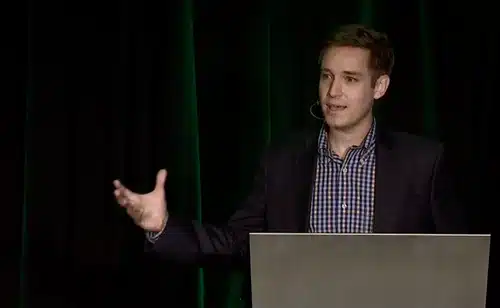
Derrick Morgan, former Tennessee Titans linebacker and founding partner of KNGDM Group, believes that community roots are incredibly important. 

That’s why after retiring from his career in the NFL and beginning an impact-focused fund, Derrick Morgan and KNGDM Group sought to be an example of giving back and building resilient communities. 

Hear him describe the importance of hope and resilience for life as a faith driven entrepreneur and investor.

All opinions expressed on this podcast, including the team and guests, are solely their opinions. Host and guests may maintain positions in the companies and securities discussed. This podcast is for informational purposes only and should not be relied upon as specific investment advice for any individual or organization.

Episode Transcript

Transcription is done by an AI software. While technology is an incredible tool to automate this process, there will be misspellings and typos that might accompany it. Please keep that in mind as you work through it.

Derrick Morgan: I would like a year for year five, twenty five, twenty six years old and already getting my MBA. But I was like, OK, I’ve got to really start being way more intentional about how I’m set myself up for after the game. And so moments like that in conversations like that, like really helped propel me and position me and like really helped shape my thinking on how I was going to do just that. And so I’m thankful for those words from Takeo and I feel like I took advantage of my time in the NFL and a really good way.

Henry Kaestner: Hey, everybody, welcome to a very special crossover podcast between the Faith Driven Athlete and the Faith Driven Investor. Our guest today is Derrick Morgan. He’s the managing partner of KMG, D.M. Group, just like you think, the Kingdom Group. Before his career as an investor, Derrick played nine years in the NFL as a linebacker. During that time, he kept his sights on life after football and he was inspired by the idea of impact investing. Now he’s leading the charge and opportunity zone investments while also encouraging professional athletes to begin to think long term about their use of capital. You may have heard him speak at the Faith Driven Investor conference, but you’re going to love the full conversation that we had with him.

Henry Kaestner: Let’s listen in now to Derek. We’re so glad to have you on the show. Thanks for joining us.

Derrick Morgan: Yeah, I appreciate you guys. Glad to be here.

Henry Kaestner: Yeah, we’re going to talk football. We can talk, invest in and excited about all that. Before we do that, though, as we do with all of our guests. Love to hear about your early life. What was it like growing up in the Morgan family? And when was faith introduced into your life?

Derrick Morgan: Yeah, I was actually a part of the Swiger family growing up. Yeah. My mom and my dad, they split pretty early on and was raised primarily by my mother, then my grandparents and talking before we jumped online here. That about my upbringing the first couple of years was primarily with my grandparents and they lived in Amish country Pennsylvania. Right. So right outside of like Lancaster area, you know, I used to get babysat by an Amish family, so I was riding in the horse and buggy and like on the farm. And so pretty unique, you know, a couple first couple of years.

Henry Kaestner: It’s not like they just parked in front of the TV and just tell you to be quiet.

Derrick Morgan: Oh, no, you’re out there with the animals and you’re actually, you know, in nature. And so then we transition to a different, very different environment where it was more like in the city. So public housing and it was a very underserved community. And so I kind of like seeing both sides and have a unique perspective on different walks of life that I’ve been encountered with. And so, you know, my mom, my grandparents really instilled faith in me from an early age. My granddad was a minister. And so I grew up in church. I used to catch a bus to church. Sometimes my mom couldn’t make it, so I was always searched. So I had that foundation that was set for me and modeled for me from an early age.

Henry Kaestner: Yeah. So tell us, when did you start playing football and when did it transition into something you knew that you loved and you had a future in it?

Derrick Morgan: I started playing football when I was nine, and I remember it because I was bigger than most the other kids and there was weight classes, right? So I remember it was like one hundred and twenty pound weight class and maybe I was 10 or 11 at the time, but then I would never make my weight. And so I had like this weight anxiety at like 10, 11 years old because I knew it every game you’re gonna weigh it. And so we decided, you know what, I’m just going to start playing up right now.

At 19, I was playing with like 11 and 12, 13 year olds we thought that’d help me. Right. And so that’s when I started. And really, I would say like sophomore year high school is when I really start focusing on, you know, getting a scholarship from the game of football. Like, to me that was like the Holy Grail. Like, if I could go Division one and get a scholarship, like I made it right. So that’s where I put all my focus. I stopped playing baseball, stopped playing basketball, and I just went all the way in football. And so it worked out. God blessed me with a great high school career, ended up being the number one player in the state my senior year and a lot of offers on the table ended up going to Georgia Tech. And so from there, really the rest is history. And I was able to play nine years with the Titans, same team throughout my whole career, which was a blessing in and of itself. But I just feel very fortunate, man, that I was able to live out a childhood dream and have the experiences of which I did.

Henry Kaestner: So I want to talk a little bit more about football before we get into the investing, which is something that’s really important to a lot of our audience, all of our audience. You are in the fourth game of your rookie season. You blow out your ACL and all of a sudden life is completely turned upside down. So you’ve been working on this, as you just talked about it, from high school through to college, get a Division One scholarship. You’re in now. You’re in the NFL. It’s the fourth game, your rookie season, and suddenly all that you’ve worked for is turned upside down. What was that like? What was the emotions of heaven? Just orient yourself towards this rookie season being in the NFL and then all of a sudden just turn upside down.

Derrick Morgan: It was heavy, it was very devastating to me, I had staked a lot of my identity, if not all of it, in being a football player, and up until that point, I had really experienced no real adversity.

And so I was out of the way. Right. This has worked so far. Got me to the NFL and everything else is gravy. And when I injured myself, I was in complete denial for literally almost a week. I was like, you know, the MRI is wrong. You know, I can still walk. I ran off the field. So, like, I think I can just get through, put a brace on. I was in straight up denial. And it wasn’t until, like, I was sitting there reviewing with the doctor and he was pointing out like, look, this is where your ACL is supposed to be connected and it’s no longer connected. At that moment the severity of it really kind of like fell on top of me. And from that moment was probably one of my lowest moments.

And I had to, like, really crawl out of that pit. But a lot of the way out was really as a direct result of my faith in God, given me the awareness of my identity and how false of an identity I had built up and being an athlete and how fragile and how fleeting that was. And so I had to really dig deep and really resolidify my relationship with God, because what I had been so afraid to do my whole life up until that point was to say the prayer of “God, not my will, but your will be done”. I was terrified of that prayer because in my mind, all that meant to me was, oh, man, like the complete opposite of what I want to happen is going to happen. Right. So I would avoid it. And I was like, nah, like God. Like I got my own plan. So come on, get on board. Right. Yeah, we all know it doesn’t work like that. And it took that shake up and that wake up call really to reorient me and change my trajectory in life because I was headed down a path of really just self-destruction. And so from that moment on, you know, it wasn’t a instant overnight transformation like I saw in the Bible, like it wasn’t like that.

But it was like man like that was the Genesis moment of restructuring and reshaping my identity. And so while it was a tragedy in the natural, in the spiritual, it was really a miracle because I feel like I’ve always had a lot of people praying for me. Yeah. And God knew what I needed. And when I look back 10 years, it’s actually ten years now.

I look back and it’s like I was like, what would my life have been if I didn’t have that moment? Right. And so I feel actually very grateful for that adversity that hit an early age.

Henry Kaestner: You know, it seems really interesting to me because I think you’re well known within the league and there’s a great we’re going to have a video clip that James Brown had done talking about the work that you’re doing in Coatesville that just talks about the work that you started to do while you’re still in the NFL. So many professional athletes that we hear about just hit this retirement place. And just like, well, what do I do next? Their identity being so wrapped up. So what I’m hearing you say is that before your NFL career even really started, God sent you on this identity and reset your identity and then allowed you to kind of get a head start because it feels like you’ve retired now. You spent a great decade in the NFL, but you’ve got this momentum coming out of the NFL into your next career and how you think about life that seem to have started well before, obviously, your NFL career ended. Tell us about that. And did that kind of come out of that experience when you had the ACL tear?

Derrick Morgan: Yeah, you encapsulated it very well. It was a sequence of events, right? That was the starting point.

And that led to like the next iteration and refinement.

So it was like a series of events from the ACL to having my son when I was twenty two to losing money with a financial adviser to like taking a hold of my financial destiny in my own hands and like going and getting my MBA. So it was a string of events that they played off of each other and it was like the next step to the next steps, the next step. So it was a constant evolution. Right. And so what I would agree with is the moment where you feel like you lost it all, which is where I was when I tore my ACL. It jolted me to reckon with the idea of not being an athlete and not having football. So when I was in that moment of thinking that my career was over, I was like, oh, shoot, I have a son on the way. My career could be over, like, what am I going to do? I don’t really know who I was. And I had to find out who I was A and what my interests were, what I like. What I didn’t like, I had to really understand who I was, and then that kind of naturally led me into different opportunities that really afforded me the idea of like thinking about life after football and how could I leverage the platform while I have it to, like you said, create that momentum for when I do hang them up, what’s going to be my legacy? What’s going to be my future off the field? Right. And so I remember to this day being in my MBA program and there’s this guy named Takeo Spikes, you may have heard of him. He’s a perennial pro bowler, probably has a shot at the Hall of Fame and was a real, real big voice in my life through just our brief relationship with the NBA program that we both were attending. And I remember I’ll never forget, he said, hey D, I just gotten like my second contract. He’s like, Look, man, I know you poppin right now, but just understand that it’s a little bit different on this side. And I was like, What? You mean like, look, you know, you ain’t going to have a shield, which you write. People know who you are, but it’s going to be a lot easier for you to get a meeting right now. There may be one, two or three years removed from the league. I was like, dang, even for you, you played 15 years in the league, but you’re Takeo Spikes for him to say that and other guys of that caliber to echo that sentiment. I was like, whoa, like this thing really does come to an end very abruptly. And so that always stood out to me and always resonated. I was like, OK, I was like a year for year five, twenty five, twenty six years old and already getting my MBA. But I was like, OK, I’ve got to really start being way more intentional about how I’m set myself up for after the game. And so moments like that and conversations like that, like really helped propel me and position me and like really helped shape my thinking on how I was going to do just that. And so I’m thankful for those words from Takeo and I feel like I took advantage of my time in the NFL and a really good way.

Henry Kaestner: So talk to us about what you’re doing now. Talk to us about what you started to think about and just the genesis of it all. So obviously, you’ve got this, Terry. You’ve got a great mentor. You’re getting your MBA. And how do you think about applying it? One of the idea of real estate investing start to occur to you.

Derrick Morgan: So it’s interesting how it all kind of transpired. We originally were like, hey, look, we’re going to raise this large fund. You know, we’re going to just kind of use our network for deal flow and we’re going to carry this investment pipeline and we’re going to invest in projects that fit our thesis. Great. Let’s go start a fund. What we quickly realized was that especially in the opportunity’s own space, there was a very big, very large appetite for projects, specific deals. Right. So instead of saying, hey, I have this project pipeline of 200 billion dollars over the next couple of years, give me your capital gains like it was more so like now, like, I want to see specific returns. I want to see specific metrics and outcomes and exits. And so for us as first time fund managers without a huge amount of track record, what we essentially pivoted towards is to develop role. Right. And so when we first started, that was we went back to my hometown and Coatesville. I look like there’s a lot of issues here. Let’s try to find some consensus on what the issues are. And we started talking to everybody from state senators to state reps to city officials to nonprofits, churches, the whole litany of stakeholders.

And we started putting together a plan and about two or three months into it, one of our consultants at the time we were having a conversation about we got to bring in a developer. And she was like, well, you’re the developer. And I was like, well, I am like, yeah, you’re bringing this vision to fruition. Now. I’m a developer. So obviously we needed to partner with people who have experience and understand how to manage projects and all that. But at the same time, a large chunk of the developer role is bringing together the necessary pieces of orchestrating all of those things. And so that’s essentially what we had been doing. And so from that moment, we’re like, yeah, like I like this situation better. I like being a direct influence over the deal in the project. And I feel way more comfortable going out to my network of potential employees to say, look, I know what this deal is going to return like. Not no, but I have a good understanding of the deal parameters. And this is your return profile. This is your risk profile. And I have a direct influence over the deal. And so that’s essentially the role in which we’ve kind of settled in, is being project developers and then obviously bringing in the necessary pieces to the team to fill any voids and experience or expertize. And so that’s essentially the role we can play. And we’ve done it in my hometown of Coatesville. We’re doing that out here in Nashville. We’re forming a venture with the housing authority to do this thing and wrapping amenities in our community. And so that’s essentially what came to me, is we have our construction operation that’s based in the southeast as well, and then we’re bringing projects to light and together, essentially, we’re bringing the actual equity to the deals on a project by project basis.

Henry Kaestner: So walk us through some of the projects that you’re working on in Coatesville. What’s it look like? What’s the opportunity? You see, just take us through the actual deals that you’re doing.

Derrick Morgan: Yes, so Coatesville, we have a twenty two acre parcel in the direct main and main of that town. And so twenty two acres, the one thing that we found to our conversations with the community is like there’s nothing for the youth to do. There’s no there’s no youth engagement.

There’s significant gang activity because there’s just nothing for the youth of Coatesville to do is actually eerie. Like I went back a couple months ago and it was actually a day off school and there were no kids in the streets that was like, this is very odd. Right. And so all the kids were either playing video games, watch TV, whatever. And so what we’ve essentially done is like, OK, we hear that problem. What assets does the community of Coatesville already have? What are the valuable assets that Coatesville already possesses? And the one thing that community development. Exactly. Exactly. One of my pastors sent me to a book a few years ago. So looking at the assets. Right. And understanding, OK, you know what? Coatesville doesn’t have the best reputation. Right. However, one thing that we are known for is sports. So how can we leverage that as an asset to bring people into Coatesville to increase the economy, to spend their dollar in Coatesville, which then results in other businesses, winning as a whole ecosystem effect? And so what we’ve essentially put together is a sports complex which has basketball courts and indoor turf field, outdoor turf, field programing, space for classroom, and non-profits and educational services, and then a food and retail hall that is adjacent to the actual sports complex. And so we see this as being a very inclusive development that is going to spawn other economic activity in the actual core of Coatesville. And so that’s one project that’s about one hundred and fourteen thousand square feet. All in project cost is around twenty three million. And we’re looking to leverage things like the opportunity zone as well as new market tax credits to fill up the capital stack.

Henry Kaestner: And how about leveraging the whole move to youth sports in America? As a dad of three teenage boys, the sports industry is just taking off. And if you’re that close to Philadelphia and you’ve got field space, that’s a big deal.

Derrick Morgan: Absolutely. Absolutely. On the head, the sports tourism market is exploding. And in the geography of Coatesville, we’re very centrally located within like a 60 mile radius. We’re touching a population of almost 12 million people. So it’s like very centrally located. Right. And so we’re looking to leverage that and leverage the increasing demand of sports tourism. Right. And so, like, obviously, the current environment is tied up in the air, but we’re hoping that by the time this thing opens, we’ll be back in somewhat of a normal environment for that. And so that’s the coastal project. The project in Nashville is a hundred and three unit mixed income development in conjunction with the housing authority. So what they’re doing is this part of a grander master plan where they’re redeveloping twenty five hundred units across the largest public housing project in Nashville. And so the good the actually unique thing about what they’re doing is a mixed income. But the other piece of this is that they’re actually not displacing one resident. So they’re actually transitioning the existing low income housing residents to the new town homes market looking like apartments and condos. They’re just transitioning them. And then, oh, by the way, your next door neighbor might be a lawyer, right? Or a teacher or a fireman saying so this is inclusive type of model that I was really drawn to. And we found a way to strike a partnership that is very mutually beneficial. So that is a hundred and three unit mixed income and as well as an activity center that’s immersed within the development. So football, football and outdoor field basketball court, very similar to Coatesville, but a little bit smaller scale and then a daycare and different programing space based on what the needs of the community are. And so we feel like we’re addressing a lot of different things and a lot of a lot of boxes.

Henry Kaestner: So, Derek, tell us about I know you’ve talked about being motivated by your faith and seeing these opportunities both in your hometown and also in Nashville. Talk to us about how your faith plays itself out in these different investment projects.

Derrick Morgan: Yes, there’s a couple of different ways to model it. I strongly believe in you shouldn’t have to tell people that you’re a Christian. They should just recognize you by your works and how you walk and how you model your life after Christ. So a big part of what we do is really modeling and like showing up in the nature of Christ. Obviously, we’re all flawed. I’m not perfect, but I’m very intentional about how I do business, the ethics and the morality in which govern my life and the values which govern the way we invest in the projects and our approach.

Right. So I’m hoping that we stand apart in some regards from a traditional. Way of doing business just by how we conduct ourselves in the actual developments and projects. Our goal is to partner with faith based organizations. So push out content and curriculum and programing that is faith based and able to easily get implemented within the developments of which we’re doing so. If we have facilities and recreational spaces, there will be programing space, available classroom setups, different ways for people to congregate, whether it’s through Bible study, Life groups and overall just good mentorship. And so that’s how we see faith being activated and being intentional about spreading the gospel within the actual developments.

Henry Kaestner: Awesome. We like to ask every guest that’s on our program if there’s something that they’ve been hearing from God through the Bible recently that’s impacted your life. Do you have something that’s top of mind?

Derrick Morgan: I don’t know if it’s like a specific verse, but the one thing that’s been on my spirit is like I’ve been feeling like a heaviness on my spirit as of late. And I think a lot of it is related to a lot of unknown. With real estate development. There’s always a lot of unknown factors. And, you know, sometimes doubt can start to seep in. And so I’ve been feeling like this opposition and this heaviness on me. And through that, you know, very recently as a couple of days ago, and we’re kind of hearing God say like push through it, push through that adversity and that opposition that you feel. Because if that is the enemy, if that is negative energy, negative spirits coming towards you or strongholds like you have been set here to penetrate that and push through it. And, you know, God did not give us a spirit of fear, but of sound mind and strength and discipline. And I probably messed up that verse. But like, that’s the essence of how it speaks to me. Right.

And so that is something that I’ve been kind of meditating on as of late. And I’ve just been here and got to say, like, keep pushing, keep pushing and pushing.

Henry Kaestner: Heavenly Father, we lift up Derek and we ask that you would give him indeed the spirit of peace and have courage and perseverance and that he would feel your peace in your guidance and that you give him favor in this season of life. Derrick, I’m going to ask you one last question. You got a 10 year old boy and a lot of people are going to be knowing that his dad’s a famous person. And so tell me, do you think that he feels undue pressure to go out there and be a real estate developer?

Derrick Morgan: No, he feels undue. I would say that he probably feels pressure to be a football player. I know. I know was partially kidding you. But we got an audience of real estate investors and they think, of course, that theirs is a really important vacation.

Derrick Morgan: You know, he actually he’s like, Dad, you’re a developer, right? I’m like, yeah. He’s like, OK. Does that mean you just buy buildings come? Yeah, basically. And so, you know, for my son, I always tell them, like, look, man, like guys made you unique. Like, you know, I know when you see people come up to me in public or ask for a picture or something like that, he actually loves it. My son is like an extrovert, so like he loves the attention. I don’t even, like, encourage him to play football. Right. And that’s something he wants to do. Maybe I’ll let him play contact football at 13, 14. But like, I’m not really pushing that right. I know how my body feels after nine surgeries. And so for him, it’s like, son, you’re unique. Right. I’m here to support you. Whatever you want to do to help guide you. Well, you got to ask God what your unique gifts are that you’re going to give to the world. So it’s going to it may look different than what Dad’s doing. Right. So I just try to encourage them in that way.

Henry Kaestner: Derek, thank you very much for your time. It’s been great being with you. Thank you for sharing your story. Awesome. Thanks for having me on.

Subscribe to the newsletter

Stay Connected
to the Movement

We know that as an Entrepreneur, your most valuable asset is time. So each month we take the very best of the podcast, the blog and all the news, resources, and upcoming events happening across the space and bring it to you.

Episode 062 – What is Gleaning? with Aimee Minnich

Episode 062 – What is Gleaning? with Aimee Minnich

Podcast episode

Episode 062 – What is Gleaning? with Aimee Minnich

Hear Aimee Minnich, CIO, Founder, and General Counsel for Impact Foundation, share about how her personal history led her to a career dedicated to helping families steward resources for the glory of God. 

In this episode, she challenges the common understandings of risk, reward, and time horizon in investing and posits “the only meaningful risk we can take is to disobey God’s commands or ignore His invitations.”

To hear more talks like this, join us this year at the 2021 Faith Driven Investor Conference on September 9th.

All opinions expressed on this podcast, including the team and guests, are solely their opinions. Host and guests may maintain positions in the companies and securities discussed. This podcast is for informational purposes only and should not be relied upon as specific investment advice for any individual or organization.

Episode Transcript

Transcription is done by an AI software. While technology is an incredible tool to automate this process, there will be misspellings and typos that might accompany it. Please keep that in mind as you work through it.

Aimee Minnich: I was 17 when my dad died. My inheritance was a baby blue plastic trash bin full of quarters. My dad seven years sobriety coin from AA and his prayers. My parents marriage had dissolved when I was seven and I lived with my mom after that. But my dad had done his best to share with us five kids the faith that he discovered on his journey to sobriety. By the grace of God, I went to college and law school on a full ride scholarship, and while I was in my first year of school, first year of law school, my mom and stepdad took their company public. It was a fast, wild ride from nothing to IPO. And since then I’ve sat through family meetings with wealth helpers to discuss the portfolio, and I’ve suffered through the painful estate planning meetings. I tell you this to say that I have seen and personally lived through both ends of the wealth spectrum and it’s given me a lot of opportunity to think about what it means to live a successful life. Is it being able to buy a Lamborghini or a yacht so that I can demonstrate to the world that I made it that I was a success? Is it being able to leave as much as possible to my family and pay as little as possible on estate taxes? You might be wondering what in the world this has to do with the conference for investors. You see, I’ve decided that the best way I can spend my working life is to help families like mine steward their resources, financial, spiritual and social to the best of their abilities and to the glory of God. For families with significant wealth, a lot of it looks like investing. It’s what compels the work that I do now at Impact Foundation, where we help families invest charitable capital in businesses that create jobs, share the gospel and contribute to human flourishing. So what’s the measure of success? I think we all want to get to the end of days and here. Well done, my beloved child. And we’re just doing our best to figure out what that means. We want to be excellent in the craft of investing, but I’m afraid sometimes I and other Faith Driven Investor used the wrong definition of excellence, just as the kingdom of this world misses what it means to live a successful life, so too it gives us an inadequate definition of what makes a successful investment portfolio. The world says, minimize the risk of losing your capital, maximize financial return and invest for the time horizon of your own life and maybe the life of your kids. But risk reward and time horizon have very different meanings in the kingdom of God. Jesus says if anybody wants to be my follower, you must give up your own way, take up your cross and follow me. It’s pretty risky on its face, but God’s omnipotent and good, his time horizon is eternal and we’re really just his money managers, which means the only meaningful risk we can encounter is to disobey his commands or ignore his invitations. So let’s ask then whether his word gives us any indication of how we should invest in scripture. We see at least four uses of capital commended. We’re familiar with the first three charity tithing and traditional investing for return. And to be clear, those are all worthy of our time, effort and money. But I want to focus on gleaning. It’s the most misunderstood and unaddressed but really important uses of capital. Remember how Ruth gathered around the edges of Boaz’ field in the Book of Ruth? Boaz was following the command from Leviticus 19 and 23 to allow for gleaning. The Theology Work Project explains gleaning is a process in which landowners have an obligation to provide the poor and marginalized access to the means of production, which in Leviticus was the land. And to work it themselves, unlike charity, does not depend on the generosity of landowners. Also, unlike charity, it was not given to the poor as a transfer payment. Through gleaning, the poor earned their living the same way as the landowners did by working the fields with their own neighbors. It was simply a command that everyone had a right to access the means of provision created by God. Our economies may not be agrarian anymore, but gleaning nevertheless is instructive for all of us because it has to do with provision rather than harvesting crops. I’ve observed sometimes it’s easier to practice gleaning within our own companies than it is to understand how to do it as investors. I think many of us are afraid to consider investment gleaning because it seems that accepting less than full market rate returns is the purview of the unsophisticated. If I lend money at eight percent and somebody else gets 15 percent. Doesn’t that make me the chump? Plus, people fear that it provides an excuse for lack of excellence from an entrepreneur. Those things certainly could be the causes of poor returns, but that’s not what gleaning entails. True gleaning involves excellence, access, work and sacrifice. In ancient times, a farmer there was leaving some of those fields and unharvested. It meant that he had to be even more efficient, more effective with the portions he was working in order to make enough to feed his own household and follow the command to allow room around the edges. A follower of God had to be the very best farmer around. Excellence is always a hallmark of gleaning. David Simms and John Halverson, at Talanton, are doing an amazing job as they back small and medium sized companies in Kenya and other parts of Africa. They’re demonstrating excellence in their company selection and management, even as they expect less than market rate returns. The next two parts of gleaning access and work, they go together gleaning access to the poor and marginalized for the poor and marginalized. And it’s not the same thing as a handout. Access to the means of production means work for wages. I wouldn’t ever, ever advocate eliminating charity, but I do fear that if we aren’t creating pathways to employment through our philanthropic capital, then we may be doing more harm than good. If you’ve been to Haiti, you’ve seen this firsthand. There are instances where aid given to the poor and marginalized can create access. Scholarships for education or career training are great examples. So as aid in the context of a natural disaster or mass displacement. But at some point we have to begin asking ourselves when does access and helping me find a job rather than another handout for Garfield Produce in Chicago, Access looks like employing former gang members from Chicago’s South Side to grow micro greens, which they sell to restaurants or they used to before covid. Their investors are expecting maybe to get their original loan back, but with no interest. That’s investment gleaning. Sacrifice is the last hallmark of gleaning, and it’s also the scariest until we actually do it. Gleaning means the difference between an eight percent return that creates 100 jobs or a 15 percent return that creates 50 jobs. What looks like sacrifice to others often feels like simple obedience to the person making the sacrifice. If the God of Heaven instructs us to do something, following in obedience is probably the safest bet when we get to the pearly gates. I don’t think he’s going to ask us whether we got a 15 percent IRR or beat our benchmarks. But I am confident that what we do for the least of these, the ways in which we take care of his children who are poor and marginalized will be remembered. So next time you’re looking at an eight percent return that creates a hundred jobs, how might you respond?

Subscribe to the newsletter

Stay Connected
to the Movement

We know that as an Entrepreneur, your most valuable asset is time. So each month we take the very best of the podcast, the blog and all the news, resources, and upcoming events happening across the space and bring it to you.

Episode 063 – Thank God for Bitcoin with Jimmy Song

Episode 063 – Thank God for Bitcoin with Jimmy Song

Podcast episode

Episode 063 – Thank God for Bitcoin with Jimmy Song

Money is a fact of everyday life. We earn it, spend it and save it. We’re tempted to worship it and to trust it to provide for our needs. While much has been written about the power, danger, and stewardship of money, little has been said about what money actually is and whether or not money itself is moral. 

Today’s guest is here to change that. Jimmy Song is a bitcoin advocate, developer and author who has been contributing to open-source bitcoin projects since 2013. 

On today’s episode he explores the ways in which the current monetary system is broken, what can be done to fix it, and how the ongoing transition to sound money may be a source of hope for a broken world.

All opinions expressed on this podcast, including the team and guests, are solely their opinions. Host and guests may maintain positions in the companies and securities discussed. This podcast is for informational purposes only and should not be relied upon as specific investment advice for any individual or organization.

Episode Transcript

Transcription is done by an AI software. While technology is an incredible tool to automate this process, there will be misspellings and typos that might accompany it. Please keep that in mind as you work through it.

Jimmy Song: So Esau had what we would call in between high time preference, right, like he was very impatient, didn’t have much prudence. Jacob had low time preference. He was willing to wait. He was patient. He was prudent. He was wise. And that’s what I wanted to point out about Bitcoin is there’s an ethic of being willing to wait because Bitcoin is very volatile. It does sort of like turn your stomach. There’s a lot of emotional disturbance in the price going up and down that you kind of have to go through that a lot of people simply can’t take. So for a lot of people, they would rather live for tomorrow and be more like Esau, who cares about my estate? That’s like 30 years from now. I’d rather have the suit now rather than being like Jacob. OK, I’ll forgo the suit now, but that means that I get this huge treasure later on. And to me, that’s at the heart of what both Bitcoin is about and what Christianity is about. Our God promises us treasures in heaven for doing the things that aren’t necessarily rewarded in this life. And that’s for me, what the ultimate in low time preference behavior looks like.

Rusty Rueff: Welcome back, everyone. You found us once again at the Faith Driven Investor podcast. Money, money is a fact of everyday life. We earn it, we spend it, we save it. Sometimes we give it away. We’re tempted to worship it and to trust it, to provide for our needs. And while much has been written about the power, the danger and the stewardship of money, little has been said about what money actually is and whether or not money itself is moral. Today’s guest is here to change that. Jimi Song is a Bitcoin advocate, a developer and an author who has been contributing to open source Bitcoin projects since 2013. On today’s episode, he explores the ways in which the current monetary system is broken, what can be done to fix it, and how the ongoing transition to sound money may be the source of hope for a broken world. We can’t wait to hear what you think of this, but let’s go mine this subject right now.

Henry Kaestner: Welcome back to the Faith Driven Investor podcast. We’ve got a really special episode. I say that at the beginning of every one of these look and at some point in time that’s going to ring hollow, but it’s not going to ring hollow today because today is actually super cool. We have our first ever Asian cowboy on the podcast. We’ve never had that before. We never had anybody who was wearing a cowboy hat to a podcast interview. And we may even be able to do a video clip of this in the promo reel. But Jimmy’s song is a really special guest because he’s going to take us through an asset class, Luke, that we actually participated in a little bit, but we don’t know very much about, right?

Luke Roush: That’s right. And it’s a hot asset class, right? It’s garnered a lot of notoriety and a lot of interest in the last few months. So never had an episode on Bitcoin been more appropriate.

Henry Kaestner: I agree. We’ve got Jimmy Song on the podcast today. Jimmy, welcome.

Jimmy Song: Thank you for having me. It’s very exciting for me to be on this podcast. I’ve done a lot of Bitcoin podcast. I haven’t done that many Christian ones. So I am super excited to talk about my faith and how Bitcoin relates to our faith.

Henry Kaestner: So it’s great having a is a real treat before we get going. One of the things that we like to do with every one of our guests is to understand who they are and where they come from and just share with us a bit, you know, who are you? Where do you come from? Where did faith enter into your journey? And then, yes, absolutely. We can tell about all things talking about the money system. We going to talk about greed and corruption and government and crypto and it being a force for good, all those different things. But who are you? Where you come from?

Jimmy Song: Sure. I was born in South Korea and I immigrated to the United States back in nineteen eighty five as an eight year old. So my dad was transferred to an office in New York because at the time he worked for a textile manufacturer and back in the eighties that was where a lot of clothing was made in Korea. But of course the designers were in New York and they wanted to see what materials factory could make and so on. So he was the representative for that company. He worked in the Empire State Building. I still remember going to his office, you know, on the sixty sixth floor next to the diamond exchange and everything. Anyway, we immigrated in nineteen eighty five and one of the things that happened when we came was my parents just kind of missed Korea and though they weren’t religious at the time, they decided to go to church as a way to meet other Korean people. And we started attending church maybe a month after we came to the US and part of that was me growing in faith and learning about God. I went to a summer overnight Christian camp called Word of Life in upstate New York. That was where I was saved. And it’s been a journey since then. Also, around that time I got into computers, I didn’t really even know what they were, but I had like this natural affinity towards them. And I begged my dad to get me one. He got me one from Toys R US as a fourth grader. It was a Commodore sixteen, not the sixty four that everyone knows was a sixteen, which only had like three games. So I learned a lot of programing on that thing, mostly because I wanted to play with this machine and I’ve been programing ever since. So I’ve been a programmer all my life and I went to a startup right out of college. I’ve been doing startups for a long time, pretty much since I graduated college, which was back in ninety eight. And I learned about Bitcoin back in 2011 when I was reading tech news site that said Bitcoin has reached parity with the dollar and I couldn’t even pass that sentence. I was like, what does that mean? How do you get parity with the dollar? And then I found out that it was a digital currency and so on. And yeah, I’ve been doing stuff in the Bitcoin space, contributing to open source projects, writing various books, speaking at conferences, teaching people I’m also a Bitcoin fellow at a venture capital firm and things like that. So. Yeah, it’s been quite a journey, and I’m excited about this podcast because it is sort of talking about two things that got integrated into my life and it’s something that only God can do.

Luke Roush: Jimmy, some of our listeners don’t have a ton of exposure to Bitcoin, maybe they haven’t actually spent the time that you have to really understand the currency and kind of how it works. But pretend we know nothing about Bitcoin, would you mind just kind of walking us through kind of a crash course for dummies, myself included, on how Bitcoin functions and what our listeners might want to know or pay attention to as we’re watching this universe unfold before our eyes?

Jimmy Song: Sure. The easiest way I can describe Bitcoin is as digital gold, and it’s digital, I think, which most people understand. But it’s also like gold in the sense that it requires no permission to go and gather it. So gold has always been like that. If you own some land, you can go dig in your backyard or whatever to go search for gold. That is everyone’s right to do. You don’t need permission from anybody. So in that way, Bitcoin is what we call decentralized. There’s no central authority that determines whether or not you are allowed to create that or find that particular commodity. This is unlike the US dollar, for example, which is centrally controlled. If I tried to produce a one hundred dollar bill and managed to make it look very realistic, I would get arrested by the Secret Service because the production of US dollars is controlled by, well, at least the physical notes by the Treasury, but really most of it by the Federal Reserve. So a lot of things are centralized, including concert tickets, coupons for online stores or whatever. What’s unique about Bitcoin is that it’s digital and decentralized and this usually blows people’s minds. And honestly, most of us in the computer science field didn’t think that that was actually possible until Satoshi Nakamoto showed that it could in 2008. And that was a big breakthrough in Bitcoin was the fact that it was both decentralized and digital. That is, it had no central authority, but it was also digital. When most people think of digital things, they think like MP3 files or Web pages or e-books or something like that, something that can essentially be infinitely copied with perfect fidelity. But with Bitcoin, you have something that’s decentralized, not infinitely copyable because there’s a ledger and this is what’s called the block chain. And that block chain holds essentially every transaction that’s ever been done on Bitcoin. It’s not very different than, say, the ledger at your bank, which for them has the record of every single transaction that’s ever been done by their customers of that bank, except that block chain is completely distributed. Everyone that runs the software can check exactly that. The ledger balances, for example, that no one’s overspending that noone’s overdrafting, that the rules of the ledger are being kept up and not violated and so on. And that’s essentially what it is. We also call it digital gold because of this process called mining with gold. I’m told that you need to scour something like 40 tons of dirt and rock before you find about one ounce of gold. So there’s a lot of dirt and rock that you have to process. You use chemicals on before you find that one ounce of gold. Bitcoin also has that same process for bringing new Bitcoin into existence, except instead of dirt and rock, what you have lots and lots of numbers. So you process as many numbers as possible and you’ll find that sort of one ounce of gold, if you will. And much like gold, that process of finding that gold is much more difficult than verifying that ounce of gold is genuine. The chemical test is much cheaper than actually digging up an ounce of gold in the ground. Similarly with Bitcoin, the process of finding a number that satisfies a particular property is very, very difficult. You just have to brute force lots and lots of numbers, the equivalent of 40 tons of dirt and rock. But when you find it, it is very easy to verify. In fact, your cell phone can go verify that it’s been done, whereas the actual process of finding it requires many, many thousands of thousands of machines.

Luke Roush: Yeah, that’s fascinating. And a whole bunch of other questions you go off in terms of who the miners are, where they live, how they mined. But now I want to go over actually to an argument that you make in your book that it could be really interesting to our listeners, maybe resonant given the environment that we’re currently living in. It’s around the moral argument for Bitcoin versus currencies that can be printed more readily. Could you just kind of articulate that view on the merits of Bitcoin relative to fiat currency?

Jimmy Song: Sure. The thing about the current monetary system, which is central bank backed fiat money, it is extremely corrupt for the lack of a better word. There’s a lot of theft in it. There is what we would call huge moral hazard within the fiat money system. And this is because there exists a money printer. Unfortunately, not that many people know how money works. I’ll just briefly describe it. When the government has a budget of 4 trillion and their tax revenue is three trillion, you have a one trillion dollar deficit. So where do they get that money in the past before central bank back fiat money? What? The government had to do was to go borrow that money from people that actually had it. So King John, for instance, wanted to borrow a ton of money to fund the war that he wanted to do as a part of England. The merchants that lent to him charge them two hundred fourteen percent interest because they were pretty sure that they wouldn’t get the money back. So at least after six months, they’d get some of it back and interest and then go from there. So that’s how money used to be nowadays. That one trillion dollar gap, it sold US Treasuries. There are other central banks that buy it. There are people in the public that buy it. They’re hedge funds and various pension funds that will buy it. But there’s usually some left over. So say they sell five hundred billion to various parties, but they have five hundred billion left. What happens? Well, the central bank is called the lender of last resort. For that reason, they will buy up the other five hundred billion dollars through money that they created then. Er so it’s essentially monetary expansion through debt insurance and that’s how the monetary system currently works. And it’s not just at the government level, it’s also at the corporate level and it’s also at the consumer level. So if you think about corporate bonds and whatever bond buyers know, you can get tremendous leverage. You can actually just get the spread. There’s questions about, OK, who’s buying these like one and a half percent bonds. Right. Like that pay like nothing. Well, it’s because you can go get loans for one hundred percent of that amount. It just becomes sort of like a money generating machine. And even if you’re getting paid like 20 basis points, if you’re getting loans at five basis points to 15 basis point spread is all profit and you can leverage the heck out of it. So you borrow a billion and you get 15 basis points on a billion dollars. That’s still a significant amount of money. So that’s how the current system works. It’s based on that. It’s based on money printing. It’s based on monetary expansion that can be sort of like game by the people that are in control. And that means that there is a huge moral hazard or the people that are printing the money because they can use it to benefit themselves and their friends and their family at the expense of everybody else. Every time you expand the money supply, you are essentially stealing from everyone that has saved in that currency. So if you have money saved in the dollar and the dollar expands and supply, then your dollar has a little less purchasing power. And you could kind of see that in the asset inflation bubble that we’re in with stocks and even bonds and real estate and maybe even gold to some degree. But every time the money expands, you are stealing from everybody else that’s holding the dollar. And this isn’t just people in the United States. A lot of those people are in third world countries. They use the dollar as their store of value because their own currency is even worse than the dollar. So in essence, every time money is being expanded through debt creation, we are essentially stealing from everybody else that has money stored in that fiat currency. So from a biblical perspective, it is immoral and it is doing something that God detests.

Henry Kaestner: Hold on saying this is the almighty dollar. If this is the greenback, you’re saying that there’s something just wrong with the system and then maybe you’d even suggest that because we are all transacting in dollars that we may even, by extension, be morally complicit in this.

Jimmy Song: Yeah, yeah. I mean, every time we take out a mortgage, for example, I mean, think about this. You take out a mortgage for, say, a quarter million dollars, two hundred fifty thousand dollars, and you get three percent, 30 years or something like that when most people think with that mortgage is OK, some that is on the other side of that trade that’s lending out two hundred fifty thousand dollars for three percent for 30 years. And that’s simply not true. If you were an investor, you would never take back 30 years, three percent with some credit risk. And so, like, nobody would do that. The only reason that happens is because they print that money into existence. And that mortgage in turn is actually insured by Fannie Mae and Freddie Mac. So really, there’s no risk for the bank at all. And the government’s the one that takes the risk and they print the money for your benefit. So we’re all complicit in this. And I’m speaking as a person that has a mortgage, so I’m complicit in this as well, and that we are expanding the money supply. Clearly, the borrower is benefiting because they’re getting access to a lot of money at once. The bank is benefiting. They’re getting paid interest. So who’s it actually hurting? Well, it’s hurting everyone else that’s holding the dollar, including people in Nigeria that are holding dollars because the Niros inflating very quickly. So how do you even for them, I mean, we’re stealing from everybody through this monetary expansion. And the US is the most guilty of all because we got first access to that dollar, whereas people in Nigeria, for example, get last access as a result of what’s called the Cantillon effect. They get screwed more than everybody else being convicted.

Luke Roush: And my guess is that many of our listeners are also being convicted based on that last 60 second report, which is good. I think it goes over a lot of people’s heads and just kind of passed us. But we don’t. Realize that we’re living in it, so I appreciate you shedding light on that, one of the things that Indonesia, where I used to live is known for is having the most expensive coffee in the world, which is Kopi Luwak coffee and I won’t go into all the details of it. But my understanding is that you may be an expert on some of the most expensive beef jerky in the world. And switching gears, I got to ask the man we need to hear the beef jerky story, most expensive beef jerky ever produced in the world. Jimmy Fallon on the show today.

Jimmy Song: Yeah. So 2013, there were a lot of different companies that were allowing came in and bitcoin. And this is sort of the mistake that I made. I want to support this company that’s now taking Bitcoin. And it was online and I decided to order some beef jerky from that company. At the time, Bitcoin was about four hundred dollars. So I bought one hundred dollars worth of beef jerky and I was like, OK, it’s a quarter bitcoin. It’s not that much. I’ll buy it. They shipped it to me. It was delicious. I don’t think it was like twelve thousand dollars delicious though because currently Bitcoin is up forty eight thousand. And this is kind of what happens with a lot of store of value assets is that I’ve known people that worked at Dell or something early on and they had stock options. They decided to sell them for a couch and it turns out that the stock kept going up or whatever, and that couch is now ten thousand dollars or something instead of eight hundred or something like that. So you know this. I regret spending Bitcoin on that beef jerky. Yeah, there was also a sewing machine I got from my wife, which costs like a tenth of a bitcoin that’s now like five thousand bucks. So, yeah, some regrets.

Henry Kaestner: So when you’re referring to store value, you’re referring to beef jerky as a store value. So tell us you’ve written a book on this. Tell us about the book.

Jimmy Song: Thank God for Bitcoin. Yeah, it’s all about the moral case for money. And it comes from a Christian perspective. I got to write this during covid as a result of Bible study that we started doing on Zoom. So basically I had gone to this conference that Russell Cohen put together. He’s the left tackle for the Carolina Panthers and he also wrote the foreword for our book. And his brother in law, George was one of my coauthors, is a Christian, and we started talking about it and we decided, OK, you know what, let’s do a Bible study of just some verses in the Bible that talk about money and oh, my goodness, there are so many verses in the Bible that talk about money. So we started doing that. And as we finished, he expressed some interest in learning more about the economic aspect of it. And I come from the Austrian school and I’ve read a lot of stuff on it. And we decided to open it up to some more people. And we had about ten different Bitcoin ers that have known through conferences and so on that I knew were Christian. And we got together. We studied two books, The Ethics of Money Production by Guido Huelsmann and Honest Money by Garry North. And both of them treat the monetary system from an ethical perspective. And we ended up doing studies of both books. And at the end we were dissatisfied because both of them ended with, hey, we need to go back on the gold standard and we need to get a political action committee together and convince enough people so that the dollar can go back to being backed by gold. And, you know, I mean, we’re reading this and thinking, OK, this is completely unrealistic and this is never going to happen. But we have this thing called Bitcoin where each individual can opt out. We need to write a book to lay that out. And that’s how the book started. We wanted to make the moral case for Bitcoin and we wanted to do it from a Christian perspective. So there’s a lot of verses in there. We definitely take the Christian world view in this book, and the hope is to give that moral perspective, because for a lot of Christians, I think what they think of when they think of Bitcoin is OK. It’s like the money used by drug dealers and traders that just gambled their money or something like that. And for us, it’s very much not. It’s a more moral money. And that’s the argument that we wanted to make in the book, and that’s what it covers.

Henry Kaestner: So it’s very interesting. I want to get more into the rifts that you’ve had with friends in Bible studies about faith as it comes through. And I just you got one of the most entertaining Twitter feeds of all time. And the other day you talk about Esau and Jacob and their take on Bitcoin. Selling Bitcoin: Esau’s soup, buying Bitcoin: jacob Father’s estate. Please explain.

Jimmy Song: Yeah. So Esau had what we would call in Bitcoin high time preference. Right. Like, he was very impatient, didn’t have much prudence. Jacob had low time preference. He was willing to wait. He was patient. He was prudent. He was wise. And that’s what I wanted to point out about Bitcoin is there’s an ethic of being willing to wait because Bitcoin is very volatile. It does sort of like turn your stomach. There’s a lot of emotional disturbance in the price going up and down that you kind of have to go through that a lot of people simply can’t take. So for a lot of people, they would rather live for tomorrow and be more like Esau. Who? Cares about my estate, that’s like 30 years from now. I’d rather have the suit now rather than being like Jacob, OK, I’ll forgo the suit now, but that means that I get this huge treasure later on. And to me, that’s at the heart of what both Bitcoin is about and what Christianity is about. Our God promises us treasures in heaven for doing the things that aren’t necessarily rewarded in this life. And that’s for me, what the ultimate in low time preference behavior looks like.

Henry Kaestner: So I want to do a slight pivot here because I’m thinking through this. I’m going beyond the moral implications of the monetary supply and I’m going to be thinking about that for a long time. I know our listeners are, too, but one of the things that has stuck with me is when you talked about the Nigerians being the last people kind of in the stream, so to speak, what is Bitcoin mean? And maybe I’m reading too much into your comment or just this general thought, but what is Bitcoin mean for people in places like Zimbabwe where they’ve got to take wheelbarrows of cash just to buy food? You know, is their role here for Bitcoin and poverty alleviation? Can that happen or or do those governments shut it down? Because that’s their last stranglehold on the people. Just riff about what that means a little bit in developing economies.

Jimmy Song: Yeah, and it’s been a tremendous in developing economies. In fact, one of my coauthors is Jordan Bush, and he actually inspired that Esau tweet. He is a missionary in Uruguay and his congregation is actually largely Venezuelan and they love Bitcoin. They think it’s something that is very important to them and in part because they can actually send money back home. A lot of these regimes, when they get in power, what they do is they impose strict capital controls and so on to make it very difficult to do anything monetary because they are spending their own money in hyperinflation. That the previous book that I wrote is the little Bitcoin book. And one of my coauthors there is Alex Gladstein, who’s the chief strategy officer for the Human Rights Foundation, and he’s really interested in Bitcoin, in large part because a lot of human rights activists in these countries, the first thing that happens to them, once the government finds out that they’re doing something against the government’s interests, is they get their bank accounts seized, they get financial, they get their financial access sort of cut off. And Bitcoin for them is a life saver. So there’s that aspect to it. But there’s also that other aspect that you are talking about, which is, you know, being able to store value. So one anecdote that I like to share is that one hundred dollar bill, a crisp one in a lot of third world countries, will trade at a premium to a wrinkled one. And you might be wondering, why would that be? Why is the crisp one trading at a premium to a wrinkled one? Well, the crisp one is more valuable because they’re given as gifts at weddings and so on. So when you’re presenting a gift to the bride and groom or something like that, you want a nice crisp bill. So the wrinkled one trades at a discount because these people are using these as stores of value. This is you’re starting off your new life. Here’s some money and that’s how they store it. So for a lot of those people in Third World countries, the US dollar and so on is a lifeline to being able to store their wealth. And if we’re thinking about like what’s happened to the US dollar in the last year, then two money supply, for example, has expanded by thirty five percent or something crazy. For a lot of people in Third World countries, it’s even worse. So they have their own currencies, which through legal tender laws and monetary injustice of all kinds, they’re forced to use. But it’s inflating at such a high rate that they need something else. They want to store value in something else. And if you go to like the black market in Venezuela, for example, you know, no one takes bolivars or if they do, they have a quick way of getting rid of it because no one wants to hold on to them, because an hour from now, it’s going to be worth less than what it is right now. So that whole process is very detrimental to their living and it makes all sorts of economic calculation crazy. It generally devalues labor and so on. So Bitcoin definitely has a role. The country where Bitcoin is most popular besides the United States is Nigeria right now. And it’s because the Naira is expanding fairly quickly. They have a pretty technical population. One of my coauthors from the previous book runs an exchange there, and he’s trying to comply with the central bank of Nigeria’s mandates and so on. But yeah, it’s a life saver for a lot of them because they can actually store value instead of having it just sort of like frittered away. And a lot of the injustice that we see in the world is actually monetary injustice. And honestly, a lot of that is because of the dollar hegemony that is over the entire world. And this is something that I think as Americans, much more so than, quote on quote, social justice or whatever that we have to think about as a nation. There’s a monetary imperialism that is over the entire globe. The US can more or less unilaterally enforce sanctions on Iran because of the dollar, all international transactions. These are settled in the dollar and so on, so. You know, that level of control, that level of ability to affect people in Third World countries, this is something that we need to really face up to as a nation because we’ve been abusing it for the last 70 years or so since Bretton Woods.

Luke Roush: So the concept of monetary imperialism is a powerful word, picture that I’ve never thought through that before. But this is really, I think, brought that to light for me and will be impactful for others, too. I’ve got one more question and then a closing question. But one more question is, we all have friends who have waded into Bitcoin more recently trying to make a quick buck. What counsel would you give the folks who are seeing this more sort of short term trading opportunity rather than a long term?

Jimmy Song: Yeah, I know a lot of people that have been like that, and those people have existed since 2010. So there were people that got into Bitcoin at a dollar and sold at eight dollars and said, you know what, I made eight times my money. I am out. And they have never come back since. So my counsel to those people would be understand what Bitcoin is. It could be a trade thing, a plaything, a gambling thing. In which case, I think as a Christian, you should really look into whether or not that is something that is corrupting your soul or not otherwise. Once you’ve learned what that really is, whether it is this incorruptible unsensible store of value that we argue in the book, then you’ll understand like just how much it means to have that store of value available so that we can build a better civilization instead of one that’s leaking all over the place with the current fiat monetary system that we’re in. So for those people, learn what it is before you keep going with this sort of like speculation. A lot of people do come in for no go up, as we say, in our space. But a lot of people end up staying because they learn what it is and read books like mine or say things the Bitcoin standard or many others and learn, OK, all right. This really is a better money. And it is in many ways incorruptible by human beings because it’s run by computer code. And as a result, they become convinced, OK, this really is superior to the current monetary system. And I want to opt out of the current monetary system into this thing. And that’s what brings a lot of people in. So, you know, learning about that is not easy. I’ve seen people take many years before they got into it or understood it or realized this implications. And like we’ve been talking about, the implications are enormous and they are global. And it is no small thing to be changing out money. It seems to be one of the base layers of civilization. If you change that out, you affect absolutely everything above it, including governments, including trade, including companies, including our lifestyles, including our how we view debt and things like that. And all of those things will need to be changed as we transition more to a Bitcoin standard. In my opinion, that’s inevitable because fiat currencies are just sort of temporary by nature. I think a study of all fiat currencies that have ever existed, like the average life span, is like twenty three years. The US dollar is about 50 years old in fiat terms. And so it’s fairly old, but we’ll see where it goes. But that’s what I would implore your listeners to go and understand.

Luke Roush: Most impactful episode for me and I think for all of us. But let’s just close out with the way we always close out. So I’d love to hear, Jimmy, how God is speaking to you and teaching you. Now, what have you found in his words that has stuck out to you recently?

Jimmy Song: Yeah. So the verse that I’ll go to is in the book as well, but it’s Ephesians 4:28. He who steals my steal no longer, but rather he must labor performing with his own hands. What is good so that he will have something to share with one who has need. And I love that verse first of all, because it says don’t steal. And I think at least in the fiat economy, I think we’re all guilty of that, whether we know it or not. And stopping from that and working with our own hands, creating something that is good. So he will have something to share with one who has need. That to me sometimes is interpreted as go and make money so you can give alms to the poor. For me it means go make something with your hands so that you can contribute something to civilization, to someone else in the market that can get value from whatever it is that you create. And the verse is really about money and the role of money, which from a spiritual sense is a signal to you, to each individual to know how it is that you can provide most value to other people. And when the money is not corrupt, it’s the purest sort of signal for what we should be doing because it tells other people, I find what you’re doing, your goods or services more valuable than the money that I am willing to give it up for. So for me, that’s what it is. The other thing I’ll share is that this book for me is sort of like, as I mentioned before, the merging of two huge passions in my life, Christianity and Bitcoin. And I was at a conference last year, a big block boom. It was Bitcoin conference and it was in Dallas. And I gave a talk and somebody asked a question and I revealed that I was a Christian at that conference. And I also told the audience at the end, hey, I’m writing a book about this, if you’re interested, please. Talk to me afterwards, no less than 30 people throughout the next two days came up to me and told me that they are Christian, that they are Bitcoin. They were afraid of saying something. And for me, that was a huge validation of what God was doing, because it was clear that there are a lot of Christians that don’t want to be known as Christians. And a thing for me when I think about that is, wow, how sad is that? Because according to the Bible, these are Jesus’s words. He says, if you are ashamed of me, I will be ashamed of you before my father. And my hope for your listeners is that they learn to be bold with their faith. And, you know, we tend to think, OK, God doesn’t want me to be ashamed of him, but then I’m going to get embarrassed. That’s not the way it is, at least for me. My experience has been that God has blessed me, that he wants me to be bold so that he can bless me and what I am doing. And this book has come out as a result of that. We’ve got a lot of reviewers from that conference that were able to chime in on Bitcoin and Christianity and give us some really good feedback that we incorporated. But for all your listeners that are thinking about investing better in these industries where, you know, it might not be cool to talk about Jesus, take a chance people about it, because God wants to bless you.

Henry Kaestner: Amen. Wow, that was really, really awesome. I love what you’re talking about in terms of being able to deliver value. We should be about being used by God under his power for his glory to bring about his kingdom on Earth as it is in heaven. And we need to be creative and adding value to the marketplace, creating goods and services to bring about his kingdom and to love our neighbor, and in that process, superimportant. So that’s a great word to leave us on. And then the admonition, of course, to be always ready, willing and able to be able to boldly and yet with gentleness and respect to share the reason for the hope we have. So great word for me, a great word for Luke, Justin and the entire FDE team and our listeners. Jimmy, we’re really grateful for you. Thank you very much.

Jimmy Song: Thank you for having me.

Subscribe to the newsletter

Stay Connected
to the Movement

We know that as an Entrepreneur, your most valuable asset is time. So each month we take the very best of the podcast, the blog and all the news, resources, and upcoming events happening across the space and bring it to you.

Episode 064 – How to Invest in Movies with Jon Erwin

Episode 064 – How to Invest in Movies with Jon Erwin

Podcast episode

Episode 064 – How to Invest in Movies with Jon Erwin

October Baby. Mom’s Night Out. Woodlawn. I Can Only Imagine. What do these movies have in common? They’re all creations from the Erwin brothers. 

Jon and Andrew have had a passion for creating and making movies since they were young, and while we could talk shop about movies we love all day long, we asked Jon to pull back the curtain into the economics behind the big screen. 

How do filmmakers raise capital? Where do investors looking to get involved in entertainment? And of course, how does our Christian faith play into all of this? Listen in to find out…

All opinions expressed on this podcast, including the team and guests, are solely their opinions. Host and guests may maintain positions in the companies and securities discussed. This podcast is for informational purposes only and should not be relied upon as specific investment advice for any individual or organization.

Episode Transcript

Transcription is done by an AI software. While technology is an incredible tool to automate this process, there will be misspellings and typos that might accompany it. Please keep that in mind as you work through it.

Jon Erwin: There’s never been a more powerful tool of storytelling than mass entertainment. It’s America’s second largest export behind agriculture. You know, there’s enormous infrastructure being built worldwide, completely flips the model of sharing the gospel because countries pay for American movies. And if you can cross a certain threshold of success, these movies go on global autopilot and these countries are paying you. And so it’s an incredible model to get the gospel around the world. It’s an industry that we’ve historically been underrepresented for quite a while. As Christians, I think it’s our fault. I don’t think you can blame it on some evil Hollywood agenda. I think we’ve abandoned the playing field. In my experience, people are open. They just don’t. I mean, like the chairman, the motion picture group was a great friend, a mentor at Lionsgate. I’m the only Christian he knows, you know, and that’s Christianity’s fault. So I think we got to stop blaming some evil conspiracy that doesn’t exist, in my opinion. And I’m deep inside the industry and we got to get in the dating game again.

Henry Kaestner: John, it’s awesome to have you here, thank you for joining us.

Jon Erwin: Thanks for having me. And love the theme of your podcast. I remember when we did the deal at Lionsgate, we make movies there, the studio. They said, what’s most important to you? This was after the movie. I can only imagine. I said I’d like to be seen as an entrepreneur first and a filmmaker second. And so I think I actually value just entrepreneurism over entertainment. In a way. There’s so much creativity in the process of creating, you know, a company or a revenue sort of engine or a story for a film. There’s a lot of creativity in both. And so thanks for having me on for sure.

Henry Kaestner: Yeah, you’re on the right program then, obviously. So one thing we like to start every show off with is getting a little bit of your background. So tell us about growing up in your own household, your relationship with your brother when the movie-making becomes something you thought about pursuing after you thought about entrepreneurship.

Jon Erwin: Yeah, well, I’ll say this. Some details of the story I’m not recommending. I remember doing a program I think called Money Life, and some of it was like that person was condoning lying. I’m like, I’m not I’m just telling you what happened. I’m just going to preface it with that. But I was born and raised in Birmingham, Alabama, and love the South. I live in Nashville, Tennessee today and commute to L.A. And when I was probably 12, I started working at a cable station and when I was 15, and to anyone that’s young and interested in filmmaking, start now the tools that’s never been as readily available. One of the great assets I had was just to start, you know, very young, you know, probably 10 years younger than most people. And in the providence of God, just he opened up an incredible door when I was 15 at the University of Alabama. We got it.

Henry Kaestner: We got to stop here. So, William, huge Alabama fan.

Jon Erwin: So I could say right here, am I able to say roll tide? Because all can say it sings to my heart, John.

William Norvell: You know, I get I get made fun of all the time on the show with people. And I talk about, you know, how successful we are all the time and just bothers people.

Jon Erwin: You know, Roll Tide in Alabama is a way to say hello goodbye. It’s a way to affirm, you know, healing. Yeah. It’s a way to sit in going for it. It’s a there’s many uses to roll tide.

William Norvell: You know, we need a link to the ESPN commercial and the bottom of the podcast.

Jon Erwin: Mini, an Alabamian has died and their last words were all tied before doing something really stupid. But anyway, it will roll tide, by the way, at any rate, a cameraman got sick three hours before the kickoff and I was apprenticing for a cameraman for my church named Mike. And for about a year I worked for him for free, carried around a tripod.

And he called me and he said, John, get over here right now. I told him I knew a guy like me. Lying is such a strong word. It’s like just neglect to inform them of your age and your level of it. Just don’t say anything at all. Just get over here. So I got in the car. My dad drove me over because I didn’t want him, but I couldn’t drive. He dropped me off four blocks from the stadium. I walked in and did what Mike told me to do. Just basically he didn’t say anything. He just said, I’m here and I’m I’m one of you and all that stuff. And I went up to Karma for and football shoots is the highest camera in the stadium. She’s up and down the field like field goals. And I was used to cameras that were very small. And this was like a telescope was huge and the lens was so powerful it could zoom in and out of a quarter of the moon. So I was just this kid is fifteen year old, homeschooled, conservative, you know, never met anyone that wasn’t a Christian, you know, share my world view kid that had just sort of joined the circus. I was literally zooming this camera just in and out of the moon and having the time of my life. And I just I got bit hard by the entertainment bug. I fell in love that day and they paid me three hundred dollars. I had never seen that much money. We didn’t have a lot growing up at all. So then I was really in love. And I remember I played basketball all the time. And we have another podcast on sports. And my coach called me and said, Are you come out for the team? And I’m like, Now they’re paying me to film games. And he didn’t have a response for that. So that was the end of sports for me. But the next week, crewing agent called me because I was, you know, Birmingham, Alabama, again, providentially is right in the heart of the SEC, which is the best conference anyway. And so there’s games within a five, six hour radius everywhere. So occurring agent called me and said, are you a freelance camera operator in Birmingham, Alabama? And I didn’t know if that was three individual jobs and I had to pick one or if that was one job. So I just said, yes, that’s I’m that that’s what I did. So she sent me down to Auburn and did another game there. And is that the airable or are involved on the air but just didn’t Auburn football game and the Auburn stadium was always very cold. At any rate, I work for ESPN really full time after that. And when I was 16 years old, my dad used money he didn’t to help me get a camera, probably the best gift I’ve ever received. And he helped me and secure a ten thousand dollar loan, which you probably shouldn’t do. There’s a lot in this story you shouldn’t do for a sixteen year old. And he taught us something that has stayed with us. He just said dream bold, dream big dream the impossible. And we’ve tried to live up to that. Ever since and we just started making stuff, you know, I think that there’s a great principle I love to read and I would just highly recommend reading. And there’s a great book called Outliers. And Malcolm Gladwell, the author of that book, talks about a principle called The Ten Thousand Hour Rule that there’s no overnight success in anyone that’s kind of achieved sort of breakout in anything, has spent 10000 hours honing and mastering their craft. And I think as craftsman, as Christians, we don’t respect the season of preparation that precedes a season of influence. And sometimes the season of preparation is a lot longer. And so we just started making stuff and made all kinds of stuff. I don’t remember. I mean, I filmed so many weddings and surgeries and birthday parties and used car commercials and all kinds of stuff, but just round and round the Praxis track, learning my craft. And I think people get it wrong when they consider film an art form. An art is something you express. I consider this a craft. A craft is something you master over a long period of time and just made all kinds of stuff. And then the Christian artist, Michael W. Smith and Amy Grant, the music artist, gave us a break for reasons I still to this day don’t understand, to do music videos for them. And the first one we did for somebody went to the top the charts, and that led to a career doing music videos, working for just a ton of both Christian and country artists and winning a lot of awards. But it was still just a job.

Henry Kaestner: Give a story on that before I go off, because I came of age in the MTV generation is a lot of our listeners did. And so we’ve never talked to anybody on this podcast. It actually made a music video. Give us a good story behind the scenes and music video.

Jon Erwin: There are many, but I’ll tell you one, we used to write these enormous treatments, five, six, seven page treatments and a label would give a song out to 10 or 20 directors, and we’d all compete by writing treatments and then they would award the video. Well, and then I had one at a time, music video of the year, I think three years in a row. And so we didn’t quite have to write as long as treatments. And so there was this band is very sort of heavy rock band, great band called Skillet, and they had a song called Hero. And so I wrote a treatment that just said, basically the band’s singing at night. Things start to blow up. Then it starts to rain. Then it rains and things start to blow up. Then everything blows up the end and gave it to the band and they’re all like, let’s do it. There’s a little paragraph treatment. And so we got all these pyrotechnics and a lot of special effects and a lot of water and things you typically don’t want to mix like water and electricity and fire and gasoline bombs and all that stuff. And I love that stuff. At any rate, the first take the drummer, I forget the name. It was their first video and she was the drummer, so she was the closest to it all. And so we go through the first take and then we yell cut. And she runs screaming because she didn’t know because it was the first video that she could stop to take if she didn’t feel safe or whatever. And so she runs screaming for a trailer. So I’m like, Andy, you should sort of deal with that.

Andy, he deals with the gas, the actors. And then I sat down in her seat and I’m like, Hey, guys, just give it to me full. And it was the propane mainly. It’s like big fire, you know, sort of like patterns of propane. And so they gave me everything. And I’m like, yeah, I feel like my skin’s melting off. We should move the band forward, you know, and no one was hurt. She’s OK. But yeah, that’s called a skillet hero. I think we can see that honestly. It’s actually the most watched Christian video of all time. Well, that one or the movie they did monster that we did for them, I think is like 250 million views. One of them is put a link to that in the show notes and maybe that’s monster. We did Monster and Hero back to back. It was great fun. Anyway, I love that type of work. And so I went to direct the second unit on a movie called Courageous, a faith based film. That real Cinderella Story, a church in Georgia called Sherwood, was doing movies that Sony was releasing. And they were very successful and they had just done a movie called Fireproof that had done very well.

And they were doing this movie Courageous, and they made them primarily with church volunteers. So they’re like a thousand church volunteers. Well, courageous. They want to do a cop movie. They want to do action scenes, foot chase scenes, car chase scenes. Well, these are like wonderful things, like chase scenes in movies. You never want to combine them with church volunteers, or somebody will die, you know, in the process of making the movie. So I was brought in as a second unit director to just do the action sequences and try to get inside Alex’s head and execute those scenes for him in a safe environment with professionals and had great fun. And Alex, you know, Southern Baptists, sometimes I think the the most powerful thing in your life can be the right question. And Alex asked me a question and he just said, John, what’s your purpose and the purpose of your work? And I couldn’t answer it. And not only could I not answer it, I couldn’t stop thinking about it. And the whole time working for them on their film, I couldn’t stop mulling over this question of, like, not what do I do? And by the way, that’s a great question for anybody. Simon Sinek wrote a great book, Start with Why just fantastic book and the idea most people know. What they do, some people know how they do what they do. Very few people know and articulate in lead with why they do what they do. And so it was just a process of thinking about why we did what we did and what our purpose was. And that led us jumping into the fray of faith based filmmaking, which is an honor. It’s very rare thing to be working in an industry that is emerging in such a way that you can have your fingerprint on whatever it becomes. And that’s an honor to be an early pioneer in something. I remember talking with gymnast and we were doing a film, Woodlawn together, and he said, I see you and Andy and Alex and Steven and Devon Franklin and these other guys as like frontiersmen. And I said, thank you, Sean. That’s high praise coming from you. And he says, you know, John, most frontiersmen die on the frontier. Settlers are like, well, the trail will be clearly marked and will be frozen, pointing to the summit. But it’s an honor to sort of you know, if you think about what Michael W. Smith and Amy Grant, who launched our careers and music videos, did for music, they were early pioneers in what has become a platform that a lot of young people can be heard. That was our career to calling moment after the movie Courageous.

William Norvell: Oh, well, that’s an amazing story. Amazing story. Woodlawn, also nice Alabama film. Yeah. Yeah.

Jon Erwin: Real Black Bear Bryant after that, starting with a movie called October Baby. We got into the business of independent filmmaking and I like the quote from then on the Mike Tyson quote, Every boxer has a plan till he gets in the ring, gets punched in the face. You know, you get the ring and you learn. But that was the jumping off point to what we do now.

William Norvell: That’s awesome, John. And so walk us through a little bit. So you’ve got independent filmmaking and now you’re in Hollywood as well. You mentioned you commute back and forth, L.A. and you mentioned Lions Gate. Walk us through what that world looks like. I think some of our audience probably just doesn’t understand. Probably a lot of misperceptions on, you know, hey, it’s Hollywood antagonistic to faith driven films or does it matter as long as you make a really good movie? How that tightrope work? How do you think about yourself and the movies you’re making sort of coming through and out of a place that I think most people may think wouldn’t necessarily like it?

Jon Erwin: That’s a great question. I would say the majority of what we did for a while was outside the system. October baby, we had to raise the money to make and also to market. It cost a lot more to market and release a film that does to make it second film we did send out.

We did with Sony and then the third film we did Woodlawn. We did independently as well as I can only imagine. And the more success we achieved, you know, the more that, you know, it’s fun to sort of operate and develop a direct relationship. You know, one of the things that you can do today is develop a direct relationship with the consumer base, and that is very powerful today. So the more you do that, the more the existing sort of industry comes to you. And now we’re in business with a wonderful partner, Lionsgate. And I would just say there’s never been a better time. I mean, I like this verse in acts where Paul says of David that he served the purposes of God in his generation. That’s cool. Like the gospel never changes, but you got to own your time. Right? And so the way to get it to people does change. And I think that there should be a strong sense of ownership of I’m going to own the tools of my time and infuse them with the gospel. And I think when you think about it from that perspective, there’s never been a more powerful tool of storytelling than mass entertainment. It’s America’s second largest export behind agriculture. You know, there’s enormous infrastructure being built worldwide, completely flips the model of sharing the gospel because countries pay for American movies. And if you can cross a certain threshold of success, these movies go on global autopilot and these countries are paying you. And so it’s an incredible model to get the gospel around the world. It’s an industry that we’ve historically been underrepresented for quite a while. As Christians, I think it’s our fault. I don’t think you can blame it on some evil Hollywood agenda. I think we’ve abandoned the playing field. In my experience, people are open. They just don’t. I mean, like the chairman, Motion Picture Group is a great friend, a mentor at Lionsgate. I’m the only Christian he knows, you know, and that’s Christianity’s fault. So I think we got to stop blaming some evil conspiracy that doesn’t exist, in my opinion. And I’m deep inside the industry and we got to get in the dating game again. You know, now L.A. is the center of narcissism of the world, in my opinion. It’s like you could buy up every billboard in L.A. and put the words get over yourself and it would be a worthy investment. The entertainment industry is an interesting trifecta of sort of power, you know, money and sex. And so I think that there’s an interesting allure to it that my first manager said, you know, it’s not a business of psychopaths. There’s a bunch of really wonderful people, but it is one of those rare businesses where psychopaths can really flourish. So I think it’s not a safe place. But, you know, that’s not an excuse for us not engaging and harnessing the power of this medium. I think it’s really important. And I think we’ve gotten way behind. And I also think that we’re in this little sort of window of time where there’s, you know, the perception that. Entertainment is cheesy or less than or not as good, I see that as a businessman and entrepreneur is a massive opportunity for a brand, but that’s another subject.

I think if you look historically like we had our second movie premiere was at the Chinese theater and Sony put on a premiere for a movie there. And, you know, that’s like the Mecca for a filmmaker. But if you think about that theater, you know, the Ten Commandments are under glass inside. You know, from Charlton Heston’s movie and first movie premiere, there was Cecil B., the King of Kings. And, you know, there’s a lot of faith history. There was a time where faith based films were the epics and the blockbusters of the day. If you take the European art tour, you know, there’s an incredible fusion between faith and art. So we’re in this sort of ditch that we got to work our way out of and I think we can wear. Christian films are associated with poor quality for a lot of reasons. That would take a long time to unpack. But I do think it’s something that we can fix and that we can improve upon and then we can reestablish our voice and culture.

And I just think if you want this is the language of the time. If we want to communicate with a generation, this is the way to do it. And I think it’s ours for the taking. I don’t think there’s ever been a moment where Hollywood is this accessible. There’s just incredible opportunities for anyone that brings a relationship with an audience. So I think when you look at I can only imagine it shocked the system to such a great extent. It triggered this phenomenon called FOMO, which is the fear of missing out. We’ve never been this connected as a culture, but we’ve also never been this lonely. And so people have an extreme fear of missing out and a need to belong. And so whenever a group, whether it’s crazy rich Asians or Fault in Our Stars or I can only imagine what parasite, for that matter, whenever any group rallies together, champions and celebrates something, it tips over into cultural FOMO, into the zeitgeist, and that’s how you start getting millions. Our unified voice is very powerful and very leverage able. And I mean, the industry thinks differently. I think LA’s problem is they think everyone is just like them and thinks like them.

And certainly a certain political mindset is somewhat of a religion. And I find we’re just not represented. There’s some Christian groups that try to influence Hollywood from the outside, but the entertainment industry is so specific you have to influence it from the inside. And that means you’ve got to get really good at what you do and you got to hold tight to your values while you do it. And I just think that there’s enormous opportunities. I think we’ve only scratched the surface of what faith based films could become. I think that there’s a generation of talent behind and, you know, that will far outshine and out exceed our accomplishments. And I just think that we could make an enormous difference over the next decade in the entertainment industry. You know, my Bible says on this rock, I build my church and the gates of hell will not prevail against it. Nobody’s going to throw a gate at you. Nobody’s going to attack you with a gate. A gate is a defensive mechanisms. Gates are meant to be stormed. So we really need to embrace an offensive playbook culturally instead of a defensive playbook to reclaim our voice.

Jon Erwin: But that’s interesting. So I want to ask one question on that. So what is a faith based film mean to you? To people looking like I can think of your films, then I can think of you know, I think Angelina Jolie produced Louis Zamperini story on Brogan. And then, you know, some people were mad. It didn’t go enough into faith, but it was a story. It was pretty accurate to the book in my personal opinion. The book I read right, it maybe left out some things, but it was directionally accurate. You know, what does that phrase mean to you? And is it a broader hey, there’s multiple categories of that. But and so when you’re encouraging people, I’m interested in what are you encouraging them to do? What type of films, what type of influence could be achieved there?

Jon Erwin: That’s a great question. That’s a loaded question. It’s a question of great debate, you know, in the sort of entrepreneurism is space. One of the things that I think that you have to embrace as an entrepreneur is what differentiates you. And it’s OK to be different and to say, look, I love the work of all these people, but I see the world differently and here’s what I want to do. And there are faith based films that are meant to I think the sort of church term would be to edify the church. You know, they’re prescriptive. They’re films that are on topics that the church promotes. They’re meant for people sort of inside the church. And we start sort of almost by accident, really, on the film Woodlawn. And because it was so disproportionately used as a tool for evangelism, it’s fun to put a product in front of people and just watch how they use it. You know, I think one of the keys to being an entrepreneur is just extreme empathy for your customer and how they’re using the product. And we just start seeing tens of thousands of teenagers with Woodlawn come to Christ. And with the movie being used as a tool, we make decisions. Simon Sinek and in his book start with why I point this out. We make decisions emotionally and we back them up logically. So when you have a tool that goes straight for the heart, that’s just the way the brain is wired. That’s what God made us. And maybe that’s why Jesus told super relatable emotional stories and then he explained their truth. So the way entertainment works. I call it setting a volleyball that others spike, I’ll give you an example, there was a woman watching, I can only imagine with her son, I think, in Australia, and they were leaving the theater. And behind them was a woman they’d never met. Probably they had some sort of similar story, Dennis Quaid in the movie. And she was sort of wrecked. And she said to them, Are you guys Christians? And they said, Yeah, hello, nice to meet you. Are you? She said, no. But whatever happened to Dennis Quaid in this movie? I need to happen to me and I just need someone to explain it to me. Can you help? And they led her to Christ right there in the theater. So what a piece of entertainment. The way we design it is our when is when someone says, I need what’s in this movie, whatever’s in this movie I need in my life. And that’s happened over a hundred thousand times on the movies that we know of. And they just are these tools for people to take their results. Like if you show a youth group, if you present the gospel to youth group, you’ll have some sort of result.

But I guarantee you, if you show that same group, Woodlawn or I can only imagine you share the gospel after your results will be massively amplified. And that’s just because the movie is working on a heart level. The movie is working on a story level. A movie in its nature is a vicarious experience. That’s why it’s so powerful. That’s why it’s so dangerous. We typically observe art with movies or television. We enter the story and we experience the life of the character as if we were living in ourselves. It’s that powerful. And so when you give people a vicarious experience of the power of the gospel to change their life, they crave it afterwards. And it creates a window of time where they’re exponentially more likely to be open to the truth of the gospel with someone in their life at the local level. And that’s what we do.

So our simple metric, I guess, is we want to tell stories that are entertaining, cost as much to go to my movies. It has to go to Star Wars. So we want to entertain first. If you want me to lose my mind, people that say, well, the film doesn’t have to be entertaining, the film doesn’t have to be good because it has the gospel in it. I will lose my crap like the film should be. We should earn the message, not use it as a crutch for a poor product. So the film has to entertain and be emotionally relatable no matter what you believe. But it’s engineered to showcase the power of the gospel, to change your life or the power of the virtues of Christianity and society. And that’s our sort of funnel.

I don’t consider this to be a genre so you can do all kinds of different films that serve that same goal. But it’s film making on purpose and it’s films that are meant to lead people to life transformation. But that has to happen on the local level in relationship with people. So it’s so wonderful to see youth, pastors, moms, dads, football coaches, pastors use the films as tools to start life changing conversations. That’s the goal.

Henry Kaestner: So I love that. OK, so I want to switch gears a little bit and talk a little bit more about the investing side of things. You know, enough about our ministry to understand that faith driven investor is about changing them dynamic that so many of us have done for years, which is to have all of our money run by a Merrill Lynch or somebody else like that over here in our left pocket. And then to the extent that we understand the biblical message of generosity, give away all the surplus or to different ministries over here, of course, a faith driven investor, we believe that we can accomplish many of those, if not all of those same ministry goals by storing our investment capital with an intentionality. OK, so you’ve just made the case, I think, very, very well for how movies by due to their vicarious nature through some of those examples in Australia and other thousands of times outside of movie theaters all over the world, how you’re able to accomplish that type of a ministry goal. And yet it’s also an investment by it’s right. Most investors say, OK, I think I’m getting the concept of faith driven investing. I can invest in a private equity fund or a real estate fund or maybe some public equities and things like that. But how in the world do you invest in movies? Where do you get started? And I’ve heard that these different tranches, the only people really make money are the distributors or whatever. Help us just navigate through all of that as you make the case that actually you can invest in these cultural change agents, if you will, and not only accomplish your ministry goals, as we just talked about, but maybe financial goals as well.

Jon Erwin: Help us. That’s exactly right. And to make something scalable and sustainable, you have to make it profitable. And I think that there’s a tendency in faith based filmmaking or faith based entertainment to sort of pull the finish line back to the results achieved and use poor performance or poor thinking to use the message as some sort of get out. Well, we got the gospel out, so it’s OK. And that happened. You know, I could talk about some early successes. Of course, the breakout that led to the Lionsgate deal is I can only imagine. So I could talk about the early models, but I’d like to actually hone in on failure because I think failure is really where you learn if you fail correctly, if you know how to fail. Correct.

Great retailers book principles great on that level. I love that book in terms of his process of you call looping, we did a movie called Woodlawn, by the way, that I get a mention.

Henry Kaestner: That’s first time radio has been mentioned on the Faith Driven Entrepreneur podcast. And I love that you did that for those people who had tuned in to the feature of an investor conference. You’ll notice Tracy Evans homage to Ray D’Alessio when he reaches for the Bible and he picks up, I think, the same book principles.

Jon Erwin: Yeah, it’s great. Yeah, that’s great. And Ray’s course not a believer, but his podcast on how to create a culture where the best idea wins is great. That led me to his book, which is much better and just a wonderful set of principles that work and a process for discovering principles through rapid experimentation and bite size failure. So I think to win, you got to learn how to fail. So we had some initial wins were October, baby made money, moms night out made money. They weren’t breakout hits. And I think we got a little cocky and we made Woodlawn now Woodlawn highest critical rating of any film. We’ve made our first eight plus cinema score.

There’s only about 70 films that have ever gotten any. Plus, it’s the highest grade an audience can give a movie, but I can only imagine to have that grade. We’re one of only seven directors that have to, but we made Woodlawn for about 11 million. We raised the money to make it and then we raised some of the Pinay, which is prints and advertising, which is the money to release it, but not all of it. And we didn’t sort of have control. And the long short of the stories, we didn’t accomplish our goals. We didn’t do what we set out to do. We needed to do about 20 million to break even a box office with only about 15. And it was the first real punch, you know, and what happened was, like you say, there was layers to the investment. So there was a lot of distribution fees and there was a lot of the play money in film as last in first out debt. And they got their money back, you know, with great interest rates. The money behind that, which is the equity, which is the people that are with you from the beginning, are buried at the bottom. And that was the first time I had not returned an entire investment. And I hate to lose like my role in life is like either we win or let’s play again, you know? And I just couldn’t sleep at night with the fact that we hadn’t returned the investment. About two thirds of all the money came back. But again, the equity investors took the biggest hit.

And we actually spent five months in a postmortem, which I won’t go into now, but just soliciting criticism from people inside and outside of the campaign experts. We just wanted to figure out. We wanted to learn. And that led to one hundred and seventy page playbook manifesto sort of postmortem. That was the playbook for I can only imagine. So all the thinking that led to this eighty six million dollar juggernaut that was, I can only imagine, came out of this thorough study of a failure. And I think it’s important to name it failure, because a lot of people think, oh, you got the gospel out and twenty five thousand kids were saved, but we didn’t accomplish our goals. And there’s a word for that. And it’s called failure. And I think stupid for Jesus is still stupid, you know, and we did some things that were dumb and we embrace those things. And we learned and there was a lot that we learned from I like this horse, shall said, quote, We’re leaders. That means we forfeited the right to make excuses. And so we embraced the idea that this is our fault and let’s just give that a hug. And we learned and out of that came a financial model. I would just say that God’s principles work even if they defy the status quo of your industry. And there was a status quo to my industry that these were two different classes of investors in your equity. Investors actually sit at the bottom and then either a studio or another investment group swoops in and you sort of graft into this vulture system and, you know, you don’t have any leverage or control, which are the two greatest words in my industry, at least. And you lose those things. And so you end up with fees that are out of control and a layered system and a totem pole of inequality.

And this whole category of money, this debt called Pinay to release the film, which is typically far in excess of what it takes to make the film. And that’s first in, last out. And typically in retiring that money, a lot of equity investors get screwed. And when I really started diagnosing the problem, the idea is no problem can be solved till it’s fully understood. So trying to take time to deeply understand a problem is a fun process and think your way to the bottom of it and understand its nature. I like read Alia’s book of looking at something as a machine, looking at a company as a machine and trying to understand the basic components of how that machine works. And, you know, basically this whole acquisitions market in film for studios relies on you bleeding out and having your movie and not having a means of getting your movie to the marketplace. Well, in any other business, if you just had the plan to make a widget but you didn’t have the playing time or money to market, distribute and sell your widget, you don’t have a business plan. You got a widget. Well, in film, somehow there’s just this recurring thinking that if we just get it made, everything else will happen. That’s not true. I couldn’t stay awake at night after I can only imagine because of the inequality of this financial model. And then I started thinking, like, if you look at the massive amount of Christian wealth, you guys know the stats a lot more than I do. Like, we should be able to spend our way back into the entertainment industry because there’s so much wealth within Christianity. So what’s wrong with the problem is it’s just been a lack of stewardship from people like me or other filmmakers or other people that don’t put the investor first. And people have lost money. Nobody likes to lose. And so most investors that could fund these things have either lost money in a film deal or know someone that has lost money on a film deal and that keeps the spigot turned off for entertainment as a sector. So we looked at that model of like, OK, here’s out of control fees, a whole category of money that swoops in, last in, first out, and then the people that we really love buried at the bottom. This does not feel fair.

What if we just took this sort of totem pole of inequality and turned it on its side and said, we’re going to create a blended vehicle and if you invest in this vehicle, 40 percent of your money will be deployed to equity, 60 percent to this payday, all your money making money. But we’ll have leverage to go out and get the deals that we want. And it’ll add stuff that doesn’t exist in the entertainment industry, like fairness and common sense, you know, and third grade arithmetic to the mix. And so we went out with that model with I can only imagine, and everyone inside the status quo and said, that’ll never work. These are two classes of investors. You’ll never raise the money because you’re also trying to raise more money and it just won’t work. That’s not how it’s done, but it just seemed fair and ethical. And so we went with it. And then at the time, I was living in Birmingham, Alabama, and I went to a wonderful church, a church of the highlands, the pastor there, because Hodges brilliant mind. And he was going over the financial model of the church. And typically, as a businessman, you sort of scoff at I’m saying we shouldn’t, but there’s this sort of thing like, oh, we’re smarter than churches. But he had this simple principle. I just I’m convinced life is about principles like discovered and applied. And he had this simple principle that basically the churches budget every year. Was 90 percent of their previous year’s budget, even though they grow 20 percent year over year. So the basic principle was they spent below where they were not projecting where they could go. They actually added margin. And so they’ve never done a capital raise and they’ve got like 150 million in cash and assets sitting in the bank. No debt because of the simple principle of margin.

What I realized is I was way over my skis trying to influence culture, betting really hard on where I thought we could go, not where we’ve been. So with I can only imagine we did this blended vehicle that added a dollar one return. We went out our whole pitch beyond the passion for the movie was let me just educate you how you or your friends have lost money in a film deal like it was a whistleblower pitch like this is what nobody else will tell you. And then here’s what we’re doing about it. If you don’t wanna be part of it, that’s fine, but at least you’ll be educated. And so we went out with that pitch and then we engineered I can only imagine we made a cheaper movie and we engineered it to be profitable at Woodland’s box office, which was fifteen dollars million. Now, I can only imagine did that amount of money in like two and a half days in the marketplace because we did like seventeen point one opening weekend. So everything between that number and the 86 million dollars that it achieved was margin and led to an enormous win for us and all the partners in a deal with Lionsgate. But it was a simple principle heard in a sermon.

Henry Kaestner: So I think if I have to I can’t go too much further, though, without asking, because it’s just stuck with me now. So the Church of the Highlands is one hundred and fifty million dollars in cash and they invest. This is something we can leave on the cutting room floor if this doesn’t go well. But I wonder, were they an investor in your film?

Jon Erwin: They were not. I’ve never gone out to anybody, but, you know, we work again. The other thing I think for entrepreneurs out there is just to know your investment type. I work with first generation, second generation self-made people with networks typically in the 10 to five hundred dollar range. I mean, there’s a few anomalies like the Green family is a wonderful family. They’re billionaires, but they don’t have that billionaire nest. Then they’re blue collar billionaires. You know, now, film is a it’s a speculative, high risk investment that belongs in the alternative side of your portfolio. So it’s for people that have money to burn that one to influence culture. And we structure the deals where you can make a fortune if the film hits. But, you know, I think the biggest thing for people in my line of work is you never take money that people need. And I think you put that out front and you lead with it. And we have an incredible track record, you know, with returning the investment in the money we make for people, because I think it’s all about hedging the bet. It’s all about modeling the downside, not getting stars in your eyes on the home run and really protecting that downside. So they’ve never I’ve never actually I’ve never thought of that. Maybe I should. But typically it’s people that, again, exactly what you’re saying that have done very well in some sphere of business and want to be a part of influencing culture through entertainment, through a profitable investment vehicle. But that’s structured to sort of change lives. So it was really through a thorough study. I just cannot recommend enough to entrepreneurs learn how to fail correctly in order to win and also just be constantly learning and seeking out knowledge and insight so that you can solve the problem. And I think if you can do that, if you can combine an extreme resilience with a certain level of intellectual curiosity, eventually you’ll win. You know, if you’re just the last man standing that won’t go away and you’re not afraid to confront your own mistakes and not take yourself so seriously and try different things, eventually everything will coalesce. And for me, that was March the sixteenth twenty eighteen when I can only imagine came out. And you know, again, it was interesting when my dad bought me that camera when I was sixteen, he said, if you give twenty years of your life, if you guys give twenty years of your life to something, you’ll really master it like if you stick with it. And it was twenty years almost to the month between buy me that camera and the release of I can only imagine. So I think it’s just about not giving up and learning and applying what you learn as an investor. If you’re looking at entertainment, I would say that I love one of our original investors, Raymond. He’s a wonderful friend in Dallas, Texas, and he said, you know, I don’t invest in movies. I invest in two kids from Alabama. I’ve always appreciated that about him.

But there is something to invest in, people, you know. And so I think if you’re looking at entertainment, invest in people that you believe in and stories that you believe in and ultimately voices that you want to see developed, I think that, you know, just know that, again, this should come out of an alternative side of your portfolio. There should be money that you’re not afraid to lose. The deal should be structured in your favor in the event that you win. For that reason, I love the industry that we get to work in because it is like brutally competitive. It’s like winner take all. And you have to embrace that. You can be a bare fisted capitalist and a Christian.

Not same time, you know, and it’s fun to win, you know, and we enjoy winning, but I think that when you look at this space, you know, you should again, look at it coming out of the attorneys to your portfolio. You should look at it as a means of influence and a means of developing talent and voices. You do need capital for a memorable call, patron. And the idea that every great move of God is paired with a patron and capital is the means of influencing in this space. But you just need to do it smartly. And I would say just understand that you need to hear a plan. Here’s some things that I would want to hear if I was taking a picture of filmmaker. First of all, I would want to hear a pitch from a filmmaker who also has a lot of knowledge about we don’t make films, we make films for people. And so you need to hear a filmmaker that has an extreme level. I would be listening for a sense of empathy and a great sense of knowledge on who the consumer is and who the film is for. A film needs to be made for a group, and my gotlib, who ran Samuel Goldwyn for many years, he taught me this great thing. He said, I don’t ever ask, is this a good or a great film? I ask, is this a great film for a group of people? How large is that group? And do I know how to get to them, you know? And so I would be listening for instead of like a lot of what happens is so passionate about the story and stuff like that, it’s like this is the film. And I really think this is the audience for the film. And let me tell you about the audience. I can tell you who the core consumer is for a faith based film down to their age where they live, how much their home is worth. You know, what is in their shopping cart when they buy the product, when they buy physical spending DVD, which they still do at Wal-Mart, as opposed to like lala land or something else. And so there just should be an extreme level. I just I’m a huge believer in extreme empathy when it comes to products. And so you should be listening for someone who has a relationship with an audience and has a knowledge of what that audience wants and is making a film for an audience and has some sort of a reasonable plan that has some sort of a logic of how they’re going to not only make the film, but distribute and release the film and market the film specifically. I think that there’s a horrible fault, some in entertainment. And typically this is why most people lose money in films, is because it’s a producer that’s really only thinking about getting the film made. And that’s a Herculean task. It’s so hard to make a film, but as a filmmaker, you climb that mountain and then the fog clears and you realize there’s a mountain twice as tall ahead of you that you weren’t prepared to climb. And that’s marketing and distribution. So I would look for a holistic plan to not only make the product, but take the product to the consumer. That makes sense. I do like this whole radio trick called the believability test in his company, which he wants to create a culture where the best idea wins. Everybody has a voice, but opinions are weighted and believable when someone who’s speaking has accomplished the thing in question more than three times successfully and has a great logic of cause and effect to back up their opinion, it just makes sense. I would look for that and then I would just know that the common problem and here’s a great question I would ask. The common problem in film is that there’s another category of money called prints and advertising, which is the money required to release a film nationally. So like, for instance, I can only imagine costs seven million dollars to make our initial Pinay budget was 13 and a half million, and then we scaled up to 19 million by the end. It’s very expensive to release a film nationally. So in the typical what I would call unfair system, not the studio system, but the acquisition system, the independent model, that money sits on top of the equity. And I would ask them, what’s your plan for the Pinay and just start opening that up as a discussion. I think that’ll show your sophisticated, but also show that you know how typically investors lose money and then the creative arts, you know, it’s all about empowering the right people and it’s all about talent and it’s all about, you know, working with artists is very strenuous at times, were complicated fonts. And so sometimes, you know, greatness is not going to be obvious. And so a lot of times what I do is I want to source down to the person doing the thing and make sure that person is qualified and present, oftentimes or not. So I would make sure if I were looking at a film investment that the talent is in the room and attached. A lot of times it’s sort of like you get pitches that are almost like it would be like a pitch of like, hey, I just hired Michael Jordan’s physical trainer. Let’s go make a basketball team. What’s your name? Michael Jordan. And so a lot of times you have like executives or business people, but the creative force needed to do the thing is not present in the deal. So I always try to hunt down to the bottom. Is their talent involved in this deal? You know, because it takes talent to create great art. And so I would look for that. I would look for a filmmaker that you really believe in. I do think overall it’s a worthy thing to invest in the entertainment sector. I think we should embrace that methodology of Caleb in the Bible when he said, give me this mountain, you know, to Joshua. And I think we should look at that hill with the Hollywood sign on it, with that same mantra of light. God, give us this. We want our voice back. Culturally, I just think you need to be smart about it and you need to be educated about it. And I just believe in giving. I think we keep repeating each other’s mistakes because we’re not sharing information. And I think that the way out of this is to share information. One of the things I did, I haven’t released it yet, but during College Board, I did a lot of teaching series on like ones on film writing, ones on how to raise fifty million dollars for films. And I go over all of the financial models in distribution, how to make money and where you get screwed and how to approach. It’s more for the entrepreneur side, but all the information’s in there. Happy to share that when it’s done. It’s just a way to try to get the information out there so that we can stand on each other’s shoulders. I think overall, you know, we should be encouraged that the ability to influence the world through entertainment has never been more accessible. I do defy the evil Hollywood agenda methodology. I don’t believe in it. And I’ll give you an example. I was talking after doing the Lionsgate deal. Lionsgate is the newest of the major studios, but they did like The Hunger Games and Lala Land and the John Wick films. And Joe’s the chairman of Motion Picture Group at Lionsgate. Wonderful guy, great mentor, great friend, really smart guy. And shortly after we did the deal, he said, hey, John, let me ask you a question, because you’re like the only Christian I know. He had just come in and taken over the Motion Picture Group and he said, there’s this book that’s floating around that was optioned sort of before my time, but there’s some momentum for it. And I just was wondering, it’s called Zealot The Life and Times of Jesus, the Messiah. I’m sorry, Jesus of Nazareth.

You know, you’re the only Christian I know what Christians like that think. I had read it like couple of times. I said, and the basic premise of Zealot is that Jesus was just a rebel leader, that Rome crucified like a Braveheart character. And all of the divinity stuff in Christianity was just added on later. And it’s not real. So no, Christians wouldn’t like it. But I was like, how do I explain this to you in words you can understand?

And I’m like, that would be like if I brought you a pitch for Harry Potter under the basic premise that magic wasn’t real, you’d have a kid running around London crazy with the stick. The fans would hate it. And that’s what this is. You’re taking the force out of Star Wars. You’re taking magic as a story. You’re taking out what the fans want out of the story. That’s what this is. And I said, look, I think my audience will be wrapped around this building with pitchforks and torches. I’ll go talk to him, but I don’t think they’ll isn’t. They’re going to burn your house down, man. And he laughed and he said, I get it if we won’t do that. And I said, if you don’t know what I think we should do, I mean, you do like a trilogy on the Apostles, like a character drama, like a band of brothers type thing on a generation that literally, you know, this family, this group of guys that shape the world as we know it today in one generation completely under equipped. That’s what I would do. I do a trilogy called Apostle’s is like, OK, I’m like, what is it? Let’s do that. I’m like, that’s a huge. That’s a massive. That’s a big. And I’m like, just.

He’s like, that sounds great, let’s go do it. And so that’s one of the things that we’re working on and developing, it’s going to happen. My point is, let’s say I wasn’t in the room. Joe doesn’t know. Let’s say Zellar gets made and let’s say every Christian conservative blog out there is like the evil Hollywood agenda. It wasn’t an evil agenda. It was a lack of knowledge because there’s no one in his life representing our audience.

It’s our fault we’re not in the room. And to know that I’m the only and it’s funny, we did the Lionsgate jump in was the CEO of Lionsgate is a great guy and he’s a good friend. And when he came out, did the deal, came out of his office, one of the heads of the departments waved me over. He’s like, come here, come here. And I’m like, hi, I’m Johnny told me his name. And he said, I want you to know I’m a Christian and I’m here. And there’s a few of us and we’re really glad you’re here, you know.

And after I said that, I think this is like you can come out about it, you know, I came in through the front door. They’re pay me a lot of money to be here. And this is your moment, you know? So I think that there’s just a complete lack of representation. And again, I love that or shows like what were leaders, which means we forfeited the right to make excuses. I just think as Christians, we have to take on the mantra. We have to stop blaming and we have to engage and we’re not in the game in Hollywood. That is our fault. There was a time when we were I don’t know why we’re not today, but we’ve abandoned the cultural playing field and we’re suffering the consequences. And I think the only way to get to a generation is to get back in the game. So I think before you change the way you act, you have to change the way you think. And we have to start thinking differently about the nature of the problem when it comes to entertainment, because I think we’re in this perpetual victim mindset and we’re getting nowhere with that mindset. And I think that mindset, you know, we all have the right to our own opinions, but we do not all have the right to our own set of facts. You know, there’s one set of facts, and I’m deep inside the industry. The facts don’t line up with our opinions on the issue of evil Hollywood agenda. It’s our fault. And if it’s our fault, it’s ours to fix. And I just think that we need to get in the game and we need to trailblazer a little bit and get some paths where a lot of other Christians can follow us. I just think that there’s enormous talent emerging and we need to give them a voice and we need to give em a voice as quickly as we can. The only way to do that is to be smart and to be smart, not artists, to be smart entrepreneurs and to do smart investments and to learn and to embrace the idea that the entertainment value of the product, the success of the product in the marketplace is as important as the message we’re putting into it, because that’s the way we make the scalable and sustainable over the long haul.

William Norvell: John, thank you for joining us. This is just been amazing. I’m just thankful for you sharing this and being a part of this industry. And unfortunately, we do have to come to a close. And the way we love to close our shows is exactly what you have laid out in what you do for a living. So no pressure, but we’d love to see how God’s word transcends our guest and our listeners. And it’s just amazing the stories we get to hear where God was working on your heart on a certain piece of scripture. And one of our listeners needed that as an encouragement or an admonishment or exhortation or whatever that may be today. And so if you and I we invite you to share where God has you and his word could be something you’ve been studying for months, could be the season, could be something he told you this morning. But just invite us into your world and in your study of his word.

Jon Erwin: Yeah, I mean, a couple of things. Number one, on the level of just being an entrepreneur, one of the things I like is when Paul in Philippians three says, you know, not that I have already attained or already perfected, but I follow after so that I can sort of apprehend that for which I’ve also been apprehended. And he said, I don’t allow myself to sort of have done this. I was forced to memorize in the King James version because I’m from Birmingham, Alabama Baptist, he says. But this one thing I do, forgetting what’s behind and reaching towards what’s ahead, I press on towards the price of my calling of God in Christ Jesus. I think that idea of relentless focus, you know, and just focusing on a few things that are important instead of a lot of things that aren’t important, I think as an entrepreneur would be my advice. And I think that that just keep the main thing, the main thing. Know what your purpose is. No. What you want to achieve. No. What’s most important and not necessarily just what’s most urgent and just chase those things relentlessly. I think the people in my industry that succeed have a level of relentless drive and passion, energy and focus that’s uncommon. And I think that’s biblical. I would say on a personal level, you know, we’re doing this covid document. I’m not really allowed to talk about it, but I’ll mention a little bit on sort of the all encompassing history of Christian music. And every artist in the world is involved in it because they all had nothing to do. And one of things I love about it and then I just thought about the Bible. So many of us feel like we’re not equipped, therefore we can’t be called like I’m a messed up human being. I have problems. You know, I’m working in the entertainment industry. I don’t have a college degree. I’m from Birmingham. And then you read through the Bible. And it was just interesting with the music. How all these artists sort of built on each other’s shoulders and then built something really magical and inspired the world with their music, with a lot of flawed people in there, a lot of tragedy, a lot of betrayal, a lot of heartache, and yet great music, wonderful people, but flawed. And then you look through the Bible and God goes out of his way to call flawed people for reasons unknown, I think. So he gets the glory instead of us and you know, the whole jars of clay idea. And I think that that was a great inspiration to me, because I think if you look at yourself, you can say, you know, I’m just not good enough, I’m not a good enough Christian or I’m not educated enough or whatever. There’s always that. And I think to just rest in the idea of God called me, I didn’t call me. And because I’m called, he’s going to qualify me. Right. So God qualifies those that he calls he doesn’t call the qualified. And you don’t have to be perfect or be unflawed to be able to relentlessly chase your calling and be a person of influence and great influence to be educated. You don’t have to do what the world would say is the person that would. A buddy of mine Mike Flaherty founded a company called Walden that I really like. They made the Narnia films and he’s a believer. And he’s like, if Lionsgate only knew that they’ve rested the future of their studio into home homeschooled kids from Birmingham, Alabama. You know, and I just think that if God puts a calling in your life, you don’t have to feel like you’re qualified to use your gift. And that’s probably really recently been on my heart and soul in mind just from this documentary that we’re working on. And I’m far from perfect. And yet God called me and I’m far from qualified, and yet God called me. And I think you can be, too. So I think that that’s what’s probably most on my mind these days.

William Norvell: Amen, Amen, Amen such a great place to end. And especially as most of our entrepreneurs see see big dreams and see something in their soul where God’s gone towards it and there’s no lack of naysayers or you shouldn’t do that or whatever that may be. So I just thank you for sharing that message. Thank you for spend time with us. Thank you for running towards a place where people have run away from in such a great way.

Jon Erwin: Well, you guys, too. And thanks for putting the resources out there, both for entrepreneurs and for investors to make a difference in the world. You know, again, many of the things that I didn’t know the difference between I can only imagine massive success. And Woodlawn was not a better movie. I had to become a better leader. I had to become a better entrepreneur, and we had to become a better company and we had to model some smarter financial principles that are universal. So thanks for taking the time to put resources out there. And thanks for your podcast. Thanks for having me on. God bless you guys.

Subscribe to the newsletter

Stay Connected
to the Movement

We know that as an Entrepreneur, your most valuable asset is time. So each month we take the very best of the podcast, the blog and all the news, resources, and upcoming events happening across the space and bring it to you.

Episode 065 – Mentoring 1,000 Entrepreneurs with Alan Clayton

Episode 065 – Mentoring 1,000 Entrepreneurs with Alan Clayton

Podcast episode

Episode 065 – Mentoring 1,000 Entrepreneurs with Alan Clayton

Today’s guest is Alan Clayton, who is, get this—a Global Roaming Mentor. Is that a cool title or what? After 10 years in marketing/logistics at WalMart UK, Alan co-founded an international coaching consultancy, turning vision into action for leadership teams, including managers at Motorola, Unilever, ATT&T, and others. ​

Following that, Alan embarked on 20 years​ of startup​ experience ​working on his own ventures, culminating in what he does today as a mentor for SOSV. Today’s episode will capture his story and his passion for mentoring the whole person. 

All opinions expressed on this podcast, including the team and guests, are solely their opinions. Host and guests may maintain positions in the companies and securities discussed. This podcast is for informational purposes only and should not be relied upon as specific investment advice for any individual or organization.

Episode Transcript

Transcription is done by an AI software. While technology is an incredible tool to automate this process, there will be misspellings and typos that might accompany it. Please keep that in mind as you work through it.

Henry Kaestner: So along the way at Wal-Mart, and then you ended up in Motorola and GSK and a bunch of other organizations at the center of an organization you end up finding yourself struggling to manage people and mentor others. How did that how did you talk to us through that progression and how that how you started to realize that you had something to impart to others?

Alan Clayton: So I think part of that came through like me. I met my wife working at Wal-Mart and then and managing the people there was interesting. So I probably had a team of 10 people working for me at that stage. But like I say that my sense of working in a very big organization was there was a kind of limit to what you can do. And some of the people that I came across and some of the ways business was organized didn’t really kind of sit very well with what I thought life was supposed to be about or what what I wanted to do. I mean, in the world of sales and marketing, it’s a lot to do with like people and, you know, community and, you know, buying and selling and trading and telling stories and all all the people and ideas stuff, basically. So if you think about left brain and right brain people, you know, I’m pretty sure at that stage I was clearly identified in my own mind as a very right brain kind of individual. So what happened was I left Wal-Mart at that stage and actually the first thing was I set up a children’s book publishing company with a friend. So this was into entrepreneurship on a very small scale. And second step beyond that, because I didn’t have a stake in that particular company. We published and sold a lot of books. But the first thing that I probably did was to go on to the mentoring thing was I in my own world, I set off to pursue a vision which was very clearly to go live in a particular part of the UK known as the Lake District, like amazing part of the countryside, Coleridge and Wordsworth and all the poets grew up. I spent ages walking around climbing hills in that part of the world, so I knew that’s where I wanted to live. Secondarily, I needed to earn a living. And so I won’t tell you the whole story today. But I basically bought a small hotel because I desperately wanted to have some community kind of place where I could live and work and contribute to others. So this business where I actually converted a very successful steak house into a not so successful vegetarian restaurant back in 1990.

Henry Kaestner: I’m imagining right now I just have to interject. I’m imagining John Cleese in Fawlty Towers right now.

Alan Clayton: Right. So so this is it. So to this day, running this business, which was known as the great little teashop, it was it was partly vegetarian restaurant, partly coffee shop. But the important thing for me was that I wanted to put something back into the environment and to have groups of people do this. So we ran conservation holidays for people, a level above students who want to sleep on a church hall for the weekend. But to for people like me who want a glass of wine with dinner and a hot shower after going out building footpaths up the hills for the day. And so this was this was my business. Now, the challenge is being a left right brain individual. I didn’t actually have any money to do this, so I had to borrow more than 100 percent of the money in a world where interest rates were 15 percent. And I can do math, but like that was the challenge that that business faced. So what happened was that I got together with three or four of the other individuals that I’ve been involved with in the kind of personal development world in the workshops there. And we decided to set up a coaching consultancy. So the idea was, you know, I had this incredible personal experience. If I hadn’t done it, I wouldn’t have believed I could do it. So to to to buy a hotel with no money and to set up an enterprise like that of the like that I did that was a demonstration to me of actually how much most of us are capable of so much more than we think. And so armed with that experience, two or three people we got together as maybe we could put a sort of sort of executive coaching type program together and go back into big business and multinational companies and basically share some of those techniques and tools and processes, but also backed up by the experience. And that’s how the coaching thing became became a thing and the mentoring. So, you know, starting from scratch again, I had to sell executive coaching programs to the likes of Unilever research from scratch, which, you know, because of my setting up my own business experience before that, like, I managed to do that. But looking back again, it’s like, you know, how did I do that? And all along, you know, as I look back now, God had a plan. God was taking us from like a church community to church community as we moved around the country a little bit and each time. Those were very different and very kind of supportive and ran very much in parallel with everything that was going on in a in a kind of work life.

Henry Kaestner: OK, so I’m going to hand this over to William here in a second, because I know he’s got a ton of questions to ask you on this. But before I do that, I just want to ask you one thing, because that’s a very interesting background. That is not the usual path to what somebody would think is executive coaching experience in big business. Lots of bureaucracy going off and doing it on your own and running this this restaurant and hotel. What changed about your executive coaching? I think I might know the answer to this about taking a risk, but maybe I don’t. What about your time as a proprietor as a as a business owner, entrepreneur? What changed your perspective of how to coach people at a place like Unilever that you didn’t have, having only been in a big business?

Alan Clayton: Right. So there’s a very simple answer that basically it was the idea that if I could do things that I didn’t believe I could do before, then maybe I could help other people to do their equivalent so that the big the big a ha was. Most of us are capable of doing more than we can. And obviously what large organizations are desperately trying to do is encourage that that staff that in this case, they’re kind of fast track managers to really become the potential leaders of the future that they have inside themselves. But they didn’t really have a process to help bring that out. And I think that’s what you know. So there was the tools and the practice, the practicalities of it. But again, you know, so encouraging is a lot of what I spent my days doing. And that’s in the early days. That’s really what I was doing for people that Unilever had earmarked as leaders of the future. And my job was just to kind of push them back out. You can do this, trust me. You can do this because even an idiot like me can do it.

William Norvell: That’s a good that’s a good book title right there. I don’t know if you’re I don’t know if you’re looking to write a book, but even idiot like me can do it is that’s got a ring to it. Just throw it out there

Alan Clayton: Ok. note to self

William Norvell: if you know, I only take two percent of the royalties for the idea. Alan, so you’ve been able to explain to tell us to bring us up to date. What do you do now? I know your title on LinkedIn because I saw it and I was like, that’s what I want to be one day and I don’t even know what it means. You call yourself the global roaming mentor. Tell us what organization you work with, what that means, and kind of what you do with SOSV.

Alan Clayton: So after the coaching in in the likes of Unilever or Motorola, my wife and I moved to Ireland, which is where I am today. So that was 23 years ago ish. We then started up a couple of other businesses. Somebody invented the Internet for me. And so I thought what we should do is have a build a business where you could earn money while you’re asleep. So we built a company called […], which was essentially a fair trade chocolate company online. We sold chocolate worlds from part of the price of which went directly to hunger relief projects in Africa. So we partnered with a charity and honored at the time. So that was another business. Then we started bringing Fairtrade Foods into Ireland and putting them into distribution and so on. And then I met a guy called Sean O’Sullivan who came to live in Kinsale on this lovely town in Ireland. And Sean, successful entrepreneur, originally from New York, came here. We met. He invested in another company that I set up, which is a rather fair trade kind of food company. And after two years of doing that, Sean said to me, well, what S.O.S Ventures is going to do now is we’re going to run accelerated programs and we don’t need you to do is bring this kind of people in ideas, mindset, all this kind of right brain set of skills and characteristics, if you like, together with a lot of the tech entrepreneurs we’re about to invest in. And I want you to do that for all the startups that we’re going to invest in. So that’s why I go back 10 or 11 years. That’s how I suppose we started. We started running accelerators along very similar lines to textiles and other people. We started doing it in China because that’s a place that nobody was doing it. And and yeah, so so that’s only then shows that when you need a job title. And so basically I just made up so the programs all over the world. So I guess it has to be global. I would doing a lot of traveling, which I kind of enjoy. So that’s the roaming bit. And essentially I visit all of the programs every year. I meet all the founders and all of the companies and provide some kind of assessments and processes to help them become better entrepreneurs over time.

Henry Kaestner: Well, now I understand why it’s called SOSV, right. Although I get that, you know, it’s the amount of investments and the amount of entrepreneurs. That you invest both time and money in is staggering. It’s very significant. Tell our audience a bit about that.

Alan Clayton: Yeah, it is. So in the last 10 years, it’s like last October, I think we got a thousand a thousand start ups that we’ve invested in roughly 20, 30, 40 million dollars a year across all of those companies. The companies have come from over 75 different countries, but it started with the program, which actually is celebrating 10 years birthday this year called China Accelerator. So China Accelerator is a software accelerator program for entrepreneurs coming from anywhere. Most of them are not actually Chinese. It’s kind of cross-border Internet helping software entrepreneurs, trying to build a market inside China or around Asia. And so in, you know, typical accelerator style, we would we would recruit 10 or 12 companies in a program the entrepreneurs would come to in the early days, a place called Dalian in China City I’d never heard of, which is obviously twice the size of the country I live in. And we ran the first program. And then because we were in China, people said people started applying to a software program, but they wanted to build hardware. So and you can’t really do that in Dalian and nor even in Shanghai, where we moved the China accelerator program to. But you could probably do that in Shenzhen, down just next to Hong Kong, obviously. So that’s the inspiration for the second program we set up, which is known as Hack’s Hardware Accelerator. So that was the second program. So, again, we were running two cohorts of each of those programs every year. So each program is you know, we’re probably investing in 25 to 30 companies per program per year. And at that stage, seven years ago, there were the two programs. And then we set up a biotech program out of San Francisco about six, seven years ago now. And we also ran a European version of that program for four or five years. And that has kind of moved, if you like, to New York. So now we have a program in San Francisco and a clone in New York. We ran a food program out of New York for a few years. And the China program has a spin off in Taipei, outside of China firewall, if you like, which is really for mobile only startups that are looking to scale into Asia. So if you add all that up, there’s sort of five main programs running twice a year, 10, 12 companies per program. We actually also have a block chain kind of program out of New York as well, which is invested in probably 30 companies in the last two or three years. So if you add all that up together, it’s a thousand companies, ten years, a lot of money. And me.

William Norvell: And and and a lot of mentoring, I would assume, as a global mentor.

Alan Clayton: So there is a bit of structure to it, which I probably didn’t point out.

William Norvell: So this is great. I want to get into the entrepreneur investor relationship a little bit. What walk us through kind of what America’s mentoring is a word. You know, I mean, I feel like it gets thrown out a lot. And and I personally have a view that almost every every other person I talk to has a different version of what that word means. And especially in the investing landscape, when someone gives you money, are they are they supposed to be your mentor? Are they supposed to help you find a mentor? Is that what a […] Role is? If so, what does that look like? I would love for you to dove into that a little bit.

Alan Clayton: OK, so so I have a kind of particular answer to that. So one of the things that I studied all looked at over the years is the whole field of neurolinguistic programing, which worked until now, until natural language program was invented a bit later. That’s the only MLP I’ve ever heard of. Anyway, so in the world of neurolinguistic programing, there’s a model known as neurological levels. And without drawing it or explaining it in detail, the way I can relate to mentoring is, you know, we all we’re all very busy with our To-Do lists. And if you know, the clue is in the word, the things that we do are obviously our behavior and the way you kind of control or organize your behavior, if you’re if you need someone to do it for you, you have a supervisor. So supervising operates at the level of what we’re doing. Our behavior, if you like training, which is another word, is often in the mix. Training is a bit training is what you’re doing when you’re basically equipping somebody with a set of skills. So you teach somebody an ability or a competence to do something which is thighed. The next level up, the next level above that, which is really are kind of values and beliefs, if you like. That’s what I think of as coaching. So coaching is a relationship where the client is trying to get from A to B and they need to know where and B are. And the coach is the person who comes along with a set of process tools so they don’t have to be an expert in the domain. If that is a good idea that they’re not, they have to be an expert in process. And so that’s coaching. Mentoring is kind of a level above that. So all I know about mentoring is like I think about it like this, to be a good mentor, you just have to be human and you have to be able to sit in a room with another human being. And as a mentor, the only thing you have is the best interests of your client at heart. If you can do that, you’d be a good mentor. So in the end, in the startup world, in the investing world, those things do get confused. So sometimes mentoring is basically supervision because this person is telling you what to do. Let’s not mentoring. Sometimes they’re, you know, they’re just making connections for you. That’s not really mentoring either. That’s just making introductions or they’re just giving you the money, which is not mentoring, obviously. So, yeah, it’s a it’s a really interesting topic. But know for me, mentoring is essentially just sitting down with another human being. And the key is for you to have their best interests at heart. I mean, you know, if we think about this as a faith conversation, you know, Jesus is a great mentor. Jesus only has our best interests at heart. He has very little idea about what, you know, some of the things that got in my mind or the world that I live in in detail, he hasn’t got time to supervise me or even coach me. But he’s an amazing mentor.

Henry Kaestner: OK, so, yes, is this is a faith conversation, the reason why I’m so interested in talking about this, because I think that there’s an increasing number of Faith Driven Investor that are coming into the the angel world and many of them have already been there. And there’s some amount of I was going to say that on one level, some angels think of themselves, fancy themselves as venture capitalists, and they’re looking for 100 percent markup in the next year to the next institution around can get done. And and they think of themselves as venture capitalists, except that they don’t have to raise outside capital. And I think that they can be oftentimes a recipe for a challenge and that it presents pressures onto the entrepreneur that may or may not be helpful, that are likely mostly not helpful. However, the reverse part, the glass half full part of this is that we as investors have a unique opportunity of coming into the life of an entrepreneur and to encourage them, to mentor them, to disciple them. Even maybe discipline is a part of you know, maybe you can unpack that a little bit about the spiritual formation and how to love one an entrepreneur and what that looks like, the special role of an investor that has skin in the game. They have a vested interest in the enterprise. That is the passion of the entrepreneur. And yet, if you do it right, you can be an encouragement, but you can also help the entrepreneur in and in loving on them. Can you love on somebody as a mentor once you unpack that a little bit and help me to go where I’d like to go?

Alan Clayton: So it’s great that you introduce the word discipleship because I just quickly thinking, I mean, mentoring and discipleship and discipling probably seem to me like roughly at the same kind of level in the same kind of things. The thing that that I’m just the two thoughts in my mind. One is like what makes it what makes a good relationship between an angel investor and any other investor, really and an entrepreneur is is the idea of a shared vision. So something in a sense that both parties have consciously committed themselves to. And when I say committed, I mean so you could there’s a difference between being committed to something and being dependent on something. So sometimes as an investor, we sort of we’re committed to the business, but we’re actually dependent on getting a return on our money. And so the you know, somewhere along the pathway, the the shared vision or the common interest slightly diverges. And ultimately that’s going to cause the issue. So if people are genuinely committed to the end result, then, you know, by definition, both parties will do whatever it takes. They will sacrifice whatever it takes based on what they have, their own resources and their own skills to get to the end result. Often, you know, even though, you know, in the short term or consciously, people think they’ve done that, sometimes it turns out that they haven’t. Does that make sense? So for that reason, I believe that, you know, that relationship discipling and or mentoring or whatever between the investor and the entrepreneur absolutely can work and should work.

Henry Kaestner: Where do you see opportunities and, you know, you do a lot of mentoring, you work with a lot of entrepreneurs, some large number of those entrepreneurs have other investors in their cap stack, other angels, other direct investors. Where do you see common mistakes that an angel direct investor would make as they interact with the entrepreneur that they’ve invested in?

Alan Clayton: So it’s funny because, I mean, in many ways, when I saw […] investing because it’s at the very early stages, we’re not that unlike a corporate angel investor, if you like. And so the challenge in my experience comes when the business led by the entrepreneur starts to grow. Obviously, other investors get involved. And let’s you know, if I was to think of ourselves as the angel investor, we we get a bit crowded out. So other investors come along, invest bigger sums of money, eventually bigger stakes in the company and sort of without realizing it or anybody consciously planning this, they they seduce the entrepreneur. If that’s the right word or distract the entrepreneur, they become a more important influence, certainly in the practicalities of the business. And so, you know, if we’re left with only a small stake in the company, there’s a limit in practical terms to to what we are an angel investor can do. So the danger is that the other the other investors that come along maybe don’t quite share the same kind of end result or the same vision.

William Norvell: That’s interesting, I mean, so I want to switch switch gears just a little bit, one of the things I’ve seen you write about before, and I’m sure we’ll link to, is I want you to have a chance to mentor some of the investors here and, of course, maybe how they would interact with entrepreneurs as they come in. And, of course, we have entrepreneurs listening as well. Could you talk a little bit about your concept of pitching in pairs and walk us through that concept and kind of what you’ve written on that?

Alan Clayton: Yeah, so, yeah, so so I mean, I’ve done a bunch of selling in my lifetime and I’ve helped other people try and do that as well. And whether you’re selling your wares or whether you’re pitching your business to investors, it’s pretty much the same thing. It’s all a negotiation between human beings. And one of the things that I learned is that if you go to a meeting with an investor or indeed with a customer on your own, there’s generally there’s too much to do. So we all talk often about the fact that if you have your first meeting with an investor or indeed with a customer, the best thing that you can possibly walk away with at the end of that meeting with is a friend, because it’s very unlikely that you’re going to walk away with a deal. It just happens that at any meeting in those sorts, there’s really two things to parallel activities going along that it’s very difficult to be master of. It’s difficult to be master of both. So on the one hand, you have the sort of task at hand, which is get the investment, get the customer deal or whatever. And that involves showing up on time, having your presentation ready, making sure you get the answers to the preplanned questions that you have leaving on time, basically going through really the left brain side of the whole process. But in parallel, there’s this kind of somewhat more unconscious thing going on, which is called building a relationship, you know, engaging with another human being, getting them excited, because, as we all know, we we have more kind of governed by our emotions than our intellect. But to have a single person in a meeting trying to concentrate on getting the deal done and making a friend is pretty difficult, even even technically. So what you what I’ve always learned to do is like two people going to the meeting. One person’s responsibility is to try and walk away with the deal done or the outcome. And the other person’s responsibility is to make sure we leave with a friend. So it’s been kind of technical terms, that means somebody is sitting in the meeting doing nothing other than just keeping an eye on this other human being in the room. So it’s all about kind of body language, all of those kind of practical things, and noticing whether this person looks uncomfortable at all, noticing whether this would be a good time to crack a joke, noticing whether this would be a good time to call a time out and have a cup of tea or change the subject completely. So their job is just that kind of, you know, right brain humanistic approach to life. And the other person is the more organized get the deal done, the kind of closing approach to life.

Henry Kaestner: So, Alan, I couldn’t agree with you more. And I’m actually surprised that I’ve that we’ve never talked about that at Faith Driven Entrepreneur before, because that is absolutely the value of a partnership. Right. We at Sovereign’s Capital Love Investment Partners. We think that there’s so much about God sending us out in twos. There’s iron sharpening iron, and there’s just really something about being in the throes of business together. You can look at […] and look at all sorts of different great examples in the Bible and literature. And yet when people ask me for practical example, I come down to just this. When I think about the key business meetings that we had had, it began with how many times will come out of that meeting where David says, I think we need to go back in and we need to change this part of the proposal, because he noticed the way that he crossed his arms differently or just was able to read something that I completely didn’t see. It’s not as if I was blind. I was watching what he was doing, too, but I didn’t pick up on it. And he’s able to understand, David, to be able to understand the interplay that I had and how he would respond in. And there’s something very valuable there. And I’m glad you mention it, because I think most entrepreneurs miss it. I also think that there’s there’s great value on the investor side. I think that many investors will take meetings with entrepreneurs one on one. And yet when I have a meeting with Luke or any one of my partners at sovereigns, we’re able to pick up different things about the entrepreneur, about their command of the business plan or the competitive landscape, or just where they’re uncomfortable about different things. That helps us to pick up on yellow flag for integrity or how they talk about their faith or a whole bunch of different things. It’s almost impossible for just one person to pick up. And when you’re thinking about putting an investment capital behind somebody, that’s a really good chance to make sure that you’ve got somebody else who is there providing counsel who is able to interact. That’s different than having an interview with an entrepreneur, then coming back to an investment committee and getting all clinical. We’re investing in people and we can’t do it all ourselves and picking up on all the signals and all the clues. And we need to

Alan Clayton: I think the other thing I usually explained to me was like, if you do walk out of the room without a friendship, you won’t be going back. But that’s why in real life, if nobody’s going to invest in someone they don’t like and nobody’s going to buy anything from someone that they don’t like, because there’s plenty of logical reasons that we usually make up, if we have to, to get get that done so that, you know, as long as there’s a working relationship, all bets are on potentially good.

William Norvell: So that one of the last things I’d love to ask, that’s that’s really interesting. So I do feel like at times, you know, I do this and I’ve seen other people do it, you know, there’s a chance to romanticize an investor entrepreneur relationship and say, hey, I am going to be a mentor. And I and I just care about their wellbeing and all of those things. I’m interested. Do you think that’s possible and still be a fiduciary? Do you think that’s a unique role that you get to play where someone has set you up in a position to love entrepreneurs within the portfolio differently than the lead investor? Or how do you think about that? How do you think about that? Is that’s something to pursue for everyone? Should they set someone up like you just just kind of walk us through how you would think about doing that throughout these relationships?

Alan Clayton: Yeah, it’s funny in a sense, because you could argue that I’m like a nominated mentor for all of the all of these companies. And the truth is, when I meet them all, but I probably spend like half a day with all of them and sometimes in groups, and then the relationship continues with some over a period of time. So that’s the idea of mentoring. I mean, in large companies, again, mentoring is often confused because the mentors are nominated by the company and given to the mentees, whereas the best way that mentoring works is for the mentee to to choose their own mentor. You know, I think one of the things that I talked about a lot in in church that that I’m familiar with in San Francisco, that at APEC is the idea of a wisdom table. Now, the people that you have your wisdom table, if you like, you choose them to be that they don’t choose to be there. So the mentor mentee relationship, you know, should be one where the mentee gets to, you know, invite and choose their own mentors, not the other way around. So, I mean, the other part of your question, I think maybe that I have a gift. I have some gifts that allow me, like in a financial I don’t really have any very I don’t have any significant ax to grind in terms of the financial outcomes of these relationships. So, like, what else is there? So the rest is is the is the human side of things. I mean, you know, life is about living in community and, you know, pursuing a dream or vision, building a kingdom

Alan Clayton: As a mentor and a disciple for somebody motivated by their faith. What are the challenges that U.S.A., our struggle with that might otherwise surprise somebody? How would you characterize maybe maybe that’s an unfair way to characterize the question, maybe it doesn’t matter where they surprise somebody or not, but what are the attributes that you pick up on an entrepreneur from having mentored and worked with thousands of them that you might impart to a investor that may have only had 10 interactions with entrepreneurs before? And what are the things to be alert for? What are the some common needs that they have that otherwise you might not pick up until the fourth or fifth meeting, but maybe you could ask some questions earlier on to draw things out.

Alan Clayton: If if there’s one really simple thing that investors often don’t ask the founders, it’s just to ask them what they do at the weekend, because, like I say, the whole thing is going to rely on a relationship and it takes time to build a one, you know, piece of that that is going to have to be around forever, which is trust. And if you think about it, trust, if you think about the people that you trust, the people that you would give the most challenging tasks in the world to, that you just don’t have time or ability to do. Those people are always the people that over time have consistently kept the promises that they made to you. That’s why you gave them that job, because you can rely on them. So I don’t think there’s any shortcut actually to building that kind of trust. The only other way you might I mean, you can find references and talk to people who’ve been around this person for some time. But I mean, in terms of a direct relationship between the investor and the entrepreneur, it does just take at least a little bit of time. But the fundamental kind of building block of that is, you know, if this person consistently shows up exactly on time, if they’re always prepared, you know, if they if basically if they keep their commitments. So as a company grows, you know, what the investors are looking for is a never ending growing revenue stream. So often the startups will present the figures at the beginning of the year and say, well, you know, we’re going to turn over a million dollars this year and at the end of the year, what they fail to realize is that if you don’t do that without really realizing it, the most important thing that you will lose is, is the trust of your investor. It’s nothing to do with the performance of the company or the ability or interest of the investor to invest. It’s this kind of trust thing. So the more the two parties trust each other, the more this thing is likely to grow. And I’m not sure there’s a desperate shortcut that I know of to to figure that out.

Henry Kaestner: I’m going to suggest something. And we’re doing a podcast as an audio podcast so people can’t see the video. And so I think that one of the secret sauce sources to you and your effectiveness, because you’re known as being very effective at this, is the fact that you have this winsomeness about you and you have a very encouraging demeanor. You smile a lot. You have an expansive expression, and you just buy who you are and you lean in. I mean, even right now, an audio podcast, you’re leaning in. And I think that there’s so much to the to the body posture and just the fact that I think that it’s impossible to spend too much time with you. And I get the fact that you actually are interested in being somebody’s friend. There’s an integrity there. There’s a genuineness there that can’t fake it. And maybe there are no shortcuts to being able to be a really good mentor. And yet, if you spent time with Alan Clayton, you get a sense that he actually really does care about you. And if he asked you about your weekend is because he’s actually really interested and you’ve got know, I don’t want to make you feel uncomfortable, but you’ve got to winsome smile and just and I think that that’s really key and that’s so basic. Right. So basic. But, you know, whether it’s a doctor with bedside manner or just people in business, you miss that. You have a genuine interest in another human being which allows you to to do that. You’ve got an interest in you know, you are interested in the Lake District and and building footpaths and building restaurants and hotels. And you’ve got this lifelong you know, you’re living in a bucolic, incredible town in southwestern Ireland. You’re an interesting dude yourself. And so I’ve been blessed by spending time with you. Why? I’m always asked the same question of all of our guests as we close out. So, William, I definitely want to make sure we do that here, too.

William Norvell: I’ll just say I agree with Henry’s assessment to save us time here and grateful for your time, Alan. And as we do come to a close, the thing we love to do is try to encourage our guests and our listeners to come alongside God’s word in scripture. And so what we ask is, you know, is there is there a place in God’s scripture that may be coming alive to you during the season? Could be this morning. Could be something you’ve been meditating on for a while. But if you wouldn’t mind sharing with our listeners where he has, you would be most appreciative.

Alan Clayton: Josh. Yeah, um. That’s a really hard question. I think that’s

William Norvell: why we love it.

Alan Clayton: Yeah, I know. I guess the there’s a word, actually, so when I think of enthusiasm, I’m not great on translating these words, but somebody translated the word enthusiasm to me as an energy from God. And, you know, I think it’s a fantastic attribute. And if there’s anything I can do by way of encouraging and playing the role that I play, like God’s energy, enthusiasm is something that. Yeah, that makes me excited.

William Norvell: Amen, amen, may we all find more of God’s energy and enthusiasm this day and through your podcast?

Henry Kaestner: Allan, thank you very much. Grateful to have you with us.

Alan Clayton: No worries. Really a pleasure to meet you guys. And if you can edit that into something that is even half respectable,

Henry Kaestner: I’m sure I’m sure we can be grateful for your brother. Worries for the next time.

Alan Clayton: Thanks a lot. OK, cheers, William. Bye bye.

Subscribe to the newsletter

Stay Connected
to the Movement

We know that as an Entrepreneur, your most valuable asset is time. So each month we take the very best of the podcast, the blog and all the news, resources, and upcoming events happening across the space and bring it to you.