Episode 047 – Moving Generosity from Obligation to Opportunity with Daryl Heald

Episode 047 – Moving Generosity from Obligation to Opportunity with Daryl Heald

Podcast episode

Episode 047 – Moving Generosity from Obligation to Opportunity with Daryl Heald

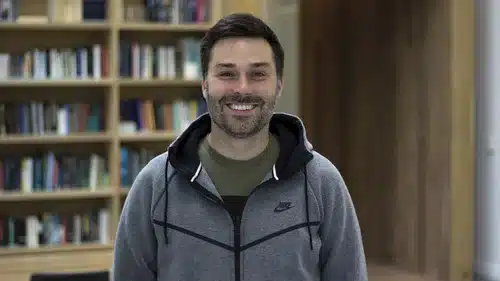
Today’s guest is a friend of the podcast, someone we look up to and respect, but someone we’re also happy to call a friend. Daryl Heald is the Founder of Generosity Path. For more than twenty years, Daryl has traveled internationally sharing the message of biblical generosity. 

In his role with Generosity Path he focuses on mission-related activities: strengthening and developing relationships with champions, facilitating Journeys of Generosity (or JOGs) and trainings, as well as encouraging businesspeople to be generous. 

He’s here to share his personal story, to give us a primer on what it means to be generous, and explain why you never meet an unhappy generous person.

All opinions expressed on this podcast, including the team and guests, are solely their opinions. Host and guests may maintain positions in the companies and securities discussed. This podcast is for informational purposes only and should not be relied upon as specific investment advice for any individual or organization.

Episode Transcript

Transcription is done by an AI software. While technology is an incredible tool to automate this process, there will be misspellings and typos that might accompany it. Please keep that in mind as you work through it.

Host: Welcome to the feature of an investor podcast, if you’re a fund manager, investor or financial adviser driven by your faith or want to be driven by your faith, then you’re in the right place. The best way to stay connected in the faith driven investor community is to sign up for our newsletter, Faith Driven Investor ERG. This podcast doesn’t exist without you, our community. One of the things we’ve heard the community asks for is help in finding great deals to invest in. And so we’ve launched Marketplace. It’s a new platform of funds and direct deals, everything from private equity and real estate funds. That’s from philanthropic to market rate deals made in the U.S. in emerging markets. Check it out at faith driven investor ERG for slash marketplace. While you’re there, please send us any thoughts you have about how this podcast might better serve you or any questions you have about being a faith driven investor.

All opinions expressed on this podcast, including your team and guests, are solely their opinions. Host and guests may maintain positions in the companies and securities discussed. This podcast is for informational purposes only and should not be relied upon as specific investment advice for any individual or organization.

Daryl Heald: The big idea here is for us to see it as opportunity, not obligation. Right, so we kind of think that when you say investing, giving generosity, the investing side implies opportunity, right? Because we all like, hey, here’s a great opportunity. It’s right. Everything every deck built on that. Right. Every pitch is built on what’s the opportunity. Right. What’s the potential? What’s the upside? How much am I going to make? What’s the game? Right. Well, if we really understand scripture, which is why I ask you the why question on your giving.

So it’s not about the tactics of giving. It’s about why and why is the answer and why is important because the answers to the why question our beliefs.

Henry Kaestner: Thanks, everybody, for joining us again this week on the Faith Driven Entrepreneur podcast. Our guest today is a friend of the podcast, someone we look up to and respect, but more importantly, someone we’re also happy to call a good friend. Darryl Heald is the founder of Generosity Path. For more than 20 years, Darryl has traveled internationally, sharing the message of biblical generosity in his role with generosity path. He focuses on mission related activities, strengthening and developing relationships with champions, facilitating journeys of generosity or jox and training, as well as encouraging business people to be generous. He’s here today to share his personal story, to give us a primer on what it means to be generous and explain why you never meet an unhappy, generous person. Let’s listen in.

Welcome back to the future of an investor podcast. I’m here with my great friend, business partner, confidante Luke Roush. Luke. Welcome back. Good to be here. Dude, we got a great guest. You know, a lot of times when we have guests on, I do some amount of prep. A lot of times I don’t. But most of the times I do. And I’ll be honest with you, I didn’t do any prep because I knew we had Darryl. And Darryl is one of our best friends in the world, is a guy that if you’ve listen to this podcast or at least a Faith Driven Entrepreneur podcast long enough, you know that there are two major foundational faith moments in my life. At age twenty eight, I came to know Jesus through God, speaking to me through his word in a very patient associate pastor. And then at age 38, I got introduced to this guy named Darryl Heald. And Darryl came to know me and endeavored to understand some of my story. And then he stopped maybe two hours into it and said, hey, I think I’m following this. But why do you give? I talked a little bit about why I was talking a little bit about some of the different ministry things that Kimberly and I were involved in at the time. We were given probably 20 percent of why we thought there’s a special place in heaven for the double tither. You get box seats at Angel games or something like that. There’s something in it for me, undoubtedly. And that simple question from Darryl sent me, Raylan, and sent me back to Scripture and allowed me to just have a completely different and renewed relationship with God. And I’m forever grateful to Darryl for that. I wanted to get involved in the ministries that he was running. He’s a co-founder of Generous Giving, founder of Generosity Path, and he loves bringing the biblical message of generosity to people as they come to know God more fully. And it’s a great message. And I love our friendship and our partnership in ministry and so many other things. He formative in the starting of sovereigns, capital and his journey with us through every step of the way. And it is an embarrassment and an oversight that we have not had him on the program, any of our programs. So I’m really grateful. Thank you for join us. Maybe we’ll start off by talking about a ministry that is really important to you at this time of year that has nothing to do with generosity or actually it has everything to do with generosity, smoking for Jesus. What is it?

Daryl Heald: I don’t get some smoking for Jesus. All right. We’re diving right in. This is one of my favorite topics. Well, I’m a Texan and I think it’s just in our blood to smoke meat. And I tell you, it was I mean, just one of these amazing gifts twelve years ago that God gave me a friend here in town, man named Big Kenneth Johnson, who also loves to smoke, mate. He’s a Tennessee. And and, you know, through God’s providence, he brought us together. And we are at lunch one day. And I said, you know, Kenneth, what’s your dream? And he said, you know, there’s a lot of people hurting out there.

And, you know, I like to help him.

And his brother’s a great preacher and things like that because I’m not a preacher. He’s I just like smoked meat. And I said, I think we got something like we got something there. And so we started smoking for Jesus and we just started would take our smokers and we’d go into some of the housing projects and. We said our smokers just brought the aroma of Christ, and if you want to draw a crowd said, you know, you got three components that will always draw a crowd smoke, fire and meat, and you will draw a crowd. And sure enough, he did. And he was the oldest of 13 kids, no father. He grew up in these different housing projects back in the civil rights era and 10 years older, me, one of my mentors and best friends, he went to be with the Lord last year. A huge loss for me there. But we continue the ministry. We just smoke. Two hundred and forty turkeys for Thanksgiving takes us about forty two hours of continuous smoking. We’re hoping to do three hundred at Christmas and it was very interesting. We took Kenneth, we just had a notebook and his distribution system is he would call up different people he knew. That worked with refugees or worked with widows or worked with homeless people, teachers at school that knew kids that were in trouble and needed help, it was just a hand ledger. And so for 12 years, we have his notes from these hand ledgers, and that’s what we went off of this year. His wife, Connie, just worked off that ledger and called all the people and said how many turkeys you need? And they would say, well, I need five. I need eight, I need six. And we welcome and that’s our gift to the community and we feed. Well, covid has been a terrible year for us. Last year we had twenty seven events and fed well over ten thousand people a year. And yeah, just a simple history of loving people this way and being able to do it with our past and we just stay up all night smoking butts.

And what meat would you say most resembles the aroma of Christ?

Well, so we always have this, you know, people that know barbecue, which I just said, I’m a Texan. He’s a Tennessean. The big rivals here are brisket versus pork butt and pulled pork versus the brisket. So I’m a beef guy. And so, you know, we didn’t argue too often, but basically I did the beef and he did the pork and it was a good teamwork.

Luke Roush: That’s awesome. Body of Christ in action.

Henry Kaestner: That’s right. So we started talking at the outset about the impact you’ve had in my life and in others lives. And it comes down to this concept that I think is really important for the faith driven investor. And on one hand, somebody might say, what is investing have to do with generosity and at one glance kind of their distant cousins? Yes, they have to do with money. And yes, there’s faith in there somewhere. But I think that we’re coming to understand with time that it’s all kind of lumped up into the same concept. And I’m hoping that you might be able to help us unpack that a little bit and refine it a little bit, because my sense is that it’s a similar DNA and similar heart posture that allows for somebody to be a good faith driven investor as well as a generous person. And maybe you can help us sort through that. What’s a heart posture? What’s a mindset? Somebody is listening as podcast and saying, what does it mean to be a feature investor? Where do I start? How would you help them with that?

Daryl Heald: Yeah, well, I don’t think they’re distant cousins at all. I think they’re the same. But I think the big idea here is for us to see it as opportunity, not obligation. So we kind of think that when you say investing, giving generosity, the investing side implies opportunity, right? Because we all like, hey, here’s a great opportunity and. Right everything. Every decs built on that. Right. Every pitch is built on what’s the opportunity. Right. What’s the potential? What’s the upside? How much am I going to make? What’s the game? Right. Well, if we really understand scripture, which is why I ask you the why question on your giving.

So it’s not about the tactics of giving. It’s about why and why is it answering? Why is important?

Because the answers to the why question our belief. And so none of us act on unbelief. We only act on belief. But here’s where I want to make the connection is it is all about the investment because it’s all about our stewardship. One hundred percent. Right. So we have a hundred percent that whatever God has entrusted to us as a steward. But the big idea is not like, well, now you’re obligated as a steward to do well and you better do good. Otherwise, I’m going to you know, I’m going to get you know, it’s really about the opportunity I’m giving you to be the steward. And so it’s about allocation. Right. And so it’s all about to me, investment is the same. Meaning whether you’re investing in a for profit or you’re investing in a ministry in the kingdom, right. Because to me it’s all about queendom investment. And so then it’s allocation into different types of asset classes on this, and that’s where I think we hurt ourselves when we bifurcate it, because then we think differently. We allocate differently. If I’m saying, oh, this is a for profit investment and this is my type of return, and then I have this conversation, oh, this is now a different conversation. If it’s to a ministry and this is right pocket, left pocket, never the twain shall meet.

Henry Kaestner: And just the whole process is different when you’re suggesting that it’s not it’s the same type of fundamental process to endeavor to understand how do I steward and how do I lean into this opera? And I think you mentioned something really important there is that I think the two oftentimes people think, well, it’s an obligation. And I think that there is an element of us being held accountable. But that’s not the way God designed a guy designed us, gave us an opportunity to participate in the work that he is doing in his kingdom. And we can participate alongside. And you’re suggesting there’s that type of mindset that can guide both our giving and our investing?

Daryl Heald: That’s right. Well, I think we have one hundred dollars and how we choose to allocate that in a stewardship side. Because here’s the fun thing is a lot of the different entrepreneurs that we see here in the US that are faith driven, we see globally that are faith driven, the lines have begun to blur, actually, even between what is traditional ministry, what is a traditional investment, you know, from a philosophical side or learned a lot from a friend that works at the Omidyar Network, Randy Newcome, and he told me how the Amedi are set up their investment. They said, look, this is not, you know, so typically you go looking for money from the Omidyar’s and you say, well, if you’re a for profit, you go talk to these people. You’re not for profit. You go talk with these people. What beer are figured out is Nagas know, I want great people with great ideas and in the continuum of capital, I’ll figure out what type of capital I need to allocate to it. But I see it all the same. And I think that’s where we’ve kind of traditionally bifurcated this. I think this is all about Kingdome investment here, regardless of whether it’s a not for profit or for profit entity.

Luke Roush: So as as you think about some things that are maybe better capitalized with for profit dollars and other things that are better capitalized, and what’s your methodology? Darrel’s you think about kind of what goes into what bucket, because the concern might be that you got something that really should be for profit, but somebody just wants a better valuation. So they end up kind of cassin is kind of a non profit deal or vice versa. How do you think about that just in your own practice?

Daryl Heald: Well, I think there can be. This was the interesting thing that I actually learned again from the middle class is there’s this continuum of capital. So you can take a great person with a great idea that in some ways sometimes has started maybe as not for profit, maybe in the in some of the early, early stages. It might have done that. There are actually a number of what I’m beginning to see are actually either for profits or not for profits, attaching the complementary organizational structure to it. Like, for example, news story has started a venture capital fund, which is a not for profit, but they’ve created a for profit venture capital fund to fund innovation in the building space, because if their big idea on the nonprofit side is to solve the homeless issue, provide great housing to people globally, they realize that in some ways you almost can’t get to it in the traditional nonprofit way. And this is where my experience, too, is the difference between, like you have again, this bifurcation. You have two pocket books of what I have to give to a ministry and what I have to invest in a great deal. Well, what I’ve seen is it’s typically a huge multiple of what someone’s willing to invest in a great deal versus what they’re willing to give.

Henry Kaestner: Yeah, well, you know, there’s something there that I think is really powerful and I want to make sure that we don’t pass over it too quickly because otherwise we might go onto a different subject. You’re suggesting that there’s a big difference between a bottom up approach, which is the way that most crossfires think about versus a top down approach. So here, what a bottom up approach means. OK, I have a certain amount of money that I’m going to give this year and have a certain amount of money I’m going to invest this year. OK, how am I going to invest it?

Where am I going to get the return? And then you’re saying, no, no, no, no. Top down. What are the causes? What are the things you care about? What are the problems you’re trying to solve? Start there, go to people, find out what’s the best way, what are the best ideas that are out there. And if you do that, you start based on where God is calling you, whether it’s justice related or whatever it is, maybe it’s housing related, whatever this space is, if you’re looking for the best ideas, if you get ten of them, you can come back and there are going to be. Investment ideas, and they’re going to be giving opportunities. That’s right. Let’s start off with the cause and the passion you have first, and that’s the top down approach.

Daryl Heald: I like that as well said. Yeah, it is.

Luke Roush: Whatever. So, Daryl, just to kind of ask a follow up to something that we let off with, in your experience, what’s kind of the number one thing that keeps people from being generous?

Well, I think it’s fear. I mean, there’s a number of different other issues, but I would say at the base, a lot of it, it’s fear and it’s almost like fear of the unknown.

Henry Kaestner: Maybe you could share some stories about some of the people that you’ve worked with that have given too much money away and are now living despondent and homeless. Paint the worst picture for us. How many times have you seen that happen where people say cash gave away too much money three years ago? I really regret that.

Daryl Heald: Yeah, well, I do remember actually being in Northern California, guys. I do remember being there in Silicon Valley in the late 90s. And for those, they’re all still old enough to remember that time. I mean, everything was just going crazy up, up and up. And I remember I met with a venture capitalist, a young venture capitalist, and, of course, everything he’d been given, which is multiplying like crazy. But I had been in this conversation with him about his giving. And so I said, well, OK, great. So you’re making all this money, has your giving. And he goes, have you not heard me? He goes, I chilliness, I’m killing. I’m making 70, 80, 90 percent on my money. Why would I give it right now? Why would I give it right now in an badami in these early days, I was like, well, OK, but I said, here’s the risk you run right, is what we think is one since the great temporal investment. Right. And he was making a good point. Hey, how much do I let this kind of run before I do give it? And I said. You know, that’s legitimate, right? So I get a bigger number to give later, and I said, yeah, the only risk I see in this is that we are at once competing against maybe what a kingdom return is, which we know from a biblical size thirty six to one hundred forty three thousand six thousand ten thousand percent. So when he was, I think, very confident about what he had, but I do remember a follow up conversation. And as you all remember what happened in two thousand. Right. The incredible intimately crash. And it was a very interesting, sobering conversation. But to his credit, he’s like, all right, I get it.

I get it. Now, he said, look, maybe I was riding this a little too strong. And he said, I do regret not giving.

Henry Kaestner: No, because is interesting, you said the thirty six hundred fold and that is that OK, so you are so confident in your ability to make money that, by the way, that’s probably the first sign that the wheels are about to fall off in the market or whatever you get going on, number one. But number two is that that presumes that the rate of return that you have in human or earthly terms is greater than the spiritual return of what that money or that investment might mean in something that’s more attributed to the kingdom of God. So if it’s at school that you’re investing, that you might otherwise give a donation to in Ghana. Were that a new class of high school seniors might come to know that there’s a God who loves them and transforms the trajectory of their life, they’re just different types of spiritual returns. And you miss out and it’s what you’re doing is you’re missing out. And it’s not the obedience, it’s the opportunity. Yeah. You think that the opportunity of making the money in the market is greater than the opportunity of participating in what God is doing the world? Now, let’s come into a related and very important topic, which is, does investing with a kingdom mindset necessarily mean that we need to get ready for just mediocre returns and we’re just cash? We need to just prepare ourselves for single digit returns, lots of losses. What does it look like to have a when you go ahead and you talk to the and they find the problem that they want to solve or they see the opportunity in a particular region in the world, how do they invest that with excellence? What does that look like? And can it include the spectrum from philanthropy all the way to market returns or market returns? There’s just no place for that, because if you’re doing market returns, that means you’re exploiting something and that necessarily is bad.

Daryl Heald: Now, I think it’s part of what we’ve been discussing here is I think we have to broaden our spectrum here and realize in one sense, what are we trying to accomplish? What are we trying to solve and creatively figure out how that’s going to be done. And that’s that’s in all the different ways. Right? We’re looking for great people with great ideas. And then irregardless, however, they’re incorporated in what they’re doing and how we allocate those, whether it’s philanthropic capital or investment capital.

Henry Kaestner: Well, you’ve been involved in deals like Grab and CloudFactory and in others where you’ve seen where somebody comes out and says, I’ve got a mission. I want to be able to bring safety and transparency to a vulnerable population in Southeast Asia. Know, Anthony Tan starts off his business not as a business. It was a ministry. It’s going to be five Wannsee three. It just so happened that the easiest the best way for him to accomplish his mission after some counsel from some others ended up being a business. And it’s a business worth 14 billion dollars plus. Right. And so when you look to solve a problem with excellence, that doesn’t necessarily mean that you’re not going to be able to deliver financial returns to. I think about Ashoka’s Kandarian wanted to be able to love on single moms that were trying to get their cars serviced and being able to provide software to auto shop owners. And he just took in a fifty million dollar investment from Bessemer. Right. Then maybe that’s a sign for us, too. So coming back to what you’re saying before, start off with the idea and then be open to work out what leads you. Then you talk to these entrepreneurs that say, here’s the problem I’m trying to solve, then you can come alongside them and in the marketplace you can actually get good financial returns.

Daryl Heald: Right? Absolutely.

Luke Roush: How do you think about so if what you’re really looking for, Daryl, is people who have passion, incompetency about tackling something, then you’ll figure out kind of how do you blend the right mix of at market capital and concessionary and or grant capital? But part of what we’ve seen make really good relationships is where when we as an investor fall in love with the entrepreneurs idea of where they want to go. Let’s make sure we don’t fall in love with our idea. Make sure we fall in love with their idea within the context of an investor really sensing a call from the Lord about where they might be called to engage or how they might begin the process of engaging in things that the Lords put on their heart. And they go out and kind of find the right people who are also called in that direction. Any tips maybe from when you talk to first time to Henry or others about kind of discovering their passion for why they give? I know there are some specific kind of missional focal points that came out of that discussion between you and Henry, you know, 20 years ago or whatever it was. Any kind of tips for how we might individually discover that with a Lord? You mean what a particular focus or passion would be? Yeah, because, you know, you can go everywhere, right? There’s a million different there going on in the world, the thousands of deals. How do you decide kind of how does someone individually discern where they might go?

Daryl Heald: Yeah, that’s good. Well, maybe one of the simple things that I’ve always used to help me discern. God, what are you asking me to do? And John Scott talks about discerning the will of God in a calling, has two components to it. One is a push and the other one’s a pull. And so he’s saying you need to be aware of contextually aware that if God is pulling you into particular conversations, you’re meeting these people and then all of a sudden some of the dots are connecting. Be aware of that. Right, because none of these things are by accident. Right.

It’s not randomness and it’s not by accident, but it’s is God’s sovereignty operating to either push you out of a place of comfort and pulling you into this new place and then obviously with prayer and then with the word of God and then the Council of Peers and some friends that can help you discern that, too. But I think to me, one of the things that’s been helpful has been those two components, like internally just being aware. Well, you know, I’m getting this pull and I’m seeing not by accident that this person’s about this this person is about that. It seems like we’re all having the same conversation. Then I should be really aware of that. That’s good. So, Henry, at the beginning of the program, you were saying that you have this transformational experience. When I ask you the question, can you elaborate on that a little more?

Henry Kaestner: So today came to faith and I knew that there’s a God who loved me and that changed everything, but when I started thing, when I thought about money, money from me was something that was a requirement of me. OK, so God has blessed my business should probably be more generous because there are other people who are not as successful in business and they need finances to run the orphanage or whatever the case is and so can win. I should give more money away and maybe the tide is the right level for us. And then we started getting more generous. We saw some more needs and we thought, gosh, you know, God bless us a lot. We probably should give more. It was a responsibility and an obligation and it was a way of us giving back. If you had asked me at the time what you did, why do you give? I may have even said I want to pay it forward or something like that. Would transform for me, and I think that it does have everything to do with the way that I think about things as the fate of an investor now is that my motivation for giving became one of a sense of gratitude. So when you ask me that question, it wasn’t like this all sudden, this light bulb and everything, just like, oh, my goodness, that changes everything. It was over the next six months, every passage in Scripture having something to do about money. It was amazing. It’s unbelievable. And listen to this podcast probably can identify with some of that and those passages like God taking five loaves in two fish and feeding five thousand. What does that have to do with money? Well, it had to do with the fact that up until that point in time, I thought that God actually needed me to underwrite the five loaves and two fish. Wait a second. He can take something out of nothing. He doesn’t need my lousy money. He just wants me. And then it would be messages just simply about just the gospel and the fact that I came to realize that, you know, why I might give is out of gratitude, not an obligation. And, you know, it took me from this life where faith was important, the real ramifications to just being alive and having a sense of joy. And I get a sense of gratitude. But, you know, with time and over the course, the last 10 or 15 years, especially as I’ve looked to invest more and more, it’s really motivated by the sense that you mentioned before, which is opportunity. And it’s it’s a special privilege. It’s a special, amazing thing to participate in the work that God is doing in the world, not because he needs my capital, but he invites me in. And it’s an opportunity to commune with the living guy doing some things that are really, really important. I love the stories of the entrepreneurs we get a chance to invest in, and I love the stories of the funds we get a chance to participate in. It gives me great joy. You know, I’m an investor. Luke and I are both investors. We invest in pattern recognition. OK, so there’s a good amount of selfless ambition that drives me now with how I think about generosity and more specifically, faith driven investments when I invest in something has some level of spiritual integration in it, and even better yet, a gospel proclamation element of it, particularly overseas. When I do that, I feel joy. You know what I’m all about getting more joy in my life. And I find that when I’m in line with God’s plan for my life and so I want more of it, I get more joy from participating in some of these funds, particularly some of the ones that are emerging now in frontier markets that have got spiritual migration and really making a difference overseas. I just get 20 times more joy than I do for my Vanguard index fund. And so, again, I invest in pattern recognition. I’m going to do more of that. And it’s just that’s the difference. It’s the first way is out of an obligation and now it’s an opportunity.

Daryl Heald: I love it. I love it. Yeah, it is is. I mean, joy. Yeah. We’ll keep moving into joy. Right. Everyone wants a little bit more of that. See, that’s some of the fruit.

You know what I think sometimes to how we kind of misunderstand giving because we think what we’ve given is gone and like there’s no inurement in actually the way God has his designed it is that there’s actually there is some future sense of however he’s doing the math of laying up treasure in heaven. Right. For Matthew six. But there’s actually a Daubert, you know, force here even presently to even described. This is part of, you know, this gratitude and this joy. Right. But so there are some other things that when you look at the grace of giving and we look at the and what’s doctrinally what that means, some of the other things that are new to us when we’re willing to invest in the things that are unseen, which are eternal, when we’re investing in the kingdom, then, you know, things like favor, things like rest, things like lack of fear, lack of anxiety, grace, you know, reward worship, all these things.

These are like true promises in scripture. And that’s why he said, you know, move into this. That’s why he says it is more blessed to give than receive. That was awesome, dude.

Luke Roush: That was very good. Very good. That was brilliant. That was really awesome. I want to ask a question, Dara. So one of the first times you and I really actually spent some time together was when you brought the journey of generosity to Indonesia. And I had a chance just to kind of see a number of people that I knew well really transformed through that experience. And then, of course, you know, the journey of generosity is really taken off since then in Indonesia and in the region. I’d love just for listeners to be able to hear and get a sense of the scale of how God has worked through those events to be able to just convict people on their hearts, what generosity means to them, and kind of a reframing as you’ve done with us. So, you know, how far is gone, how many people have been touched. So you’ve got to be an encouragement.

Daryl Heald: Yeah, thanks. I still remember that that was the first one we had done in that country. And as you know, because you lived there, the Indonesians are fun, man. They love to talk you. So when you’re facilitating this, I mean, sometimes you’re wondering, OK, or people are going to talk, are they going to share and so on. I mean, every time we threw a question out there, every. And around the table wanted to share, everyone wanted to talk, but the scope of the movement now, so we started generous giving in 2000, the global work started in 2012, and we’re in seventy four countries in thirty two languages now. So it’s just a testimony of God’s word. This is God’s message and his movement is how we’ve always seen it and what I’ve always stated and what he intends for his church. Right. Because here’s the other big idea of, you know, a lot of times, too, we have talked about bifurcation. Sometimes that investment and, you know, the difference between for profit, not for profit investing versus giving. And we also think between the West and the east and, you know, the developed countries and the developing countries. Right. And socioeconomic status and so on. But ultimately, we all have been created and designed to be givers and receivers. And one of the most exciting things that we’ve seen in this movement globally has been generosity, stories that I could share with you from Venezuela and Zimbabwe and Romania and India and Nepal and places that we would normally think, OK, wait a minute. Like I just got a letter the other day from a guy from Sudan and he’s been taking the journey of generosity to Syria and Yemen and in Iraq. And I was like, OK, those I never thought we would have, you know, the generosity movement, OK, might go, you know how many countries you like. I just unfortunately, I typically was thinking we go to the more Western wealthier countries. And I mean, my mind has just been blown the last several years, just seen how guys like my messages for everybody. And this particular the generosity message is not about, you know, socioeconomic status for everyone because we’re all givers and receivers. If we understand this, then we all, again, have the opportunity to not only be givers. And so we shouldn’t have these kind of hardening of the categories between people that are you know, they live in this country and they have this type of GDP or something like that. Certainly they receivers and I just been blown away with that. That’s the fun part. That’s the fun part. Again, it just kind of flips the whole deal on its head.

Luke Roush: Yeah, well, you know, something that clicked for me is that we might have something to learn actually from the marketers of the world. The marketers of the world aren’t focused on old rich people and younger people who are potential customers for the next 30 or 40 years. And maybe there’s something to be learned from that. As you think about let’s really invest in the next generation and said demographics are destiny. And there’s some truth in that. In a country, like you said, you know, if you can really see something with younger women in a country that’s as young as Indonesia is, is just one example. The legacy of that is multi multigenerational and it’s not counting down in terms of population, the way Western Europe or Japan or maybe even the US would be net of immigration.

Luke Roush: That’s awesome. Thank you for. Yeah. Yeah. Like 60 percent of India’s under the age of 35.

Henry Kaestner: Now they’re going to be more entrants into the job market in Africa over the next 20 years than India and China combined. So there’s something really promising about this next generation. I love the way that you’re investing in them. So tell us if you’re trying to figure some more of this out, what are some ways for people to get plugged in to this generous journey?

Daryl Heald: Yeah, thanks. Well, you know, we’ve had to pivot this year and develop all of our experiences online, so typically when we you know, I’ve mentioned the word journey of generosity that we commonly referred to as a jog. And we’ve also developed the giving plain retreat coming out of the journey, transformational experience to be able to apply it. So we’ve developed those online and we’ll be happy to to help guide through one.

Henry Kaestner: They’re really, really good. I did want the fact that you’re now doing them online aloud, Kimberly, I because we get kids at home. Otherwise, typically a journey of generosity happens at a really nice hotel. Somebody pays for it. This is always a very safe thing. Nobody ever asked for any money. And it’s really usually at a really nice hotel. But Kimberly’s never been able to go to one before. And so this actual format allowed us to do it as a couple. And it was really awesome. And I’d say it was every bit as powerful as the in-person version.

Daryl Heald: Great. Well, that’s exciting to hear. We are going again. Holy Spirit does the transformational work. But, you know, you can go to the Generosity Path ERG website and you can contact us and we can help you get into a journey, generosity, experience. So we love to do that for you.

Henry Kaestner: Excellent. We close every one of our episodes off, as you may know, by asking our guests something that they’re hearing from God through their time in his word. And it could be this morning, this week, this month. But what’s something that you feel that God is speaking to you about right now?

Daryl Heald: Well, I mean, one of the unique things is, you know, you and I do a reading group together. And so we’re in the New Testament.

We’re actually in second Timothy right now. Second Timothy, one second, Timothy to both. Paul speaks about sharing in the suffering for the sake of the gospel and for the sake of the ELAC. And he speaks in suffering a lot. But that’s just jumped out to me again, is to in a convecting way. I love buying into, again, all the things that seem good. Am I also willing to buy in and take a share of the suffering? You know, this is really convecting for me, you know, and as I’ve had opportunities to interface with a lot of our Christian family around the world, I mean, there’s there’s a lot of suffering and I see them sharing in that. Well, I’m just personally convicted in my own heart that I need to have more faith and be willing to share in that. The second thing is, is I’ve been convicted on my motives in whatever I’m doing. I guess back in Thessalonians talks about, you know, did you nothing out of selfish ambition or conceit. Mm hmm. And so I’ve found myself now using that as almost like a daily mantra. OK, what what is asking myself, why am I doing this? What’s my motive here now? Is their pride? Is there you know, is I after something that is just temporal? Right. I need to use that as a check and my spirit.

Henry Kaestner: Sorry, sister versus so obviously both of those are great. I will mention that people that might start off in second. Timothy, go back one chapter before the first Timothy six, which is probably my favorite chapter on giving in the Bible. Second Corinthians eight nine are awesome. But first Timothy six. But I’ll tell you, starting to go back through Proverbs with my boys. I’ve got three teenage boys and Proverbs 16, two and twenty one to speak to exactly what you talking about with this Linton’s. And it’s almost haunting to me. It’s all the man’s ways impure to him, but his motives are weighed by the Lord. So gosh, even if I’m conscious of vain conceit and try to steer clear of that and I think that my motives are pure, God really understands how sinful I am, deeper, and it just needs its convicting. And and yet, in a strange way, it’s also encouraging that there’s a God who knows me that well, who must also love me that much.

And that’s a great encouragement for. Thank you, guys.

Daryl Heald: Thanks for having me. I was a real pleasure.

Love, love, love all y’all. Thank you. Thank you so much for joining us on today’s show. We’re very, very grateful for the opportunity to serve the larger faith driven investor community. Hey, the best way for you to stay connected is to sign up for our monthly newsletter at faith driven investor Doug. And while you’re there, we, of course, want to hear from you. We derive great joy from interacting with many of you. And it’s been very rewarding to see people join the discussion now from all around the world. But it’s also very important to us that you feel like this is your show and that you’ll help make it something that best equips you on your journey, one that you’re proud of and one that you’ll share with others.

Host: This podcast, it wouldn’t be possible without the help from many of our friends. Executive producer Justin Forman, program director Johnny Will’s music by Carl Chigwell. You can see and hear more of his work at summer drag’s dotcom and audio and editing by Richard Bahle of Cornerstone Church in San Francisco.

Subscribe to the newsletter

Stay Connected to the Movement

We know that as an Entrepreneur, your most valuable asset is time. So each month we take the very best of the podcast, the blog and all the news, resources, and upcoming events happening across the space and bring it to you.

Episode 046 – What Does the Bible Say About Investing? with Chip Ingram

Episode 046 – What Does the Bible Say About Investing? with Chip Ingram

Podcast episode

Episode 046 – What Does the Bible Say About Investing? with Chip Ingram

Last year’s conference was easily one of the highlights of our year. If you joined us, we’re so glad you did. If you didn’t, we’re glad you’ve tuned into this episode.

At the conference, Chip Ingram opened up with a talk about how Scripture can and should inform our investing strategy. It was so good, we couldn’t help but share it with you here. Go ahead and press play and enjoy all Chip has to say!

All opinions expressed on this podcast, including the team and guests, are solely their opinions. Host and guests may maintain positions in the companies and securities discussed. This podcast is for informational purposes only and should not be relied upon as specific investment advice for any individual or organization.

Episode Transcript

Transcription is done by an AI software. While technology is an incredible tool to automate this process, there will be misspellings and typos that might accompany it. Please keep that in mind as you work through it.

Host: Welcome to the feature of an investor podcast, if you’re a fund manager, investor or financial advisor driven by your faith or want to be driven by your faith, then you’re in the right place. The best way to stay connected in the faith driven investor community is to sign up for our newsletter, Faith Driven Investor ERG. This podcast doesn’t exist without you, our community. One of the things we’ve heard the community asks for is help in finding great deals to invest in. And so we’ve launched Marketplace. It’s a new platform of funds and direct deals, everything from private equity and real estate funds. That’s from philanthropic to market rate deals made in the U.S. in emerging markets. Check it out at faith driven investor ERG Ford slash marketplace. While you’re there, please send us any thoughts you have about how this podcast might better serve you or any questions you have about being a faith driven investor.

All opinions expressed on this podcast, including your team and guests, are solely their opinions. Host and guest may maintain positions in the companies and securities discussed. This podcast is for informational purposes only and should not be relied upon as specific investment advice for any individual or organization.

Henry Kaestner: Welcome back everyone, to the Faith Driven Investor podcast. While Chip Ingram, CEO and teaching pastor, was Living on the Edge, Ministries has been a two time guest on the FDE podcast, this is the first time we’ve had him speak to faith driven investors. Today, you’ll get to hear his talk from the faith driven investor conference. In it, he shares what the Bible has to say about investing as he challenges the bifurcation between giving to Kingdome causes and investing in faith driven ventures. Hear him ask How might God use you to make a new paradigm so that you build businesses? You realize that this is an opportunity to also give generously and invest in Kingdome impact. Let’s listen in.

Chip Ingram: I’m not really an investor, been a pastor for the last 30 years. And, you know, I’ve written a few books and invested a little bit here and there. But I’m here, first of all, to welcome you and kind of kick this thing off. And second, to commend you. You know, there’s a lot of investors that invest well and then they take their profits and are very generous for Kingdome impact. But there’s not many investors who really get that. What you actually build in terms of the marketplace, what you invest in and how you develop that can have as much Kingdome impact as even your philanthropy or your generous giving. And so what I want to do is three things. I want to give you a little biblical precedent for what we’re going to do. I want to challenge that whole bifurcation that, you know, when we give money to Kingdome causes, to church and to projects, that’s the work of God. And over here, it’s you know, we do a marketplace ministry to make money. I’m going to really challenge you to rethink that. And then third, I have a story. I’m not much of an investor, but recently I got to make an investment and everything that you’re going to talk about. I think my story might be a parable for the entire conference. So biblical precedent, a very familiar passage. But I’m going to look at it a little bit differently. Follow along, Matthew. Chapter twenty five. This is the third parable about being ready for the Lord’s return. Verse 14. It says, Ford is just like the man about to go on a journey Jesus is speaking who called his own slaves and entrusted them with his possessions to one. He gave five talents to another two and another one each. According to his ability, the one who received the five talents, put his talents to work, traded them, worked in business and got five more talents in the same way. The one with two talents put his to work and gain two more talents. But the one who received the one talent dug a hole, put his money in the ground for his master’s money. Now, after a long time, the master came back to these slaves and he business term settled the accounts. When the one had come and received the talents, he said, I have five counts, master. I’ve invested them and I have five more. And notice, he says, the master says, Well done, thou good and faithful servant. Very interesting. I want you to catch this. I will put you in charge of many things and enter the joy of your master. Most of you know the story. The two talents received the same commendation and the one with one talent is sharply criticized and his one talent is given to the other because he’s irresponsible with it. Now, I don’t want to teach this whole passage, but there’s a handful of observations in this passage that I think are of biblical precedent for Faith driven entrepreneurs. First of all, a talent here wasn’t coinage. It was a literally like a block of metal with value and. Probably the best way to get it is talentless, usually about 6000 denarii, and that would be are you ready? The one talent person basically got what it would a daily wage for 20 years. Sometimes I’ve heard this Totò and people think, oh, I only have one talent. Now think about not having to work for 20 years. That’s a lot of money. The two talent would be someone who said, how much do you make in 40 years. There you go. Here’s a block of money. I want you to invest it. And the five talent son was given literally enough money that if he worked every day, he wouldn’t have to work for one hundred years. Here’s my point. They all have very significant amount of money. Second, it’s each according to his ability. You know, it’s not egalitarian. God intrust different things to different people, according to their ability. And then he evaluates and rewards them. Not based on how much, but what did they do with what he gave them. Third, there’s a dual role in the ancient Near East. During this time, when Jesus is talking, a slave would almost become like a partner. Yes, he’s a slave. Yes, technically he was owned, but there would be a very familiar relationship. And so as he goes off, he has two roles. One, he’s a steward. This is your money master. But you’ve entrusted all this to me. Second, though, he’s an investor. And don’t think when he says he invested the five talents, don’t think like he he put it in a 401k or he put it in some financial institution because of the way this is written and the time and the group. In other words, he created a business. He had to invest in a business. So he had the dual role of steward and investor for the observation is notice the reward. His reward isn’t, wow, you had five talents. Here’s five more. Here’s more money. He says, I’ll put you in charge of many things. In other words, you know, when you’ve built a business, when you invest and when it grows, the reward is the impact, the platform, the extent. And what he’s saying to them is your trustworthiness has allowed me to give you an extended impact. And, you know, if you when you invest just like all of us and whatever we do, when you’re made for it, when you think you pray, you invest in this person, you help them along the way. You give insight here. When it grows, there’s great reward. But then notice, not only is there a horizontal thing that happens in terms of extent of impact, more responsibility, but there’s a vertical one now enter into the joy of your master. What I want you to get here is that investing, building a business, taking money that God has given to you and creating it in businesses with people that can really make a difference, that provide goods and services, that create jobs that make an impact on employees lives that are goods and services that that blessed the common good of other people. That’s very significant impact. By contrast, I’m a pastor, and so my only investments are, you know, most workers are like me and say you have A 403 B, right. And so I’ve put a little money out of my paycheck for 30 some years. And, you know, it’s a fidelity or a principle or this or that. And they send me a bunch of papers. And yes, by now I do have a financial planner. And I by the way, we need you to go into your website in Large-Cap SmallCap. I have no idea really what I’m doing. And I don’t know whether fidelity or principle or any of those groups, you know, I know that we’re not investing in immoral stuff, but I’ve seen investments in my life just as I need some money for later. I’ve never thought ever in my life, where are you putting that money? And could your money in investments have a kingdom impact rather than just I’ve taken my money and I’ve had a great chance to give an Kingdome causes. So I want you to really think this. How might God use you to change your whole new paradigm so that as you build businesses and as you coach people and as you develop people, you realize this is an opportunity not just to make money, not just make money even to give, but both in. Yes, make money so that you can give generously for Kingdome causes. But what if you invested in things that had Kingdome impact by the virtue of the actual investment? Now, here’s the story I want to tell you. And you know, many of you, obviously, you’ve invested lots of money and millions of dollars and and I’m a pastor. Right. But over the years, I’ve been debt free and and I’ve written a few books and I made some pree decisions about what to do with that money. And probably like many of you, when I was young, I learned to tithe and then I learned to do kind of proportional giving. And in the last maybe eight or 10 years, I’ve had a handful of times where God has allowed me to make a six figure gift and to the church building program missions living on the edge. And it’s been just an amazing joy to see God provide resources I never dreamed I would have and to see it invested in books in China or missions, things. And, you know, it’s been really exciting because I never saw myself ever as a major donor. And yet over the years, I’ve gotten to be a bit of that here and there. Well, about must have been, I don’t know, two, three years ago there was a young man who I really believed in. And it’s a long story, but it was an investment in a group. And my wife and I, as we prayed about it, had it prompting from God. Now, I’ve never invested in a company. I’ve never invested in a startup. And if you knew the whole story, you would know maybe why we were prompted. But I won’t go into that. And so I’ve kind of come to at this stage in my life where, yes, I want to put some money aside. But at the end of the day, it’s numbers on a piece of paper. I don’t want to die with a bunch of numbers on a sheet of paper. And this young investor that I really believed in, I took one hundred thousand dollars out of my savings and he couldn’t go full time on his startup. And that allowed him to go full time on a startup. Now, because he was related to Henry and got coached and mentored by Henry, he was going to be a faith driven right entrepreneur. And so built into his strategy was, we’re going to have ministry, we’re going to have a kingdom impact built into his concepts, for these are our values. Every time he does an off site, he tells the story. This is what God has done. These are what our values. He’s hired both Christians and non Christians. Another part of his story was it has to do with cars and repair and software and stuff that I don’t really understand. But part of it was we want to help people as a part of our you know, we have a dashboard of success and one of our dashboards is maintenance for moms. We want we want to help moms, single moms in desperate situations. And whether that’s repair, well, OK, so he got his first round of funding and that did really well. And and I was glad because there was a big part of me that thought, well, you know, I really believe in that guy. And if I never see that, it’s not like I have a lot of money laying around. But I thought God told me to do it, so I did it. Well, then he got a second round of funding. And it just what you know, like off the charts. Well, here’s what I want you to get. I got to be a part of his first emails. You know, when it’s family and friends, we would meet over coffee and he would talk about, these are my dreams. I got to do a little coaching just just now and then from a distance. Not the business side, but just the heart side. And then little by little by little, I watched him as he just championed his faith every month for, I don’t know, the last six, eight, nine months they have given a car, given a car to a single mom, but not just the car, but with discipleship, with meeting with her friends and family every time it’s actually in this building that I’m in right now. When they do the car, all the employees come out and they gather around and they give the car and then they pray for, well, now he’s got a group of people and one of the Eastern European countries and 15 or 20 or 30 people there. And it was a lady there. That’s a part of that company that had one of the only one or two outreaches of there’s all more abortions happening in that country than anywhere in all of Europe. And so now there’s ministry there. I’ve looked at first it was 30, then 50, then 70. All these people now have jobs. Here’s the virus. All these people, they have jobs, they have a ministry, and then he has these off sites and he keeps championing. This is why this is what God says. And you know what I realize I’m really glad when I’ve been able to give a six figure gift to ministry in China or ministry to help build a building at a church or ministry over in this place or that place.

But when I look at the investment that I made, I’m looking at all these families being changed.

Now, one of his employees lives very near to me, and I’ve seen the evidence in his life. I’m seeing moms get minister, too. I’m seeing international ministry occur. I’m seeing a whole group of people with a testimony to all their clients all across the country. And by the way, when needed, did that second round. I just thought to myself it’d be kind of nice to at least get my money out of it. I’m not sure where it’s going to go. The return on my investment was unbelievable.

Unbelievable.

And what I want you to know is that as you all start this conference, I want you to really be thinking about not just here’s my investments, how do we make money? And to be generous with it, I’m going to challenge you and you’re going to have great speakers to know all about this. I want to challenge you to be that kind of servant who says I’m going to give generously out of my profits, of course, but I want to be a part of marketplace ministries with faith based entrepreneurs that have a kingdom mindset so that the impact in the marketplace is not just money, it’s not just a return on my money, but I mean its lives and it’s transformation. And you invest your money in people. You know, when I read this little parable, I thought to myself, you know, think of the Jewish culture. Do you think the slaves went out and cut a deal with Rome in a business or with some gentiles? What did they do? They met some other Jews, people they trusted. They built a relationship and they built a business. And pretty soon he had one hundred years worth. Right. Big, big money. Now he’s got two hundred years worth of in. All right. And he did that because he built relationship and ministry and investment in people and saw the kingdom impact not just in the profit, but in the actual process.

Host: Thank you so much for joining us on today’s show. We’re very, very grateful for the opportunity to serve the larger faith driven investor community. Hey, the best way for you to stay connected is to sign up for our monthly newsletter at faith driven investor Doug. And while you’re there, we, of course, want to hear from you. We derive great joy from interacting with many of you. And it’s been very rewarding to see people join the discussion now from all around the world. But it’s also very important to us that you feel like this is your show and that you’ll help make it something that best equipped you on your journey, one that you’re proud of and one that you’ll share with others. This podcast, it would be possible without the help from many of our friends. Executive producer Justin Forman, program director Johnny Will’s music by Carl Chigwell. You could see and hear more of his work at summer drag’s dotcom and audio and editing by Richard Burley of Cornerstone Church in San Francisco.

Subscribe to the newsletter

Stay Connected to the Movement

We know that as an Entrepreneur, your most valuable asset is time. So each month we take the very best of the podcast, the blog and all the news, resources, and upcoming events happening across the space and bring it to you.

Episode 055 – The Continent of Potential with Iyinoluwa Aboyeji

Episode 055 – The Continent of Potential with Iyinoluwa Aboyeji

Podcast episode

Episode 055 – The Continent of Potential with Iyinoluwa Aboyeji

Today’s show is a great reminder that Faith Driven Investing is not limited to North America, nor is it limited to any one part of the globe at all! And our guest today is living proof of that. If you’ve been following along with the show, you know that Africa has been a recurring theme, and it is again here today. 

Iyinoluwa Aboyeji (or E, as he goes by) is an entrepreneur from Nigeria who has founded several startups—one of which received funding from Mark Zuckerberg and another which has processed over $1.2billion in transactions—all of which he’s going to tell us about. 

E is also a great example of why investors need to know about what’s going on in the continent of Africa. Listen in to hear him tell you why.

All opinions expressed on this podcast, including the team and guests, are solely their opinions. Host and guests may maintain positions in the companies and securities discussed. This podcast is for informational purposes only and should not be relied upon as specific investment advice for any individual or organization.

Episode Transcript

Transcription is done by an AI software. While technology is an incredible tool to automate this process, there will be misspellings and typos that might accompany it. Please keep that in mind as you work through it.

Henry Kaestner: Welcome back to the Faith Driven Investor podcast. This is a special episode for us. They all are. I know. But this is one where we get to say that Faith Driven Investor and of course, is not a North American thing only. In fact, of course, we think that some of the very best investment opportunities to participate in what God is doing in the world are overseas. And if you’ve been paying attention to this podcast over the course of the last several months, you’ll know that I have a renewed interest in Africa. Sovereign’s Capital has been an investor in Southeast Asia, which is very clearly not Africa, and the United States for a long time. But it was a trip that I made to Africa last summer, first time having been to East Africa in oh gosh, almost 40 years where I came to understand and just really impressed by the amount of economic development and the extent of the Christian community in Nairobi. I had spent quite a bit of time in South Africa over the last, say, 15 or 20 years. But God really pricked my heart, if you will, just led me into really being excited about the continent. And then I read this book called The Prosperity Paradox, written by Clayton Christensen, who wrote The Innovator’s Dilemma. And his last book, right before he passed away was Prosperity Paradox, talking about the investment opportunities in Africa. And I’m looking through and I see that he’s got two coauthors. One is the editor, the Harvard Business Review, and another one is a guy by the name of Efosa Ojomo. And as I’m reading this book on a plane, I’m thinking, oh, my goodness, I wonder if Efosa is a believer, if he’s serious about his faith. And as it turns out, of course he is. And we had him on the podcast several months ago. He was a featured speaker at our Faith Driven Investor conference, and he was kind enough to introduce us to our podcast guests today.

And it is how we know him. He’s got a much longer name that he’ll share with us here in a second. But E Aboyeji has been identified by Efosa as one of the young leaders of tomorrow in Africa. And that’s apropos because Africa is such a young continent with so much potential and really, from a demographic standpoint, has more people that are going to be entering the workforce over the next 20 years than the rest of the world combined. And so it’s really something extraordinary when you consider the fact that India and China are not in Africa and South Africa is a continent that’s on the rise. And as we just as I sit this kind of frame before we welcome to the program, I do think about this great presentation that Finny Kuruvilla gave at the Faith Driven Investor conference. And if you attended the conference, you’ll know what I mean. If not, you’ll see a link to the Finny presentation in upcoming newsletter. And when he talks about Christopher Columbus and he talks about the fact that as he went off and to sail into the new world, he did that with investment from not the Italians and not the French. No, of course, people in Argentina and in Mexico would be speaking Italian. Today, if he had been able to get his financing from Italy, his home country, but instead he got it from Spain and of course, the new world, speak Spanish. And it does make me wonder and hopefully will make us all wonder what might it look like if Faith Driven Investor us are the ones that come behind African entrepreneurs and African investors? What might the continent of Africa look like over the course the next 20 years? If Faith Driven Investor is more specifically, Christian investors are able to come alongside of bring an encouragement to the entrepreneurs and the building out of everything from infrastructure builds all the way through to software as a service and everything in between. So we’re going to look at that and we’re going to talk about the opportunity for that with E! Who is the founder of Future Africa. And welcome to a program on Africa. Thank you very much for being on the show.

E Aboyeji: Thank you so much for having me. It’s such a pleasure.

Henry Kaestner: Well, as I mentioned before, we’ve had some episodes on the show dedicated to Africa and something we’re going to be talking about a lot over the coming months as well. But before we do that, I want to get personal. I promise that you’d say you’re much longer name and pronounce so perfectly, much better than I. But who are you? Where do you come from? What was it like growing up and going to school in Nigeria?

E Aboyeji: That’s awesome. So my full name is actually Iyinoluwa. So it’s like I am, you know, like I am. And it’s not spelled that way. But basically, you know, when I moved to Canada High School my last year of high school and university, my teacher couldn’t pronounce my name. So just started calling me E and that’s been my name ever since. So you can just call me E and save yourself. Well, who am I? I mean, at the end of the day, I consider myself a child of promise. A child of grace, really. My parents were pastors. They were very big in the student movement, used to be called the SU movement scripture union movement back in the 70s and 80s. And so my parents basically were entirely committed to service of God for the longest time. My dad actually currently leads the Foursquare Church in Nigeria. It’s a very popular global church. He leads the one in Nigeria specifically. And basically, I think, you know, one of the stories that my parents taught me was basically, look, what we heard from God when you were born was basically, you know, I will reward your faith when that’s to me by giving you a son who will become a glory for me to the rest of the earth. So, I mean, that’s kind of the prophetic quality that I operated, essentially, which is really about how do you give glory and honor back to God. Right. All the amazing things that he does, just as a matter of course. But by way of profile, I mean, I went to school in Nigeria. I had the pleasure of going to having an incredible education at a Catholic school achievement school, for that matter. And that really, really shaped the kind of person that I am today and what I consider useful for me to do with my time. And then after I graduated from high school and I was going to Anglican primary school, by the way, I went to university in Canada after I finished high school, did a gap year, went to university in Canada, University in Canada, went to a specific Catholic College of the university, even though it’s a public university that’s called St Jerome’s University, so also a faith based university education. And then through that period, I mean, when I graduated, I had started a company. I graduated and immediately sold the company I was working on throughout my university education. I think from about the third year of my university education to the last year. I sold it year after I graduated. And then I moved back home because there was a lot of work that had to be done to rebuild the country and I felt called to do that work. So I went home. Even though most people tend to go the other way, people typically immigrate from Nigeria to Canada, not from Canada to Nigeria. But I went home and then, you know, I built a company that ended up morphing into Idella, which was a home run. And then I built another company called Flutterwave afterwards and then after basically retired from active entrepreneurship to become more of an investor. I thought that’s what I’m focused on today.

Henry Kaestner: Tell us about some of these companies. Most, as I know Flutterwave, of course, Efosa had introduced me to it, but most of our listeners probably aren’t familiar with some of these very successful startups that you’ve been involved with in Africa. Where are these companies? What do they do? What are they selling?

E Aboyeji: Absolutely. So with Andela, which was really the breakout startup I got involved in, what we did was we recognized very quickly that. Africa had a massive, you know, talent pipeline, and like you just said earlier, more than half of the world’s working population is from Africa. It’s going to come from Africa over the next 20 years. And we realized there was no dedicated system for identifying that talent and helping them grow to their full potential. So specifically, if you think about it, in the US, I think schools right. In India, you have I teach in China, you have the major university exam, which kind of distinguishes the most talented from everybody else and that, in fact, the most talented to help them get to wherever they need to be for the betterment of the country in Africa. I mean, you could have a very talented young man or woman hawking oranges in the street, which is just a travesty to, you know, what God has put in that young man or woman and what he expects of that young man or woman over the long term. So what we decided to do was we would identify exceptional young people who were extremely talented. We’ll put them to a very high pressure training program over a period of four years during which after the first two years, they start to work for global technology companies from Nigeria. And then at the end of the four years, they kind of have the freedom to go work with other companies or build businesses or, you know, do whatever they like, really, after the four years is kind of like a pseudo university education, but extremely talented. And that’s what we did. We built that business from 2014. It’s still going strong today. We raised one hundred and eighty million dollars from all sorts of folks from Spark, which backed Twitter, to Mark Zuckerberg putting in some money as well. Al Gore also put his money and the business is very strong. I mean, last year you get about 50 million dollars revenue. We have about two thousand plus engineers on the platform and we serve roughly about two hundred technology companies from across Africa. So it’s now expanded beyond Nigeria, where we started to. It’s in Kenya. It’s in Ghana. It’s in Egypt. It’s in Rwanda. It’s in Uganda. So we’ve now expanded across multiple different African countries to bring things back to Nigeria a little bit.

Henry Kaestner: And I’m going to mention something. We’re going to get out of the way because a number of American investors have been invited to participate in investment opportunities in Nigeria before. This is not the first time they’ve heard of it. And I’m going to presume that these are not ones that you would all endorse. Correct.

E Aboyeji: Which ones?

Henry Kaestner: Well, there are a number of you might know of the emails that will come in saying listen, I’ve got an opportunity for you in Nigeria where some money…

William Norvell: This is Henry asking if you are a Nigerian prince I think.

E Aboyeji: I am not a Nigerian prince. But, yes, I understand what you mean. But, yeah, basically, you know, I mean, the reality of those emails is that the screen and under utilization of talent, because those young people imagine what they could do if they knew there was a better way. You know what I mean? I mean, if they could figure out without infrastructure how to send emails like that that were just stupid. And to be honest, most people don’t even open emails. So it’s actually much harder work than most people give them credit for. Imagine if you could teach them how to do software. You can teach them how to do business or teach them how to be content with that same skill set. I mean, it’s incredible. Yeah, that’s what you see here in Nigeria.

Henry Kaestner: I think by 2050 it’s going to be the sixth largest country in the world. Lagos is going to be a city of 32 million people. And I don’t want to talk about just Africa, although the different investments that you’re involved in are all over the country, as you just talked about. But they help us to understand Nigeria because it’s a misunderstood country, obviously, one that has a whole lot of promise. Make the case for Nigeria, but help us to understand what Nigeria is about.

E Aboyeji: I think, you know, when you look at Nigeria, what you see is. What happens when a human being is actively denied the human dignity that God has given to them? Right. And there is almost like a concerted effort to drown your potential, right. Just keep it under, you know. Let me give you a picture about Nigeria. Nigeria was essentially created as a corporate entity. It’s the first charter city in the world. Right. The Royal Niger Company arrives on the shores of Calabar. Right. And establishes itself and creates a protectorate from which it was supposed to be shipping all power and doing trade, ultimately kind of slavery, perverted that original purpose. And while the British government stopped it, a lot of people conspired to maintain the slave trade for way too long. I think according to some research, over a fifth of all the slaves in the world came from Nigeria. Right now, what has happened over the years is Nigeria has shown itself to be the best of black people and also some of the worst, as you can indicate by the emails that you see. Right. And what’s the differentiating factor? What’s the water column? The moment you get a Nigerian out of these circumstances and you put them in a position where you are valued for who they are as a human being and for the talents that God has given to them, it’s life and death, right? The same group of people who can’t get infrastructure right in Nigeria, the same country produced somebody like Occulus, who’s the general partner of global infrastructure, is one of the largest infrastructure investors in the whole world. He owns Gatwick Airport, owns trains and all that. The same Nigeria that can’t get the right kind of leadership, currently has a candidate in the running for the World Trade Organization and the person Engozi Okonjo-Iweala, right. And did an impressive job out of the other women and other leaders that have done impressive jobs all over the world.

Henry Kaestner: You know, I’ve heard, by the way, that of all the expat groups, the Belgians that have moved to the United States, the Swedes that have moved the United States, the Vietnamese, the Chinese of all the expat groups, the expat group that is doing the best in terms of earnings are the Nigerians.

E Aboyeji: This is very true. Very, very true. And so you can just see that contrast where it’s usually like taking somebody like fish out of water. And look, I wouldn’t believe it, Henry, if I hadn’t seen it myself. So in our program, right, we get this young people and some of them were earning like maybe one hundred dollars, right. Hundred one hundred dollars a quarter. Right. We’re just doing our jobs and all that stuff. In four years, some of them are earning one hundred thousand dollars a year. Right. Many of them have left the country, unfortunately. Right. Because they’re just so wealthy and so well paid that it would be a security risk at the time, at least for them to continue to live in the circumstance. Exactly. But looking for better quality of life or maybe starting a family elsewhere. I mean, perception is reality. I’m here and I think I’m OK, but to each their own, you know what I mean? But that is the case for Nigeria. You know, it is just a country that’s so full of exceptional talent that if you can just create the right kind of environment for that, I can only imagine how the world benefits from the presence of the people.

William Norvell: As you’re telling that story, I can’t help but think of the famous play, Les Miserable and Jean Valjean’s character of, you know, someone who when he was given the opportunity, what he was able to do. Right when the priest gave him a small opportunity, something so small as grace and forgiveness and some seed money. If you look at it from an entrepreneur perspective and what he was able to turn that into in the lives he was able to change, including his own. And that story just rings as you’re talking and so on, that I want to switch back to Andela a little bit. I think I can tell you’re our first guest that’s taken a big round of funding from Mark Zuckerberg that we’ve had. Tell us what that was like. How did you get his attention? How did that come about? What was it like working with him? What lessons did you learn sort of having him involved at that level? Walk us through that a little bit.

E Aboyeji: OK, I wish I had a more interesting story to tell, but for the most part, I mostly dealt with his money manager. And it wasn’t just me, it was kind of me and my team. That said so the story around how we came together was, you know, we wrote an article myself and my co-founder, Jeremy Johnson, whose father, Marty Johnson, is another amazing social entrepreneur based out of Trenton, Near Princeton, New Jersey. We wrote an article about I think the article was, Will the next Mark Zuckerberg come from Africa? And we wrote an article just talking about what I just explained now. There’s so much beyond energy and potential, this continent, but no one’s interested in mining any of it, and the world needs more of these entrepreneurs that are going to change people’s lives and bring people out of poverty and create all this microcredit for the patients. So how do we square this together? Well, we need to create these opportunities for young people so that they don’t all devolve into violence of war and all these other evil. And they see the light that can come as a result of the creative power that got just passed through entrepreneurship. And that article, I think, got to him somehow because within The Wall Street Journal got to him somehow and he reached out to my co-founder and I started a conversation. And after that conversation, those other conversations, I met him once when he came to Nigeria. We showed him around the facilities and we had a town hall with a lot of young Nigerians. We also had a meeting with the president. So we met. But as you can expect, with a lot of this stuff, a whole bunch of our relationships, really to kind of his money management. But that said, you know, his investment really did bring an incredible amount of focus to Nigeria. And over the last you know, it’s been four or five years since he visited. His visit has so transformed the landscape, you know what I mean? In Africa brought so much attention to what people are doing here that, you know, I would give him that credit, could really use him to put Africa on the spot, like, you know what I mean? Because he was a real validation, like if Mark Zuckerberg got on a plane to Nigeria then who the heck are you, you know what I mean? So that was that what it was.

William Norvell: That’s amazing. It’s an amazing story. I love the way you put that of how God uses people to shine lights on places that people aren’t paying attention to. So that’s amazing. And to transition a little bit, it sounds like that’s where you’re heading now in your career. Could you talk a little bit about the lessons you learned at Andela and Flutter Wave as well, but how you’re transitioning those into an investor? Tell us a little bit about the vision for your investment fund and what do you hope to accomplish?

E Aboyeji: Absolutely. So, you know, when I was done with Andela, you know, I had a revelation on my 25th birthday. I was praying. I usually go and pray on my birthday. So I went to a secluded cabin and I was praying and fishing and, you know, literally Mark had just invested. And I heard a voice very clearly, basically your work here is done. And I’m like, wait, calm down, right, like he just invested was about to get really interesting. I can have a nice salary, maybe find a nice girl to marry. Let me just leave with a little bit of stability. It’s like, no, the work is done. I have another assignment for you. And I went back really, really troubled and I wasn’t sure what the assignment was. So I kept praying. And one day, you know, I had a friend who was a client of the company and there were only local client. So we never took local projects because for a whole bunch of reasons, including many times, I couldn’t really afford to pay what foreign clientele will pay. And we really wanted to be able to pay well and give these people the kind of exposure that kept them right. So we didn’t really take local clients out like Nigerian clients, but we took this one. And one day he reached out to me, asked for advice about how to build a company. And I was like, yes, I think about it is what I’ve learned. And he said, look, I’m going to have a meeting in Dubai. I don’t mind paying for your ticket. Why don’t you come with me? And I wasn’t doing much at the time. I was technically already thinking what that message meant, business school. So I was starting to prepare to go out to business school and that just started as the journey with flutter waveh. And it became clear to me what it was, was we had built talent, but we had not built a way for that talent to be able to turn get talent into money, into something that you could actually live on. So what was happening was we would build talent. The talent would leave the country with new talent. The talent will go work for somebody else. But it could have become entrepreneurs because we had to build any platform that allows people who build software to be able to accept payments from all over the world. So that was what led me to flow. It was basically that realization that the job isn’t done. We built the soundboard with the people. Right. And so that was basically how we got into Flutterwave. And I was there for two and a half years. It was very stressful because with flutterwave you were battling the depth of Nigeria’s very corrupt financial system. I mean, the financial system in Nigeria. I don’t mean this. I mean, it’s just what it is. It was it was basically the foundations of the system is on a lot of blood. Like I told you, Nigeria was the original charter city, you know. So I think about all that money compounding over the years, blood, violence, money. It had a spiritual undertone to it. And I had to deal with that system and work through that system as a man of God and honest person every day. And that takes its toll on you. So when I left in twenty eighteen, I was just tired and I was like, I’m done with Nigeria, I’m moving to Fairfield, California, to be right next to Henry. I’m just kidding. So that was really what it was for me. And I was done. I wanted to be with my daughter and my wife and that was it. Right. We just got married. I was happy. But you know, I had I’ve lived in America for a long time. I’ve never had it as hard as I did in America those couple months. I felt like Jonah running away from Nineveh, you know, because I would open bank accounts and they would shut them down. You know, a lot of very weird things just happened. Right. And one day I was praying and I just heard a voice basically say, look, this place where you are is just not where I sent you. Right. Like, you have no ministry here. What are you going to do? Right. What are you going to do? You can’t even find a church close to you. Right. You know, so just go home, go home and do the work. And the specific word was, I will preserve you. There’s a person, Jeremiah where God says you know, I formed you. I created you and I formed you. And I sent you for specific purpose. Right. And I will preserve. And so that was the faith on which I basically decided right before covid broke out to just move back to Nigeria and take on this whole investing thing full time. Now, what are we doing now? What we’re doing is we understand where the country is and where we go. And we understand very much like Efosa probably said on this podcast that we need more micro creative innovation in Africa to be able to drag Nigeria out of the doldrums of government failure and all that stuff and really get it to a solid spot where everybody has access to prosperity and purpose. Right. How do you ensure that all these young people that we just spoke about can live a life of prosperity and purpose? They can make money doing what they love or whatever God has called them. Right. And hopefully they love it.

Henry Kaestner: As you bring this up, this is the book title of what Efosa wrote with Clayton, some number of people have heard about the prosperity gospel has been just a type of theology that. Seems to be most prevalent in Africa, although it’s not just Africa. It happens very much in the United States and it happens everywhere. Yeah, but to us, just a little bit about that, because some people hear, oh, Africa prosperity, you know, walk us through a little bit more about what you mean about prosperity and is there or do you see the prosperity gospel at work in Nigeria and maybe talk about some of how Faith Driven Entrepreneurship might be misunderstood or misapplied?

E Aboyeji: Yeah, I mean, I would say this much, right. Like the whole idea that God exists to meet your needs. And that’s the reason why you should accept to it has an appeal in an environment where a lot of people are poor. And a lot of people are in need and they do need things, you know what I mean? So, sure. You know, if I come to you and tell you when you’re poor and you need things that God is here to provide for your needs. Right. And that’s all you hear, you know that God is bound to grow in leaps and bounds. But, you know, here’s the thing, right? As an entrepreneur in this country, you don’t have the same mechanisms as an entrepreneur in the US, just like every single thing is a struggle of faith and grace. You know, from getting a license to even getting your company incorporated, there’s just so many things that can go wrong. I was trained this morning and I was thinking, God, we just had a little bit of unrest in Lagos and none of our portfolio companies were affected. That’s a fair point. You know what I mean? That you don’t have to worry about that in America because you’ve got insurance. But in my case, insurance by that actually paid, you know what I mean? So you’re essentially working by fiat because you don’t even have the infrastructure that folks on your side do. So I guess, you know, a lot of it is misunderstood because every action is an act of faith when you’re an entrepreneur. That’s right. So you really live and die by. But, you know, sometimes people might look at that and be like, you know, it’s an offering and this and that. But, you know, at the end of the day, the principles of sowing and repeat become even more important. Can I just say this small story for me? It is a testament even for me, right? Because when I moved back, I started this other company and I lost all my money, basically because I didn’t get the right on the treat approvals to do that business, which was basically selling online courses into universities. I didn’t get the approvals, so I lost all my money. I had one hundred dollars left in the bank and on this day there was a preacher. I moved home. That was how bad it was. I moved back to my parents home after a very expensive foreign education. My parents were getting laughed at and there was a preacher who came and he ministered and had a world of knowledge which was basically, you know, you’re basically down and out, right? You don’t see a future for yourself. You have hundred dollars. You put it on the altar and lived there. And I did. And honestly speaking, since that time, I’ve just been like this. Right, just on an up and up. So I think it’s really a very personal thing when it comes to prosperity gospel, because I think it’s like sometimes deep acts of faith can be mistaken as just moneygrubbing. And I think this is where the spirit of the segment really plays a big role. Right. Because you’ve got to understand for yourself, you know, is this somebody I should be listening to? Because these are the end times and there’ll be a lot of false prophets. But, you know, then you’ve got to listen for yourself. But I’ll tell you, every entrepreneur I’ve spoken to in this country has a story like mine because it is a miracle to build things here. And that’s what makes it fun.

Henry Kaestner: Tell us about kind of the infrastructure in the Faith Driven Investor community. Are there people of great faith that are investing back into the community. Generally is the capital that’s being used to spur on faith driven entrepreneurs is it coming from Canada and the US? Is it coming from inside the country? Help us to understand the ecosystem?

E Aboyeji: So, yeah, I mean, there’s some attempts, right? So for example, all and I think it’s important to kind of understand the demographics of a country like Nigeria, like most people are building tech startups like me. Right. You know, most people are kind of doing they’re penetrated or, you know, they’re doing their, you know, like just small business and all that. And what’s amazing about Nigeria is that the churches do aggregate their capital and try to be helpful to members who are trying to start up small businesses. I don’t think they wrap their head around market creating innovation just yet. And I think I’m a little bit. But like, you know, you can expect that this company capital, my church has capital. We just try and just come together and support young entrepreneurs in our country who are, you know, trying to make a change in their lives and trying to do stuff. And sometimes we provide them our facilities, give them the ability to leverage it for other purposes during the week when we’re not having a service. So I think there’s some support and that’s the level to which it is. What I’m really looking forward to is more participation in the. Innovation ecosystem, more building of platforms, more building of investment outcomes, and I think that’s one of the areas where I think Faith Driven Investor I’ll share this with my dad, you know, he’s excited. He listens to it sometimes. And I think there’s probably a community to build here because they are Faith Driven Investor us. But the bulk of the money in the system, like I said, is not necessarily driven by the same level of ethics. You know what I mean? Like, it’s a lot of it may not be the kind of money, which is why we’re very careful about who invests and who doesn’t invest, particularly at specific levels. On the whole, you know, we think about ourselves as a service. So, you know, so long as we know they’re not criminals, we do try and put their money where we can. But we are also very cognizant of the ethical considerations when it comes to backing businesses. Lots of great businesses that we see. And we refused to back because we just aren’t convinced that they’re actually good for people.

William Norvell: That’s great. And I want to pull out one piece of what you said because I thought it was so profound. And, you know, maybe somebody listening needs to hear that at some level, too. When you talk about Andela at the peak of let’s call it success, you heard God tell you your mission there was done. And that he had something else for you and you followed that. I just want to sit in that for a minute. That’s very difficult. And just for you to sit with the Lord in a cabin and hear from him. And that is something that I think so many investors, so many entrepreneurs need to probably work more and myself included, into a habit of, you know, you can’t be able to have that level of discernment unless you give the time to listen and to walk away.

E Aboyeji: In a place like Nigeria, you’re walking through a minefield, right. Discernment is everything because you could take the wrong money, you could say the wrong word, you could literally, just innocently do the wrong thing, and it blows you up.

William Norvell: And to be in tune with the spirit every day is so key. I want to move to future Africa a little bit more, if you could take us a little deeper into that. So how are you helping people go on that trip? I mean, you’ve got such a gift of experience. How are you helping people, maybe specifically sort of walk through that? What types of investments are you making? What size investments are you making? What types of companies? And of course, ultimately, how could we get involved, have our audience get involved?

E Aboyeji: Absolutely. For me, you know, with future Africa, what we try to do is and, you know, actually the inspiration came from a verse where it said, the stone to builders rejected, will become the chief cornerstone. And so for us, the way we look at it is basically Africa has a lot of challenges. In fact, that might be the only thing that has talented people and challenges. And for us, our mission, our mission is how do you turn these challenges into incredible business opportunities? How do you turn the fact that Africa doesn’t have a landline network that can serve millions of people into making it the biggest mobile phone market in the world? Because it’s one thing that happened, the other thing would be unnecessary, and that’s what we do every day. So we do that by connecting entrepreneurs and investors that are essentially turning Africa’s biggest challenges into global business opportunities. One of the biggest challenges, these capital, but is also a need for a lot of coaching, supporting entrepreneurs, helping them try and make new mistakes, not the ones you’ve already made, and then building communities around them that can support them and give them access and give them opportunity wherever it’s necessary. So that’s the work that we do at the fund. We basically identify ourselves incredibly. Our problems help them train those problems, those solutions into global opportunities, and then kind of marry the two together. By leveraging our capital coaching and our community. We focus on four sectors right now. So technology and talent, infrastructure, media and the environment. So just to give you a sense, you know, technology and talent, like you were talking a lot about applied research. So someone does something really cool in a lab somewhere. I want to take it out and help it scale infrastructure. It’s hard infrastructure and soft infrastructure. So hard infrastructure. We’re building a city right somewhere in southern Nigeria. In Lagos, we’re building a cable car system because there’s no subway. That’s not going to work. Right. So we have to build in the cable car system that employs people around. Media. We invest in new forms of media that can keep business owners and government officials informed because we invest in new forms of youth, media, youth focused media. We’re buying a radio station, stuff like that. Then we have the environment, which is how do you do better on sustainable agriculture? You know, we are a nation of smallholder farmers. We don’t have plantations, we don’t have big commercial farms. And we don’t think we can because, you know, land is so cultural, so traditionally out, you know, in small families. So you can’t really have that culture of a big plantation with lots of people because this is not how the country works. So how do you make that sustainable for people to continue to live that way despite the challenges with economies of scale? So that’s what we do on a day to day. We certainly see investment opportunities in those areas. We such that present them to our community of investors. And if you want to join, it’s really simple just for a future that Africa’s collective you fill out a form as an investor and then we reach out to you and send you a nice email. Thank you for joining us. All we do we don’t take fees, but we take a thousand dollar membership fee a year, but we don’t take like a typical two percent. Or a 20 percent cut. So when your investment is realized, we will wait for you to get back to capital and then we take a 20 percent target on that. So that’s how it works.

William Norvell: Super, super helpful. Thank you for walking through that. And I’m sure we’ll link to that in the show notes as well. People want to jump in and go deeper there. And as we unfortunately have to come to a close with our show, we love to invite our guest into a couple of things to share with our listeners. First of all, we would love to know where God has you in his word. What may be inspiring you today could be something you’ve been meditating on for a while, could be something he spoke to you this morning. And then second, if you could just share how our listeners could be praying for you and the work gods called you to do.

E Aboyeji: Absolutely. Absolutely. You know, I’m going through a really, really interesting time. And I’m just glad because the joy of the Lord is really our strength. You know, I don’t know how many of you know what’s going on in Nigeria, but, you know, we’ve had an incredible couple of weeks because the young people have been demanding from the government for the last four years that the government stop police brutality.

I’ve been a victim myself of police brutality. Young people in my network have been victims of police brutality. And many times we have to rescue ourselves, by paying the police, if you can believe that it kind of let us go for doing nothing, right. And, you know, young people have been asking for a long time. You know, it hasn’t been working. So all of a sudden that was kind of a number of deaths associated with police brutality, very similar to what happened to us. And there was a big peaceful protest for 10 days. And then, you know, as the devil often does on the last day of the protests, right before it was supposed to be called off. There was one last protest and some young people went to it and they were shot by the military and then the whole place erupted. There were looting, those fighting those all sorts of a lot of people have broken.

And I think really like where the country is. It’s an interesting moment because on the one hand, you know, this was a watershed moment for young people demanding to be treated with dignity. Right. Which is something that the country never really mastered. But on the other hand, there’s all this pain of losing people and property and lives and families being torn apart because of this demand, which is. Right. Right. And so I think for me, I’ve just been learning how to mourn that. And, you know, I write on this verse in Revalation, 21:4, when I had to speak to my team about the issues. I need a bunch of young people in prayer about the issues. And the verse basically says, and the Lord will wipe every tip from our eyes. There will be no more death or mourning or crying or pain. But this was the part that really got to me and I’d never seen it before, even though I read it so many times. It says there will be no more death or mourning, when the old order of things has passed away. And, you know, normally when I read this first, I’m thinking about the order of things as like. You know, eventually when Jesus comes back for us all and we go up into heaven.

But I never occurred to me that the work that we do is shifting the old order. Right. The work that we do is essentially making way for this new order where there is peace and people are joyful and people that live in impactful lives and people will have prosperity and purpose. Right. So I don’t know. That gave me a jolt in the arm that I needed because it’s really hard to tell a bunch of 20 something year olds that, look, folks died and there might be nothing you can do about it because we can’t go the violent route. So you just kind of you know, it’s very hard. Right. But, you know, it was like, look, we got to work for change. We got to work for change our way because this morning and crying and that is all part of the old order. We got to work for a day when there’s joy, dancing and rejoicing and newness. Right in whatever it is thatat we do. So I mean, that’s just what God has been kind of laid on my heart the last couple of days.

Henry Kaestner: Thank you. That’s a great perspective into a country that not a lot of us have access to. And yet it’s a really important one, I think, strategically for investors that are looking to benefit from a growing market. And I think that that’s what we all look at. We all wonder most of us aren’t old enough to have been able to invest early on in the early days of the Asian tigers. And yet people who did did remarkably well. When we look at the demographics in Africa, there’s so much that lines up to really think about population expansion and just innovation and Africa’s ability to leapfrog, as you’re talking about, over more traditional technologies. You’re talking about telecom. Was it looked like you just leap out and leapfrog ahead into the next generation of communication. So much that’s going to happen in Africa. And, of course, what a role for Faith Driven Investor, because not only do we see an opportunity to be able to make an investment into a green space, but we have an opportunity because of our belief that transformation happens in a marketplace to be able to do that in a way that’s got honoring and to think about coming alongside Faith Driven Entrepreneur so that everybody in Africa speaks Italian, so to speak. Back. tothe Columbus analogy, right? For a faith driven entrepreneurs coming out, rather than having to go out and get capital from the Spanish, they might get some backing from the Italians. And what does that look like? A Faith Driven Investor and Faith Driven Entrepreneur team up with just a goal to to bring healing and restoration, to solve problems, lean into opportunities and to thrive and flourish towards that prosperity that brings people closer to knowing God. So what a great leader to take us through that. Thank you for that. And may God bless you. I look forward to meeting you on the ground in Lagos.

E Aboyeji: Same. Amen. Thank you so much.

Subscribe to the newsletter

Stay Connected to the Movement

We know that as an Entrepreneur, your most valuable asset is time. So each month we take the very best of the podcast, the blog and all the news, resources, and upcoming events happening across the space and bring it to you.

Episode 059 – One Pocket Investing with Bryce Butler

Episode 059 – One Pocket Investing with Bryce Butler

Podcast episode

Episode 059 – One Pocket Investing with Bryce Butler

Before starting Access Ventures, Bryce Butler was the Executive Director of the BlueSky Network, a venture philanthropy family office in Southern Indiana with activities around the world in microfinance, clean energy, sustainable agriculture, mobile payments, and entrepreneurship/innovation. 

Bryce was also the Executive Producer of a documentary about poverty, gang violence, and those trying to chart a new path through dance set in Guatemala City that premiered at the United Nations in April 2014 called BBOY for Life.

Today, he joined us to talk about one pocket investing, solving access problems, and defining what Faith Driven Investing really means…

All opinions expressed on this podcast, including the team and guests, are solely their opinions. Host and guests may maintain positions in the companies and securities discussed. This podcast is for informational purposes only and should not be relied upon as specific investment advice for any individual or organization.

Episode Transcript

Transcription is done by an AI software. While technology is an incredible tool to automate this process, there will be misspellings and typos that might accompany it. Please keep that in mind as you work through it.

Henry Kaestner: Welcome back. Live to the Faith Driven Investor podcast. I’m here with my great friend and partner in Sovereign’s Capital, Luke Roush.

Luke, welcome. And it’s good to see you, brother. We are doing this on both audio and video. We’ve got Bryce Butler in the house and we’re just coming in as we’re getting live online. We’ve got Bryce, who is sharing with us right before we went live, about what it looks like for him to have four daughters who are learning about Faith Driven Entrepreneurship and doing that out on a farm and some really neat e-commerce businesses. And we’re going to put some links up there and in the show notes. But we wanted to go ahead and talk with Bryce about what he uniquely does and some of the gifts he has and some experiences he has with Access Ventures. This is, of course, a podcast for an audience of people that are getting really intentional about storing their investment capital for the glory of God. And as we do that, we like to have stories. Luke and I like to get out and interview people that are being faithful and being innovative with the way that they’re deploying capital in a way that they are loving on their communities and looking for investment returns. And Bryce has done just that, and he’s done it for a long time. We oftentimes think about Faith Driven Investing and being in three buckets with the funds we look at. We think about funds that have existed with some level of spiritual integration in them. We think about the funds that are starting up and there’s a great new group of men and women that feel called by God that have operating or investment experience, that are launching new funds. And then also there’s a fair number of funds that are being retrofitted, funds that have been run by Christ followers and have had great success and are getting more and more intentional about how they love on their portfolio companies by bringing in things like chaplaincy and faith driven employee resource groups, et cetera. Bryce is very squarely in that first camp. He’s been very serious about his faith and investing for a long time. And one of the people that we look to and talk in at the conferences that were involved in and so we’re grateful that he’d spend time with us today, sharing with us what God has done through his life and Praxis ventures, what he does, why he does it, where he does it. You’ll get a sense that place is really important to him. So, Bryce, super glad to have you on the show. Thanks for joining us.

Bryce Butler: My pleasure. Thank you.

Henry Kaestner: We love to open by hearing how our guests have their stories, what your origin story is, who you are, where do you come from to tell us a bit about who you are and and how you got here and how God and in your faith has led you to Access Ventures.

Bryce Butler: So my journey a little circuitous. I’m the son of an Army officer. My dad actually this summer retired after 45 years of federal service. Twenty three with the army, sixteen or so with the US attorney’s office and and recently as a judge. So I moved around a lot, actually, when I was growing up. I moved eight times in twelve years and so lived all over the place, lived six of my years overseas. And really the military is a big part of my life. My great great great grandfather was a sergeant in the union cavalry. And so ever since, as far back as I can track, there have been members of the military in my family. So it was one of those things where that’s what I did. So when I graduated from college, I got an undergraduate degree in economics. I went into the army. That’s what paid for my school. And so the timing was like 2003. So the ground war started in April of 2003 in Iraq. And I was commissioned in May of 2003 as an Army officer. So I was on tanks and I actually found myself being deployed to Korea. And so I spent two years on the DMZ in Korea before being reassigned to Fort Knox in Kentucky. And that’s what brought me here. So I actually live in Louisville, Kentucky. I’ve been here for about fifteen years now. It’s the longest I’ve lived anywhere. But I married a Kentucky in I am deeply planted here. I actually inevitably got out of the military after four years on active duty and went to seminary. Are calling from the Lord to step into ministry, didn’t know what that was. Didn’t really know if it was pastoral ministry, international missions, but really at heart for just learning more and applying my faith more deeply. And so I went to seminary, but I wanted to work in a church while I was doing that to actually put that into practice. And so I found myself at a church plant and this was two thousand seven. That was really on a pretty steep cliff trajectory of growth. They went from 400 to three thousand in my time there in about two years, one campus to four church called Sojourned Community Church in Louisville, Kentucky. And I just honestly, it was more I was in the right place at the right time. The more I use the gifts of strategy and logistics and operations that I had. But I became the executive pastor for about five years and kind of in that process learned a lot about church, church dynamics, church growth. And that brought me into kind of like, OK, Lord, I’m here at seminary. I enjoy preaching, I like teaching. But it’s not that doesn’t drive me like a lot of the students that I see around me. I really get jazzed by working on these complex problems of organizational dynamics and leadership. I started working with the Entrepreneurship Initiative at Redeemer, got involved in their effort as a judge, spoke at a couple of their conferences and just really got turned on to business for the common good.

This was probably two thousand, ten or so.

And just really it activated a lot of just my own gifting and desire. And it was then that I was like, I really feel like the Lord is leading me back to the marketplace. So I finished up my masters. I do a master’s in theology, and then I ended up leaving the pastoral ministry and working at a family office and so worked with a family that was doing pretty innovative microfinance internationally, also investing in India and East Africa and also their foundation. And kind of through that work, I learned a ton and kind of over the course of four years, kind of took those learnings and built what has become Access Ventures.

Henry Kaestner: So tell us about Access Ventures. Tell us about what uniquely does.

Bryce Butler: So Access Ventures is, you know, so technically it’s a 501c3. It’s a private operating foundation. So we’re not like it when you hear the word foundation. A lot of times people immediately jump to grant writer that, you know, just this endowed capital that is investing its resources to maximize financial return and then turning around and writing grants to organizations that align with their charitable purpose. We don’t do that. We are an operating private foundation. So we actually kind of are a hybrid. We function much more like a public charity. We run programs. We’re strategically looking at things like program related investments, things that are aligned with our mission. So we don’t write grants. We do activities as a charitable entity, but we also are endowed. So over the course of the last seven years, I went from kind of this idea on the back of a napkin to what is now a fully endowed private operating foundation with about fifty million dollars. And then what we do is we look to take all of those resources that we talk about this idea of a one pocket mindset. And so we really have been since the beginning saying like it’s not the charitable dollars that should be achieving our values and purpose. But how can we align all of these investment dollars across a multi asset strategy, whether it’s real estate, whether it’s private equity venture? How can we take these tools, i.e. capital tools, resources and identify fund managers, identify entrepreneurs, identify real estate opportunities, identify partnerships that are in line with our mission and that get us across that board a blended strategy, a blended portfolio, a blended return. And so we do charitable work. We do a low market lending. We do non concessionary direct investments. We have a block change strategy. We have a lot of other asset classes as well. So we look to take that entire portfolio and invest it in line with our purpose. And it’s a lot of fun.

Henry Kaestner: So that’s really interesting. I love this idea and I hope that we’re going to be able to unpack this a lot more during our time together of this one pocket mindset. And I think that many of us can kind of understand it intellectually at one level, which is that we have bifurcated our giving from our investments and maybe there’s an opportunity to bring them both together. But that’s hard work. And even though I obviously are maybe not so obviously, but I obviously believe in that. Just understanding how to do that is something I really want to understand more. And so tell me if I’m getting this right. Traditionally, Christians have thought of I want to make as much money as I possibly can over here in my left pocket. And then to the degree that I understand the biblical message of generosity, I want to give away as much as I possibly can over here with my right hand or my right pocket. And you’re suggesting that the very process of investing capital might accomplish the same mission’s goals that we had over there on the giving side. And so we need to be thinking about storing that capital in the same way. And yet it goes. Backwards, too, which is that sometimes when we might otherwise think about investing, maybe we should be giving. So how do you think so? You stored a large sum of capital. How do you go ahead and say, gosh, I need to have a certain return on this? What’s a framework you use to be able to process all of this? Is it just the impact now?

Luke Roush: How do you create buckets and you decide kind of what goes and what bucket?

Bryce Butler: Well, I think you have to start by asking yourself a lot of questions like what is the purpose of capital? What is the purpose of this capital? What do I need as a return? I think we need to be unapologetic about what we’re trying to accomplish. And so if it is outsized returns or market returns, that’s fine. Put it on the table and let’s talk about that and then say to what you’re saying, Henry, I think the old adage of like, make all you can save, all you can give, all you can. I do think there is a notion like make all you can so that you can give all you can. So we still need to do charitable work. We still need to do philanthropic activities. We need to support local churches, ministries that are sharing the gospel in places that are unreached. But in the course of making all you can, how do we align our values and who we are as people and our understanding of God and his universe and our responsibility in that universe? How do we align that with the making? Because I do believe that there are unbelievable fund managers, there’s Sovereign’s Capital and others that are intentionally trying to align various return profiles with Kingdom or impact orientation. And so as you think about your own personal net worth or your own organizational purpose, make all you can. But in the making, the one pocket mindset is thinking through. It’s really fundamentally. Do you believe that money is a tool? It’s a resource. And so how do we deploy resources? Right. When you’re building a house, you don’t use a screwdriver where you should use a hammer. And so you fundamentally do have to ask your question, what is the purpose? What is the purpose of this capital? Do I need this to be non concessionary? OK, great. In the pursuit of a manager or an entrepreneur that’s going to help me achieve that financial outcome. Can I. Is there a way that I can work to align that with someone also pursuing a business model or intentionally leading their company in a way that honors the Lord? And so I think your point on chaplaincy or the way we lead our companies, the way we think about resources and the stewardship of those resources or time off, or when you start to unpack what it means to really understand the dignity of the person and how that’s manifest in our companies and how we care for people, it gets really exciting. And then you get to work with these entrepreneurs, these fund managers that are really trying to think creatively about things, you know, like the tent making. Right, T1-T4. I think sometimes people look at like the ones that are the business models in unreached people, groups that aren’t financially sustainable as lesser businesses. I like to put it up and say, well, if that was their intention, it’s not necessarily bad. There are places where we should go into those countries and the business model may just be sustainable, i.e. we’re covering our costs, but it’s allowing that missionary to be in a place that they otherwise wouldn’t be. If we’re achieving our intended goal, our intended outcome with the financial return and we’re able to bring about human flourishing, the Imago Dei know that’s a beautiful thing. If the goal is outsized returns and also to invest in Kingdom-oriented entrepreneurs, great, let’s do that. But I think what we’ve got to do is start to look at what was the financial goal, what is the impact, and to look at that and not compare a nonprofit return on community activity that’s charitable and supported through grants against a technology company that’s scalable and looking for venture rate returns.

Luke Roush: So I think that’s good. And, you know, I always love examples when you talk about Access being inclusive and creative and resilient. You know, we recently had Jewel Burks on the show and she talked a little bit about less of a pipeline problem, more of an access problem. How have you kind of seen that playing out within Access in the mission that you serve and then maybe just elucidated some of what you’re pointing to there, Bryce, with a couple of examples of how you’ve seen that play?

Bryce Butler: Yeah, Jewel’s great. And it is an access problem. So, I mean, our name Access Ventures, I think at the end of the day, as Christians, I’m not surprised by inequality or Jesus as the poor will always be among you. So the issues of inequality that exist aren’t surprising because they’re products of the fall. It’s not as God intended, it’s not as it was to be. And so in our role as his created image bearers, like what does it look like to participate in rolling back right. To roll back these injustices? And so I think the notion of an access issue is true. There are things in our world that are unjust. And so I think as Christians, what does it look like to right the wrongs? And so I think for entrepreneurs of color specifically, they have an access issue like less than two percent of venture capital goes to founders of color. When you have white families in America, that average over one hundred thousand dollars in net worth and the average black family is seventy six dollars in net worth. When you talk about who has access to financing, that’s an access issue, right? There’s a capital I as a white man in America, I can go to my family and friend network. And more often than not, it’s the first place an entrepreneur goes. And I’m not going to have of a time finding capital to support my business. Whereas a black founder, they may have great social networks. Oftentimes communities of color have unbelievable networks. But when those networks, because of wealth inequality has existed for centuries, when that network doesn’t have financial capacity, it makes it very, very difficult. And you look at issues of redlining around housing and the modern day redlining around business financing and access to just debt through traditional means. It is an access issue. So I think as Christians, we’ve got to look at solutions, i.e. companies that are solving for problems, i.e. one of our portfolio companies is a company called SoLo Funds. So SoLo Funds is a technology company venture makeable. Just close the series a based out of L.A. and they’re a marketplace as an alternative to payday lending. So by nature, the product itself is helping to solve for a community issue, which is the crazy payday lending system that we have in America where people are paying two or three hundred percent to access a loan that you used to get at a community bank on a signatory. Right. You can get a signature loan for less than a thousand dollars. You can’t do that anymore. And so what happens is low income people are pushed to these check into cash places and it’s just this vicious cycle. So SoLo is creating a marketplace where the borrower can actually set the terms on the loan and then the lender, individual, peer to peer, can go on and accept that term and in two weeks. So it’s a great win win. And so that product itself is doing an amazing thing in solving for some of the injustice that exists. But then on the capital side, we’ve got to say there is an access issue related to capital. So Jewel, for example, with Collab, is looking at how do we get more money into the hands of black founders, female founders, because historically they haven’t had the same opportunities with regular mom and pop businesses, not your impact oriented one, like a solo funds, but a great company where there’s a decision bias because most of the people on the investment committee look like me or look like you and don’t understand perhaps the business models that they’re bringing forward or the type of capital they need to scale is different than traditional venture. So I think it’s our responsibility then to reimagine what it looks like for the capital itself, to meet the needs and to help solve for some of that injustice as well. We need both. And new models. New businesses.

Luke Roush: Yeah, no, that makes sense. And as you think about the capital that you guys are in charge of shepherding. Fifty million dollars, a lot of money, but the access problem is certainly a lot bigger than what’s going to be solved by 50 million dollars. How do you think about catalyzing others to step into that gap, particularly in secondary market cities, not the big three or four or five that capture 80 percent of the private equity?

Bryce Butler: Yeah, so this kind of hits a little bit of Louisville, Kentucky. So Louisville is one of those cities. And I think what we’re trying to do, we created a new regional fund called Render Capital that sits under Access Ventures. And really, it’s a strategy. It’s not a fund, even though it’s about 15 million dollars. We have portions of it that are managed traditionally like a traditional venture fund, because that’s what some entrepreneurs need, but actually trying to create the capital structure in a way that meets the needs of the entrepreneurs. So we actually have a portion that’s focused on partnering with banks, because what we found in our market is banks aren’t lending. And, you know, especially with what’s happened this year with covid and what’s just happened over the last 10 years since the housing crunch of 2008. So what we’ve seen is banks have retracted from startups. And so if you don’t have collateral, don’t have a personal guarantee. Good luck getting access to capital from a bank, even though they’ll tell you all day long. Yeah, we’ll work with you. And so what we’re trying to do is actually create guaranteed pools. We have a guaranteed pool that we created to try to attract local banks. Where you do the underwriting, you help them build credit. You build this relationship with the traditional bank and we’ll guarantee that loan because we believe that the entrepreneur is good for it. You know, it’s really an access issue. It’s a capital access issue. So can we put our money at risk and help support that entrepreneur by parking it at that bank and working through the bank to lend to that entrepreneur? So we have that going, looking at alternatives to equity, profit sharing or revenue based financing, which are some new kind of creative models on how to deploy capital. But then also because it’s a strategy, looking at a market like Louisville, we have to acknowledge we’ve got to be on some level as a market builder. So I’ve got to look at below market lending. I’ve got to look at even some philanthropic work through universities to spur innovation for future next gen entrepreneurs. And so what we’ve done is we’ve built a actually a pretty robust blended strategy that has philanthropic work, traditional equity, alternatives to equity guarantees with banks, main street lending. Because the other thing we found, too, in a place like Louisville, as you do work literally in a grassroots community like that, Main Street supports high growth, tech enabled companies. Talk to any high growth company. We were just talking about it before we jumped on the podcast. Austin, Denver, these entrepreneurs are attracted to. Places where there is a thriving cultural scene, they want local food, they want something to do with the outdoors, they want their people, their talent to have a place to go and be excited outside of work. And so if we only solve for the capital access issue of this high growth, tech enabled company, i.e. venture, and we ignore the issue going on in Main Street, how are we going to create an environment where that tech enabled entrepreneur sees this as an opportunity to grow and thrive? If the local coffee shop, the local ice cream store or the local brewery, whatever, is struggling to find capital, nobody wants to go where there’s, you know, tons of fast food chain restaurants. So we need all of that. And so we we’ve got to get really created around the structure of capital.

Henry Kaestner: So when you talk about the structure of capital and you’re talking about the different sources and different purposes, you alluded to something there that I want to look at a little bit more, which is that you find out that as compelling as some of these opportunities for impact investing are or more market return investing might be, there’s this third area, which is grant capital, that’s also part of the battery or the areas that you have in your quiver to address a particular societal need. So tell us about know Faith Driven Investor in a lot of people think, well, guess we’re going to be focused on impact investing, we’re going to be focused on market return investing. And yet what makes us unique in this podcast is that we’re all Christ followers. We’re trying to understand how God might have us allocate his capital, and that absolutely needs to include grant capital. So if you’ve got a large sum of money, you may be called to writing a large check where you don’t get any return back because of the ultimate return. In addressing the particular issue, you feel called to say, how did you do that in this instance? Because you talked about a number of really compelling investment opportunities. And yet at the end of the day, you said it’s probably not enough. We also need to invest in the next generation. How do you decide which programs to support, how to decide how much to put in that program versus what you would otherwise put in the investment pocket?

Bryce Butler: It’s a great question. I think some of it’s driven by the strategy, some of us driven by what you’re trying to accomplish. So for us, I’ll give you an example. I was talking with some folks recently about opportunity zones. So we’re part of an opportunity zone fund. We help incubate one call blueprint local that is now in Texas and Maryland and across the southeast. And it was kind of incubated off of some of the real estate strategy we’ve deployed in Louisville. But what I was sharing with this group was they were really interested in attracted to this idea of the opportunity zone funds. Right. This equity investment predominantly in real estate, in under invested communities. And this is a great financial opportunity. And it is it is a great way to grow wealth. But the real intended purpose of the opportunity zones is to reinvest and to build wealth, not just for the investors, but also for the community. And so what I was trying to help them see in which a light bulb finally went off with them, I said, what are you doing philanthropically? As if because if you look at the communities in which you’re deploying your opportunities zone fund, they’re all below market neighborhoods, they’re all low income neighborhoods. By definition, they are an opportunity zone. And so as you look at your donor advised fund, as you look at your own foundation, as you look at your own charity, who in that community is already doing good work that would support the work that you’re doing on the real estate side? You know, think about like the businesses, right? The Opportunity Zone Fund doesn’t allow for debt financing, but every single business that you want to go into that brick and mortar shop is going to need tenant improvement financing. Well, if the banks aren’t lending, what are you going to do? Can you create some sort of debt vehicle that supports businesses that might be willing to establish their presence in that community? Who’s doing early childhood education? What churches are in that area? What other local ministries are there that are supporting the needs of those neighbors so that as you’re doing the work in the opportunity zone, you’re working philanthropically or in other creative ways to support that work. But ultimately, the community wins because that’s the goal. The goal is to build wealth for you, but also to build the wealth of that community and the the flourishing of that area. And so leveraging that tool, but then wrapping around it some other ways that you can bring about some shalom that doesn’t exist or hasn’t existed there for a while. So, you know, as an example of a way that we try to think about it on the investing side, the render capital side, we’re just looking at and saying, look, we’re trying to solve for this problem. The issue is access to capital, regional entrepreneurship. And in order for us to do that, it has to be a longer vision. And so how do we create opportunities for the entrepreneurs that exist today? But if we want a thriving economy, thriving community, how are we setting the stage for next gen?

And so it got us kind of focused earlier and looking at high schools, universities and saying, OK, for us to be successful five years from now, 10 years now, we’ve got to be thinking about that. And that’s not something we’re going to get a financial return from. So we kind of start to build back. Into kind of how much capital, what type of capital, that kind of stuff.

Luke Roush: Yeah, so, you know, as you’re talking about Eco-System, which really resonates with me and it’s mirrors some of what we’ve seen in markets where we’ve invested, it’s not just sort of one thing that needs to get done. It’s actually a whole ecosystem of things that need to get done. Love to understand just how you think about sequencing. When you were first starting access, how did you think about what do you do first? You’ve been really active in real estate. You’ve done some other things that are exotic, like Bitcoin.

Bryce Butler: Well, I think I would like to at least start by saying we kind of made up a lot of it as we were going along. I mean, to be to be frank, like when I started Access Ventures, it was a side car project. I was working in a family office. I was working at a manufacturing company. I kind of had this idea to take some of the lessons learned that we were doing in India and East Africa and say, look, there’s some problems here. Could we just get creative around the financial structure? So I built this real estate holding company, basically borrowed patient debt from a couple of high net worth individuals that caught the vision and started putting it to work, worked with some homeless shelters to create jobs in the renovation of those projects. And so it just started working. And then like a year later, we had to ask ourselves the question, like, OK, what is this? And that’s when it started to become a thing. But even as it became a thing, we realized that much like ecosystem building, the real thing is these problems and these solutions are so connected. Housing is connected to capital, is connected to jobs, is connected to transportation. I mean, so when we started working on housing, we realized very, very quickly, I can give somebody a better home, a more stable home.

But if they don’t have a job, if they don’t have any education, you know, so we found ourselves in other areas, we started doing micro lending because the banks aren’t lending.

And so we just kind of as problems emerged, we tried to think creatively about how to solve for that. And then over time, as the capital grew, we were able to kind of build more of a cohesive, cohesive strategy. But, you know, it’s been the last six years journey to kind of learn some of those hard lessons and try to figure it out.

Luke Roush: Yeah, well, the idea of kind of making it up as you go along or at least kind of doing the right next thing is certainly not unfamiliar territory for us. So that resonates. And, you know, just the idea of not having to necessarily have a grand master plan on day one of how the next 10 years are going to roll. But you’ve got a vision and a calling and a mission that God put on your heart to sort of do one thing and then you do that one thing that leads to others.

Henry Kaestner: So it resonates with me as you’ve proceeded, as you’ve done this, though, and done the right next thing. What are some lessons you’ve learned along the way? And I know enough about you and your story and what actually adventures has done and how God has worked through that, to know that it’s been really successful and you serve as such a great model for people to be intentional about the local communities. But you probably have learned some lessons along the way. Like, for instance, in the early days of Sovereign’s Capital looking, I learned that you really actually should have a cap for every convertible debt loan that you set out. Right. And so we won’t make that mistake twice. But what are some of the things you’ve learned as you’ve gone out there and kind of just rolled up your sleeves?

Bryce Butler: Yeah, I think so. We used to be heavily invested in real estate. We’re not so much anymore. So that’s one of the things that we learned rather quickly. One, it’s like, what are you good at? What are you not good at? And I think we were successful in what we set out to accomplish financially. We got better returns than we had anticipated. And I’m very proud of the work that we did. But we’re not a real estate development company. You know, we worked with a general contractor. We worked with different partners. But a couple of years ago, we looked around and said, where is this going? And are we uniquely gifted in order to do this at scale? Or are there better ways for us to apply our team and our talents to address some of these community issues and what are those underlying issues? And so as much as we did a lot of real estate early on, we actually don’t do that as much anymore. You know, that’s what Genesis to the opportunities own fund and different things. So those are some lessons, I think.

Another one is being flexible, especially this year with covid, one of the things one of the passages I love is like we planned to God determines our steps, Proverbs 16:9.

And so I think there’s an important like we do need to plan the God term. So we need to hold these with open hands. But like, I didn’t plan any I mean, I had plans for twenty twenty, but the things I planned haven’t manifested in the way that I thought they would. And so how were we flexible? How are we looking at the impacts of the market and saying, look, what are we not doing now because it just doesn’t make any sense. And instead of being dogmatic and pressing forward on something that’s just not going to work, we’ve got to be flexible and adjust in order to meet the needs of our community. Ultimately, what’s the mission? What are our values? And the path might be different and circuitous. But ultimately, if those are the things that are forefront, then I think then we can get pretty creative. So I’ve learned a lot. I think evaluation is an interesting thing. We’ve talked about this before, Henry, and can I just run? I think defining at the outset what you’re trying to do and then how you’re measuring towards that, because I think in this exciting world of impact and Faith Driven Investor and Faith Driven Entrepreneur ship, it gets pretty sexy, but it also gets pretty squishy. And so we’ve got to get real about what we mean by that.

Henry Kaestner: Give us an example. What does that look like as you look to measure success and understand that indeed we’re making the progress that we think we’re capable of or that needs to happen? What is success look like for you?

Bryce Butler: Yeah, I think it’s having a conversation at the beginning so that it’s not assumed. You know what else Faith Driven Investor mean for you? And I think because the unfortunate thing is, if we don’t have these conversations, what happens is sometimes it can become unbelievably tribal. And so I have a conversation with my faith tribe, my denominational tribe, about what Kingdom impact means. And so that might be chaplaincy, that might be conversions or church attendance or, you know, dollars donated to homeless shelters or whatever it might be. But how do we expand that and make it more of an accessible conversation for Christians of all stripes to come to it and say, well, here’s my faith, here’s my values, here’s how I think about Shalom, human flourishing Imago Dei people, planet profit and how that’s reflected. And I think what happens is you have a more you have a more full conversation. You help an entrepreneur understand, maybe expand their understanding around what it means to be a gospel centered entrepreneur or Faith Driven Entrepreneur because they’re thinking as well. I need chaplains. Well, that’s great. That’s a great first step. But like, how are you paying your people? How much time off are you giving? Are you allowing for them? Do you have adoption services to help support families? Do you have I think as we start to imagine what this could be, it gets really, really exciting child care on site services for women to be able to work and to grow in their profession, but not have to sacrifice their profession for families. They start to make those choices, like what does that mean for you? And then once you define that as an entrepreneur, having those honest conversations with your aligned investors to make sure, because I think what happens sometimes where I’ve seen it go kind of squishy is one, it’s not defined. And on the other side, it might be defined, but there wasn’t a conversation and so there was an expectation that was unmet. And so the investor might get frustrated, like, I thought you were going to do this or why aren’t you doing this? This is what it means to be kingdom oriented. And I think where those conversations can be thoughtful, consciously determined, collectively understood, I think we’re going to see a lot more, I think, exciting future for both the entrepreneurs and the investors.

Luke Roush: And, yeah, the idea of the conversation up front and being clear about how do we want to think about impact. Otherwise you can kind of become whatever we want it to be over time. And we’ve seen investments that started out being for profit, investments at market that become concessionary investments.

You know, it’s could be on the financial return. Yeah, it could be like I’m just the definition of what it means to be Christian. Right. So I think because even in our modern world, it’s like a lot of people culturally are Christian. What does that look like? And so defining that and ultimately, what does that mean for you? What does that mean for me? Are we aligned? Yeah.

Luke Roush: How can we have that as a conversation that you and I have had, I think in the past, is this idea of how do we invite people in? You know, and you and I and Robert Kim had this conversation at some point about how do we engage within even SOCAP, which is a decidedly secular environment. And yet there are some common ground points that we can kind of reach with people. And so this idea of having a conversation up front and also being open minded about what impact is, it’s not one size fits all.

It’s one size fits one. Maybe just one thing I’d love for you to share for two minutes. And then Henry’s going to wrap us is if you could just maybe just offer an encouragement to the other Bryce butlers who are out there who are thinking about really wanting to have an effect and be used by God to effect change in their city, but are unsure kind of how do they get going? How would you encourage them to kind of lean in and start down this road that God’s taking you on over the last eight or ten years?

Bryce Butler: It’s a great question, a verse that I’m reminded of often is 1 Thessalonians 4, the goal of a Christian life is to lead a quiet life. And I think sometimes in scripture, God is this interesting, awesome, awesome thing, you know. So he has passages in the Bible about ambition. Right. And he has passages in there about patience and rest and waiting on the Lord.

And on some level, you could think, well, those are you know, there’s a paradox. But I think what I love about, like First Thessalonians four is like let’s pursue again, much like the planning and God determining our steps. I’m always asking myself, what’s the difference between complacency and contentment? And am I being complacent with the prayer that I have oftentimes is am I being complacent, i.e. burying my talents, not doing the things that I should be doing as a follower of Jesus, or am I truly just living into, like, resting, you know, be still and know that I am God? What does that look like to be still? And so I think as people are working in local communities, they’re going to have to wrestle in that tension. And because it’s hard work, it does require persistence. And so where I’ve seen people go awry oftentimes is they press into these ambitious goals and they forget to rest or they get a little complacent because they’re comfortable in the work that they’re doing and they don’t take some of the opportunities that they might.

So what does it look like to live in that tension of saying that I love is like how do you eat an elephant? One bite at a time. I think some people hear my story and it becomes overwhelming because I hear it sometimes like, oh, my gosh, I don’t have 50 million dollars, so I can’t go do that. And what I would say is like, what small incremental steps can you take? You know, I started with a half a million dollars. It didn’t have to be that. It could have been far less. It could have been one home and just partnerships. And so what is a very small step that someone can take in investing in a strategic fund manager that cares deeply about the kingdom, adjusting their allocations, looking for real estate investments that have some value alignment, aligning their charitable dollars with something that’s different than just traditional philanthropy. So I think what are some of those small steps instead of getting overwhelmed by the enormity of it?

Henry Kaestner: That’s very good. And then you also touched on some of the things I wanted to ask in our final question. We like to finish off every one of the podcasts that we do across Faith Driven Entrepreneur Faith Driven Investor by asking our guests what they’re hearing from God through his word. And then also something we can pray for you about. Our hope is that this will be a podcast that will be an inspiration and encouragement to many, and it will be passed along and shared with other people that want to be intentional about loving people in their local communities and that people will listen to this and be able to lift up a prayer for you and Access Ventures and what you’re doing. But tell us what you’re hearing from God and his word. And yes, of course, let us know how to pray for you.

Bryce Butler: Well, I think I hit on a little bit, but just this notion of rest, I mean, 20, 20 has been this crazy year. And I would say 80 percent of the plans that I had, the things I’m doing are not the things that I had planned to do this year. I am unbelievably excited about the future. I’m resolute on the work that we’re doing and love it. But I think for me, the complacency and contentment, resting, trusting in the Lord, patience, balancing that, though, with this push for doing as much as I can. And so I want to be faithful. So the prayer is kind of tied to some of my own. Wrestling with First Thessalonians four. And this notion of proverbs and planning and God’s direction is I don’t want to be so content in what I’m doing that I miss out on something that the Lord might have for me.

So I do covet prayers that relate it to just wisdom for myself and for the work that we’re doing that we are pressing forward and the things we should be pressing forward into. We didn’t talk about it much, but I have four daughters, married 14 years and four kids, and they’re getting into that age of just curiosity and maturity and that I would lead them well, give them good direction as they venture out into this crazy world.

Henry Kaestner: And for you, too, buddy, not north. That’s right. Good good byes, Baker into divinity and beyond. That’s right.

Outstanding. Well, thank you very much for your friendship and encouragement and partnership in the Movement and Access Ventures.org is a great website that goes through what you are doing and what God is doing through you. And may God bless you and everything that’s going on in Louisville and and beyond.

Subscribe to the newsletter

Stay Connected to the Movement

We know that as an Entrepreneur, your most valuable asset is time. So each month we take the very best of the podcast, the blog and all the news, resources, and upcoming events happening across the space and bring it to you.

Episode 061 – Equitable Equity with Jewel Burks Solomon

Episode 061 – Equitable Equity with Jewel Burks Solomon

Podcast episode

Episode 061 – Equitable Equity with Jewel Burks Solomon

Jewel Burks Solomon is the Founder of PartPic, which raised over $2million before being acquired by Amazon. And that was just the beginning of her entrepreneurial journey. 

Now, she’s a managing partner at Collab Capital—a group working to provide a viable pathway to sustained wealth for the black community. She’s an incredible story, a fascinating entrepreneur and investor, and someone we can’t wait for you to hear from…

All opinions expressed on this podcast, including the team and guests, are solely their opinions. Host and guests may maintain positions in the companies and securities discussed. This podcast is for informational purposes only and should not be relied upon as specific investment advice for any individual or organization.

Episode Transcript

Transcription is done by an AI software. While technology is an incredible tool to automate this process, there will be misspellings and typos that might accompany it. Please keep that in mind as you work through it.

Henry Kaestner: Very, very glad to have you on the show today.

Jewel Burks Solomon: Thank you for joining us. Thank you so much for having me.

Henry Kaestner: So we’re going to talk all things Collab and the things that God has uniquely equipped you to do going forward. Really excited about the journey that you’re on as you start with Collab Capital. But as we’re trying to do with anybody we talked to on the show, as we’re trying to understand a little bit about your background and who you are and where do you come from. And how is God worked in your life from the very beginning. So tell us a bit about your story, please.

Jewel Burks Solomon: Sure. So I was born in Mobile, Alabama, which you may be able to pick up on a little bit of a Southern drawl. And raised primarily in Nashville, Tennessee, and was fortunate to be born into a family of great people, entrepreneurs, both my parents. And so I always tell people I got that part on this because that’s what I grew up around, but was born into a family that was a really faithful family. And so I started my faith journey at a very early age and can remember, you know, Sunday mornings were spent in church. My grandmother, I’m sure, will listen to this podcast. And she made sure that I was in Sunday school and always right there, you know, front row for a service. So that was a great foundation for me. And then I think, you know, speaking about the faith journey, I was in a routine growing up of being in church. I grew up in First Baptist Church, Capital Hill in Nashville, Tennessee, which is important because there was a lot of history in that church. It was. Training ground for a lot of the civil rights leaders during the 60s working on the national sit. And so I think that growing up in that church planted the seeds in me that I didn’t even know were being planted. But it actually was not until I went to Howard University and started getting involved in the chapel at Howard that I really sort of developed my faith. So that’s little background.

Henry Kaestner: That’s good background. So, you know, this is one of these unique times where we actually do a interview that is going to be released on both Faith Driven Entrepreneur and faith driven investors. So much of your background is on the entrepreneurial side. And then also, what you going to be doing now, What you are doing now is on the investor side. But bring us into the Faith Driven Entrepreneur part. Talk to us about Partpic. Tell us about the problem or actually the opportunity that you saw and how that worked out.

Jewel Burks Solomon: Yeah. So set that foundation to kind of let you know about my background and growing up. But as I mentioned, I grew up in a house where asprin ownership was seen as a great thing. And so I always knew that I wanted to become an entrepreneur. I didn’t know what the path would be to get there, but it was on 12, 12 twelve that I had. What would be the idea for what would become part pick? And I sent my mom in an email on that day and told her, you know, I want to create a technology solution for part search. And the idea came to me because I was working at a company called Amen McMaster Car, where I was managing in the call center. And I was the person who received escalation. And so basically that yell that she so for the majority of the day and wanted to find a better way to help customers. And so I was experiencing the problem of people being frustrated with searching for replacement parts, industrial part everyday. And then I also had a personal connection where my grandfather, who was running our family farm in Reston, Alabama. He was in the middle of a harvest and his tractor broke down and he called me to help him find a part for the tractor. And I could not find this part. And so that was, for me, sort of a sign to say I actually need to pursue a better way for people to find parts, because it was one thing for it to be my customers who were having the problem, but it was another thing for my grandfather to be also having that same problem. And so I sort of thought about, OK, what would be a better way to allow people to search for part? And the idea just kind of hit me that you could do it with a camera search and leverage, you know, computer vision technology, which I didn’t understand fully what that meant at the time, but learned a lot about it and set out on our journey to build this technology and build a company around the technology, which became part Picon. We had a really interesting journey in building that business, ultimately selling it to Amazon into 2016 and integrating the technology into the Amazon mobile app.

Henry Kaestner: That must’ve been really exciting. Tell us about the journey up through that and maybe just take a second before we end up talking about more on the investment side. Take us through some of the lessons that you learned at Partpic. And I’m going to presume that is called Partpic was you probably didn’t go toe to toe across the negotiating table with Jeff Bezos. But if you did, I want to hear that story. But tell us about some of the lessons learned.

Jewel Burks Solomon: Yeah, I mean, there were so many lessons learned during my Partpic journey. One thing to point out is that I was 23 years old when I came up with the idea and started the company. And so I was very young entrepreneur and was learning a time during that time. And I would say, you know, the top things that I was able to work with and perfect with. Really circulated around building relationships and trusting that even when things were difficult and they were often very difficult given the fact that we were building this kind of novel, new technology and particularly building it in an industry that is pretty old school, I would say pretty archaic as it relates to technology, or at least it was at that time.

And so trying to convince, you know, decision makers that large companies that they should trust a young CEO and also a CEO, that look quite different than probably most of the folks that they were. You saw receiving pitches from them, a little intimidating. But for me, it was a huge learning experience and one where I would really have to rely on my faith to kind of push through some of the obstacles that I was in channeling along the way. So obstacles, everything from, you know, how do I attract the right team to help me in building this and how do I want it? The white investors that actually believe in the vision and believe that I can execute the vision. And then even now to the point of showing the company, is that the right decision? Is this the right company? You know, Amazon is a huge menace. And going through that process of having to sell across the table from a more powerful and mighty entity was obviously daunting for me.

So I had to really rely on my faith through all of that. And I was fortunate that that worked out, that I did not leave me at any point in the journey. So I’m really thankful for that. And I know that my faith was certainly increased through my entrepreneurship journey.

Rusty Rueff: So what’s really cool about your your background is, is that, you know, you go through the sale of the company and then, you know, you find your way not only to Google as the head of Google startups, but you also, you know, have been involved in venture capital yourself. And we’ve shared about CoLab capital. But I want you to talk a little bit about Google startups and what you do there. But then I want to go into CoLab capital because the problem that you’re trying to solve there is we know is an important one and we want to make sure that we dove into that. But tell us about Google startups.

Jewel Burks Solomon: Sure. So I think about my role as head of Google for startups, for the U.S. as a really big full circle moment for me. I started my career at Google. Eleven years ago as an intern, you know, summer of 2009. And at that time, I could only imagine that, you know, at this point I would be leading a team that’s focused in an area where I’m deeply passionate, which is around leveling the playing field for underrepresented startup founders across the country. And this year, we have a special focus in Atlanta, which is where I’m based. And I was led to this role really because it was a bit serendipitous that I came into this role. I actually just went to the Google office to have lunch with a friend, and I ran into a member of this Google started team and started talking to her about, you know, how she was doing, what was going on. And she let me know that this role was going to be coming open. And when she called me about it and I continued to talk to other people and learn more about it, I thought, wow, this is exactly what I would be doing. Even if I didn’t have this job, I would be working with startups and early stage companies and trying to help them get the resources that they need anyway. So it’s really a blessing for me to be able to do it as my day job. I would say and we’ll talk about collabs, which is my second day job, but it does allow me to leverage, you know, all of the resources of Google and make sure that they are adequately distributed to early stage startup founders. And particularly we focused on working with black lab mix and veteran founded companies, helping them make inroads and grow their businesses so that they can impact the communities that they reside in.

Rusty Rueff: And then I know a lot of our listeners know Google Ventures, right, because they want to raise money from Google Ventures. Just distinguish a little bit between Google startups and Google Ventures.

Jewel Burks Solomon: Sure, we will. Ventures, which is now known as G.V., is one of the investing arms of Google. There’s actually a few investing teams, but G.V. is probably the most well-known. And they actually sit outside of Google proper for their part of Alphabet, which is the parent company, but are completely separate from Google, whereas Google for Startups sits inside of Google and it’s not an investing team. So it is really about getting resources, connections, you know, connections to the right product and people, mentorship, working with partners throughout the country. So we do a lot of work with organizations and coworking spaces that serve entrepreneurs in markets throughout the U.S. and actually globally. The team is a global team. And prior to me joining in. Back in December, the focus actually was in emerging markets outside the U.S.. So there are campus locations that serve as kind of startup hubs in places like Sao Paolo, Brazil and Televisa and London. And so when I joined, this was actually the first time that there has been this concentrated effort in a whole team focused on the U.S. based startups and particularly looking at what we consider to be an emerging startup ecosystems within the US. So the role that I had is not an investing role, but I do get to get resources to founders that are in need of them the most.

Rusty Rueff: That’s fantastic. I mean, here we are on a Faith Driven Entrepreneur faith driven investor podcast trying to equip both entrepreneurs and investors. And we have a Faith Driven Entrepreneur who’s equipping a lot of investors and entrepreneurs through Google. And it’s great work that you do there. But you get the investment side on CoLab Capital. So take us through that.

Jewel Burks Solomon: Yes. So we started Collab Capital because we felt that there was a pretty wide gap in need as it relates particularly to black entrepreneurs. I’m sure you all have seen the statistics, but it said that less than one percent of venture capital funding goes to black founders and black founded companies. And we know that particularly black founders and black women founders are some of the largest growing segment of astronauts. So there’s a disparity there that we thought needed to be addressed. And instead of just saying, OK, we’re going to invest in black founders, we really wanted to explore, you know, what is happening. Why is it that. Black founders are not receiving the same rate of funding in relation to how many of them are starting businesses. And so when we thought about that and we really explored our own journeys and also took the data from all of the conversations and meetings and mentorship sessions that we’ve had with black founders over the years, what we came to see is that actually we think there is a need to create a new vehicle and a new structure that is designed with black entrepreneurs in mind. So we created what we consider to be sort of an alternative capital structure that really thinks about the alignment between the entrepreneur and their goals. And as as the investors and also considers this kind of macro problem around the wealth gap in this country. And so we think that is very important for entrepreneurs, particularly black entrepreneurs, to maintain equity and ownership in the businesses they start, because that is one way that we can start to counteract this gaping wealth gap that we have in this country. And so we built this model so that black entrepreneurs don’t have to raise a lot of rounds of funding and therefore potentially give up quite a bit of equity and perhaps lose control of the companies they start. But instead, they can have an option to maintain ownership in those companies, pass them on in their families if they so choose, and then start to create real wealth in the black community, which we think can kickstart a lot of other solutions to the problems that we see in those communities.

Rusty Rueff: That may be one of the most fascinating and impacting insights that I had never thought about around investing in black and minority owned businesses, that when traditional venture capital goes and invests, it’s one round after another, another, and it’s just dilution, dilution, dilution. And by the time you’re done, that equity could be little to nothing. And there’s nothing to carry on. That’s awesome. That’s just awesome. So if you look ahead 10, 15 years, if we can look that far. What do you hope is true for black entrepreneurs and investors in America? And what would it take to make what you see as a vision, a reality?

Jewel Burks Solomon: Yes. So I think about this a lot. I want there to be access and options for black entrepreneurs. And what we present at collab, we’ve considered to be an option. We don’t think that it is an all encompassing solution. But we do think that it will help jump start and hopefully there will be many more funds and people who are thinking about sintering the communities that need the resources the most. So that’s a vision for 10 years from now, I think about what the change will be and the impact will be on the communities where the businesses that we invest in are located. I think about something that we’re already seeing happening just with our first investment. We invested in a company just a few months ago and the asprin were recently posted, a picture that showed her and five of her family members in her warehouse where she’s shipping out her orders. And she said that, you know, this is really changing her family dynamic because she’s now in a position to hire the people that she knows and trusts. But also that may not have had that type of opportunity. And so we’re already seeing it. And we just think that in ten or fifteen years, we will be able to showcase a whole plethora of entrepreneurs that have done the same things in their communities and in their families. And we really are excited about the fact that, you know, in our mind, this is all for the kingdom and offer glory of God in the end and thinking about that society that we want to live in, where people have access, they have opportunity. They’re able to realize their potential. So that’s the vision that I have was in the 15 years down the line. And I think to get there, it’s going to require people to think differently and to invest in different ways and to be open to new ideas and new models that would break the norm of what we’ve seen up until this point.

William Norvell: Jewel, William here. Thank you so much for sharing that story. I’ve gotten to hear parts of it from you before. And it’s just it’s encouraging every time. It’s exciting every single time. And it brings something new as you think through your faith. It sounds like a little bit all encompassing for you and your founders. Did you think through your faith and the work you all are doing at CoLab Capital? How do you see those intersecting each other in your investments? You do and the way you’re raising money right now? All the different facets of how you’re going to run that organization.

Jewel Burks Solomon: Yeah, I mean, I think that because of how we’ve started in. I can share a little bit about our origin story as it’s myself and two other partners. And because of the fact that we started in a way one that was kind of driven by conversations that we had outside of church. And when my partner Barry and I shared with each other sort of the experiences that we had starting companies and actually being depressed after we finished our startup journey and then using that moment to come up with this new idea. And really, the idea is steeped in the notion that we don’t want founders to go through some of the same things that we went through. And we want to think about how do we make it so that they can achieve their goals and achieve whatever success looks like for them in a way that is well supported and where they have safe haven as they are going through all of it. And so the fact that we started with that kind of central idea, I think has blessed the journey so far. And, you know, we think about how do we continue with where we started? And how do we grow it? And as we bring new people in, how do we make sure that they have that same conviction and passion about what we’re doing? That’s the challenge that we have today, is thinking about the growth of this and how do we just continue on this path that we’re on. But that’s where we bring in great folks. Like I know you all have Lecrae on the podcast and other people that we are surrounding ourselves with who we think share our vision and share our faith as well. And we think that by doing that and bringing the right people into what we’re doing and finding entrepreneurs who also have a passion and conviction for doing the right thing for their communities, that for us is really what wakes up every morning and helps us to continue on doing this work.

William Norvell: I mean, that’s amazing. And as our listeners are here from both communities, how best can we support the work you all are doing right now? What are some ideas?

Jewel Burks Solomon: Well, I think one of the things that we are really big about is access to networks. We believe that access to capital is incredibly important, but it’s actually being able to walk in to a customer that we’ve been trying to land for a long time or have someone we can call who knows the right decision maker. That for us is a huge part of our model as well. So we really invite people, and particularly folks that are faith driven in these corporations who understand the vision and see the benefit of maybe taking a risk on an early stage entrepreneur or, you know, putting their neck out for someone who is building something great. We invite people to let us know if they’re looking for solutions, technology, solutions to problems that their organization is facing or if they would be willing to mentor a founder if they have expertize that they can win. We’re open to talking to folks about how they can get involved with what we do and also, more importantly, with what our founders are doing, because we think that there is so much that can develop and grow from these legal fees that we’re planning. And we just want to continue that growth as we go march toward that bigger vision that we talked about in 10 to 15 years.

William Norvell: That’s amazing. Well, as everybody is listening, we’ll obviously be posting links to what they’re up to. So just hopefully we can rally around them. One thing I want to jump back to. I know we’re kind of come to a close here, but I want to jump back to use a big word. Earlier when you talked about selling, your company used the word depression and you said one of your co-founders shared a similar sentiment and he may have gone through that. Did you go through that journey of selling a little bit in the emotions that you went through? I think it will give our audience an amazing idea, both just how they can approach something like that, how they can live with someone who may be going through that, and then also just further empathize with founders and how they go through these varying sets of emotions that maybe someone like me who’s never founded an operation like that maybe can’t quite figure out.

Jewel Burks Solomon: Yes, it is a big word. And I will tell you, I was afraid of the word for a while. And it wasn’t until I sold my company and found myself in a situation where, you know, the day that I was supposed to go and sign and the next day and the next day, I really had a hard time getting. Bed and I was crying, and it was just such a emotional time for me. And I did not understand what was happening and I had to go to the doctor because it was weighing so heavily on me. And I did not have the language or the tools to deal with it at that time. And it wasn’t until the doctors said, you are clinically depressed and encourage you, me to go to a therapist. And you think about my diet and my exercise and really examine what did self care look like. And for me at that time, I didn’t even know what that meant because I had spent so much of my life, my time, my energy, everything pouring into this company. And I did not know how to look at myself without having this title, you know, Feo of Perpich attached to my name. I just didn’t know how to deal with all of those emotions. And so I had to do a lot of things. I had to pray. Of course I had to pray about it. I had to ask God, who am I? Who am I to see you? What is my life about now? What am I here for? I had to ask these really big questions and seek guidance on how to step forward and realize that actually I’m purpose for life as you know what I built and that I was, you know, that that first year going from this bell and then my first year at Amazon, I was a really challenging year for me, but I just had faith through it. And I use the tools that God gave me, as well as the tools that the doctor gave me. And I was able to get into a much better place and so much so that I could be in a place where I could actually recognize it in someone else. So when I had the conversation with Barry without a partner in the lab, it came about because I recognized that something wasn’t going right with him. I knew that there was something a little bit all. And so I just asked him a simple question of how are you? And that’s what started him sharing and me sharing. And I think for everyone who’s listening.

If you have people around you, and especially if you are in the presence of entrepreneurs or in a relationship with an entrepreneur, I think that periodic check in just to ask, how are you? Is there anything that I can do to relieve some of the pressure that you may be feeling? That is a great thing that you can do. And also, just checking in with yourself if you are the entrepreneur who’s listening. Really trying to understand. Are you OK? What is happening with you? Have you checked in on yourself recently? So these are all things that I learned and unfortunately, I learned it when I hit a pretty big wall. But I’m just grateful that I had that experience. But now I think it’s powerful to talk about it and also just to have the tools to deal with it, especially in a time like we’re in right now where there are so many things happening. You know, we’re having so much loss and we’re having to deal with things that we’ve never had to deal with before. I think it’s very important for us to talk more about what does it mean to be depressed, to go through emotional turmoil, to feel lonely, to feel lost? I think it’s important for us to, in the Bible, talk about women things. And that is that is something that is actually encouraged. And I think we shy away from it a lot. So I’m very open to having this conversation. I thank you for asking the question. And I hope that it encourages the listeners to talk, to seek guidance, to seek help and to not be afraid of having these types of conversations.

Henry Kaestner: That’s such a powerful aspect and one that we haven’t explored as much as we should on the podcast. We did have a really neat interview with Max Anderson in which he talked about mental illness in the life of an entrepreneur. And it was all start to a different editions with time, but it really hasn’t gotten this concept. I think it’s really it’s a postpartum type of depression. I’ve had two questions come after that. And he partially answered one of them already, which is the part about limitations. But you mention the fact that you did seek professional help. You didn’t look at things like diet, but also that there is an aspect of your relationship with God and maybe his word that walked you through it. Once you speak a little bit, then I’ve got a follow up question as well.

Jewel Burks Solomon: Yes. I really had to dive deep in to a word, I had to dive deep in to my practice of spending time with God because I had gotten away from it, even though I was faithful throughout the astronaut ship journey. I was not spending the right amount of time on my relationship with God. And so one of the things that helped me to get to a better place as far as my mental health was making it a daily practice to spend time with God, to spend time in the world. And it really did work on that relationship. I think that sometimes I know in my life I’ve taken it for granted and I’ve always known that God will be there. But I haven’t necessarily been the person that I should be for him. And so one of the things that has helped me and to this day still helps me and has helped me honestly through the time that we’re in right now is just making sure that every single day I am spending time with God and and thanking God and being full of gratitude for the fact that, you know, I’m waking up each day. I’m getting to do the things that I want to do and live in what I think is my purpose here and be helpful to people. And all of these things that is just amazing to me are the blessing. But that for me has been really, really critical as far as my journey is concerned. The whole thing has been recognizing when I am not spending the right amount of time in trying to get back on track and then having people that can hold me accountable to that as well.

Henry Kaestner: So that’s really important. The accountability part and bridges into actually the follow up question, too, is that as you’re invited into relationship with entrepreneurs, that you invest in entering a community with them and have some level of accountability. And investor holds the entrepreneur accountable for things like keeping them in the loop with how things are going on in the business, among other things. What does it look like for you? Having had that experience to be able to talk about things like identity and mental illness? Have you and your partners at Collab talked about what it might look like to be able to love on your entrepreneurs, knowing that these are things to watch out for and knowing that an entrepreneur, his life is full of anxiety and I’ve told it to somebody the other day, feels like an eye opener is always selling something to somebody. You’re selling to your customers, you’re selling to your investors. You’re selling to people who are going to join the team. You’re selling people to stay on the team. And then when you think you’re finished with sound for the day, you come home and then you talk to your spouse and they’re asking how to go because they’re wondering why you left a really good job at Google or Apple or fill in the blanks and you feel like you have to tell them about things through a glass half full type of lens. And that really just weighs on somebody having come out of that experience yourself as an astronaut. How are you all thinking about loving on your entrepreneurs and being really conscious of that and looking out for that?

Jewel Burks Solomon: Yes. I think this is one of the things that I enjoy the most about the seat that I’m in, where I have a chance to spend time with both the entrepreneur that we have invested in, as well as the entrepreneurs that I meet through the various roles that I hold. And one of the things that I’ve really spent a lot of time with over the past six months is checking in on those entrepreneurs were our Google program. We’ve even made therapy available and free for the entrepreneurs in the program that we run. So it’s something that I’m very open to talking to them about. And I know because I’ve experienced that way can look like to just pour everything into the business and not care for yourself, lose connection to God or whatever higher power you believe in. And so I make it a point to make sure that I’m checking in on entrepreneurs regularly and probably more so right now, because I know that it’s very tempting to just pour everything into the work and leave and forget about yourself. But for me, it’s very important to look on the entrepreneurs and make sure that they are OK, because, you know, the business can’t be successful if the founder is not operating from a space of wholeness. And so that’s something that I’m really committed to. And I think my partners are as well. And we practice it with each other. You know, we’ve all had some level of personal pain over the past several months. And so it’s really been stepping up when one person is down or going through something, you know, taking the reins and carrying a bit of the load. And so we do the same thing with the entrepreneurs that we work with as well.

William Norvell: Thanks so much for walking us through that as we come to a close. We’ll highlight one of the pieces you mentioned, how we loved to always ask our guests whether they are God’s word and what God may be telling them today. And the season could be something you read this morning, could be something you’ve been meditating on for a while. Would you mind just letting our audience into where God has you and a scripture and how it’s taking you further on the journey?

Jewel Burks Solomon: Sure. So I have been doing morning devotion around anxiety because it’s something that is still very real for me. And so I wanted to share a scripture that was just in. I think maybe this week I wrote it down and have been meditating on it. And it’s John, 16, 33. And it’s hard. I’m not really alone. Or the fathers with me. I said these things to you so that you will have peace and me in the world. You have to stress but be encouraged. I have conquered the world. And for me, that scripture is encouraging. It’s especially helpful right now. The notion that as lonely as things may feel, I can’t sink into that concept because God is with me. And that, for me, has been a big comfort.

William Norvell: It’s great words. Great advice. Well, thank you so much for joining us. Thank you so much for spending time out of your day to come tell our listeners the story that God has you on and the ones you’re trying to encourage. And I always really appreciate it.

Henry Kaestner: Jewel. Thank you. Thank you very much for sharing your story. Excited to see what God will do through you and Collab.

Jewel Burks Solomon: Thank you so much.

Subscribe to the newsletter

Stay Connected to the Movement

We know that as an Entrepreneur, your most valuable asset is time. So each month we take the very best of the podcast, the blog and all the news, resources, and upcoming events happening across the space and bring it to you.

Episode 081 – Who Do You Think You Are with Tim Keller

Episode 081 – Who Do You Think You Are with Tim Keller

Podcast episode

Episode 081 – Who Do You Think You Are with Tim Keller

Founding Pastor of Redeemer in NYC, Tim Keller, unpacks the hidden truth of identity formation, its habits and rituals, in both the Western and greater world. We are fed these belief systems from the moment we breathe and too often we are defined by the greater world without our consent. He steps us through examples of how our thinking is specifically impacted by these external forces that define us outside of the context of Christ. Tim shares with us the cultural problems of both traditional (your community defines you) and modern (you define you) identity formation and shows why the gospel is the only solution to living an authentic, impactful life.

All opinions expressed on this podcast, including the team and guests, are solely their opinions. Host and guests may maintain positions in the companies and securities discussed. This podcast is for informational purposes only and should not be relied upon as specific investment advice for any individual or organization.

Episode Transcript

Transcription is done by an AI software. While technology is an incredible tool to automate this process, there will be misspellings and typos that might accompany it. Please keep that in mind as you work through it.

Tim Keller: I want to talk to you about what it takes to be a Faith Driven Investor now at this point, at least in this talk, I’m not talking so much about people who are professional investors who happen to be Christians. I’m talking about how every Christian who wants Jesus Christ to be lord of every area of your life wants to make sure that he’s lord over your your money, your wealth and how you use your finances, because all Christians should be people who use their money not just on themselves, but who are also investing in the good of others and in God’s kingdom. And so let me talk to you about just two principles on how to be a person who is a Christian, who is using God, allowing God to be in charge of every area of his life or her life, especially when it comes to the financial world. Here’s two principles. The first one, which I think people tend to miss because it’s so foundational, is you’ve got to make sure that your identity is solidly rooted in who you are in Christ and not in having money or being successful. It’s extraordinarily important. So the first thing is you’ve got to make sure that your identity is not your success or your money, but who you are. And Jesus Christ, just some thoughts on this. David Martin Lloyd Jones, who was a doctor before he went into the ministry, he was a physician and a very prominent one says he thought that there’s a lot of people who you could have put on their gravestone born a man, died a doctor, and he’s working back in a in a time in which basically only men were doctors. But what Lloyd-Jones is getting at is just this is that some professions being prominent, making money, having status, having nice big homes becomes an identity. Everybody has to live for something. And whatever you live for most becomes your identity. I remember a couple of times in my life that I this really was driven home to me as a pastor. One time I was counseling two women almost at the same time, both of whom had teenage sons, both of whom were mothers of only one child, a teenage son, and both of their teenage sons were not doing well at all. They were becoming rebellious and having troubles in school and so forth. And I do remember that even though both of them, their children did not improve and their their son’s life did not get better, but one woman using the resources of the gospel was able to get through it, and the other women just became more and more bitter and depressed. They’re both professing Christians and yet one God one was able to get through it and one was became more bitter and depressed. I also was counseling with or working with two men, young men who were actors, single men, and they were both professing Christians and they both were up for a great role that could really make or break their career. And neither of them got the roles and neither of them did well in their career. But one man became bitter and depressed and the other man got through it. And I came to realize as time went on that though they were they were all Christians, all four of those people were Christians. Nevertheless, one of the actors had made acting into his real identity, not who he was and Jesus. And so when he failed to be successful, he didn’t have a self left. And one of those mothers, though, they were both Christians, one of those mothers, her real identity was being a good mother. So if my son turns out well and he loves me, then I know I’m a good person. But one had made that our identity. And when she wasn’t successful as a mother, she had, like, no self left. Now, the reason I bring this up is because if if your success or your finances, your money is your identity, you will not be generous. You will not be able to give it away as radically as strategically as you should. You will tend to either not give enough away or you will tend to give it away and do it in such a way that you get a lot of esteem and you really will not be thinking about how do I invest this money in the good of others, our investors money and the good of God’s kingdom. You’ll really be it’s it really becomes you rather than something you can give to other people. And so, Luke, Chapter 10, there’s a great place where. The disciples are sent out to heal and cast out demons, and they come back and they’re really excited. This is Luke, Chapter 10, and they said, wow, God, sort of like that. Wow, Lord Jesus. Even the demons are subject to our name. We have all this power. And Jesus says to them, this is the old King James version. Rejoice. Not that the demons are subject to your name, but rejoice that your names are written in heaven. And what he’s actually saying is you’re getting to your eye, you’re getting too much identity out of your ministry success. Your identity ought to be rooted in the fact that your names are already written in heaven. You’re already saved your citizens of heaven, you’re loved in Jesus Christ. That is the real thing, that you should be rejoicing in an identity that’s received, not achieved. And so, first of all, you will never be a Faith Driven Investor unless you are willing to recognize that you must make sure your identity is in who Jesus is and who you are in Jesus Christ rather than in your your financial success or your business success or the money you have for your possessions. Now, the second thing is going to be even more practical. That’s a little more basic. The most practical thing is you have to make sure you are. Secondly, you are investing in line with the work of the Holy Spirit in your life. Now, what people are constantly asking me is how do I let the Holy Spirit guide me so I know where I should invest my money, which is another way where I should give my money, where I should do philanthropy, for example, or where I should invest in a way that I know is going to do really good in the world. And here’s what I suggest. There’s an objective and subjective way to let the spirit guide you. Now, here’s what I mean by objective. The objective way is you want to put your money or give your money to some ministry organization that is meeting an important need. Very well. It’s meeting an important need. Very well. Which means you’re first of all, you have to have some idea about what is an important need. You know, Mark, Chapter two, Jesus has a man brought to him on a on a who’s a paralyzed. So he’s carried in on some kind of stretcher. And it’s very clear that the all of this it may be the man himself and all of his friends say his main need is he’s paralyzed. So help him. Jesus Christ, first of all, comes up to him and says, my son, your sins are forgiven, which everybody is shocked at since he didn’t come to get a sense forgive and he came to get his his body fixed. But God but Jesus shows that having your sins forgiven is more important than having even your body healed. And yet then he goes on and heals him anyway. So you haven’t text like this and this is what a Faith Driven Investor needs to do, need to be reading your Bible, always looking for this question. What are the most important needs as far as God is concerned? What are the highest priorities as far as God is concerned? I love Chapter two of Mark because it does show that that that evangelism and spreading the faith is an extraordinarily high priority. On the other hand, it’s just as important to see that God also does care about the body. He doesn’t say, well, as long as you’re going to heaven, who cares whether you’re hungry or poor or paralyzed? Now, of course he cares. But you see, when you read texts like that, you see, OK, what is God thinks, which is God is important. And so one of the things you’re going to do is from the word of God, you’re going to learn objectively what are the most important needs. So you’re looking for organizations and initiatives and ministries that are meeting important needs. Well, but subjectively and here’s maybe the most maybe this might be the thing that many people remember most from what I’m about to tell you is God has a calling on your life and he’s giving you certain gifts. And the way you can tell what your gifts are is what needs do you resonate to? Because one time, one thing people are going to say is they’re going to say there’s so many things I could be giving my money to. There’s so many things I could be investing in. How do I know where I should go? Well, I’m trying to say objectively, yeah, do some analysis. What is God say are important things and look at it that way. But subjectively, what do you resonate to? When I first got to know you to Hopewell, Virginia, many, many years ago, I was twenty four years old. I became a pastor of a brand, a brand new pastor, never been a pastor before. And I’m a pastor. This tiny little church in Hopewell, Virginia, and over the first three days I was there, I got a visitor each day, a different person. The first day a visitor walked in and said, you see that trailer caught at the end of the street away from the church? And it was a little trailer caught at the end of the street. As you see, that trailer caught there is lost people in there and our church is not evangelizing them. So I listened to him the next day, somebody came in a different person and walked in the door and said, do you see that trailer court down at the end of the street? I said, yes, I do. I said, You realize there’s poor people in there. There’s people who just can hardly you know, they don’t have enough food to eat. And we really need to go down there and we need to find out ways in which we can help them, help them get jobs, help them support their children, help them with job training and things like that. We really need to help them because they’re poor. The third day, somebody walked in the door and said to me, Do you see that? Do you see that a trailer court down at the end of the street? And I said, yes, I absolutely, definitely do see that trailer. And they said, well, you know what? Over the years, we’ve tried so much to have an outreach to that child care. We try to evangelize and we tried to help them because there’s so many poor people there. But the trouble is this church is just not administratively very smart. Nobody knows how to get things done. They have good intentions and they sit down and they say, we’re going to do this and that. And nothing ever happens because our biggest need is we just need better management here in this church. And I realized suddenly that here is three people that walked into or they looked at the trailer court. But because of their gifts, one of those people had a gift of angels and one of those people had a gift of mercy and justice and caring for the poor. I’m one of them had an administrative gift. And because of their gifts, they actually saw the need somewhat differently, which is great, by the way, all working together that you can really reach the trailer court, but only working together. But it was how do you know what those person’s gifts were? I knew immediately because it was what they noticed what what they resonated to what what gave them a certain passion. And that’s what you need. There’s nothing wrong with all these different great possibilities. But some of them you resonate to, some of them that you feel burdened for. That’s the Holy Spirit leading you through your gifts and through your calling. Now, to really do this. Well, you need to take time. You need to pray. You need a journal. You need to talk to a lot of other people. But get your identity straight or none of this is going to work objectively. Ask, what is the Holy Spirit doing in this world? And subjectively, what is the spirit leading me to do in this world? And you will be a spirit led faith build investor.

Subscribe to the newsletter

Stay Connected to the Movement

We know that as an Entrepreneur, your most valuable asset is time. So each month we take the very best of the podcast, the blog and all the news, resources, and upcoming events happening across the space and bring it to you.