
Article originally posted here by Bill High
by Bill High
What percentage of your income do you give away? And does it matter?
For many Christians, the concept of giving starts (and often ends) with a tithe. Church members are often instructed, or perhaps encouraged, to tithe. That’s been the standard for years in the church—give 10% of your income. Of course, it’s a standard that relatively few givers adhere to. More on that later.
For those who take the tithe seriously, you’ll often hear the question of whether that 10% should be of one’s gross income or net income.
You might be surprised at what you find about the tithe in the Bible.
The first time we see a tithe paid is when Abram gives 10% of the spoils of battle to the priest Melchizedek in Genesis 14.18-20. But the idea of a tithe continues to be fleshed out as Moses gives the law to the nation of Israel.
In fact, there are three tithes:
-
The Levitical Tithe (Number 18.21-24), which was a tithe to help support the priests;
-
The Tithe of the Feasts (Deuteronomy 14.22-27), which was an annual tithe recognizing God’s blessing; and
-
The Tithe for the Poor (Deuteronomy 14.28-29), which was a tithe for the poor every three years.
If you add all those up, the percentage would be 23.33% a year. Do you know anyone who tithes at 23.33% per year?
Offerings on top of tithes
But wait, there’s more. What’s amazing is that on top of the tithes, there were also voluntary offerings that were part of worship in the tabernacle (and later, the temple). There were at least five different offerings, including the Burnt Offering, the Grain Offering, the Peace Offering, the Purification Offering, and the Reparation Offering. These were voluntary offerings and represented personal sacrifice and worship all at the same time.
Some of those offerings required, for instance, the sacrifice of a firstborn lamb. And let’s face it, if you were a shepherd that would not have been easy to do. But those offerings were designed to be the reflection of gratitude and of dependence on God.
Let me pause. I’m not trying to drive to a result here. I’m merely raising questions. You likely know that most Americans, Christian or not, don’t give 10% of their income. On average, most Americans give something just north of 2% of their income each year.
Despite the 10% standard taught in the church, the government actually allows a far more generous standard. You can actually deduct up to 60% of your income each year. Of that 60%, you can actually deduct up to 30% of your income using noncash assets.
In the New Testament, Jesus didn’t offer such formulas. He told the rich young ruler to sell all that he had and give it to the poor. Zacchaeus, after repenting, told Jesus that he’d make restitution and give half. By his own example, Jesus, wherever he went, whatever he did, always seemed to be giving, healing, teaching. His message: give as you’ve been blessed.
I’ve heard it said that your checkbook register, even your electronic one, is a reflection of what you value. How we spend our money and time are true reflections of what we consider most valuable.
So I’m not opposed to the idea of giving as a percentage of income, as it allows us some opportunity for accountability in this area of our lives.
How do you measure your own generosity?

Photo by Patrick Donnelly on Unsplash
by Chuck Bentley
While in Beaver Creek, Colorado meeting with hotel staff and management, and other vendors making plans for what we hope will be our annual global event in July of 2021, I had some time for reflection. It has been a sobering experience. In some ways, I feel like I am touring a beautiful, multi-billion-dollar resort destination that is under siege and threat to become an invisible disaster area. While everyone is going about the typical routines of the hospitality industry while following COVID 19 protocol–masks required, social distancing, vigilance about disinfection procedures, etc.–there are less visible signs that everything is not normal or okay.
Hotel management says they are operating without 200 staff members that have been laid off. Everyone is multi-tasking. Their upcoming winter season, their make-or-break financial season when vacationers come from around the world for winter skiing, is dependent upon how many migrant workers can get a J-1 visa to fill the voids in their crews or how many people will venture to get on a plane to travel if the virus is not contained. They worry about what happens if cash flow has crippled their ability to even open. This massive 190-room resort and spa is a part of a group that owns 14 similar properties. They are all on notice that cash flow is a threat to their jobs and future right now.
While Ann and I are pushing forward with planning for that longed-for day when COVID 19 is behind us, we get a call that our son’s girlfriend has suddenly had her collegiate plans upended. A fellow student, who she had proximity to, tested positive with the virus. Although the student is asymptomatic, now an entire group of students must be tested and possibly banned from on-campus participation for the remaining semester, even though they only arrived and moved in a week ago. These are crazy times.
All this has given me a chance to think more deeply about where we are and what headwinds we are facing.
The Pandemic. One word: Confusing. Confusing science, mixed data, and fragmented leadership have created uncertainty as to how or when it will end. This is taking its toll. The CDC reported that only about 6% of the deaths are “from COVID” and 94% are “with COVID.” This finding, which suggests that the virus in combination with underlying health problems increases the risk of death, only serves to make it more difficult to know our actual risk. Not only do markets not like uncertainty, neither do people! Fatigue and resistance to submit to protective measures are growing as it continues to derail our lives and livelihoods. Dr. Facui forecasts that we are going to have to deal with this for another 12 months.
The Real Economy. One word: Fragile. Forget the highflying technology beneficiaries of the forced migration to an online existence for a moment. Hard asset industries such as hotels, restaurants, retail stores, and the airline industry are under extreme pressure. The airlines, somewhat of the backbone of our global commerce, cannot survive intact much longer without a return of business and international travelers. Throw in higher education, trucking, manufacturing, and construction… and the risks are enormous. Possibly there will be mergers, acquisitions, and consolidations, or more government intervention that bolster the stronger players, but I see the risk of big chunks of the present economic iceberg breaking off and melting away which creates an unemployment crisis and a vicious cycle of economic destruction. We are close to a depression, which so far has been held back by fiscal and monetary policy.
The Political Environment. One word: Volatile. It takes very little imagination to see that this election could be the most contentious political event in modern times. This Reuters headline makes it clear that money managers agree with me: “US Election Priced as Worst Event Risk in US VIX Futures History.” When I study the history of currency collapses, I find three common denominators that must converge: out of control spending, unmanageable deficits, and political instability. In other words, when the world loses confidence in the leadership of those issuing the currency, the fiat money loses its value quickly. Could we be heading there? Is the “good faith and credit of the USA” on the line? Are both parties forced into a cycle of attempting to bail out a wounded economy with more and more fiat money? Will we face political gridlock or worse? No one knows, but we are undeniably entering a volatile period at a critical time.
Finding Certainty in Uncertain Times
My sense is we are possibly in the eye of a perfect storm and God’s wisdom and intervention are crucial to weathering the storms ahead. That is why I am writing this to you. Individual leaders are God’s agents during a crisis, and we need to be like the men of Issachar who understand the times and know what to do.
The Pandemic: Don’t panic should it continue far longer than we expect. That is what the unbelievers will do. Be calm, steadfast in faith. Live in the present. Shed the regret of the past and the anxiety producing fear of the future. I am reminded of the words of Eleanor Roosevelt, “Yesterday is history. Tomorrow is mystery. Today is a gift.”
The Real Economy: There will be casualties and there will be survivors. God told Joshua to be “strong and courageous” when nearly the entire leadership of Israel thought he was crazy. The word “strong” addressed his need for emotional strength and determination while the word “courageous” addressed his need to take action in spite of his fear. God’s two word plan was to start marching, one foot in front of the other, towards the Promised Land although it was known to be filled with giants. For you, that may mean, “Persevere and be opportunistic”. While we are in a fragile position, we are also resilient. Bring good news when others see only doom and gloom.
The Political Environment: Many outside the United States struggle to understand some of our dynamics, how we have the candidates we have today or why we see this as such a high stakes election. While it is important, remember, it is in God’s hands. He raises up leaders and He deposes them. Regardless of the outcome, be a peacemaker. Hold fast to your convictions but be kind and winsome to your opponents. Criticism, complaining and condemnation only divide. Joseph and Daniel both rose to the highest ranks of influence as exiles in a hostile land and served faithfully under corrupt kings. God used them mightily to save and preserve His people.
That is the work to be done in a perfect storm.

by Amanda Lawson
God’s Kingdom is advancing where commerce happens. Much of this marketplace transformation is happening through entrepreneurs and investors. They shape the internal culture of a company, the economy of a city, and even the society of a country. When like-minded investors are strapped to the mast with entrepreneurs, they can weather the fiercest storms and sail into blue oceans filled with opportunity.
For faith-driven investors, Marketplace offers access to a network of faith-driven entrepreneurs—founders who are seeking like-minded investors as partners in bringing the gospel and the glory of God to every industry, office-space, and board room. Regardless of asset class, Marketplace helps investors connect their capital with excellent and passionate entrepreneurs, engage in a community centered on biblical encouragement, and provides investors with a space to intentionally build their portfolios through coaching sessions, access to the best deals, and the Faith Driven Investor Conference.
The mission behind Marketplace for faith-driven investors is to help bring the kingdom on earth. It is a global movement and we need your help to reach our full potential. We’re looking for 100 Accredited Investors to Beta Test this with us. We’re looking for those that will be eagerly committed to making the platform better while putting real capital to work. You can learn more about Marketplace at the Faith Driven Investor Conference and hear from several of the participating members. Even better, you can hear from and connect with faith-driven entrepreneurs who are looking for opportunities to partner with investors like you, for the glory of God and the sake of the gospel.
The mission behind Marketplace for faith-driven entrepreneurs is to help bring the kingdom on earth. It is a global movement and for the first 12-18 months, it is free to join. You can learn more about Marketplace at the Faith Driven Entrepreneur Conference and hear from several of the participating members. Even better, you can hear from and connect with faith-driven investors who are looking for opportunities to partner with entrepreneurs like you, for the glory of God and the sake of the gospel.
Article originally posted by Jeff Haanen
by Jeff Haanen
A Model for Faith Driven Investors
“You know that those who are regarded as rulers of the Gentiles lord it over them, and their high officials exercise authority over them. Not so with you. Instead, whoever wants to become great among you must be your servant, and whoever wants to be first must be slave of all. For even the Son of Man did not come to be served, but to serve, and to give his life as a ransom for many.”
-Mark 10:42-45
Investing for the majority of Christians is a puzzle for at least two reasons.
First, investing is incredibly de-personalized. How many of us have actually gone into our 401(k)s or IRAs, looked at what mutual funds we own, then taken the additional step to research those fund’s top ten holdings – and then learned something about the companies we actually own a share in? In my experience, almost nobody. For everyday investors, most simply want to put the quarter in the vending machine, press “buy,” and get a bigger coin back out. In a heavily financialized economy, investing is complex and veiled under layers of lingo, financial instruments, and specialized professionals. Seeing an investment as caring for a group of people operating a business never crosses our minds.
Second, most of us feel powerless. With total investable assets in the US at an estimated $42.1 trillion – which are often controlled by mammoth institutions like Vanguard, Blackrock or sovereign wealth funds – what impact can my widow’s mite tucked away for retirement really have? Wall Street is a powerful system that is beyond our control; even many” powerful” asset managers feel powerless, ever at the whim of market forces and corporate titans that seem almost trans-human.
And yet, most of us don’t feel completely powerless when we go to work and engage in business. Business is a set of human relationships between investors, management, employees, and customers that most of us do have some say-so over. We can’t – and shouldn’t – wash our hands of responsibility for why, how and what we do working in a business; can the Christian really claim that the provision of capital for that same business doesn’t also carry at least some moral responsibility?
If investing is simply ownership over a share of a business, Christians might say that we’d prefer to both invest in and work in businesses that better reflect the kingdom of God rather than the kingdoms of this world. This tricky business because, of course, every business we invest in is a mix of good and evil, sinners and saints, redemptive products and depraved practices. No business (like no person) is perfectly, fully situated in the kingdom of light or the kingdom of darkness.
Yet I believe the New Testament gives us a way to understand what kinds of business better reflect (though not completely embody) God’s will for human relationships, business, and investing. The key, I believe, is wrapped up in a single idea: power.
Upside-Down Investing
It’s been said that all models are wrong, but some are useful. This one is no different. However, I believe we can contrast business and investing activities that function in two different paradigms: the kingdom of the world versus the kingdom of God. One is characterized by power accumulated; the other, by power given.
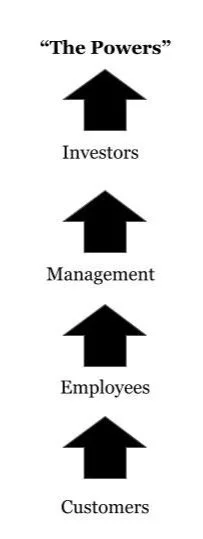
In this world of business, investors exercise power over managers, managers wield power over employees, and employees have power over customers. Simply put, “the rulers of the Gentiles lord it over them, and their high officials exercise authority over them.” It’s the way the world functions. Those with the most money exercise power over those with the least. In the ancient near east they were called “Benefactors.” Today, we’d simply call them investors.
Yet over all of these people, another Power seems to be at work. Sometimes the power is “money,” or “the market,” or a corporation that is so large no one human can control it. They are nameless, faceless powers that seem to be controlling even the lives of the powerful men and women.
The New Testament can be shifty speaking about these powers. They’re sometimes called principalities, thrones, or authorities. Some see a hierarchy of angels and demons. Others see them as powerful institutions. But what’s clear is that they wield enormous control over human affairs, they’re generally associated with darkness, and Christ “disarmed” and “subjected” them through his death and resurrection (Romans 8:38, Colossians 2:15, Ephesians 6:12, 1 Peter 3:22). And they’re invisible. You can’t see the “powers,” but something certainly seems to be “there.”
As it relates to the economy, those inside this system tend toward power-seeking and using others to gain more power. Investors extract money from companies, management uses labor for profit goals, and employees manipulate the desires of customers, ultimately decreasing their freedom and agency. Dominance of others and fear of losing power characterize this economy.
It should be noted that these powerful systems are impersonal and faceless. Again, whether that be Mammon or the economy or a multinational corporation or “market returns,” people serve powerful systems that seem to have a super-human life of their own. Even the “customer” is often made into faceless avatar, holding even a seat on the board of one of the world’s most powerful companies.
Ultimately, in this system, power itself rules, and each person serves others who wield more power than they do.
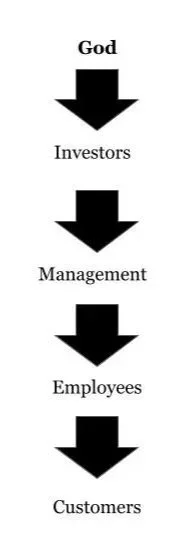
In contrast, God’s kingdom functions principally by pushing power down a system. The Christian gospel begins here, with the Incarnation of God himself, taking on human flesh as baby in a manger. God empties himself of his immense power, and for the sake of lost sinners, he takes on the nature of a servant (Philippians 2:6-8).
In God’s kingdom, power is given away sacrificially for the benefit of others. It progressively lifts up “neighbors” with less power, particularly those in close proximity. It functions on an upside down logic, where the last become first, you find yourself by losing yourself, and servants are greatest of all.
A “love your neighbor” ethic for business is most obviously seen, I believe, when investors give power to managers, managers to employees, employees to customers, and ultimately customers buy goods and services that raise human potential. Business here becomes an engine of human blessing, a way God provides for the needs of his people and lifts up the poor. The self-giving love of the Trinity is best displayed, economically speaking, when each person first looks to the good of the other.
In stark contrast to the faceless and nameless powers and principalities, God’s kingdom is always personal. God is a person (actually, three persons), and he summons people to know and love people. Rather than fear and dominance, God’s kingdom is characterized by joy and service.
Money is dethroned as a power that controls human affairs and instead repositioned as a part of the created world to be used, enjoyed, and given (1 Timothy 6:6-10; 17-19).
Inspired by Jeff’s insights into godly investing? You’ll find even more voices on the FDI Youtube page. Subscribe today!
Love is an active force in God’s kingdom. Whether it be managers lifting up employees, or employees working for the well-being of customers, love – defined as actively working for the good of your neighbors, and even your enemies – is central to God’s kingdom. It’s also the center point of a healthy economy. Desire in this kingdom is ultimately not for power, but for Christ himself who gives of himself for others.
Again, the problem with both of these models is that we lived in a “mixed” reality, caught between God’s kingdom and the kingdoms of this world. And it’s not just on a social level. Each of our hearts is a battleground between good and evil. Some days we’re self-dealing, other days, we’re self-less. Some days I bow the knee to Jesus; other days, I bow the knee to Myself. Unfortunately, there are no perfectly clean lines between a business that is fully redeemed or fully depraved. We’re living perpetually on Holy Saturday, somewhere between Good Friday and Easter Sunday.
And yet, I do believe we can notice signs that a business or economic system is moving toward the kingdoms of this world or the kingdom of God. For instance, I’ve noticed management can often “skip over” or use employees in route to giving a customer whatever he or she wants. Rather than empowering employees to serve customers, they’re often treated as expendable inputs that can be changed out at will. Companies with perpetually low wages, low employee satisfaction, and high turnover often fall into this pattern. Indeed, there are ways to be highly profitable, both through lifting up employees or oppressing them.
Or, think of investors with no other ends than high returns. This naked focus on profit at all cost is often veiled with excuses like, “I have to. I’ll lose my own investors if I don’t maximize profit and give them what they want.” This passing on of responsibility for others – rather than taking responsibility for the well-being of others – is characteristic of systems built around the nameless, faceless powers.
This power-accumulating approach also applies to the types of products and services that are created in business. There are many ways to make money, including by manipulating the customer’s more base desires. I’d argue that the rise in sports gambling, for instance, while it may be very profitable, does not serve a genuine human good. It preys often on those who are the most vulnerable – a key characteristic of a fallen world (Isaiah 3:14).
In contrast, we can also see signs when business is moving closer to God’s kingdom. Good jobs that incrementally lift up the poor; products and services that meet real human needs; companies that restore the planet through thoughtful environmental stewardship; money invested sacrificially, which takes into account economic as well as social, spiritual, and cultural goods – business as God intended it is indeed a part of God’s will for his creation and can be a part of life in his Kingdom.
Movement toward the kingdom of God looks like power used for the well-being of others. When proximity is brought back to investing, the practice of business itself begins to heal. Co-founder and former CEO of Southwest Airlines, Herb Kelleher once said, “We take great care of our people, they take great care of our customers, and our customers take great care of our shareholders.” Indeed, when investors serve managers, managers serve employees, and employees serve customers – when each serves their economic “neighbor” – business itself can be a noble activity.
The Faithful Investor
How, then, should a Christian invest?
First, Christians serve God and not the market, money, or any other power. Because this is true, all Christians should minimally begin conversations about investing with “What is good for people in and around this business?” and not only “How do I maximize my returns?” Christians, who follow a Suffering Servant above all, have the reason to persistently ask questions around moral and relational dynamics of business, especially those we invest in.
Second, Christians can start to pay attention to the power dynamics even in the businesses in which they work. Is my company moving toward a system where power is hoarded or given, where people are served or used? The first step in noticing the tremendous impact of faith and investing is by paying attention first to your own workplace, and allowing the Spirit to re-shape relationships around the core principle “whoever wants to be great among you must be your servant.”
Finally, Christians can lead the way in re-humanizing investing – even in public equities like stocks or bonds – by knowing, praying for, and finding ways to serve management. If the first “neighbor” an investor has is management, which I believe to be the case, Christians ought to first, learn what companies you own, and second, learn who leads those companies. This may occasionally result in shareholder activism; it also may result in divesting yourself of some equities and buying others. But if an investor’s first job is not to realize returns, but instead to serve, we can only serve people we know.
When we take this simple step of knowing and caring for the managers of the companies in which we invest, we take a first step toward transforming investing. In doing so, investing is no longer de-personalized, and we are no longer powerless. We are people with real decisions to make, made in the image of the Son of Man, who “did not come to be served, but to serve, and to give his life as a ransom for many.”
Our job, in short, is to turn investing upside down.
This article was written and originally published by Jeff Haanen, a writer and entrepreneur. He is the founder of Denver Institute for Faith and Work, an educational organization that creates content and experiences around topics related to faith, work, the economy, and modern culture. He’s the author of An Uncommon Guide to Retirement: Finding God’s Purpose for the Next Season of Life as well as two forthcoming books from InterVarsity Press on work, spiritual formation, and the American working class. He lives with his wife and four daughters in Denver, Colorado, and attends Wellspring Anglican Church.
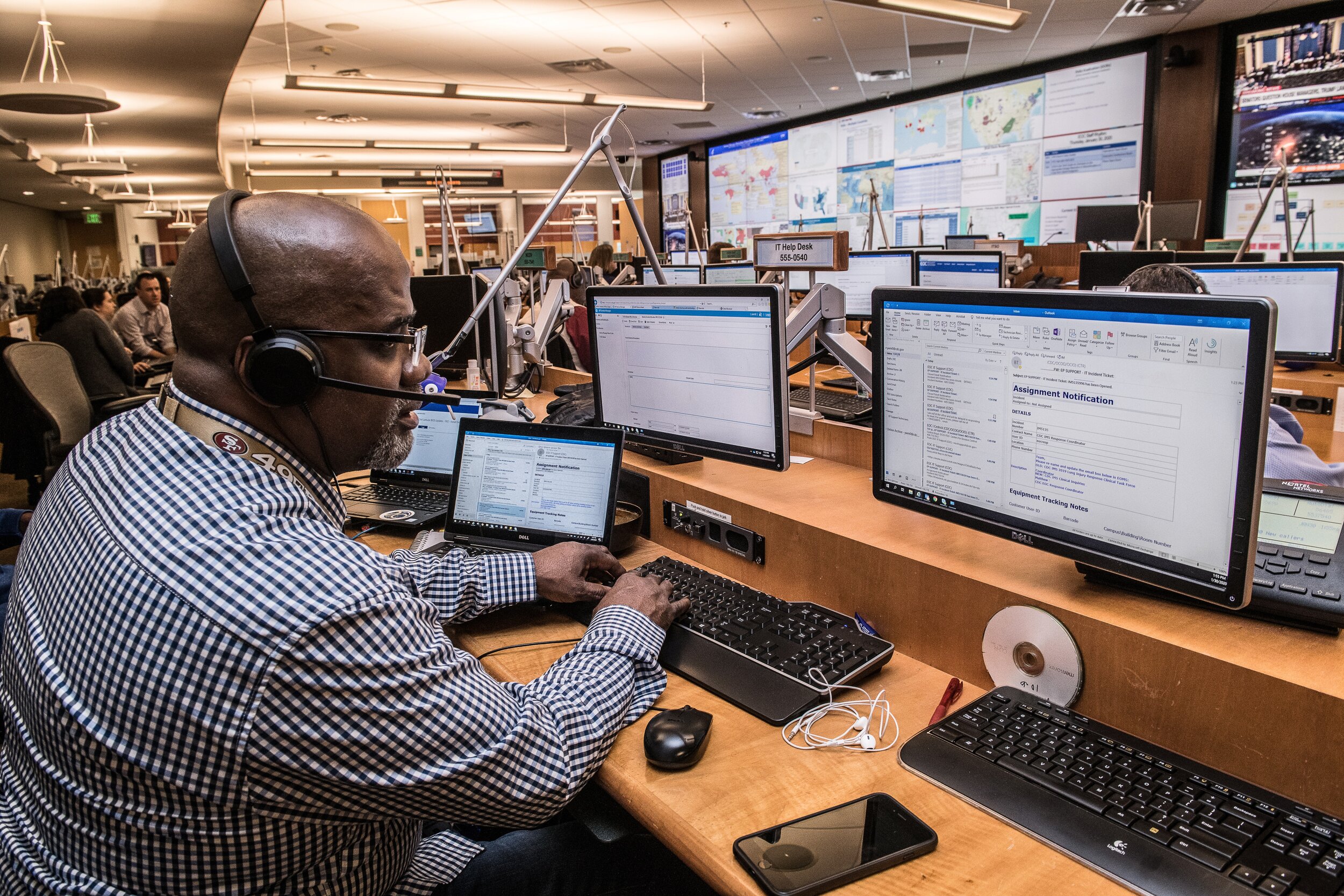
Photo by CDC on Unsplash
Article originally posted here by Access Ventures
by Access Ventures
If you have been a follower of Access Ventures for any amount of time, you have likely heard of our one-pocket investment approach. If you are new to the concept, a one-pocket mindset places your mission at the center of your investment strategy, thus aligning all of your assets to the values that drive your foundation. In contrast, traditional thinking believes in order to do the greatest good, you first need to make the most return—that good work and charitable contribution comes from the overflow of financial return.
In practice, the two investment mindsets are fairly similar. Both seek to optimize a portfolio of assets for the highest return possible given a certain level of risk appetite. You can think of portfolio construction like you would the building of a house. A house has certain basic goals that can be met through any number of combinations of design, materials, and construction. Many investment managers utilize the modern portfolio theory as a framework for constructing the right portfolio for a given set of circumstances.
A one-pocket mindset places your mission at the center of your investment strategy, thus aligning all of your assets to the values that drive your foundation.
The fundamental difference between investment mindsets is that a one-pocket portfolio will be tilted towards investment options that reflect its value set. The challenge here is to find an optimal mix of investments that reflect values without causing the portfolio to take undue risk. I have described this process in detail previously with the key takeaway being it’s difficult but not impossible. Over time Access Ventures has sought to find efficient solutions to this complexity within each asset class. In this post we’ll walk through our Public Equities solution.
How Values Drive Portfolio Construction
In addition to a conviction to invest our capital in line with our values, we also believe that companies scoring well on environmental, social, and governance metrics offer above-market returns in the long run. However, mindful of the risk in pursuing this strategy we turned to market experts to craft our public equity portfolio.
Access Ventures utilizes the Ethic platform to invest in domestic and developed non-US public equities. Working with their team we have created a public equity index that remains true to our organization values while also pursuing risk-adjusted, market-rate returns. In a nod to our one-pocket framework we also invested directly into Ethic to help them build out their platform and bring it to market.
If you are unfamiliar with index investing, it is a passive strategy that attempts to generate similar returns to the broader market. There are many variations of an index fund but the general idea is that a fund will purchase a certain percentage of all stocks within a particular market and use algorithms to buy and sell securities in a fashion that mimics overall market conditions. Many investors prefer this approach because it offers low fees and meets or exceeds the performance of an active strategy where someone is picking individual stocks with the intent of generating superior returns.
A distinct advantage of using Ethic, as opposed to buying an off-the-shelf index fund, is that you are able to define the range of acceptable returns compared to the underlying index (which is called a ‘tracking error’). With a typical index fund this tracking error range is determined by the fund manager and may or may not fit within your personal risk profile.
The Access Ventures public equity index portfolio is comprised of many organizational values. Below are descriptions of just a few of those values:
Labor Policies and Practices
Firms with poor labor policies and practices contribute to a wide range of negative societal impacts and are prone to labor disputes, litigation, and worker unrest.
Predatory Industry
Operators of private prisons, payday lending businesses, and gambling facilities have disproportionately negative effects on vulnerable communities.
Operational and Social Failures
Poor relations between a company and its employees, its community, or its supply chains are major sources of legal and reputational risk.
How Values Impact Investment Performance
The performance of our portfolio is measured against comparable, publicly-available index options. Our US equity index tracks the IVV iShares Core S&P 500 ETF and our developed non-US index tracks EAF iShares MSCI EAFE ETF.
The driving values of Access Ventures have led to the divestiture of 205 companies in the US and 620 outside the US, with operational and social failures being a chief reason. One may think removing options from a portfolio works against the benefits of diversification and leads to greater risk. In fact, the risk in each of our portfolios has been considerably less than their respective indices over the last four years.
One may think removing options from a portfolio works against the benefits of diversification and leads to greater risk. In fact, the risk in each of our portfolios has been considerably less than their respective indices over the last four years.
So how has our portfolio performed? Put simply: better than the market.
Over the last four years ended August 31, 2019 our US index outperformed by a modest 0.02% on an annualized basis while our developed, non-US index came in with an impressive 0.41% positive variance (net of fees). Of course we are unable to predict whether this performance will continue, we are satisfied with the results to date.
Why are we sharing this information? It is our hope that you are encouraged by this disclosure and would explore how your foundation may construct a portfolio in line with its values. If you are interested in taking the next step, we are happy to share our thoughts and introduce you to our friends at Ethic.
 Article originally posted