Why Women? by Talanton

“Women will continue to find space and representation in a sector that not only speaks to them, but is helping them create the change they wish to bring to the world.”

Read this article from Talanton to discover statistics that show the rise of women entrepreneurs and women investors.

by Talanton

“Women control nearly 30% or $39.6 trillion of the world’s wealth and 51% and $14 trillion of personal wealth in the United States. By 2020, that amount is expected to rise to $22 trillion in the US alone and over the next two generations, women are expected to inherit 70% of transferable wealth.”[1]

Take a moment to let those numbers sink in.

Women, particularly millennial women, are also statistically more likely to become impact investors.[2] Popular reasoning for this is that women have different motivations when it comes to investing, and oftentimes are interested in investing through a gender lens. This makes sense given the predominantly male dominated venture capital, private equity, tech and start-up sectors.

According to Harvard Business Review enterprises owned by women in the formal sector represent almost 37% of businesses worldwide. This number continues to gain attention from policy makers, businesses and investors – and it should. It has been shown that for every dollar a woman in emerging markets makes, 90 cents get reinvested into her family and community in the way of education, nutrition, health etc. – a stark contrast to the 30-40 cents reinvested by men. [3]

Particularly of interest to Talanton, is an entrepreneur’s ability to create jobs in an employment hungry market. The World Bank has published that 600 million jobs are going to be needed in the developing world by 2030 to meet the needs of fast-growing urban populations, primarily in Africa and Asia. It is expected that 80% of those jobs will be created by small and medium enterprises. In the HBR report cited above, the women entrepreneurs surveyed employ one or more people, with the expectation that they will hire up to six more individuals over the next five years. In the US alone, more than half of the jobs created in the SME sector this year will have been created by women-owned enterprises.

Necessity is said to be the mother of invention, and throughout Europe and the US women entrepreneurs are showing higher levels of innovation than their male counterparts, offering new products and services and innovating in stagnant industries. A great example of this is the female hygiene product sector. With the rise of sustainability and a revitalized feminist movement, the sector has been flipped on its head by brands like Thinx[4] and Divacup[5] – to name two fast-becoming household brands among a much broader trend. Interestingly enough, ‘copycat’ brands have popped up within the last year in places like Brazil[6] and South Africa[7] (and with women at the helm like their American counterparts). The process of taking an innovation with a growing track record in places like Europe and the US, and adapting it to different, developing world contexts is happening faster than ever before. Both out of need and opportunity.

Whether you are a fund thinking about your fundraising strategy or evaluating your pipeline of investees – you can bet on one thing: women want to be involved from both a capital and an enterprise perspective. Women will continue to find space and representation in a sector that not only speaks to them, but is helping them create the change they wish to bring to the world.

[1] https://www.investopedia.com/advisor-network/articles/women-can-change-future-impact-investing/

[2]https://scholarworks.iupui.edu/bitstream/handle/1805/16229/Impact%20Investing%20Report%20FINAL.pdf

[3] https://hbr.org/2013/09/global-rise-of-female-entrepreneurs

[4] https://www.shethinx.com/

[5] https://divacup.com/

[6] https://www.pantys.com.br/

[7] https://mpowercup.co.za/

Restoring Trust Through Trusts: Hobby Lobby CEO is a Steward not an Owner by Jerry Bowyer

Hobby Lobby founder David Green’s new book is both memoir and message. The message is that God owns everything, including David Green’s multi-billion dollar business. He applied that principle first in the form of personal generosity, eschewing the CEO lifestyle for one of high and growing philanthropy. But later for him it went deeper and the Greens were moved to give the company itself away, transferring it to a trust. The trust is mission-oriented, and ensures that the family can no longer touch the assets. If they want to make a living from Hobby Lobby, they have to apply for a job and work there. That’s why the book is called Giving it All Away, at least that’s the first half of the title. The second half is …And Getting it All Back Again. How do you get it back when you’ve given it away? You get it back by getting peace of mind. When you acknowledge that Someone else is in charge, and that you are responsible only for faithfulness, not for outcomes, life gets simpler.

This is one of those paradoxes of the Bible: first shall be last; lose your life to gain your life; the greatest of all shall be the servant of all; give and it shall be given to you. Theologian Gordon Clark called paradoxes ‘charley horses between the ears’. Paradoxes trigger cramps in our mind in order to reveal the ways in which our thinking was already too cramped. They force us to change the way we naturally think.

Giving it away is a source of joy because human nature is such that when we own things, they also tend to own us. Wealth can get a hold on us. I’ve seen this among wealthy acquaintances, especially once they’ve ‘cashed out’ of the business. Often after that big liquidity event their one and only job is to guard ‘the pile’. But that begs the question: if you spend all your time and energy guarding the pile, is the pile your property, or are you just the pile’s full-time security guard? Just who is working for whom in that relationship?

David Green told me that the time in his life which was most difficult was not when the federal courts had threatened to shut him down because of his refusal to pay for abortifacient drugs, and he was fighting for liberty of conscience while being excoriated in the press. No, the toughest challenge for him was when he had listened to advisors who told him to set up his business affairs in a way which would cause Hobby Lobby to be passed on to multiple generations of his descendants. That’s when he was really worried. What will this money do to them? How can he be assured that future generations will not turn away from the original mission and culture of the company and become a hundred ‘hooks’ into the company, taking from it rather than giving to it? What if future generations abandon the culture of service to employees and customers?

It’s an understandable concern. You don’t have to look too hard to find situations where dropping a gigantic pile of money on heirs crushed their spirit, their initiative, and their values.

So the Greens decided to go in a different direction. They turned away from the advice they had gotten from the high prestige accounting/consulting/legal experts and asked Gen 2 (the immediate offspring of David and Barbara) to give back their 15% equity stake in the company and place it in a trust. They did so, without hesitation. The trust owns the company now. The trustee’s job is to make sure that Hobby Lobby remains true to the mission and values on which it was founded – in perpetuity. No jobless 4th or 5th Gen heirs siphoning cash out of the company instead of working for a living.

For the Greens, once this option was presented, it was an easy decision. Theologically God owns it all, and the Greens are only stewards of God’s company. The most natural thing in the world for them was to choose a legal and capital structure which matched the theological structure to which they were already committed.

I might be a little biased, as I happen to work for a company which has also chosen that structure. But I don’t think it’s mostly bias on my part: it’s more a matter of exegesis.  The New Testament (as well as the Law and the Prophets) have a great deal to say about the role of a steward/trustee. Several of Jesus’ parables are about trustee relationships in business. It’s a surprisingly (at least to people who think the Bible is otherworldly) central topic in the Bible.

Am I, or is David Green, saying that every Christian business owner should go with the Trust legal model? No. You have to think, pray, love (but maybe not eat) your way through this decision.

I sat down across a Skype line with David Green who is the founder, but no longer the owner, of Hobby Lobby to talk about this and many other things. You can listen to the entire interview here and read a partial transcript below. Both are edited for clarity.

Jerry Bowyer:  I was not aware, until I read this book, of your corporate structure — the ownership is a trust company.  That is not a solution a lot of businesses turn to.  Can you just talk a little bit about how you got there?  What does that mean?  I know that our mutual acquaintance Bill High helped you set this up.  Bill also helped set up this interview.  The book talks about how you came to that conclusion.  Can you talk a little bit about that, and then lay out what that means to have your corporation owned by a trust, as opposed to shares owned directly by, say, you or your family members?

David Green: Well, when we were involved and saying, what do I do with this company that’s worth billions of dollars? We called in some of the people — you might even know their names — that would help us with all of the ownership issues of this company, our estate.  And what they were suggesting is that we hand it down to our children, and they would hand it down to their children, and they would hand it down to their children.

Bill was not involved at this time, and it was one of the most difficult times of my life, because I had all of these questions that were “what ifs”.  What if there’s a divorce?  What if someone doesn’t want to work and they own five percent of this company, they’re multibillionaires, or mult-millionaires?  And so it was a most difficult time in my life, or one of the most difficult times of my life the decision about what to do with this company.  And so finally we found the answer in God’s word; it said He owns it and we don’t.

And so I had already given my children about fifteen percent of this company, and I asked them if they would sign off on it to where that we all, as a family, in a document said there’s no way any of our family, my children, my grandchildren, my great grandchildren can ever touch the assets of this company, because God says He owns it.

So the answer to my problem was real, real simple.  God.  I don’t know own it I’m the stewardship.  And so now we have a stewardship trust that we’re stewards of this company, but we’re not owners.  And I, nor any of my family, could ever touch one penny of the assets of this company.  We can only — we can only be stewards of it.

If at any generation; gen one, gen two, gen three, any of them sells the company, ninety percent of it goes into a foundation that would serve the Lord and do ministry things, and ten percent would be for education, for the family, for health, for widows, things of that nature.  But no one has the ability for a company that’s worth billions of dollars to ever touch the company, because it’s all real simple:  God says He owns it, so now we’re the stewards.  We’re set up in a trust where one hundred percent of the voting stock is in one percent of it, and the trust is my wife, myself and my three children.  But to get on the trust — we can have as many as seven — these individuals have to follow this — they have to say when they accepted Jesus Christ as their personal savior; they have to say these are the basic tenets of a Christian.

So we feel like that through the generations, generation after generation, that we will be stewards of people that love God and want to use this business for His benefit.

Bowyer:  So as I understand that story, if I understood it properly, you had family members who owned fifteen percent of a multibillion dollar market cap company and they willingly relinquished that ownership share?

Green: You know, they did, because we do a lot of things wrong here, but we did one thing right in the beginning, and that’s — we said this business belongs to God, and all you get is what you earn.

But then we had people saying you better start giving this away.  So we said that on one side, but on another side we were doing legal stuff that said something else.  So legally my children could have said no; I own this; it’s worth hundreds of millions of dollars, my part.  And they could have said no to that.  But since they started right when we first started this, that it belongs to God, then we made a mistake by doing the fifteen percent thing.  But it wasn’t a mistake because my kids knew that —

Bowyer: It gave them an opportunity to be generous voluntarily, right?

Green: Yes.  And now here’s what we have; it’s a whole different model — I can’t find anything wrong with being a steward…with what we’ve done.  I can’t find one thing wrong.  I can’t find one thing right with being an owner.

Everything we have done is one hundred percent. I’m glad we’re where we are.  I don’t worry about if there’s a divorce in the family, if there’s someone that doesn’t work. I see there’s companies where there’s like 200 hooks into the company.  Well, that means there’s 200 people saying if I own part of this company, you owe me something, right?

We owe no one anything.  Hobby Lobby owes no one anything.  It’s a whole different mindset.  Our family owes the business, which is a ministry; we don’t owe the family anything.  And so that becomes very, very important.  It’s a different paradigm.

Bowyer: It is.

Green: Completely different.  Ownership versus stewardship is totally different.  Those two things are just the opposite.

And you have all these “what if” questions in gen two.  Gen two is my kids; gen three, my grandkids.  Great grandkids, I got eleven gen fours.  I had a thousand different “what if” questions.  What if this and what if that?

But I got good kids, and great grandkids.  But I have great grandkids that aren’t born yet.  I don’t know about them yet.

Bowyer: Well, we’ve seen the great fortunes of America destroy the third and fourth generations in many cases.  I mean look at fourth generation of, say, the Rockefellers, or whatever.  Something about that model of the great man of the first generation builds his dynasty and builds his fortune, and then second generation remembers some of it, third generation forgets most of it, fourth generation almost reverses the world view in many cases.  It seems like oftentimes these gigantic bequests are spiritually and culturally toxic.  You can poison your descendants in some ways by giving them too much.

Green: I think your chances of hurting your children and your grandchildren and your great grandchildren is much greater of hurting them than helping them.  So why do it?  It’s that simple.

And it’s also that simple because God says we don’t own it anyway.  So why not say you own it God; we’re going to be the stewards of it.

Bowyer: Right.  Why not have a legal structure that matches the theological structure, right?

Green: Exactly.

Bowyer: But so few people do that.  And I find often, with these successful Christian entrepreneurs, you know, early on, they make a fortune following Biblical principles, and then at some point they go to the Big Four accounting firm, or the high status, high prestige accounting and/or consulting firm which doesn’t share their world view.  But God got you there; God got you to being a billionaire, so why not keep going with Him, rather than at some point saying, okay, well, you know, we can’t really use Biblical principles anymore?  Now it’s serious; now we’ve got a billion; now we have to use the big names in consulting.

Green: Well, that’s where we meet.  We used the big names in helping us with all of our assets, and we were being guided the same way that someone that wasn’t a Christian. And that was where we lost a lot of sleep for a period of time.  That was before Bill.  And so we finally decided it’s real, real simple:  we don’t own it; let’s just write it off where we can’t touch it.  So that’s what I’m so excited about God’s word is — it just helps guide us.  And no place is it going to hurt us.

So it was exciting just to come up with the idea that let’s just, all of us — we got opportunity from my family, and we want to hand down a heritage, but I want to hand down a heritage of loving the Lord and working for Him, and telling everybody we can about this good news of —

Bowyer: Right, idleness can be bad for you.

Well, you look at the Bible — at some point I’d like to do a deep dive on this.  The idea of a steward or a trustee, you know, in 2 Corinthians, first of all, it’s required of a steward that he be found faithful.  The steward model is throughout Jesus’ parables, it’s throughout the Prophets, it’s throughout the Pauline epistles.  There’s a lot there, and almost nobody uses a business structure that formalizes the steward or trustee model.  So there’s a lot there as well.

Green: Yeah.

Rivalries Gone Wrong by Peter Greer

From the earliest years of school and continuing through college, spring marked the beginning of a new sports season. For many of us, this is the time of the year we grab the lacrosse stick, glove and bat, or Frisbee to begin training with the team.

Many of my greatest memories happened on the field. I can vividly remember specific plays, come-from-behind victories, and celebrations and heartbreak that were shared with my closest friends.

Regardless of the specific sport, there was always clarity about our team and our opposition. The jerseys reminded us of our identity and loyalty. In high school, we were Concord-Carlisle, and our opposition was Lincoln-Sudbury. In college, it was Messiah College against Elizabethtown College. As a New Englander, I cheer for the Red Sox and I cheer for whoever is playing against the Yankees. And even though my son asked for an Eagles logo to be shaved on his head, I still cheer for the Patriots.

Regardless of the specific team or activity, the basic setup is the same. Teams are clearly differentiated; it’s us versus them. And there is only one victor. At the end of the game, you will undoubtedly be asked, “Did you win?” It’s a zero-sum game, and ties are deeply dissatisfying. Sudden-death overtimes are a far better way to end a match than a disappointing tie. Isn’t it interesting that we call this sudden death, not sudden victory? Harking to days long past of gory gladiators and packed stadium seats, we seem to care as much about our opponent’s demise as our own victory.

We root for our team and we root against our rivals.

As much as we love the energy of competition, there’s a shadow side to this way of looking at the world beyond the athletic fields: the idea that every time we win, someone else must lose. That success is a limited good, and our achievements must come at the expense of the other.

Even when it comes to churches or ministries, we too easily slip into separating the world into two categories: us and them. We hunker down with our people and shun those on the other side. And when success is a limited good, we incentivize behaviors propelling our own gain, regardless of the cost to the other. We think no further than our organizational boundaries.

It’s the attitude of McDonald’s founder Ray Kroc who famously shared, “If any of my competitors were drowning, I’d stick a hose in their mouth and turn on the water.” Cutthroat competition at its basest form.

There’s no doubt about it—many individuals, companies, and whole industries embody this “go for the throat” approach. It’s easy to think that the only way to succeed is through our competitor’s demise.

But it doesn’t always work this way. In fact, rivalries often do go wrong for not just one but both embattled parties.

In the 1990’s, U.S. automakers competed with one another for dominance in the auto industry. Like Pepsi and Coke and so many other corporate rivalries, their hatred for one another was all-consuming. In 2011, Ford marketing chief Jim Farley was quoted in a reference to GM saying “I hate them and what they stand for.”

But as happens so often, their rivalry didn’t end well. Their focus on each other caused them to miss out on seeing the broader landscape of manufacturing, and it wasn’t long before GM and Ford were both losing.

The ‘Ray Kroc approach’ simply isn’t in any individual or industry’s best interest. In fact, there is growing evidence that collaboration is good for us all, accelerating the pace of progress through collective impact, open-source movements, and creative collaboration.

Especially for nonprofits, it’s time to realize that cutthroat competition just isn’t the best way to make an impact on the significant challenges we face. For followers of Jesus, the rivalries that fester between our denominations, churches, and nonprofits ultimately serve as a hindrance to the cultivation of Kingdom-mindedness and global impact.

We’ve been given a mission and mandate that requires nothing less than the best of our efforts working together in unity for the sake of the Kingdom. It’s time that we model a far more gracious and collaborative spirit among us. Rather than competitors, it’s time that we see each other as co-laborers and perhaps even friends. It’s time that we focus on the Church’s unified mission above our organizational agendas. And in some small ways, to begin rooting for our rivals.

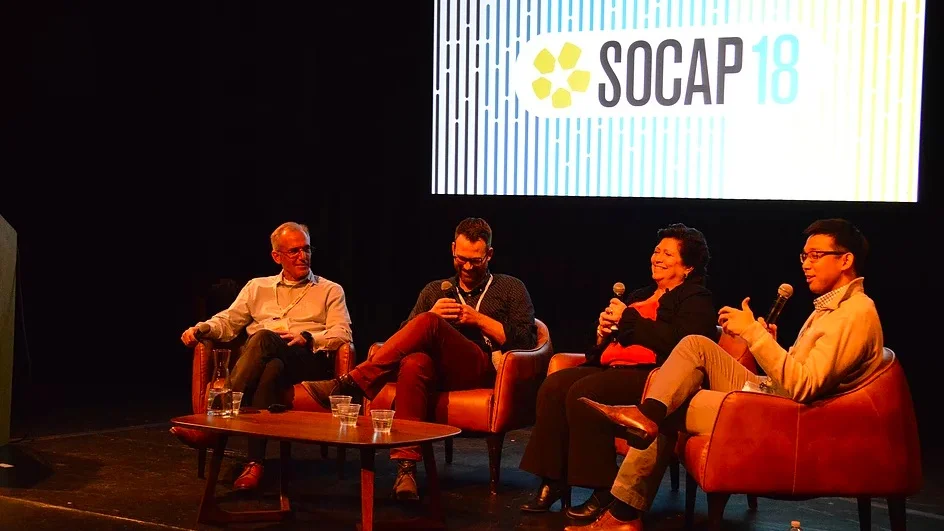
SOCAP Conference Panel on Faith-Driven Impact Investing

 Photo by  Robert Kim

Photo by Robert Kim

This article was originally posted by our good friend Robert Kim on his personal blog. We are grateful to have his insights on this great panel at the Social Capital Markets (SOCAP) Conference 2018. Furthermore, we appreciate his leadership and amazing work in this particular setting!

— by Robert Kim

This October, I had an amazing opportunity to moderate a panel on faith-driven impact investing at SOCAP.  This was a special moment for me as this panel allowed me and the panelists to share about Jesus at one of the most prominent yet secular gatherings of impact investors and social entrepreneurs. 

Three panelists were Bryce Butler (Founder of Access Ventures, a private operating foundation committed to deploying 100% of its assets to impact investments), Gloria Nelund (Founder of TriLinc, an impact private debt fund that has deployed approximately $1 billion in emerging markets), and Todd Johnson (CEO of iPAR, an innovative impact reporting / analytics app that allows investors to monitor impact across asset classes).  I was incredibly encouraged and grateful for their enthusiastic “yes” to join this panel and share about the role their faith has played in shaping their impact investing journey.    


I’d like to share a few points from the panel:

1.  Understanding the purpose of capital and pursuing a healthy relationship with money is the first step towards a rewarding journey in impact investing.  Too often, our goals and behaviors are influenced by fear and greed that stem from idolizing money.  Truly embracing the perspective that money is just a tool liberates us to explore what money, and furthermore capitalism, can do other than simply meeting our own needs or, worse yet, feeding our insatiable greed to want more.  Such freedom allows us to use money as a resource to pursue the very calling God has equipped us for.  It enables us to creatively use all types of capital – philanthropic and investing – as a resource to benefit communities in need (physically and spiritually).  Convinced that all assets belong to God, Bryce is directing 100% of Access Ventures’ assets to pursue the foundation’s mission (not just the 5%, required by the U.S. government).  This model allows the foundation to catalyze a lot of the important work for communities in need, using both philanthropic and investing capital.  For example, Access Ventures uses its philanthropic capital to meet the immediate needs of a homeless community (e.g. food and clothing, etc.) in Louisville and uses the investment capital to invest in sustainable solutions that help prevent homelessness for families at risk (e.g. affordable housing). 

2.  Jesus’ love compels us to create new ideas and solutions to tackle some of the pressing societal needs.  For example, TriLinc has structured innovative investment vehicles and processes to give retail investors opportunities to make impact investments (impact investing has been and still is largely available to accredited investors only, so democratizing access to quality impact investments has always been a need in this industry).  Under Gloria’s leadership, TriLinc is changing the narrative that only the wealthy has the ability and opportunity to create impact through investments.  TriLinc is just one example – there are many more (e.g. a private equity firm has developed a process to help Christian entrepreneurs integrate their faith into the companies’ operations and culture.  Various Donor Advised Funds are ‘re-imagining’ the role of philanthropic capital to not only support non-profit organizations but also invest in faith-driven social entrepreneurs).  God’s love compels us to innovate and push the boundaries of existing paradigms for the sake of communities in need. 

3.  Lastly, our panel session touched upon the need to grow the faith-driven impact investing ecosystem.  While I am grateful for the opportunity to share about the Christian faith at SOCAP, the Gospel-influenced perspective has been largely missing in the impact investing conversations for the past 15+ years (I fully recognize that BAM and other Christian NGOs have been doing amazing mission-oriented work through micro finance and small businesses for decades.  Still, a majority of Christian investors and organizations have not been actively involved in shaping the impact investing industry). 

Fortunately, this is changing. 

More Christian investors – both individual investors and institutional organizations – are looking to deploy investment capital for financial, social, and spiritual returns.  Very exciting!

I’m excited for two reasons: for one, more capital will flow into sustainable mission-oriented companies that can help share the story of Jesus.  Secondly, Christian investors will have the opportunity to share the “why” behind their impact investing journey with peers in impact investing industry and share about the love of Christ.  

As we come together and prayerfully support the growth of this ecosystem, we will likely need to address some of the questions below (and many more!):

1. What is the definition of faith-driven impact investing?

2. How do we create a culture to embrace a diverse set of opinions and values while focusing on our common faith?

3. How do we maintain the spirit of sacrificial giving while pursuing market-rate financial returns in impact investments?

4. Is it wrong to generate market-rate financial returns through impact investments?  Should such a goal be encouraged or discouraged?  What are the pros and cons of each perspective?

5. How do we balance the need to evaluate and monitor impact while accepting the fact that spiritual impact is hard to measure?

6. What are some of the frameworks and processes that we can use from the impact investing industry to grow the faith-driven investing ecosystem?


While this ecosystem is relatively young, I’m encouraged to see some of my colleagues from forward-thinking organizations come together to collaborate and prayerfully lay the groundwork to help build up this ecosystem. 

The truth of the matter is..there is order of magnitude more capital in investing pool than in philanthropic pool.  Imagine the scale and depth of impact if an increasing share of the investing pool can be directed for good.  This is incredibly exciting.

The Heart of an Investor by The Lion’s Den

Combining faith in Christ with a passion for business can be a confusing venture. So, how do we understand our identity both as Christ followers and as business people? Hear directly from faith driven investors themselves!

The Myth of Our Own Importance by Peter Greer

 Photo by  Nathan Rogers

Photo by Nathan Rogers

A collision on the soccer field didn’t just shatter my ankle—it shattered the myth of my own importance.

As paramedics hastily carried me off of the field on a stretcher last month, my frantic mind was racing. It seemed like my accident couldn’t have come at a worse time. In only 12 hours, I was scheduled to be on a plane to Dallas, then Houston, then Raleigh. A few days later, I was slated to deliver a talk in Santa Barbara, and then Orange County. With my ankle precariously bent at an angle that the human ankle was never designed to bend, it was instantaneously clear that I was going to miss our largest events of the year.

“Will we have to cancel the events?” I wondered.

Before I had even been discharged from the hospital, my colleagues and friends began responding with thoughtful action. Within a matter of hours, my flights had been canceled, and plans had been set in motion for team members to step in and take my place at each event. With grace and incredible speed, these friends deftly agreed to cover all of my responsibilities.

As the following weeks of events unfolded, while I kept my ankle elevated on the couch, the results exceeded previous years’. Both HOPE International and the rest of the world kept on spinning.

After one event, I received a text that read, “Of course you were missed by those of us who have a personal love for you and your family, but it was evident this morning that others can equally do the job.” In other words, We missed you. But everything went beautifully without you.

Listening to the response from those in attendance at each event, it’s clear that my colleagues didn’t simply do the job; they knocked it out of the park.

My injury turned into one of the most freeing moments of my time at HOPE. I know that our mission would undoubtedly carry on with excellence when the time comes for my transition.

I believe it’s a high compliment a leader could ever receive in the midst of a transition would be if everyone—employees, outgoing CEO, incoming CEO, management, and clients—all thought, This isn’t such a big deal.

Healthy organizations refuse to become dependent on any one person. They build teams with multiple people who are each ready to step up at any moment.

My guess is that, due to a perilous cocktail of pride and lack of planning, few organizations are well-prepared for a leader’s transition. In fact, a 2011 study by CompassPoint reports that “just 17% of organizations have a documented succession plan.” It takes courage and humility for leaders to prepare for the moment when they transition, to ensure that, in a way, their absence is not felt.

Perhaps part of the reason that we don’t plan for what comes next is that we like to be needed. The idea that we are somehow indispensable to the mission feels good. Yet it is critical that we grapple with the fact that placing our egos over the mission inevitably sabotages long-term organizational impact.

If we deeply care about the mission of our organization, we will care deeply about what will happen when we’re suddenly out of the game. Perhaps one of the healthiest things we could do as leaders would be to shatter the illusion of our own importance.

(And to my coworkers, I hope to continue serving with you for years to come . . . but when it’s time to transition, there is no question in my mind that HOPE’s mission will continue! What an honor it is to serve with you.)