Founders need stewards, not masters

 Photo by  Zan  on  Unsplash

Photo by Zan on Unsplash

This article was originally published on the Author’s personal blog here.

We are grateful to Mike for sharing it with us!

by Mike Asem

“I’m just going to drive off this bridge. My wife can get the policy. My wife and daughter will be okay…”

In the world of venture capital and startups, there’s always an ongoing dialogue of value and power, perceived and real. Because founders and VCs spend all of their time in a human-behavioral cluster where the sole focus is on equity, they often act in ways that are fundamentally broken. I’m writing this today, with the blessing of a brother and friend, to call out some truth that I believe many in our industry need to hear.

My message to VCs reading this – founders are more than their companies, and truly honoring them is not just something to think about. It’s a requirement of the role you’re privileged to have. My message to founders – you’re more than your companies. It’s that simple. While you likely have and will continue to pour your lifeblood into the pursuit of your vision every chance you get – you have been, you are, and you always will be more than the business.

It’s spring of 2016, and Clarence is actually breaking in. This “knock down walls” determined Black man from Decatur, Georgia is doing it. He’s taken what was just an idea and made it into a legitimate, angel-backed, startup company that’s going through Village Capital, a notable accelerator program in Washington, D.C. Not only that, but after meeting with a local VC firm with a $100M+ fund, he’s now holding a signed and countersigned term sheet for a $4.5M round. All the promises he made to friends, family, angels, his wife, himself… are about to pay off. Let’s go!

In venture capital I hear many of my colleagues, myself included, talk a lot about empathy. I’ve had limited experience as an operator, but I still question my own ability to truly have empathy for what founders often go through – just to get a shot at their massive, game changing, odds-stacked-against-them dream. Sure, many of us affectionately talk about the months of not taking a salary and maybe trading in a restaurant meal for some cup noodles… but I’m talking about understanding the tough conversations with a husband, partner, or wife… begging for the trust to let you do this stupid thing. I’m talking about not just going without salary, but doing so when you haven’t already “made it”… AND blowing out your savings… AND going into serious debt. I’m talking about never not working, missing out on your kids, your significant other, your health. I’m talking about the emotional exhaustion of finding a ride or die co-founder, and truly, truly being ride or die. I’m talking about accepting money from friends and family who are just betting on you for the sake of you, and knowing that for them the money they’re giving you… it’s not small. I’m talking about with every moment of doubt along the journey having to find the strength, determination, and conviction to not just carry your own emotional well-being, but that of all those who’ve trusted you.

It’s September now, and spring seems like ages ago. That being said, these venture investors are still saying they’re super excited – they just needed to clean some things up. LLC to C-Corp, some new diligence, etc. Also, now they’re saying, although they’re still “ready to rock,” the round going to be $2.5M now… at a lower valuation… and something about $500k in warrants?

Over 4 months later this feels weak… But, after all the 100-hour weeks strung together, all promises made to the loving but frustrated wife, all the tens of thousands of dollars now in debt to chase this – it’s just one more time biting the bullet.

Right?

Anyway, Clarence is still ready to go. He’s holding up his end, and with a new signed and countersigned term sheet in hand he says, “Yo, let’s go win. Let’s do this!”

As a venture capitalist, I sit in a seat of privilege. Like many other partners at firms like mine, I talk to hundreds of startup founders a year that look to me and see someone who can open the door. Who can unlock their dreams. Who can put them in the game, and perhaps coach them or even play alongside them on their path to punching a hole in the universe. Some VCs manage this dynamic well, but many see this dynamic of real or perceived gatekeeping potential, position of power, or “benefit of supply and demand” as an opportunity to be… well… predators.

It’s gross.

I fundamentally believe that this dance that we as VCs and founders do is all about the people. It’s all about the relationships, the trust, the crazy things we can accomplish together when 1+1 = 17, and we figure out together how to make that scale. So often, without trust and people really looking out for each other – that’s just not possible. If you’re an investor and you think “oh, so and so is less sophisticated than me, I bet I can slip in this term that I wouldn’t try with someone else,” please think about that some more. Clarence, like many diverse founders, experienced what is honestly unfortunately common among them (but certainly not exclusive to them). VCs often go straight to ROI math when they think they have something, and rather than think about “how do I honor the person who’s about to trust me with their life’s work by putting something together that’s fair and sets us both up to win,” revert quickly to “how do I extract the most value from this.”  

VC is a long-term game.

Can we agree that shouldn’t just be taken into account regarding the path to liquidity?

The phone rings, and Clarence picks up. It’s the person at the firm he’s been working most closely with.

“I know we’re close, but we have a co-investor we want to bring into the deal. Can you be in D.C. tomorrow to meet with them? We’ll get this all closed soon after.”

With the ‘No Shop’ clause that comes with a signed term sheet, Clarence has been kept from talking to any other investors for six months now. Not only does he not have any other investor conversations going, but it would be a really hard to explain why the round that was agreed to so long ago might not be happening now. Even though this is… ridiculous… and frustrating… what other choice does he have?

Clarence, based in Minneapolis, thinks on it for a moment, and then does what any good founder would do.

He books a red-eye flight and is there the next day. 

Often I think investors look at what founders are willing to do to get things done, and they just lean in. They look at what founders have sacrificed, or are willing to sacrifice, and they just accept it without another thought. As if all the founder had going for them was the company anyway.

Guess what?

That’s never true.

The hour a founder takes for the additional five slides you want done because of how you think a board deck should look doesn’t just come from nowhere. It comes from her kids, from his partner, from her sleep. The flight they’re willing to get on to meet in person or to show up at some networking event doesn’t just come out of the company budget. It comes from their life budget. The dilution they’re willing to take to get a deal done so you can get one more syndicate buddy in isn’t just cap table math. It’s a slice of the heart. Just because founders are willing to do whatever it takes, doesn’t mean it should take the max.

Founders need partners that approach them as stewards, not masters.

It’s now October, and Clarence gets the call he’ll never forget. He closes the door to the bathroom to get some privacy, and sits on the throne as he receives the message.

“… didn’t go well with the co-investor… things are changing… doesn’t seem like we’ll be able to make this work…”

In a state that can only be described as calm shock, Clarence let’s the words of “We’re out” wash over him as he turns over in his head all the people he needs to tell… his employees, his investors, his wife, everyone that’s going to be affected by the fact that there’s no investment coming in, six months after expecting nearly $5M, and the company will be out of money in 3 months now.

Clarence stumbles through politely saying “okay, I understand…” and hangs up the phone. He tells his wife what happened, he kisses his daughter on the head, and he gets in the car.

Whether you’re a founder or VC reading this, I ask you to think about two words.

Stewardship and Grace

For venture capitalists, if there’s one thing you could commit to today that I believe will make you a great partner going forward, it’s to look at founders with the intention of being a good steward of not just your resources, but theirs. Care about them enough to honor them with transparency, quick decisions, honest feedback, genuine priority of their well-being, and protection. Protection of what they could give up to pursue their dreams, but don’t need to.

And, have grace. Most founders are not as sophisticated as you on best practices, investment terms, all things “winning the deal.” Have the grace to make space for them not to be perfect negotiators, and still be able to not have to accept the worst possible offer. Honor them, before they “earn it” from you. If you want to ask me how best to be an ally of founders who are Black, Brown or otherwise diverse – this may honestly be it. While this issue is not unique to them, they are the ones most exposed and at higher rates to this sort of mistreatment and being taken advantage of.

For founders, again – it’s simple. Be a good steward of yourself. Show yourself grace. It may not feel like it in the heat of the furnace, but you are more than your company. No one would have followed you on this crazy journey if it wasn’t true, and they didn’t believe it themselves.

Tears in his eyes, pain in his chest, Clarence gets on Interstate 35 E. “I don’t want to be here anymore,” he thinks in his head. He put in so much work… He did everything he was asked to do… He was truthful… He was a good person… 

Now his family is $50,000 in debt, because of him. Now his friends and family and angel investors who trusted him, shouldn’t have. Now his wife, who loves and trusts him – maybe did so to a fault, and is going to suffer the consequences. Now his team, who all need to feed their families too, are going to regret ever trusting him with their literal livelihood.

He’s southbound now, barreling down the highway at 130 mph. There’s a bridge coming up he knows with a huge drop off. 

“I’m just going to drive off this bridge. My wife can get the policy. My wife and daughter will be okay…”

He’s maybe a mile away from the bridge now. He clamps the wheel tighter, turning his Black knuckles white.

“…I’m gonna drive off. It is what it is…”

Then, out of nowhere, Clarence hears a voice.

“Slow down, you’re going to be fine.”

Startled, Clarence keeps going.

“Slow down, I got you.”

Suddenly, Clarence starts feeling the wildest sensation. He feels the gas pedal pushing back against his foot. Against him.

“You’re going to be alright. Just keep going home…”

Clarence pulls the car over, and just weeps.

Truly. Weeps.

Clarence has always been a man of faith, and in that moment there’s no doubt in his mind that Jesus showed up for him.

God stepped in.

While I don’t expect everyone reading this to be a Christian, I do believe that all of us as VCs or founders consider ourselves to be good people. Whether you believe it to be God’s work, or the mission of good people, I think it’s important to recognize that stewardship and grace are paramount if you’re going to be a positive force in our work.

While it’s tough to draw clear, direct correlation between entrepreneurs and suicide risk, it’s well understood that through characteristics and experiences that founders share (i.e. impulsivity, emotional volatility, social isolation, rejection and failure) suicide is more likely a concern for them than the average person. If you’re a founder (or anyone) reading this and have had thoughts of suicide… please, please don’t go through this alone. Talk to someone you love, visit the National Suicide Prevention Lifeline and call 1-800-273-8255 to talk to someone who can listen and help. Confidentially. Completely free. That being said, far before suicide is even a question, we can find opportunities to reclaim founders’ abilities to enjoy physical, mental, emotional and spiritual health. 

That day in October, 2016, six months after holding that first signed term sheet, Clarence went home and wept. Today, Clarence wakes up to a life that, as a poor black kid outside of Atlanta, he didn’t know existed.

He wakes up in a beautiful home, kisses his wife and kids, grabs a coffee and steps outside to sit on his porch and watch the sunrise. This grinder didn’t quit grinding.

With the support of his wife, and the hard work and fortitude that only exists truly in founders, he has closed $7M+ in venture funding, with a top seed-stage venture capital firm leading his last round.

He hugs and kisses the son that would not have been born if not for him pulling over that day. If not for divine intervention.

With grace, Clarence looks back and forgives those that hurt him so badly in the past. He moves forward, unburdened, with the support of investors who love him. Who steward him. Who show him grace.

As someone who knows Clarence personally, I was truly shocked upon hearing his story today. He’s one of the most dependable, stable, bright-eyed and motivating founders I’ve ever had the pleasure of knowing. It’s for this reason I think it’s even more worth underlining how this grind we call entrepreneurship – can get to anybody.
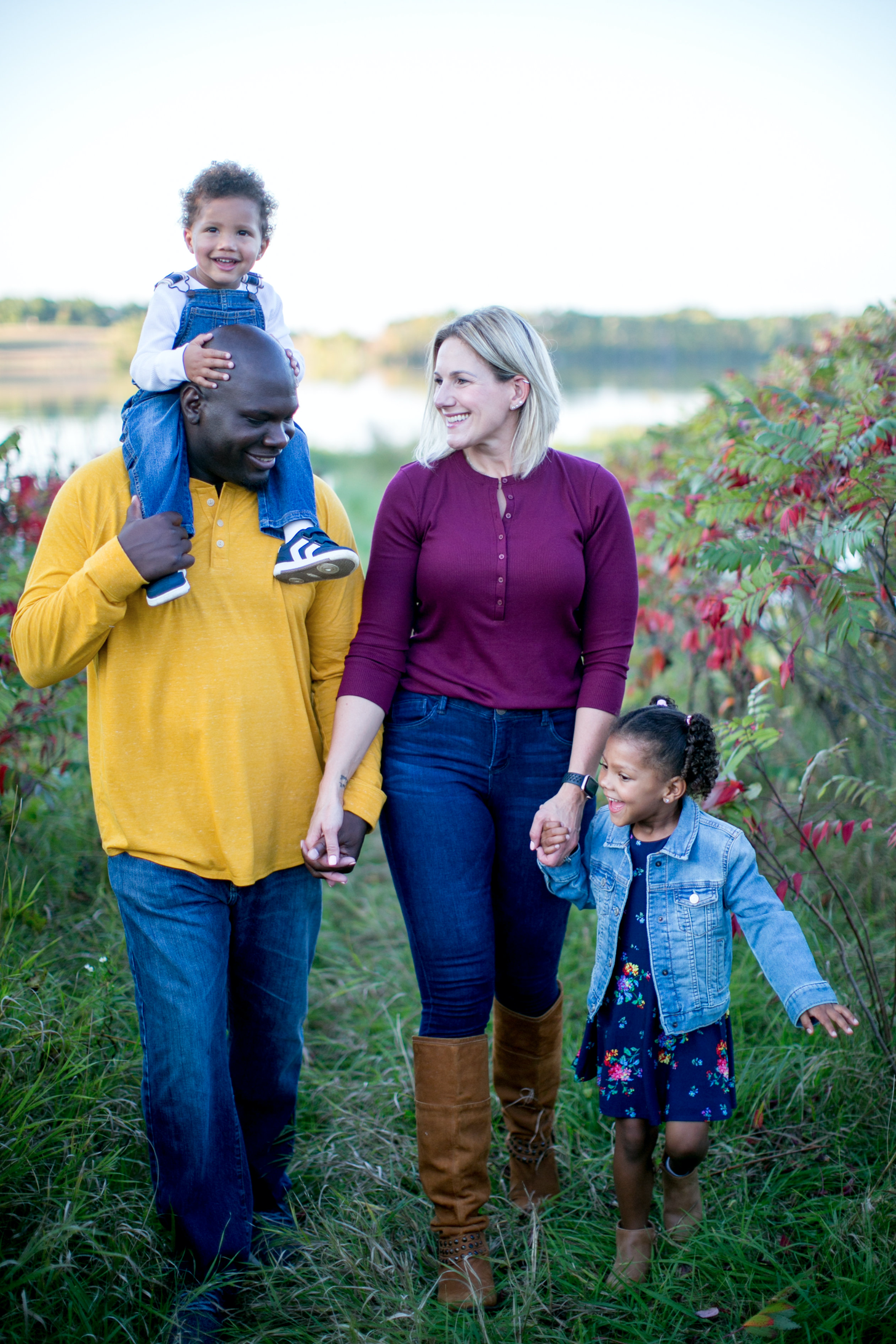
Clarence, I’m so honored by you. I’m honored by you letting my firm partner with you in your journey. I’m honored by you allowing me to share your story.

To all the venture capitalists out there, I hope you truly hear this. While we often forget founders are more than their companies, they are. So much more. And while we often find ourselves doing ROI math, it’s not enough. We’re all in a place of privilege in this life, and while we’re all likely to do financially well, I believe there is a right way to do well by our founders. Through stewardship and grace, and through attaching long term thinking to the people and not just the path to liquidity – we can, should, must honor founders. 

And founders… 

please… 

don’t ever forget. 

You are more than your company. 

Faith Driven Franchising – Turbo-Charging Entrepreneurship & Impact in Emerging Markets

by Reuben Coulter

If you go for a walk in the bustling cities of Jakarta, Mumbai, or Nairobi, much of it will feel quite foreign to the average American, but then you will encounter the familiar sight and smells of McDonalds or Starbucks. If you step inside, there are some interesting local adaptations, such as McDonald’s completely vegetarian menu in India. Franchise businesses around the world have seen steady growth in the past few decades, particularly in Brazil, China, and Mexico, as emerging economies have grown rapidly and their citizens have acquired taste for these ‘aspirational foods.’ Many developed markets are reaching brand saturation with high competition and limited room for growth. Over 60% of the International Franchise Association members (US-based franchisors) currently franchise or operate in international locations, and 16 percent generate between 25-30 percent of revenue from international activities.

At Faith Driven Entrepreneur, we have been reflecting on how we might see greater social and spiritual impact through entrepreneurship and how Faith Driven Investors can support and finance this. Every day, we meet incredible entrepreneurs who have beaten the odds and, through hard work and ingenuity, have built vibrant businesses. But sadly, we also meet entrepreneurs who are struggling. They may have a great concept and some traction, but they are unable to scale and don’t achieve their potential.

The reasons for this include:

  • Most enterprises are opportunistic and not strategic.

  • Many founders lack core business skills or experience.

  • In many cases, they are isolated, without support structures or a strong team.

  • They lack proper operating systems and corporate governance.

  • They can’t access sufficient growth capital.

Franchising offers a powerful model to address these challenges and to achieve scale and impact through replication. In the US, the success rate of franchises is significantly higher, and that is reflected in the lower cost of capital and in the willingness of banks to lend to them. Franchising offers several advantages over traditional business growth models, all of which serve to reduce risk and increase the likelihood of success:

  • It provides a proven business model.

  • There is an established operating model with defined systems and processes.

  • It offers a trusted, credible brand. This is really important in countries with low safety and quality standards.

  • The franchisor provides for the franchisees with additional support services, such as training, quality control, advertising, and marketing.

  • The franchisee generally contributes capital, entrepreneurial skills, operational oversight, and local market knowledge. They have ‘skin in the game.’

Done well, franchising should be a win/win, as both franchisor and franchisee have a vested interest in the business succeeding.

From a Christian perspective, franchising is also a powerful way of transmitting a values-based culture and being a witness for the Gospel, often in countries which are closed. While missionaries might be blacklisted, doors are flung open to welcome in foreign brands. Franchises can offer more than hamburgers and fries—delivering incredible social impact such as standardized medical care, potable water, education, and clean energy at the base of the pyramid. Some incredible examples that we’ve encountered recently include:

  • A KFC franchise in Spain is owned by a Christian brother who operates 9 outlets with 180 employees and expects to double in the next 12 months. In his leadership training for his employees, he is able share his faith motivation and lead them in integrating values in their lives. He works closely with a local church and is able to support their ministry with profits from the franchise.

  • A chain of fitness gyms operating in countries which are often hostile to Christianity is one of the largest disciple-making movements in the world. They have tens of thousands of members who would rarely, if ever, attend a church or encounter the Gospel. These members come to their gym weekly and develop deep relationships with the local owner who has an opportunity to disciple them and connect them with a local church.

  • Jibu, a water purification company in East Africa, provides water filtration technology to franchisees. Clean water is a massive need—in Uganda, 51% of the population lack access to clean water, while 786mm people worldwide face this challenge. Jibu has grown rapidly to 137 franchises in 7 countries.

  • And, of course, closer to home, well-known US franchises such as Chick-Fil-A, Auntie Anne’s, and Popeyes have created cultures which love their employees, who in turn love their customers—providing a powerful platform for leadership development and Christian witness.

These examples above also illustrate two different types of approaches to franchising:

  • Outside In Approach – There are proven established businesses (usually from developed markets) that have proven and predictable operating systems (e.g., KFC)

  • Inside Out Approach – Opportunities that originate in local markets (e.g., Jibu)

So, if franchising has such potential, why don’t we see more of it? The reality is that, for both approaches, the barriers and costs to entry remain significant.

For an international franchisor, it is challenging to enter a new market, particularly one which is significantly different from his/her home market. In particular, establishing market demand, adapting the business and operating model to local tastes or customs, and finding the right owners with aligned vision and values can be extremely difficult.

For the local franchisor who has a vision to scale, the expertise to do this is scarce, and the growth capital is practically non-existent.

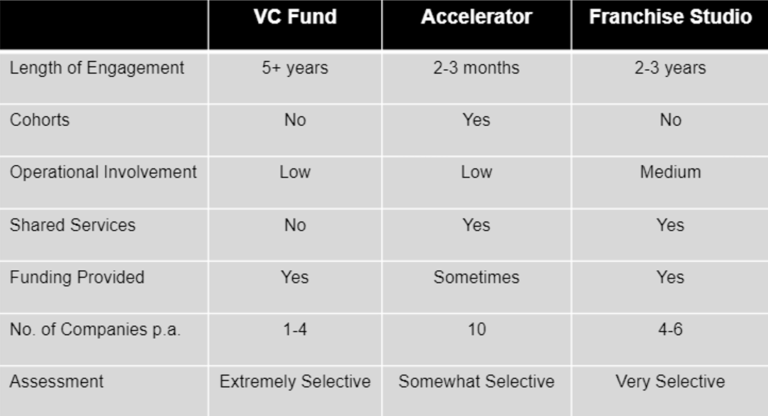
The Franchise Studio model

To solve these challenges, we are developing a Franchise Studio model. This combines the talent selection and development model of an accelerator, the strategic advice and investment of a VC fund, and the hands-on operational support to develop the franchise model and scale it. The founding teams do not need to have their “world changing idea” in place. They are just highly motivated, capable individuals who are motivated by their faith and looking for an exemplary opportunity to create a flourishing business which can grow for greater social and redemptive impact. The Studio assesses, mentors, and disciples these potential founders to determine the best “franchise fit,” often working closely with other Christian accelerators who have a pool of alumni.

The Studio can then match the founding teams with either an Outside In or Inside Out opportunity.

  1. In the Outside In approach, the Studio can take on master franchise rights for the market and can develop, grow, and support a franchise model on behalf of the franchisor. It can also act as a franchisor agent—matching the opportunity with a founding team and collecting a finder’s fee for a founder referral to the franchisor. The Studio would also participate with the franchisor in co-funding the franchise opportunity. The Franchisor is assured of a local partner with aligned values, strong ability to execute, and a pipeline of talent to expand the business as it scales.

  2. In the Inside Out approach, the Studio identifies and invests in businesses in the local market which have gained some traction and works with the founding team to develop a franchise business model.

The value addition that a Franchise Studio offers includes:

  • Screening and selecting values aligned, high-capacity teams

  • Assisting in product validation

  • Providing seed investment to quality teams with validated products

  • Contributing expertise and mentorship

  • Developing roadmap and operational systems for scale

  • Providing centralized administrative functions for cost effectiveness

  • Delivering advice and support from franchise experts in the Faith Driven movement

  • Providing Kingdom impact and transformative input and guidance to investees

Over the next 12 months, we will be testing and validating the Franchise Studio model in East Africa. If faith driven franchising matures to even a fraction of the size that commercial franchising has reached, it will have achieved sufficient scale to impact millions of people in emerging and frontier markets—providing them with an opportunity to become followers of Christ, to access essential goods or services, and to experience life to the full.


Acknowledgments

Special thanks to the Faith Driven franchise working group for their contributions and leadership on this journey—especially Henry Kaestner, Tony White, and Ray Barreth.

Article originally hosted and shared with permission by The Christian Economic Forum, a global network of leaders who join together to collaborate and introduce strategic ideas for the spread of God’s economic principles and the goodness of Jesus Christ. This article was from a collection of White Papers compiled for attendees of the CEF’s Global Event.

Faith-Fueled Finance

Article originally posted here by Christianity Today

by Christianity Today

JESSICA FRALIN

In a quiet office in San Antonio, Texas, a gong rings out. Staff members flood from their offices to clap and cheer, congratulating a client on his daughter’s graduation from college.

At PAX Financial Group, this mid-afternoon ceremony isn’t unusual. Companies define success in many ways, but PAX is dedicated to measuring hope. Because PAX, a financial planning firm, serves people, not investment portfolios, they praise what is praiseworthy in their clients’ lives, and each milestone is documented in the company’s system and observed by the ringing of the gong.

Today, the gong sounded for a father seeing a child graduate from college. Tomorrow, it could ring out to celebrate a business owner retiring well 50 years after launching. Last week, it marked one client paying off her mortgage and another client’s decision to donate six figures to worthy causes.

In an industry laser-focused on wealth accumulation, PAX is dedicated to celebrating every step of the stewardship journey. They recognize that more than leaving a legacy, clients are desperate to live one, finding ways to rejoice in today as well as prepare for tomorrow.

Like PAX, many financial institutions across the nation are turning notions of greed and gain upside down. Gospel-centered leaders of wealth-management companies are changing the financial climate and the public’s perception of it as they focus on building their clients’ lives, not just their profit margins.

Living a legacy

“Inheritance is what you leave to someone, but legacy is what you leave in someone,” says Darryl Lyons, co-founder and CEO of PAX. “Living a legacy is much more rewarding, and much more fun, than just accumulating money to leave behind.”

A commitment to generosity is revolutionizing the financial planning industry. According to cofounder Joseph Schuetze, inspiring generosity rather than simply pushing toward endless wealth accumulation allows companies to ensure that each client’s legacy when they’re gone—and their life now—will be richer. Schuetze credits C12, an organization that compels and equips Christian CEOs and business leaders to achieve excellence with eternal impact, as being a consistent driver behind these choices. He says, “C12 isn’t afraid to offer tough accountability and push you to live with high integrity.”

“It’s antithetical to this industry to convince clients to give more money away,” Schuetze explains. “We’re actually cutting into our own fees. But we are staking our claim to the ideals of the kingdom of God, not the ideals of the world of finance.” PAX goes beyond simply encouraging clients to give to charitable organizations by prompting them to actively engage with those organizations. As a result, clients see their generosity making a difference in the community. They get to live their legacies.

Wisdom on Socially Responsible Investing

 Photo by  Micheile Henderson  on  Unsplash

Photo by Micheile Henderson on Unsplash

This is an excerpt from Faithful Investing.

by Mark A. Regier, Praxis Mutual Funds® and Everence® Financial

As we consider how investing can help shape the world around us, in a way that is pleasing to God and responsible to those around us, we’re challenged to reflect on both the “vertical” and “horizontal” natures of our faith.

The vertical dimension concerns our direct relationship with God – our desire to reflect God’s values in our worship, our thoughts, our prayers and our deeds. The horizontal aspect reflects our relationship with the individuals and communities around us, including our relationship to Creation itself.

We see this clearly in Christ’s response to a question about the greatest commandment, recorded in the Gospels of Matthew and Mark, clearly describes these two aspects of faith.

“The most important one,” answered Jesus,” is this: ‘Hear, O Israel: The Lord our God, the Lord is one. Love the Lord your God with all your heart and with all your soul and with all your mind and with all your strength.’ The second is this: ‘Love your neighbor as yourself.’ There is no commandment greater than these.” (Mark 12:29-31, NIV)

Historically, faithfulness on the vertical axis of our relationship to God has been measured through the purity of our choices, actions and thoughts – often called “holiness.” In the field of investing, holiness has often taken the form of avoidance. Religious organizations and individuals have long sought to reflect their faithfulness to God’s values by the investments they’ve rejected.

And as our world—both socially and economically—has grown more complex, however, this approach to faithfulness has become an increasing challenge. As we address modern slavery found in conflict minerals inside every cellphone and laptop, or the sweatshops hidden behind our favorite clothing brands, or the racism and sexism that can lurk within even the most respected corporations, being pure is difficult.

In addition, this vertical emphasis focuses on our own reflection of God’s purity, potentially overlooking the horizontal call to love our neighbor and other aspects of God’s Creation.

How, then, should we respond to the horizontal, reflecting the gift of life and grace from God? What is our response—through our investments–to repeated calls throughout Scripture to care for the widow and orphan, protect the weak, and minister to the poor?

Just what is required?

This question (and answer) by an Old Testament prophet in Micah is fundamental to our fullest understanding of Christian discipleship. People of faith are called to “do justice, and to love kindness and to walk humbly with your God.” (Micah 6:8, NRSV) Micah tells us that our actions and choices here on earth do matter—and we believe our investments do too.

This surprising message follows a series of questions about which offerings and sacrifices are required to bring restoration to the sinning, straying children of Israel. The questions betray a misunderstanding of God’s larger purpose, focusing on pursuing the correct ritual for the situation instead of striving for justice and kindness as they interact with others.

Many Christians have taken this call seriously – looking to their faith as a guide for their charitable giving, support for missions, choice of vocation, and the ways they relate to their families and local communities. Far fewer, however, have explored how this call to justice, kindness and a humble walk with God impacts their investment portfolio.

A lesson from the Good Samaritan

If God’s values and concerns are the objective of our investing witness, how do we measure and manage the impact our investments are having?

Authentic Christian faith requires engagement in the world, with all of its contradictions and nuances. What better example of a person trying to live faithfully in a heated political and religious setting than the Samaritan in Jesus’ familiar parable?

This parable was offered in response to a question posed to Jesus, asking, “And who is my neighbor?” It again focuses on the horizontal axis (“others”) of our relationship with God. And it is a question that remains as important today as it was then.

Found in Luke 10:25-37, this story – in its simplest form – has been baked into American culture. Many, regardless of religious background, will recognize the story of the virtuous man who helped a person in need while others passed by.

In short, the Samaritan, from an ethnic group scorned by the culture of Jesus’ audience, stopped to help a man wounded by robbers while a priest and a Levite passed him by. These holy men presumably continued on their way because touching the wounded man would have made them unclean, according to the religious rules of the day.

When Jesus flipped a question back to the questioner, asking, “Which of these three … was a neighbor to the man who fell into the hands of the robbers?” the answer was obvious: “The one who showed him mercy.” (Luke 10:36-37, NRSV)

Jesus emphasized the horizontal relationship between fellow travelers despite their different ethnicities and beliefs, and by doing so, admonished the characters who placed a higher value on their narrow understanding of what was expected of them.

We could replace any of these characters with modern stand-ins and get a similar reflective opportunity. The call, then, is to self-sacrificial action on behalf of the disadvantaged or vulnerable – a message repeated frequently throughout the New Testament. It would seem credible that a similar approach could be applied to at least a part of a mission-oriented portfolio.

With more than 2,350 references in the Bible to money and resource-related issues and it seems clear that the writers and the early church understood the power and importance of the financial aspects of our lives. And while the financial tools of our society differ greatly from those of the first century, many of the challenges remain the same.


Used by permission. Faithful Investing©2019 Church Publishing Incorporated, New York, NY 10016.

FDI Conference Top 20 Quotes

 Photo by  Headway  on  Unsplash

Photo by Headway on Unsplash

by FDI Team

While our annual conference looked a little different this year, we were blessed to have guests from around the world share their insight and encouragement with faith driven investors at every stage of life. We were challenged and empowered to think deeper about a range of investment-related topics ranging from heart posture to stewardship to measuring returns. Here are some of our top lessons and challenges from this year’s conference:

Casey Crawford FDI 2020 @caseycrawford @movementmtg @movementbank

“How is it that you would call me to steward these incredible resources that you’re entrusting to us?”

Derrick Morgan @dmorg91

“If we are good shepherds of the capital…we can make significant change.”

Craig Deall @deallo1

“We are called to be stewards of our families, of our farms, of every part of our lives.” 

Chip Ingram @chipingram

“How might God use you to change a whole new paradigm so that as you build businesses, you realize this is an opportunity to give generously and invest in kingdom impact?” 

Finny Kuruvilla FDI 2020 @finnykuruvilla

“By willfully becoming an owner of a company or an owner of a business, which is what investing is, you are sanctioning and benefitting from the company’s activities and practices.” 


Andy Crouch FDI 2020 @ahc @praxislabs

“Redemptive investing prioritizes people over money, or deals, or transactions [and] takes responsibility for the nonfinancial outcomes of investments.” 


Andy Mills FDE/FDI 2020

“When we’re deeply abiding in Christ, we have the ability to stand up, to address things going on in the world, to have an impact on the world, to be Christians who are salt and light, the way we are called to be.” 


Brian Fikkert, FDI/FDE 2020

“The good life with when we use our bodies, our souls, our relationships…to fulfill our callings as priests and kings.”


Bob Doll @BobDollNuveen

“We all know academically that God owns it all. But do we behave that way?” 

Aimee Minnich @aimeeminnich

“The only meaningful risk we can take is to disobey His commands or ignore His invitations.”

Jessica Kim FDE/FDI 2020

“We are missing out on a lot of amazing opportunities to build incredible, redemptive ventures because of this posturing in the beginning.”


Pete Ochs FDE/FDI 2020

“Is your purpose for being in business to maximize financial value or to be a catalyst for flourishing?” 


Ron Blue FDE/FDI 2020

“We have an opportunity to speak to the wealthiest culture that has ever existed and say, ‘God’s Word works under all circumstances, for everybody, for all time.’” 


Andy Crouch @ahc @praxislabs

“Look for something that is deeper, more based on the orientation of the heart, and ultimately might be more transformative than any legalistic system will be.”

Jay Hein @sagaamore04 @sagamoreInst

“We can be highly strategic, and we can experience much joy, bringing God glory by repairing our neighborhoods by smart investments.” 

Chip Ingram @chipingram

“I’m going to give generously…but I want to be a part of marketplace ministries with faith-based entrepreneurs that have a kingdom mindset.”

Greg Lernihan @Lerni32

“We look through a different lens and we serve a different financial adviser.”

Jon Erwin

“Invest in people that you believe in and stories that you believe in, and ultimately voices that you want to see developed.” 

Mark Sears @marksears

“Even more dangerous than sirens and temptations in the water is simply the natural current that pulls almost every business toward the worldly destination of maximizing the bottom line and shareholder value.”

Jay Hein @sagamore04 @sagamoreInst

“We have a duty of citizenship. We are called by God to various vocations to pursue ministries…we’re also called to place.” 

Every Square Inch

by Wes Lyons

My altitude is 10,000 ft and I’m descending through a cloud layer to reveal the city of Marawi, Philippines. Bombed out buildings as far as the eye can see paint the landscape in brushstrokes straight out of a World War II movie.  The crew of 11 under my command is tired from night after night of combat missions.  The radio crackles with our tasking for the day: “…ISIS … children… bait for an ambush… find them before it’s too late…”. Each word blaring through deepens the grief in my heart over a broken world, but my adrenaline and resolve keep me going.  

Fast forward to 2021 and – removed from the prodding of war – I sometimes long for the levels of adrenaline-filled grief for the world around me.  We live in the midst of a cosmic battle, and the evil one is kicking ass and taking names while I often focus on tomorrow’s deadline or today’s crisis.  As C.S. Lewis puts it:

Enemy occupied territory – that’s what this world is.  Christianity is the story of how the rightful king has landed, you might say landed in disguise, and is calling us all to take part in a great campaign of sabotage.  

~C.S. Lewis

The Bible leaves no doubt: there is a war raging all around us between the Kingdom of God and the tyranny of a cruel insurgency. (1) “There is no neutral ground in the universe,” says Lewis.  “Every square inch, every split second, is claimed by God and counter-claimed by Satan.” (2) 

If we believe we live in a war, it changes the paradigm of our decisions and why we invest our resources, including money.  Investing often feels like an epic strategy game where the smartest or the luckiest win the most tokens, and even Faith Driven Investing is not immune from being tinged with the same motivations that drive Las Vegas. However, if we believe that we and our money are part of a war, our priorities are re-framed to focus on taking ground from the enemy.  

One place the enemy has produced immense suffering is disease in poor nations.  LivFul is a company that has dedicated their business to head into the most broken parts of the worldwide healthcare system to save lives from Malaria and other diseases, creating health solutions for the poor.  Modern day slavery is another stronghold for the enemy.   FRDM is a company dedicated to ending modern-day slavery through software and transparency in supply chains.  The entrepreneurs and investors that see their world as a battle ground identify the strongholds of the enemy and build businesses to take ground from the darkness.  

As an investor, I have the privilege of partnering with warriors bringing light to dark places, but this war is incredibly tiring unless I’m continually filled up by Jesus.  At its core, stewardship is faith in action, which means that investing isn’t just a means to an end, but expressing our faith as an outflow of love for God.  I have to keep the first commandment first, or I’ll burn out.  

It is in getting and staying close to God that wins victories.  Our relationship with God is the root of the good fruit in our lives.  We are both warrior and bride waiting for our groom to come and sweep us off our feet.  Jesus told us “I am the root.  Abide in me, and you’ll bear much fruit.”  The war and the romance are intimately connected.  

Earlier this month, I got to be part of introducing the leadership of one of our Eagle portfolio companies to a local House of Prayer pastor in the Philippines.  We never found those children that day flying over Marawi, but in a beautiful redemptive moment, this company employs 100 people in the Philippines near where I fought.  This pastor is going to be a chaplain for those 100 Filipino employees, sharing the love of God in a place that just a couple of years ago felt so dark.     

Stewardship is faith in action.  We live on a battlefield, where we get to express our love for our groom who is coming soon through acts of faith every day.  We are preparing for the groom’s return, and we are shining light in the darkness, but more importantly, we are growing closer to Jesus through every step of faith.  Every day matters, not just the exit, not just the money we can give way, not just the impact we make.  It’s the steps of faith along the way and as we get closer to Jesus and enjoy Him more and more. 

Footnotes

(1)  Adapted from How to Pray by Pete Greig

(2)  C.S. Lewis, Christian Reflections