Episode 132 – Faith Driven Investing: The Book That Defines a Movement

Episode 132 – Faith Driven Investing: The Book That Defines a Movement

Podcast episode

Episode 132 – Faith Driven Investing: The Book That Defines a Movement

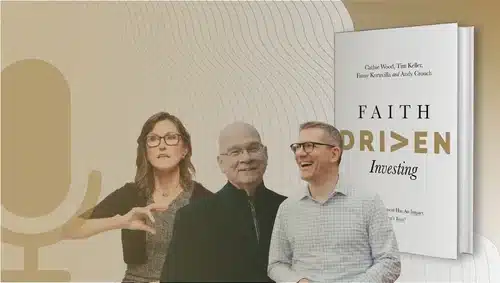
Today on the podcast, we are joined by Henry Kaestner, co-founder of Sovereign’s Capital and Faith Driven Investor, and Ron Blue, founder and president of Ronald Blue Co. Our conversation focuses on the recently released book “Faith Driven Investing: Every Investment Has an Impact. What’s Yours?” This global movement is all about investing in human flourishing and driving capital into initiatives that stand for something significant. Put the collective words in the palm of your hands. If you haven’t downloaded the book yet, click here. Get a free copy if you’re one of the first 200 to register now for a Faith Driven Investor Foundation Group launching in January 2023. 

All opinions expressed on this podcast, including the team and guests, are solely their opinions. Host and guests may maintain positions in the companies and securities discussed. This podcast is for informational purposes only and should not be relied upon as specific investment advice for any individual or organization.

Episode Transcript

Transcription is done by an AI software. While technology is an incredible tool to automate this process, there will be misspellings and typos that might accompany it. Please keep that in mind as you work through it.

John Coleman: Welcome back to the Faith Driven Investor podcast. We have a very special episode for you today. This is John Coleman and I am joined by two legends of the faith driven investing movement. Ron Blue is here with us today as well as Henry Kaestner. And we’re celebrating the launch of the Faith Driven Investor book, which has come out now and is available over electronic copy. It’s launching soon in hard copy. And we’re just so pleased that the book is out there that so many people have been able to tell their stories and that both Ron and Henry can talk to us about the launch today. Those of you who are listeners of Faith Driven podcast generally will know my business partner, Henry Kaestner. Henry, co-founded Sovereign’s Capital. He co-founded Bandwidth, co-founded Faith Driven Investor and Faith Driven Entrepreneur, and has really been an encouragement to so many of us. He’s one of the reasons I got into this industry and has helped so many others get activated. And of course, Ron Blue has been at the center of some of the most important institutions in the faith driven investing world. The founder of Ronald Blue Trust, one of the founders of the National Christian Foundation of Kingdom Advisors, and such a counselor to so many other folks. And so we’re really privileged to have both of you join today. Thank you for coming on.

Henry Kaestner: Thank you, John. I think that’s if he call it a legend alongside Ron Blue is very deserving of a chuckle. I’m anything but that, but Ron is indeed that. And so it’s a great honor to be on this episode, to talk about the book. And then for somebody like Ron Blue to spend time with us, both with the book and on today’s podcast is a great honor.

Ron Blue: Well, you’re very kind, but you let me tell the truth. So thank you. I appreciate that. And the reason you become a legend is you don’t have a long time. I’m 80 years old. So have you just said this ten years ago? I wouldn’t be a legend, but today I am maybe.

John Coleman: Well, thank you both for being here. And maybe just to kick off Henry, I know this is the second book in a series of books on Faith Driven. The first was Faith Driven Entrepreneur. Maybe just to start with, what made you want to try and pull together folks around a Faith Driven Investor book and tell us what your hope is for the book?

Henry Kaestner: We really enjoyed the Faith Driven Entrepreneur book that we put together, and one of the things that was great about it was that I did get an opportunity to share a bit about the way that God had worked through bandwidth, through David and I. But we also had J.D. Greer write some of the chapters and Chip Ingram, write some of the chapters, and Lecrae wrote the foreword, and it was a great joy to work on this is a team of four and I wanted to double down on that. I thought as we look at something like faith driven investing with the complexity that’s involved in stewarding the resources that God has entrust us with across market return investments, concessionary return investments or patient capital. And then on the third end of the spectrum, of course, philanthropy and giving, there’s a lot there is also a lot of history there. And if we want to be able to tell the story the right way and I still think that there’s so much more of the story to be taught, but if we wanted to be able to approach it the right way, it would be most beneficial for the movement and for our readers if they could hear lots of different perspectives from people who are really experts in the space. And some of those people are experts in the world of finance and investing. Ron Blue Of course, being a great example and others like Finny Kuruvilla and it will be McKinsey, Cathie Wood, Will Thomas, Ofosu Jumo, just the list goes on and we’ve got I guess maybe 15 people worked on this project, but also people like Tim Keller and Andy Crouch, who ostensibly when you look at it, you want to think of them as being finance experts, and yet they are experts in culture and identity, spiritual formation and discipleship. And so we wanted to get their voices into a really important project.

John Coleman: That’s fantastic. Henry And maybe dive into that a little bit deeper, because I think as you approach the book, you note that this is not just about sin screens, although that may be okay. It’s not just about negative screens. This is about a more comprehensive look at what it means to invest with faith aligned values. What does that mean for you and why is this a different contribution to the literature on this subject?

Henry Kaestner: Great question. So I think it is core of the book and the core of all of our lives is this desire to know God and enjoy him forever. And what we wanted to convey in the book is a lot of practical advice about how we might go about doing that with the investments that God has entrusted us with. But to start that off on this formation of the two principles that really guide our Faith Driven Entrepreneur and Faith Driven Investor movement, which is number one, is to receive the gift of the gospel, a new and even deeper level to be reminded of the God who loves us so much that sent His son at great cost to reconcile us to him and allow us to steep in that where we are as disciples, but then also where God has us in the marketplace as entrepreneurs and investors. And then to accept the invitation. To participate in the work that God is doing in his kingdom, to have a different sense of what God might have in store for us and His Kingdom as it is brought about on Earth, as it is in Heaven under His power for His glory, and just the joy that comes along with that. So we know that there’s great utility in having practical advice and wisdom, but we wanted to steep it again. A new in a gospel and kingdom message and then to build off of that with some concepts of, okay, so how do you bridge the discipleship, the gospel through to markets? Well, how do we think differently about risk? How in a world in which there’s been some great work done on making sure that we know about the products we invest in and how to avoid investing in so-called sin stocks, things like gambling and adult entertainment, etc. But how are we known for what we’re for? How can we have our investing that reflects the image of the Creator? God, how do we redefine return? What does that look like? How do we find beauty in broken things? How do we, as I said before, think differently about risk? How do we do it in community? God create us in community. The temptation, especially with wealth, is that wealth isolates. How can we invest well in a way that rewards those we invest in in ourselves and community? How do we think about partnerships and then really looking at this concept of point from one pocket? And I mentioned this before, we want to be able to look at investing in this newer, holistic level, which is, okay, we have these financial resources that God has entrusted us with. How might He have us deploy those assets to participate in the work he’s doing, but then to deploy them with market rate return when it’s called for it, when the opportunity or the cause that we see calls for market rate return, because that’s oftentimes the best way to be able to deploy capital. Sometimes it’s patient or concessionary. And then let’s bring giving and philanthropy into the equation as we’re really investing not just for financial return for ourselves, but like in the parable of sowers, we’re investing for eternity here. And so I think that when we get up to heaven, it’s not going to necessarily be this key distinction of what our investment portfolios did or what our philanthropic portfolios did, but just holistically, how do we deploy capital? So how can we look at that? And that’s one of the reasons why we have so many authors, because that’s a complicated question and dynamic. We wanted lots of people to speak into that.

John Coleman: Ron, I want to turn to you, if that’s okay. I mean, you’ve thought as deeply and as long about faith driven investing is probably anyone on the planet. Maybe you could just reflect on some of what Henry said and your own understanding what the Scripture tells us about investing and what our calling as investors is with relation to our faith.

Ron Blue: Well, Henry just used a word that I wrote down because I didn’t want to miss it. And that was think. Okay. We think differently as believers than those who aren’t, because our thinking is Holy Spirit driven, God’s word as our source. And so we think differently. And I like to illustrate faith based investing and faith based finances. And when I speak and I hold up the Wall Street Journal and I said, Now here’s the best of the best that comes out on a daily basis. But when I look at it and I say now, however, the date on this is April 20, 2021. Now. How relevant is it today? And the answer is, it may be there may be some things that are relevant, but I’ve got to read this every day, and it may or may not be relevant for some length of time. And then I hold my Bible and I say, this was written 3000 years ago, and it never changes. And I, I take the Wall Street Journal then, and I put it inside the Bible, and I say, this is faith based finances. And faith based investing is applying God’s wisdom to the best of the professional world. And it looks different when you make wisdom based decisions. You need the knowledge. No question about that. But that alone will not necessarily give you the right thinking on investments. And you know what’s really interesting Colossians 2 versus two and three, say for in Christ are hidden all the treasures of wisdom and knowledge. Isn’t that interesting? That is my answer to what is faith based investing. It is applying God’s wisdom to the Holy Spirit and His Word to the best that there could possibly be out there in the professional world. So I look at a guy like Henry who’s been incredibly successful in the investing world. Now, a lot of people have been really, really good in the investing world. And I think if any, you know, one of the brightest guys that any of us would ever want to meet or Jerry Bowyer or Bob Dole or a lot of the people that are out there are the best of the best. But you know that they begin their day talking to the Lord. And God then can work through them, through the day. And I know I’ve experienced and I’m sure you have to, John and Henry, but I’ve gone into a meeting with someone and I prayed for wisdom. And I go in there and something happens. I’ll ask a question that I did not plan on asking or make a comment that I did not plan on making. And I’ll say, Wow, God was at work. And I’ve walked out. And I said, That was one of the best questions I’ve ever asked. And I knew it didn’t come from me. It wasn’t mine. So that to me is the combining of the wisdom and the knowledge. So I’m combining two languages into one and making my decisions on that basis. That’s the way I would think about it. The other thing I would think about, Henry said something else about eternity, and I was asked a question by a really successful investment guy a couple of weeks ago, and he said, I’m getting ready to have a meeting tomorrow with a client. And he’s really concerned about this economy. And this morning at coffee, I was asked by somebody, what’s the stock market going to do? You’re a financial expert. And I said, Well, let me answer it this way. I said, Some of my friends think it’s going to go up. Some of my friends think it’s going to go down. And I’m for my friends. So we don’t know, of course. But anyway, I was answering this question about how do I talk to this person? And I say, What is your client a believer? And he said, Yes. And I said, okay. Number one, I would ask him, So have you sold? And if the answer is no, and then I say, Well, then you haven’t lost any money yet. And that’s where people make a mistake. They tend to think it’s kind of like buying a house. Markets go up, markets go down. And that and I said, secondly, if you’ve planned well, you’ve planned for the ups and downs. I mean, that’s a part of the economy. And we know that we live in a fallen world and markets are going to go down. I’ve lived 80 years. I’ve seen a lot of markets, a lot of crashes. But then the third thing that I say, and it’s coming back to what Henry said in terms of eternity, I said to this adviser, I said, you know, if the person believes that God owns it all, then he hasn’t lost anything yet. Yeah, it’s God’s. Yeah. And God has a right. And it changes my perspective if I think of it that way. I think God is I’m doing this, I’m investing. And you said it already that God entrusted me with these resources and they are going to go up and go down in terms of the investments that I do. They don’t always go up. And if he owns it, I can’t lose it.

Henry Kaestner: Yes. One thing I want to add in and, John, that I should have mentioned before about the book, because this is so important, because it underpins the movement, is that while in the book you’ll see great examples about public markets investing in private investing and real estate investing, etc.. What undergirds all of this is the concept of hard posture, which is this movement is not meant to be prescriptive or presumptuous. It’s an invitation for us all to get down on our knees with our spouses or with our investment committees and ask God how we might steward the capital that He has entrusted us with. It’s an opportunity to commune with the living God, and that’s something that’s really, really powerful. And so it’s not meant to be this big yoke around. It’s like, Oh my goodness, guys, give me this money. And it is just if I make this mistake. No, no, no, no. God wants us to be faithful and obedient. Yes. But he’s invited us into something greater, which is just being with him in our 9 to 5 job to include the money that we invest. And it’s a beautiful thing, but it’s not meant to be a negative thing. Like, don’t do this, don’t do that. Or if you don’t invest this way, it’s going to be bad. Or, you know, you can get down on your knees with your spouse. And the answer may be from God to invest in solar farms in Nevada desert. Somebody else may get down on their knees and the answer may be to invest in an emerging market. It’s in developing entrepreneurs. There is somebody else. Real estate. There’s no answer other than to seek God in his wisdom.

John Coleman: When did this first hit home for you, Henry? With regards to both entrepreneurship and investing, I know it’s been some time, but do you remember that moment where this hit home for you?

Henry Kaestner: Well, when I was running bandwidth with David, I had a verse. It was printed on my computer to remind me not to. Every hour, check out the latest going on in the sports world at the espn.com, which was effectively. To whom much is given. Much is expected. And effectively, if you don’t deliver, you’re going to be beaten with many blows. It was meant to keep me focused, and there is a performance mentality that I had about my job and then the investments I had, which is I’m going to be held accountable at the end of time about all the things I thought and did. And my view of God was so much different than it is now. It was an incomplete and I think a false version of God. Now, while all those things are in Scripture, the totality of Scripture is an invitation to the life that is fully life. And the fact that we are actually participants in what we pray for every day, that God’s kingdom would come about on Earth as is in Heaven. And I can’t remember exactly when it happened, but there is a transition from me believing that I was earning my own salvation to one where I finally realized I couldn’t I couldn’t do it, couldn’t do it under my own power. And it brought me deeper into the gospel. And actually a big pivotal point for me both in my entrepreneurship and my investing, is when I met a really good friend of mine and Ron’s when I was 38. So I came to faith at 28. At 38, I met this guy named Daryl Heald. Kimberly and I were given maybe 20% at the time, Bandwith was doing well, given 20%. I thought there’s probably a special place in heaven for the double tithe. I don’t know what we’re getting, but it’s coming to us. Right. And he asked me this question that sent me reeling, which is. Henry, why do you give. Why do you give? And I don’t know what my answer was at the time, and he doesn’t either. We’ve become great friends, but it’s probably theologically seem like something along the lines of, I don’t want to pay it forward. I don’t even know. But it seemed that everything that happened in my scripture reading over the next six months, it had to do something with money. Wow. Even the ones that even the passages that didn’t. So things like God taken five loaves and two fish from that boy and feeding 5000. And I realized that he had all of that boy’s heart, but he had 20% of mine. Ron mentioned something a little bit ago about the concept of God owning it all. When I came to understand that and I came to understand he actually didn’t need me to advance his kingdom, but he invited me into it is a gift and it’s not a burden, but it’s an invitation to something much bigger. It completely changed my world and gave me a sense of a God who loves me and wants something better for me in my vocation and in my investments. And a countercultural view as I came to understand that God owned it all in a way that freed me up. To have more joy is just you can only see that in God’s economy. So that’s what it happened for me. Thanks for asking.

John Coleman: And this holds a special place for me because, you know, when I came to the industries, God led me into faith driven investing. But he used a guy named Henry Kaestner and another guy named Luke Roush who really exposed me to this. And it’s exactly that authenticity and passion, I think, Henry, that were first attracted to me. I want to turn back to Ron momentarily. But Henry, what do you hope people reading this book leave with? What are the kind of two or three things that you hope as people read this book that they really come away with?

Henry Kaestner: Just this deeper realization of the God who loves them and just an invitation to participate in the work he’s doing in the world that will give them more, more joy. And in doing it and community being a part of the story that he is working in our backyards, across real estate, across private equity, public equity, and then also overseas. He’s got something beautiful in store for us and the gifts that he’s asked us to store and he’s given them to us because he wants them to be a tool to bring us closer to him. And if people can come away from this with a different view and a fuller view of the loving God, that’s a win. If people can come away from this and do nothing other than getting down on their knees again and just say, God, I now I think I understand the financial assets you’ve entrusted with me more. Direct my steps. Help me to understand. That’s the big win.

John Coleman: That’s a good word. And I know we’ve all talked about how we can’t earn our way to heaven, but I have heard that you can get a leg up if you leave a five star review on Amazon or your favorite review site or purchase more than ten copies. And I have heard that that makes a difference. Correct me if I’m wrong. And so, Ron, we’ve heard from Henry what he hopes people take away from the book is you think about your own contribution, which was, as you touched on earlier, being attuned to God’s word in the course of investing. Or if you’re in financial life, what is it that you hope people really take from your contribution to the book?

Ron Blue: Well, I think that the most significant question we referred to it a couple of times, but that is who owns it. You know, and until you answer that question, you’re not a steward. And when you answer that question, it changes everything. Because money transcends all of life. So if we just look at money being investments are being how I spend my money, if God owns it all, my decision making is different. And I believe that, you know, your checkbook reveals your spirituality. It is one objective measurement of spirituality. So what I would hope people take away from it is that God owns it all and He gives you all the wisdom you need when you need it to think right about what you’re doing, be in investing or whatever. So that question I guess the second question, John, would be Hebrews 13:5. I used to say this until you set a finish line. You’ll never stop accumulating. There’s nothing wrong with accumulating, but accumulating for what? And then when you have a finish line, it allows you to go beyond even in your giving. We helped a lot of people in our firm give away, a lot of money, but they had to set a finish line first and then they understood that the rest of it was really excess. And it’s okay to have it. It’s okay to have wealth. There’s nothing wrong with that. But the people who give major amounts away have set a finish line. And I come back to the question, how much is enough? And the answers in the Bible, Hebrews 13:5. It says, Be content with what you have. And so I believe this, that if if you’re not content with what you have, you’ll never be content with what you don’t have yet. And I think we fight a real battle today against greed because it is so prevalent in this affluent society that we live in. So I would like for people to come away asking the right question, because you don’t ask the right question. You never get the right answer. Who owns it? How much is enough? Are you content? That would be my hope.

John Coleman: Ron, one of the things we’ve heard from Henry and from so many others is how you’ve inspired them in the area of faith driven investing, of managing your capital in a way that’s aligned with faith as you think about your own career in life. Who have you looked to as an inspiration in that world of people? Obviously, the Scripture very much so. But are there people who have really encouraged you on that path, or are there people you look to today who you think are innovating and are really helping us to move this idea of faith driven financial management or investing forward?

Ron Blue: Well, yes, kind of in the past and in the future, I was really, really fortunate, I think, in that when I became a believer in 1974, I was in a discipleship group. Within a week, and discipleship, especially one on one discipleship is pretty rare today. And that’s really unfortunate because we need that accountability. We need that direction. You know, the guy that was discipling me, he and I were getting on an elevator, a five story building, and we stepped on the elevator and the doors closed. The elevator was full. And he said, Ron, tell me what you think of Jesus Christ. And, you know, I muttered and stuttered and so forth. And we got off on the fifth floor and he said, I wanted to just to teach you the value of a 10 seconds testimony.

John Coleman: Wow.

Ron Blue: I’ve never forgotten that, of course. And that was 50 years ago, probably now. And he stayed a mentor of mine throughout his life. He died not too long ago. In fact, the three people that impacted me the most, he was one. Dr. Howard Hendricks from Dallas Seminary, was a person in his generation who may have done about as much for the kingdom as anybody. But I called Hendricks all the time. He had the ability to take a concept or a thought and put an end to saying, for example, he said, You don’t know whether you’ve been a successful parent, until your children have raised their children. Well, that gives you a whole different perspective on raising kids. He also said, never forget it. He said, You know, if you want to find out how important you are, you should put your fist in a bucket of water, take it out and see what kind of impression you left. He had the ability to say things like that. And so I quote Hendricks a lot when I speak, and he meant a lot to me. And then the third person that had a real impact in my life was Dr. Bill Bright, the founder of Campus Crusade. I was on the Campus Crusade board for about 25 years, and I stayed on that board because he gave me eight days a year ago, right? And Bill was a man of faith. Incredible faith. If there was ever a problem, I call him one time. And I said, I got a real problem, Bill. I need some help. And I told him of my problems and he said, Wow, what an opportunity to trust God. And that was. Bill. He was famous for saying that because that was his life and the way he lived his life. So Dr. Bright taught me a lot about faith. He taught me a lot about leadership. He taught me a lot about vision. There is no greater visionary. He taught me a lot about leadership. He let people lead. You know, I think of the ministries that came out of Campus Crusade with the Jesus film and athletes in action and family life radio and on and on and on and on. 50,000 staff around the world. It was such a privilege to have a world perspective and to be in the shadow of such a man of faith. So I’ve been a very, very blessed man, John. You’ve gotten to know a lot of leaders and see those that succeeded and seen those that failed. And I tell you, quite frankly, my concern right now is that we’ve in the Christian world, we’ve become somewhat of a celebrity culture. And that’s scary because that is really hard to handle. Celebrity. I wouldn’t consider myself a celebrity, but I’ve done a lot of speaking and I just I discipline myself when anybody complimented me on a speech or thought or whatever. I never denied it. But in my heart I said, thank you, God, because God did. And I just am concerned that I would become a celebrity culture in the Christian world. And so the humble man of faith is rare. Now, frankly, I consider Henry to be one of those guys and a guy like Bob Dole that I know really well in the investment world, same thing. I don’t know much more humble man than Bob. So there are examples out there, hugely successful people who have humility and we need it. It scares me when people become famous. Whether they can handle it or not.

John Coleman: When we’ve seen so many instances where that’s gone wrong recently and you’re right. You know, it feels to me there’s a careful balance to strike in the sense that God does raise up men and women to do his work, to do great things. He’s done that since biblical times. At the same time, with that profile comes risks, right? With the elevation comes risk. And how people manage that with humility is such an important part of their legacy because it’s so easy for that to go wrong. And you’re right, it does seem to me that humility is the key component that keeps people from going off track, right? The ability to credit credit where it’s due to know that it’s not about them and to constantly remind themselves that they’re on a mission and that that mission is not their own advancement, it’s not their own celebrity. And to never become too enamored with that, because we know that’s all ephemeral. Right. And that we’re really serving something much higher.

Ron Blue: Well, and frankly, in the faith driven investing world. You’ve got a real opportunity there to help people understand. I would say the perspective of wealth and why God gives you wealth. And I believe he gives you a wealth to use. Maybe it’s giving and maybe it’s investing. From a spiritual standpoint, there’s no difference because God owns it all. Okay, so you’re using his resources to accomplish his purposes and people respect those that are experts in the investment world. So there’s an authority there that has been given to Faith Driven Investor and Faith driven entrepreneurs and needs to be handled with terrific humility because it’s a gift. Okay. It is a gift.

John Coleman: That’s right.

Ron Blue: I consider myself one of the most blessed men in the world because I know so many really good people and I’ve seen so many faithful people. So I’m pleased that you considered me to write a part of the book and be a part of what you’re doing.

John Coleman: One that’s Ron. I can say this because I am not a contributor to the book. It is an exceptional group of people. And and you’re right. I mean, there are so many really bright voices in the space right now. There are a number of incredibly smart, incredibly capable, but also incredibly humble people like Kathy, like Finney, like yourself, like Rob, like my partners, Luke and Henry, who I think are really advancing this work in a meaningful way and also avoiding many of the trappings that you described. And I know that we all are incredibly grateful that you chose to be a part of the book, but much more importantly than that, that you’ve chosen to build a career in this area and that you’ve chosen to really advance the ball through Ronald Blue Trust, through NCF, through Kingdom Advisors, through your other efforts in a way that’s inspired so many others. So we’re really grateful to have you on today, Ron, to talk about this.

Ron Blue: I consider it a privilege. John, thanks for asking me.

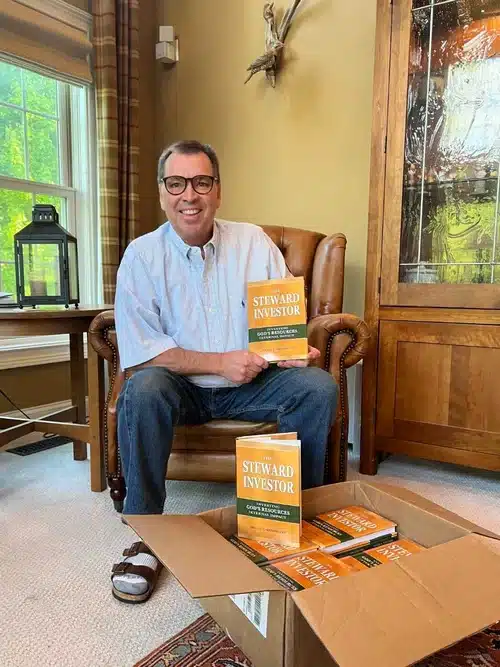
John Coleman: And I would be remiss if I didn’t end the show by just reiterating the Faith Driven Investing book is out now, an electronic copy. There will be hard copies available in January of 2023. It’s from Tyndale and if you go to Faith Driven Investor dot org right now and register for one of the Faith Driven Investor Foundation groups launching in January. If you’re one of the first 200, you will get a free copy of the book. So there is a great deal if you’re going to do that. We encourage everybody to check it out. There are wonderful contributions by Ron and Henry and others, and we’re so grateful to you for listening to us today. Thank you.
Subscribe to the newsletter

Stay Connected
to the Movement

We know that as an Entrepreneur, your most valuable asset is time. So each month we take the very best of the podcast, the blog and all the news, resources, and upcoming events happening across the space and bring it to you.

Episode 133 – Watchdog of the People’s Money with Treasurer Allison Ball

Episode 133 – Watchdog of the People’s Money with Treasurer Allison Ball

Podcast episode

Episode 133 – Watchdog of the People’s Money with Treasurer Allison Ball

All opinions expressed on this podcast, including the team and guests, are solely their opinions. Host and guests may maintain positions in the companies and securities discussed. This podcast is for informational purposes only and should not be relied upon as specific investment advice for any individual or organization.

Episode Transcript

Transcription is done by an AI software. While technology is an incredible tool to automate this process, there will be misspellings and typos that might accompany it. Please keep that in mind as you work through it.

John Coleman: Welcome back to the Faith Driven Investor podcast. This is John Coleman and I am very privileged today to be joined by the State Treasurer of Kentucky, Allison Ball. Treasurer Ball has had a remarkable career dating back to when she was a kid and had a startup and has long lived in financial markets and she has held a number of posts over time, including as the youngest statewide officer in her state for a period of time, the first statewide officer to give birth while in office, I think at one point, which we can dig into and a number of other things. So we’re very privileged to have Allison joining us today. Allison, thanks so much for being on the podcast.

Allison Ball: John Thank you. But I’ll even make this sound even a little bit cooler. I was the youngest woman in the country to serve in a statewide elected office, and I was that for about three years. It’s one of those positions, you know, you’re not going to hold forever. Someone else at some point will be younger than you. But for about three years, I was the youngest woman in the country to hold a statewide elected office.

John Coleman: That is unreal. And when was that? When did you come to statewide elected office?

Allison Ball: So I got elected. I ran in 15, sworn in in 16. So a few years back, but not real long ago. And like I said, for three years I was the youngest one. There are a few younger now, not very many. There was a woman in Missouri who came in a little bit younger than me. And then there was a woman in Michigan who was like three months younger than I am. So I’m still in the young stage when it comes to statewide elected officials.

John Coleman: That’s amazing, Allison. And what a cool witness to other people, too, just to encourage other women in their offices, other people, I mean, to be able to take up big responsibilities early.

Allison Ball: Thank you. I hope so.

John Coleman: Well, where I want to start today, you know, Allison, a lot of folks just won’t be familiar with what a state treasurer does. And obviously, you’ve done the role for some time now. Talk us through what a state treasurer does. How do you spend your day and what are you focused on?

Allison Ball: Sure. Well, I’ll talk to you about my office, because there’s a saying among state treasurers, and it’s kind of funny to think that we have a saying, but we do. And the saying is, if you’ve seen one State Treasurer’s office, you’ve seen one State Treasurer’s office, it’s because there’s a lot of variety. They all have similarities, obviously they all touch on money, most of them do something with investments. So there’s just a variety of ways that those skills are used in Kentucky. I always describe myself as the watchdog of taxpayer dollars, and I’m actually an attorney by background. So I like to emphasize that part because I say that whatever comes out of my office is in line with the Constitution, in line with the law that it’s correct. So it’s not just a bookkeeping role. It actually has an aggressive oversight role as well. So in the background of everything I do, I’m that watchdog of taxpayer dollars. Everything I do deals with money in some way. I deal with our banking relationship. I deal with the IRS on the point person for those entities. And I also do deal with our investments. I sit on our teachers retirement system. It is a board. Most of these are actually run by boards. I chair the State Investment Commission, which does our cash management or debt management, a variety of other things like that. And I’ve been a big proponent of financial literacy, so I brought that to this office that did not exist prior to me being Treasurer. And then one of my favorite things to talk about, I’m going to mention this because this is true in a lot of treasurers offices. If you know this, you want to check this in your own state. I’m in charge of what’s called unclaimed property in Kentucky, and it’s basically a statewide lost and found. Most states have these most states have them run by the treasurer’s office. This is worth you checking on whoever is listening to this. You may have some money that you don’t know about and it is a great thing to talk about it. Thanksgiving her parties is a neat way to be able to make yourself memorable to people because you may find somebody some money. So we actually are part of a national database called Missing Money.com. You can go to our website and see if you got Kentucky money, but if you check missing money.com, that’s a bunch of states put together and you can see if you’ve lost money in Florida or your home state or wherever. And my job is to get people their property back. It’s a privilege to do it. I love doing it. I’m a big believer in property rights. Some states are more interested in keeping that money because they can utilize it while it’s in the state coffers. But it’s been my guidance. My motivation is that I’ve always tried to get the money back, so I’ve returned more money than any other treasurer in Kentucky history, returned about $146 million. So that’s a fun piece of trivia that a lot of people don’t know about, about Treasurer’s offices. But it’s true for most of them, it’s true for mine. So that’s kind of a gambit, a quick gambit of what I do. There’s a few other things of interest. I run a program called Stable Kentucky, and they’re able accounts, their savings and investment accounts for people with disabilities. And that’s something that I brought on while I was treasurer and and a few other things here and there we can talk about. I’m also a big believer in transparency and I watch the transparency website so people could see where their money is going. Coming from the financial sector, I actually was a bankruptcy attorney before being treasurer. I realized how important it is. You can’t make good financial decisions unless you know where your money’s going. And that’s true at the state level, not just in the individual level or business level. So that was one of the things I pushed for when I came into office. So that’s a quick overview of things that are happening in the Kentucky State Treasury. There’s some similarities in other states, but, you know, that’s what’s happening here.

John Coleman: That’s amazing. I didn’t realize the diversity of things that are going on and I kind of want to talk about all of them. I wish we had four or 5 hours today just to start digging in, you gave us some sense of this with the lost property at $146 million. States are managing a lot more in terms of the banking relationships, financial transactions, pools of assets like the cash. You mentioned retirement plans than people think. I think people just don’t think about the pools of assets that are in their states. Would you mind just giving us a little more detail on that? What are those pools and how big are they and what difference does that make to the residents of your states?

Allison Ball: Sure. Well, there are different pools, and of course, they’re in the billions of dollars. And that’s the case all over the country in different states. There are some states, North Carolina is one where their state treasurer is the sole fiduciary of all of their pension systems. So he makes all of the decisions. That’s one end of the spectrum. Everything goes through him. I think even our insurance, if I recall correctly, actually goes for him too. So he has a heavy weight of responsibility on his shoulders. He does a good job, but he’s the one person who’s making those decisions for most of us. We have a team of people. The responsibility is shared. And I’ll tell you, I’ve heard I think it was the 1980s. Once upon a time, a lot of decisions were left to the Treasurer once upon a time, and there was a Treasurer who had figured out how to. This was for the State Investment Commission, so for cash management purposes was actually dividing up among different Kentucky banks and there were some kickbacks involved. So once upon a time they realized that that was probably not a great idea to have one person unless, you’re very confident in that one person. So in Kentucky, that was shifted to a board. So most of my responsibilities, I sit on a board, among others. But most of the time I am the one elected official, so I’m the one who is representing the people as a whole, which I think gives me a pretty powerful voice to represent what we want and just good long term thinking.

John Coleman: And how big? Like the teacher pension plan. What does that look like in Kentucky and how many teachers is that taking care of?

Allison Ball: Sure. So I’ll tell you, one of our great challenges for our teacher retirement system has been we’ve had a very high unfunded liability for a long time. So when I came in office, I knew this was going to be an issue that I was going to have to think a lot about. Right now, it’s about 57% funded, which doesn’t sound great, but actually it’s better than most of the other funds in Kentucky. So that’s our good one. But that’s meant that it’s required some real long term thinking about that particular program. There’s a variety of reasons of why it ended up where it was at. Some of it was political. You had governors and you had members of our state legislature who, instead of wanting to put money into the program, they wanted to use it for things that just had more immediate returns. And that’s always kind of a risk when you’ve got political people involved in things so that they can get more favor and more votes if they’re doing something quickly with money rather than long term. And for the whole time that I’ve been in office, there’s been a much more serious commitment to making sure that the money is that is needed in that program is in there. So that has stem the tide. We’re not bleeding out. Money like that has been going on for decades. It actually was just very unsound for a long time. There really weren’t a lot of actuarial studies done on it, and it was just a quick way to get favor. So they were taking money and just not thinking long term with it. Our state government workers pension, which I actually don’t sit on and I’m running for state auditor right now and the auditor actually has an oversight role for all of our pension systems. So I’m eager to be involved in that. But our state workers is about 15, 17% funded. So that tells you kind of the gamut of where we are. That one has become pretty much a pay as you go. It’s on a much better footing than it was when I got here, because there’s a long term plan and there’s a commitment to make sure the money is there. But that has been in crisis mode for a while, and Kentucky is just going to be a long term commitment to make sure that we’re just careful with it.

John Coleman: That’s amazing. I mean, it is incredible. As you look around the country, there are billions of dollars in these plans. You’re taking care of tens of thousands, often state employees, teachers, folks that people want to support. You know, your normal person out there really wants teachers to have a good retirement. That’s what they signed up for and they want to make sure they’re funded. And yet these pension plans, as you noted, have often been historically at least mismanaged or used for the wrong purposes and therefore been underfunded. One way that people have sought to correct for that is their investment strategies and those. How do you think about investments broadly? I guess in those types of pools of assets? And I know the pools are quite different because you mentioned there’s cash management, which is obviously one thing. These pensions will often have very diversified investment profiles. How do you think about that and what, if any, role as the Treasurer do you play in thinking about those asset allocation strategies to help make sure that the funding increases for those programs?

Allison Ball: Well, one thing that actually is good about the teachers retirement system is that the strategies weren’t bad, so that wasn’t the problem. We’ve actually always gotten pretty good returns. We’re getting good returns now. They’re definitely long term investments. They’re cautious investments. The one for the state employees has had different people at the helm a different time. So strategies have changed quickly from one administration. To another, and that causes problems. Obviously, if you’re talking about long term investments, if you’re changing your strategies, quite often, that takes a toll. And that has there were some efforts on that one to be involved in hedge funds that became very politically unpopular. And the teachers retirement system has actually never invested in hedge funds. And that’s one of those you get what you pay for kind of a thing. But there’s a lot of political disfavor towards that type of an investment. You know, whether rightly or wrongly, people just have an impression of it in the public. And that’s not something the teachers have done. So the teachers, one actually has been pretty good. We get pretty good returns. Definitely think about long term. You know, it is pretty diversified. You know, we do invest in some private equity. So there’s a variety of investments of that program. But I think that what you always have to be careful with is you can’t take great risks with this type of a program. You really have to be in it for the long term. And that’s something that we remind ourselves right now as we’re watching the market behave the way that it’s behaving. You know, we’re in it for the long term. And how are we doing? I’ll tell you one thing that’s interesting about teachers in Kentucky. They live a very long time and we have

John Coleman: Which is good. That’s a good thing.

Allison Ball: Great is great. You know, it’s a fulfilling profession and they make a difference in people’s lives. We have a lot of small towns in Kentucky where teachers have known generations of children and they’re very involved in their communities. So it’s a great way of life. So we have teachers that live a very long time and in Kentucky, you actually only have to be a teacher for 27 years. So if you’ve hit your 27th year while you’re in your forties and you live to be 180, which we actually have, we have teachers that are 108. We actually have quite a few that are over the age of 100. It’s not unusual at all for teachers to live to their eighties and nineties in Kentucky, which is wonderful. But, you know, that makes you realize that you have to take care of their money for a long time and make sure it’s there. So I think we actually send birthday cards to everybody that’s over the age of 100. It’s a way for us to honor them and also keep track of how they’re doing.

John Coleman: That’s it’s amazing. Allison, you know, I want to dig in to one topic that’s been really relevant for states recently and just get your perspective on it. The topic of ESG has come up a lot recently with states. There have been certain states like Texas or West Virginia that have been very vocal because through ESG policies, certain financial institutions have taken negative steps towards industries in states like the oil and gas industry in Texas or coal in West Virginia, etc.. And some of those states have looked unfavorably on that, obviously, and have begun to question whether ESG in their asset management portfolios is good for the residents of their states, at least the way it manifests today and whether it actually helps to achieve investment returns. Talk to me a little bit about that topic as you see it from your perch in Kentucky.

Allison Ball: Sure. Yeah. So from the Kentucky state treasuries perspective, I first began to hear about ESG. I know I’m talking to an audience that’s well familiar to you all know what this is and you encounter it all the time. I usually have to give kind of a rundown of what it means, but I remember when I first got in office and I started going to meetings for state treasurers, and we have a lot of public finance people that come in and talk to us. And I remember it kind of seemed academic, it seemed novel, it seemed like something people were trying to sell and they were pushing it as great stewardship. You know, it’s not just about investments anymore. We’re stewarding. We’re thinking about stakeholders. All these things are telling us. And I kind of just brushed it aside, didn’t take it very seriously. And I also thought and I sort of followed the Milton Friedman approach of, you know, we’re about returns and profits. And that’s what my focus is. I’ve always felt like that’s my responsibility. I’m not supposed to do other things. I have this core responsibility of making sure that I’m getting good returns for people that I’m responsible for. So when I first started here about it, I brushed it aside. I remember other treasurers were similar too. I remember having a conversation not that long ago. This may have been in 19 actually, that I was at a meeting and there was another state treasurer was actually pretty respected and dealt a lot with investments and he was saying, Yeah, we’re having another discussion about that. What is it again? I can’t remember the acronym. There’s the letters E something or other. So that was sort of the attitude among state treasurers for a while is that it was just it was a novelty. It was something that was trying to be sold to us. And some people gravitated to it and others didn’t. And treasurers, for the most part, are a pretty conservative bunch. They’re pretty fiscally responsible bunch you know, whether you’re Republican or Democrat, we kind of tend to be that way. So that was sort of the attitude. Well, in the last year or so, I really seen a big push to make it the only game in town. And this has been a warning to me as a Kentuckian. I told you about where our pensions are at 57% funded at about 17% funded. They’re not in the place where we need to play around. You know, you’ve got these older teachers who are 100 plus years old. My job is to make sure that they have the money when they retire for as long as they’re retired. That money is there for them. It’s not my job to play around with those funds. And Kentucky is different from some other places. You mentioned West Virginia. You mentioned Texas. Kentucky is like them that we are a fossil fuel state. I’m from the mountains of eastern Kentucky and from a small town in that Hatfield McCoy area. I’ve got generations of family members who have been coal miners, so coal is near and dear to my heart. I know the value of it. I know the value of it to America. I know the importance of. That kind of cheap energy and oil and gas. You may not realize this is actually big in Kentucky as well, and it’s big in eastern Kentucky, where I’m from. So for me, you know, I hear about this ESG and I start to worry about am I actually thinking about investments in terms of returns? And I actually taking care of this the way I’m supposed to do it. And there’s a double whammy in Kentucky because it affects our economy, because there’s been a big push on the E side, on the environmental side to truly target and eliminate the fossil fuel industry. And a lot of people have been pretty straight up about it. I talk to coal operators often and they tell me that they’re told they won’t be able to get financing because the particular bank that they’re trying to work with, Will maybe they’ve worked with for a long time, doesn’t like coal anymore. And it’s very much an ideology, I think, rather than an investment strategy. I know that people will argue with you and tell you otherwise, but it feels very much like an ideology to me, rather than just the traditional type of investing that we’ve looked at in the past. And I think there’s strong argument. So that’s the way that’s the case. So in Kentucky, it’s something that I’ve been very involved in. We actually got a bill passed last year about the fossil fuel industry that said that if you are you know, if you’re a bank, if you’re any kind of a company, if you’re an asset manager, if you are trying to boycott the fossil fuel industry for trying to eliminate the fossil fuel industry, harm it specifically because of the work that they do, then we’re not going to do business with you as a state. So we got that passed and it’s not going to work with us. We’re not going to work with you. And as far as my fiduciary obligations, this is true of many places. We have a sole interest obligation, meaning, you know, we are investing for the sole interest of returns for those beneficiaries. And then we have another one. We say, Kentucky, that we’re supposed to invest to support our economy and our industry in Kentucky, and that includes fossil fuels. So I actually asked our attorney general recently, given that obligation, if it would even be legal to play around in the ESG world. And I got a resounding answer from the AG’s office that said it would be illegal given that obligation. And I think that’s actually probably pretty true. A lot of other states do. So I would caution if you are in the public finance world, I would caution you before you jump into a lot of ESG stuff because you actually may be breaching your fiduciary duties.

John Coleman: That’s so interesting, Allison. One of the things we say around our firm, the firm I work at, is that all investing is impact investing. It’s just a question what impact you’re having. And this idea, you know, ESG is just one manifestation of particular manifestation of a set of values that you can invest along this idea, for example, that you all can invest in a way that is beneficial to the residents of Kentucky that serves the interests of Kentuckians. That’s an expression of values that may stand in contradistinction to some of the ESG values that is very much aligned with how the resources of your state can support the people of your state. I think people miss that. I think ESG is now become known as the way you express values. And what’s lost in that is it’s just one particular set of values you can express. There are other ways in which you can express your values through your financial capital. And I think that’s one of the encouraging things that’s happened, is people are waking up to that and thinking about the ways in which they can leverage the assets that they have and the influence that they have in a way that really serves the people that they’re intended to serve.

Allison Ball: Yeah, that’s a great point. And, you know, you’re coming from a different world than I am because I’m stewarding the people’s dollars. So I have to be careful in a way, you know. But from a Christian perspective, you were in a wonderful place where you can invest in the people that you’re investing for, in ways that are expressing those values and are consistent with that. And of course, as a state elected official, I have to be mindful of the state as a whole how I do that. But, you know, you’re in a great place where if you want to be supporting things that are consistent with your Christian faith, you have the great ability to do that and more power to you. And for me, I have to be so careful to be doing things the way that the citizens of Kentucky have put me here to do.

John Coleman: And that clarity is a great thing for you because it makes your mandate very clear and it makes the parameters with which you operate very clear. I want to back up I want to circle back to some of the great programs that you just mentioned, because it sounds like you’re very passionate about them. But before we do that, I want to get more of your story. So I read that you are a ninth generation Kentuckian, which seems like a very long time ago, and you just mentioned growing up in eastern Kentucky. Tell me more about your family history there and what that means to you as a public servant in Kentucky.

Allison Ball: Yes. Yes. So like you just said, I’m ninth generation from eastern Kentucky, from the same small county. It’s Floyd County in the mountains, in the coalfields. I actually just lost both of my grandparents. They’ve been with me for my whole life. My papa have just passed away in 95 and my nanny just passed away at 92 and the passed away in the last month. And they’ve just been a tremendous influence to me. I’ve always told people I’m related to about half the counties as my family’s been there so long. We’ve been there since the 1790s, and it’s a wonderful way to feel rooted. You know, I really know where I’m from. There are not many people in the country now, I think, that have that kind of history with the place. You know, I know my family, I know my ancestry. I love Eastern Kentucky. It is a rugged and independent area. It’s not an easy area to live in. You know, there’s hollers where the sun doesn’t shine. There are mountains. It’s I. Isolated. But if you’re from there, you’re probably Scotch Irish. Your family came over at some point in the early 1800s or late 1700s. And if you’ve decided to live that far away, that off the grid back then, you probably have some independent streak to you. And that has been passed on for a long time. So I’m very, very proud of the region that I’m from. I love it. It’s beautiful. It’s a place where it’s in the Bible Belt. So, you know, everybody’s got their own family churches and their own family graveyards. And it’s a beautiful, incredible area. And I’m just so thankful that’s where I’m from. It’s been a wonderful place to be from, so it really makes me just have a deep heart, not just for my region, but also for my state.

John Coleman: That’s great, Allison. You know, it’s interesting to me because I want to get to your path in public service. You actually started very entrepreneurial as well. And I, I read an interesting story that I want to let you tell. But tell me a little bit about your entrepreneurial streak as a young person and how you came to really appreciate the financial world that led you to the path you’re on today.

Allison Ball: Sure. Yeah, I know exactly what you’re referring to. So when I was a kid, my mom and dad really wanted to teach me money management principles and nobody had taught them. I referenced my papa a little while ago. My nanny, both of them grew up in the Great Depression. My papa knew how to stretch a dollar, you know, a thousand ways. He was always wheeling and dealing and selling things that he’d had other people just great at money management. But he never pass that on to my dad. And then my mom, she grew up somewhere else, and she just didn’t really get that from her parents either. So both of my parents, smart people, my dad was working on his Ph.D. when I was born. My mom was a schoolteacher, and they had never learned these money management principles. Obviously smart. My dad has told me that when I was born he had to sell the hubcaps off his car in order to buy diapers for me just because no one had really taught them. So at some point in time, there was this blue collar millionaire that took pity on my dad and took him under his wing and just started teaching my dad money management principles. And his name was Dexter Yager. He was incredible, man. He passed away a few years ago. A huge influence on my whole family. We loved him dearly. My brother is actually named after him. My brothers, Johnathan Dexter. Huge influence. So he started teaching my parents these principles. My mom and dad thought, Well, we got to do this to Allison and we’ve got to pass this on to the next generation. It wasn’t passed on to us. We’ve got to do a better job. So they started giving me an allowance and they gave me $5 a week, $20 a month. And I remember feeling like I was set for life. You know, I had this steady income that just came in and they wanted me to learn to think long term. You know, the goal set to save my money was I was buying my own things that I would be really responsible with. And I wasn’t at all. I would spend it as soon as it came, and as soon as they gave it to me, it was gone. And my parents were watching this for a while and they came to me and they said, Allison, we’ve decided to stop giving you an allowance because this isn’t working. And that the words they used is, Allison, you’re becoming a socialist. So I had a early poli sci lesson as a nine year old when this happened. So they cut off my allowance. They said that, you know, you’re going have to figure out some way to earn some money and we’re not going to give it to you anymore. You’re going to figure this out. So I was very angry about this and I was pouty and I probably had become kind of entitled spoiled at this point because I really felt like that I just just deserved this money. And so after a few months of being pretty pouty, I realized that they were not going to change their mind. And I would have to come up with some way to get some money on my own. So I launched a business. I started Positive Pencils International, so I was thinking a worldwide company, and they were positive pencils. Like I said, they had positive sayings on them. They said, I’m a winner, believe in yourself. You can do it different, like peppy little things. And I sold them for $0.25 each or four for $1. So it was a great deal. And I remember the first week that I sold my pencils, This is pre-social media. So like I had to have face to face conversations with people to get them to buy my pencils. So, you know, I developed a lot of skills through that, you know, some courage to be able to have those kinds of conversations. And I remember after my first week of selling my pencils, I went to everyone I could and I calculated how much I made profit and I made $200 profit by the end of the first week. And that was a huge moment in my life for a lot of reasons. I remember thinking, Oh my goodness, my parents were right. I have so much more money now than I had before, but all of a sudden money had a lot more value to me because I had worked for it. And anything that I want to buy after that point, I would calculate, okay, how many pencils does it take to buy this video game or whatever it was that I wanted? So I actually became very, very careful with my money all through my teenage years. I was pretty stingy. But I also learned to goal set. And, you know, anything that I really wanted to buy, I knew I had the ability to buy it because I could earn it myself. So I became a big believer in entrepreneurialism of the free market of hard work. I actually think that’s one reason why I ran for office early was because I had a business as a kid and I didn’t think to myself, I’ve got to wait till I’m an adult [….] school to be able to do something. I knew I could start doing things now. So a huge lesson for me. It’s foundation of my life. I actually kept my business until I went to college and then I sold it to my younger brother. So it continued for a while and he kept it going and it doesn’t exist anymore. But it was a thriving business for a long time. Huge lesson for me and also a reason why I believe in financial literacy. I know how important that was for me as a kid to learn that lesson, so I want to pass that on.

John Coleman: That’s amazing. Did your brother get a pretty good deal on the business or did you negotiate hard?

Allison Ball: So, you know, my brother is 13 years younger than I am. There’s a big age difference for the two of us. So I actually had him apprentice for about two years before I sold it to him. So I want to make sure he was ready for this responsibility. And we worked out a deal where I got what I felt like I needed out of it. And I, you know, I didn’t make it too hard for him either. I also had an interest in the business continuing on. So it was okay.

John Coleman: It’s okay to incorporate other things in the sale price, right?

Allison Ball: That’s right.

John Coleman: You touched on a couple of themes there I want to pick up. The first is just how it prepared you to take office at an early age. And you mentioned in the country you were the youngest statewide officer for three years and took on this enormous responsibility that we’ve discussed. How did you handle that enormous responsibility and what advice would you have to others who might seek out that kind of responsibility?

Allison Ball: Sure. Well, I really do believe that God has a purpose and a plan for everybody. My dad’s good friend is Charles Stanley, and my dad was an associate pastor in Atlanta for a little while under him. And Charles Stanley always says, you know, God’s got a will and a purpose and a plan for you. My dad always said that to me. I really believe that’s true. So I do believe that, you know, there’s a calling on your life. And sometimes it’s not always easy to figure out what it is you’re supposed to be doing. But I felt like I was supposed to go to law school after I graduated undergrad. And then I moved back home to Prestonburg, where I’m from. And I practiced law for a while. I was a prosecutor for a number of years, and then I gravitated towards bankruptcy law, and I really just had an interest in that. I’ve always had an interest in economics and policy in public service. I’ll tell you the area I’m from, the county I’m from. When I ran for office, it’s 90% registered the party that I am not. So.

John Coleman: Oh, wow.

Allison Ball: Like, I would love to run for office, but I don’t know that I could ever do this from where I’m from. And somebody planted a seed in my head and said, You know what? You should run for a statewide office. I think you’ve got the background where you could do something like that. At that point in time the Treasurer’s office had been underutilized and I don’t think people understood it very well. They didn’t know it and I thought, you know, with a background like mine, I really feel like I could take this office and I could run with it. And I’d always felt like God opened doors at different times. So I really had God just leading me. I didn’t necessarily have it in a sense from the Lord that God was saying, I want you to run for this office now. But I kept seeing doors open and as I would pray through it, I really felt like that was kind of taking me step by step by step. So I ran for office after never having run for anything before. Outside of law school student government. I was a class rep in our Student Bar Association, but except for that, I had never run for office before. So I put my hat in the ring. I had a three way primary and of course I won the three way primary. The person who came in second was 13 points less than me, and then I won that general by 22 points. I was the highest vote getter that year. The way Kentucky does it is we have a gubernatorial year who everybody has a statewide office runs that year. So attorney general, governor, secretary of state, treasurer, we all run the seven that run that year. So I was the top vote getter of everybody who ran that year. When I ran for reelection, I was also the top vote getter. So that was a fun thing. But I really felt like God just gave a great favor. He was with me through all of that. I just had a sense of his direction. So I really do believe that there has to be a calling. I’ll tell you, politics is not easy. I think the world of finance is not easy. But I really believe that we need Christians in public office. I believe we need Christians in the financial sector. As I see things develop in the ESG world, one of the things that has come to me over and over and over again as though we need Christians at high levels in these organizations, because one of the reasons why we see shifts that we as believers aren’t comfortable with is because there aren’t Christians who are at the helm of these particular industries. So I’m a big believer in follow God’s calling, follow God’s guidance in that.

John Coleman: That’s amazing, Allison, and touch on that a little bit more. So you are a person of sincere faith and longstanding faith. How does that really influence your approach to public service, your approach to finances, your interactions with the people you represent?

Allison Ball: Sure. Well, it influences everything I do. So when I was beginning to see doors open as I was considering running for office, I remember having a moment where I was at a worship service at the University of Pikeville. Those were college students. I was not a college student, but I just happened to be there at that time with some friends. And I remember sitting in during the time of worship and just really had this sense that God was going to give me opportunities and then I was going to do very well at certain things, but that God was telling me I had to be authentically a follower of Jesus at the same time. And, you know, these opportunities are great, but these opportunities are not for me that I was supposed to be authentically a believer, authentically a follower of Jesus. So I have a mandate. I know that God blesses me when I’m authentically a follower of him. I guess the point really anyway, isn’t it? Like this is why we’re always on mission in our lives. So that’s always guided me in everything I do. You know, we have a direction as believers, we people of integrity. And that’s so important if you’re dealing with finances, you know, honesty, accountability, stewardship, all of those things are core Christian principles. They’re being Christlike. So all of those things influence me in a great way. We live in a time where politics is very volatile and I am very open about being a follower of Jesus. I would describe myself as a person of faith whenever I talk. And so I’m mindful that I’m a witness. For some people, I may be the only Christian they interact with. So I have to make sure that the image they get when they’re with me is an image that reflects well of Jesus.

John Coleman: That is such a good reminder. I know now I work in an explicitly faith driven firm and and it is a good check on any behavior I might exhibit that doesn’t line up with that. You feel an additional sense of obligation, and I’m certainly not in a public office in the way that you are, but I think we are. It’s a good reminder that we’re called to something even greater than our profession in or witnesses to something even greater than our profession. And so we have a higher standard that we are encouraged to abide by than even the standards we would put on ourselves from a professional point of view. You know, one of the interesting parts of your story, Allison, in addition to your faith in your youth, is that in two industries that are very heavily male, both financial services of various times, which traditionally have been heavily male and public service, which has traditionally been heavily male. You’ve been a woman really pioneering that. I mean, the first I love that statistic, that first statewide officer to give birth while in office, which is just amazing. What does it meant to you to be a woman in office? And as you’re talking to other women who are listening to this podcast, how would you encourage them about the path that they want to pursue, either in finance and investments or in public service?

Allison Ball: That’s a great question. And I’ll tell you, I actually was the first one to give birth twice. So not just one. So, so, but I also had a second child. So I may hold the record for a little bit. Maybe we’ll have a third and then we’ll really solidify this record.

John Coleman: You’ll be like Tom Brady setting records and just setting them again and again, outpacing everybody. Yeah.

Allison Ball: That’s right. That’s right. But something I actually did not have an awareness of until I actually got in office, I didn’t know that I was the youngest woman to be elected at a statewide level, so I’d gotten elected. So it wasn’t part of my talking point. It wasn’t something I was really aware of practicing law. I often was the only woman in the courtroom. And so this is somebody I’ve experienced for most of my life, at least from a professional perspective. But one thing I did not realize is how encouraging it is to other women to see a woman do something like this. I remember when I was at UK law school one time and one woman told me this young woman, and she said that you cannot be what you don’t see. And so she was thanking me because she said now she’s see someone who’s doing this. So I did not realize this was going to be part of God’s story for me. But I hope that it is encouraging, and I think that it is encouraging, I have women to be all the time that say they felt like God has called them into something. And seeing another woman doing this, you know, in the financial sector as an elected official, in a place where there are typically men, that just gives them the courage, they can do it, too. It’s actually been really important, I think, to be a mom and a wife and do this. You know, people have different seasons, different responsibilities and different callings. I’m not saying that that every mom out there needs to hold a demanding job like this. That’s not the case. You know, you have to do what you feel called to do, what God’s leading you in your life to do. But there’s a lot of women who said that they wanted to do something like this and this encourages them that this actually is a possibility. So, you know, my husband and I, we actually got married after I got sworn in. We got engaged about a month after I was sworn in. We got married my first year in office, a year, nine months and two days later we had Levi and then we had Marigold last year. So a lot of people have been able to see my story as it’s progressed. And it’s neat because I realize like it’s God’s timing or we got married a little bit later than a lot of other people do, but that was God’s timing and I really like that also is an encouragement to people is that if you’re just seeking God in your trust, in God, you’re doing what He’s led you to do. God can put all these pieces together. You know who you’re supposed to be married to. The children that he wants you to have, how you want you to do it. So I’ve always felt like if God is calling me into elected officials role and I feel like he has and he called me to get married, which he did, and he’s called me to be a mom of two children. He’s called me to do each of those things well, and there’s a way to do each of those things well. So I hope that is a great encouragement to women who watch this. Women often. And there’s books after books after books on this. And I do think it’s true that women a lot of times self disqualify. So I always try to take a moment to just really encourage women that they have a lot more gifts, skills, capabilities, and they realize and we need their voice. We have so many wonderful men doing great things, but we need perspective of women too. We don’t want to lose great talent just because you know, your self disqualifying. And I think many times we as Christians kind of fall in many traditional roles, so we probably even more of that with tendency to do that. So I’m always trying to encourage women that don’t self disqualify. I’ll say real quick, one quote that I love that I often refer to when I talk to women. Leslie Rutledge is the first female attorney general of Arkansas. She’s running for lieutenant governor right now. She was the first to have a baby while serving in office at a constitutional level. So it’s a small sorority. We know each other. And I remember Leslie told me that when she was running for office the first time, people told her, Are you ready for the rough and tumble of politics? It’s mean. Can you handle this? Are you ready? And she told them, any woman who survived junior high can handle anything that politics can throw at you. And I love that because that’s not true just for politics. It’s true for any profession. That is a hard profession. You know, if you’re a woman who survives junior high, you probably got what it takes to do whatever it is God is calling you to do. So I’m always trying to encourage women that we need their voice, we need their involvement, we need a greater level of leadership from women in the country.

John Coleman: And I think it’s neat that you’re able to demonstrate there is often this false choice, I think, in our society that you either need to pursue a professional path or need to have a family. Right. And I know it’s quite difficult. So that’s not underestimating that. I’m married to a wonderful woman who’s pursued various professional things, but you can’t have both of those things actually. And that a woman can achieve a family life, as well as a very successful professional career, I think is such an important message. The other that you touched on, there was a great study or maybe a disappointing study in that they looked at how women and men approach job applications. And, you know, job applications are written to be the ideal candidate, often way overinflated for what the role requires. And maybe unsurprisingly, men would apply for anything regardless of whether they were actually qualified for it. Even if they were dramatically underqualified, men would kind of throw their hat in the ring and move forward, and women would read it very carefully. And if they were disqualified on any front would, as you termed it, self disqualify. And it is important, I think, that message that you’re delivering, that you shouldn’t underestimate yourself. Right. You’re actually capable of doing these jobs, taking on big roles. And don’t be the person who disqualifies yourself, right? Force others to disqualify you if you’re legitimately not qualified. But don’t be afraid to take risk and put your hat in the ring, even for something as big as a statewide public office. I want to touch you know, you’re responsible for great public stewardship in your private life. You’re also stewarding something related to this last topic of women. I know that you and Asa have been big supporters of crisis pregnancy centers, something that’s in the news quite a lot now with the Dobbs ruling. Why does that matter to you and what role does that play in your life?

Allison Ball: Sure. Well, both Asa and I are huge advocates for life, and that’s something we both deeply care about. I remember when we were on our very first date, Asa started talking to me about some things that were important to him, just making sure we were on the same page and we started talking about what we felt about life. And Asa had told me the story is an amazing story about how his mom was, I think, on some steroids at the time that he was conceived. And so the doctor came and said he is at great risk to have all kinds of health problems. He’s going to have a lot of mental disabilities and that you are young. So my advice to you, the doctor said, is just a board game. Try again. Another point. You know, this is not worth the risk. And Asa told me his parents were kind of shocked and I thought, well, a doctor knows what he’s talking about. And they were kind of inclined to do that. And they were actually at a Christian college at the time. So they ended up talking to another doctor who was the doctor on campus. And that doctor, I’m told, reached across the table and said, Do not abort this child. God has a plan for this child. And she started talking to Asa’s mom about what that meant and everything. So they ended up going ahead of having Asa. And what I love about that story is that Asa was born perfectly healthy and he talks about how his dad, when Asa was born. Is that you ever said, does he look normal? Does he have his fingers? Does he have it? Those were serious questions they were asking about Asa. And of course, he’s a genius and he’s wonderful and exemplifies everything that’s wonderful about manhood. You know, I just think he’s perfect. But they were going to abort him. And, you know, he’s the person who’s my husband and a father, my children and a tremendous leader. So he has always just been a great advocate abouut that he cares about it personally. It’s important to him. So we talked about that and it was one of the first causes that I began to care about as a kid when my parents would start to talk to me about issues that were important. So we have always cared about this and we cared about it even more. We had our own little babies. I remember that we went to hear the ultrasound and the heartbeat and see Levi moving around at I think it was a day before 20 weeks. And in Kentucky, 20 weeks is the cutoff after you can’t have an abortion after that point. And we just were just so deeply moved, hearing him, his heartbeat, watching him move around there, the only protection that little fellow had or a precious little boy was our decisions, which is just kind of a moving moment for us. So we also being working parents, little ones. We know how hard it is to raise little ones. And we want to support moms who have just made this incredibly heroic and sacrificial decision to keep these babies, whether it’s through adoption or keep them themselves. So we know how difficult it is. It’s costly. You lose a lot of sleep. So we want to rally behind all these incredibly heroic moms who are doing this, whether they’re married or they’ve got a dad who’s in the picture or they’re doing it on their own, however they’re doing it, we want to rally around them and rally around these precious little lives that God has tremendous plans for. So we’ve always given, we’ve always cared, but that’s been on our top list and we give special offerings. And Levi was born and we did it again when Marigold was born, just thanking God for our healthy little children. So that’s something we care about deeply.

John Coleman: It’s a great testimony, Allison. I know we’re running a bit short now, but I want to end with the question we ask everyone, which is this is the Faith Driven Investor podcast, and we like to ask folks, you know, is there anything that you’re learning from God through scripture right now that you’d want to share with others that’s making an impact on you?

Allison Ball: Sure. Boy, I tell you, this is actually a heavy time in my life because like I told you a few moments ago, I just lost my my grandfather, my grandmother. So my papa my nanny, who I was hugely close to we actually lived with them for a year. So when my parents were trying to figure out their finances, they ended up they sold their house in Atlanta and their plan was just to conserve money. So we lived for a year in the back bedroom of my grandparents house and losing them has been it was a shock. Both of them were surprised they were not having ill health or anything. And this has just been a you know, if you believe the things that Jesus says about eternal life and his faithfulness, then you would believe it in the hard times. And this has been a hard time for me personally because of losing them. So have just really been just pouring into what Jesus says about his faithfulness and what He says about how He goes to prepare a place for you in heaven and kind of what that is like. So in a deep way, that’s been something that God’s been helping me through. I know I’m not the first one to go through loss. You know, everyone goes there’s at some point in time. But this has been the most impactful loss that I’ve gone through. And just it’s been important seeing God’s faithfulness in this time.

John Coleman: Well, Allison, our prayers will be with you as you process that loss. I know that is that is really hard to lose such a valued family member. And man, I just think so many people will be encouraged by this. I think many people will wish they were a Kentuckian now getting to hear what great representation they would have. And I think it’s such an encouragement to others who might, at a young age or as a woman or just as a person, generally decide to take up the mantle of public service and to do so in a relatively complex office like Treasury, where you do have such diverse responsibilities. So we are very grateful to you for coming on the Faith Driven Investor podcast, and I hope we can get you back again sometime soon.

Allison Ball: Thank you very much. It was a joy.

Subscribe to the newsletter

Stay Connected
to the Movement

We know that as an Entrepreneur, your most valuable asset is time. So each month we take the very best of the podcast, the blog and all the news, resources, and upcoming events happening across the space and bring it to you.

Episode 134 – Investing in Light of the Gospel with Finny Kuruvilla

Episode 134 – Investing in Light of the Gospel with Finny Kuruvilla

Podcast episode

Episode 134 – Investing in Light of the Gospel with Finny Kuruvilla

Jesus preached that his gospel message was good news to the poor. Yet investing seems to be mostly good news for the rich. In this talk from the 2022 Faith Driven Investor Conference, Dr. Kuruvilla proposes that investing, when done strategically, can partly fulfill the call to serve the global poor, using real-life case studies to highlight the redemptive potential of money that is deployed collaboratively and biblically. 

All opinions expressed on this podcast, including the team and guests, are solely their opinions. Host and guests may maintain positions in the companies and securities discussed. This podcast is for informational purposes only and should not be relied upon as specific investment advice for any individual or organization.

Episode Transcript

Transcription is done by an AI software. While technology is an incredible tool to automate this process, there will be misspellings and typos that might accompany it. Please keep that in mind as you work through it.

Finny Kuruvilla: How do we connect the huge problem of global poverty with the practice of investing? A lot of people cynically believe that investing is simply about helping the rich build bigger barns. But Faith Driven Investor have a higher calling. We believe that we should responsibly and biblically manage our money by, yes, wisely allocating our resources. But by doing that in a way where we’re promoting human flourishing, including perhaps especially championing the interests of the poor, the widow and the orphan. I’m going to give you four points today about how to practically connect our our world to the problem of global poverty.

Finny Kuruvilla: Number one, we need to respond to poverty with a Christian worldview. Jesus’s first sermon that he gave in Nazareth, he opened with this line, The spirit of the Lord is upon me because He is anointed me to preach the gospel to the poor. He sent me to heal the brokenhearted, to proclaim liberty to the captives, recovery of sight to the blind, and to set at liberty those who are oppressed. Now, when we hear Jesus talking about the Gospel being good news for the poor, some people react and think, Wait a minute, what about dependency and handouts? And how does all this work? The Bible is a very wise document. And to illustrate this in first Timothy five, it talks about how younger widows, those who are less than 60 years old, aren’t supposed to be financially supported by the church. And Paul tells us why. He says that those very women would become idle and given over to gossip. And so this is a great example of where we are told not to simply commit mindless giving, but to think holistically about the person’s welfare. This should give us some kind of idea that, in fact, the Bible is more sophisticated and how it thinks about poverty. This kind of sophistication is badly needed in the world today, where we have changing and tragic dynamics about global poverty. Consider this today obesity has far overtaken starvation as a cause of death in the world. Addiction of all sorts food, alcohol, drugs, sex, technology, those kinds of addictions are more bound up with poverty than ever before. And you compound that with violence in the community in many parts of Latin America. Homicide is on the rise, particularly ending the lives tragically of many young men. All of this leads to vastly different outcomes. For example, men in Iceland live on average to 80 years old. But in Haiti, men live to 33. What a tragedy. How do we deal with this? Your beliefs about poverty are going to determine your approach. So if you believe the cause of poverty is a lack of material resources, well, then your approach is going to be to give money. If you believe the cause of poverty is a lack of knowledge, then you’re going to try to educate the poor. If you believe the cause of poverty is oppression by powerful people, then you will try to work for social justice. Instead, I’m going to call us to move past exclusively secular models of poverty, of poverty. Brian Myers has said it so well. He says the secular approaches share a common perspective, which is the modern worldview. All are materialistic, often technocratic, and reflect a firm belief in human reason, technology and money as the keys to solving the problem of poverty. Their biggest common gap lies in the absence of religion and things spiritual, in their explanation of why people are poor and what can be done to help them. So how do we think about this from a Christian perspective? Myers and others have made the case that poverty is primarily at its root cause about disordered and sin damaged relationships. We all live in a web of relationships. We’re relating to our communities. We’re relating to the environment. We’re relating to God. We’re relating to ourselves. And when those relationships become damaged by sin, it makes us vulnerable to poverty. Think, for example, about the person who wants to start a business but has to go to the local loan shark who might charge two, 300, 400% interest on that loan. Think about someone who is wanting to appease a God and has to give away precious resources in the form of an animal to sacrifice. Or communities where theft and lying are commonplace. Or someone who doesn’t believe that they have dominion over creation and the creative capacities to start new, productive and flourishing businesses. All of these kinds of problems abound in the world of poverty. So what do we do? Healing these kinds of sin, damage, relationships and defective worldviews. This is very challenging work. This is not glamorous. It’s long and it’s slow. But this is where the role of the church is essential to heal relationships and worldviews requires people not just writing check. This calls forth the necessity of visitation. I am so struck by the verse, a very famous verse, James 1:27 that says religion that is pure and undefiled before God, the Father is this to visit orphans and widows in their affliction, not to write a check to orphans and widows in their affliction, but to visit orphans and widows and their affliction, and to keep oneself unstained from the world.

Finny Kuruvilla: Number two live simply give generously and intelligently. Now we all know this, but we still don’t do very well at it. When John the Baptist begins his ministry, he says that we’re to bear fruits in keeping with repentance. And he says whoever has two tunics is to share with him who has none. We need to go to our closets and ask how many tunics do we have? And to repent of of hoarding and not putting into practice the basics of what love your neighbor is. Jesus tells us in Luke 12 to sell our possessions and give to the needy and to thus procure for ourselves money bags that don’t grow old that that will be enduring. I love the quote from Mahatma Gandhi who says live simply that others may simply live. He also says, the world has enough for everyone’s need, but not for everyone’s greed.

Finny Kuruvilla: Number three, we should avoid investments that snare the poor into addiction and slavery. I mentioned earlier that addiction is so bound up with poverty, and I think most of us know this at a head level, but I want us to know it at a heart level. The power of business to snare and to propagate poverty, whether it be through alcohol addiction, through gambling, through through cigarets, through pornography. And the whole realm of sex trafficking. Through a lot of the idleness and addictions that have happened with with our phones and social media, etc.. It is it is absolutely extraordinary how our dollars expressed in business can affect the world for good or for bad. We have described in the past an example that is particularly poignant for me. Many of the cigaret companies have figured out, well, in the united states you can’t sell to minors. There’s pretty strict laws against that. But abroad there’s there’s much less restriction and much less control over that. In Indonesia, as an example, the average age to begin smoking has fallen from 19 to 7 years old. And we did some research where the largest beneficiaries, the largest shareholders of these very companies are college 5 to 9 savings plans, meaning American mothers and fathers who are saving for their children are in fact doing that by benefiting from putting into addiction minors on the other side of the globe. How tragic that is. We should obviously avoid these kinds of behaviors as faith driven investors, as Christians who want to be faithful.

Finny Kuruvilla: Number four, we should embrace investments that lift the vulnerable out of poverty. I want us to think for a moment about the biblical principle of gleaning. What is gleaning? Gleaning is where if you’re a farmer and you have a field, you’re supposed to leave the edges of your field unharvested so that the poor can come and glean on their own and thus provide food for their households. This is a very important principle. I want us to think about gleaning in the context of who the stakeholders are of a business today. We have talked about at Eventide how there are six stakeholders, customers, employees, the supply chain, host communities, the environment, and then broader society embedded within society and in host communities are the poor, whether they’re locally or globally present. What does it mean for a business and what does it mean for us as investors to follow this principle of gleaning today in our world? We at Eventide have made the decision to pursue what we call the 1% initiative. It’s just taking 1% of our capital, a modest percentage of our capital, and say we’re going to devote this to this problem of alleviating global poverty. How do we do this? We do this by primarily by harnessing the positive power of business, by taking that 1% of the capital and giving it to businesses that are in the developing world that are employing the global poor to pull them out of poverty with dignity. Last year, we announced a partnership with World Vision and its affiliate, the Vision Fund, which we think is one of the best, if not the best example of a company that’s out there in the developing world employing the global poor. And here, this $37 million is capital that we get back. It’s a modest return on our investment. But we, again, think this is so important to follow this biblical principle of gleaning. So I want to leave you with a challenge here. Will you commit 1% of your investment capital for gleaning by the global poor?

Finny Kuruvilla: In conclusion, I’ve given you four ways that we can address this problem of global poverty. Number one, respond to poverty with a Christian worldview. Number two, live simply, give generously and intelligently. Number three, avoid investments that sneer the poor into addiction and slavery. And number four, embrace investments that lift the vulnerable out of poverty. Let’s honor our Lord. Let’s honor Jesus by making the gospel. Good news again for the poor.

Subscribe to the newsletter

Stay Connected
to the Movement

We know that as an Entrepreneur, your most valuable asset is time. So each month we take the very best of the podcast, the blog and all the news, resources, and upcoming events happening across the space and bring it to you.

Episode 136 – Marks on the Markets: Is the Fall of FTX the Fall of Crypto?

Episode 136 – Marks on the Markets: Is the Fall of FTX the Fall of Crypto?

Podcast episode

Episode 136 – Marks on the Markets: Is the Fall of FTX the Fall of Crypto?

FTX has fallen, taking the ‘King of Crypto’ with him. Breaux Walker, Fintech Crypto Investment Banker, and Jake Thomsen, Partner at Sovereign’s Capital join the podcast to talk about what the fall of the FTX empire means for the world of cryptocurrencies. 

Breaux and Jake dive into risk, regulation, venture capitalists, and tokenomics in this timely episode. They also tackle questions like: how can Faith Driven Investors think about crypto? What are global problems that blockchain technology is uniquely positioned to address? And what does it look like to be a person who seeks to love and serve in a place that has been defined by greed, and naivete?

Tune in to hear more, and don’t forget to subscribe for more insight from Christian investors.

Faith Driven Investor is dedicated to helping Christ-following investors, fund managers, and financial advisors proactively look for ways to use capital to impact the world for God’s glory. Get connected to other like like-minded investors at faithdriveninvestor.org/

All opinions expressed on this podcast, including the team and guests, are solely their opinions. Host and guests may maintain positions in the companies and securities discussed. This podcast is for informational purposes only and should not be relied upon as specific investment advice for any individual or organization.

Episode Transcript

Transcription is done by an AI software. While technology is an incredible tool to automate this process, there will be misspellings and typos that might accompany it. Please keep that in mind as you work through it.

John Coleman: Hello and welcome back to the Faith Driven Investor podcast and our monthly Mark’s On the Market Session. I’m John Coleman, your host for today and I’m really excited about the podcast today. Obviously in the news at the moment are cryptocurrencies, crypto exchanges and all types of Web 3.0 related technologies and the incredible distress that’s sweeping through the markets right now, at least partially as a result of the collapse of FTX and Alameda trading, two of the biggest institutions in that area. This is a fascinating topic. It’s a topic where there is a ton of intersection for a Faith Driven Investor in particular. And I’m really excited to introduce the two folks we have with us today. One is my guest slash co-host. One of my partners at Sovereign’s Capital, Jake Thompson, who leads our venture capital investing segment. The handsomest man in faith driven investing and a big advocate of Web 3.0. And Jake, it’s awesome to have you on co-hosting today.

Jake Thompson: It’s awesome to be here even though you’ve just lost all credibility for everyone involved here. But thank you, John. It’s good to be with you.

John Coleman: It is in audio podcast, Jake. So they’re just taking me at my word.

Jake Thompson: Fair enough.

John Coleman: And we’re excited to welcome as a guest a gentleman who’s had just a wealth of experience in this space. Breaux Walker, Breaux is the managing director at Architect Partners. He’s a partner at RJ FinTech International. He’s effectively an investment banker in the crypto space, has deep experience both in China and the United States, and a deep history in the corporate world, in startups and in finance dating back to I think, Breaux, you started your career at Merrill Lynch, if I understood that correctly, and so very pleased to have you on today and benefit from your expertize.

Breaux Walker: Thank you, John and Jake, for having me. It’s a great pleasure.

John Coleman: Well, why don’t we I mean, just to kind of jump into it, I know will break down the broader marketplace here shortly. But what the heck is going on with FTX? I think everybody is seeing this today and their founder, Sam Bankman-Fried, and how that seems to have set off just an incredible amount of distress in the ecosystem. How do you describe what’s happening with FTX right now Breaux?

Breaux Walker: So I think the background of Sam and his group and the origin of FTX, you know, you look for origin stories in companies and you look for the DNA of the team. I think no one should be surprised, having known that this group has been thriving on risk and taking risks, including leverage, since they came out of school and probably even they were playing poker in school to pay their tuition. So I think looking at the background of this company, the fact that they were enablers and merchants of risk, their entire history should leave people wondering why they didn’t consider the risks of the organization, the exchange and structure previously, and especially in terms of the fact that there were no third party regulators overseeing that risk. So this company came up this exchange came up in this group because there was Alameda Research, their trading group prior to FTX came up as a group of traders basically that were really willing to take on a significant amount of risk to be able to make additional sort of margins in crypto back in 2018 and 19. And they just continued that trend all the way up until a few weeks ago where, you know, I think people’s eyes were opened to it and to what actually they were doing. And so I don’t think there should be any surprise if someone did just like the next layer of diligence and the next layer of kind of asking of questions. But the problem was that the euphoria of the price increases and the euphoria of the market, you know, run up really as is the case in many markets, not just crypto, people sort of neglect to ask the next level of questions. And that’s my general view of what happened.

John Coleman: And to potentially mischaracterize it. I mean, part of the problem, right, was the interaction of these two entities, the exchange and the trading company, and that, you know, the exchange kind of functioned like a bank or a trading platform where you had customer assets and those customers might be lending against those assets, etc.. But it looks as if Alameda trading wasn’t simply trading on its own book, but it was actually using customer assets to trade in these risky strategies, potentially without permission, which is one of the big topics under discussion. And that, you know, for a typical investor, that’s mind blowing because you could never consider a bank doing that, for example. And yet in this unregulated space, it appears that the lack of governance within those two organizations or by regulators allowed something to happen that created this kind of systemic risk within both entities. Is that a fair characterization?

Breaux Walker: It really is. But I think to say that this is an exclusive FTX problem is really not necessarily the case. I mean, we’ve had exchanges, reputable exchanges such as Coinbase, Gemini, etc., have their own issues, not of this magnitude. They were insider internal issues or issues that would not have ever occurred at a regulated securities exchange. So, yeah, this is a larger issue, but many of the exchanges have had similar issues because they lack regulation and oversight, especially.

Jake Thompson: And Breaux, walk us through a little bit of the scene to blow up just a couple of weeks ago. Is there some crypto Twitter? And then there’s got to be some news outlets that broke the story by the beginning of the story. Goes back much further. You mentioned back 2018, but it seems that even this past summer a lot had happened. The crypto industry that started to show some of the fissures in the foundation of this space of these exchanges. You talk a little bit about maybe how some of the other headlines we’ve heard recently, how those are connected. And if you see that being indicative of a true contagion in this space, in which case there might be other shoes to drop? Or is there almost a virus in the herd? And it’s almost on calling that we guess. Where are we in that whole spectrum?

Breaux Walker: Well, the answer to that question could be very lengthy. So trade cartel, I think the rumblings about FTX have been out there for a long time and I would just characterize it under the umbrella of too good to be true or how are they making their money when their fees are so low? And we don’t know and there’s no transparency on their other business activities. So, you know, the smartest people I know in crypto and mostly the people I rely on are people come from tradfy actually people who are come from bulge bracket investment banks like the El Al Cash and Bank of America, people who actually come from traditional finance because they’re very skeptical by nature. Traditional crypto people in general are optimists and sort of can be Pollyanna. So I think, you know, this connection between Alameda and FTX really has been known in the community for a long time. It was masked under this sort of they’re a benevolent market maker mantle. But, you know, the fact that nobody talked about openly in whispered corners of crypto, in conversations, conferences, there was a lot of discussion about, yeah, this is doesn’t smell right at all. There’s something wrong here. They’re they’re making too much money and whatnot for the fees they’re charging. They must be trading, you know, they must be doing proprietary trading somehow in some way. So it’s been known and this is one of the problems with the industry, I think, as a whole, the this lack of transparency that we pride ourselves on and we say we’re open and everything. So yeah, it has a long way to go before that’s actually the case.

Jake Thompson: Well it reminds me, having been in banking back in 2007, 2008, a lot of what was going on there, subprime mortgages, where you had this assumption, well, as long as housing prices are going up, that’s going to cover over a host of sins, so to speak. And you started seeing different applications that weren’t getting all the income information and the rest. That just became more normal than it should have. But the market made it so it was okay because it kept going up. Then, of course, the Warren Buffett quote, right when the tide goes out, you see who’s swimming naked. And it seems like there’s some of that that was going on here. But I want to differentiate, too, if it’s indeed worthy of differentiation between the governance and these individual organizations within crypto and in web 3 technology inherently. Because I think we’re seeing a lot of folks are saying, see, told you. So this crypto web 3 thing is just inherently riddled. There’s no way to really make this work. Is that what we are seeing? What exactly broken? Is that really a pockmark on web3 technology itself?

Breaux Walker: I don’t think it’s […] a web3 technology itself. I think what it’s pockmark is the acknowledgment by the Web3 community slash blockchain slash crypto that individuals and some level of centralization are still individual conflicts of interest, meaning people in the middle of these technologies or platforms or, you know, just the need for some level of interaction creates this sort of level of, you know, the ability to corrupt it. Put it that way, it’s not as automagically as we need it to be and it’s not as transparent as we need it to be. So it’s similar to like A.I., where I’ve done a lot of work, some other ones. I mean, until we find a way to have a transparent sort of AI value supply chain or whatever, there’s always going to be the ability for an individual to bias or to corrupt that technology, which in its pure sense is great and web3 and blockchain. And this is like a whole. We could talk for a long time about how, you know, when somebody designs a blockchain, obviously there can be bias in there or there can be fraud designed into it after it’s set up. Yeah, it records things, you know, transparently and automagically and all that, but it can be set up for fraud or gamed in other ways. So I think the Web3 community needs to really admit that we’re not there yet. On the dream of Web3, it’s more like with all these 2.1 and 2.2 and a lot of baby steps right now. So that’s the main problem. I think challenge we have is like just being realistic with the larger community about what we can and can’t do today.

John Coleman: One, just a lot of the symptoms you’d expect to see from a potentially dysfunctional market were there and people ignored them because it had been going up. You know, it’s we’ll get to coins and currencies maybe a bit more in a moment. But I just think about all the lending that was going on. For example, even when rates were really low and you were getting a couple percent in typical fixed income, you know, you’d be promised ten or 12 or 15% sometimes lending rates on your cryptocurrency and you just don’t get rates that high without risk. Right. I mean, they were kind of promise as an almost riskless investment. And of course, that’s not true. And we’re seeing that kind of house of cards, as Jake said, as the tide goes out, really collapsing at the moment. You know, a lot of venture capitalists have been active in this space recently and a lot of venture capitalists are losing a lot of money at the moment alongside consumers. Where have the VCs made mistakes and where do you think VCs go from here with regards to Web 3.0?

Breaux Walker: Well, I think they needed to be more responsible in terms of obviously their diligence. I mean, that’s kind of an obvious statement at this point. Let’s be real. I think some of them knew what was happening, a small percentage, I’d say, and was hoping for sort of a greater fool theory to happen or that somehow these issues would work themselves out as the prices of the coins went up, the asset class as a whole. The second thing is that, you know, they needed to be more transparent about what the tech can do today, what it can’t do, its weaknesses and all of that. So I think people like, you know, A16 and whatnot got butchered a lot by the crypto community because they weren’t quote unquote purists. But you know, the point is, I think the fallout of this and, you know, Luna and all this is like there is not a pure model out there. There’s not a pure technology that exists today because any of these so-called decentralized systems or whatever can be corrupted today. And until we figured that out, nobody can stand on their high horse and say, hey, we’re decentralized or A16 is doing these sort of centralized things because everybody is centralized today. Every single project protocol is a centralized point of failure or choke point.

John Coleman: Jake, you’re investing in this stuff right now. I mean, how are you thinking about it at the moment?

Jake Thompson: Yeah. So we are not doing a ton of web3 just because we think so much of it has been characterized by a run up that is unsustainable. But we’re very, very interested in those companies that may otherwise be thrown out with the bathwater. Breaux, you mentioned kind of Web 2.1, 2.2, etc.. I think there are a lot of what folks would call Web 2.5, right? These bridges from our current Web, it’s incredible how many more of these terms we can be introducing here, but it’s not quite the totally distributed type of model. So we’re really interested in looking at the pickaxes, the shovels of this space. Right. Talk to a company even earlier today that’s trying to put together a CRM for Web three companies. Right. Because there’s not a lot of way to access all the data that’s coming on chain, those kinds of companies we’re really interested in. And it’s so unique just thinking through the lens of VC, because one of the VCs biggest dreams is a huge category, right? Where you can bet on companies is going to be a rising tide. And even if they’re holding the boat right, the boat is going to rise for a while. And while there was for my take a whole lot of FOMO that was going on and that’s just wrong and self-centered and the rest. Right. And yet we all fall victim to it from time to time. There was a lot of very rational decisions being made of saying, well, this could be even bigger than the Internet. Let’s put ourselves back to 1993. We would invest in a few companies in a category that gets so big. Well, I have much more margin for error, so I can invest in companies with slightly less governance or some issues here or there. And that’s going to be okay right now when people started turning a blind eye, to your point Breaux, I think there are a lot of issues there, too, a lot of VCs we’re making that rational choice, because if you didn’t invest right, FTX is famous for some stories where some investors would say, well, you don’t really have any board without side investors. You have no governance, right? You have no this or that. I suggest you put those things together and maybe I’ll invest in much less colorful language. They essentially said, go take a hike, right? Where the only way you can get a piece of what seemed like a leader in a category defining space wasn’t going to have governance, and you wouldn’t be allowed to have access to it if you insisted on that. So VCs were in a tough spot, but I think that’s in the calculus that might have been more rational than at first blush.

John Coleman: When it was some of this stuff where it’s like things that were almost characterizes endearing. Then when you look back were just such clear signs of disaster. I think one of the stories out of Sequoia, right, was that they were interviewing SBF, Sam Bankman-Fried about the investment and he played World of Warcraft or some multiplayer game like Fortnite or something the whole time, and they were fawning over that at the moment. And in retrospect you go, Oh my gosh, this guy was totally unequipped to run anything of any sophistication that required, you know, maturity and professionalism. I just think that that will change as well. I think the standard that will be set for founders and for the maturity of founders and for the people that they put around them, I think has got to change. And you mentioned something, Breaux, at the beginning where some of the best people in the space are actually traditional finance people now. And I have a feeling you’ll see some of that traditional finance infrastructure begin to insert itself here if the industry wants to sustain itself.

Breaux Walker: Well, it’s interesting to see at the sort of low point or recent low point of exchanges that JPMorgan has said that they’re coming in with an exchange. I mean, this is really an obvious thing. You know, if you think about the timing and what not, some people might think, well, that’s great. But no, it’s actually that’s what we need. You know, more of that from those type of people.

John Coleman: Can I pivot a bit and then I want to come back to regulation actually at the end, because I do think that you’ve mentioned it a couple of times, Breaux, and it’s a topic that we need to address before we get into that. You know, exchanges aside, most people’s exposure to this market is actually holding points, right? They may have a coin in a wallet somewhere like Coinbase, which you mentioned. They may have used exchanges, but really they’re paying attention to the price of Bitcoin or the price of Ethereum or these other coins that they may hold. You know, I think the latest stat I saw recently was that there were 21,000 different crypto coins out there. And I was talking with a friend. My personal perspective just to get this started was that we’re going to end up with kind of five or ten really successful coins out of that 21,000 and that many of them will go away. But what’s your perspective right now on the coin marketplace, which has declined quite a lot, and what you expect for the kind of short term and long term there?

Breaux Walker: Well, I don’t know if the first part of your comment was a question about the regulation, but I really want to spend a bit of time on that because I find that’s really a major malfeasance on the part of our regulators. I mean, if people are not called, you know, in on their lack of, you know, without passing laws, but at least their direct kind of confrontation of what was obvious fraud or at least kind of obviously too good to be true kind of investment product offerings, you know, to U.S. investors, you know, then that’s really a bad thing. I mean, that’s just not a confidence builder for investors going forward. Whatever else happens to SBF or happens to the private entities involved, the fact that these guys have been able to plaster their advertisements all over sports arenas and whoever missed that in the government should be fired right away. I mean, you know, it’s one thing to let them kind of act under the radar and kind of around the edges and try and get some private investors from Canada or whatever. It’s another thing for them to advertise during the Super Bowl. And, on you know FTX, so the fact that they’re going after like Tom Brady and, you know, Steph Curry, whatever, yeah, that’s ridiculous in my mind. The guys in the government, the people in the government that allowed this to happen and allow those ads to go through and didn’t issue massive fines for people basically offering securities on national TV and Super Bowl halftime to widows and orphans and, you know, across the heartland. Yeah, that that’s just unexcusable. So that’s where the anger, the, you know, punishment definitely needs to be directed in my mind, because by any other standard in the FCC or any other regulatory regime, those are the people that are kind of in. The gatekeepers and need to be responsible. So I think that’s just a major problem that they’ve somehow like as politicians are good at doing it deflected this on everybody else. But whatever happens to all the other people and private entities, they’ve got to be held accountable for the way they let this get out of hand and out of control. To investors, all this, you know, they’re going to do whatever they can do to make money as long as it’s legal. And that’s another problem. There’s too much of this stuff is not illegal today. That’s a different but related problem. So I don’t know if that’s your question, but you triggered me kind of, John, with your first part of your question, because I just can’t believe the tough law that these regulators and government have and all of the vitriol and all of the anger and everything is directed at people who were self-interested and most of them doing nothing illegal at all. Well, is that their fault? Or the people who, you know, we pay and are sitting in places of power to protect us? You know, it’s misguided right now, in my view.

John Coleman: Well, let’s finish this topic then and come back to coins. You know, one of my perceptions and Jake, I would love your reflections is that part of the challenge here is just knowing who’s in charge of regulation right. Is that the SEC? Is that the Fed? Is that the IRS? You know, there are different agencies that are involved which causes confusion. Part of the challenge is the space is so new and rapidly evolving that regulators are having a tough time keeping up with it. And then there is a I’ll call it a reported or seeming conflict where certainly, you know, Sam Bankman-Fried was the second largest donor to one of America’s political parties last year. And his parents have worked very closely with certain key regulators, running agencies right now and things like that. And there’s just, I think, a whiff of impropriety over the whole thing where there has just been a lot of money flowing around the ecosystem in the sense that politicians have been complicit in this because of that money. I mean, Jake, you know, you’ve heard kind of Breaux’s comments. How do you think about regulation in this space? What’s the problem and what’s the path forward?

Jake Thompson: I think it’s everything that you mentioned, John. It’s so complex in a bunch of ways. And you look at some of these hearings of regulators even going after big tech companies. Right. And it’s obvious that there’s not a baseline understanding of technology, of basic terms, how it all fits together. So even the number of folks that want to go after figurehead and we’re talking about centralized finance here, it’s easy to point to SBF. But then you have other organizations that are totally decentralized, right, where the owners are, those that have the tokens and vote on governance and the rest. And it is truly decentralized, which maybe would have addressed the problems we’re talking about. But if the regulators going after saying, okay, we’re going to clamp down on this or what does that look like? Right. You are the foundation that helped the launch of token but is now distance itself is very hard to find what the head of some of those are. And I think for that reason you see the regulators really stepping in much after the fact. Right. Maybe there’ll be some movement on exchanges now. But what we are seeing is movement on the ICOs that were happening in 2017, 2018, right where now we’re seeing the fallout. It’s much easier to say here are the damages. And it is amazing. And Breaux, I agree with you. Investors are going to act in their self-interest. There is some finger pointing we can do to those who just made decisions that were not rooted in common sense. Right. The number of people who are coming back and saying, well, I lost all this money who insure this in the federal government, who is there an FDIC for crypto? Who is that again? Well, no, this has nothing like that. And so it’s just such a nation industry. It doesn’t help that, at least from my perception, the average age of those that are deeply involved in crypto, it’s they haven’t seen market cycles, they haven’t been in traditional finance, right. Sam Bankman-Fried I think is 27, 28 years old. And so there is a lot that is happening fresh as an industry. A lot of people, this is their only experience in it as is really hard to wrap your arms around it.

John Coleman: Well, and it’s one place where in traditional finance what has been the standard for some time even though it works very imperfectly as we’ve seen is self regulation. Is the financial institutions actually proposing ways in which their ecosystem should be restricted to help regulators come up with the right framework? And from my point of view, I feel like that’s almost got to be the next step where the binances of the world and the coin basis of the world and others actually begin to step up and offer more constructive recommendations on what limits the industry should place on itself and what regulators should do otherwise. You’re right, Jake, they’re either going to be hopelessly behind or they’re going to become hopelessly restrictive. Right. Which would be bad, I think, for all the participants in the ecosystem.

Jake Thompson: I think you see Gensler and others that are looking to have a pretty iron hand now and roll over this. We are starting to see this is a big encouragement to me, folks like Vitalik Buterin, who is one of the co-founders of Ethereum. Right, starting to work with another leader of Binance, the largest exchanges out there to say, what does it look like? Do you have an algorithm that can audit some of these things that we’re talking about so you can push the on button and say, Yep, your liabilities, write all the Bitcoin, say or there we can actually account for Unchained. So you’re good to go? I think it will take those who understand this with the push of the regulators, not necessarily the knowledge of the regulators to be able to put something constructive around the industry. As you noted John.

John Coleman: Well, maybe to circle back to our coined topic now, Breaux, if you don’t mind looking a lot of Bitcoin or Dogecoin. Am I in big trouble? What should I do?

Breaux Walker: No, I. I agree with your sentiment that there will be far fewer coins out there. You know, obviously, most of them have no utility or simply speculative kind of gambling tokens, put it that way. So I think the ICC, you know, it’s clear that most of them are securities. They have absolutely like I said no utility. They’re simply there for people to speculate on. So I think whether by market forces or by regulatory forces, most of them will go away and we’ll get down to a very small number over time that will grow as people find new utility for blockchain and actually do real projects that are invested in and regulated. But really, those bars are very, very high. And, you know, I think the regulators will wipe out thousands of them and whatever. So it’ll be a much smaller number and then from there will grow. I happen to be after a lot of thought over the summer when and Ethereum Maximalists and I feel like it’s good for the industry and people will like this. A lot of people and you know my wife’s company [solana] I hope that she doesn’t watch this or whatever, but I feel like that’s the bet. You know, for smart contracts, if Ethereum doesn’t survive and thrive and get stronger and faster and cheaper, although, I think the rest of the industry. Yeah. I don’t have much hope for the second and third and a quote unquote Ethereum killer by now. Three years later, you know, if you wanted to kill them, you had your chances. And it’s not now, you know, they made the POS transition and whatnot. And so I think that will have a lot of sort of projects under Ethereum and different utilities around. But I consider that to be sort of the world wide web standard of crypto going forward. And I say that because there will be there will be sort of tokens underneath and projects under that, but it will all be under ethereum or it should be in my mind.

John Coleman: Jake, what do you think this flight to quality and recovery looks like? I know you’re sitting on your board eight right now hoping for a dramatic recovery in the NFT space. What do you think is coming?

Jake Thompson: No No unfortunately, not at board eight you know, I’m encouraged by a number of projects that were seemingly strong but even had governance issues. And I’ll mention one called helium that got a whole lot of press, had incredible investors from coast to coast. And the short of it is there are hardware devices all over the country. I mean, there are a million of them now. And it creates a mesh network for 5G, for Internet access, for Internet of Things. Right. The scooter going by. And it was a really neat tokenomics model. Right. And that’s just how the tokens and the business model and all the stakeholders, how it all works together. But even that, right, a lot came out as this was starting to crumble as far as policy and advertisements, even just the amount of money that went to the founders. And I’m a believer in that project, so I say that with some grace, but I think even the excellent project like that, there was some issues, some frailties that we saw that are starting to be fixed now. I’m very encouraged by the corollary of VC, where what we used to be priced most is growth and now it’s more profitability, right? It’s more unit economics. I think we’re seeing that in the crypto space so that you will see a handful of those projects that will continue on to grow as point. Maybe some are under Ethereum, some are under tokens like Solana. I’m a big believer in that layer two space, right? Ethereum, there’s still a lot of issues in terms of making it cheaper to transact on it. And there are these solutions at all. Since you take it off the dream chain, do all the transactions needed and bring it back. I think if I were investing in a token, not investing advice, of course, but if I were investing in a token and checking out of space, I think that layer two is one of the more interesting right now. But I think the space in one year will look a whole lot cheaper than it is now. And I think that’s largely the result of a forest fire. Right. Which is painful to time. It turns out it’s healthier for the forest in the longer term.

John Coleman: So I want to pivot now. This is the Faith Driven Investor podcast and I know Breaux you have been particularly thoughtful about the crypto ecosystem and Web 3.0 as it relates to people of faith. Would you mind just touching on how does a person of faith approach this market, and what do you think is good about this for people of faith? And how should we be thinking about investing in and driving forward this ecosystem?

Breaux Walker: Well, again, another potentially very long answer, because I’ve thought about this a long time. And since I came into crypto in China, where I lived for many years in 2015, 2016. So, you know, I think there’s a huge benefit to peer to peer, you know, direct to your other Christians, let’s say, or even if they’re customers. But I think peer to peer technology has a ton of applications, you know, and I think the allure of that is part of what’s driven the crypto sort of, you know, craze and whatnot. And that is that people see the benefits, whether it’s a cost benefit or actually unlocking a relationship or transaction that wasn’t possible before because there was an intermediary that would have blocked out or made that transaction impossible. So I think, you know, there’s a lot of ways to do this. I think in developed countries, let’s say in the U.S., there’s definitely ways to use crypto and blockchain for churches, let’s say, or, you know, organizations of faith to, you know, better bond their membership and to better help their membership to exchange, you know, anything they want. I would say something of value because it doesn’t have to be monetary value, but it could be books, you know, it could be Christian books, it could be anything tickets to see, you know, a certain speaker. So I think there’s a loyalty slash community building mechanism here that is very strong. It’s very private. You know, obviously, people are worried about government. More and more people are making inroads into their lives and their privacy. And so there’s a privacy aspect here that is there that doesn’t exist, but it’s more of a, you know, the idea of tokenomics in building these coins. And you mentioned, you know, I think was it Shiba or Doge or whatever is really building a sense of community around something of value. You know, people laugh. In the beginning I laughed at Doge even. But you know, these communities feel that there’s a value or values that they share and the token was just a representation of that. So, you know, it’s like, you know, just going to Disney World or whatever, does that add some long term meaningful value or whatever in your life? It’s debatable, but people would say buying the coin and sharing the coin and sending the gift, they felt they benefited in some way from it. So there’s a lot of to be taken from the doge and that shiba coins for Christians and building communities and churches and whatnot. Same thing. Even if you’re a business owner in terms of like building loyalty with your customers, you can use loyalty in crypto and blockchain is actually a very suitable kind of application as well. Obviously talking about fintech and more of a cross-border, you know, getting funds to a minister in Venezuela, for example, I mean, in Cuba where I go a lot. So I did a lot of sort of Bible smuggling and things of that nature in my youth. And I think that was the first thing I thought about, you know, in China when I lived there, I didn’t really dare much to do stuff like that then because I had a lot more to lose as a adult with kids and stuff. But, you know, the Christians in China need our support, you know, really drastically and there are millions of them. So there’s a lot of ways to flow funds and not just funds, but Christian materials, books. They’re starving for all that, you know. So I see it as a the ability to kind of go around governments that are repressive to help people. I’ll say people, but it could be believers, nonbelievers or whatever. But that to me is very exciting.

John Coleman: Jake, I want you to weigh in on this, too. But I will say the first time I felt like I really understood the appeal of Bitcoin back when Bitcoin was the next thing, whatever point version of the web that was. Jake I’m not sure. Maybe it was 1.87 or something. Was someone from a developing market who explained, Look, Americans are going to be very slow to understand why crypto currencies and coins matter because you have a relatively just society, a stable legal system and a stable currency. And he said he was from Argentina and he said, look, with the way our currency moves and the government manipulates it, Bitcoin, as much as that it’s volatile, is still much safer than our local currency. And he said, if you speak to other people in developing markets, whether it’s because their currencies are unstable, whether it’s because they live in restrictive regimes, as you mentioned, like China, where the party has clamped down and so much of people’s lives, this ability to operate independent of them and to have a financial life independent of your government does enable greater freedom for people. And certainly, as you mentioned, enables greater. Support for ministries that might be excluded, for example. So I do tend to think there’s a very redemptive purpose for this marketplace. In addition to all the community building and everything else that you talked about, and hope it doesn’t become overshadowed by some of the challenges that we’re seeing now. But, Jake, maybe if you don’t mind wrapping us on this topic, because I know you’re thinking about this a lot.

Jake Thompson: Yeah. As Sovereign’s Capital we invest, we’ve got a thesis around inherent blockchain. Technology needs to solve a core problem. Right? And so we’ve got a whole framework for that. But I’ll mention three examples. One is exactly you guys are talking about where there’s not a trusted intermediary. Right. And you need to have something that’s truly trustless. Another one would be micro-transactions, right? Where it’s too expensive to send a certain amount across the traditional infrastructure, but crypto allows do that very easily. Third, want to be where creators are creating and can be involved in some of the upside of what they’re rather than platforms taking that like we see today and the subprime what you guys are saying about how we support the church in the body of Christ globally, I think uses all those in really compelling ways. But I’d say even more motivating for me is not necessarily specific uses because I think the space is going to grow so much over time. Right. Like any startup, you kind of invest in the people first because you don’t know what the company, what the industry is going to look like. And I just get really excited about followers of Christ who are entering the space to be a faithful presence in a place that has been defined probably more by greed and a very sincere desire to love and serve. Right, but not necessarily having a strong core of why we’re doing that, what that means, but also a naivete to and believers are going in there looking to love their neighbor, to understand what God has for his creation by being able to be in places like there’s an entire group of folks who are CEOs of household name projects within crypto. And there’s a WhatsApp group has hundreds of people that are in those types of positions that you wouldn’t always know. And I just get excited about that faithful presence being out there as a space of all. So I encourage anyone to get involved as they feel called to it.

John Coleman: Well, I want to wrap today. This has been a fascinating and vibrant discussion, Breaux. We always end by asking people just what God is teaching them in their lives right now through Scripture, and wanted to give you an opportunity just to let people know what’s in your heart from what God has been teaching you lately.

Breaux Walker: Yeah, that’s a great question. So I met with a couple of friends yesterday and I’m working on helping them also with some crypto advisory and whatnot. And we prayed, you know, after talking about all the crypto stuff or whatnot. And for me, you know, and not to tie this back into crypto because I know you didn’t ask that question directly, but I think it is direct as I told the Christians in crypto group as well, you know, I really want to leverage this technology and and whatnot to really spread God’s love and that could be sending blankets to communities or food or whatever. Again, back to what I did a lot of in my youth. And so for me, it’s like the God is love message and how can we use the crypto and blockchain to really spread that love? That’s kind of what I’m praying a ton about now is not just the message, but how to manifest that, how to use the tools at my disposal, at our disposal to try and turn that into action. You know, kind of what the Lord would do if he were here with crypto and blockchain is how does he use it to spread as much love and blessings to people in need? So that’s kind of what I’ve been focused on for the last few months.

John Coleman: That’s a good word, Breaux, and a good way to end the podcast. We’re really grateful to you for spending time with us, Jake. We’re mostly grateful to you for spending time with us as well.

Breaux Walker: [….].

John Coleman: I know you guys have done a phenomenal job helping to demystify what’s been a relatively confusing space today, and we’ll see how this continues to develop. But it is really exciting right now. It’s a really interesting space and we’re grateful that you came on and shared with our listeners how to navigate it. Thanks so much.

Subscribe to the newsletter

Stay Connected
to the Movement

We know that as an Entrepreneur, your most valuable asset is time. So each month we take the very best of the podcast, the blog and all the news, resources, and upcoming events happening across the space and bring it to you.

Episode 137 – The Steward Investor with Don Simmons

Episode 137 – The Steward Investor with Don Simmons

Podcast episode

Episode 137 – The Steward Investor with Don Simmons

Most investors often start with how to maximize returns and minimize risk. Don Simmons, CFP Professional and Founder and CEO of Simmons Capital Group, believes that Faith Driven Investors should seek to optimize beneficial outcomes instead. 

As a CFP Professional with a degree in counseling and post graduate training as a portfolio asset allocation specialist, Don fuses professional portfolio strategy with investor psychology and behavior. 

Don joins our podcast to talk about his recently released book “The Steward Investor: Investing God’s Resources for Eternal Impact.” Don shares that as Christians, we need to be on the forefront of planting business in economically difficult areas where issues like unemployment and human trafficking prevent human flourishing. Listen in as Don pushes the envelope on the role of Christians as stewards of God’s resources.

To learn more about The Steward Investor, missional investing, and news about Don’s speaking, sign up for his newsletter at https://thestewardinvestor.com/

All opinions expressed on this podcast, including the team and guests, are solely their opinions. Host and guests may maintain positions in the companies and securities discussed. This podcast is for informational purposes only and should not be relied upon as specific investment advice for any individual or organization.

Episode Transcript

Transcription is done by an AI software. While technology is an incredible tool to automate this process, there will be misspellings and typos that might accompany it. Please keep that in mind as you work through it.

John Coleman: Welcome back to the Faith Driven Investor podcast. This is John Coleman and I am here with my partner Luke Roush today, freshly coming off a very good Christian economic forum in Beaver Creek, Colorado. Luke, it’s great to see you. How did you like last week?

Luke Roush: It was great. It’s always a special time of community with folks from here in the U.S. and also around the world. So it’s a reminder of just the scope and scale of God’s church and special things that can occur when we convene and share ideas, knowing that the answers to humanity’s biggest problems don’t come from humanity, but they come from God’s word and fellowship in prayer. So it was a great, great couple of days there in Beaver Creek.

John Coleman: Amen. And it’s a ministry of Crown Financial Services and part of the great work that they do. And I was only introduced to it by you all last year, so it was my first time. And I mean, I just find it really enriching every year. And one of the most enriching parts is Luke mentioned are the great people that you meet there, one of whom is on the podcast today. So we are really privileged to welcome Don Simmons. Don established Simmons Capital Group in 1988 and became one of the first fee based registered investment advisors in upstate New York. He is a legend in the faith driven investment and wealth management space and has recently written a book called The Steward Investor Investing God’s Resources for Eternal Impact. And we’re really privileged to welcome him on the podcast today and talk to him about some of the principles in that book and in the life he’s crafted in investing. So thanks so much, Don, and welcome.

Don Simmons: Thanks, John. Glad to be here.

John Coleman: Well, Don, I want to start with this exciting new book, The Steward Investor. You’ve obviously been quite thoughtful about the topic, but just give us a little bit of background. What is the steward investor and what’s the core thesis of the book?

Don Simmons: Yeah, you know, I’m not really a writer. I guess I’m an accidental author in that this book kind of just spilled out of me last year when I took a leave of absence from work, and it spilled out around really the issue of as Christians, do we really believe what we say we believe? And as a professional money manager, the question that really came to my mind is we frequently say that God owns it all, but there are implications to that, especially in regard to how we invest. So the book really dives into our current understanding of stewardship being primarily about financial competence, which is true whether you’re a Christian or not. And I try to get into more the issue of stewardship being about ownership and being a fiduciary for God who truly owns it all. And that has very direct implications on how we invest. So the book was an attempt to address this issue of investing as a steward, not just making money and then giving it away, but in the making of the money. How do we honor God and bring forth eternal impact in our investing.

John Coleman: And Don, I love how you touched on this idea of stewardship is present even outside of faith driven circles. But certainly for Christians, there are distinctive elements of that. You know, as you looked at the realm of stewardship in the mainstream world and then think about it in the faith driven world, what are some of the similarities with the way that the rest of the world views stewardship? And what do you think is distinctively Christian in our understanding of stewardship?

Don Simmons: Yeah, unfortunately, John, my experience having attended some of the largest impact investment forums in the world, the Global Impact Investing Conference that is held annually in London in the U.K. my primary finding or observation is that Christians are at least a decade or 15 years behind the secular space relative to thinking about investing in ways that accomplish multiple bottom line outcomes, not just a financial return. So how are we similar? We’re similar in the sense that Christians are finally starting to grab a hold of this idea. But we’re still very young relative to the secular world in terms of multiple bottom line impact through investing.

Luke Roush: Don, one of the things that I love about just you’re witnessing in your work is that you haven’t just written about it, you haven’t just talked about it, but you’ve also done it. And one of the first funds that we encountered when we were starting our work a decade ago was some of the work that you guys had done through IBEX. I’d love to have you maybe just speak to that a bit and what that part of your journey has been that kind of guided you to where you are today?

Don Simmons: Yeah, my involvement with them goes back to about 2008 and all I can say is that their work particularly in the least reached unengaged part of the world relative to the Gospel I think is second to none. So much of what I wrote about in the book is from my experience in How can we invest for God’s glory among the least reached, the most impoverished and quite frankly, the most corrupt countries in the world? Unfortunately, I wasn’t able to tell many of the stories that I’ve been involved with simply for security reasons. So I tried to use some of the stories in locations that are not as restricted where security isn’t that critical. But what I learned during my time as the chief operating officer for them was that this kind of investing needs to be done in a way that seeks to optimize a number of different outcomes as opposed to just maximizing financial return. And so optimizing outcomes across both economic, environmental, social and spiritual transformative elements is really critical. And so many times as investors, we start with how do we maximize return and then how can we add to these other things? Well, an optimization approach says all of these pieces have to be addressed simultaneously. And it’s like moving a set of levers or dials. And as you dial one dial one way, it affects the performance in other areas. So optimization is about getting the best outcomes, not the maximum outcome in any individual category, but the best outcomes across all categories. And that’s you know, it’s really exciting when you can do that. And some of the stories that I tell in the book just exemplify the wonderful transformation that’s occurred in communities. And our hope is across entire countries because of the businesses that we’re planting.

Luke Roush: Well, and one of the things that I really appreciated about the IBEX story is the way that you and others in that fund waded into what many folks would probably call the messy middle. Right. It wasn’t philanthropy. It wasn’t even sort of zero interest lending. But it also wasn’t always kind of at market risk adjusted rate of return investing, which there’s flavors of that within FTI as well. And I think that one of the things that IBEX did well is trying to wade into that middle ground of this is work that needs to get done in parts of the world that are quite dark and we want to be able to introduce market mechanisms to how we supply capital, but we want to do it in a way that also maintains focus on non-economic outcomes. So maybe just speak to kind of that and what that journey look like over time.

Don Simmons: Yeah, and we’d love to have this discussion about market like returns or concessionary returns. And I want to be frank that I am a capitalist. I believe in investing. I believe that profit is the lifeblood of a business. But as a follower of Christ, I’ve come to believe that maximizing financial return is not my top priority. And so I believe that it’s appropriate to have funds like sovereigns and others that are participating in the public marketplace with traditional investments seeking high returns in ways that honor Christ. But my book is really challenging to the Body of Christ because most of us want to migrate toward the financial return because that benefits ourselves. When I look at managing money for God, I have to think about, well, what are his objectives? You know, he commands us to go and make disciples to the ends of the earth. He calls us to be the salt and light of the Gospel and to bring forth the great commandment, loving our neighbor as ourselves. And many of those times, you can’t do that in these difficult places and start with a financial return mindset. In fact, the kind of investing that we do as a professional, I would say you can’t possibly get the appropriate return to justify the level of risk that we’re taking. So if that’s the metric that I start with, we might as well just abandon it. And I simply disagree that as Christians, we need to be in the marketplace, we need to be planting businesses in very difficult locations. And often we have to be making decisions to plant businesses where they may not likely succeed in the way that we normally think, because the infrastructure isn’t there, the trained workforce isn’t there, there isn’t reliable electricity or Internet. There’s high corruption. It’s hard to start with a financial return mindset and be successful in those environments unless your priorities are how do we reduce unemployment from 80% down to 20%? How do we care for those who’ve been exploited because of human trafficking and making sure that they have jobs that can support their family without returning to that enslavement that they had been a part of? These are difficult questions, but I want to push the envelope with Christians to think that part of our role as stewards is to address those issues. And it’s not about donations being sacred and business being secular. We can address those concerns in the making of the money, in the way that we invest. I think in a way that’s more impactful than just through donations.

Luke Roush: I think it’s a great push on. It’s a good challenge for us and for just the entire movement. So I’m grateful for you pushing on that.

John Coleman: And Don, I’m a story guy, so I wanted to touch on, you mentioned there are a lot of great stories in the book where you’ve seen this in action. I would love to hear one of those stories, if you don’t mind, to put color around the concepts that you’re talking about, where you just seen the ability to create a company or some other type of asset in these places that you think has had a remarkable impact.

Don Simmons: Yeah, and this is one of the stories that’s in the book that perhaps may be my favorite because of the involvement of my own daughters in this story. We had made an investment in a project in Nepal, what would be termed a freedom business, which is a business that is specifically set up in order to help provide jobs for those who’ve been exploited because of human trafficking. And so I took two of my girls to Nepal with me to visit a handful of freedom businesses in Kathmandu and get a feel for this tragic problem. After visiting a number of freedom businesses. We took a hiking trek up into the mountains where human trafficking had been most prevalent in this area. And it was about the third day of trekking after a six hour jeep drive across muddy roads that you thought you were going to fall off of the cliff. But then we started hiking and on the third day, my 18 year old daughter, Kristie, looked at me and said, dad, why are there no girls? And before she finished the word girls, she looked at me and said, Oh, those businesses that we visited in Kathmandu are for the girls that are no longer here, because in those small villages there were no teenage girls. There were no girls over the age of about seven because they had all been sold into human trafficking. And it wasn’t until one of the last days that we had a deeper conversation. We had been staying at what are called homestays. They’re like a little youth hostel in each village, and these youth hostels had been set up by a very wise business group for the specific purpose of helping to create an industry among these impoverished villages where trekkers could stay at these homestays and it would generate revenue, locals could sell chickens to the tourists or candy or water, and it created really a vibrant economy in these villages. And on the last day, we stayed in one homestay and there was a girl who was 14 years old. She was the first teenage girl in these villages in many, many years. And it’s because her family owned a homestay. And so for me and the impact on my daughter, to see that and also to ask myself if I lived there, would I have sold my daughter because there was no other way to provide for the rest of my family. So it’s just wonderful to see how business in that case has almost eradicated the human trafficking in that part of the country in about a decade of work. Just an incredible story.

John Coleman: Wow. Don. That is remarkably powerful. I was reminded of something similar, not quite as intense. I was able to take my oldest son, my nine year old, on a mission trip recently, his first in the developing world. And it’s just so powerful to be exposed or in my case, to be re-exposed to the way that other people have to live and to really put yourselves in their seats and to understand how difficult some of these choices are and to understand how deep the need is. To serve others in these parts of the world. And the idea that you can do that not just through nonprofits or through charity or through missions, but also through building redemptive enterprises in these countries, I think is inspiring. I know we want to pivot a little bit to how you advise people on this and maybe to kick that off. It can be overwhelming looking at opportunities like you just described for the average investor who’s in a 6040 public portfolio to think, how do I get into this? How do I start making an impact? You know, as you talk to folks and they want to do more of what you just described, what are the first steps that you often advise people on is they want to deepen the impact that they can have with their financial stewardship.

Don Simmons: I think the first question is whether a Christian’s portfolio should look any different from a non-Christians portfolio. If we’ve come to believe that stewardship is about financial competence, we may think the answer to that is no. We should do the very best that we can to make as much money as we can so that we can give money away. And I simply have come to disagree with that. And I manage several hundred million dollars for people in traditionally traded investments. Most of my clients are not Christians, but when I manage my own money and at least ask the questions of other Christians, how should my portfolio differ? As a follower of Christ, I have to either consider that maybe there should be some screening on my traditional investments so that my investments align with my moral and Christian values. But I have never been one who looks at my faith as do’s and don’ts, so I’d rather not be one who just excludes things, because that’s what my faith says. I’d rather be proactive. I call it proactive values investing. PVI How do we find investments that clearly align with our values that are seeking great commission outcomes, that are seeking to disciple people in the Muslim, Hindu and Buddhist part of the world? That’s a very different approach, and it requires a comprehensive management of all of the portfolio so that you can balance the risk and return with traditional investments to offset perhaps the higher risk and lower returns of these missional kinds of investments. And it’s yeah, it’s not easy. I think that people will need a guide for that. Unfortunately, the financial services world is one where regulation prevents most financial advisors from even talking about these kinds of things because their private placement, non publicly traded investments. And if you operate within a broker dealer FINRA regulated system, you can’t talk about a private placement investment in Ethiopia because your broker dealer doesn’t approve that. So my hope over the next few years is to be a voice into the financial services community. How do we release financial planners to provide this kind of advice? And that’s where I hope that FDI, Kingdom Advisors and Crown and others can start to address the compliance and regulatory issues and just the structural issues of financial advisor firms so that they can provide. That’s my publisher, really. Before publishing the book, when he had the manuscript, he said, Don, you’ve persuaded me. I need to invest differently, but who’s going to be a guide? And at that time I said, Well, there’s really not a guide. And over the course of a few months, I was persuaded by the Lord that somebody needed to set up an advisory firm to do that. So we’ve just gotten FCC approval, and we’re fully in business now to help people manage their money holistically, to include a comprehensive, risk adjusted portfolio that aligns with people’s values and simultaneously brings in these unique private placement investments that proactively bring forth missional and redemptive outcomes.

Luke Roush: So for the financial advisors who are listeners to the podcast and are likely very interested in this topic, what are the on ramps for them to be able to engage with you or be able to? You know, we talk a lot about how do we leave the ladder down for others? So like, what does it look like for you with your work to either leave the ladder down for others or to be able to engage with advisors who are interested in this space but aren’t really sure kind of what the first three or four steps looks like.

Don Simmons: Yeah, that’s a tough question, Luke. I think FDI can play a big part in that, that perhaps we may need to have a discussion group that’s specifically on this topic for advisors that gets beyond BRI, which is wonderful, but how do we start to engage at a deeper level of proactive values investing? Certainly they can connect with me at my website Steward Advisors Group dot com or the book web site, the steward advisor dot com. Mark Weston in Birmingham has an R.I.A. that is called Eversource. They are also starting to dip their toe into the water. Rachel McDonough has been involved with FDI and Kingdom Advisors. She’s got a business set up to help to train and coach advisors in this area. So the good news is, compared to five years ago, I would have said there was no advisors doing this kind of stuff. Now I can say, well, there’s three names that are starting to explore this, and I would hope that in ten years we have 100 RIA firms that are doing this.

John Coleman: Don That’s awesome. And it’s an encouragement and it mirrors what we’re seeing where the number of investment managers has dramatically expanded in public and private markets over the course of the last five or ten years. And the quality of those investment managers is continued to improve as well. Their ability to access great deals, to navigate those well, to be a good fiduciary for their clients. And I think that explosion of interest in faith driven investing and the ability to action it through great advisors and investment managers is really essential to move the industry forward. I’ve seen what you’ve seen. I came out of the mainstream investing world and you know, I would say the mainstream values investing world has at least a 20 to 30 year jump on Faith Driven Investing right now, I mean, it’s huge, but there’s a lot we can learn from that, right? And there’s a lot of ways in which we can catch up as we’re navigating a distinctively Christian approach to those topics. I think, you know, one thing that strikes me as I listen to you, Don, if we can back up maybe and focus a little bit more on you, is talking to you that you’re the kind of person who often becomes a pastor or a missionary who has a deep and deep passion for this. And yet you became not only a business person, but a financial person, which many people view is very far from the mission field. Talk to us a little bit about your history and just how you came to this field and came to believe it was your calling.

Don Simmons: Oh, you know, it really starts in college. I was a computer science major, so I kind of am a math geek. But by my junior year, I had determined that I didn’t want to sit behind a computer debugging program, so I needed a social outlet. So I ended up with a double major in computer science and psychology counseling, just the opposite figure that’s as far away from analytics as you can get. But as it turns out, being a financial advisor requires both. You have to be really good at the mathematics, and then you need to be able to communicate that with people and ways that they can understand. After college and I was in ministry, I worked for several years as an area director for Young Life, basically, which is an outreach to high school students, not a church youth group leader, but just to the kids that are at the high school. And when I look at my career now, the last 15 years, being involved in that business as Mission BAM or B for T business, for transformation movement. For those of you who understand young life, I just say this is just young life with business people. It’s the incarnation of ministry in the marketplace. It’s going to where people are. And so, you know, what I love about financial services and business, if we dispel the idea of a sacred secular divide, there’s no sacred or secular vocation. And we also have to remember that donations are not sacred and investments are not secular, that our investments are just as sacred as the donations that we make when we’re managing it all as God’s fiduciary. In the book, I call it Gods oikonomos. That’s the Greek word for household manager. A fiduciary or an oikonomos owns nothing that they manage. And personally, as I understand my role as God’s steward, I own nothing. Therefore, everything should be managed for His glory and to point people to him.

John Coleman: That’s awesome. Don, and you know, in that context, I also know you’re an engaged husband and father of four. I think I have four as well. And you do act. To fully participate in service offerings around the world. Talk to us a little bit more about how your faith plays into just your role as a husband and father, and also just how you, outside of your core business, seek to engage your faith in service.

Don Simmons: Yeah, I have a hard time drawing lines between personal and business, hence the reason that once my kids are 16, they’re kind of on the rotation to go on these adventures with me to strange parts of the world, you know? To answer your question, John, I just think that everything that I do is in service to the Lord. So it’s critical that I have a number one responsibility to my family and raising them up to understand matters of faith. Of course, as they become adults, they have to make their own decisions. But I want to plant as many seeds into them while they’re young, not just by sending them to church or Sunday school or camp, but for them to see in real life. How does this play itself out as a business owner, as a dad, as a husband? You know, my faith, just like I started that conversation, if I really believe what I say I believe, then God has to control and influence and invade every aspect of my life. So to me, it’s hard to draw a line between the two. It all kind of melds together.

John Coleman: That’s awesome. Don I think what we might do now is pivot to a very fun part of the program, which we call the Lightning Round. So we have explored a bunch of in-depth topics. Now we want to try and get your 30 to 60 second responses to a couple of fun topics. And I am going to start with a fun little fact that I learned about you in preparing for this show. Apparently you like to fly a 1948 Aeronca sedan float plane in 60 seconds. How the heck did you start driving a float plane? And what’s that like?

Don Simmons: I grew up on a lake, so I love water and boats and swimming. When I was probably about 30, 35, I got an interest in flying very quickly, got my private pilot’s license, and in order to stay current, you have to take extra classes every other year. My first class was flying a seaplane and I fell in love with it because of my love for boating and my love for flying. The problem is, is that you can’t rent sea planes. So if I was ever going to really enjoy that passion, I was going to have to buy a seaplane. And a 1948 plane is less expensive than most people’s car. So that’s how I ended up with Aeronca sedan, which was the float claim to have. If you lived in Alaska in the 1940. it can haul a lot of people and it’s got big windows, so it’s great for sightseeing.

John Coleman: As a financial person, before Luke takes the next question, I am struggling to think what the underwriting for renters insurance on a 1948 Sea plan would look like. So I can’t imagine that the sea plane renting business is not very active.

Don Simmons: That’s why you can’t rent them. You either need to buy them, usually in partnership with other people. So I bought this with a friend who restores airplanes and he completely restored it. It’s. It’s beautiful.

Luke Roush: Wow, that’s awesome. I want to pivot it over to just mentoring and just the importance of it’s something that you’ve talked about, love to understand your quick take on why this should not just be a priority for some but should be a priority for all.

Don Simmons: Yeah. I mean, mentoring younger people has always been a passion of mine, but specifically starting this new business at age 59, I’m thinking very differently than I did when I started the business at 23 in that I’m trying to identify successors, maybe people who can take the reins of this business in five years or ten years whenever the Lord has me start to slow down. So it’s not just in terms of business that I want to mentor people, but it seems like most of the conversations I have today with young folks who are are millennials or Gen Z. They’re already passionate about this holistic integrating faith into everything, but they need the wisdom and experience of those of us who have gone before that. So it’s not just the passions, but how do you tie that with the reality and you only get that with experience.

John Coleman: So, Don, I’m going to give you one last lightning round question. You’re a well-traveled person, often to relatively off the grid places. What’s been your favorite place that you’ve visited and why?

Don Simmons: Yeah, I think my favorite. Is Kyrgyzstan simply because of the deep friendships that I made there. And it is a country that is just spectacular with beauty. I was mentoring a printing publishing company there for many years from 2010 when there was a overthrow of the government for maybe the next ten years. And we would have our board meetings as camping trips out to the mountains between Kyrgyzstan and Kazakhstan. Frequently we’d have our campsite and campfires at about 10,000 feet of elevation. Just a spectacular, spectacular country. And the people are wonderful.

John Coleman: Yeah, I had a chance to spend a little bit of time in Central Asia, in Afghanistan, in Mazar I Sharif, which is up in the northern part of the country. And it is I mean, Central Asia is beautiful and desolate and different and everything you could describe and I know all the countries are quite different as well, but it’s one of those places that most people haven’t had the chance to be. And it’s one that I hope people get to at some point, because it’s often overlooked.

Luke Roush: And I was actually always curious where the name IBEX from IBEX Fund originally came from. But now I know because that’s actually where you find IBEX is above eight or 9000 feet in Kyrgyzstan, Tajikistan, Afghanistan. So that’s I assume that you saw them when you were over there.

Don Simmons: Oh, absolutely. And a great icon for a great business, thriving in difficult places.

Luke Roush: Oh, yeah. That’s awesome. Hey, one last question for you. We always like to wrap each podcast with some part of where God’s word is speaking to you lately. And so how would you just speak to what God has taught you lately through his word.

Don Simmons: You know, I wrote about this in the book about the Lord’s Prayer and specifically about give us this day, our daily bread. You know, the longer that we’re in our careers, especially one who’s a financial service guy, we should typically be approaching age 60 at a point of financial independence. And one of the things that I’ve learned, probably because of the involvement in so many businesses that struggle, is that I pray every day now for my daily bread, not just for my family’s needs, but for the daily bread, for the businesses that I’m involved with that are struggling. And my wife, Amy and I have made a commitment for the last 15 years that we need to live in the same level of faith as those who are dependent on us for financial support, either through donations or by the investments that we make in their business. We heard one wise man many years ago talk about matters of faith and that when you’re in your twenties, it may be a lot to give $1,000 to something that requires a lot of faith. But for those of us who are farther down the journey, we need to have the same level of faith. It probably just means we need to add more zeros to those things that we’re praying about. So to answer your question, Luke, praying today for the daily bread for myself and those that we are partnered with, because I believe God has provided enough resources in the world, they’re just not properly distributed. And in America we tend to hoard them for our own needs so that we think we can be financially independent, when in fact we really need to be dependent on God on our nest eggs. Hmm.

Luke Roush: Don, we’re grateful for you sharing wisdom with us and our listeners today. We’re grateful for the gift that you’ve given to a community with the book steward investor, and I look forward to reading it in more detail in the coming months. It just arrived last week and so excited to get into it and grateful for your example in a really positive and redemptive direction over the last decade plus. So we appreciate you.

Don Simmons: Thanks. Luke and John, this has been a lot of fun.

Subscribe to the newsletter

Stay Connected
to the Movement

We know that as an Entrepreneur, your most valuable asset is time. So each month we take the very best of the podcast, the blog and all the news, resources, and upcoming events happening across the space and bring it to you.