Episode 081 – Who Do You Think You Are with Tim Keller

Episode 081 – Who Do You Think You Are with Tim Keller

Podcast episode

Episode 081 – Who Do You Think You Are with Tim Keller

Founding Pastor of Redeemer in NYC, Tim Keller, unpacks the hidden truth of identity formation, its habits and rituals, in both the Western and greater world. We are fed these belief systems from the moment we breathe and too often we are defined by the greater world without our consent. He steps us through examples of how our thinking is specifically impacted by these external forces that define us outside of the context of Christ. Tim shares with us the cultural problems of both traditional (your community defines you) and modern (you define you) identity formation and shows why the gospel is the only solution to living an authentic, impactful life.

All opinions expressed on this podcast, including the team and guests, are solely their opinions. Host and guests may maintain positions in the companies and securities discussed. This podcast is for informational purposes only and should not be relied upon as specific investment advice for any individual or organization.

Episode Transcript

Transcription is done by an AI software. While technology is an incredible tool to automate this process, there will be misspellings and typos that might accompany it. Please keep that in mind as you work through it.

Tim Keller: I want to talk to you about what it takes to be a Faith Driven Investor now at this point, at least in this talk, I’m not talking so much about people who are professional investors who happen to be Christians. I’m talking about how every Christian who wants Jesus Christ to be lord of every area of your life wants to make sure that he’s lord over your your money, your wealth and how you use your finances, because all Christians should be people who use their money not just on themselves, but who are also investing in the good of others and in God’s kingdom. And so let me talk to you about just two principles on how to be a person who is a Christian, who is using God, allowing God to be in charge of every area of his life or her life, especially when it comes to the financial world. Here’s two principles. The first one, which I think people tend to miss because it’s so foundational, is you’ve got to make sure that your identity is solidly rooted in who you are in Christ and not in having money or being successful. It’s extraordinarily important. So the first thing is you’ve got to make sure that your identity is not your success or your money, but who you are. And Jesus Christ, just some thoughts on this. David Martin Lloyd Jones, who was a doctor before he went into the ministry, he was a physician and a very prominent one says he thought that there’s a lot of people who you could have put on their gravestone born a man, died a doctor, and he’s working back in a in a time in which basically only men were doctors. But what Lloyd-Jones is getting at is just this is that some professions being prominent, making money, having status, having nice big homes becomes an identity. Everybody has to live for something. And whatever you live for most becomes your identity. I remember a couple of times in my life that I this really was driven home to me as a pastor. One time I was counseling two women almost at the same time, both of whom had teenage sons, both of whom were mothers of only one child, a teenage son, and both of their teenage sons were not doing well at all. They were becoming rebellious and having troubles in school and so forth. And I do remember that even though both of them, their children did not improve and their their son’s life did not get better, but one woman using the resources of the gospel was able to get through it, and the other women just became more and more bitter and depressed. They’re both professing Christians and yet one God one was able to get through it and one was became more bitter and depressed. I also was counseling with or working with two men, young men who were actors, single men, and they were both professing Christians and they both were up for a great role that could really make or break their career. And neither of them got the roles and neither of them did well in their career. But one man became bitter and depressed and the other man got through it. And I came to realize as time went on that though they were they were all Christians, all four of those people were Christians. Nevertheless, one of the actors had made acting into his real identity, not who he was and Jesus. And so when he failed to be successful, he didn’t have a self left. And one of those mothers, though, they were both Christians, one of those mothers, her real identity was being a good mother. So if my son turns out well and he loves me, then I know I’m a good person. But one had made that our identity. And when she wasn’t successful as a mother, she had, like, no self left. Now, the reason I bring this up is because if if your success or your finances, your money is your identity, you will not be generous. You will not be able to give it away as radically as strategically as you should. You will tend to either not give enough away or you will tend to give it away and do it in such a way that you get a lot of esteem and you really will not be thinking about how do I invest this money in the good of others, our investors money and the good of God’s kingdom. You’ll really be it’s it really becomes you rather than something you can give to other people. And so, Luke, Chapter 10, there’s a great place where. The disciples are sent out to heal and cast out demons, and they come back and they’re really excited. This is Luke, Chapter 10, and they said, wow, God, sort of like that. Wow, Lord Jesus. Even the demons are subject to our name. We have all this power. And Jesus says to them, this is the old King James version. Rejoice. Not that the demons are subject to your name, but rejoice that your names are written in heaven. And what he’s actually saying is you’re getting to your eye, you’re getting too much identity out of your ministry success. Your identity ought to be rooted in the fact that your names are already written in heaven. You’re already saved your citizens of heaven, you’re loved in Jesus Christ. That is the real thing, that you should be rejoicing in an identity that’s received, not achieved. And so, first of all, you will never be a Faith Driven Investor unless you are willing to recognize that you must make sure your identity is in who Jesus is and who you are in Jesus Christ rather than in your your financial success or your business success or the money you have for your possessions. Now, the second thing is going to be even more practical. That’s a little more basic. The most practical thing is you have to make sure you are. Secondly, you are investing in line with the work of the Holy Spirit in your life. Now, what people are constantly asking me is how do I let the Holy Spirit guide me so I know where I should invest my money, which is another way where I should give my money, where I should do philanthropy, for example, or where I should invest in a way that I know is going to do really good in the world. And here’s what I suggest. There’s an objective and subjective way to let the spirit guide you. Now, here’s what I mean by objective. The objective way is you want to put your money or give your money to some ministry organization that is meeting an important need. Very well. It’s meeting an important need. Very well. Which means you’re first of all, you have to have some idea about what is an important need. You know, Mark, Chapter two, Jesus has a man brought to him on a on a who’s a paralyzed. So he’s carried in on some kind of stretcher. And it’s very clear that the all of this it may be the man himself and all of his friends say his main need is he’s paralyzed. So help him. Jesus Christ, first of all, comes up to him and says, my son, your sins are forgiven, which everybody is shocked at since he didn’t come to get a sense forgive and he came to get his his body fixed. But God but Jesus shows that having your sins forgiven is more important than having even your body healed. And yet then he goes on and heals him anyway. So you haven’t text like this and this is what a Faith Driven Investor needs to do, need to be reading your Bible, always looking for this question. What are the most important needs as far as God is concerned? What are the highest priorities as far as God is concerned? I love Chapter two of Mark because it does show that that that evangelism and spreading the faith is an extraordinarily high priority. On the other hand, it’s just as important to see that God also does care about the body. He doesn’t say, well, as long as you’re going to heaven, who cares whether you’re hungry or poor or paralyzed? Now, of course he cares. But you see, when you read texts like that, you see, OK, what is God thinks, which is God is important. And so one of the things you’re going to do is from the word of God, you’re going to learn objectively what are the most important needs. So you’re looking for organizations and initiatives and ministries that are meeting important needs. Well, but subjectively and here’s maybe the most maybe this might be the thing that many people remember most from what I’m about to tell you is God has a calling on your life and he’s giving you certain gifts. And the way you can tell what your gifts are is what needs do you resonate to? Because one time, one thing people are going to say is they’re going to say there’s so many things I could be giving my money to. There’s so many things I could be investing in. How do I know where I should go? Well, I’m trying to say objectively, yeah, do some analysis. What is God say are important things and look at it that way. But subjectively, what do you resonate to? When I first got to know you to Hopewell, Virginia, many, many years ago, I was twenty four years old. I became a pastor of a brand, a brand new pastor, never been a pastor before. And I’m a pastor. This tiny little church in Hopewell, Virginia, and over the first three days I was there, I got a visitor each day, a different person. The first day a visitor walked in and said, you see that trailer caught at the end of the street away from the church? And it was a little trailer caught at the end of the street. As you see, that trailer caught there is lost people in there and our church is not evangelizing them. So I listened to him the next day, somebody came in a different person and walked in the door and said, do you see that trailer court down at the end of the street? I said, yes, I do. I said, You realize there’s poor people in there. There’s people who just can hardly you know, they don’t have enough food to eat. And we really need to go down there and we need to find out ways in which we can help them, help them get jobs, help them support their children, help them with job training and things like that. We really need to help them because they’re poor. The third day, somebody walked in the door and said to me, Do you see that? Do you see that a trailer court down at the end of the street? And I said, yes, I absolutely, definitely do see that trailer. And they said, well, you know what? Over the years, we’ve tried so much to have an outreach to that child care. We try to evangelize and we tried to help them because there’s so many poor people there. But the trouble is this church is just not administratively very smart. Nobody knows how to get things done. They have good intentions and they sit down and they say, we’re going to do this and that. And nothing ever happens because our biggest need is we just need better management here in this church. And I realized suddenly that here is three people that walked into or they looked at the trailer court. But because of their gifts, one of those people had a gift of angels and one of those people had a gift of mercy and justice and caring for the poor. I’m one of them had an administrative gift. And because of their gifts, they actually saw the need somewhat differently, which is great, by the way, all working together that you can really reach the trailer court, but only working together. But it was how do you know what those person’s gifts were? I knew immediately because it was what they noticed what what they resonated to what what gave them a certain passion. And that’s what you need. There’s nothing wrong with all these different great possibilities. But some of them you resonate to, some of them that you feel burdened for. That’s the Holy Spirit leading you through your gifts and through your calling. Now, to really do this. Well, you need to take time. You need to pray. You need a journal. You need to talk to a lot of other people. But get your identity straight or none of this is going to work objectively. Ask, what is the Holy Spirit doing in this world? And subjectively, what is the spirit leading me to do in this world? And you will be a spirit led faith build investor.

Subscribe to the newsletter

Stay Connected to the Movement

We know that as an Entrepreneur, your most valuable asset is time. So each month we take the very best of the podcast, the blog and all the news, resources, and upcoming events happening across the space and bring it to you.

Episode 076 – The Bible Translation Collaboration with Mart Green

Episode 076 – The Bible Translation Collaboration with Mart Green

Podcast episode

Episode 076 – The Bible Translation Collaboration with Mart Green

In 1998, Mart Green took a transformational trip to Guatemala that changed the way he thought about return on investment. Since then, he has been involved in Bible translation and distribution efforts from the launch of the YouVersion Bible app to the establishment of a collaborative partnership among 10 of the world’s largest Bible translation organizations, called illumiNations. 

In today’s conversation, Mart shares where his passion for Bible translation started, the encouraging steps he’s seen in the effort to eliminate Bible poverty, and the power of what happens when competitors become collaborators.

All opinions expressed on this podcast, including the team and guests, are solely their opinions. Host and guests may maintain positions in the companies and securities discussed. This podcast is for informational purposes only and should not be relied upon as specific investment advice for any individual or organization.

Episode Transcript

Transcription is done by an AI software. While technology is an incredible tool to automate this process, there will be misspellings and typos that might accompany it. Please keep that in mind as you work through it.

Mart Green: So in that one moment in time, I went from why to how why do we translate the Bibles for small people groups to how are we going to make sure that everybody on planet Earth has God’s word in their heart language?

Henry Kaestner: Welcome back to the Faith Driven Investor podcast. I’m here with William William. Good afternoon.

William Norvell: It is good to be here, as always. Good to see you.

Henry Kaestner: It’s great to have you discontinuing this segment, this series, I should say, of course, on other ways to think about doing Faith Driven Investor. And I’ve been thinking about Mark Green, who’s our guest. Welcome to the program, by the way.

Mart Green: Thank you, Henry. Look forward to having this time with you.

Henry Kaestner: When I think about alternate ways to think about Faith Driven Investor and different ways to think about guys economy and how to measure the success of our investments, I keep on coming back to one story that I’ve heard, Martelle, time and time again. That’s really made an impact on me and it’s made an impact on me because I really think that my thought about what a return on investment look like was probably pretty much in sync with Marte’s way up until this time he had this trip to Guatemala, which we’re going to hear about. And so I’m eager for Mark to tell a story and we’re going to get into that and we’re going to be unpacking together. What does it look like to think about investment return in light of what God tells us through his scripture and tells us through his spirit in a way that I hope will stretch us all? And I hope that in the course of doing that will bring us closer to knowing God and then just helps us to understand how to steward the resources he’s entrusted us with under his power for his glory. So hopefully that’s what success looks like. At the end of this podcast. You’ll have that much more of a closer sense as to what that what that means for you and the assets you’ve been entrusted with. So, Mark, thank you for being on the show. Let’s start off, as we do with all of our guests. Tell us a bit about your personal background. Many people will probably know of your family, but pretend like we don’t.

Mart Green: Yeah, I was born in Oklahoma. My family gravitated to Oklahoma City because of a retail company called TGen Y where my dad worked. And so when I was nine, my dad decided that he want to get work life balance. And so he borrowed six hundred dollars and started what became Hobby Lobby in our home. So we glued frames. I was nine, my brother was a seven, and then I have a sister, she was three. So she got out of the child labor and just saw the business grow in her home. And my mom ran the business for the first five years without pay. My dad finally quit his job, selling half to see if he could make a go of it. Then I went to school. I was at college. I decided I heard my dad talk about Christian bookstores, will actually quit in nineteen eighty one, came home and started a company called Mortdale. We have thirty seven Christian bookstores and then ninth grade. I found a young lady that I liked and I chased her for six years and finally she agreed to marry me and we’ve had four children and our twenty second grandchild is due today. So if I run off this podcast you’ll know that I got the call and I’m sorry, but the family comes first. But anyway, somehow the two have become twenty two. And so God’s blessings, that incredible family.

Henry Kaestner: Wow, that is awesome. You’re a very rich man and the most meaningful sense

William Norvell: in a beautiful way to end the podcast. I don’t think we’ve ever had that happen. That would just be hey, what is beautiful.

Henry Kaestner: Yeah, I would be super cool. OK, so get back to it because you gloss over that a little bit and you’re an entrepreneur. We have this sister series that we do called the Faith Driven Entrepreneur where we’ve done, I don’t know, maybe one hundred and eighty hundred and ninety segments. We’re not going to tell so much of the Mardell story today, but I want to look at it just a little bit. You grew up in an entrepreneurial home. You were glowing picture frames when you’re nine years old, and then you went and started your internal venture. What did it look like growing up in that house that made you want to be an entrepreneur? And were there ever a time, though, when you saw what was going on in the business? You said, no, I don’t want to do that. How did it all just growing up in an entrepreneurial home impact in shape, how you ended up seizing and lean into your own entrepreneurial career?

Mart Green: Yeah, what I saw probably were a couple of things. One was hard work because it was a lot of hard work. We started a business in your home, your mom not getting paid, all those kind of things. And then I also knew that it was a way to provide for family was also a way to give. You know, my family has always wanted to give and be generous. And so by being entrepreneurial, the more you can do, the more you can give. And so we kind of see it now as a prosperity gospel or the poverty gospel, but the plentiful gospel. So I use a symbol of a funnel. I have a coin in my pocket, has our family a love that intimately has a heart that was easy, live, extravagant generosity. I wanted to put a curtain being torn because I think that’s the most generous thing that ever happened visually. When Jesus died on the cross, the tartan was torn. This is hard to do that. So I chose a funnel. So on my coin in my pocket, I carry is a funnel in the back. And so that’s what I saw just kind of lived, you know, the more you get, just give. So when I was at college, I was nineteen years old. My dad, he want to do a barbecue stand. He want to do all these different things. And I wasn’t interested. But he said, Christian bookstore. I thought, oh no, that’s kind of cool because the entrepreneurial what you’re doing, you know, there’s not a lot of people go to Hobby Lobby, buy so flower and their life is transformed for eternity. Now they have incredible experience. It makes their home better and all that stuff. But a Christian bookstore, I’m thinking, oh, because usually you give to ministries and you make money, you’re entrepreneurial. Well, that’s kind of the deal. The Christian bookstore you kind of get to take. Both of those, and so, again, 19 not smart enough to ask all the big questions, you know, that I should have I probably would have never done it. So I quit school and my dad would pay for school kind of work. His measure goes, well, if I come over and I bust, I’ll make enough money to go back to school again. So that was my plan.

Henry Kaestner: So tell us also a little bit about family business, because Mardell is co-located with Hobby Lobby. You’re all together. What’s it like working in a multigenerational family business altogether?

Mart Green: Yeah, for me, it’s a huge benefit, as you can imagine, because my dad already had banking things, relationships. They had lawyers worked up. And all this is good news. I’d have to worry about a lot of heavy things. Now, obviously, Christian bookstore and at that time is off supply. Now, we’ve kind of evolved into education supplies. That was all different. So that’s what I had to do. Lots of learning. But the advantage of having a family business here together is my dad had already cut down lots of trees and lots of weeds that were in my way. And so I had huge advantage in that way. What I had to go do is say, hey, can I be a merchant in different categories? Then obviously Hobby Lobby has lots of different categories and they’re world class, what they do. And so it was just fun to go and do it there at the same time, have those advantages. But, you know, my dad kind of let me do it. You know, he didn’t come in. He only had seven hobby lobbies, I think, in nineteen eighty one when I opened. So he’s still trying to get his. And so the nice thing was my dad could have saved me from a lot of mistakes. He probably watched me walk right in that wall and get a bloody nose. When he stopped me I probably have done it again. Right. But since he didn’t stop me, I didn’t do it again. Right. And so I had a father that would empower me and not help me lots. You see what I’m saying? But in the decisions I had to make, he never Trumpton never got into the business of why did you do that? Why did you do that? So anyway, it was an incredible, incredible I guess I just assumed everybody had the same upbringing. I guess we all do. Right. I guess I assume everybody’s trying to figure something out on their house or working at home and working. Mother, nine years old. I didn’t find out later that I was I wasn’t under the child labor laws.

Henry Kaestner: So did your kids. The next generation, the tilers and and that generation start off the same way,

Mart Green: not at nine. We let them go to school and get a little bit older and stuff like that. But some of that same philosophy that, you know, your first car you have to pay for part of that college. We matched their funds, you know, so we got a little bit better than my parents. They were zero, you know, and stuff, because, again, they didn’t have the funds to help me at that time. So that’s what we try to figure that out. You know, that’s not a science. That’s an art stuff. How do you help your kids? You don’t want them to feel entitled. That’s always been a concern that we’ve had as a family. How do you do that? How do you be generous if your family seems to love got intimately and little extravagant generosity? What’s extravagant generosity to look like within a family member that’s also healthy? Right. I give my kids lots of money. That wouldn’t be extravagant generosity, really. I’d actually be killing their work, desire and all that. So it’s a it’s something you have to work through.

Henry Kaestner: OK, so that’s give me another Panksepp. So we’re going to come back to it because I’ve gotten to know Tyler and Derrick well over the course the last couple of years. And I know that you’re actually very, very intentional with the way you do that. I think that there’s a lot there to unpack. We won’t go there on this episode. But I actually want to go backwards. Just a second. You pulled a coin out of your pocket and you just said what it was. Just briefly, because I want to talk about that coin and then I want to talk about another thing that you always do as a matter of habit that’s really made an impression on me. But tell us again about the coin and then I’ll tell people about what the other habit that you have that’s made an impression on me.

Mart Green: Yeah. About twelve years ago, our family decided, you know what, we have a vision statement, a mission statement, a core values for the business. But we don’t have it for our family. And our family is more important than our business. So why don’t we do that? So at that point, Gen three object to my parents be Gen one, we’re younger. So Gen one, my parents, my brother and sister and their spouses, those eight of us sit down in a hotel room with a facilitator just to kind of put down who are we, what’s the Greens all about? So we have our core values, but we got an interest in a real simple one. So the real simple, little memorable and so is love got intimately the extravagant generosity. So I like symbols. I like things that I can look at and say, oh, that’s what that means. So as I showed earlier, that love got intimately extravagant, generous. So every morning when I get up here, I gave one to all the family members. Now I’m not ten. They kept theirs. They may have lost it. I have extras. They can have one because I’m a simple guy. But once a year we have a big family. Celebration is so at that meeting of a new family member. Then they’ll get a copy of this as well as that. We have a custom Bible for our family that when a new family member marries, then they get that Bible and we all bring us back to the meeting and they sign our Bible. We send their Bible just as a commitment to each other. Now, I can’t force my kids to love. Got into me a little extra generosity. All I’m saying is that’s where the river’s going. So if you want to go up river, you can jump out of the river. You can. But we’re kind of going this way, what we feel God’s given us. And so it’s been fun and our kids have embraced that. And just some of those little things you do as a family,

Henry Kaestner: it’s not one of those little things is a very big thing that you do as a family. Okay, here’s the other thing that you’ve done that’s really made an impression on me. You have the same way of signing off on your email every time. What is that? What quote do you put down and what does that mean to you? Because that’s a bridge. To an area, the conversation that Williams can take us through

Mart Green: now, back in the day, we were trying to do a full page ad for the newspaper about God’s word, very important to us. So I hired a firm that came back with a little tagline. I didn’t like it. So I sent him back to the drawing board and they came back with four words. I said, that’s it. That’s it. That’s it. So the last twenty three years I’ve had all my emails with these four words. This book is alive. And then I have a script that I put under that and hope most people understand because it’s the only book that’s alive. I mean, I’m watching it. There’s 6000 languages on planet Earth and every time it gets translated a new language, it speaks to the people. There is no book that does that. And so this book is alive is kind of what I love, being sure that I put on other people as much as I can.

William Norvell: So many beautiful things, so many beautiful things. I love symbols. I wrote down Quoin with family motto. I’m going in, I’m going have to get your tips. That just speaks to me.

Mart Green: I love

William Norvell: that. But one of the things we do want to dove into is Henry said, is your personal journey with God’s word and why you think it’s alive and why you think it’s so alive that you want to tell everybody about it. Every time you send an email, which I imagine is quite often, from what I understand, Guatamala is a big place for this started for you back in the late 90s. Could you tell us a little bit about that story?

Mart Green: Yeah, it’s a moment in time story, William, so thanks for asking. Nineteen ninety eight, because we had Christian bookstores and we sold Bibles, we thought and I didn’t know there were 6000 languages that people don’t have God’s word in our language. And so when I learned that, I said, oh, maybe we could be apart. So maybe Mardell could sell Bibles that helped pay for Bible translators. Well, the Bible translation process is kind of long, so that didn’t work so fine. I said, well, how do you pay for the printing, the Bibles? Because typically a new people groups, they will sell the Bibles to subsidized price. So maybe they charge them a quarter or fifty cents, but they may not be able to four or five dollars. So we started paying for first edition Bibles. So they said, well, ma, you paying these first edition Bibles, you got to come to a dedication. We dedicate the Bibles and you know how it is. You’re busy, you get your business, you’re trying to get it. You got four kids. And finally, the date worked February of nineteen ninety eight. So February 5th, I get on an airplane and I’m headed down there. And so now I’m getting some information about the translation. I don’t know much about this thing. You know, always the Asian heart attack people and there’s only thirty thousand of that. Speak this language like I’m new to this. I’m saying if you got a language, you got lots of people. My football stadium here, Norman holds one hundred thousand people. You know, all these people are going to fill up and get a little bit like an empty stadium, you know. Oh, and then only eight thousand of those people can read. A thousand of them are believers. Only four hundred believers can read. And I’m like, this is not a good hour. Oh, I you know, that’s the language I speak. I’ve got to go back to a family who all business minded. They’ll go on no good stories and I’ll come back. Oh, I went all the way down to Guatemala and four hundred people can read this Bible that this couple spent forty years translating because of warfare down there and all that stuff. They were nineteen fifty eight before I’m born to nineteen ninety eight forty years translating the Bible for people. Well for me it’s real simple. I’m not doing this again now. The forty years that the people I have no idea how to console them because they spent forty years of life. There were seventy years old when I got down. There will be one hundred ten when they get the next one done you know. So anyway so we got the ceremony and it’s ten hours out so I’m two days on the oral question. This is not working. Why do we do this then. I just ah forget it. It’s over. I’m not doing anymore. And then got the ceremony and they actually have, there was an American couple down there and for each and all the tech they give me a Bible for free. The translators get a free Bible and gas for one of the local isn’t huddle walk up to get his Bible. It’s something I’ve never seen before. In a Mortdale, we carry over a thousand different Bibles. We you take every language, every color, all that. There’s a thousand different choices. And I’ve helped people find the one, but I’ve never had them do a guest for doing Gaspar got God’s word. It’s hard language. Hinduja the first time he wept. Then he wiped his tears away and he wept. And I was stunned by that moment, watching a guy weep over a Bible. And so at that moment, the gods never spoke to me audibly. But the Holy Spirit has prompted me at different times in my life. That moment is a prompting was a simple question. Maat, why don’t you go tell Gaspar he’s not a good ahli? And that was like a spear going right to my heart sink, right, because I have been arguing that exact point for two days and I’m really not comfortable going up and telling the guy who’s weeping over his Bible he’s not a good return on investment. So in that one moment in time, I went from why to hell why do we translate the Bibles for small people groups to how are we going to make sure that everybody on planet Earth has God’s word in their heart language?

William Norvell: Let’s get it. And I’ve heard you talk before about, you know, you went from Oraibi to EROI. Could you tell us about what that metric means to you and how you put that into practice today?

Mart Green: Yeah, so I had a process. That’s what I’ve been arguing ahli the whole way down here. You know, that’s my heart language, right? That’s my language are a lie. And so I thought, well, what happened here? Then I realized, you know, I’m in charge of potent seed. I want to plant a seed that’s potent. So what? I plant potency. God’s in charge of the fruit. Now, right, I can take a scene put in right place and all that stuff, but now I understand God’s word is very potent. I have no idea what God is going to do among that group of four hundred or the thirty thousand. I mean, obviously, more people learn to read all that kind of stuff. So what I’m more concerned about now is in my planning potency and I just happen to believe that God’s word there’s only two things that last forever souls of men and women in God’s word. And so this is something I’m going to get to talk about for a long, long time. In heaven, we have all these 6000 names on our guys are going to figure all that out. He’ll figure all that out. But it’ll be fun to talk about your Bible and my Bible and all that stuff. And maybe we will instantly be able to speak six thousand languages. I don’t know. I mean, heaven is going to blow our brains out. Right. And so I can’t wait to get there because every tribe, every nation, every language is in heaven. That’s what it tells us. I love a picture that a guy does. He’s got the Last Supper, Elstein, the last supper. He took up an indigenous people around the table and I like call him at the next supper. The next time we go, they’re all going to be different indigenous people and all that stuff. So it’s beautiful. Heaven is an exciting thing and I think God’s word lasts forever. So that’s my EROI is to invest in things that last past, my lifetime.

William Norvell: That’s great. And so obviously a big point in time. Guatamala gasp Are these moments when you came back, you’re on the plane home. What do you think it did you immediately jump into how to solve this problem? What eventually led you into going really deep into the Bible translation world?

Mart Green: Before I took it home, I had one more experience and that was two o’clock in the morning. So, yeah, but it leads to that. So at two o’clock in the morning, I’m going to One Dollar Hotel and I lost the Arawa again. I didn’t get a return on investment on that Rodwin Dollar Hotel. And so I didn’t mind the hotel.

Henry Kaestner: The service at the hotel supplied you was not as good as one dollar that you paid.

Mart Green: No, it was a barn and the bed wasn’t made. And there’s no running water, just the bucket downstairs tin roof. So at two o’clock in the morning that actually there were cats, Latin reporters, jaguars, the four drunks singing out here. So that was a no sleep night. So at two o’clock in the morning, I’m not sleeping. And the most of the day I just watched as many people revival got pierced my heart. So I get out of book. Arthur being in God’s word and knowing it for yourself as a key being as well known as the key. Well, now the Lord gave me another prompting and it’s what kind of ahli is Mark Green? Fifth generation Christian, my mom’s side through my dad’s side, I own Christian bookstores, I paid for the printing that Bible, that man was over. I have 50 Bibles to my name and I read the Bible every great once in a while, maybe on Sundays when pastor opens it up and says to go somewhere. So all of a sudden I realized the oral question in Guatemala was not Gaspar, it was Mark Green. So I made a vow. February 8th, 1998, two o’clock in the morning, I get up first thing and read God’s word for the rest of my life. And so I get to gasp are weeping for me to appreciate what I took for granted. I’ve had in my English language for hundreds of years and hundreds of translations, but it took him for me to understand what I had taken for granted. So that started my journey of doing translation. But it really it took a few more years before I understood how to do that collaboratively. I went back and said, Hey guys, we got to sell more Bibles. Somebody else we can pay for more printing of Bibles. And so that was my first deal, is let’s just continue to pay for more printing of Bibles that get them done.

Henry Kaestner: So let’s talk about collaboration. Illuminations is a big project. You’re bringing together a whole bunch of different folks that might not ordinarily play well in the sandbox together. We’ve looked at this a little bit before in prior podcast with Peter Grear Rooting for Rivals. It’s just we live in a sinful fallen world and everybody’s got their own way. We know how many denominations there are. We know that we’re living in this post Tower of Babel reality. I’ve got that painting right behind me that’s kind of given birth to what you’re doing. Illuminations, right. But you’re bringing people together and you’re working on collaboration across a whole bunch of different sectors, different organizations that have different histories, and yet they’re all coming together. How are you making it happen?

Mart Green: Well, I’m not making it happen, but I’m trying to facilitate it happen. Of course, I think the Lord did it. So, yeah, back in ninety eight, right after my Gaspare experience, I was in Chicago and I just felt like someday there’ll be a project, so be the nominee to protect themselves. They would come together. No doubt I could do it. They would come together and both would come together. So that’s set my heart for 12 years. And then I went back to Guatemala because I talk about Guatemala all the time. So Todd Peterson, a good friend of yours, and see me say, hey, Mark, we’re going down to Guatemala City, I’m sure, Guatemala story in Guatemala. So I went down there when I was down there. So I’m not going back to Guatemala for about another ten or twelve years. And every time I go down there, my world gets rocked. You know, I said, oh, almost. If I get all these people to come together. And another unique thing was happening, and that’s called you Verson. So your version is a ministry based here out of Oklahoma City that has the Bible app that many people will be familiar with. Incredible entrepreneurial story. You won’t be surprised if you’ve already had him or we won’t have him on. We have, of course. Yeah. And so but he was doing these text digitized at the same time print on demand was saying, hey, green family, will you digitize these texts. Well that’s fifteen hundred dollars times two thousand languages for two different people. So I’m like no, no, no, I’m not digitizing these texts for everybody down river. I’m going back up river to who owns the intellectual property rights because bibles are intellectual property, you have to get the rights to do that. So we started by building a digital Bible library, so it kind of gave us a mutual reinforcing activity is what’s called the Collective Impact World, something we can all do together? Let’s centralize, digitize and standardize all these Bible text of the world. But my real goal was to finalize. We built this beautiful library that’s got two thousand books in it and there’s four thousand missing. So that was kind of a way to bring everybody together. And because it was called by the resource, we had four other resource partners like myself, a resource partner. You have ten Bible translation agencies that do most the translation in the world. You have five resource partners all meeting once a month, just strategizing. And so because it’s kind of cool by the resource partner now, we can be obnoxious as a resource partner and you can be a step too far. So it’s a it’s a dance. It’s a relationship of trust. You have to trust me very deeply that I’m working with you and I have to trust that you’re going to share. So I’ll build your tool as long as you’ll share with these other nine ministries, which actually represent there’s one hundred and fifty Bible societies that all have their own boards. So technically we’re coordinating probably one hundred fifty two hundred organizations all together. Now there’s a United Bible society, but they’re not over the Bible society. So they can say, hey, guys, please do this. But one hundred fifty boards could vote different way. So that took a trust, takes a long time. You get trust by the drop and you lose it by the buckets. And so we’re just trying to continue to build trust. So that’s what a collective impact really, really at the bottom line is about trust. But you know what? We all want to eradicate battle poverty. And nobody can say that by themselves. No donor can say I’m going to eradicate Bible poverty. No ministry party can say I can read. So that’s what keeps us whenever we get kind of shuffled down here and fighting with each other, all that stuff, we can keep looking up, guys. We’re going to eradicate poverty. There are people dying without scripture. We have the oxygen there underwater. We got to get them the oxygen. They’re going to die under there.

Henry Kaestner: So I’m fascinated by a collective impact. I’m actually not going to take us there because I’m a guy who saw t shirts at the University of Delaware. But William did go to Stanford Business School, which is where I think collective impact came out of. When you’re there, did you study collective impact and if so? Walk us through with Martje as he understands just the general principles of collective impact, because I think that they apply to limitations. And I think if this is an intro and an invitation for others to participate in illuminations, I hope they will. As people are motivated by the eradication of biblical poverty, I hope that they’ll find more about illuminations. But another thing that might happen from this is just the value of collective impact. Is that something, William, you’re familiar with? Did you ever study that there?

William Norvell: They didn’t let the Alabama guy into that class. Now, they were like, too heady, too much. You know, we’ve got sails for you, but so didn’t study it. I believe you that it started there. But I guess and Mark can illuminate us a little bit.

Mart Green: Yeah, it’s kind of wild because we started 2010 and in 2011, this Stanford comes out with this new concept called collective impact. And it was just so great because it gave language to what I was doing. Then as you’re doing something, you can explain it to people, but they did it. So there’s really what they call five steps ones, a common agenda. We just talked about that to eradicate child poverty. We all agree that’s a common agenda. Then you have a shared measurement system. How are we going to measure what we’re doing? Well, fortunately, in Bible translation, you can get it down to chapters in the Bible. So we have a goal that ninety five percent this world will have the full Bible, ninety nine point nine six will have at least the New Testament. And that last point zero four, which will be about three million people out of eight billion that we may have in twenty thirty three, we’ll all have scripture by twenty, thirty three. So that’s a shared measurement system. And then you’ve got mutually reinforcing activities. We talked about that, the digital Bible and let’s do some stuff together. Let’s go do something. So that’s one thing. We do lots of other things together now. Continuous communication. You’ve got to be talking. We meet every month. Typically, Dallas has the largest admiral’s club in the country, C twenty one in the Dallas airport. We all fly in for four hours. We fly back out. And so that’s the way we see each other. Now, obviously, the last year we’ve been doing that by Zoome because we can’t meet in person, but we’re about ready to get that going again. So we’ve met one hundred and three times, I think over the last ten years and then about three times. Wow. Yeah, trust takes

Henry Kaestner: time, you know, at C twenty one if you’ve been there a hundred and three times, you know the

Mart Green: gate. I know. I know so. And there’s a backbone about memorization and almost like the chief operating officer of it because all the CEOs come right, all the donors come, large donors all have businesses or things we got to go back to. So it’s not like we get full time to this. So we stir up all this trouble. I resisted it for the longest time. Then I realized no. So we have a staff of probably four or five that we helped fund that. Just follow up with all the details. Museum of the Bible, you said? Yeah, my brother on here, the Museum of the Bible want to make a room and put all 6000 languages in it. So they want to collect all two thousand Bibles. You know how hard it is to get one each of two thousand Bibles. It’s so hard that you would not do it unless you call one person called the backbone of Illuminations. And we did all that work with one hundred ninety organizations getting them to send to and from Germany, from Afghanistan, the whole world. These Bibles are not all sitting somewhere. And so now those are there. But they are now. Yeah, but we didn’t know that we started, but that’s the power of coming together. So those are the five points. The one that’s missing. Stanford missed one, the most important one, and that’s prayer. And so we have made this thing with a prayer from the very beginning. We actually have a translation prayer. It’s a six line prayer. And if we have time, maybe we’ll get to say at the end of it or something like that. But it’s just a six line prayer that I just hope maybe someday there’s so many people praying everywhere I go. I handed out my little card, a little magnet, two versions of it, because I’m a simple guy, right? So I want to leave somebody with something. I got to say to the Angels guys that prayer, I’m getting tired of hearing that we just go get that one solved, go answer that prayer. And so now, of course, people can pray what they want, but we’re also collectively having a prayer. And we just had an illuminations gathering. Three hundred people there. And every morning over one hundred people came early morning because we don’t let them out till 10:00 at night. They came up early morning to pray because we made a high priority is guys, we are operating the prayers of the people. And so that’s how you get people together, is to pray together

William Norvell: as a major. They I love symbols, too, and I’ve actually become fascinated over the last four or five years with collective prayer, praying the same thing. Right. I used to go against and of course, the Lord’s Prayer. I’ve never gone against that one, but I say, no, let’s not read prayers like God wants to hear our original thought, you know, but I love the power of it. Would you mind sharing that sixth line prayer with our audience? I would love if you would just pray that overall our audience over this moment.

Mart Green: Absolutely. God, your word is more precious than all that I possess. Your scripture gives light to my path and directs my steps. Through your will alone, lives are transformed, the mind’s made new, so I now pray for all people that do not yet know you, for you’ve promised that your voice by every tribe and nation will be heard. So equip us by your breath to provide every heart language with your word. Amen Amen.

Henry Kaestner: That’s awesome. And William, I love that you ask that question. William has authored the Sovereign’s Capital prayer and then also the faith driven movement prayer. And there is something really beautiful when everybody present together some. Thank you for sharing that with us.

Mart Green: Yeah. Thank you for allowing me to share.

William Norvell: And the last question I’d love to ask Martis, you’ve worked on this collective impact. You know, we’ve got a lot of entrepreneurs and investors that have, you know, shared high level goals. Right. They really do. But they also have their own business to run. How have you seen entrepreneurs work? Well, with that also, are there roadblocks that they should be looking out for? I mean, you do have to watch out for your own organization at some point. How does that tension play itself out and in this organization? And I would imagine others.

Mart Green: Yeah, the good news is, like we just came from this Illuminations event. We had one hundred and forty four giving units. So that’s lots of families. Now, some of those families, all they do is they come visit once a year and that’s it. We have thirty what we call co-host couples that give a little bit more their time and then there’s the five who give up their time. So some of those are in situations like Tai Peterson, former NFL football player. So he has a situation. They can give him more of his time. He still has to get some income and do some stuff like that. I also have in the way that I’ve been able to free up my time to do this. Now, not everybody can get the same amount of time. So I’m generous with my time and my talent and my treasure. Some might give us their talent and their treasure. Some might give us time and treasure. So you just try to get people, you find out what they’re getting are how can you help us? How can you do different things? And so but the five all have unique situations that they had enough time that they could give us that, because if they can’t, they won’t. There’s other people that love to be a part of our meetings every month, but they can’t because their time. So but when you get to a big enough audience, then you can have enough people that can come together to solve the issues that we have to come together with.

William Norvell: Well, as we do come to a close, this may be a little bit of pressure from someone who spent a good portion of their life translating different Bibles. So, you know, I know you hold the Bible dear and the Bible is alive as your as your sign off. But what we love to ask at the end of ours is we also hold God’s word very dear. And we love to see how God’s word can transcend your lives. Our guest lives with our listeners lives. And so we would love to invite our guest to do at the end to share something that God’s telling them through his word could be something this morning, could be something the season, could be something he’s told you his whole life that you think our audience should hear. But we’d love to invite you to do that here with our audience today.

Mart Green: Man, I wish we could take whole forty minutes on that question. I got lots of good answers there, but I’m all Jeremiah nine and twenty three in the message version. And it says, don’t let the wise regular wisdom. Don’t let the heroes brag of their exploits. Don’t let the rich brag of the riches. If you brag, brag of this and this only that you understand and know me. And so I’m really not a Bible guy on an intimacy with God guy. I just feel like the number one way to get into the God is through his word. And so that’s what I’m about. Intimacy with God.

Subscribe to the newsletter

Stay Connected to the Movement

We know that as an Entrepreneur, your most valuable asset is time. So each month we take the very best of the podcast, the blog and all the news, resources, and upcoming events happening across the space and bring it to you.

Episode 087 – Building More Than Homes with David Weekley

Episode 087 – Building More Than Homes with David Weekley

Podcast episode

Episode 087 – Building More Than Homes with David Weekley

In 1976, 23-year-old David Weekley started his own home building company. Now more than 40 years later, the company has sold more than 100,000 homes, expanded to 19 cities across the nation, and won countless awards. In addition, David and his family launched a charitable Foundation to impact the world through both Christ-centered and secular organizations. David joins us to share the story of starting one of the most successful home building companies in the country and how their foundation is changing the lives of thousands around the world. 

All opinions expressed on this podcast, including the team and guests, are solely their opinions. Host and guests may maintain positions in the companies and securities discussed. This podcast is for informational purposes only and should not be relied upon as specific investment advice for any individual or organization.

Episode Transcript

Transcription is done by an AI software. While technology is an incredible tool to automate this process, there will be misspellings and typos that might accompany it. Please keep that in mind as you work through it.

David Weekley: I would share to you, no one go where their passion and where they’re called, but number two, not to set aside their business acumen and learnings when they give so often times, especially if you come from a place of faith, you kind of it’s like you do business with your head and you give with your heart. And to me, you ought to combine those just like, you know, hopefully we’re living out our faith during the week and work. I think we’re supposed to give with the same business acumen that we use in earning money. Just amaze me that people spend 40 hours of 50 hours a week, whatever earning sums. And then they’ll give at the drop of a hat without any investigation, understanding, et cetera.

Henry Kaestner: Welcome back to the Faith Driven Entrepreneur podcast is a special edition to combine this with our sister property, Faith Driven Investor, because we’ve got a really special guests. And to be clear. Having done a couple of hundred of these, each one of the guests are very special. And each one of them has made a major impact, I think, on all of our lives. I think they’re great stories. I hope that you’ll agree with me today, though, is, shall we say, extra special. We’ve got David Weekley on the program and from time to time we’ll have an interview with somebody who’s made an impact on my life and has for quite some time. And David is one of those people. I met David first, I think, probably about 12 years ago, and I think back to the different entrepreneurial things that I’ve been involved with my life. And to some extent, they’ve been informed by some measure of naivete and hubris. And you know, David met me when I was in my thirties. I’m now in my early 50s and I found him to be nothing but incredibly encouraging. He must have been thinking, this guy’s crazy. He just did all these different things he wants to do. He’s never going to be able to do any of them. And I’m a busy, successful guy and I don’t have time for this. And yet he did, and he’s been one of those guys that has consistently been a source of encouragement to me, of guiding me and how to think about entrepreneurship, how to think about giving and giving. Well, Sir David, thank you very much for spending so much time with me over the years. Thank you very much for being on the program.

David Weekley: I’m excited about it.

Henry Kaestner: So we like to start every one of our episodes by hearing about the personal background of our speakers. And you’ve got a great one and you’ve got incredible testimony. And so we want to start there. And so maybe you can just start off. Of course, at the beginning, bring us through quickly about the type of home you grew up in, but then what made you decide to launch your own business?

David Weekley: Born and raised in Houston, Texas, fortunate with a mom and dad who were together for seven years and two older brothers. We were all eagle scouts and, you know, kind of a suburban. Leave it to beaver kind of life growing up. So I was blessed in that way. My two older brothers were a lot older, 12 and eight years older, and so I know look up to them and always wanted to live up to their expectations of my parents expectations. Found out Boy Scouts, if you work hard, you could get badges. And it was kind of fun and I was never the smartest guy in school or the best looking or the best athlete. So I found out the working hard is what worked for me. I married my high school sweetheart, three kids and grandkids, and started out and went to work for a homebuilder right out of school because I was supposed to go get a a business degree up east, go get an MBA, and they wanted me to get a couple of years of experience. And so I went to work for a homebuilder and that was great. But then I got fired after about a year and a half, and so my brother said, Well, why don’t we start our own company so at age 20 to start my own company? Fortunately, it was the late 70s in Houston, Texas, and lots of homes were being sold and so grew that company up to the mid 80s. By the time I was 30 made a lot of money, thought I was God’s gift to the homebuilding business president, Local Builders Association, speaking to three hundred people every month and driving my BMW seven Series and building a 10000 square foot house at Memorial. I mean, I was I pretty much had it made. And then, sure enough, market downturn in the mid 80s oil and gas business in Houston and American went from 30000 starts to 6000 starts. And most builders went broke and we didn’t because we went to a couple different markets and were able to get profitable before we went broke. But the key point about that part of the story is that I remember the worst thing about that downturn was the reality that I had millions of dollars flow through my hands and nothing good had come out of it. And so kind of made got a promise to give me one more boom and I won’t screw the next one up. And he came through in the late 80s and early 90s, and guess what, about 92 that they have open heart surgery for a birth defect. I went on a Christian retreat and remembered my promise and said, OK, from this point forward, I’m going to give half my time and half my money to charitable causes. So I had to hire a CEO. I went through a couple with and found the right one, and I had taken the company up to about 300 million and he’s taking up to three billion. So I was fortunate to find someone wonderful, talented I was that was a professional manager where I was an entrepreneur, so to speak. So since then, I’ve been given half my time as well. And so that’s something that a lot of folks can’t do, but it helps you gain some knowledge, I guess, of the last 30 years and half my time, a thousand hours a year. So that’s 30000 hours into philanthropy. And you know, we’ve all heard it takes 10000 hours to get to be an expert, but I’m still making. Mistakes regularly, so still working on it.

Henry Kaestner: Well, the best part of that is that you’re showing mistakes with people like me is I and a lot of other people try to be better on that giving that helps rather than hurts. If you think about Brian Stricker and his work and so you’ve been a big part of that. I actually want to go backwards just a little second there because you talked about running the business as an entrepreneur and running the business as a manager and going from $300 to three billion. And what the type of skills are, they’re required to take it to that level. So many of our audience are entrepreneurs and they have a vision and they’ve got the energy and they’re catalyzing things. And yet it’s almost agree that you get the vision sometimes that you’re not great at actually program witnessing things. Can you talk a little bit about how that happened and just some of the maybe some of the lessons that you’ve learned in not only your own experience, but having been around enough around other entrepreneurs about mistakes made and or just council, you would give a visionary entrepreneur that is starting to see success come about and yet is really wondering what it takes to really scale something.

David Weekley: I was fortunate in that my older brother, who was my partner, was also a great mentor. And so I was able to bounce things off him and he had good business judgment. And entrepreneurship is sometimes a pretty lonely business. And so my first thought is to get some mentors people who you trust and have faith in to count for you early on. Second thought would be, is that, you know, oftentimes if you got a private company in your private stockholder, you know, the story is never sell anybody else stock or never give to anybody else. You know, you can pay them well, but just don’t give up stock. And for me, I found just the opposite to be true when I brought on my CEO as a partner sold some stock to him. Now I’ve got 40 managers that are my partners, that own real stock. And it’s great having them go through ups and downs. You know, this last downturn for us in 2007 and eight was really tough. Sixteen hundred team members and we took it down to eight hundred to survive and having a bunch of folks on the board with me pull through those waters that were my partners, whose financial net worth was on the line, just like mine was, was very helpful.

Henry Kaestner: Yeah, OK. So that’s helpful. You know, we talked a lot about partnerships on the program and I’d be completely lost. I’ve had three different entrepreneurial endeavors, and each one of them were successful because of Divine Providence, but more pragmatically, having an incredible partner because otherwise being an entrepreneur is a really, really lonely journey. And so I did not know that part of your story. Tell us about the story of the idea of trading your principles for an Oldsmobile,

David Weekley: and that goes back to when I was fired. And what happened? I was running a community for another builder and we kind of had this compensation deal that was set up where it was. I got a percentage of the profits about halfway through the in June, they said. We want to change the deal and instead of you getting a percentage of profits, we want to give you a company, Oldsmobile. And I kind of said, Well, I really don’t want a company, Oldsmobile. I kind of want the deal we set out. And so end up talk to my boss or my boss’s boss. And they finally said, Well, this is really where the companies go. And then the final. I went to the president that, you know, wrote a letter to him and he called me in and I thought it was going to be great. You know, we agree we’re not going to change it midyear on you. But he said, I didn’t really have the right attitude and I need to go find employment elsewhere. So that’s kind of what happened.

Henry Kaestner: If it had been a BMW, would you have said

David Weekley: maybe you could

Henry Kaestner: trade even weekly at home instead of one of the largest and most successful home builders and contractors in the country? It’s huge. If you went down from 600 to 800, it’s now come back where you are now. Can you share that?

David Weekley: Yeah, we got again six hundred team members, but we’re doing a lot more volume. That’s good news. Yeah, we’re back up to three billion, which is our peak.

Henry Kaestner: So if you’re in a really competitive homebuilding business, then you always have been. The fact that homebuilding is a lucrative venture is not new for other people. It’s not like you have invented a new rocket ship to the Moon or something like that. There’s some amount of execution that has to go on, and there’s some amount of really understanding your market and product market fit and understand your competition. Can you share a little bit about what that was like for you over the last couple of decades about how you’ve looked at the competitive landscape, how you’re able to come up with a product that was just better than other people’s? In a way that it was preferred.

David Weekley: When I first started out, I was up against a national homebuilder that had better buying power and more efficient. And so they were selling cheap. And we were and I figured out pretty quickly. I had to figure out how I was going to differentiate myself. And so I decided the design was going to be that first differentiated myself. So I went to California, got the latest designs, hired my own designer in house, Brad. Going outside so we could learn what our customers liked and didn’t like and continue on a path of being very, very customer focused on design. Then about the early 90s realized that we need to do more next. We were catching up on design. So then we gave our customers choice instead of design centers, and they could come in and pick out their own tile and various things. So we moved to choice. And then sure enough, most of the competition have copied our design centers, and I’m not a copy from somebody starting out, but we went pretty fast and big with it. And then so service became the key differentiator for us, and now we get about 40 percent of our sales from referrals. You know, we got 4.8 stars on a five star rating from our customers. And you know, you can’t get a steak meal where you get 4.5 stars. And this is a very, you know, complex purchase. Very emotional takes a long time. They get to see building it. And so getting people that really care for the customer and care for that customer experience has been a huge differentiator for us currently. And that’s not easy to do. You can’t just flip a switch and make that happen. That’s a culture in the company.

Henry Kaestner: OK, so I want to get to that because that’s the other differentiator. It goes beyond just design and selection. There’s a unique culture that you have, and I think I know part of the answer to this. I think that our audience knows part of the answer to this about your unique culture. Part of it is the fact that you have these 40 car owners with you that are strapped to the mass with you. But I think it’s also more than that to talk about your unique culture and how you built it.

David Weekley: Well, in my early forties, when I had that operation and kind of moved from being a cultural Christian to being more of a committed Christian, I really kind of made the decision to look at the other more than myself. Quite honestly, the first 20 years of the company history, it was all about me. After all, the company was named David Weekley home. That should be fairly self-evident. And so moving for me to the other is when we really started taking off and creating, we have

Henry Kaestner: it so that your name was on it, but your brother, at least one of your brothers, was involved.

David Weekley: Right? Well, he started out the little story on that would back the late 70s. When we started our first billboard, it was weekly homes. It wasn’t David Weekley homes and it was weekly homes from the 30s, not 130, not 230, but from the 30s. It was. It was a lot of home. Now remember a truck pulling up in front of one of our models full of furniture on the back and said where those homes to rent for $30 a week weekly homes from the 30s?

Henry Kaestner: Oh, that’s great. No, there’s an e there between the L in the world, right?

David Weekley: Right. But oh, so I talk to my brother. So we need a change, change the name of the cavities and what he want to do. I said, How about David weekly? Sounds good to me. So. Wow. So anyway,

Henry Kaestner: what was his name, Ebenezer or something that just didn’t work?

David Weekley: His name was dick weekly. It is. So anyway, one of the interesting challenge about that when I hit my thirties and I had young kids in school and you know your names on a billboard, I realized I was kind of put my kids in a situation where all the kids in school would assume their rich folks because our name was fairly well known around town, et cetera. So I looked at changing the name of the company that literally we did market studies, et cetera. And we already had enough of a reputation that it didn’t make sense. And then, you know, later as I got into my more philanthropy and being able to speak and talk to folks, et cetera, I realized that God kind of had a plan because he gave me a platform that I wouldn’t have had otherwise. You know, with a name that was known out there. And so, you know, I love the way I guess Rick Warren coined it, whichever stewardship of affluence our money. But we also have the stewardship of influence, you know, the folks we know, et cetera. So I recognize that having a company called Weekly Homes gave me a stewardship of influence that I need to work with

Henry Kaestner: and do steward that influence within the company. If I come on board and I’m a project manager and I’m one of the six. What am I going to experience a David weekly that are not likely to experience it of Pulte or somebody else like that?

David Weekley: Well, we bring everybody in here to the main office and we have a fabulous one on one. I get to meet them all and we talk and and they get inaugurated, so to speak. The main thing is we hire people that really care, right? So it starts off if you don’t get people with similar values. It doesn’t work. So we get people with summer values. We incorporate them well. We do multiple interviews before they come. We even interview their spouse.

Henry Kaestner: OK, I was going to ask you, is there something unique that you do in doing that early? And I’ll tell you that that’s one. So I’m glad you said that. That’s one of the secrets to our success at bandWith was interviewing spouses.

David Weekley: Right, right. And it’s it shows that we care about them and puts everything on a different playing field right now. And then, you know, you take care of people, you know, eight percent managing for one K, there’s profit sharing every quarter. We have weekly TV personal encounters where the manager and the team member, you know, we’re fortunate we’ve been on Fortune’s Unabridged Place to work like 14 times. And for a homebuilder, that’s not Google, you know, we’re out there building houses, it’s it’s hot and and, you know, in tough work and, you know, we don’t buy everybody lunch and we have a gym for them, you know? But it’s how we treat them and how they work well together.

Henry Kaestner: Tell me more about the personal encounters part.

David Weekley: Well, most people want to know how they’re doing and having their manager spend time with them each week for half an hour personal encounter and making it the team members time to feedback to the manager what their needs are and how they’re doing and what’s going on in their life and how they’re going with the kids. Or it’s a half an hour personal encounter every week with each team member. And it’s really their time with their manager. It also quite honestly cuts down on all the day to day interaction, having to go back and forth because they know they have this set half an hour.

Henry Kaestner: Yeah, yeah, that’s very interesting. OK. So personally, Karen, something I didn’t know about are just shocked at the frequency of it. But what you just saw obviously suggested there is that actually, it sounds like it’s inefficient, but actually is remarkably efficient because it changes the dynamic of the other thirty nine and a half for forty nine and a half hours.

David Weekley: Right, right. It saves time. It doesn’t take time.

Henry Kaestner: OK, I want to go back to Dave quickly. Homes, you’ve won lots and lots of awards and accolades over the years. Are there any that really stand out more than others? That’s a leading question, because you’ve been invited to build for a company that I think we can all really admire. You may have a different answer to it, but if you don’t answer it the way I want you to answer it, I’m going to bring you back there, OK?

David Weekley: Telling me that you want to hear about the invitation to build it was Disney. Yeah, and we went in there celebration project in Florida. And I’ll never forget sitting in my office and getting a call from somebody at Disney. And you know, this is Dave and I’m with Disney in this. I don’t want any tickets or anything. So no, no, no. Wait, wait, wait. You know, the setting, the sales call. And he said, We’ve been looking at you for two years. We’ve interviewed your customers in Dallas and in Austin, and we’ve seen your designs. We’ve had this week that we ran that because they research stuff to death and we’d like you to come with us in Orlando and said, Well, we don’t build in Florida said we know that. And but we want you to come bill for us in Orlando. So anyway, we got together with him. I went there a couple of years early before the project was opened, so we could learn how to build in Florida, went to Disney, you, you know, university. And anyway, it was a great experience for us. They obviously know customers focus very well, building that community where we were the only builder to start out and finished up. Everybody else blew out over time because the customer expectations at Disney are through the roof, as you can imagine. And they were paying quite a premium for their home, on their side, not on our side. But it was a great experience and really we were building. It’s called T and traditional neighborhood design, very higher density smaller houses, but front porches really creating a sense of community. And that has really worked for us strongly for the last 20 25 years, for probably the largest candy builder in the country and a lot of flippers come to us because of that experience.

Henry Kaestner: So there are clearly things you picked out from that engagement that you then brought back into the business for sure. OK. David, the way that we first got together was actually not around entrepreneurship, not around business. So much, although I heard a little bit about your story and I think it probably showed a little bit about mine, but it was around the concept of giving. And how does one give? Well, when I remember being on the Board of Hope International about 10 years ago and you had been a very significant underwriter that I came to understand that there’s this guy is really thoughtful about giving in. So you spent a good amount of time with me. I don’t know if you remember the first time was at a gathering and maybe an hour on kind of like a veranda. And I want you to be able to see if we in our time that we’ve got left. If you can share some of the lessons that you’ve learned in philanthropy and in giving, you talked about the fact that you’ve done some things well. There are some things you still are learning as you get to that 10000 hours of giving. Can you share some of those with people, our demographic, we tend to have our average entrepreneurs, probably in their 40s. Many of them are coming into a place now where they’re having some financial success and they want to be generous. And their heart is oftentimes really influenced by a lot of stories. And yet they’re businesspeople they want to give, Well, what would you share with them?

David Weekley: I would share to you, no one go where they’re passionate and where they’re called. But number two, not to set aside their business acumen and learnings when they give. So often times, especially if you come from a place of faith, you kind of it’s like you do business with your head and you give with your heart. And to me, you ought to combine those just like, you know, hopefully we’re living out our faith during the week and work. I think we’re supposed to give with the same business acumen that we use in earning money. Just amaze me that people spend 40 hours of 50 hours a week, whatever earning sums, and then they’ll give at the drop of a hat without any investigation, understanding, etc. And since from my standpoint, it all kind of belongs to God anyway. You know, I have no idea why he put me in this place and decided to give me a company that’s grown like it is, et cetera. It’s just been a true blessing, and it really belongs to him. Why shouldn’t I give his money away as carefully as any other investment I make? And so to me, it’s just it’s a little bit of a mess to not take it that seriously.

Henry Kaestner: Can you give us some examples of maybe some given that you did early on? Were you learned some of these lessons or was it just always just baked into the way that you thought? Were you just like, you know, from the get go? I’m just not going to give to something that doesn’t satisfy both my heart and my head.

David Weekley: No, usually, you know, said people give to people. Right. And so, you know, somebody in they’re doing good work and they come up and they talk to you about something. And I did a lot of that giving starting out. And then over time, the more time I spent, I saw some of those funds were not being effectively used were being wasted. You know, the outcomes weren’t there that were hoped for or promised. And I just realized that if I was really going to take my giving seriously that I had to again, I had to pay attention and I gave the time as well. Most people don’t have the time or don’t make the time for me as an entrepreneur. Once I got up to a certain size, I realized, you know, I was working 70 hours a week flying all over the country, and I realized that I was getting out of my skis. I was losing control. I wasn’t good at managing four cities and 300 million. I mean, it was getting beyond me. And so when I committed to give half my time, it meant I had to go find somebody to run the place. And that worked out, obviously, to my benefit in both ways. It freed up the time to be serious about philanthropy, and it also helped the company by getting somebody that had skills that I didn’t have.

Henry Kaestner: You also did something on your company structure, right? You landed on kind of a unique ownership structure that allows the company to operate in perpetuity. Can you just share a little bit about that?

David Weekley: Yeah. As you get older and you have this company, especially if it’s a large company, you got to figure out what you’re going to do with it. Am I going to sell out or go public or what’s the endgame here? And I did lots of research, talked to lots of families, looked at all kinds of different opportunities, and I didn’t want to lose what we created as a team here in terms of the culture doing a great job for customers, et cetera. So I wanted to continue specifically as a private company. So I said, OK, how are we going to do that? How are we going to get alignment, et cetera? And I decided to do a third of it since I’d had luck with ownership being in other people’s hands. I said a third of it’s going to be owned by the employees, by the team members. And so I’ve got 18 percent of it in individual managers hands owning stock individually and then we got a 15 percent ESOP that we put on top of that. And then I wanted the charitable aspect that I’ve been doing with my own funds as the primary stockholder to continue. So I put a third of the stock into a charitable trust. And then the final third is going to be owned by the founding families to keep it like a family business into the future, that doesn’t mean everybody’s going to work here, et cetera. And whether my kids or anybody’s kids have the skills to earn three billion dollar company, that’s a pretty significant skill set. But you can be great owners and you can be in different positions if that’s their choice. But I just like the concept of a third, a third, a third, all with the line values, a third for the team members, a third for charitable interest and a third for the founding families. All of them have aligned interest in trying to do the right things for the right reasons and move on down the road and hopefully be here 100 years from now.

Henry Kaestner: OK, so you hit on a topic. I want to get back in a second back to giving and lessons learned what you’re getting as you spend ten thousand plus hours and giving. But when you talk about your family and you talk about your kids, I know you’ve got three. I know Robin the best Robin. I’ve known Robin for these 10 years because I know she helped us put together a trip to Nicaragua back before there are any traffic lights in Managua. You also come from a family of three boys. And I have three boys, so I’m a father of three boys. I’d love to get any reflections that you have of family dynamics, being a good brother, being a good father and seeing faith be a part of the family dynamic. Most of the people assume that are going to be parents. You’ve been thoughtful about this. Can you share something with us about family dynamics?

David Weekley: Well, the family dynamics started seeing my father put an envelope in the plate every week, right? He’d reach into his coat. The plate would come by. He’d put it in. And so right, I think things were mostly caught, not taught. And so my father was a generous man and that helped set me up that this is what we do. This is how we operate. There’s a father growing up. It was a challenge because I said my name was on billboards all over town, so my kids were labeled rich kids right in work. And so how do you handle that? So my kids earn half the money for their car. You know, we sit down with Amigos de las Americas. They went down to Central America and live for eight weeks in a village on the floor when they were in high school and did mission work. So I mean, they’ve seen that our life is not the usual life. And I think that that builds a responsibility for you. I mean, for me personally, I’ve just always come from a place of deep gratitude for my parents, where I am in America, et cetera. And out of that gratitude, I get a deep sense responsibility of what am I to do? You know, too much is given, et cetera. And then when I act out on that responsibility through philanthropy and working with people in other ways or in the company, I just get a deep sense of joy, not just happiness, but deep, deep joy feeling like I’m in God’s flow, feeling like I’m doing what I’m meant to be doing.

Henry Kaestner: So I think that you touched on something there that it’s taken me a while to really kind of embrace, which is this kind of selfish ambition, which is this personal joy that you feel as you give is what we are trying to always get when we are selfishly had selfish ambition before, but kind of wrestle with it. So I always had a selfish ambition and a selfishness that’s been a kind of the core of my life and influence all that I’ve done. But you’re getting on something there that’s really important, which is that that you actually have an opportunity to lean into that. Yes, you probably can give examples where you sacrifice and you take up your cross. And yet at the same time, this guy’s invited to life that is truly life and that you can have this selfish ambition of looking for joy. And there’s a recipe for it. And you found that in giving you found this joy and as cool as a BMW seven Series is and it’s more fun to drive than a Prius, you get presumably more joy from some of the giving you’re doing, regardless of what car you have. Or am I just putting words in your mouth, right?

David Weekley: No. And yeah, I’ve got a pickup truck now, so I’m sorry. It’s just I had the great good fortune to have had a lot early and had it taken away in the downturn and recognized that that’s not what life was all about. So my generosity came out of that understanding.

Henry Kaestner: OK. Share with us other things that you’re learning about giving and maybe way that maybe start off with this is just how do you all give? And for those that don’t know your daughter, Robin is running the foundation and you’re giving away more and more and more money. But what’s a way aside from the amount? But what’s a way in which you give differently than maybe did 10 years ago?

David Weekley: Well, like most entrepreneurs, I love deals in models. And so I used to give to whomever had the best model for something, whether it be, you know, five for finance or savings groups or community health workers or whoever had the coolest models that I thought, This is neat. Let me go, give to it. And what I’ve found out is that even more important than the model is giving you great leadership. It might seem self-evident, but I got caught up in the deal earlier. But, you know, if you got great leadership, they’ll adjust the model and get it to the best place. But if you don’t have good leadership, the best model will fail. So the key thing is that we really, really give to extraordinary leadership. So that’s that’s one thing.

Henry Kaestner: Before you go that, I’m going to come back and remind you that there’s a second thing, but that’s really, really important. That’s really hard to do. What are some different ways where you interact with a person and are able to determine whether they’re a great leader or not?

David Weekley: Well, have they established a vision that is big and broad and is a dean supported with a strategic plan that can get them there? And do they have people around them that can help get them there as well? So oftentimes will work with or meet the second layer of folks and not just to face the organization, but people really doing the work. And then you can really see what the organization is like and what they’re doing. And obviously always trying to focus on the outcomes of what’s happening. So, you know, it can be great people in lots of flash and a great deck and a great plan. But if the outcomes aren’t there, nothing else matters. And so again, I feel like I’m investing God’s resources and I want to have flourishing humans out there as a result of my investments.

Henry Kaestner: So you hit on something there that somebody that you and I both know. Kirk Kyle Hacker is the board chair. Praxis has impressed upon me and he said, You know, they’re really only three things for a leader to do is that you’re responsible for the vision you need to resource the enterprise and you need to get the right people on the bus. And it’s that emphasis on that third one that I think a lot of us miss. And that’s why I think that just in the same way that you interview spouses of employees, they’re coming on board the organization. Interviewing the next level of leadership helps you to really understand, Is this a great leader or are people really following the leader or not? And I think that’s really important. OK, so thank you. So the first one is leadership.

David Weekley: The second one, this really has three items. I look for an organization that uses leverage where my dollar will create $5 or $10 worth of impact. You know, I’m a real estate guy. I love leverage. So one authorization that has great leverage. I want to organization that can scale like geometrically, not arithmetically, but can really scale. So I want to fund organizations that can blow things up, right? That that can really impact the world. And then thirdly, I want to fund an organization, has some type of sustainability plan for the long term. Do they do anything where they can create their own income? Do they have a plan to get government funding, you know, or bilateral funding? Because if it’s an organization and the only way that they can grow is to go get more donors, and they will always be limited by how much that they can raise. So I want to get involved in things that can have high leverage, can scale and have some way to reach sustainability over time.

Henry Kaestner: Can you give us some examples of the leverage in the scale where you go ahead? And you know, if I write a check for a dollar, it’s going to lead to four or five in any samples of ministries. Charities doing that well, they come to mind.

David Weekley: Well, the one you mentioned, Hope International does it well because, you know they lend money, make interest on the money so they can fund part of their operations. Another one that I’m very involved with is Christian Camping. And so if we go and help and build a Christian camp, so if a Christian camp from go broke, add more cabins and you know, more dining halls, et cetera. Once that investments made, assuming you have a big assumption, great leadership and great board governance that can break even and provide returns and continue to impact kids for Christ forever. And so you plant the seed and it grows.

Henry Kaestner: Yeah. So there’s this sustainability in there that you build out some infrastructure now parents feel better about spending twelve hundred dollars on the right.

David Weekley: And so things like that to me have a lot of impact for the dollar invested a lot of leverage.

Henry Kaestner: David, is we come to a close. I’m going to ask you the question that we ask every one of our guests. And that is that is there is something that God is teaching you through your time in scripture, your time in the Bible. It doesn’t need to be necessarily. This morning could be last week, but what are you hearing?

David Weekley: You know, something that is kind of guided me through my Christian journey as I try to think about what should I do this or should I go left? Should I go right? Should I go to more full time ministry or something else is I’ve always appreciated the version. First Corinthians 07:24 brothers and sisters. Each person as responsible to God shall remain in the situation God has called him to. And so to me, we’re in these life situations. And rather than presuming that to be a Christian brother or show my love of God or whatever, I’ve got to go, change my situation, take the situation to God’s, place me and figure out how I can take that to the next level and in a more Christian way, in a more loving way, in a more outreach way. How can I take where I’ve been placed and really plus it in a significant way through my faith and outreach, et cetera?

Henry Kaestner: It’s a great word. That’s a great word. So as we’re entrepreneurs, you’ve probably if you found this podcast, you probably know enough to know that God absolutely uses you in your business. And that being entrepreneur is by no means a second class citizen where we’re just doing this just so we can make money to do something else. Or gosh, if we’re really following God, we’d be in full time ministry in Botswana or something like that. But to stay where we are and look to honor God there. And of course, as you’ve heard from David today, you can make an impact on a lot of people’s lives where they live, as in the case, David. But each of us has an opportunity to be able to impact culture, and one of the things that I’ll take away from this is just the greatest investment that you can make, and culture is bringing the right people and giving them some skin in the game. But when you bring the right people in, getting to know them more than another important might and what a great way to be able to live on somebody. And when you’re having this every week where you’re following up with so many of this personal reflection moment to actually know who their spouses. So when I’m talking about going on a vacation or they’re talking about something that they’re wrestling with with their spouse in terms of where they give it, their time or their money, or what they do, or how they can support their spouse, you actually know them. And so that’s a big takeaway of mine for many. David, thank you for your time. Thank you for your friendship and partnership. And again, one encouragement that you are to me and all of us.

David Weekley: Thank you.

Subscribe to the newsletter

Stay Connected to the Movement

We know that as an Entrepreneur, your most valuable asset is time. So each month we take the very best of the podcast, the blog and all the news, resources, and upcoming events happening across the space and bring it to you.

Episode 089 – Radical Generosity with David Platt

Episode 089 – Radical Generosity with David Platt

Podcast episode

Episode 089 – Radical Generosity with David Platt

David Platt serves as Lead Pastor at McLean Bible Church in Washington, D.C. He is the founder of Radical and author of books like Radical… Something Needs To Change and Counter Culture. Today David joins us to talk about what it means to be radically generous and how the world might look if faith driven investors and entrepreneurs stepped into this great opportunity.

All opinions expressed on this podcast, including the team and guests, are solely their opinions. Host and guests may maintain positions in the companies and securities discussed. This podcast is for informational purposes only and should not be relied upon as specific investment advice for any individual or organization.

Episode Transcript

Transcription is done by an AI software. While technology is an incredible tool to automate this process, there will be misspellings and typos that might accompany it. Please keep that in mind as you work through it.

David Platt: Seeing people, I just read a story of somebody coming to Christ in a unreached part of the world like to have the opportunity to be a part of that is awesome and to have the opportunity to be a part of making the glory of Christ known and experiencing a joy that’s deeper than anything this world has. Yeah, may we all like jump into this?

Henry Kaestner: Welcome back to the Faith Driven Entrepreneur and even Faith Driven Investor podcast, we’re going to combine these two audiences into a really special episode with a great and very special guest who’s going to talk about a subject is very, very dear to me. And then also dear to my guest co-host Daryl Heald. Daryl, welcome to the program.

Daryl Heald: Yeah, thanks anyway. Super excited to be here, and I always love bringing someone like David Platt into the conversation.

Henry Kaestner: It’s a big deal. So here’s why we’re talking to David this morning. If you listen to this podcast long enough, you’ve come to understand that I have had to kind of born again moments at age twenty eight after short career in Wall Street in New York City. I came to faith at age 28 and it changed everything moved in North Carolina, and to set my life on this new trajectory started bandwidth, you know, is a beautiful thing. At age 38, after having had some success at bandwidth and starting to give more money away. I got on the radar of this guy named Darrell Heald, actually a friend of ours, mutual friend of ours said. And you get to meet this guy. Darrell Hill and I met Darrell, and at the time, Kim and I were trying to give more money away, and I got a chance to tell Darrell about some of the ministry projects. We were excited about some of the ones we were starting in Durham, North Carolina, and some of the other things. And Darrell listened very, very patiently to me and just the really super one, some guy that may or may not come across if you don’t see the video of this. But now he’s got a great voice, too. He asked me this question, though, that really sent me really in a bit. He said, You know, Henry, I think I get all of these things, but tell me, why do you give? And then I mumbled through something that was probably theologically seamless, I might have even said something like, I don’t know, I want to pay it forward or something like that, and that’s not awful, but it’s not really maybe the best answer. And Darrell didn’t grade my answer. Like, say, the guys do that was awful, although maybe he was thinking it. But in the next six months is I open up God’s word. One of the things that when I had come to faith, I had been told that, you know, spend time in God’s word. So I had been doing that faithfully. But over the course the next six months, it seemed that everything I read in the Bible had something to do with money, even when ostensibly didn’t like, you know, the passage of God taking five loaves and two fish and feeding 5000. For me, it was like, Oh my goodness, God doesn’t need my money. He can take something out of nothing. And so six months or a year later, I came back to Darrell with my answer, a real answer, which is, you know, I give because I’m grateful for the gift given me. And I credit Darrell and God using Darrell and then God using his word for what I call my born again again moment. And why are we dedicating an episode to Henry’s Born Again Again moment? While we’re doing that because money had and has and continues to have a pretty big grasp on me. And it’s because I’m an entrepreneur and you, as you listen to this as an entrepreneur, as an investor, likely know what I’m talking about. And maybe you don’t struggle with it to the same degree that I have had. But my hope is that by listening to this in here in just a little bit of my story and then having this unpacked first by Darrell and then David that you’ll become closer to God too, because I realized that at the time when Kim and I were given 20 percent away, we thought there’s probably a special place in heaven for the double tither. You know, you get Fox, it’s the Angels games. There’s something, something in it for you. But we also realized after the six month process that God probably only had about 20 percent of our hearts and he wanted 100 percent. And so as an entrepreneur, money is our scorecard. It’s how we know we’re advancing. It’s the unit that we pay other people, we recruit other people. It’s the one that we negotiate in each and every day, and it’s got a larger than life. Hold on us and we need to talk about it. We need to talk about it openly and candidly and can’t think of two better people to do it. So. Darrell, the guy who 13 years ago, I credit with my born again again experience. Thank you for being my guest co-host today.

Daryl Heald: Yeah, I’m excited about it. Thanks for those words, and it is exciting to see you. When we think about this, I think one of the things that we we can get into this with David as well. But you know, money’s an isolating thing too. And so unfortunately, most of us are having this conversation in our own head. And so the ability for us to be able to do this together just like the way you and I have over the last 13 years been like a constant conversation, right? So we had this one kind of similar one. But then it’s just we’ve continued to kind of work that out together. And I think that’s really what God intended, right in community, right in the family. We can talk about it. But this is one of the subjects that we don’t talk about a lot. We don’t talk about our giving. Even with some of our best friends and a lot of times that even with our spouse, if we’re married. So I think the whole thing about where we can put this into a context to where you are in the right relationships, in the right context, we should be talking about it just like we talked about all the other aspects of, you know, who we are in Christ Amen.

Henry Kaestner: Indeed. OK, so we couldn’t think of a better guess, of course, to help us to get in this. And of course, we should expect from David that I’ll talk about just little baby steps just gradually getting in. No, just kidding. Quite the opposite. I don’t know anybody who’s challenged me more in the way that I think about giving than David. And so, David, we’re going to talk about all, about all, about that. But as we do with any guests, it comes on the program. We’re trying to get a little bit of an autobiographical sketch. You know, who are you? Where do you come from? What brings you up through to being hired as a pastor, the senior pastor at Church of Brook Hill. So tell us about who you are and where you come from, please, and thank you for joining and thank you for spending the time.

David Platt: Man, it’s so good to be with you guys. I’ve been looking forward to this. I’m just thankful and even listening to you guys right now have been in our previous interactions. Just thankful for God’s grace and you all. And even as you’re sharing Henry, just praying that maybe even the next few minutes, God might do some of that born again kind of work in a fresh way in somebody’s heart. So anyway, yeah, a little background on me. So right now I’m pastor of McLean Bible Church in Metro Washington, DC. I’ve been here for about three years shepherding this church that has over 100 nations represented in it, trying to make disciples the nations here and send people from here to make disciples the nations all around the world. You mentioned I started pastoring at Church of Burkle’s in Birmingham. Alabama was there for a. While for about eight years thought maybe the Lord is leading me overseas at that point. But he ended up leaving me to the International Mission Board. International Missions Organization sports 4000 thousand or so brother and sister serving among underage people around the world, and so did that for a few years before stepping back into the role of pastoring. I love walking with God’s word through life and all that it entails on the front lines of mission in the world. As a pastor, so that’s a bit as far as ministry wise. My wife and I have four kids at our home right now, and then we’re in the process of adopting potentially five or six. So we’re just,

Henry Kaestner: I’m sorry what? You said you’re in the process of adopting five or six of number

David Platt: five or number six. Oh, OK, good. Not an additional five or six kids. Now that the dust from know, OK. That puts it in perspective. We thought maybe we were a little crazy for you on four or five or six. So now it doesn’t feel near as much if we’re talking actually five or six more

Henry Kaestner: so far, be it for me to challenge you the way that you’ve challenged me now. So you’re twenty six years old, you were hired to pasture, really a megachurch. So for those of us like me who are parents and raising up kids, I’m fascinated to know just a little bit before it. I want to talk about secret church. We obviously want to talk about generosity. But what is your life growing up? Did you grow up in a Christian home? I mean, what does it look like to, you know, to be in a spot where at age 26 people see you’re anointing? And just like this is the person to lead and lead an organization at scale? So what were the first 25 years like, man?

David Platt: Just pure grace. Henry Yes. I grew up in a home where mom and dad taught me the gospel since the day I was born. I’ll just say the obvious I had nothing to do with where I was born. That’s the pure mercy of God. I don’t know why I was born into a family like that instead of in your village where they still haven’t even heard the name of Jesus. So, yeah, so I grew up and had a great local church that raised me. I was just talking with somebody from that local church last week, and I just overwhelmed in a fresh way by God’s grace toward me and the men and women who poured their life into me from children’s ministry type thing. I think about a student ministry. He gave me my first opportunity to preach when I was in eighth grade, which I don’t think was probably the wisest thing for him to do. But he did anyway, and it was like a youth service is like 100 people and I can preach on any text. And I chose Revelation three, like the church that lay out to see a God saying I was spewing out of my mouth and I remember starting the sermon. I walk up there with a bottle of water, and before I said anything, I took a sip and spit it out in the front row. I was like, That’s what God thinks you’re going to start, man anyway. So but all I had to say to have a church to like, walk through with me alongside that and like, maybe that could be helpful or unhelpful in different ways. But I’m just I am so indebted to God’s Grace Church. And so anyway,

Daryl Heald: and that is one of the best start stories I’ve ever heard. Yeah, yeah.

David Platt: So, yeah, thank you for sharing. As long as you weren’t on the front row, yeah. Yeah, yeah.

Henry Kaestner: Baptism. So, OK. We’re going to talk about your bus. We’re going to spend a lot of time talking about generosity, of course, before we do that. Secret church. Super cool title. Super cool subject. Tell us about Secret Church, what it is and how it got started.

David Platt: Yeah. So my first trip to East Asia. So I’m in this country where the church gathers underground and I had taken a group there just to share the gospel in some unique ways and a place where it’s legal to share the gospel. But it was about four weeks I was there and about two weeks in. I met this couple who led an underground house church network there. They found out that I had a Ph.D. and taught at seminary. And they said, Hey, would you be willing to spend some time with our church leaders? So I said, sure, I would love to. And so they said, Well, maybe tomorrow will gather them together and we’ll have a Bible study. So I was like, OK, so we gather in the secret place like they sneak me in. They all come at different times and this secret location where we gather, I thought we were going to do a Bible study for, you know, an hour, maybe two or eight hours later, we were still going strong. And they’re just eating up the word and they’re like, Can we do this again tomorrow? I was like, Yeah, sure. What time there? Let’s go early in the morning. So I said, like a Mr. Morning Bible, say this. I know we’ll go till very late at night. And so I basically got together with him the next morning and for the next 12 days, for eight to 12 hours a day, just gathering these secret locations with these brothers and sisters to study the word. And there were so hungry like they love God’s word, and after I risked their lives to know it and study it, and they were just so. After spending that kind of time with them, I came back and I like, why don’t we hunger for the word like this? And so we decided to start something we said. I don’t know if anybody will show up, but we’re going to do Friday night. We’ll just go six hours like six to midnight and we’ll have intensive study in the word and prayer for our persecutor brothers and sisters around the world. So just have a unique event where we just bring people together like that and then we’ll record that and translate it into. So the whole idea was translate the content into different languages, specifically the language of these brothers and sisters that I was now connected with in order to provide them with more training. And so that first time about a thousand people showed up and it was a powerful night of praying for the persecuted church and just intends to stay in the world. And then since then, we’ve now done twenty one of them and it’s now sound ’cause we just did it a couple weeks ago, had 50000 or so people around the world are involved every year. We do this and just praying for the persecuted church intensive study in the world. So yeah, that sacred church. I love

Daryl Heald: it. Thanks, David. It’s really exciting, you know? And actually, Henry and I have been able to travel quite a bit together, and it really is amazing when we think about what you think about church and we’re sitting here, you know, here in the US and kind of how church is, you know, in a Western culture to be able to experience, you know, the church in a global context, whether that’s in the south or the east or the middle. It’s just it’s been so encouraging and I’m with you and Andreas, too with that so

David Platt: well, I’ll just mention like I think about not even just all day training and weren’t just a worship gathering where it was like late at night. I tell people, just imagine putting on, you know, jacket with a hood on over your head and then snuck in to this village and you get out of the car and your head down and they lead you down this little path. Little flashlight around the corner into this small room and there’s like 60 believers just crammed into a light bulb hanging in the middle. And these brothers and sisters are gathered together in the middle of the night and the rest of their lives to stop and study the word. And I always say, and I mean, there is, and we’re about to talk about like ways to help giving at the same time. Like sometimes we think, well, how can we help them get a lot more resources than this or that? And somewhere along the way, they’ve gotten the idea of the word of God and the spirit of God to be the church and spread the gospel, the place and the right. And so, yeah, there are definitely ways like I said, I know we’re going to talk about where we can come alongside, but there are trust in God’s word and spirit in a way that’s not dependent on so much of the stuff that we surround ourselves with today.

Daryl Heald: Yeah, that’s that’s a great word. I mean, the simplicity of it and we know this, that the God’s intentions never go unfunded right in his time into his glory. So, you know, no matter where it is. But I think we sometimes we try to think, well, they need this right. And in a lot of times, I think what you’re saying is, we need this, we need that, we need that. So. So David, one of the questions that we love for you to, you know, Henry gave us a C-minus. We’re expecting A-plus answer from you on on this. You know, when you think about it, because obviously you’re working in a church leading a church, you’ve looked at this, you know, in a global national level. But what do you see when we think about generosity and the church? What do you see or, you know, like some of the highlights? And then what are some things you feel like we could definitely work on that were missing side highlights?

David Platt: When I think about generosity, I would say where my heart is most encouraged as a pastor is when I see generosity as the overflow of someone’s intimacy with Jesus. And why start there in my mind is because I really do think generosity is a discipleship issue. I mean, what did you just say where your treasure is there? Your heart will be. Also, our treasure is a reflection of our hearts. And so our heart that is enthralled with Jesus and with his purpose in the world is going to be clear and the way we use our treasure. So I think that can be frightening in the sense that a lack of generosity is indicating there’s something missing when it comes to intimacy with Jesus and to start there and not to think so. That’s where whenever we talk about generosity is going to be very careful not to start to go on immediately to here’s all these needs. You have so much. So yes, there’s that picture, there’s that picture. But it’s even deeper than that. It’s just the overflow of the love of Jesus in us. And so I love it. I love it when I see someone growing and I think about a guy I was having lunch with last week. He is super successful in business, and he came to know Jesus a few years ago, and it has totally transformed his life. The way he uses his resources, even the way he puts it this. Hope like he’s excelling in business, but his hope is clearly not in his achievements in business and the money he’s making, and it’s all he sees at all is a bigger picture. How can I make the love of Christ known in the world like so that’s what causes my heart to rejoice, to see somebody in love with Jesus. He’s sitting there with his Bible at the table when I get there. He’s so in a Psalm 63 way. That’s where I was in my time with the Lord this morning. Just so in love with thirsting for God and then longing for his life to be used for the glory of God in the world. I’m using the overflow of his work that he started entrepreneurially toward that end. It’s I love that. And so what concerns me as a pastor is when I see people either just not being generous and I just see that as a reflection of, OK, there’s something wrong, something missing that born-again kind of moment in their heart, or maybe some giving, but it’s almost obligatory or feel like I just want to appease my conscience or check off a box when that’s nowhere close to all. Now, God will still use that first sleep, but it’s nowhere close to all that God has for that person and for fruit that he wants that person to be a part of. Bearing in the world?

Daryl Heald: Yeah. Love it. Fantastic. Thank you, David.

Henry Kaestner: Yeah, I love that too. And one of the reasons I love it is because it took me a long time to be able to reconcile the selfish ambition that I have felt and part of that and just really looking for joy and of course, also pithy and cliché. But, you know, in working on Wall Street and being a part of my entrepreneurial journey, looking for satisfaction and joy in all the things that I thought the world had to offer. But one of the things that fueled my generosity story has been a selfish ambition of experiencing joy and finding that an intimacy with God in a taste of it and wanting more. And so I had wrestled with that kind of selfish ambition for a while and thinking, I’ve got to die to self and I’ve got to be a sacrificial giver. And I think that there’s elements in scripture that I think informs some of that, but that when I was able to reconcile the fact that I just really wanted to know God and to be with him. And then this kind of reinforcing loop that as I get to know him and how much he loved me, more and more it made me feel more and more generous. I felt more and more joy. And I’m like, Well, I’m an investor. I invest in pattern recognition. As I get closer to God, I feel more joy, I feel more generous. And that reinforces this whole thing, and I get more and more joy when I reflect back to my prior life, which was 20 percent joy, I think, back that day. And that’s what I want for entrepreneurs, too. When you’re working, you talked about this one entrepreneur that got that. You must also see lots of rich young rulers that don’t get it. And Leave always said, Could you riff on that a little bit about what you see as the obstacles of people really understanding this intimacy with Christ, particularly among the business owners and the entrepreneurs that you’ve minister to?

David Platt: I’m so glad you mentioned that in my mind was just immediately going enriching ruler and specifically when it comes to joy and and there’s another person that’s going to my mind. So, yes, rich young ruler. I mean, that’s what I love about what Jesus says to him. Go sell all you have give to the poor and you will have treasure in heaven. Then come follow me. Like, just to think about that. That’s not a call. Ultimately, it’s not a call to sacrifice. I do have treasure in heaven is not a sacrifice to be smart. He’s basically saying it’s realism is dumb. You don’t want to bank your life on that, which won’t last like banker life on that, which is going to last. Like, I’m calling you so much better treasure and not just treasure in heaven as far as fruit, but come follow me like Jesus is the ultimate treasure. It’s like the Matthew thirteen forty four, right? The man who’s walking in a field stumbles upon a treasure that he realizes is worth more than everything else he has put together. And nobody else knows it’s there. So it kind of covers it up and he goes and he sells everything he has, the tech says with gladness, like with joy that he has. And I can just imagine people saying, you’re nuts, like, why are you buying that field over there with joy and selling everything you have? And he’s like, Huh, I got a hunch. And he smiles inside because he knows he’s found something that is worth losing everything for. And that’s that’s what Rapture like. Let’s see, like Jesus is, is this good? His purpose is in the world are going to last for the next 10 trillion years and beyond. So what greater joy can there be than to follow him wholeheartedly? Not reserve? Not kind of in the world, kind of for Jesus, like wholeheartedly. You’ve got my all. And to be a part of what he is doing in the world for his glory. Like yes, sign. Like why would anyone who is smart like now want to sign up for that? Anybody who is a wise investor, which I’m assuming most everybody listening to this knows some things about wise investing, but I guess that’s the question. Do we know things about wise investing based on? What the world defines as wisdom or what God defines as wisdom. And to really say, like wise investing is treasure in heaven. Wise investing is following Jesus in my heart. And so the other person that immediately comes to my mind, I think about this. And this is a perfect example of born again, like, really born again. So he has spent decades in the church as a successful businessman. I mean, he’s the kind of guy who was asked to be on every church committee, especially when it comes to finance or stewardship stuff or building stuff because he was going to lead the way financially in that. And so he gave. But he ended up coming to our church and he came to a point where he realized he’s just been playing on the surface like he didn’t really know Jesus. He didn’t have a love for Jesus, a relationship with Jesus, for his walk on Jesus. So he came to Christ. I mean, he was baptized after decades in the church. And so literally born again. And everything that flows from that. So he is now one of the most generous people I know who is serving in all kinds of different ways. And he and his wife are both. I mean, they’re making disciples in their life. They’re making disciples through their giving. And I mean, they’re like, there’s nothing better than this. Their only regret is they didn’t realize this decade sooner. And so I just have seen that right now. I’m thinking another couple in our church family, like they were just living the dream, doing all kinds of vacations everywhere. And then God got a hold of their hearts. They had that kind of moment and they began to realize, OK, there’s something more important to live for. And now, originally from Ethiopia, the way they’re living for the spread of the gospel in the Horn of Africa right now is so awesome. And I was doing an interview with him the other day and just the fruit of their life. I could tell you all kinds of stories, but I said, Do you miss you, miss your former life? And and she said, no way. Like, there is nothing greater than what we’re doing around like we have so much. There’s a deeper, greater joy and this is the life God’s given us the opportunity to live. So anyway, that’s a little riff on what you just said there. It’s angular.

Daryl Heald: It’s a great riff. It’s a great honor. And you know, we think about that when you ask them, Hey, do you miss that other life? You know, I go to, you know, first Timothy, six, 19, you know, he said this lane of treasure in heaven for the company so that you can take hold of life, that is truly life, right? In one sense, we’re we’re being sold this simple thing, right? And that’s why it is in our joy when we make that trade, when we understand that investment in internal context. You do it all day long and you do it every day, right? And then of course, you don’t want that. So, David, I love how you riffed on that. So specifically, you know, you and your family. What are y’all investing in? What are you excited about as you’ve got a huge exposure out? There are lots of opportunities and all. But what are some? What are you like your top three things? All are really. You know, you just feel like God’s given you something to just go deeper in from the kingdom investments that y’all are financially giving to.

David Platt: Sure. As kind of a lead into that, I would just mentioned, even on a personal level, the Lord’s done this and we keep using the term like born again kind of moment certainly did this in my own heart, just to go back to complete the circle. When Henry, you mentioned pastor in this large church, in a young age down in Birmingham, and just immediately I was thrust into the megachurch world and I was living the dream church world version of the dream. And after a year or two and that started, I think I’m missing the point like I. I’m living it up in this world in a way that I wasn’t before I was in this megachurch. And I think I’m missing it. And so we started to make some changes in our lives and just downsizing some different things from where we were. And it was interesting. So I wrote a book during that time, not radical. That was just the overflow of those convictions. But then radical. That book ended up making a lot of money. Like a lot of people, which I didn’t like, I thought maybe my mom and tip of the church would buy this. And thankfully, God, by his grace, protected me. I hope I would have still said this, but at the time I was thinking, No, I was going to read this. And so I put in the front. All the royalties from this book will go toward the spread of God’s story among the nations. Well, thankfully, God, again, I would like to have thought out to put that in there if I knew a million people had read it, but it sure helped. I couldn’t touch all those resources, and so now I found myself with more money to give away than I had imagined. And so to now all that to say God did a work in my art. Yeah, this is not just for entrepreneurs or the successful business for pastors. It’s for everybody. Every follower of Jesus, we’ve got to ask with what we’ve been given. And so, yeah, so how my wife and I, how our family are. We steward the resources God has given us. I’m really jealous after spending years, not just as a pastor, but even leading a missions organization and kind of in the broader missions world we’ve kind of honed in. I want to be a part of supporting the spread of the gospel on the front lines of what I kind of put in my mind and often talk about as the most urgent spiritual and physical needs in the world and so urgent spiritual needs. I want to be a part of getting the gospel to where the the gospel is not yet gone. The fact that three billion plus people have little to no knowledge of the gospel right now that is not tolerable. And I just this is actually the subject of our secret church recently what we call the great imbalance, because the reality is you look at the stats. Around ninety nine percent of emissions resources from the church actually go to places in the world where the gospel is already gone and that you could argue maybe that’s a little bit a percentage point here or there are different, but like the fact that very little of our resources are going to places where the gospel is not yet gone. I want to be a part of changing that. And so most urgent spiritual need and physical needs, so where those collide, where there’s extreme poverty or extreme trafficking or whatever it might be alongside, they’ve never even heard the name of Jesus like, I want to be there and I want to be a part of work there where the gospel is being clearly proclaimed, where the church is being built, according to the Bible. So these are the filters that I’m thinking through and that I want to help other people get out. So that actually led all that long story to say let us as radical as a ministry to start something called urgent, which is where we are identifying indigenous brothers and sisters on the front lines of urgent spiritual and physical need, and saying What are wise ways that we can give to be a part of the spread of the gospel in those places? And that’s what we’re doing.

Daryl Heald: One quick question, though so is that something that other people can participate in, like if they were fired up about what you just talked about and want to co-invest with you? Is that is that something that’s open or is that?

David Platt: Yes, it’s it’s like it’s a new over the last year, we’ve been kind of long past, even the last few months. So, yeah, I mean, I don’t want to go out this podcast to point people to that. But I I would. I’m asking radical dot net and you go to urgent on that site. And what we’ve done is we’ve tried to create a picture where people could give small amounts or large amounts. That’s all going to go toward the front lines of urgent spiritual and physical need in the world. Indigenous brothers, sisters that we’re vetting to make sure because there is a lot in missions world that I think is unfortunately gospel less, or it’s not focused on building up the church in the ways that the Bible talks about the church. So we’re trying to identify where is the tip of the spear really strong gospel church work amidst urgent spiritual physical need and get behind those brothers and sisters and make connections with them through urgent. So, yeah, radical that being tested?

Henry Kaestner: Thank you. So this is awesome because this is we’re talking about giving here. And yet we’ve got an audience, mostly of entrepreneurs and investors, and I love your focus on going to where the gospel hasn’t gone and where the physical needs are the greatest. Is there something that you might lend as an encouragement to entrepreneurs that have their gifting is in business. It’s an innovation creation, it’s in solving problems, it’s in hiring people, it’s in bringing products and services to market. Do you see a role for the entrepreneur and the investor in investing in the marketplaces of places like that? Or is it just, you know, these are secret places? There’s just too hard. And just really the answer is, you know, we just need your financial resources. Is there something bigger there or am I just artificially controlling that?

David Platt: No, there’s something bigger there, I think. Yes, financial resources part. But. No question in my mind, like radical, we’re actually in the process of putting together. I’m not sure what we would call it, but one of the names we have in years is Innovation Summit, but basically to try to get leaders along these lines in the same room from different domains thinking through how can we? Because yeah, how can we use God’s grace in our lives and professionally the gifts he’s given and the opportunities he’s opened up in a globalized marketplace to be a part of the spread of the gospel in those places and all kinds of different ways? So yes, like I think about these global cities where there are so much opportunity to be part of work there and to do that with the gospel in our hearts and lives of people who are involved in that work. And global cities around the world where unreached people are. And so it’s just I feel like for far too long, we’ve looked at of three billion people who have little to no knowledge of the gospel that doesn’t just need a select group of missionaries who over here who are thinking about how to get the gospel to them that needs the whole body of Christ thinking through how do we use Marshall all of our resources, gifts, experiences, opportunities to be a part of the spread of the gospel in those places, too? Yes. Invest to work, to create business, to do that, and all kinds of different places around the world in ways they’re going to open doors for the seeds of the gospel to spread. Yes. Yes, yes. And so that’s what I’m really passionate about is why we’re want to do this innovation seminar or whatever we call it, because I just think, yeah, the whole body of Christ got to be part of this. And I would say even more so, like traditional missionaries not invited into a lot of these places, but successful entrepreneurs are totally invited. The doors are open there. I’m not going into a lot of these places with my credentials from seminary, but people are listening to this can get into all kinds of places that I can’t get in the world. And so what happens when that whole force is unleashed? In a sense? Yeah, I think about the audience for this. Like, if people who are listening to this right now will get that the global purpose of God is spread of his gospel and glory among the nations is not a compartmentalized program in the church for a couple of people who are like, called it that. But it’s actually the purpose for which we have breath and the reason why we have been given these gifts. That’s what I want to be a part of fueling. Like Lord, use me to pour gasoline on that kind of movement.

Henry Kaestner: That’s awesome. All right, now, I’m all fired up, so I actually now am coming back to the first comment that you mentioned about 20 minutes ago or so that I didn’t latch on to then. But now I really am going back to some of those 60 people that are sitting there for eight to 12 hours and wondering how many of them are business owners. They leave that event you’ve done and they’re out there and they’re running a business. They’re hiring people, they’re living on partners, vendors, customers, employees, and they’ve just been completely immersed into the word of God. You know, as an investor, you spend a lot of time and diligence, you know, the reason why we do what we do a Faith Driven Investor thing is we believe that when we can find the right men and women of peace, you come alongside them and you let them do what they do best in the markets. They know where the customers they know best. And I wonder what it looks like in some of those places to just be able to be an encouragement to that. Maybe it’s 15 of the 60 are business owners. Maybe it’s only eight. What do we know about them? We know that they have a incredible thirst for the gospel. They didn’t come expecting and looking for investment capital. They’re not Christians, right? They’re looking for God’s word. Oh my goodness. How do we come alongside those men and women and just resource them to do what God’s put them in a position to do?

David Platt: I love it. I’m thinking right now about one of the countries we’re working through. Urgent where? Yeah, I mean, just a very close country by all accounts that we might think of. But the indigenous brother we’re working with there runs a factory, and he’s been very successful in a country where it’s really, really hard to be successful. And he’s using that to fuel a basically an underground house church movement. And so to come alongside that brother and not just with financial resources, but again with skills, even partnership, all the kind of things that they’re going through your mind right now that I don’t even know to think of because I’m just like a pastor and I know this or that biblically theologically, but just like a pastor. Well, but I mean, that’s the beauty, though, right of the body of Christ. Like, you guys have gifts I don’t have. I mean, I think about people listening to this right now and the storehouse of grace that they have in their minds and experiences and education that I definitely don’t have, like every one of us playing different parts, but all focused on the same goal and using the grace God’s given us toward that end. Yes, this is what we’re suppose. This is a church is what we get to be a part of in this world. It’s going to matter forever. Like, yes, again, like, sign up for this.

Daryl Heald: Yeah, David, it’s a really love. I mean, I think hopefully everyone listening here that is thinking, you know, so OK, I get it. Maybe the only thing is just seems sometimes sometimes the whole generosity thing seems one dimensional. I’ve got money and there’s a need there and I’m giving it and what I’m just hearing here that Henry and David y’all are talking about is generosity is holistic. In one sense, like, I’ve got networks, I’ve got experience, I’ve got knowledge, I’ve got, you know, capital. I mean, all these other things that, yeah, so I might not be the, you know, call to be there long term, but there are ways that I can be really strategic in this, and I think I’m really fascinated with your innovation summit idea that really brings the whole body to this thing because you think about a problem to be solved with three billion people, you’re right. It’s going to take marshaling everything we have. And so to bring that together instead of the bifurcation of it, we’re in business to make a lot of money and we give it to the church and expect the church to do that. I think we need to see this no bifurcation right altogether is like, Hey, this is our problem to be solved, right? This is what in our time today, given everything we have well done, good and faithful right, we need to the intentionality.

David Platt: So I love the way you just put that there. I would just say if I could put an exclamation on that phrase, is this our problem to be solved? Because I remember talking with one prominent pastor definitely won’t mention his name, but who just we were talking about? Three billion people know where the gospel is. Like, when is somebody else going to figure out how to get the gospel to them? And it was like, when is the mission community going to figure that out and solve that problem? It’s like. Rather, this is a bizarre problem in Salt Lake, as pastors, we’re supposed to shepherd the church toward this end. But to your point there? Yeah. This is our problem like a church. This is for us to have the gospel again going back to where we started, like even my own story, at least even Henry, you’re talking about how you came to Christ, like the fact that we have security for eternity. We have the gospel of Jesus Christ inside of us, like we have eternal life with him, like life that is truly life. To use your words derived from first, some of these sex like we have this right now and we get to be a part of sharing it in the world. And there’s three billion people who’ve never even heard they don’t even have access to the good news of how to have this life like that can’t be. And we have in an esther like way for such a time as this, we have more opportunity with the ease of travel, with technology, with wealth, with the globalization of the marketplace more opportunity than ever before in history. To make this good news, no one in the world like, let’s step fully into this. All of us step fully into this. Why would we want to live for anything else to get a little bit of time here? Let’s make it count toward the end and end the process. Realize, like we’ve talked about, it’s not sacrifice. This is joy. This is pure joy. Seeing people, I just read a story of somebody coming to Christ in a unreached part of the world like to have the opportunity be a part of that. This is awesome. And to have the opportunity to be a part of making the glory of Christ known and experiencing a joy that’s deeper than anything this world has. Yeah, may we all like jumped into this with the unique parts each of us has to play toward that end? Amen, Amen, Amen,

Henry Kaestner: Amen and a man. David, we like to close out every one of our podcast episodes with something that our guest is hearing from God’s Word, and it doesn’t necessarily need to be this morning, though it must surely could be. But we believe that this book is alive in the words of Mark Green, who is on our podcast a couple of weeks ago, something that really impacts me. And so is there something that you think that God is speaking to you? That’s really you’re discovering God’s love for you. I knew or his challenge, his encouragement, something I knew

David Platt: immediately that comes my mind. It was a part of my time with the Lord this morning in Psalm, 62. But it’s been a bigger part of our journey over the last year. So Psalm, 62, this morning. It’s not about waiting on God and finding refuge in him. That’s probably the book that’s had the biggest influence on me this last year of a little book called Waiting on God by Andrew Murray. And part of the reason for that theme is I mentioned our adoption journey. We were three days away last January from getting on a plane to go pick up our fifth son from another country when that country shut down due to COVID. So we’ve been in a 15 month waiting process to get to him and just praying every single day that God would make a way for us to go to him. And so but to see the repeated use of that word waiting in God’s word and again, I saw it this morning. And one of the best definitions I’ve come across for waiting on God is resting trust fully in him. So for us, amidst the heartbreak of wanting to get to our son to Rusty trust in God, I’m guessing there’s a variety of other people listening right now or experiencing some sort of waiting in their life, but rest trust fully and have them. It’s the waiting. And what I love about Andrew Murray’s book on Waiting on God is he kind of talks about how this is really the Christian life like we are constantly. We wake up in the morning. We’re waiting on God for the strength, for the wisdom, for the comfort, for the guidance that only he can provide, like the Christian life is a life resting trust fully in God at every moment. And so that’s been the big takeaway in a way that I just think Isaiah, 40, those who wait in the Lord or renew their strength and just know this has been an exhausting year for so many people in so many ways. But how do you renew strength and soar on wings like eagles and run and not be weary and walk and not think you wait? It rests trusting God. That’s the key to a strength that is supernatural and a trust that can get you through days when you don’t understand why certain things are happening.

Henry Kaestner: Great word, David. Thank you very, very much for spending time with us and with our audience of tomorrow’s investors and givers. You’ve challenged me yet again and just given me a renewed sense of being intentional about getting out into the marketplaces where there is real physical need and real spiritual need. And I thank you for that.

David Platt: And this is pure joy. I really am thankful for God’s grace and you guys and what he’s doing. Even through the people who are listening to this podcast and the fact that I get to be a part of a conversation like this with you guys like I deserve to be in hell right now and here I am talking with you guys about joy and following Jesus and being part of what he’s doing the world. So thank you guys all that to say pure joy, to be a part of this.

Subscribe to the newsletter

Stay Connected to the Movement

We know that as an Entrepreneur, your most valuable asset is time. So each month we take the very best of the podcast, the blog and all the news, resources, and upcoming events happening across the space and bring it to you.

Episode 086 – Investing In Eternity with Randy Alcorn

Episode 086 – Investing In Eternity with Randy Alcorn

Podcast episode

Episode 086 – Investing In Eternity with Randy Alcorn

Randy Alcorn is the founder and director of Eternal Perspective Ministries (EPM), a nonprofit organization dedicated to teaching biblical truth and drawing attention to the needy and how to help them. Randy is also a New York Times bestselling author. He has written over 55 books including CourageousHeaven… and The Treasure Principle. His books have been translated into over 70 languages and have sold over 11 million copies. Prior to launching EPM, Randy co-pastored for fourteen years Good Shepherd Community Church in Oregon. He is a well recognized voice in the faith driven investing community and today is sharing more about the treasure principle and what it means to invest in eternity.

All opinions expressed on this podcast, including the team and guests, are solely their opinions. Host and guests may maintain positions in the companies and securities discussed. This podcast is for informational purposes only and should not be relied upon as specific investment advice for any individual or organization.

Episode Transcript

Transcription is done by an AI software. While technology is an incredible tool to automate this process, there will be misspellings and typos that might accompany it. Please keep that in mind as you work through it.

Randy Alcorn: In fact, I’m commending you to store up treasures for yourself, that even sounds selfish, but obviously Jesus isn’t quite us to be selfish, but it is in our own self-interest. But the bottom line of what he’s saying is you can’t take it with you. And that’s why it’s foolish to store up your treasures on Earth because either they’re going to leave you or you’re going to leave them. It’s not a permanent relationship, right? You can’t take it with you, but you can send it on ahead. And that’s what he’s saying by giving it away now, investing it in God’s kingdom. We can invest in eternity and make a permanent and lasting difference in people’s lives. That’s what’s so transformative about the message.

William Norvell: Welcome back. This is a special episode. This is a crossover episode, Faith Driven Entrepreneur and Faith Driven Investor, because honestly, we just feel that our guest today, Randy Alcorn, has a message that our whole audience should hear. It’s a message of generosity as a message of how to discern that with God, and we just think that our entire tribe needs to learn about this needs to try to discern what that means for themselves and how that could potentially impact their investing and or their business and or their lives and or their conversation with their neighbor tonight, whatever that may be. We are excited to bring this to you and sing out this special episode we are going to bring. Justin Forman, the president of faith driven movements out from behind the scenes because as we were talking before, he just had an amazing story of how Randy’s message has impacted him and his family. And I want to turn it over to him to introduce Randy through his story of how picking up this book at an airport and a plane flight changed the way he thought about generosity and how it’s transcended into his whole family. So just over to you now.

Justin Forman: Thanks, William. You know, it’s fun, especially we’ve been talking a lot about books and just the power of story. A lot of that recently, as we’ve been talking about the Faith Driven Entrepreneur book and just releasing that. But I’m just reminded, you know, on a special day like today, just the power that a book can have, how catalytic those moments can be. And you know, I can’t remember where I was flying from, but I can remember that by the time that I had gotten off a flight and landed in Dallas, then a book and really kind of changed the way that I view things. And there’s many things I’ve come to love about this book. But one of those was the brevity of it. It was a package, and it was, I think, almost like designed with that in mind that you can hit people with a concept so short, so sweet, so simple, so profound that you can live out. And it was a friend that had given me treasure principal years ago, and I picked that up and it just forever viewed as a young 20 30 something they just like how life is a gift and how we have to steward it. And what does it look like to kind of start out with the end in mind? And it just, you know, it’s one of those things that books have the power to unlock some of the things that once you see it, you can’t unsee it and it changes your perspective of things. And, you know, fast forward years later. You know, Randy and I have had the chance to be able to work together through a couple of different things. We did a video project kind of redoing the video project and retelling kind of a newer version of the story of treasure principal. And it was fun. Unbeknownst to me, last Christmas, my brother in law had been so deeply impacted by the book and made an impact on him that he surprised our 12 year old son, Tristan with that for Christmas. And so here we were in front of family, and we just kind of a fun moment to see a book that is so transformed me and transformed our family to be given that to my son. And that was a note, an challenge that really said, Man, if you can spend the time marinate on this book, go through it, finish it. You know, I’d love to take you out to dinner and talk more about it and to see that challenge that was issue there for my son to think about something that really transcends, you know, generations. There are books that do that, and this is certainly one of those. And that’s why. And to your point, William, that we just wanted this to be a message that reaches everybody. Entrepreneur and investor, like we have been entrusted with things to steward. And gosh, we just want to make sure that we do that faithfully. So with that man, it’s a treat and it’s a gift to have Randy with us. So Randy, welcome to the podcast.

Randy Alcorn: Thanks. It’s just so great to be with you guys. And thanks for that story, Justin. That was just great to hear about the treasure principal, its impact on your life and your family. That that’s why you write stuff. That’s why I write stuff in the prayer that it’s going to change people’s lives and impact them for eternity and impacting them in such a way that they’re impacting others. So that really only when we’re with the Lord are we going to hear all these great stories for people touched by the Holy Spirit through the things that we have done, not just the big things, but the small things.

Justin Forman: And that’s great. Hey, well, it really did it for us. You know, one of the things we love to do with our guests before we get maybe into the book and some of the topics and applications they’re given the fly flyover. Tell us a little bit about your story. Who are you, where you come from and how God’s led you to where you are today?

Randy Alcorn: Yeah. I live in Gresham, Oregon, a suburb of Portland. Portland, Oregon, is the world capital of weirdness. Yeah, but we love it. It’s a mission field, and we’re here to make a difference, and we know that it’s got purpose for it. I grew up right in this area and an unbelieving home. My dad was a tavern owner and had an amusement machine business that included the old pinball machines and taverns, and also he had cigaret machines and he had pool tables and shuffle boards and all of those kinds of things. So my house was actually very popular for kids because my dad would rotate his. Scenes from the different taverns and then all the access ones were in our house and our basement, so that was fun growing up having access to all those things, but it wasn’t fun and growing up in an unbelieving home, there just were, you know, obviously a lack of perspective. God was not talked about, thought about mentioned. But when I was in high school, I went to a youth group at a church and got involved, heard the gospel for the first time when I was 15 years old, a sophomore in high school, I came to faith in Christ and God radically changed my life and had the joy of living my mom to Christ a couple of years later and baptizing her. My desire at first know when I found out about missionaries and what they did, and I read Torture for Christ by Richard Worm brand and God smuggler by brother Andrew and Corey Tin booms the hiding place. All those things then that tells you the era it was back in in the seventies. I’m sixty seven years old now, so I guess that means I’ve known the Lord for fifty two years, but he grabbed hold of me in ways I cannot even begin to describe. I really came to the Lord. Reading Scripture, you know, when I jumped in and started reading Genesis, you know, people talk about how they get to Leviticus and get confused. Well, I didn’t have to get to Leviticus. None of it really made sense to me at first. But then when I skip forward to the gospels and are reading about Jesus, it had the ring of truth. God miraculously transformed my life and never been the same since we went to Bible College Seminary thought I was going to become a missionary at one point, but we decided to help plan a church and then became pastor of that church for 14 years and moved on from that to start a ministry called Internal Perspective Ministries. And that’s what I’ve been doing ever since.

Darryl Heald: Thanks, Randi, for sharing. It’s great to be here with you. Usually, you and I only cross paths during conferences.

Randy Alcorn: Right, exactly. It’s been a long time.

Darryl Heald: I also was deeply impacted when my father in law gave me a book at Christmas called Money, Possessions and Eternity, and I had no intention of reading it because I thought, what? What a lousy. Yes, how about how about a new driver or shotgun or something else like that?

Randy Alcorn: And could we could we use that endorsement on the back cover?

Darryl Heald: What a

Randy Alcorn: lousy gift.

Darryl Heald: I mean, I was not very grateful. So I mean, I needed this book really bad. And you know, it was just in God’s providence. So I was you young commercial real estate guy there in Atlanta. And I can’t tell you why I found the book and picked up the book. And that one’s a lot longer than the treasure principal, right? But it was, you know, we talked about a journey of generosity, and that’s what set me. I mean, you were my teacher and mentor in that, you know, it just it changed my life. And I don’t know if you remember when David Wills and I were trying to get the rights to take that as an excerpt. And then, you know, you finally came out with the treasure principle and so many stories on that. But can you give us a little context? Is that book in a lot of ways? I think there was a lot of ways kind of, you know, a huge kind of breakout book and a brainy book for you where I mean, you know, all over the world now, as you know, just the generosity messenger and the insight you give in there. Can you give us a little perspective of like how broad that message is gone? Number of books and things like that?

Randy Alcorn: Yeah, it is really been phenomenal and totally surprising. I think when the publisher asked me to write it, it was going to be the second book in a series of really small books, and they were kind of going to market them together. Well, the first book in the series was called The Prayer of Jabez. And so they really weren’t connected with each other, and there were good things about that book and perhaps things I didn’t feel is good about. But they decided to kind of separate what was called the life change series out into another one so that my book would be the lead book of that, largely because the project was a world onto its own. And, you know, eventually it had all the offshoots like the prayer of Jabez for left handed waffle makers and, you know, whatever. I mean, it was everything. And so here I was with this book called The Treasure Principal. But it turned out great because even though nobody would have predicted it, it’s like, Oh, wow, what book can we come out with that will sell a million copies? It’s actually sold over two million copies now. But how can we really capture people? Oh, let’s get them a book that tells them they should be giving away their money so people have to. And money on a book that tells you to give away your money, that’s just not going to go anywhere. So at the time, giving books and there were very, very few of them simply were not selling. They weren’t getting into people’s hearts and lives. I mean, individually, they were sure, you know, biography of ERG Latino and other great things like that. And then people would talk about giving along the way. But this was a book that focused on giving, and it was remarkable. And to this day, every week, I think I just read one. Yesterday we get these emails, these posts, these people using extracts from treasure principal people talking about how treasure principle changed their lives. People saying, by God’s grace, after reading this book, we liquidated our unnecessary assets and we had a lot that were unnecessary. I mean, we didn’t. This isn’t a vow poverty thing. I mean, most people still own possessions and live in houses, and probably most people are middle class people, but they’re just divesting themselves of treasures on Earth in order to invest treasures in heaven. And that’s what Jesus said. Don’t store treasures on Earth stored for of treasures in heaven. And how do you do that? Well, you do that through giving, and it’s been a joy giving message. That’s what I just love. I mean, not duty driven nearly as much as just joy and happiness driven. Jesus said, You know, it is more happy making it to give than to receive. That word is translated blessed. But what it means is it is more happy giving to give than to receive.

William Norvell: Oh, that’s so good. And I mean, I want to give you a chance. I think you might have just done it, but you know, in a sentence or two, right? You know, what is the treasure principle? Give us a couple of seconds on just kind of what is the key thesis?

Randy Alcorn: I think what Jesus was saying when he said, Don’t starve your child’s treasures on Earth. We’re moth and dust. Corrupt thieves can steal. But store officials, churches in heaven where he treasures their heart will be. Also, what he was saying is when it comes to treasures. They’re not bad. In fact, they’re good and it’s OK to store up treasures for yourself. In fact, I’m commending you to store up treasures for yourself. That even sounds selfish. But obviously, Jesus isn’t calling us to be selfish, but it is in our own self-interest. But the bottom line of what he’s saying is you can’t take it with you. And that’s why it’s foolish to stir up your treasures on Earth. Because either they’re going to leave you or you’re going to leave them. It’s not a permanent relationship, right? With our treasures on Earth. You can’t take it with you, but you can send it on ahead. And that’s what he’s saying by giving it away now, investing it in God’s kingdom. And it’s not just our material treasures and our money, but it’s true of our time. It’s true of our gifting, you know, our talents that God has given us. We can invest those in eternity and make a permanent and lasting difference in people’s lives. That’s what’s so transformative about the message.

William Norvell: Well, that is that is and I’m reading the book too, and it changed a lot. We did a group study on it and just changed a lot. And as you, as you say, some of the quotes as I’ve almost forgotten that that’s where I got that quote, right? It’s like, Oh yeah, that’s where I got that understanding. I totally forgot that it was so good. I was wondering, would you mind walk it through? How have you seen this play out in your own life? So you’ve mentioned a couple of different categories right time, talent, treasure. Get a little practical with us. You know, when when this message was given to you by God, how did this transform the way you’ve built eternal perspective ministries, how you spend your time, maybe how you pray? I don’t even know because you’re the expert. I’m not. I’m just curious from a practical view, how does your own life look different after you receive this message from God?

Randy Alcorn: Well, it’s interesting because I wrote several books and then I felt really Lord of the Lord, too, when I was still Pastor Young Pastor to do a sermon series related to money and possessions, not just the subject of giving, but including that. And so I thought, I don’t know how many weeks this is going to be. It’s going to be a four week series, a six week series, an eight week series. Well, so I started doing my research and then it was just so compelling. And I’m looking at all these passages and I’ve seen all these things that God says in his word about money and possessions and the connection to the spiritual life. Even where Jesus says, Where your treasure is there, your heart will be also. And I began to see in my own life and God had certainly led me into giving. I was sending a lot of money overseas, giving to my church, doing ministry related things. So giving was a big part of my life. But it was not so much. Based on scripture telling me to give, it was just the overflow of the Christian life. But when I’m looking at all these pastors related to money and possessions, stewardship, God’s ownership, I was stunned and I realized that I could preach two years worth of messages and just scratch the surface. And so the idea of the sermon series was God’s word overflows. I mean, God is so interested in this subject and expects us to be interested in it. And there have been different estimates. But if you take all of the stewardship parables, easily 15 percent of everything Jesus had to say related directly to money and possessions more than he said about heaven and hell. Not that the subjects more important than heaven and hell, of course, were more consequential, but it is really important. Or he wouldn’t invest all that time in it. So that’s what really caused me to turn that into a book, which was money possessions of eternity and that launched me into this area of giving. But to your question, what really was transformative in terms of our actual life was that it wasn’t long after the book came out. The original book, it’s been revised and updated sense, but came out in 1989 and I was still a pastor. But what happened later that year was I felt less of the law to get involved in peaceful, nonviolent civil disobedience at abortion clinics to save the lives of children just simply standing there blocking arms, but speaking up for those who could not speak for themselves. Well, as I said, I mean, I live here in Oregon and there were parts of the country, including Dallas and Wichita and Atlanta and places in the Bible Belt or Midwest. That’s its own kind of Bible belt where you could do that, and it could be fairly respectable in Portland, Oregon. It was not. The level of hostility was off the charts. So what happened was as a result of that, I had to resign as a pastor because they were coming to garnish my wages because of civil suits against me and others. And so one of those ended up being for eight point two million dollars, the largest civil suit in history, successful for a peaceful, nonviolent protest. And the result of that was I had to leave the church and I could only make minimum wage because the abortion clinics would garnish my wages, anything above minimum wage. So our lifestyle changed now. Fortunately, God had taught us already. We’re giving a large percentage of my book royalties away. I was making a good wage is a pastor, but all of a sudden I was making minimum wage. And so we looked at things and we irrevocably gave away the royalties from all my books. So now I’m actually looking at the pages of money, possessions and eternity, which I finish writing about one year before I could just make minimum wage and talking about God owns it all. And depending on God for everything. And that’s exactly what we were doing. That’s when my life really changed, which was ironically, after writing that book.

Darryl Heald: Well, that’s Randy. Thanks. That’s such a such a powerful story. And you know, one of the things that I think had such an impact on me is we think about the money and possessions part, and that’s really tangible. But this whole and eternity, right? The context of that. And of course, you know, you’ve had these famous books on heaven as well. But could you talk a little bit more just in terms of like where, you know, I think a lot of people listening to this right where we’re real practical, tactical, strategic, we understand the financial realm, right? We’re scaling businesses, we’re investing and all. But let’s talk about the eternity piece here, particularly in light of like from a relational standpoint, a family standpoint, things like that. What does that begin to look like in your own life?

Randy Alcorn: Yeah, know. I think of my family and the impact on my family, and I’ve told a story before about how when my daughters came out and we thought they should witness one time during the civil disobedience days and their dad, you know, getting arrested for speaking up for those who could not speak for themselves and the financial implications it had for a family. And I remember somebody saying to me, So do you realize the impact what you’re doing is having on your kids, how they’re going to be deprived, you having to make minimum wage and then having to see their dad go to jail? And I said, well, thank you for thinking of my kids, because, no, I really wasn’t thinking of them at all. No, but I said, you know, I hope that it will change them forever. That the material things now cannot be a huge part of our lives. God will continue to provide A. good and beautiful and wonderful ways, and our kids were not deprived. But the attitudes and actions I saw in my kids when they couldn’t have everything else that a lot of their friends could have. They couldn’t usually go the places and do the things others were doing. Though God provided us some wonderful trips and vacations and different mission trips around the world, different things that we did together, it was wonderful. But when my daughter Angela was in high school, she and I were out on a bike ride. She’s a junior in high school and we went down this new development and we saw a house that was the most beautiful house we’d ever seen in the area where we lived. And at the time, we looked at it and it was huge. It had this beautiful view of Mt. Hood. It was just landscaped beautifully, but it was still for sale. I’m in my yard and the for sale sign was $500000. Now I get it. Some people live in Southern California in different parts of the country where, you know, that’s not an impressive figure. Where I live, especially back in the 90s when this happened, there were no houses around that were selling for half a million dollars. I mean, you couldn’t find one. At least I’d never seen one. And so this is like the most beautiful house we’ve ever seen. And Angie was just great. Dad is just so gorgeous. And then all of a sudden it dawned on me, you know, and I said to her, And do you, do you know that if instead of giving away the royalties just from the last year, the royalties from my books, if we had kept them, we could have paid cash for this house? No kidding. And she’s got this big smile on her face. Well, she knew what we did with the money. She knew all the things. We talked to our kids about, which I, by the way, would really recommend. Sometimes parents are doing giving and they’re not talking to their kids and they’re not involving their kids. And I’d say, get your kids involved, help them even make decisions about, you know, where it goes. And all of that gives them ownership so that they have vested interests in eternity. But anyway, continuing with Angela, so I said that to her, and she’s just now kidding. And then I said, What age do you wish we would have kept the royalties? And we still could. I mean, we could get them back. We’d given them away, yes. But by that time, we could have taken them back. But but you wish we would and would buy this house or a house like that. And she looks at me and she laughs, genuinely. She just laughs and she said, Dad, he’s just a house. And I’m telling you. Tears came to my eyes because I thought people were worried about my daughters being deprived. Well, what they got instead of. They’re never going to get a huge inheritance, but they are. I hope they have received a heritage. And so that’s where it gets really personal for me.

William Norvell: Well, that’s good. That’s good. All right. I just keep wrestling. I’ve read the book and my wrestle, is this sometimes Randy when I go, OK, I get it. You know, there’s other things in the Bible where you go, OK, okay. Like, I’m not going to debate the theological points with you, right? Like this is clear, right? This is not debatable from that perspective, but how do our listeners get our head around treasure and have it? Right. And of course, that’s better. Like, obviously, that’s better, right? But two part question, right? So how do I one get my head around it, maybe theologically? And then two, you know, are there practical ways to maybe get around my own stubbornness? And you know, I’ve heard you talk about a financial finish line, right? Are there practical ways say, Hey, you know what? You are greedy and stubborn. And so here’s some practical tips to get around that.

Randy Alcorn: Well, I think one way to think about it is a lot of people think wrongly about giving where they think, OK, all right. I know it’s a good thing because they know people are needy here. I know a lot of things need to be accomplished for God’s kingdom in the world, so I’ll make the sacrifice and do the giving. And I realize God has given me a lot and so I can. Yeah, I can give some of the weight, but it’s like a begrudging. Even people who talk about tithing as if tithing were the ultimate like tithing is the training wheels of giving. It’s like the wading pool or, you know, is the end of the swimming pool where you get in. But then when you learn how to really swim, you go into the deeper water. Well, that’s how it is with tithing. So to me, the people are held back and they think that tithing is the most radical kind of giving that a person could do. Well, of course, that’s just that’s just 10 percent. And what God has provided for us is just way, way beyond that. But I think the mistake that people sometimes make is thinking of their giving as divesting. Just I’m giving it away and I’ll never see anything from it. But really, it’s investing and especially when you make wise giving choices and it’s truly making a difference in people’s lives for eternity. And so when Jesus said, you’re storing up treasures for yourself in heaven and Luke, 12, there’s a parallel passage where he says that you sell your possessions, give to the poor, and then God will give you moneybags in heaven. Or sometimes it’s translated money belts in heaven. So in other words, it’s the transfer of wealth to another location. You could say it’s a different kind of wealth, but it’s using actual material wealth as the basis for creating wealth and have it now. We don’t know exactly what that wealth will look like. We know that often it has to do with eternal rewards of ruling in God’s Kingdom of leadership in God’s Kingdom, a lot of people are thinking, Well, I don’t want to rule, I just want to go around and have fun or whatever. Well, it’s not ruling like in this era of under the fall of corrupt government or whatever. It’s going to be magnificent hearts filled with will serve at hearts of people serving the Lord in his kingdom. You’ve been faithful a little. I will put you over much. I’ll put you over five cities, I’ll put you over 10 cities. I’ve written a big book called Heaven and several other books on that subject. And I think part of what’s wrong is when we think of Jesus saying, Sorry, I’ve churches in heaven. When we think of heaven, we don’t have a biblical view of heaven. The biblical view of heaven is life forever on a resurrected earth, living and resurrected bodies with resurrected fellow believers with the resurrected Jesus in a new earth of resurrected culture and resurrected nature and resurrected animals. And it’s it’s, you know, don’t have time to develop all that and give the scriptural basis. But I’ve written whole books about it, and I’m telling you once you see heaven in that light, then when you think about investing and eternal rewards and investing in eternity and experiencing forever, the result of your giving way of your life and your time and your resources in this life, you think of that being something you will enjoy and others will enjoy forever, no matter what form that takes. That is an amazing, paradigm shifting thing. And ironically, it isn’t just that we OK. Yeah, we have to make all these sacrifices in this life. And you know, that’s that’s the pitch, you know, but at least it’ll pay off in eternity. No, it pays off in this life also, because then we have the joy of seeing where that money goes. I’ve had people say to me, or your books have sold over 11 million copies, it’s almost 12 million now. Do you realize what you could do if you had kept the royalties from those books? You realize the kind of house you live in, the kind of cars you could drive, the kinds of trips you could go on. And God has allowed us to go on some magnificent trips anyway, from speaking and missions, related trips and just all. All these kinds of things. But, you know, my response is always, well, yeah, there’s a lot we could have done with that money, but nothing that would have brought us as much joy as what we did with it in terms of giving them and what we are still doing with it in terms of giving it away. That is what is transformative to experience by the grace of God, not only change in other people’s lives as a result of our giving, but in our lives. And let me just add this my my wife has stage four cancer in the lymph nodes. It’s been a battle for four years. We had some test results recently that weren’t good. We pray for her healing each and every day, complete healing. God so far has not chosen to answer that. No, he may still and will praise him if he did, but will also praise him if he doesn’t choose to do that because the ball’s in his court. But I’m telling you to see my wife in the world daily and talking about heaven and looking forward to being with Jesus and trusting him fully. I believe that our lives and our hearts and our attitudes would have been very different if we had not, by God’s grace, learned the secret of joyful giving decades ago.

Darryl Heald: Well, thanks, Randy, that’s that’s super powerful, and we’re sorry that you know, that circumstances as it is and just it’s really amazing just to hear, though, the grace surrounding you with you and Nancy and your family despite the difficult circumstances. But you’re right, the hope of glory, right, is the driver. But so one of the things I think is really interesting. You just brought up this tension between how much do we keep, how much do we spend ahead, you know, treasure in heaven. Right. But then so a lot of people in our audience, right, are entrepreneurs, starting businesses, building businesses, investors who have capital goods given the ability to create wealth. So how do I how do I not have the begrudging attitude you’re talking about? And then at once, it’s the freedom to say this is how God created me and how do I begin to manage that tension or find a balance with, you know, using the worldly wealth right now to be a creator, to be a, you know, investor and things like that. So can I have the freedom to do that?

Randy Alcorn: You know, I think the answer is yes in a qualified way because I’ve had these conversations and heard that question, of course, many times from people, because it’s a very good question. I think the one thing we need to be careful not to do, and I’ve seen many people who have done this, and I think you have to where they say to themselves, OK, I’m going to make a ton of money and one day I’m going to give a lot of it away. Jesus did not say Where you want your treasure to eventually be there, your heart will be also. He said, where your treasure is, where you put it now is where your heart is going to be. So a lot of the people who have good intentions with that just keep accumulating and keep accumulating, and there’s no end to accumulation. There is no end. And so I think what has to be done is you have to discipline yourself to say, I am going to give generously now. I am not going to wait to give generously. Now, it doesn’t necessarily mean I will give away 90 percent of my income when I’m early on starting a business. For a lot of people, that just probably wouldn’t work with the starting the business thing, but I still will be very generous and depend on how much God is entrusted to me. Maybe I’ll give 20 percent, maybe 40 percent, 50 percent of whatever figure it is, and it all depends on the resources God has entrusted you and how it works. And there’s no biblical formula and there’s no magical percentage. I would never, ever under any circumstances go less than 10 percent because I just can’t imagine a New Testament believer changed by the grace of Jesus, who is unwilling to do the minimum that was required of the poorest Israelite. That makes no sense to me whatsoever. But the point is, yeah, there’s freedom. But then I would say not air on the side of because it’s not airing at all generous giving, but it’s just like, stretch yourself with the giving and ask God to bless. And you may find that of course, you’ll never know in this life because you can’t do it both ways. But I think in many cases, people just for their lives into the building of this business. They lose the business. The business, you know, just falls apart or the economy changes. They take the money that they made and that they invested in things out there and the investments went sour or they became very, very wealthy. And then they lost their families because their priorities weren’t right because their hearts weren’t right. So if you want your heart to be in the right place where your treasure is there, your heart will be. Also, put your treasure now into God’s kingdom, so your heart will be in God’s kingdom. Give your treasure to Jesus. Now see your heart will be with Jesus. That doesn’t mean give it all away. There are times where Jesus did say, Give it all away. OK, but isn’t. Do that for all of us. But whatever it is, do enough of it. Now that your heart is going there, then maybe not only might God bless you and your business, but your heart might be in such a place that when more money comes in, then you’re giving more and more. But if you’re always waiting for that day to come, when you’re going to become a giver that day in all likelihood will never come. And you will regret one day having really wasted your life with and your resources that were really God’s all along. Because he owns it all. When you could have invested in turn to be

William Norvell: so good and so here you tell that story. I guess I’ve heard a lot of people tell the story. You know, I’ve never heard someone say yes to the answer of Do I wish I have kept it? I’ve heard a lot of generous people. I don’t think I’ve ever heard one person say, You know what? Actually, yes, I wish we had not given that money away. And right, that’s staggering. It just hit me as you were talking. I’ve never heard someone say the other answer to that. And for someone who’s wrestling with that, for my wife and I just went through what a Darrell’s program’s journey of generosity and we were wrestling with what that should look like in our life. Fred is just such a moment to remember. I’ve I’ve never met someone who said we gave away too much. We made a mistake.

Randy Alcorn: Yeah. And I don’t think at the Jesuit seat of Christ, it’s just hard for me to imagine. Well, you know, I’m going to reward you for this and that, and I commend you for this and that, and he is going to do that. But this I have against you, as you said to the Rev.. Churches and Rev.. I have this against you, but this I have against you. You gave away too much to feed hungry children and get clean water to people and get the Bible translated into their heart language and to help persecuted Christians all over the world and to reach people with the gospel in the far corners of the world. You really shouldn’t have done that. I mean, I’m trying to imagine at the generosity of Christ him ever saying that, yes, somebody could say, Well, there’s probably a case where a guy made his family go hungry so that he could give all that money away. Well, God knows if there is such a person. And there probably is somewhere. But I would say that’s a rare situation, and I’ve had people say to me, we got to take care of our kids and living in a culture where even middle class is exorbitantly wealthy by global standards and historic standards, and people are saying, Well, we got to take care of our kids. Will you provide for your kids giving them food to eat and clothes to wear and a place to live versus just overindulging your kids constantly so they have the best of everything, which will not ultimately be character building for them?

William Norvell: It’s so good. I realize you’re one of the generous giving videos with Tim Keller to thinking about our heart boss. You’re right. He joked. You know, if you don’t know Tim as a pastor in New York and says, Yeah, I’ve been a pastor for 35 or 40 years, right? Said, You know, I’ve I’ve never had one congregant come to me and say, You know what? I struggle with the sin of greed. I think I’m too greedy. There’s just something about our heart posture that doesn’t let us go there. We just don’t assume we are right.

Randy Alcorn: Exactly. And I think that’s the nature of me. We talk about blind spots like, What are your blind spots? Well, I don’t know, because they’re blind spots, right? And that I think with greed, materialism, greed is idolatry. We’re told it’s putting something before God. It’s worshiping the material, it’s worshiping money and we do it and we do it a lot. And first, Timothy, six and other passages as well just really speak against, you know, the love of money and its impact on our lives and telling us to be rich in good deeds to give it away, laying up for ourselves treasures as a firm foundation for the coming age. The coming age is life forever on the new Earth. We got to change that perspective and when we do and we can’t just do it, you know you can’t. How do you make yourself less greedy? How do you make yourself generous? Well, this is only one way to give it away. There’s only one way to break the back of materialism that’s giving a lot away because when we give it away, we prove to ourselves that we don’t have to have it to live on. And we proved to ourselves, it’s not our God. And that’s what you do. So you don’t wait until you feel like giving in to give you give. But the more you give, the more joy you find in it. And pretty soon, giving is so wrapped up in your life you don’t even think of it as a sacrifice. Other people look on, they say, Wow, you’re kidding. You’re giving that all away. And often they don’t know. In my case, they don’t know what we give from our own personal income, from what the ministry pays us. But they know all the royalties are given away. But I don’t even think of it. I mean, I only think of it as privilege and joy and. And the same thing with my family that our kids are not going around hanging their heads because they’re not going inherit all this money or these great houses and lands or whatever. And this is where the transformation comes in. You only overcome greed through giving more and more. If you keep it, you’ll just stay greedy. In fact, when I think of the word miser, what English word is derivative of it is connected with it miserable. The miser is miserable. Think of Scrooge. Do you want to be like Scrooge? I mean, who wants to be very wealthy but utterly miserable until the transformation takes place? And Charles Dickens, when he writes that I go back and I reread that story once in a while, a Christmas Carol. And what happens to Ebony’s Your Scrooge in that strange story with the three ghosts of Christmas? And all of that is the equivalent of a conversion story. It is like coming to Jesus, and everything looks different now, and life is full of joy as you give away what you always used to keep and made you miserable.

William Norvell: So again, coming up on the Christmas season, I’m going to watch that with the new light now and the new vision. So as we come to a close, had one final question. I don’t know if we got exactly to it. Could you explain the concept of a financial finish line and how you’ve developed that and how our audience could think about that specific concept?

Randy Alcorn: Yeah, some people become highly specific with the financial finish line idea, and others take it more as not a clear line, but something that they generally strive for. There’s obviously advantages to clarity where you say, All right, this is all I need. All I could use. Everything beyond that goes to God when I reach a certain amount. And obviously I’m not going to say an amount is going to differ with what people believe about it or I reach a certain amount. It’s like in my investment portfolio. Do I need to keep pouring money into it so that there will just be way more than I could ever possibly use? Or do I need to give it away now and not leave it to my children after I die and hope they give it away because they may make more income than I do? I hope they do, but give it away now because God didn’t entrusted to my children, he entrusted it to me. So the finish line is don’t feel like you’re supposed to keep most of what comes in. If God is given you a lot of money, why has he entrusted it and given is the wrong word entrusted to your care? Well, it’s so you can make a difference for eternity. God will make us, it says in second Corinthians nine, he’ll make us rich in every way so that, OK, what’s he going to say now so that we can live in the nicest house and we can have multiple houses and the beach in the mountains and and everywhere? And so that we can go on the most exorbitant vacations and and have the most the greatest cars and multiple cars and all of that. OK. It doesn’t say that you will be made rich in every way so that you may be generous on every occasion. And Corinthians eight nine, I would just say, read and reread those two chapters and ask God to change your heart. And you see how grace it’s all about the grace of God manifested in people’s lives and showing through giving so that grace is the lightning. Grace is the lightning that comes from heaven, that comes from God. Giving is the thunder. That is our response to the lightning. You’re gonna have the lightning for the thunder to be there. And if you are not generously thunderously giving, it’s probably a sign that you’re not experiencing the lightning of God’s grace in your life the way you should and could. But the solution? Give more and ask God to give you a cheerful heart as you give. And he’ll answer that prayer. And when you see what’s being done with the giving that God has privileged you to do, you will get more pleasure and more excitement from that than you could get from any material possessions ever.

William Norvell: Unfortunately, we have to come. To an end, gosh, I feels like we could go on forever. We may have to beg you to come back and go on forever some time. But where we love to end is we love to invite our guests to share a little bit of where God’s word is working on them right now. And so that could be this morning. It could be a season in your life. It could be something that God’s brought new to you as you’ve been reflecting on a during a season. But just love to see how God’s word transcends our guest and our listeners and how it’s it’s always alive and working.

Randy Alcorn: Well, I’ll tell you right now that is both a hard and an easy question to answer. It’s easy to know what I should talk about because unless something changes and God intervenes and we still pray that he will. My wife is dying, and so we face that every day and still doing the treatments haven’t g iven up there. But we’ve said, you know, if it gets to a certain point and quality of life is diminishing, we’re going to take you off the chemo. And you know, all of that because we’re not hanging on desperately to life in this world. It’s better to die and be with Christ is greater by far to be with him. And my wife knows that and I know that. But obviously we want her to continue in this life. But I’ll tell you, when you look at that in terms of eternity, it moves your heart and it just the priorities becomes so, so clear. It’s kind of like what we’re saying before. It’s like people on their deathbed don’t say, you know, I wish I had spent more time at the office and less time with my kids. I wish I had spent less time with my wife. No, the regrets or the other way they wish they’d spend more time with their wife, more time with our kids, that maybe they hadn’t traveled around the world quite as much without their family. Or maybe they wouldn’t have spent so much time making money that you know, now they don’t have the relationships that they could have had if they had invested less in their business and more in their family or done their business in such a way that it didn’t have to sacrifice the family. OK, but for us, we are just thinking God, that by his grace, years ago he did. Some things in our life were far from perfect. And I don’t mean there’s no such thing as greed or materialism in our lives. You know, we live in a culture of it. It’s the air we breathe. But to the degree that we have been freed from that, that our hearts have been in heaven and for decades and cautions three says, set your eyes on things above where Jesus is seated at the right hand of God. By God’s grace, we have been able to do that and we have no regrets and Nancy’s talked about that not having regrets. So right now, I would say ironically, when we started our ministry now just over 30 years ago, I guess thirty one years ago, the verses that I chose that would be our theme for the ministry were in Second Corinthians four, where it says we look not at the things which are seen, but the things which are unseen to the things that are seen are temporary. But the things that are unseen are eternal. And that’s why we named it eternal perspective ministries. But it’s preceded by a verse that helps so much with understanding the meaning these light and momentary afflictions. Now think of Paul’s life, who’s talking and the afflictions that he went through are unbelievable. You’ll look at the list of those in Second Corinthians. It’s unbelievable. But these light and momentary afflictions are achieving in us and eternal weight of glory that far outweighs them all. Therefore, we look not at the things which are seen, but the things which are unseen to things which are unseen are eternal. OK, well, it’s not just we’ll have to put up with these afflictions, but then they’ll be gone forever because we’ll be in heaven will live forever on the new Earth. That’s true. But what it’s seen is these afflictions are achieving in us. God is doing a powerful work in our lives through our suffering. God has done the most powerful work I have ever seen in my wife’s life and my life through the suffering of these last four years. He is achieving eternal purposes. When I see her in the word. Every morning, I see her journaling, she reads to me from her journal. I turn some of the things that she’s written in her journal and ask her if we could use them as blogs on our EPM website. She wrote one recently called My Cancer is God’s Servant, based on a passage that says all things are God’s servants. He uses all things, and we know that all things will work together for good to them. That love God to them are called according to his purpose. And so not only in general, is that what we have been learning, but it has confirmed how grateful we are that God let us open our eyes years ago to the joy of giving. And we’ll sit and we’ll hear reports from different parts of the world and book that I hand out to somebody somewhere. And then somebody that had their car break down last week and took women or children to their house sent him some books and hearing the stories of lives being changed through the divine appointments God gives us and through the wealth he’s entrusted to us. I can say this we are not living with regrets. I mean, of course you always think should have done this better. Should’ve done that better. It’s not the mirage of perfection, but it’s thank you Lord, for helping us to discover these things and live these things out together as husband and wife for decades, even though it was costly and could no longer be a pastor, could no longer make a normal wage for, well, for 20 years. But God provided and God is gracious and kind and sovereign, and we trust him 100 percent.

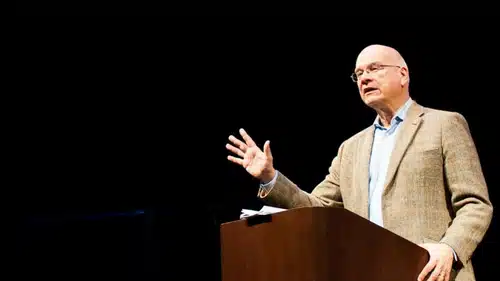
Subscribe to the newsletter

Stay Connected to the Movement

We know that as an Entrepreneur, your most valuable asset is time. So each month we take the very best of the podcast, the blog and all the news, resources, and upcoming events happening across the space and bring it to you.