Episode 190 – Marks on the Markets: FDI Conference Deep Dive – From Hollywood Projects to Human Trafficking Solutions

Episode 190 – Marks on the Markets: FDI Conference Deep Dive – From Hollywood Projects to Human Trafficking Solutions

Podcast episode

Episode 190 – Marks on the Markets: FDI Conference Deep Dive – From Hollywood Projects to Human Trafficking Solutions

John Coleman and Richard Cunningham unpack key themes from the 2025 Global Faith Driven Investor conference, exploring how faith-aligned investing is transforming various asset classes. From public markets to entertainment, real estate to venture capital, they examine how Christians are driving excellence and impact across the investment landscape. The episode concludes with timely market commentary on AI innovation, political developments, and technological disruption shaping markets in 2025.

Please note that the views expressed by the hosts and guests are their own and do not necessarily represent the opinions of Faith Driven Investor.

All opinions expressed on this podcast, including the team and guests, are solely their opinions. Host and guests may maintain positions in the companies and securities discussed. This podcast is for informational purposes only and should not be relied upon as specific investment advice for any individual or organization.

Episode Transcript

Transcription is done by an AI software. While technology is an incredible tool to automate this process, there will be misspellings and typos that might accompany it. Please keep that in mind as you work through it.

Richard Cunningham You’re listening to Faith Driven Investor, a podcast that highlights voices from a growing movement of Christ, following investors who believe that God owns it all and cares deeply about the heart posture behind our stewardship. Thanks for listening. 

Speaker 2 Hey everyone. All opinions expressed on this podcast, including the team and guests, are solely their opinions. Hosted guests may maintain positions in the companies of securities discussed, and this podcast is for informational purposes only and should not be relied upon as specific investment advice for any individual or organization. Thanks for listening. 

Richard Cunningham Welcome back, everyone, to another episode of the Faith Driven Investor podcast. Awesome to have you with us for what is the week after the big Global Faith Driven Investor conference and gathering its marks on the markets as well. So we’re going to do something pretty fun today. I’ve got John Coleman in the podcast studio with me. And John, we’re going to do a little bit of kind of a flyby of some of those main conference themes, topics that were unearthed on Friday, and just visit those and kind of more detail, get maybe a little bit of color behind the scenes. You and I’s kind of taken vantage point on health and state of FDI market as we look at some of those talks and just the different asset classes and stories that were unearthed during the conference. And now we are all about integrity here on the FDI pod. 

So I got to be honest. Today is Wednesday, February 5th, as John and I record this podcast. The conference technically hasn’t taken place yet. As you all know, it’s happening on February 7th, this coming Friday, and this episode releases the 10th Monday, February 10th. And so there’s a little bit of nuance there as we get our past tense and present tense and anything like that. Confused. Just know we’ve been privy to some of the FDI conference content, but just a disclaimer upfront, John, before we get going and dive in and how are you? Man? 

John Coleman I’m doing pretty well. We just had our firm’s all team retreat this last weekend, so that was really encouraging and a lot of fun. Got our team in from around the world, so I think we’re all riding high on that. Looking forward to the FDI conference. How am I supposed to say that? Past tense, Present tense. Now. I am currently looking forward to it. I know it’ll been out by the time we post this, but I think it’s going to be great and it’s exciting to see how the movement has grown. So I’m feeling very optimistic overall. 

Richard Cunningham Yeah, absolutely. Well, John, you are a speaker in the conference and that’s where I want to start. If you look at kind of the overall conference theme and what was discussed on Friday, it’s the kind of theme of, hey, the riskiest thing you can do is nothing. Thinking about Matthew 25, Parable of Talents the servant who squanders or does not do anything with their talent. You go on to give a talk just on money and how we can be faithful as we think about earning it, spending it, investing it and giving it. And I think that all kind of plays into these themes of the conference of, you know, how is God calling you and your family to join the battle? All investing is impact investing. What impact will you have? You can build, give and invest here as we focus on during the conference to solve some of the world’s greatest challenges, whether that’s with market rate, return, patient, concessionary capital or just full on giving. So want to kind of give you a moment here to maybe unpack some of the behind the scenes of that talk where you talked about earning, spending, investing in giving money, how it plays into kind of this year’s big theme. 

John Coleman Yeah, absolutely. So it’s been on my mind a lot because I’m actually working on a book at the moment for my publisher, Harvard Business Review on Money and Flourishing. And it’s the first personal finance book that HPR has ever done. And the idea is what are the habits, mindsets and values that can make money a good rather than a bad thing in your life. So if I zoom out even from a specifically faith driven lens, almost every major moral tradition in the world, religion, philosophic tradition has a lot to say about money. And a lot of those comments are actually well aligned, and they match up with what we’re learning from modern research, which is that more money isn’t necessarily good for you. And a lot of money can sometimes be incredibly damaging to people. You know, I always start by reminding people it’s harder to be poor than to be rich for sure. But there are so many, countless instances where people achieve financial goals that they always thought they wanted only to be disappointed by those or even have their lives ruined by those. Right. There are studies of lottery winners and just how destructive the lottery can be in people’s lives. I mean, suicide rates increase. Bankruptcy rates are incredibly high among lottery winners. There’s research showing that, for example, NFL players who often receive big contracts early a go bankrupt, it’s something like three times the national average rate. So despite the fact that you’d think these folks are making out really well at a young age, that influx of money at a young age without any philosophic framework for how to handle it can often be destructive in their lives. And we all know people whose lives have been upended by money. Right? We know wealthy people sometimes who’ve done a great job with that. At the f d iPod, we’ve heard from people like Allen Barnhart and others who’ve been extraordinarily thoughtful about the way in which they’ve managed wealth that’s come out of their businesses. But each of us probably also knows people whose friendships have been hurt. His marriage has been hurt. His kids have ended up on the wrong track because of that. And so what I wanted to do was start digging into this question of like, if money itself is just a tool, right? Money itself has no moral value. It’s what we do with money that has a moral value. What can we do with money that makes it a good rather than a bad thing in our lives and in our communities? And so, as you note in the. Video that folks will have seen by now, hopefully says, you know, I break that framework into a few areas. It is about how you earn money, about how you invest it, about how you give it and about how you spend it. Those are the four big ways in which we each encounter money and what habits we can have around those. And what’s funny to me again, is that the modern research on money, the things that we’re learning through the social sciences, match really well with Christian tradition, right? They really do. If you think about spending money, for example, all the research now says that if you’re going to spend money, it should be on experiences, not stuff and experiences. Help us build relationships which tightly links to kind of depth and breadth of positive relationships and of love in our lives. Spending money on that stuff, getting people together, going on great trips with folks, doing outings as a group of friends or family, those can often be really good. Whereas the stuff that we buy rarely gives us any sort of lasting satisfaction, right? Which I think even heard Solomon talk about in the Bible, right? Where he talks about the meaninglessness of some of the things that he’s acquired. I think giving, for example, which is so common not only in the Christian tradition, but in a couple of other religious traditions, service to others is regularly one of the top 2 or 3 ways in which we experience great purpose and meaning in our lives, in which we experience great flourishing. And that applies to our financial lives. People are always shocked at how liberating it is to begin to give financially to others, to serve others through our finances. And yet the U.S. is the most generous country in the world, and only about 2% of GDP goes to giving right the average person, thereby giving kind of 2% of what they have. And so I think there’s a bunch of stuff that we can embrace from a habits, mindsets and values point of view that’s deeply aligned with both the research on the topic as well as Christian tradition, among other moral traditions that can make our lives better in the way that we deal with money. And I think FDI really intersects with that. I’ve got a whole section in the book on investing, and it’s investing for impact, right? And the idea is that of those four places you touch, money consuming it, giving it, earning it, investing is often the place that we think the least about what values our money is embracing. And yet for many people, it’s the biggest pool of money, right? A lot of people have more in invested capital than they have in annual earnings. A lot of people invest more every year than they spend. A lot of people invest more than they give every year. And yet, for some reason, this biggest pocket is the one we pay the least attention to. And I think that’s a huge opportunity for purpose and meaning in people’s lives. I think if we were learning to activate the values of our invested dollars in the way we do our giving dollars, for example, that that can unlock a great deal of flourishing purpose and meaning in our lives and in the lives of others. So those are a few of the topics that I visited. We do it at greater length in the videos, but I think it’s a really fun and interesting topic. 

Richard Cunningham Now it’s perfect because it’s the perfect segue into where we’re going next as we kind of visit some of the asset classes and the stories that were talked about in the conference. And it plays into that big theme that Faith Driven Investor is kind of been socializing a lot in the last year and a half, which I really appreciate. It’s a helpful framework, but it’s kind of saying, hey, if the if the goal is to attack some of the world’s greatest challenges and problems, solving the world’s greatest problems is what faith through and talks about. It’s really three things you can do. You’re founder oriented, you’re just a builder, a catalyze. Or you could build something there. You could build a for profit venture that goes to that extent or maybe a nonprofit. They go to that extent. If you’ve got philanthropic capital, you can give and deploy capital charitably to those instances. And then, John, what you’re talking about here is the investing piece. And what you’re so beautifully articulating is forever. That’s just kind of been the set it and forget it. Leave it, don’t worry about it. We’ve just kind of feel so, you know, disenchanted by what’s possible with our investment capital yet Christian Shepherd trillions of dollars in investable wealth You know there’s a significant opportunity at hand. That’s why this whole movement exists to drive meaningful change. But unfortunately, oftentimes Luke says this in the conferences, there’s kind of this view of like, hey, anything that has the Christian version to it is often viewed as second rate. And you and I know that just doesn’t align with scripture. We believe you can have success not in spite of your biblical values, but because of them. And so that’s kind of where we get so activated and passionate about this. Faith Driven Investor movement is bringing excellence to the movement. So let’s go kind of big asset class first public markets where most of our capital is tied up. And there is a couple of stories here that we’re touched on. First, Susanne Daniel talking about how her granting felt like it was almost getting canceled out by her investing, like there was things that she was profiting off of as she invested capital that felt almost counter and contrary to her giving. So I want you to talk about that. And then also and this is not a commercial by any means and never is on the FDA. I pod saw if the ETF that you helped launch at Sovereign’s Capital was featured in Matt Monson was talked about and just the opportunity at play in the public markets as an institutional investor structuring an ETF. The everyday investor can access to drive change within the Russell 3000 with publicly traded companies. So kind of let you speak about the public markets a little bit and kind of what’s going on in the space. 

John Coleman If I get really practical, I think for a Faith Driven Investor and public markets, they’re really three things that you can think about doing today, right? One of which, Suzanne is starting to highlight. The first of those is negative screening. It’s how do we not invest in businesses or support things that seem in contradiction to our values. Right. There’s an apocryphal story outside of the faith driven world where a big cancer foundation out of New York City that was dealing with a lot of lung cancer, for example, found that it was investing more every year in tobacco companies through its investment portfolio than it was actually giving to remediate some of the outcomes those tobacco companies. And I think Suzanne touches on that. And this idea that you don’t want to find that the things you’re investing in or devoting, which we’ll come to second in those companies is really running counter to the work that you do, right? Henry Kaser, our friend, was talking recently about the example of one of the publicly traded dating apps, effectively where the features are almost designed to exacerbate the insecurity and superficiality of the dating market and to harm people psychologically and how he just didn’t want exposure to that. There’s not like a shareholder engagement way of making that better, right? And so there’s a certain number of things that you would just want to screen out that may look different for some Faith Driven Investor is because people have different lines that they won’t cross, you know? It could be adult entertainment. It could be certain types of social media that you just don’t believe have any redemptive purpose. It could be gambling, it could be pure play alcohol, etc.. And I do think there are some moral judgments to make there. But that’s one thing. And I think it’s one of the easiest things to do now is to just find out ways to just not have exposure either through Christian fund managers or faith aligned fund strategies, whether passive or active or even through direct indexing. Now, where you can select certain types of securities that you don’t want in there. The second thing that I think we’ve seen people migrate to in public equities, which is a positive thing, is shareholder engagement and proxy voting. You know, this has become such a hot topic over the last 3 or 4 years. When I started speaking about the rise of ESG and shareholder engagement and proxy voting four years ago when I joined sovereigns, often people in the audience had never heard of it. People didn’t know what ESG was or they vaguely had heard of it. They didn’t understand proxy voting or corporate engagement at all. And now this is a huge national conversation, right, where even big asset managers are retreating on the topic. I think that it remains one of the best ways in which Christians can take control of their portfolio. There are a number of opportunities now for things like direct indexing and SMS, which give you ownership of the shares that you have so that you can engage directly. You can work with either passive or active strategies run by faith driven managers who are more likely to vote and engage in a way that’s deeply aligned with your personal beliefs. But this is the idea that you may not want to screen out a company like Apple, for example, even though you don’t love everything that Apple does. But you do want a voice. You want your voice to be reflected in Apple’s board recommendations and the votes that they have. And you want to make sure that you’re engaging in a way that tries to improve those companies from a values perspective. And I think taking control of your shareholder engagement and proxy voting, either through direct indexing, voting yourself, which is quite hard unless you’re an institution or through an aligned fund manager, is also a no brainer these days where there are options. And then the third, which is where we focus a bit more with the Flourish fund, that sovereign’s is positive engagement, you know, So we are doing the first two of those things and that we don’t hold anything that doesn’t have a redemptive product or service attached to it. We’re certainly doing all of our own proxy voting and corporate engagement, but the idea is to define a strategy that’s more about what you’re for than what you’re against, and to try and encourage leaders and companies who are doing the right things by investing in those both out of the belief that it’s the value supplying thing to do. And also, at least in the case of the Flourish fund, out of the belief that if you build a company based on faith aligned values, you will build a culture that’s capable of outperformance. There is a lot of mainstream research on this topic. So the London Business School, for example, and even Alex Edmonds there, has shown that the outperformance of companies in the 100 best companies to work for in public markets is substantially greater than other peer companies, something like 40 to 50% greater. McKinsey and Company did some research on companies as well that showed that top quartile versus medium or bottom quartile culture companies also performed in that spectrum as well, that they performed top quartile or they performed bottom quartile. And so we believe that if you’re building companies that help people to flourish through chaplaincy employee benevolence funds, through great family friendly policies, through great mission vision and values, through community service, through mentorship groups and small groups that you’re going to build a culture that can help you outperform. And so the thesis there is not passive. It’s how can we invest in cultures that we think are going to lead to great financial returns that also have extraordinary impact on people. And then how can we engage deeply with the CEOs of those companies in order to continuously improve those cultures aligned with what we believe about human flourishing from the context of our Christian faith? And so that’s the thesis of the Sovereign’s Flourish Fund, as well as some of the other public equity funds out there. And we view that as kind of the culmination of the way in which you can engage in public equities, because it’s not just the negative screening that that may be important. It’s not just the engagement that may be important. It’s both of those things, plus this kind of positive screening for the types of cultures and values that you’re looking for, which hopefully really do have positive impacts on performance as well. 

Richard Cunningham Yeah. And just a couple of maybe statistical things that come behind that with that stuck out to me from the conference is Matt Monson, who manages the flash funded sovereigns. He talks about the kind of investable universe and stock market within the U.S. as the Russell 3000 sets, 3000 companies listed on the New York Stock Exchange or Nasdaq. And inside of that, something I was encouraged by is that they’ve identified 350 publicly traded companies with a faith driven CEO at the helm. And so that kind of creates the universe for surveys of which they can go engage with, understand, evaluate those companies, and then ultimately discover and figure out who will be inside of the portfolio. And then, as John was talking about, going even another step forward and bringing together those CEOs to talk about best practices, I was deeply encouraged by that. You guys even got to go ring the bell at the New York Stock Exchange, which is something Matt highlights this past year. And so I think it’s just the scope is enormous. The opportunity for engagement is enormous. And a couple of other things I want to just kind of call to mind that were flashed in the conference that are powerful is that 73% of advisors are not asking their faith driven clients about investing in aligns with value. So getting back to John, just that idea of like we just kind of set investing in default and our advisors are just not caring to engage. But I think they’re waking up to that in the future in space, even though over the last five years there’s been $182 billion channeled towards impact investing in the US alone and 63% of millennials say they want an advisor who aligns with their religious beliefs. So I think we’re still in the early innings. And to back that up a little bit further, our good pal Tim McCreadie, who we had on the pod probably just under a year ago, he releases at Bright Light, their kind of state of play of faith driven investing. And his research kind of says within the public markets that we’re at about 130 billion in assets they can identify and faith driven mutual funds and ETFs in the US. He really thinks that’s a conservative estimate, probably over 200 billion and then another 100 billion and things like SMEs and direct indexing those other products you were talking about, John. So while we can kind of see the growth of the opportunity, man, we’re just still so early. It’s such a small drop in the bucket compared to the trillions of dollars that are out there that could be activated. So any final comments on public markets before we kind of pivot to the next thing? 

John Coleman Yeah. And the thing I would note about Tim statistics, Richard, because those those matched pretty closely with what we’ve estimated as well, is even within that bucket of so-called faith driven assets, there’s room to move up the chain to even greater positive engagement, etc.. You know, that would include a lot of stuff that’s pure, just passive negative screening, for example, again, which I’m not criticizing at all. But I think that’s just kind of the tip of the iceberg in what you can do. If we could activate those assets to do more engagement, to do that in a concerted way where there’s a huge pool of assets encouraging companies to lean into appropriate values and in creating active management screens or even indexes that then encourage positive behaviors. I mean, we’ve got not only an opportunity to activate more of the trillions of dollars of faith driven capital out there for public equities, but within those that are already activated to move them up, the spectrum of engagement, up the spectrum of faith integration, so that we’re constantly pushing the needle on what faith integrated public equities can look like. 

Richard Cunningham You know, showing what we’re for in the world, as Henry talks about in the conference, as opposed to just saying what we’re against. All right. Hey, pivoting into a subject that I know is near and dear to your heart. So this is kind of a big jump from public markets to maybe what is more of a fringe or kind of exciting investment space as the movies and entertainment realm. So we heard Raymond and Mary Del Harris speaking about in their portfolio how they’ve backed things like I can only imagine in October, Baby in American Underdog, some of these John Irwin films. And then we heard Kelly Merriman, the CEO of The Wonder Project, speak about just the opportunity at hand and what can be expected to be seen in this year ahead, 2025, with just kind of the faith driven content. And John, I’ve heard you talk about this before. And we were just talking about how Christian things can be viewed as second rate, but forever. It was faith driven folks who’ve had such a touch of excellence. Think of something like the Sistine Chapel and how the arts are so important upstream from culture. And so I know this is deeply personal to you, something you’ve invested a lot of your time towards. But the movies and entertainment realm and how Faith Driven Investor is going to get activated there. Talk about that. 

John Coleman Yeah, absolutely. And Richard, I’ll just start where you ended, which is there is no reason Christians should be second rate in culture, right? Christians should be in touch with something really beautiful about human nature and about the universe that allows them to unlock the best in in culture, right? Whether that be art or sculpture or music. And if you think of so much of the history of this stuff, I mean, the Sistine Chapel for sure is such explicitly faith driven material. The statue of David, which you may have seen in Florence before, is one of the most beautiful creations in the world. A lot of the old music was really predicated on honoring God. Right. A lot of the great composers were Christians who dedicated their music to God. The old churches were some of the most beautiful architecture in the world. On and on and on. I mean, The Inferno was kind of a very religious piece. For example, there’s been great religious writing over the course of history. And even if you look at kind of old Hollywood, you know, two of the top performing movies of all time were Ben-Hur and the Ten Commandments. Right. Which were so infused with faith. And then other shows where it was just kind of a part of the fabric of the show itself. Like It’s a Wonderful Life, where there are spiritual themes that are so deeply aligned with the context of our faith. And yet, for some reason in recent years, I feel like Christians have lost the mantle of cultural excellence, you know, over the last few decades. And that’s sad. And I think it’s a combination of, you know, people just not putting the appropriate amount of money into this space such that things can be done at a high quality and people not really digging into their faith in a way that unleashes it. Right. And it’s still very possible. I mean, you look at the music of U2, right, which is one of the most popular rock bands in the world. They’ve talked about how faith motivated their. It doesn’t mean every single song they have is like praise song. Right. But they end every concert with a song. Right. I mean, it’s remarkable. And obviously they’re at the top of their field. And so what excites me about this is I do feel there’s now a movement among a lot of creators and leaders in the space to restore excellence to art that comes from a Christian perspective. And again, I say it that way because not every piece of art they produce has to be quote unquote, Christian art. Right. It doesn’t have to be genre. It doesn’t have to have a salvation moment at the end. It could just be that faith is a part of the fabric of what they’re producing, that when they create something, it’s from the perspective of someone who shares those values. And I think, you know, some of the folks that you highlight, Jon Erwin and Kelly Merriman, who we’ve been privileged to partner with, are right at the forefront of that with people like Dallas Jenkins, John Gunn, Jeremy Latcham, you know, some of the other creators out there. I think they’re doing remarkable work. And what it’s taken is this meeting of people thoroughly committed to excellence who are also committed to their faith, coming together with sources of capital who can give them the weight of financial help in order to bring those pieces to life. Right. Kelly And John’s latest project right now that will be coming out in just a couple of weeks, for example, is called House of David. And kind of following in the footsteps of the Chosen, It’s a retelling of the story of the biblical David done by a set of Christian creators who are as dedicated to both the quality of the cinema they’re producing, as well as the fidelity of the story, as Dallas has been with The Chosen. I’ve gotten to see the first episode already and I’ve gotten to see clips of some of the rest because we were an investor in Wonder. And it’s phenomenal, right? They partnered with Amazon. They put a ton of money into it. They filmed on location in Greece. They have extraordinary actors, extraordinary scriptwriters. And it’s honestly one of the best TV shows I’ve had the privilege of watching in a very long time. And it’s shocking because it’s it’s our stuff, right? It’s the biblical cinematic universe. It’s this idea that some of the most interesting characters in history were outlined in the Bible. And we haven’t told those stories appropriately. Like there hasn’t been a big movie or TV show on David, which is crazy. And then they’re going to mix that with other creations that they touch on, like things from American history. There’s a movie coming out about the Wright brothers, for example, on the Wonder Project platform. And then there are sitcoms that they’re producing that will be infused with themes related to faith, but will be done in the Hollywood level of excellence you might expect from a mainstream network show. And I think that’s what’s exciting now is we really rely on the creators and the capital coming together at the same time. The more capital that flows in, the more creators will take a risk and step out in faith. The more excellent creators who take a risk and step out in faith, the more capital will come in. And I hope we’re at the very beginning of a virtuous cycle where both the capital and the creators are lining up to paint a vision of hope and beauty and truth and goodness in the world that’s so deeply aligned with what we believe about human nature and about the world around us. 

Richard Cunningham Man, that’s awesome. It’s exciting in the House of David. I mean, I’ll say this, there’s some not G or PG rated scenes in the Old Testament, and I know David’s story and as the great warrior and battler. But it’s exciting and a little bit riveting. And yeah, maybe there’s some a more intense content, if you will, to come in that. So looking forward to that. And then the other thing I’ll say, John, that you just remind me of is, you know, I look at the I come from the sports background. I have zero artistic talents whatsoever. And just like that, you know, since 323 and that idea of like competing and doing things unto the Lord not on demand, I have just been refreshed lately by just the sense of revival across major sports platforms, college athletics, NFL football. It seems like every post-game interview right now, there’s just something going on and a movement of the spirit that I just want to see continue to flourish. And what an awesome time for now, Content on the backs of the things like The Chosen have done so well. 

John Coleman Yeah, thank goodness for all those courageous athletes speaking about faith. Right? Like I think, you know, this has always been a topic because I think athletes so often realize their own physical limitations and really their reliance on something greater than themselves. But so many outspoken voices. You know, Tim Tebow is at the forefront of this for such a long time. Colt McCoy was obviously right there with him. I think Kirk Cousins brought it to life in the Netflix. What was it the first season of the football documentary on quarterbacks? Yeah, that’s right. We had Patrick Mahomes and I think it was Deshaun Watson and Kirk Cousins made just such a positive impact in how open he was about his faith and even this year and that, you know, the run up to the college football national championship. You know, there were so many awesome stories of faith coming out of that. And I realize by even talking about college football, we’re immediately alienating a ton of people on the pod. But I grew up in FSU fans and Notre Dame was a hated sports enemy at the time. But, you know, seeing the way the coach at Notre Dame comported himself, the way that he conducted that team, how open he was about his faith, some of the players on both sides of that game and how open they were about their faith in athletes or to be credited because I think so many of them are using their platform for good right now. And it’s so encouraging to me to watch the cultural influence that they can have by doing so. That’s obviously granted to them because they are so focused on running the race as if to win it literally some sometimes and by the platform that that gives them to influence others, you. 

Richard Cunningham Know, and it reminds I mean, Tebow is on those who are able to watch the conference at the end of the conference. And he’s talking about rescuing image barriers. And we’ll get here. That can be our last topic as we get into the venture capital side of this and the work of Wesleyan and the team at Eagle Venture Fund. But I just could not not laugh listening to Tim Tebow almost like get out of breath. He gets so excited and animated as he’s presenting. He’s just so fired up all the time. But okay, coming back to a little bit more of a mainstream investment topic, real estate and the real estate kind of market. An asset class was visited through this lens, an idea of stamping out loneliness and building social connection via a sense of place and the ministry that was highlighted as one that’s a great friend of the movement is apartment life. Pete Kelley, CEO. And this statue startled me. 40 million people the size of the state of California live in apartments in our nation, and 95% of them are unchurched. And just thinking about real estate and the opportunity to engage people and where they spend their time as a ministry opportunity, but also this angle of apartment life providing an annual average 200 K and the bottom line benefit to multifamily owners and operators because of reduced tenant turnover, staffing turnover is lowered and then just greater leasing rates and occupancy rates. And so some of your comments challenge the the real estate space and where you’re seeing encouragement, but also where opportunities kind of still for work to be done. 

John Coleman Yeah, absolutely. You know, it’s interesting to me, churches will often talk about wanting to reach the younger generation, right? They’ll often want to talk about reaching the unchurched, reaching the new immigrant, reaching those who are struggling financially, etc.. And if you think about just a platform tailor made for that, the multifamily housing space or apartment space, is that right? I mean, disproportionately you get to reach younger people disproportionately. You often get to reach new immigrants who are coming to the country because of affordability. Disproportionately, you meet those who are struggling, maybe financially, especially depending on the type of apartment complex, multifamily housing unit. You know, these are often folks who are at a different phase in their life. And so it’s just this concentrated, incredible ministry opportunity. And you get to meet people literally where they live, you know, which is another kind of church phrase, meet people where they live. Well, we can actually meet them where they live, right? Not metaphorically. You can actually go to the place. That they live and create a community that’s welcoming to them, that not only introduces them to their creator, but helps them to build relationships with others there. And to me, this is a beautiful encapsulation of the thesis that I talked about earlier in companies that you can do well by doing good in this space. You can create financial outcomes that are positive while also creating personal or human outcomes which are positive in apartment life. And the statistics they showed are such a big component of that. You know, if you build a community that people want to live in, that they’re dedicated to, where they know their neighbors, where they feel uplifted, where they’re flourishing, where they’re connected to faith. It turns out turnovers, less people pay their rent on time. Better people stick together to stop things like crime in those communities better. They’re just a host of positive outcomes that come from building a community in which people want to live and can be themselves and really flourish as individuals that accompany this incredible human impact that you can have in a way that’s that’s different than almost anywhere else. And if you think about the ways in which you can minister to people, right. We talk a lot about ministering to people at work through company investing. Maybe you can them 40 hours a week. Certainly it’s important to minister them at church, know whether they come Wednesday nights or Sundays or join small groups or have other ministries. And then if you’re able to catch them at home. Right. If you can find ways to make ministry into each of those areas, you’re really surrounding someone, right? With positive and uplifting encouragement, with community, with ministry. And so I think apartment life has obviously been at the forefront of that. I think it’s an incredibly important industry, and they’re working with a ton of great investment managers right now. And I’ll say in the state driven investing space, real estate is about as high impact and asset classes exists and Faith Driven Investor thing. Right now there are a ton of great real estate managers out there that are operating from a place of faith, that are working in multifamily and other areas that are working with apartment life and other ministries that are so dedicated to creating these types of communities that serve people spiritually as well as physically. And so if I were to tell Faith Driven Investor to take a hard look at something today, I would definitely point him to real estate, because I think it’s just such a tangible and innovative way in which to put capital to work in a way that fundamentally improves people’s lives in an asset class that almost everyone is in writer needs to be in. And so I think it’s a cool opportunity. And apartment life has been so central to that, as we heard. 

Richard Cunningham You know, what about John, in the spirit of just marks in the markets, I know you’re not a full time real estate investor, but just any comments on like the interest rate, environment, new administration. One of the things that we all tangibly feel the effects of that is just kind of real estate costs and just the real estate deal market. Any thoughts there? 

John Coleman Yeah. So I put on my investment hat without the faith driven component of it. Just speaking about returns, I’m still reasonably cautious about a lot of the real estate sector right now. I think in particular office space, it’s just a big question mark to me. I still think we haven’t seen the shakeout of return to work and how that’s going to work. Whether people physically use offices, how much it’s now permanently hybrid, where people work based on shifting demographics. I mean, now with the new administration, obviously there’s a push to get rid of a lot of federal properties, for example, which in certain markets is going to flood the zone, so to speak, with available properties like DC, etc.. And so in general, I’m pretty cautious about office right now on New high that rates are still very high. And so there are a lot of office buildings that are underwater right now that may have leases resetting or borrowing resetting at unfavorable rates, etc.. Multifamily, I feel a lot better about, you know, there are short term challenges with interest rates, certainly. And there’s this disconnect between renting and owning right now. And owning is substantially more expensive than renting right now, which is a bizarre disconnect in the market brought about by the new mortgage rates and house prices. But if I think in secular terms, secular meaning long term, not in the absence of faith term, I, I mean, two things. But if I think long term, you know, the United States has too little housing. We have a deficit of something like 7 million units of housing or something on the order that that has to get resolved, despite the fact that we’re seeing reduction in immigration right now with the new administration. The US is still people are having babies at about replacement rate. We still are one of the top destinations for immigrants in the world. We have this deficit of existing housing. That’s a structural issue. And so I’m confident that that continues to be a good place to invest because we simply haven’t built or refurbished enough housing to take care of the existing demand in the country. And so there may be short term blips in that. But if I’m thinking over the course of 5 or 10 years, I feel really good about that space. And then it’s probably a mix for other things like retail. For, for things like industrial storage space, etc. A lot of it’s so market dependent or dependent on the sub asset class. But I continue to think there are opportunities in real assets right now. And I’d remind people that we are, though interest rates feel high right now. We’re basically at long term averages for interest rates right now. You know, if you go back to the 80, 7650s, interest rates were much higher. It was this period 2008 to 2021. It was bizarre. I mean, interest rates were approaching zero in most places in the world. And so we are much more a normal interest rate now. So I’m confident the markets can function with those interest rates. I think it may just take a while for everyone’s expectations and financials to reset from this 15 year period or more of unusually low interest rates. 

Richard Cunningham It’s good. It’s well said. Well, thanks for the commentary there. And this takes us into kind of our last theme of the conference, if you will. And so some of the voices you heard from were Jeremy Lin and highlighting Linsanity, family office and just the approach they’ve taken to. Almost a sports mindset to being excellent in their investing, their giving in their stewardship to kind of what all God has entrusted to Jeremy through his kind of storied NBA run. Then we heard from Tebow, as we mentioned, and his just epic out of breath, just passion towards rescuing image barriers and the 50 million people tragedy that is human trafficking. $150 billion annual enterprise that dovetailed into West Lions. Wade Myers and the team at Eagle Venture Fund doing the risky, audacious thing they’re doing, which is standing up a venture capital fund to find for profit solutions to choke out the human trafficking industry. It really is an industry. And so they’re thinking about this in a, you know, financial capitalistic mindset of how can we raise the expense line and human trafficking to where it’s no longer a profitable business? So this gets into family office investing, John In a family office being on mission, it gets into influencers wading into these waters. This also gets into the venture capital and private equity space and funding businesses on purpose. Just what what comments would you make about kind of faith driven investing in the opportunity for engagement on the front lines with for profit businesses? 

John Coleman Yeah, for sure. So. I think family offices and high net worth individuals or individuals generally are always going to be the innovators in this space and have both a remarkable opportunity and responsibility. The truth of the matter is in any innovative approach to investing. So you mentioned Eagle Venture Fund and what they’re doing with human trafficking, faith driven investing broadly. Institutions are always going to be more conservative, right, because they’re managing money for others. If you’re a college endowment or if you’re a Baptist foundation, you have a responsibility to your students. You have a responsibility to the pastors, missionaries that you serve. You’re going to be much more conservative about new approaches to investing as you should be. Right. Because you have this fiduciary responsibility to others when you’re running a family office. When you’re investing on behalf of yourself. You can take risks. You can do new things that are difficult for institutions, whether you’re Susanne Daniels or Jeremy Lin or Tim Tebow or any of the other great families that we’ve engaged. And I think that’s an opportunity, because often family offices can act on new, attractive opportunities faster than institutions can that can lead to higher returns. I think it’s also a responsibility because that means that if someone’s going to drive to push the envelope of what fate driven investing can mean to stand up things like Eagle’s Human Trafficking Fund, to stand up new public equity funds that are focused on positive integration and engagement with companies to invest in developing countries in new and innovative ways. That’s going to happen through individuals and family offices. It really is. And families have to make a conscious decision like the learning hands have, like others have to really accept some of the tradeoffs of that risk return spectrum in order to push the envelope of what’s possible. And what I love seeing is schematically like Tim Tebow lending his voice to this anti-human trafficking movement broadly and then also lending his voice to the innovative private market solutions to that through Eagle, through others, and then lending capital to that. Also, through his investment, he’s able to drive that conversation and drive innovation in that space in a way that few institutions could. Right. Jeremy Lin is doing the same in other areas. We know awesome networth individuals, family offices that are doing the same in a variety of areas. And so my message to family offices listening would be look, engage in this space. No one’s going to be able to push this forward if you don’t. Right. We see that one of our friends and partners, Henry, has been at the very forefront of this with his personal portfolio. I know each of us has probably done this more than the average person, at least in terms of our personal portfolios. And I just think there’s a remarkable opportunity for individuals and family offices to play the leading role, the standard bearer role in normalizing these funds and proving that they can work and proving these investments can work so that these massive pools of institutional capital can eventually participate and drive the movement even more comprehensively. Right. Because they’re likely to be more conservative. And I just love some of the innovative approaches that are taking shape in these private funds. Right. I think it’s great that Eagle is entering into a space that has such great need and trying to set up a concentrated, positively themed fund in that space. There are other examples that aren’t quite as overtly missional as an anti-human trafficking fund. But, you know, we’re going through the process right now of investing in a health care oriented fund where the manager that is driving through a number of faith aligned practices into the portfolio of all these physician practices that they work with in a way that cares for patients, cares for doctors, cares for nurses, cares for staff that they might not experience elsewhere. And so I’m hopeful that just like in real estate, that that continues to flourish. I really appreciate folks like Wes who are driving that conversation forward, and I appreciate family offices, especially those with big public platforms like Jeremy Lin and Tim Tebow leaning into this space to help make progress alongside those managers who are trying to create these funds. 

Richard Cunningham Yeah, I like that. And I also appreciated how faith driven kind of at the end introduced another European based venture fund, Roy Ellis, and they teed up this concept of cathedral thinking and saying, Hey, you’re being invited into a mission and an opportunity that you actually won’t see the end of, not on this side of eternity. And it’s kind of like the invitation to create a cathedral where this is going to be a decades long project. But think long term, think patient, think, partnership mindset. I mean, that’s just what it’s going to take to attack some of these problems. So, John, we’re going to go to our closing question here just in a moment. But one more time, in the spirit of kind of marks on the markets. I know we’ve done a real deep dive on just kind of all the themes and topics of the conference. Any macro quick hitters from you of just kind of things we’ve seen in the press lately? I know there’s a lot of talk on tariffs and those is a negotiation tactic for something that might come to existence, government cost cutting and the work of doge there is. Generally markets are up. The S&P 500, Russell, 2000 are both up around 3% year to date. They’ve seen some volatile days. There’s the arms race, of course, with Nvidia having the massive hit a couple of weeks back because of Deep Sea kind of coming out and saying, Hey, we’ve accomplished what you’ve accomplished with less of the cost. Just any kind of macro quick hitters you leave the audience with. Before we go to our final question. 

John Coleman Man, I don’t know that that’s a quick question. I’ll be super brief. I mean, two comments. One is I genuinely think we’re on the verge of a series of technological innovations that may be greater than at any point in history, which is kind of a bold statement between artificial intelligence, robotics, breakthroughs in energy technology, quantum computing. We could be on the precipice of a series of technologies that fundamentally change the way in which we live more than and more rapidly than any prior technological innovations. The only thing I could even compare it to would be the breakthrough in nuclear technology during the Second World War, which was less of a day to day thing in the sense that it was a threat. You know, it became an energy source, but it was a little bit slower. And thankfully the weapons technology was not broadly used. But artificial intelligence, robotics, quantum computing, augmented reality, virtual reality. I think 20 years from now, the world will look so fundamentally different than today that we won’t even be able to process the pace of innovation. And so I think that is one big macro theme I’m watching in markets. We saw the deep sea. I think Nvidia lost something like $600 Billion in value in one day. It’s since come back. It’s a big company big nominal loss 17%. And I think all of us are just in for a period where we’re going to get whiplash from the different innovations that are happening. And none of us know exactly how those will end up, but we do know the world will be fundamentally different. And then on the political side, again, regardless of your partizan affiliation, I was in D.C. the last couple of days. I don’t know that we’ve ever seen a presidential administration in modern history act so quickly on so many different fronts. You know, there are multiple announcements each day through executive orders, through initiatives, through international agreements that in normal times would be momentous announcements by any administration in what’s happened in these first few weeks has been an extraordinary pace of change. Right? I don’t know that we fully have processed how that will end up. President Trump has obviously been using tariffs as a negotiating tool with China, with Canada, with Mexico. He’s been using other tools of places like Panama as well. Just yesterday, as we’re recording this, he had a public statement with Prime Minister Netanyahu from Israel and announced that the U.S. was going to occupy Gaza, which may or may not come to fruition. I think the common theme in all of that is just, again, the pace of change being greater than we’ve experienced in recent history. I expect this to be largely a good year because I think many of the technological advancements are going to be good for the world ultimately. I think some of the policies that are being pursued will ultimately end up good, but I think there will be a great deal of volatility as we see things change so rapidly, whether from the political environment or the technological environment. I think we’ll see more winners and losers take shape really quickly, like stocks climbing out of nowhere like Palantir has over the last couple of months and stocks collapsing when their fundamental premise for being is eroded by artificial intelligence or by policy. And so I would hang on tight, guys. I think 2025 is going to be quite a ride in investment markets. 

Richard Cunningham Well, I think that’s just a good overall analysis. Well, let’s take us home with this, John. When we love to ask at the end of each and every podcast, I haven’t gotten to ask you it in a couple of episodes now because we’ve had some outside guests, but what’s the Lord been teaching you through his word lately? 

John Coleman Yeah, and I think I may have actually mentioned this on a prior podcast, but it came up again recently for obvious reasons. Given that I’m very interested in and focus on this House of David release coming up in a few weeks. I’ve been thinking about the story of David and, you know, one of the central tenets of the story of David, particularly relative to Saul, is just the importance of remembering God in the successes you experience in life and in honoring God with those successes in obeying him, rather than seeking your own understanding of events. You know, Saul eventually went off the rails because he forgot where he came from with God. God had anointed Saul. He had lifted up Saul. He had placed trust and saw it made him the King of Israel. And as Saul was lifted up from this tribe of Benjamin, which was a very small tribe, right? He forgot all that and he started disobeying God. He started worrying more about the politics than about his faith and about what God commanded of him. He started to believe in himself more than he believed in God and to attribute his success to him. Self rather than to God. And for that, he lost his position. Right. And his family lost their position. Whereas David just seemed to constantly keep and he obviously had major problems throughout his life, but especially in the early days, had just that cognizance of how reliant on God he was and how dedicated he needed to be with God and how courageous he could be if God was with him. Right. And that combination of humility and courage that David represented the humility to understand that we are not the authors of our own story, at least not fully, that we are servants of God and that we should give honor and glory to him. But the courage that comes from that promise is just so remarkable. I think that’s part of why he was a man after God’s own heart. That combination of humility and courage. And that’s something I hope we seek or I seek every day. Right. Which is the courage to do bold things, the courage to act, the courage to be definitive, but the humility to remember that when those things go right, that we are not the author of that story, that we are relying on someone else, and that when they start going right, we can’t just stop obeying all the promises that got us there that we need to see God and faith, that we need to continue to discern his will and that we need to be humble in our pursuit of the next thing. So that’s been very much on my mind, really. 

Richard Cunningham That’s good. Let’s get one more preview for All movie. Enjoy yours and show watchers out there that later this month, House of David will be coming out so late February on Amazon. So John Coleman I was deeply inspired by Friday’s feature and investor conference. Really fun to kind of get to unpack and revisit some of the themes with you. Thank you for the commentary, as always. And friends, we will catch you next time. Thank you so much. 

John Coleman Thanks, Richard. 

Speaker 4 We are grateful for the opportunity to serve this community and see your listeners come in for more than 100 countries. Faith driven investing can be a lonely journey, but it doesn’t have to be. The best way to stay connected is to join a group study with other investors looking to get the same answers, the questions you have and find great community as they do so there’s no cost, no catch. In person or online, you can meet an hour a week with other peers from your backyard or the other side of the world. You can also stay connected by signing up for our monthly newsletter at Faith driven investing.org. This podcast wouldn’t be possible without the help of many of our friends. Executive Producer Justin Foreman. Intro mixed and arranged by Summer Drags Audio and Editing by Richard Barley. Our theme song is Sweet Ever After by Ellie Holcomb. 
Subscribe to the newsletter

Stay Connected
to the Movement

We know that as an Entrepreneur, your most valuable asset is time. So each month we take the very best of the podcast, the blog and all the news, resources, and upcoming events happening across the space and bring it to you.

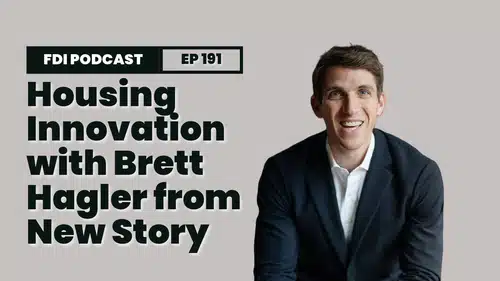
Episode 191 – From Y Combinator to 3D Printing, Investing in Housing Innovation with Brett Hagler of New Story

Episode 191 – From Y Combinator to 3D Printing, Investing in Housing Innovation with Brett Hagler of New Story

Podcast episode

Episode 191 – From Y Combinator to 3D Printing, Investing in Housing Innovation with Brett Hagler of New Story

Meet Brett Hagler, who transformed from a tech entrepreneur to pioneering market-based solutions for the global housing crisis through New Story. As one of the first nonprofits accepted into Y Combinator, New Story is revolutionizing how we think about affordable housing by combining philanthropy, technology, and investment capital to create sustainable homeownership opportunities in Latin America. Learn how New Story achieved a 100% repayment rate on their housing projects while delivering both strong financial returns and life-changing social impact for thousands of families.

Please note that the views expressed by the hosts and guests are their own and do not necessarily represent the opinions of Faith Driven Investor.

All opinions expressed on this podcast, including the team and guests, are solely their opinions. Host and guests may maintain positions in the companies and securities discussed. This podcast is for informational purposes only and should not be relied upon as specific investment advice for any individual or organization.

Episode Transcript

Transcription is done by an AI software. While technology is an incredible tool to automate this process, there will be misspellings and typos that might accompany it. Please keep that in mind as you work through it.

Richard Cunningham You’re listening to Faith Driven Investor, a podcast that highlights voices from a growing movement of Christ -following investors who believe that God owns it all and cares deeply about the heart posture behind our stewardship. Thanks for listening.

Speaker 3 Hey, everyone. All opinions expressed on this podcast, including the team and guests, are solely their opinions. Hosts and guests may maintain positions in the companies and securities discussed. This podcast is for informational purposes only and should not be relied upon as specific investment advice for any individual or organization. Thanks for listening.

Richard Cunningham Welcome back, everyone, to another episode of the Faith Driven Investor podcast. Great to have you with us. What is our pod for the end of February? We’re joined by a really special guest today, Brett Hagler, who will be joining Luke and I in the FDI podcast studio. Brett’s the CEO and co -founder of New Story. Luke, Brett, great to have you guys in here. Brett, pumped to hear about some of your work with New Story and what you guys are doing to help thousands of families get homes and properties in Latin America. This will be a really fun episode and I think a fun kind of angle for Faith Driven Investors to look at the problem of homelessness and all of that. But before we dive in, Brett, and get some of who you are and what you’ve been working on, how are you guys doing?

Brett Hagler Doing great. I’m excited to be on with you guys. Love the pod. So it’s an honor to be here.

Luke Roush It’s not often, Richard, that we get to focus on problems that affect two billion people, billion with a B. And so the scope and scale of what we’re going to talk about today has me excited as well, and nobody’s been more on the front lines than what Brett’s doing here. So this is an exciting day.

Richard Cunningham It is. So Brett, Goldman Sachs called you one of the top 100 most intriguing entrepreneurs. We got to hear about that in and of itself. The word intriguing, which I just love. And you’re also a founder of a nonprofit. And I know it’s got for -profit angles, which we’ll get into here in a little bit with this being the FDI pod specifically. But man, maybe just start us with a little bit of your kind of story and who you are, way God kind of rescued you in an awesome way post -college and just how that led into new story.

Brett Hagler Sure. Yeah, I’ll just give everybody context. We’ll give some background, but this is definitely about investment. So we’ll talk more about how we believe and I’ve learned after 10 years of doing this, that investment and market -based solutions is, in my opinion, the best way to help the most people. So we’ll get there and I’ll kind of talk the back story. So yeah, I, from a faith perspective, didn’t grow up a strong believer at all, kind of lost my way in high school. It was a stereotypical jock in high school. I had a very rare form of cancer my senior year in high school. And that changed a lot of my plans. I was going to try to play basketball, college, blah, blah. And, you know, during that time, it was, I was definitely praying. I was definitely hoping God would save me because it was serious cancer. And he did. And instead of me kind of turning to him and, you know, making my life surrendered to God, I kind of went the opposite way. And so I went off to college at Florida State and yeah, lived a life that if you would have asked somebody what I’m doing today, then this would probably be the last thing that they would have said and just wasn’t following the Lord was using a lot of maybe skills is the wrong word, but using characteristics that God gave me for a lot of the wrong things. And that led to just all types of pursuits. You know, I call it, someone told me it was the three G’s, which is gratitude and generosity and God. It was a girl’s gold and glory. And I’m sure, you know, a lot of people, of course, have kind of gone through that phase and obviously learned that it’s empty. There’s really nothing there. And thankfully about a year and a half after college, the Holy Spirit met me. And I loved entrepreneurship. I love startups. I loved business in college. I was, you know, reading a book a week about all the biographies that many people listening probably read. I was obsessed, but I wasn’t a believer. And I was lost pursuing, you know, the things that don’t matter. And I did a first startup right out of college and it was a for -profit company and how God met me was actually through a venture capitalist and it just kind of goes to show for those listening. I had no idea he was a believer, but I was very attracted to what he had done, what he accomplished, how he held himself. And he was a role model from afar. And I was lucky enough to get a chance to sit down with him for lunch. I was a young 23 year old kid. I kind of begged to get on his calendar, blah, blah, blah. And I get there and I asked him about leadership and maybe if he wants to invest and long story short, in a very natural way, he starts talking about Jesus and I kind of asked him a question of how he thinks about leadership and he told me about servant leadership and I’m like, what’s that? And that was kind of a softball for him to talk about Jesus and leadership. And from that point on, Luke and Richard, that was kind of the spark that God used to get my attention. I mean, to kind of reframe what I thought living a life, surrendered to Jesus looks like. And it was done through a venture capitalist investor was kind of the spark that caught my attention. And after that, I kind of make a total 180, go all in, get baptized. Really nobody else, none of my friends were doing this. It was all, you know, kind of by myself with the Holy Spirit. Shortly after that, two things happened. My best friend, which many people probably have heard of or know is a guy named Mike Arrieta, we grew up in middle school together and he kind of shortly after me started following the Lord and so the two of us together in our early twenties started just running after Jesus and that ended up taking myself and Mike on a missions trip to Haiti and that was back in 2014 and on that trip is when the kind of an original spark for news story was created and that was just seeing, you know, the devastating, devastating reality of what it looks like to not have life’s most basic human needs. And that was kind of the spark of it all.

Luke Roush How did you think about, so I’ve been on trips like that, where you kind of have a spark and your heart breaks for something that you see, you realize like, wait a second, there’s gotta be a better way. Coming out of that trip. How did you contextualize, like, what was the on -ramp into actually getting in the game the way you’d got in the game following that experience?

Brett Hagler Yeah. I mean, from my perspective, I was, I was pretty young. You know, I was 24 years old. I loved entrepreneurship. You know, my faith was on fire. And so I had a lot of energy and I had a lot of passion. I would say, you know, people talk about ignorance is bliss. And if you know then you wouldn’t have got started of all the problems, et cetera. And, you know, as cliche as it sounds, I just tried to start small. You know, I think if I would’ve tried to say, how do we create systematic change in multiple countries and get into disrupting the financing system and redefine what it looks like for property rights, like, I didn’t know enough, you know, I didn’t know enough, but I got started. I got started very small. I said, you know, how can we try to literally help a few families get access to life -changing housing? And then through that action, God introduced me to two other co -founders in Matthew and Alexandria, and we were trying to come at this problem back then just in a different way with a unique angle, and back then we used even more technology and we applied to Y Combinator. My background again, was not doing things in the developing world. I didn’t have this kind of a nonprofit background. I loved the stuff Y Combinator was preaching and teaching. And so we applied and we actually became one of the first nonprofits to ever go through Y Combinator. And so to answer your question, Luke, that was God putting a lot of things together in a short period of time, and we kind of got started pretty fast.

Luke Roush So wait a second, how many nonprofits, I mean, you said it was one of the first ones, I mean, it had to be maybe the first one.

Brett Hagler It was the second one.

Unidentified Yeah

Luke Roush Okay. So what did that look like? I mean, you show up at that time, they were still doing all their cohorts in Silicon Valley. Is that right?

Brett Hagler Yes.

Luke Roush So you still have to tell people, Hey, this is kind of what I’m fired up about. Like how did that go? I mean, need to hear more.

Richard Cunningham Yeah. So we moved out to San Francisco. I ended up living there for almost five years and we went through the summer of 2015 was our Y Combinator batch and I freaking loved it. It was incredible. I mean, I felt at the beginning and during most of it, like the highest level imposter syndrome that you could imagine because it was so hard to get into, I didn’t have any prestigious accolades or fancy schools or, you know, and so it just felt like, wow, God really wanted me and us there. And of this organization that’s trying to help vulnerable families in Haiti and El Salvador that don’t have basic housing, like what are we doing here? And honestly, we just made the most of it. We were on fire. We were so passionate. It was definitely a season that I do not regret how much we worked and how much energy we had because it truly felt like a once in a lifetime opportunity that God created. And so it also really shaped the DNA of how we think about building new story. And even though what we’re doing today is entirely different strategy wise than we were doing 10 years ago, the DNA of how to think, how to imagine, how to get started, all the things that the best startups kind of learn and go through. We were so lucky to be taught that at a young age. And it really shaped my thinking, our DNA. And I’m just so grateful for that experience.

Richard Cunningham That’s cool. All right. So selfishly, I kind of have to like recap the story here from my own brain, not as fast as you guys, but there’s a lot of fun synergies and overlap too that I’m loving. So you got young jock, Luke and I resonate deeply with that. Just like the sports world, Luke more than me. And then you go off the Florida state, John Coleman, our other FDI podcast host will love that. He’s a Tallahassee native. We’ll love the Florida state roots. The Haiti kind of awakening moment and the kind of birthing of new story alongside our buddy, Mike Arietta, another kind of fun synergy. Ironically, Luke is where Suzanne Daniel, one of our FDI podcast guests a few weeks back, who also just spoke on the FDI conference is where she kind of came alive for the Pilgrim Foundation and Suzanne Daniel story. So a lot of just like fun threads here, but anyways, young founder, a powerful experience in Haiti goes to YC with a nonprofit has this like amazing kind of business building experience. And I’ve got friends here in town, Brett, who are great admirers. I’m here in Austin, Texas, Chandler Bolton, particular, another young founder who just like loves watching you run a nonprofit, such a missional organization, like he runs his for -profit venture. And I’m sure that was kind of bred into you in that YC background and some of the reading you did and just the passion you naturally have. So help me understand kind of like the original theory of change of new story, what you brought into YC, why they accepted you in the first place. And then you mentioned the mission and kind of the way you’re attacking the mission, if you will, has changed in present day, kind of bring us from that journey that started in 2014 to kind of where we are now.

Brett Hagler Totally. Yeah. So our mission today is to empower families to transform their lives through land and home ownership. And so that goes back to what Luke mentioned. Unfortunately, there’s almost 2 billion people today that live in inadequate housing. That does not mean 2 billion people on the street, but it’s 2 billion people that are living in conditions that are completely inadequate, that you would not want anybody, you know, to live in. You probably wouldn’t want your dog to live in. And, you know, the size of that is so big. It can be overwhelming, right? And so we are doing our best to help those families have access to life -changing land and home ownership. So that hasn’t changed or why hasn’t changed. Our big North star hasn’t changed, but how we go about accomplishing that has completely changed. And I, you know, tell my team all the time that you learn by doing and action produces information, right? And so in the beginning, our first like five years, and we’re 10 years old now, we love innovation. We love technology. We still will have that’s in us. But in the first five years, I think we over index on building technology and trying a lot of like ways to cut down the cost of a house with technology or more novel approaches, which is important, but we weren’t seeing the full picture. So with housing, there are so many pieces to the puzzle. And when you think about first principles with housing and land, in my opinion, it’s not about how do you reduce the cost to build the actual unit by 20 percent. It’s the whole value chain. So you have to think of, well, where’s the land? How do you buy the land? What about the infrastructure that comes in, the sewage, the plumbing, the roads, the electricity? How do you work with municipalities to get permitting and fast track everything? How do you help a family build a credit profile? How do you then help that family have access to legally titled land that can be recognized by a bank so they can unlock a mortgage? These are all things that we weren’t thinking about our first five years because we were just trying to focus on like the end product of the house. And so now, like 80 percent of organization is focused on all those beginning steps, the first principles approach to catalyze. Then you’re able to bring in whether it’s normal construction or a novel technology after you have the foundation set. So that was kind of the biggest learning. And when we realized that we had to completely evolve really our strategy and our strategy started to evolve more towards how do you think about investment, how do you think about helping families to be at a place where you could underwrite them for a mortgage? And that means it’s the basics of capitalism. It’s like, OK, they need to have a credit profile. They need to have legal property title that has to have market value and able to unlock bigger financing. So that was kind of the big learning.

Luke Roush Well, you know, here in the US, right, we talked about systems being broken and they are. But my family lived in Indonesia for a handful of years. And you start to realize in a lot of these countries that are home for these two billion folks, there are a lot of systemic things, whether it’s just basic property ownership rights, title, this idea of like title insurance that we get in the US that is largely a dumb expense. But it does kind of help to reassure everyone that you own what you think you own. You know, this concept in most of the countries, probably where you’ve operated, Brett, is somewhat foreign. And so until you kind of get after some of these systemic things and you realize just a multifaceted nature of the problem, you can focus on the end goal at the expense of like these process steps that need to be in place to be able to ensure that if you get the end goal done, it actually sticks and it’s generationally changing the trajectory of your family. So maybe talk a little bit about like how you discovered what else is required to be able to address issues that you’re ultimately addressing really successfully.

Brett Hagler Yeah, I’m going to walk you guys kind of through one project example. I think that’ll help. And so this project, it’s all market based. The unit economics of it are positive. It’s not subsidized on purpose, and we can come back to that. And it also brings in investment. So what we’ve learned is that, like, if you think about an underserved family that is around the poverty line or is a low income family, they don’t have a few main things that they need for long term homeownership. Right. So they usually don’t have a trustworthy credit profile. That’s a problem. You usually can’t trust or validate the land that they own. So if you can’t trust the land property title and if you don’t really know who owns what land. And then thirdly, if you don’t know the value of that land, how are you ever going to then go and try to get a loan and use collateral when you don’t have it. Right. And so what we’ve done is we’ve said, hey, why don’t we start first with land ownership as kind of the pathway to homeownership? And so we’ve created this model that we think is definitely effective, but it’s simple. And it’s this it’s we go in, we buy land with investment. And let’s say we buy enough land for 500 housing lots. We’ll then work with 500 families to make payments, to buy their land first before the house. And so families will go on a monthly payment program to pay for their land. And then we also are using investment to bring in infrastructure, life changing infrastructure so that they can have clean water and electricity and plumbing, Wi -Fi, telecom, et cetera. And so they’re paying for that while our investment is putting all the infrastructure in. And then once they’re done paying, well, they’ve now paid, which is about 12 to 24 months. So they have a credit profile that they didn’t have before. They now own a valuable asset, which is a land plot that has appreciated in value because the infrastructure is now installed. And that can be appraised and has a market value. And now they’re in a totally different place once they own that valuable piece of land to then go get a home loan, because you can actually underwrite it. It’s the basics, the beauty of capitalism. Or if they want, they could build their own house. But for us, we’ve learned, ah, the catalyzing thing is like to be obsessed with land ownership in the beginning, because that’s the gateway to make everything else happen. And so that’s what we’ve really focused on. It’s been quite successful. The last project we just did was about 400 lots. We ended up having a 100 percent payment rate for the portfolio. We exceeded returns and would have, by any measure, good market returns for that project. And now families are in the phase of starting to build homes or get a home loan. So I kind of that’s a way to think about it.

Richard Cunningham Yeah, that’s helpful. So you’ve got operations in Mexico, El Salvador, Bolivia and Haiti. You kind of explained what one project can look like there. But putting yourself in the shoes of a faith driven investor listening to this podcast, there’s a number of quote unquote risks to mitigate. Like there’s a very catalytic opportunity here, but it’s international work in Latin America. I’m curious about the mechanics of the investment and how you kind of think about returns from kind of this new story capital side of the operation. You mentioned 100 percent repayment rate, which is really powerful. So I’d love to hear you double click on that a little bit more. But I’m a faith driven investor, someone who’s motivated by this solution. I’m thinking about it. And I’m like, am I really willing to put market rate capital on the line here? Or is this a more patient concessionary play or something people you find more doing from a philanthropic angle? Because I think how how you thought about this is really powerful.

Brett Hagler Yeah, so those are super important questions, you know, from the highest level. My belief is for this to really scale, which for us, I feel like God has called us to truly try to impact millions of people with this model. I believe you have to get market returns. That doesn’t mean that we’re trying to have the top one percent returns of all time. But I believe you need to have good returns. That’s like a double scoop of one good returns. And then two truly 10 out of 10 life changing impact. Right. I think we’ve all kind of gotten different views in the last couple of years on ESG, impact investing, like all that. So much of that. You can’t draw the direct correlation to the life changing impact. Right. And so with this, you get both. And it’s just my belief that you’re not going to get to big scale if you don’t have the good returns, because you’re not going to be incentivizing other lenders, other investors to do this. Right. And so what we want to do from an impact perspective is we want to demonstrate what this looks like. We want to say, hey, there is a massive underserved market. It is deeply undersupplied. But there is demand. And we’ve proven this out. And we believe that you have to have a fair profit with a good return. And if that then you can really grow it. And it’s somewhat, I want to say, unlimited, but it has so much more potential for scale. So that’s our belief. Now, getting there, obviously, it’s challenging. And so I’d say the main thing is we have a team that is obsessed with this problem. Right. And we are building a team around that. We’re building our case studies around that. And we’re trying to be the best in the world at this particular niche, which turns out to be a pretty large market. And we’ll go into all the details of like how we hedge the risk and all of that. But we try our best to have it as risk -migrated as possible, knowing that there’s a whole waterfall of how we do that. But we can dive into that if you want, Richard.

Luke Roush One of the things that I’m struck by, you know, so we talked about the enormity of the problem and one of the things that you were just pointing towards is the importance of market -based solutions. And so the statistic, I think, is, you know, only 10 percent of the current housing need would be solved if all of global philanthropy and government housing subsidies were put in play. So like back to how do you activate market -based solutions at scale so that this isn’t just kind of a bandaid. It’s not just, you know, one out of 10 communities, it’s 10 out of 10 communities that can be reached. Yeah, maybe just talk a little bit about that journey. I mean, you know, my perspective, again, in like sort of emerging markets, if you can have less than a 5 percent non -performing loan and PL rate, you’re doing really great. And so for you to be at 100 percent payment rate, really remarkable. Maybe just talk about peel that back a little bit. Why is it so successful?

Brett Hagler Yeah. So let me go through two parts there. First, on the you mentioned some of the math, you know, that was a big learning that we had five years ago. Jim Collins talks about the brutal facts. Find out the brutal facts. And that was a big one where we were like, OK, if we’re just going to raise philanthropy, we’re going to be the best in the world at raising philanthropy. And we got all the government subsidies. How big of a dent could we put in this problem? And it was very depressing to know that it’s literally less than 10 percent. Right. That’s just the enormity of the cost of the housing crisis. And so we’re like, OK, we have to shift so that families can participate in the pool of capital, which is capital markets and lending that actually is big enough to make a significant debt. So that was like the big idea, the big learning. And then so the 100 percent payment portfolio. Let me walk you through that real quick. So in our model, if we do, let’s say, a thousand lot projects, right? We have a thousand families that in the very beginning of that project, we already have signed up as customers that are going to pay for their land plots. Once we have that and once we have the permits for the municipality, then we bring in an investment and then we buy the land and we start doing the infrastructure. Families are making monthly payments on their plan. But because we are taking a risk on them. Right. What we say is, hey, we want to have kind of like a little insurance as well. And we set up what’s called a waitlist group that we created. And so if there’s a thousand families making payments for their land, that’s kind of the main group. We have this waitlist group that’s about 20 percent of the total. And they’re making payments into an interest bearing savings account. So we’ve created a way for them to save, be on a waitlist, know that they’re probably not going to be part of this batch or project. But there’s such a mismatch in supply and demand that they want to do it. So if anybody from the main group has to drop out, maybe a kid gets sick or they have to move, they get their money back. And we don’t have a hit to cash flow because we can backfill it with somebody from the waitlist. It’s simple. Right. But it’s a way of, you know, taking a simple, great idea and taking it seriously. And it’s just like this mismatch in supply and demand. And how can we use some of New Story’s skills around marketing and sales and setting things up so that we’re de -risking, working with a vulnerable demographic?

Speaker 3 That’s cool.

Richard Cunningham Brett, maybe put some of like the names and stories to faces on both sides of the aisle here that you’re bridging together. So you’ve got some of these families you’re talking about. Maybe help us understand kind of the demographic of that family in Latin America and then also those who are partnering with you on the New Story capital side to be the investors who are kind of willing to blaze this trail. And so, yeah, this is a project that I think is worthwhile. I want to journey with New Story.

Brett Hagler Yeah, sure. Yeah. I mean, the families we work with are families that it’s funny when you work in the kind of developing world markets, when you ask families their dream, not all the time, but very, very for the most common answer you’re going to get is a home. Right. And people typically think because it is true just by the data, the status quo is that’s going to take them 15, maybe 20 years. That is the status quo that has been that’s just reality, because when you don’t have other interventions, that’s how long it takes. And so people will say a family, a mother and a father with three kids, you know, they’ll say one day I’m going to save up enough and I’m going to, you know, try to buy land. And I’m going to slowly build my house over 10 to 15 years. That’s the status quo. And so we’re able to go into that family who has, you know, kids of all different ages and say, hey, that could actually take two years. That’s what we’ve done. It is a totally different calculus to think about this dream of home ownership and land ownership. So they have a place for generations to build their family, to build their church community, build all these things can happen in two years.

Richard Cunningham And real quick, double click on that, though, is where do they find a new story and how do you guys find them? Because I think that’s a key piece of the puzzle as well. Sorry to cut you off, because I don’t want to take it too far down this rabbit trail.

Brett Hagler Yeah. So we find them by, you know, it looks more like a real estate kind of analysis of where are areas that have need. That’s kind of the unfortunately the easiest one. And then how do we work with a municipality that wants to do permitting, rezoning, et cetera. We can buy land at the price. It’s going to be affordable and can deliver a return. And then we have a really good marketing and kind of brand, you know, opportunity where we go out into the community, showcase studies, show that this is possible. And we have a whole like content kind of it’s called the home journey is the program that we’ve created. And that’s what families are seeing and learning. And then the main thing, Richard, is the best example is when it’s been done close by and so they know people and word of mouth spreads just like anything that, hey, this is like this is actually not too good to be true. This is possible. And I want the opportunity to own land. And so if I have anything saved or if I get remittances, like this is the opportunity because it’s actually affordable and it’s not a gift. You know, they don’t want it for free. They want the dignified process to just afford something. So that’s kind of how we how we do it. And, you know, these are as so many of the listeners know, I mean, these are incredible, hardworking people that have dreams, that have potential, that have creativity. And when you don’t have the basic, basic, basic human needs of safety, of shelter, of a bathroom, of a shower, you know, many families is the first time that they’ve ever had their own bathroom and shower because the infrastructure has been created and it’s in their home. So it just truly unlocks potential when you’re not in an overcrowded, you know, tiny room with a family of five and you’re trying to study or you’re trying to improve your work. Yes, that’s why we’re so passionate about it.

Richard Cunningham That’s cool. And so then the other side of the coin is that investor component. And so those folks that are willing to kind of partner with you guys to go into these places and buy the land and kind of infuse the investment capital. So what do those conversations look like and who are those folks? And obviously no specifics, but just what is the profile of that person look like getting involved?

Brett Hagler Yeah, today and the next by two years, it’s primarily been high net worth families and family offices with our current fund that we have right now. A lot of it’s faith driven investors, not all, but it’s the majority is faith driven investors, which has been incredible to have the support of this network. I think with time, because, you know, what we’re doing is it’s just so expensive and it’s such a big problem. We definitely want to blend high net worth family offices, faith driven network and institutions, pension funds that we’re going to work with local institutions in country that have, you know, big pools of capital that can be deployed. And right now, these next couple of years from an impact perspective, coming in and really demonstrating this, you know, proving that this is a massive, massive opportunity because of how underserved it is. That’s the kind of opportunity for investors right now. You know, one analogy that I would say is one of my favorite examples of entrepreneurship, and we’ve actually got to know some of the leaders at this company at Walmart and, you know, Walmart. Sam Walton has been somebody that I love his book, Made in America. And, you know, in the very beginning, when he was running around trying to create these stores in small town America or in more rural areas, you know, all big players at the time were like, why are you wasting your time going out into these small town, you know, areas with this concept? It’s never going to work there. It’s not a big enough market, et cetera, et cetera, et cetera. And obviously, you know, it’s been one of the best entrepreneurial stories there is. And I think for future investors, there is a lot of other opportunities out there that can look similar, not to that exact example. But like, you know, for us, just as an example, what we’re betting on is there is so much opportunity in these locations that we’re working that are not like super dense. They’re not super rural. You know, they have probably a population of on the low end, 50 ,000 people on the high end, maybe a couple hundred thousand people. There is so much opportunity to buy land, do infrastructure, help families become land and homeowners. And sure, big developers aren’t doing it right now because they see opportunity costs, they see all these other things. But that is what we want to be best in the world at. And I think there’s so many other things for investors to think about of social problems, of how that same, you know, kind of philosophy can be applied.

Luke Roush Maybe speak a little bit about just for all the faith driven investors that are listening and thinking about, hey, maybe this is something that I should be waiting into. How do you position it? Thinking about debt versus equity, current income versus, you know, OK, it’s going to accrue and then be paid in maturity, you know, liquidity profile, maybe just get into the tactics of that so that folks can then say, all right, hey, maybe this is for me.

Brett Hagler Yeah, totally. Let me back up for a second. So it’s a little funky because it’s a hybrid. So we have a news story. Kind of think about philanthropy. And just for context, that’s its own entity. And what is funding that is philanthropy. And that’s just going for R &D and then hiring extra staff, right? So extra staff that a management fee wouldn’t cover, right? And we’re so lucky to have incredible, committed people that fund that. And then we have news story capital and news story. Capital is the investment arm. It’s what’s doing all the hard costs. It’s buying land. It’s doing infrastructure. It’s all the investments. And so investing into news story capital looks like a for profit investment like you would as an LP. And the current structure would be an equity investment. It’s about a five year term. And we basically have two options, two classes where one, you could get paid back an annual interest rate and then at the end, you know, get the returns. And then we have another class that’s a little higher on the return, but it’s kind of all at the end of five years. And then the other thing that’s cool about that is you get to see. And with the current fund we have right now, we’re aiming to reach about 15000 families with this product. And it’s so clear to see it. It’s project related. And so you get a lot of updates along the way with the impact.

Richard Cunningham Man, that’s powerful. You know, Brett, we just had the I guess just is not the right word is back on February 7th. But it’s been a couple of weeks now. The global faith driven investor kind of annual conference, 100 and something plus watch parties, thousands of attendees around the globe. And we talk a lot about in the kind of FDI world, this language when it comes to solving massive problems like this, a two billion person problem, the concept of building, giving or investing. And I love that your journey kind of encapsulates all three of those. Like you saw the problem when you went to Haiti. New story was born. You’ve invited charitable, well -intentioned, amazing people to join you on that journey. And I love that now you’re also saying, wait, I recognize that this problem could be tackled with a far larger pool of capital that it can also drive almost a kind of capitalistic like mindset to create sustainability in these economies and power people. It doesn’t just turn into a handout type model. And so I love that you kind of encapsulate your ministry now, for -profit investment arm encapsulates kind of all three of those angles. So I want to hand you the floor for kind of just like any final closing comments on like where new story is headed next, some of the things you’re most pumped about. And then we’re going to ask you our kind of go to main question that we ask at the end of every FDI pod. But I want to kind of finish there real quickly.

Brett Hagler Yeah, I mean, we kind of have been starting 2025. We are coming out of almost two or three years of trying to get this model right, having case studies, getting pilots and thank God those have gone really well. And that has given me now the confidence to go forth, to raise more capital, to hire a more senior team, et cetera. So honestly, I’m just truly so excited about this year and this chapter that God has us in. It was not easy getting here and not easy transforming the organization to be more market based solutions. That was a very difficult couple of years, if you could probably imagine internally, externally was a really big evolution. And we’re on the other side of that now. And so I’m very excited. You know, we’ll be raising capital over the next couple of years. And I think, you know, to your point, Richard, about combining kind of philanthropy, investing, business, doing this for a decade now, working in areas where there’s, you know, there’s real poverty, there is real need. I think using philanthropy is really great when you can put it towards R &D and trying to demonstrate something and de -risk something. Right. So the philanthropy right now is it’s used to de -risk the model. Right. So we are able to go in to riskier places, try things, because I’m not putting investment towards that. Right. This isn’t a venture capital fund. This is we’re thinking like investors. And so combining those two things has been, you know, a hybrid for us. But I think where God has had us and it’s going to lead to, hopefully, what I believe is more people impacted, a more sustainable model and something that I think, you know, hopefully, a new story in the faith driven investor world. There’s many other examples like this. So we’re definitely not the only ones. But the belief of bringing market based solutions and investment to some of the world’s biggest problems that the status quo would say, oh, we need to bring charity to that or we need to bring government aid to that. But how do we think more like a business mindset and think like investors? In my opinion, that’s how you’re actually going to reach the most people in need. So that’s what I’m really excited about. We’ll be hiring more people and raising more capital for it.

Luke Roush Before we go to what God’s taught you recently, Brett, and how he’s spoken to you through his word, just a comment. I think it’s a great way of just framing up. What is the role of philanthropic capital versus maybe concessionary capital, where you think you have a business model, but you’re still proving it out, you’re going to take some currency risk, whatever. And then real kind of at market risk adjusted return investing. And there’s a bunch of shades of gray in there. But I think it’s a great way of really answering the question that Richard asked around builders, givers and investors. How do all three groups collectively collaborate to get after big problems like housing and security? And that’s what is just awesome to see play out, as he said, all three forms woven into the context of news stories. So really cool. Absolutely.

Richard Cunningham All right, Brett. Well, root us in some truth to take us home here, man. This is the question we like to ask at the end of every pod. And that’s just what’s been God teaching you in and through his word lately.

Brett Hagler Yeah. I knew you guys were going to ask this because I listened to the pod. So I’m reading Proverbs right now with a couple of buddies. And we do this thing every day that I’m sure some listeners do something similar, but it’s been really life changing in my last year. So I just want to share it. So it’s me and a couple of friends and we read the same scripture. And then we just send back to each other what God wants us to know, how he wants us to be and what he wants us to do. And that’s been one of just the best, best, best new habits of not just doing it with myself and God, but bringing in a few close friends. And so we’ve been doing that and going through Proverbs. And just the two main words that stand out are trust and humility that I’ve been just seeing and reading in Proverbs. And I think both of those are such a powerful combination just to live into God’s will and not our will. And I think they’re also two of the most challenging things to do is to trust and to have the humility because the enemy wants to do the opposite of those things. Right. He wants us to have fear, not to trust, to try to have control over our plans, et cetera. But if we can trust God, which is all in Proverbs and then have the humility that to me feels like the main thing that God is trying to talk to me about right now.

Richard Cunningham I love that no be do and then trust and humility. That’s a good word. Well, Brett Hagler, new story. I mean, thank you for the work you’re doing while you’re blazing a trail. This gets me fired up. I’m pumped about what is in front of you. And Luke and I both kind of see that the work you’re doing and the angle about what you’re going at it, and I think deeply resonate with your work. So, man, prayers up for what’s ahead and folks for Luke Roush. This is Richard Cunningham. Thanks for joining us for another episode of the FDI pod. We will catch you next time.

Speaker 3 We are grateful for the opportunity to serve this community and see listeners come in from more than 100 countries. Faith Driven Investing can be a lonely journey, but it doesn’t have to be. The best way to stay connected is to join a group study with other investors looking to get the same answers to questions you have and find great community as they do so. There’s no cost, no catch in person or online. You can meet an hour a week with other peers from your backyard or the other side of the world. You can also stay connected by signing up for a monthly newsletter at faithdriveninvesting .org. This podcast wouldn’t be possible without the help of many of our friends. Executive producer Justin Forman, intro mixed and arranged by Summer Dregs. Audio and editing by Richard Barley. Our theme song is Sweet Ever After by Ellie Holcomb.

Subscribe to the newsletter

Stay Connected
to the Movement

We know that as an Entrepreneur, your most valuable asset is time. So each month we take the very best of the podcast, the blog and all the news, resources, and upcoming events happening across the space and bring it to you.

Episode 192 – Are You Being Financially Steered or Shepherded? with Kingdom Advisors

Episode 192 – Are You Being Financially Steered or Shepherded? with Kingdom Advisors

Podcast episode

Episode 192 – Are You Being Financially Steered or Shepherded? with Kingdom Advisors

In a world where financial advice is evolving from product-driven to values-driven approaches, Kingdom Advisors CEO Rob West reveals how 2,700 Christian financial professionals are transforming the industry through biblical stewardship. With an estimated $20+ trillion in Christian wealth at stake, Wall Street firms are increasingly embracing faith-aligned investment strategies that prioritize Kingdom impact alongside returns. As Rob West reminds us, “True wisdom is not a perspective, it’s a person and His name is Jesus.”

Please note that the views expressed by the hosts and guests are their own and do not necessarily represent the opinions of Faith Driven Investor.

All opinions expressed on this podcast, including the team and guests, are solely their opinions. Host and guests may maintain positions in the companies and securities discussed. This podcast is for informational purposes only and should not be relied upon as specific investment advice for any individual or organization.

Episode Transcript

Transcription is done by an AI software. While technology is an incredible tool to automate this process, there will be misspellings and typos that might accompany it. Please keep that in mind as you work through it.

Richard Cunningham You’re listening to Faith Driven Investor, a podcast that highlights voices from a growing movement of Christ -following investors who believe that God owns it all and cares deeply about the heart posture behind our stewardship. Thanks for listening.

Speaker 2 Hey everyone, all opinions expressed on this podcast, including the team and guests, are solely their opinions. Host and guests may maintain positions in the companies and securities discussed. And this podcast is for informational purposes only, and should not be relied upon as specific investment advice for any individual or organization. Thanks for listening.

Richard Cunningham Welcome back, everyone, to another episode of the Faith Driven Investor Podcast. A joy to have you with us for what is our March Marks on the Markets episodes. And while we’re going to get into markets here and there today, we’re doing something a little different as the Super Bowl Luke Rausch for kind of the financial services industry and Christian advisors in the financial services industry just took place February 19th to the 21st in Orlando, Kingdom Advisors Annual Conference. And we have got K .A.’s CEO Rob West with us here today to talk about. KA, the conference, everything that was coming out of that, some of the major themes and threads that we’ll pull on. That’s where we’ll get some of that market commentary. But Luke, before we say hey to Rob West and get into an episode we’re both really pumped about, you were at KA, you sent myself and a number of other folks an email about just how staggering and transformative an event like this was, kind of one of the seminal key moments for the broader movement. How are you, man? And tee up Rob a little more as well. We’ve got you.

Luke Roush Yeah, thanks, Richard. Well, as we’ve said many times before on this podcast, it takes a village as we embark on continuing to shape a whole industry and kingdom advisors every year for me is just it’s a whole gigantic room full of fellow villagers who are trying to put their shoulder to the plow and be a part of really creating new culture. As Andy Crouch writes, it’s easier to build new things than it is to change existing. And that’s what Rob and the team have been at for many, many years so faithfully. So I’m really excited to have Rob on today. And I’m still riding off the high of a couple of days in Orlando.

Richard Cunningham Absolutely. Well, so Rob, once again, CEO of Kingdom Advisors, also hosts nationally syndicated radio program, Faith and Finance. Rob, I was just listening to that live show 20 minutes ago. So thanks for hopping over from Faith and Fi over to our FDI podcast recording. Joining us from Marietta, Georgia today. Awesome to have you with us, man. Congratulations on what was an unbelievably successful KA conference back in late February. How are you? Welcome to the FDI podcast.

Rob West Well, thanks. I’ll tell you, it’s great to be here. Richard and Luke, what a privilege. Have such respect for FDI and FDE and the movement. And you’re right, it does take a village and we each play our parts. But yeah, we’re riding high similarly on what God did in Orlando. We see that as the gathering of the Christian financial industry. And there was a lot of people gathered and the Lord was on the move. So thrilled to be able to share a little bit of what we saw there.

Richard Cunningham So Rob, set the stage for us a little bit on just K generally as an organization, obviously everything that built into the big event, I mean, huge, I mean, almost 3 ,000 attendees, the growth of the number of financial advisors that are coming each year, the speakers you pull in like Louis Giglio and Tim Tebow and Randy Alcorn, and then moving over to the kind of investing side, the Bob Dolls, David Bonsons, Brian Wesferis, Michael Kitsis, I mean, just an unreal lineup. Everyone raves about it each year, but kind of set the stage for us on just K generally and then kind of how that dovetails into this year’s big event.

Rob West Yeah, thanks for asking, Richard. So, Kingdom Advisors goes back to 2003. So, we’re 22 years old, founded by Ron Blue and the late Larry Burkett. And it was really birthed out of Ron’s vision personally to help Christians plan and manage their finances so they’d have more money to give away. And it’s this recognition, and this is really, I think, at the tip of the spear of our work at Kingdom Advisors is what drives our team today. And it’s this. that God has allowed financial advisors to be the supply line for kingdom advancing capital through giving and investing. I mean, it’s that simple. You know, if you think about it, when money is released, whether it’s through capital deployment in faith -based investments or whether it’s through generosity, it generally comes by way of a financial advisor that gives permission and really brings counsel and brings a plan and brings the products to the table. And so what that means is that we have the opportunity to really invest in these, let’s call them financial pastors, that are advising on money. But as we know, who understand a biblical worldview and God’s word, it’s so much more than that. It really is issues of the heart. And so it puts these men and women in the center of this conversation that is so unique, really unlike the leveraged opportunity of anyone else as they engage with their clients. And so… We’ve built this community for advisors that want to bring their faith with them to work and help their clients plan, give, and invest God’s money according to a Biblical worldview to really help those clients live as faithful stewards. And we do that by offering a designation, certified kingdom advisor. We can talk more about that a little later. Every major Wall Street firm just about has accepted CK and approved it as the only designation for biblically wise financial advice. But we also do this conference every year that we call Redeeming Money. And it’s really, we like to say, the gathering of the Christian financial industry. And you’re right, we’ve seen some incredible growth in that conference. Two years ago, we were sold out at 2 ,200, and we were up 20 % from the prior year. This year, we’re up another 20 % at 2 ,700 with a sell -out crowd. And you know, Michael Kitsis, thought leader and industry leader in our space, He says, you know, Rob, most financial services conferences are not back to where they were pre -pandemic. And so why would we have seen 40 % growth over the last two years? And I think it really just speaks, and you all would see this as well in your work, it speaks to the momentum that’s going on right now in our space. And that’s for a variety of reasons, I think. Number one, I think the future of financial advice is really suited for financial advisors and offer faith -aligned advice and investments. because we believe that the future of financial advice is really, it’s holistic, it’s values driven, and it’s really catering to the unique needs of clients. You know, there was a day where financial advice was largely product driven, and then it moved to goals -based planning, and I think now the future of financial advice is really around the intersection with values. And, you know, we’re seeing significant demand on the part of believers, whether it’s how they choose their movies. or how they choose their financial advisor. They want their faith reflected in every domain of their life, and that includes their money decisions. And so as a result of that, and as a result of the acceptance of the industry, the larger financial services industry around our niche, we’re just seeing some incredible momentum.

Luke Roush maybe share a bit more just on that momentum because I’ve only been coming to the conference for five or six years now, Rob, and it’s just been extraordinary even in the last five or six years. Me, talked about the last two or three. What do you think has really propelled that? And maybe just say more on what you were just alluding to in terms of an evolution and how Christ followers are thinking about stewarding what God has entrusted to them and the unique role that kind of river guide of an advisor has in shepherding them forward.

Rob West Yeah, it’s a great question. You know, I think first of all, it really does speak to where financial advice is going. Number one, I think it speaks to the demand on the part of Christians that are really want to see their values reflected in in every decision they’re making. But that includes the planning decisions, the giving decisions, and now the investing decisions that they’re making as they’re becoming familiar with the opportunity to really see incredible Kingdom impact alongside. really compelling risk adjusted returns with their investments and having an advisor who can bring that to the table. But what’s fascinating is what’s going on in the financial services industry as well, because what’s unique about this conference is it’s a gathering of 2 ,700 folks, massive group of advisors who are Christians bringing their faith with them to work. But you also see just about every major Wall Street firm represented at that event. And many of those Wall Street firms are bringing They’re senior leaders all the way up to the C -suite. And you might ask, well, you know, why are they there? Why are they so supportive? And here’s what they’re recognizing is they’re recognizing that when you can connect with your client at a values level, everyone wins, right? It creates better planning outcomes. It’s a deeper relationship. You know, it’s better for the client. It’s better for the advisor. It’s better for the firm. And so… What we’re so excited about is that really the financial services industry has embraced our space. They’re creating room in their firms for communities of faith -based advisors to come together. And they’re adding products to the shelves. You know, the world -class, both public and private market products that are being created in the faith -based space. You know, one of the big pieces of the work that we do is engaging with these firms and helping them develop model portfolios and helping them think about. how they build out their faith -based investing product suite. And you put all that together, the consumer demand, the advisor energy, and the industry acceptance, it’s a game changer. And then I would say the last thing is really just, it changes the why for the advisor. Because one of the things I hear most often when I get a call from an advisor is they’ll say something like, Rob, I was ready to get out of the business. I was tired of helping people build bigger barns. And this changes everything because I’ve realized that my greatest opportunity for ministry is on the other side of the conference table, Monday through Friday. And when they can come home to the Kingdom Advisors Conference and not feel like they’re on an island anymore, but they walk into the room and there’s 2 ,700 people worshiping and sitting under Louis’ teaching and then getting into the breakouts and getting in the best practices and then going into the exhibit hall and seeing 70 partners and world -class investment products all built for the Christian advisor. It’s a game changer.

Luke Roush Well, I think it’s a great comment just on the unique role that kingdom advisors plays and actually bringing together firms and individuals who work for firms who are very faith driven, but also many in the room that represent firms that would not be faith driven that ministry opportunity in the broader marketplace is really unique. And, you know, lest one might think, gosh, 2800 advisors, how many more advisors are there in the US that could possibly be reached? Maybe just describe kind of the broader opportunity that you guys are still staring at in terms of really impacting not just, you know, thousands of advisors, but also many times that many clients maybe speak to just kind of the size of the overall advisory space that is potentially reachable.

Rob West It’s pretty compelling, you know, best we can tell there’s about 350 ,000 client facing financial planners and investment professionals. So we’re not talking about the CPAs, we’re not talking about the insurance folks, we’re not talking about the state planning attorney, we need them too. But just the financial planners and the wealth managers, it’s about 350 ,000. And you could lay over top of that, you know, any number of statistics, but let’s just use Farna’s 26 % are practicing Christians. where their faith is very important to their lives. They’re in church regularly and they self -identify as practicing Christians. Well, that’s 90 ,000 advisors. That’s our potential market that are out there today. Let’s say we just get a third of those. I mean, what we really see is our true market potential at Kingdom Advisors is 30 ,000 advisors. You know, we serve about 4 ,000 that are members of Kingdom Advisors today. About 1 ,700 of those have earned our designation. And so. They’ve gone through a 50 hour training program, proctored exam, pastor and client reference, statement of faith, code of ethics, regulatory review, 10 hours of CE. I mean, we don’t go easy on them, but those 1 ,700 are the ones that we then hold out to the public. You know those have a team. 80 ,000 Christians will come to our website this year and do a search for the Certified Kingdom Advisor, but there’s a massive audience of advisors. And then you lay that on top of, and you guys, I’m sure have your own stats on this. I mean, best we can tell, there’s probably somewhere north of $20 trillion in the hands of Christians today. I mean, just the advisors in that room at our conference probably represented $300 billion of investable assets. So. There’s a compelling opportunity there. And, you know, one of the things I’ll add just in terms of the potential is really what’s happening with students. And you would have seen this, Luke, at the conference, but we had 250 undergraduate students at the conference this year from 25 universities, eight of those offering a CFP and a CKA, our designation, Certified Kingdom Advisor program, in their business school. So this is training the next generation of financial advisors. They’re gonna graduate ready to sit for CFP, ready to sit for CKA, and our advisors are hiring them as fast as they graduate. We need more schools and more students because, here’s an interesting stat, 38 % of today’s financial advisors will be out of the business in 10 years. You know, the average age is 55. So they’re putting this biblical advice model in place, and the last thing they wanna do is, you know, transition the practice to the next generation that’s gonna unwind all of that. So they want these next gen students that are ready to kind of enter the business with impact on their minds on day one.

Richard Cunningham Incredible, Rob. I love how you guys have thought about almost every angle from next gen to those retiring out. Just, it’s fun to hear how much space there still is to run in terms of growth. I mean, the one thing I keep thinking about is, as epic as that Orlando World Center Marriott is, are we going to grow out of that space? I mean, it just feels like it’s been the staple KA host, but I can’t imagine it can hold much more.

Rob West Yeah, it’s interesting. We have that conversation with the Marriott all the time. We’re contracted there through 2029 and they can go up to with our style of event, which is heavy on breakouts and workshops because, you know, from the main stage we’re doing teaching to encourage the attendees spiritually. So that’s where Louie Giglio and Tim Tebow and Andy Crouch and others. But then in the breakouts, it’s the how -to’s of biblical financial advice. And so we need a lot of We need a lot of space. So we can go up to 4 ,000 there, and then it’ll be onto a convention center or something like that. But we’ve got a few years left.

Richard Cunningham That’s awesome. Hallelujah. What a good problem to have.

Luke Roush Maybe speak a little bit about the certified kingdom advisor designation. Kind of what does it mean? Why is it advantageous for an advisor to sort of think about that? And maybe just speak to the origin of it. Cause I think that’s a really compelling part of what kingdom advisors is doing to try to educate and also, you know, create a designation that implies expertise to a client.

Rob West I appreciate that. We realized a number of years ago that if we were going to really serve the public well, the Christian public who wanted an advisor who understood their worldview as Christ followers and could align their advice and now their investments with those values, that they really needed an advisor who’d been trained and that we could feel good about holding out to the public. And so we built the Certified Kingdom Advisor designation, but we built it. in line with all the industry norms. Because what’s going on right now in financial services is most major wirehouses and Wall Street firms are reducing the number of designations. They’re not adding them. There was a day where you could go to Vegas for the weekend, sit through a few courses and come home with a few letters after your name. And that’s pretty much gone by the wayside. I mean, they’re really skinning them down to only those that have true academic rigor and have you know, a public disciplinary process and have a code of ethics and annual CE requirements and the whole host. And so we built a designation that met every one of those industry standards. And then we added on top of those with a pastor reference and client reference and code of ethics and statement of faith. So we have a true designation that is widely accepted across the industry, which is really exciting. And what it does for us is, you know, there’s been a lot of affinity fraud out there. Christians taken advantage of in the name of religion. And this really addresses that head on by making sure that we’ve got not only a really robust front end process before somebody can get the designation, but an ongoing process of annual renewal and CE. And so we’re seeing real excitement about it. As I said, we’ve got 1700 advisors. What’s pretty cool is just the growth track of CKA is pretty phenomenal. So just by comparison, certified financial planner CFP grew by between three and 4 % per year the last two years, three to 4 % each year. CK is up 11 and a half percent two years ago. We’re on pace to be up 14 % this year. So the growth rate is pretty compelling. Now there’s 100 ,000 CFPs and we’ve got 1 ,700. So we got a long way to go, but the trajectory and the glide path is right. And then that demand is growing pretty significantly. So those searches for a CKA on our website are gonna be up about 20 % plus this year from 68 ,000 to 80 ,000. So it’s pretty fun to watch it all unfold.

Richard Cunningham That’s awesome. Yeah, there’s a competitive advantage to it as you’re unpacking there, as people are looking for CKs and that values alignment when they sit down across from their advisor. That’s amazing. Well, Rob, let’s go to the meat and potatoes of this year’s event. What are those talks, those themes that people just keep bringing up here a couple weeks later? Maybe some market insights, but also I want you to start with two. We’ve said his name a few times, but folks like Louis Giglio, you guys have worship at a financial services industry event. Talk about the significance of kind of pastoral care and teaching as you also have, you know, a ton of insight on kind of just best practices, what’s taking place and kind of the overall financial services ecosystem as well.

Rob West Yeah, thanks Richard. So worship is a big part of our event. We put a lot of time and energy to make sure that everything we do is done with excellence. So everything from just the main stage and the audio visual and the lighting and the production value and we have a creative director who you know really thinks through that end -to -end. It’s now a year -round planning process. Everything from the hosting experience to the band and you name it. But worship is a key part that because what we hear consistently. and most often from first timers is they’ll say, I walked in the room and I saw 2 ,700 people worshiping the Lord at an advisor conference and I realized I found my people. You know, like I had no idea this existed. I mean, we’ve heard from advisors saying, hey, I’m gonna go to this thing, honey, and you go out to the pool and I’m sure I’ll be out there in 15 minutes. And I called my wife or I called my husband half hour later in tears and said, you gotta get in here. I’ve never experienced anything like this. So that’s been a cool part of it. And then, you know, as we said from the main stage, it’s really all about spiritual encouragement. I mean, Ron Blue, our founder, has said from day one, you can’t take a client where you haven’t been. And so it really starts with us, right, and our own walk with Jesus and my relationship with the Lord and what I’m learning in God’s word, I have nothing to bring to my clients apart from that. And so we just want to pour into you. And so… In terms of those talks that resonate, I mean, if you jump on LinkedIn, you’re gonna see Tim Tebow all over it because he brought this just really passionate message about, wait a minute, as kingdom advisors, you’re advising on behalf of the king. And what is the significance of that? And what does that mean? And he just really challenged them. And then, Louie’s been amazing. Louie’s been a great friend of ours for several years. I think this is his fourth or fifth visit to the Redeeming Money Conference. And we just really appreciate how he just builds people up. … Just the Bible -based teaching that he brings is always just a real high point of the conference. Andy Crouch, there’s nobody better. Peter Grier on Mission Drift. Gabe and Rebecca Lyons were amazing just talking about this idea of really a wisdom track that rides alongside the culture that’s just so appealing that draws people in and the opportunity our advisors have to bring that to bear. So that’s really what happens from the main stage. When we get into some of those. you know, practical how -tos we like, as you said, to bring the best of the best in our industry, but who operate from a biblical worldview. So that’s, you know, Bob Dahl and David Bodson and Brian Westbury and Jerry Boyer and so many others. And it’s just fun to watch them kind of bring the market and the economic news of the day through the lens of a biblical worldview, because they know it begins with God’s design for wealth creation. You know, this virtuous. cycle that we were created and mankind is a blessing and we’re to keep and cultivate and be productive and work with our hands and then you know we take God’s latent potential and you know we put it to work and we are co -creators and and then we give back to the God that created us. I mean that is a backdrop as a game changer for understanding what’s going on in our economy today and that’s the kind of worldview that these guys are bringing.

Luke Roush Yeah. So Rob, I’d love for you to just go a little bit deeper in terms of things that seem to be popping out, things that seem to be evolving. I’ve noticed some evolution even in the last three or four years around how people think about kind of values driven investing. I think where maybe the industry was a some number of years ago was largely about how do we avoid certain things, negative screening. It feels like there’s been an evolution in the last few years about also leaning into this, what are we for? You know, it’s one of the things that I always appreciate about and his talk is. investing that makes the world rejoice, which is what even Tide speaks a lot about, and it’s something that is obviously close to our heart at Sovereign’s. How have you seen those themes evolve and change in the last few years?

Rob West That’s been so significant, Luke. I think it was our friends at Eventide that really kind of coined these three categories of avoid, embrace, and engage. And I think you’re exactly right. The conversation around faith -based or faith -driven investments was largely around the avoid side. What is it we’re kicking out or avoiding? And that’s great. We want to continue that. But I think kind of the new story of what at least the tone and tenor that we’re experiencing at this year’s conference is moving very heavily. into the embrace side and looking at the impact investments and the opportunity through both the public but now also the private markets to really lean into and think about how we deploy capital and how it’s solving problems and how it’s really resonating with investors and how real impact is occurring. And that’s been a shift in the narrative. I think the community of faith -based investors and asset managers and thought leaders and theologians. is healthier than it’s ever been. I think the discourse is happening at a higher level. I think the products are world class now and there’s more products on the shelves. And then I think the engagement side is a new story as well. And we saw that really present at the conference this year also. I mean, the work Jerry Boyer and others are doing in this space and many of the asset managers have their own engagement strategies, but not only are Christians understanding that their proxy votes and their shareholder resolutions matter and they need to be engaged in those conversations to express Christian values. But advisors are bringing that opportunity to the table in a way they haven’t previously. And so there’s just a genuine excitement and enthusiasm on the part of our community at Kingdom Advisors around all of these things because it just seems like the trajectory of faith -based investing has changed dramatically. both in the conversation, but also in the execution.

Luke Roush Yeah, well that resonates with me and I think that’s very much in line with what I’ve observed I also think and you mentioned this earlier, but it’s a big encouragement to me the number of young people who are Seriously interested in this industry and really, you know If for no other reason just the need and demand There are a great many kingdom advisors who are somewhere in the last 10 or 15 years of their career and so thinking about succession, how do we continue to offer the kind of advice that Kingdom advisors have been offered to their clients for so many years faithfully I’m excited to see and this may be part of what’s actually Driving just an evolution and thinking is more and more young people waiting in Who aren’t having a halftime event at 45 or 50 thinking about how do they reframe their career? To be more in line with their faith. They’re having their halftime event at 23 24 Even younger maybe in college. It’s interesting to see that kind of play out and i’m excited to see how kingdom advisors continues to wade into that younger generation.

Richard Cunningham Well, Luke, I’d also piggyback into that. It’s also on the advice side is that if, for the most part, people working with advisors right now are maybe the baby boomer generation, those in the millennial kind of Gen Z cohort coming into wealth or accumulating wealth, working with an advisor, are also thinking about values alignment maybe differently than the generation before us was or is, or you know, it’s unique and everything kind of has its own kind of. independent scenario, but just kind of on a macro level that feels like that’s the case. Robert, you seeing that too, kind of to dovetail off what Luke’s saying?

Rob West No doubt. We actually did a panel of next -gen inheritors speaking to the advisors to help them understand what they need to know about those inheritors because they view money differently. They weren’t the ones that saw the creation of the money. They’re receiving it, and obviously that changes dramatically how they view it, how they handle it, how they give it, how they invest it. And I think to your point, Luke, this next generation, I mean, all the data saying impact even more. then the paycheck is heavily on their minds. They wanna know, am I making a difference? Am I being authentic to who I am and how God has made me? And I wanna align my work, I wanna align my investments, I wanna align how I handle money, with that across the board. And that just really bodes well for the work that we’re doing because these programs that are spinning up, I mean, the latest of which was Grand Canyon University, which is just massive and – you know, between Liberty and Grand Canyon. I mean, the two biggest Christian universities in the country now. And for both of them to have a program that trains the next generation of financial advisors. And to your point, Luke, most of the advisors we serve in Kingdom Advisors today, you know, they found this idea of bringing their faith with them to work 20 years into the business. I mean, imagine starting on day one, knowing that I have a different why for why I go to work. And, you know, I’m gonna be able to help. my clients live as stewards and help them make an impact and help them use these investments. You know, that is a game changer and we couldn’t be more excited about where this is all headed.

Luke Roush Yeah, super exciting. The energy is contagious. And you know, the buzz, I think on the street, to your point, growth is usually a combination of faithful execution and also timing. It really does feel like the timing in combination with great execution by you and the team. And I think, you know, standing on truth, what we always say is truth stands out in the marketplace of ideas. And you guys are standing on truth that has been carefully curated and crafted and informed by God’s Word and just wise biblical counsel. So I’m really I think we’re all really grateful for the leadership mantle that rests with Kingdom Advisors. particularly within the RIA community. It’s a big, big deal, and we’re grateful for your service. Richard, we always end with the same question, so I’m gonna let you fire it over.

Richard Cunningham Yeah, I’m actually going to not play by the rules here, Luke, and go to that question just yet. And kind of maybe a lightning round from both of you. Real quickly, just Marks on the Markets episode is kind of our monthly nod to the markets. Maybe quick commentary from both of you. Think talking about that kind of biblical worldview, everything that’s just going on right now on headlines, whether it be tariffs or Zelensky situations, and then the US and Ukraine trying to have peaceful conversations, whatever that looks like, and go in whatever direction you want. but maybe. Kind of a nod to our marks on the markets. 30 to 60 seconds from each of you on just kind of, maybe it’s something you heard at KA from one of the economists. What are you thinking about right now? How can you take that biblical worldview? And then Rob, we will close with our go -to question, but I wanna hear from both of you on that.

Rob West Yeah, you know, I mean, boy, the volatility is up. I mean, the uncertainty is through the roof. And yet we can rest on God’s design for economics and wealth creation and realize that when we understand his handiwork at the core of this, we can trust him for the outcome. You know, I love a lot of where we’re headed. And this was a consistent theme from Brian Westbury and David Bonson and Jerry Boyer and Bob Dahl. And that is that You know, a lot of the things we’re talking about today in terms of getting out of the way of business and letting business providing goods and services, things that are good and things that are serving people do what they’re going to do without a lot of heavy -handed government intervention is the way it should be. And let capital be deployed in a way that’s gonna solve problems and meet needs. And when we understand again, that we’re more mind than mouth, right? We were created as a blessing. and we need to let people thrive. And, you know, God creates out of nothing. We create out of God’s creation, but that human flourishing happens when we supply capital to business to do what business was intended to do. And I think that’s a lot of what’s happening right now in Washington, and that’s a good thing. And we need to celebrate that, and we need to understand why that’s working the way that it is, and that ultimately goes back to a biblical worldview. Yeah, I agree.

Luke Roush completely Robin. One of the things that we really believe is that there are certain things in the world that are timely and there’s other things in the world that are timeless. And so we know God’s Word to be true. We know it to be timeless and He is the same yesterday and today and tomorrow. There’s other things that are timely and certainly the flavor of the hour, as you said, is volatility and uncertainty and I think just some amount of drama. And so I think that the situation in Washington is chaotic. I think many people would say that it’s about time that we shake things up. But I think it’s an important time for believers to remember that, you know, the three main legs of the stool, prayer, God’s Word, and godly counsel from others who are running in the same direction is what anchors us into truth. I think that there’s a lot of good things that will come out of this to include more fiscal responsibility on the part of Hopefully our nation and certainly at a state level and at a departmental level I think there’s going to be a lot of just Change and you know as christ followers We’ve got a wonderful opportunity to reflect what we know to be true in terms of where do we place our hope? And and what gets us rattled or not rattled and so I think reanchoring Into our true identity as believers and followers of the teachings of jesus is important even as markets Endure, I think some protracted turbulence and part of it is of our own creation You know when money’s free for 10 or 15 years It’s hard to imagine a time when money goes back to being what it’s costed I heard it actually quoted yesterday in biblical times the interest rate on an unsecured loan was in the 8 % to 12 % range. And that’s kind of like where we are today. And for a long time, it was about 4%, which was an aberration. And so what we’re living through right now in terms of return to more normalized cost of capital is I think more emblematic of where we’ve been in the course of human history. And as we readjust to that normality, there’s some turbulence, but we know where our hope should be placed and needs to be placed daily. And I think that the kingdom advisors out there in the world are reminding clients of that and reminding themselves of that. So I’m grateful for that aspect of how you help people to anchor into what is true and right.

Richard Cunningham Absolutely. 8 to 12 percent in biblical times. That’s fascinating.

Luke Roush I would have expected it to be much higher.

Richard Cunningham Right? Me too.

Luke Roush I don’t know how they calculated that or where they got that. I’ve not seen a source on that, but it was stated with some amount of confidence yesterday. Therefore, I’m going to go ahead and restate it.

Richard Cunningham Nothing like a little conviction. Well, hey, Rob, it’s Ash Wednesday. As we record this, this episode will release on Monday, March 10th. We’re just so thankful for all the things Kay is doing and just an honor to celebrate the big event. But take us home with the question we love to ask at the close of every FDI pod, and that is what’s God been teaching you in and through his word lately?

Rob West Yeah, well, I’d be delighted to share that. Let me just say before I do how grateful I am for Richard, you and Luke and the team at Faith Driven Investor. Your work is so important. I love what’s happening with solving the world’s greatest problems and the momentum that you all have right now. And you are such vital partners to our work. So thanks for all you’re doing. I can’t wait to continue to collaborate in the days ahead. But yeah, so I’ve been in the book of Ecclesiastes lately. We’re actually. Producing so we haven’t talked much about faith five, but that’s our consumer brand where we host the radio show And we’re really kind of moving into a new area of creating Resources that are intended to be for advisors to use with their clients But also for our radio listeners and so forth. So we’re producing studies and devotionals. So our new study comes out In April called wisdom over wealth 12 lessons on money from the book of Ecclesiastes. So I’ve been in the book of Ecclesiastes, a lead writer on it’s John Cortina’s good friend of ours, but here’s what Ecclesiastes 7 .12 says, and you all would know this passage well. It says, wisdom is a shelter, as money is a shelter, but the advantage of knowledge is this, wisdom preserves those who have it. And so we know that wisdom is far more important than wealth, and we need to transfer wisdom before wealth. And we talk a lot about wisdom at Kingdom Advisors because really at the core of everything we do is biblical financial wisdom. But it does beg the question, I think, and this is what I’ve been thinking about, what is wisdom? It’s really not just about intellectual mastery or a list of best practices. True wisdom is not a perspective, it’s a person and his name is Jesus. And if we want to be wise, we have to do a lot more than study theology or gain life experience. We need to know Christ personally. and so. That would be my challenge to us today, is do we know wisdom himself? What a great word.

Luke Roush What a great word to finish on.

Richard Cunningham Absolutely. Rob West, CEO of Kingdom Advisors. Friends, he’s got a great radio voice and a lot of wisdom. You can find him at faithfi .com. He’s on every single day, giving talks similar to this and just unpacking finances from a biblical worldview. Grateful for your time. For Luke Roush, folks, I’m Richard Cunningham. Thank you so much for joining us and we will catch you next time.

Close We are grateful for the opportunity to serve this community and see listeners come in from more than 100 countries. Faith -driven investing can be a lonely journey, but it doesn’t have to be. The best way to stay connected is to join a group study with other investors looking to get the same answers to questions you have and find great community as they do so. There’s no cost, no catch. In person or online, you can meet an hour a week with other peers from your backyard or the other side of the world. You can also stay connected by signing up for our monthly newsletter at faithdriveninvesting .org. This podcast wouldn’t be possible without the help of many of our friends, executive producer Justin Forman, intro mixed and arranged by Summer Draggs, audio and editing by Richard Barley. Our theme song is Sweet Ever After by Ellie Holcomb.
Subscribe to the newsletter

Stay Connected
to the Movement

We know that as an Entrepreneur, your most valuable asset is time. So each month we take the very best of the podcast, the blog and all the news, resources, and upcoming events happening across the space and bring it to you.

Episode 193 – From College Classroom to 50,000 Acres: Investing in Farmland with LandFund Partners

Episode 193 – From College Classroom to 50,000 Acres: Investing in Farmland with LandFund Partners

Podcast episode

Episode 193 – From College Classroom to 50,000 Acres: Investing in Farmland with LandFund Partners

Discover how a chance meeting between a professor and student blossomed into managing 50,000 acres of premium farmland. Hear why investing in farmland with sustainable water resources offers both consistent income and long-term appreciation potential. Join Chris Morris and John Farris as they reveal how regenerative farming practices are restoring the land while delivering impressive returns for investors.

Please note that the views expressed by the hosts and guests are their own and do not necessarily represent the opinions of Faith Driven Investor.

All opinions expressed on this podcast, including the team and guests, are solely their opinions. Host and guests may maintain positions in the companies and securities discussed. This podcast is for informational purposes only and should not be relied upon as specific investment advice for any individual or organization.

Episode Transcript

Transcription is done by an AI software. While technology is an incredible tool to automate this process, there will be misspellings and typos that might accompany it. Please keep that in mind as you work through it.

Richard Cunningham You’re listening to Faith Driven Investor, a podcast that highlights voices from a growing movement of Christ-following investors who believe that God owns it all and cares deeply about the heart posture behind our stewardship. Thanks for listening. 

Narrator Hey everyone, all opinions expressed on this podcast, including the team and guests, are solely their opinions. Host and guests may maintain positions in the companies and securities discussed. And this podcast is for informational purposes only, and should not be relied upon as specific investment advice for any individual or organization. Thanks for listening. 

Richard Cunningham Welcome back everyone to another episode of the Faith Driven Investor Podcast. It’s the end of March. We’re thrilled to have you with us. Luke, I’m fired up about our conversation today. We’re talking farmland investing, ag investing with Chris Morris and John Farris of Land Fund Partners. What a joy to have you guys in the studio with us. Luke, you know these guys well, are big admirers of theirs. Before we say hey to them, man, how are you? Tell us a little about land fund partners from your angle. 

Luke Roush You know, it’s a shame that we’re 195 podcasts into the FDI podcast. And this is the first conversation that we’ve had with an agricultural farmland investor. That’s an important asset class. And there’s also a lot of, I think, surprising in some ways ministry opportunities as these guys go about their work and think about the mandate to restore the earth. So I’m really excited. I’ve known John and Chris for a long time. I’ve known of the fund and been personally involved. and I’m really grateful to have them on today. So I’m looking forward to the conversation. 

Richard Cunningham Well, gentlemen, coming to us from Nashville, Tennessee, today, John, as I understand you split some time between Nashville and Kentucky. Chris, you’re in Nashville full-time. Great to have you guys with us. How’s it going? Maybe give us a little bit of background on who you both are individually, how you guys met, and kind of the early origin stories of Land Fund as we dive into today’s pod. 

John Farris Yeah, thanks Richard, thanks Luke. And Luke, you may not know this story, but it’s an epic God story. Your dad has a lot to do with Chris and I meeting. 

Luke Roush I did not know that actually, this is awesome. 

John Farris Yeah, so my background as an ag economist at the World Bank, moved back to Kentucky for my roots and was teaching at Center College where I went to school and Luke’s dad was president there, amazing, amazing guy. And I was an adjunct professor and at the time they didn’t offer health insurance to adjunct professors. In 2009, we just had our third child, our third daughter and I was leaving to go be a professor at University of Kentucky and Luke’s dad got plan that I was gonna. leave the college because I couldn’t get insurance because of the policy. And he stepped in and made a change to that policy. And then my very next class that I was teaching in the fall of 2009, Chris Morris was one of my star students. 

Richard Cunningham That’s so cool. 

John Farris Yeah, land fund would not be, you know, it’s kind of a divine intervention by John Roush and some others would not be here if it wasn’t for Luke’s dad. So that’s kind of a cool way that brings it full circle. So yeah, Chris was one of my. My background had been at the World Bank and had done a lot of studying on water and the importance of water and how important it would be to feed the growing population of this earth over the next 50 years. And talked a little bit about it and had an idea and Chris had the pleasure of having him as a student both in the fall of 2009 and the spring of 2010. And maybe I’ll let Chris take it from there. 

Chris Morris Yeah, so yeah, definitely very cool story and amazing the ways that all this has come together, but yeah, Chris Morris, president of land fund, as John mentioned, we’ve been together since day one and even, you know, pre-founding of the firm, I’m from a small town in Kentucky called Maysville, Kentucky. Grew up in a pretty rural community. It was around farming, did some summer farm jobs. And that made me say, wow, I really need to go get a college degree. So I went to center college in Kentucky. to study economics and finance, met John, and it was an interesting time to be studying finance and investing in diversification post-financial crisis. Everything really changed in 08, 09, and farmland was one of those things that hit a radar and I had some familiarity with, and that entrepreneurial interest to go and start something with someone great like John. So yeah, so very full circle how it’s come around. 

Luke Roush Hey, and just, you know, because you’ll leave this out, Chris, but you were also a collegiate athlete. So tell us about your illustrious golfing career. I think you’re a national champion, right? 

Chris Morris Yeah, a long time ago. So yeah, I played golf at center college and I was fortunate to get a little bit better every year and in 2011 won the national championship individual tournament and got the Jack Nicklaus award, got to meet Jack Nicklaus. And wow, that’s great. You know, the team was the best team finish in school history and the NCAA tournament. And yeah, so, you know, it was very, very fun to do. Got to play a lot of free golf. D3 Athletics, can’t promote it enough, but yeah, still great friends and learned a lot from the game and athletics and competition. 

John Farris I played golf through Luke, but not at that level. 

Richard Cunningham John knows better than to wager against Chris. Sounds like he’s an absolute stick. Chris, one of our upcoming FDI podcast guests, but the podcast has already been recorded as a guy who leads a successful wealth management shop here in Austin named Travis Pinfield, 49 Financial. He just went and got to spend the day with Jack and Barbara Nicholas. Just some random connection, and he said he’s never been more nervous in his life than putting with Jack Nicholas standing behind him, giving him instruction. He’s like, dude, do you know who you are as you evaluate my putting stroke right now? So that’s really cool to hear. So what was the moment? What was the magic moment? Was it Chris coming to John and saying, hey, I’ve got an idea for land fund, or was it professor going to student and saying, hey, you need to go start this thing? How did it come to fruition? 

John Farris Here’s the magic moment is like after doing some studying, I really wanted to buy a hundred acres of farmland and that’s all I could afford. And so the magic moment was through the grace of God, I met Billy Ussery down in the Mid-South. I knew that I wanted to buy in the Mid-South and because of the water situation, I’ve done a lot of research and studied how important that would be and we can go into that in a bit, but. Billy said, you know, you seem like a nice guy, so I want to tell you like 100 acres. That’s not going to do anything. And it’s really not a great investment. You need scale, you know, to be able to have an investable product, you need, you know, about 2,500 acres. And we went over a few things and I said to Billy, Hey, Billy, you know, if I was to raise the capital and find investors to invest alongside me, would you be willing to manage the farms? with us and would you be willing to help us find the farms and what would be something you and your family would like to invest in? And you know, he thought I was a dreamer. So he said, yes, I don’t know if you thought I would come back. So I set out and contacted Chris and said to Chris, you know, hey, I got this idea. I want to start a land fund or farm investing fund in the U.S. in the Mid-South. Chris was Thanks for watching! I think licking his wounds from the PGA Tour qualifying and said, you know, sure, I’ll come alongside you. And so we set out and started Land Fund Partners in 2012 and had our first fund in 2013 with the 2500 acre farm in Midland Lake, Mississippi. So we’re just very fortunate. It’s really evolved since then. That was 2500 acres. Now we manage about 50,000 acres in the Mid-South and, you know, we can go into how and Bye. different aspects of farmland in the mid-south, but we really think we’ve built something that couldn’t be replicated. If we had started today and tried to do it 13 years from now, we don’t think we could replicate it. And it’s just, we were just fortunate timing, grace of God, just very lucky, very fortunate. 

Luke Roush Maybe a term that I was not familiar with before getting to know you guys, but I’ve become familiar with and I’ve probably repeated it a thousand times since our first meeting, but the alluvian aquifer. Talk a little bit about that. Talk a little bit about just kind of the play. Why Mid-South, right? There’s a bunch of farmland investors up in the Midwest and kind of out West. Why Mid-South? And sort of just talk about the importance of water and sort of what the investment thesis is there as a resource that God’s given us. I think it’s relevant here. 

Chris Morris Yeah, so the Mississippi alluvial aquifer is underneath 100% of our farmland assets. You can actually look at it, you can Google it, see where it is. Not every part of it is created equal, but by our analysis, there’s about 320 years of remaining water availability underneath our farms. So we just think that that’s incredibly important when you see some of the overuse of water aquifers in other parts of the country, other parts of the world. you know, pollution, other factors. And our aquifer system is somewhat unique because it is replenished by the Mississippi River. So the Mississippi River leaves the third largest river in the world and it comes into that Mississippi Delta area. You can almost think of the aquifer like a big bathtub. So as you pump water out, it does draw down a bit, but then each spring, the river level rises. and it essentially fills that bathtub back up would be one way of thinking of it in a very rudimentary fashion. But yeah, it’s a tremendous resource. We have over 300 wells on our portfolio that are irrigating the farms. So the wells go about 150 feet deep and in some areas the water level is about 30 feet under the surface. So very easy to tap into and efficiently irrigate the land, our portfolios over. 

Speaker 6 92% irrigated, which is a pretty large amount. Yeah, let me just jump in there, and that’s different than… 

John Farris Midwest probably a lot of people are familiar with the Corn Belt and the Midwest and that’s a great fertile area of the country but the difference being they’re very weather dependent. They’re fortunate to have the seasonality and the good rains and mother nature is kind to them most years but some years you you experience drought and you can’t depend on that rain and the difference being mid-south because we’re 92% irrigated you know our farmers can use drip irrigation and other irrigation techniques. even if it doesn’t rain, and that allows them to, you know, prosper in times. And then it’s also a little warmer. So we need that irrigation and that irrigation system. But what we’ve seen when our thesis was when we focused in the area on the alluvial aquifer was that, you know, eventually prices in the Midwest for farmland per acre and the Mid-South where we are would converge. And when we started in 2012, prices per acre were about 140% higher than the Mid-South. And now that has converged to where they’re just 100% higher. But when we look at it, and when I say 100% higher, you’re talking about similar land with the same yield. So you have this corn that may yield the same in the Mid-South as Midwest high quality farmland trading for or selling for $15,000 an acre in the Midwest and in the Mid-South where we are, our portfolio is about $8,000 an acre. So. When we look at that, we’re like, and as an economist, you try to figure that out because we have crop diversity, we have the water, we have similar yields. So we eventually think over time, those prices will converge. And we’ve seen slow but steady incremental progress in that convergence theory, and that’s what we started with. 

Richard Cunningham So John, you’re getting into a little bit of explain kind of the mechanics of the business and how this process works when you guys go find a farm or a farmer, what building that relationship looks like, and just kind of land funds value prop, if you will. 

John Farris Yes, we really couldn’t do it without our farm managers. They live in the area, they grew up in the area, they go to church in the area, they eat at the local diner. And we have fortunate to have three full-time and one part-time farm managers who help us. And they’re our boots on the ground. They’re our secret sauce, as I would say. They really know the area, they know all the farmers and they’ve taught us that it’s real important to be good stewards of the land and of the community. And that has come back to us. The way we’ve treated people over time in the mid-south as opposed to other funds. So there are other farmland investment funds in the area, bigger funds and funded by pensions and other things. And sometimes the members of the community treated more like an asset and not like a partnership. And we treated, it’s very important to us to be good stewards of the land, good neighbors. and that’s really come around. And the mechanics really go like this. We identify through our farm managers help identify land for sale. Oftentimes we’re buying from families. So it’s a very emotional transaction for them. They may, like me, have three daughters that have moved away. And the average age of a farmer in the U.S. is close to 60. So the farmer may be ready to retire and they need to sell the land because they have a lot of their capital and their wealth tied up into the land. So we step in with our farm managers and we have a 20 point due diligence checklist that the land has to pass. And we evaluate the land based on different types of crops, the soil, many different factors. And we also underwrite with our farmers, not our farm managers, but our farmers. So we have about 20 farmers that work with us. And those farmers, they are often taken to the land and say, what would you rent this ground for? And that starts our underwriting process. So we know exactly what would you plant? What do you think about this soil? And that allows us to have a lot of underwriting for farmers like some years we’ll underwrite close to a billion dollars worth of farmland but only close on 20 million. And that’s just because we have a very stringent process and return hurdle that we need the land to make. So that’s what we start with. That’s the starting point. Maybe Chris, you wanna say how it goes from there? 

Chris Morris Yeah. And to add onto that, you know, so we’ll acquire an asset after, as John mentioned, a really strict due diligence process. And then we’re going to lease that farm out to one of our farmers. And, you know, important to note, one of the things that we’re doing at every farm is saying, how do we make this farm better? Sometimes it’s pretty straightforward where, hey, we can put in a new irrigation system that really helps increase the productivity and cash flows from the farm, grain bins, other assets. But then regenerative farming is also something that we seek to implement on every single farm. And all of our farmers have, in our lease agreements, they agree to do at least one regenerative practice on that farm per year. And we named our fund, it’s called actually the Soil Enrichment Fund. So from the outset, we have been very intentional about incorporating regenerative farming into what we do. Thanks for watching! That’s, you know, for a few reasons, but particularly restoring soil health and, you know, within the Christian worldview of restoring land to how it was intended to be over the last 60 or 70 years, you know, industrial farming has been great. There’ve been a lot of positives about being able to feed the world and higher crop yields, et cetera. But one of the side effects of that, you know, synthetic fertilizers, herbicides, pesticides, has been that in some ways the soil has been degraded. more erosion, just natural soil health has dropped off. And regenerative farming is incorporating a suite of practices that actually, you know, you can think about like using nature to heal nature. You know, it was designed to work a certain way. And there are things like cover cropping and no till, reduced till, all these things that can actually improve soil health over time, which doesn’t just make the soil better, it makes your farmer more profitable. And it’s really a with the farmers to come along. and walk with us in that process of restoring soil health. 

Luke Roush I want to go deeper on that, Chris, but before we do, just something that’ll be familiar to our listeners we’ve talked about before in the context of investing and faith-driven investing in particular, you know, I grew up with kind of the two-part gospel of, you know, man and woman is sinful and we need a savior, right? That’s sort of the two-part gospel that I grew up with. The reality is that the biblical narrative is not a two-part gospel, it’s a four-part gospel. The first is the creation mandate right the world was made in seven days and God has made us in his image, therefore we are creative, right? So we’re creating new things. Of course, kind of the fall of man and sort of bad decisions that we make in need of a savior, those two parts are very real. But then there’s this sort of fourth part of the gospel too, that sort of a meta-narrative that runs through scripture around restoration, that we’re actually called to actually try to restore the earth, to try to restore human relationship to what was originally intended. in the garden, right? And so when we say the Lord’s Prayer, we say that kingdom come here on earth as it is in heaven. This idea of sort of the world burning and going away and then we’re all going someplace else, that’s actually not a biblical construct. The construct is that like, actually, we are to restore the earth as it was originally intended in the garden. And that’s something that has really resonated with me, as you guys have crafted a strategy either kind of wittingly in that direction or sort of unwittingly, you know, God led you in that direction. It’s actually one of the beautiful narratives of what’s possible in the realm of kind of farming and ag investing. Talk a little bit more about what that journey has been like for you guys as you’ve gone down this road in partnership with your farmers, right? Cause it’s not necessarily something that you do it and then you see the payoff, you know, in day two, right? It’s something you got to stick with and you got to build over time. I’d love to have you guys just comment a bit more on that. 

John Farris Yeah, I’d love to, and I think that’s how we’re unique. Not only are we unique that we’re just focused in the Mid-South and on our water thesis, but we have regenerative practice and restoration practices on 100% of our farms. And that is another sort of epic God story. I was riding with our farm manager, Billy Ussery, again in 2018, and I wish Billy was here to help tell the story. we were looking at a neighboring farm and he said, you know, I grew up here. I’ve been here my whole life and that farm’s only done 40 bushels per acre of beans. I’ve never seen it do more. Now it’s doing 60. And I said, what are they doing? And he said, well, they’re doing this thing called regenerative farming. So of course, you know, as an economist, I had just dove right into it and try to figure out like, what does that mean and how do we do that? And you can look how fertile that ground was. So in 2019, we decided to try a pilot on regenerative farming on one of our farms. And we realized there’s a mini J curve. Those investors, you’re gonna lose money the first year, first couple of years, but that’s because you’re gonna be investing in the soil and doing cover crops and doing things that are a little more expensive than just leaving the ground it says. But over time, All the research and what we’ve seen shows that then three to five years in, the soil’s gonna be a lot healthier. It’s gonna require less pesticides, fertilizer. You’re also, your yields are gonna be higher. Your water use is gonna be lower. You’re really doing what, you know, the way that God created the earth to restore it. And you’re tilling less. You’re not going deeper into the earth. You’re really making that soil. So you’re taking less runs across the farm to plant, so less tilling, and so you’re saving money on the diesel. So. the researchers, you should be making 30 to 40% higher net income three to five years out by these practices. So it’s really a win-win. The hard part for us, and we have a number of anecdotal stories on this, but the hard part for us was to convince the farmers that this needed to be done, especially in year one and two. We had a 70-year-old farmer, one of our bigger farmers who had been farming since he was 15, and he said, I’ve never done a cover crop. And we said, you know. come with us on this David, you know, try it out. And he did. And the great part about that story is not only does he do cover cropping every year on the land fund farms, but he started to do it on his other farms. And it’s that leading by example. And now we see it, the practices that we’ve taught our 20 farmers being adopted across the Mid-South. And that’s, you know, for us a beautiful thing because that example hopefully will spread. You know, we have the largest cover cropping. You see it from satellites. You can see that, you know, our cover cropping program, which is really cool. And we’re really proud of we’re really proud of the fact that we’ve spread that message of restoring the earth and that the farmers have now bought in. And we go over the regenerative plan for our farms. And we have it in the lease by February of every year. So we just finished it last month. So, yeah, and Chris may want to add a few things there, but it’s something that we’re really proud of. We’re really proud that we are leading. by example, and it’s doing wonderful things for the Earth. 

Richard Cunningham Man, that’s awesome. I’m about to expose myself so bad. I’m born and raised in downtown Austin. Even though it is the state of Texas, I’m a total city yuppie. And so you guys have said it multiple times, but talk to me about this process of cover crops. Like I don’t even know what we’re talking about there. And some of it like kind of double click into some of these regenerative practices. And I mean, Luke is just laughing at me so hard right now as I asked this question. But then also, is it that big of a deal? I mean, like we’re in the make America healthy again era right now. And this is, I mean, it is talked about 24 seven and kind of just like, hey, let’s get the soil back to as what you guys are talking about. Just like what it was intended to be, God’s good design. I mean, is that what you guys are seeing? Like, are you confirming this right now in your work that this is a really big deal and kind of what’s going on, what we’re putting on our crops. 

Chris Morris Yeah, I’ll take it for stabs. So yes, so great question. And certainly there are a lot of we’re ag economics, you know, 500 seminar, not farmland 101 right now. So happy to back up. So yeah, so most people would be familiar with a typical cash crop, right? So typically, you would have, let’s say soybeans, for example, planted in May, farmers and plants, it grows all year, it’s harvested and September, October timeframe and is sold to the local grain facility and that soybean crop turns into cash. The farmers paid cash money for that crop. And this is how it generally is done. That’s the end of the story for that farm. What a cover crop is, is then after you harvest the main cash commodity, you go back and you plant a crop that is not for cash value necessarily. different types of grasses, cereal rye, something called brassicas, turnips and radishes, wild turnips that are planted. And then what happens is those grow all winter into the spring. So instead of the land laying fallow, getting rained on, snowed on, becoming hard pan, you know, just laying there barren, you’re actually planting a living breathing crop that is taking breathing carbon dioxide. carbon is going through that plant, through the root system back into the earth, which actually increases organic carbon. And that is a key factor in soil health and how productive that soil can be. So it’s a really beautiful cycle incorporating those cover crops in. And another benefit is when you go to plant again in April or May of the next year, the root system of that you know, living, breathing plant has kept the soil broken up and it’s not hard pan, it’s not packed down so you don’t have to heavy till and you can then it’s more easy to do those things like low till, no till, which, you know, even further increases the benefits. 

Speaker 6 So it’s a really virtuous cycle. And that’s what it covers. It’s pretty cool. Chris, why would someone till? Like maybe just grab tilling, like why you. 

John Farris till versus no till and how the planting works. 

Chris Morris Yeah, so if you have a hard pan, right? It’s very hard to get a seed into the ground. So if you fast forward to the spring, if the land is hard packed, then you’re gonna have to go till and you’re gonna drag an implement behind your tractor that is going to go sometimes eight, 10, 12 inches deep into the earth and turn up that soil to break the surface so that you can drop seeds in a row down the field. And so you don’t have to disrupt the natural soil. biology as much when you do things like cover cropping you can do what’s called strip till or no till where it’s much less Invasive and that allows the soil to keep doing its thing to store Organic carbon and to become more productive 

Luke Roush Well, in the same way that we know a lot more about the microbiome and the human gut today than we did a few years ago, there’s also a microbiome in the soil, right? And so every time you sort of turn that up, it’s some version of kind of sterilizing it. But to the extent that you can allow that microbiome to continue to build, you’ve got a much healthier condition for future crops. Maybe speak a little bit about what that looks like. Well, first off, make sure that I’m accurate in what I just said. 

John Farris You’re 100% right. 

Luke Roush Second off, maybe speak a little bit about just the timeframe required to kind of see results from this sort of innovation. 

John Farris Yes, I mean, we’ve seen it in the Midwest. It’s a short time frame. It’s, you know, one to two years. For the Mid-South, because of historical practices and the way ground has been farmed, it typically takes about three years for us to see the results that we want. And we’re well into it with many of our farms and we’ve seen the results and we’re believers and we’re going to keep doing it. You know, when we started the Soil Enrichment Fund in 2021, We told all of our investors, we’re going to do this. We’re going to do this for all of our farms. We’re going to be intentional about it. Some firms, the funds, and I don’t want to speak highly of them, but give it lip service. They say we’re regenerative or sustainable. But we didn’t want to do that. We wanted to be really intentional and make sure that we do it on every farm. We can point to the results. We do soil testing, Luke and Richard, on all of our farms. And we measure the organic matter and the carbon that’s brought back into the soil. And soil health is so important. That’s what we think our investors are investing in. And that’s what we’re trying to restore and build something the way we think was intended to be used and over the longterm. That’s great. Man, that’s super cool. 

Richard Cunningham Yeah, I’ve got a couple of questions here and they’re both a little bit more pointed and maybe you each take one of them. First one is, is there any pushback from the local farmers and these folks you’re going into about private equity money coming in? Maybe not land fund in particular, but just generally kind of the concept of folks like yourself who come in as more of an institutional capital partner. That’s one. And then two, now I’m putting my investor hat on, my LP hat on, and the folks that kind of partner with land fund. We’re in this high interest rate environment where I can go get 4% to 6% risk free in the treasury environment. And from what I am seeing and hearing here is a kind of passive inflation hedge, cash yield plus residual down the road, but there you add on and layer on risk with the illiquidity of partnering with the fund and a long-term process and things of that nature. How do you respond to those objections from investors when they said, hey, I can go get cash yield for far less risk, quote unquote, if you will, even as buttoned up and dialed as y’all’s process is. What do both of those look like? Maybe start with kind of the PE money entering into farmland and then the investor seat. 

John Farris Yeah, so the P.E. money, I mean, what we’ve seen is there’s a lot of now institutional capital, a lot more institutional capital coming in for farmland, particularly U.S. farmland. But if you look at the macro level in the U.S., it’s still less than 5% owned by institutional capital. So there’s a long way to go. And then you think about the locals. Yes, You can alienate the farming community really easily if… One, you don’t treat the ground right. You don’t treat the farmers right. You don’t treat the community right. And the thing that we started hearing down in the Mid-South, when we were working in the Mid-South, after about five years, we were hearing from farmers, we really liked those land fund guys and fund partner guys. And I would always ask, elaborate on that, and they would say, well, you all do what you say you’re gonna do. And I was like, I don’t know another way. Do people do something different than what they say they’re gonna do? They were like, yeah, you’d be surprised. the bigger funds sometimes come in and they switch the rules on the farmers and mid crop or they at the closing table, they’ll change the price that they’re gonna pay when a family’s all lined up. But we are the institutional capital with boots on the ground, local farm managers that farmers know. And so we see and it’s certainly something that we’re aware of, but we think that we’ll try to lead by example with the way we treat the farmers, treat the community. and what’s very important in our hiring process that we treat them. And sometimes it’s not just about squeezing the next nickel out of the farmer, right? Some farmers have had a tough year last year with uncertainty and family uncertainty, and we wanna make sure that we’re good partners with them, and sometimes that requires us not trying to maximize returns in the short term, short run, when we know that over the long term that’s gonna come back to us the way we treat people. And so that’s really important and something that we emphasize, you know, we emphasize to our farm managers, all of our employees is that it’s not just about making the next nickel. Now, fortunately we’ve had great returns and there’s lots of reasons that we do it differently. And I’ll turn over to Chris and just say, you can indiscriminately buy farmland and yes, you’ll make 5% generally around, you know, the U S you can indiscriminately do that. But we do, we’re different and we have best in class returns and I’ll let Chris take it over from there. 

Chris Morris Yeah, and Richard, to answer the question about the rate environment returns, how does farmland compare? You know, you’re certainly correct, 10-year yield today is probably around 4.3%, which is different than it was, you know, for much of the past decade. That has changed things on the margin, but just talking about farmland specifically as an asset class, if you go all the way back to World War II, it’s not just the cash flow component from leasing out the farms, but also the appreciation of the land. It is a scarce resource that they are not making any more of, right? We’re actually losing tillable farmland acres in the United States due to path of development, other issues. We’re just losing total farmland while trying to feed more and more people on the planet. So that scarcity, that supply and demand actually increases the value of farmland. So since back to World War II, to finish that thought, the USDA has farmland appreciating at about 5.2% a year. So that’s back to the 1940s. In our area of the country specifically, if you look at the past 20 years, the compound annual growth rate has been 6.2%. So if anything, we see it potentially accelerating due to the scarcity, but trying to feed even more people. and not just population-wise, also more protein-rich diets, a more rich protein diet, and then we’re talking globally. In the U.S., we’re very fortunate to have more than we need, but in much of the world, people don’t even have one meal of protein a day. As they move up the GDP per capita scale, it becomes two meals with protein a day. You need even more soybeans and corn to feed the chickens and the pigs and the thousand. So. We see that long-term appreciation is a key part of the return in addition to the cash flow, which typically a farm lease historically is going to generate four to five percent gross cash flow. That’s farmland as an asset class. We see it certainly performing differently than a treasury. You mentioned bonds. Farmland has also been referred to as gold with a coupon. So, as inflation goes higher… Commodity prices are denominated in dollars. Commodity prices go up. Our farmers are able to make more money, which means our rents actually increase annually. Whereas a bond, you’re getting paid a fixed amount over that 10-year period. So yeah, it’s a little different than treasuries, but overall, just a really unique, non-correlated, inflation-hedged asset class. 

Luke Roush Yeah, I think that’s a good case for the asset class. And I think you guys do it a bit differently than your peer group. One of the things I was really impressed with just going down and seeing y’all’s operations there. Uh, you know, and again, I’m just, I’m kind of watching from the sidelines and have followed along with you guys, but I really appreciated the fact that you got boots on the ground, you know, what we’ve seen repeatedly with other asset managers that we’ve had on is that proximity to deal flow helps to ensure that you get looks on the right things. And I think Billy… is unique in terms of his local credibility and relational capital and you know maybe speak just one more question then we’ll go to wrap but speak to a little bit of how you think about tucking in sort of smaller parcels right so back to kind of this idea of 2,500 acres critical mass how do you think about actually the buy and build approach to these regions where you operate? 

John Farris That’s a great question because that’s a major part of our thesis and how we do things. We now, as I mentioned, have close to 50,000 acres and we can think of those as little pods. We have several, about a half dozen farms which we’ve managed to piece together that are more than 5,000 acres. We have a 9,000 acre track in Lee County, Arkansas. and what we’ve focused on in our underwriting. bolting smaller farms onto our larger holdings. And that’s called plotage. There’s many terms for it. And it is similar to private equity, rolling up a number of small companies together. And that’s what we’re doing because some of the parts is so much more valuable. When a farmer thinks about, well, I can farm 9,000 acres and keep my labor and my equipment on this one farm, they’re certainly willing. to pay more rent than a 500 or 250 acre farm that’s 10 miles away. It’s just the economics of the unit. They have so much of their capital tied up in their labor and their equipment. And the more they can keep them concentrated and focused and use them and reuse the equipment in the same area, the more profit they’re gonna make. So that’s been our strategy to build out these regional farms. We’ll call them in the Mid-South and. It’s really worked. In fact, we’re building something that is so coveted by many different institutions that we know that the value of it, the value creation we’re doing is so important. And why is that? These pension funds and the Mormon Church is a big buyer in our area and some other folks that you’ve heard about in the news buy a lot of farmland. They don’t want to do the work that we do. They want to come in and buy a 5,000 acre fully improved tract. know, that has a three-year solid rent history. That’s what we build. We’re building those. And, you know, we’re building something that we don’t think we recreate. We’re long-term holders. We tell our investors that, you know, we intend to hold for the long term. There are opportunities, opportunistic times to sell, you know, but we do that rarely. We’re more holders of the ground over the long term and builders and continue to build because that scale and that regional presence is going to be unlike, you know, any other fund that we know of. 

Richard Cunningham Guys, this has been a great pod on so many fronts. And I’m so grateful the Faith Driven Investor audience is gonna kind of get to hear this and from the 101 to the going deeper and just all of it. There’s so many angles about what to like about what you guys are doing here. And so thank you for taking the time to educate our audience. And let’s close here. And this is our favorite question to ask on every FDI pod. Chris, we’ll start with you, but man, what’s God been teaching you guys and through his word lately? And we’ll wrap there with some good wisdom. 

Chris Morris Yeah, absolutely. And great question. And for me, over the last several months, I have two little kids and teaching them to pray at night with them before bed. And that’s also reinvigorated me to pray more in my own life, right? Sometimes it’s going back to the fundamentals and remembering the key elements of letting Jesus into your heart and living in that way. I have a Bible app on my phone actually and This morning, it was from Revelation. Here I am, I stand at the door and knock. And I think for me, it’s just remembering to open the door because God wants to help and He’s there. So. 

Richard Cunningham Come on, back to the fundamentals. John, what about you? Take us home. 

John Farris Yes, I’ve really been thinking in the last few months about control and like having, you know, the elements that may think are in our control or we may try to control really, you know, God’s got this. He’s got us and He holds us and helps us in so many ways that I, you know, have the tendency to try to want to over control situations, even situations that are in my control. So just taking a step back and realizing that There’s a higher power, there’s a higher meaning, and you know, he’s got a plan for us and what we’re doing, both the land fund and the rest of our lives. 

Richard Cunningham I cannot tell you how deeply in my bones I feel the control idol, as is my wife who suffers from that idol of mine. But I mean, thank you guys, Chris Morris, John Ferris, Land Fund Partners. Love the work you guys are up to. What a joy to have you on the Faith Driven Investor podcast. For Luke Roush, I’m Richard Cunningham. Thank you all for tuning in and we will catch you next time. 

Speaker 7 We are grateful for the opportunity to serve this community and see listeners come in from more than 100 countries. Faith-driven investing can be a lonely journey, but it doesn’t have to be. The best way to stay connected is to join a group study with other investors, looking to get the same answers to questions you have and find great community as they do so. There’s no cost, no catch. In person or online, you can meet an hour a week with other peers from your backyard or the other side of the world. You can also stay connected by signing up for our monthly newsletter at faithdriveninvesting.org. This podcast wouldn’t be possible without the help of many of our friends, executive producer Justin Forman. Intro mixed and arranged by Summer Draggs, audio and editing by Richard Barley. Our theme song is Sweet Ever After by Ellie Holcomb. 
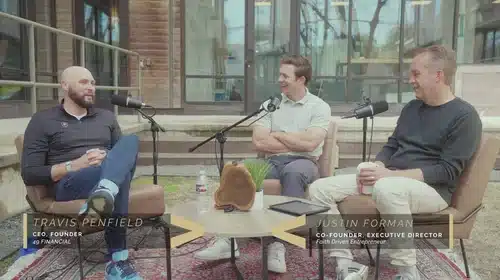
Subscribe to the newsletter

Stay Connected
to the Movement

We know that as an Entrepreneur, your most valuable asset is time. So each month we take the very best of the podcast, the blog and all the news, resources, and upcoming events happening across the space and bring it to you.

Episode 195 – When Death Knocked Twice: Travis Penfield’s Blueprint for Scaling During Crisis

Episode 195 – When Death Knocked Twice: Travis Penfield’s Blueprint for Scaling During Crisis

Podcast episode

Episode 195 – When Death Knocked Twice: Travis Penfield’s Blueprint for Scaling During Crisis

Can you build a thriving business while facing back-to-back life-threatening crises? Travis Penfield did exactly that, transforming his brush with death from a brain tumor and his wife’s cancer battle into clarity for scaling 49 Financial to 200+ advisors. His blueprint for bridging the trillion-dollar advisor succession gap prioritizes mentorship over metrics, revealing how personal trials became his greatest business advantage.

Join us for this special joint episode of the Faith Driven Investor & Entrepreneur podcast.

Please note that the views expressed by the hosts and guests are their own and do not necessarily represent the opinions of Faith Driven Investor.

All opinions expressed on this podcast, including the team and guests, are solely their opinions. Host and guests may maintain positions in the companies and securities discussed. This podcast is for informational purposes only and should not be relied upon as specific investment advice for any individual or organization.

Episode Transcript

Transcription is done by an AI software. While technology is an incredible tool to automate this process, there will be misspellings and typos that might accompany it. Please keep that in mind as you work through it.

Travis Penfield I think that maybe a lot of entrepreneurs out there, it is so easy, even as believers, to make our business our identity. And it’s such a sneak.

Richard Cunningham Travis, you mentioned your bride’s cancer over the last couple of years. You had a brain tumor in 2016.

Travis Penfield In a different place in your faith when each one of you experienced the thought of losing the other one.

Justin Forman You’re stewarding a business before. You’re steering a business after. What’s the BCAD of how you steward a business after going through things like that?

Travis Penfield I think that since that happened to her, the post, I guess, mindset in running the business is.

Intro Faith Driven Entrepreneur Podcast.

Justin Forman As faith-driven entrepreneurs, oftentimes we just don’t stop until something stops us. Today’s guest, Travis Penfield, talks about these tough moments in life where everything stopped in a moment to care for family, to care himself in these tough times, and how that gave him a bigger perspective of what it is that we are really living for as faith- driven entrepreneurs. So we’re here at South by Southwest having this conversations. Let’s go ahead and get started. With today’s episode. So speaking of life experiences, not all of us get to have the week that it sounds like you just had. Yeah. You gotta tell, we gotta start here. This is important.

Travis Penfield Okay, well, maybe. I did learn a lot. I had a buddy of mine that a few weeks ago said, you know, I’m going to change your life in a text message. I said, what are you going to do?

Justin Forman Three easy payments, yeah, yeah.

Travis Penfield Yeah, three easy payments just you can sell my my beauty care Yeah, that’s funny. And I’m like, what is it dude? And he’s like you love golf and I know your dad’s here as Jack Nicklaus like my dad’s always wanted to be like the guy He’s like he knows all about him all these things and he’s Like we’re going to have ten of us are going to go hang out with John Maxwell and Jack Nicklaus at his club In Jupiter, Florida called the Bears Club where all the guys live and Yeah, we’re gonna get there. We’re gonna do lunch ask a lot of questions. He’s gonna do a putting and arrange session and then we’ll go play, and then him and Barbara are gonna host at his house, and you know, we got some surprises for you there. And I’m sitting there and I’m like, you are texting me, right, like, cause you know Maxwell, he’s got some good stuff. You know, he has got so much leadership stuff, and there’s so much stuff that I’ve wanted to talk to you. Just a couple, maybe 92. Maybe 92. Yeah.

Richard Cunningham Where does the Golden Bear and Maxwell’s combo come together?

Travis Penfield Um, I guess they’ve been buddies for a long time, um, and you know, they’re, they kind of play off each other’s foundations of what they’re trying to do. So Maxwell’s a quip and then, you know Nicholas’s are so into, uh, beating cancer for kids. And, uh they knew about my wife’s breast cancer, you know last couple of years. And so I think that was part of it is they knew I’d have a heart for like both like leadership throughout the world, like spreading the gospel through leadership and then let’s end cancer. Let’s do this thing. Right. So it was, it was inspiring. It was a great time.

Richard Cunningham So tell us about the experience from a golf standpoint. Any highlights? Did you choke in front of Jack? Did you get some good pointers? Also from a leadership and some of the wisdom you got.

Travis Penfield My goodness, yeah, on the golf course, I will tell you, don’t try to hit a putt around the goat. I hit this first putt. I mean, it’s a 10 foot putt and I hit a 15 feet by. I mean this really, just those of you that don’t golf at all. Rimmer in hand. And then he keeps telling me, he’s like, dude, like just relax. I’m like, do you know who you are? Like you’ve done beautiful things with this very club that I’m about to not do beautiful things. And And it was just great, and I mean, we had a lot of fun. It is very difficult on the golf course when he tells you while you’re setting up for a shot that your grip is too tight. So then you’re like, okay. So I’ll just kind of lighten, and he’s like, yeah, I don’t like where your elbow is. And he’s saying all these things, so by the time I hit it, it just dribbles under the ground. So we had ton of fun, I think life lessons, you know. I asked him a question. Earlier on in the day and I’m like, you know, Jack, you’ve, you’ve won all these different things. Like tell me about the winning. Like, tell me, like, how did you do it? Like all these things. He goes, Travis, what do I care how much I’ve won? Like, that’s not my legacy. And I said, well, what do you mean? It’s not your legacy. And he’s like, man, I made a commitment to my kids that even if I was going to be a professional golfer, like they were going to know their dad, like know their dad. And, uh, I’ve made the same commitment to my grandchildren. And um, man he, he was talking about them. When I would ask him questions about like a win or shot I knew he had. Yeah, so I did this, I did that. And then I’d be like, so what about this grand kid? He just light up. Oh, wow. And so then I asked him, like, you know, they’re celebrating 65 years of marriage this year. And I said, you gotta give me a pointer. Like, what is it? And his sweet wife was there too. And both of them say this comment of 95-5, and it’s this idea that it’s 95% give, 5% take, and if both people are doing that, you’re gonna have this awesome marriage. And they, I mean, 65 years, the love that they had for each other, They’re just like, the intimacy they have. I mean, you should have seen him like walk to dinner. It takes him a little bit. But like, it’s like the most beautiful thing to just watch them kind of like in life, step by step together. And so he’s a legend. So many different things I learned. So many awesome takeaways even for Maxwell. But I think the biggest thing was like, I went home to my wife and I was like babe, I love you.

Travis Penfield This has been so inspiring. Being 13 years, I just, 65 years? You know, you just kind of think about that and you’re like, man, that’s a lot, raising all those kids and grandkids and to still have that deep love. That is more impressive than him being the goat in golf, I thought. So it was, I say a top five experience and then my wife reminded me, well, you know, Jesus, you got married to me and you have three daughters. So which one of us is getting the cut? So I’d like to say a Top Six time of my life.

Justin Forman There you go. Well said. Isn’t it fascinating? Like, I mean, we fall in love with the highlights. We fall in love with the moments where fans were enthralled by it. Yeah. Yet the thing that at least I’ll speak for this at 44 is like. I’m as much interested in that. Yeah, the untold story of faithfulness and obedience to do that, like to have all that accomplishments and tensionality with your craft. Come on and keep that stuff together like. Like, that’s a big deal. That’s bigger than many of those trophies on that case. Absolutely.

Travis Penfield Well, and I think for young guys like me, I think that that’s the thing that it seems like he cared about most to teach us, you know? And it was like the game of golf is just so secondary. Like that’s a platform that God gave him, and he happens to be the best at it. But I agree with you. It is all the in between, because the more people that I meet that are kind of like the hero types, I’d say the more often I’m disappointed. You start asking about it, and they’re self-absorbed. You know, doing different drugs and different things and whatever, and you’re like, well, this is what it takes to maintain. And then you got a guy that’s like, well, I’m gonna have a cheese omelet. And you’re, like, cheese omelet it is, It’s a strange dinner order. But just a total stud.

Richard Cunningham That’s awesome. Travis, you mentioned your bride’s cancer over the last couple of years. You had a brain tumor in 2016. Lord has dealt you guys some pretty wild seasons of health and things like that. First off, how are y’all doing? And just kind of give us some of the backstory there and all that God’s taught you in the midst of those trials.

Travis Penfield Yeah, brother, I mean, it is I would never want it to happen to anyone. But gosh, right, the testing of your faith, it does develop that perseverance. And so I think that because we’re both good, I guess it’s easy to say, it puts you in a different place in your faith when each one of you experience the thought of losing the other one within a day, right? And Jacqueline’s doing great. So here in a few weeks, we’ll be celebrating two years. And for anybody that understands the cancer battle, you gotta get to that five year mark. And so two years is a big deal. But you know, it’s really interesting. Like, you know Matthew Six talks about like anxiety and you know like the birds of the air and the flowers of the field and like, you’re not gonna add a single day of your life. And yet the thing I think I’m still struggling through and I think Jacqueline does better than me is like, for me the brain thing was easier because it was just happening to me and then I wake up and they’re like, hey dude, like I think you’re gonna be okay but it’s four months, you’re going to have to learn how to talk and walk and do all these things again. Um, but for her to watch that occur. Like there’s still times I would say monthly over the last two years where it’ll be like 2 a.m. And I’ll just wake up with like this crazy sweat and just start crying and not really know why. And like just a level of anxiety that I’ve definitely, I don’t think I’ve felt in my life. Just this like, what they don’t tell you is you’re so excited when they say you’re cured. And then they say, he got this five years to see that it doesn’t recur. No one really I think warned me that the anxiety of this five year is pretty crazy. You know, I mean she even gets like a sneeze or a stomach ache and you immediately go to like some type of cancer Right and it recurs But she’s such a fighter, you know, she did so The way she cared for our three daughters who were really young You know during that she you know she’s doing the chemo and you know her hair was starting to fall out and she made the decision to like make it a moment with the kids to like cut her hair and then shave her hair, and do all those types of things and Yeah, you know, they almost they almost like didn’t fully recognize what was happening. She’s doing such a good job. One of the moments you know strange that the things you remember in these really kind of dark hard seasons. You know, it was still really patchy on top of her head. Like, you know, you see like bald people that go through I guess I’m bald always. So but like you see that and it’s like patchy and all those things. And I was like, well, babe, I’m I’m decent at shaving ahead. You know, I’m good at that, you know, practice. Yes, some practice over here. Good Lord. Decided to make me ball to my 20s. And so, man, I held my wife in the shower, like slowly shaving her head, because they’re like, if you get a neck while you’re on chemo and stuff, it’s really bad. You know, they just don’t, the red blood cell counts are too low. And man, that is probably one of the like, most beautiful, heartbreaking, sad, lowest four or five minutes of my life. Sitting there shaving her had, kind of contemplating, like holding her. I can’t, I don’t know, I can even go there. Like, like emotionally, it’s almost too hard to but it got it got kind of bad for her says about three or four months into it. She’s one of the types of body types that can’t do chemo, which is not all that normal. So the doctor calls us and they say, you guys need to come in her red blood cell count is at a certain level, that it’s no longer worried about cancer we’re worried about like, can she even make it? Wow, you know, and so They tell me, they’re like, Travis, two things. First, she for the next week cannot be around anyone. She’s quarantined because a single cold could take her out. And then she’s like, the oncologist is like, and one thing I want you to prepare for is it’s not looking good. And so you need to take your kids somewhere. And my advice to you is, when you see husbands like you that are working, that don’t necessarily. Like take care of the kids full time. When a spouse goes out and passes away, like it can get really, really, really bad when she passes. So I’m gonna ask you to take them somewhere for a week and I need you to live that whole week as if she’s gone. I need to go there even though she’s still alive or I don’t think it’s gonna be good just seeing your reactions to all this. I just don’t get the vibe you’re gonna be in a good spot. And so I take the kids to San Diego and my sweet parents told me that, you know, I should take them somewhere where we do much activities, of Lego lands and all the things. And I’m crying in between every ride, trying to like picture this like, am I gonna work? Am I gonna? And I was just kinda like, I guess I’ll just stop and I’ll raise these beautiful three girls and just kinda, who knows? And so I get back and they tell us that what they found out was her cancer. They had put so much chemo in her that it was almost the analogy was that it like, if cancer is this hotbed, chemo is this like ice that goes in there and they just had put too much in it and they didn’t know. And so she has this immediate, you know, surgery, mastectomy, and she comes in the doctor and says, hey, this isn’t how it’s supposed to be, but three things need to happen. And she’s going to be considered cure, but we don’t know if it’ll happen. And I’m waiting in this room, and this is to kind of tie back the brain surgery, you know four by four walls, just waiting for her to get out of surgery to hear like, more or less, is she going to make it or not? Or are we kind of on a downhill slope? And I am listening to, you guys know United Pursuit, that simple gospel album. I don’t know, 10, 15 years ago. So before my brain surgery in 16, I was just listening to that nonstop, it like calmed me. And all of a sudden that’s what’s on my headphones. And it was such a blur over that time, I realized I was on the exact same floor in the exact hospital where my brain surgeries was. Listening to the same song, whatever that was seven years later. And there was a piece that like, I’m not one of those people I feel like I’ve ever like heard God visibly or any of those things, but this was one of these moments that I’m like. At a level of peace and then Dr. Carl within seconds and like, everything’s good. So we’ve been just celebrating that for two years. Wow. Holy cow, what a story, man.

Justin Forman Such a powerful story. How does your perspective of just everything else change? Like, I mean, you’re stewarding a business before, you’re steering a business after. What’s the BCAD kind of version of how you steward a business, after going through things like that?

Travis Penfield Yeah, I think, whether I wanted to admit it, I think that maybe a lot of entrepreneurs out there, it is so easy, even as believers, to make our business our identity. And it’s such a sneaky thing. It kind of reminds me of that old Cast and Crown song that says, it’s a slow fade. So it’s little tiny things every day, where you come home a little later, or you answer that email instead of being with your kids at dinner. It’s these little moments that we let the business become our identity, And, um… Man, I think that since that happened to her, my, the post, I guess, mindset in running the businesses, if the business doesn’t make it, it’s okay. If the business, doesn’t hit that growth goal, it’s OK. Whereas before, if it didn’t, it would just ruin me. And now it’s like, no, cause I’m going home to my bride and I’m just gonna be able to see her and talk to her and business can go up down. I could just not even have a business and I got it. I got what I wanted in life and the Lord has given me this beautiful woman. And so, yeah, I would say I feel more grounded. You know, Timothy Keller has that counterfeit God’s book where he talks about all these idols. And I think that for me, post her cancer, I think I was reminded again, last time I was remind of it was that brain surgery. It’s like, dude, I’m like an idol factory. And I the biggest one that I struggle with is approval of man. And I that what’s kind of gone away since that cancer is like, You start to just realize who’s for you and who’s not. And you start to just realize that like, life can’t be for others’ approval, because you can get one call and be taken out for four, six, seven months, which is I was taking care of my daughters as, you know, she was going through her journey and like, then you’re just not working. So if they think really highly of you or not, like you’ll never fulfill that, which gives you the approval in the first place. So stop chasing it. And that’s an interesting by-product that I would have never guessed from a cancer battle.

Richard Cunningham Man, I feel that deeply. So talk about the business. You’ve got the 49 logo on, 49 Financial, 2012 start date right, you’ve got this epic naming story of Ecclesiastes 49, but give kind of the audience a little bit of a lay of the land of what you guys are doing. You’re in the human services business, financial advising, and it’s an incredibly well-respected shop here in town, so we’d love to hear some of the backstory.

Travis Penfield Yeah, well, I mean, what are we trying to do in an industry? We say that we’re trying to become the Mayo Clinic of Finance. And we haven’t gotten to publish that yet, because turns out Mayo Clinic won’t let us. Shocker of the year, everybody. So if you know anyone there, if you just introduced me, would love to have that. So that’s more of an informal listeners out there. It was informal. This is our informal mission statement. And I so admire what they did. You think about it, like they more or less came together and said. What if we were to accomplish and tackle the most complex issues in health? And they just started years ago and just said, how do we keep bringing better and better experts? And how do continue to have a training hospital to have more and more doctors that learn under those experts? So I’ve just always loved the model, have some personal experience with it, and it’s wonderful. And so, if I think about what we’re trying to do, I’ll put it in a simple three things. So I think our industry, um is still stuck right average age is upper 50s and almost all of them white and so quite quite literally like this industry is Old white dudes behind mahogany dust still i’m in the industry for 12 or 13 years still the same dudes They just lost hair like it’s unbelievable like we can’t get women We can’t give minority we can we can do these things and it’s just kind of makes me mad Especially having three daughters. I’m like this ain’t right like I gotta try to do something about this But I think the problem also is like The industry is so old that everyone is scared to death in the halls of our industry of technology. They’re all, oh my gosh, they’re gonna take my job, they’re going to this, they are AI, and they’re also scared. I’m like, you can’t be scared of that stuff. Like you have to create an organization that can adapt to it. And so what we’re trying to do is three things that we believe over the next decade or two is going to keep the human side of financial services, right, the human of advice giving alive and well. The first is we want to handle more complex issues. And so we started as just advisors that were just giving advice. And now we’ve moved into estate planning, high-end charitable giving, doing all the trust and wills, doing their entire family office. Why? Because when you’re doing all of that, you can handle a lot of complexity. The second is more services. I think that Amazon has taught us all as a consumer that I love the fact that I can click a button. I don’t go to Target. I don’ go to H-E-B. I don’t go to any of these places because I can just get it all from Amazon. And so the idea is. If you can create an organization where when someone says I’m a client, they can get it all done for them, right? It’s like, my home and auto insurance, like when was the last time you met someone that knew what their home and an auto insurance meant? For real, like what does this umbrella mean? What do you give me a free umbrella? No one knows, right. And so the idea is simple. It’s, like, how do you get as many, we call it like the hub and spoke model. How do you do as many spokes and you be at the hub of that to where a client says like, how do I just work with them and they do everything? And then the third one, right? If more complexity, right, more services, that third one is more community. And I think what we’re seeing is post-COVID, our industry has turned very Zoom friendly. That’s great, right. The problem with that is what we’ve seen from clients is they’re not getting that feeling of community anymore. They’re not get that feeling of like, I like to do a review on my situation because I can’t wait to hear how that person is doing, right, and how this team is doing. And so I think that if we can accomplish those three, You know, we may just get Mayo Clinic to sign off and say that we’re the Mayo Clinic of Finance.

Justin Forman So when you say community, big word in the church, right? Yeah, no doubt. Like, says everything means something. Something, thank you. Okay, so when you talk about community and that, is it community more of like, hey, with your team, or is it with each other? Great question.

Travis Penfield So Clesiasi is four nine turns out that’s what the name comes from right two are better than one you get a better return For your labor woe to the person that falls that doesn’t have anyone to pick them up And then a cord of three strands is not easily broken So it’s kind of like I’ve thought about renaming it to 411 financial business doesn’t sauce clean You know, I mean for nine through and I like that people still think I’m a football player for San Francisco, but But like, you know, it’s interesting because As we think about this idea I think that people struggle with this idea of a team that can help you internally, but then also because they’re so happy together, invite you into almost a familial type experience. And so I think in 410, where it talks about that woe to the person that falls, like clients, and I think the thing that’s out there for them is many people can do a plan to plan for your goals, right? And like, I hope people can, I think JetGBT can do that, Like, don’t tell my advisors, but. Um, you know, it’s not bad, you know, but what’s different, man, when someone passes away, when someone loses a job, when the business doesn’t sell for what they thought, um, when, when when someone has a parent pass away and the estate plan wasn’t what they thought or whatever it is, right? Like when people feel like they have fallen, I think that’s what I mean by community. We’re the hand to pick them up. And I think an internal and external, and I think a lot of that’s just because you’ve heard my story like I was the big old ego, you know, like, I can do all things through Christ, you strengthen me, emphasis on the eye. You know, it’s like, it was just not as a kid and you know whatever, but I don’t know man, like we are going to fall, whether it’s a financial plan, whether it is in life, and can you have a community that’s like that’s when we jump in. Like almost the type of love we wanna exude is one that says, I expect you to fall and that’s not the time that I say. Something’s wrong with you, or like our relationship’s off. It’s like, knew it was coming, this is when I come in even more deeply and more intentionally.

Justin Forman I think there’s such a gap of like, again, in the defensive industry, like protectionist mindset, you’re missing the opportunity to really switch the value proposition of like really what you guys are about is trust. You’re selling trust. You’re a selling trust, you’re a guide. Like the days of technology being able to give us data and plans are here. Like just accept that. Now the question is how do you coach and guide people into that right position? I think what there’s that scarcity mindset that keeps us into the old way, but like the new way. I mean, candidly, yeah, it’s messy, life’s messy. But it’s the thing that fills our heart. Like if you’d say like, and as an advisor, like, hey, you don’t have to be the Excel master and this, that, and whatever, and performers and spreadsheets, but you can really be about helping people. I think in some ways, like that’s the same thing, whether you look at the church and pastors, they didn’t wanna run bank statements for a church. They didn’t want to run this and that and HR policies. They want to be about teaching God’s word and helping people, And how we put technology into its right place and to recognize how it frees us up for relationship. We’re missing it and we just, yeah, I don’t have a landing point as other than we’re missing the value trade that’s I think a trade up than a really a trade to hold on in the past. Totally agree.

Richard Cunningham So you’ve got to talk about the business a little bit in terms of number of advisors, the number of families you guys are privileged to serve, and this unique model that you have that you want a young team as you’re kind of raising up the next generation of advisors. I know you’ve gotten some wise old sages on the team as well, but you’ve purposely built out a youthful model that 49 can be something that lasts beyond. And also there’s just this transition you’re talking about of advisors are aging out just kind of systemically as an industry. Yeah. And also talk about the… Longing for next-generation clients who are the inheritors of wealth or stepping into wealth themselves who want that values alignment when they sit down across the Table from someone who’s providing that trust and that river guide type experience

Travis Penfield Well, brother, let’s start with like, I get asked it all the time, because our industry is all but given up on the 22 year old. I mean, it’s just not happening anymore. And people are always like, why are you doing it? And why are trying to do it at scale? Is that not the hardest thing in the world? Because you’re having to teach them how to like, answer an email without an emoji, you know, let alone financial services. And I’m like, no, you’re right, right? It’s true. Like we got-

Richard Cunningham Big emoji.

Travis Penfield Well, there you go.

Justin Forman And i think we do some training and i’m not going my space in the game is complex because uh… Goodwood

Travis Penfield But yeah, so like, I think for me, like, my heart and why 49, as long as I’m around, is gonna be for the young person is, you know, we, if you think about us human beings in America, like if you’re blessed to go to college, you’ve been living your life in approximately four year segments, right? You do like your first four or five years and you’re just like a little baby. And then you got your elementary school, then you’ve got your middle school, then you get your high school, then you go to your college. We’ve been trained in these almost four-year segments of, hey, four years, and then you get to here, and you win, and you get to advance next level. It’s almost like a Super Mario game. You know, it’s crazy.

Travis Penfield And then all of a sudden at 22, I felt this. I get out of school and now all of the sudden, I’m working at this big consulting firm, really successful. And I won’t use any names whatsoever, but I’m now in this like identity crisis. Cause I’m like, what’s the next four year thing? Like at 26, do you win a prize? Cause like my parents said that I’m great, even if I lose, right? I’m a millennial. For us it’s the first born. Yeah. And so What was so interesting, so I’m on this flight and we’re going to Amsterdam for this client. And we’re in line and true story. One of these higher up people, he says, hey Travis, I see that ring on your finger. And he points down at it and he says could you take that off for me? He goes, where we’re going and like, what we’re gonna be doing, I think that’ll be uncomfortable. And when we got there, I learned and your mind can go where it needs to go of things that were happening. And then I got like ostracized, I got, like, what are you doing? You gotta, you know, client’s always right. Like, why are you not partaking in some of this stuff? And I was like, man, if I didn’t have my faith, if I had to have this awesome bride of mine, I’d have done all that stuff. And then, I’ve just been another person on the path. And I started to think about that as I came home on that long flight back. Man, I wonder how many people at my age right now are gonna say yes to that. And that’s one of the first steps for the rest of their life to two or three divorces, kids they don’t see because they claim to work and that’s why they don’ see them, like all these things that I was hearing. And so when it was time to like start something, I think my heart was around this idea of, could we be the place that, I don’t know if they’re gonna make it at 49 or not. I mean, our average retention in the industry is 9%. Odds are good, they won’t. And while we’re four or five times that, that still means, right? Like half of them won’t, so my aim to the company is, if we’re really looking at it from the ministry perspective, like if a lot of them aren’t gonna make it, did we set them on solid ground to launch them into the next 40 years because it’s not a four-year play? Yeah. And I think that that’s, man, that’s what inspires me. That’s what I love. Uh, if you come in the halls of 49, you’re probably going to get a training about, um, how, how do you, uh, you know, make your own personal values versus financial planning at times. And, and it’s because like, these are the things that they need. Um, so I can, I can go into more, but I think that’s the passion of it.

Richard Cunningham Yeah, well quickly because I just the the scale you’ve achieved is so amazing. How many people are on the team?

Travis Penfield Yes, we’ve got 200 advisors and then it takes about 50 or 60 staff operations to run the business. And then, yeah, I mean, our big goal, we’re just launching Minnesota this year, so we’ll be in 10 cities around the country, Los Angeles to Atlanta, all these places. And the biggest thing that changed for me is, pre us going independent in 2019, we were working on the umbrella of this large insurance company. And, you know, we had gotten that group up to 350 people. And so much better than even what we are today. And you may ask him like, why don’t you just go do that again? Well, there’s two things that the first was effectively like we could hire people there, give them a shot. And there was not a lot of expenses to that because we’re a part of a master organization, right? So there’s a financial component we’ve had to really like dial in because there’s lot of costs to bring on a young person that doesn’t produce revenue for some time, right. That’s just business 101. But I think that the second thing that we’re seeing is When these people then do come on and they do want to be served and they want to work for us, I think one of my mistakes, I don’t want to go over Greg because I think the Lord kind of used it, but during the first seven years of building this thing, my favorite question for someone to ask me was what you just asked. It was my identity. Try to say how big is 49? And I was like, oh, I’m getting affirmed today. And I’d always answer it and they’re like, oh my gosh, how do you do that? You’re just this young kid and all these things. And I was always like, I have self-worth, you know? And I wasn’t mature, man. I had faith, but young faith. And I think this version, what we’re trying to do is say, can I answer that question and still say, I do think we’re on this race to a thousand, race to 10,000, all these thing? Yes, I believe we’re that path. But do I value that quantity as first place or do I evaluate quality? And I think for seven years, we value quantity over quality, if I’m honest with you. I think that we were, and in my own kind of immaturity, maybe more obsessed with the number, the development. And now we flipped it to say, no, no no no. We’re gonna track the retention. We’re going to track what is each advisor doing in success, and that’s what we’re gonna look at. And then if we can build the models and still keep the quality to get the quantity, great. And there was this wonderful mentor. And what she said to me is she had worked at Netflix and she said that something that they figured out when they were scaling and growing was this idea of a path versus a race. And she said, you keep saying like, here’s the path to a thousand or path to 10,000. You have these years that you baked them out. She said, make it a race, you know if it’s gonna be in three years, could happen in 10 years, 20 years, but the race is on, but you have told your firm, you do not care if it takes you many more years if it stays high quality. And I think that if I look first seven years, kind of last six years of the business, I’m just so much more proud of the businesses. You know, but I don’t get to answer that question with as much like, it’s not as cool. Yeah, it is not as as cool as it used to be. Kind of stinks, you know, I’m like, I want to say a thousand, but I think it’s ready for that. I don’ think we could develop them properly and get to a thousand.

Justin Forman Any time soon. So I want to jump in, it was something that we were talking about earlier is like this idea of, and you’re hitting on it in a business sense, and obviously God’s taking you guys through a lot as a family in a personal sense. Sometimes we think that the life gets easier, the sky gets clearer, it’s easier for us to integrate our faith in our work. Has that been the case for you or do you find yourself like kind of more in like the using your Mario Brothers kind of analogy like leveling up? Kind of is that.

Travis Penfield Brother, I think I’m the exact opposite. I think that when I was younger and more naive in all these things, I think there was actually a little bit of a beauty in that because I did have that childlike faith in a sense in business. And this is something I don’t think people talk about, but like the young entrepreneur that’s a believer, I think they’re such thing as childlike CEO faith. Yeah. Because you just like get and you’re like, you know what everybody, let’s stop the meeting. I’m gonna pray for this person. And you just do it. Like you’ve never heard of like this HR person coming in your ear and like, you know, that you could get sued for that one. And you’re like, Oh, I didn’t have a clue, right? Naivety. Oh, it’s amazing. Yeah. And it is childlike. And I think there’s a beauty of that. And so, you I think that for me, I have found myself especially over the last couple of years, now that I’ve been quote unquote, well educated in business and HR and all these things. I don’t know if I’d go as far as saying I’m scared, although you can call me out on that if you think that that’s true, there’s something in me right now that doesn’t do it with the same level of. Kind of almost like flippant, boldness, because I’m just like, well, yeah, I want to talk about it. That’s important to me. And so I don’t know that I have an answer, but I do think that it’s something that, you know, I’m 36 years old, just turned it, you know a week ago, like the 30 something year old, like we need, we need maybe it’s in your podcast, like some folks here, but like, we need older and wiser people to tell us like, so how do you do it when it starts to get successful, when it start to get more corporate? Because startup, I think it’s really easy to do. He’s gonna speak from your heart but uh… I would say i’m struggling

Justin Forman to find that balance today.

Speaker 6 Yeah, interesting.

Justin Forman We’re definitely in that how moment. And we’ve talked about this a little bit before on the podcast is like the last 20 years, we’ve just seen an incredible thing that we can look back and say, God has been at work. Yeah. He’s affirmed people understand that their faith and their work matters. Their venture is not theirs. It’s to be used for something bigger than themselves. But we’re stuck at the how. We’re stuck in the how of like, what does this look like? Whether you’re winning or you’re losing, whether you’re going up or going down or going through that season. But we are in that, how moment where we’re getting really nitty gritty and we’re being practical. And I think it’s an encouragement and a challenge for the movement is please make sure you share your struggles. Don’t just share your wins. Because like, yeah, great. That’s nice and up and to the right and you got a bow on it. But like, tell me the struggles because that’s where the real innovation for the next breakthrough happens.

Travis Penfield Yeah, it’s funny you say that. In our journey, obviously, folks that have cancer or anyone that’s got some brain issues or any of these types of things, we’re kind of a place that they come to talk about. But I do think there’s still a lot of things in business specifically that, to your point, it almost doesn’t feel safe to do that, right? Because there is, I still think this like, and this would be kind of like my shout out to all the successful older entrepreneurs that are looking at young dudes like me to mentor. We still really want to like make you proud. Like we still want to put up the results. We still want do these things. And so it’s difficult at times to tell them that. And so I think that, I love your podcast. I love what you guys are in here, because I feel the space is free for that in this moment. And I just don’t know that we talk enough about like, as the younger person usually in the room, I’m kind of reading the room to say, is it safe to do this? You know, and is it okay for me to just tell you all that You still want to mentor me. You know, I don’t know, I don’ think that always happens.

Richard Cunningham One of the things I want to commend about you is, I mean, we were hanging out pre-podcast just talking the number of times you said the word mentor. You referenced the people in your C12 group, which by the way, you are in the most stacked C12. Dude, shout out Mike Sharrow. It is unfair. It’s the all NBA team of all time.

Travis Penfield And then you got me little bugs bunny. Just trying to try to make the squad everybody

Richard Cunningham We need you to go just invite all of them onto the Faith Driven pod for us, so everyone can hear these stories. We got a couple of them. I haven’t even been here this much yesterday. Yeah, that’s true. They’re legends. We’ve bothered them all. But that’s just one area I want to commend you, just how much you’ve talked about the wisdom that’s gone before you. Hey, being the Faith-Driven Investor side of this podcast, as we get to do releases as FDE and FDI, selfishly I have to take us in this direction. I mean, 49 helps families shepherd a ton of capital. Yeah. And on that faith-driven investing front, where are you seeing the space kind of going? What are you encouraged by on this kind of values-driven front? How you all are approaching that conversation with families? Is it coming inbound to you all a lot of people saying, hey, I want a better line faith and investments? What is 49 kind of doing on that front?

Travis Penfield You know, what’s interesting is, and I’ll give God the glory on this one, it was probably four years ago that I told you about like the big three, like I wanna do more complex things with the business, more services, right, more community. And one of the first things when we said like, what’s another service we could offer the client, you know, NCF, National Christian Foundation, friends of ours, right? I started having a lot of discussions with them about like, so what do y’all do? And we get, you know we get deep into charitable trust and dafts and foundations, all these wonderful things. And I’m like I’m gonna go do a bunch of trainings for our advisors and let’s see what happens. Like, let’s if we can be the place that people know when they come to that you’re gonna hear just as much giving advice as you are about suiting your money and making it grow a certain rate of return for your retirement or whatever. And so we launched it and man, it is, I will tell you, I think that there is a hunger out there for, if you’re a financial advisor, listening to this, like, really, it really would press you into So, make that a part of what you talk about. Because the amount of times that people will, you know, you’re like, so can I just ask you, like, what do you give in a year? It’s like one of two places, right? It’s either like, well, I’m making all this money and, you know I’m doing this much and they have this shame, right. Or it’s like, man, I’ve given everything, like it’s amazing. And you know we have this opportunity in our industry, right, as like pretty much guiding investors, right, to have one of the more intimate dialogs, you know that almost any profession will have. I have somebody. And I cannot tell you how many times we’ve been able to help them understand giving, help them understand like, how could they actually make it work in their plan? And I think one of the other things that most people probably know is like, yeah, you get a deduction, but if done right, you get to save the capital gains tax. And so one of things that like is a coin that we have and I know National Christian Foundation, I think coined it themselves first, but it’s this idea of can we turn tax dollars into giving dollars? And I’d have to get you the exact stat, but I know it was over nine figures last year that would literally have gone to the federal government, which, you know, pay Caesar what Caesar’s, I’m not saying that like we shouldn’t pay our taxes, but like to do a plan that without us existing, would have just gone to government and next time you go down a road and there’s a pothole, you’re like, dang it, I paid for that to be fixed. Versus, you now, all of that money, then us saying, hey, this is new dollars. What do you care about?

Richard Cunningham Yeah, it’s so cool.

Travis Penfield That’s what I think is getting to be way more passionate, I think, for us than even just the financial plan in some ways, because it sure fires them up.

Justin Forman Yeah, and again, it goes back to the early side of like, if technology can take care of some piece of the puzzle and it frees you up to be more intentional in that, I mean, what’s the thought of just, what is the role of that advisor? When we think about who are the pastors of the marketplace, I think it’s the entrepreneurs. As much as the pastors are the conveners of the pastors in the marketplace and they equip and they affirm and they send out, but there’s an incredible emphasis there. When you talk about advisors, I mean, yeah, you’re gonna hear a sermon on a Sunday morning talking about giving and generosity and importance. But imagine if you can come to the plate and somebody knows the theological perspective and the practical side of things. Pastors of the marketplace and the role that advisors play is just tremendous. Not just today, but when we think about the optimism in the next decade or two, this is where that battle lines are. This is like having that conversation and saying, okay, I’m used to hearing one or two buckets, but how do I do this in a God-honoring, faithful way? To plant the seeds but or to bring the seeds of a conversation to bear. Yeah. I think it’s just it’s a reimagining of that and it’s a beautiful thing that I think is on the verge of happening.

Travis Penfield I mean, I think I cannot agree more. And I will say like this next generation, because we hire a lot of young people, I think that as you talk about the next 10 years or 20 years, I will whatever you wanna say about the generation, good or bad, like they’re hungry to learn. Like there is more desire than, you know, my millennial group, right? And so I do think that there is a readiness. And then on the flip side, the bulk of our clients are over 50 years old. You know, I mean, most of them are 55, 60, you know, of course, that’s kind of the business run. I cannot tell you how many of them need to be told. You spent 30 or 40 years learning your craft, learning wisdom, learning all these things. Yes, I’ve said mentorship, because I still think that’s it. Like if every single person, like said, I’m gonna mentor three young people this year and that was their goal, we may change the doggone world, right? But it’s just not happening. And sometimes like you gotta ask the young kid, they don’t even know what a mentor is. Like I did a training one time at Forty and I said, Everyone, define for me a mentor. You sure heard their responses, right? But we don’t know what we’re doing. Like it’s all just learning from those that went before us, but I don’t that that’s happening as much, but I can feel it rising.

Richard Cunningham Travis has been awesome. Loving this. Maybe to close, kind of bigger question type, if you will, but just, you know, what are you most passionate, fired up about, thinking about the most right now as you’re building in Scalent 49, caring for a family? I mean, what’s just top of mind for you right now is build this business.

Travis Penfield Yeah, I think there’s a personal and there’s professional answer to that. So if I think about what I wanna be involved in over the next 10, 20, 30 years in the industry, I want to be the team that bridges the gap of the trillions of dollars that are being managed right now by the older advisor, right? That’s sitting out there and 40 years, they’ve been loving these people, it’s amazing. But their only offer right now is to either sell it for a bunch of money and then not talk to the very people they want it to. Or stay on and keep hearing from the client, like, what’s your succession plan? Like, I’m getting nervous. And we have all these amazing advisors out there that they don’t know where to go because the options are not right. And they sure don’t like, is there people that agree with my values that will like hold tightly to these clients and love on them and steward them because I’m not gonna be here. And I really hurt for those people and I’ve met so many of them now. And then the young person, we need to do something in this industry to keep them coming in, develop, train. I get it’s the hardest work. I get it’s the work that no one really wants to do anymore. I get all the things and someone has to do it. And so I think as I think about in maybe a paragraph, like what do I hope happens over the next 10, 20 years, I think it’s this combination of, can we unite all of the older generation and younger generation to work together, but do it where we take this Amazon approach, this Meo-Khun-Kun finance where we say, we’re gonna bring a version of a family office to the massive fluid. Which is an offering that’s never been out there, right? I mean, family offices existed for the hundreds of millionaires, billionaires forever, but we are in the works of getting that to the mass affluent. And if you get all the old, all the young, and you have that offering, I think that we could shake up the whole industry. And to y’all’s point, use tech as a best friend. Absolutely, right. And so I think it’s everything I get excited by and I can go through all the different things. I think we’re up to like nine different companies we haven’t talked about that isn’t just 49 trying to combine them all to do it. It’s gonna be super exciting. But on the personal side, you know, the prayer is we got three years left for Jacqueline’s five-year journey, you now, post-cancer. And it is just every day, it’s how do we get to that? And I don’t have it right, but I’d say our prayer nightly together is, like, Lord, how do look forward to that day where we can celebrate that it has been five years and this monkey’s off our back, but then enjoy the moment? And that’s, I think, very difficult for us. And so if you like. What am I getting fired up by? The simple truth of like a six, five and a three year old daughter is looking at their dad to lead right now and a wife that’s two years removed from cancer. It’s got another three years for this recurrence. How do I lead in that moment us to have an unbelievably fulfilled, beautiful life serving the Lord, not in fear, but in a place of like Lord of Cheers anyways, like anything can happen. We’re all one phone call away from our life completely changing. And I think that I want to live in that. Not in fear, but in a, let’s just enjoy the moment. Let’s enjoy the days we get and hopefully lead them in the way that the Lord’s called me to.

Justin Forman What a gift. Grateful for the way that you open your story and allow us to kind of journey with you and just the joy, the sorrow, the pain, the beauty, the brokenness as you were describing earlier, just what you guys have gone through. But sharing that and allowing people to see that shadow of a leader and just to being able to say, okay, what does it look like to follow in that is really beautiful. So guys, it’s always good to be with you. If you’re hearing this and you are feeling like you’re alone on this journey, let today be the end of that. Take a step. We’ve talked about faith-driven entrepreneur, faith- driven investor groups. This is a chance just to be known, to begin that journey. It’s a place where online or in person, you can begin that conversation. We know that it never ends. There’s many seasons, many chapters to it, but we would encourage you to check those things out. Take advantage of that opportunity to begin that conversation with friends who can understand you and what God’s doing in your life. Always great to be with you. We look forward to seeing you next episode.

Outro Come for content, stay for community. Join a faith-driven entrepreneur group online or in person. No cost, no catch. Visit faithdrivenentrepreneur.org. That’s faithdriven entrepreneur.org

Subscribe to the newsletter

Stay Connected to the Movement

We know that as an Entrepreneur, your most valuable asset is time. So each month we take the very best of the podcast, the blog and all the news, resources, and upcoming events happening across the space and bring it to you.