Venture Capital is Like Skinny Jeans (Or Why We Need a New Language for Capital)

 Image by  Waldemar Brandt

This article was originally published here on Medium.

Check out VillageCapital’s blog for more quality content!

by Rob Tashima

My genes make it tough to find jeans. I’ve got short legs, and finding a pair of trousers to fit them can be a challenge. They are either too short, too long, too tight or too baggy, so when I find a pair that actually fits, I end up buying several of them to stock up. This means I’m not a big fan of current fads: I do not look good in skinny jeans.

I’m hardly alone in facing this challenge — we’ve all got different body sizes and different body types — and yet, unless you’re able to buy your Japanese raw indigo custom cut to your measurements, we’re all forced into the same small range of jean styles and sizes.

We get frustrated when our clothes don’t fit. If we really like them, we have some options to adjust to them: cuffing them, taking them to a tailor, losing some weight to squeeze into them.

But otherwise, if a pair of jeans don’t fit, we don’t wear them.

If we take this approach to jeans, why don’t we take this approach to venture capital?

Read the full article here!

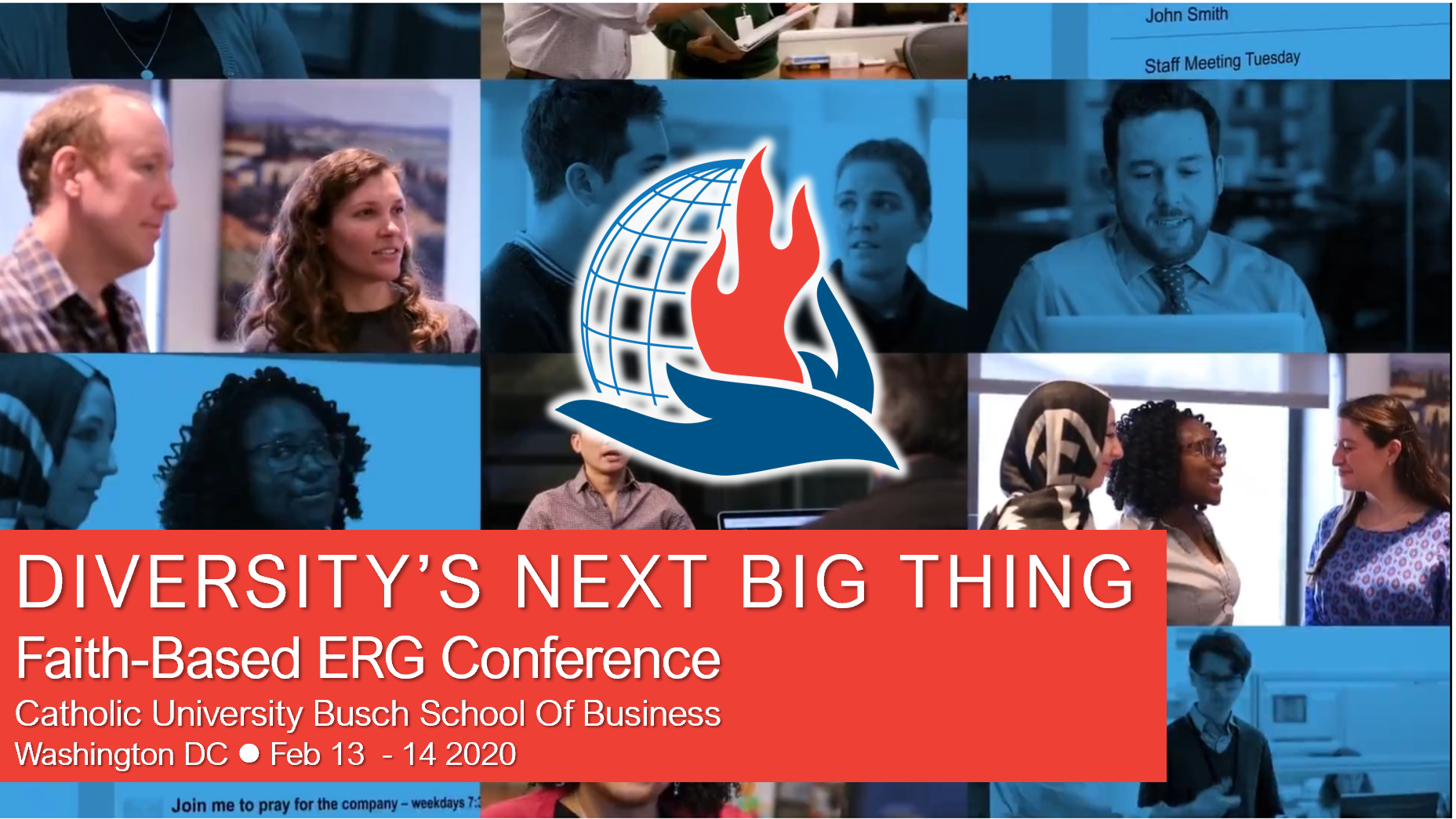
Diversity’s Next Big Thing: Faith-Based ERG Conference

This article was originally published here.

Check out ReligiousFreedomandBusiness.org for more quality content!

by ReligiousFreedomandBusiness.org

A growing trend in corporate America that is being embraced by some of the largest and most recognizable companies will be the topic of a first-of-its-kind conference in February. From Google to Facebook to Walmart, companies from a range of industries are recognizing that faith-friendly environments mean better workplaces and better businesses.

The Religious Freedom & Business Foundation and the Busch School of Business at Catholic University will hold a groundbreaking conference for employees and executives to discuss the importance of corporate programs that foster religious inclusion. The two-day conference will take place at The Catholic University of America in Washington, D.C., on February 13 and 14, 2020. The event will feature executives and members of faith-oriented Employee Resource Groups (ERGs) sharing best practices, challenges and opportunities.

Check out more details for this event (and register) here!

Financial Obedience Is Better Than Sacrifice

 Image taken from Inspire Investing

This article was originally published here by Inspire Investing.

Check out Inspire Investing for more quality content!

by Robert Netzly

God doesn’t need your money, but He does command your obedience.

Droves of Christian investors are discovering biblically responsible investing (BRI) for the first time as the BRI movement continues to gain momentum around the country and around the globe. These investors are learning the hard truth that they have been investing God’s money – and it’s all God’s money, right? – into businesses directly profiting from and supporting some of the vilest forms of depravity that the human mind can conjure.

It is currently the norm for the portfolios of millions of Christians around the world to be invested in abortion drug manufacturing, pornography sales, LGBT activism, human trafficking infested supply chains and the list goes on.

And then we give that money to God on Sunday morning and expect that He is pleased with our offering.

Hear me right, my heart bleeds with compassion for my brothers and sisters and echoes the prayer of Christ on the cross, “Father, forgive them, for they know not what they do” (Luke 23:34), because not long ago that was me. I know the sting and sorrow of that conviction personally as it was only by the mercy of God that He caused me to stumble across the ugliness of what I was investing His money in, and what I was profiting from.

The Israelites in the Old Testament had the same problem. Over generations, the covenant people of God had lost their way. For some Israelites, theirs was a deliberately defiant disobedience. They knew the commands of God and they purposefully chose not to obey.

For others, like me and many Christian investors today, they simply were unaware. They had been “conformed to the pattern of the world” (Rom. 12:2) and were ignorant of what God expected of them as His people. Even though these Israelites were still adhering to the sacrificial system of worship with varying degrees of faithfulness, God was not pleased with their sacrifices. They brought their bulls, their rams, their doves and grain, but that wasn’t what God wanted. He wanted their heart and the obedient life that flows from a dedication to loving God above all else.

Hear God’s word to His people through the prophet Samuel, “’Has the Lord as great delight in burnt offerings and sacrifices, as in obeying the voice of the LORD? Behold, to obey is better than sacrifice, and to listen than the fat of rams’” (1 Samuel 15:22).

The danger for Christian investors wrestling with a newfound conviction over their investments is to seek to justify their investment in companies that profit from pornography (such as Amazon, Netflix, Roku, Dish Network and others), promote abortion (such as Pfizer, Intel, Bank of America and others), and sponsor LGBT activism (such as Wells Fargo, Target, T-Mobile, AT&T and others) by dedicating the returns from these investments as gifts to the Lord.

More than once I have heard well-meaning Christians declare that they have decided to continue to invest in companies involved in immoral activities so that they can give the profits to God. Their logic is that by doing so they are operating like a modern day Robin Hood of Christendom, profiting from the evil and giving to the holy, like some sort of spiritual money laundering scheme.

But there is a problem with this approach: God doesn’t want tainted gifts of sacrifice, He wants holy gifts of obedience. These believers confuse sacrifice with obedience, just as the Israelites did in Samuel’s day.

God makes it very clear He detests money earned from immoral activity and forbids His people from offering such ill-gotten gain to Him saying, “You must not bring the earnings of a female prostitute or of a male prostitute into the house of the LORD your God to pay any vow, because the LORD your God detests them both” (Deuteronomy 23:18). And elsewhere the Bible teaches that it would be better to earn lower returns than to support injustice, “Better is a little with righteousness than great revenues with injustice” (Proverbs 16:8).

Brothers and sisters, we must pay very close attention to what God is saying here. He would rather us give Him nothing than give Him an unholy offering. Better yet, God would rather us “learn to do good; seek justice, correct oppression; bring justice to the fatherless, plead the widow’s cause” (Isaiah 1:17) with our finances and with our entire lives, and give Him the fruit of those good works, to the praise of His glorious grace.

It starts by learning what you are actually invested in from a biblical morals perspective, and you can find out for free at inspireinsight.com. Once you discover what issues are lurking in your portfolio, you can prayerfully make the changes necessary to transform your investment account into a God-glorifying financial engine that pursues righteous revenues instead of ill-gotten gain.

Let’s give Him holy gifts of obedience that are as worthy of His holy name as we possibly can by His grace. Such offerings are truly a pleasing aroma to our Lord.

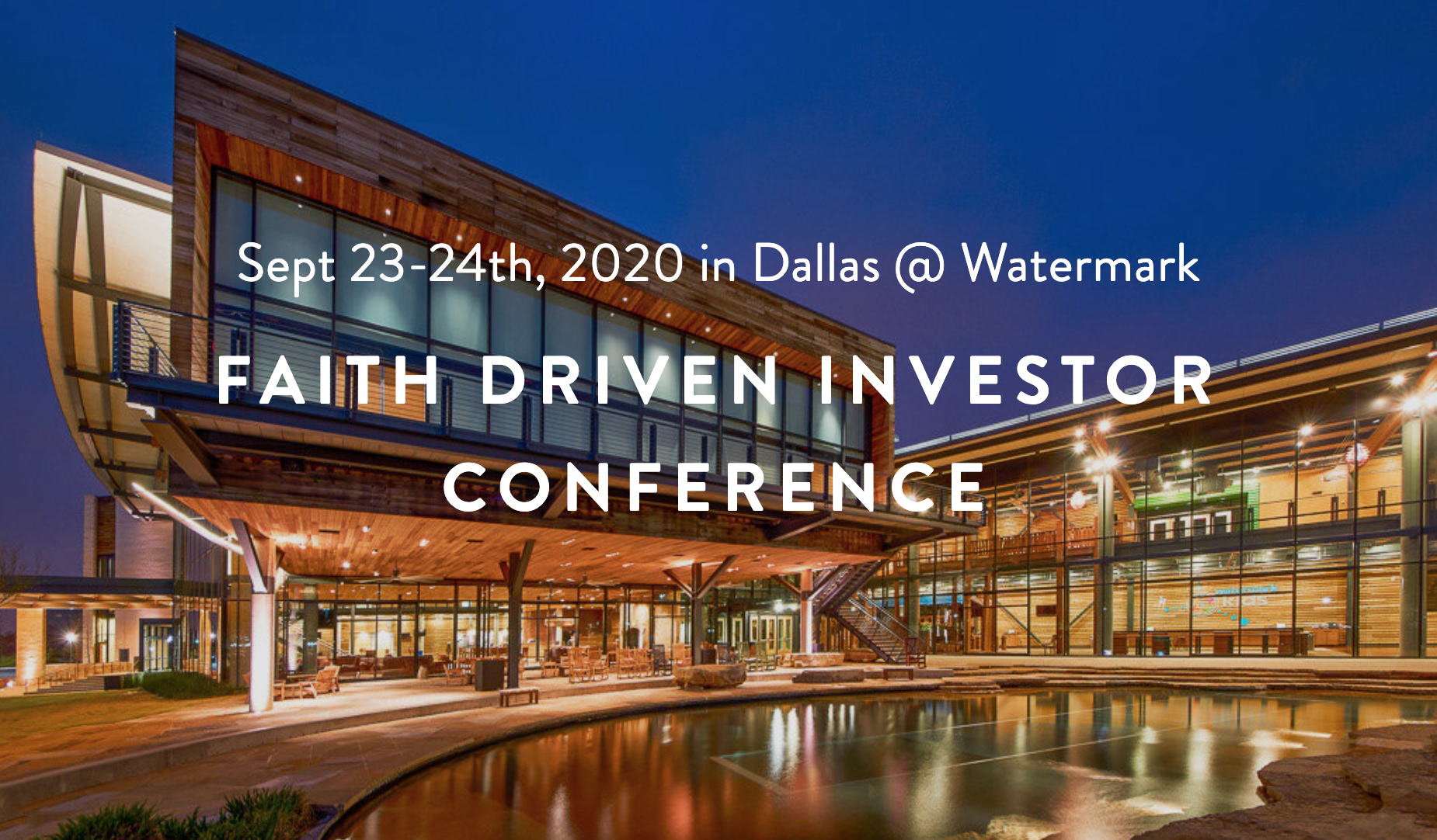
National Faith Driven Investor Gathering in Dallas – Sept 23-24th

by Justin Forman

One year ago, a small group of us gathered in Deer Valley to dream about how the Gospel might advance through Faith Driven Investing. This movement of investors, fund managers, and leaders believes that God owns it all and that He cares deeply about how we steward His investments. Watermark Community Church in Dallas is graciously working with us to host what will be this year’s defining gathering for Faith Driven Investors on September 23-24th!

We confirmed the dates less than a week ago, so more details will be coming out soon. We have already confirmed that Andy Crouch from Praxis, Finny Kuruvilla from Eventide, Ron Blue from Kingdom Advisors, and Todd Wagner from Watermark Community Church will be speaking. There will be tracks specifically designed for Real Estate, Private Equity, Direct Investments, Family Office, and Institutional Investing. We’ll feature actual faith-driven investment opportunities in new startups, real estate, and video properties including Phil Vischer, Creator of Veggietales. You can also stick around an extra day to network with entrepreneurs by joining us for the Faith Driven Entrepreneur Conference immediately following.

Seating will be limited to 700 attendees and registration is open! The Faith Driven Investor is a ministry subsidized by the generosity of a few individuals and foundations. There are some added discounts available for the first 100 registered.

We’re excited to see you there!

Strategy in the Age of Superabundant Capital

 Image taken from Harvard Business Review

This article was originally published here by Harvard Business Review.

by Michael Mankins, Karen Harris, and David Harding

For most of the past 50 years, business leaders viewed financial capital as their most precious resource. They worked hard to ensure that every penny went to funding only the most promising projects. A generation of executives was taught to apply hurdle rates that reflected the high capital costs prevalent for most of the 1980s and 1990s. And companies like General Electric and Berkshire Hathaway were lauded for the discipline with which they invested.

Today financial capital is no longer a scarce resource—it is abundant and cheap. Bain’s Macro Trends Group estimates that global financial capital has more than tripled over the past three decades and now stands at roughly 10 times global GDP. As capital has grown more plentiful, its price has plummeted. For many large companies, the after-tax cost of borrowing is close to the rate of inflation, meaning that real borrowing costs hover near zero. Any reasonably profitable large enterprise can readily obtain the capital it needs to buy new equipment, fund new product development, enter new markets, and even acquire new businesses. To be sure, leadership teams still need to manage their money carefully—after all, waste is waste. But the skillful allocation of financial capital is no longer a source of sustained competitive advantage.

Read the rest of this article here!