
When the ‘Dry Powder’ Disappears

 Image taken from  TechCrunch

This article was originally published here by TechCrunch.

by Connie Loizos

Venture capitalists have raised record-breaking funds in recent years, but that doesn’t always mean the money is there for them when they want it. In extreme downturns, the people and institutions that promise capital to venture capital firms, and then wire it when the VCs need it for their startups, have little choice but to answer the phone less. The alternative is to sell others of their positions — including in publicly traded stocks —  at a steep loss, and they’d really prefer not to do that.

“The public markets end up being the ATM for the illiquid stuff,” says Chris Douvos  of Ahoy Capital, one such limited partner who has backed such firms as First Round, Data Collective and True Ventures. When the markets are in free fall as now, the collective reaction of asset managers, he says, is: “Holy smokes, this kind of sucks.”

What happens next depends on how sustained and deep this downturn proves. But LPs seem to agree that the the industry could be in for a reckoning this time, and if so, they’ll have to get practical, fast.

Already, newer managers are seeing LP interest dissipate before their eyes. Though Douvos says he doesn’t “think we’re there yet,” he also shares the story of a fund manager who has been struggling to close a $50 million fund and on whose behalf Douvos has been “pinging a bunch of my LP friends.” The response he is getting is, “‘We’re not investing in new relationships right now. We’re not even investing the time.’”

Joanna Rupp is a managing director at the University of Chicago’s  Office of Investments, which has stakes in many smaller venture managers with whom it has strong relationships, like Pear in Palo Alto. She echoes what Douvos is seeing, explaining that, “Everyone who is currently in our pipeline and who we committed to invest in three weeks ago, I’m still investing with them.” But given the financial gut punch the economy has taken, “some [new managers] who we wanted to build relationships with, and who could be interesting to invest with, I now don’t have the capacity to add them.”

Rupp adds that “it’s going to be very difficult for newer managers without established LP bases to raise.” But perhaps more relevant to the broader startup industry is that — absent a quick economic rebound — older relationships could also start to receive the cold shoulder.

The end result would mean fewer dollars for the venture firms that have already closed their funds, and less capital for startups that might need it.

“At some point,” says Douvos, fear and uncertainty starts to “creep into your existing portfolio, and you start doing portfolio triage, and you’re like, ‘Wait, I have 24 venture managers and I’ve got to cut somewhere.” The questions begged are: “Do I make smaller commitments to each of them? Do I start saying sayonara to the bottom third?”

It’s precisely the scenario that played out exactly 20 years ago, when following the dot-com boom and bust, limited partners — from pension funds to charitable foundations to school endowments — saw their overall assets shrink, compelling venture managers to whom they’d committed capital to slow their investments.

Some venture firms were eventually forced to shut down. Others had to downsize their ambitions. Accel,  for example, not only reduced a $1.4 billion fund it had raised, but its team at the time actually cut back the fund twice, in both 2002 and 2003, releasing some of their backers from their obligations.

Certainly, many of today’s circumstances feel familiar to those who’ve awaited some kind of a correction — one more dramatic than the 2008 financial crisis, which hit Wall Street far harder than Silicon Valley.

With record amounts of venture capital raised, a market peak, and now a sudden plunge, the moment feels very much like it did in the spring of 2000 when the high-flying market, rife with young internet companies, abruptly nose-dived, wiping out thousands of startups — and hundreds of venture firms — over the following three years.

At least some lessons were learned in the aftermath of that earlier crash. For one thing, says Rupp, in these “unprecedented times, people will show their character. You get a sense of who people are and how they think about the world, and GPs need to be really mindful of that and of how supportive they are in communicating with their portfolio companies.”

Rupp also suggests that LPs, like savvy VCs, can sometimes use downturns as a way to ease out of some positions and double down on others. Even faced with possible budget cuts, says Rupp, “Some folks we wouldn’t cut back, while you hope you might get additional allocation as other LPs become more conservative.”

Elizabeth “Beezer” Clarkson, who has led Sapphire Partners investments in numerous venture firms, further posits that companies might realize now that IPO “windows aren’t opened forever.”

While a generation of startups has subscribed to the notion that should stay private as long as possible, many of these same companies could have made their employees, venture investors, and the industry’s limited partner more money had they moved faster to go public.

“Can everyone be made a millionaire from secondaries?” Clarkson says of secondary stock sales, which private companies have used to buy the patience of early investors and employees who want some liquidity. “It must be harder.”

Of course, much remains to be seen. Coronavirus vaccines are being researched around the world, and should something work sooner than later, economies around the globe could spring back more quickly. In the meantime, VCs — who’ve raised bigger funds faster than ever in recent years — might want to give their whipsawed LPs a break. They likely have other fish to fry.

“Everybody believes that, ‘Oh my gosh, all of a sudden, entrepreneurs are willing to accept term sheets at like 10% less,’ The [VCs] see this as a value,” says Douvos.

“What they don’t realize is that [right now], there’s so much more value out in the rest of the world. All things being equal, you’d rather buy a public stock that you can buy on sale and get out of when it runs up again than a private company that you have to hold for eight or nine years.”

Especially after watching the IPO window slam shut, Douvos says “being asked to lock in losses to buy illiquid assets doesn’t feel that great.”

FOR MORE INFORMATION ON COVID-19, PLEASE SEE OUR PAGE HIGHLIGHTING SOME OF THE BEST RESOURCES OUT THERE FOR FAITH DRIVEN INVESTORS & ENTREPRENEURS IN THIS SEASON.
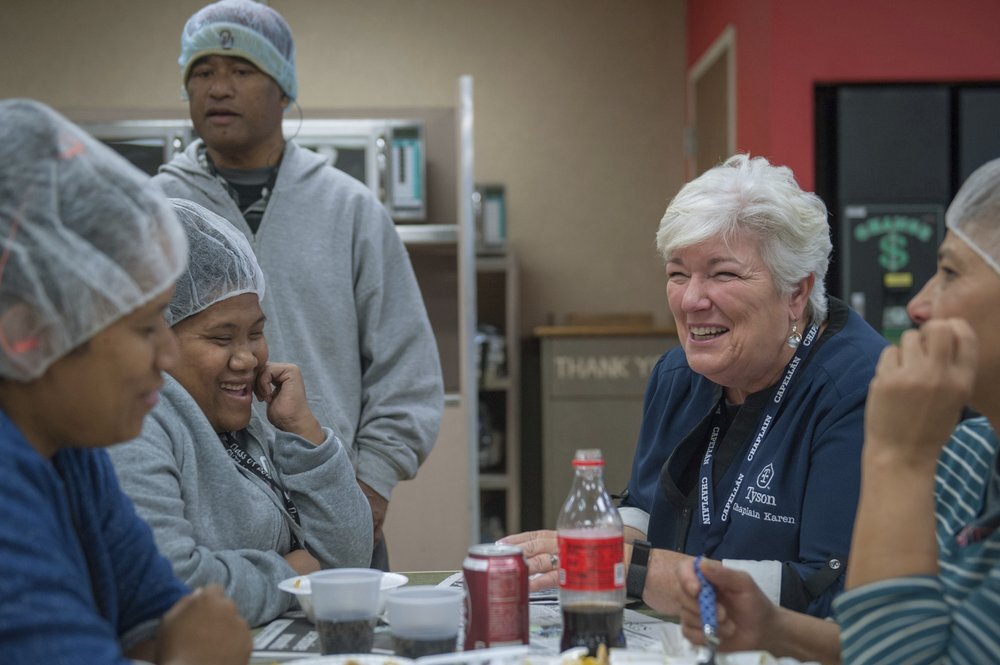

More US firms are boosting faith-based support for employees

 Image taken from AP News

This article was originally published here by AP News.

by David Crary

It has become standard practice for U.S. corporations to assure employees of support regardless of their race, gender or sexual orientation. There’s now an intensifying push to ensure that companies are similarly supportive and inclusive when it comes to employees’ religious beliefs.

One barometer: More than 20% of the Fortune 100 have established faith-based employee resource groups, according to an AP examination and there’s a high-powered conference taking place this week in Washington aimed at expanding those ranks.

“Corporate America is at a tipping point toward giving religion similar attention to that given the other major diversity categories,” says Brian Grim, founder and president of the Religious Freedom & Business Foundation that’s co-hosting the conference along with the Catholic University of America’s Busch School of Business.

A few companies have long-established faith-in-the-workplace programs, such as Arkansas-based Tyson Foods, which deploys a team of more than 90 chaplains to comfort and counsel employees at its plants and offices. That program began in 2000.

However, Grim says most companies — over the past few decades — have given religion less attention in their diversity/inclusion programs than other categories such as race, ethnicity, gender, sexual orientation and disabilities.

Read the rest of this article here!

Courageous Love in a Global Crisis

 Image by  Peter Greer

This article was originally published here by our friend and FDI and FDE podcast guest Peter Greer. Check out his blog here for more great content!

— by Peter Greer

It’s on all of our minds. It’s the first topic of conversation and the first headline on the news. The COVID-19 coronavirus is an escalating health concern across the globe and has been officially categorized as a pandemic.

We are inundated with information. Daily, I’ve been checking the statistics and have watched as the red dots on the map have grown and spread: first in Asia, then in Europe, and now in my home community.

We’ve grieved as the death toll continues to rise. We’ve seen the impact on the global economy and stock markets. We’ve heard about the travel bans, necessary precautions, preventative measures, symptoms, and supply shortages.

As fear and anxiety increase, our world becomes smaller. We naturally focus inward. How are we going to be impacted? How safe is my family? What will this mean for my travel plans? How much risk do I face? What will happen to my investments?

We seek to protect ourselves and our interests. Yet, Jesus invites us into a bigger world and a drastically different posture. A posture that constantly looks outward. Jesus called His followers to show deep love and concern for the most vulnerable. “Truly I tell you,” He said, “whatever you did for one of the least of these brothers and sisters of Mine, you did for Me.”

As we consider the impact of COVID-19, we’re invited to look not only “to [our] own interests but … to the interests of the others” and to pay particular attention to the vulnerable, the elderly, the sick, and those impacted by poverty.

HOW DOES COVID-19 IMPACT PEOPLE LIVING IN POVERTY?

Amid all of the news, we haven’t heard much about the way the coronavirus is particularly damaging to those living in poverty, and not just the health infrastructure and challenges of testing and treating. For many, it’s about so much more than a declining retirement portfolio; it’s about survival this week.

Consider an entrepreneur in Asia who has spent her entire life trying to get a small restaurant up and running when coronavirus hits her community. With fewer and fewer customers visiting her restaurant, income dwindles. And with little savings, her ability to withstand that shock plummets. As days turn into weeks, the impact deepens. The concern is not just about health; it’s about survival.

For many living on the margins, the economic concerns outweigh the health concerns. Questions like How can I get medical attention? may be overshadowed by questions like Will I eat? This is the story for many families—around the world, as well as in the U.S.—who are reliant on cash flow and income for their livelihood.

In Galatians 2, as Paul prepares to travel, Peter gives him an important instruction. “All they asked,” Paul says, “was that we should continue to remember the poor, the very thing I had been eager to do all along.”

And two thousand years later, this is the call for us, too. To remember our brothers and sisters living on the margins, especially during a moment of global crisis. To think beyond our concerns and explore ways to live out uncommon generosity. To respond and invest in ways that build future resilience. To turn compassion into courageous action. To show love in the ways we pray, in the ways we give, and yes, even in the ways we cancel or postpone events (to do everything in our power to slow the spread of the disease).

Right now, the Church has an opportunity that it has not had in years. In a time when the world is growing more anxious by the day, we have the unique opportunity to share a different message—one of hope in Jesus Christ, of trust in a Kingdom economy, and of generosity in sharing with those in need. Years ago, Jesus invited His followers to share a tunic if they had two. Today, we might be invited to share an extra roll of toilet paper if we have more than we need. Let’s not miss this moment to creatively love our neighbors, the ones right next door and those much further away.

As the Church, may we embrace our mission to respond to the anxious, the hurting, and the vulnerable. To be known as a people who respond with courageous compassion and radical love.

“In a time like now, Christian neighboring looks less like fearful self-preservation and more like servanthood toward the elderly; those with HIV, autoimmune disease, or no healthcare; fatigued and under-resourced healthcare workers.

 Wash hands, for sure. Then, wash feet.”

– Scott Sauls

FOR MORE INFORMATION ON COVID-19, PLEASE SEE OUR PAGE HIGHLIGHTING SOME OF THE BEST RESOURCES OUT THERE FOR FAITH DRIVEN INVESTORS & ENTREPRENEURS IN THIS SEASON.

Faith Driven Perspectives and a Hub of Tools to Respond to COVID-19

 Image by  Oleg Magni

It’s no secret that everyone’s day-to-day lives have been turned upside down by the coronavirus. While this particular pandemic is new, there’s much to learn from Scripture and other believers. Many difficult decisions await in the days ahead. And we should remind ourselves that as believers, “Worry is not our friend and panic is not our way.”

As we all do our best to hold fast to the truths of Scripture, we wanted to spotlight a few of the best resources that touch on our current events. We created this page on our site as well as the Faith Driven Entrepreneur site. These have all been referred to us by people like you, so as you discover others, even those more specifically related to Faith Driven Investing, please share them.

The first of these resources is our latest podcast. In light of present times—the pandemic, along with its economic and social effects—we wanted to quickly produce a podcast to speak into what we’re all experiencing. That’s what brings us to Mark Sears, Founder and CEO of CloudFactory. Early on in his entrepreneurial journey, he faced a global crisis, and the way he led his business during that time is an example for Faith Driven Entrepreneurs everywhere.

So, if you’re feeling a bit lost, overwhelmed, confused, or scared during these trying times, let Mark’s words be a source of encouragement… Stay tuned for others we’ll be releasing in the next few weeks.

Podcast Episode 18 – Worry Is Not Our Friend with Todd Wagner

We’re combining the Faith Driven Entrepreneur and Faith Driven Investor audiences today to continue to address the current events we face. Todd Wagner joined us to speak into how we as believers can respond to the fear and worry surrounding COVID-19.

Todd is the lead pastor at Watermark Community Church in Dallas, Texas. If that name sounds familiar to you it’s probably because you’ve heard Henry mention it in the intro to this podcast as the location for where we will be hosting our Faith Driven Entrepreneur and Investor Conferences this fall. In addition to being our host and a speaker at the event, Todd is also a great voice in the faith-driven conversation.

His words of wisdom—or as his Twitter handle calls them, words from wags—are encouraging, challenging, and uplifting to all who hear them. And with our current events, we could all use encouragement. Like Todd shared, “worry is not our friend and panic is not our way…”

Useful Links:

Should Christians Be Anxious About Coronavirus?

Coronavirus is redefining the words Church and Worship

Real Truth. Real Quick

@wordsfromwags