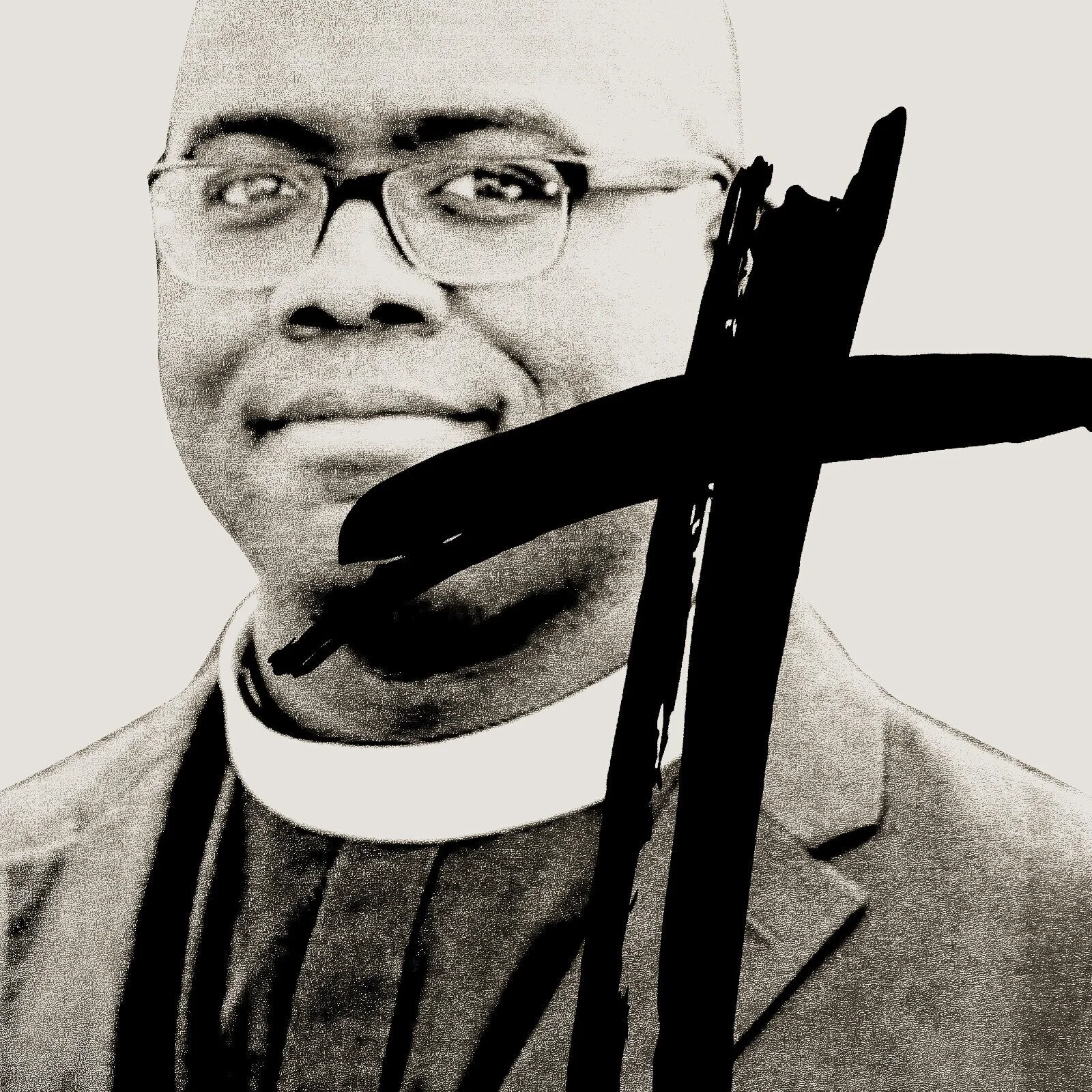
5 Barriers to Innovative Real Estate Solutions for the US Church

Article originally hosted and shared with permission by The Christian Economic Forum, a global network of leaders who join together to collaborate and introduce strategic ideas for the spread of God’s economic principles and the goodness of Jesus Christ. This article was from a collection of White Papers compiled for attendees of the CEF’s Global Event.

by Nick Bonner

This white paper is an attempt to build on my two previous white papers regarding solutions for the church that are specific to real estate. All three are directed at reimaging the future of the Church in the US during this pivotal moment, which researchers have described as “the greatest opportunity for evangelism and discipleship in US history.”

The average church in a US city spends half of its finances on a building it only fully utilizes 5% of the week. We need to significantly reduce church infrastructure costs and streamline their efficiencies to meet this challenge. In my spare time, I have spent the last four years researching, ideating, and building a real estate model that will be a catalytic positive disruption for the church. The five areas below are the hurdles I have personally found inhibiting that change. They are significant but surmountable, which reminds me of a Confucius quote that my grandfather used to motivate his successful real estate career: “He who removes a mountain begins by carrying away small stones.” Perhaps this paper will serve as one small stone.

Lenders Need a New Box

With 80% of churches in plateau or decline even before COVID and >60% of church revenues anticipated to go away, church lenders are going to need to adapt if they want to have clients to loan to.,, The vast majority of church lenders are chartered to only loan to nonprofits, and/or they can only lend to a church directly. They are going to need to pivot to be able to lend to for-profits and mixed-use developments that are not owned by a church. I have spoken with the top leaders at many of the largest church lending institutions in the country, and they all agree. Thankfully, a number of them are working on a solution, but it will take time. Most traditional commercial real estate lenders don’t understand the strength of the diversity of a church revenue stream, and as a result, they won’t lend to churches. They, too, could benefit from adapting to this new paradigm. There are a handful of denominations and foundations that have funds to help with this, but sadly, the denominations are limited to only work with their own churches. Like the counter parts, their lending criterion is also stuck with the nonprofit-only model. The unfortunate result of these existing approaches is that developers looking to come alongside the church to help create sustainable solutions with diversified income streams are seen as “neither fish nor fowl.” They fall outside of the box of the vast majority of lenders. Lending to mixed-use sustainable developments that include churches along with a variety of other synergistic income streams will help lenders diversify their portfolios and will open the door to an entirely new field of lending.

We Need More Operators

We can’t expect pastors to do everything. As with every organization, we need to get the right people in the right roles. We need savvy businesspeople with proven operational track records to come alongside the church and innovate new models—real estate syndicators, developers, asset managers, property managers, preschool owners, coworking operators, coffee shops, gyms, etc. Although more consultants in this space would be helpful, the largest deficit I have seen is in the category of “doers.” The Leonardo de Vinci quote comes to mind: “I have been impressed with the urgency of doing. Knowing is not enough; we must apply. Being willing is not enough; we must do.” 

We Need More Investors Who Know Who They are in Christ, Have an Eternal Perspective, and Are Willing to Take Calculated Risks

I have volunteered with a Christian foundation and led our impact investments for nearly a decade. During that time, I have been inspired by the conversation around impact investing and concessionary impact investing. This past year, I went behind the scenes to understand the faith driven entrepreneurs’ perspective, and what I discovered is that there are a lot more people that like to talk about concessionary impact investing than those who are actually willing to do it. I’ve sat in the trenches with dozens of God-inspired, faith-driven entrepreneurs putting their careers on the line, and it is heart wrenching to see no one there to catch them when they take their leap. What our collective experience indicates is that the impact investments that investors are willing to make are most often either traditional investments with a Christian label on them or a software start-up with a very high multiple. Very few Christian investors are willing to innovate outside of the software space. For as far as we have come from the two-pocket, houseboat, dualistic mentality, we have a very long way to go. To address this problem, Tim Keller’s talk at last year’s FDI conference could not have been more on-point. It is a heart issue that, at its core, is about where we place our identity. Two quotes struck me in my own heart: “If your success or your money is your identity then you will not be generous” (this applies to both time and money by the way), and “Identity is received, not achieved.”

The predominant precedent for philanthropy is:

1. Make all the money you can; make a name for yourself, and only once you reach your personal level of comfort and security, then 

2. Give out of your abundance. 

Where is the faith in that? How is that any different than how an atheist lives? Can this really even be defined as generosity? God has called us to help those alongside us while we are running the race, not after we have crossed the finish line and circle back for a victory lap in our own glory. 

But wait, how do we keep score or know if we are winning if it is not entirely about the numbers? Studying the difference between outputs and outcomes could help answer that, but it also begs the question: “If keeping score is really what it is about, then why should we even consider disadvantaging ourselves to help others at all?” We need to come to a place in our search for significance where we can honestly be at peace with Count Nikolaus Ludwig Von Zinzendorf’s advice, “Preach the Gospel, die, and be forgotten.” As Christians, our success is defined in a “Who” and not a “What.”

As soon as most investors hear the word “church” with regard to an investment conversation, they often have an aversion, for a variety of reasons often very personal to the investor. The Church—and its influence on us all—is deeply personal, and no other business concept on the planet could conjure up such a cocktail of emotional, philosophical, theological, ecumenical, and economical conversation. It could have been a well-meaning but poorly thought out “church parking lot deal,” as Henry Kaestner often refers to, or it could be that they have some personal gripe with God or the organized church they need to sort out. Either way, it needs to change. Worldwide, Christians hold $150 trillion in assets that needs to be stewarded better, of which $80-$100 trillion is investible., 

Please don’t misunderstand what I am saying here. Concessionary and/or innovative impact investments do not make you a Christian. The Gospel is clear that salvation is Jesus + nothing. What I am saying is, as Christians, we are already justified in God’s eyes, so we ought to be the most risk-inclined people on the planet! We need not concern ourselves with impressing anyone else. Let us also not forget that there is the opportunity of eternal rewards at the Bema Seat before which we will one day stand. Scripture speaks clearly to this in Rom 14:10-12, 2 Cor 5:10, 1 Cor 9:4-27, 2 Tim 2:5, 2 Tim 4:8, James 1:12, 1 Peter 5:4, 1 Peter 1:17, and Heb 4:1. Put differently, as Christians, we have nothing to lose and eternity to gain. If we think of the <60 years we will spend investing in temporal things on this earth in light of eternity, it should give us a whole new perspective and motivation. C.S. Lewis observed that, If you read through history, you will find that the Christians who did the most for the present world were just those who thought most of the next.”

Leadership over Comfort

Often, the people most gifted and able to affect change in the areas above are the ones most aloof. Many Christians have elected to focus their time and attention on the counterfeit inheritance of the privilege they have received instead of our true inheritance from the Gospel. In so doing, they have traded their Gospel freedom for a license to do whatever they want with the life and resources God has entrusted them. Many go unchecked because those around them or under their authority don’t feel the freedom to push back out of fear of losing a relationship or a job. Navigating the extensive vacation and entertainment schedules of the Christian elite is one thing, but the premium placed on doing things the way they have always been done simply because that is the way they have always been done is quite another. The way forward is not denial.

Eliminate Apathy Toward the Institution of the Church

The way forward is not throwing the baby out with the bathwater either. Apathy towards the US church is a very serious problem. In my previous papers, I addressed how church plants are, by far, the most effective method for reaching the unchurched, so for the purpose of this white paper, I will focus on the overall Church as an institution. However, because the “Why church planting?” question comes up so often, I will simply add that Tim Keller, widely recognized as one of the greatest Christian thinkers of our time, willingly chose to leave his highly influential role at Redeemer to launch the church-planting organization City to City because he knew that church planting was the most effective method for reaching the lost. There is no doubt a very real spiritual war waging here, but it is also an issue of a lack of education historically, theologically, and statistically.

Historically

Recently, I have heard a number of people in their excitement over Disciple Making Movements (DDMs) completely abandon what is often referred to as the “institutional” or “organized church.” This is nearly always from a businessperson who is frustrated by the lack of efficiency of our church institutions. I, too, am a big fan of DMMs but not at the expense of abandoning the institutional church. Those that do so lack a historical understanding of the longevity of movements and the necessity of organization. Hugh Heclo writes, “To live in a culture that turns it back on institutions is equivalent to trying to live in physical body without a skeleton or hoping to use a language but not its grammar.” Tim Keller shares in support of the organized church when he writes, “Institutions bring order to life and establish many of the conditions for human flourishing and civilized society.” He articulates the importance of both institutions and movements well when he says, “Movements have to institutionalize if they are going to have a lasting impact, and institutions have to ‘movementize’ or else they wither and die.” Similarly, James Davison Hunter argues powerfully that if Christians are truly going to change the world, it is not rugged individualism that changes culture but institutions.

Theologically

The organized or institutional church matters theologically as well. One-to-one discipleship is irreplaceable but on its own is insufficient. The Church i.e.. “ekklesia” by definition is a “gathering,” and Hebrews 10:25 tells us to “not give up meeting together.” Scripture does not give us any guidelines regarding the proper gathering size or location, but it does give us basic instructions for its leadership and discipline, even for house churches. For instance, in 1 Timothy 3:2-13 and Titus 1:5, Paul commands the believers to establish a plurality of elders and deacons to oversee the flock and prevent them from false doctrine. Then in 1 Peter 5:5, Peter commands the believers to be “subject to their elders.” Did you know that the Jehovah’s Witnesses cult began in a Christian house church? Even in the Old Testament, God instituted a whole people group, the Levites, so that there would be an organized group with the onus of keeping Scripture and faith paramount. 

There are also numerous Scriptural examples of the Church being organized on a Local, District, and Universal level. For example: the books of Ephesians, Galatians, and Colossians are all known as “circular letters.” This is because they were not addressed to any one single church congregation. They were sent throughout each respective district to keep the house churches from going off the rails. Similarly, Revelation 1:4 addresses “the seven churches of Asia” (another district). In Acts 20:17, Paul summons the elders of the district church for a meeting in Miletus. Early believers came together for larger corporate meetings (Acts 2:44) as well. The list goes on, but throughout Scripture, there is always an organized church with leadership and rules, even in house churches.


Statistically

I often get pushback from people that the church in the US is a lost cause and that we should invest our resources elsewhere. For this reason, it is important to understand how high the stakes really are. The US is by far the biggest exporter of missionaries, money, and trained seminary students in the world. It is responsible for sending 32% of all missionaries in the world and hosting 50% of evangelical seminaries and Bible colleges in the world; and it is the most generous nation on planet earth.,, In 2020, it gave $131 billion dollars to religious organizations and $28 billion to international charities., So what happens to the international church if its powerhouse continues its downward trend?

According to research from Pew, almost 40% of Americans believe that religious institutions “make little to no contribution [to solving social problems], moreover 62% of the unaffiliated do not believe that houses of worship contribute to solving important social challenges.”

On the contrary, the American church contributes substantially—much more than you might guess from scanning the news. We just need to do a better job of telling the story. Religion (which includes churches, synagogues, and mosques) contributes about $1.2 trillion of socioeconomic value annually to the US economy. That is equivalent to being the world’s 15th-largest national economy, outpacing nearly 180 other countries and territories. It’s more than the global annual revenues of the world’s top 10 tech companies, including Apple, Amazon, and Google. And that is just the mid-range estimate. The upper-end estimate, which attempts to account for the personal and social dynamics that influence people of faith is $4.8 trillion, which is nearly a third of the US GDP!

 “There is a solid body of research that has explored the social contributions of religion, which range from increasing civic participation to ministering to spiritual, physical, emotional, economic and other life needs.” This includes everything from social benefits to communities, education and civic engagement, decreasing crime and deviance, promoting mental health, improved government stability and economic growth, health and welfare, etc. Specific to mental health, the social benefits of houses of worship are associated with better coping skills, increased life expectancy, stress reduction, and better self-reported health. According to Harvard scholar Robert Putnam, congregations are storehouses of reciprocity that yield social capital. In “Bowling Alone,” Putnam posited, “Faith communities in which people worship together are arguably the single most important repository of social capital in America. . . . As a rough rule of thumb, our evidence shows, nearly half of all associational memberships in America are church related, half of all personal philanthropy is religious in character and half of all volunteering occurs in a religious context.” A variety of researchers agree that the major reason for the higher levels of volunteering among religious people is the vibrant social systems and linkages that exist in congregations. Churches are unique communities that encourage volunteerism and others-focused outreach and introduce individuals to secular as well as religious opportunities to serve others. The Social Capital Project reported that, “Religious institutions that convene people under the banner of shared beliefs have powerful community-promoting advantages as compared with secular institutions. They provide a vehicle for like-minded people to associate, through regular attendance at religious services and other events and charitable activities they sponsor. Religious institutions are highly effective at enforcing commitment to shared principles and norms of behavior, passed down over generations.” They found that Church attendance and participation in prayer groups, rather than private spirituality or solitary practice, were “highly correlated” with community health, religious health, and civic engagement. 

Byron R. Johnson of Baylor University has done extensive research in prison reform and found that although there was no correlation with conversions, prisoners that participated in weekly organized religious gatherings like Bible studies and church gatherings reduced their likelihood of recidivism by roughly 50%. Taken together, the research literature confirms that the effect of attendance is significant and unique. Either through the networks of support provided, the learning of self-control through the teaching of religious moral beliefs, or the condemning of illegal or inappropriate behavior, religious service attendance appears to be quite consequential.

Another Baylor University study of church-based care for homeless populations within 11 US cities found that almost 60% of emergency shelter beds were provided from faith-based organizations (this included churches, synagogues, and mosques), which saved taxpayers an estimated $119 million. Congregations provide 130,000 alcohol recovery programs and 120,000 programs to help the unemployed. One study determined that churchgoers are four times more likely to give to charity than those who are not. Another study found that shutting down a congregation in an inner city preceded and contributed to the social-economic collapse of the community in which the congregation was located.

Cardus, a Canadian think tank, wrote, “To the extent that liberal democracy, education, social equality, and improved physical health are good things, organized religion (yes, organized religion, not just an internal, personal, psychological state of communion and private conviction) has been a powerful generator of many of the things we wish to attain for ourselves and others around the world. 

There are three organized institutions that are ordained by God: The home, government, and the church. It should be no wonder to us that all of these are under constant assault. Again, the spiritual warfare taking place here cannot be overlooked. Does a lot about our current model need to be changed? Absolutely! However, we still need organized congregations that gather in some capacity. The church has issues; let’s solve them!

In Conclusion

We serve a Creator who made 17,500 different species of butterflies and a God who gave us a very rudimentary structure for the institution of the Church. Clearly, there are many different expressions of how churches can operate, and therefore, we as businesspeople have lots of opportunity to come alongside the Church and co-create sustainable solutions for it. We need Lenders, Operators, Investors, and Leaders to take this seriously. The Church is Christ’s Bride and His sole plan for the redemption of humanity. We need to approach this topic with the caution that we would approach a king, the tenderness that we would address our own child, the creativity of an image bearer of the Creator, and a reverent fear of the almighty God whose ways and thoughts are higher than ours. In closing, the admonition of Edmund Burke seems fitting, “The only thing necessary for the triumph of evil is for good men to do nothing.” Let’s GO!

A Biblical Perspective on Web3 – Crypto, NFTs, and the Metaverse

by Christos A. Makridis

Technology has always had the potential of advancing human flourishing, or promoting wicked agendas. Technology’s effects depend crucially on the heart and capabilities behind the people wielding it. The rapid proliferation of web3 technologies – fungible tokens (“crypto”), non-fungible tokens (NFTs), and the metaverse – is no exception. And now we have a new opportunity to influence the new frontier of the internet and demonstrate the heart of God to a world that is crying out for signs, wonders, and miracles. To do so, we need to acquire knowledge about web3, for it is written in Hosea 4:6 that “My people are destroyed for lack of knowledge.”

People often refer to web1 as the initial revolution of the internet where content became digital and web2 as a comparable transformation where content was sharable and personalized. But now we are at the precipice of a new frontier where we can own digital assets and the ownership structure is decentralized on distributed ledger technologies (DLTs). That means that the consensus mechanism – or the way that people decide what activity is recorded on the blockchain – is decentralized, rather than centralized and decided by a single organization or sub-group within the organization.

While there are certainly applications of web3 technologies that are concerning, that should not stop us from seeking the Lord about His heart about the frontier. We cannot be a church body that flees from innovation. Rather, we must spend the time in prayer, intercession, and communion to figure out how the Lord wants us to use innovation to be salt and light. 

Over the past few years, and especially the past two, I have become an active practitioner and student over web3 technologies, authoring over 25 articles in the press and two peer-reviewed scientific papers. I have also launched a web3 multimedia startup called Living Opera, which produces digital assets (e.g., NFTs) anchored in classical music, especially opera. 

Admittedly, there is so much more to continue learning, but the journey has given me perspective on the types of web3 use-cases that are aligned with God’s heart, and we should embrace.

1. Cryptocurrency for delivering secure payment to the persecuted church

Many Christians, among other religious minorities, face such incredible political persecution in some countries that there is no way for them to maintain a traditional bank account. However, if they could access a phone with an internet connection, they could be gifted a digital wallet that receives airdrops of tokens from support groups and these could be converted into dollars or other fiat currencies if needed through standard marketplaces or even decentralized marketplaces, like Uniswap. Furthermore, a digital wallet would allow the persecuted church to access international capital and digital labor markets even if the area that they live in is hostile.

2. Remunerating content creators

Content creators, including artists, are taken advantage of by large technology and media companies. Many people overlook the reality that we are the product in the web2 environment. Technology companies, such as Google or Meta, own our data and they make billions off it. But web3 tools are fundamentally about authentication and ownership. In Living Opera, we view NFTs as a tool for remunerating artists: when they “mint” an NFT, that becomes a token that their fans can purchase and receive services (e.g., video or audio files). NFTs, therefore, provide a direct line between the content creator and their fans on a decentralized network, meaning that the NFT lives forever, and no centralized entity can decide to censor or remove it. Of course, there are still many quirks that need to get resolved, especially relating to enforcement of property rights, but the reality still stands that NFTs are the key to remunerating creators of all shapes and sizes.

3. Reduction in physical barriers

The metaverse allows for immersive experiences is virtual spaces. Although the applications of the metaverse today are often crude, they point to such a wide array of possibilities. Imagine getting baptized or visiting the Sistine Chapel in the metaverse. God is the origin of all creativity, and He works without limits; Jesus is the word made flesh. That means mountains must obey the sound of His voice (and thoughts), as do the waters and every living creature. Embracing the metaverse as a new frontier to build in opens the floodgates for creative expressions of His character. 

Christos A. Makridis is an entrepreneur, professor, and policy adviser. Among other responsibilities, he serves as the CTO/COO and co-founder of Living Opera, a web3 multimedia startup. He holds doctorates in economics and management science & engineering from Stanford University.

A Brief Pause Before a New Year

 Photo by  Ales Krivec  on  Unsplash

Photo by Ales Krivec on Unsplash

by Chris McAlpin

“The Lord is my Shepherd, I shall not want….”

Psalm 23:1

What a cool verse. Stop a minute, take a step back, and pause… If God is your Shepherd, you will not need anything.

This feels pretty tough these days. If we are honest with ourselves, this is hard for any of us to digest.

Society is in a semi-shutdown phase due to the Coronavirus that may last for a year or more, there is social unrest that has grown from protests to riots, there is political uncertainty and the feeling of…”I want my guy or gal to be elected, and I am afraid that the other-side will steal the election and the country will be wrecked.”

And in the investment world, there is uncertainty. It feels like this, “I am afraid to risk because I am afraid to lose… And yet, I hear people are making money, and I’m afraid of missing out.”

We get it, we can feel this same way. There are two things that we can practice in moments like this: 1) Follow this verse. I encourage you to trust God. Please don’t hear this like a Sunday school lesson or a sermon. But pause and ask; is God in charge? Since the answer is yes then relax and yet have focused patience moving onto decisions and actions. 2) What do the facts tell us? Regarding your investments, what do the facts say? There is still a Global Pandemic, over 14 million people unemployed,[1] and a stock market that by many indications is in a bubble.[2] The US economy is in a terrible recession.

Yet, lately, we have been asked “is this stock rebound for real? I have I missed out?” Our answer and our opinion are “no, you have not missed out.” If this stock market does not go down another leg, this would be the first stock market in 50 years to only go down one leg and then permanently recover (a “V” shape) during an economic recession.[3]

Our team built and we use the four legs of our rules-based framework to measure data like this; market sentiment, market valuations, the US economy, and the US Fed policy. Now, you can nerd out and read all that you want to (Market Valuations,[4] Market Sentiment,[5] US economic growth,[6] and US Fed policy[7]). This data is constantly changing but the best news is, in our opinion, this gives us a full and accurate picture of what’s happening.

God gives us peace and joy. He also gives us wisdom and good people to work with and collectively look at the facts and make solid decisions. For us, this is a solid foundation in times like these.

A Call to Work Together with Professors

Article originally hosted and shared with permission by The Christian Economic Forum, a global network of leaders who join together to collaborate and introduce strategic ideas for the spread of God’s economic principles and the goodness of Jesus Christ. This article was from a collection of White Papers compiled for attendees of the CEF’s Global Event.

by Robert Brooks

The Christian community needs a robust response to the naturalist economic viewpoint. C. S. Lewis observes, “(T)o be ignorant and simple now—not to be able to meet the enemies on their own ground—would be to throw down our weapons, and to betray our uneducated brethren who have, under God, no defense but us against the intellectual attacks of the heathen. Good philosophy must exist, if for no other reason, because bad philosophy needs to be answered.”[1] 

Warren Brookes, journalist and author of The Economy of Mind published in 1984, asserts, “We are dealing, no less, with the basic conflict between two entirely different concepts of man and his universe, concepts that affect every aspect of our social and economic lives, one determinedly physical and finite and the other profoundly metaphysical and infinite; the one (collective socialism) rooted in fearful concern about visible resources, the other (market capitalism) springing from faith in spiritual reality.”[2] He goes on to further assert, “Since economic thought first became formalized over two centuries ago, there have been essentially two different views about wealth. One view, first defined by Adam Smith and Jean-Baptiste Say, is that wealth is primarily metaphysical, the result of ideas, imagination, innovation, and individual creativity, and is therefore, relatively speaking, unlimited, susceptible to great growth and development. The other, espoused by Thomas Malthus and Karl Marx, contends that wealth is essentially and primarily physical, and therefore ultimately finite. The modern presentation of this view argues that since usable energy is steadily diminishing into entropy, all wealth is really cost to be shared more equitably.”[3] 

Because universities play a vital role in transforming economic thought as well as culture, we need to engage those who are permanent university residents— faculty. How far is the nearest institution of higher education from your home? 

Do you know personally any Christian faculty or Christian PhD students? Have you ever considered working together with faculty to advance the Kingdom as well as improve your business? As Joseph of Arimathea was able to walk into Pilate’s office seeking the body of Jesus, professors who are Christian are often in influential positions.[4] 

Darin joined our church around 1991 as a graduate student in marketing at the University of Alabama. He and his wife were seeking to faithfully follow Jesus but were new to navigating the terrain of PhD programs. Ignoring my advice to be very discrete within the halls of this institution, he became the target of a particular secular professor who sought to have him removed from the program because he was a Christian. By God’s gracious provisions, Darin is now a world renown marketing professor at Samford University having a kingdom impact through a wide array of activities.[5] 

At Darin’s suggestion, one of his students entered a PhD program at the University of Alabama. Again, not heeding my advice, Alex faced significant hostility because he was a follower of Jesus Christ. Today, he is a professor at a secular university seeking to use his position to God’s glory. 

If universities are one gateway to influencing the world, then faculty are their gatekeepers, and PhD students hold the keys to the future. Further, business innovation often emanates from universities. From product innovation to advanced financial management practices, faculty often have an unbiased and unique perspective. Unfortunately, due in part to the academic culture, we often have challenging personalities. Let’s face it, what kind of person can work for weeks on a particular quantitative solution knowing it will likely end up in the trash? Together, partnering with faculty and PhD students can lead to some interesting opportunities for you, your family, and your business, as well as your local ministries. 

Ann and I have been involved in Tuscaloosa’s International Friends for decades. [6] Although TIF is not a Christian organization, many Christians are involved. It is amazing the opportunities that become available simply from sharing a meal with our global guests. We have had too many experiences to enumerate here. Many PhD students arrive here seeking to become world-renowned academics 

and leave here disciple-making followers of Jesus, having a Kingdom impact in countries often deeply hostile to Jesus’ Kingdom. They are world-renowned but in a different world. 

Future global economic leaders are training in U.S. universities today. The current foundation of academic economic thought is atheist at its core and often Marxist in flavor. In other words, the foundation is sand and in desperate need of a surer foundation. You likely hold the keys to transformation through engagement one-on-one with faculty and potential faculty. Liberty is so clearly one key component of human dignity, and it leads to human flourishing.[7] Core to improving economic thought within universities is addressing the key issue of what it really means to be human. 

In the right context, business consulting relationships with faculty can be mutually beneficial. You receive conflict-free assessments, and faculty’s core presuppositions are often changed. Faculty assist you with innovation, and you assist them with their worldview. 

Further, the opportunities for you and your local ministries to partner with on campus groups are vast. There are ministries focused on undergraduate students,[8] ministries focused on graduate students,[9] and ministries focused on faculty.[10] As students are transient, these ministries are greatly benefittedby permanent residents, from faculty to area Christians. Although the temptation is to start something new, please consider just partnering with existing groups. 

Within each academic area, you will find partnering opportunities. See, for example, Christian Business Faculty Association,[11]Association of Christian Economists,[12] and Christian Finance Faculty Fellowship.[13] 

Let us now turn to finance as an illustration. My academic interest for over 30 years is quantitative finance. Based on extensive research and industry consulting, one key to human flourishing is improved financial decision-making. Returning to the previously quoted Warren Brookes, “The primary and essential character of wealth is metaphysical, not physical, and is the direct result of the creativity of mind, not the availability of raw materials—the sum product of individual efforts, not the manipulated static resources of collective nations or governments or lands.”[14] At its core, financial decision-making is metaphysical and rests on our worldview. Thus, I have been wrestling with the essence of the connection between finance and one’s philosophical worldview. [15] 

Ideas have consequences. The idea that the Bible addresses personal finance has a direct consequence to those of us who are biblically responsive. But, can we really trust the biblical perspective, or should we turn to naturalism and modern sages? 

Remember, not only do ideas have consequences, but ideas also have antecedents. Why should we entrust the weight of our lives to the biblical perspective for the purpose of taking us across life’s harrowing bridge? It has been our experience that if the biblical foundation is firmly established in the heart, then the unique particular financial strategies adopted will withstand the withering pressures of the day. One’s grasp on a particular biblically-based strategy may weaken if it is not firmly gripped with a robust understanding of its deep truthfulness and if one is not journeying together with other Christians. The Christian-based finance perspective is radically different fromalternative approaches, particularly those taught in academic institutions. Thus, we need a robust philosophical foundation for the Christian-based finance approach. 

Again, Warren Brookes notes, “Our economic future is not now and never has been tied to the physical assets we now see, but to the vast untapped potential of creative thinking—the metaphysical process which can show us entirely new reserves and new and easier ways of doing things, extending value and increasing wealth without depleting our planet.”[16] As God’s image-bearers, the Christian community should be at the very forefront of economic innovation. 

The doctrine of original sin should keep us attentive and cautious. From a biblical perspective, we know that there is objective truth. We also know that humans have a deeply-ingrained capacity to misrepresent the truth. Hence, when analyzing investment opportunities, we need to be ever vigilant to disentangle truth claims out of the mass of financial information. 

Many financial industries rely on people not carefully assessing their choices. “Easy payments” just sounds so appealing especially if I can get something now rather than wait and have delayed gratification. Understanding the foundational nature of semantic information as well as what one’s worldview states regarding human nature is one key to successfully navigating the many financial decisions faced every day. 

Economic prediction is not the same as economic preparation. Key to quality financial decision-making is understanding the fundamental difference between historical data and the semantic representations of future expectations. Life’s experiences as well as biblical patterns suggest that those things that have never happened in history may in fact happen. We tend to think we can predict the future better than we actually can. The biblical perspective is clear. In the New Testament, James challenges his readers, “Come now, you who say, ‘Today or tomorrow we will go into such and such a town and spend a year there and trade and make a profit’—yet you do not know what tomorrow will bring.” (ESV, 4:13-14a).

This simple truth may cause a significant pivot in how we manage our investments. With the humble admission that we do not have the capacity to accurately forecast the future, financial planning strategies change. One clear example is retirement planning. Rather than focus solely on how much to save and where to invest, this inability to forecast leads naturally to focusing on the relationship between invested assets and the fair estimate of the present value of retirement needs. 

As interest rates have fallen from the mid-1980s to 2020, the present value of retirement needs has significantly risen. Incorporating the fact that retirement needs rise in present value dollar terms when interest rates fall naturally suggests investing in an alternative way. We may not have known that rates would fall, but the relationship between rates and retirement needs is well known. Some estimate the losses within the pension industry exceed several trillion dollars just on this one issue. The simple reorientation toward managing investment portfolios in light of the stochastic behavior of non-investment assets as well as known liabilities would have saved enormous wealth, including trillions within the pension industry. Thus, well-vetted academic insights could have prevented these losses. 

We know that business is one gateway to influence culture. I propose that higher education is another gateway often neglected within the Christian community. My hope is to have challenged you to consider your local university as a powerful agency to enhance your business processes as well as extend your reach. Please pray and ask God whether your calling may include engaging people within your university. If you find yourself somehow meeting a young person who is a PhD student or an abrasive adult who is a professor, then perhaps your vocational calling is about to expand. Finally, if you know high school students who are really intelligent as well as spirit-filled followers of Jesus, please encourage them to at least consider the life of a college professor as they are training the world’s future leaders. Although it is a vocation deeply hostile to the Christian viewpoint, the Kingdom opportunities are vast.

[1]C. S. Lewis, The Weight of Glory, p. 58. 

[2]Ibid, 24. 

[3]Ibid, 12 (italics in original). 

[4]See the Gospel According to John, chapter 19, verses 38-42. [5]See https://www.samford.edu/business/directory/White-Darin. 

[6]See https://international.ua.edu/programs-activities/tuscaloosas international-friends/. 

[7]See Galatians 5:1 For freedom Christ has set us free; stand firm therefore, and do not submit again to a yoke of slavery. (ESV) 

[8]For example, Cru, Navigators, Intervarsity, Reformed University Fellowship, Fellowship of Christian Athletes, Athletes in Action, and various denominational ministries such as Baptist Campus Ministries to just name a few. 

[9]For example, Ratio Christi, Grad Resources, and Christian Grads Fellowship. [10]For example, Faculty Commons (https://www.facultycommons.com). [11]See https://www.cbfa.org. 

[12]See https://christianeconomists.org. 

[13]See https://sites.baylor.edu/shane_underwood/cffa/. 

[14]Warren T. Brookes, The Economy in Mind (NY: Universe Books, 1982), p. 12. 

[15]Extensive materials are freely available at 

https://www.robertebrooks.org/project/christian-apologetics-and-finance/. Any feedback deeply appreciated, even negative in nature.

[16]Brookes, The Economy in Mind, p. 36. ©

A Chicken or an Empire: Your Choice

Article originally hosted and shared with permission by The Christian Economic Forum, a global network of leaders who join together to collaborate and introduce strategic ideas for the spread of God’s economic principles and the goodness of Jesus Christ. This article was from a collection of White Papers compiled for attendees of the CEF Global Event.

by David McAlvany

I know a man who loaned out the equivalent of $50,000 to a neighbor. Much to his chagrin, the debt was settled with a single chicken.

I’m familiar with another family that, in similar circumstances, made a choice to diversify their family business geographically. Over the next 30 years, they expanded one company into 4,500 companies and 3,000 manufacturing plants.[i]

How could such similar beginnings yield such different results? They resulted from differing responses to the same monetary occurrence. I’ll explain in a moment.

By the end of this essay, you will have joined not the 1%, but the 10,000th of 1% (.000001). You will be one in a million. How? John Maynard Keynes quipped that inflation is something only one in a million people understands. You will be that one.

Inflation is not a dazzling topic. Most people consider it boring. But it affects your lifestyle, the things you can do, your ability to care for yourself and your family, your ability to do business, your ability to save for retirement, and much, much more. It’s like air: not something you think about very much, but extremely important.

Perhaps being one in a million also sets you apart in another way. Perhaps you are a part of a remnant of individuals who can actually help those closest to them as the ravages of inflation take their toll.

My aim in writing this paper is first to consider the definition and destructive nature of inflation and second to explore a Christian response to inflation in keeping with the principle of subsidiarity—an important principle I’ll review for you shortly.

Inflation is defined here as an increase in the quantity of money that results in the dilution of purchasing power and is evidenced by the increase in cost for goods and services. In layman’s terms, things keep getting more expensive because the number of dollars in use goes up faster than the number of products available to buy them with.

The government is supposed to keep track of inflation, and it has some tools for that. Two such efforts are the Consumer Price Index (CPI) and Personal Consumption Expenditure (PCE). These price indices were originally constructed to show whether a family could continue to enjoy a basic lifestyle through time or if cost increases for goods jeopardized a family’s ability to care for itself.

However, the measures have changed through time. The original “basket of goods” (the specific products whose prices are monitored) in CPI has changed. Certain products have been substituted, with each one assigned a unique weighting in the index.[ii] Through the decades, the measures have become less reliable as a gauge of enduring economic security.[iii]

Now that we’ve defined inflation and have seen that it deals with both the quantity and quality of money, let’s define “money.” We don’t think about this one very much because we have dollars and cents in our pockets or our bank accounts, and we can buy things with them—case closed.

But the question is crucial: What is money? It’s especially important in a time when digital code is described as “coin” and its creation referred to as “mining.” Central banks are now aggressively pursuing their own digital currency versions as a substitute for the physical form.

“Specie” is the term given to money in the form of coins or notes (someday soon, these may be forgotten relics of our past that require an explanation, as eight track or vinyl does today). The value of those coins and notes has for millennia been secured by the materials they are made of (usually gold and silver) or were exchangeable for in the case of a paper proxy. Only since 1971 has the world operated on a system where reputation and faith are the only backing for currencies. Since that time, credit has been easier to create and has largely displaced specie as the more important form of money creation.

Currency evolves along a continuum of trust. If trust is ever questioned, the social reversion is to the most secure form of money available. Historically, that is gold and silver.

A significant revolution in money creation occurred in 2020 when governments took control of the distribution of credit. They began delivering money/credit directly to businesses and individuals.[iv] Before that, credit (a form of money) was normally created two ways: by a central bank or by a commercial bank.[v] Following the global pandemic, governments around the globe have rediscovered a powerful third way to create money. By directing credit and credit guarantees towards politically favored recipients, and bypassing the central bank as the primary creator of money, governments are breaking into the domain of bank-created money.

This kind of politically motivated monetary inflation has created many economic disasters throughout history. Governments today seem to be operating according to the very dangerous words: This time is different. The words are dangerous, of course, because that’s what every disaster-creating government throughout history has said to salve its conscience just before inflation ran away with its economy.

Now, back to inflation. Will inflation be transitory? Yes and no.

Inflation is returning in a way it has not been experienced in decades. This bypass of the central banks by governments is in an early stage, and it changes the nature of how both money and inflation will be experienced in the years ahead.

There are, of course, post-pandemic supply-chain bottlenecks that temporarily boost inflation statistics. These appear to be the focus of the central bank community, leading them to conclude that inflation will be transitory. The neglected element that economists appear to have missed is that governments globally are retaking control of credit distribution (therefore money creation) and, like Bernanke’s and Friedman’s “helicopter drops” of money, are now delivering cash and credit guarantees to preferred constituencies (via the Cares Act, PPP, and Mainstreet Lending program, as three examples) with commercial banks assisting in distribution but in no way taking on credit risk themselves. This shift in roles further politicizes access to resources and invites a new era of inflation.

After decades of disinflation and the accrued benefits of declining capital costs, we should now anticipate a reversal of the past. This will include an increase in consumer inflation and, as a downstream consequence, a decrease in real returns across almost all asset classes. A different approach to asset management is required in the years ahead, including a different approach to liquidity management.

As dry as statistics may seem, the reality of inflation and money supply growth is in some contexts a drama, in others a thriller, and, in a few rare cases, a complete horror show. Inflation should enter your mind not as a statistic, but as a human experience. Stories illustrate the pernicious nature of inflation, with extreme stories shining a light on the final stages of currency repudiation and collapse.

When families run out of money before the end of the month, or when retirees are gradually squeezed between rising costs and a fixed income, we witness the minor stresses and strains of inflation. When the later stages of inflation are reached, occasionally an extinction event occurs—extinction for the currency and for the values held dear by that cultureIn the end, inflation matters because people matter.

Stefan Zweig narrates his personal inflation experience in The World of Yesterday,

“Prices jumped arbitrarily; a thrifty merchant would raise the price of a book of matches twenty times the amount charged by his upright competitor who was innocently holding to yesterday’s quotation; the reward for his honesty was the sale of his stock within an hour, because the news got around quickly…people wanted goods instead of paper. The most grotesque discrepancy developed with respect to rents, the government having forbidden any rise; thus tenants were protected…property owners the losers…before long, a medium-size apartment in Austria cost its tenant less for a whole year than a single dinner. A man who had been saving for forty years…became a beggar. A man who had debts became free of them. Standards and values disappeared during this melting and evaporation of money; there was but one merit: to be clever, shrewd, unscrupulous, and to mount the racing horse instead of being trampled by it.”[vi]

Today, the divide between rich and poor continues to widen. Some attribute this to an unjust capitalist system. However, a closer look reveals that monetary policy choices (central bank liquidity creation) globally have increased the quantities of money and credit on an unprecedented scale. Therefore, asset prices (stocks, bonds, real estate, art, etc.) have taken on overblown bubble characteristics, with central bank liquidity largely trapped and recirculating within financial markets. This is evidenced by the Forbes’ annual world billionaires tally that lists a record 2,755 billionaires. This year’s crop sports a combined worth of $13.1 trillion, up 64% over the past year to all-time highs. Household Net Worth in the U.S. reached an all-time high of $130 trillion. Net Worth ended Q1 at 606% of GDP, dwarfing previous cycle peaks of 492% in 2007 and 446% in early 2000. Owners of assets have benefitted in the process, while much of the poor and middle class has been left behind. This awkward economic reality is a defining factor in the policies of redistribution likely to be implemented in the years ahead and contributes to existing social and political tensions.

Inflationism is implicit in the current monetary regime. The previous system, known as Bretton Woods after the New Hampshire gathering in the 1940s, was dollar-based and gold-backed. It ended in 1971. Micheal Bordo recounts, “For the first time in history, the world after 1971 adopted a peacetime fiat money regime.”

Now, with no tangible asset backing our currency, limitless money and limitless credit creation are allowable. Political exigency and circumstantial justifications, such as recessions, financial market panic, and, most recently, pandemic, have meant that policymakers “print” whenever necessary and spend on whatever they desire.

This is a part of the devolution of money. Guilio Gallarotti observed, “The monetary orientation of politics has changed over the last century, from one of stable money to one of inflation. With the politization of the budget (through the rise of the welfare state) and the electoral impact of unemployment, inflation has become a fundamental means through which elites gain and maintain office.”[vii]

The emergent phenomenon of inflation will indeed be a challenge to control with government debt surpassing 125% of GDP (see chart). Nial Fergusson comments in The Cash Nexus, “Inflation is easier to start than to stop under conditions of high public indebtedness. A central bank aiming to halt inflation by raising the short-term interest rate would be likely to fail if the government continued to run high deficits.”

With a budget of six trillion dollars proposed for 2022 and expected revenues of $4.16 trillion (which assumes an increase of 670 billion for the year), the deficit is anticipated at $1.84 trillion. This follows 2021’s deficit of $2.3 trillion, 2020 at $3.1 trillion, and 2019 at $984 billion—a four-year total of $8.25 trillion.

Fold in all debts, not just governmental, and the motive to inflate away these burdens becomes even more compelling. Over the past six quarters, total debt securities—Treasuries, agencies, corporates, and municipal bonds—have jumped $8.174 trillion, or 18%, to $53.920 trillion.  There’s been nothing comparable. At 251% of GDP, the total debt securities ratio compares to 200% in 2007; 157% to end the ’90s; 126% to end the ’80s; and 74% to conclude the ’70s. As the debt binge increases, so does the probability of policymakers intentionally ramping up inflation to alleviate the burden of those liabilities.

Jeffrey Frieden in his book Currency Politics states, “The level of the exchange rate can express a government’s position on the trade-off between domestic consumers and domestic producers…. A government’s exchange rate policy tells us a great deal about its priorities, both international and domestic.” Strong currencies serve a purpose, as do weak currencies. The policy choice to interfere with an exchange rate implicitly conveys who is intended to accrue economic benefits in the future. It is a choice of designating winners and losers.

Public policy choices indirectly designate economic winners and losers. When politicians prioritize massive spending initiatives and fund them through ever-larger deficits, the context is set for a follow-on policy choice: inflation.

Step one: Spend beyond your tax revenues; provide discriminatory benefits to select constituencies, creating deficits in the process.

Step two: Pay back your debt with cheaper currency.

Large scale budget deficits and debt monetization (after beginning 2008 at $850 billion, Fed balance sheet assets are on course to surpass $8 trillion in a few months), or literal printing, contribute to asset price distortion and the gradual loss of purchasing power.

Stanley Fischer said in his IMF World Bank paper titled Inflation and the Poor: “The claim that ‘inflation is the cruelest tax of all’ is often interpreted as meaning that inflation hurts the poor relatively more than the rich. It could also mean that the inflation tax is particularly unfair because, the taxing mechanism being little understood, the inflation tax can be imposed by stealth.” [viii] He goes on to quantify that, indeed, the deliberate tax via inflation is felt more by the poor in society.

So, considering current policy choices, the social programs being scripted by global leaders seem necessary to aid the poor even while the net effect of inflation, stemming from deficit spending and money printing, is punitive to them at the same time. There is a tragic irony in the chosen public policy winners also being the concurrent losers. It’s like a grand societal experiment with Stockholm syndrome—policymakers creating a system of abuse for which the people are in turn grateful.

I began this paper with a $50,000 chicken. The value of the chicken never really changed, but the currency devalued to the point where it took that many currency units just to buy the barnyard bird. The debt was a real obligation, fixed in currency units (German Marks), with no escalators or indexing of debt applied. The element of surprise came from the changed value of those currency units. With a fixed currency obligation came great relief to the borrower. The foul consolation for the neighborly lender was like adding insult to injury.

Crisis compresses time. There is no clearer example of this than the Stinnes family in Germany. The family grew a small coal company into a vast multinational conglomerate—in large part due to inflationary crisis dynamics—and a diversified revenue base that enabled them to act boldly when others were cautious. The single greatest investment the family made was in a boat, which allowed for delivery of coal outside of Germany and, thus, brought income in a variety of other currencies. The value of foreign currency revenue in a period of domestic inflation was seen in the Stinnes family’s ability to consolidate distressed assets throughout Germany—from a replenishing store of savings not subject to monetary policy abuse to the dramatic inflationary repercussions experienced between 1919 and 1924, destroying the local currency.  Sidestepping the consequences of inflation, the Stinnes family grew their business interests exponentially in a relatively short period of time. They created an economic buffer against the costs of hyperinflation, turning crisis into opportunity.

As we conclude, the Catholic social theory of subsidiarity is instructive for structuring a response to emergent inflationary trends, inspiring outreach to those in need and taking direct responsibility for neighbor care. Subsidiarity as a principle places power and decision making at the lowest level possible.

“Subsidiarity charts a course between individualism and collectivism by locating the responsibilities and privileges of social life in the smallest unit of organization at which they will function. Larger social bodies, be they the state or otherwise, are permitted and required to intervene only when smaller ones cannot carry out the tasks themselves. Even in this case, the intervention must be temporary and for the purpose of empowering the smaller social body to be able to carry out such functions on its own.”[ix]

Subsidiarity offers both a perspective and prescription for the inflationary consequences ahead. Today, a family’s inability to meet basic needs regularly defaults to governmental resources as a solution, consistent with the migration of welfare and other social safety nets from private charity to the public sector over the last one hundred years. The period ahead provides an opportunity for private sector and community-based initiatives to step forward and perhaps even supersede the role of government in meeting the needs of people, reestablishing neighbor care and meaningful grassroots compassion.

The numbers suggest we are a long way from being able or willing to displace that governmental role.[x] What seems to be missing is a missional and neighborly generosity. We must assume that some economic buffer is maintained through a period of inflation that helps maintain the means by which those resources can be utilized.

Surveying the approach taken in Acts 2:42-47, we find a noble voluntarism and generosity defining the early life of the church. Open hearts translated directly into what we think of as hospitality and open homes. The sharing of resources can take on many forms but begins with understanding where all our resources come from, and, with gratitude of heart and willingness of spirit, making available all that we steward to tangibly express love to our community.

The practice of delegating this awareness of need and deferring to the public sphere of governmental solutions elevates the role of larger social bodies. It also allows for a detrimental distancing from needs and narratives that might well soften our hearts and further transform our lives through inspired compassion and generosity.

The age we are entering is an age where Christ followers must be defined by their deeds as well as what they stand for (not just what they are against). The lives of our families and communities can be greatly enhanced by a depth of sensitivity to the needs around us and a commitment to roll up our sleeves and directly assist those that are most affected by pressures and personal crises—including those wrought by inflation.


 ——

[i] A Genius in Chaotic Times, By Edmund Stinnes

[ii] Shelter is given a 42% weighting in the CPI, and on the latest data was up a mere 1.7%, contributing to an understatement of the inflation figure.

[iii] The Ghost of Arthur Burns by Stephen S. Roach https://www.project-syndicate.org/commentary/fed-sanguine-inflation-view-recalls-arthur-burns-by-stephen-s-roach-2021-05 “In the aftermath of the 1973 Yom Kippur War, Burns argued that, since this had nothing to do with monetary policy, the Fed should exclude oil and energy-related products… from the consumer price index…we gulped and followed his order to take food – which had a weight of 25% – out of the CPI… He also raised questions about homeownership costs, which accounted for another 16% of the CPI. Take them all out, he insisted! By the time Burns was done, only about 35% of the CPI was left – and it was rising at a double-digit rate!…”

[iv] Russell Napier. https://mcalvanyweeklycommentary.com/the-power-of-politicized-credit-russell-napier/

[v] This is the Keynesian distinction between “state” money and “bank” money dating to the 1930’s. Others make the same distinction but call them “printing press” and “fountain pen” money. The Economic Journal Vol. 41, No. 162 (Jun., 1931), pp. 241-249 (9 pages)

Published By: Oxford University Press

[vi] The World of Yesterday by Stefan Zweig, pg. 204

[vii] Micheal Bordo and Forest Cappie Monetary Regimes in Transition, pg. 49 quoting Guilio Gallarotti.

[viii] World Bank Policy Research Working Paper 2335 https://documents1.worldbank.org/curated/en/667341468767111866/pdf/multi-page.pdf

[ix] Robert K. Vischer, “Subsidiarity as a Principle of Governance: Beyond Devolution,” Indiana Law Review 35, no. 1 (2001): 119. (Quoting Fred Crosson, “Catholic Social Teaching and American Society,” Principles of Catholic Social Teaching, ed. David A. Boileau (Milwaukee: Marquette University Press, 1998), 170-171).

[x] Joe Carter; https://blog.acton.org/archives/104847-can-private-charity-replace-the-social-safety-net.html