Cheerful vs. Reluctant Philantropy

 Photo by  Tom Parsons  on  Unsplash

by Joel Morris

I was moved to write this white paper to help Christians develop a healthy theology of generosity. I wanted to address the ‘why?’ of giving. The motivation to give will determine if we will be happy or reluctant givers. Without addressing this issue, I would argue that we are robbing givers of the joy of giving and robbing the church of gospel resources.

Why should all Christians show profoundly more generosity more than those who haven’t tasted of salvation by grace through Jesus? The ‘why’ is usually always more important than the what. The drive behind the act. Why do people do incredibly generous and selfless acts? Why do people run into burning buildings to save others? If we examine our hearts on various areas of life with our Bibles open, I guarantee we will find it helpful and transformative.

The Biblical Case for Generosity

We can be generous in many ways. I’m only highlighting a few ways here in order to make application to everyday life, but I think that serving, giving money, giving time and talent, hospitality, food, stuff, and good works can all be bunched together under the theme of generosity – generosity overflowing from our life in Christ. It’s a heart response because we are recipients of such amazing grace. We didn’t save ourselves; we simply said yes to the greatest gift. Logic would then dictate that Christian generosity stand out from that of the ‘normal’ worldly generosity. In this sense we Christians should possess an unnatural and godly generosity. A cheerful, outrageous and extravagant generosity. This kind of happy generosity must be driven by love and not pity or even compassion. It isn’t a reluctant generosity. Christians aren’t to give grudgingly. If our motivation is to make ourselves feel better, then the motivation is self-centred even though it’s meant for someone else. Therefore, the generosity itself cannot be cheerful because we’re in essence trying to buy cheerfulness!

Christian generosity is to be a godly generosity, to be like that of our God. Yes, the unregenerate know how to give good gifts to their children, but how much more our heavenly Father who gives good gifts to his children! So, we who are his children share this overflowing generosity with our Father. We do to others what we would have them do to us. In fact, the Apostle Paul urges us to outdo each other in doing good to each other. How can any one of us actually live this out on a daily basis? How can we sustain this through our lives? It seems unobtainable to us.

We know from Mark’s Gospel, chapter 12, when Jesus answered the scribe’s greatest commandment question, He said:

“You shall love the Lord your God with all your heart and with all your soul and with all your mind and with all your strength. The second is this: you shall love your neighbour as yourself.”

These are the greatest commandments in the Bible according to Jesus. Why are they the greatest? I think it’s because our good works flow out of firstly loving God, and because we love God, we can love others as ourselves and do good works for them. This is the overflow of gospel generosity. I know that this is the ministry philosophy used by many successful churches around the world. It is the roadmap for how we can possibly achieve the kind of profound generosity and our good works described here. Firstly, we must love the Lord our God with all that we are, then and only then can we love others as ourselves – not through a transaction, what we can get in return, but because we love God unreservedly. The Psalmist in Psalm 119 verse 32 declares:

“I will run in the way of your commandments when you enlarge my heart!”

We can keep the Lord’s commandments because we have a big heart for him; because we no longer have a selfish, self-centred stony heart. God figuratively gives us a heart of flesh that keeps growing in capacity for loving him and others.

The sad conversation Jesus had with the rich young man in Mark chapter 10 verse 17 shows that he loved his money and possessions more than the God he said he served. If he had loved God as he should, he would love others and the overflow would mean that he would be free to bless others and to give all that he had and follow Jesus. Instead, he went away from Jesus sorrowful. This is why truly generous giving is a healthy practice for Christians. It helps us to keep loving God first before our possessions. It helps keep our love pointing in the right direction to Jesus.

False Motives

God wants us to be happy people because He loves us. The Bible says that the only way we will be happy is through knowing and loving the God who lovingly made us to love him. The problem is that people search for happiness in countless places other than in enjoying their creator God.

God also wants us to be happy in our giving. He wants us to be cheerful givers – people who are happy to give and happy in their giving. I realise that we don’t naturally put the two things together! What many will associate with happiness is gaining more stuff for me and enjoying myself with the stuff. Pretending to be my own god. Getting and keeping the things desired and longed after, like that thing at the top of your Christmas list. We think, “if I could just get that house or car, it’ll make me so happy”. But, as I’m sure we all know deep down inside, it doesn’t ever last!

Giving in and of itself doesn’t make us happier people. If this were the case, generosity would be a transaction motivation – that we give to make ourselves happy. The more we give, the happier we will be? It might sound nonsensical. “I give to feel good. When I give, it’s a good thing to do. Aren’t I a good person?” This is obviously counter to the gospel and salvation of grace. Giving is not what satisfies ultimately. Christians are already satisfied before the act of giving. If giving generously was the thing that satisfied and made us happy, it would be a works-based gospel. We can’t work our way to heaven, so why do we think we can work our way to happiness? This is the kind of trap that people fall into, isn’t it? “Giving to the poor and needy makes me feel good. It’s the right thing to do. It’s what Jesus did and we have to as well.”

Another trap people fall into is giving to get. If we give generously over here, the Universe will somehow reward us. If this is our motivation or comfort to be generous, then our generosity is flawed. We can also be cajoled into giving through guilt. “If you don’t give to this most worthy of causes, then you are a truly terrible and selfish person.” Fundraising campaigns will show us pictures of needy people and pull on our heart strings to try and make us give. Please hear me right: I’m not saying not to give to needy people. The Bible tells us to give to the poor and needy generously and to look after the widows and orphans.

My point is this: Why should Christians be generous? We know that being generous with our possessions or time is a good thing, but why? Our motivations for giving can be guilt-driven or perhaps even us wanting to impress others. “Look how generous and a good person I am!” The feeling can give self-worth. You might write a cheque for a gospel cause to buy the freedom to do whatever you want with what’s left. Have we thought about charity like this? When I give, do I give reluctantly? Can I truly call myself a cheerful giver? This is such a massive battle for us sinners. What our hearts love is what we treasure and want to hold onto. What can change my heart so I give cheerfully and not reluctantly?

Hilarious Giving

We want to be cheerful in life don’t we? The world tells us to be happy we need to prioritise security for family and retirement, then perhaps think about maybe giving a little, somewhat reluctantly. There is a corrosiveness that erodes our hearts in riches held onto and loved. Of course there is, and it takes the place of our saviour Jesus. There is a happiness in giving money away. How do you get cheerful? God is a cheerful giver and never reluctant. This is a wonderful unchanging truth about God.

God loves a cheerful giver because He Himself is a cheerful giver. God loves Himself. God is a Father eternally loving His Son through the fellowship of the Holy Spirit. The Son loving the Father back. It isn’t a self-obsessed love but a giving, outflowing and generous love. Flowing from the Father who sent out His only beloved Son to pour out His all on the cross for us. Generosity is at the core of the Christian life and our experience of God. God doesn’t give sparingly; He gives us abundantly more than we can ask or think. We become cheerful in our giving by giving like God, where His grace has been working in our hearts to abound in generosity to others. This verse below is some challenging teaching from Paul’s second letter to the Corinthian church on how people should give to support gospel work.

Whoever sows sparingly will also reap sparingly, and whoever sows bountifully will also reap bountifully. Each one must give as he has decided in his heart, not reluctantly or under compulsion, for God loves a cheerful giver. And God is able to make all grace abound to you, so that having all sufficiency in all things at all times, you may abound in every good work. – 2 Corinthians 9:6-8

The origin of cheerful comes from the Greek word ‘hilaros’ which is where we get the English word hilarious. Strong’s Exhaustive Concordance defines the usage as joyous, cheerful, not grudging. It describes someone who has already been won over, convinced and ready to act cheerfully.  We decide in our hearts what we give, why, and to whom we give. It is God who gives us the grace to be able to have increasingly large good works like giving generously. We need supernatural grace from God, it is not in our natural capacity. Verse 11 says that we will be enriched to be generous in every way, not to hold onto it for our own safety and comfort.

It is God who supplies seed to the sower and provides harvest in the fields for us all to live. Paul says that God will multiply what we happily give and it will be like sowing for the gospel. Verse 10 centres around support for gospel ministry and the reaping will be for his kingdom. Our reward then will be tangible, but not here and now, in heaven stored up for us. The best kind of return we could ever want! We are enriched in grace to be generous in every way. Paul says it isn’t only supplying the needs of the saints, but overflowing in our thanksgiving to God – as He has been overflowing to us. In giving to support gospel work we are joining with the sower to cheerfully sow bountifully so that the harvest will be cheerful and bountiful. So, we see that generosity is a gospel issue. This is important for us to understand in the connection between giving and supporting God’s mission.

As you read this paper, use the opportunity for self-examination and reflection. Writing this short piece has challenged me in questioning “is my heart right? Am I generous enough? Are my motivations to give godly?” Lay your heart open before God. Let Him work in you as He desires you to be conformed to Jesus. Allow the Holy Spirit to change you to become more and more like our generous, life-giving God.


Chess, History, and True Identity: Storming Normandy or Leaving Dunkirk?

by Justin Forman, Executive Director, Faith Driven Investor and Faith Driven Entrepreneur

What I Learned From Senior Year History Class

Chess champ. History nerd.

For more than a few decades I’ve been able to keep these achievements and interests unpublished on my LinkedIn Profile and Instagram Account.

But in the spirit of “leading with a limp”, I thought now was the time to come forward with full transparency. In seventh grade, my teacher, who apparently watched some Hollywood movie and dreamed of discovering a local version of the next Bobby Fischer, bought my entry fee into a school chess tournament.

After beating a dozen upperclassmen, I earned the dubious honor of being handed an obnoxiously tall trophy during a school-wide assembly the following week.

In between playing basketball and soccer, I was also that feisty freshman who quietly found his way from the courts and pitch to sitting in senior history class. It was there, in what too often is a throwaway class taught by the head football coach, I found something that captured my heart.

For an hour a day, I was held captive. I found myself entranced by long-ago and well-worn stories of political intrigue, catastrophic events, and questionable decision-making. For a kid who wasn’t even old enough to drive, much less know about this dusty subject matter, it all seemed so new and relevant.

Fast forward three decades later and I’d argue that senior history class is up for a rebrand.

Too often it seems like history is viewed as a crazy, underappreciated, less successful cousin of a math class.

We’re learning a set of facts—dates, places, and names to remember lest they be repeated. And yet, it’s so much more than that.

As the History Channel boldly claims:,

“These are … the stories of our world … the story of us.”

Storming Normandy or Leaving Dunkirk?

World War II-era stories for some reason strike such a chord with me.

That time in the world seemed like it was defined by a season with little room for complacency. Everyone engaged, choosing sides. Risking and re-risking everything, everyday.

Most of us have seen the epic major motion picture  “Saving Private Ryan.” Not just a movie, but I would argue a masterclass bringing the gruesome and harrowing story of taking the hallowed beaches of Normandy to the big screen.

But fewer of us perhaps have appreciated the quiet significance of a more recent film, “Dunkirk.”

The Dunkirk Evacuation involved a last-minute rescue of over 300,000 Allied soldiers who were trapped by the Nazis near the beaches of Dunkirk, France, in the summer of 1940.

Saving hundreds of thousands of soldiers from the beaches in a costly battle trying to escape… the perspective of trying to hold on a little longer to what will certainly be lost… so a few more might make it across.

For me, this movie was a stark reminder of the grounding leadership principle: define the situation and strategy before getting to tactics.

When I think of the conversations around Faith Driven Entrepreneurship and Faith Driven Investing I often wonder what situation we are in?

Are we trying to take the beach of Normandy and advance on an empire of evil to make way for a new world?

Or are we fighting a measured, intentional retreat, holding a perimeter of hope that might allow for others to be saved?

A Tough Forecast

I’ll admit, I’m confused. I wonder if the apostles and the early church felt the same? Did they think they were going to see 2,000 more years before Christ’s return? Or did they think—amidst martyrdom in the colosseum—that Christ’s return is imminent.

Surely the world must have felt pretty dark.

Rampant sexual immorality. An empire on financial collapse. A persecution of the church not in a distant realm of social media, but regular death and destruction right in front of them. With stakes and fire, lions and wolves tearing at brothers and sisters, it must have been heartwrenching.

I don’t know about you, but that history seems to be repeating itself. And today, it seems less like we’re storming an enemy.

It sure feels a lot more like Dunkirk.

We find ourselves stuck and surrounded. Scraping along the bottom of morality, war, bribery, and instability. Courts, Congress, and businesses being weaponized as accomplices. It’s a tough forecast.

Grounded in Identity

Earlier this summer I had the chance to spend a few weeks in Israel. We were capturing the story of an Arab, Palestinian, Israeli Faith Driven Entrepreneur.

Identity is a simple yet complex thing in Nazareth.

I was struck by one of the things we talked about at lunch …

“If you truly understand that your identity starts with being a child of the king. Then you’re grounded in the idea that this land, or any land for that matter, is not your home. And if you’re just passing through, then why fight so much over the land?”

Powerful truths spoken in the same land where Jesus first tread. The word Sojourner has never become more alive than in that moment. If so little can be made of something that has been fought over for so long, then what are we fighting to protect?

Our nationality, land, car, home, title, social media, or bank account. That big merger, client acquisition. Everything is actually worth a whole lot less than we make it when we consider the enormity and eternity of God and his kingdom.

As God is granting favor, as he is opening up doors for Faith Driven Entrepreneurs and Investors around the globe to do incredible things for his glory, let’s stay grounded while still lifting our eyes up to the heavens..

He gives us gifts. God answers our prayers. He provides pools of clear, quenching water in  the desert.

But as much as we celebrate. Let’s also be reminded that what we produce are nothing more than makeshift forts. They’re cobbled together by piers and beams to make temporary safe harbors.

And yet, what we are building together with God just might hold out just long enough to bring more to the other side.

Choosing Purpose Over Panic

Article originally posted here by Forbes

by Ron Carucci with Forbes

As the Covid-19 pandemic rages on, with surges in cases across the world’s major cities, beleaguered leaders are grasping for ways to keep their organizations focused and motivated. Now feeling whiplashed like accordions, some called back to work, some staying at home, then those in the office being sent home on some days, the workforce has reached an all-time level of pandemic-fatigue.  With promises of a vaccine still in the distance, anxiety levels are once again surging along with case numbers.

Fewer industries have been hit harder than luxury retail.  With retailers and brands like Neiman Marcus, J. Crew, Lord & Taylor, Brooks Brothers, and John Varatos, filing for Chapter 11, its clear that as people prioritize their precious few discretionary dollars, indulgence in high-end fashion isn’t hitting the top of the priority list.

In 2020, fashion brands cut $43 billion dollars of purchasing from their budgets. That means the downstream ripple effect on designers and manufacturers of those products felt the pain just as much.  So how, in the wake of all of this demise, does a CEO take a startup luxury brand and product, and grow it?

Read the full article here.

Bitcoin and Austrian Economies

by Matt Jennings

I probably know what you are thinking—probably the same thing I thought in 2014 when I first heard of Bitcoin. My business serves as an alternative asset custodian, which means that we assist people with investing in all sorts of unique, and sometimes even weird, assets (mostly through tax-free or tax-deferred retirement accounts). One of the best things about the help we provide is that we do not advise or recommend investments. Therefore, it does not matter to us what our customers invest in, so long as we can securely hold and accurately report on the investment.

Believe me: Some people can come up with some strange things to invest in! To me, none were stranger than the one we were asked to custody back in 2015. It was this thing—or was it even a thing? I wasn’t really sure. After quickly researching this “Bitcoin,” I affectionately labeled it as “nothing that is apparently worth something.” To be honest, this was kind of a running joke around the office.

However, I started to notice this sizable following for this mysterious “cryptocurrency,” and no one else in our industry was providing regulated custody to this group. Being an opportunist businessman, I lead my staff to develop a system and technology to custody these assets and protect them from money laundering, bad actors, hackers, and everything else I had read were the greatest risks to a cryptocurrency investment.

Did I believe in Bitcoin? Absolutely not. Did I understand Bitcoin? Absolutely not. Did I have a desire to understand it or invest in it? Absolutely not! But the same could be said for most of the 20,000 assets that we hold for our clients. I simply had a desire to fulfill my passion and the calling of our business which is to empower Americans with the freedom to invest in whatever they wish to invest in without being limited by the government or their investment broker.

This is where I must stop and not confess but profess my Libertarian-leaning views. I might as well, because they are splattered all over my business as well as the remainder of this paper. I am at my very core first a child of God and a passionate Jesus follower. Second, I am a patriotic American. I believe in personal freedom and choice, and I am not a fan (in most cases) of government intervention or manipulation. And, of course, I believe in capitalism.

Years ago, through these beliefs and overall concern about the U.S. economy, I became a follower of Austrian economics. I will cover Austrian economic theory a little later, but first, back to Bitcoin.

As we released our regulated custody product for Bitcoin, I began to meet many people from the industry. Some were real quacks! There were plenty, however, that were smart and had honest contributions to bring to the investment space. So, my company helped organize the discussion, and in late 2016, we helped put on the first Bitcoin conference for institutional investors. I asked the smartest in attendance what excited them so much about Bitcoin—to the point that many were willing to now devote their professional lives to it. The first four I asked provided similar responses, and within the first few sentences, each mentioned Austrian economics and how Bitcoin was a possible way of reintroducing its most important theories to the world.

I must admit, I had studied these theories previously, but I did not get it. How does “nothing that’s worth something” correlate in any way to Austrian economic theory? So, with an open mind, I began to research. Allow me to explain so we can explore the theory and the connection to Bitcoin together!

What is Austrian Economics? 

The Austrian School of Economics is a heterodox school of economics based on

methodological individualism, the concept that social phenomena result exclusively from the actions and choices of individuals. This school of thought is typically associated with libertarianism. Austrian Business Cycle Theory (ABCT) explains why many Austrians view commodity-backed (typically gold-backed) currency as superior to fiat currency. In layman’s terms, ABCT claims that excessive inflation of money supply, typically driven by a central bank or government, creates an artificial boom that ultimately results in its own bust.

This boom is driven by malinvestment, which is investing in the wrong lines of production because of a distortion in price signals. This is caused by excessive expansion of credit, often in the form of artificially low interest rates created by the central bank. However, a “bubble” occurs as malinvestment results in an inflation of goods, and eventually a bust will occur when banks become risk-averse to the accelerated pace of the boom and consumers re-establish their preferences of consumption and saving at prevailing interest rates.

The crisis can be delayed by continuing to pump new credit into the economy. But by delaying the inevitable bust, over-leveraging becomes even more severe and, thus, leads to an even bigger bust. At this point, which is full-blown crisis mode, the economy must adjust. As we know, this adjustment period is difficult for the public, as wages fall and unemployment rises, and public sentiment quickly turns from optimistic to depressed and despair during this bust period. Austrian economics is based on true supply and demand that is free from manipulation or “currency printing” by a centralized bank or government.

What is Bitcoin? 

I will avoid a deep dive into the technical side of Bitcoin in this paper. Bitcoin was the first use of blockchain technology, which requires its own very technical explanation but is nonetheless very fascinating, has many uses, and in many ways could change our world. That said, for this paper, let’s identify a few key features you should know about Bitcoin:

  1. Bitcoin is decentralized. The Bitcoin network is not a company, is not owned or controlled by anyone, and cannot be changed or manipulated by anyone or any government.

  2.  Bitcoin is truly scarce since only 21mm Bitcoins will be released into distribution. The timing of release of these Bitcoins is pre-programmed and known by all. It is immutable. It is arguably the only form of payment or medium of exchange in the history of mankind that has true unmanipulable scarcity and supply and demand. Because of this, it is deflationary (opposite of inflationary), which is praised by Austrians (and criticized by Keynesians, who believe in using government spending and inflation as a remedy for economic crisis).

  3. Bitcoin has all the characteristics of money (durability, portability, scarcity, divisibility, and recognizability) based on the properties of mathematics rather than relying on physical properties (like gold and silver) or trust in centralized authorities (like fiat currencies).

  4. Bitcoin is transparent. Everything from the programming of the network to each transaction performed on the network is public and viewable by anyone. While we have all heard about criminals using Bitcoin, misuse of money and money laundering is no more prevalent in Bitcoin than with fiat currencies. Further, as technology expands, Bitcoin and blockchain will play a greater role in helping stop illegal use of funds around the world. A top DOJ official once told me they “wish every criminal would use Bitcoin” because it would make their job much easier.

  5. Bitcoin is global. At current growth rates, some estimate that soon, more people in the world will own Bitcoin than own a United States dollar. Bitcoin has no boundaries and is available to anyone with access to the Internet or satellite network. Regardless of government restrictions, it can be accessed by banked or unbanked individuals around the globe.

Bitcoin and Austrian Economics 

Bitcoin is a technology and asset birthed by the global financial crisis of 2007-2008. At that time, many Austrian economists dismissed it as fiat “magic money,” much like I did. But just over a decade later, many Austrians are very open to Bitcoin and believe it, at least potentially, qualifies as sound money and is firmly within the ideology of 20 -century pioneers Mises and Hayek.

Many Austrians initially criticized Bitcoin because they felt it came out of nothing and had no use as a commodity in and of itself, thereby breaking Mises’ Regression Theorem and rendering its value baseless. However, Jeffery Tucker helped champion the belief that the value of Bitcoin derives from itself, in the sense that it is simultaneously a technology and a currency—an idea that was understandably complexing to many economists at first, especially those that didn’t understand the technology.

Yet, Bitcoin was indeed the first to be both a payment solution and unit of currency at the same time. The utility of the blockchain provided Bitcoin value before it even became a medium of exchange (which was months after launch) and, thus, actually confirmed Regression Theorem.

Many Austrians now realize that their belief in the gold standard requires governments to institute it and not manipulate it, which will likely never happen. Hayek came to believe in the denationalizing of money, or free banking system, back in the 70s. Bitcoin is likely the first currency of the modern era to put this Hayekian ideal into action.

While some Austrian Economists are still skeptical about Bitcoin, I have found that most true “bitcoiners” (those who believe and invest in it not because it is high or low but because they believe it is the future of money, or “digital gold”) are, whether they realize it or not, proponents of Austrian Economic Theory.

Bitcoin’s value may go up, it may go down, and, who knows, it may even go away. Whether you like it or despise it, I hope this paper helps convey the economic theories driving global Bitcoin adoption. To some, Bitcoin is a joke or a scam, and to others, it is a speculative investment. For others, though, it is a deeply held passion or belief, and for many, it is a lifeboat protecting them from losing their life savings to a failing government-backed currency. I have met many people in each category. Before you speak too loudly (like I did), I challenge you to perform your own research, and then decide in which category you belong. Because, whether you like it or believe in it or not, you really should consider paying attention to it. God Bless!,

Article originally hosted and shared with permission by The Christian Economic Forum, a global network of leaders who join together to collaborate and introduce strategic ideas for the spread of God’s economic principles and the goodness of Jesus Christ. This article was from a collection of White Papers compiled for attendees of the CEF’s Global Event.

Bob Doll: My Life as a Christian, Investor, and Business Leader

by Bob Doll (Business for the Common Good 2020)

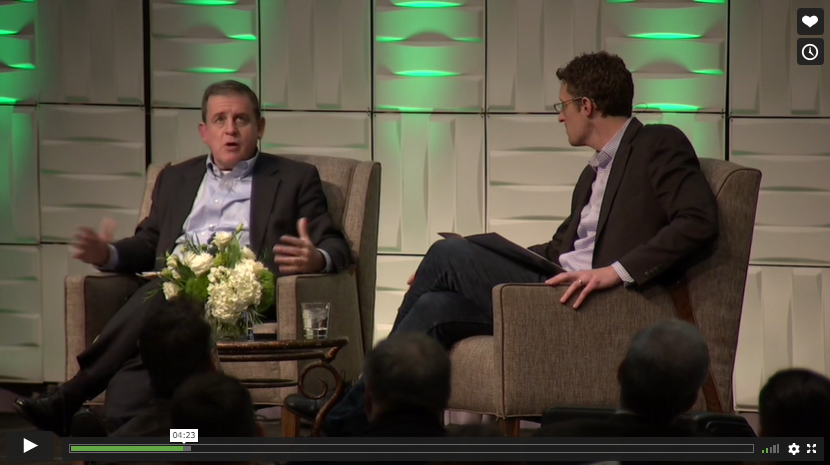
Denver Institute for Faith & Work hosted more than 300 guests from across the nation at “Business for the Common Good,” a one-day event for business leaders passionate about professional excellence and using their gifts and resources for lasting impact. With more than 30 years of investing experience, nationally known fund manager Bob Doll moved from being a steady, quiet witness to expressing his faith more visibly and vocally. God brought material and professional success along the way, but his Christian witness was not without cost. In this personal interview, Bob shares lessons God taught him about identity, control, and idolatry, as well as principles that shape his personal and organizational leadership today. You’ll also explore God’s broader purposes for business and its power to love and serve our neighbors. Please visit their website to see more great content from the “Business for the Common Good” event.

Click on the image below to watch the video

Article originally posted here by Denver Institute for Faith & Work