In Pursuit of Dignity: A Challenge to Change-Makers

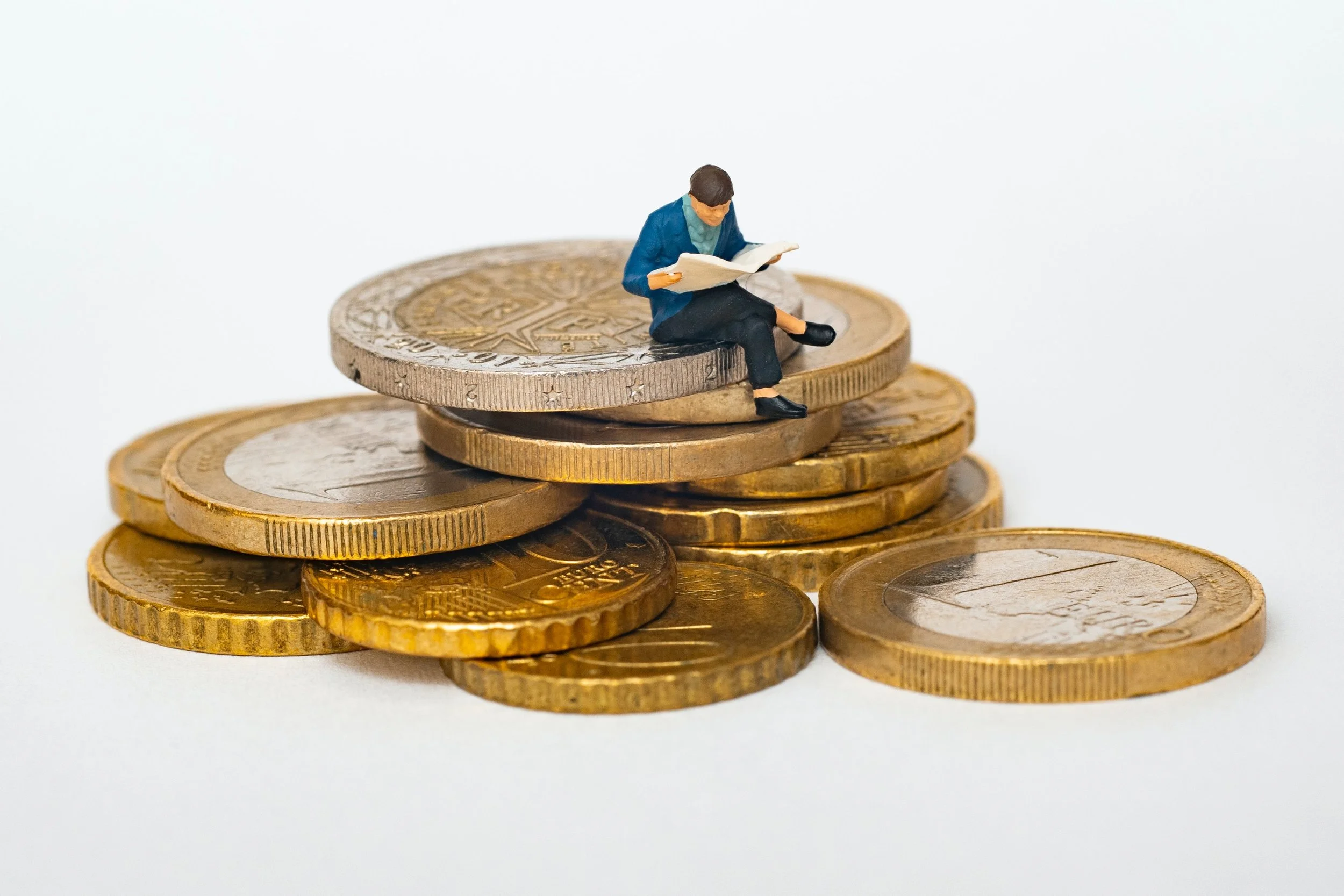
 Photo by  Creative Hina By.Quileen  on  Unsplash

Photo by Creative Hina By.Quileen on Unsplash

by Keri-Leigh Paschal

Growing up in South Africa post-Apartheid has been a challenging but rich experience. As a country, we have been on a journey of growth towards restoring human dignity where it was once lost and this has resulted in more of the mysteries of God being revealed to us as a nation. 

In my primary school years, our schools went from a racially segregated system to racially integrated classrooms literally overnight. There was no guidance or integration process for the people of colour who were suddenly put in schools where they were the minority. Similarly, the children in the majority were not made aware of the fact that these new learners might be facing many challenges, such as language barriers, different home contexts and diverse life experiences. There was no meaningful engagement with those who would be most affected: the students.

When I was at university, the Broad-Based Black Economic Empowerment codes of conduct for businesses were implemented in an attempt to redress the inequalities of Apartheid. I was consequently part of the first graduate groups entering the workforce with the new codes of conduct in place. As the South African business community scrambled to figure out how to navigate these new codes, and more diversity (cultural and socio-economic) was being introduced into the workforce, the multi-layered complexity that these transitions presented became apparent. Again, ineffective engagement with the relevant stakeholders resulted in unnecessary added complications and resistance.

Learning how to navigate cultural and socio-economic differences has become a way of life, and something that we have had to figure out by trial and error, through raw and vulnerable conversations. We have often gotten it wrong, and unfortunately, still do sometimes. Divisive social norms, real and perceived biases, stereotypes and just plain ignorance have left many people feeling silenced, undervalued, hurt, or fearful.  

The Depth of Dignity

There is still a large socio-economic divide and as people with resources, influence, and education, many of us feel a responsibility to address the needs that we see around us. With the best intentions, we use all of who we are and our life context (often in consultation with other well-educated and resourced individuals) to find solutions that we can execute on to solve the needs we see. We should also consider, however, whether the way we solve problems is truly dignifying to all concerned. 

Having worked for 10 years in the space of intersection between business and social development, I have seen that there is an indisputable joy that one experiences in the act of generosity. It is often said that the giver is just as, if not more, blessed than the receiver. In this Kingdom truth, we sometimes miss a crucial element of generosity – the building up or restoring of dignity

I have seen many acts of generosity that come from a genuine desire to problem-solve widen the divide that it was supposed to close. I increasingly find myself asking… did that act of generosity show, in word and deed, that the people in need have value? Did they have actual influence over the solution to their own problem, or were solutions handed to them with an expectation of gratitude? 

Do we as Christians know how to restore and build dignity? Or do we, more often than we are aware of, deny dignity through our acts of  generosity and problem solving? 

Dignity is a wonderful word that we often use, but what does it actually mean? It comes from a Latin word dignitas, which means worthiness, which in turn means to be of value. We can, therefore, summate that dignity is the bestowing of value on oneself and others. Genesis 27 says, “So God created mankind in his own image, in the image of God he created them; male and female he created them.” 

If we are all created in God’s image, we all have inherent value and the same value as one another – image bearers of God.

Why then do we have such inequality and injustice in our world?

The Fall

The fall, in Genesis 3, skewed this understanding of great value, and mankind formed its own constructs of value, assigning greater and lesser value to people based on man-made paradigms. Value became a commodity that is gained through money, resources, power and education.

This view of value has shaped societies, worldviews and world politics since the fall, and as children of our time, we have not escaped its impact.

Beauty in the Body

In 1 Corinthians 12 it says, 

“Just as a body, though one, has many parts, but all its many parts form one body, so it is with Christ. 13 For we were all baptised by one Spirit so as to form one body—whether Jews or Gentiles, slave or free—and we were all given the one Spirit to drink. 14 Even so the body is not made up of one part but of many.” (1 Corinthians 12:12-14)

“On the contrary, those parts of the body that seem to be weaker are indispensable, 23 and the parts that we think are less honourable we treat with special honour. And the parts that are unpresentable are treated with special modesty, 24 while our presentable parts need no special treatment. But God has put the body together, giving greater honour to the parts that lacked it, 25 so that there should be no division in the body, but that its parts should have equal concern for each other. 26 If one part suffers, every part suffers with it; if one part is honoured, every part rejoices with it.” (1 Corinthians 12:22-26)

We are all one body yet have different roles and gifts to accomplish its effective working. If we are not taking more time to understand the gifts and specific contributions that each role player brings, we miss out on crafting a solution that not only has a greater depth of understanding and sustainability, but also has a huge role to play in restoring dignity to communities and people who have been stripped of it. From employee engagement in business to community engagement in upliftment projects, it is a biblical imperative for us to recognise and celebrate the value of all people. 

What I love about God’s view on value is that when a diverse array of people get together (as do the different parts of the body) to work together on a united vision, the assets, skills and understanding of all parties are of the same value and together they execute on the best outcome. 

Gold in Unexpected Places

By consulting and understanding the perspective of all role players in a project, we can unlock a depth of understanding of the problem and community dynamics that would not have been otherwise possible. When a community’s internal assets are paired with the skills and technology of well-resourced people, far greater and more sustainable solutions can be achieved. 

This is where the real gold is found…the gold that shines from the inside out. When people have played a pivotal role in collaborating alongside the “most valuable people” (according to a world perspective) to solved their own community or family problems dignity is restored. This is the secret to true joy in generosity. 

What would it look like if we all consult the people ‘less valuable’ to truly understand their actual and not an assumed need? What would it look like to brainstorm solutions together with people who have lower education levels and a scarcity of resources, yet hold an abundance of community connection and resourcefulness?

The World is Catching On

Reading the Harvard Business Review or any other business publication, it is clear that the rest of the world has started to catch on to the fact that valuing a diversity of thought and experience in a room is key to finding superior solutions to client needs, social and environmental challenges and even in-house business challenges.

It is not surprising that these very biblically-based principles are achieving incredible results, just as our body can achieve incredible results when all of the different metabolic processes, muscles, and neurons work together. As a trained Biochemist, it always fascinated me that the different elements of the body are in constant communication and collaboration with one another and that the most seemingly insignificant processes often had the greatest effects on the body if not working correctly. We have much to learn from our bodies and God’s divine intent for His creation. 

Displaying Divine Value

The challenge I put to myself and other people of worldly power is to truly value the people around you through your words and actions. At work, at home, in your neighbourhood and towns and even foreign nations we send aid to. I believe that we should never stop being curious and teachable, seeing every encounter as a learning opportunity. I have learnt that I am unable to fulfil the role of any other part of the body other than that which God made me to be. I have experienced that undeniable joy that comes from valuing people enough to seek their input and contribution in big and small matters. 

May we, as Christian business leaders, claim back the essence of unity and collaboration as a Christ-centred people and show the world the beauty inherent in every community when people are treated and valued as true image-bearers of Christ. In unity God commands a blessing and advances His Kingdom. May we be a part of advancing His Kingdom here on earth. 

 “Many who cared deeply about the poor didn’t think about how the systems, structures, and cultures of our industries might actually be contributing to the fractures in our culture.” – Timothy Keller’s Every Good Endeavor 

How we mirror God’s image when we invest our money.

 Photo by  Noah Buscher  on  Unsplash

Photo by Noah Buscher on Unsplash

Article originally posted here by The Faith First Advisor

by Eric Schrum

In the past investing has traditionally been viewed as a secular act. The expenditure of money, time, and talent in exchange for the expectation of suitable and appropriate profit. However, just as the most menial job transforms into the glorious work of worship when done for the glory of God, we too as investors have the opportunity to mirror the character and image of God in a unique and special way.

Throughout scripture we see an often overlooked attribute of God: God as an investor. In the beginning, we find God investing in creation through mankind, tasking his image bearers with the work of tending the earth and returning it filled and subdued. In Isaiah 55:11, we see that when God sends out his Word it does not return empty, but accomplishes His will and prospers wherever He sends it. In the famous Parable of the Talents, God reveals to us that He invests talents amongst his church expecting a yield above his principal investment, each according to what they were given. And, in the world’s greatest investment, we see God’s one and only son give everything in exchange for the joy that was set before Him. (Hebrews 12:2)

Just as God has invested in His creation, we too now have the opportunity to view our investing not as the simple act of gaining more material wealth in our 401Ks, IRAs, and Brokerage accounts, but as a way to partake in divine work alongside God. We find ourselves living out and fulfilling our commandment to fill the earth and subdue it. Investing Time, Talent, and Money to create value and bring about prosperity where there once was none.

Take the typical stock investment for example. When we invest our money into a company, we find ourselves fulfilling two commandments given to us in Scriptures. First, we are partaking in filling and subduing the Earth. Through our investment we have the reasonable expectation our dollars will be used in a productive way, creating value and human flourishing above what we have the ability to accomplish on our own. We can further raise our expectation of human flourishing if we choose companies who align with Biblically responsible values. Second, we find ourselves wisely using the monetary resources entrusted to us while avoiding the trap of idleness that the master’s servant fell victim to in the parable of the talents.

As Christians, when we engage in our work as a form of worship, our investing transforms from the neutral act of wisely allocating money to a divine act of partnering with God to bring “Thy kingdom come” to bear on our earth.

Hurt is Going to Happen: Acknowledging Our Ability to Create and Destroy

— by Justin Forman

Dallas Jenkins might be more admired in my home than Walt Disney.

Sure Walt has the whole Mickey and theme park thing going for him. But Dallas’s work on “The Chosen” has captured our family.

In one of the recent behind the scenes segments, they interviewed a test group of people who screened the series.

It gripped me as I listened to how each of the stories was filled with scars from the Church.

There was the painful rejection of a friend. The neglect of a professing parent. And the abuse or failure of a spiritual mentor or pastor. Heartbreaking account after heartbreaking account told how the hands and feet of Jesus went from ally to obstacle. 

These past 10 years, we have seen terrible failures of leadership in the Church. We’ve read countless articles and listened to in-depth podcast series about these crushing collapses. With a heavy dose of mixed emotions, we’ve seen these become some of the most popular catalysts of conversation. 

I’ve heard a friend describe them as “failure porn.” Just like one might imagine, it has been hard to look the other way. 

Recently, I’ve been pleading with God…”please don’t let all this work be in vain.” Please spare this movement of Faith Driven Entrepreneurs and Investors from being that same place of pain. 

I don’t want there to be people years from now talking about how their faith was rocked by some Faith Driven Entrepreneur who’s pride, false humility, or greed caused such deep hurt that they ran farther from and not closer to Jesus. 

Recently I was with a friend on a video shoot sharing about that fear. It took a few thousand airline miles to be reminded of the hard and inescapable truth: “Hurt is going to happen.”

With those five words, I was reminded once again of why we so separately need Jesus. We’re all going to fail. And sometimes, it’ll be big. And every time it will hurt.

Like the tendencies of an overprotective parent, I was hoping for a world that doesn’t exist. I realized my hopes are no different than those of Church leaders who have gone before us. It can be easy to head back to the bunker and try to avoid risk. But God has called us to risky places as entrepreneurs. 

So if leaders truly are lifelong learners, what can we better understand from all of this?

Leading With a Limp

Name an author, teacher, or hero of your faith you’ve looked up to who has fallen… I don’t need to mention the name of any recent pastor or spiritual leader. I’m sure one comes to mind. Think about the pain, uncertainty, and damage their failure caused. Think of the fallout and collateral damage. 

It’s painful. And disgusting. Because sin is painful and disgusting.

Why do we think King David, the Apostle Paul, or any of Jesus’ disciples were any different than the recent examples popping up on social media and headline news? 

Paul drummed up false charges on people leading to life sentences and death. One of Jesus’ closest friends and a faithful follower sold him out for an illicit gain. David destroyed a marriage and committed murder to pursue a sex scandal of biblical proportions. 

By God’s divine grace, there’s reconciliation even for those who fell hardest. But we have to stop drawing such unrealistic boxes for the people we follow and admire to fit in. Faith Driven Entrepreneurs and Investors included. 

We don’t get a free pass here. 

As Faith Driven Entrepreneurs and Investors, we can be the very instrument that allows, enables, and creates a false frame that leads to hurt and despair. Or we can be complicit in helping others build it. 

We are more than capable of destroying lives—ours as well. And we need to take a long hard look in the mirror before we go casting blame on others for their devastating choices and decisions. 

Yes, it’s difficult, if not dangerous, to lead when we have just as many opportunities to pile up brokenness as we do to revel in impressive achievements. But we must lead with a limp—a realistic frame where we recognize we will let others down. 

We will cause hurt. 

Admitting we’re capable of it and turning towards God when it happens are the only hope we have to surrender everything to the limitless forgiveness of Jesus. 

Free People Can Help Free People

We have a tendencty to focus only on the financial ruin, scandals of greed, or sexual brokenness. But if we swim upstream, we find the heart struggles that live in the shadows. 

That’s because the root cause of these failures started small and undetected. How often do we hear our heroes admit that they never started with plans of debauchery and deceit? 

Faith Driven Entrepreneurs and Investors are called to dangerous places. Oftentimes innovation, creativity, and the building process of a new venture has us surrounded by all the world’s trappings. 

It’s hard to admit, but you will hurt people. I will hurt people. Hurt people hurt people.

That truth, I think, is unavoidable. But once we humble ourselves and accept that certainty, I also believe that most of us would move to mitigate that risk. 

There’s no easy way to do it. And I don’t want to claim for one minute that I have the answer to it all. It’s the world we live in. Hurt is a byproduct of broken relationship with God and with one another.

But I also know that scripture calls us to be people of reconciliation. To do the hard work of pulling ourselves closer together rather than pushing ourselves further apart. For the Faith Driven Entrepreneur and Investor in particular, this can only happen when we put to death our desire to be a lone wolf.

Let others in. It’s not easy, but it just might be that simple.

By being vulnerable to share in our hurt and how we are wrestling with it will help us get ahead of these things. And as we push together through the difficult feelings and conversations, we find the freedom that Jesus has promised each one of us.

Each of us have our own unique perspectives and experiences that come with these ventures. But it also requires great vulnerability to reach out and ask for people to speak into you and your leadership.

I’m always hopeful when I see Faith Driven Entrepreneurs and Investors surrounding themselves with bands of brothers and sisters. The very people who will remind them of their strengths while gently and respectfully challenging their flaws. 

Seeing faithful followers of Jesus acknowledging the ability we have to both create and destroy (sometimes only a few words and sentences apart) gives me a renewed hope in how God is at work in the midst of our brokenness. And I am reminded that free people can help free people.

Related articles

If Foreign Aid were a Potluck, What Dish Should the Faith Driven Marketplace Bring?

by Dana Wichterman

Summary

Those of us in the faith driven marketplace are invited to have a seat at the foreign aid “table.” We should accept this invitation to ensure redemptive solutions are competitive within the aid ecosystem. A community of faith driven marketplace actors (FDMAs), rooted in a biblical theology, is primed to work more effectively in the aid sphere through Public Private Partnerships (PPPs).

Christians are often skeptical of the role governments can play in addressing global challenges in developing countries—and with good reason. My career was spent working for the U.S. Agency for International Development (USAID), and I know the dangers of government entanglement. Our tendency is to go it alone, avoiding the strings that can corrupt faith-based economic development. Certainly, there is an important role for purely private aid, but there’s also a place for Christians to partner with government. Like it or not, governments will continue to be major actors in addressing poverty, hunger, disease, conflict, and the like. At least some of us should work with governments to alleviate suffering and contribute to human flourishing within the foreign aid sphere.

As a philanthropist and impact investor in the developing world, I see the issue from many sides. I am convinced that to tackle global problems we should deploy not just philanthropic models but for-profit business approaches, as well. Profit shouldn’t be a dirty word when it comes to addressing global ills. When rooted in the biblical framework, it’s the goose that lays the golden eggs. For too long, Christians have relied principally on philanthropy to address global problems, and business has been viewed as merely a piggy bank to fund charities. But this worldview reduces business to a necessary evil—instead of the world-transforming and life-giving force it was intended to be.

Thankfully, there is a Spirit-led movement restoring business to its proper place in the Creation Mandate. Good stewardship is about multiplication, not addition. A faith-based business model holds the potential to powerfully upend a charity-dependent mindset. Despite the inherent challenges of working with the government, Christ-followers should deploy this transformative and biblical business model to reshape government foreign-assistance programs through Public Private Partnerships (PPPs). Without compromising our faith commitments, we must wisely engage the public sector on behalf of the poor, the powerless, and the oppressed worldwide. Business and finance will play a transformative role in the 21st century.

The nonprofit ministry Faith Driven Investor estimates that Christians manage $150 trillion—over half the world’s wealth. And that amount is over 200 times greater than annual charitable giving globally (faithdriveninvestor.org). This gift calls us to lean into a renewed vision, courage, and conviction for stewardship.

Charitable dollars and government dollars have limited capacity. They only self-generate (one through fundraising and one through taxation) when there is profit. Profit lies at the roots of wealth generation. Additionally, long-term dependency on charity (private or government) can diminish human dignity, something USAID has recognized with its long-term goal of moving foreign aid recipients towards self-reliance. Moreover, traditional development aid from public and philanthropic sources is not enough to realize the United Nations Sustainable Development Goals (SDGs), which face an annual $2.5 trillion funding gap.

To reimagine the marketplace, Christ-followers in the business ecosystem need to work with other stakeholders including government, the academy, and nonprofits. Redeeming the marketplace can be framed as seeking biblical shalom—with people made in the image of God—and stewarding God’s creation for human flourishing. Flourishing, this side of the Fall, includes communities advancing in proximate well-being, peace, and justice.

Many faith-driven movements are converging around a global vision of biblical shalom. Faith driven marketplace actors (FDMAs, including investors and entrepreneurs and their associated affiliates), are poised to have a greater impact in foreign aid. This includes believers active in:

  • the Economics of Mutuality (EoM) movement, making inroads into the non-Christian business world and the academy (led by Mars Corporation and Oxford University)

  • equipping organizations (e.g., Faith Driven Investor, Faith Driven Entrepreneur, Business as Mission, BAM); vocational stewardship advocates (e.g., Steve Garber, Amy Sherman); faith and work communities (e.g., Redeemer’s Faith and Work initiatives)

  • mentoring and accelerator groups (e.g., Praxis, Lion’s Den, OCEANS)

  • intermediaries (e.g., National Christian Foundation, Impact Foundation)

  • the generosity community (e.g., The Gathering, Generous Giving, Generosity/NY)

These movements are poised to foster learning, growth, and communal creation for the common good—aligning perfectly with God’s mandate to fix what is broken. Within Public Private Partnerships (any formal or informal collaboration between public actors like the federal government or UN and private actors), Christians have a vital role to play.

Two examples of PPPs include:

  • The United Nations Global Fund Coral Reef (GFCR) is a PPP investment vehicle funding innovative sustainable business models that increase resilience of coral reefs and the communities that depend on them. It is an alliance among UN agencies, financial institutions, and philanthropic actors in both the charitable and for-profit space.

  • Convergence is the world’s first platform blending private, public, and philanthropic capital to achieve global solutions to global problems. It was developed through an independent organization, spearheaded by Canada’s Department of Foreign Affairs, along with the Gates Foundation, the World Economic Forum, and others. It connects private, public, and philanthropic investors for blended finance opportunities in emerging and frontier markets.

In FY2020, USAID dispersed $15 billion in foreign aid to over 80 countries in a myriad of sectors including agriculture, health, education, human rights, and economic growth. Close to $10 billion of that aid was in grants to as many as 3,000 partners, including businesses, nonprofits, and universities. Congress has mandated that 12.5% of the funding has to go to small business—an opportunity for faith-based entrepreneurs. Governments acknowledge the essential role played by the private sector as the engine of economic growth and empowerment that can bring solutions to global problems. USAID, under previous administrations, pursued many ways to strengthen and catalyze PPPs. Under the Biden Administration, although there will be a shift in emphasis and programming, significant opportunities abound for advancing shalom if FDMAs partner with USAID to tackle global challenges.

PPPs are not easy, quick, or trouble-free. There are tedious government regulations, embedded players in the private sector who often have the inside track to contracts and grants, and temptations toward mission drift. Add to this the difficulties inherent in working within bureaucracies, legislative timelines, and the pace of government vs. business, and partnerships aren’t for everyone. But for those who are called to co-labor in this space, at a minimum, we need to:

  • Explore countries, services, products, or policy goals with which our network could best partner. For example, we might be well positioned to further USAID’s goal of food security in Africa through agribusiness innovation. Or at the top of the food chain, we could help shape US congressional funding targets towards market-based solutions.

  • Spell out the potential dangers and pitfalls in partnering with USAID, including challenges that faith-based entities face in the public sector.

  • Identify the key secular players in the “partnership” equation and discern how best to both collaborate and compete (e.g., Palladium, Development Alternatives).

  • Collaborate with faith-based nonprofits, such as World Vision, that are strategically engaged with USAID.

  • Participate in faith-based development forums, such as ACCORD Network, and secular forums, such as InterAction and Center for Global Development.

  • Put resources, talent, and time behind this effort, avoiding duplication.

Through USAID’s New Partnerships Initiative, the Agency is simplifying and opening access to new and underutilized partners, attempting to leverage the full marketplace of ideas and solutions by collaborating with partners from all sectors of society. One initiative under NPI is called “co-creation,” a process whereby all relevant stakeholders of a development activity (funders, implementers, governments, local actors, international government officials, and private sector) are involved in various aspects of co-designing the objectives and approaches. A seat at the table of this collaborative experience could produce a win/win outcome for both FDMAs and foreign aid recipients.

Our endgame could be as simple as a loosely affiliated cohort of like-minded people to share opportunities and build sub-contracting and grant opportunities. Or it could institutionalize into the creation of a single entity (for profit, nonprofit, or hybrid) that could act as a conduit for our community of FDMAs to engage with USAID. We have an opportunity to build bridges, play matchmaker for our community, and leverage government funding towards human flourishing.

Interesting models for engagement abound. USAID has leverage awards that provide 50% funding of partner initiatives that advance Agency goals. “Local Impact” is a PPP between USAID and the nonprofit Aga Khan Foundation, a multi-year, multi-sector, and multi-country partnership creating an innovative framework for sustained impact across Asia and Africa.

Another example for engagement is USAID’s CATALYZE, projected to mobilize $2 billion in blended finance with investors and financial institutions, small and large enterprises, a diversity of market intermediaries, and other key stakeholders to develop commercially viable business models that create jobs, expand sustainable social services, and optimize supply chains. CATALYZE is a contract managed by a private company tasked with bringing in new and underutilized marketplace partners.

Our community could work under a USAID Global Development Alliance (GDA), a partnership where USAID and the private sector work together to develop and implement market-based approaches to development challenges. Activities under GDA leverage assets and expertise to facilitate private sector-led development and drive sustained development impact.

We could also work with USAID INVEST, a contract managed by a private company that facilitates work between USAID and partners in the investment community. The projected value of mobilized capital is estimated at $1.6 billion.

Through PPPs, FDMAs stand to gain increased sophistication and access to government grant and contract funding, to develop new values-aligned partners, and to gain exposure to best practices in the private and nonprofit sector. Motivated by a quadruple bottom line (purpose, people, planet, profit), we have the patience and sustainable capital to navigate the complexities and headaches associated with such PPPs.

My hope is to see a collaborative group of faith driven investors, givers, and entrepreneurs to pursue funding opportunities via USAID, aligning with shared international economic goals of sustainable job creation, poverty prevention, food security, peace, and justice through rule of law initiatives, environmental stewardship, and more. Benefits would include funding for entrepreneurs, collaborative investment opportunities for investors, and a demonstration that faith-based initiatives are good for America and good for the world.

Governments are major players in attempting to solve global problems, for good or ill. Christians need to engage the public sector with grace and civility, knowing all actors have the image of God within them. We should assume the majority of those in the foreign aid ecosystem are striving to bring shalom in the best way they know how. Finally, we need to engage with excellence, truth, and courage, speaking truth (in love) to power on behalf of the voiceless and defenseless.

In the Parable of the Talents, the master lauded the wise servant who deployed his talents to multiply the capital entrusted to him. As Christ-followers, we are called to multiply our gifts on behalf of God and the world. For-profit business can foster human flourishing by providing sustainable and life-giving employment, preventing global problems from occurring in the first place. This powerful force should hold a central place among the Lord’s people, transforming private and public aid to the poor. We should be God’s entrepreneurs, leaning into profit-making, not to build our small kingdoms but to further His glorious and eternal Kingdom.

Through PPPs, believers can bring nutritious and creative “dishes” to the foreign aid table. Casserole, anyone?


——

Article originally hosted and shared with permission by The Christian Economic Forum, a global network of leaders who join together to collaborate and introduce strategic ideas for the spread of God’s economic principles and the goodness of Jesus Christ. This article was from a collection of White Papers compiled for attendees of the CEF’s Global Event.

Ill-Wind Investing: Prudent or Profiteering?

 [ Image from original article ]

[ Image from original article ]

Article originally posted here by Inspire

by Shane Enete

As the Covid-19 crisis began to accelerate, my colleague proudly told me that he profited from buying Zoom stock. Another one of my friends boasted that he had made money selling short the stock market. Hearing these stories made me recall the words of the father from East of Eden, “Boys go out, and some die…do you think I could take a profit from that?”

“Boys go out, and some die…do you think I could take a profit from that?”

During late March, in a dark alley near Costco, there was a man selling toilet paper at marked-up prices. Seeing this man stirred in me two opposite reactions: anger for profiteering from other people’s suffering, and admiration for a man who was able to create a viable business model that both feeds his family and serves the community.

Which emotion should I feel when people make money from a pandemic: anger or admiration?

Ill-wind investing refers to making money on the account of “ill-winds” that sweep through a community, such as natural disasters, wars, or pandemics (Irvine, 2002). Is it morally wrong to make money from ill-winds?

Is it morally wrong to make money from ill-winds?

One simple way to argue against ill-wind investing would be to say that any activity that makes a profit from the suffering of others is morally wrong. While this may sound like a crystal clear rule to follow, it actually gets murky very quickly. For example, receiving an inheritance from an aunt who greatly suffered from Leukemia would be an example of a morally justified profit from the suffering of another person. Other murky examples include doctors who profit from ruptured spleens or boxers who receive money from knocking out their opponent.

Is it morally wrong to buy Zoom stock, short the stock market, or sell toilet paper at marked-up prices during a pandemic? One way to form a moral principle around this type of ill-wind investing would be to ask the question, “does this activity increase, have no effect, or diminish the suffering of others?” (Irvine, 2002).

Does this activity increase, have no effect, or diminish the suffering of others?

Regarding the Zoom stock, one could argue that it either has no effect, or actually diminishes the suffering of others. It is a good thing when the company of a needed product receives an increase in its stock value. Zoom’s access to capital, then, increases, helping the company expand its service to those in need.

Regarding shorting the stock market, one could argue all three cases. It may diminish the suffering of others by being a vehicle for greater price discovery. Price discovery, over a long period of time, helps to avoid destructive stock market bubbles. However, it may increase the suffering of others by encouraging a stock price drop that goes beyond price discovery. A stock market crash could then cause a panic that would cascade into business layoffs and premature retirement withdrawals.

Regarding selling toilet paper, it may diminish their suffering by being a provider of a needed commodity when every other provider, who is trying to be “fair,” has no more supply. It also may potentially increase the suffering of others by emptying the pockets of those who are at their most vulnerable financial state (perhaps unemployed, or furloughed).

Given that ill-wind investing is morally complex, Biblical wisdom, Holy Spirit discernment, and counsel from others is required. It is important to be fearful about making money from an event that is causing others to suffer. It is also important to look for ways to share any profit that is made with those who were not as fortunate.

“Your abundance at the present time should supply their need, so that their abundance may supply your need, that there may be fairness. As it is written, ‘Whoever gathered much had nothing left over, and whoever gathered little had no lack.’” 2 Corinthians 8:14-15, ESV.

There is a story about a man who would walk a mile to work everyday. His one mile walk was his favorite part of the day. One day he happened to look down at a gutter and found a five dollar bill. The man was so thrilled about finding the five dollar bill, that the next day he couldn’t help but peer into every gutter on his way to work. In fact, for the rest of the year, he spent most of his one mile walk staring at gutters.

Even if ill-wind investing is morally acceptable, if we do not watch our ways, we may actually spend our lives “staring at gutters” as we try and find ways to continue to make money from the ill-winds of global warming, pandemics, hurricanes, and droughts. And, if we are not careful, we may slip into a terrible place; namely, hoping that more ill-winds would happen so that we could make even more money.

If we are not careful, we may slip into a terrible place.

Investing is not just a matter of the mind and the wallet, but also of the heart and the community. When we invest in a business venture, it is important to consider the impact that it will have on our community and our hearts, as well as on our wallets. Do our investing opportunities diminish human suffering? When we invest, we should strive to enter into investing opportunities that bring about prosperity for both ourselves and our community.

FOR MORE INFORMATION ON COVID-19, PLEASE SEE OUR PAGE HIGHLIGHTING SOME OF THE BEST RESOURCES OUT THERE FOR FAITH DRIVEN INVESTORS & ENTREPRENEURS IN THIS SEASON.