Podcast Episode 25 – Planning for the Exit with Wade Myers

subscribe to the podcast here

Welcome back to the Faith Driven Investor podcast. Today’s guest is the survivor of a parachute failure. Seriously. And while that was shocking to us, during our conversation with Wade Myers, we found that that is only one of the many many interesting things about him. 

He joined us today to talk about small business exit strategies, how investors and entrepreneurs alike can plan for them, and what it looks like to finish well.

As always, thanks for listening.

Useful Links:

Every Entrepreneur Needs to Think About Exit Strategy

Wade Myers Website

Eagle Venture Fund: Capital Works

Opinions, Beliefs, and Convictions

 Photo by  Kalen Emsley  on  Unsplash

Photo by Kalen Emsley on Unsplash

by Luke Roush

One of the challenges we have as a society is that, as individuals, we have difficulty expressing the difference between our Opinions, Beliefs, and Convictions. Particularly in writing (even in this article), it can be difficult to distinguish amongst these terms. As a refresh on definitions:

1) Opinion – a view or judgment formed about something, not necessarily based on fact or knowledge. Examples – i) “I think the Warriors will get beat by the Lakers tonight.”, ii) “I think it’s going to rain this afternoon.”, iii) “I think solely distance learning for students is a bad idea.”

2) Belief – an acceptance that a statement is true or that something exists. Examples – i) “I believe that professional sports are an important part of American culture.” ii) “I believe that it’s difficult to predict the weather.” iii) “I believe that our educational system needs reform, and we must find ways to make college more affordable.”

3) Conviction – a firmly held and stable, long-term belief. Examples – i) “I’m convicted that extracurricular activities, properly framed, can be a great teacher for young people.”, ii) “I’m convicted that we are called to steward the environment and care for creation.”, iii) “I’m convicted that men and women all over the world are entitled to receive an education, and that it is critical for peace, prosperity, and progress.”

Opinions are transient, formed regularly, and evolve quickly as data emerges. Beliefs have more staying power, but can shift as data and lived experiences occur. Convictions are powerful life-long truths that we should be prepared to debate vigorously while defending them. Collectively, they create a lens through which other information passes through. In my view, we should have a multitude of opinions, plenty of beliefs, and a handful of convictions. Most of my convictions tie back into my Christian faith, which is inextricably linked to an understanding of what it means to “love God”, and “love my neighbor”.

Positional Intensity – To avoid burying the lead, I believe that most of us are looping FAR too many issues into the “belief” and “conviction” buckets, as opposed to the “opinion” and “belief” buckets. We are confusing our opinions for beliefs, and our beliefs for convictions. Our dialogue on COVID-19 is the latest example of an issue where we should all have opinions and some beliefs, and yet we speak and argue as though we have convictions on any number of related issues – mortality rates, masks, quarantines, re-opening protocol, Chinese labs, Fauci’s latest comments, Trump’s twitter feed, etc. As I’m writing this, the conversation around race is escalating in our nation and around the world. What we do about the problems that persist will be another flashpoint in our discourse. 

Escalation of Rhetoric – The debate about whether culture is upstream from media, or that media is shaping culture, is for another time. However, the circular linkage between the two is undeniable. Our elected officials are a reflection of this breakdown, and their current behavior isn’t helping us move towards a functional national dialogue. We could once rely on public figures to bring us back to a more balanced and healthy discussion, but those days are long gone on both sides of the political aisle. Likewise, what we read on social media and see in the mainstream media gets reflected in our own posture and communication. Our consumption of this content drives the media towards ‘upping the ante’ on headline value. It’s analogous to a drug addict needing to steadily increase the dosage to experience the same high. It’s not a helpful environment for us to hear one another and chart a course forward. 

The ‘Why’ of Escalation – Lest we think other areas of society are less impacted by this polarity, reference Jim Rome, Max Kellerman, and Stephen A. Smith. While they didn’t invent it, they certainly perfected the ‘hot take’ on sports news. This refers to an emotion-filled perspective shared in full candor on a current issue. Previously these ‘hot takes’ might have been referred to as ‘angry rants’, but we’ve now coined a less derogatory term for the same thing.  Why does the media serve this content up? Because it garners views. Why do we view this content? Because we seek out individuals who agree with us, and who say out loud what we might only be thinking. We also seek out individuals with whom we disagree, though usually the aim of that effort is to brutally deconstruct their position amongst friends. This phenomenon breeds polarity, and creates a monetization stream for media companies struggling with failed or changing business models. Sensationalism sells, and media is in desperate need of sales. And so, here we are. 🙂

Tribalism – But, what is going on at a deeper level? For one, the increasing tribalization of society polarizes our views. As we find others like us, our opinions become more polarized and extreme. It’s well documented that social media facilitates tribal association, and it’s within our tribe that many of us become more confident expressing opinions as “beliefs” or “convictions”. Due to the echo chamber effect, we often aren’t exposed to other views.  We think of ‘us’ and ‘them’, and we dehumanize ‘them’. This increases the confirmation bias that comes within an echo chamber. Does this mean that facts are in question, or truth doesn’t exist? No. I believe that absolute truth DOES exist far more broadly than most of us might want to acknowledge, but the loss of civility in public discourse is a problem that needs to be taken seriously by citizens. In the absence of it, it’s difficult for the truth to stand out in the marketplace of ideas.

Diversity of Thought – Just exposing ourselves to alternative views and engaging with them is hard work.  And, it can be socially dangerous. If we quote the wrong person, or don’t virtue signal in the right way, our tribe will ostracize us. Particularly outside of very close family and friends, tribes aren’t forgiving. This trend applies on both sides of the aisle in Washington, and within almost every group we can associate with these days. Understanding different viewpoints is challenging, and changing one’s mind is difficult and socially dangerous. While active debate on an issue has been shown to sharpen a group’s thinking (thus the need for a devil’s advocate in decision-making processes), most individuals choose not to play that role. Why? We all have a strong need for belonging, and as other community institutions (family, church, social organizations) have lost momentum in many parts of the country, the pressure to ‘belong’ to various thought tribes has ratcheted up.

A Pathway to Change – How do we work together to change this pattern? As citizens, we must commit ourselves to a re-examination of how we communicate our opinions, beliefs, and convictions. While we may have strong views rooted in facts, we need to re-examine our level of intensity in communicating those positions. This doesn’t mean we become milquetoast, but it DOES mean we need to consider how we talk and write about our views. Writing, in particular, can be problematic. Verbal in-person is a FAR better context for sharing views and listening well. This mode of communication pushes us to exhibit humility and humanity as we engage.

Focus – Additionally, we must actively avoid reductionism, and a natural bent to transpose one area of disagreement into generalized disagreement and, ultimately, despise. While we may be right on an issue, and someone else is wrong, it doesn’t mean that we’re right on all issues and they’re wrong on all issues.  We need to ‘pick our spots’ where we feel convicted to dig-in. We need to be prepared to “die on the right hill” and not the hill that society or the media would push us towards. This world is constantly looking for martyrs, and we need to avoid gratuitous martyrdom for the wrong issues.

Looking Ahead – Changing our behavior doesn’t mean that we accept flawed views being forced on us, but it DOES mean that we look to de-escalate vs. escalate in our dialogue, even amongst friends who believe as we do. We need to maintain the freedom (and give it to others) to change our views. As we encounter others who share our convictions but have different opinions or beliefs, we should celebrate our common convictions as a strong foundation for civil discourse. Time usually presents more facts and clarity, and we need to allow space for our opinions and beliefs to shift, without fear of reprisal or shaming. Rather than only looking for facts that confirm our views, we need to be prepared to examine facts as they emerge, listen actively to others, and adjust accordingly based on logic and reason. As folks change their minds, we must not lambast them and claim victory, but instead move forward together. As we change our own minds, we shouldn’t beat ourselves up or fear shame. We should straighten up, acknowledge that God has given us the ability to reason and think, and move forward in celebration of that. His timeline for affecting change in our hearts often takes time. In certain situations where we will inevitably “agree to disagree” with others, we must not become angry and create unfair caricatures of “them”. Righteous anger is a real and appropriate emotion on some issues, but I explain away too much of my own behavior with that excuse. It is always reasonable to listen carefully to the views of others, and be civil in my discourse. It’s through friendship and conversation that understanding can occur, and that truth will win out.

*A special thanks to my good friends, Tim Macready and Jake Thomsen, whose engagement in this topic helped refine the thinking!

FOR MORE INFORMATION ON COVID-19, PLEASE SEE OUR PAGE HIGHLIGHTING SOME OF THE BEST RESOURCES OUT THERE FOR FAITH DRIVEN INVESTORS & ENTREPRENEURS IN THIS SEASON.

Our Modern Investing Dilemma

Article originally posted in Eventide Insights. Eventide Asset Management, LLC is a Boston-based investment adviser practicing “investing that makes the world rejoice®.” Founded in 2008, Eventide’s vision is to serve individuals, financial advisors, and institutions by providing high-performance investments that create compelling value for the global common good.

by Shaun Morgan, Director of Education, Eventide

Values-Based Investing Can Help Us Avoid Two Consequences of Modern Investing. 

“One of the biggest issues I saw in the investment world is that people didn’t even understand what investing is. And I think that is still a major problem.” —Robin John

Over sixty percent of Americans report that they are invested in the stock market.1 That is a remarkable feat. Investing has enabled us to put our excess capital to productive use by supplying it to businesses that create, build, and scale some of the essential anchors of societal infrastructure—and if these businesses succeed, they have the potential to generate a return greater than our initial investment. 

In its basic form, investing has built-in checks and balances that should help align the incentives of company management with those of investors, as well as those of stakeholders affected by the business—its customers, employees, suppliers, local communities, the environment, and broader society. The way we see it, investors will buy into businesses they believe will prosper. In order to do so, a business must create a valuable product or service that people will want to buy. And they will have to operate in a way that is profitable, scalable, and repeatable—which is largely dependent on the strength of the business’s relationship with its stakeholders.

If each exchange between a company and its investors and other stakeholders is transparent and voluntary, all are incentivized to keep each other’s well-being top of mind. 

But we have a problem.

Through the tools of modern investing, transactions between a company and its shareholders have lost their transparency—making it difficult for investors to remain intentional about how to allocate their capital.

For most people, exposure to the stock market is through retirement accounts or a portfolio put together by a financial advisor. In fact, managed investments, including retirement accounts, ETFs, and mutual funds, comprise 71% of all financial assets compared to just 17% being attributable to individual securities such as stocks and bonds. In the former case, each fund or portfolio’s investment strategy is implemented by someone other than the end investor.

Asset markets are more accessible than ever, and investing in them is easier than ever. However, most people have no idea how their money is being invested. This can lead to two types of consequences: micro and macro.

Micro consequences of modern investing: 

Encouraging unwanted behaviors

Our values influence how we approach almost every aspect of our lives—how we conduct ourselves at work, interact with our neighbors, participate in our communities, and strive to become our best selves as a friend or spouse. If we applied our values to our investments, our approach might look very different. 

For example, by taking a closer look, investors might realize that holdings in their retirement accounts and mutual funds go against their values. Maybe one company manufactures a product harmful to people; maybe another mistreats its employees. If we saw ourselves as participating in and profiting from the actions of a business, including things we would not do or encourage in our personal lives, our values might lead us to approach investing from a different perspective.

In our experience, when investors understand that buying shares of a company shows support for and reinforces its business and behaviors, their values become all the more important.

Macro consequences of modern investing: 

Building an undesirable future

One macro consequence of uninvolved investing can be the misallocation of capital. We believe, ideally, investor capital ought to fuel those areas of our economy that we collectively want to see grow. But does our current capital allocation reflect, as a society, your actual needs and desires for economic growth? 

For instance, does the outsized allocation of investment into social media companies over the past 10 years represent the highest and best use of our capital? Or might we, as individual investors, have chosen to direct our investments elsewhere as we learned through research and experience how the profitability of these companies often comes at the expense of our mental health and relationships?

How do we solve these problems?

Becoming more knowledgeable investors

In a perfect world, with unlimited time and resources at our disposal, each of us would be able to take charge of our investment decision-making: conducting our own research; growing more knowledgeable about markets, industries, and businesses; and investing only in the companies that we would truly want to own. 

For many of us, this isn’t a practical solution. We don’t have the time or expertise it takes to research companies and construct a portfolio able to meet our individual risk and return requirements.

This leads to a more practical solution:

Invest Intentionally With an Investment Company You Trust

We believe you can still outsource the work of investment research and portfolio management to the experts—without relinquishing your values in the process. One way to do this is by choosing investment companies that put together mutual funds and ETFs that invest in alignment with your values. 

Three of the most important aspects of an investment company to consider are its management team, its approach, and its values. Is the team competent, disciplined, and ethical? Is the approach founded on timeless, repeatable, and proven principles? Do the company’s values align with your own—will it invest in the types of companies that you would personally want to own and to profit from in your portfolio?

It’s Your Money: Find a Financial Advisor Who Will Apply Your Values When Investing It

If you have a financial advisor, your values and intentions are important to discuss with that person. Some financial advisors simply construct portfolios that invest in “the market” with little attention to how your money is being invested in the market. They might make a portfolio that invests in a number of funds, and those funds may simply invest in all stocks of a specific category, like a fund that invests in all midcap companies or all technology companies, with no further intention paid to which midcap companies or technology companies they are investing in. 

There are, however, financial advisors that diligently research and select the individual investment companies that put together the funds that they use in their portfolios. These financial advisors should be able to answer questions about how your money is being invested—by understanding each investment company’s team, approach, and values.

In our experience, great financial advisors already know you and your values well. Your discussions with them have played an important role in determining your financial planning, estate planning, or charitable giving goals. Incorporating your values into your investment portfolio is a natural next step for these advisors.

Connecting Your Values With Your Investments Can Help Build a Better Today and a Better Future

We can have the best of intentions in diligently saving our money and investing for the future. However, the structures and systems of modern investing can obscure what happens between investment and return, leading us to encourage and contribute to behaviors and long-term outcomes that we may not have intentionally chosen.

This is why, at Eventide, it has long been our intention to bring greater transparency and values-based discernment to investment products that are as broadly available as possible. We invite you to join us in what we call “Investing that makes the world rejoice®.”

Our Solution to Changing the System of Youth Education and Upbringing in Sub-Saharan Africa

This is one of the 2020 CEF Whitepapers. For more information on the Christian Economic Forum, please visit their website here.

by Susannah Farr

The Big Problem 

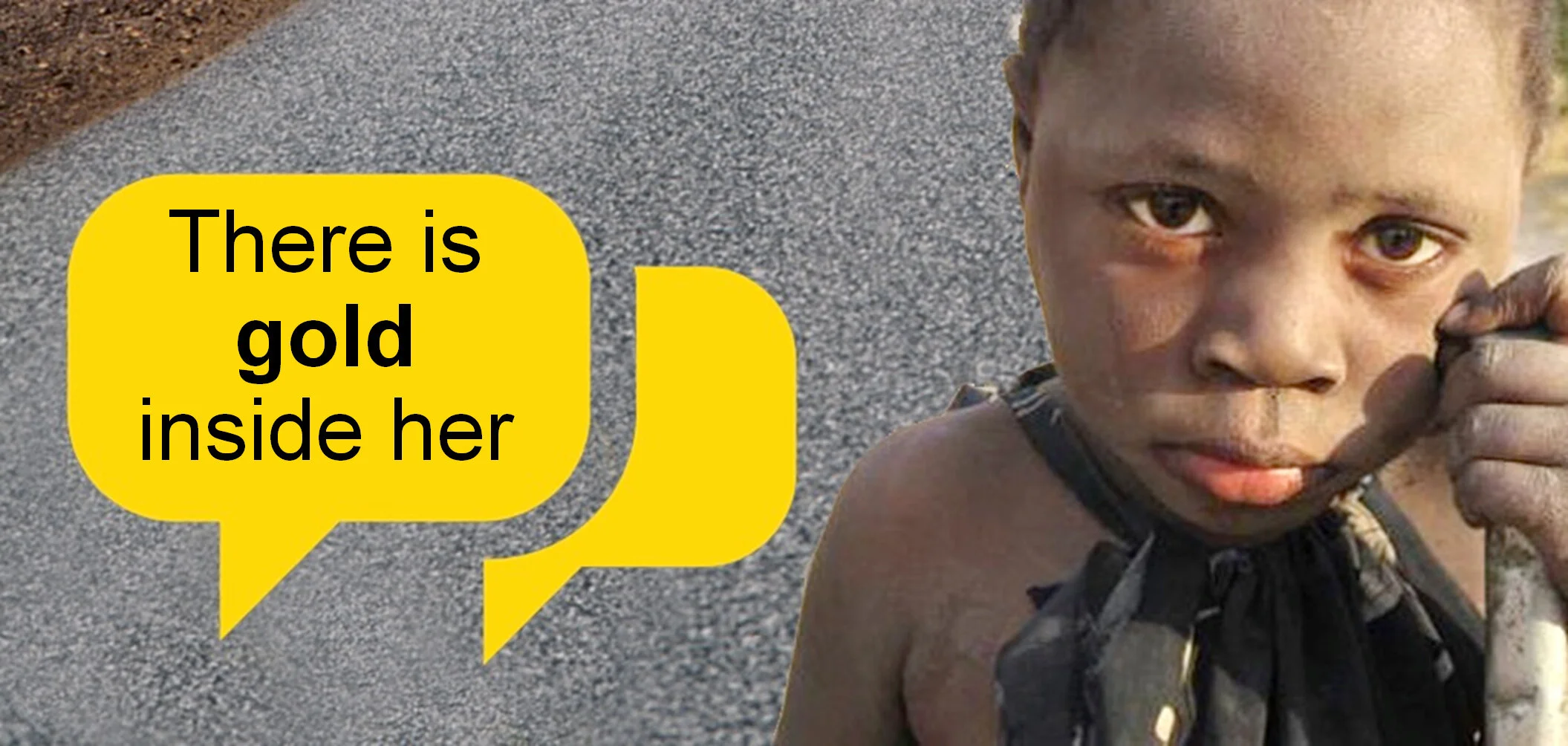
Imagine the impact of seeing this young girl the way God sees her. Imagine her believing she is deeply loved and that her life has purpose and equal value to you and me. Like my children and yours – there is gold inside her.

More than half of young people in Sub-Saharan Africa, who make up the largest part of the population, are born into poverty, growing up in communities that visibly offer no hope, with few if any ethical role-models and mentors. They often do not believe that they have purpose, potential nor equal value to others.

If we are to unlock the social, economic and spiritual potential of the next generation in Africa, our solution must address the root issues that drive the system of how young people see themselves, how they are raised, and the conditions under which they are educated. 

In 1 Chronicles 28, David had a dream and mentored his son Solomon into believing that he had what it took to fulfill that dream (1 Chronicles 28:20). David died before seeing these plans completed; however, both David and Solomon were critical to God’s generational kingdom design. 

There is a pattern in the Bible of wise people raising up and investing in youth to take over and go further than those before them. Scripture shows us the consequences when this is ignored. The large-scale effects of character and integrity (righteousness) are clear, as are the consequences of its absence. Solomon penned, “Righteousness exalts a nation…” (Proverbs 14:34).

The system of youth education and upbringing in Sub-Saharan Africa is broken. If this problem is not solved, there are three major consequences that will continue to undermine the hope for a flourishing African future.

The Consequence of Youth Unemployment and Unemployability

Youth up to the age 25 make up at least 50% of the population in Sub-Saharan Africa.  South Africa, the country where I was born, is one of the most unequal countries on earth. Pre-COVID-19, unemployment in South Africa was calculated at 55,2%, with young people having very little prospect of meaningful work in their lifetime. 

Dr. Matshidiso Moeti, World Health Organisation Regional Director for Africa, points out however that the implications of the lockdowns and rising infections and death rates have complex consequences on the living conditions of majority of Africans. Regardless of complete compliance with government lockdown, each day that the already challenged economic activity of African countries is impaired through restrictions, millions of people will continue to face the impact of less income, lost jobs and little stimulus or support packages available from the state or civil society.

The Consequence of Unbroken Poverty Cycles and Youth Unrest 

A 2018 research paper from the South African Institute of International Affairs, commenting on the continental population explosion in the continent of Africa, stated: “With the correct investments in young people and by developing the right infrastructure, we have the opportunity to harness this demographic and create a youth dividend, which will accelerate economic growth. If we fail to do so, Africa will face an unprecedented youth burden, exacerbating unemployment, social unrest and dependency on government hand-outs”. 

As the COVID-19 crisis begins to unfold in Africa, lack of financial and emotional support will only result in higher levels of ever-increasing personal needs, leading to a maelstrom of psycho-social and economic problems that will further damage the stability of our already fragile African societies. This will escalate the long-term reparation costs and conditions for national recoveries.

The Consequence of Endemic Youth Risk Behaviour – An Unsustainable Health and Education Burden

Being in high school as an adolescent is the exception, not the norm on our continent. Sixty-one percent of teenagers in Sub-Saharan Africa are not at high school and 62% of children in South Africa do not have any biological father in their lives.

Most young people in the region not only live with daily economic uncertainty but face huge peer pressure to indulge in taking substances, engage in risky relationships causing them to risk teenage pregnancy, drop out of school, join a gang for acceptance, or engage in transactional sex to put food on the table for their younger brothers and sisters.

Our Solution

History and Purpose of gold Youth Development Agency (“gold”)

gold-youth was founded in 2004 as a Christ-centred response to a broken world in need of reconciliation and restoration. I remain consumed by a vision of young Africans living purpose-filled lives and leading Africa towards social, economic and spiritual flourishing. The name “gold” means “generation of leaders discovered”
The gold vision was birthed from my firm conviction that God has called us to be concerned with the temporal and eternal conditions of the youth we serve. Our faith not only saves us from our separation from God, but also from injustice, oppression, captivity, violence and fear that is crippling our continent. If we want to see a nation reborn then we must invest in our youth and children and bring discipleship and evidence-based solutions to the challenges they face. 

Since we started, we have set out to re-frame the narrative around the youth bulge crisis at the bottom of the pyramid, to seeing youth as Africa’s greatest resource, a kingdom dividend to be refined, forged and leveraged. We see gold in every young person, no matter what their circumstances. 

Jesus said we are the salt of the earth (Matthew 5:13) and the light of the world (Matthew 5:14). gold has taken on this mandate as we move youth into knowing their purpose, their value, creating ripples of change in character and identity; salt and light in each one joining together and this momentum tackling the evident issues of social behaviour change, education and unemployment. As Jesus did, we focus on the one, and see impact on many. For over 15 years we have been building a lasting systemic solution that changes generations, one person, one family and one community at a time. 

We believe that that the gospel must be integrated with wisdom into every social system for us to see new flourishing in Africa. In response to that conviction, as a hybrid social enterprise gold positions itself as a Good Samaritan on the road to Jericho. We demonstrate love for our neighbors through social, spiritual and economic community transformation, reaching the poorest of the poor (Mark 12:31a).

Peer Education Methodology and Strategic Approach

Our experience shows us that people don’t change with information alone; they change when others around them change. Personal change leads to group change, which leads to community change. At the heart of the gold methodology is the belief that the message giver is the strongest message. The gold curricula and evaluation processes have been tested and improved over 15 years and are informed by global and contextual research informing current youth trends and education best practices in the various gold implementation territories. 

gold’s primary focus is to scale the methodology of youth peer education where positive peer pressure is structured to bring about sustained community change through an “each-one-reach-one” approach from the ground up. This sustainable change is focused towards influencing the system of youth education and leadership in Sub-Saharan Africa. The proven solution is delivered through two methods: DEEP and WIDE:

We go DEEP by partnering with community-based organizations (which we call Social Franchisees) in implementing our peer education programme in their areas, involving all aspects of the community. We assist with quality assurance and capacity-building services and facilitate regional communities of practice. Teachers, parents, community leaders, faith groups and businesses are supported and trained to create an enabling environment.

We go WIDE by disseminating the solution through a DIY blended product suite named ‘Peer2Peer’, which is supported by gold training and consulting services for a diverse audience of government and community replicators. 

Once a gold youth pipeline begins to mature and multiply in a targeted gold community where few, if any economic opportunities exist, micro-economies are researched and supported. By leveraging the years of relational capital and access to gold-activated communities, we are able to tap into the entrepreneurial capabilities and talent cultivated through the gold Youth Peer Education Model.  

gold self-employment and micro-business solutions (including food security, household energy, financial inclusion and cooking gas) are essential services in communities during times of COVID-19 and in the months and years to come. We work with established partners that are ready to implement these solutions in communities throughout Sub-Saharan Africa, creating innovative employment solutions and services to gold youth network members and their communities.

Track Record to Date

Over 15 years, we’ve reached over 74,000 young people in South Africa, Zambia, Botswana, Zimbabwe, and soon Rwanda too.

  • There are 17,502 gold Peer Educators, trained and mentored, out in the world.

  • gold has proudly facilitated a total of 1,043 job placements since 2015.

  • gold has created 790 three-year Facilitator Internships since starting the programme.

  • A total of 54,696 Peers and children have been measurably reached by Peer Educators.

Through our interventions we have been able to deliver deep and wide impact amongst our youth networks and the communities they serve. In 2018 and 2019 we have measured a:

  • 49% increase in work readiness and employability

  • 30% increase in school performance and commitment to education

(90% 2019 school leaving pass rate)

  • 44% increase in positive character attributes and purpose-driven interiority 

  • 46% decrease in age-appropriate youth risk behaviour

  • 88% increase in awareness of and opportunities in the food system / agriculture

  • 44% increase in leadership and community upliftment

Recent awards include:

2018

  • Ashoka Globalizer Programme: supporting best practice models for global scale

  • Impumelelo Social Innovation Awards: systemic collaboration with governments

2019

  • African Union Innovating African Education Innovator’s Award

  • HundrED 2020 Global Collection: leading education innovations

2020

  • ASPI-Re Global Mission Leader Programme: taking proven towards population impact

The Next Steps in Our Journey

Fifteen years on, the gold model is ready to scale across Africa. We are encouraged by the evidence of thousands of changed lives and leaders. We have achieved small-scale policy change and are proud of what we have achieved as a team by God’s grace. Yet, we have only scratched the surface of the each-one-reach-one system change that is needed. 

Our goal is to develop ten million youth leaders by 2030 as the critical catalysts who will bring about wider systemic change. Our audacious goal is to develop ten million young African leaders with character and integrity to mobilise their generation with the tools and support to reach their full potential, with measurable results in social behaviour change, education and job creation.

We are committed to sharing the deep and wide gold solution to every school and community in Africa with a desire to give youth the agency to unlock their generation’s potential with purpose. Over the next five years, we aim to grow our enterprise model in at least four African countries through micro-enterprise concepts delivering sustainable essential services to support job creation. 

To enable growth, we need to package the best practices of the gold model into a toolkit for anyone, anywhere to use. We have prototyped the platform and are currently busy with the process of zero-rating and repackaging the content for mobile use in areas where data is limited and expensive. Our next priority is to implement it across all our operating countries with all our tools, curricula, processes and an evaluation system to support an agile platform to refine the gold in all the youth of Africa.

Conclusion

The hope for Africa lies in how we invest in its most disenfranchised youth; there is no plan B. In the words of Ezekiel 37:10 in the valley of dry bones, “So I prophesied as he commanded me, and the breath came into them, and they lived, and stood up upon their feet, an exceeding great army”.

Parable Of The Rich Fool: Was He A Farmer Or A Ruler?

 Photo by  Christian Widell  on  Unsplash

Photo by Christian Widell on Unsplash

Article originally posted here by Townhall Finance

by Jerry Bowyer

I have heard many references in speeches and sermons to the Parable of the Rich Fool. Many of them were aimed at business people, probably most of them were aimed at middle-class to upper middle-class workers. Usually the moral of the story is against consumerism, though occasionally against the practice of over saving and overinvesting.  But in dozens of mentions, I’ve never heard the story used as a warning towards political leaders, and that’s really a problem because there are some very good reasons to think that the political ruling class are precisely those to whom that parable was aimed.

First, let’s take a look at the parable itself, which appears only in Luke’s Gospel:

16 And He told them a parable, saying, “The land of a certain rich man was very productive.

17 “And he began reasoning to himself, saying, ‘What shall I do, since I have no place to store my crops?’

18 “And he said, ‘This is what I will do: I will tear down my barns and build larger ones, and there I will store all my grain and my goods.

19 ‘And I will say to my soul, “Soul, you have many goods laid up for many years to come; take your ease, eat, drink and be merry.”‘

20 “But God said to him, ‘You fool! This very night your soul is required of you; and now who will own what you have prepared?’

21 “So is the man who lays up treasure for himself, and is not rich toward God.”

22 And He said to His disciples, “For this reason I say to you, do not be anxious for your life, as to what you shall eat; nor for your body, as to what you shall put on.

23 “For life is more than food, and the body than clothing.

(Lk. 12:16-23 NAS)

I’ve highlighted certain words and phrases which I think either need further analysis or can help shed light on the intended meaning.

If you’ve read anything that I’ve written in this series, you already know that I think that a careful attention to detail, including geographical details, is an important practice when it comes to understanding Biblical texts, especially the socio-economic meaning of  Biblical texts. Where did Jesus tell this parable? Most likely he told it in Judea, not very far to the East of Jerusalem.  The only reference to location prior to the parable is that Jesus had been with Martha (sister of Mary and Lazarus) in her home.

Now as they were traveling along, He entered a certain village; and a woman named Martha welcomed Him into her home.

(Lk. 10:38 NAS)

Mary lived in Bethany:

Now a certain man was sick, Lazarus of Bethany, the village of Mary and her sister Martha.

(Jn. 11:1 NAS)

And Bethany was in Judea, slightly South of Jerusalem.

No reference to travel is made between the time that he was in Bethany and the giving of the parable, Further, leading up to the parable there are confrontations with lawyers and scribes, who were much more numerous in Judea near Jerusalem than in Galilee, and he is invited to recline at table with a religious leader, a practice associated with wealthy upper-class households. In addition, the beginning of the chapter in which we find the parable mentions an extremely large and dense crowd:

Under these circumstances, after so many thousands of the multitude had gathered together that they were stepping on one another,

(Lk. 12:1 NAS)

This is much more likely in Judea than in Galilee (and I think it goes without saying that this concentration of pharisees would not be found in Samaria or the Decapolis).  I see no evidence at all that places Jesus in Galilee rather than Judea. So, the preponderance of evidence says that this is a Judean audience. And if you have read what I wrote previously, you already know that this fits a remarkably consistent pattern in which Jesus varies his message according to the location of the discourse, particularly that He saves confrontations over wealth for the Judean audience who live in an economy dominated by political and religious elites (which are not really separate categories in that society). This is hardly proof all by itself that the parable is aimed at the ruling class, but it does fit the pattern.

Before we deal with the positive evidence that the parable is describing the actions of a member of the political ruling class, let’s look at problems with the standard view that this is a greedy farmer.

It seems as though the farmer interpretation is the one taken by most translators. Their pre-commitment to the hypothesis that this is a famer causes them to choose to translate certain Greek words into English words which have agricultural overtones, when the Greek does not require that meaning, and even when the agricultural range of meaning is not the natural or dominant one.

For example, there is the matter of ‘land’ or ‘ground’.

16 And He told them a parable, saying, “The land of a certain rich man was very productive.

“Land” nudges us towards the idea that we’re talking about a farmer. Several translations go further. The NIV says ‘ground’ and some of the paraphrases go all out:  “A rich man had a fertile farm that produced fine crops.” (New Living Translation).

The problem is that the Greek word chora does not point primarily towards ‘ground’ or ‘land’ in the sense of the physical layer of topsoil on which farming occurs. I looked at three lexicons, and the first definition in two of them referred to political subdivision. In the Greek translation of the Old Testament (which is called the Septuagint), sometimes when chora is used, it is used to translate the Hebrew word ‘eretz, as in ‘eretz ‘yisrael, the ‘land’ of Israel.  Ezra refers to the chora (province) of Babylon:

…With all the silver and gold which you shall find in the whole province of Babylon, along with the freewill offering of the people and of the priests, who offered willingly for the house of their God which is in Jerusalem; 

(Ezr. 7:16 NAS) (emphasis mine)

Nehemiah 1:3 also uses the word to refer to the nation of Babylon. The word appears often in the Septuagint. In Esther, the king’s decrees to the various ‘provinces’ are decrees to chora. Macabees uses it to refer to cities and nations. That is overwhelmingly the usage pattern in the Septuagint.

Furthermore, the word is used only four other times in the New Testamen;, three of them are undoubtedly used to refer to political entities, for example the chora, the land, of Judea. The fourth refers to the general zone around a small city.

So, to those educated in the Greek of the Septuagint or the Koine Greek in which the New Testament is written, the story immediately points to a political jurisdiction. One of the things which makes modern readers resistant to that reading is that in our time, rich men don’t own political jurisdictions such as countries, cities or provinces. But in ancient Israel they did. Herod (or Caesar) would give whole villages to friends. Caesar would give provinces (such as the land, the chora, of Judea) to political allies. In Josephus’ discussion of the divvying up of the kingdom of Herod the Great to his successors (for more on this, see my discussion of The Parable of the Ungrateful Steward), it’s presented as annual income streams. Rich men owned political jurisdictions such as provinces and cities, and with them their income streams, and the word used to describe the jurisdictions is exactly the same word that Jesus uses to open this parable.

Understanding that puts the ‘very productive’ nature of the country into context. It literally means to ‘bear well’. It can refer to a farm yield, but it can generally mean ‘to bring forth plentifully,’ ‘to be productive’

The NIV goes far beyond the literal translation with ‘yielded an abundant harvest’.  The Good News Translation says it “bore good crops,” which is certainly stretching the meaning of the single word, well-bearing.

Speaking of ‘crops’, the next verse has the rich man asking, “What shall I do, since I have no place to store my crops?” But are they crops? The word is karpos, fruit. It can refer to the fruit of the tree, the fruit of the earth, the fruit of a man’s labors or the fruit of a person’s life. The primary meaning is literally ‘fruit’ as in the food which comes from trees, and that is agricultural. However, upon a close reading, it is clear that this does not refer to literal fruit. 

18 “And he said, ‘This is what I will do: I will tear down my barns and build larger ones, and there I will store all my grain and my goods.

19 ‘And I will say to my soul, “Soul, you have many goods laid up for many years to come; take your ease, eat, drink and be merry.”‘

(Lk. 12:18-19 NAS)

The man plans to store ‘grain and goods’, not fruit. Which makes sense because you cannot store fruit ‘for many years’ without serious danger of rot and loss, certainly not without modern methods of reliably dry storage and refrigeration, and even with those, long-term storage of even dried fruit with preservatives is a risky business. And you can’t do it reliably with ‘barns’, which is another translational leap. 

Apothoke can mean barn, but it generally refers to any place of storage. In fact, it is used in the Greek Old Testament, in Chronicles, to refer to storage rooms in the Temple.  It often means ‘granary’, where grain is gathered and stored in large quantities. And that is exactly what I think it means here.

The fruit here is the economic fruit of the venture, which is quite likely the economic exploitation of a political entity. The structure that it is stored in is a regional granary in which taxes, paid in grain, are stored. How do we know that? We know that because Josephus wrote about exactly such a structure and such an arrangement and it is, to my knowledge, the only account of that time and place which matches the description which Jesus gives.  Josephus tells us the story of the granaries of Queen Bernice, granddaughter of Herod the Great, who inherited from her father, Herod Agrippa.

David Fiensy in Christian Origins and the Ancient Economy writes:

Still others of Jesus’s parables depict scenes on a large estate. The parable of the Rich Fool (Luke 12:16-21), for instance, describes an estate owner hoarding grain in a manner reminiscent of accounts in Josephus (Life 71-72, 119) about the granaries “of Caesar” in Upper Galilee and of the granary of Queen Bernice on the Great Plain….

Agrippa was a rough contemporary of Jesus. Bernice was born in AD 28. Interestingly, Josephus’ account says that the granary was located near the city of Besara, which was in lower Galilee, the region in which Jesus was raised. It was only slightly farther from Nazareth than Sepphoris, probably less than half a day’s walk from Jesus’ home town and much less from the Sepphoris in which Jesus almost certainly worked (for evidence see my earlier writing about Jesus and Sepphoris). Jesus would have grown up quite near to a granary which matches the description of the parable.

An intriguing aspect of this story is that Herod Agrippa, like the rich man in the parable, also dies suddenly. The story is told in Acts 12. He saved up grain and decided to use it to ‘take his ease’ as king of Judea, a reign that lasted a mere three years before dying suddenly at age 33 mid-speech.

Like so many of the other discourses which Jesus has given, a close attention to detail yields (well-born) fruit. Especially helpful is knowledge of the economic geography and archeology of the place and period. And as in other passages we’ve looked at, we see Jesus saving His sharpest barbs about wealth for the political/religious ruling class, delivered to them on their own home turf in Judea and in denunciation, not of wealth in general, but of wealth extracted by the politically powerful from the economically productive.