Reigniting the City on the Hill

 Photo by  Leo Rivas  on  Unsplash

Photo by Leo Rivas on Unsplash

by Amanda Lawson

It’s no secret that COVID-19 is disruptive. Businesses have transitioned to work-from-home models, churches have moved to online streaming, and schools are preparing for another semester of remote or hybrid learning. 

These recent transitions have many organizations reconsidering their use of physical space in their operations. Overhead costs for building operations can be staggering regardless of industry. As some businesses are slowly returning to work—and for those essential workers who have been unable to work from home—working parents are faced with a decision about childcare. Communities across the board are facing ramifications of economic downturn and more families are experiencing dual parent employment, resulting in a childcare need beyond that of an occasional babysitter. 

On top of the general stress of finding appropriate childcare, COVID-19 has added several layers of tension for families and communities. Anxieties of parents returning to work in the midst of the uncertainty and inconsistency of responses to COVID-19 center on the health and well-being of their children. Few parents can afford an in-home nanny, and options of sending their children to another’s home seems equally as risky. With schools, daycares, and after-school programs still unsure of their plans, working parents are saddled with a difficult decision about their childcare. 

Meanwhile, the vast majority of churches have sat unoccupied since late March. 

Buildings that are staples for many communities have been closed down, vacated, and unlit—these cities on a hill have become (at least physically) more difficult to see—and an unfortunate representation of community morale in recent months. For churches, even before COVID-19, attendance and giving were on a steep decline, increasing the difficulty for churches to maintain their facilities and also reach their communities with the gospel. Now, their struggle has magnified, alongside parent anxieties about childcare and surmounting societal tensions and division. 

This is the time when the church can and should lead the change. And one organization in particular is capitalizing on the opportunity to serve both the church and the community, all while keeping the message of Christ at the forefront. 

Stan Dobbs is CEO of Lionheart Academy, and according to him, may of the needs faced by a world in crisis can be met through the church taking a leadership role in the childcare industry. But Dobbs was clear: the true mission is the gospel. 

Dobbs pointed out that there are two formative periods in life where people are most receptive to the gospel: early childhood, and early parenthood. Currently, 75% of the childcare industry is in the hands of secular organizations. While many churches participate in week-long camps or VBS programs, these don’t often build lasting relationships or lend to an effective discipleship model; nor do they solve working parents’ problems of sustainable, Christ-centered childcare. A high-quality, Christ-centered childcare program speaks to both. A quality childcare program is “a front porch to get families introduced to the church.” 

Each academy has a Community Director—both on Lionheart’s payroll as well as deeply embedded in the local church and community—whose responsibility is outreach to the community and maintenance of the mission of the gospel as the primary driver of the academy. This person connects with parents, keeps the pulse of the community, and is an active participant in the church. By bringing childcare options to families through the local church, children and parents are supported with a consistent, biblical model of discipleship. Simultaneously, programs like Lionheart engage the church in ways that provide an economic boost for their budgets, draw in new families, and help restore them to shining beacons for entire communities—a much-needed symbol of hope in the uncertainty of our world. 

Lionheart provides an excellent educational atmosphere and gospel-centered environment for childcare for children ages 6-months to 12 years through preschool, after-school, and summer programs. The Lionheart model is rooted in the proven success of Apartment Life, and has seven active academies, with two more set to launch in the next year. Dobbs and his team have also launched a program called Skylark (currently in its proof-of-concept), an 8-10 week summer camp for students in 3rd-7th grades meant to alleviate similar problems addressed by Lionheart, for older students. Apartment Life already has an international reach, and Dobbs hopes that Lionheart and Skylark will also branch out into the global community, reaching families for the gospel and enabling churches to sustain their ministries even in the wake of an uncertain economy. 

The efforts of Lionheart and Skylark make one thing clear: in a society that has found itself continually on the defensive—reeling after every news headline—it’s time for churches to step up and take charge. Doing so will not only solve tangible problems facing families but will enable churches themselves to continue to shine the hope of the gospel on communities everywhere.

FOR MORE INFORMATION ON COVID-19, PLEASE SEE OUR PAGE HIGHLIGHTING SOME OF THE BEST RESOURCES OUT THERE FOR FAITH DRIVEN INVESTORS & ENTREPRENEURS IN THIS SEASON.

Reimagining the Future of Church Real Estate

by Nick Bonner

The Great Opportunity Before Us

Over the last century, the Church in America has seen a precipitous decline despite being one of the wealthiest Christian nations in history. It is clear that our current operational methods of “being the Church” require a more efficacious approach. Unless we change the current model, roughly 40% of Americans born into Christian families over the next 30 years will disaffiliate from the faith of their parents. According to The Great Opportunity report,[1] we are quite literally living in the greatest opportunity for evangelism and discipleship in American history. Based on the age when most people form their world view, we have less than 30 years before that window closes. The GO report unpacks this in detail, but one major takeaway is that thriving churches, particularly church plants, have an outsized impact on reaching the lost. To seize the opportunity, we need to triple the current rate of church planting. The problem is that this solution has a 5.6-billion-dollar annual price tag.

The Church in America is Facing Strong Headwinds

Moreover, the Church in America is not thriving. Initial estimates are that 30,000-70,000 churches will close their doors due to COVID, but even before COVID, the statistics did not look good. Even when COVID is far behind us, these fundamental issues will still be hindering the church unless they are addressed.

  • 80% of churches are in plateau or decline.[2]

  • >60% of a decline in church revenues is projected over the next 30 years.[3] [4] [5]

  • ~50% of most church finances go to real estate.

  • 3,700 churches are closing annually, and this is projected to increase by 50% over the next 30 years.[6]

With revenues declining quickly and half of its finances going to real estate that is actually hindering its operations, the Church desperately needs to reduce its infrastructure cost and increase efficiency in its operations. Like most organizations, the two biggest line items in a church budget are people and real estate. Most church staff already don’t make enough. Therefore, clearly the low hanging fruit for change is in the real estate.

So, what if there was a better story for churches? What if we could reposition the church to turn these headwinds into a tailwind?

Facilities Are Hindering the Church’s Mission

Before I answer those questions, it is important that you understand how facilities are hindering the Church’s mission, especially in urban environments where the largest populations exist.

Most churches do not have access to good facilities. Current options available to churches are typically either an old, high-maintenance building that is surprisingly expensive or something temporary that requires weekly setup/teardown (like in public schools, gyms, or community centers). Whether we like to admit it or not, the current church model is, to some extent, a retail business, and our buildings are actually creating barriers to our “customers”—particularly the unchurched.

Unfortunately, this is the best that most churches can do because quality church buildings are incredibly tough to find and extremely expensive. In my 17 years working in commercial real estate, my hardest assignment by far was locating a space for my church. It was a nightmare. Church real estate is a nightmare, especially in cities, where it is most critical for them to multiply. Culture is being formed in cities, and they are where the ratio of churches per capita is lowest.

Most facilities hinder pastors. Whether it is a young church plant located in a middle school or an established church with an expensive building, pastors either end up managing set-up teams and constant relocations, or in an effort to cover the building cost, they manage the facilities themselves, run building capital campaigns, and manage other tenants in order to provide other income streams. All of these tasks take valuable time away from their God-given callings and are typically outside of their skill sets. Many pastors view their buildings as a security blanket, but in reality, they are more like strait jackets than they may realize. Church facilities have become a golden calf of our era, which has opened the door to “Country Club Christianity,” and we need to help pastors see that they are too often putting their trust in a building instead of in Jesus.

Temporary facilities limit congregations. Most churches in temp spaces start to decline after five years, and they rarely make it past seven in good health. If you think about it in business terms, it makes sense. Their cost of “customer acquisition” is more expensive due to their lack of visibility, and once they have a customer, the customers burn out by running setup/teardown on their Sabbath. So, 12 months later when the school makes them relocate, it is a natural transition for worn out members to part ways.

Put differently, if you were an investor evaluating a company whose core model was migrating from one pop-up location to another in high-maintenance facilities with a CEO who spends a good portion of his/her time managing non-core functions that are likely out of his/her skill set, would you invest? Why do we expect it will be any different with churches?

We need better models to give pastors a better chance. If we can free up pastors and significantly reduce their cost of occupancy for a quality space, then we might really be able to seize the Great Opportunity.

The Church in America Has the Resources to Solve This Problem

The average church spends half of its finances on a building it only fully utilizes 5% of the week. There is an abundance of room in both the schedule and the budget for truly missional work.

Reliable data on church finances is scarce, but what I have aggregated suggests that there is roughly 1 trillion dollars of equity tied up in church real estate in the US, 80% of which is in plateau or decline. If we could unlock that latent capital buried in our real estate and use it for church planting, we could cover the tripling of church planting for even the most expensive plants, for the next 180 years!

So, why are churches so intent on owning their own buildings? 12% of companies in San Diego own their own buildings.[7] Why do 84% of the churches own theirs?[8] Shouldn’t we be investing our resources into our mission in the same way companies do instead of burying them in the real estate? You might argue that there simply are not better long-term solutions for churches, and for the most part, you would be right. But my friends, I have good news for you. We no longer need to settle for 3% annual appreciation and a property tax write-off. The door has been opened to invest in whatever mission God has called His church to so that it will see returns of 30, 60, and 100-fold.

The Way Forward

I have spent the last 3 years researching, ideating, modeling, and praying through the construction of a new model that could answer the above-mentioned questions, and I give it to you freely. Rather, I implore you to please take it, and use it to unlock the potential of church real estate to accelerate the Church’s influence.

Go employ a team of professionals to buy, renovate, lease-up, and then professionally manage all aspects of the real estate facilities for churches so that they can focus on their mission. Provide attractive and affordable facilities that offer a long-term home for multiple church tenants to share for Sunday services and programming throughout the week when they need the space. When they don’t need the entire space during the business hours of the weekdays, lease the children’s area to an anchor preschool tenant, and lease the kitchen, lobby, and sanctuary space to a coffee shop and coworking space that the church and community can use together. This is the third space that communities are looking for. Make it the living room of the community, and make it attractive to the unchurched so that you will give the Church instant credibility by creating an opportunity for the unchurched that did not exist before. Each of these uses will synergistically drive foot traffic for the other as well as subsidize the churches’ cost to rent. In doing so, you will place the proverbial “well” inside of the building so that divine collisions can occur with anyone who wants a cup of coffee, who drops their kids off at preschool, or who wants a desk with Wi-Fi.

By doing this, you will provide 4 big sources of value to churches:

  1. Lower their “customer acquisition cost” by leveraging synergistic models that are already successfully operating across the US and are proven to connect more people to the church. For instance, there is a Christian preschool that makes over 60 church connections on average per year to their unchurched preschool parents across each of their >10 locations.

  2. Facilitate missional collaboration through shared outreach with programs like AWANA, MOPS, and community service that smaller churches could simply not offer on their own.

  3. Enable time savings so that church leadership can stay focused and on mission.

  4. Provide more than a 60% reduction in the cost of the current own or lease models for its most expensive time slot. And since you provide it in turn-key condition, you will save churches millions of dollars in up-front costs so that they can put their capital back on mission.

Can churches really share a building? Roughly 8% of churches in the US already do. Unfortunately, it is typically only considered as a last resort.[9] If secular businesses can figure out how to share space in a coworking environment, then why can’t churches?

Unfortunately, if the stats I shared in the beginning come to bear, most churches are not going to have much of a choice.

Statistics Driving the Need for Density, Multiplication, and Visibility

I support the Church in all of her forms, be it mega, multi-site, or micro. However, as an investor, if I were looking to place a bet on a church from a perspective of eternal ROI, my criteria would be a church intending to stay under 500 people, in the city, and meeting in a public place, that is planting “pregnant” with a church planter in residency who intends to plant another church within its next 5 years. Here is why:

  • New church plants that launch daughter churches within their first 3 to 5 years average more than double as many weekly attenders compared to those that do not replicate—250 versus 100 weekly participants on average after four years. Their long-term success rates also double.[10]

  • Churches that are 200 or less in attendance are four times more likely to plant a church than churches of 1,000 or more in attendance, while churches between 200–500 in

attendance are twice as likely to plant a church than their larger counterparts.[11]

  • Churches that meet in public locations have double the weekly attendance after four years compared to churches meeting in less public spaces.[12]

Conclusion

My friends, we need new wine skins. The stakes are high, and the opportunity is great. As the philanthropists and business leaders that our churches look to in order to help them launch multimillion-dollar building capital campaigns, we have the opportunity to offer a more thoughtful way forward and to influence a more impactful stewardship of Kingdom resources. As the thought leaders and investors in our Christian spheres, we also need to practically encourage the creation of new models for church real estate with our time, talents, and treasures. I hope you will seize this great opportunity before it is too late.


 Article originally hosted and shared with permission by The Christian Economic Forum, a global network of leaders who join together to collaborate and introduce strategic ideas for the spread of God’s economic principles and the goodness of Jesus Christ. This article was from a collection of White Papers compiled for attendees of the CEF’s 2019 Global Event.


[1] The Great Opportunity (www.greatopportunity.org) (Pinetops Foundation).

[2] Mark Clifton, Reclaiming Glory (2016).

[3] Ibid.

[4] Daniel Cook, 10 Tsunamis Impacting Ministries: How do we survive what’s coming? (Ogden, UT Building God’s Way Services, 2015).

[5] Carol Fleck, “The Boomers Most Generous at Charitable Giving” (AARP Money Talk, August 8, 2013)

[6] The Great Opportunity, op. cit.

[7] CBRE, San Diego Research Department

[8] National Congregations Study, Religious Congregations in 21st Century America

[9] Ibid.

[10] The Great Opportunity, op. cit.

[11] Ed Stetzer, Leadership Network Report (2007)

[12] The Great Opportunity, op. cit.

Pursue Prosperity over Profitability

 Photo by  Arisa Chattasa  on  Unsplash

Photo by Arisa Chattasa on Unsplash

by Dr. K. Shelette Stewart

But remember the Lord your God, for it is He who gives you the ability to produce wealth and so confirms His covenant, which He swore to your forefathers, as it is today.

– Deuteronomy 8:18 (NIV)

As business leaders, we are inundated with numbers. Sales, profit, revenue, dividend payouts, market share, ROI, PE ratios, compensation levels, tax brackets, income statements, cash-flow projections, balance sheets, and budgets are often a part of our daily narrative.  Numbers.

From a global perspective, many of us are focused on stock market indices such as the S&P Index, NASDAQ, NYSE Index, Dow Jones Industrial Average, Japan’s Nikkei 225 Index, Hong Kong’s Hang Seng Index, Korea’s KOSPI Index, Britain’s FTSE-100, France’s CAC-40, and Germany’s DAX 30.  More numbers.

The core of most of these numbers, or metrics, is centered on one concept: Profitability.   

Business growth and profitability are certainly important for us as His ambassadors in the workplace and in the marketplace. But, how do we keep all of these numbers in the right perspective?  A Godly, Kingdom perspective?    

One way to keep our focus on God when it comes to the numbers, is to reflect on what His Word says.  We know that it is God who gives us the ability to gain wealth (Deuteronomy 8:18) and that He desires for us to prosper (3 John 1:2). Let’s take a moment to compare and contrast the concepts of profitability and prosperity

Profitability vs. Prosperity

We know that profitability is generally defined as the state or condition of being profitable or yielding a financial profit.  An enterprise is typically deemed profitable or unprofitable based purely on its financial status and results. In this way, profitability is defined based primarily on the parameters of financial results.

Prosperity, on the contrary, is generally defined as a prosperous or successful condition or a state of good fortune. The concept of prosperity is broad in scope and includes a number of elements and criteria that may deem an enterprise or individual as being prosperous. Unlike profitability, prosperity is not based primarily on financial parameters. 

One way to think of prosperity and profitability, in relation to one another, is that prosperity is an overarching umbrella concept, which includes many different forms of success with profitability being just one of them. Unlike profitability, prosperity denotes a broader range of richness and wealth. Prosperity is not just about money. Prosperity is a state of spiritual and material abundance that extends beyond the temporal boundaries of the world. Prosperity transcends beyond the worldly parameters of economics, materialism, and consumerism. Prosperity extends beyond revenue targets, compensation packages, and tax brackets. 

The business world values profitability, but God values prosperity. “Trusting in the Lord leads to prosperity” (Proverbs 28:25, NLT). As Christian business leaders, we must detach ourselves from the world’s value system and not relegate ourselves to just focusing on profitability. We must raise our value systems to a Higher level by pursuing total prosperity instead of just profitability. Don’t pursue money. Don’t worship the numbers. Pursue and worship God. Follow His financial plans for your business and you will prosper (2 Chronicles 26:5). Prosperity should be our primary concern, and profitability should be secondary because profitability is simply one aspect of prosperity. The only place where profitability should come before prosperity is in the dictionary.

Pursuing Justice Through Faith-Based Impact Investing

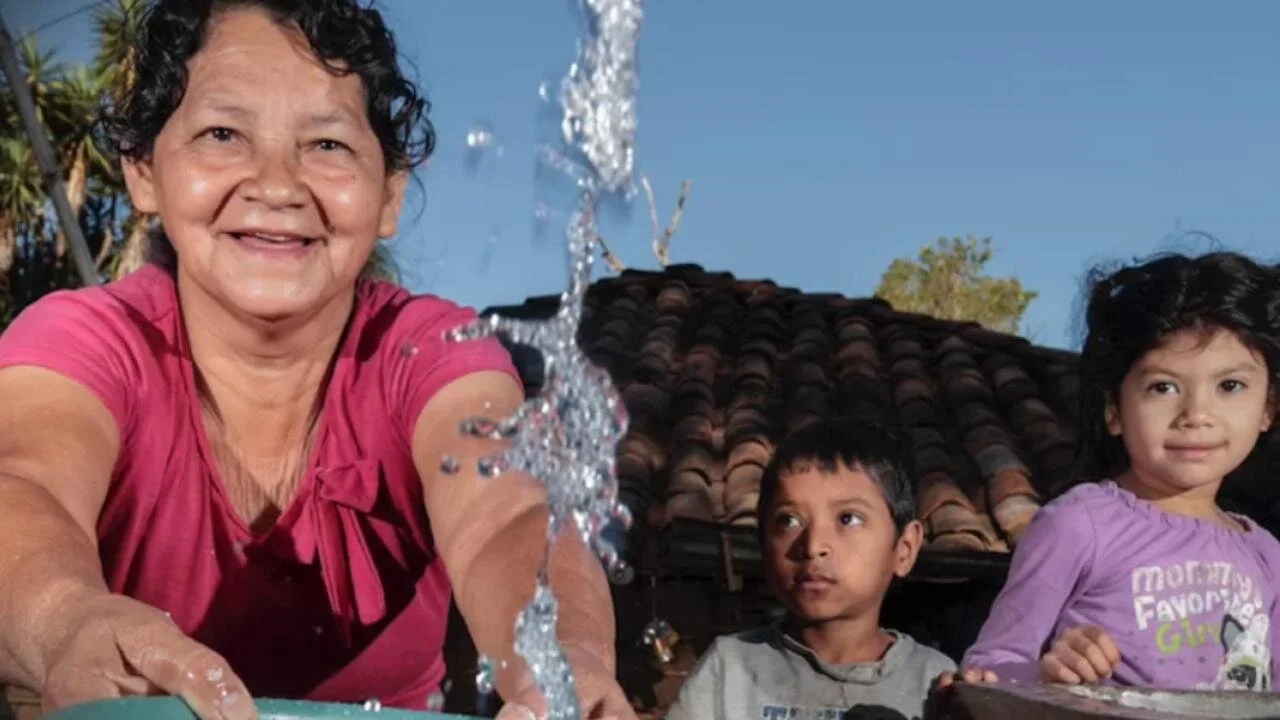
    Azure    , a Calvert Impact Capital portfolio partner, is an initiative that mobilizes capital and technical expertise to upgrade and expand water services for the poor in rural and peri-urban communities of El Salvador. Azure was launched through a partnership between Catholic Relief Services (CRS) and the Inter-American Development Bank’s Multilateral Investment Fund (IDB/MIF).

Azure , a Calvert Impact Capital portfolio partner, is an initiative that mobilizes capital and technical expertise to upgrade and expand water services for the poor in rural and peri-urban communities of El Salvador. Azure was launched through a partnership between Catholic Relief Services (CRS) and the Inter-American Development Bank’s Multilateral Investment Fund (IDB/MIF).

Article originally posted here by GreenMoney Journal

by Amanda Joseph

Justice, justice, justice shall you pursue.

For many of us who engage in impact investing, this verse from Deuteronomy 16:20 is a familiar one, our clarion call to pursue a path of justice and healing – which includes the responsible stewardship of our personal and communal assets. Many more Americans have become familiar with this verse, as the words hung in the chambers of esteemed Supreme Court Justice Ruth Bader Ginsburg, a touchstone for her as she pursued a life committed to justice.

Today, the call for justice is growing louder, with a global pandemic that has laid bare the deep fissures in our society and a legacy of systemic racism and economic inequality that we as a nation can no longer ignore. And in the midst of this crisis and churning, we are also experiencing a great awakening  to the possibility of transforming society, as we acknowledge our interdependence, and make real a world that is just, equitable, and sustainable.

For all investors, but particularly for communities of faith in these turbulent times, the prospect of impact investing offers an abundance of meaningful opportunities to realign and reaffirm how our values support our investment strategies. From a congregation that decides to make a deposit in a local credit union or Black-owned community development bank, or to a church-based pension fund that invests in climate resilience, there are multitude of options and approaches across asset classes and impact themes for investors to explore.

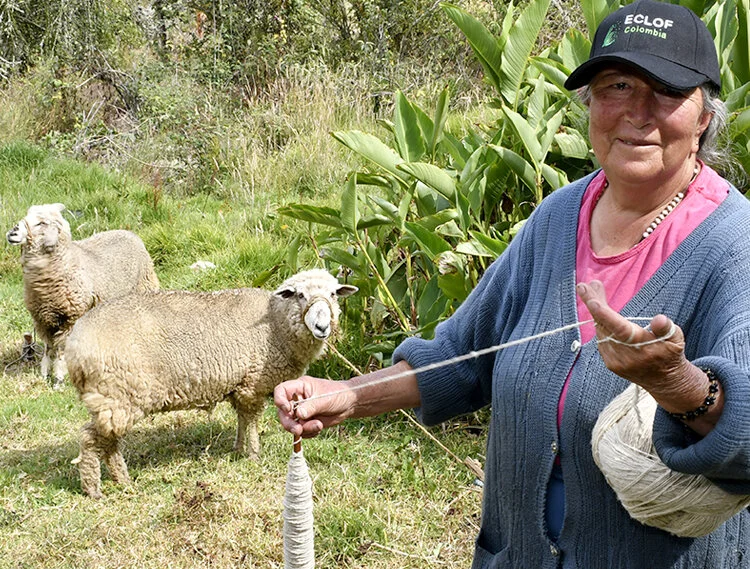
  Maria Ines Galvis, a sheep farmer in Colombia, received a loan from     ECLOF International    , a faith-based organization with a mission to promote social justice and human dignity through microfinance. ECLOF International is a Calvert Impact Capital portfolio partner.

Maria Ines Galvis, a sheep farmer in Colombia, received a loan from ECLOF International , a faith-based organization with a mission to promote social justice and human dignity through microfinance. ECLOF International is a Calvert Impact Capital portfolio partner.

Like many of us working in this dynamic space, my own impact investing journey began well before the term was coined. In the late 90s, I had the good fortune to work alongside visionary leader Jeffrey Dekro to organize the first and only national initiative to encourage American Jewish individual and institutional investing in CDFIs and low-wealth communities. Our “why” was steeped in Jewish values, teachings, and our historical experience as immigrants. To undertake the “how,” we looked to leaders across faiths as our models and partners, as well as to secular funds like Calvert Impact Capital, as we supported congregations, foundations, and communal organizations to make their first impact investments over the course of a decade-plus. We also launched an interfaith disaster response fund, focusing on critical recovery programs post-Hurricanes Katrina, Rita, and Sandy, demonstrating the power of interfaith investor partnerships.

In doing this work, we were part of a long and storied tradition. Faith institutions helped create the impact investing market as we know it today. Over the decades, faith communities have served as true pioneers and risk takers, demonstrating again and again that impact investing is a viable strategy in pursuit of justice, offering opportunity to our most vulnerable and disenfranchised communities, locally and globally.

  Calvert Impact Capital portfolio partner     VisionFund    , the world’s largest Christian microfinance network, provides comprehensive courses on sustainable farming and provides micro-loans for clients such as Indrani to grow their businesses.

Calvert Impact Capital portfolio partner VisionFund , the world’s largest Christian microfinance network, provides comprehensive courses on sustainable farming and provides micro-loans for clients such as Indrani to grow their businesses.

At Calvert Impact Capital, one of the first impact funds in the US, faith investors have been our partners since we began our work 25 years ago. By that time, faith investing in US community development financial institutions (CDFIs) and international microfinance was an established practice, with Catholic orders and women religious at the vanguard. Today, faith investors currently represent more than 15 percent of our $500 million capital base. They include congregations, churches, health care systems, mutual funds, and foundations, and span denominations and affiliations – Catholic, Baptist, Mennonite, Jewish, Unitarian, Methodist, and many others. We also know that many of our 5,400 individual investors are inspired by their traditions; our most recent investor survey revealed that 26 percent of respondents “invest because of my faith.”

As Director of Faith Based Initiatives, I serve as a resource and a connector for faith institutions and their financial professionals — chief investment officers, financial advisors, and asset managers — leveraging Calvert Impact Capital’s impact investment expertise. Since 1995, we have helped over 150 faith-based groups develop their first impact investing programs or enhance programs already underway; overcome barriers with internal finance committees, leadership, external financial advisors, and fund managers; explore creative ways to deploy their assets; and connect with other faith investors doing this work to share successes and lessons learned. We understand well that for many faith investors travelling from the faith-specific “why” to the “how” is a process of discernment, listening, and eventually, action. We also work very closely with financial advisors and professionals who are committed to supporting their faith clients on this journey.

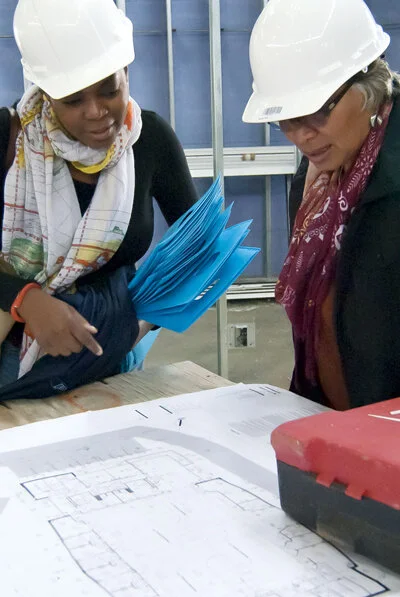
  Two Calvert Impact Capital staff members visit     Israel Manor     Inc. Life Center, a Calvert Impact Capital portfolio partner, in Northeast Washington DC, as construction is underway. Now open, Unity Healthcare provides health services and community spaces, and is co-located with Israel Manor Baptist Church.

Two Calvert Impact Capital staff members visit Israel Manor Inc. Life Center, a Calvert Impact Capital portfolio partner, in Northeast Washington DC, as construction is underway. Now open, Unity Healthcare provides health services and community spaces, and is co-located with Israel Manor Baptist Church.

Faith-based investors are natural leaders of the impact investing movement and we want to ensure they are fully equipped to reach their potential. This is why over the next year, we will offer a series of training opportunities and resources to educate faith investors and build a deeper impact investing practice among them.

In this effort we join a growing network of both secular and faith organizations, including the Global Impact Investing Network (GIIN), Interfaith Center on Corporate Responsibility (ICCR), FaithInvestCatholic Impact Investing Collaborative (CIIC) and many others, who share a commitment to seeing faith institutions engage more fully in the impact investing ecosystem and with whom we actively collaborate. And we also want to hear from you: What challenges are you facing as a faith-based investor or as a financial professional working with faith communities? What resources do you need? How can we help or work together?

Answering the call to be part of the solution to our urgent local and global challenges has never been more urgent. Drawing from the examples set by many faith investors so far, we encourage congregations and institutions of all faiths and religious traditions—and the community of financial professionals who support them—to seek justice and put faith into action through impact investing.

We welcome opportunities for conversation, collaboration, and partnership. Please visit the Calvert Impact Capital website or email me directly – ajoseph@calvertimpactcapital.org

Put Your Talent On The Table: A Challenge to Faith-Driven Investors to help End Human Trafficking

by Rachel Rose Nelson

This is the rallying cry of Tom Phillips, a faith-driven investor, entrepreneur, and long-time advocate in the global anti-trafficking space. Phillips first became aware of human trafficking nearly twenty years ago after purchasing a building on a Memphis city street where prostitutes walked up and down soliciting business. Worry for his business soon turned to concern for the women themselves. His first action step was a call to a couple local ministries, one in law enforcement and the other in rescue and recovery. Both partnered to help women safely exit the sex trafficking industry, part of what Phillips later learned was just one manifestation of the global crisis of human trafficking.

At its root, sex trafficking is an industry – one that takes different forms in different regions around the world. According to the International Labor Office, forced labor in the private economy generates US$150 billion in illegal profits per year. Of that US$ 99 billion comes from commercial sexual exploitation. It is an industry animated by a dark and complex web of factors no single organization can address on its own. But it took Phillips a while to see that business, his own area of expertise, was a vital part of the solution.

“It was when I started to travel internationally about 15 years ago that I saw how truly global this crisis was. Human trafficking began to get press around 2015 through the work of many ministries endeavoring to end it.”

But a frustration began to take shape as Phillips engaged more deeply. “Only one side of this was being addressed: Rescue. Everyone loves the stories of rescue. But this was not a comprehensive solution. And without a job these women were going right back into trafficking. It’s all they know.”

Once Phillips realized the  problem, he began to put the pieces together. “I call it a cradle to grave solution. We need to provide jobs so vulnerable women don’t get trafficked. And what’s better is once they get out, they’re staying out and they come back and help in the anti-trafficking space. They help create even more jobs and the passion is there to make it so no one else has to experience the same things they did. It’s incredible. Talk about an outsized return on investment!”

Tom envisions an innovative model that bypasses the normal grant cycles driven by varying agendas and timelines, to create a truly coordinated, collaborative model that he and his collaborators have titled Justice, Hope & Liberty (JHL).

“I’m tired of reading grant requests that piece together parts but not all of what’s needed. So my aspiration is to bring together a group of funders to provide the resources needed to design and test a multi-year, comprehensive model from regional research, to policy revisions, to law enforcement training, to rescue, aftercare and job creation. Our aim is to test the model in one region and replicate what works in other regions around the world.”

The model Phillips’ envisions is one in which businesspeople play a critical role – not just as funders of the work to be done – but as active participants. “We’ve got Freedom Businesses that provide jobs. But many are started by people who lack business expertise. I’d love to see the Faith-Driven business community rally to invest, mentor, and support these folks. Go out and visit them a couple times a year. It’s time to get your hands dirty!”

Not only does Phillips see an opportunity for the faith-driven investor community to help individual businesses, but to help create strategy for the industry as a whole.

“We need to identify business models capable of being scaled. We need bold strategy to see this industry grow to the place where there’s a job for every survivor. And more. We need job creation to help prevent trafficking in the first place.”