Who is My Neighbor?

Article originally posted here by Eventide

by Shaun Morgan

The U.S. population is just over 330 million.

The world population is approaching 8 billion.

Even though we live in this giant world filled with billions of people, our functional worlds—the worlds made up of the people we interact with on an almost daily basis—are much smaller. In this way, we experience two worlds with two different orders simultaneously.

The Two-World Tension

Friedrich Hayek, an Austrian-British economist and philosopher, famously called these two worlds the “micro-cosmos” and the “macro-cosmos.” (1)

The micro-cosmos is made up of our immediate tribes—our families, close friends, and loved ones. We have a clear order of responsibility within this world. We are naturally inclined to be kind, generous, patient, and even sacrificial towards these people. 

The macro-cosmos consists of the world beyond our immediate tribes—the people we barely know or do not know at all. Strangers. Our order of responsibility is murkier in this world, and we feel a tension between wanting to act on our natural human inclinations to care for others but wondering if the burden is too overwhelming or even inappropriate to extend beyond our immediate communities.  

The Good Samaritan

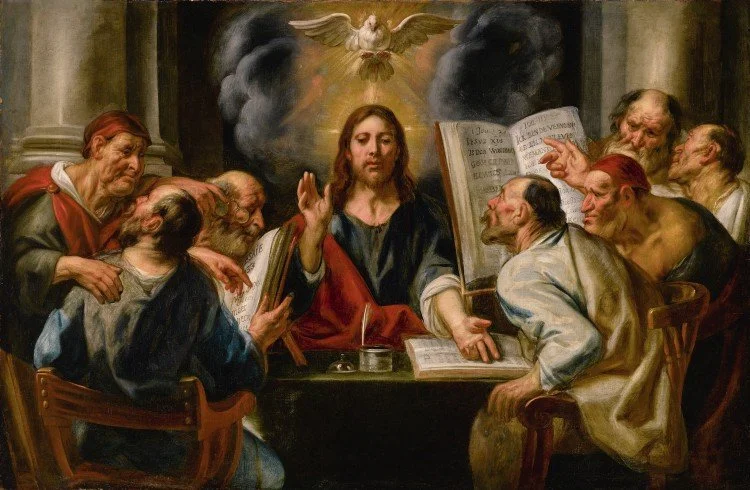
One of Jesus’ most well-known parables and one that is accepted across many cultures is the parable of the Good Samaritan. Jesus tells this parable in response to a question from a lawyer. Wanting legal clarification on God’s command to “Love your neighbor as yourself,” the lawyer asks, “Who is my neighbor?”  

The good Samaritan’s neighbor was a complete stranger who needed help. It’s likely that the story was told with an intentional emphasis placed on the geographic and cultural differences between the two.

Though profound and revolutionary to the tribalized culture at the time, the parable points to an even greater reality that is instinctively familiar to every human heart. 

Embedded in all of us is a yearning to see the needs of others met. Indeed, we experience deep satisfaction when we can help. And this empathetic desire extends from the people within our most immediate tribes all the way to the strangers we encounter on the street.

Our Macro-Cosmic Neighbors

The two-world tension mentioned above is the modern-day version of the who is my neighbor question. In a world that is simultaneously growing in population and becoming increasingly connected, we are constantly having to ask the question, Who is my macro-cosmic neighbor?

Our macro-cosmic neighbors are all of the people in our periphery that may only be tangentially affected by our actions. As our world becomes more connected, however, our actions have a broader reach to even more distant neighbors. 

Your neighbor is the factory worker who knits together the shirt on your back, the farmer who grows the vegetables you eat for dinner. She is the cashier at the store who works double shifts at minimum wage so her grandmother doesn’t have to, the single parent who struggles to find time to work enough hours to buy groceries and help their kids with their homework.

Your neighbor is the co-worker who needs you to be competent and trustworthy in your work so they can be competent and trustworthy in theirs, the customers you serve at your work who rely on the product or service your company offers to add value to their lives. 

And your neighbors are all of the people who are affected by the products and operations of the companies you invest in.

The way we love these macro-cosmic neighbors will look functionally different than the way we love those in our micro-cosmos, but our innate sense of empathy does not end with our immediate communities.  

Getting to Reimagine

We may want to avoid thinking about the macro-cosmos because the feeling of never being able to do enough can be overwhelming. 

But what if there are two sides to the empathy that is embedded in us? Empathy causes us to feel pain for people who hurt, but it also causes us to rejoice when that pain goes away. 

So, as we look for more ways to care for our macro-cosmic neighbors, it could become an exciting pursuit of the pleasure that comes with imbuing a sense of loving purpose into our actions that seek their well-being and less about avoiding the shame of not doing enough. 

Perhaps Jesus’ answer to the question Who is my neighbor? was less about bestowing an arbitrary burden on his listeners and more about unveiling a slice of wisdom that reflects how they were wired to care for their neighbors both near and far. 

Perhaps we’ve got it all wrong. Maybe it’s time to rethink our paradigm. Instead of thinking that we have to love our macro-cosmic neighbor, why not rejoice in the fact that 

we get to love the stranger.

We get to love our most distant, macro-cosmic neighbor.

Which means we get to reimagine how we live, work, play, spend, give, and, yes, invest with a special purpose of loving our neighbors in both worlds.


Note

(1) F. A. Hayek,The Fatal Conceit: Volume 1, The Collected Works of F. A. Hayek (Chicago: University of Chicago Press, 1988), 18, Kindle.

Photo by Adelin Preda on Unsplash

Whose Work Matters to God?

 Photo by  Amílcar Vanden-Bouch  on  Unsplash

Photo by Amílcar Vanden-Bouch on Unsplash

The Faith Driven Investor movement stands on the shoulders of those who have come before us. John Siverling and the Christian Investment Forum are just one of the groups who have led this conversation, and we’re grateful to feature their contribution to the movement here.

by John Siverling

Redeemer Faith and Work Founder and co-author with Tim Keller of “Every Good Endeavour” shares her thoughts on why every Christian should see their work as an act of worship to God and how those in the financial industry have a particularly important role. Presented as the Keynote address at the 2019 CIF Leadership Summit.

Why being an engaged owner or investor makes sense

 Photo by  Mimi Thian  on  Unsplash

Photo by Mimi Thian on Unsplash

by Will Lofland

As a Christian, it’s important to navigate your life and walk with Christ intentionally. This intentionality is weaved into all aspects of life including how you give back, how you treat people and how you spend your time. That same intentionality should also be reflected in your finances and investments. But aside from just intentionally owning or not owning a stock, it’s important to be active in addressing issues with the company. 

Being an “engaged owner” doesn’t always have to be a lengthy task. It’s important to know what business a company is in and what facets of the world they touch. Perhaps you should look into their footprint, goods they source, people they employ, what consumers utilize their products and what kind of market share they have. For example, pharmaceutical patent stacking isn’t an aberrant act in itself, but it doesn’t typically align with a Christian investor’s values when the company is leveraging legal gray areas to stifle the competition. Some of these pharmaceutical companies create such high barriers of entry that they’ve effectively created a monopoly. Those practices then often lead to anti-consumer practices like the creation of lower cost generic or biosimilar drugs.

There are two different ways to be engaged in a company you invest in. The direct parallel for us at GuideStone is being an asset manager who cares about these issues, is a large institutional owner of shares and will go out to work on these issues with a company. For the DIY and individual investor who doesn’t work with an asset manager, you can reach out to the investor relations team at the company to air any issues that go against your values. In some cases, you may receive an answer from the company, and in other cases, the company may never respond. Making a change in a company can seem like a fleeting idea at times, but whether you’re a DIY investor or work with an asset manager, you should always remember that it could take years of being an engaged investor before you’re able to bring about real change. 

For example, the palm oil industry has drastically changed because of investor engagement. Shareholders expressed that some industry practices didn’t align with their values, and were able to significantly reduce the usage of child labor in the harvesting of palm fields, which was prevalent at the time. Shareholders were able to make this change by engaging with palm oil producers and the large companies buying the product and asking these companies if they have a supplier code of conduct they hold their suppliers to. Those discussions caused the larger companies to explain to the producers that they wouldn’t buy anything from farms that harvest the palm oil through child labor. 

Although public pressure from equity owners can incite change, there are instances where companies just won’t budge on certain issues. Some investors may then choose to file for a proxy vote, which would bring the issue into a public forum and allow all shareholders to vote on an issue. In a lot of cases, companies don’t want these hiccups to become public since it can tarnish their reputation. Even though a company doesn’t have to follow a proxy vote, it can be an overwhelming example of how many people don’t agree with the companies practices. 

What is interesting to note is that religious investors account for about 45% of the proxy actions that are brought to companies on an annual basis, showcasing this investor demographic’s desire to spur change. Engaged shareholders and asset managers can leverage their values to explain why something the company does may be perceived in a negative light and how it may tarnish the company’s name.  The companies are able to see these values based issues as real business risks. When the company enacts change, not only are they better aligned with their shareholders, it also provides them the opportunity to paint themselves as an industry leader. 

With all of these tactics in mind, it’s important to be intentional before you even invest in a company. It’s possible to invest in a company that may not completely align with your values, but it’s important to consider if the issue is something that’s fixable versus a core business practice for the company. For example, a company like Anheuser-Busch is solely in the business of producing and selling alcohol. There’s no amount of engagement or activism that could convince them to not be an alcohol provider. 

As a Christian investor, you have an excellent platform to promote change in companies you invest in because of the core set of beliefs that guide you on certain issues. By carrying your values into your investments and being an engaged investor, you’re able to promote change within the companies you invest in and continue your intentional walk with Christ. 

Will Lofland is director and head of intermediary distribution at GuideStone Funds based in Dallas, Texas, and also oversees GuideStone’s shareholder advocacy strategy. 

Why Black Home Ownership Matters

 Photo by  CDC  on  Unsplash

Photo by CDC on Unsplash

Video originally posted here by Movement Mortage

by Casey Crawford

“Even though I am not black, this is still my issue. This is an American issue,” Casey Crawford. We don’t have all the answers. But we do have an opportunity, and an obligation, to address the issues and make progress. In this episode of the Mortgage Impact Podcast, Adam O’Daniel sits down with Movement Mortgage CEO Casey Crawford and Director of Special Projects Montell Watson to get insight on homeownership for black Americans.