Episode 230 – Investing in African Healthcare & Fintech | Dr. Ola Brown

Episode 230 – Investing in African Healthcare & Fintech | Dr. Ola Brown

Podcast episode

Episode 230 – Investing in African Healthcare & Fintech | Dr. Ola Brown

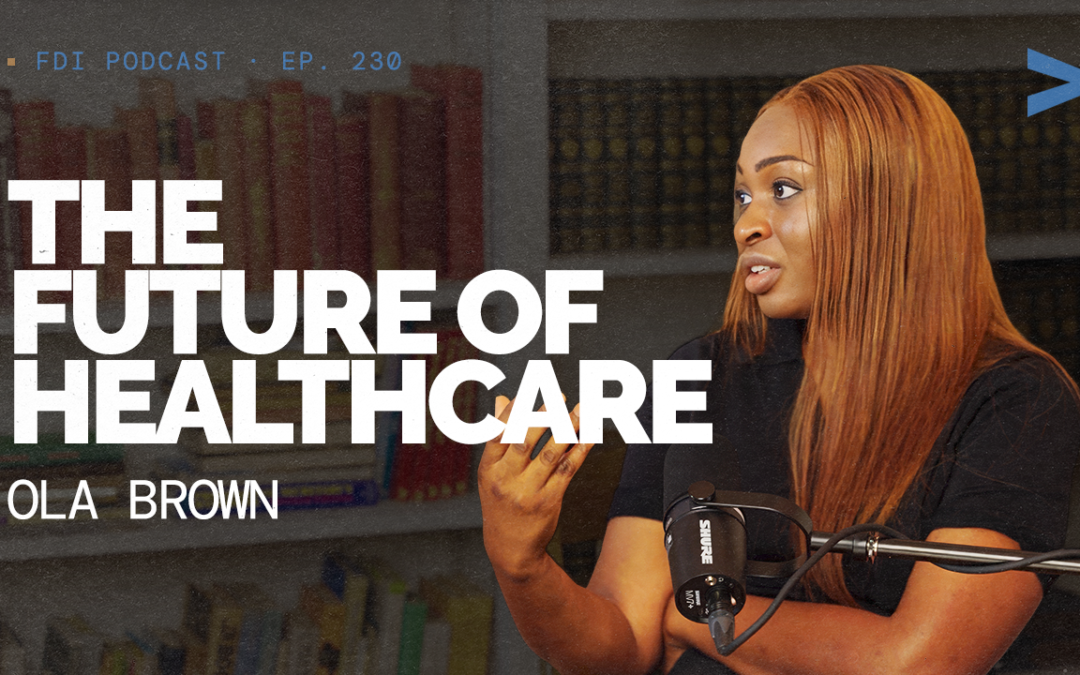
When Dr. Ola Brown’s 12-year-old sister needed emergency care in Nigeria, the nearest air ambulance was seven hours away, in South Africa. The family lost her. Dr. Brown made a promise to God that day — and kept it, building an air ambulance service that would go on to serve over 40 African countries and fly more than 5,000 emergency requests a year.

All opinions expressed on this podcast, including the team and guests, are solely their opinions. Host and guests may maintain positions in the companies and securities discussed. This podcast is for informational purposes only and should not be relied upon as specific investment advice for any individual or organization.

Episode Notes

Dr. Ola Brown’s 12-year-old sister died because the nearest air ambulance was seven hours away. That loss became a promise — and the promise became Flying Doctors Nigeria, a service that’s since flown over 5,000 emergency requests a year across more than 40 African countries.

In this conversation, Henry Kaestner sits down with Dr. Brown — medical doctor, entrepreneur, and Founder of HealthCap Africa — to make the case for investing in African healthcare and financial services. They cover Nigeria’s population trajectory, why healthcare is one of the most defensive sectors an investor can hold, and two HealthCap portfolio companies changing diagnostics across the continent. Dr. Brown also reframes “health and wealth” language away from its prosperity-gospel baggage, rooting it instead in Jesus’s own healing ministry.

If you’ve ever wondered whether God might be calling you to steward capital in African markets, this episode gives you both the numbers and the theology to sit with that question.

Watch the full episode or continue to stream audio on your favorite podcast platform.

CHAPTERS

00:00 Cold open: losing a sister, seven hours from help
00:52 Faith Driven Investor Podcast intro
01:12 Disclaimer
01:30 Henry welcomes Dr. Ola Brown
02:50 Ola’s take on Dallas Baptist University and the room
03:45 The origin story: her sister’s death and the promise to God
06:02 The pivot from entrepreneur to investor
06:15 How she met her husband — on an air ambulance
06:15 Raising a first fund from 12 Nigerian families
08:32 Why “local skin in the game” matters to investors
08:59 HealthCap’s first close, anchored by MasterCard
09:18 Nigeria’s population boom and what it signals
09:57 The health and wealth investment thesis
09:57 Healthcare as inflation-resistant, counter-cyclical
13:12 The venture capital gap — and Africa’s unicorns anyway
14:12 Portfolio spotlight: MDaaS Diagnostics
15:18 Portfolio spotlight: InstantRad’s AI radiology
17:17 Redeeming “health and wealth” from prosperity gospel
18:07 Jehovah Rapha and Jesus’s healing ministry
20:19 What entrepreneurship taught her about God’s nature
20:35 Doing business differently as a form of evangelism
22:01 What investors are missing about Africa
24:18 Nigeria’s future and closing thoughts
24:30 Closing prayer over the audience

Subscribe to the newsletter

Stay Connected
to the Movement

We know that as an Entrepreneur, your most valuable asset is time. So each month we take the very best of the podcast, the blog and all the news, resources, and upcoming events happening across the space and bring it to you.
hbspt.forms.create({ portalId: "8431138", formId: "472004f9-ada0-4df3-adc3-170ca5e08657" });

Episode 229 – Investing in Africa’s Missing Middle | Matthew Rohrs

Episode 229 – Investing in Africa’s Missing Middle | Matthew Rohrs

Podcast episode

Episode 229 – Investing in Africa’s Missing Middle | Matthew Rohrs

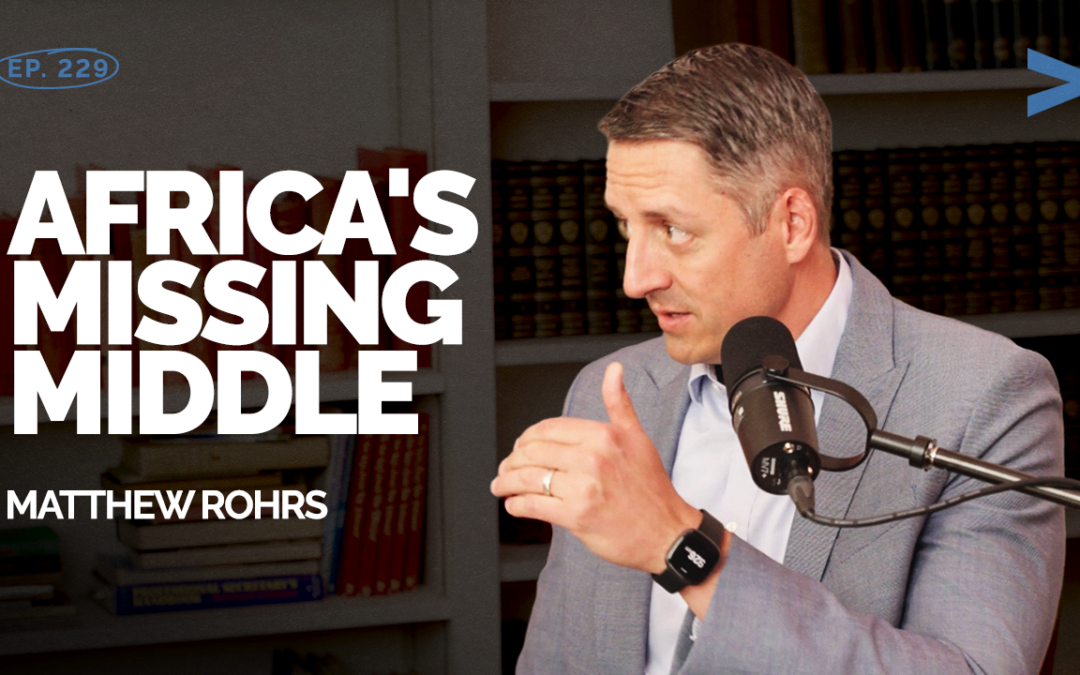
Between microfinance and private equity sits a gap most investors never think about — and it’s where 70% of job creation happens in emerging markets. Matthew Rohrs, leader of Sinapis, joins Henry Kaestner to explain how faith-driven capital can serve this “missing middle” of entrepreneurs across East Africa.

All opinions expressed on this podcast, including the team and guests, are solely their opinions. Host and guests may maintain positions in the companies and securities discussed. This podcast is for informational purposes only and should not be relied upon as specific investment advice for any individual or organization.

Episode Notes

Between microfinance and private equity sits a gap most investors never think about — and it’s where 70% of job creation happens in emerging markets. Matthew Rohrs, leader of Sinapis, joins Henry Kaestner to explain how faith-driven capital can serve this “missing middle” of entrepreneurs across East Africa.

Matthew unpacks Sinapis’s Kingdom Business Framework, built on three pillars: a founder’s relationship with God, a mindset of stewardship over time, talent, and treasure, and a business’s tangible impact on its community. He shares how this integrated approach has helped Sinapis train and accelerate over 3,370 entrepreneurs, creating nearly 12,000 jobs and impacting more than 400,000 family members through supply chains — and why 72% of alumni report at least one employee coming to faith in Christ through their company.

The conversation also explores Kickwetu Flowers, a 30-acre flower export business near Mount Kenya whose founder has used company profits to drill boreholes for clean water access, launch a soccer program for at-risk youth, and feed 300 people a week — a living picture of what asset-based community development looks like when it’s led by a Kingdom-minded entrepreneur.

CHAPTERS

00:00 Introduction: Matthew Rohrs and Sinapis

02:21 Sinapis’s origin story and scale across East Africa

04:00 Henry’s own journey from microfinance to the missing middle

05:57 Discovering the missing middle in Brazzaville, Congo

09:24 Evangelical Gnosticism and the sacred-secular divide

10:13 Why 72% of alumni see an employee come to faith

12:47 How walking with entrepreneurs has shaped Matthew’s own faith

15:22 Scalable innovation: the pathology network example

16:34 Is Africa more than fair trade and handicrafts?

18:42 Case study: Kickwetu Flowers and community impact

21:07 Introducing the Forge Network

23:33 Closing thoughts and where to find Sinapis

Subscribe to the newsletter

Stay Connected
to the Movement

We know that as an Entrepreneur, your most valuable asset is time. So each month we take the very best of the podcast, the blog and all the news, resources, and upcoming events happening across the space and bring it to you.
hbspt.forms.create({ portalId: "8431138", formId: "472004f9-ada0-4df3-adc3-170ca5e08657" });

Episode 228 – Marks on the Market: Energy Markets, AI CapEx, & The Discipline Dividend | Jordan Strebeck

Episode 228 – Marks on the Market: Energy Markets, AI CapEx, & The Discipline Dividend | Jordan Strebeck

Podcast episode

Episode 228 – Marks on the Market: Energy Markets, AI CapEx, & The Discipline Dividend | Jordan Strebeck

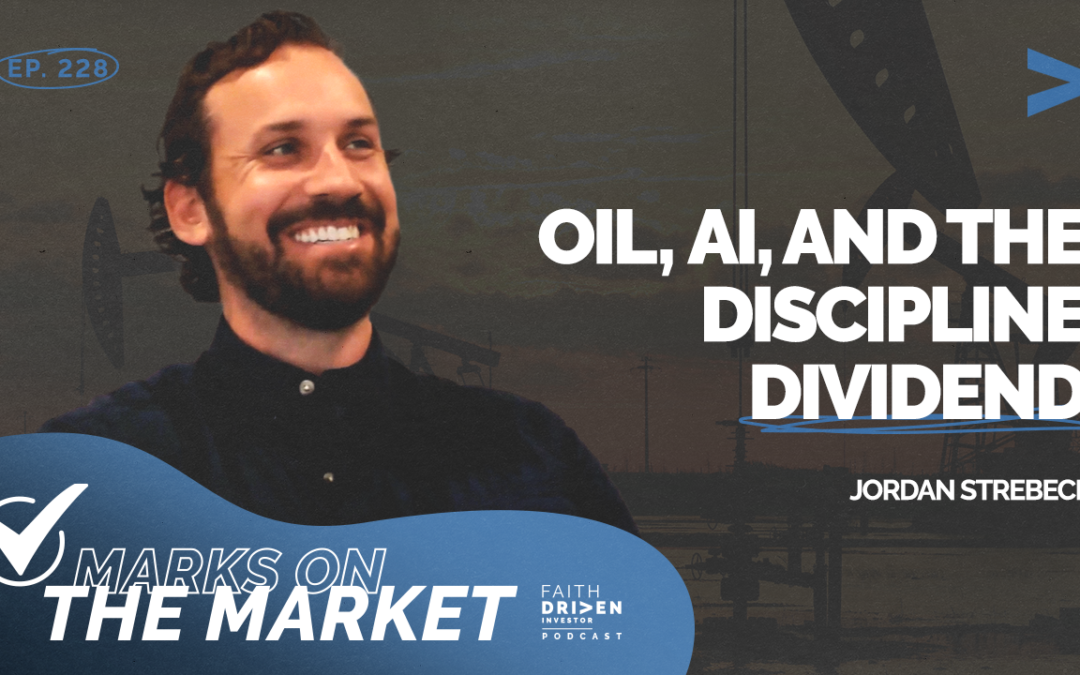
Host Richard Cunningham sits down with co-host Luke Roush and returning guest Jordan Strebeck of Fortress Energy Partners for a conversation that starts at the S&P 500’s all-time high and ends at a Permian Basin wellhead where operators are paying to get rid of their own natural gas.

All opinions expressed on this podcast, including the team and guests, are solely their opinions. Host and guests may maintain positions in the companies and securities discussed. This podcast is for informational purposes only and should not be relied upon as specific investment advice for any individual or organization.

Episode Notes

Markets are sitting at record highs. Oil supply is quietly draining by the hundreds of millions of barrels. And somewhere in the Permian Basin, an operator just paid someone else to take their natural gas off their hands. Richard Cunningham and Luke Roush open this month’s Marks on the Market with a fast-moving macro recap before welcoming back Jordan Strebeck of Fortress Energy Partners for a ground-level view of the energy story behind almost every investment decision right now.

The conversation covers the AI CapEx arms race among the hyperscalers, what SpaceX’s IPO means for the rest of 2026’s pipeline, and why 1,500 unicorns are still waiting on the sidelines. Then it shifts into energy: the Middle East conflict’s real effect on oil supply, why the domestic shale industry is showing unexpected capital discipline, and the infrastructure bottleneck turning Permian natural gas into a liability instead of an asset.

It closes, as these conversations always should, with something more permanent than a market cycle — a word on presence, parenting, and what it looks like to steward well the time and influence we’ve been given.

CHAPTERS

00:00 Cold open and disclaimer

00:39 Richard opens August’s Marks on the Market

01:58 Markets at record highs despite every reason to sell off

04:40 Luke on the rebalancing rally and the Fed’s rate posture

06:37 The hyperscaler AI CapEx numbers, by the billions

08:21 SpaceX’s IPO and a market rediscovering gravity

09:50 IPO markets thaw after four dead years

10:55 1,500 unicorns and the liquidity problem behind them

17:02 Lower middle market private equity, sector by sector

18:05 Jordan Strebeck joins from Midland, Texas

19:16 Recapping the Middle East conflict’s oil market impact

20:30 Why the market is treating the conflict as transitory

24:12 The shale industry’s surprising capital discipline

25:29 Shifting to AI’s natural gas demand

26:10 Inside the Permian’s negative natural gas prices

28:57 The case for more of everything — nuclear, gas, solar, wind

30:32 Strategic petroleum reserves and the 400-million-barrel drawdown

35:53 Closing thoughts: presence, parenting, and stewardship

Subscribe to the newsletter

Stay Connected
to the Movement

We know that as an Entrepreneur, your most valuable asset is time. So each month we take the very best of the podcast, the blog and all the news, resources, and upcoming events happening across the space and bring it to you.

Episode 227 – Venture’s Next Chapter, AI, & the New Investment Landscape | Mark Phillips & Phil Jung

Episode 227 – Venture’s Next Chapter, AI, & the New Investment Landscape | Mark Phillips & Phil Jung

Podcast episode

Episode 227 – Venture’s Next Chapter, AI, & the New Investment Landscape | Mark Phillips & Phil Jung

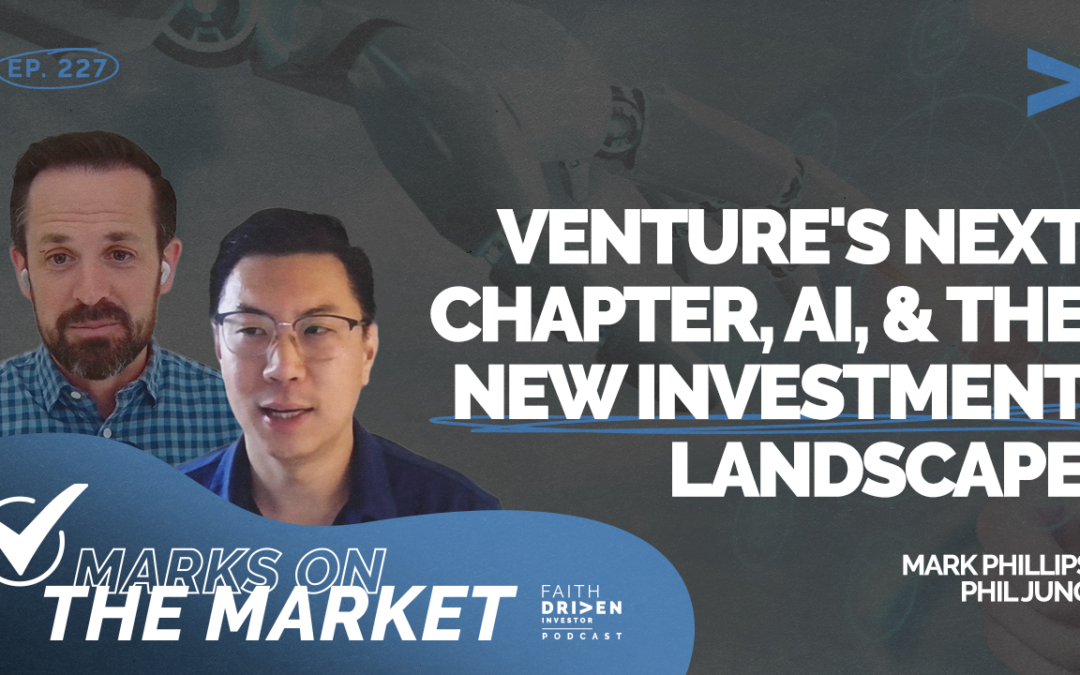
Venture capital just had its biggest six months in history — and it’s not just about AI hype. In this Marks on the Market conversation, host Richard Cunningham and co-host John Coleman sit down with Phil Jung of Sovereign’s Capital and Mark Phillips of Eleven Tribes Ventures to unpack a first half of 2026 that saw $412 billion invested in venture-backed companies, more capital than all of 2025 combined.

All opinions expressed on this podcast, including the team and guests, are solely their opinions. Host and guests may maintain positions in the companies and securities discussed. This podcast is for informational purposes only and should not be relied upon as specific investment advice for any individual or organization.

Episode Notes

Venture capital just had its biggest six months in history — and it’s not just about AI hype. In this Marks on the Market conversation, host Richard Cunningham and co-host John Coleman sit down with Phil Jung of Sovereign’s Capital and Mark Phillips of Eleven Tribes Ventures to unpack a first half of 2026 that saw $412 billion invested in venture-backed companies, more capital than all of 2025 combined.

The conversation moves from the “barbell” strategy shaping early-stage investing — massive valuations for frontier AI labs on one end, capital-efficient vertical AI solutions on the other — to the return of deep tech and physical products after years of software dominance. John Coleman lays out the macro case that this AI-driven transformation could be ten times bigger and ten times faster than the Industrial Revolution, while also flagging real constraints ahead: capital expenditure limits, energy demands, and a coming wave of regulation.

The panel closes with an honest, faith-centered conversation about staying grounded — from Psalm 127’s reminder that “unless the Lord builds the house, those who build it labor in vain,” to a reflection on the woman at the well and what weariness can teach faith-driven investors about calling.

CHAPTERS

00:00 Introduction – July Marks on the Markets kicks off
01:26 Celebrating America 250 and the Fourth of July
04:55 State of the markets: AI concentration and the “venture-like” stock market
08:02 The barbell approach to early-stage venture investing
12:00 Record $412B in first-half 2026 venture capital
14:27 The Bay Area gravitational pull for AI founders
17:47 Constructing a venture portfolio amid the AI renaissance
18:35 AI, biotech, and robotics: a multi-part industrial revolution
23:18 What’s actually defensible? Deep tech and hard tech return to vogue
25:59 Verticalized AI and disciplined pricing at Eleven Tribes Ventures
29:37 SaaS valuations compress as AI transformation becomes mandatory
33:18 Every company becomes an AI company
34:09 Constraints ahead: capex, energy, and regulation
38:51 Token costs and the coming reckoning
40:43 The average person’s fear of AI
43:38 Open source vs. frontier models: who controls the data?
47:01 Closing reflections: Psalm 127 and surrendering the portfolio to God
49:58 The woman at the well: weariness as a setting for calling
52:09 Fear not: AI, chickens, and the God who is in control

Subscribe to the newsletter

Stay Connected
to the Movement

We know that as an Entrepreneur, your most valuable asset is time. So each month we take the very best of the podcast, the blog and all the news, resources, and upcoming events happening across the space and bring it to you.

hbspt.forms.create({ portalId: "8431138", formId: "472004f9-ada0-4df3-adc3-170ca5e08657" });

Episode 226 – How to Create a Generosity Framework for Investors | John Cortines

Episode 226 – How to Create a Generosity Framework for Investors | John Cortines

Podcast episode

Episode 226 – How to Create a Generosity Framework for Investors | John Cortines

What does a banking password that reads “retire@40!” have to do with radical generosity? For John Cortines, it was the starting line. At Harvard Business School, a men’s Bible study cracked open a question none of them could answer: what is a Christian stewardship philosophy? The search for that answer became a book, then a framework, then a life, and this conversation captures the heart of it.

All opinions expressed on this podcast, including the team and guests, are solely their opinions. Host and guests may maintain positions in the companies and securities discussed. This podcast is for informational purposes only and should not be relied upon as specific investment advice for any individual or organization.

Episode Notes

What does a banking password that reads “retire@40!” have to do with radical generosity? For John Cortines, it was the starting line. At Harvard Business School, a men’s Bible study cracked open a question none of them could answer: what is a Christian stewardship philosophy? The search for that answer became a book, then a framework, then a life, and this conversation captures the heart of it.

John Cortines, co-author of God and Money and True Riches and a generosity leader at the Maclellan Foundation, joins Justin Forman for a wide-ranging conversation recorded live at Kingdom Advisors. They walk through the biblical case for financial finish lines (pre-set guardrails for lifestyle spending and net worth that create genuine freedom) and the four-stage heart transformation every investor must navigate: pride to gratitude, coveting to contentment, anxiety to trust, and indifference to love.

The episode closes with a vision for the future: professionally managed giving funds that bring the same rigor investors already expect from their financial advisors to their Kingdom capital. John believes these will become as standard as index funds, and he’s already building toward that reality through the Maclellan Foundation’s collaborative giving model.

CHAPTERS

00:00 Opening — King Nebuchadnezzar vs. King David on ownership

01:05 Who is John Cortines? Family, farm, and homesteading

03:33 The journey begins: “retire@40!” and encountering generosity

04:05 Harvard Business School and the men’s Bible study that changed everything

05:30 Taking the “God and Money” class at Harvard Divinity School

06:13 The wrong relationship with giving — and the mindset shift

07:00 The right question: not “how much to give” but “how much to keep”

08:09 Research with Harvard MBA alumni: what radically generous investors look like

11:33 Why joy is the difference between effective altruism and Christian generosity

14:04 Financial finish lines: lifestyle and net worth guardrails explained

15:17 The shadow side of entrepreneurial ambition

16:13 Introduction to True Riches and the four heart transformations

16:45 Heart condition #1: Pride — and the antidote of gratitude

20:24 Practical rhythms for cultivating gratitude

21:52 Heart condition #2: Coveting — and the antidote of contentment

23:31 Social media, discontentment, and radical surgery

25:12 Biblical pairing of financial sin and sexual sin in Scripture

27:45 Breaking down the wall: why money is the last taboo in the church

29:08 Heart condition #3: Anxiety — and the antidote of trust

29:45 Heart condition #4: Indifference — and the antidote of love

33:31 Going on offense: collective and collaborative giving

34:08 Personal conviction: giving toward what’s on God’s heart, not just yours

37:27 Professionally managed giving funds — the vision for the future

39:38 The mutual fund parallel: from $100B to $15 trillion

42:31 How to build joy and community into collective giving

44:38 Celebrating generosity as a family and as a community

45:49 First step for investors: offer 100%, not just 10%

47:15 Closing encouragement and call to action

Subscribe to the newsletter

Stay Connected
to the Movement

We know that as an Entrepreneur, your most valuable asset is time. So each month we take the very best of the podcast, the blog and all the news, resources, and upcoming events happening across the space and bring it to you.